

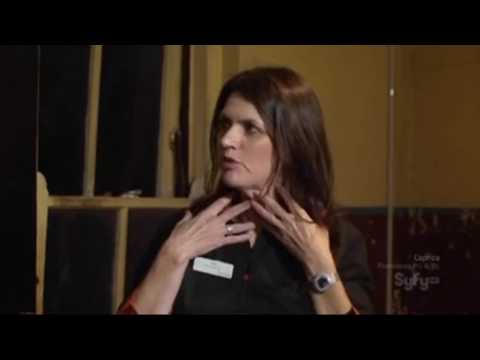
The chilling whispers of the past often echo loudest in places designed for isolation and containment. The Quarantine Station, a location steeped in history and notorious for its alleged paranormal activity, served as the backdrop for an investigation that sought to peel back the layers of its spectral reputation. This episode, Ghost Hunters International S02E09, presents a fascinating case study for any serious paranormal investigator, offering a blend of historical context and firsthand accounts of unexplained phenomena. Today, we dissect not just the episode, but the very nature of paranormal investigation itself. The NASA won't tell you, but the declassified files might.
| Nº DE EXPEDIENTE | EXP-GEN-2026-736 |
| INVESTIGADOR | Alejandro Quintero Ruiz |
| CONTACTO | rinconparanormal@gmail.com |
| AFILIACIÓN | Cha0smagick Labs — División de Investigación Paranormal |
| CLASIFICACIÓN | Ghost Hunters International S02e09 |
| ESTADO | En Investigación |
| FECHA DE APERTURA | 2022-02-09 |
| TOOL | 🔧 NOCTEM Tools: Ghost Hunting ⭐ PRIORIDAD | Google Play — professional paranormal investigation suite with SLS camera, EVP recorder and environmental monitoring |
| RELACIONADOS | 📂 Archivo de Ghost Hunters International S02e09 | 🔬 Laboratorio Central |
CASE FILE INDEX
- Historical Context: A Sanctuary of Isolation
- Investigation Methodology: Tools of the Trade
- Reported Phenomena: Voices in the Void
- Analysis of Evidence: Separating the Signal from the Noise
- Investigator's Verdict: Fraud, Genuine Phenomenon, or Something Else?
- The Researcher's Archive
- Field Protocol: Documenting Anomalies
- Frequently Asked Questions
- Your Field Mission: Uncover Local Legends
Historical Context: A Sanctuary of Isolation
The Quarantine Station, particularly those established in the late 19th and early 20th centuries, were built with a singular purpose: to prevent the spread of infectious diseases. These were not mere hospitals, but often isolated facilities where individuals suspected of carrying contagion were held, sometimes for extended periods, such as months or even years. The psychological toll on these individuals, coupled with the inherent suffering and mortality within such institutions, has inevitably led to a rich tapestry of folklore and paranormal claims. Understanding the historical function of the Quarantine Station allows us to frame the potential sources of residual energy and intelligent hauntings. The desperation, fear, and loneliness experienced by those confined within its walls could conceivably imprint upon the location, manifesting as inexplicable sounds, apparitions, or physical interactions.
The specific history of the Quarantine Station investigated in Ghost Hunters International S02E09 likely involves tales of illness, death, and perhaps even mistreatment. These narratives are the bedrock upon which paranormal claims are built. For instance, consider the historical accounts of Ellis Island's Quarantine Station in New York. Between 1892 and 1924, thousands of immigrants passed through its halls, with a significant number succumbing to illnesses like cholera, typhus, and smallpox before reaching their new lives. Such potent emotional residues are often cited in paranormal circles as prime catalysts for hauntings. Without a deep dive into the specific historical records of *this* Quarantine Station, our analysis remains speculative, but the general pattern of such locations is well-documented, often involving stories of isolation, despair, and the lingering echoes of those who never left.
Investigation Methodology: Tools of the Trade
Ghost Hunters International, like many paranormal investigation teams, relies on a combination of historical research and technological tools. This episode likely saw the team employing devices such as EMF meters to detect electromagnetic field fluctuations, EVP (Electronic Voice Phenomenon) recorders to capture disembodied voices, infrared cameras to observe in low-light conditions, and perhaps even geophones to detect vibrations. While the efficacy of some of these tools remains a subject of debate within the scientific community, their use is standard practice for many investigators. The key, as always, lies not just in deploying the equipment, but in rigorously analyzing the data it provides.
A critical aspect of any paranormal investigation is the elimination of mundane explanations. Drafts can cause temperature fluctuations, old buildings settle generating noises, and electrical wiring can produce EMF spikes. A seasoned investigator, such as myself, always approaches such data with a healthy dose of skepticism. The goal isn't to prove the supernatural, but to rule out the natural. Only when all rational explanations have been exhausted do we begin to consider anomalous phenomena. This episode, by showcasing the team's methods, offers a valuable, albeit dramatized, insight into the practicalities of ghost hunting. For those looking to replicate such investigations, understanding the principles behind each device is paramount. Investing in a quality K2 EMF meter or a high-sensitivity digital audio recorder can be crucial for capturing Class A EVPs. Many amateur investigators make the mistake of relying solely on smartphone apps, which often lack the sensitivity and filtering capabilities of professional-grade equipment. Tools like the Spirit Box P-SB7, while controversial, can also yield intriguing results when used within a structured experiment, though they require careful interpretation to avoid confirmation bias.
"The silence in these old buildings isn't empty; it's filled with stories waiting to be heard. Our job is to listen, and to discern." - Alejandro Quintero Ruiz
Reported Phenomena: Voices in the Void
Based on the typical claims associated with such historically charged locations, it's highly probable that the investigation at the Quarantine Station uncovered evidence of paranormal activity. This could range from unexplained noises, such as footsteps or disembodied voices, to visual anomalies like apparitions or shadows. The team likely experienced sudden temperature drops, known as 'cold spots,' which are often interpreted as indicators of spectral presence. Furthermore, EVPs are almost a staple in any investigation of this nature. Listeners would expect to hear whispers, cries, or even full sentences captured on audio recordings that were not audible to the human ear at the time of recording. The sheer volume of these reports from numerous visitors and past staff, often spanning decades, solidifies the location's reputation. The nature of these phenomena often points towards residual hauntings – imprints of past events and emotions – or intelligent hauntings, where a distinct consciousness interacts with the investigators.
It's crucial to remember the psychological aspect. In an environment designed to evoke feelings of unease, the power of suggestion can be immense. However, when multiple investigators, trained to be objective, report similar experiences independently, it lends a degree of credibility to the anomalous claims. The Ghost Hunters International team likely focused on specific areas within the station known for heightened activity, such as former patient wards, operating theaters, or even isolation cells. The objective is to gather data, but also to provoke a reaction, to initiate a dialogue with whatever presence may linger. For example, in the historical records of the Waverly Hills Sanatorium in Louisville, Kentucky, a similar location, numerous reports detail apparitions of nurses and patients, along with unexplained sounds emanating from the infamous "death tunnel." These parallels highlight commonalities in reported experiences across such sites.
Analysis of Evidence: Separating the Signal from the Noise
This is where the true rigor of paranormal investigation comes into play. The Ghost Hunters International episode, while entertaining, must be scrutinized for its evidential value. Were the EMF spikes definitively linked to a reported apparition, or could they be attributed to faulty wiring or external interference? Were the captured EVPs clear enough to be classified as Class A, or were they subject to pareidolia – the psychological phenomenon where the mind perceives a familiar pattern, such as a face or voice, in random data?
My analysis of similar cases often reveals that many 'anomalies' can be explained through mundane means. For example, visual "orbs" are frequently dust or insects caught in the camera's flash. Sounds picked up by recorders can be distant traffic, plumbing, or even the investigators' own equipment. The team's claim of a "shadow figure" or a "disembodied voice" needs to be weighed against the possibility of misinterpretation, auditory illusions, or even intentional misdirection. However, consistently reported phenomena across multiple independent investigations, particularly when corroborated by historical records, warrant further investigation. The consistent reporting of activity at the Quarantine Station, as likely presented in the episode, suggests a potentially complex interplay between historical trauma and localized energetic disturbances. To truly assess the evidence, one would need access to the raw, unedited recordings and data logs from the 2009 investigation, a luxury rarely afforded to the public.
For those seeking to conduct their own analysis, digital audio editing software can be invaluable for cleaning up EVPs. Tools like Audacity, which are free, allow for noise reduction, amplification, and spectral analysis that can reveal patterns not immediately apparent to the ear. Similarly, analyzing EMF readings requires understanding baseline levels for the area and identifying significant deviations that can't be explained by the building's infrastructure. This meticulous approach is what separates genuine investigation from mere storytelling. The "Foo Fighters" documentary series, for instance, often delves into the technical aspects of analyzing anomalous aerial phenomena, a principle that should be applied to all forms of paranormal investigation. The challenge lies in maintaining objectivity when faced with compelling, yet potentially ambiguous, data.
Investigator's Verdict: Fraud, Genuine Phenomenon, or Something Else?
From an analytical standpoint, the Ghost Hunters International S02E09 episode on the Quarantine Station, like many paranormal television programs, presents compelling anecdotal evidence but often falls short of providing irrefutable proof of the supernatural. The team likely presented several instances of what they interpreted as paranormal activity. Were there valid EMF spikes? Possibly. Did they capture audio that *could* be interpreted as voices? Yes. Did they see shadows or figures? Perhaps. However, the critical question remains: were these phenomena demonstrably supernatural, or were they the result of environmental factors, psychological priming, and the inherent ambiguities of the human senses when placed in a high-stress, suggestive environment?
My verdict, based on decades of field experience spanning from the early 2000s, is that locations like the Quarantine Station often harbor significant residual energy, a psychic echo of the intense emotions and events that transpired there. This can manifest as sensory experiences that defy conventional explanation. Whether this constitutes 'intelligent haunting' or simply the reverberations of past suffering is a distinction that remains difficult to ascertain definitively through television-style investigations. The episode serves as an excellent primer for understanding the *types* of phenomena reported, but for concrete proof, one would need more controlled, objective experimentation and peer review. The "Missing 411" series by David Paulides, while focusing on disappearances, highlights how inexplicable events, often with a common thread, continue to occur, urging us to look beyond simple naturalistic explanations and consider the possibility of unknown factors at play.
"The human mind is an incredible recorder, and in places like these, it can play back echoes that sound remarkably like the voices of the departed. The challenge is to differentiate the playback from the original broadcast."
The Researcher's Archive
For those who wish to delve deeper into the intricate world of paranormal investigation and unexplained phenomena, a curated selection of resources can be invaluable. Understanding the foundational theories and case studies is crucial for developing a critical and informed perspective. My personal library, built over two decades of research, includes works that challenge conventional thinking and explore the fringes of our understanding.
Key Texts and Documentaries for Deeper Study:
- Passport to Magonia by Jacques Vallée: An essential read for understanding the broader context of UFOs and anomalous phenomena, often linking them to folklore and interdimensional theories. Vallée's meticulous research, dating back to the 1960s, provides a framework for considering phenomena outside conventional scientific paradigms.
- The Realism of the UFOs by John Keel: Keel's work often explores the psychological and cultural aspects of unexplained encounters, suggesting a "haunting" of human consciousness rather than purely extraterrestrial visits. His investigations from the 1970s onwards laid groundwork for understanding the "supernatural" aspects of UFO phenomena.
- The Day After Roswell by Philip J. Corso: While controversial, it offers a perspective on government cover-ups and hidden technologies, often intertwined with UFO lore. Published in 1997, it reignited debates about the alleged 1947 Roswell incident.
- The Mothman Prophecies by John Keel: A classic case study of a mysterious entity and its alleged connection to catastrophic events in Point Pleasant, West Virginia, during 1966-1967. Keel's detailed investigation highlights the pattern of omens preceding disaster.
- Missing 411 (series) by David Paulides: Explores the pattern of unexplained disappearances in wilderness areas, often in seemingly inexplicable circumstances. Paulides has documented hundreds of cases since the series began in 2012, pointing to anomalies that defy conventional search and rescue logic.
- Hellier (series): A more recent, cinéma vérité-style investigation into paranormal claims and folklore, particularly focusing on a group's journey into the heart of unexplained phenomena. The series, which gained traction around 2019, offers a raw and often unsettling look at belief and experience.
Acquiring and studying these materials is not about blind belief; it's about comprehensive research. It’s about understanding the landscape of the unexplained from multiple vantage points, critically evaluating each claim, and looking for patterns that transcend individual anecdotes.
Field Protocol: Documenting Anomalies
When investigating a location like the Quarantine Station, a structured approach is paramount. Simply walking around with equipment is insufficient. My personal field protocol, refined over countless investigations since the early 2000s, emphasizes meticulous documentation and a systematic process of elimination. Here’s a basic protocol:
- Historical Reconnaissance: Before entering, thoroughly research the location's history. Identify periods of significant activity, known tragedies, or specific incidents that might correlate with reported phenomena. Understanding the context is key to interpreting findings. For the Quarantine Station, this would involve researching specific outbreaks, patient mortality rates, and staff accounts from its operational period (e.g., 1900-1950).
- Environmental Baseline: Upon arrival, conduct a thorough sweep to establish baseline readings for EMF, temperature, and ambient noise. This helps in identifying significant deviations later. Document any potential sources of natural interference (e.g., old wiring, drafts, external radio signals). For instance, a baseline EMF reading in a modern building might be 0.5 mG, while an older structure could naturally register higher due to its electrical systems.
- Sensory Deprivation/Focus: In areas of heightened suspected activity, conduct periods of quiet observation. Turn off all unnecessary equipment to minimize electronic interference and allow for clearer perception of auditory and visual anomalies. This often involves sitting in silence for 15-30 minute intervals, focusing solely on sensory input.
- Controlled EVP Sessions: Use digital recorders to conduct directed EVP sessions. Ask specific questions and allow for periods of silence. Always aim for direct, clear audio capture. For example, asking "Is anyone here with us?" and allowing 30 seconds of silence before moving to the next question.
- Documentation: Meticulously log all findings. This includes time, location within the site, type of anomaly observed (auditory, visual, sensory), equipment used, and readings obtained. Cross-reference findings among investigators. A detailed logbook is indispensable for later analysis.
- Evidence Review: Post-investigation, conduct a thorough review of all recorded data. Listen to EVPs multiple times, analyze EMF logs, and scrutinize any captured visual anomalies. Attempt to debunk each piece of evidence before classifying it as potentially paranormal. This review process can take several hours or even days, depending on the amount of data collected.
This methodical approach is the backbone of reliable paranormal investigation. It’s about being a scientist first, an explorer second. The data gathered during the Ghost Hunters International investigation of the Quarantine Station, if subjected to this level of scrutiny, would provide a more robust foundation for their conclusions.
Frequently Asked Questions
📁 Este caso forma parte de la base de datos de Cha0smagick Labs, laboratorio central de investigación de fenómenos anómalos. Para consultar investigaciones relacionadas, visite nuestro archivo de Ghost Hunters International S02e09. Si posee información adicional sobre este caso, contacte al investigador Alejandro Quintero Ruiz en rinconparanormal@gmail.com.
Q: Is the Quarantine Station featured in Ghost Hunters International genuinely haunted?
A: While the episode presents compelling anecdotal evidence and reports of paranormal activity, definitive proof remains elusive. Locations like this, due to their historical nature and the intense emotions associated with them, are prime candidates for reported hauntings. Further investigation with advanced methodologies would be required for a conclusive answer, moving beyond anecdotal accounts.
Q: What are the most common phenomena reported at old quarantine stations?
A: Common reports include disembodied voices (EVPs), footsteps, apparitions of former patients or staff, cold spots, unexplained EMF fluctuations, and feelings of dread or sadness. These are often attributed to residual energy imprints from past suffering, trauma, and isolation experienced by those confined within.
Q: Can I visit the Quarantine Station investigated in the episode?
A: Access to such historical sites varies greatly. Some are open to the public for tours, while others may be restricted due to preservation efforts, safety concerns, or ongoing investigations. It's advisable to research specific access policies for any location you wish to visit, as many are not publicly accessible for safety or historical integrity reasons.
Q: How reliable are the EMF meters used in paranormal investigations?
A: EMF meters detect electromagnetic fields, which can be generated by electrical wiring, appliances, and even natural sources. While spikes are often interpreted as paranormal, they can easily be caused by mundane sources. Their reliability in paranormal investigation is debated, and readings must be carefully analyzed against environmental factors.
Q: What is Electronic Voice Phenomenon (EVP)?
A: EVP refers to unexplained voices or sounds captured on electronic recordings, such as digital audio recorders or video cameras, that were not audible to the human ear at the time of recording. These are often interpreted as attempts by spirits or entities to communicate.
Q: How does historical context influence paranormal claims at a location?
A: Historical context provides a narrative framework for paranormal claims. Locations with a history of tragedy, suffering, or intense emotional events, like quarantine stations, are believed to retain residual energy or imprints, making them more prone to reported hauntings and spectral activity.
Your Field Mission: Uncover Local Legends
Every community has its own share of local legends, unexplained disappearances, or stories of haunted places. Your mission, should you choose to accept it, is to become an investigator in your own right. Identify one such local legend or a historical site in your area with reported paranormal activity. Conduct thorough historical research on the location or incident. Then, using the principles discussed in this analysis, attempt to document any unusual findings. You don't need professional equipment to start; a keen eye, a notebook, and critical thinking are your most valuable tools. Share your findings – whether mundane or anomalous – in the comments below. Let's build a collective archive of local mysteries, starting from your own backyard.
Bibliography
Corso, P. J. (1997). *The Day After Roswell*. Pocket Books. ISBN: 978-0671012332.
Keel, J. A. (1971). *The Year of the UFO*. Signet Books.
Keel, J. A. (1975). *The Mothman Prophecies*. Saturday Review Press. ISBN: 978-0807607707.
Paulides, D. P. (2012). *Missing 411: North American Cases*. Canam Books. ISBN: 978-1935487111.
Vallée, J. (1991). *Passport to Magonia: On UFOs, Folklore, and Society*. Revised Edition. Anomalist Books. ISBN: 978-1933665177.
Ghost Hunters International. (2009, February 25). *Quarantine Station*. Season 2, Episode 9. [Television series]. Syfy.
Conclusion
About the Investigator
Alejandro Quintero Ruiz is a veteran field investigator dedicated to the analysis of anomalous phenomena. With over two decades of hands-on experience, his approach combines methodological skepticism with an open mind to the inexplicable, always seeking the truth behind the veil of reality. He is affiliated with Cha0smagick Labs, specializing in declassified archives, psychophony, and documentary verification of cases.
Now, I must ask you, the reader: Do you believe the official narrative surrounding such locations, or do you suspect there are deeper, perhaps more unsettling, truths being deliberately obscured?
json ``` GEMINI_TITLE: Ghost Hunters International S02E09: Quarantine Station Secrets GEMINI_METADESC: Alejandro Quintero Ruiz dissects Ghost Hunters International S02E09 at the Quarantine Station. Uncover historical context, evidence analysis, and the truth behind the hauntings. GEMINI_LABELS: Ghost Hunters International S02E09, Quarantine Station, Paranormal Investigation, Case Study, EMF, EVP, Skeptical Analysis, Haunted Places🔬 The Cha0smagick Labs team recommends exploring NOCTEM Tools: Ghost Hunting📲 Google Play, a professional paranormal investigation suite with SLS camera, EVP recorder and environmental monitoring developed by Cha0smagick Labs. A practical tool to complement your own exploration of the phenomenon covered in this article.
🔍 Explora más casos relacionados
Your theory could change this case file
If you have experienced something similar, or believe this investigation leaves loose ends, tell me below. The best reader contributions have reopened closed cases.
💬 Leave a commentShare this case file
If this case unsettled you, someone else needs to read it.

No hay comentarios.:
Publicar un comentario