Followers

Calaveras de Cristal: Profecía Maya, Evidencia y Mitos


Introducción: Un Eco Ancestral

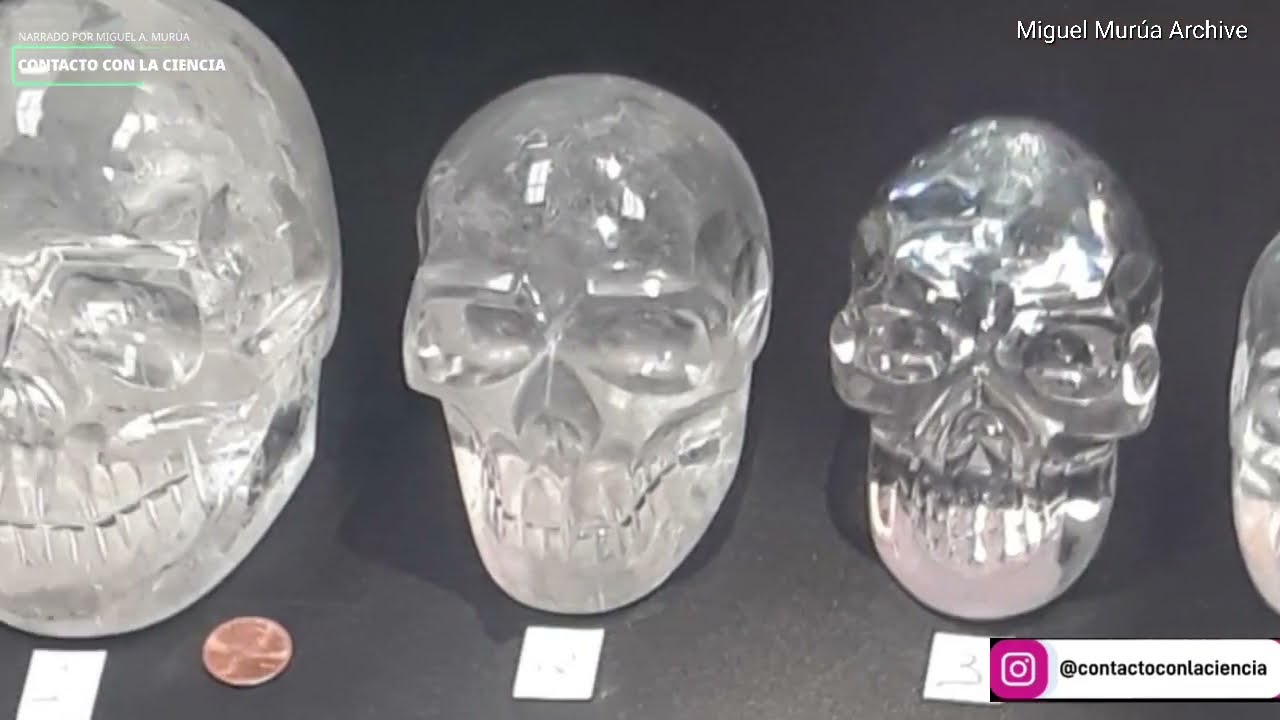
El susurro de leyendas antiguas resuena en los confines de la historia, a menudo eclipsado por la luz cegadora de la ciencia moderna. Sin embargo, algunas narrativas trascienden el tiempo, cargadas de un simbolismo que clama por ser desenterrado. Las calaveras de cristal son una de esas leyendas, artefactos envueltos en misterio y asociados con profecías que hablan del destino de la humanidad. Esta sexta entrega de nuestra investigación se adentra en el corazón de una de las leyendas más enigmáticas: la profecía maya que vincula estas reliquias con la salvación y el conocimiento supremo.

La Profecía Maya y las Trece Calaveras

"Una leyenda maya afirma que las calaveras de cristal aparecerán en tiempos difíciles para la humanidad. Serán 13 y cuando queden reunidas en un único espacio y asociadas entre sí, nos proporcionarán la explicación del origen de la vida y las claves de nuestro destino." Esta es la esencia de una profecía que ha capturado la imaginación de investigadores y escépticos por igual. La tradición oral maya, rica en simbolismo y cosmovisión, habla de un conocimiento cósmico codificado en estos objetos, cuya aparición marcaría un punto de inflexión en la historia humana.

La implicación de "tiempos difíciles" sugiere una crisis inminente, un momento en el que la humanidad necesitará desesperadamente la guía y la sabiduría que, según la leyenda, estas 13 calaveras podrían ofrecer. El número 13, recurrente en diversas culturas antiguas y asociado a ciclos lunares y a deidades, añade una capa de misticismo a la profecía.

El Despertar de las Calaveras: Siglo XIX

La profecía maya es muy probable que ya haya empezado a cumplirse porque las calaveras de cristal comenzaron a hacer su aparición a finales del siglo XIX, cuando se despertó el interés de los museos por las antigüedades. Este período marcó un auge en la exploración arqueológica y etnográfica, llevando al descubrimiento o, en algunos casos, a la aparición de objetos que desafiaban las explicaciones convencionales. Los museos de finales del siglo XIX y principios del XX se llenaron de hallazgos exóticos, y entre ellos, las calaveras de cristal emergieron como piezas particularmente intrigantes.

Algunos relatos sugieren que las calaveras fueron recuperadas de antiguas tumbas mayas o sitios arqueológicos en Mesoamérica. Sin embargo, la falta de documentación precisa y la naturaleza a menudo dudosa de estas "recuperaciones" han alimentado el debate sobre su autenticidad y origen. La investigación moderna, con técnicas avanzadas de datación y análisis de materiales, ha arrojado luz sobre este enigma, pero no sin generar más preguntas que respuestas.

"Muy buenas D Miguel..Si , la profecía...por lo menos no dicen qué estén hechas con cincel y martillo... Excelente video jefe siempre aprendiendo..."

Este comentario de un seguidor, identificado como "D Miguel", refleja la fascinación y la cautela que rodean a estos artefactos. La mención de que "no dicen qué estén hechas con cincel y martillo" alude sutilmente a la aparente perfección y complejidad de algunas calaveras, que parecen desafiar las herramientas y técnicas de la época antigua. La mención de "siempre aprendiendo" subraya el valor que los seguidores otorgan a la investigación y la difusión de este tipo de conocimiento anómalo.

Análisis de la Evidencia: ¿Fraude o Reliquias Anómalas?

Uno de los desafíos más significativos en la investigación de las calaveras de cristal es la autenticidad de los especímenes. Muchas de las calaveras más famosas, como la del Museo Británico o la del Museo del Quai Branly en París, han sido objeto de rigurosos análisis científicos. Estos estudios, a menudo utilizando microscopía electrónica y espectroscopía de rayos X, han revelado que varias de estas piezas fueron talladas utilizando herramientas modernas, como ruedas de corte de diamante, lo que las sitúa fuera del alcance de las culturas precolombinas.

El Museo Británico, por ejemplo, determinó que su calavera de cristal de roca, presumiblemente de origen mexicano, presentaba marcas de herramientas de corte y pulido compatibles con técnicas del siglo XIX. Esta conclusión ha llevado a la mayoría de los académicos a clasificar muchas de las calaveras de cristal como falsificaciones o, en el mejor de los casos, como artefactos coloniales o del siglo XIX que jugaron con el creciente interés por lo precolombino. Sin embargo, esta clasificación no disipa por completo el misterio.

  • Autenticidad Dudosa: La mayoría de las calaveras supuestamente antiguas exhiben signos de manufactura moderna.
  • El Misterio Persistente: A pesar de las demostraciones de falsificación, la leyenda y el interés perduran.
  • Posibles Orígenes Alternativos: ¿Podrían algunas calaveras ser genuinas de una civilización desconocida, o su poder reside en la creencia que generan?

La ciencia, con su enfoque en lo medible y reproducible, a menudo se enfrenta a fenómenos que desafían sus marcos de análisis. En el caso de las calaveras de cristal, el debate oscila entre el fraude deliberado y la posibilidad de que estos objetos posean propiedades o historias aún por comprender completamente. Nuestro deber como investigadores es sopesar la evidencia, examinar las afirmaciones y evitar conclusiones precipitadas.

El Significado Oculto: Origen y Destino de la Humanidad

Independientemente de su origen geológico o de su método de manufactura, la persistencia de la leyenda de las calaveras de cristal sugiere una profunda resonancia psicológica y cultural. La idea de que estos objetos contienen "la explicación del origen de la vida y las claves de nuestro destino" toca una de las inquietudes más fundamentales de la humanidad: nuestra búsqueda de significado y propósito en el cosmos.

Desde una perspectiva parapsicológica y esotérica, se especula que los cristales, y en particular el cuarzo, poseen propiedades piezoeléctricas y la capacidad de almacenar y transmitir información. Los defensores de esta visión sugieren que las calaveras de cristal podrían ser, en efecto, repositorios de conocimiento ancestral, quizás incluso de civilizaciones avanzadas o extraterrestres, que esperan el momento adecuado para ser "activadas" o descifradas.

La asociación con una profecía maya no es trivial. Los mayas poseían un conocimiento astronómico y matemático extraordinariamente avanzado, y su cosmovisión a menudo incluía conceptos de ciclos cósmicos y la interconexión de la vida. Si la leyenda es cierta, estas calaveras podrían ser la clave para comprender no solo nuestro pasado, sino también nuestro futuro evolutivo.

Veredicto del Investigador: ¿Fraude, Fenómeno Genuino o Algo Más?

Tras examinar la evidencia disponible, mi veredicto como investigador se inclina hacia una posición matizada. La gran mayoría de las calaveras de cristal que han sido analizadas científicamente muestran indicios claros de haber sido manufacturadas con herramientas modernas, lo que las desacredita como artefactos de las antiguas civilizaciones mayas o aztecas.

Sin embargo, desestimar por completo la leyenda sería un error. La persistencia de la profecía y el poder que estos objetos han ejercido en el imaginario colectivo sugieren que hay algo más en juego. Podríamos estar ante:

  1. Fraudes Históricos: Objetos creados en el siglo XIX para capitalizar el interés exótico, que se han convertido en leyendas por sí mismos.
  2. Reliquias de Origen Desconocido: Es posible que algunas calaveras genuinas, de manufactura imposible de explicar por la tecnología conocida de la época, existan pero no hayan sido aún identificadas o confirmadas.
  3. Símbolos de Conocimiento: Las calaveras podrían ser más un vehículo para la transmisión de ideas y enseñanzas (la profecía misma) que artefactos con poder intrínseco. Su valor radicaría en la creencia y la búsqueda que inspiran.

La "Historia Ignorada" de las calaveras de cristal no es solo una cuestión de arqueología o antropología, sino también de psicología colectiva y la necesidad humana de encontrar explicaciones a los grandes misterios de la existencia. La ciencia puede desmentir la manufactura antigua, pero no puede erradicar el mito ni su potencial significado.

El Archivo del Investigador

Para aquellos interesados en profundizar en el enigmático mundo de las calaveras de cristal y las profecías antiguas, recomiendo los siguientes recursos:

  • Libros: "The Crystal Skull:''s'' History and Myth" de Steve Castleberry, y "The Lost Book of the Maya" de Martin Brennan (para contexto cultural maya).
  • Documentales: Investigaciones independientes y documentales de canales como History Channel o National Geographic a menudo abordan estos temas, aunque con distintos grados de rigor.
  • Museos Virtuales: Explora las colecciones de museos como el British Museum o el Museo del Quai Branly en línea para ver imágenes y descripciones de las calaveras más famosas.

Este campo de estudio requiere una mente abierta pero crítica. La línea entre el hecho histórico, el mito y la fabricación moderna es, a menudo, deliberadamente borrosa.

Preguntas Frecuentes

¿Son reales las 13 calaveras de cristal de la profecía maya?
La existencia de 13 calaveras de cristal asociadas a una profecía específica es parte de la leyenda. Si bien existen múltiples calaveras de cristal, su autenticidad como artefactos precolombinos es, en su mayoría, cuestionada por la ciencia moderna.
¿Qué dice la ciencia sobre la manufactura de las calaveras de cristal?
Los análisis científicos de las calaveras más famosas han revelado marcas de herramientas modernas, como ruedas de corte, lo que sugiere que fueron hechas en épocas posteriores a las civilizaciones que se les atribuyen.
¿Podrían las calaveras de cristal tener propiedades energéticas o psíquicas?
Desde perspectivas esotéricas y de la parapsicología, se cree que los cristales, incluido el cuarzo, pueden almacenar y transmitir energía e información. Sin embargo, estas ideas no han sido validadas por la ciencia convencional.
¿Por qué la leyenda de las calaveras de cristal sigue siendo tan popular?
La popularidad de la leyenda radica en su conexión con misterios ancestrales, el potencial de desvelar secretos sobre el origen de la vida y el destino humano, y el atractivo universal de los artefactos enigmáticos.

alejandro quintero ruiz es un veterano investigador de campo con más de dos décadas de experiencia desentrañando los misterios que acechan en los márgenes de la historia y la ciencia. Su enfoque pragmático y analítico, forjado en innumerables expediciones y análisis de evidencia anómala, le permite abordar temas como la criptozoología, la ufología y los fenómenos paranormales con un rigor único. Es autor de varios informes de investigación y un ferviente creyente en la importancia de la evidencia empírica, aunque su mente permanece abierta a las posibilidades que escapan a nuestra comprensión actual.

La investigación sobre las calaveras de cristal es un recordatorio de que nuestro mundo está lleno de historias no contadas y secretos por descubrir. Aunque la ciencia moderna pueda desmitificar la procedencia de algunos artefactos, el poder del mito y la búsqueda humana de conocimiento trascienden las explicaciones fáciles.

Tu Misión de Campo:

Comparte tus propias experiencias o conocimientos sobre artefactos misteriosos en la sección de comentarios. ¿Has visto alguna vez una calavera de cristal? ¿Crees en la profecía maya? Tu perspectiva es vital para nuestra investigación colectiva. Si esta investigación te ha resultado valiosa, considera compartirla en tus redes sociales para que más mentes curiosas puedan unirse a nuestro dossier.

Tiahuanaco: Misterios de 12.500 a.C. Bajo Templos Sagrados


Los vestigios de Tiahuanaco y Puma Punku, enclavados en el altiplano boliviano, plantean un enigma que desafía las cronologías históricas convencionales. Las imponentes estructuras, caracterizadas por ángulos rectos de una precisión asombrosa, sugieren un nivel de conocimiento y tecnología que, a simple vista, parece inalcanzable para las civilizaciones precolombinas tal como las entendemos. La figura de Arthur Posnansky emerge como un punto focal en este misterio, al proponer fechas de origen que se remontan a aproximadamente 12.500 a.C., una era que precede a las pirámides de Egipto y a la supuesta Edad de Bronce.

Introducción: El Debate Cronológico

La narrativa histórica oficial, a menudo construida sobre cimientos de evidencia fragmentaria y interpretaciones convencionales, parece tambalearse ante la magnitud y la sofisticación de sitios arqueológicos como Tiahuanaco. La conocida distinción entre la "época pre-incaica" y la propia civilización incaica se ve desafiada por un contraste abismal en la calidad constructiva y el conocimiento aparente exhibido. Mientras algunos estudiosos sitúan los orígenes en la Edad de Bronce, la datación propuesta por Arthur Posnansky, basada en análisis astronómicos y geológicos, nos transporta a un pasado mucho más remoto: 12.500 años antes de Cristo. Esta discrepancia no es un mero detalle académico; pone en tela de juicio nuestra comprensión de la evolución de las civilizaciones en América del Sur.

Arthur Posnansky y la Cronología de Tiahuanaco

El ingeniero y arqueólogo austríaco Arthur Posnansky dedicó décadas a la investigación exhaustiva de Tiahuanaco. Su obra cumbre, "Tiahuanaco y sus Orígenes", publicada póstumamente, presentó un análisis detallado de las estructuras y su alineación astronómica. A través de complejos cálculos que involucraban la precesión de los equinoccios, Posnansky estimó que el complejo de Tiahuanaco, en su fase más antigua, podría datar de alrededor de 12.500 a.C. Esta cifra, considerablemente anterior a la datación comúnmente aceptada para el surgimiento de civilizaciones complejas en la región, sugiere la existencia de una cultura altamente desarrollada en un período que la arqueología tradicional reserva para sociedades de cazadores-recolectores.

"Arthur Posnansky pasó una cantidad exorbitante de tiempo en Tiahuanaco y calculó una fecha de origen real de Tiahuanaco que se basó en alrededor de 12.500 antes de Cristo."

Esta datación es fundamental porque sitúa las construcciones pre-incaicas en un contexto temporal mucho más profundo, obligando a reconsiderar las cronologías estándar. La implicación es clara: si Tiahuanaco es tan antiguo, ¿quiénes fueron sus constructores y qué nivel de conocimiento poseían?

Precisión Arquitectónica: ¿Ingenio Ancestral o Tecnología Extraterrestre?

Uno de los aspectos más desconcertantes de Tiahuanaco y, en particular, de Puma Punku, es la asombrosa precisión de sus cortes y uniones. Los monolitos de piedra, algunos de un peso considerable, presentan ángulos rectos casi perfectos, ranuras y superficies pulidas con una exactitud que rivaliza con la maquinaria moderna. Los comentarios de visitantes y observadores recurrentes a menudo señalan esta característica:

"Esos ángulos rectos son simplemente increíbles y perfectos, solo con los mejores láseres y CNCs del mundo actual podríamos lograrlos hoy en día."

La pregunta que surge es inevitable: ¿cómo lograron estas sociedades, supuestamente desprovistas de herramientas avanzadas como sierras de precisión, láseres o máquinas de control numérico por computadora (CNC), alcanzar tal nivel de perfección? Esta disparidad entre la supuesta tecnología de la época y la calidad de la obra ha alimentado innumerables teorías, desde el uso de técnicas de construcción perdidas hasta la intervención de inteligencias no humanas.

Pre-Incas vs. Incas: Un Salto Tecnológico Inexplicable

El contraste entre las construcciones de la era pre-incaica, como Tiahuanaco, y las propias construcciones incas, es otro punto crucial en este debate. A pesar de que los Incas son conocidos por su vasta red de caminos y construcciones sólidas, el nivel de detalle y la complejidad de corte de las piedras en Puma Punku y Tiahuanaco a menudo superan la destreza constructiva incaica. Varios testimonios reflejan esta observación recurrente:

"Tiene razón este men, las construcciones pre-incas revelan mayor conocimiento que las construcciones propiamente incas...cuando lo antiguo es mas adelantado que lo actual es un misterio."

Esta paradoja plantea interrogantes sobre la linealidad del progreso tecnológico. Si bien se espera que las civilizaciones posteriores mejoren las técnicas de sus predecesoras, en este caso, parece haber habido una regresión o, al menos, una pérdida de conocimiento significativo después del apogeo de Tiahuanaco. La evidencia sugiere que las civilizaciones pre-incas no solo eran antiguas, sino también, en ciertos aspectos, tecnológicamente superiores a sus sucesores.

Ecos del Altiplano: Declaraciones de Testigos

La experiencia directa de visitar estos sitios es, para muchos, una revelación. Los testimonios de personas que han estado en Tiahuanaco y Puma Punku son uniformemente asombrosos. El sentimiento de maravilla ante la escala y la ejecución trasciende las barreras culturales y geográficas.

"Soy brasileño y tuve la oportunidad de conocer Tiwanaco y Puma Punku. Son impresionantes. Seguramente indígenas sin ninguna tecnología no las construyeron. Es imposible. Saludos desde Minas Gerais-Brasil."

Otro visitante relata:

"Hace unos días estuve visitando esta área de Bolivia, realmente sorprendente lo que pudimos ver allí."

Estos relatos de primera mano validan la extrañeza y el impacto que estos enclaves arqueológicos ejercen sobre quienes los contemplan, reforzando la idea de que hay mucho más de lo que las explicaciones convencionales pueden ofrecer.

Teorías de Civilizaciones Avanzadas y Mundos Antiguos

La aparente imposibilidad de explicar las construcciones de Tiahuanaco con la tecnología atribuida a las culturas precolombinas ha dado pie a diversas teorías. Una de las más persistentes es la de la intervención de "alienígenas ancestrales" o, más ampliamente, de civilizaciones antiguas con un conocimiento tecnológico equiparable o superior al nuestro.

"como siempre las investigaciones excelente y excelentes desde la perspectiva de este canal que nos hace abrir la mente a posibilidades que en tiempos muy antiguos civilizaciones avanzadas de otros mundos trajeran los conocimientos y la tecnología para hacer crecer a los humanos, excelente punto de vista, un abrazo!"

Otras interpretaciones apuntan a la existencia, en el pasado remoto, de civilizaciones terrestres avanzadas que desaparecieron, dejando tras de sí monumentos como Tiahuanaco. La hipótesis de una gran guerra antigua, devastadora y cíclica, también emerge en las discusiones:

"La historia se vuelve a repetir estoy seguro q en el pasado hubo una gran guerra q destruyó todo :( y volverá a pasar y volveremos estar viviendo en cuevas cuando la guerra termine. Y todo volverá a empezar una vez más."

Estas teorías, aunque especulativas, intentan dar sentido a la anacronía tecnológica y a la antigüedad de los sitios, sugiriendo que nuestra comprensión de la historia temprana de la humanidad es incompleta o, en algunos casos, errónea. Es importante notar la mención de que "a veces no revelan todo lo que hallan o descubren", reflejando una desconfianza hacia las narrativas oficiales.

Veredicto del Investigador: ¿Fraude, Fenómeno Genuino o Algo Más?

Tras examinar la evidencia, los testimonios y las discrepancias cronológicas, mi veredicto como investigador se inclina firmemente hacia un fenómeno genuino que desafía nuestras explicaciones actuales. Las precisiones arquitectónicas en Tiahuanaco y Puma Punku son demasiado consistentes y extremas para ser atribuidas a simples errores o a herramientas rudimentarias. La datación propuesta por Posnansky, aunque controvertida, está respaldada por observaciones astronómicas que no pueden ser descartadas a la ligera. Si bien la intervención directa de "alienígenas ancestrales" es una hipótesis fascinante, la evidencia más sólida apunta a la existencia de una civilización precursora en América del Sur, poseedora de conocimientos y técnicas de construcción extraordinarias, cuyo legado nos mira desde las piedras milenarias de los Andes. La posibilidad de que esta civilización se remonte a 12.500 a.C. abre un capítulo completamente nuevo en la historia humana, uno que la arqueología ortodoxa aún debe abordar con la mente abierta y el rigor necesario para desentrañar estos enigmas. El misterio subyace no solo en "quiénes vivían allí", sino en "cómo lo hicieron" y "cuándo realmente comenzó todo".

El Archivo del Investigador

Para profundizar en los misterios de Tiahuanaco y otras civilizaciones antiguas, recomiendo la consulta de los siguientes recursos:

  • Libros: "Tiahuanaco: Capital del Imperio Incaico" de Arthur Posnansky (una fuente primaria fundamental, aunque con interpretaciones que deben ser contrastadas). Investigaciones sobre la arqueoastronomía en los Andes.
  • Documentales: Series como "Alienígenas Ancestrales" (si bien a menudo especulativas, plantean preguntas válidas y muestran imágenes impactantes de los sitios) y documentales de carácter más académico sobre culturas precolombinas.
  • Plataformas de Investigación: Archivos de publicaciones arqueológicas, revistas científicas especializadas en prehistoria sudamericana y foros de debate académico sobre cronologías antiguas.

Explore también nuestro archivo sobre arqueología prohibida y teorías de conspiración para obtener análisis más profundos.

Preguntas Frecuentes

¿Cuál es la datación más aceptada para Tiahuanaco por la arqueología convencional?
La arqueología convencional tiende a situar el apogeo de Tiahuanaco en un período mucho más tardío, generalmente entre el 500 y el 1000 d.C., aunque existen fases de ocupación anteriores. Las dataciones extremas como las de Posnansky son objeto de intenso debate.
¿Qué explica la precisión de los cortes en Puma Punku?
Las explicaciones convencionales varían desde el uso de abrasivos duros (como arena de cuarzo) con herramientas de cobre o piedra, hasta técnicas desconocidas. Las teorías alternativas sugieren herramientas avanzadas, posiblemente no humanas.
¿Por qué se dice que las construcciones pre-incas son más sofisticadas que las incas?
Se refiere a la precisión de los cortes, las uniones de piedras y la complejidad de las estructuras megalíticas en sitios como Puma Punku, que a menudo superan la tecnología visible en muchas construcciones propiamente incas, a pesar de ser anteriores.
¿Qué evidencia apoya la fecha de 12.500 a.C. para Tiahuanaco?
Arthur Posnansky basó su datación principalmente en el análisis de las alineaciones astronómicas de ciertos monumentos, interpretando su orientación en relación con los solsticios y equinoccios en épocas precesionales muy antiguas. También consideró elementos geológicos y sedimentarios.

alejandro quintero ruiz es un veterano investigador de campo con más de veinte años de experiencia desentrañando enigmas paranormales, críptidos y leyendas urbanas. Su enfoque pragmático y analítico, forjado en innumerables expediciones y análisis de evidencia, lo ha convertido en una autoridad reconocida en el estudio de lo inexplicable. Combina el rigor de un detective con la curiosidad insaciable de un explorador, siempre buscando la verdad más allá de lo convencional.

Tu Misión: Desvelar el Pasado Olvidado

La próxima vez que observes una estructura antigua, ya sea en una fotografía o en persona, detente y considera la tecnología y el conocimiento que requirió. ¿Podrían nuestras civilizaciones actuales replicar esas hazañas con los mismos recursos? Comparte tus reflexiones y experiencias en la sección de comentarios. Tu perspectiva es valiosa en esta continua investigación.

¡Comparte este expediente si crees que la historia oficial necesita una reescritura! ¡Y no olvides seguirnos para más investigaciones que desafían los límites de lo conocido!

Peru Gold Mines: Ancient Mysteries & Alien Theories Explored


# The Lost Gold Mines Of Peru: Unearthing Ancient Mysteries

In the heart of the Andes, a question echoes through the mists of time: was gold merely a symbol of status for ancient Peruvian civilizations, or did it hold a deeper, perhaps even cosmic, significance? This expedition delves into the enigmatic allure of Peru’s ancient gold, exploring not just the mines, but the sacred beliefs and unique properties that may have elevated this precious metal beyond mere earthly wealth. We examine the evidence, from the intricate workings of ancient mines to the possibility that gold's very nature was understood by our ancestors in ways we are only beginning to comprehend.

I. The Ancient Allure: Peru as the Land of Gold

Peru has long been synonymous with gold, its very name whispered in histories as the "Land of Gold." This moniker wasn't bestowed lightly. For millennia, the Incas and their predecessors adorned themselves with this lustrous metal, a tangible manifestation of their power and connection to the divine. When the Spanish conquistadors arrived in the 16th century, their greed was ignited by tales of unimaginable riches, leading to the systematic plunder of Incan treasures and their subsequent shipment across the Atlantic to Spain. This historical wave of extraction underscores the immense value placed upon gold, not just by the native populations but by the burgeoning European empires.

II. Gold: More Than a Status Symbol?

Historically, gold's value has been intrinsically linked to its rarity and malleability. Its ease of transformation into intricate jewelry and standardized coinage made it a practical medium for adornment and exchange. For cultures like the ancient Incas, gold served as a potent status symbol, clearly delineating social hierarchies and the privileges of the elite. However, the narrative rarely stops there. The sheer dedication to extracting and working this metal suggests a reverence that transcends simple economic or social utility. Was gold merely a marker of earthly power, or did it represent something more profound to those who wielded it?

III. Sacred Beliefs and Divine Origins

Many ancient cultures, including those in Peru, held the belief that gold originated directly from the gods. It was often considered a sacred substance, imbued with celestial energy and purity. This perspective elevates gold from a mere commodity to a divine gift, a tangible link between the mortal realm and the heavens. The intense labor involved in mining and crafting gold artifacts can be seen not just as an economic pursuit but as a form of religious devotion, a way to honor the divine by working with one of its most precious earthly manifestations. The metal’s perceived purity mirrored the perceived purity of the gods themselves.

IV. The Engineering Behind the Myth: Ancient Mining Operations

The extraction of gold from the rugged Andean landscape required sophisticated knowledge of geology and engineering. While often overshadowed by the mystique of the metal itself, the methods employed by ancient miners are a testament to their ingenuity. Theories abound regarding the purpose of the numerous holes found in these ancient sites. Some propose they were integral to the mining process itself, perhaps used for ventilation or as part of a water collection system essential for extracting gold, especially in arid regions.

One compelling theory suggests that these holes were designed to collect water, serving dual purposes: for drinking and for transforming arid lands into fertile territory. This highlights an advanced understanding of resource management and terraforming. Another perspective links these structures to geological phenomena, proposing that if a glacier once existed in the area, the terrain could have acted as a natural sluice box, concentrating gold deposits. The idea of "superconductor bandits" adds a layer of speculative intrigue, hinting at advanced technology perhaps misunderstood or repurposed.

"The holes are used to collect water, to drink & change a desert into useful land."
Audience Theorist
"if there was a glacier at one time. This would act as a sluice box for gold."
Audience Theorist

V. Unraveling the Metal's Unique Properties and Fringe Theories

Beyond its aesthetic appeal and historical significance, gold possesses unique physical and chemical properties that have fueled speculation. Its high conductivity, resistance to corrosion, and perceived "purity" have led some to wonder if ancient civilizations recognized these traits and utilized them in ways far beyond simple ornamentation.

Fringe theories, often explored in the context of extraterrestrial visitation, suggest that gold's properties may have been understood by advanced civilizations, potentially non-human ones, for purposes related to technology or energy. The idea that these ancient holes might have been used to "charge the ground" or interact with unknown energies aligns with these speculative frameworks.

Adding to the tapestry of mystery, stories like that of Silas Orven, who claims to be a time traveler with uncanny predictions about aliens, time travel, and our reality, intersect with the broader discourse surrounding ancient mysteries. While often dismissed as fantasy, such narratives tap into a collective fascination with the unknown and the possibility of advanced knowledge existing outside conventional historical records. The tale of miners trapped in a flooded cavern in Laos, while a tragic contemporary event, serves as a stark reminder of the enduring dangers and mysteries associated with resource extraction, even in modern times.

"When your in the sky... Can u see the Freemason symbol?"
Audience Commentator
"Some king found a treasure map and had his peasants systematically dig in the "X" spot until treasure was found, is a possible theory"
Audience Theorist

VI. Researcher's Verdict: The Extraterrestrial Hypothesis

While conventional archaeology points to gold's role as a status symbol and a material reflecting wealth and religious devotion, the persistent questions surrounding the scale and sophistication of ancient Peruvian mining operations invite deeper investigation. The "Ancient Aliens" perspective posits that certain advanced technologies or knowledge, potentially integral to understanding gold's true significance, may have been introduced by extraterrestrial visitors.

Could the Incas and other ancient peoples have recognized gold's unique properties—its conductivity, its resonance—and used it in conjunction with technologies or rituals we can no longer comprehend? The theory suggests that gold may have been valued not just for its beauty, but for its potential role in energy transmission, communication, or even as a component in otherworldly devices. The sheer effort invested in uncovering and working this metal across vast, challenging terrains hints at a purpose that transcends simple adornment. From this viewpoint, the "lost gold mines" are not just relics of ancient industry but potential keys to understanding a forgotten chapter of human history, one perhaps influenced by visitors from the stars.

VII. The Researcher's Archive

For those seeking to delve deeper into the Enigmas of ancient civilizations and the possibilities of extraterrestrial influence, the following resources offer invaluable insights:

  • "Chariots of the Gods?" by Erich von Däniken: A foundational text exploring ancient astronaut theories, with significant focus on South American civilizations.
  • "Ancient Aliens" Official Website: For episode guides, behind-the-scenes content, and further exploration of topics discussed in the series.
  • Documentaries on Incan Civilization: Numerous historical documentaries offer comprehensive looks at Incan society, technology, and beliefs, providing a crucial baseline for understanding the context of gold's importance.
  • Geological Studies on Andean Mineral Deposits: Scientific papers detailing the formation and extraction of gold in Peru can offer a grounding perspective on the physical realities of mining.

VIII. Frequently Asked Questions

1. What was the primary historical use of gold in ancient Peru? Historically, gold in ancient Peru was primarily used as a status symbol by rulers and elites, and as a sacred material in religious ceremonies, believed to be a gift from the gods.

2. Were the ancient mining techniques in Peru advanced? Yes, ancient Peruvian civilizations employed sophisticated mining techniques, including evidence of water management systems and a deep understanding of the terrain for extraction, showcasing considerable engineering prowess.

3. What is the "Ancient Aliens" theory regarding Peru's gold? The "Ancient Aliens" theory suggests that extraterrestrial visitors may have influenced ancient Peruvian civilizations, introducing advanced knowledge about gold's unique properties and its potential use in technology or energy systems beyond simple adornment.

4. How did the Spanish conquest impact Peru's gold legacy? The Spanish conquest led to the systematic plunder of vast amounts of gold, dramatically altering the cultural and economic landscape of Peru and enriching Spain, while also contributing to the loss of much indigenous knowledge and artifacts.

---

Alejandro Quintero Ruiz is a seasoned paranormal investigator with over two decades of field experience. His pragmatic approach, honed in the crucible of unexplained phenomena, combines rigorous analytical methods with an unyielding pursuit of truth. He has documented countless anomalies, from spectral apparitions to cryptid encounters, always seeking the rational explanation while remaining open to the truly extraordinary. His work aims to bridge the gap between the inexplicable and the observable, providing readers with meticulously researched insights into the world's greatest mysteries.

Your Mission: The Andean Enigma

The allure of Peru's gold is undeniable, woven into the fabric of history, religion, and human ambition. But what lies beneath the surface? Your mission, should you choose to accept it, is to look beyond the glint of metal. Consider the evidence presented: the engineering feats, the sacred beliefs, the unique properties of gold, and the provocative theories that suggest a connection to something beyond our world. Do you believe ancient Peruvians simply revered gold for its earthly value, or could their understanding have been far more profound? Share your hypotheses and any personal experiences or knowledge related to ancient South American civilizations and their relationship with gold in the comments below. Let’s continue the investigation.

What are your thoughts on the theories surrounding Peru's ancient gold? Did the Incas understand properties of gold that modern science is only now rediscovering, or is this purely speculation? Share your insights and theories in the comments below!

Found this expedition into Peru's past illuminating? Hit the share button and send this investigation to your fellow truth-seekers on social media. Don't let these mysteries remain buried!

Bodette Video Champ: Analysis of Lake Champlain Monster Footage


# The Bodette Video: Unexplained Phenomena or Misidentification?

Introducción

El Lago Champlain, una masa de agua que se extiende a lo largo de la frontera entre Nueva York y Vermont, ha sido durante mucho tiempo el escenario de misterios inexplicables. Entre las leyendas más persistentes, la del "Champ", una criatura lacustre similar al monstruo del lago Ness, ha capturado la imaginación popular. Uno de los fragmentos de evidencia más discutidos en relación con esta entidad es el llamado "Bodette Video". Grabado desde una embarcación, este metraje, una vez mejorado, ha generado un intenso debate sobre lo que realmente se oculta en las profundidades del lago. Como investigador, mi deber es mirar más allá del sensacionalismo y analizar la evidencia con un ojo crítico, buscando explicaciones racionales o, si fallan, abrazando lo desconocido.

Análisis del Bodette Video

El metraje original, a menudo percibido como granulado y ambiguo, ha sido sometido a procesos de mejora y estabilización digital. Estas técnicas buscan realzar detalles que podrían pasar desapercibidos en la versión cruda. Las mejoras revelan una figura que, según algunos observadores, posee características distintivas, incluyendo la apertura de una boca. La perspectiva, tomada desde un barco, añade una capa de complejidad al análisis, ya que la posición de la cámara y la distancia al sujeto pueden distorsionar la percepción.

La manipulación digital, si bien puede aclarar ciertos aspectos, también puede introducir artefactos o exagerar características mínimas, llevando a interpretaciones erróneas. Una evaluación objetiva requiere considerar tanto la posibilidad de una criatura anómala como la de una identificación errónea de fauna conocida, o incluso un engaño deliberado.

El Contexto de Champ

La leyenda de Champ es un elemento cultural arraigado en la región del Lago Champlain. A lo largo de los años, ha habido numerosos avistamientos reportados, descripciones de objetos anómalos y hasta supuestas fotografías. Sin embargo, la falta de evidencia concluyente ha mantenido a Champ en el ámbito de lo folclórico y lo especulativo. El Bodette Video, al ser uno de los pocos registros visuales de supuesta alta calidad, se convierte en un punto focal para los defensores de la existencia de la criatura.

La comparación con otros casos de críptidos lacustres, como el famoso monstruo del lago Ness, es inevitable. Las similitudes en las descripciones y la naturaleza esquiva de estas supuestas criaturas alimentan la hipótesis de una familia de animales prehistóricos o desconocidos que habitan en los grandes cuerpos de agua dulce del mundo.

Evidencia Anómala o Identificación Errónea?

Los análisis detallados del Bodette Video, especialmente tras su mejora, han generado interpretaciones encontradas. Algunas de las observaciones más intrigantes incluyen:

  • Apertura de la boca: La mejora digital ha permitido a algunos espectadores percibir claramente cómo la criatura abre la boca.
  • Detalles craneales: Se han reportado la visibilidad de crestas orbitales cuando la criatura gira la cabeza, sugiriendo una estructura anatómica compleja más allá de una simple aleta o tronco.
  • Comportamiento alimentario: Rumores persistentes, basados en relatos de quienes afirman haber visto el metraje completo, sugieren que el video muestra a la criatura cazando y comiendo peces.

Sin embargo, el escepticismo es un componente esencial de la investigación paranormal. Alternativamente, las características observadas podrían ser explicadas por:

  • Identificación errónea de fauna conocida: Grandes esturiones, peces de gran tamaño o incluso grupos de peces nadando en formación podrían ser malinterpretados bajo condiciones de poca visibilidad y con movimiento. La presencia de esturiones de gran tamaño en el Lago Champlain, algunos superando los 300 libras y los 150 años de edad, es un hecho conocido.
  • Artefactos de la mejora digital: Los procesos de estabilización y realce pueden crear ilusiones ópticas o exagerar detalles inexistentes en el metraje original.
  • Engaño: La posibilidad de que el video sea una falsificación fabricada para generar interés o notoriedad nunca debe ser descartada sin una investigación exhaustiva.

La discusión se amplifica con menciones a dientes de anguila de tamaño colosal encontrados en el área de Loch Ness, sugiriendo que criaturas de proporciones masivas podrían existir en entornos acuáticos similares, aunque la conexión directa con el Bodette Video requeriría una evidencia más sólida.

Perspectivas de la Comunidad

Las reacciones al Bodette Video son tan variadas como las interpretaciones de su contenido. Mientras algunos quedan asombrados por las supuestas revelaciones del metraje mejorado, atribuyendo la evidencia a una criatura anómala y especulando sobre patrones migratorios de animales desconocidos, otros son menos convencidos. Varios comentaristas expresan dificultad para discernir claramente las características mencionadas, atribuyendo lo visto a grandes anguilas o tortugas.

La experiencia personal de los observadores también juega un papel crucial. Un residente a largo plazo del Lago Champlain, a pesar de pasar años buscando a "Champ" y haber tenido un encuentro cercano con un Sasquatch, admite no haber visto nada en el video que lo convenza. Esta perspectiva ancla el debate en la realidad subjetiva de la percepción.

La mención de la existencia de vídeos más completos, que supuestamente mostrarían a la criatura interactuando con su entorno, añade una capa de misterio y frustración, ya que la liberación de este material podría resolver muchas dudas.

"Holy cow! WTH is that thing? The enhancement completely rewrites everything that's been said about this footage! You can see orbital ridges when it turns its head. Loch Ness has nothing on Champ, this enhancement along with the echolocation evidence DEFINITELY indicates some anomalous animal frequents there. I'm beginning to wonder if these animals are migratory like salmon and return to fresh water and then go back out to sea again after having mated. That would make sense with the frequency of the sightings being in the spring-summer months, late June to early July especially. Great work." — Comentario de un espectador sobre la versión mejorada del video.

Veredicto del Investigador

El Bodette Video, incluso mejorado, se mantiene en la frontera entre la evidencia convincente y la identificación errónea. La presencia de características interpretables como "anómalas" es innegable en las versiones procesadas. Sin embargo, la falta de un consenso claro, la posibilidad de artefactos digitales y la existencia de explicaciones más mundanas, como la presencia de grandes esturiones, impiden una conclusión definitiva.

La evidencia de supuestas crestas orbitales y la apertura de la boca son puntos que merecen una investigación más profunda, idealmente con acceso al metraje completo y a los datos de procesamiento utilizados. Hasta que esa evidencia no esté disponible y sea verificada independientemente, el Bodette Video debe ser catalogado como un caso intrigante, pero no concluyente, dentro del expediente de Champ. La posibilidad de una criatura desconocida en el Lago Champlain sigue siendo una hipótesis plausible, pero el Bodette Video por sí solo no es suficiente para confirmarla.

El Archivo del Investigador

Para aquellos que deseen profundizar en el enigmático mundo de los críptidos lacustres y las investigaciones paranormales, recomiendo los siguientes recursos:

  • Libros: "The Lake Champlain Monster" de Arthur Miller, "In Search of Lake Monsters" de Karl Shuker.
  • Documentales: "MonsterQuest: Lake Champlain Monster" (History Channel), "Searching for the Loch Ness Monster" (varias producciones).
  • Plataformas: Foros dedicados a la criptozoología y sitios web de investigación paranormal de buena reputación.

Preguntas Frecuentes

  • ¿Qué es el Bodette Video?
Es un fragmento de video grabado en el Lago Champlain que supuestamente muestra a la criatura local conocida como "Champ". Ha sido mejorado digitalmente para realzar detalles.
  • ¿Se ha confirmado la existencia de "Champ"?
No. A pesar de numerosos avistamientos y la existencia de videos como el de Bodette, no hay evidencia científica concluyente que confirme la existencia de "Champ".
  • ¿Qué otras explicaciones existen para las imágenes del video?
Las explicaciones incluyen la identificación errónea de fauna conocida como esturiones o grupos de peces, artefactos de la mejora digital o, en algunos casos, la posibilidad de un engaño.
  • ¿Existe el metraje completo del video de Bodette?
Existen informes y rumores sobre la existencia de una versión más larga del video, pero no ha sido lanzada públicamente ni verificada de manera independiente.

Sobre el Autor

Alejandro Quintero Ruiz es un veterano investigador de campo con más de dos décadas de experiencia desentrañando los misterios más esquivos de nuestro mundo. Con un enfoque pragmático y analítico, ha documentado innumerables casos de fenómenos anómalos, desde avistamientos de OVNIs y encuentros con críptidos hasta fenómenos poltergeist y teorías de conspiración. Su metodología rigurosa combina la recopilación de evidencia de campo, el análisis forense de datos y la consulta con expertos en diversas disciplinas. Alejandro es conocido por su estilo directo y su dedicación inquebrantable a la búsqueda de la verdad, sin importar cuán oculta o incómoda pueda ser. Su trabajo busca no solo documentar lo inexplicable, sino también proporcionar un marco de investigación creíble y accesible para el público.

Tu Misión: El Desafío del Investigador

La próxima vez que te encuentres frente a una imagen o video ambiguo, recuerda el Bodette Video. Cuestiona la primera impresión. Busca explicaciones alternativas. ¿Podría ser un pez grande, una formación rocosa inusual, o un fenómeno natural mal interpretado? Tu capacidad para analizar críticamente la evidencia es tu herramienta más valiosa.

Comparte tus propias experiencias o interpretaciones sobre el Bodette Video o avistamientos de "Champ" en los comentarios. Si este análisis te ha parecido revelador, ayúdanos a difundir la investigación compartiéndolo en tus redes sociales.

Nature's Golden Treasures: Unearthing Earth's Most Astonishing Finds


Investigator's Note: The following content may include speculative theories and interpretations of archaeological anomalies. While some elements are presented as potential evidence of extraordinary claims, critical analysis and skepticism are paramount.

The allure of gold is primal. It speaks of value, power, and an enduring beauty that has captivated humanity for millennia. But beyond the glittering coins and ornate jewelry that fill our museums, the Earth itself harbors secrets—natural formations and ancient artifacts that possess a "golden" quality, not solely of material wealth, but of profound mystery and breathtaking artistry. We delve into the realm of nature's most astonishing treasures, examining evidence that pushes the boundaries of our understanding of history, geology, and perhaps, even our place in the cosmos.

The Golden Allure: More Than Just Metal

The phrase "hidden gold" conjures images of pirate chests and lost mines. But the Earth yields its treasures in myriad forms. These are not merely objects of monetary worth, but testaments to geological processes spanning eons or echoes of civilizations lost to time. The pursuit of these discoveries, often requiring tireless dedication and a keen eye, offers a glimpse into the planet's profound history. Each find tells a story, a narrative etched in stone, metal, or intricate design, waiting to be unearthed and shared with the world. This exploration is not just about the material value, but about the inherent beauty and the profound questions these treasures ignite.

Anomalous Artifacts: Whispers from the Past

The original content alludes to astonishing finds, described as "artifacts" and "golden wonders." While lacking specific details in the provided text, the audience reactions suggest the presence of objects that challenge conventional historical narratives. Comments like "Que artefatos, alienígenas incríveis" (What artifacts, incredible aliens) and the observation about the "Ten Commandments on the back" point towards discoveries that, if genuine, could revolutionize our understanding of ancient history and extraterrestrial contact. The sheer disbelief and excitement ("Fantastic, bro. Insane!") highlight the potentially paradigm-shifting nature of these claims.

"Holy sh!%, I need to see all these artifacts at a museum. We need a narrator, Morgan Friedman should reads these & discover them with the world."

This reaction underscores a common sentiment when confronted with extraordinary evidence: the desire for validation and public dissemination. The suggestion of a renowned narrator like Morgan Freeman implies an acknowledgment of the profound impact such discoveries could have, demanding a voice capable of conveying their significance to a global audience. The mention of finding these items potentially "in some field hidden by the makers" or stumbling upon "a temple of sorts" hints at the possibility of discovering lost sites of immense historical or ritualistic importance.

Geological Marvels: Nature's Golden Artistry

Beyond man-made artifacts, the Earth produces its own "golden" treasures through natural processes. These can include spectacular gold deposits, intricate crystalline structures, or fossils that appear almost too perfect to be natural. The raw beauty of these formations speaks to the immense power and artistry of geological time. Imagine discovering veins of pure gold embedded within rock faces, or geodes that, when cracked open, reveal dazzling arrays of crystals. These are the earth’s original treasures, formed over millions of years, indifferent to human history but intrinsically valuable for their natural splendor and scientific significance. The tireless work mentioned in the original text likely refers to the meticulous process of geological surveying, mining, or paleontological excavation required to bring these natural wonders to light.

The Alien Connection: Unexplained Parallels

A particularly intriguing aspect highlighted by the audience reactions is the potential link between discovered artifacts and extraterrestrial life. The comment, "That aliens head has the same pattern on top of it as seen on the Bugas sphere," draws a direct parallel between a potential artifact and another anomalous object, suggesting a consistent pattern or technology across different potential encounters or origins. This is where the investigation straddles the line between archaeology and ufology. The Bugas Sphere, a real-world object discovered in the Ural Mountains, has been dated to approximately 40,000 years old and features intricate spiral carvings, leading some to speculate about its non-human origin. If similar patterns are found on other "artifacts," it could suggest a common, non-terrestrial designer or influence.

"If this is real then we now definitely know we been lied to about this universe."

This statement encapsulates the profound implications of validating such claims. It suggests a deep-seated suspicion that established historical and cosmological narratives are incomplete or deliberately misleading. The volume jump noted at "1:10" could relate to audio-visual elements in the original source material, perhaps indicating a moment of heightened tension or revelation within the presented evidence that the investigator found more "terrifying than the bones," implying the presence of disturbing or consequential findings.

Investigator's Verdict: Fact or Fabrication?

Analyzing the fragmented information and audience reactions, a pattern of extraordinary claims emerges. The artifacts mentioned, particularly those drawing parallels to alien iconography or challenging established history, warrant rigorous scrutiny. Skepticism is not merely advisable; it is essential. The "Good try!" and "Y'all trippin" comments represent the necessary counterpoint to the enthusiasm, reminding us that many such claims are ultimately debunked as hoaxes, misinterpretations, or natural phenomena mistaken for something more.

However, the persistence of certain motifs (like the pattern comparison) and the genuine awe expressed by some viewers suggests that even if the ultimate explanation is mundane, the *perception* of wonder is real. My assessment is that while many "hidden treasures" are either geological marvels or outright fabrications, the consistent emergence of anomalies that defy easy explanation requires continued, open-minded investigation. The potential for misinterpretation is high, but the possibility of genuine, paradigm-shifting discoveries cannot be dismissed outright without thorough examination. The "greatest funds ever!" comment, laced with sarcasm, perhaps points to the financial investment and effort required in such discoveries, often yielding more questions than answers.

The Investigator's Archive

For those seeking to delve deeper into the mysteries of anomalous artifacts and natural wonders, I recommend the following resources:

  • Documentaries: Explore films that critically examine archaeological anomalies and ancient astronaut theories, looking for balanced perspectives rather than unsubstantiated claims.
  • Geological Journals: For understanding nature's true golden artistry, consult publications focusing on mineralogy, crystallography, and paleontology.
  • Reputable Archaeological Reports: Follow the work of established archaeological institutions that conduct peer-reviewed research, providing a grounded view of historical discoveries. Archaeological Institute of America
  • Books on Ancient Mysteries: Engage with authors who present evidence thoughtfully, acknowledging controversy and alternative hypotheses.
  • Ufology Archives: For research into potential extraterrestrial connections, consult archives known for their data collection and witness testimony, while maintaining a critical lens. NUFORC (National UFO Reporting Center)

Investigator Protocol: Documenting Anomalies

When encountering what appears to be an extraordinary find, whether natural or potentially artificial, a systematic approach is crucial:

  1. Initial Observation & Documentation: Record the exact location (GPS coordinates if possible), time, date, and environmental conditions. Take high-resolution photographs and videos from multiple angles, including wide shots to establish context and close-ups for detail.
  2. Contextual Analysis: Investigate the surrounding area. Are there geological formations that could explain the object? Are there historical records or local legends associated with the site?
  3. Non-Invasive Examination: If possible, examine the object without touching or moving it initially. Note its material, texture, weight (if determinable), and any markings or inscriptions. Avoid contamination.
  4. Seek Expert Consultation: If the object appears significant, consult relevant experts: geologists for natural formations, archaeologists for artifacts, metallurgists for material analysis.
  5. Comparative Research: Compare the object's features with known databases of geological, archaeological, and anomalous findings. Look for similar patterns or characteristics, like the comparison to the Bugas sphere mentioned in audience reactions.
  6. Preservation & Reporting: If deemed historically or scientifically significant, ensure proper preservation protocols are followed. Report findings through official channels or reputable research organizations. Avoid sensationalism until findings are verified.

Frequently Asked Questions

Q1: What exactly are these "golden treasures" being referred to?
A1: The term broadly covers both naturally occurring wonders like rich gold deposits or crystal formations, and potentially anomalous artifacts that challenge conventional history or suggest non-human origins. The context implies a mix of both.
Q2: Is there credible evidence for the "alien artifacts" mentioned?
A2: While audience reactions suggest their existence and impact, the provided text lacks specific, verifiable evidence. Extraordinary claims require extraordinary proof, and such artifacts are often subject to intense debate and skepticism regarding their authenticity and origin.
Q3: How can one distinguish between a natural geological formation and an artifact?
A3: Key indicators include signs of deliberate shaping, inscriptions, unnatural material composition, or placement in contexts inconsistent with natural processes. Expert analysis is often required.
Q4: Why do some audience members mention "being lied to about this universe"?
A4: This sentiment arises when discoveries potentially contradict established scientific or historical models, suggesting that mainstream understanding might be incomplete or intentionally distorted. Anomalous artifacts, if proven real and ancient, could support such theories.

About the Author

alejandro quintero ruiz is a veteran field investigator with over two decades of experience navigating the nebulous territories of the unexplained. His pragmatic approach, honed through countless expeditions into remote locations and extensive analysis of anomalous phenomena, combines rigorous skepticism with an unwavering commitment to uncovering the truth, however unconventional it may be. He specializes in cryptids, unexplained aerial phenomena, and historical enigmas, always seeking the verifiable evidence beneath the layers of folklore and speculation.

Your Mission: Document the Undocumented

The world is replete with wonders, both natural and potentially artificial, that lie just beyond the edge of common knowledge. Your mission, should you choose to accept it, is to approach the world with a curious, critical eye. When you encounter something unusual—be it a strangely shaped rock, an unexplained sighting, or a piece of local lore—apply the Investigator Protocol. Document it thoroughly. Research it diligently. Share your verified findings responsibly. The truth is often hidden in plain sight, waiting for an observant mind to connect the dots.

What are your thoughts on these "golden treasures"? Have you ever encountered something that defied easy explanation? Share your experiences and theories in the comments below. Your insights are invaluable to our ongoing investigation. Don't forget to share this analysis with fellow truth-seekers on your social networks!

Ancient Mysteries: Unexplained Wonders and Lost Tech


In the annals of human history, certain remnants stand as silent sentinels, their existence a testament to capabilities we struggle to comprehend. We are not merely talking about faded texts or broken pottery; we are confronting colossal structures, meticulously engineered, that continue to defy our most advanced scientific understanding. These are not footnotes in history; they are glaring question marks etched in stone, demanding an investigation into the darkest, most perplexing mysteries our past has to offer. This dossier delves into the heart of these enigmas, exploring not just the 'what' but the profoundly unsettling 'how' and 'why' that continues to baffle us millennium after millennium.

I. Ancient Enigmas: Monuments Beyond Understanding

Across the globe, scattered like forgotten teeth of giants, lie monuments, silent and enduring, whose origins remain shrouded in an impenetrable fog of mystery. These are not mere ruins; they are testaments to civilizations that possessed a grasp of engineering, astronomy, and sheer organizational power that leaves modern experts scrambling for plausible explanations. Massive stones, some weighing hundreds of tons, arranged with a precision so exact that even our cutting-edge technology struggles to replicate the methods used. We speak of megalithic sites, ancient temples, monumental pyramids, and seemingly impregnable fortresses that appear to defy the very physical and temporal limits of their supposed eras.

Consider the precision of Stonehenge, where colossal sarsen stones, some weighing up to 40 tons, were transported over 20 miles and erected with astronomical alignments that still astound. Or the enigmatic Nazca Lines in Peru, geoglyphs so vast they are best appreciated from the sky – lines etched into the desert floor by a civilization that, according to conventional understanding, had no concept of flight. Then there are the pyramids of Giza, feats of engineering that required immense labor, unparalleled logistical coordination, and a profound understanding of geometry and celestial movements. These structures are not accidental; they are deliberate, powerful statements from a past that refuses to be easily categorized.

II. Technological Anomalies: Defying the Limits of Antiquity

The persistent question that echoes through the halls of academia and the dusty plains of archaeological sites is simple yet profound: Who built these enduring marvels, and for what ultimate purpose? The conventional narrative, often built on fragmented evidence and educated guesswork, struggles to account for the sheer scale and sophistication involved. Despite centuries of dedicated research, archaeologists, historians, and engineers are often left with more questions than definitive answers. How did ancient civilizations, purportedly lacking advanced tools, machinery, or even the wheel in some cases, achieve such seemingly impossible feats of construction and logistics?

The sheer audacity of these constructions, the precision involved, and the monumental effort suggest a level of understanding and capability that transcends what we typically attribute to ancient peoples. It forces us to question our own historical timelines and assumptions.

Was it merely sheer, back-breaking ingenuity and an untold number of human lives dedicated to a singular, unwavering purpose? Or does the evidence hint at something more complex – perhaps lost knowledge, advanced techniques now forgotten, or even external assistance? When we examine the interlocking stones of Puma Punku with their impossible angles and perfect fits, or the mystery of how the Egyptians precisely quarried and transported obelisks weighing hundreds of tons, the narrative of primitive tools and brute force seems increasingly inadequate. These anomalies aren't just historical curiosities; they are potent challenges to our established understanding of human history and potential.

III. Unanswered Questions: The Human Factor

The human element in these ancient mysteries is as puzzling as the constructions themselves. What societal structures, belief systems, or driving forces could have united massive populations toward such colossal, long-term endeavors? The energy, resources, and social cohesion required are staggering. Were these projects driven by religious fervor, astronomical observation, defense, or perhaps a combination of factors lost to time? The lack of detailed written records explaining the process – the blueprints, the logistical plans, the philosophical underpinnings – leaves a gaping void in our understanding.

We are left to infer from the surviving structures and artifacts, piecing together a narrative from the silence. The implications are vast, touching upon our understanding of human potential itself. If ancient peoples could achieve such wonders with what we perceive as limited technology, what does that say about the trajectory of human progress? Are we to believe that knowledge was lost, or that our current technological paradigm blinds us to alternative paths of development? The persistent mystery invites speculation, ranging from advanced ancient civilizations possessing forgotten sciences to more esoteric theories involving unconventional means.

IV. Researcher's Verdict: A Matter of Perspective

From an investigative standpoint, the enduring mysteries of ancient megalithic sites present a fascinating case study. The evidence – colossal stones, precise alignments, and monumental scale – is undeniable. The debate lies not in their existence, but in the explanation of their creation. While mainstream archaeology strives for explanations grounded in known historical and technological contexts, often emphasizing immense human labor and incremental innovation, the sheer anomalies push the boundaries of these theories.

It's crucial to approach these enigmas with a dual perspective: rigorous adherence to verifiable evidence and an openness to possibilities that challenge our current paradigms. Dismissing ancient capabilities outright is as unscientific as embracing unsubstantiated speculation without critical examination. The fact remains that many ancient feats are, by current scientific consensus, difficult to fully explain with the proposed methodologies. This gap between achievement and explanation is precisely where genuine investigation thrives, pushing us to re-evaluate assumptions and seek deeper truths. Whether the answer lies in forgotten technologies, unique societal structures, or simply a vastly underestimated human capacity, the investigation is far from over.

V. The Researcher's Archive

For those seeking to dive deeper into the world of unexplained historical phenomena and ancient mysteries, several resources offer compelling insights and further avenues of research:

  • Books: Explore works by authors who critically examine ancient civilizations and their architectural achievements, such as Graham Hancock's "Fingerprints of the Gods" (though controversial, it highlights many unexplained aspects) or Robert Bauval's research on the Orion Correlation Theory.
  • Documentaries: Look for documentaries that go beyond the surface-level explanations, focusing on engineering challenges and comparative analysis of global megalithic sites. Channels dedicated to history and archaeology often feature segments on these topics.
  • Academic Journals: While often focused on specific findings, journals in archaeology, anthropology, and archaeoastronomy can provide detailed analyses of sites and ongoing research.
  • Online Forums and Databases: Reputable online communities dedicated to ancient history and archaeology can be valuable for discovering lesser-known sites and ongoing debates.

VI. Frequently Asked Questions

  • Q: What is the most common explanation for how ancient civilizations built massive structures?

    A: The prevailing explanation involves immense human labor, simple machines like levers and ramps, and a deep understanding of local resources and basic engineering principles, often over extended periods.

  • Q: Why are some ancient structures considered technologically anomalous?

    A: Anomalies arise from the scale of the stones, the precision of the cuts and fits, the complexity of the designs, and the astronomical alignments, which are difficult to fully reconcile with the presumed technological capabilities of the time.

  • Q: Is there any scientific consensus on alternative technologies used in ancient times?

    A: While theories about lost advanced technologies or extraterrestrial assistance exist in popular culture, there is no scientific consensus supporting them. Mainstream science focuses on re-evaluating and refining existing theories about ancient human ingenuity.

  • Q: How can I learn more about specific ancient sites like the pyramids or Puma Punku?

    A: Researching archaeological reports, academic papers on archaeoastronomy, and reputable historical documentaries can provide in-depth information. Comparing findings from different researchers is also recommended.

About the Author:

alejandro quintero ruiz is a veteran investigator of the unexplained, with over two decades spent traversing the globe in search of answers to humanity's most confounding enigmas. His pragmatic approach, honed by countless hours in the field and meticulous analysis of evidence, combines a deep understanding of parapsychology, cryptozoology, and ufology with the critical thinking of a seasoned detective. His work aims to bridge the gap between skeptical inquiry and the undeniable fact that our world holds secrets yet to be fully understood.

Your Mission: The Stone Enigma

Your task, should you choose to accept it, is to investigate a local historical site, monument, or even an unexplained natural formation in your area. Document its history, research existing theories (both conventional and unconventional), and analyze the available evidence. What questions does it raise for you? Does it possess any anomalous characteristics or historical peculiarities? Share your findings and preliminary hypotheses in the comments below. Let's keep the spirit of investigation alive.

Share your thoughts and experiences in the comments below. What ancient mysteries intrigue you the most? Have you encountered any local legends or unexplained historical sites?

Don't forget to share this post with fellow truth-seekers on social media. The more we explore, the closer we get to understanding.

Sumerian Tablet: Pre-Human Species & Ancient Mysteries


Introduction: The Nippur Tablet Discovery

The annals of archaeology are replete with discoveries that challenge our established timelines and understanding of history. Among these enigmatic artifacts, the Sumerian clay tablet cataloged as CBS 10673 stands out. Unearthed in 1893 by a University of Pennsylvania expedition at the ancient city of Nippur, this unassuming fragment of baked clay, no larger than a man's hand, purportedly holds secrets about civilizations that predated humanity itself. Its journey from the dusty trenches to the hushed halls of a museum basement, and the subsequent fragmented efforts to decipher its message, paint a picture of both scientific endeavor and mysterious neglect. This investigation delves into the known facts, the surrounding theories, and the lingering questions posed by CBS 10673.

Historical Context: Nippur and the Penn Museum Excavations

The site of Nippur, located in modern-day Iraq, was one of the most significant religious and cultural centers of ancient Mesopotamia. Its strategic importance and the sheer volume of recovered artifacts have made it a treasure trove for archaeologists seeking to understand the dawn of civilization. The University of Pennsylvania's involvement in the Nippur excavations, beginning in the late 19th century, aimed to unearth the material culture and written records of the Sumerians, a civilization known for its early advancements in writing, governance, and technology. The tablet CBS 10673 emerged from this ambitious undertaking, initially placed among hundreds of other fragments.

CBS 10673: Early Translations and Neglect

Upon its arrival at the Penn Museum in Philadelphia, CBS 10673 was assigned the classification of a "cosmogonic fragment, Old Babylonian copy, partial text." This categorization, based on early assessments of its cuneiform script, placed it within the broad category of creation myths or origin stories. However, its fragmented nature and the sheer volume of other, more intact artifacts likely contributed to its initial languishing in storage. For decades, it remained largely unexamined, a silent witness to the bustling activity surrounding more complete and seemingly more significant finds.

Samuel Noah Kramer's Limited Contribution

The first significant, albeit partial, attempt to translate CBS 10673 was made in 1956 by Samuel Noah Kramer. A renowned Sumerologist, Kramer dedicated much of his career to reconstructing Sumerian literature from disparate fragments housed in museums across the globe. He managed to translate the upper third of the tablet, categorizing it further as a creation narrative. Despite this breakthrough, Kramer moved on to other materials he deemed more immediately urgent or promising. The remaining two-thirds of the tablet, characterized by exceptionally small cuneiform signs packed tightly into two columns, proved to be a more daunting challenge, a task seemingly deferred indefinitely.

The Untranslated Lower Section: A Mystery in Cuneiform

The lower portion of CBS 10673 represented a significant linguistic and cryptographic puzzle. The unusual density and small size of the cuneiform script presented a formidable obstacle to scholars accustomed to more standard layouts. This difficulty, coupled with the perceived lack of immediate importance compared to other available texts, meant that this section remained untranslated until well into the 21st century. The delay raises questions about the prioritization of research and the potential for vital information to remain obscured simply due to the challenges of decipherment.

"The lower two-thirds of CBS 10673, covered in dense cuneiform script arranged in two tight columns with unusually small sign spacing, remained untranslated until 2004. No one prioritized it. No one had reason to."

Potential Content and Theories: Pre-Human Species

While official translations of the lower section are scarce and often debated, popular interpretations and theories surrounding CBS 10673 suggest it details the existence of five distinct species or "kinds" that inhabited Earth before modern humans. These interpretations often include narratives about the rise and demise of these precursor civilizations, with specific accounts of their eventual extinction. Some theorists speculate that the tablet may have been created as a warning or a historical record, akin to a "time capsule" documenting past failures. The question of how the Sumerians acquired such knowledge—if the interpretations are indeed accurate—remains a central point of fascination and contention.

The speculative nature of these interpretations often leads to comparisons with other ancient mysteries, such as the purported descriptions of Atlantis. The possibility exists that ancient peoples, through extensive excavation or perhaps even the discovery of fossilized remains, possessed knowledge of prehistoric life forms or civilizations that has since been lost to the mainstream historical record. This idea directly challenges conventional archaeological timelines and evolutionary theories, placing Sumerian texts at the forefront of alternative historical narratives.

Audience Reactions and Interpretations

The enigmatic nature of CBS 10673 has naturally sparked considerable public interest and speculation, as evidenced by the reactions surrounding its popularization. Many comments express frustration with the perceived suppression of unconventional discoveries by mainstream science and academia, suggesting a deliberate withholding of information that contradicts established narratives. Questions arise about the very process of archaeological conservation, with some viewing it as a form of censorship.

Several individuals propose innovative approaches to deciphering such ancient texts, including the use of Artificial Intelligence trained in cuneiform and other ancient scripts, advocating for AI to tackle the backlog of untranslated materials. Interpretations of the tablet's content vary widely, with some suggesting that the "fifth species" might not represent a singular past event but a recurring cycle of civilizations, implying that humanity is merely the current iteration in a long sequence destined for a similar conclusion. The description of these pre-human species or their fates is often likened to other legendary lost civilizations, such as Atlantis.

"It really gets my goat that some scientists/archaeologists have the right to decide what the public can or can't know. Any discovery that goes against their agreed narrative is surpressed and kept from us like we are children."
"Maybe it's not that the fifth species died already , but that this is a recurring sequence of 5, and we happen to be the fifth in our sequence. When we succumb, because it's so catastrophic and complete, the earth will pause to rest and it will start at one all over again."
"What they describe in the 5th category sounds a lot like the way Atlantis was described to me."
"Apparently tablet CBS 10673 does not state any of this which is claimed in the video but does talk about The Flood..."

Researcher's Verdict: Fact or Fiction?

As an investigator of the unexplained, my approach is to sift through the layers of conjecture and present the verifiable facts. The existence of CBS 10673 and its partial translation by Samuel Noah Kramer are documented historical events. The challenges presented by the lower section's script are also a matter of record. However, the sensational claims regarding five pre-human species and their specific extinction narratives originate largely from interpretations and theories that lack definitive, widely accepted translation from the cuneiform text itself. While it is true that ancient texts can contain profound wisdom and unexpected knowledge, extraordinary claims require extraordinary evidence.

The statement that "tablet CBS 10673 does not state any of this which is claimed in the video but does talk about The Flood..." is crucial. If reliable translations confirm the presence of flood narratives but not detailed accounts of five pre-human species, then the more speculative interpretations are likely embellished or unfounded. It is imperative to distinguish between what is explicitly translated and what is inferred or theorized. Until a complete, peer-reviewed translation of the entire tablet emerges, claims of pre-human species remain in the realm of intriguing possibility rather than established fact. The possibility of ancient civilizations finding fossils or possessing knowledge beyond our current understanding is always present, but connecting it definitively to this specific tablet requires more concrete textual evidence.

The Researcher's Archive

For those intrigued by the intersection of ancient texts, lost civilizations, and the unexplained, I recommend delving into the following resources:

  • Works by Samuel Noah Kramer: His extensive publications on Sumerian civilization provide foundational knowledge.
  • Books on Mesopotamian Archaeology: Explore comprehensive studies of Nippur and Sumerian culture.
  • Documentaries on Ancient Mysteries: Look for well-researched productions that critically examine anomalous artifacts and theories.
  • Academic Journals: Publications focusing on Near Eastern archaeology and linguistics may contain relevant, albeit less sensationalized, research.
  • Resources on Cryptography and Ancient Languages: Understanding the challenges of decipherment can provide valuable context.

Further exploration into Sumerian civilization and the broader field of ancient histories is encouraged to contextualize such finds.

Frequently Asked Questions

Q1: What is CBS 10673?

CBS 10673 is a Sumerian clay tablet discovered in Nippur by the University of Pennsylvania expedition in 1893. It is partially translated and believed to be an Old Babylonian copy of an older text, possibly a cosmogonic fragment.

Q2: What is the main claim about the content of CBS 10673?

The most sensational claim is that the tablet lists five species or civilizations that existed before modern humans and describes their fates or extinction. However, this claim is based on interpretations of the untranslated portions.

Q3: Did Samuel Noah Kramer fully translate the tablet?

No, Samuel Noah Kramer translated only the upper third of the tablet. The lower two-thirds, containing denser cuneiform script, remained untranslated by him and largely unexamined for decades.

Q4: Is there scientific consensus on the existence of pre-human species as described on the tablet?

No, there is no scientific consensus supporting the existence of pre-human species as described in the speculative interpretations of CBS 10673. Mainstream archaeology and paleontology rely on fossil evidence and established geological timelines.

Q5: What is the significance of the flood narrative mentioned in relation to the tablet?

Flood narratives are common in ancient Mesopotamian mythology, most famously in the Epic of Gilgamesh. If CBS 10673 explicitly contains such a narrative, it aligns with known Sumerian and Babylonian literature, but does not necessarily corroborate the more speculative claims about pre-human species.

About the Author:

alejandro quintero ruiz is a veteran field investigator specializing in anomalous phenomena, ancient mysteries, and unexplained historical accounts. With a pragmatic approach grounded in rigorous analysis, he has spent over two decades exploring the fringes of accepted knowledge, seeking verifiable evidence and logical explanations for events that defy conventional understanding. His work combines historical research with on-site investigation, aiming to bridge the gap between the inexplicable and the knowable.

Your Mission: Deciphering the Past

The case of CBS 10673 highlights the critical importance of meticulous translation and the potential for crucial historical information to remain hidden. Your mission, should you choose to accept it, is to remain curious but critical. When encountering sensational claims about ancient artifacts, always seek the underlying evidence and verified translations. Question the narrative, but ground your skepticism in facts, not just dismissal. The true mysteries often lie not in outlandish speculation, but in the careful, painstaking work of uncovering verifiable history.

What are your thoughts on CBS 10673? Have you encountered other ancient texts that suggest knowledge beyond their time? Share your experiences and theories in the comments below. Your insights could be the missing piece of a larger puzzle.

If you found this investigation compelling, do not hesitate to share it across your social networks. Let's bring more attention to these historical enigmas and encourage further research.

Barabar Caves: Ancient Tech & Granite Mysteries


Introduction: The Whispers of Bihar's Granite Hills

Beyond the accepted timelines of human history lie enigmas etched in stone, structures that challenge our understanding of ancient capabilities. Among these, the Barabar Caves in Bihar, India, stand as a profound testament to a forgotten past. Carved into solid granite, their almost impossible precision and surface polish have long been a focal point of debate, suggesting a technological prowess that eclipses the era to which they are conventionally attributed. This investigation delves into the heart of these subterranean wonders, dissecting the evidence that points towards advanced ancient technology and questioning the narratives that seek to confine them to simple historical footnotes.

Historical Context and Conventional Claims

Mainstream historical accounts and archaeological consensus place the genesis of the Barabar Caves around the 3rd century BCE, attributing their excavation to the Mauryan Empire, specifically under Emperor Ashoka. This period is known for significant architectural and religious developments in India. The caves, including the Lomas Rishi, Sudama, Vishva Zhopdi, and Karan Chaupar caves, were purportedly used by ascetics. While the Mauryan attribution provides a framework, the sheer quality of the workmanship consistently raises red flags for those looking beyond the established narrative.

Anomalous Features: Precision and Polish

The defining characteristic of the Barabar Caves is their extraordinary finish. The interior rock surfaces are polished to a mirror-like sheen, a feat that is baffling when considering the tools traditionally believed to be available during the Mauryan period – primarily rock hammers, chisels, and mallets, possibly made of copper or harder stones. Achieving such a smooth, reflective surface on solid granite, often with near-perfect right angles and geometric regularity, pushes the boundaries of what manual labor alone could accomplish within the proposed timeframe. This level of finishing suggests either an immense, almost unimaginable application of primitive labor, or the use of techniques and tools far beyond our current understanding of ancient metallurgy and engineering.

"Solid granite. Almost geometricaly perfect. This is lost to us. Solid granite. To say this was done with primitive hand tools to be a rain shelter is like saying the ISS was built by toddlers to be a pre school."

Alternative Hypotheses: Pre-Mauryan Civilization

The anomalous characteristics of the Barabar Caves have fueled theories positing their origin from a much older, advanced civilization. Some researchers suggest these structures predate the Mauryan Empire by centuries, or even millennia, aligning them with a hypothetical antediluvian world civilization. The craftsmanship bears striking resemblances to other enigmatic sites globally, such as the King's Chamber in the Great Pyramid of Giza, which also exhibits unparalleled precision in its stonework. This comparative analysis hints at a shared, potentially lost, technological heritage.

"I am from India and I don't believe that the Maurians built it as claimed by the locals and the state and on the contrary I believe it is more than 4500 years old from a civilization which existed during the antediluvian world. The King's Chamber in the Great Pyramid of Giza shares the same craftsmanship on the rocks."

Archaeological Skepticism and Cover-Up Theories

The persistent claims of primitive tool usage for such sophisticated work often elicit strong skepticism from independent researchers and enthusiasts. The idea that these structures were carved with simple rock hammers and copper chisels is often perceived as not just improbable, but deliberately misleading. This has led to theories suggesting an intentional cover-up or suppression of knowledge by mainstream institutions, aimed at preserving established historical timelines. The sentiment among many observers is that current archaeological dogma is insufficient to explain these anomalies fully, implying a deliberate omission of inconvenient truths.

"I bet mainstream archaeology tries to say these were carved with rock hammers and copper chisels, too."
"They sure did a fantastic job with those primitive tools, actually it’s beginning to feel offensive that they expect us to believe that crap."
"Someone really does not want us to know something. Perhaps it's the fact that they reset us. I never wanted a time machine so badly. I want to know what we lost."
"Two words: Case Closed. There is no longer any doubt after seeing this video and learning about Barabar for the first time that there was something going on long ago that we don’t know about and that is clearly being covered up."

Comparative Analysis with Other Megastructures

The Barabar Caves are not isolated anomalies. Their precision stonework and advanced finishing resonate with other pre-historic megalithic sites worldwide. From the precision-cut stones of Puma Punku in Bolivia to the intricate masonry of Baalbek in Lebanon, a pattern emerges: ancient sites exhibiting technological sophistication that defies easy explanation using conventional historical models. Comparing the Barabar Caves to these sites, particularly in terms of granite and basalt manipulation, strengthens the hypothesis of a globally interconnected ancient civilization possessing advanced engineering knowledge.

Researcher's Verdict: Fraud, Genuine Phenomenon, or Something Else?

After examining the evidence, the Barabar Caves present a compelling case that challenges conventional historical narratives. While outright fraud is highly unlikely given the scale and integration of the structures into the landscape, the attribution to the Mauryan Empire solely based on loose historical context, without accounting for the technological leap implied by the finish, appears inadequate. The polished granite interiors strongly suggest the use of methods or tools not typically associated with the 3rd century BCE in India. Whether this points to a forgotten pre-Mauryan advanced civilization, extraterrestrial intervention, or a misunderstood aspect of ancient human capability remains open to investigation. My current assessment leans heavily towards a genuine, inexplicable ancient technological feat, suppressed or misunderstood by modern academia.

The Researcher's Archive

For those seeking to deepen their understanding of ancient mysteries and advanced technologies, I recommend exploring the following resources:

Protocol: Analyzing Anomalous Stonework

Investigating sites like the Barabar Caves requires a methodical approach. Here’s a basic protocol for analyzing anomalous stonework:

  1. Document Existing Claims: Record the mainstream historical and archaeological attributions, along with the evidence provided.
  2. Observe and Record Anomalies: Meticulously document any features that contradict conventional explanations – precision, polish, material hardness, tool marks (or lack thereof), geometric perfection, and scale.
  3. Comparative Analysis: Cross-reference findings with similar sites globally. Look for recurring patterns in materials, techniques, and placement.
  4. Tool Mark Analysis: If tool marks are present, analyze their characteristics. Do they align with known primitive tools, or do they suggest advanced cutting or polishing implements? Techniques like diamond-tipped drills or sonic resonators are modern examples of what might have been available.
  5. Material Science Investigation: Examine the properties of the stone itself. Is it unusually hard? Was it treated or altered in some way?
  6. Formulate Hypotheses: Based on observations, develop plausible (even if speculative) hypotheses that account for the anomalies. Consider advanced ancient technology, lost civilizations, or even non-terrestrial origins.
  7. Seek Corroborating Evidence: Look for any other supporting data, such as ancient texts, oral traditions, or geological findings, that might lend credence to your hypotheses.

Frequently Asked Questions

Q1: What is the mainstream explanation for the Barabar Caves' construction?

A1: Mainstream archaeology attributes the caves to the Mauryan Empire, dating them to the 3rd century BCE, often citing Emperor Ashoka. They are generally believed to have been carved using traditional rock-cutting tools available at the time.

Q2: Why are the Barabar Caves considered anomalous?

A2: The primary anomaly lies in the extraordinary precision and mirror-like polish of the granite interiors. This level of finish is exceptionally difficult, if not impossible, to achieve with the primitive tools commonly attributed to the Mauryan period.

Q3: Could advanced technology have been used in ancient times?

A3: While controversial, the evidence from sites like Barabar suggests that ancient civilizations may have possessed technologies far beyond what is currently acknowledged by mainstream history. The exact nature of this technology remains a subject of intense speculation.

Q4: Are there similar sites around the world?

A4: Yes, numerous megalithic sites globally, such as Puma Punku, Baalbek, and the Great Pyramid of Giza, exhibit similar characteristics of precision stonework and advanced construction techniques that challenge conventional explanations.

About the Author

alejandro quintero ruiz is a veteran field investigator specializing in paranormal phenomena, ancient mysteries, and unexplained anomalies. With decades of experience deconstructing hoaxes and verifying extraordinary claims, his pragmatic, analytical approach cuts through the noise to seek verifiable truths. He has explored countless alleged hotspots, interviewed hundreds of witnesses, and analyzed reams of evidence, from EVP recordings to anomalous artifacts. His work is driven by a relentless curiosity and a deep-seated belief that the unexplained, while often elusive, is ultimately knowable.

Your Mission: Uncover the Truth

The Barabar Caves are more than just ancient monuments; they are a challenge to our perception of history. What do you believe is the true origin of these incredible structures? Do you have personal experiences or knowledge of similar anomalous sites?

Share your theories, experiences, and insights in the comments below. Your perspective is crucial in piecing together the fragmented puzzle of our ancient past. Don't keep these revelations to yourself – share this investigation with anyone who questions the official narrative of human history.