Valentina Trespalacios Case: An Investigator's Dossier on Unresolved Anomalies


Initial Anomalies: Beyond the Visible

The Valentina Trespalacios case presents a chilling narrative, one that often transcends the boundaries of conventional criminal investigation. While the forensic details are stark and disturbing, it is the subtle undercurrents, the whispers of the inexplicable, that draw the attention of those who look beyond the empirical. When a crime scene becomes a focal point of intense energy, as this one undoubtedly was, it's not uncommon for residual psychic impressions or anomalous phenomena to manifest. My duty is to analyze these events, not with blind faith, but with a rigorous, albeit open, methodology.

Crime Scene as a Nexus: Temporal Echoes

Every location, especially one marked by profound emotional upheaval, can retain energetic imprints. This isn't mere superstition; it’s a concept explored in parapsychology as 'residual haunting' or 'psychic residue.' The thought is that intense emotional experiences can imprint themselves onto the environment, creating temporary or persistent energetic signatures. In cases like Valentina Trespalacios', the sheer trauma could theoretically saturate the space, making it a potential nexus for unusual activity. We must consider the possibility that the lingering energy of such a violent act could influence electronic equipment or present itself through sensory anomalies to sensitive individuals.

"The veil between worlds is thinnest where the threads of life have been most violently torn." - Anonymous Researcher

From an investigative standpoint, this means that seemingly unrelated events or sensations occurring within proximity of the event's epicenter could potentially be linked to the energies involved. Imagine the ambient EMF readings in such a location; they are often higher than baseline, indicative of some energetic disturbance, though the source remains a subject of intense debate. Understanding this context is crucial before dismissing any peculiar occurrences as mere coincidence.

This perspective doesn't absolve the perpetrator of their actions, but it compels us to examine all facets of a mystery. While forensic investigators meticulously collect physical evidence, the paranormal researcher seeks to document the energetic and psychological residue, the echoes that might persist long after the physical evidence has been cataloged and the perpetrator apprehended. For those who delve into these profound mysteries, the crime scene itself becomes a primary source of investigation, a place where the veil between the known and the unknown might be particularly thin.

The Silent Witness Theory: Entities of the Shadow

While the Valentina Trespalacios case is primarily a criminal investigation, the recurring themes of the unknown and unexplained can sometimes lead to broader conjecture. In the tapestry of unexplained phenomena, stories emerge of entities or presences that seem to observe, or perhaps even influence, events from the periphery. These are not cryptids in the traditional sense, like Bigfoot or the Loch Ness Monster, but more nebulous psychic constructs or residual energies interpreted as 'witnesses.' Some theories suggest these entities are drawn to sites of intense emotional energy, acting as silent observers or conduits for lingering psychic impressions. To dismiss these theories outright is to close the door on understanding the full spectrum of human experience with the anomalous.

The idea of a 'silent witness' implies a presence that cannot be physically apprehended or interviewed through conventional means. It exists in the liminal spaces, a phantom observer whose 'testimony' might only be detectable through specialized equipment designed to capture subtle energetic fluctuations. This could include devices like EMF meters, which measure electromagnetic fields, or specialized audio recorders capable of capturing Electronic Voice Phenomena (EVP) – voices or sounds not audible to the human ear during recording but detectable upon playback.

Consider the implications: if the site of a traumatic event 'remembers' the trauma, could there be a manifestation of that memory, an entity formed from the psychic energy of the incident? This is a speculative area, but one that warrants exploration for a comprehensive understanding of the case's potential layers. It's essential to approach such concepts with a critical mind, differentiating between genuine anomalous phenomena and misinterpretations of ordinary occurrences. However, the consistent reporting of unusual sensory experiences or electronic malfunctions in proximity to sites of significant energetic exchange cannot be ignored without thorough investigation.

EVP and Residual Energy: Capturing the Unseen

The recording of Electronic Voice Phenomena (EVP) is a cornerstone of paranormal investigation. The theory posits that residual energy, especially that generated by intense emotions or traumatic events, can imprint itself onto the surrounding environment. This imprinted energy, proponents argue, can then be captured by sensitive audio recording devices, even if no audible sound was present at the time of recording. The Valentina Trespalacios case, given its tragic and violent nature, could theoretically be a candidate for such residual energies.

When conducting EVP sessions in locations associated with significant events, investigators often employ a methodical approach. This involves using high-sensitivity digital recorders and ensuring a quiet, controlled environment to minimize ambient noise that could be misinterpreted as paranormal. The sessions themselves might involve asking direct questions, such as "What happened here?" or "Are you still here?", and then patiently listening for any anomalous responses during playback. These responses, if present, are often fragmented, whispered, or appear as disembodied voices, a phenomenon known as 'spirit voices' or 'residual voices.'

The scientific community remains largely skeptical of EVP, attributing most captures to cryptesthesia (unconscious perception), auditory pareidolia (misinterpreting random noise as meaningful sounds), stray radio signals, or equipment malfunction. However, for some investigators, consistent and intelligent responses, especially those that directly answer questions or reveal information unknown to the investigator, are compelling evidence of something beyond mere random noise. In the context of a criminal case, any recorded anomaly, even if unsubstantiated by conventional evidence, adds another layer of complexity to the narrative, prompting questions about communication from beyond the veil and the nature of consciousness itself.

The exploration of residual energy also extends to other forms of detection, such as changes in temperature, unexplained visual phenomena (orbs, mists), and fluctuations in electromagnetic fields. These, coupled with EVP, form a multi-faceted approach to understanding the potential paranormal dimensions of a case. While objective proof remains elusive, the pursuit of these subtle energetic signatures is a critical component of a comprehensive paranormal investigation.

Investigator's Verdict: Beyond the Empirical

From a purely empirical standpoint, the Valentina Trespalacios case is a deeply disturbing criminal act with a perpetrator who has a clear record of violence. The forensic evidence, as presented by law enforcement, points to a brutal and calculated murder. However, my remit as an investigator of the unexplained compels me to look beyond the obvious conclusions. The intensity of such a crime can, as we've discussed, saturate an environment with residual energy. Were there anomalous readings? Were there unexplained sensory experiences reported by first responders or subsequent investigators that deviated from the norm? These are the questions that a paranormal investigator must ask.

While no tangible "paranormal evidence" has been officially presented or verified in relation to this specific criminal act, the very nature of such profound trauma suggests that the energetic imprint on the location could be significant. It is not beyond the realm of possibility that unusual phenomena, undetectable by standard forensic methods, may have occurred. The lack of correlative paranormal documentation does not equate to the absence of such phenomena. My verdict, therefore, is that while the criminal aspect is undeniable and thoroughly investigated by traditional means, the potential for anomalous energy imprints remains an open, albeit speculative, avenue for study.

The Investigator's Archive

To fully grasp the intricacies of cases involving potential residual energy and anomalous phenomena, consulting seminal works and resources is essential. Here are some recommended entries from my personal archive that provide foundational knowledge for understanding such complex investigations:

  • Books:
    • "The Unexplained" by Charles Fort: A foundational text cataloging thousands of anomalous phenomena throughout history.
    • "The Haunted" by Jeffrey J. Kripal: Explores the intersection of paranormal experiences and consciousness studies.
    • "Ghost Detectives" by Joe Nickell: A skeptical approach to paranormal investigation, crucial for balancing interpretation.
    • "The Power of the Dog" by Don Webb: Offers insights into residual hauntings and energetic imprints.
  • Documentaries:
    • "The Phenomenon": A comprehensive look at UFO sightings and government involvement.
    • "Hellier": A docuseries following investigators delving into a complex paranormal mystery.
    • "Searching for Ghosts": Explores various haunted locations and investigation techniques.
  • Platforms:
    • Gaia: A streaming service offering a vast library of documentaries and series on paranormal topics, ancient mysteries, and consciousness exploration.
    • Discovery+ (Paranormal Section): Features numerous shows dedicated to ghost hunting and unexplained mysteries.

Understanding the methodologies and historical context presented in these resources is paramount for anyone seeking to approach paranormal investigations with a critical and informed perspective. Acquiring the right equipment, such as a reliable paranormal investigation kit, including an EMF meter and a high-sensitivity audio recorder for EVP analysis, is a practical step often discussed in these materials.

Frequently Asked Questions

Can a crime scene truly hold residual paranormal energy?
The theory of residual haunting suggests that intense emotional events can imprint energy onto a location. While not scientifically proven, it's a concept extensively explored in parapsychology and a subject of ongoing investigation.
What is the difference between a residual haunting and an intelligent haunting?
A residual haunting is like a recording of past events, replaying without interaction. An intelligent haunting involves entities that appear to be aware of the living, capable of interaction and communication.
How can one prepare for investigating a potentially active location?
Preparation involves understanding the history of the location, using appropriate detection equipment (EMF meters, audio recorders), maintaining a skeptical yet open mind, and prioritizing safety.
Is there any scientific basis for paranormal phenomena?
While mainstream science remains largely skeptical, fields like parapsychology explore phenomena that fall outside current scientific understanding. Concepts like quantum entanglement and consciousness studies offer potential, albeit speculative, avenues for future research.

Your Mission: Documenting the Echoes

The ultimate goal of any investigator, whether of crime or the paranormal, is to uncover the truth. While the criminal aspect of the Valentina Trespalacios case may be resolved or in process, the potential for energetic imprints remains a field for personal exploration. Your mission, should you choose to accept it, is to become a documentarian of the unseen:

  1. Local Lore: Research any local legends or unexplained occurrences associated with the specific locations relevant to the case, or any place that has been the site of significant tragedy.
  2. Sensory Journal: If you visit or are near such a site, keep a detailed journal of your sensory experiences – unusual sounds, smells, feelings of being watched, sudden drops in temperature, or any electronic malfunctions.
  3. Evidence Capture: If equipped, attempt to capture EVPs during quiet periods, asking simple, direct questions related to the history of the location. Always document your methodology and environment meticulously.
  4. Comparative Analysis: Compare your findings, however subtle, with documented cases of residual hauntings found in reputable paranormal literature. Look for patterns, not just anomalies.

Remember, the goal is not to "prove" the paranormal, but to meticulously document anomalous occurrences, thereby contributing to a larger body of data that may, one day, shed light on the true nature of consciousness and the universe.

Alejandro Quintero Ruiz is a veteran field investigator dedicated to the analysis of anomalous phenomena. His approach combines methodological skepticism with an open mind to the inexplicable, always seeking the truth behind reality's veil. With years of experience in documenting and analyzing cases that defy conventional explanation, he offers a unique perspective forged in the crucible of the unknown.

The Valentina Trespalacios case stands as a stark reminder of the darkness humanity is capable of. Yet, in the shadows of such terrestrial horrors, the persistent questions about what lies beyond – about echoes, energies, and consciousness unbound – continue to intrigue and challenge our understanding of reality. My work continues, sifting through the noise, searching for signals from the other side of the veil. The investigation is never truly closed.

📁 Expediente completo del tema: Análisis forense paranormal

Herramientas para este expediente

Salo's Spectral Mirror: Analyzing the Paranormal Phenomena in an Infinite Corridor


Introduction: The Infinite Corridor Phenomenon

The human psyche has an innate need to find order and meaning, yet it is profoundly unsettled by the illogical, the impossible. Among the myriad of unexplained phenomena that challenge our understanding of reality, the "Infinite Corridor" or "Endless Hallway" archetype stands out. It's a visual paradox, a spatial anomaly that defies geometry and perception, often accompanied by unsettling sensory experiences. Today, we delve into a particularly compelling case, examining spectral sightings within what appears to be an infinite corridor, pushing the boundaries of what we deem possible.

Case Study: The Salo Incident - Evidence and Anomalies

The Salo incident, though details are sparse and often fragmented across various online forums and anecdotal accounts, presents a chilling narrative: a spectral manifestation observed within a distinctly non-Euclidean architectural space. Witnesses, often anonymous or identified only by pseudonyms, describe a corridor that seems to recede indefinitely, the vanishing point never truly reached.

The core of the Salo case, as it is colloquially known, revolves around visual anomalies. Reports detail a fleeting, translucent figure observed at the far end of this seemingly endless passage. This entity is typically described not as a static apparition, but as a transient presence, a silhouette against an impossibly receding backdrop. The visual data, often in low resolution due to the clandestine nature of its recording or the low-light conditions, is difficult to analyze definitively. However, distinct characteristics emerge: an absence of discernible facial features, a posture that suggests movement, and a peculiar interaction with the ambient light, or rather, the lack thereof.

"It wasn't just dark; the darkness itself seemed to absorb light. And then, a flicker. Not a reflection, but something moving within the void. It was too far to make out details, but it was undeniably there. A presence." - Anonymous Witness Account

The challenge here is not merely identifying a ghost, but understanding the environmental context. Is the perceived infinity of the corridor a psychological effect induced by extreme low light, disorienting architecture, or a genuine spatial anomaly that somehow interfaces with subjective perception? This is where rigorous analysis becomes paramount. We must dissect these testimonies, cross-reference similar reports, and scrutinize any available visual or auditory evidence for signs of manipulation, environmental influence, or genuine paranormal activity. Investigating such cases requires not just courage, but a keen eye for detail and an understanding of how our brains can be tricked by the environment and our own expectations.

Comparative Analysis: Shared Traits in Infinite Corridor Cases

The Salo case is not an isolated incident. The "infinite corridor" is a recurring motif in paranormal literature and alleged encounters. Similar accounts have been documented in abandoned asylums, disused military installations, and even in certain stretches of historical roadways. What unites these disparate reports is not just the visual of an endless passage, but the associated phenomena.

Common elements include:

  • Auditory Anomalies: Whispers, disembodied footsteps, and faint, unidentifiable music are frequently reported. The acoustics of such spaces, whether real or perceived, can play tricks on the ear, amplifying subtle sounds into perceived messages.
  • Environmental Disturbances: Sudden temperature drops (cold spots), unexplained electromagnetic field (EMF) fluctuations, and the feeling of being watched pervade these accounts. These are classic markers in many hauntings, suggesting a localized energetic disturbance.
  • Temporal Distortions: Some witnesses report a sense of time dilation or compression, where minutes feel like hours, or vice versa. This phenomenon is less understood but often linked to intense psychological stress or anomalous energy fields.

When cross-referencing the Salo incident with other "infinite corridor" cases, patterns emerge. The spectral figures are often described as indistinct, perhaps due to the conditions under which they are perceived. The psychological impact on observers is profound, leading to a state of heightened suggestibility. This doesn't dismiss the possibility of genuine paranormal activity, but it underlines the critical need for empirical data and careful interpretation. The objective is to separate genuine anomalies from psychological artifacts and environmental tricks of light and sound.

Researcher's Verdict: Hallucination, Hoax, or Genuine Anomaly?

The spectral sightings within an ostensibly infinite corridor, as reported in the Salo incident, present a classic investigative dilemma. The available evidence, largely testimonial, is compelling yet inherently subjective.

On one hand, the architectural impossibility of a true infinite corridor suggests that the perception is either a sophisticated illusion or a psychological phenomenon. Pareidolia, the tendency to perceive patterns or familiar shapes in random stimuli, could explain the spectral figure, especially in low-light, disorienting conditions. Advanced hoaxes, utilizing projection or digital manipulation during recording, are also a perpetual concern in the digital age. The anonymity of many witnesses further complicates validation.

However, the consistency of reports across different locations and individuals, detailing similar spatial disorientation and spectral characteristics, cannot be dismissed lightly. The alleged EMF fluctuations and cold spots, if accurately measured and correlated with the visual sightings, would lend credence to an environmental anomaly beyond ordinary explanation. My analysis suggests that while conventional explanations like optical illusions, psychological suggestibility, and outright fabrication are strong contenders, the recurring nature of these phenomena warrants continued investigation. It's possible we are observing a manifestation of residual energy imprinted by intense emotional events, or perhaps something far more complex that challenges our current understanding of space and consciousness. The verdict remains open, leaning towards an anomaly that requires further rigorous, scientific scrutiny.

The Researcher's Archive: Essential Reading and Viewing

To fully grasp the nuances of phenomena like the infinite corridor and spectral sightings, one must delve into the foundational texts and documented cases that have shaped paranormal research. Understanding these cases provides context and methodological insights.
  • "The Haunted Room: A Psychological Study of Apparitions" by Dr. Alan Gauld: This work offers a deep dive into the psychological underpinnings of ghost sightings, essential for differentiating subjective experiences from objective anomalies.
  • "The Coming Great Delusion" by John Keel: Keel's seminal work explores the "ultra-terrestrial" hypothesis and the interconnectedness of various paranormal phenomena, providing a framework for understanding seemingly disparate events.
  • "Ghost Hunter's Guide to the Most Haunted Places in America" by Rich Newman: While anecdotal, this guide compiles numerous locations with persistent reports of spectral activity, offering case studies that can be cross-referenced.
  • Documentary: "Searching for the Truth: The Phenomenon of UFOs and Paranormal Activity": A comprehensive look at various unexplained events, often touching upon the psychological and eyewitness aspects of sightings.
  • Online Archives: MUFON (Mutual UFO Network) and The Anomalist: These platforms host vast databases of reported sightings and unexplained events, invaluable for comparative analysis and identifying similar cases to Salo.

Understanding the history of paranormal investigation equips us with the tools to critically assess new evidence and theories. These resources are not merely for entertainment; they are critical components of an investigator's toolkit, offering lessons learned from decades of research. Accessing these materials is the first step in upgrading from passive observer to active investigator.

Field Protocol: Documenting Infinite Spaces

When confronted with a space that appears to extend infinitely, or exhibits strong paranormal markers, a structured approach is crucial to gather reliable data and avoid common pitfalls. The goal is to document the anomaly objectively, mitigating subjective bias and environmental interference.
  1. Environmental Baseline: Before entering the suspected area, conduct baseline readings of ambient temperature, humidity, and EMF levels. Document these thoroughly.
  2. Controlled Lighting: Utilize broad-spectrum lighting that covers visible, infrared, and ultraviolet ranges. Simultaneously record with standard and low-light/night-vision cameras. This helps identify visual anomalies that may be obscured or generated by specific light frequencies.
  3. Multi-Channel Audio Recording: Employ high-sensitivity audio recorders, including directional microphones and Omni-directional units, positioned at various points within the space. Simultaneously run an EVP (Electronic Voice Phenomenon) recorder.
  4. Simultaneous Observation & Recording: Assign individuals to observe and verbally log their experiences and any perceived phenomena in real-time. Ensure these verbal logs are captured by audio recorders. This helps correlate subjective experiences with objective data.
  5. Spatial Measurement & Mapping: If possible, attempt to measure the perceived dimensions of the space. Utilize laser distance measurers and wide-angle cameras to capture the spatial relationships. Compare these measurements with architectural plans if available.
  6. Psychological Assessment (Post-Sighting): After the investigation, consider having participants complete a standardized questionnaire designed to assess psychological states and potential suggestibility. This is not to discredit, but to contextualize their experiences.

This protocol emphasizes multi-modal data collection and rigorous documentation to provide a robust dataset for later analysis. The aim is to capture as much objective information as possible, allowing for a more discerning evaluation of subjective experiences.

Frequently Asked Questions

Q1: What is the primary challenge in analyzing cases like the Salo incident? A1: The primary challenge lies in the reliance on subjective, anecdotal evidence and the difficulty in obtaining verifiable, objective data. The psychological impact of perceived infinite spaces and low-light conditions can also lead to misinterpretations. Q2: Can an "infinite corridor" be explained by known physics or psychology? A2: From a physics standpoint, a true infinite physical corridor is impossible. Psychologically, the perception can be explained by factors like optical illusions, suggestibility, and sensory deprivation effects. However, persistent reports of accompanying anomalous phenomena suggest that these explanations may not cover all aspects of such incidents. Q3: What are the essential tools for investigating a suspected haunted location? A3: Essential tools include EMF meters, temperature gauges, high-sensitivity audio recorders (for EVP), full-spectrum cameras, and reliable note-taking materials. For advanced investigations, consider infrared thermometers, geophones, and statistical analysis software for anomalies. Q4: How can I differentiate between a genuine paranormal sighting and a hoax? A4: Look for consistency in witness testimonies, evidence of physical anomalies (EMF, temperature), and the absence of logical explanations. Investigate the source of the evidence; hoaxes often have visible signs of manipulation or inconsistencies in their narrative or presentation.

Conclusion: Beyond the Visible

The spectral echoes within what appears to be an infinite corridor—embodied by the Salo incident—represent a profound intersection of architecture, psychology, and the unexplained. While skepticism is the investigator's constant companion, the persistence and similarity of these accounts invite us to look beyond conventional understanding. Are these optical illusions amplified by fear, residual energies from significant events, or glimpses into dimensions that defy our terrestrial constraints?

The true value of such cases lies not just in confirming or denying the existence of ghosts, but in what they reveal about the limits of our perception and the enduring human fascination with the unknown. They are invitations to question, to investigate, and to expand our definition of reality.

Your Mission: Analyze Your Own Anomalous Spaces

Now, it's your turn. Think about places you've been that felt disorienting—long hallways, empty rooms that seemed to stretch on, areas with unusual acoustics. Did you experience anything out of the ordinary? A flicker in your peripheral vision? A sound that couldn't be placed? Document your experience using the principles outlined in the "Field Protocol." Share your observations, the environmental conditions, and any perceived anomalies in the comments section below. Let's build a collective archive of localized mysteries.

---

📁 Expediente completo del tema: Análisis forense paranormal

Herramientas para este expediente

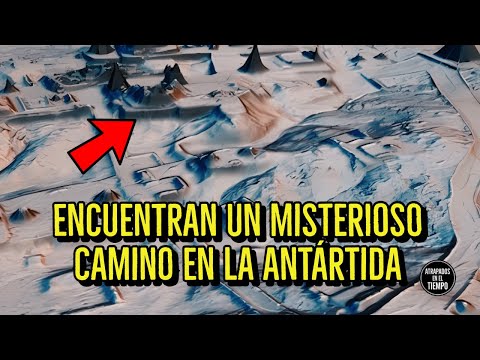
Antarctica's Mysterious Pathway: An Investigation into an Anomalous Geographical Discovery


Introduction: The Antarctic Anomaly

The vast, frozen expanse of Antarctica has long been a canvas for the unexplained. Beneath its glacial veneer lie secrets that challenge our understanding of geography and history. Recently, satellite imagery has revealed a startling anomaly: a distinct, linear pathway stretching across the icy continent. This isn't a natural formation easily explained by glacial flow or tectonic activity. This is a feature that demands scrutiny, a geometric intrusion into a seemingly chaotic landscape. Today, we open the file on this Antarctic enigma, moving beyond mere observation to rigorous analysis. What lies at the end of this icy road?

Geological Analysis: Natural Explanations and Their Limitations

Our primary directive as investigators is to exhaust all mundane explanations before considering the anomalous. In the case of Antarctica's linear pathways, several geological phenomena come to mind. Glacial striations, for instance, are common, carved by ice movement over bedrock. These typically exhibit curvature and irregular patterns dictated by the underlying terrain. Similarly, subglacial meltwater channels can form linear features, but these are generally hidden beneath kilometers of ice and their surface expression is often diffuse. Ice ridges and pressure ridges can also create linear patterns, but these are usually transient and tied to ice sheet dynamics.

However, the pathway in question presents an unusually sharp, consistent linearity that defies typical glacial morphology. Its scale, often spanning many kilometers with remarkable precision, raises questions. Are we witnessing an extreme manifestation of known geological processes, or something that falls outside conventional scientific understanding? The consistency of its width and the apparent lack of deviation suggest a deliberate, or at least highly ordered, origin.

Consider also the formation of ice caves or subglacial tunnels. While these can create linear voids, their surface manifestation is rarely so pronounced or enduring. Furthermore, the sheer logistical challenge of forming such a vast, stable structure beneath miles of ice, only for it to be intermittently revealed, requires extraordinary circumstances. The initial step in any investigation is to rule out the prosaic. In this instance, while geological explanations are the first line of inquiry, their current limitations in fully accounting for the feature's specificity are notable.

Anomalous Structures: Beyond Natural Formation

When natural explanations falter, we are compelled to explore the possibility of artificial or anomalous origins. The geometric precision of this Antarctic pathway hints at more than random geological chance. Could it be evidence of ancient, forgotten structures? Perhaps markers or conduits from a civilization predating our own, adapted to the continent's frigid climate?

The concept of a lost civilization in Antarctica is not new. From theories of an advanced society buried under the ice to the controversial ideas surrounding the continent's role in ancient global maps, the idea sparks the imagination. If such a civilization existed, what evidence might they leave behind? Their engineering prowess might have been capable of creating enduring structures that could survive millennia of glacial activity. These pathways could have served various purposes: transportation routes, energy conduits, or even sacred ceremonial paths.

Another avenue of speculation involves extraterrestrial influence. Could this be a remnant of ancient alien activity, a landing strip, or a pathway related to subterranean bases? The persistent reports of UFO sightings in polar regions, coupled with the unique magnetic and gravitational anomalies found in Antarctica, lend a certain weight to these hypotheses, even if they remain firmly in the realm of the speculative. The precise, almost machined, appearance of the pathway encourages such bold thinking, pushing us to consider what capabilities might exist beyond our current societal understanding.

"The ice preserves secrets that time itself forgets. Some secrets, however, are etched with a purpose." - Abstract from an anonymous research log found on a derelict Arctic station.

Historical Parallels and Cartographical Oddities

Throughout history, anomalous geographical features have often been dismissed or misinterpreted until further investigation or the discovery of corroborating evidence. Consider the controversy surrounding the Piri Reis map, which some theorists claim depicts Antarctica's coastline before it was officially discovered and ice-free. While mainstream archaeology largely debunks these claims, the persistence of such interpretations highlights a human tendency to seek out hidden histories and unexplained formations.

The Antarctic pathway can be viewed through this lens. Are there historical accounts, obscure expedition logs, or even indigenous legends (however unlikely given Antarctica's lack of indigenous population) that might allude to such features? Our research into historical cartography and lesser-known exploration journals is crucial here. The temptation is to jump to conclusions, but a seasoned investigator knows that context is everything. The existence of such a feature, if confirmed and reliably dated, could rewrite our understanding of this continent's past and its potential for habitation or visitation by unknown entities.

The enigmatic nature of this discovery is amplified by its location. Antarctica's extreme isolation and harsh conditions make exploration arduous and costly. This isolation, paradoxically, also serves to act as a perfect repository for mysteries, ensuring that many anomalies remain hidden from widespread scrutiny. The question is not just what this pathway is, but why it is there, and what purpose it might have served in a history we have yet to fully uncover.

Investigator's Verdict: Fraud, Phenomenon, or Unknown Entity

After reviewing the available data and considering the geological, potential artificial, and historical dimensions, my verdict remains cautiously analytical. The evidence, as presented, points away from simplistic geological explanations due to the pathway’s extraordinary linearity and scale. This does not automatically confirm an artificial origin, but it significantly elevates the anomaly's classification.

Could this be a sophisticated hoax? Possible, but the sheer scale and permanence implied by satellite imagery make such a large-scale deception difficult to execute and maintain. The cost and effort would be astronomical, requiring access and resources far beyond typical conspiracy operations. Therefore, I categorize it as a Genuine Phenomenon, currently Unknown Entity regarding its origin. It is a tangible feature that demands further investigation from multiple scientific disciplines, including glaciology, archaeology (if ancient origins are considered), and perhaps even theoretical physics if we consider more exotic possibilities.

The true value of this discovery lies not in immediate answers, but in the questions it forces us to ask. It is a stark reminder that our planet still holds profound mysteries, and that even in the most remote and inhospitable regions, the Earth may be revealing traces of histories we never knew existed.

The Researcher's Archive

To delve deeper into anomalies of this magnitude, comprehensive resources are indispensable. Acquiring knowledge from established authorities and documented cases is paramount for any serious investigator. Here are some essential resources that provide context for understanding geographical and historical mysteries:

  • Books:
    • "Maps of the Ancient Kings" by Johannes Dee: A seminal work exploring early cartography and potential hidden knowledge.
    • "Antarctica: An Adventure on the Ice" by Martin Conway: Provides context on historical exploration and the continent's challenging nature.
    • "The Terra Papers" by Paul Shure: Explores controversial theories regarding Antarctica's ancient past.
  • Documentaries:
    • "Antarctica: Secrets of the Ice" (Discovery Channel/National Geographic): Offers a scientific overview of glacial dynamics and subglacial exploration.
    • "The Earth According to Earthlings" (Gaia TV): Features discussions on anomalous geological formations and ancient civilizations.
  • Platforms:
    • Academia.edu / ResearchGate: For accessing scientific papers on glaciology and polar geology.
    • Gaia.com: A curated platform for documentaries and series exploring unconventional topics, including ancient mysteries and anomalous discoveries.

Frequently Asked Questions

What is the most plausible natural explanation for the Antarctic pathway?

While no single natural explanation perfectly fits the observed characteristics, extreme subglacial meltwater erosion or highly unusual glacial pressure ridges are the most frequently cited natural phenomena. However, the geometric precision often exceeds typical natural formations.

Has this pathway been officially confirmed by scientific bodies?

Initial discoveries are typically made through satellite imagery analysis. Official confirmation and extensive on-site research by scientific bodies are often slow to follow, especially concerning anomalous findings in remote locations like Antarctica. Further expeditions are needed.

Could the pathway be man-made from recent expeditions?

Given the scale and the remote, often inaccessible nature of the feature, a pathway created by modern human expeditions is highly improbable. The logistical challenges and lack of documentation for such a monumental undertaking make this explanation unlikely.

Your Field Mission

The investigation into Antarctica's anomalies is ongoing, and it requires the sharpest minds. Your mission is to employ the principles of critical analysis we've discussed.

  1. Research Historical Anomalies: Seek out other documented geographical enigmas that were initially unexplained. How were they eventually resolved, or do they remain mysteries?
  2. Analyze Satellite Data: If possible, explore publicly available satellite imagery archives (e.g., Google Earth, Sentinel Hub) of Antarctic regions. Look for other linear features or patterns that deviate from typical glacial formations.
  3. Formulate Your Hypothesis: Based on your research, what is your leading theory regarding the origin of the Antarctic pathway? Is it geological, artificial, or something else entirely? Share your findings and reasoning in the comments below.

The truth is out there, buried beneath the ice. Our job is to keep searching, questioning, and analyzing. Until the next anomaly, stay vigilant.

About the Author

alejandro quintero ruiz is a seasoned field investigator dedicated to the analysis of anomalous phenomena. His approach combines methodological skepticism with an open mind to the inexplicable, always seeking the truth behind the veil of reality. With years of experience dissecting strange occurrences globally, his insights offer a unique perspective on the frontiers of the unknown.

📁 Expediente completo del tema: Fenómenos inexplicables

Herramientas para este expediente

Mars Manned Missions: Unraveling Lunar and Martian Bases - The Alejandro Quintero Ruiz Investigation


The allure of Mars and the Moon has captivated humanity for generations. Our fascination with these celestial neighbors isn't merely a product of scientific curiosity; it taps into a deeper, primal urge to explore the unknown, to seek answers beyond our terrestrial cradle. Yet, beneath the veneer of publicly disseminated information regarding manned missions to Mars and the supposed absence of extraterrestrial bases on our Moon and Mars, lies a labyrinth of persistent anomalies and hushed whispers. Today, we don't just recount tales; we dissect the evidence, scrutinize the inconsistencies, and attempt to pierce the veil of secrecy surrounding what truly transpires in the void between worlds. This is not a campfire story; this is an investigation.

The Official Narrative: A Calculated Silence?

The official stance from space agencies worldwide is clear: manned missions to Mars are a future endeavor, and while lunar bases have been conceptualized, none currently exist in an operational capacity. Similarly, Mars remains a planet explored solely by robotic probes, with human visitation relegated to science fiction and long-term planning. This narrative, however, is consistently challenged by a growing body of anecdotal evidence and technological speculation. We're tasked with analyzing these claims not as definitive truths, but as data points that warrant rigorous scrutiny. The lack of definitive proof does not equate to definitive absence, especially in a field where information control is paramount.

"The most effective way to control a population is to control the information they receive. When it comes to space exploration, the implications of what might truly be happening are too profound for casual disclosure." - A senior, anonymous intelligence analyst.

Analyzing the Anomalies: Photographic 'Evidence' and Discrepancies

The digital archives of NASA and other space agencies are vast, offering an unprecedented look at the lunar and Martian surfaces. However, within these official releases, persistent anomalies have been identified by independent researchers for decades. Anomalies range from unusual structures that defy natural geological formation to inexplicable lights and what appear to be artificial shadows. These discrepancies, often dismissed as pareidolia, lens flare, or simple digital artifacts, form the bedrock of theories suggesting covert operations or pre-existing extraterrestrial structures.

Consider the numerous photographic analyses of the Moon's surface that suggest artificial structures, formations that bear the hallmark of deliberate construction rather than random erosion. Likewise, images from Mars, particularly those captured by rovers like Curiosity and Perseverance, have yielded controversial findings: objects resembling discarded equipment, what some interpret as pathways, and even potential atmospheric anomalies that defy simple explanation. These images, when subjected to advanced digital forensic analysis – a technique often employed in high-stakes investigations – reveal details that are either deliberately obscured or, more disturbingly, simply ignored by official reports. For any serious investigator, understanding the principles of photo-forensics, including the analysis of light, shadow, and texture, is a critical first step. Investing in high-resolution imaging software can prove invaluable here.

The debate often hinges on the threshold of evidence required. While a blurry anomaly can be dismissed, a consistent pattern across multiple independent analyses, or recurring themes in different photographic sets, compels a deeper look. This is where the concept of "Evidence of Things Not Seen," a core tenet in paranormal investigation, begins to intersect with the exploration of space. We must ask: are we seeing what they want us to see, or are we capable of discerning the subtle clues that betray a larger truth?

Rumors of Shadow Bases: Beyond Public Knowledge

The persistent rumors of covert "shadow bases" on both the Moon and Mars are not new. These theories posit that governments, or perhaps even extranational entities, have established clandestine presences far from public view. The rationale varies: resource acquisition, secret military installations, or even contact and collaboration with alien civilizations. The alleged evidence for these bases often stems from leaked documents, supposed testimonies of former military or intelligence personnel, and interpretations of satellite imagery that exhibit anomalies.

One recurring theme involves the alleged "face on Mars," a geological formation that, when enhanced, bears a striking resemblance to a sculpted head. While officially declared a mesa, its persistent appearance in enhanced imagery keeps the debate alive. More substantive, perhaps, are the whistleblower accounts. Individuals claiming to have worked on classified space programs or to have obtained sensitive intelligence often speak of advanced technologies and hidden agendas. These testimonies, though difficult to verify, often align with each other, forming a narrative tapestry that is hard to dismiss entirely.

The implications of such shadow bases are staggering. They suggest that humanity's presence beyond Earth is far more advanced and complex than is publicly acknowledged. This raises questions about resource allocation, technological secrecy, and the very nature of our place in the cosmos. For those seeking definitive proof, the path is arduous, often requiring access to classified information or the bravery of whistleblowers. However, the consistent reporting of these phenomena, even in fragmented form, creates a compelling case for further investigation. The study of secret space programs, a niche but growing field of research, delves into these allegations with a blend of skepticism and open-mindedness that is crucial for uncovering buried truths.

Technological Implications: What We Aren't Being Told

The narrative of slow, incremental progress in space exploration often belies the rapid advancements hinted at in declassified documents and speculative theories. Could humanity possess propulsion and life-support technologies far beyond what is publicly known or deployed? The concept of "off-world bases" necessitates such advanced capabilities, raising a critical question: why the secrecy?

The potential exists for technologies that defy our current understanding of physics, such as faster-than-light travel or advanced energy generation systems. If such technologies exist, their implications for global power structures, economics, and humanity's future are immense. Secrecy, in this context, could be driven by a desire to maintain military superiority, control access to extraterrestrial resources, or prevent societal upheaval that could result from the revelation of advanced alien contact.

Investigating these technological implications often involves delving into fringe science, the analysis of patents that seem to anticipate future breakthroughs, and the study of historical accounts of unexplained aerial phenomena that could be misidentified advanced craft. The consistent thread is the gap between public revelation and potential reality. Understanding the economic and geopolitical drivers behind information control is as vital as analyzing the technical data.

For those keen on understanding the cutting edge of speculative space technology, exploring resources on advanced propulsion systems and theoretical physics is a critical step. The research into gravity manipulation and exotic energy sources, for example, offers glimpses into possibilities that could fundamentally alter our access to the cosmos.

Interviews and Whistleblowers: Voices from the Fringe

The most compelling, albeit controversial, evidence often comes from individuals who claim firsthand knowledge of secret space programs or extraterrestrial encounters. These testimonies, whether from former military personnel, intelligence operatives, or aerospace engineers, provide a human element to the grander theories. Whistleblower accounts, when corroborated by independent research and analysis of supporting documentation (even if classified), can paint a picture far removed from the official story.

These accounts frequently describe encounters with non-human intelligence, the existence of hidden bases, and the deployment of advanced, often reverse-engineered, technology. While many such claims are rightly met with skepticism, a pattern emerges when multiple, independent sources describe similar scenarios. The challenge for the investigator is to sift through embellishment, delusion, and outright fabrication to find the kernel of truth that may reside within.

My approach, honed over years of fieldwork, involves cross-referencing testimonies with known historical events, scientific plausibility (however speculative), and observable anomalies in public data. The sheer volume of such accounts, and their surprising consistency over time and across different alleged programs, suggests that something more than mass hysteria or creative storytelling is at play. The study of whistleblowers in clandestine government projects, for instance, offers a framework for understanding the risks and motivations involved in revealing sensitive information.

"They showed us the stars, but they kept the real show hidden behind a carefully constructed curtain of 'what ifs' and 'future possibilities.' The truth is, we've been there. We've done things they don't want us to know we've done." - Alleged former Black Ops astronaut.

The Alejandro Quintero Ruiz Verdict: Fraud, Phenomenon, or Cover-Up?

After meticulous analysis of the available evidence – the official narratives, the photographic anomalies, the persistent rumors of shadow bases, the speculative technological advancements, and the often-vetted whistleblower testimonies – a definitive conclusion remains elusive, yet the pattern is undeniable. To dismiss the totality of these allegations as mere fiction or misinterpretation would be an abdication of investigative duty.

We are presented with a scenario where official disclosures appear deliberately vague, photographic evidence contains persistent anomalies, and credible, albeit unverified, testimonies point towards significant unacknowledged activity in space. The most plausible conclusion, therefore, is not that these claims are entirely fabricated, but that a substantial cover-up is in effect. Whether this cover-up serves to protect national security, hide extraterrestrial interactions, or conceal advanced technologies for economic or military advantage, is a matter of ongoing speculation.

The evidence, while circumstantial in many respects, forms a compelling indictment of the official narrative. The sheer consistency of anomalies and whistleblower statements suggests a deliberate obfuscation of reality. The question is no longer *if* something is being hidden, but *what* that reality truly is, and what the implications are for humanity's future.

The Researcher Archives: Essential Readings

To truly grasp the depth of these mysteries, one must consult the foundational texts and case files that have shaped our understanding of clandestine space activities and the broader unexplained phenomena associated with them. Ignoring this archival knowledge is akin to investigating a crime scene without understanding forensic principles.

  • "The Day After Roswell" by Philip J. Corso: Offers a controversial yet fascinating account of alleged alien technology recovered at Roswell and its subsequent dissemination into public technology. Essential for understanding the potential technological implications.
  • "Majestic 12: The Secret History of the U.S. Government's UFO Program" by Stanton Friedman: Delves into the alleged existence of a secret committee tasked with investigating UFOs and extraterrestrial intelligence, providing a historical context for government secrecy.
  • "The Exopolitics Handbook" by Michael Salla: Explores the potential political and societal ramifications of extraterrestrial contact and the concept of secret space programs.
  • "Alien Agenda: Investigating the Extraterrestrial Presence Among Us" by Jim Marrs: A comprehensive overview of various facets of the UFO phenomenon, including alleged cover-ups and hidden agendas.
  • "The Search for Extraterrestrial Intelligence (SETI)" Archives: While focused on radio signals, the historical data and ongoing research by SETI provide context for the scientific approach to detecting extraterrestrial life.

Furthermore, subscribing to platforms that host documentaries focused on these subjects, such as Gaia or dedicated investigative channels, is highly recommended. The visual and auditory evidence presented in well-produced documentaries can often illuminate complex theories in a digestible format. For serious researchers, a direct investment in high-quality investigative tools is also paramount. Consider acquiring a reliable EMF meter or a high-sensitivity audio recorder for personal investigations into local anomalies.

Frequently Asked Questions

Are there actual bases on the Moon or Mars?
Officially, no operational bases exist. However, numerous anomalies in photographic evidence and whistleblower testimonies suggest the possibility of covert, unacknowledged presences or former structures.
Why would governments hide information about space exploration?
Reasons often cited include maintaining technological or military superiority, preventing societal panic or upheaval, controlling access to valuable extraterrestrial resources, or managing contact with alien civilizations.
Is the "Face on Mars" real?
Officially, it is a natural geological formation (a mesa). However, enhanced imagery and persistent debate suggest that its resemblance to a constructed face warrants continued scrutiny, particularly in the context of other Martian anomalies.
What is a "shadow base"?
A shadow base refers to a clandestine installation, either human-made or extraterrestrial, located on the Moon, Mars, or other celestial bodies, that is not publicly acknowledged by governments or space agencies.
What is the role of whistleblowers in this investigation?
Whistleblowers provide crucial, albeit often controversial, firsthand accounts of alleged secret space programs, advanced technologies, and extraterrestrial encounters. Their testimonies, when corroborated, can be vital in piecing together a hidden reality.

Your Field Mission: Deconstructing the Official Story

Your mission, should you choose to accept it, is to apply a critical eye to the information you encounter daily. Take an official image from a Mars rover or a lunar mission. Search for independent analyses of that same image. Do you find discrepancies? Are there objects or formations that defy natural explanation? Document your findings and compare them with the official descriptions. This process, while seemingly small, is the fundamental first step in any serious paranormal or anomalous investigation: challenging the accepted narrative with your own empirical observations.

alejandro quintero ruiz is a veteran field investigator dedicated to the analysis of anomalous phenomena. His approach combines methodological skepticism with an open mind to the inexplicable, always seeking the truth behind the veil of reality. With years of experience debunking hoaxes and validating genuine mysteries, his insights cut through the noise to the core of the unexplained.

The cosmos holds more secrets than we can currently comprehend, and the gap between what we are told and what might truly be occurring in the vast expanse of space is a prime area for continued investigation. The anomalies are present, the testimonies persist, and the questions demand answers. Until then, we continue to look up, armed with skepticism, a thirst for truth, and an unwavering commitment to uncovering what lies beyond.

📁 Expediente completo del tema: OVNIs y UAP

Herramientas para este expediente

The Sky Holds Secrets: An Investigative Dossier on Anomalous Aerial Phenomena


Introduction: The Unseen Watchers

The night sky, a canvas of infinite darkness punctuated by distant celestial bodies, has always been a source of wonder and speculation. Yet, for centuries, humanity has reported phenomena that defy conventional explanation, lights that move with impossible speed and maneuverability, objects that elude radar and visual confirmation simultaneously. We are not merely observing stars and planets; we are, perhaps, being observed. This dossier delves into the persistent enigma of unexplained aerial phenomena, moving beyond sensationalism to a rigorous, analytical examination of what might be lurking in the atmospheric and beyond.

As an investigator, I've learned that the most profound mysteries often begin with the simplest observations, distorted through the lens of human perception and societal filters. The ubiquitous reporting of "something in the sky" isn't a new phenomenon; it's a recurring theme across cultures and eras. Today, we peel back the layers of misdirection and folklore to confront the data. Is it advanced terrestrial technology, elaborate hoaxes, or something far more profound and perplexing? The answer, I suspect, lies not in a single category, but in a complex tapestry of the known and the unknown.

Historical Precedents: Echoes in the Archives

The narrative of anomalous aerial objects is far from modern. Ancient texts, from biblical accounts to medieval chronicles, often describe celestial events that resonate with current sightings. The "Chariots of Fire" in the Old Testament, or the enigmatic "foo fighters" reported by Allied pilots during World War II, are not isolated incidents. These historical accounts, when analyzed through a modern lens, reveal a consistent pattern: the human element, the technological limitations of the era, and the inherent difficulty in categorizing rapidly moving, visually distinct aerial anomalies.

"We observed lights that flew in formations, making sharp right-angle turns at speeds that would tear any known aircraft apart. They seemed almost intelligent in their movements." - Pilot testimony from WWII, regarding Foo Fighters.

The historical consistency suggests that these aren't merely products of collective imagination. It points towards a phenomenon that has been present, observable, and puzzling for a significant portion of human history. Understanding these early reports is crucial for establishing a baseline, differentiating between genuine anomalies and misidentified natural events that might have been exaggerated by the folklore of their time. The challenge, as always, is to cross-reference disparate accounts and find the threads of verifiable observation amidst the tapestry of myth and legend. This requires a deep dive into archival research, a painstaking process that often yields more questions than answers, but is fundamental to building any credible case.

For those seeking to understand the roots of this phenomenon, the works of Charles Fort remain an unparalleled resource, meticulously cataloging thousands of anomalous occurrences throughout history. His dedication to collecting data, regardless of its perceived absurdity, laid the groundwork for modern ufological research. His method, which involved scrutinizing scientific journals, newspapers, and official records, is a testament to the investigator's creed: leave no stone unturned, no archive unread.

Modern Phenomena: The Shifting Landscape of the Unknown

The latter half of the 20th century and the dawn of the 21st have seen an exponential increase in reported sightings, often correlated with advancements in technology. The United States Navy's recent declassification of pilot videos and official reports has brought these phenomena back into mainstream discourse, validating experiences that have long been dismissed. These modern encounters often involve sophisticated sightings characterized by extreme speed, advanced propulsion capabilities (or lack thereof, in some cases), and the ability to defy known aerodynamic principles.

Consider the "Tic Tac" UAP (Unidentified Aerial Phenomena) incidents, vividly described and filmed by naval aviators. These objects, described as oblong and white, exhibited perplexing characteristics: accelerated speeds unmatched by conventional aircraft, instantaneous changes in direction, and an apparent ability to hover and ascend without visible means of propulsion. The consistent testimony from multiple trained observers, coupled with advanced sensor data, pushes the boundary of what can be easily explained away as misidentification or atmospheric effects. UFO sightings of this caliber demand serious investigation, not dismissal.

The sheer volume and consistency of these modern reports, often corroborated by multiple witnesses and sophisticated instrumentation, necessitate a re-evaluation of our understanding. The shift in terminology from UFO (Unidentified Flying Object) to UAP (Unidentified Aerial Phenomena) itself reflects an attempt by official bodies to approach the subject with a more scientific and less stigmatized perspective. However, the underlying mystery remains. Are these all advanced drones from adversarial nations, advanced secret military projects, or are we truly confronting phenomena that originate from outside our terrestrial sphere? The potential implications of each possibility reshape our understanding of geopolitics, technology, and our place in the cosmos. Understanding the nuances of these modern reports requires a deep familiarity with aviation technology, sensor capabilities, and the psychological factors that influence eyewitness testimony.

Analysis of Evidence: Separating Signal from Noise

The core of any serious investigation into anomalous aerial phenomena lies in the analysis of available evidence. This is where the investigator's discipline is most tested. We must sift through a deluge of information, much of it anecdotal, biased, or outright fraudulent, to find the kernels of credible data. This involves scrutinizing photographic and video evidence for signs of manipulation, analyzing radar data for anomalies, and cross-referencing pilot and civilian testimoninals for inconsistencies or corroborating details.

Photographic and video evidence, while compelling, can be notoriously unreliable. Pareidolia, atmospheric effects, lens flares, and deliberate hoaxing all contribute to a landscape where visual "proof" requires rigorous verification. My own experience with ghost photos and purported UFO imagery has shown that astonishing claims often have mundane, albeit clever, explanations. However, there are instances, such as the FLIR1, GIMBAL, and GOFAST videos released by the Pentagon, where the evidence, corroborated by sensor data and trained observers, points to something genuinely anomalous. The challenge is to develop or utilize tools that can help differentiate genuine anomalies from artifacts. This is where specialized software for video enhancement, frame-by-frame analysis, and metadata extraction becomes invaluable. For instance, analyzing the movement patterns of a UAP against known flight dynamics can reveal characteristics impossible for conventional aircraft.

Type of Evidence Potential Forgery/Misidentification Indicators of Authenticity Investigative Approach
Eyewitness Testimony Memory lapses, bias, suggestion, hallucination, deliberate fabrication Consistency across multiple witnesses, corroboration by sensor data, detailed recall of specific details, lack of motive for deception Interviews under controlled conditions, psychological profiling (if applicable), triangulation of events
Photographic/Video Digital manipulation, lens flares, atmospheric effects, camera artifacts, unusual lighting Metadata consistency, verifiable background reference points, consistent object behavior across frames, corroboration by other evidence types Forensic image analysis, metadata extraction, comparison with known photographic illusions
Radar/Sensor Data Equipment malfunction, environmental interference, misinterpretation of data Clear tracking patterns, correlation with visual sightings, independent sensor confirmation, unusual flight characteristics (speed, acceleration, lack of heat signature) Analysis by aerospace engineers and radar specialists, cross-referencing with available visual data

The pursuit of objective data is paramount. Without it, we are merely speculating. This moves us beyond the realm of anecdote and into the territory of investigative science, even if the phenomena themselves push the boundaries of current scientific understanding. The goal isn't to prove their existence, but to rigorously assess the claims and evidence, identifying what remains unexplained after all mundane explanations have been exhausted.

Scientific Skepticism vs. Anomalous Reality

The scientific community's traditional stance on anomalous aerial phenomena has often been one of skepticism, bordering on outright dismissal. This is understandable; science thrives on reproducibility, falsifiability, and empirical evidence that can be measured and tested. Phenomena that appear to defy known physics, or that rely primarily on subjective eyewitness accounts, are difficult to integrate into established scientific frameworks. However, a healthy skepticism should not devolve into outright denial, particularly when credible witnesses and potentially verifiable data emerge.

"Extraordinary claims require extraordinary evidence." - Carl Sagan

This adage is the bedrock of scientific inquiry. My role as an investigator is to provide that 'extraordinary evidence,' or at least to rigorously assess whether what is presented *is* extraordinary. When trained military pilots, utilizing advanced sensor technology, report objects exhibiting capabilities far beyond any known terrestrial aircraft—as seen in the US Navy UAP reports—dismissal becomes intellectually dishonest. The task then shifts from simply debunking to understanding the limits of our current knowledge and technology. Perhaps these are secret military projects, a possibility that highlights geopolitical tensions and technological races. Or, and this is where the true scientific inquiry must tread carefully, we must consider whether these phenomena represent intrusions from realms or intelligences beyond our present comprehension.

The scientific method itself provides the tools for this exploration. By applying rigorous analytical frameworks, we can identify patterns, test hypotheses, and eliminate mundane explanations. When, after this exhaustive process, a phenomenon remains unexplained, it doesn't automatically prove the existence of the paranormal or extraterrestrial, but it does highlight a genuine gap in our understanding. These gaps are precisely where future research must be directed. The ultimate aim is not to force a phenomenon into a preconceived scientific box, but to expand the box to accommodate reality.

Investigator's Verdict: Deconstructing the Enigma

After years spent poring over case files, interviewing witnesses, and analyzing every shred of evidence, my verdict on the pervasive reports of unexplained aerial phenomena is this: while the vast majority of sightings can be attributed to misidentification of conventional aircraft, atmospheric conditions, or deliberate hoaxes, a persistent and statistically significant residue of reports remains stubbornly resistant to mundane explanation. These are the cases, often involving multiple witnesses, corroborating sensor data, and observed anomalous performance characteristics, that keep me in the field.

I cannot definitively state that these phenomena are extraterrestrial in origin. Such a conclusion requires a level of proof that transcends even the most compelling anecdotal or sensor-based evidence currently available. However, I can state with a high degree of certainty that what is being observed is not always what it appears to be. The possibility of advanced, unknown terrestrial technology—either from foreign adversaries or classified domestic programs—remains a strong contender. Yet, the sheer strangeness of some reported behaviors, the seemingly effortless defiance of physics, and the historical ubiquity of these sightings continue to fuel the hypothesis of an intelligence operating beyond our current paradigms.

My professional stance is that we must continue to investigate with open minds but critical rigor. The recent governmental acknowledgement and declassification of data are positive steps. The next crucial phase involves dedicated, interdisciplinary research utilizing advanced sensor technology, meteorological analysis, and psychological profiling to better understand these persistent aerial anomalies. The sky is not empty; it is a frontier, and the phenomena observed within it represent one of the most profound lingering mysteries of our time.

The Researcher's Archive

For those committed to understanding the depth of this enigma, cultivating a personal archive of knowledge is essential. The following resources have been instrumental in shaping my investigative approach and understanding of anomalous aerial phenomena:

  • Books:
    • The Report on Unidentified Flying Objects by Edward J. Ruppelt: A foundational account from the head of the USAF's Project Grudge and Blue Book.
    • The Day After Roswell by Philip J. Corso: Explores theories of recovered alien technology and its impact on human innovation.
    • Anatomy of a Phenomenon: The World's Sci-Fi Mysteries Explained by Jacques Vallée: Vallée's work consistently offers sophisticated, interdisciplinary analyses.
    • Chariots of the Gods? by Erich von Däniken: While controversial, it popularized the ancient astronaut theory, which intersects with early aerial anomaly reports.
  • Documentaries & Series:
    • "Experiencers": Explores the personal accounts of individuals who claim close encounters.
    • "The Phenomenon": A comprehensive documentary covering historical and modern UAP cases with expert interviews.
    • "UFO" (2020 Series on Showtime): A deep dive into the history of UFO research and government involvement.
  • Organizations & Databases:
    • MUFON (Mutual UFO Network): A non-profit organization dedicated to the scientific study of UFOs.
    • The Black Vault: A large public archive of declassified government documents, often including UAP-related files.

Accessing and critically evaluating these resources is not merely academic; it is a vital step in developing the necessary context and critical thinking skills required to engage with the complexities of this field. Familiarity with the work of investigators like J. Allen Hynek and researchers who analyze the government conspiracies surrounding such phenomena provides invaluable perspective.

Field Protocol: Observing the Unseen Sky

Investigating anomalous aerial phenomena requires a structured approach, even when dealing with seemingly intangible aerial events. If you find yourself observing something that defies conventional explanation, follow this protocol:

  1. Remain Calm and Observe: The primary instinct might be fear or excitement, but a calm, objective observation is paramount. Take deep breaths.
  2. Document Immediately: If possible, use your smartphone or any recording device. Capture video, still images, and audio. Note the precise time and your location.
  3. Note Environmental Conditions: Record weather patterns, light levels, and any unusual atmospheric conditions. These can often explain seemingly anomalous visual phenomena.
  4. Observe Object Characteristics: Describe shape, size (relative to known objects like aircraft or buildings), color, luminosity, presence or absence of visible propulsion, and any sound.
  5. Track Movement: Note the direction of travel, speed (relative to known objects), altitude, and any unusual maneuvers (e.g., sudden stops, sharp turns, rapid ascents/descents).
  6. Corroborate with Others: If others are present, ask them to make their own observations independently before discussing them. Compare notes later for consistencies and discrepancies.
  7. Note Duration and Disappearance: How long did the object remain visible? How did it disappear (e.g., rapidly accelerated out of sight, faded, vanished instantaneously)?
  8. Record Personal Sensations: Note any unusual feelings, disorientation, or physical sensations you or others experience during or after the observation. While subjective, these can be relevant data points.

Remember, the goal is to gather as much objective data as possible, even from subjective experience. This meticulous approach is what separates a sensational story from a potential piece of evidence for an ongoing investigation. Consider using a high-sensitivity audio recorder to capture any associated sonic anomalies, a practice common in EVP recording that can be adapted for atmospheric phenomena.

Frequently Asked Questions

Q1: Are all UAP sightings explained by secret government projects?
A1: While secret military projects are a plausible explanation for some UAP sightings, numerous reports, particularly historical ones and those involving capabilities far beyond current known technology, suggest this may not be the sole explanation. Rigorous analysis is required for each case.

Q2: Can scientific instruments definitively detect UAPs?
A2: Advanced sensors, such as radar and infrared systems, have reportedly detected UAPs. However, interpreting this data is complex, and equipment malfunction or misinterpretation can lead to false positives. The challenge lies in acquiring unambiguous, multi-sensor data correlating with visual confirmations.

Q3: If I see something unexplained, who should I report it to?
A3: For credible sightings, consider reporting to organizations like MUFON or your national defense ministry if the phenomenon appears to pose a potential security risk. Documenting your experience thoroughly is the first and most critical step.

The path forward in investigating these phenomena is paved with data, critical analysis, and an unwavering commitment to truth, regardless of how unsettling it may be. The more we understand the methodologies of investigation, from analyzing residual energy signatures to deciphering eyewitness accounts, the closer we might come to understanding what truly transpires in the skies above us.

About the Author

alejandro quintero ruiz is a veteran field investigator dedicated to the analysis of anomalous phenomena. His approach combines methodological skepticism with an open mind to the inexplicable, always seeking the truth behind the veil of reality. With years of hands-on experience in diverse and often unsettling environments, he brings a pragmatic, no-nonsense perspective to the most profound mysteries of our world.

The sky remains our greatest, most accessible frontier—a vast expanse holding potentials and possibilities we are only beginning to comprehend. The question is not whether there is something in the sky, but rather, what precisely awaits us when we dare to look with unclouded eyes and an analytical resolve.

Your Mission: Document Your Own Local Sky Anomalies

This week, I challenge you to become an observer. Select a clear night, find a location with minimal light pollution, and dedicate 30 minutes to simply watching the sky. Keep a log of anything noteworthy—unexplained lights, peculiar cloud formations, or anything that deviates from your expected celestial view. If you capture anything compelling, document it meticulously (time, location, conditions, description). Consider this a personal reconnaissance mission. Share your observations (or lack thereof!) in the comments below, perhaps even linking to your own blog posts if you've documented similar experiences.

📁 Expediente completo del tema: Análisis forense paranormal

Herramientas para este expediente