

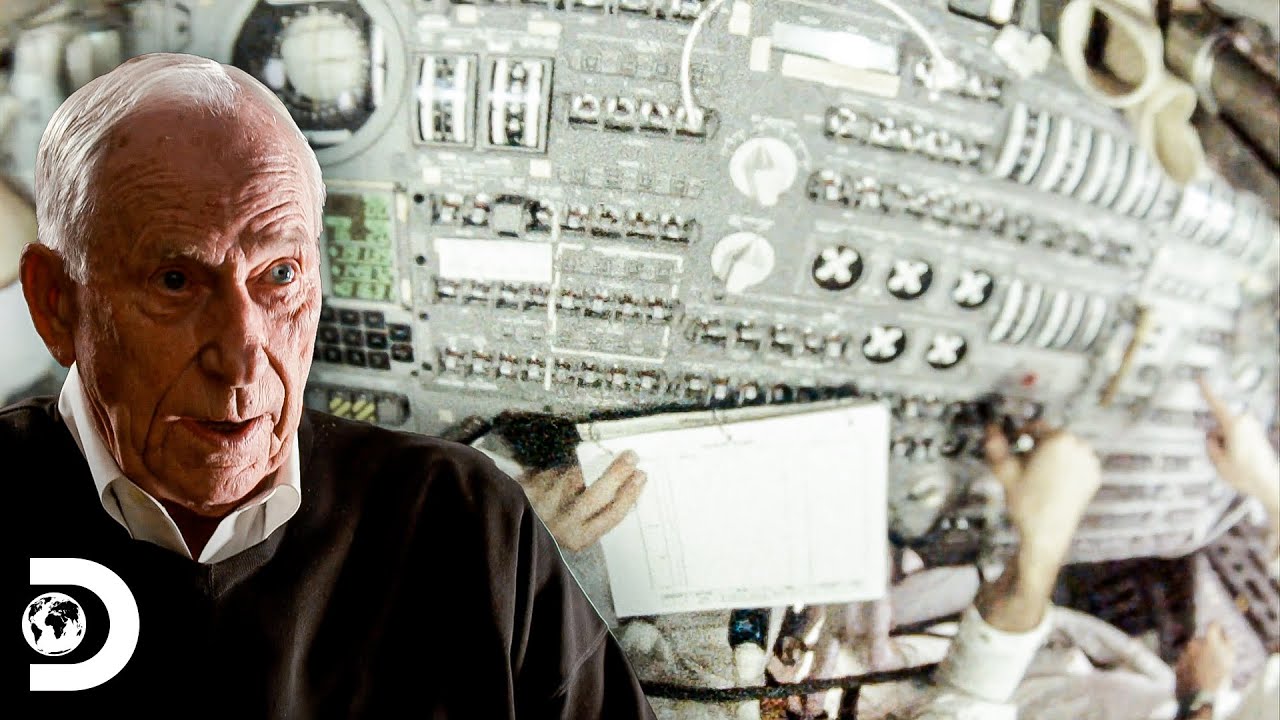
The dark side of the moon holds secrets, and sometimes, those secrets echo back to us through the static of space. On March 18, 1969, the Apollo 10 mission, on a dress rehearsal for the moon landing, encountered an anomaly that wouldn't surface until decades later: a mysterious sound, unlike anything heard before, emanating from the lunar void. This wasn't just any garbled transmission; it was a complex melody, described by the astronauts themselves as "music," sparking debate and fueling conspiracies that continue to this day.
EXPEDIENTE INDEX
- Mission Briefing: The Lunar Rehearsal
- The Anomaly: Music from the Void
- NASA's Silence and Public Reaction
- Proposed Scientific Explanations
- Listener Theories and The 'SIUUUUU' Phenomenon
- Investigator's Verdict: Fraud, Genuine Phenomenon, or Something Else?
- The Researcher's Archive
- Frequently Asked Questions
Mission Briefing: The Lunar Rehearsal
Apollo 10, launched on May 18, 1969, was a critical precursor to the Apollo 11 moon landing. Commanded by Thomas Stafford, with John Young and Eugene Cernan as lunar module pilot and command module pilot respectively, the mission's objective was to orbit the Moon and test the Lunar Module (LM) in lunar orbit, descending to within 9 miles of the lunar surface. It was a high-stakes mission, a meticulously planned dress rehearsal designed to iron out any potential issues before humanity’s most ambitious step.
The crew followed a strict protocol, and every communication was recorded. This meticulous documentation, intended to ensure mission success and safety, inadvertently captured something extraordinary during their transit around the far side of the Moon, a region hidden from Earth's direct view, plunging them into an unnerving silence and isolation.
Recommended Gear for Investigation
| Product | Description | Buy |
|---|---|---|
| The Big Book of Paranormal: 300 Mystical and Frightening Tales From Around the World | An excellent choice to complement your research on this topic. | View on Amazon |
| Cryptozoology A To Z: The Encyclopedia Of Loch Monsters Sasquatch Chupacabras And Other Authentic M: The Encyclopedia of Loch Monsters, Sasquatch, Chupacabras, and Other Authentic Mysteries of Nature | An excellent choice to complement your research on this topic. | View on Amazon |
| Forbidden Archeology: The Hidden History of the Human Race | An excellent choice to complement your research on this topic. | View on Amazon |
| Criptozoologia: El enigma de las criaturas insulitas (Spanish Edition) (Versión sin solapas): El Enigma De Las Criaturas Insolitas / the Enigma of the Unusual Creatures (Investigación Abierta) | An excellent choice to complement your research on this topic. | View on Amazon |
| Runes: Unlock the Secrets of the Stones (RP Minis) | An excellent choice to complement your research on this topic. | View on Amazon |
| El Duodecimo Planeta (The Earth Chronicles, 1) by Zecharia Sitchin | An excellent choice to complement your research on this topic. | View on Amazon |
| The H. P. Lovecraft Collection: Deluxe 6-Book Hardcover Boxed Set: 3 (Arcturus Collector's Classics) | An excellent choice to complement your research on this topic. | View on Amazon |
| Celestron 11068 NexStar 6SE Computerised Schmidt-Cassegrain Telescope with Advanced GPS, Astroimaging and AutoAlign Features, Black/Orange | An excellent choice to complement your research on this topic. | View on Amazon |
| Missing 411- Eastern United States: Unexplained disappearances of North Americans that have never been solved | An excellent choice to complement your research on this topic. | View on Amazon |
| P-SB7T Spirit Box ITC Rev 7 Research FM/AM Ghost Box PSB7 Radio Paranormal Equipment PSB7T SB7 P-SB7T | An excellent choice to complement your research on this topic. | View on Amazon |
The Anomaly: Music from the Void
While orbiting the lunar far side, Cernan reported hearing a sound through his headset. He described it as "music out there in space." Stafford initially dismissed it, suggesting it might be the Lunar Module's radio transmitter or possibly interference from the Command Module. However, Cernan insisted it was a distinct sound, unlike anything they had encountered.
"It sounds like... you know, like a band down below, man. I mean is there anotha spacecraft around the world? Or... are we doing something wrong?" - Eugene Cernan, Apollo 10 Astronaut.
The astronauts were baffled. The sound persisted, described as melodic, with Cernan noting its musical quality. Stafford, ever the pragmatist, tried to rationalize it, but the persistence and strangeness of the sound left them unsettled. The implications were staggering: if not human-made, what could this celestial symphony be? Could it be evidence of non-terrestrial intelligence, a message broadcast across the cosmos? The official NASA transcripts contain these exchanges, preserved for posterity, yet shrouded in mystery.
NASA's Silence and Public Reaction
For decades, these recordings remained largely unheard by the public, buried within NASA archives. It wasn't until the advent of documentaries and the internet that the supposed "music" from Apollo 10 began to circulate, igniting public fascination and speculation. The initial secrecy, or perhaps the bureaucratic inertia of classifying unusual mission data, only fueled conspiracy theories. Many felt NASA was deliberately withholding information, fearing panic or unwilling to admit the existence of unknown phenomena in space.
The release of the audio, however, was met with mixed reactions. Some were awestruck, convinced it was proof of alien contact. Others remained skeptical, demanding more rigorous analysis. The sentiment echoed in the comments of those who later viewed the footage: "It's incredible that with that technology in that era, they could achieve such a tremendous feat." This sentiment often intertwines with disbelief that such an anomaly could possibly be captured and then, for some, seemingly ignored.
Proposed Scientific Explanations
The scientific community, while acknowledging the existence of the recording, has proposed several plausible explanations that do not involve extraterrestrial visitors.
- Radio Interference: The most common explanation suggests that the sound was merely radio interference. The Apollo 10 crew was navigating the complex electromagnetic environment around the Moon, and the signal from their Lunar Module might have been interacting with the Command Module's systems or other background radiation. As one commenter noted, "Earth's radio signals bouncing off the Moon and picked up by the antenna. It could also be background noise from other planets."
- Internal Communications Glitch: Another possibility is a technical malfunction within their communication systems. The astronauts might have been hearing feedback or cross-talk from their own equipment.
- "Music" as a Metaphor: It's also argued that the astronauts, under immense pressure and in an unprecedented environment, may have used the term "music" metaphorically to describe a strange, unidentifiable sound. Human perception can play tricks under duress, and the brain often tries to categorize the unknown into familiar patterns.
- Cosmic Radio Waves: The idea that "all celestial objects emit radio waves" is scientifically sound. The universe is filled with natural radio emissions from stars, galaxies, and other cosmic phenomena. It's conceivable that the Apollo 10 crew picked up a complex pattern of these natural emissions, which, to their ears, sounded musical.
Despite these rational explanations, the sheer uniqueness of the recording continues to intrigue.
Listener Theories and The 'SIUUUUU' Phenomenon
The internet, as it often does, has taken the Apollo 10 "music" and run with it, producing a plethora of theories and, remarkably, finding humor in the anomaly. A recurring theme in the comments is the alleged similarity of the sound to the celebratory "SIUUUUU" of footballer Cristiano Ronaldo. This has led to a wave of humorous speculation:
"2:17 siiiuuuuu jajaja, the great CR7, he had already arrived on the moon before he was born..."
"Someone else heard Siuuuuuw from CR7🤪🤫"
While clearly a humorous interpretation, this phenomenon highlights how readily the public attempts to contextualize and often satirize the unexplained. Beyond the jokes, more thoughtful comments suggest, "The space is infinite, a harmony, a network of celestial sounds 😮." This poetic interpretation reflects a deep human yearning to find order and beauty in the cosmos, even if it means projecting familiar sounds onto the unknown.
Another user pointed out a crucial fact often overlooked: "IN SPACE, SOUND DOES NOT TRAVEL. It needs air, water." This fundamental physics principle serves as a stark reminder that any "sound" detected in the vacuum of space must be an electromagnetic signal converted into auditory form by instruments or the astronauts' receivers, not sound waves propagating through a medium.
Investigator's Verdict: Fraud, Genuine Phenomenon, or Something Else?
From an investigator's standpoint, the Apollo 10 "music" presents a fascinating case. The primary obstacle is the lack of definitive proof. While the audio exists and the astronauts reported hearing something, the exact nature of the sound remains ambiguous. NASA's explanations, particularly regarding radio interference and the conversion of electromagnetic signals, are scientifically sound.
However, the persistent unease among the astronauts, coupled with decades of speculation, cannot be entirely dismissed. The "never tell the whole truth" sentiment expressed by some observers points to a historical distrust of official narratives regarding space exploration. Could it have been an undocumented celestial phenomenon, a complex natural radio emission that defied easy categorization? Possibly. Could it have been a highly unusual form of signal interference, perhaps related to the experimental nature of the mission? Also possible.
The more outlandish theories, such as alien broadcasts, lack concrete evidence. The "SIUUUUU" phenomenon, while amusing, is a clear example of auditory pareidolia, where the brain imposes familiar patterns on random noise. Ultimately, without further, irrefutable data—perhaps a re-analysis of the original tapes with advanced spectral analysis or corroborating reports from other missions—the Apollo 10 anomaly remains in the realm of intriguing speculation rather than confirmed discovery.
The claim that "things always come out eventually, sooner or later" holds true for information, but the vastness of space and the limitations of our technology mean some mysteries may persist indefinitely. The pursuit of knowledge requires rigorous investigation, and while this event offers ample material for contemplation, it doesn't yet provide definitive answers.
The Researcher's Archive
For those delving deeper into the mysteries of space and the unexplained phenomena surrounding space missions, several resources offer valuable insights:
- Books: Explore works on the history of the Apollo program, astronaut testimonies, and documented UFO/UAP encounters. Authors like Jacques Vallee and Timothy Good provide extensive research into anomalous aerial phenomena.
- Documentaries: Series such as "Ancient Aliens" (though often speculative) touch upon historical accounts, and more grounded documentaries on NASA's missions provide context. Look for documentaries focusing on specific Apollo missions or unexplained events in space.
- Online Archives: NASA's own public archives, though vast, can be a treasure trove for researchers. Websites dedicated to ufology and paranormal research often compile declassified documents and eyewitness accounts.
Frequently Asked Questions
- What exactly did the Apollo 10 astronauts hear?
- Astronauts Eugene Cernan and Thomas Stafford reported hearing a strange, melodic sound that they described as "music" while on the far side of the Moon. They were uncertain of its origin, discussing possibilities ranging from their own equipment to external phenomena.
- Why did it take so long for these recordings to become public?
- The recordings were part of NASA's mission data. While not intentionally hidden, they likely remained within specialized archives until broader public interest in space anomalies and improved access to historical data brought them to light through documentaries and online sharing.
- Is it possible for sound to travel in space?
- No, sound waves require a medium (like air or water) to travel. What the Apollo 10 astronauts heard was likely an electromagnetic signal converted into an audible frequency by their communication systems, not sound waves propagating through the vacuum of space.
- What is the most likely scientific explanation?
- The most plausible scientific explanations involve complex radio interference between the spacecraft, natural cosmic radio wave emissions, or a glitch within the astronauts' communication equipment. The brain's tendency to interpret unusual patterns as familiar sounds (like music) also plays a role.
- Could it have been alien contact?
- While an exciting possibility for many, there is no concrete evidence to support this theory. The available data points more strongly towards natural phenomena or technical explanations, as is common in the investigation of unexplained aerial phenomena (UAP).
Investigator's Recommended Equipment
Exploring the fringes of the unknown requires preparation. Whether you're investigating local haunts or analyzing anomalous transmissions, having the right tools is crucial.
Frequently Asked Questions
- What exactly did the Apollo 10 astronauts hear?
- Astronauts Eugene Cernan and Thomas Stafford reported hearing a strange, melodic sound that they described as "music" while on the far side of the Moon. They were uncertain of its origin, discussing possibilities ranging from their own equipment to external phenomena.
- Why did it take so long for these recordings to become public?
- The recordings were part of NASA's mission data. While not intentionally hidden, they likely remained within specialized archives until broader public interest in space anomalies and improved access to historical data brought them to light through documentaries and online sharing.
- Is it possible for sound to travel in space?
- No, sound waves require a medium (like air or water) to travel. What the Apollo 10 astronauts heard was likely an electromagnetic signal converted into an audible frequency by their communication systems, not sound waves propagating through the vacuum of space.
- What is the most likely scientific explanation?
- The most plausible scientific explanations involve complex radio interference between the spacecraft, natural cosmic radio wave emissions, or a glitch within the astronauts' communication equipment. The brain's tendency to interpret unusual patterns as familiar sounds (like music) also plays a role.
- Could it have been alien contact?
- While an exciting possibility for many, there is no concrete evidence to support this theory. The available data points more strongly towards natural phenomena or technical explanations, as is common in the investigation of unexplained aerial phenomena (UAP).
Your Mission: Document the Unseen
The universe is a vast canvas of unknowns. The Apollo 10 incident reminds us that even our most meticulous explorations can uncover phenomena that defy immediate explanation. Your mission, should you choose to accept it, is to remain curious, to question, and to seek evidence, whether in the night sky above or in the unexplained events reported closer to home. Document your own observations, share them responsibly, and contribute to the collective understanding of the inexplicable.
What do you think about the Apollo 10 "music"? Have you ever encountered a sound or phenomenon you couldn't explain? Share your experiences and theories in the comments below. Your insights are vital to our ongoing investigation into the paranormal and the unexplained!
If you found this investigation illuminating, please share it on your social media channels. Help us spread the word and bring more attention to these compelling mysteries.
Investigator's Note: True paranormal research doesn't fund itself. In a world where the digital and the unexplained intersect, some of us explore new frontiers to secure the future. Do you dare to be part of the vanguard? Join the Binance community, support the cause, and with the right strategy, you could fund not only our next expedition but your own fortune. The next great discovery could be just a click away.

No hay comentarios.:
Publicar un comentario