Followers

Mostrando las entradas con la etiqueta audio anomaly. Mostrar todas las entradas

Apollo 10's Hidden Recordings: Did NASA Conceal Lunar Sounds?

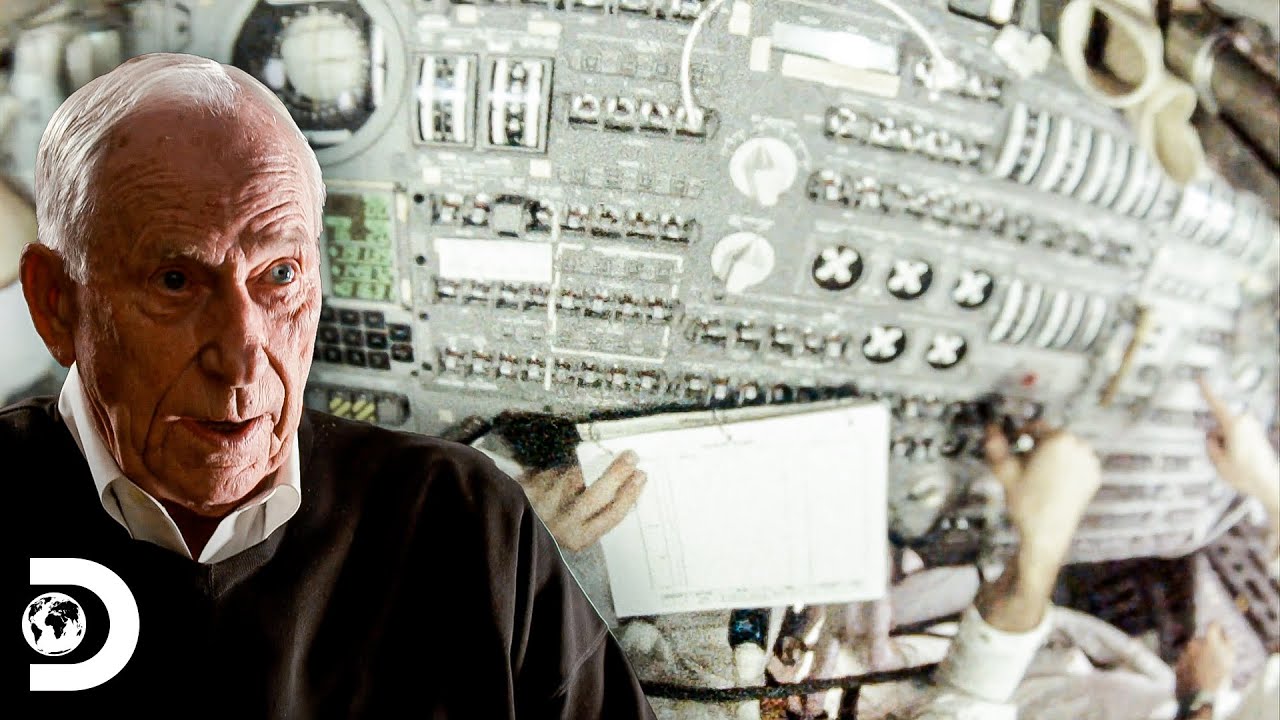
Image

The dark side of the moon holds secrets, and sometimes, those secrets echo back to us through the static of space. On March 18, 1969, the Apollo 10 mission, on a dress rehearsal for the moon landing, encountered an anomaly that wouldn't surface until decades later: a mysterious sound, unlike anything heard before, emanating from the lunar void. This wasn't just any garbled transmission; it was a complex melody, described by the astronauts themselves as "music," sparking debate and fueling conspiracies that continue to this day.

Mission Briefing: The Lunar Rehearsal

Apollo 10, launched on May 18, 1969, was a critical precursor to the Apollo 11 moon landing. Commanded by Thomas Stafford, with John Young and Eugene Cernan as lunar module pilot and command module pilot respectively, the mission's objective was to orbit the Moon and test the Lunar Module (LM) in lunar orbit, descending to within 9 miles of the lunar surface. It was a high-stakes mission, a meticulously planned dress rehearsal designed to iron out any potential issues before humanity’s most ambitious step.

The crew followed a strict protocol, and every communication was recorded. This meticulous documentation, intended to ensure mission success and safety, inadvertently captured something extraordinary during their transit around the far side of the Moon, a region hidden from Earth's direct view, plunging them into an unnerving silence and isolation.

Recommended Gear for Investigation

ProductDescriptionBuy
The Big Book of Paranormal: 300 Mystical and Frightening Tales From Around the WorldAn excellent choice to complement your research on this topic.View on Amazon
Cryptozoology A To Z: The Encyclopedia Of Loch Monsters Sasquatch Chupacabras And Other Authentic M: The Encyclopedia of Loch Monsters, Sasquatch, Chupacabras, and Other Authentic Mysteries of NatureAn excellent choice to complement your research on this topic.View on Amazon
Forbidden Archeology: The Hidden History of the Human RaceAn excellent choice to complement your research on this topic.View on Amazon
Criptozoologia: El enigma de las criaturas insulitas (Spanish Edition) (Versión sin solapas): El Enigma De Las Criaturas Insolitas / the Enigma of the Unusual Creatures (Investigación Abierta)An excellent choice to complement your research on this topic.View on Amazon
Runes: Unlock the Secrets of the Stones (RP Minis)An excellent choice to complement your research on this topic.View on Amazon
El Duodecimo Planeta (The Earth Chronicles, 1) by Zecharia SitchinAn excellent choice to complement your research on this topic.View on Amazon
The H. P. Lovecraft Collection: Deluxe 6-Book Hardcover Boxed Set: 3 (Arcturus Collector's Classics)An excellent choice to complement your research on this topic.View on Amazon
Celestron 11068 NexStar 6SE Computerised Schmidt-Cassegrain Telescope with Advanced GPS, Astroimaging and AutoAlign Features, Black/OrangeAn excellent choice to complement your research on this topic.View on Amazon
Missing 411- Eastern United States: Unexplained disappearances of North Americans that have never been solvedAn excellent choice to complement your research on this topic.View on Amazon
P-SB7T Spirit Box ITC Rev 7 Research FM/AM Ghost Box PSB7 Radio Paranormal Equipment PSB7T SB7 P-SB7TAn excellent choice to complement your research on this topic.View on Amazon

The Anomaly: Music from the Void

While orbiting the lunar far side, Cernan reported hearing a sound through his headset. He described it as "music out there in space." Stafford initially dismissed it, suggesting it might be the Lunar Module's radio transmitter or possibly interference from the Command Module. However, Cernan insisted it was a distinct sound, unlike anything they had encountered.

"It sounds like... you know, like a band down below, man. I mean is there anotha spacecraft around the world? Or... are we doing something wrong?" - Eugene Cernan, Apollo 10 Astronaut.

The astronauts were baffled. The sound persisted, described as melodic, with Cernan noting its musical quality. Stafford, ever the pragmatist, tried to rationalize it, but the persistence and strangeness of the sound left them unsettled. The implications were staggering: if not human-made, what could this celestial symphony be? Could it be evidence of non-terrestrial intelligence, a message broadcast across the cosmos? The official NASA transcripts contain these exchanges, preserved for posterity, yet shrouded in mystery.

NASA's Silence and Public Reaction

For decades, these recordings remained largely unheard by the public, buried within NASA archives. It wasn't until the advent of documentaries and the internet that the supposed "music" from Apollo 10 began to circulate, igniting public fascination and speculation. The initial secrecy, or perhaps the bureaucratic inertia of classifying unusual mission data, only fueled conspiracy theories. Many felt NASA was deliberately withholding information, fearing panic or unwilling to admit the existence of unknown phenomena in space.

The release of the audio, however, was met with mixed reactions. Some were awestruck, convinced it was proof of alien contact. Others remained skeptical, demanding more rigorous analysis. The sentiment echoed in the comments of those who later viewed the footage: "It's incredible that with that technology in that era, they could achieve such a tremendous feat." This sentiment often intertwines with disbelief that such an anomaly could possibly be captured and then, for some, seemingly ignored.

Proposed Scientific Explanations

The scientific community, while acknowledging the existence of the recording, has proposed several plausible explanations that do not involve extraterrestrial visitors.

  • Radio Interference: The most common explanation suggests that the sound was merely radio interference. The Apollo 10 crew was navigating the complex electromagnetic environment around the Moon, and the signal from their Lunar Module might have been interacting with the Command Module's systems or other background radiation. As one commenter noted, "Earth's radio signals bouncing off the Moon and picked up by the antenna. It could also be background noise from other planets."
  • Internal Communications Glitch: Another possibility is a technical malfunction within their communication systems. The astronauts might have been hearing feedback or cross-talk from their own equipment.
  • "Music" as a Metaphor: It's also argued that the astronauts, under immense pressure and in an unprecedented environment, may have used the term "music" metaphorically to describe a strange, unidentifiable sound. Human perception can play tricks under duress, and the brain often tries to categorize the unknown into familiar patterns.
  • Cosmic Radio Waves: The idea that "all celestial objects emit radio waves" is scientifically sound. The universe is filled with natural radio emissions from stars, galaxies, and other cosmic phenomena. It's conceivable that the Apollo 10 crew picked up a complex pattern of these natural emissions, which, to their ears, sounded musical.

Despite these rational explanations, the sheer uniqueness of the recording continues to intrigue.

Listener Theories and The 'SIUUUUU' Phenomenon

The internet, as it often does, has taken the Apollo 10 "music" and run with it, producing a plethora of theories and, remarkably, finding humor in the anomaly. A recurring theme in the comments is the alleged similarity of the sound to the celebratory "SIUUUUU" of footballer Cristiano Ronaldo. This has led to a wave of humorous speculation:

"2:17 siiiuuuuu jajaja, the great CR7, he had already arrived on the moon before he was born..."
"Someone else heard Siuuuuuw from CR7🤪🤫"

While clearly a humorous interpretation, this phenomenon highlights how readily the public attempts to contextualize and often satirize the unexplained. Beyond the jokes, more thoughtful comments suggest, "The space is infinite, a harmony, a network of celestial sounds 😮." This poetic interpretation reflects a deep human yearning to find order and beauty in the cosmos, even if it means projecting familiar sounds onto the unknown.

Another user pointed out a crucial fact often overlooked: "IN SPACE, SOUND DOES NOT TRAVEL. It needs air, water." This fundamental physics principle serves as a stark reminder that any "sound" detected in the vacuum of space must be an electromagnetic signal converted into auditory form by instruments or the astronauts' receivers, not sound waves propagating through a medium.

Investigator's Verdict: Fraud, Genuine Phenomenon, or Something Else?

From an investigator's standpoint, the Apollo 10 "music" presents a fascinating case. The primary obstacle is the lack of definitive proof. While the audio exists and the astronauts reported hearing something, the exact nature of the sound remains ambiguous. NASA's explanations, particularly regarding radio interference and the conversion of electromagnetic signals, are scientifically sound.

However, the persistent unease among the astronauts, coupled with decades of speculation, cannot be entirely dismissed. The "never tell the whole truth" sentiment expressed by some observers points to a historical distrust of official narratives regarding space exploration. Could it have been an undocumented celestial phenomenon, a complex natural radio emission that defied easy categorization? Possibly. Could it have been a highly unusual form of signal interference, perhaps related to the experimental nature of the mission? Also possible.

The more outlandish theories, such as alien broadcasts, lack concrete evidence. The "SIUUUUU" phenomenon, while amusing, is a clear example of auditory pareidolia, where the brain imposes familiar patterns on random noise. Ultimately, without further, irrefutable data—perhaps a re-analysis of the original tapes with advanced spectral analysis or corroborating reports from other missions—the Apollo 10 anomaly remains in the realm of intriguing speculation rather than confirmed discovery.

The claim that "things always come out eventually, sooner or later" holds true for information, but the vastness of space and the limitations of our technology mean some mysteries may persist indefinitely. The pursuit of knowledge requires rigorous investigation, and while this event offers ample material for contemplation, it doesn't yet provide definitive answers.

The Researcher's Archive

For those delving deeper into the mysteries of space and the unexplained phenomena surrounding space missions, several resources offer valuable insights:

  • Books: Explore works on the history of the Apollo program, astronaut testimonies, and documented UFO/UAP encounters. Authors like Jacques Vallee and Timothy Good provide extensive research into anomalous aerial phenomena.
  • Documentaries: Series such as "Ancient Aliens" (though often speculative) touch upon historical accounts, and more grounded documentaries on NASA's missions provide context. Look for documentaries focusing on specific Apollo missions or unexplained events in space.
  • Online Archives: NASA's own public archives, though vast, can be a treasure trove for researchers. Websites dedicated to ufology and paranormal research often compile declassified documents and eyewitness accounts.

Frequently Asked Questions

What exactly did the Apollo 10 astronauts hear?
Astronauts Eugene Cernan and Thomas Stafford reported hearing a strange, melodic sound that they described as "music" while on the far side of the Moon. They were uncertain of its origin, discussing possibilities ranging from their own equipment to external phenomena.
Why did it take so long for these recordings to become public?
The recordings were part of NASA's mission data. While not intentionally hidden, they likely remained within specialized archives until broader public interest in space anomalies and improved access to historical data brought them to light through documentaries and online sharing.
Is it possible for sound to travel in space?
No, sound waves require a medium (like air or water) to travel. What the Apollo 10 astronauts heard was likely an electromagnetic signal converted into an audible frequency by their communication systems, not sound waves propagating through the vacuum of space.
What is the most likely scientific explanation?
The most plausible scientific explanations involve complex radio interference between the spacecraft, natural cosmic radio wave emissions, or a glitch within the astronauts' communication equipment. The brain's tendency to interpret unusual patterns as familiar sounds (like music) also plays a role.
Could it have been alien contact?
While an exciting possibility for many, there is no concrete evidence to support this theory. The available data points more strongly towards natural phenomena or technical explanations, as is common in the investigation of unexplained aerial phenomena (UAP).

Investigator's Recommended Equipment

Exploring the fringes of the unknown requires preparation. Whether you're investigating local haunts or analyzing anomalous transmissions, having the right tools is crucial.

Frequently Asked Questions

What exactly did the Apollo 10 astronauts hear?
Astronauts Eugene Cernan and Thomas Stafford reported hearing a strange, melodic sound that they described as "music" while on the far side of the Moon. They were uncertain of its origin, discussing possibilities ranging from their own equipment to external phenomena.
Why did it take so long for these recordings to become public?
The recordings were part of NASA's mission data. While not intentionally hidden, they likely remained within specialized archives until broader public interest in space anomalies and improved access to historical data brought them to light through documentaries and online sharing.
Is it possible for sound to travel in space?
No, sound waves require a medium (like air or water) to travel. What the Apollo 10 astronauts heard was likely an electromagnetic signal converted into an audible frequency by their communication systems, not sound waves propagating through the vacuum of space.
What is the most likely scientific explanation?
The most plausible scientific explanations involve complex radio interference between the spacecraft, natural cosmic radio wave emissions, or a glitch within the astronauts' communication equipment. The brain's tendency to interpret unusual patterns as familiar sounds (like music) also plays a role.
Could it have been alien contact?
While an exciting possibility for many, there is no concrete evidence to support this theory. The available data points more strongly towards natural phenomena or technical explanations, as is common in the investigation of unexplained aerial phenomena (UAP).

Your Mission: Document the Unseen

The universe is a vast canvas of unknowns. The Apollo 10 incident reminds us that even our most meticulous explorations can uncover phenomena that defy immediate explanation. Your mission, should you choose to accept it, is to remain curious, to question, and to seek evidence, whether in the night sky above or in the unexplained events reported closer to home. Document your own observations, share them responsibly, and contribute to the collective understanding of the inexplicable.

What do you think about the Apollo 10 "music"? Have you ever encountered a sound or phenomenon you couldn't explain? Share your experiences and theories in the comments below. Your insights are vital to our ongoing investigation into the paranormal and the unexplained!

If you found this investigation illuminating, please share it on your social media channels. Help us spread the word and bring more attention to these compelling mysteries.

Investigator's Note: True paranormal research doesn't fund itself. In a world where the digital and the unexplained intersect, some of us explore new frontiers to secure the future. Do you dare to be part of the vanguard? Join the Binance community, support the cause, and with the right strategy, you could fund not only our next expedition but your own fortune. The next great discovery could be just a click away.

The Phantom and the Megadeal Billboard: An Investigation into Poltergeist Activity and Anomalous Phenomena

Un taxista llama desconosolado a este programa paranormal alegando que una presencia fantasmal se encuentra en su vehículo y no lo deja en paz. Despues, una extraña entidad entra a la llamada manifestandose con síntomas típicos de un fantasma. Un audio impredible que se recomienda escuchar tarde en la noche y en la oscuridad si quieres llevarte un buen susto. 


Introduction: The Anomalous Encounter

The city at night. A labyrinth of concrete and neon, where the mundane often brushes shoulders with the inexplicable. For decades, the intersection of urban legends and unexplained phenomena has provided fertile ground for investigation. Tonight, we delve into a peculiar case, one that blurs the lines between a simple billboard advertisement and a potential locus of intense paranormal activity. This isn't just a story; it's an anomaly demanding rigorous dissection. We pull back the curtain on the "Megadeal Billboard" incident, a phenomenon rumored to involve a spectral presence and a bewildered taxi driver. Is this a case of mass hallucination, elaborate prank, or something far more unsettling?

Case File Analysis: The Megadeal Billboard Incident

At its core, the "Megadeal Billboard" incident presents a compelling, albeit scantily documented, narrative. The phenomenon centers around a specific advertising billboard, reportedly displaying a commercial for a "Megadeal." While the exact location and date of the primary alleged occurrences remain as elusive as a whisper in a hurricane, the consistent element across anecdotal reports is the perception of a distinctly non-physical entity interacting with, or manifesting near, this advertisement. Skepticism is the first tool in any investigator's kit. Before we entertain specters, we must exhaust mundane explanations. Could it be a play of light and shadow? A projection? A product of collective suggestion in a digitally saturated environment? This report aims to sift through these possibilities.

The nature of the alleged manifestation is crucial. Reports hint at poltergeist-like activity, suggesting a localized, energetic disturbance rather than a passive apparition. Poltergeist phenomena, from my experience, are often characterized by physical disturbances – objects moving, sounds without a source, and sometimes, a palpable sense of dread. When these events are tied to a static, commercial point like a billboard, it raises questions about potential psychic imprints, residual energy, or even a more active intelligence seeking to interact with the urban landscape. The lack of detailed, verifiable primary source material is a significant hurdle, forcing us to rely on secondary accounts and speculative analysis, a common predicament when dealing with folklore-infused paranormal events.

"The city is a stage of a thousand dramas, and some of them are not performed by the living." - A paraphrase from the annals of urban mystery, applicable here.

Witness Testimony: The Taxicab Driver's Account

The linchpin of this case is the testimony of an unnamed taxi driver, whose encounter with the "Megadeal Billboard" became the genesis of the legend. According to the fragmented accounts, the driver, while on a late-night shift, reported witnessing an unusual phenomenon. Details vary, but the core elements persist: a visual anomaly associated with the billboard and a startling realization that it was not merely a malfunction of the display or ambient light. Some versions suggest a fleeting silhouette, an almost human shape, superimposed against or interacting with the advertisement. Others speak of an inexplicable cold spot or a sudden, disembodied sound.

This is where the rigor of observation is paramount. A taxi driver, working nocturnal hours, is exposed to a multitude of visual stimuli. Fatigue, stress, and environmental factors – passing headlights, reflections, even the flickering of other signs – can conspire to create illusions or misinterpretations. However, the consistent reporting of a specific, unusual anomaly tied to a single, identifiable landmark (the billboard) warrants further scrutiny, even if the original witness remains elusive. The "full audio" mentioned in the original prompt suggests a possible recorded testimony, a piece of evidence that, if it exists and is authentic, could elevate this case from anecdote to empirical data. Without access to that audio, we are left dissecting the echo of a statement, much like deciphering a faint EVP.

The problem with relying on a single, uncorroborated witness, especially in a potentially high-stress or visually confusing environment, is the inherent risk of subjective bias. Paridolia, the psychological tendency to perceive a specific, often meaningful, image in a random or ambiguous visual pattern, is a powerful force. However, if the driver's account included specific details, such as the spectral figure performing an action or exhibiting a particular behavior, it could lend more weight to the anomaly. This case highlights the critical need for detailed witness interviews, ideally conducted with trained paranormal investigators who understand how to mitigate suggestibility and extract precise details. The challenge here is the legend has outpaced the verifiable facts.

Phenomenological Breakdown: Poltergeist Activity and Environmental Factors

If we entertain the possibility that the phenomena reported were not merely optical illusions or misinterpretations, we must then consider the mechanics of potential poltergeist activity. Poltergeists, derived from the German for 'noisy ghost,' are typically associated with localized disturbances. These can range from minor annoyances like unexplained noises and moving objects to more dramatic physical manifestations. In the context of the Megadeal Billboard, what could constitute such activity?

Could the billboard itself have been the focus of the energy? Advertising billboards, especially large digital ones, are complex pieces of technology. However, the reported phenomena suggest something beyond a technical glitch. The idea of a "ghost" interacting with a commercial advertisement is peculiar. It might suggest an entity tethered to the location, or perhaps an intelligence that finds the visual noise and human focus of a billboard conducive to manifestation. Environmental factors are always key. Was there a history of unusual events at that location? Were there any unusual geological or electromagnetic conditions? The urban environment itself is a symphony of electromagnetic frequencies, and it's conceivable that certain locations might amplify or interact with subtle energies in ways we don't fully understand. The concept of "haunted" places often correlates with historical trauma or intense emotional events, but we cannot discount the possibility of more abstract energetic resonances in our modern, technologically dense landscapes. Understanding the specific nature of the billboard's construction, its power source, and any surrounding structures could provide clues, but often, the true nature of poltergeist activity defies easy explanation, leaving us to analyze patterns and anomalies.

Consider the concept of residual energy versus intelligent haunting. Residual hauntings are often described as imprints or replays of past events, much like an energetic recording. Intelligent hauntings, on the other hand, involve entities with awareness and the ability to interact with their environment. If the "phantom" near the Megadeal Billboard was observed to react or respond, it would lean towards an intelligent manifestation, a far more complex scenario than residual energy. Without more detailed accounts or direct investigation, distinguishing between these is conjecture, but the framework is essential for analysis.

Historical Context: Billboard Phenomena and Urban Legends

Urban legends are the folklore of our modern age, weaving tales of the uncanny into the fabric of everyday life. The "Megadeal Billboard" phenomenon, with its spectral occupant and a bewildered witness, fits neatly into a long tradition of urban mysteries. Billboards, by their very nature, are omnipresent fixtures in many urban landscapes. They are designed to capture attention, to stand out, and to communicate messages. It's not surprising that they might, in the collective imagination, become focal points for the strange and unexplained.

Throughout history, unusual sights or occurrences in public spaces have fueled local legends. Think of the phantom hitchhikers, the spectral lovers at lonely intersections, or apparitions seen in disused buildings. The billboard, a modern monolith of advertising, can easily become a canvas for the subconscious, a place where stories project themselves. The "full audio" mentioned in the original prompt, if it indeed exists as a recording of the taxi driver's account, would be invaluable. Such recordings, when analyzed for vocal inflections, hesitations, and the presence of anomalous sounds, can offer a deeper layer of evidence than mere written retellings. However, they are also susceptible to manipulation or misinterpretation. The veracity hinges on strict authentication protocols, something often missing in the lineage of urban myths.

The integration of technology into our environment also opens new avenues for perceived anomalies. Digital billboards that flicker, change images, or display static could, under certain conditions, be misconstrued as something more. We must also consider the psychological impact of constant advertising. The sheer volume of commercial messages can create a sense of unreality or saturation, making it easier for the mind to grasp onto the unusual. The "Megadeal" aspect itself is interesting; it speaks to the consumerist culture that often defines our urban present. Could the legend be a commentary, a subconscious reaction to the relentless commercial messaging, personified as a phantom?

Evidence Evaluation: Audio Anomalies and Subjective Experience

The core of any paranormal investigation lies in the evidence. In the case of the Megadeal Billboard, the primary evidence appears to be anecdotal testimony, potentially augmented by an audio recording – the elusive "full audio." Evaluating such evidence requires a stringent methodology. Subjective experiences, while deeply felt by the individual, are notoriously difficult to verify. What one person perceives as a spectral presence, another might dismiss as a trick of the light or an overactive imagination.

If an audio recording of the taxi driver's testimony exists, its analysis would be paramount. We would look for:

  • Vocal Tone and Emotion: Was the driver genuinely distressed, confused, or merely recounting a strange event matter-of-factly?
  • Background Anomalies: Were there any unexplained noises audible on the recording that correlate with or contradict the driver's account? This is where Electronic Voice Phenomena (EVP) analysis would come into play. The goal is to isolate and amplify any sounds that cannot be attributed to known sources and that might be interpreted as disembodied voices or anomalous sounds.
  • Authenticity: Is the recording genuine, or has it been tampered with? This requires forensic audio analysis.

The effectiveness of such audio analysis hinges on the quality of the recording and the clarity of the testimony. Without the actual audio, we are operating in a vacuum, relying on secondary descriptions of its content. The temptation to interpret ambiguous sounds as paranormal must be tempered by the principle of Ockham's Razor – the simplest explanation is often the correct one. Could the "phantom" have been a reflection in the car window, a brief electrical surge in the billboard, or even a fellow motorist in an unusual vehicle?

The history of paranormal investigation is littered with cases where compelling anecdotal evidence, when subjected to scientific scrutiny, dissolved into mundane explanations. However, it also contains instances where persistent, inexplicable anomalies, often supported by corroborating evidence, forced a re-evaluation of our understanding of reality. The analysis of the Megadeal Billboard case depends entirely on the nature and accessibility of the alleged audio evidence and the details of the witness's account. My experience suggests that definitive conclusions are rare without direct, reproducible observation, but the pursuit of understanding the anomaly itself is the true imperative.

"The difference between science and pseudoscience is that science is open to being proved wrong. Pseudoscience claims to have all the answers." - A guiding principle in my investigations.

Investigator's Verdict: Fraud, Genuine Phenomenon, or Something Else?

After dissecting the available information, the "Megadeal Billboard" incident remains shrouded in ambiguity. The case, as presented through fragmented anecdotes and the implication of an audio recording that has not been made available for analysis, currently resides in the realm of urban legend rather than substantiated paranormal event.

Arguments for Fraud or Mundane Explanation:

  • Lack of Verifiable Evidence: The absence of concrete, examinable evidence—such as the full audio recording, photographic or video documentation, or multiple, detailed witness accounts—is a critical deficiency.
  • Suggestibility and Misinterpretation: The urban environment, especially at night, is rife with visual and auditory stimuli that can lead to misinterpretation. The complex nature of digital billboards could easily create fleeting illusions.
  • Urban Legend Proliferation: Stories of the uncanny often grow and morph as they are retold, making it difficult to discern the original event from embellishments.

Arguments for Genuine Phenomenon (Speculative):

  • Persistent Anecdotal Reports: If multiple, consistent reports exist beyond the initial anecdote, it might suggest a recurring anomaly.
  • Potential for Audio Anomalies: If the alluded-to audio recording contains genuine and inexplicable sounds (EVPs), it could indicate a paranormal presence or activity.
  • Localized Energetic Focus: The specificity of the anomaly being tied to a particular billboard could imply a localized energetic disturbance, a characteristic of poltergeist-type phenomena.

Conclusion: Based on the current, limited information, I cannot definitively classify the Megadeal Billboard incident as a genuine paranormal event. It reads more like a compelling urban tale that has captured the imagination. However, the potential for an actual recorded testimony ("full audio") means the case is not entirely closed. If such evidence were to surface and withstand rigorous forensic analysis, it could shift the classification. Until then, it remains an intriguing anecdote, a ghost story woven into the fabric of the commercial cityscape, reminding us that even the most mundane structures can, in our collective psyche, become sites of mystery.

The Researcher's Archive

For those seeking to deepen their understanding of phenomena such as those potentially associated with the Megadeal Billboard, or to continue the investigation into urban legends and auditory anomalies, the following resources are invaluable:

  • "The Encyclopaedia of Ghosts and Spirits" by Rosemary Ellen Guiley: A comprehensive reference for understanding various types of spectral manifestations and hauntings.
  • "The Skeptics' Guide to the Universe" by Steven Novella, MD, et al.: Essential reading for developing a critical mindset and learning how to debunk pseudoscientific claims through scientific reasoning.
  • "An Encyclopedia of Claims, Frauds, and Hoaxes of the Occult and Supernatural" by James Randi: Crucial for understanding common methods of deception and how to identify them.
  • Online Archives such as the Anomalies-Information website: For cross-referencing similar reported phenomena.
  • Platforms like Gaia or Discovery+: These often feature documentaries exploring various paranormal cases, offering visual context and expert interviews, though critical viewing is always advised.

Understanding the context of reported paranormal events requires a deep dive into case studies, folklore, and the scientific methods used to investigate the unexplained. These resources provide a foundation for critical analysis.

Investigation Protocol: Documenting Anomalous Audio

Investigating claims of anomalous audio, such as potential EVPs from a recorded testimony, requires a methodical approach. If you ever find yourself in a position to analyze such audio, follow these steps:

  1. Secure the Original Recording: Obtain the unadulterated, master recording if possible. Any copies should be made from this original to prevent degradation.
  2. Expert Forensic Audio Analysis: Employ professionals specializing in forensic audio. They can clean up the audio, remove background noise, and identify potential sources of sounds that may mimic EVPs (e.g., radio interference, device malfunctions, distant sounds).
  3. Baseline Ambient Recording: Record the ambient environment where the original recording was made, under similar conditions. This helps in identifying and filtering out normal background sounds.
  4. Spectral Analysis: Use software to perform spectral analysis of the audio. This visual representation of sound frequencies can sometimes reveal patterns or structures in anomalous sounds that are not apparent to the human ear.
  5. Cross-Referencing with Testimony: Correlate any identified anomalous sounds with the eyewitness's account. Does the sound align with what the witness described? Are there other sounds that the witness did not mention?
  6. Eliminate Mundane Sources: Systematically rule out all possible mundane explanations for the anomalous sound. This includes electrical interference, HVAC systems, distant traffic, animal sounds, or even the witness's own physiological noises (breathing, swallowing).
  7. Document All Findings: Maintain a detailed log of all steps taken, software used, and conclusions drawn. This ensures transparency and reproducibility.

This structured approach is vital for maintaining the integrity of any investigation, particularly when dealing with subjective phenomena like alleged EVPs.

Frequently Asked Questions

Q1: What exactly is the "Megadeal Billboard" phenomenon?

A1: The "Megadeal Billboard" phenomenon refers to anecdotal reports, primarily involving a taxi driver, of unusual spectral or poltergeist-like activity occurring around a specific advertising billboard advertising a "Megadeal." Details are scarce and largely fall into the category of urban legend.

Q2: Is there any concrete evidence supporting the existence of the "Megadeal Billboard phantom"?

A2: Currently, there is no widely available, verifiable concrete evidence. The case relies on fragmented anecdotal accounts and the implication of an audio recording that has not been accessible for forensic analysis, making it difficult to substantiate.

Q3: Could the reported phenomena be explained by natural causes?

A3: Yes, absolutely. Natural explanations such as misinterpretation of light and shadow, technical malfunctions of digital billboards, reflections, fatigue, or even elaborate hoaxes are far more likely given the lack of concrete evidence. Environmental factors and psychological phenomena like pareidolia also play significant roles.

Q4: What is poltergeist activity, and how does it relate to this case?

A4: Poltergeist activity is characterized by unexplained physical disturbances, often including noises, moving objects, and sometimes a sense of presence. While the "Megadeal Billboard" reports hint at such activity, the nature of the alleged phenomena is too vague to definitively classify it as poltergeist activity without further investigation.

Your Field Mission

Your Mission: Analyze the Echoes of the City

The Megadeal Billboard case is a prime example of how urban environments can birth modern myths. Your mission, should you choose to accept it, is to become the investigator in absentia.

  1. Observe Your Surroundings: The next time you are in an urban setting, pay close attention to large advertisements, digital billboards, or prominent public installations. What anomalies do you notice? Are they fleeting tricks of light, product of technological glitches, or something that piques your curiosity?
  2. Document and Analyze: If you witness something unusual, do not immediately jump to paranormal conclusions. Document it thoroughly: note the time, location, weather conditions, and precisely what you observed. Take photos or videos if safe and practical.
  3. Consider Mundane Explanations First: Apply the principles of critical thinking. How else could what you observed be explained? Research similar mundane occurrences.
  4. Share Your Findings (Cautiously): If your investigation yields something truly inexplicable after exhausting all natural causes, consider documenting it. Look for established paranormal research groups that emphasize scientific methodology and evidence verification. Remember, the objective is truth, not sensationalism.

The pursuit of anomalous phenomena begins with keen observation and a critical, analytical mind. The city is full of stories waiting to be deciphered. Go, and look for the whispers beneath the noise.

alejandro quintero ruiz is a seasoned field investigator dedicated to the analysis of anomalous phenomena. His approach combines methodological skepticism with an open mind to the inexplicable, always seeking the truth behind the veil of reality. With years of experience navigating the fringes of the known, he brings a pragmatic yet open perspective to the world's most baffling mysteries.