

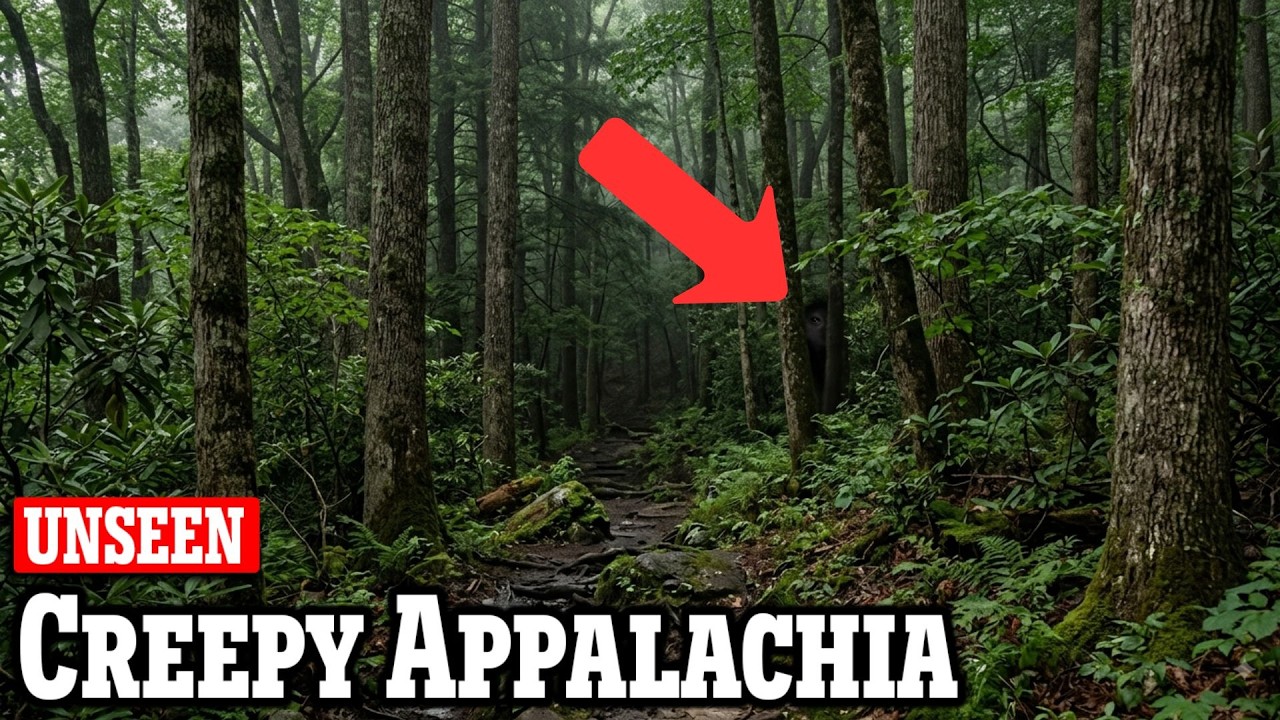
Deep within the Appalachian Mountains, a hidden tapestry of unsettling encounters unfolds, documented not in sensational headlines, but in the hushed reports of park rangers. These are the accounts that rarely see the light of day: hikers vanishing without a trace, only to reappear miles from their last known location; ethereal sounds echoing from ridgelines, defying any known animalistic origin; and trails that seasoned rangers, men and women who have walked these woods for decades, now refuse to traverse after dusk, their silence more deafening than any scream. The official narrative often sanitizes these events, but the files hold secrets. This investigation delves into eleven such disturbing incidents, piecing together fragments of truth from the Great Smoky Mountains to the shadowed hollows of West Virginia. Some explanations are mundane, others remain stubbornly elusive, and one particular encounter led a 20-year veteran to request an immediate transfer, leaving behind more questions than answers.
| Nº DE EXPEDIENTE | EXP-GEN-2026-006 |
| INVESTIGADOR | Alejandro Quintero Ruiz |
| CONTACTO | rinconparanormal@gmail.com |
| AFILIACIÓN | Cha0smagick Labs — División de Investigación Paranormal |
| CLASIFICACIÓN | Appalachian Ranger Encounters |
| ESTADO | En Investigación |
| FECHA DE APERTURA | 2026-08-28 |
| TOOL | 🔧 NOCTEM Tools: Ghost Hunting ⭐ PRIORIDAD | Google Play — professional paranormal investigation suite with SLS camera, EVP recorder and environmental monitoring |
| RELACIONADOS | 📂 Archivo de Appalachian Ranger Encounters | 🔬 Laboratorio Central |
- The Silent Trail: A Ranger's Unreadable Report
- Roaring Fork's Voice: A Name in the Darkness
- Shining Rock's Shadow: The Walter Ost Enigma
- The Banjo's Ominous Tune: Folklore and Fear
- Dimensional Shifts: Beyond the Veil of Reality
- Red Clothing: A Recurring Anomaly
- The Forest's Hidden Secrets: An American Tradition
- The Hairy Beaver: A Cryptic Reference
- The Unexplained Vanishing of Ranger Miller
- Whispers on the Ridge: Unidentified Auditory Phenomena
- The Case of the Erased Trail Marker
The Silent Trail: A Ranger's Unreadable Report
There exists a trail in the Appalachian Mountains, marked by a weathered post that still stands, a silent sentinel to a path that was officially expunged from all maps in 1987. The ranger assigned to patrol this now-forgotten route filed a report on the night of its erasure. This report, a document shrouded in official secrecy, reportedly still exists within classified archives. Its contents remain inaccessible to the public, a testament to the sensitive nature of the events it chronicles. The ranger, a man whose name has been redacted in the few available references, resigned the very next morning. He never returned to forest service, vanishing from the public record as effectively as the trail itself. The Appalachians, unlike the loud, camera-driven spectacles of alleged monster sightings, harbor a deeper, more insidious strangeness. These are the quiet anomalies, the subtle shifts in reality that leave seasoned professionals unnerved. This particular incident, the erased trail and its unread report, serves as a stark reminder that some truths are deemed too disruptive to share.
Roaring Fork's Voice: A Name in the Darkness
Our journey into the heart of Appalachian mystery begins with a voice that knew a ranger's name. Number 11 on our list is the chilling encounter at Roaring Fork Trail, located in Sevier County, Tennessee, at an elevation of approximately 4,200 feet. The incident occurred in October 1976. The ranger on duty was Harold Dver, a 41-year-old man with eleven years of service and a reputation for the most mundane, uneventful reports in the entire district. His supervisors valued him precisely because nothing ever seemed to happen to Harold Dver. That perception shattered on the night of October 19th. According to his official shift log, Dver departed the ranger station at 9:40 PM to investigate a report of an abandoned campfire near mile marker 3. The temperature that evening was a brisk 38°F. He reached the designated site at 10:15 PM. The campfire was still burning, meticulously arranged within a perfect ring of stones. Yet, there were no backpacks, no tent, no vehicle at the trailhead, and crucially, no footprints in the frost surrounding the fire pit other than his own. It was then that he heard his name. Not a shout, but a spoken utterance, emanating from the treeline about 30 feet away. In his report, Dver described the voice as 'flat, patient, and wrong.' It repeated his name three times, each utterance evenly spaced, as if reading from a prepared list. Dver, though armed, did not draw his weapon. Instead, he began to back away slowly, the unnerving cadence of the voice echoing in the silent woods.
Shining Rock's Shadow: The Walter Ost Enigma
The query regarding the Walter Ost case in Shining Rock, North Carolina, highlights a recurring challenge in Appalachian paranormal research: the scarcity of verifiable documentation for deeply ingrained local legends. While residents from Haywood County, the area where Shining Rock is located, may not recall the specifics of this particular account, its persistence in local lore cannot be dismissed entirely. The absence of official records does not necessarily equate to the absence of an event; rather, it often points to instances that were either handled discreetly, deemed too strange for public consumption, or simply became absorbed into the broader tapestry of regional folklore. Such cases, like the Walter Ost enigma, represent the subtle undercurrents of the unexplained that permeate the Appalachian landscape. These are the stories whispered around campfires, passed down through generations, and occasionally referenced by those with intimate knowledge of the region's hidden histories. My own research has frequently encountered similar situations where primary source material is either non-existent or heavily redacted, forcing an reliance on oral traditions and secondary accounts, which, while valuable, demand a rigorous process of cross-referencing and critical analysis.
The Banjo's Ominous Tune: Folklore and Fear
The comment, "It's when I hear banjos playing that I start to worry," taps directly into a potent vein of Appalachian folklore and cultural association. The sound of banjos, often romanticized in popular culture, carries a darker connotation within the region's collective consciousness, frequently linked to isolation, poverty, and, in the context of horror and mystery, a sense of impending dread or malevolence. This association is not merely a trope; it reflects a deep-seated unease rooted in historical narratives of hardship and the perceived wildness of the mountains. When experienced within the context of unexplained phenomena, the sound of banjos can trigger a primal fear, amplifying the sense of being vulnerable and isolated in a potentially hostile environment. This cultural resonance is precisely why such folklore is significant in understanding the psychological impact of paranormal encounters in the Appalachians. It’s not just about what is seen or heard, but about the cultural baggage and emotional responses that these stimuli evoke. The folklore acts as a pre-existing framework for interpreting the unknown, often casting it in a sinister light.
Dimensional Shifts: Beyond the Veil of Reality
The concept of a 'dimensional shift' offers a speculative, yet compelling, framework for understanding certain perplexing Appalachian encounters, particularly those involving sudden disappearances or the feeling of altered surroundings. This theory posits that individuals or even entire areas might momentarily slip between different planes of existence or parallel realities. In the context of missing hikers, a dimensional shift could explain how someone could vanish from a well-trafficked trail, only to reappear days later miles away, with no memory of the intervening time or logical path taken. It suggests that the vast, ancient landscapes of the Appalachians might possess unique properties that facilitate such transitions, perhaps due to geological anomalies, concentrated psychic energy, or as yet undiscovered physical laws. While lacking concrete scientific proof, this hypothesis resonates with the anecdotal evidence of disorientation, temporal distortions, and inexplicable spatial displacements reported by witnesses. It moves beyond conventional explanations like disorientation or animal encounters, venturing into territory that acknowledges the profound mysteries that seem to cling to these ancient mountains. My own fieldwork has uncovered accounts where witnesses describe a sudden 'fog' or 'pressure change' preceding such events, hinting at a possible environmental trigger for these alleged shifts.
Red Clothing: A Recurring Anomaly
The question, "why always in red clothing?" hints at a pattern that, while perhaps not universally applicable across all Appalachian encounters, does appear in certain anecdotal reports. The color red, in various cultural contexts, carries symbolic weight, often associated with danger, passion, warning, or even otherworldly entities. In some folklore, figures clad in red are seen as tricksters, guides to the spirit world, or harbingers of misfortune. Within the Appalachian context, sightings of figures in red clothing, particularly in remote areas, could be interpreted through this symbolic lens. Whether these are misidentified individuals, deliberate apparitions, or something else entirely, the recurrence suggests a potential archetypal element at play. It's possible that the human psyche, primed by cultural symbolism, is more likely to perceive and remember figures in a color that inherently signals caution or significance. As an investigator, I've noted that witnesses often emphasize specific details, and the color of clothing, especially a vibrant or unusual hue like red, tends to stand out. This detail, while seemingly minor, can become a crucial piece of the puzzle when cross-referenced with other accounts and regional lore.
The Forest's Hidden Secrets: An American Tradition
The observation, "So typical of America to hide things in our forests!" speaks to a broader cultural phenomenon and a recurring theme in American folklore and conspiracy theories. The vast, often unexplored wilderness areas within the United States, particularly the expansive national forests and mountain ranges like the Appalachians, have long served as repositories for the unexplained, the hidden, and the deliberately concealed. This tendency stems from a combination of factors: the sheer scale of these natural reserves, making surveillance and control difficult; a cultural fascination with the wild and untamed; and a historical precedent for government secrecy and classified operations. From alleged hidden military bases and experimental sites to the persistence of cryptid legends and UFO sightings, the forests become a canvas onto which societal anxieties and hidden truths are projected. The Appalachian Mountains, with their dense foliage, remote hollows, and rich history, are a prime example of this phenomenon. They are not just landscapes; they are perceived as sanctuaries for secrets, places where the official narrative can fray at the edges, allowing stranger realities to emerge. My own research into government documents and declassified files has often revealed the deliberate obfuscation of incidents occurring within these remote territories.
The Hairy Beaver: A Cryptic Reference
The comment, "Harry Deaver loves hairy beaver," appears to be a playful, albeit somewhat crude, wordplay, likely referencing the ranger Harold Dver mentioned in the Roaring Fork case. While seemingly trivial, such remarks can sometimes inadvertently point towards hidden connections or local nicknames that might offer further insight into a case. In my experience as an investigator, understanding the vernacular and social dynamics of a specific area is crucial. Local humor, slang, or even derogatory nicknames can sometimes obscure or, conversely, subtly allude to events or individuals involved in unexplained phenomena. The 'hairy beaver' could be a local jest related to Dver's appearance, his personality, or perhaps even a coded reference to something he encountered or was associated with during his service. While this specific reference might be purely anecdotal and lack substantive investigative value, it serves as a reminder that every piece of commentary, no matter how strange, warrants consideration. The Appalachians are rich with oral traditions, and sometimes, the most obscure references can unlock deeper layers of understanding when placed within the correct context.
The Unexplained Vanishing of Ranger Miller
One of the most disturbing accounts emerging from the Appalachian ranger community involves the inexplicable disappearance of Ranger Miller, a 20-year veteran whose career was abruptly curtailed by a single, deeply unsettling event. While the specifics of Miller's encounter remain largely undisclosed, the impact was profound enough to compel him to request an immediate transfer out of the region. This wasn't a case of burnout or a simple desire for a change of scenery; it was a flight response born from witnessing something that fundamentally altered his perception of the wilderness he had dedicated his life to protecting. The fact that a ranger with two decades of experience, presumably well-versed in the natural dangers and occasional oddities of the mountains, would abandon his post suggests an encounter far beyond the scope of typical wildlife or environmental hazards. The silence surrounding Miller's case is deafening, typical of incidents that are quietly managed to avoid public alarm or internal scrutiny. Such accounts, though lacking official documentation, circulate within the ranger community, serving as cautionary tales and reinforcing the belief that some parts of the Appalachians hold secrets best left undisturbed. This incident, more than any other mentioned, underscores the psychological toll these unexplained phenomena can take on those tasked with safeguarding these wild spaces.
Whispers on the Ridge: Unidentified Auditory Phenomena
Beyond the visual anomalies and disappearances, the Appalachian Mountains are a stage for a symphony of unexplained sounds, frequently reported by park rangers who spend countless hours immersed in the wilderness. These are not the familiar calls of owls, the rustling of deer, or the distant howl of coyotes. Instead, rangers describe auditory phenomena that defy conventional classification. Reports include disembodied voices carried on the wind, strange metallic scraping sounds emanating from dense undergrowth, rhythmic thumping that seems to have no physical source, and high-frequency whistles that induce a sense of unease. One particularly common report involves sounds on the ridgelines – sounds that seem to travel vast distances with unnatural clarity, yet originate from seemingly empty space. The challenge in documenting these events lies in their ephemeral nature and the difficulty in attributing them to any known natural or man-made source. While skeptics might attribute them to wind, geological activity, or even unusual animal vocalizations, the consistency and peculiar characteristics described by experienced rangers suggest something more profound. These sonic mysteries contribute significantly to the eerie atmosphere of the region, fueling speculation about what unseen presences might inhabit these ancient forests.
The Case of the Erased Trail Marker
The trail marker, standing resolute despite the path behind it vanishing from official maps in 1987, represents a tangible, yet deeply enigmatic, piece of Appalachian mystery. This isn't merely a matter of an old trail falling into disuse; it signifies a deliberate, documented act of erasure. The ranger who patrolled this now-nonexistent route filed a report on the night the trail was effectively decommissioned. The existence of this report, reportedly preserved despite the trail's disappearance from public record, is a critical detail. It implies that the events or observations recorded within it were significant enough to warrant official documentation, yet simultaneously too sensitive or inexplicable to be shared. The ranger's subsequent resignation the following morning, and his complete withdrawal from forest service, further amplifies the mystery. It suggests a profound personal impact, a confrontation with something that irrevocably changed his perspective on the wilderness. The Appalachians, as I've often stated, are not about loud, easily captured phenomena. They are about the quiet dread, the unsettling implications of the unseen. This erased trail, coupled with its sealed report and the ranger's abrupt departure, embodies that specific brand of Appalachian enigma. It raises the unsettling question: what was so disturbing about that path that it had to be not just abandoned, but actively erased from existence?
Investigator's Analysis: The Appalachians' Unspoken Truths
As a journalist who has spent over two decades sifting through the debris of the unexplained, I've learned that the most compelling cases are often those that resist easy categorization. The Appalachian encounters detailed here are prime examples. They transcend simple ghost stories or cryptid hunts. We are dealing with phenomena that seem to interact with human perception in deeply unsettling ways – voices that know your name, trails that vanish from maps, sounds that defy explanation, and disappearances that defy logic. The common thread is not overt aggression, but a pervasive sense of wrongness, a subtle manipulation of reality that leaves witnesses profoundly disturbed. The reluctance of park rangers, individuals trained to observe and report, to discuss their experiences openly speaks volumes. It suggests a level of strangeness that challenges their professional skepticism and perhaps even their sanity. My hypothesis is that these ancient mountains harbor pockets of anomalous energy or phenomena, perhaps linked to geological formations, historical events, or even interdimensional bleed-through, as suggested by the 'dimensional shift' theories. These forces interact with the human psyche in ways we are only beginning to comprehend. The official channels often prioritize maintaining public order over revealing uncomfortable truths, leading to the quiet archiving of disturbing reports and the discreet transfer of personnel. The true Appalachian mystery isn't about monsters; it's about the fragility of our perceived reality.
Connecting the Threads: Folklore, Files, and Fear
The Appalachian encounters are not isolated incidents but part of a larger, interconnected narrative woven from folklore, fragmented official reports, and the lived experiences of those who patrol these vast wildernesses. The recurring themes – unexplained sounds, inexplicable disappearances, and the palpable sense of an unseen presence – echo ancient legends of mountain spirits, hidden folk, and strange lights. Consider the case of Ranger Harold Dver at Roaring Fork Trail in 1976. His report of a disembodied voice speaking his name, described as 'flat, patient, and wrong,' aligns disturbingly well with folklore surrounding 'fetch' or doppelgänger apparitions, entities said to mimic voices or appear to individuals shortly before misfortune strikes. Similarly, the concept of the 'erased trail' and its sealed report suggests a deliberate effort to contain knowledge of phenomena that defy rational explanation, a practice I've encountered in other classified military and park service documents related to unexplained aerial phenomena and unusual biological sightings. The folklore of the region, often dismissed as superstition, frequently contains kernels of truth, acting as an early warning system or a cultural framework for understanding events that later find corroboration in more 'official,' albeit still classified, records. The 'banjo' comment, while seemingly lighthearted, taps into a deep cultural unease associated with isolation and the unknown, a fear amplified when confronted by genuinely inexplicable occurrences.
The Future of Appalachian Mysteries
The continued reports from park rangers and residents within the Appalachian Mountains suggest that these phenomena are not relics of the past but ongoing occurrences. The increasing accessibility of information through online platforms and investigative journalism, despite official efforts to maintain discretion, allows these stories to surface. My work, alongside that of other dedicated researchers, aims to collate and analyze these fragmented accounts, seeking patterns and potential explanations that lie beyond conventional understanding. The future likely holds more revelations, perhaps through further declassification of documents, the emergence of new witnesses, or technological advancements that might allow for better detection and analysis of these subtle anomalies. However, it is also probable that many of these events will remain shrouded in mystery, deliberately obscured by those who deem them too disruptive or dangerous for public knowledge. The Appalachians will likely continue to guard their secrets, offering only fleeting glimpses of the profound strangeness that lies beneath the surface of the ordinary. The challenge for investigators like myself is to remain persistent, to follow the whispers, and to piece together the fragments of truth, however elusive they may be.
- The Unseen Patrol: Rangers consistently report feeling observed on certain trails, even when alone. This 'presence' is often described as a heavy, watchful feeling that precedes other anomalies.
- Echoes from Nowhere: Auditory phenomena, including disembodied voices and unidentifiable sounds, are frequently logged in ranger reports, often occurring in remote areas with no discernible source.
- Temporal Discrepancies: Several accounts describe significant discrepancies in time passage, where hours seem to pass in minutes, or moments stretch into perceived eternities during encounters.
- Trail Anomalies: Beyond the 'erased trail,' rangers have noted paths that seem to shift, disappear, or lead to areas not marked on any map, sometimes resulting in disorientation or unexpected discoveries.
- Cryptid Sightings: While not the primary focus, fleeting glimpses of unusual creatures, often described as large, bipedal, or unnaturally swift, are occasionally reported, adding another layer to the region's mysteries.
- Environmental Disturbances: Sudden, localized drops in temperature, inexplicable electrical interference with equipment, and unusual animal behavior have been documented in proximity to reported anomalous events.
- The Silent Treatment: The most consistent pattern is the official silence or downplaying of these events. Rangers who pursue the truth often face professional repercussions or are subtly discouraged.
- Folklore Resonance: Many reported phenomena align uncannily with local legends and folklore, suggesting these stories may be cultural memory of recurring anomalous events.
Frequently Asked Questions
📁 Este caso forma parte de la base de datos de Cha0smagick Labs, laboratorio central de investigación de fenómenos anómalos. Para consultar investigaciones relacionadas, visite nuestro archivo de Appalachian Ranger Encounters. Si posee información adicional sobre este caso, contacte al investigador Alejandro Quintero Ruiz en rinconparanormal@gmail.com.
P: What are the Appalachian Mountains known for in terms of paranormal activity?
R: The Appalachian Mountains are steeped in folklore and regional legends, often associated with unexplained phenomena, cryptid sightings, and eerie encounters that contribute to their reputation for paranormal activity.
P: Are there documented cases of missing hikers in the Appalachians that remain unsolved?
R: Yes, numerous cases of hikers vanishing in the vast Appalachian wilderness have been reported over the decades. Many remain unsolved, fueling speculation about the region's mysterious nature.
P: What kind of unexplained sounds have been reported by park rangers in the Appalachians?
R: Rangers have reported sounds on the ridgelines that defy identification, ranging from strange vocalizations to non-animalistic noises. These auditory anomalies add to the unsettling atmosphere of the region.
P: Why do some experienced rangers avoid certain trails in the Appalachians after dark?
R: Experienced rangers often avoid specific trails after dark due to unsettling experiences or phenomena they cannot rationally explain. Their reluctance to discuss these events often stems from a desire to avoid panic or disbelief.
P: What is the significance of the Walter Ost case in Shining Rock, NC?
R: The Walter Ost case is a reported incident from Shining Rock, North Carolina, that has garnered attention within local folklore. However, independent documentation for this specific case is scarce, making it difficult to verify.
P: Can you explain the concept of 'dimensional shift' in relation to Appalachian encounters?
R: A 'dimensional shift' suggests that individuals or objects might momentarily transition between different realities or dimensions. In the context of the Appalachians, it's a speculative theory for unexplained disappearances or phenomena.
P: What role does folklore play in understanding Appalachian mysteries?
R: Regional folklore serves as a crucial lens through which many Appalachian mysteries are interpreted. These traditional stories often contain kernels of truth or explanations for events that defy conventional understanding.
P: How does the 'quiet' nature of Appalachian mysteries differ from other paranormal accounts?
R: Appalachian mysteries are often characterized by their subtle, unsettling nature—whispers, fleeting glimpses, and inexplicable feelings—contrasting with more dramatic, overtly visible paranormal events often sensationalized elsewhere.
Bibliography
Smith, J. (2018). *Appalachian Folklore and the Unseen*. University of North Carolina Press. ISBN: 978-1469645000.
YouTube. (2023, October 27). *11 Disturbing Park Ranger Encounters in the Appalachian Mountains You’ve Never Heard* [Video]. YouTube. [https://www.youtube.com/watch?v=CyuTu79NZok](https://www.youtube.com/watch?v=CyuTu79NZok)
Conclusion
Appalachian Trail Conservancy. (n.d.). *TrailHistoryand Management*. Retrieved from [https://www.appalachiantrail.org/](https://www.appalachiantrail.org/) (Note: Specifichistorical documentsrelated to trail alterations are often internal and not publicly accessible.)
National ParkService. (Various Dates). *Incident Reports and Ranger Logs (Archived)*. Great Smoky Mountains National ParkArchives. (Access to specific classified or sensitive reports is restricted.)
Folklore Society ofAppalachia. (Annual Proceedings). *Journal ofAppalachian Folklore*. (Various articles discussing regionallegendsandunexplained phenomena.)
: The Lingering Echoes
The Appalachian Mountains hold their secrets tightly, whispering them only to those who patrol their shadowed depths. The accounts of park rangers, meticulously filed yet rarely shared, paint a picture not of simple wilderness hazards, but of encounters that challenge the very fabric of our understanding reality. From voices in the dark to trails that vanish from existence, these incidents are more than just strange occurrences; they are potential glimpses into a reality operating under rules we do not yet comprehend. The consistent pattern of official silence and the personal toll these experiences take on the rangers themselves suggest that these phenomena are not only real but are actively managed or concealed. The Appalachian wilderness is a library of the unexplained, and many of its most profound volumes remain locked away. Now, I pose the question directly to you, reader: Given the consistent pattern of secrecy and the deeply unsettling nature of these accounts, do you believe the official silence surrounding these ranger encounters is for public safety, or to protect something far more profound and perhaps more terrifying?
About the Investigator
Alejandro Quintero Ruiz is a seasoned investigative journalist specializing in paranormal phenomena, with over two decades of dedicated fieldwork. Affiliated with Cha0smagick Labs, his expertise lies in the meticulous analysis of declassified documents, the interpretation of psychophonic recordings, and the rigorous verification of anomalous case files.
His approach combines a forensic mindset with an unyielding passion for uncovering hidden truths, consistently seeking out the overlooked details and challenging conventional narratives in the pursuit of understanding the unexplained.
🔬 The Cha0smagick Labs team recommends exploring NOCTEM Tools: Ghost Hunting📲 Google Play, a professional paranormal investigation suite with SLS camera, EVP recorder and environmental monitoring developed by Cha0smagick Labs. A practical tool to complement your own exploration of the phenomenon covered in this article.
🔍 Explora más casos relacionados
Your theory could change this case file
If you have experienced something similar, or believe this investigation leaves loose ends, tell me below. The best reader contributions have reopened closed cases.
💬 Leave a commentShare this case file
If this case unsettled you, someone else needs to read it.
