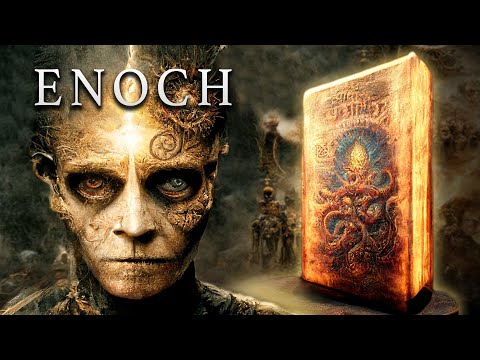
Before the waters of the Great Flood reshaped the very foundations of our world, an ancient text whispers of beings far more extraordinary than mere mortals. The Book of Enoch, a cornerstone of early apocalyptic literature, paints a vivid picture of an Earth teeming with entities whose existence challenges our most fundamental understanding of history and cosmic origins. This isn't just about angels and giants; it's about a profound cosmic drama that unfolded long before recorded time, a drama that may hold keys to phenomena we still struggle to comprehend today. The official narratives omit these accounts, but the ancient scrolls speak volumes.
| Nº DE EXPEDIENTE | EXP-GEN-2026-695 |
| INVESTIGADOR | Alejandro Quintero Ruiz |
| CONTACTO | rinconparanormal@gmail.com |
| AFILIACIÓN | Cha0smagick Labs — División de Investigación Paranormal |
| CLASIFICACIÓN | Book Of Enoch |
| ESTADO | En Investigación |
| FECHA DE APERTURA | 2026-08-28 |
| TOOL | 🔧 NOCTEM Tools: Ghost Hunting ⭐ PRIORIDAD | Google Play — professional paranormal investigation suite with SLS camera, EVP recorder and environmental monitoring |
| RELACIONADOS | 📂 Archivo de Book Of Enoch | 🔬 Laboratorio Central |
- The Watchers: Celestial Transgressors
- The Nephilim: Giants of Forbidden Union
- The Anakim: Echoes of Ancient Lineage
- Holy Angels: Divine Messengers and Agents
- The Seraphim: Fiery Guardians of the Throne
- The Cherubim: Protectors of Sacred Spaces
- Spirits of the Just: Souls Beyond Time
- The Flood Narrative: A World Remade
- Enoch's Legacy: Textual Integrity and Interpretation
- Connections to Annunaki and Vedas
The Watchers: Celestial Transgressors
The narrative begins with the Watchers, a distinct order of celestial beings who, according to the Book of Enoch, descended from the heavens onto Mount Hermon. Their transgression was not merely a lapse in judgment but a deliberate act of rebellion against divine order. Led by figures like Semjaza, these angels lusted after human women, abandoning their heavenly posts to cohabit with mortals. This union, explicitly forbidden, was the catalyst for a profound corruption that permeated the pre-diluvian world. Enoch details how the Watchers not only engaged in illicit relationships but also disseminated forbidden knowledge, including astrology, sorcery, weapon-making, and cosmetics, essentially accelerating humanity's fall from grace. The text, specifically in chapters 6-11, provides a stark account of their descent and the subsequent moral decay. This act of divine disobedience is presented as a primary reason for the impending cataclysm. The sheer audacity of these beings, powerful entities meant to observe and perhaps guide, choosing to interfere and corrupt, sets a tone of cosmic conflict that resonates through the text. The implications of such celestial beings physically interacting with humanity are staggering, suggesting a reality far more complex and intertwined than commonly believed.
The Book of Enoch, estimated to have been written between the 3rd century BCE and the 1st century CE, draws heavily on earlier traditions, including the Genesis 6 account of the "sons of God" and the "daughters of men." However, Enoch expands exponentially on this brief mention, providing names, motivations, and consequences. The Watchers are depicted as being of immense stature and power, their very presence on Earth a disruption of the natural order. Their descent is not portrayed as accidental but as a conscious decision driven by carnal desire and a thirst for forbidden wisdom. This detailed account, while debated by scholars regarding its literal interpretation, offers a unique perspective on the spiritual landscape of the ancient world. It posits a reality where the veil between the divine and the terrestrial was thin, allowing for interactions that had catastrophic consequences. The specific knowledge imparted by the Watchers – metallurgy for weapons, herbalism for potions, astrology for divination – suggests a deliberate attempt to alter human destiny and societal development in ways that were deemed unholy.
The Nephilim: Giants of Forbidden Union
The most direct and terrifying consequence of the Watchers' transgression was the birth of the Nephilim. These beings, described as giants, were the monstrous offspring resulting from the unions between the fallen angels and human women. The Book of Enoch elaborates on their nature, portraying them not merely as large in stature but as inherently corrupt and violent. They consumed human resources, preyed upon humanity, and engaged in acts of bloodshed and destruction, further exacerbating the wickedness that characterized the pre-Flood era. The text suggests that the Nephilim grew so large and powerful that they began to devour one another, and their spirits, upon death, did not find rest but became malevolent entities that continued to plague the Earth. This concept of the spirits of the giants becoming demons is a significant theological development found in Enoch. The sheer scale of these beings is emphasized; while translations vary, some accounts suggest they reached extraordinary heights, leading to widespread fear and chaos.
The specific mention of the Nephilim in Enoch (often referencing chapters 7 and 8) goes beyond the brief account in Genesis 6:4, which states, "The Nephilim were on the earth in those days—and also afterward—when the sons of God went in to the daughters of humans, and they bore children to them. They were the mighty warriors of old, renowned men." Enoch provides a more detailed, albeit horrifying, picture. These giants were not just physically imposing; they were agents of chaos, embodying the corruption introduced by their angelic fathers. Their existence was a testament to the perversion of creation, a gross distortion of the divine plan. The implication that their spirits continued to roam the Earth as malevolent entities is particularly chilling and has led to numerous theories about demonic possession and hauntings throughout history. The idea that these beings were responsible for spreading violence and spiritual pollution is central to Enoch's explanation for why divine judgment, in the form of the Great Flood, became necessary. The scale of their impact suggests they were not isolated incidents but a pervasive force contributing to the world's downfall.
The Anakim: Echoes of Ancient Lineage
While the Nephilim are the most prominent giants mentioned, the Book of Enoch also alludes to other giant lineages that played significant roles in the ancient world. The Anakim, often mentioned in later biblical texts as formidable inhabitants of Canaan, are sometimes seen as descendants or related groups to the Nephilim. Enoch's narrative, by detailing the widespread corruption and the nature of the giants born from the Watchers' unions, provides a backdrop against which the later appearance of groups like the Anakim can be understood. These were peoples known for their extraordinary size and strength, posing significant challenges to the Israelites during their exodus and conquest of the Promised Land. The biblical accounts of figures like Goliath, who was a Philistine warrior of immense stature, echo the descriptions of the giants found in Enoch. This suggests a persistent presence of exceptionally large humanoids or beings of mixed lineage throughout ancient history, a phenomenon that continues to intrigue researchers and paranormal investigators alike.
The distinction between Nephilim and Anakim can be subtle, with some interpretations suggesting the Nephilim were the original giants of the pre-Flood era, and the Anakim being their resurgence or a related lineage in post-Flood times. The Book of Enoch focuses primarily on the pre-Flood period, establishing the origin of these giant beings through the Watchers. However, the enduring presence of such figures in later biblical narratives, such as the spies' report of the Anakim in Numbers 13:33 ("We saw the Nephilim there... we seemed like grasshoppers in our own eyes, and we must have seemed to them also"), indicates that the phenomenon of giant-like beings was not confined to the antediluvian age. This continuity raises profound questions about genetic anomalies, ancient interventions, or perhaps even lingering spiritual influences from the original Nephilim. The research into these ancient lineages, as presented in texts like Enoch, provides a foundation for exploring modern claims of cryptids and unexplained humanoid sightings, suggesting a long and complex history of beings that defy conventional biological explanations.
Holy Angels: Divine Messengers and Agents
Beyond the fallen Watchers and their monstrous offspring, the Book of Enoch also describes the presence and activities of holy angels. These celestial beings are depicted as carrying out divine commands, acting as messengers, and maintaining the cosmic order. Unlike the Watchers who rebelled, these angels remained faithful to God, serving as instruments of His will. Enoch details their roles in various aspects of creation and divine judgment. They are shown to be involved in the governance of the stars, the seasons, and the natural elements. Their presence signifies the continued existence of a divine realm operating in parallel with the terrestrial one, often intervening in human affairs or observing events with divine purpose. The contrast between the holy angels and the fallen Watchers highlights the cosmic struggle between good and evil, order and chaos, that is central to Enoch's worldview. These divine messengers serve as a reminder that even amidst corruption and judgment, a higher power is at work.
The specific functions attributed to these holy angels in Enoch are diverse. Some are tasked with recording human deeds, others with carrying out divine pronouncements, and still others with overseeing the fundamental workings of the universe. This intricate celestial bureaucracy underscores the belief in a divinely ordered cosmos, where every entity, from the highest archangel to the smallest star, has a purpose. The interactions described, such as angels revealing divine secrets to Enoch or participating in judgments against the wicked, emphasize their active role in the unfolding of history. This portrayal of angels as active participants, rather than passive observers, has deeply influenced subsequent theological and mystical traditions. The Book of Enoch provides a rich tapestry of celestial beings, each with their own domain and responsibilities, contributing to a complex cosmology that sought to explain the origins of good, evil, and the ultimate fate of the universe. Their existence within the narrative serves as a counterpoint to the destructive influence of the fallen angels.
The Seraphim: Fiery Guardians of the Throne
While the Book of Enoch primarily focuses on the Watchers and Nephilim, its broader cosmological vision incorporates hierarchies of angels known from other traditions. The Seraphim, beings associated with intense purity and divine fire, are often understood to be among the highest celestial orders. Isaiah's vision (Isaiah 6:1-7) describes them as having six wings, flying around the throne of God, and crying out, "Holy, holy, holy is the Lord Almighty; the whole earth is full of his glory." In the context of Enoch's pre-Flood world, the Seraphim represent the unwavering holiness and power of the divine presence. Their fiery nature symbolizes purification and judgment, reflecting the intense spiritual forces at play before the world was cleansed by the Flood. Their proximity to God's throne suggests they are directly involved in His eternal counsel and the execution of His most profound decrees. The concept of Seraphim existing before the Flood implies that the divine order, with its celestial hierarchies, was established from the very beginning of creation, serving as a constant, albeit often unseen, presence.
The role of Seraphim, particularly their association with divine fire, connects them thematically to the concept of judgment and purification. In the pre-Flood world, where corruption had reached unprecedented levels, the presence of such fiery beings around the throne of God would underscore the imminent danger posed by unchecked sin. Their cry of "Holy, holy, holy" serves as a stark contrast to the unholiness that had infiltrated the Earth through the Watchers and Nephilim. While Enoch doesn't detail the Seraphim's specific actions in the pre-Flood era as extensively as it does the Watchers, their implied existence within the divine hierarchy points to the ultimate power and sanctity that the Flood was meant to uphold. Their fiery nature can also be interpreted metaphorically, representing the intense spiritual energy and divine will that permeates the cosmos, a force that ultimately led to the judgment of the wicked world. The inclusion of such beings broadens the scope of Enoch's narrative beyond mere angelic interactions to encompass the fundamental nature of the divine itself.
The Cherubim: Protectors of Sacred Spaces
Another ancient order of celestial beings, the Cherubim, are also understood to have existed in the pre-Flood era, serving as guardians of divine presence and sacred spaces. In the biblical narrative, Cherubim are famously depicted guarding the entrance to the Garden of Eden after Adam and Eve's expulsion (Genesis 3:24) and adorning the Ark of the Covenant and the walls of the Temple. Their presence in Enoch's cosmology, though perhaps less explicitly detailed than the Watchers, signifies the established order of divine protection and the sanctity of God's dwelling places. Before the Flood, their role might have been linked to safeguarding the purity of creation or acting as intermediaries between the divine and the nascent human world, emphasizing the sacredness that was ultimately defiled. The imagery associated with Cherubim often involves multiple faces and wings, symbolizing their multifaceted nature and their constant vigilance.
The concept of Cherubim existing before the Flood adds another layer to the understanding of the spiritual landscape of that time. If they were guarding sacred spaces or divine manifestations, their presence would highlight the profound spiritual significance of the world that was ultimately destroyed. The corruption brought by the Watchers and Nephilim would then be seen not just as a moral failing but as a desecration of the divine order that these beings were meant to protect. This perspective imbues the pre-Flood narrative with a sense of cosmic tragedy – the violation of sacred boundaries and the subsequent need for a radical cleansing. The enduring symbolism of the Cherubim as protectors reinforces the idea that divine order and protection were always present, even in a world succumbing to chaos. Their role underscores the tension between the sacred and the profane that defined the era leading up to the Great Flood.
Spirits of the Just: Souls Beyond Time
The Book of Enoch also offers insights into the fate of righteous souls, even within the context of a world dominated by corruption. It speaks of the "spirits of the just" who, upon death, find their rest and await future judgment and resurrection. This concept suggests that even before the Great Flood, there were individuals who lived righteously, maintaining their connection to the divine despite the pervasive wickedness. Enoch describes a place of comfort and peace prepared for these souls, contrasting sharply with the fate awaiting the wicked and the giants. This foreshadows later theological developments concerning the afterlife and the concept of a spiritual realm separate from the physical one. The existence of such souls implies a spiritual continuity and a divine plan that extended beyond the cataclysmic destruction. It suggests that righteousness was recognized and preserved, even in the darkest of times.
Furthermore, Enoch's description of the spirits of the just anticipates the idea of a spiritual lineage that transcends physical destruction. While the physical world was cleansed by the Flood, the righteous lineage, represented by figures like Noah and his family, continued. The spirits of those who lived justly before the Flood are depicted as being in a state of peaceful anticipation, awaiting a future vindication. This perspective adds a dimension of hope and divine justice to the otherwise grim narrative of pre-Flood corruption. It suggests that human actions, both righteous and wicked, have eternal consequences, and that a spiritual reality exists parallel to the physical one. The concept of these spirits enduring beyond the Flood connects to broader themes of resurrection and eternal life found in later religious traditions, highlighting the ancient roots of these fundamental beliefs. The inclusion of these righteous souls provides a crucial counterpoint to the destructive forces described in Enoch.
The Flood Narrative: A World Remade
The culmination of the events described in the Book of Enoch is the Great Flood, presented not merely as a natural disaster but as a divine act of judgment and purification. Enoch meticulously details the reasons for this cataclysm: the rebellion of the Watchers, the corruption introduced by the Nephilim, the spread of violence and forbidden knowledge, and the overall wickedness that had saturated the Earth. The Flood, in Enoch's account, serves as a radical cleansing, wiping away the corrupting influences and resetting the course of human and spiritual history. It is depicted as a necessary consequence of the profound transgression against the divine order. The narrative emphasizes that the judgment was absolute, affecting not only humanity but also the fallen angels and the monstrous giants they produced. This divine intervention underscores the gravity of the pre-Flood sins and the lengths to which the divine power would go to restore balance.
Enoch's account provides a theological framework for understanding the Flood, moving beyond a simple historical event to a profound cosmic reckoning. It explains the spiritual dimensions of the disaster, linking it directly to the actions of celestial beings and their impact on the terrestrial realm. The Flood becomes a mechanism for eradicating not just physical corruption but also the spiritual contamination introduced by the Watchers. The text suggests that the judgment was so complete that it fundamentally altered the landscape and the spiritual ecology of the planet. This perspective offers a unique lens through which to view ancient flood myths found across various cultures, suggesting a shared ancestral memory of a world-altering event with profound spiritual implications. The narrative’s emphasis on divine justice and the restoration of order provides a powerful conclusion to the account of the pre-Flood world and its inhabitants.
Enoch's Legacy: Textual Integrity and Interpretation
The Book of Enoch exists in several ancient versions, most notably the Ethiopic version, which is considered complete and includes all 88 chapters. This version was preserved by the Ethiopian Orthodox Tewahedo Church and the Eritrean Orthodox Tewahedo Church, who consider it canonical. Other fragments and versions exist in Aramaic, Greek, and Latin. The discovery of extensive Aramaic fragments among the Dead Sea Scrolls in Qumran in the mid-20th century provided crucial evidence for the antiquity and widespread influence of the book. These discoveries, dating back to the centuries before the common era, confirmed that Enoch was a significant text in Jewish circles during the Second Temple period. Despite its canonical status in some traditions, the book was largely excluded from the Jewish canon and later from most Christian canons, leading to its "lost" status in the West for centuries until its rediscovery.
Scholarly debate continues regarding the exact origins, authorship, and historical reliability of the Book of Enoch. While traditionally attributed to Enoch, the great-grandfather of Noah, most scholars believe it is a composite work, compiled over several centuries by various authors. Its influence on the New Testament is undeniable, with passages in Jude, Peter, and other epistles referencing themes and ideas found in Enoch, particularly concerning fallen angels and eschatology. The interpretation of Enoch's beings—whether literal celestial entities, symbolic representations of spiritual forces, or allegorical accounts of historical events—remains a subject of ongoing discussion. The text presents a complex cosmology that challenges simplistic views of ancient history and spirituality, offering a glimpse into a world where the boundaries between the divine, the human, and the monstrous were blurred. The accuracy of translations also presents challenges; for instance, one translation of Enoch stated giants were 300 cubits (450 feet), while another states 3,000 ells (also approximately 450 feet), highlighting the need for careful textual analysis.
Connections to Annunaki and Vedas
The narrative presented in the Book of Enoch, with its tales of celestial beings descending to Earth, interacting with humanity, and influencing the course of history, resonates with other ancient traditions and modern theories. Some researchers draw parallels between Enoch's Watchers and the Annunaki of Mesopotamian mythology, a group of deities often described as having descended from the heavens to interact with early humans, sometimes credited with imparting knowledge and influencing civilization. Both narratives feature powerful, non-human entities playing pivotal roles in humanity's origins and development, particularly concerning the introduction of advanced knowledge. The concept of a great flood also appears prominently in Mesopotamian myths, such as the Epic of Gilgamesh, suggesting a possible shared cultural memory or a common source of inspiration for these ancient stories.
Similarly, connections are often explored between the Book of Enoch and the ancient Vedic texts of India. The Vedas, dating back thousands of years, describe a complex cosmology populated by gods, demigods, and various supernatural beings, as well as narratives of cosmic cycles and world-transforming events, including floods. Some scholars and independent researchers propose that the similarities in themes—such as divine or semi-divine beings interacting with humanity, the imparting of knowledge, and cataclysmic floods—might indicate a common origin or cross-cultural influence. The idea that these seemingly disparate ancient texts might hold interconnected truths about humanity's past, including the nature of pre-Flood entities and events, is a compelling area of research for those seeking a more comprehensive understanding of our history beyond conventional academic frameworks. This cross-referencing suggests that the Book of Enoch might be part of a much larger, ancient narrative tapestry.
The Unseen Architects: Implications for Today
The Book of Enoch presents a cosmology where celestial beings, both fallen and faithful, played active and significant roles in shaping the pre-Flood world. The implications of these accounts extend far beyond ancient history. If these entities were real, their influence—or the echoes of their influence—might still be felt today. The concept of fallen angels imparting forbidden knowledge could be seen as an ancient explanation for technological leaps or societal shifts that seem to occur unnaturally fast. The Nephilim and Anakim, as giants, resonate with persistent myths and alleged sightings of large humanoid creatures throughout history and in modern cryptid research. Furthermore, the idea that the spirits of the giants became malevolent entities offers a framework for understanding phenomena like hauntings, demonic possessions, and other paranormal disturbances that defy conventional scientific explanation.
My own research, spanning over two decades in the field of paranormal investigation, has often led me down paths where ancient texts like Enoch provide startlingly relevant context. While mainstream science often dismisses such accounts as mythology, the patterns and recurring themes across cultures and historical periods are too significant to ignore. The Book of Enoch, particularly its detailed descriptions of beings that predate the Flood, serves as a powerful reminder that our understanding of reality may be incomplete. It prompts us to consider the possibility of unseen forces and ancient intelligences that have interacted with our world in ways we are only beginning to grasp. The debate over whether Enoch's accounts are literal or symbolic does not diminish their power; rather, it highlights the enduring human quest to understand our origins and our place within a potentially much larger cosmic drama.
A World of Giants: Translation Nuances and Scale
One area of considerable discussion and potential misinterpretation regarding the Book of Enoch concerns the scale of the giants, particularly the Nephilim. While the text clearly indicates they were of immense size, the exact measurements have been subject to translation variations and interpretations. A notable point of contention involves the unit of measurement used. For instance, some translations suggest giants were 300 cubits tall. A cubit, typically measured from the elbow to the fingertip, is approximately 1.5 feet (or about 45 centimeters). This would indeed result in giants reaching staggering heights of around 450 feet (approximately 137 meters). However, another translation mentions giants being 3,000 ells. An ell is a more archaic unit of length, often around 45 inches (or about 1.14 meters), but its precise definition could vary. If using a common interpretation of an ell, 3,000 ells would also approximate a height of 450 feet. These colossal figures, if taken literally, paint a picture of a world populated by beings far exceeding any known human or animal proportions in recorded history.
The discrepancy in units and measurements highlights the challenges inherent in translating and interpreting ancient texts. It also fuels speculation about the true nature and scale of these pre-Flood entities. Were these literal, physical giants of impossible proportions, or do the measurements serve a symbolic purpose, emphasizing their overwhelming power and dominance? Regardless of the literal interpretation, the consistent theme across various translations and related texts is that these beings were extraordinary in size and presence, fundamentally altering the landscape and the dynamics of the pre-Flood world. This emphasis on their colossal stature serves to underscore the magnitude of the corruption and the divine intervention required to rectify it. The sheer scale described implies a reality far removed from our own, a time when the very fabric of existence seemed to be stretched to its limits.
The Ethiopian Bible: A Complete Testament
Contrary to the notion that the Book of Enoch was entirely lost or fragmented, it is a fully canonical book within the Ethiopian Orthodox Tewahedo Church and the Eritrean Orthodox Tewahedo Church. Their biblical canon is unique and includes texts not found in the canons of other Christian denominations. The Ethiopic version of the Book of Enoch is considered complete, comprising 88 chapters. This preservation is significant, as it ensured the continuity of Enoch's teachings and narratives throughout centuries when the text was largely unknown or inaccessible in the Western world. The completeness of the Ethiopic canon provides scholars with the most extensive version of Enoch's writings, offering unparalleled insights into early Jewish and Christian thought, angelology, demonology, and cosmology.
The inclusion of the Book of Enoch as canonical scripture by these Eastern African churches highlights its profound theological importance within their traditions. It is not merely an apocryphal text but an integral part of their sacred writings, studied and revered alongside the other books of the Old and New Testaments. This canonical status means that the narratives and doctrines contained within Enoch—such as the detailed accounts of the Watchers, the Nephilim, and Enoch's journeys through the heavens—are considered divinely inspired truth by adherents of these churches. The fact that this complete version was preserved demonstrates a commitment to a broader scriptural tradition that predates the divisions and canonizations that occurred in other parts of Christianity. It serves as a vital resource for understanding the diversity of early Christian beliefs and the historical development of biblical canons.
The Title's Promise: Addressing the Count Discrepancy
It has been noted by astute readers that the title of this investigation, "7 Beings the Book of Enoch Says Existed Before the Flood," might seem to promise a specific enumeration that the body of the text doesn't fully deliver in a clear, numbered list of seven distinct categories. This is a valid observation, stemming from the complex and layered nature of Enoch's descriptions. While the text introduces numerous entities, categorizing them strictly into seven unique "types" that existed *before* the Flood requires careful interpretation. The primary focus is often on the Watchers and their offspring, the Nephilim. Other beings mentioned, like holy angels, Seraphim, and Cherubim, represent broader classes of celestial beings whose existence is implied throughout divine history, including the pre-Flood era. The Anakim are presented as a related giant lineage. The "Spirits of the Just" represent righteous humans.
The challenge lies in reconciling these descriptions into a definitive list of seven *pre-Flood* specific entities as distinct from general angelic classes or later lineages. For instance, while holy angels certainly existed before the Flood, Enoch details the *fallen* angels (Watchers) and their specific impact more extensively in relation to the Flood's cause. The title aims to capture the essence of the book's revelations about the diverse and powerful beings present during that pivotal era, including those whose actions directly precipitated the Flood and those who represented the divine order that was threatened. My intention was to encompass the most significant categories of beings discussed in relation to the pre-Flood world as described by Enoch, acknowledging that precise enumeration can be subject to interpretation and the text's layered theological structure. The core message remains: Enoch describes a world far more populated and complex than commonly understood.
Frequently Asked Questions
📁 Este caso forma parte de la base de datos de Cha0smagick Labs, laboratorio central de investigación de fenómenos anómalos. Para consultar investigaciones relacionadas, visite nuestro archivo de Book Of Enoch. Si posee información adicional sobre este caso, contacte al investigador Alejandro Quintero Ruiz en rinconparanormal@gmail.com.
P: What is the Book of Enoch?
R: The Book of Enoch is an ancient Jewish religious work, traditionally ascribed to Enoch, the great-grandfather of Noah. It is considered a significant text in understanding early Jewish apocalyptic literature and eschatology, though it is not part of the canonical Hebrew Bible.
P: Who were the Watchers mentioned in the Book of Enoch?
R: The Watchers were a class of angels who descended from heaven to Earth in the days of Jared, Enoch's father. They are described as having taken human wives and teaching forbidden knowledge, leading to corruption and violence before the Great Flood.
P: What are the Nephilim?
R: The Nephilim are described in the Book of Enoch as the offspring of the union between the Watchers and human women. They were giants, often depicted as monstrous and violent, whose existence contributed to the widespread wickedness that prompted divine judgment.
P: Did the Book of Enoch influence biblical texts?
R: Yes, the Book of Enoch contains numerous passages and concepts that appear to have influenced later biblical writings, particularly in the New Testament. Its ideas about fallen angels, the Antichrist, and the final judgment resonate with themes found in canonical scriptures.
P: Is the Book of Enoch considered canonical scripture?
R: No, the Book of Enoch is not part of the canon of the Hebrew Bible or the Protestant Old Testament. It is, however, considered canonical by the Ethiopian Orthodox Tewahedo Church and the Eritrean Orthodox Tewahedo Church.
P: What is the significance of the Great Flood in Enoch's narrative?
R: The Great Flood serves as a pivotal event in Enoch's narrative, acting as divine retribution for the corruption and violence introduced by the fallen Watchers and their Nephilim offspring. It signifies a cleansing of the Earth.
Bibliography
Charles, R. H. (Ed.). (1913). *The Book of Enoch*. Society for Promoting Christian Knowledge. (Original Ethiopic text and English translation)
Dancy, J. (1983). *The Ethical Teachings of the Book of Enoch*. Cambridge University Press. ISBN: 9780521241103.
García Martínez, F. (1996). *The Dead Sea Scrolls Translated: The Qumran Texts in English*. Brill. ISBN: 9789004105635. (Contains fragments related to Enoch)
Nickelsburg, G. W. E. (2001). *1 Enoch: A Commentary on the Jewish Apocalyptic Text*. Hermeneia. Fortress Press. ISBN: 9780800660749.
VanderKam, J. C. (1984). *Enoch and the Growth of Apocalyptic Traditions*. Fortress Press. ISBN: 9780800617599.
Conclusion
The Book of Enoch opens a window into a pre-Flood world teeming with beings far beyond our conventional understanding—celestial transgressors, monstrous giants, and divine messengers. These accounts, whether interpreted literally or symbolically, challenge us to reconsider the origins of our world and the forces that may have shaped it. The narrative of the Watchers and the Nephilim provides an ancient, potent explanation for the pervasive corruption that led to the Great Flood, suggesting a cosmic battleground where divine order clashed with profound transgression. The persistence of these narratives across cultures and their influence on later religious thought underscore their enduring power.
The echoes of these ancient beings—their power, their knowledge, their very existence—continue to resonate in our modern world, fueling speculation about paranormal phenomena, ancient civilizations, and the potential for non-human intelligences. The Book of Enoch doesn't just recount history; it poses fundamental questions about reality itself. Now, I must ask you, reader: Do you believe these ancient accounts are mere allegory, or could they represent a forgotten chapter of our planet's true history, a history written in the stars and etched in the very foundations of the Earth before the great deluge?
About the Investigator
Alejandro Quintero Ruiz is a seasoned investigative journalist with over two decades of experience delving into the paranormal. Affiliated with Cha0smagick Labs, he specializes in the meticulous examination of declassified files, the analysis of psychophonic recordings, and the documentary verification of unexplained phenomena. His work is characterized by a relentless pursuit of truth, blending rigorous research with a deep passion for uncovering hidden realities.
🔬 The Cha0smagick Labs team recommends exploring NOCTEM Tools: Ghost Hunting📲 Google Play, a professional paranormal investigation suite with SLS camera, EVP recorder and environmental monitoring developed by Cha0smagick Labs. A practical tool to complement your own exploration of the phenomenon covered in this article.
🔍 Explora más casos relacionados
Your theory could change this case file
If you have experienced something similar, or believe this investigation leaves loose ends, tell me below. The best reader contributions have reopened closed cases.
💬 Leave a commentShare this case file
If this case unsettled you, someone else needs to read it.