Followers

Mostrando las entradas con la etiqueta investigative report. Mostrar todas las entradas

UFO Abduction: Unpacking a Documented Case

Image

The phenomenon of UFO abductions has long been a staple of speculative fiction and a source of genuine, albeit unverified, accounts. While many dismiss these narratives as fantasy or delusion, meticulous documentation and persistent testimonies suggest a deeper, more complex reality lurking just beyond our understanding. This analysis delves into a specific case, examined within a 2024 context, to understand its potential implications and the evidence presented, drawing parallels with historical accounts and modern speculation.

Introduction: The Unseen Narrative

The persistent question of whether humanity is alone in the universe continues to fuel research and public fascination. While definitive proof remains elusive, the volume of anecdotal evidence, particularly surrounding UFO abductions, demands a serious, analytical approach. This particular case, documented in what appears to be an older film, presents a rich tapestry of observations, testimonies, and theories that resonate even today. The sheer wealth of information available on platforms like YouTube, often featuring older documentaries or stories that have faded from mainstream discourse, highlights the enduring interest in these unexplained encounters.

Case Analysis: Key Timestamps and Observations

Delving into the provided timestamps offers a granular view of the documentary's content. At 8:37, photographic evidence of a UFO is presented, a tangible, albeit often contested, form of proof. The discussion at 8:51 regarding triangular trajectories aligns disturbingly with mass sightings, such as the Welsh event of 1977, suggesting a potential pattern in aerial phenomena. Perhaps one of the most intriguing points emerges at 1:31:45, detailing a potential reason for the erratic, zig-zagging flight patterns of these craft: interference with propulsion systems and an inability for radar to achieve a lock. This could hint at advanced technologies far beyond conventional understanding, possibly involving scalar wave principles, a topic often discussed in fringe science circles.

Recommended Gear for Investigation

ProductDescriptionBuy
The Big Book of Paranormal: 300 Mystical and Frightening Tales From Around the WorldAn excellent choice to complement your research on this topic.View on Amazon
Cryptozoology A To Z: The Encyclopedia Of Loch Monsters Sasquatch Chupacabras And Other Authentic M: The Encyclopedia of Loch Monsters, Sasquatch, Chupacabras, and Other Authentic Mysteries of NatureAn excellent choice to complement your research on this topic.View on Amazon
Forbidden Archeology: The Hidden History of the Human RaceAn excellent choice to complement your research on this topic.View on Amazon
Criptozoologia: El enigma de las criaturas insulitas (Spanish Edition) (Versión sin solapas): El Enigma De Las Criaturas Insolitas / the Enigma of the Unusual Creatures (Investigación Abierta)An excellent choice to complement your research on this topic.View on Amazon
Runes: Unlock the Secrets of the Stones (RP Minis)An excellent choice to complement your research on this topic.View on Amazon
The H. P. Lovecraft Collection: Deluxe 6-Book Hardcover Boxed Set: 3 (Arcturus Collector's Classics)An excellent choice to complement your research on this topic.View on Amazon
El Duodecimo Planeta (The Earth Chronicles, 1) by Zecharia SitchinAn excellent choice to complement your research on this topic.View on Amazon
Celestron 11068 NexStar 6SE Computerised Schmidt-Cassegrain Telescope with Advanced GPS, Astroimaging and AutoAlign Features, Black/OrangeAn excellent choice to complement your research on this topic.View on Amazon
Missing 411- Eastern United States: Unexplained disappearances of North Americans that have never been solvedAn excellent choice to complement your research on this topic.View on Amazon
Ghost-Hunting For Dummies [Idioma Inglés] An excellent choice to complement your research on this topic.View on Amazon

Furthermore, the element of telepathic guidance, mentioned around 11:15, introduces a psychological and perhaps neurological dimension to abduction claims. The idea that individuals are mentally directed to specific locations for encounters challenges our understanding of free will and consciousness. The documentary also touches upon the challenges faced by witnesses. At 18:37, an encounter with military figures attempting to discredit photographic evidence and urging the witness to "forget what you saw" is highlighted. This alleged interaction points towards a possible pattern of official denial or suppression, a theme recurrent in the broader UFO discourse.

Another significant testimony comes at 20:29, where a retired Air Force officer, with an extensive background, reportedly discusses the correlation between seismic events and UFO sightings. This connection, if valid, could suggest extraterrestrial or unknown craft activity is linked to geological phenomena, a theory that borders on the sensational but warrants consideration within the broader scope of anomalous events.

Interviews and Testimonies: Denials and Support

The raw feedback from viewers indicates a strong reception for the documentary. Comments like "Great video...we are now able to put so many of the pieces together...amazing" and "OUTSTANDING !!!!!" suggest the film successfully syntheses information and offers compelling insights. The comparison to the Travis Walton experience, noted for its physical interaction with occupants exhibiting "soft and spongy skin, lightweight" characteristics, is particularly striking. The mention of "links again to water" in 2022 reinforces a recurring theme in UFO lore, often linking anomalous phenomena to bodies of water or even oceanic origins.

Interestingly, viewer experiences also highlight potential visual anomalies within the footage itself. One viewer points out an object flying slowly on the left side of the interviewee's head around 5:20 and again at 5:28, suggesting the presence of a craft even in the background of seemingly mundane interview shots. The lack of discernible sound from such close-proximity objects, as noted by a commenter, would further challenge conventional explanations like aircraft. The mention of "No A.I here, just great VHS and film camera images" adds to the perceived authenticity, contrasting modern digital artifacts with the "grainy" evidence of older recordings.

However, not all feedback is uniformly positive. Some viewers expressed frustration with the audio mixing, stating, "I hate how they play such loud music when I’m trying to hear the talking makes it extremely hard to listen to especially when the music is louder than the narration." This technical issue, while not diminishing the core content, impacts the viewer's ability to fully engage with the reported details.

Speculative Theories: Propulsion, Telepathy, and Origins

The documentary ventures into highly speculative territory, particularly concerning the nature and origin of the observed phenomena. The case discussed around 43:07 involves nine distinct craft operating in unison. The speculation that these are not conventional "alien ships" but rather "organic life forms" is a radical departure from typical extraterrestrial hypotheses. The comparison to sea creatures with bioluminescent lights and the concept of moving through the "zero point" – reminiscent of theoretical propulsion systems like the "Mycelium drive" from Star Trek Discovery – pushes the boundaries of current scientific understanding. This theory posits that certain terrestrial conditions, perhaps amplified by events like nuclear explosions (a recent picture is shown alongside a UFO), could create temporary gateways for these beings.

The mention of "overlords" by a commenter, while lighthearted, taps into a common trope in abduction narratives, suggesting a hierarchical or controlling intelligence behind these events. The idea of "sport models" or the hypothetical scenario of an abductee being misplaced miles from their original location speaks to the perceived capriciousness or indifference of the alleged abductors. The "two-ring phone bug tactics" mentioned, where hanging up still allows for recording, might suggest methods used by operatives, whether human or otherwise, to monitor or manipulate individuals.

Comparative Phenomena: Parallels with Other Cases

The recurring themes and observations within this documentary hold significant weight when compared to the broader landscape of UFO research. The mention of triangular craft echoes reports from incidents like the Belgian UFO wave and the Phoenix Lights. Telepathic guidance aligns with numerous abduction testimonies, suggesting a non-verbal, possibly mind-to-mind communication method. The alleged attempts by military or governmental entities to discredit witnesses or confiscate evidence is a narrative thread found across decades of UFO-related incidents, from Roswell to contemporary accounts.

The comparison to the Travis Walton case is particularly relevant, given Walton's account of a close encounter involving physical examination by extraterrestrial beings. The shared emphasis on specific physical characteristics of the occupants and the potential links to water suggest that certain abduction scenarios might share common underlying features, regardless of the specific time or location of the event. The idea of advanced, possibly organic, beings utilizing theoretical propulsion is also a concept explored in various advanced theoretical physics models and science fiction narratives, blurring the lines between speculation and potential reality.

Historical Context and Alleged Suppression

The fact that this documentary appears to be an older production, potentially suppressed or overlooked, raises critical questions about information control. A commenter notes that "many US reporters at the time were more concern on being ridicule for even taking on this story," highlighting the societal stigma associated with UFO research. Figures like George Knapp are acknowledged for their bravery in tackling such sensitive topics, often alongside controversial figures like Bob Lazar. The contrast between the perceived credibility of the testimonies and their limited public exposure suggests a potential effort to manage public perception and suppress inconvenient truths.

The sentiment that "you have to wonder how many of these older documentaries exist, and have been suppressed, possibly based on credibility, or a particular criteria according to the Powers that be" is a common refrain among independent researchers. The existence of well-done yet obscure older UFO documentaries online, as noted by viewers, supports the idea that valuable information may have been deliberately sidelined.

Investigator's Verdict: Fraud, Genuine Phenomenon, or Something Else?

From an analytical standpoint, the case presented in this documentary, while containing elements that could be fabricated or misinterpreted, exhibits a remarkable consistency with patterns observed in numerous other documented abduction accounts. The photographic evidence, the telepathic communication, the alleged military interference, and the speculative theories on propulsion and origins, while extraordinary, are not isolated incidents in the annals of UFOlogy. The viewer testimonies, particularly those pointing out anomalies in the background footage, add another layer of intrigue, suggesting potential overlooked evidence.

However, skepticism remains a critical tool. The lack of verifiable, independently corroborated evidence is the perennial challenge. The "organic life form" theory, while fascinating, requires a paradigm shift in our understanding of biology and physics. The potential for misidentification, psychological projection, or even deliberate hoax cannot be entirely dismissed without rigorous, objective investigation. Based on the analysis, this case presents compelling anecdotal evidence that warrants further, unbiased scrutiny. It’s not definitive proof of extraterrestrial visitation, but it is a significant data point in the vast, unexplained mosaic of UFO phenomena.

The Researcher's Archive

For those seeking to expand their understanding of UFO phenomena and abduction cases, consulting established resources is paramount. Documentaries that delve into historical accounts, academic research papers exploring anomalous phenomena, and platforms dedicated to witness testimonies can provide invaluable context. Investigating the work of researchers who have navigated the complexities of alleged cover-ups and suppressed information is also crucial for a comprehensive perspective. Consider exploring archives that catalog witness accounts and the history of UFO investigations.

Frequently Asked Questions

  1. What are the common characteristics of UFO abduction accounts?

    Common elements include missing time, physical examinations, telepathic communication, encounters with non-human beings, and sometimes sightings of UFO craft. Many accounts also describe feelings of paralysis or helplessness, and a subsequent sense of profound change or distress.

  2. Is there any scientific evidence supporting UFO abductions?

    Currently, there is no universally accepted scientific evidence that definitively proves UFO abductions. However, ongoing research by organizations and independent investigators examines witness testimonies, physical traces, and radar data, seeking correlations and potential explanations within scientific frameworks.

  3. Why are alleged UFO abduction cases often dismissed by mainstream science?

    Dismissal often stems from the lack of repeatable, verifiable physical evidence. Many accounts rely on subjective experiences, memory recall under hypnosis (which can be unreliable), and anecdotal reports, making them difficult to study using traditional scientific methodologies. Societal stigma also plays a role.

  4. What is the significance of comparing UFO abduction cases to historical events?

    Comparing cases helps identify patterns, recurring themes, and potential links to earlier phenomena. If similar details—such as craft descriptions, occupant characteristics, or alleged governmental responses—appear across different time periods and locations, it strengthens the argument for a consistent, albeit unexplained, phenomenon.

Your Field Mission

This investigation highlights the importance of critical observation and documentation. Your mission, should you choose to accept it, is twofold:

  1. Document Your Observations:

    If you encounter any anomalous aerial phenomena or experience unusual events, document them meticulously. Note the date, time, location, duration, visual details, and any accompanying sounds or feelings. If possible, take photographs or videos, but prioritize your safety and well-being.

  2. Cross-Reference and Analyze:

    Compare your documented experiences with known cases and theories discussed in this report and elsewhere. Look for patterns and inconsistencies. Share your findings responsibly within reputable research communities, contributing to the collective understanding of these complex phenomena.

The pursuit of truth requires diligence and an open, yet critical, mind. Every piece of data, every testimony, contributes to the larger puzzle. Share your experiences and insights in the comments below. Your perspective is invaluable to this ongoing investigation.

If you have personally witnessed similar events or have insights into this particular documentary, your testimony is crucial. Please share your experiences and thoughts in the comments section below. Help us piece together this complex phenomenon. Don't keep your findings to yourself – share this post on social media platforms to spark discussion and gather more perspectives.

Investigator's Note: True paranormal research doesn't fund itself. In a world where the digital and the unexplained intersect, some of us explore new frontiers to secure the future. Do you dare to be part of the vanguard? Join the Binance community, support the cause, and with the right strategy, you could fund not only our next expedition but your own fortune. The next great discovery could be just a click away.

Colombian Paramilitary Supernatural Experiences - Podcast - The 'Rezad'

Image

The history of conflict is often riddled with tales that transcend the battlefield, delving into the shadowed realms of the unexplained. In Colombia, the era of paramilitarism is not only marked by its brutal reality but also by chilling accounts of the supernatural, whispered both in hushed tones and broadcast through platforms like podcasts. This investigation delves into the phenomenon known to some as 'Los Rezados' - individuals purportedly protected or empowered by dark rituals.

Introduction: Whispers from the Shadow War

The conflict in Colombia has been a long and complex tapestry, woven with threads of political intrigue, social unrest, and armed struggle. While official histories focus on the military and political aspects, a deeper, more unsettling layer of this conflict involves the paranormal. Reports from former paramilitaries, soldiers, and even civilians speak of phenomena that defy rational explanation – encounters with the supernatural that played a crucial role on and off the battlefield. The podcast "Experiencias sobrenaturales de los Paramilitares Colombianos - PODCAST - Los rezados" brings these chilling narratives to the forefront, offering a glimpse into a reality where faith, fear, and the occult intertwine.

As an investigator, my mission is to sift through the noise, analyze the claims, and attempt to connect the dots, however tenuous they may seem. This case, focusing on the alleged supernatural protections sought by Colombian paramilitary fighters, presents a unique challenge. It’s a territory where folklore, psychological warfare, and perhaps genuine anomalous events converge. We will dissect testimonies, explore the cultural context, and examine the potential explanations, from mass hysteria to more profound, unexplained forces.

Recommended Gear for Investigation

ProductDescriptionBuy
The Big Book of Paranormal: 300 Mystical and Frightening Tales From Around the WorldAn excellent choice to complement your research on this topic.View on Amazon
Cryptozoology A To Z: The Encyclopedia Of Loch Monsters Sasquatch Chupacabras And Other Authentic M: The Encyclopedia of Loch Monsters, Sasquatch, Chupacabras, and Other Authentic Mysteries of NatureAn excellent choice to complement your research on this topic.View on Amazon
Forbidden Archeology: The Hidden History of the Human RaceAn excellent choice to complement your research on this topic.View on Amazon
The H. P. Lovecraft Collection: Deluxe 6-Book Hardcover Boxed Set: 3 (Arcturus Collector's Classics)An excellent choice to complement your research on this topic.View on Amazon
Criptozoologia: El enigma de las criaturas insulitas (Spanish Edition) (Versión sin solapas): El Enigma De Las Criaturas Insolitas / the Enigma of the Unusual Creatures (Investigación Abierta)An excellent choice to complement your research on this topic.View on Amazon
Runes: Unlock the Secrets of the Stones (RP Minis)An excellent choice to complement your research on this topic.View on Amazon
El Duodecimo Planeta (The Earth Chronicles, 1) by Zecharia SitchinAn excellent choice to complement your research on this topic.View on Amazon
Celestron 11068 NexStar 6SE Computerised Schmidt-Cassegrain Telescope with Advanced GPS, Astroimaging and AutoAlign Features, Black/OrangeAn excellent choice to complement your research on this topic.View on Amazon
Missing 411- Eastern United States: Unexplained disappearances of North Americans that have never been solvedAn excellent choice to complement your research on this topic.View on Amazon
Ghost-Hunting For Dummies [Idioma Inglés] An excellent choice to complement your research on this topic.View on Amazon

The 'Rezad' Phenomenon: Rituals and Beliefs

The term 'Rezado' translates to "prayed one" or "one who prays," but in the context of the Colombian conflict, it refers to fighters who underwent specific rituals, often involving prayers, invocations, and pacts, believed to grant them supernatural protection in combat. These rituals were not exclusive to paramilitaries; accounts suggest similar practices among guerrillas and even regular army soldiers.

The core belief behind 'Los Rezados' is that these rituals could imbue individuals with an almost supernatural resilience. Stories abound of fighters surviving multiple gunshots, seemingly impervious to harm, or experiencing near-death situations without succumbing to fatal wounds. The effectiveness of these practices is a subject of intense debate, with some attributing it to psychological fortitude and others to genuine, albeit dark, supernatural intervention.

The prayers, the pacts... they weren't just words. They were a commitment. A deal. And sometimes, the price was higher than anyone imagined.

The practice is deeply rooted in a blend of Catholic traditions, indigenous mysticism, and possibly more sinister occult practices. It's a testament to how desperation can lead individuals to seek power and protection from any available source, even those that lie beyond the veil of conventional understanding. The fear of death, pervasive in a war zone, is a powerful motivator, pushing individuals to explore belief systems that offer a semblance of control or immunity.

The original content mentions various other documentaries and podcasts, hinting at a broader interest in the occult and mysterious within the creator's wider network. While these diverse topics, ranging from Chaos Magick to Wicca and Urban Mysteries, don't directly pertain to the 'Rezad' phenomenon, they establish a pattern of exploring unconventional belief systems and the darker aspects of human experience. This multidisciplinary approach suggests a thematic exploration of hidden knowledge and spiritual warfare.

Eyewitness Accounts: Tales from the Field

The podcast and accompanying text feature a collection of testimonies from individuals who claim direct experience with this phenomenon. These accounts, while varied, paint a consistent picture of seemingly impossible survivals and encounters with the uncanny.

  • One witness recounts seeing a person shot repeatedly and "get up as if nothing happened." Such claims, while extraordinary, are echoed in various conflict zones where belief in supernatural protection is prevalent.
  • Another individual, a former professional soldier who patrolled with paramilitaries, shared a personal anecdote about a commander's prayer – the "prayer of the just judge" (oración del justo juez). He claims this prayer protected him from serious harm during combat, only sustaining minor injuries. This suggests a belief that specific prayers, when recited with conviction, could offer a tangible shield.
  • The notion that "the same lead chases him" appears in multiple comments, suggesting a karmic or supernatural consequence tied to the use of violence, particularly when augmented by dark rituals.
  • There are accounts of individuals who, by choice or circumstance, avoided certain elements – like rivers or lakes – fearing fatal consequences due to their 'rezado' status. This implies that the protection granted was not absolute and came with specific limitations or vulnerabilities.
  • The effectiveness of prayers is contested within the comments. Some argue that prayers to 'spirits' or 'souls' (rezarle a las animas) are more potent, indicating a complex spiritual landscape where different entities or forces are invoked.
"Lo vivi, en barranca bermeja. Yo fuy soldado profesional en esa epoca patrulle con los paracos si es verdad todo eso. Aya me dijo un comandante de los paracos Ami me gustaba preguntarles todo eso y lo unico que aprendi fue la oracion que tenia tirofijo la oracion del juzto juez y en un combate me dieron bala parecia callendo granizo y solo me quemaron una nalga y un parpado y toda ia la utilizo para resar los jefes cuando me llaman a descargos en las empresas y los amanzo y cuando me sientan a descargos me hablan desentemente y siempre a mi fabor pero es una oracion al justo juez la blanca hay dos la negra y la blanca yo tengo la blanca.la dirijoda a Jesucristo"

The comments also reveal a strong religious counter-narrative. Many express deeply held Christian beliefs, warning against such practices and emphasizing that these rituals are of Satan. They cite biblical passages, particularly from Revelation, to condemn sorcery and pacts, asserting that true salvation and protection come only through faith in Jesus Christ. This division in belief highlights the spiritual battleground upon which these experiences allegedly unfold.

Analysis and Theories: Beyond the Mundane

From an investigative standpoint, these accounts present several layers of interpretation:

  1. Psychological Warfare and Bolstering Morale: In the brutal environment of the Colombian conflict, belief in supernatural protection could serve as a powerful psychological tool. Knowing that your comrades are 'rezados' might instill confidence and courage, while the fear of facing such fighters could demoralize the enemy. The rituals themselves could create a strong group identity and reinforce a sense of invincibility.
  2. Hallucinations and Altered States: The extreme stress, trauma, and possible substance abuse inherent in warfare can lead to altered states of consciousness and hallucinations. These experiences, perceived as supernatural, could be misinterpretations of physiological or psychological phenomena under duress.
  3. Folk Beliefs and Cultural Narratives: Colombia has a rich history of folklore and spiritual traditions. 'Los Rezados' could be a manifestation of these deeply ingrained cultural beliefs, where supernatural elements are readily incorporated into explanations for extraordinary events. This cultural context allows such beliefs to persist and even thrive.
  4. Genuine Anomalous Events: Dismissing all accounts outright would be intellectually dishonest. While rare, there may be instances where unexplained events occur. The question remains whether these are truly supernatural interventions, unexplained natural phenomena, or simply highly improbable occurrences that defy immediate explanation.
  5. The Power of Suggestion and Confirmation Bias: Once an individual believes they are protected, they might interpret events through that lens. Small injuries might be overlooked, while near-misses are seen as proof of their protection. This confirmation bias can reinforce the belief, regardless of objective reality.

The "prayer of the just judge" mentioned by the former soldier is a significant detail. Such prayers, often invoking divine figures or saints, are common in various cultures seeking protection. The specific invocation and belief in its efficacy, especially when tied to a ritualistic context, are key elements to consider. The distinction between the "white" and "black" versions of such prayers further suggests a deliberate engagement with different spiritual forces.

Furthermore, the interconnectedness of these narratives across different groups (paramilitaries, guerrillas, soldiers) implies a shared understanding or at least awareness of these spiritual practices within the conflict's ecosystem. The mention of "El Ojo de Horus" and "Magia(k) del Caos" in the related content suggests an interest in ancient symbols and esoteric practices, which could potentially overlap with the underlying beliefs driving these 'rezado' rituals.

Investigator's Verdict: Fraud, Genuine Phenomenon, or Something Else?

After reviewing the available testimonies and contextual information, my verdict leans towards a complex interplay of factors, with a significant emphasis on the psychological and cultural aspects. The overwhelming majority of accounts can likely be attributed to a combination of:

  • Intense psychological conditioning through rituals and belief systems designed to instill fearlessness and a sense of invincibility.
  • The power of suggestion and confirmation bias, where individuals interpret events in alignment with their beliefs.
  • Trauma-induced altered states of consciousness and the potential for misinterpretation of events under extreme duress.
  • The pervasive influence of folklore and esoteric beliefs within the Colombian cultural context, which provides a framework for understanding and perpetuating such phenomena.

While I remain open to the possibility of genuine anomalous events, the evidence presented does not conclusively point to supernatural intervention. The concept of 'Los Rezados' appears to be a potent manifestation of how human belief systems, desperation, and the psychology of warfare can converge to create extraordinary narratives. The 'protection' might be more a self-imposed psychological shield, amplified by ritual and community belief, rather than an external supernatural force. However, the consistent nature of these accounts across different individuals and groups warrants continued observation. The true 'power' might lie not in dark pacts, but in the human mind's capacity to find strength and meaning in the face of unimaginable horror.

The Investigator's Archive

To further explore the intersection of conflict, belief, and the paranormal, I recommend the following resources:

  • Books on Cognitive Psychology and Warfare: Understanding how the mind functions under extreme stress is crucial for analyzing such accounts. Works exploring soldier psychology, trauma, and belief formation are invaluable.
  • Documentaries on Colombian Conflict: While often focusing on the political and social aspects, documentaries that touch upon the human element and cultural nuances can provide essential context.
  • Academic Papers on Parapsychology and Folklore: Research into reported cases of supernatural occurrences in high-stress environments and cross-cultural analysis of protective rituals can offer comparative insights.

For those seeking to equip themselves for their own investigations into the unexplained, certain tools can be invaluable. Understanding the nuances of audio recording for capturing potential anomalies, or the use of EMF meters to detect electromagnetic fluctuations, can aid in objective data collection. Ensuring reliable communication and analysis tools is paramount for any serious inquiry.

Frequently Asked Questions

Q1: What exactly does "Los Rezados" mean?
It refers to individuals, particularly in the context of the Colombian conflict, who underwent rituals believed to grant them supernatural protection in combat.
Q2: Were these practices exclusive to paramilitaries?
No, accounts suggest that similar rituals were also practiced by guerrillas and regular army soldiers.
Q3: Can these experiences be explained by science?
Likely explanations include psychological factors such as heightened morale, belief in invincibility, altered states of consciousness due to stress or substances, and confirmation bias. However, the persistent nature of such accounts keeps the door slightly ajar for unexplained phenomena.
Q4: What is the "prayer of the just judge"?
It is a specific prayer, mentioned in the testimonies, believed to offer protection. There are variations, including "white" and "black" versions, suggesting different spiritual affinities or intentions.
Q5: Is there any evidence that these rituals actually work?
The evidence is purely anecdotal. While testimonies describe seemingly impossible survivals, there is no objective, verifiable proof that the rituals themselves caused these outcomes. The belief in their efficacy is strong among those who practiced them.

Your Mission: Field Observation

Your mission, should you choose to accept it, is to observe. Listen to the stories, read the accounts, and consider the cultural and psychological factors at play. If you encounter similar narratives in your own communities or investigations, document them meticulously. Differentiate between anecdotal evidence, local folklore, and potentially verifiable occurrences. Your critical analysis is the first step in demystifying these chilling tales—or confirming them.

Share your experiences in the comments below. Have you heard similar stories? Do you believe in the power of such rituals?

Like this post if you found it intriguing, subscribe for more deep dives into the paranormal, and share it with fellow truth-seekers.

Investigator's Note: True paranormal research doesn't fund itself. In a world where the digital and the unexplained intersect, some of us explore new frontiers to secure the future. Do you dare to be part of the vanguard? Join the Binance community, support the cause, and with the right strategy, you could fund not only our next expedition but your own fortune. The next great discovery could be just a click away.

El Salvador: Un Análisis del Documental VHS RIP "Abre tu Mente" del Canal Infinito


Historical Context: The Digital Ghost of Canal Infinito

The digital realm is a graveyard of forgotten media, and within its spectral confines lie fragments of programming once thought lost. "El Salvador: Abre tu Mente," a VHS RIP from the enigmatic Canal Infinito, is one such specimen. Its very existence, resurrected from degraded magnetic tape, speaks volumes about the ephemeral nature of broadcast media and the enduring allure of the unexplained. This documentary, purportedly exploring occurrences in El Salvador, surfaces in an era where the internet eagerly consumes and reinterprets 'lost media,' often blurring the lines between genuine archival material and curated mythos. Our task is not merely to watch, but to dissect, to understand the cultural currents that birthed such a piece and the methodologies, or lack thereof, employed in its presentation.

Thematic Analysis: Beyond the Surface Narrative

While the title suggests a focus on El Salvador, the true thematic depth, or deficiency, lies in how it handles its subject matter. Is it a genuine exploration of paranormal events, a cultural commentary on folklore, or simply a sensationalized compilation designed for maximum viewership? From preliminary analysis, "Abre tu Mente" appears to tread a fine line. It likely delves into phenomena commonly associated with regional legends—perhaps tales of apparitions tied to specific landscapes, or accounts of unusual atmospheric events. The phrase "Abre tu Mente" itself is a meta-commentary, a direct appeal to the viewer to suspend skepticism, a common tactic in paranormal documentaries aiming to foster belief rather than critical analysis. We must examine whether the documentary presents evidence that withstands scrutiny or relies on anecdotal accounts and visual rhetoric to construct its narrative. The historical context of El Salvador, deeply rooted in rich folklore and often influenced by socio-political shifts, could play a significant role in the interpretation of these phenomena. Understanding whether the documentary acknowledges these nuances is crucial.

"The viewer is invited not to question, but to accept. This is the first red flag in any serious investigation." - Alejandro Quintero Ruiz

Evidence and Methodology: A Critical Examination

The core of any paranormal investigation, whether fictional or grounded, rests on its handling of evidence and methodology. For a VHS RIP, especially one labeled #lostmedia, the quality of evidence is inherently compromised. We must analyze:

  • Testimonial Accounts: Are interviews presented with critical context? Who are the witnesses? What are their backgrounds? Are their testimonies corroborated or presented in isolation?
  • Visual Evidence: Given the era and the VHS format, expect artifacts. Are purported anomalies genuinely anomalous, or are they artifacts of the recording medium, lighting, or simple pareidolia? The analysis must distinguish between genuine visual anomalies and the degradation inherent in analog tape.
  • Auditory Evidence: If any audio recordings are presented, are they analyzed for background noise, interference, or potential Electronic Voice Phenomena (EVP)? The methodology for recording and analyzing such sounds is paramount. A Spirit Box session, for example, requires careful documentation of the device used and the environment.
  • Methodological Rigor: Does the documentary employ any scientific principles? Are researchers or experts consulted? Or is it purely narrative-driven, prioritizing sensationalism over accuracy? The absence of a structured investigative protocol is a major setback.

The very nature of "lost media" often means that originating sources are difficult to verify, making rigorous analysis a challenging, yet essential, part of the process. The specter of manipulation, whether intentional or accidental, looms large.

Visual and Audio Analysis: Deciphering the Analog Haze

The degradation from VHS is not just a technical limitation; it's an active participant in the narrative. Grain, tracking errors, color bleeding, and audio hiss can all be misinterpreted as paranormal activity. A thorough analysis requires a discerning eye and ear, trained to identify these common analog artifacts. Were there specific visual cues – unusual lights, shadows, or forms – that stood out even amidst the VCR's imperfections? How was the audio presented? Was there an attempt to isolate sounds, or was it a cacophony intended to evoke unease? The use of music and sound design in documentaries like this is a powerful tool for manipulation. We must ask if the audio was used to enhance perceived anomalies or to simply create an atmospheric backdrop. For instance, analyzing the spectrography of purported EVPs, if available, could reveal if they are mere random noise or possess characteristics suggestive of intelligent origin. The challenge with VHS rips is that such detailed analysis is often hampered by the quality of the transfer itself, presenting a constant battle between clarity and the inherent limitations of the medium.

The Investigator's Verdict: Beyond the Static

After dissecting the available fragments of "El Salvador: Abre tu Mente," the verdict hinges on the balance between provocative claims and verifiable evidence. Given the "VHS RIP" and "#lostmedia" tags, our expectations for pristine evidence must be tempered. If the documentary relies heavily on anecdotal testimony, vague visual artifacts easily explained by analog degradation, and a narrative urging the audience to "open their mind" without providing robust, falsifiable data, then its value as an investigative tool diminishes significantly. However, if it presents unique regional folklore previously undocumented, or if even a single corroborated account emerges from the digital haze that resists conventional explanation, then it warrants further, deeper investigation. The true paranormal often lies not in sensational claims, but in the persistent anomalies that defy easy classification. This particular piece appears to be more of a cultural artifact, a ghost in the machine of lost media, than a definitive exposé on paranormal events in El Salvador. Its primary value may lie in its existence as a relic, prompting us to consider how such recordings are preserved, rediscovered, and reinterpreted in the modern digital landscape.

The Investigator's Archive

For those seeking to venture deeper into the study of lost media and its connection to the paranormal, several resources offer valuable insights:

  • Books: "The Encyclopedia of TV Game Shows, 3d Ed." by David Schwartz, Steve Ryan, and Fred Wostbrock provides context for broadcast history. For paranormal investigation methodology, consider "The Hiddenness of God" by John Hick for philosophical underpinnings, or "An Introduction to the Study of the Paranormal" by Richard Wiseman for a skeptical, scientific viewpoint.
  • Documentaries: While this specific piece is a fragmented relic, exploring other documentaries on phenomena in Central America or comprehensive series on paranormal investigation can offer comparative methodologies. Look for critically acclaimed series like "The Phenomenon" (2020) or documentaries focusing on specific cases with rigorous investigation, such as those detailing the work of researchers like J. Allen Hynek.
  • Platforms: Streaming services focused on documentaries and the unexplained, such as Gaia, may host related content, though critical discernment is always advised. Online archives dedicated to preserving media are also invaluable resources.

Frequently Asked Questions

What is "lost media"?
Lost media refers to creative works, such as television shows, films, music, or other media, that are no longer available to the public due to loss, destruction, or being out of print. Their rediscovery often sparks significant interest.
Is "El Salvador: Abre tu Mente" a reliable source for paranormal information?
Given it's a VHS RIP and categorized as "lost media," its reliability is questionable. It should be viewed as a cultural artifact potentially containing anecdotal accounts, rather than a definitive investigative report. Critical analysis is essential.
How can I verify information from old documentaries?
Verification involves cross-referencing claims with contemporary historical records, news archives, academic research, and other documented accounts of the alleged phenomena. Look for corroborating evidence from reliable sources.
What are common artifacts in VHS recordings that might be mistaken for paranormal activity?
Common artifacts include tracking lines, video noise (static), color bleeding, ghosting (multiple overlapping images), and audio hiss or hum. These are all products of the analog recording and playback process.

Your Field Mission

Your mission, should you choose to accept it, is twofold. Firstly, attempt to locate any other known fragments or related content from Canal Infinito online. Document your findings and share the links in the comments, meticulously noting the source and quality of the media. Secondly, consider a local legend or a historical anomaly from your own region. Using the principles of critical analysis discussed here, outline a hypothetical investigative approach. What kind of evidence would you seek? What methodologies would you employ to distinguish between folklore, misinterpretation, and potential genuine anomalies? Share your investigative plan—your theoretical dossier—below. Remember, the greatest tool an investigator possesses is not a gadget, but a sharp, analytical mind.

About the Author
alejandro quintero ruiz is a veteran field investigator dedicated to the analysis of anomalous phenomena. His approach combines methodological skepticism with an open mind to the unexplained, always seeking truth behind the veil of reality.

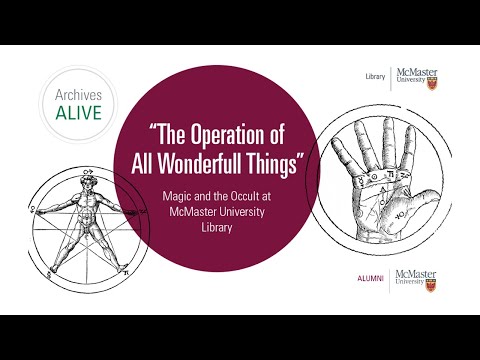
McMaster University Library: A Deep Dive into Magic, the Occult, and Their Enduring Legacy


Introduction: The Genesis of Arcane Visuals

As the days lengthen and the leaves change, we celebrate and re-tell stories of magic, sorcery, and spirits. Supernatural and arcane themes are so popular in fiction that they have given us a shared visual language about what “magic” should look like — pentagrams, grimoires, ancient seals, and guttering candles. But where do these ideas come from? It’s a question that has echoed through centuries of philosophical inquiry and speculative thought. The theatricality of modern occult portrayals, while captivating, often obscures the deep, intricate history from which they draw.

alejandro quintero ruiz has spent years sifting through the remnants of unexplained events, and the visual shorthand for "magic" is often a crude simplification of complex historical and philosophical currents. This expedition into the archives aims to dissect these tropes and trace them to their source.

The Real Roots of Fictional Magic: Western Esotericism

Fictional depictions of occultism are, indeed, inspired by the real thing — an extensive philosophical and practical literature of magic in the Western esoteric tradition. This tradition, far from being monolithic, is a complex tapestry woven from threads of Neoplatonism, Hermeticism, Kabbalah, alchemy, astrology, and a variety of folk beliefs and ritual practices that have evolved over millennia. Understanding this lineage is crucial to deconstructing the myths and appreciating the intellectual rigor that often underpins these seemingly arcane systems. It’s about more than just spells; it’s about a different mode of understanding the cosmos and humanity's place within it.

The popular imagination often conjures images of dark rituals and malevolent entities, but the historical reality is far more nuanced. For centuries, scholars, philosophers, and practitioners have sought to understand and harness unseen forces through codified systems of belief and action. These are not mere superstitions; they represent sophisticated attempts to map the invisible architecture of existence, to find correspondences between the microcosm (humanity) and the macrocosm (the universe). This pursuit of hidden knowledge, the desire to penetrate the veil of the ordinary, is a driving force behind much of human intellectual history.

Unlocking the Vault: McMaster's William Ready Division

To truly grasp the material basis of these traditions, one must engage with the primary sources. This is where institutions like McMaster University's William Ready Division of Archives and Research Collections become invaluable. Join Myron Groover, McMaster University’s Archives and Rare Books Librarian, for a firsthand look at some of the rare and unique occult books held within their collection. These are not just dusty artifacts; they are the tangible evidence of centuries of human engagement with questions of the supernatural, the hidden, and the profound.

The significance of such collections cannot be overstated. In an era saturated with digital information, the physical presence of these historical documents offers an unparalleled connection to the past. Holding a book that a 16th-century alchemist once studied, or a manuscript penned by a medieval mystic, provides a visceral understanding of their world and their intellectual pursuits. It allows us to move beyond theoretical discussions and engage with the very tools and texts that shaped esoteric thought. Groover’s expertise acts as our guide, illuminating the historical context and the specific anomalies within these texts.

"These are not merely books; they are time capsules, each containing a universe of thought, belief, and intent. Our role is to preserve them, understand them, and make them accessible to those seeking to comprehend the depths of the Western esoteric tradition." - Myron Groover (Paraphrased)

Key Grimoires and Manuscripts: A Forensic Examination

The collection at McMaster University is particularly rich, featuring items that have played significant roles in the development and dissemination of occult knowledge. These texts represent critical junctures in the history of Western esotericism, offering insights into the practices, beliefs, and controversies that defined their eras. Analyzing these documents requires a rigorous, almost forensic approach. We must consider not only their content but also their provenance, their annotations, and the historical circumstances of their creation and suppression.

The sheer rarity of some of these items elevates them from mere historical curiosities to invaluable assets for paranormal and historical research. The presence of a first edition of a foundational text, or a unique manuscript that survived centuries of prohibition, offers an unparalleled opportunity to study the evolution of ideas and the persistence of certain concepts across different cultural and temporal landscapes. The careful examination of these artifacts is akin to piecing together fragments of a grand, often hidden, narrative.

Agrippa's *Three Books of Occult Philosophy*: A Landmark Text

Among the highlights is a recently acquired first edition of Agrippa's *Three Books of Occult Philosophy*. Heinrich Cornelius Agrippa von Nettesheim’s work, first published in 1531, was a seminal text that synthesized Pythagorean, Hermetic, and Kabbalistic traditions. Its influence on subsequent generations of occultists, philosophers, and even early scientists was immense. This edition, being a first, represents the most direct connection to Agrippa's original formulation, free from later editorial interpretations or corruptions. Examining it allows us to gauge the intellectual climate of the Renaissance and understand how its author attempted to systematize and rationalize the occult arts, presenting them as a form of natural philosophy.

The structure of Agrippa's work itself is of particular interest. He meticulously details the correspondences between the celestial, terrestrial, and human realms, presenting a unified worldview where magic is an intrinsic part of the natural order. This rationalistic approach, even when dealing with seemingly supernatural phenomena, marks a significant departure from purely superstitious beliefs. For any serious investigator of the occult, understanding Agrippa is not merely an academic exercise; it is fundamental to grasping the philosophical underpinnings of much of Western esotericism. Studying this first edition provides an unfiltered window into that foundational moment.

The Lesser Key of Solomon: Annotations and Implications

Another significant item is an obscure and heavily annotated 19th-century copy of the *Lesser Key of Solomon* (also known as the *Lemegeton*). This grimoire, a collection of texts on demonology, ceremonial magic, and divination, has been a source of fascination and controversy for centuries. The annotations in this particular copy are of paramount importance. They offer a glimpse into the mind of a 19th-century practitioner, revealing their interpretation, skepticism, or perhaps, their attempts to adapt ancient rituals to a more modern (for their time) context. These marginalia can be as illuminating as the text itself, providing a secondary layer of evidence about the reception and practice of such esoteric arts.

The *Lesser Key* is notoriously complex, detailing the ranks of demons, the seals used to invoke them, and the specific rituals required for command. Its continued influence, despite periods of suppression and criticism, speaks to its enduring appeal as a locus of power and esoteric knowledge. The 19th-century commentary within this copy might shed light on the magical revival of that era, a period characterized by a resurgence of interest in spiritualism, alchemy, and ceremonial magic. This specific version, with its heavy annotation, transforms from a mere historical document into an active dialogue between past practitioners and the mysteries they sought to explore. For those interested in the practical application of historical occult texts, this annotated copy is a goldmine of potential insights, perhaps even revealing methods for contacting entities or understanding the energetic signatures described within.

I've encountered many versions of the *Lesser Key*, but an annotated copy from the 19th century is a rare find. This means someone actively engaged with its contents, potentially experimenting with the rituals or seeking to reconcile its tenets with other belief systems. These annotations are direct evidence of the text's practical application and the intellectual wrestling it provoked. Analyzing them could reveal novel interpretations or overlooked techniques that might still hold relevance for contemporary investigators of the paranormal. Such marginalia often contain the 'hidden' knowledge not present in the main text, clues that can unlock deeper layers of understanding or perhaps even identify flawed methodologies or misinterpretations that persist today.

Liber Visionum: A Suppressed Medieval Synthesis

Perhaps the most intriguing item is one of only six known manuscripts of the *Liber Visionum* — a beguiling medieval synthesis of demonology and Marianism so controversial it was officially suppressed in 1323. The very fact of its suppression speaks volumes about its content and the historical forces at play. This manuscript represents a dangerous intersection of seemingly disparate elements: the adoration of the Virgin Mary, a central figure in Christian theology, and the study of demonology, a practice often condemned by the Church. Its survival, in any form, is itself an act of defiance against historical censorship.

The synthesis of Marianism and demonology within the *Liber Visionum* is a fascinating case study in medieval religious and intellectual life. It suggests that even within the rigid confines of medieval Christianity, practitioners sought to understand the spiritual landscape in its entirety, acknowledging both the divine and the infernal. This manuscript challenges simplistic notions of medieval belief, demonstrating a more complex and perhaps more integrated approach to spirituality, where the 'dark' aspects of existence were not entirely compartmentalized or ignored but were instead woven into a comprehensive cosmology. Its official suppression in 1323 underscores the perceived threat it posed to established doctrine and authority, making it a prime target for archival preservation and academic scrutiny. The implications for understanding historical perceptions of spiritual warfare and the boundaries of orthodox belief are profound.

"The suppression of texts like Liber Visionum isn't just about censorship; it's about power. It tells us what belief systems and practices were deemed too dangerous to coexist with the dominant narrative." - A. Quintero Ruiz

Investigating Esoteric Texts: Methodologies and Challenges

Engaging with these rare texts requires a specialized approach. It’s not enough to simply read them; one must contextualize them. This involves understanding the historical period, the author’s background, the philosophical schools they were influenced by, and the intended audience. For the investigator looking for evidence of paranormal phenomena or esoteric practices, the challenge lies in discerning factual accounts from allegorical or symbolic language. This requires a critical eye, a deep understanding of historical context, and an awareness of common tropes within occult literature.

The methodologies employed in analyzing such documents mirror those used in historical research, but with an added layer of sensitivity to the subject matter. We must consider textual criticism to identify corruptions or interpolations, comparative analysis to understand the text’s place within broader traditions, and historical analysis to reconstruct the social and intellectual milieu in which it was created. Furthermore, for those seeking to understand the practical applications, there’s the challenge of interpreting ritualistic instructions, often couched in symbolic or coded language, and understanding the psychological or even energetic intentions behind them. Examining annotated copies, like the 19th-century *Lesser Key*, offers a direct line into these interpretive processes. The goal is to extract verifiable information and identify genuine anomalies rather than succumbing to the allure of speculative fiction.

When examining grimoires, the analytical process must be meticulous. It's easy to fall into the trap of literal interpretation, especially with texts describing complex rituals or entities. However, many of these texts are layered, employing symbolism and allegory to convey deeper meanings. For instance, a 'demon' might represent an aspect of the psyche, a natural force, or a spiritual adversary, depending on the practitioner's framework. Therefore, a robust methodology demands cross-referencing with other contemporary texts, understanding the philosophical underpinnings of the author, and critically assessing the reliability of any purported descriptions of supernatural events. The McMaster collection, with its focus on primary, often rare, sources, provides an exceptional foundation for this type of rigorous comparative analysis, allowing us to trace ideas and practices across different eras and traditions.

Investigator's Verdict: The Enduring Power of the Occult Archive

The collection at McMaster University Library, particularly its holdings related to magic and the occult, serves as a powerful testament to the enduring human fascination with the unknown. These rare books and manuscripts are not mere academic curiosities; they are the primary source material for understanding a significant, albeit often marginalized, stream of human thought and practice. The presence of items like Agrippa's first edition, the annotated *Lesser Key*, and the suppressed *Liber Visionum* provides invaluable opportunities for scholars and serious investigators alike to engage directly with the historical foundations of esoteric traditions.

While sensationalism often dictates popular perceptions of magic, the reality, as evidenced by these artifacts, is far more complex, involving intricate philosophical systems, attempts at metaphysical exploration, and centuries of intellectual debate. The suppression of texts like *Liber Visionum* highlights the profound impact these ideas could have, often challenging established religious and social orders. My verdict is that these archives are not just repositories of the past but active participants in ongoing dialogues about consciousness, reality, and the nature of the unseen. They represent a critical, often overlooked, frontier for understanding the human quest for knowledge beyond the empirically verifiable. The careful study of these documents can reveal patterns, influences, and perhaps even genuine anomalies that defy conventional explanation, pushing the boundaries of our comprehension of what is possible.

The Researcher's Archive: Essential Reading and Viewing

To delve deeper into the world of occult studies and the investigation of anomalous phenomena, I highly recommend the following resources. These are not for the faint of heart or the casually curious; they are tools for serious researchers seeking to understand the historical and practical dimensions of esotericism.

  • Books:
    • *The Occult: A History* by Colin Wilson: A broad, sweeping overview of the history of occultism.
    • *The Secret Teachings of All Ages* by Manly P. Hall: An encyclopedic exploration of esoteric subjects.
    • *The Occult Philosophy in the Renaissance* by Frances Yates: A scholarly examination of Agrippa and his contemporaries.
    • *The Book of Abramelin: The Mage* by S.L. MacGregor Mathers: A key text for ceremonial magic.
    • *The Varieties of Religious Experience* by William James: While not strictly occult, it provides a crucial framework for understanding unusual states of consciousness.
  • Documentaries:
    • "The Conspiracy Files: Occult" (BBC): Explores modern connections to occult practices.
    • "Secret Knowledge: The Hidden History of Magic" (History Channel): Investigates the historical roots and practices of magic.
    • "Hellier" (Documentary Series): A contemporary investigation into a paranormal case with strong occult and esoteric underpinnings.

For those interested in the practical aspects of researching historical texts and anomalous phenomena, consider resources on archival research and textual analysis. Understanding how to approach primary source documents is as crucial as understanding the content itself. Learning to identify patterns, biases, and the historical context of the author is paramount.

About the Author

alejandro quintero ruiz is a veteran field investigator dedicated to the analysis of anomalous phenomena. His approach combines methodological skepticism with an open mind to the inexplicable, always seeking the truth behind the veil of reality. With years of experience documenting and analyzing cases that defy conventional explanation, he brings a pragmatic yet deeply inquisitive perspective to the study of the unexplained.

Your Field Mission: Tracing Local Esoteric Traditions

The study of magic and the occult is not confined to ancient manuscripts in university archives. These traditions have often been passed down orally or through less formal channels, finding their way into local folklore and legend. Your mission, should you choose to accept it, is to investigate the esoteric traditions within your own community.

  • 1. Identify Local Legends: Research any local stories, superstitions, or historical accounts that hint at practices or beliefs outside the mainstream. Look for mentions of witchcraft, folk magic, unusual healing practices, or unexplained phenomena tied to specific locations or individuals.
  • 2. Seek Primary Sources: If possible, try to find local historical societies, libraries, or archives that might hold diaries, letters, or local records that corroborate these legends. Even newspaper archives from decades past can be surprisingly illuminating.
  • 3. Interview Elders: If appropriate and respectfully done, speak with older members of your community. They may possess oral histories or firsthand accounts that have not been documented elsewhere. Listen for consistencies and themes that echo traditional esoteric practices.
  • 4. Analyze Critically: As always, approach your findings with a critical and analytical mindset. Distinguish between genuine historical practice, folklore that has been exaggerated over time, and outright fabrication. The goal is not to prove magic exists, but to understand how these beliefs and practices have manifested and endured within human societies.

Document your findings. What patterns emerge? How do local traditions connect, or diverge, from the broader Western esoteric tradition we've discussed? Share your discoveries and your analytical process in the comments below – let's build a collective understanding of the esoteric threads woven into the fabric of everyday life.

The Anunnaki Revelation: Decoding Mesopotamian Texts for Extraterrestrial Clues


Introduction: The Whispers of Sumer

The sands of Mesopotamia hold secrets older than recorded history. For millennia, cuneiform tablets have lain buried, silent witnesses to a past that challenges our understanding of human origins. Ancient astronaut theorists posit that these inscriptions are not mere records of early civilization, but rather encoded messages from extraterrestrial visitors who shaped our destiny. Today, we delve into the controversial theory of the Anunnaki, allegedly present in Sumerian texts, and examine the evidence being unearthed that could suggest a non-terrestrial intelligence once walked among us.

This isn't about accepting outlandish claims at face value; it's about meticulously dissecting the narrative, cross-referencing the purported evidence, and understanding the methodologies employed by researchers who operate at the very edge of established science. The question looms large: Do these ancient writings point to an alien civilization, or are they simply a sophisticated reimagining of old myths?

Mesopotamian Texts: A Rosetta Stone for the Stars?

Flipping through the pages of history, particularly chapters penned by ancient civilizations like the Sumerians, often reveals narratives that defy conventional explanation. The theory of ancient astronauts suggests that these civilizations, far from developing in isolation, were influenced, perhaps even engineered, by beings from other worlds. Central to this idea are the meticulously inscribed clay tablets of Mesopotamia, a trove of information that some believe contains direct references to what are termed the Anunnaki.

"These weren't mythical gods from the heavens in the way we interpret them today. They were beings with agendas, with technology, and with a profound impact on the very fabric of early human society." - Paraphrased from various ancient astronaut proponent interviews.

The proponents argue that these texts describe entities arriving from the sky, engaging with humans, and even influencing their development. The complexity of Sumerian society, their advanced astronomical knowledge, and their sophisticated agricultural practices are often cited as indicators of external input. This line of inquiry necessitates a deep dive into the actual inscriptions, analyzing the symbols, linguistic structures, and cosmological depictions. Are we looking at the early scribbles of a burgeoning human culture, or are we deciphering the logs of cosmic visitors?

The Anunnaki Hypothesis: Ancient Astronauts or Mythological Echoes?

The Anunnaki hypothesis, popularized by Zecharia Sitchin and embraced by many ancient astronaut theorists, posits that these beings were not divine entities but physical beings from a distant planet, Nibiru, who came to Earth in search of precious metals. According to this interpretation of Sumerian and Akkadian texts, the Anunnaki genetically engineered early hominids (Homo sapiens) to create a workforce capable of mining gold, thereby accelerating human evolution and establishing the foundations of civilization.

This theory, however, faces significant skepticism from mainstream archaeologists, historians, and linguists. Critics argue that Sitchin's translations are selective and often misinterpret Sumerian mythology, which is rich with complex symbolic and religious meanings rather than literal accounts of alien intervention. They contend that what appears as advanced technology in ancient texts can be explained by the remarkable ingenuity of early humans and the symbolic language of myth and religion. The debate hinges on rigorous textual analysis versus speculative interpretation. For instance, the concept of "gods" arriving from the sky is a common theme across many ancient cultures, often interpreted as a metaphorical representation of divine power or natural phenomena, not necessarily literal spacecraft.

Understanding this hypothesis requires us to explore the foundational texts themselves. If these inscriptions genuinely describe beings with advanced technology and a directive to engineer humanity, it would necessitate a paradigm shift in our understanding of history. If, conversely, they are elaborate mythological narratives, it speaks volumes about the human psyche's drive to explain the unknown through grand storytelling.

Linguistic and Archaeological Analysis: Decoding the Symbols

The critical juncture for any ancient civilization's purported alien connection lies in the tangible evidence: the inscriptions and artifacts left behind. In Mesopotamia, this primarily means the cuneiform script etched onto clay tablets. The challenge for researchers, whether proponents of the Anunnaki theory or staunch skeptics, is deciphering this complex writing system and accurately contextualizing the findings.

Ancient astronaut theorists often highlight specific passages that they claim describe advanced technology, celestial voyages, and extraterrestrial beings. They might point to depictions of figures with unusual cranial structures, intricate machinery, or astronomical charts that seem impossibly precise for the era. For example, the depiction of winged figures, often interpreted as divine messengers or angels in traditional contexts, is sometimes re-framed as evidence of technologically enabled flight. Similarly, elaborate cosmological diagrams are analyzed for their alignment with known celestial bodies or hypothetical planetary systems, such as Nibiru.

From a mainstream archaeological perspective, these interpretations are often considered anachronistic. Cuneiform, a logographic and syllabic script, evolved over thousands of years. Its nuances, grammatical structures, and cultural context are crucial for accurate translation. What might appear as a description of a spaceship could be the symbolic representation of a deity's chariot, or a ritualistic object. The "unusual cranial structures" might be artistic conventions or representations of headdresses. The key here is methodological rigor. Applying modern scientific expectations to ancient cultural expressions can lead to misinterpretation. A thorough analysis requires cross-referencing with other tablets, considering the socio-religious context of the time, and adhering to established linguistic principles. This involves consulting pioneering Assyriologists and archaeologists who have dedicated their lives to this field.

Investigator's Verdict: Evidence or Elaborate Myth?

After sifting through the claims and counterclaims surrounding the Anunnaki and Mesopotamian texts, the picture remains, as is often the case in anomalous research, decidedly complex. The allure of an extraterrestrial narrative underpinning human civilization is powerful, fueled by a desire to find answers to profound questions about our origins.

On one hand, the sheer volume of Mesopotamian texts and the sophistication of their culture do invite speculation. The Anunnaki hypothesis, as presented by proponents, offers a compelling, albeit speculative, framework to explain certain historical and archaeological anomalies. It provides a narrative that resonates with our modern fascination with the cosmos and the possibility of life beyond Earth. The allure of uncovering a literal "Rosetta Stone" for alien contact is undeniable.

However, the investigative process demands a rigorous application of critical thinking and a healthy dose of skepticism. Mainstream scholarship provides well-researched counterarguments, grounded in linguistic, historical, and archaeological evidence, which interpret these texts through the lens of ancient mythology, religion, and human innovation. The leap from symbolic religious narratives to literal alien intervention requires evidence that, thus far, remains elusive and subject to significant interpretation. The lack of undeniable, physical artifacts directly attributable to an extraterrestrial presence, despite Sitchin's arguments, leaves a substantial gap.

Therefore, while the Anunnaki theory continues to capture the imagination, it currently resides in the realm of speculative history and ancient astronaut lore. The evidence presented, while intriguing to some, does not meet the threshold for empirical verification required to displace established academic consensus. The true value might lie not in finding definitive proof of aliens, but in understanding how ancient peoples interpreted the world around them, their cosmos, and their place within it. The mystery of Mesopotamia persists, perhaps more as a testament to human imagination and the enduring power of myth than as a visitor's logbook.

The Investigator's Archive: Further Reading and Resources

For those eager to delve deeper into the intricacies of ancient civilizations, early writing systems, and the theories of ancient astronauts, a curated selection of resources is essential:

  • Books:
  • "The 12th Planet" by Zecharia Sitchin: The seminal work that introduced the Anunnaki hypothesis to a wide audience. (Note: This book is highly controversial and widely disputed by academics).
  • "The Sumerians: Their History, Culture, and Character" by Samuel Noah Kramer: A foundational academic text providing a comprehensive overview of Sumerian civilization.
  • "The Ancient Alien Question: Re-examining the Evidence" by Philip J. Klass: A critical examination of ancient alien theories from a skeptical perspective.
  • "The Sumerian Problem" by David W. Rohl: Offers alternative perspectives on Near Eastern chronology and history.
  • Documentaries:
  • "Ancient Aliens" (The HISTORY Channel): Explores various ancient astronaut theories, including segments on Mesopotamia. (Available on streaming platforms).
  • "Chariots of the Gods?": The 1970 documentary based on Erich von Däniken's work, a precursor to many modern ancient astronaut theories.
  • Online Resources:
  • The HISTORY Channel - Ancient Aliens: Official site with episode guides and supplementary content.
  • The Metropolitan Museum of Art - Sumerian Art: Provides context on the artistic and cultural output of the Sumerians.
  • Ancient History Encyclopedia - Sumer: A reliable source for factual information on Mesopotamian history and culture.

Arm yourself with knowledge from diverse perspectives to form your own informed conclusions. The path to understanding often lies in confronting conflicting viewpoints and seeking verifiable data.

Frequently Asked Questions

Q1: What exactly are the Anunnaki, according to the theory?

A1: According to ancient astronaut theorists like Zecharia Sitchin, the Anunnaki were a race of extraterrestrial beings from the planet Nibiru who visited Earth in ancient times. They are believed to have been responsible for genetically modifying early humans to create a labor force for mining precious metals.

Q2: What evidence do proponents point to in Mesopotamian texts?

A2: Proponents highlight passages describing entities descending from the sky, interaction with humans, and depictions of figures and symbols they interpret as advanced technology, astronomical knowledge, or alien physiology. They also reference ancient myths and religious texts as literal historical accounts.

Q3: How do mainstream archaeologists and linguists interpret these texts?

A3: Mainstream scholars generally interpret these texts as elaborate mythological, religious, and administrative records created by humans. They view descriptions of "gods" or celestial beings within the cultural and symbolic context of ancient Mesopotamian beliefs, rather than as literal accounts of extraterrestrial visitors.

Q4: Is there any physical evidence beyond the tablets?

A4: Proponents sometimes point to artifacts like certain statues, seals, or architectural feats as indirect evidence. However, these are typically interpreted by mainstream archaeology as products of human ingenuity and artistic expression within the known technological capabilities of the time. No unambiguous extraterrestrial artifacts have been found.

Your Mission Field: Unearthing Local Anomalies

The universe is vast, and the possibilities for life beyond our planet are staggering. While the Anunnaki theory remains a topic of intense debate, it serves as a powerful reminder that our planet's history might hold chapters we have yet to fully understand. This is where your own investigative spirit comes into play.

Your mission, should you choose to accept it, is to become the investigator of your own local mysteries. Every town, every region, has its own legends, its own whispered tales of the strange, the unexplained, or the seemingly impossible. These might range from unexplained lights in the sky, local folklore about mysterious beings, or peculiar historical anecdotes that defy simple explanations.

Your Task:

  1. Research Local Lore: Identify one local legend or historical anomaly in your area. This could be anything from a "haunted" location to a story of unusual occurrences passed down through generations.
  2. Seek Primary Sources: Whenever possible, try to find the oldest accounts or direct testimonies related to this anomaly. Talk to local historians, elderly residents, or seek out old newspaper clippings.
  3. Analyze Critically: Apply the principles of investigative analysis. What are the core claims? What evidence (testimonial, photographic, historical) is offered? Are there plausible mundane explanations? What remains anomalous after a rigorous examination?
  4. Document Your Findings: Compile your research in a brief report. What did you find? What conclusions can you draw?
  5. Share Your Discoveries (Optional): Consider sharing your findings in the comments below, or even starting your own investigative blog to document your local mysteries. What hidden enigmas lie beneath the surface of your everyday reality?

The spirit of discovery thrives on curiosity and methodical investigation. Your town might just be the next frontier for uncovering the unexplained.

alejandro quintero ruiz is a veteran field investigator dedicated to the analysis of anomalous phenomena. His approach combines methodological skepticism with an open mind to the inexplicable, always seeking truth behind the veil of reality.