Followers

Mostrando las entradas con la etiqueta religion. Mostrar todas las entradas

The Paranormal Iceberg of Catholic Religion

Image

The vast ocean of faith often conceals depths unknown, a chilling truth that resonates particularly within the established structures of religious belief. Catholicism, with its millennia of history, intricate doctrines, and profound spiritual practices, presents a compelling case study for what I term the "Paranormal Iceberg." Just as an iceberg reveals only a fraction of its mass above the water, the overt teachings and public face of Catholicism obscure a submerged world of unexplained phenomena, esoteric interpretations, and deeply ingrained folklore that has, for centuries, been interwoven with the spiritual fabric of billions.

The Tip of the Iceberg: Overt Religious Doctrine

At the surface, Catholicism presents a coherent and divinely inspired worldview. Its core tenets—the Trinity, the divinity of Christ, the sacraments, the role of the Church as guided by the Holy Spirit—are well-documented and universally accessible. Sermons, catechisms, and official Church pronouncements focus on salvation, morality, and the path to God through faith and good works. This is the visible, accepted reality, the dogma that shapes the lives of adherents. However, to stop here is to misunderstand the complex tapestry of human experience, which rarely adheres strictly to simplified doctrines. The faithful, throughout history, have looked beyond the catechism for signs, wonders, and explanations that touch upon the inexplicable.

Submerged Realities: Miracles and Apparitions

Beneath the waterline of observable dogma lies a vast expanse of reported miracles and apparitions, phenomena that, while often acknowledged by the Church, push the boundaries of scientific understanding. From the liquefaction of St. Januarius's blood to the reported visions at Lourdes, Fatima, and Guadalupe, these events are central to Catholic faith, yet their mechanisms remain elusive. Are these divine interventions, psychological manifestations, or something else entirely? My own investigations into similar alleged phenomena across various belief systems suggest a common thread: the human mind's profound capacity to perceive and interpret events through the lens of deep-seated belief. The Church, in its discernment process, often requires multiple, consistent testimonies and verifiable physical evidence, a standard that, while rigorous, also acknowledges the existence of experiences that defy ordinary explanation. As many witnesses have shared online, the sheer volume and consistency of these accounts across different cultures and eras lend them a weight that cannot be easily dismissed.

Recommended Gear for Investigation

ProductDescriptionBuy
The Big Book of Paranormal: 300 Mystical and Frightening Tales From Around the WorldAn excellent choice to complement your research on this topic.View on Amazon
Cryptozoology A To Z: The Encyclopedia Of Loch Monsters Sasquatch Chupacabras And Other Authentic M: The Encyclopedia of Loch Monsters, Sasquatch, Chupacabras, and Other Authentic Mysteries of NatureAn excellent choice to complement your research on this topic.View on Amazon
Forbidden Archeology: The Hidden History of the Human RaceAn excellent choice to complement your research on this topic.View on Amazon
The H. P. Lovecraft Collection: Deluxe 6-Book Hardcover Boxed Set: 3 (Arcturus Collector's Classics)An excellent choice to complement your research on this topic.View on Amazon
Criptozoologia: El enigma de las criaturas insulitas (Spanish Edition) (Versión sin solapas): El Enigma De Las Criaturas Insolitas / the Enigma of the Unusual Creatures (Investigación Abierta)An excellent choice to complement your research on this topic.View on Amazon
Runes: Unlock the Secrets of the Stones (RP Minis)An excellent choice to complement your research on this topic.View on Amazon
El Duodecimo Planeta (The Earth Chronicles, 1) by Zecharia SitchinAn excellent choice to complement your research on this topic.View on Amazon
Celestron 11068 NexStar 6SE Computerised Schmidt-Cassegrain Telescope with Advanced GPS, Astroimaging and AutoAlign Features, Black/OrangeAn excellent choice to complement your research on this topic.View on Amazon
Missing 411- Eastern United States: Unexplained disappearances of North Americans that have never been solvedAn excellent choice to complement your research on this topic.View on Amazon
Ghost-Hunting For Dummies [Idioma Inglés] An excellent choice to complement your research on this topic.View on Amazon

Esoteric Interpretations and Hidden Texts

Furthermore, numerous esoteric traditions and interpretations have sprung up around Catholic theology, often exploring concepts that lie far from mainstream teachings. Gnostic texts, alchemical symbolism within religious art, and mystical interpretations of scripture hint at deeper, perhaps hidden, layers of meaning. The Veil of Veronica, the True Cross fragments, the Holy Shroud of Turin – these relics, while venerated, often become focal points for intense debate and scrutiny, inviting theories that range from divine preservation to elaborate historical hoaxes. This submerged intellectual current explores potent symbolism and alleged hidden knowledge, feeding into a perception of Catholicism as a repository of more than just conventional spiritual guidance. It’s a domain where faith and the unexplained coalesce, often drawing parallels to other ancient mystery traditions.

Demonic Possession and Exorcism

Perhaps the most visceral and widely recognized paranormal aspect within Catholicism is the concept of demonic possession and the ritual of exorcism. While often sensationalized in popular culture, the Church maintains a formal, albeit seldom-used, process for identifying and addressing what it considers genuine spiritual oppression. The detailed protocols for exorcism, developed over centuries, reflect a pragmatic approach to an extreme phenomenon. Reports from trained exorcists, while scarce and often suppressed due to their sensitive nature, speak of inexplicable physical occurrences, voices, and knowledge displayed by the possessed. Analyzing these cases requires a dispassionate approach, separating theatrical elements from credible accounts of phenomena that defy conventional psychological or medical explanations. We must ask: what underlying principles govern such extreme states of perceived spiritual malevolence, and are there patterns that connect them across different cultures with their localized demonology?

Saints, Stigmatics, and Miraculous Relics

The lives of saints offer a rich vein of paranormal investigation. Stigmatics, individuals who report spontaneously manifesting the wounds of Christ, present a physiological puzzle. Padre Pio, for instance, is renowned for his stigmata, his reported bilocation, and his ability to read souls. Miraculous relics, objects associated with saints or Christ, are often attributed with healing powers or other unexplained effects. The investigation of such claims demands meticulous attention to historical context, potential for fraud, and the psychological factors that might influence perception. Yet, the sheer persistence and uniformity of claims across centuries suggest that something more profound is at play, something that the empirical method alone struggles to grasp fully.

The Investigator's Verdict: Fraud, Genuine Phenomenon, or Something Else?

From my perspective as an investigator, the "Paranormal Iceberg of Catholicism" reveals a system deeply intertwined with the inexplicable. The Church's official stance often involves skepticism, rigorous investigation, and a search for natural explanations before accepting supernatural ones. However, the sheer volume and consistency of phenomena attributed to divine or demonic forces—miracles, apparitions, possessions, stigmata—cannot be wholly dismissed as mere superstition or mass hysteria. While fraudulent claims undoubtedly exist and require careful deconstruction, the enduring power and impact of these purported supernatural events point towards a deeper reality that intersects with belief. Whether these are direct divine interventions, manifestations of collective consciousness, or encounters with forces we don't yet understand, they are undeniably real to those who experience them. The challenge for investigators is to approach these claims without prejudice, seeking patterns and understand the psychological, spiritual, and potentially physical underpinnings of these extraordinary occurrences.

The Investigator's Archive

For those who wish to delve deeper into the intersection of faith and the paranormal, I recommend the following resources:

  • "The Exorcist" by William Peter Blatty – A gripping, albeit dramatized, account that spurred significant interest in the Church's rites.
  • "The Imitation of Christ" by Thomas à Kempis – While not directly paranormal, it offers profound insight into the contemplative mindset that often accompanies mystical experiences.
  • "Supernatural: Meetings with the Ancient and the Unseen" by David Hartman – Explores the broader context of spiritual encounters across cultures, offering comparative analysis.

Protocol: How to Conduct a Paranormal Investigation

When approaching any investigation, especially one with deep cultural and religious roots, a structured methodology is paramount. Here’s a basic protocol:

  1. Define the Phenomenon: Clearly identify the specific claims – is it an apparition, a poltergeist activity, a blessing, or a curse?
  2. Gather Testimonies: Collect firsthand accounts, noting dates, times, locations, and the emotional state of witnesses. Cross-reference accounts for consistency.
  3. Historical and Contextual Research: Understand the history of the location or entity involved. For religious phenomena, research relevant theological doctrines, historical events, and recognized saints or demonic figures.
  4. Evidence Collection: Utilize appropriate tools for the claimed phenomenon (e.g., EMF meters for alleged spiritual energy, audio recorders for EVPs, cameras for visual anomalies). Document everything meticulously.
  5. Analysis and Verification: Analyze collected data for patterns, anomalies, and potential natural explanations (e.g., infrasound, drafts, pareidolia, fraud).
  6. Consultation: If dealing with religious phenomena, consult with experts or trusted authorities within that faith tradition, while maintaining your investigative objectivity.
  7. Formulate Hypothesis: Based on all gathered information, develop a working hypothesis for the phenomenon.

Remember, skepticism is a tool, not a barrier. The goal is understanding, not necessarily debunking or confirming.

Frequently Asked Questions

  • Q: Are all reported miracles in Catholicism considered genuine by the Church?
    A: No, the Church has a rigorous, multi-stage vetting process under the Congregation for the Causes of Saints. Many reported miracles are not officially recognized.
  • Q: Can non-Catholics experience or be affected by paranormal phenomena within a Catholic context?
    A: Belief systems often shape the perception and manifestation of paranormal experiences. While the phenomena might be interpreted through a Catholic lens, the underlying energies or entities are often considered universal by paranormal investigators.
  • Q: Is demonic possession the only explanation for extreme negative phenomena within Catholicism?
    A: While possession is the most extreme, the Church recognizes lesser forms of demonic influence and spiritual oppression, alongside potential psychological or medical conditions that may mimic such symptoms.
  • Q: How does the Catholic Church view unexplained phenomena not directly tied to its doctrines?
    A: The Church generally approaches unexplained phenomena with caution, encouraging investigation into natural causes first. However, it also acknowledges that there are mysteries that transcend human understanding.

Conclusion: Your Field Mission

The "Paranormal Iceberg of Catholicism" is a stark reminder that faith traditions, particularly those with long histories, rarely present a monolithic facade. Beneath the surface of established doctrine lies a rich, often unsettling, landscape of phenomena that have captivated, terrified, and inspired humanity for centuries. These are not mere stories; they are deeply felt experiences that shape belief and challenge our understanding of reality.

Your Mission: Examine the Evidence

Your task, should you choose to accept it, is to look beyond the dogma. Investigate the claims, dissect the testimonies, and consider the evidence for yourself. The world of the unexplained doesn't discriminate by faith; it simply *is*. Your mission is to approach these phenomena with an open mind, a critical eye, and the unwavering pursuit of truth, no matter how deeply it may be submerged.

Share your experiences! Have you encountered phenomena that you believe are linked to religious belief, either within Catholicism or another faith? Drop your stories and insights in the comments below. Let's build a comprehensive dossier together.

Spread the investigation! If you found this analysis compelling, share it on your social networks. Help others uncover the hidden layers of belief and the paranormal.

Investigator's Note: True paranormal research doesn't fund itself. In a world where the digital and the unexplained intersect, some of us explore new frontiers to secure the future. Do you dare to be part of the vanguard? Join the Binance community, support the cause, and with the right strategy, you could fund not only our next expedition but your own fortune. The next great discovery could be just a click away.

Former 33rd Degree Mason Reveals Freemasonry's Darkest Secrets

Image

The veiled world of Freemasonry, long shrouded in mystery and speculation, is brought into stark relief by the testimony of Dr. William (Bill) Schnoebelen. As a former 33rd-degree Freemason, Schnoebelen offers a rare, first-hand account of the clandestine rituals, hierarchical secrets, and the profound implications of his involvement. This exposé delves into the heart of an organization that has captivated and confounded the public for centuries, presenting evidence and insights that challenge conventional understanding.

Descent into Darkness: The Initial Involvement

Dr. William Schnoebelen's journey into the heart of Freemasonry began not with a quest for forbidden knowledge, but potentially through social or familial pathways, a common entry point for many members. His narrative, as presented in testimonies, suggests a gradual immersion into a system that progressively demanded deeper commitment and veiled truths. The initial allure, often presented as mutual benefit and fraternal bonds, can mask a more complex and, for some, disturbing reality. As Schnoebelen describes his "Descent into Darkness," it paints a picture of an organization whose outward-facing persona belies its inner workings.

Many engaging with such narratives often reflect on their own experiences or those of family members. For instance, one commenter shared:

My grandfather was offered a position in the Masons. He declined when they told him that he couldn’t share anything with his wife. He said it didn’t sound very Godly.
This sentiment resonates with a recurring theme: the perceived secrecy and the exclusion of spousal knowledge, which many find antithetical to godly principles.

Recommended Gear for Investigation

ProductDescriptionBuy
Cryptozoology A To Z: The Encyclopedia Of Loch Monsters Sasquatch Chupacabras And Other Authentic M: The Encyclopedia of Loch Monsters, Sasquatch, Chupacabras, and Other Authentic Mysteries of NatureAn excellent choice to complement your research on this topic.View on Amazon
The Big Book of Paranormal: 300 Mystical and Frightening Tales From Around the WorldAn excellent choice to complement your research on this topic.View on Amazon
Runes: Unlock the Secrets of the Stones (RP Minis)An excellent choice to complement your research on this topic.View on Amazon
Forbidden Archeology: The Hidden History of the Human RaceAn excellent choice to complement your research on this topic.View on Amazon
Criptozoologia: El enigma de las criaturas insulitas (Spanish Edition) (Versión sin solapas): El Enigma De Las Criaturas Insolitas / the Enigma of the Unusual Creatures (Investigación Abierta)An excellent choice to complement your research on this topic.View on Amazon
The H. P. Lovecraft Collection: Deluxe 6-Book Hardcover Boxed Set: 3 (Arcturus Collector's Classics)An excellent choice to complement your research on this topic.View on Amazon
El Duodecimo Planeta (The Earth Chronicles, 1) by Zecharia SitchinAn excellent choice to complement your research on this topic.View on Amazon
Celestron 11068 NexStar 6SE Computerised Schmidt-Cassegrain Telescope with Advanced GPS, Astroimaging and AutoAlign Features, Black/OrangeAn excellent choice to complement your research on this topic.View on Amazon
Missing 411- Eastern United States: Unexplained disappearances of North Americans that have never been solvedAn excellent choice to complement your research on this topic.View on Amazon
Ghost-Hunting For Dummies [Idioma Inglés] An excellent choice to complement your research on this topic.View on Amazon

The Hierarchical Structure: Degrees and Their Meanings

Freemasonry is notoriously structured in degrees, with the 33rd degree, held by Schnoebelen, representing the highest echelon within the Scottish Rite. Each ascending level purportedly imparts deeper knowledge and reveals more profound secrets concerning the order's philosophy and history. Schnoebelen's testimony is particularly valuable because he claims to have navigated these layers, offering insight into what lies beyond the commonly known Blue Lodge degrees.

The sheer number of individuals who have come forward with familial ties to Masonry, some detailing generational involvement and subsequent struggles, is striking. One testimony reads:

I was Demolay, pmc, RD, AND chevalier. My father took his life and my mother went crazy. When I was 31 my life was a mess. I gave my life to Christ.
This highlights a potential pattern of inherited struggles or negative repercussions associated with deep involvement in Masonic orders, a subject that warrants careful investigation. Another user noted the impressive recall of older generations in detailing their experiences, stating:
The things I really like about the older generation is how they can recall details down to dates, years and its really impressive hearing stories from them.
This capacity for detailed recollection lends an air of authenticity to these personal accounts, though it does not inherently validate the experiences themselves.

Unveiling the Royal Secret: The Ultimate Revelation

Central to Schnoebelen's claims is the revelation of what Freemasonry terms the "Royal Secret." This is often alluded to as the ultimate truth or enlightenment sought by Masons. However, interpretations of this "secret" vary wildly, from esoteric spiritual knowledge to, as Schnoebelen suggests, something far more sinister. His willingness to discuss this, despite the potential risks, underscores the gravity with which he views its implications. The "darkest secrets" he hints at likely pertain to the true nature and purpose of these rituals and the ultimate object of Masonic devotion.

The profound impact of these revelations is echoed by individuals who found spiritual awakening after encountering accounts like Schnoebelen's testimony. One commenter states:

I will forever credit this video being the one responsible for sowing a seed in me that led to me being saved a few days after watching it... Thank you both so much being such amazing disciples of Christ… you’re really out here saving souls 🙏🏼❤️
This narrative suggests that exposure to these critical viewpoints can act as a catalyst for profound personal and spiritual transformation, leading many to re-evaluate their beliefs and seek alternative spiritual paths.

Freemasonry's Secret Cousin: Connections to Major Institutions

One of the most explosive aspects of Schnoebelen's testimony involves the alleged connections between Freemasonry and other powerful institutions, including religious organizations. His claim of uncovering links between Freemasonry and "one of the world's largest churches" is particularly provocative. Such associations, if proven, would challenge the public perception of these institutions and raise serious questions about their foundational principles and operational doctrines. This intersection of religious and fraternal organizations is a fertile ground for conspiracy theories and requires rigorous scrutiny.

Several testimonies from the audience touch upon similar overlaps and deviations from mainstream religious understanding. One individual noted:

I was in the Mormon church for 65 years. I went to the temple at 60. Then found out this was all Freemasons. I left took my name off. I have never felt more free in all my life. Bonus I found the real Christ. Loved this episode.
This experience mirrors Schnoebelen's narrative, suggesting that certain religious practices may indeed incorporate or be influenced by Masonic symbolism and rituals, leading adherents to seek what they perceive as a more authentic spiritual path.

The common thread of familial curses and spiritual battles is also prevalent in the audience feedback. A user shared:

My great grandpa was 32nd degree Scottish rite Freemason and my dad is a Freemason but I don’t talk to him about it... Our family definitely had a curse on it. And I am basically estranged from my parents now, have given my life to Christ but I have spiritual battles that I fail almost daily. Please pray for me and my husband and children.
These accounts, while anecdotal, paint a consistent picture of individuals experiencing significant personal turmoil intertwined with ancestral connections to these fraternal orders.

The Awakening: Personal Revelation and Departure

Schnoebelen's departure from Freemasonry, coupled with his decision to speak out, marks a critical point in his narrative—the "Truth Awakening." This phase involves not only a personal realization of the perceived deceptions but also a conscious choice to expose them. His position as potentially one of the few individuals with such intimate, first-hand knowledge willing to share it publicly makes his testimony uniquely significant. It suggests a profound personal journey from immersion to disillusionment, culminating in a mission to inform.

The emotional and psychological toll of such experiences is evident in the audience's reactions. Many express empathy and share their own struggles with spiritual deception. For example, one user recounted:

I was satanically ritually abused by high level masons in the early 90's when I was 3-5 years old... It wasn't until I was clean and at age 30 I remember everything so clearly. The injuries were so severe I cannot bear children. Seeing a Masonic temple just makes me sick to my stomach.
This harrowing account, alongside others detailing abuse and manipulation, underscores the darker allegations associated with high-level Masonic involvement and the long-lasting trauma experienced by some individuals.

The concept of spiritual warfare and the battle against unseen forces is a recurring theme. A powerful quote shared by a viewer states:

"For we wrestle not against flesh and blood, but against principalities, against powers, against the rulers of the darkness of this world, against spiritual wickedness in high places."
This biblical verse encapsulates the perspective of many who believe their struggles are not merely personal but part of a larger spiritual conflict, often attributed to entities or forces associated with secret societies.

Final Message: A Call to Scrutiny

Schnoebelen's final message likely serves as a stark warning and a call to action for those involved in or considering involvement with Freemasonry. By publicly disclosing these "darkest secrets," he aims to equip others with the knowledge to make informed decisions and perhaps to reconsider their allegiances. The interview format, especially with a skilled interviewer who allows the guest ample speaking time, is crucial for conveying the depth and personal impact of such a testimony. As one viewer praised:

Dude this is the best interviewer ever, with the cross, just letting the old wise man speak. That's how it should be done.

The collective experience shared by many in the comments suggests a widespread seeking of truth and spiritual authenticity. Whether it's leaving the Mormon church, declining Masonic overtures, or deciphering familial curses, there's a clear movement towards what is perceived as a more direct and genuine relationship with the divine, often found through a renewed commitment to Christianity. This resonates with Schnoebelen's own journey and the transformative power of such awakenings.

Investigator's Verdict: Frauds, Genuine Phenomena, or Something Else?

From an investigative standpoint, Dr. William Schnoebelen's testimony presents a compelling, albeit controversial, narrative. While the claims of "darkest secrets" and connections to powerful institutions are extraordinary, they align with historical criticisms and suspicions surrounding Freemasonry. The purported rituals and "Royal Secret" warrant detailed examination, particularly in comparison with known esoteric traditions and religious doctrines. The alleged link to major churches, if substantiated, would necessitate a re-evaluation of their theological underpinnings.

Audience reactions, particularly those detailing personal experiences of spiritual awakening and the rejection of Masonic or related affiliations, lend a degree of corroboration to the perceived negative spiritual impact. The consistent theme of generational curses and subsequent deliverance through faith in Christ suggests a spiritual dimension that transcends simple organizational critique. It's crucial, however, to differentiate between personal testimony, which is powerful but subjective, and verifiable evidence. The "darkest secrets" remain largely within the domain of Schnoebelen's account and the interpretations of his audience. Further investigation would ideally seek corroborating evidence or scholarly analysis of Masonic texts and rituals beyond the scope of a single defector's testimony.

The effectiveness of the interviewer is frequently mentioned, with praise for their ability to guide the conversation without overshadowing the guest. This approach allows complex narratives, like Schnoebelen's, to unfold naturally, providing a platform for potentially sensitive information to be shared credibly. Extra content and further Q&A sessions with Dr. Schnoebelen are available, offering deeper dives into his experiences.

The Investigator's Archive

For those intrigued by the intersection of secret societies, spirituality, and historical critique, the following resources offer further avenues of research:

  • "Lucifer Dethroned" by William Schnoebelen: A foundational text by the guest himself, offering a deep dive into his alleged experiences and interpretations of Masonic teachings.
  • Documentaries on Freemasonry and Esotericism: Seek out well-researched documentaries that present historical context and varying perspectives on fraternal organizations and their alleged connections to occultism. Look for content that cites reputable historical sources.
  • Academic Works on Fraternal Orders: Scholarly books and articles that analyze the history, rituals, and social impact of Freemasonry provide a critical, often less sensationalized, counterpoint to testimonial accounts.
  • Comparative Religious Studies: Examining the theological doctrines and historical interactions between various religious bodies and secret societies can illuminate the alleged overlaps and conflicts discussed by Schnoebelen and his audience.

Engaging with these materials allows for a more comprehensive understanding, enabling the formation of a balanced perspective informed by both personal testimony and established scholarship. The pursuit of truth in such complex matters often requires consulting a multiplicity of sources.

Frequently Asked Questions

  1. What is the 33rd degree in Freemasonry?

    The 33rd degree is the highest active rank within the Scottish Rite of Freemasonry, a branch of the organization. It is an honorary degree conferred for outstanding service to the Rite or to Freemasonry in general.

  2. What is the "Royal Secret" mentioned in relation to Freemasonry?

    The "Royal Secret" is a term often associated with higher Masonic degrees, particularly within the Scottish Rite. Its exact meaning is subject to interpretation and often involves esoteric or spiritual knowledge that is purportedly revealed progressively to those who advance through the degrees.

  3. Are Freemasonry and the Mormon Church connected?

    There are historical and symbolic connections often drawn between Freemasonry and the foundational rituals of the Church of Jesus Christ of Latter-day Saints (LDS Church). Many scholars and critics point to similarities in temple ceremonies and symbolism, suggesting Masonic influence during the church's early development. The LDS Church officially denies being a Masonic organization but acknowledges historical parallels.

  4. Can Freemasonry be considered a religion?

    Freemasonry is generally not considered a religion, though it requires its members to believe in a Supreme Being. It is described as a system of morality, veiled in allegory and illustrated by symbols, rather than a faith or mode of worship. It often coexists with a member's chosen religion.

  5. What are the potential consequences of leaving Freemasonry?

    Testimonies, like those shared by Schnoebelen's audience, sometimes describe negative consequences following departure from Masonic orders. These range from social ostracism to more severe claims of spiritual or financial hardship, often interpreted by those affected as repercussions for breaking oaths or leaving the organization.

Your Mission: Investigate the Shadows

The testimony of Dr. William Schnoebelen serves as a critical piece of evidence in the ongoing investigation into the true nature of Freemasonry. His claims challenge the public narrative and invite deeper scrutiny. Your mission, should you choose to accept it, is to approach this information with a critical yet open mind. Research the historical context of Freemasonry, compare Schnoebelen's claims with verifiable Masonic documents and scholarly analyses, and consider the thousands of personal testimonies that suggest profound spiritual and personal implications tied to these ancient orders. The pursuit of truth requires diligence and courage.

Share your thoughts and experiences in the comments below. Have you or someone you know encountered similar situations related to Freemasonry or other secret societies? Your insights are invaluable to our ongoing investigation.

Help us continue to bring these hidden truths to light. Share this exposé on your social media platforms and consider supporting our work through donations. Together, we can shed light on the unexplained.

Investigator's Note: True paranormal research doesn't fund itself. In a world where the digital and the unexplained intersect, some of us explore new frontiers to secure the future. Do you dare to be part of the vanguard? Join the Binance community, support the cause, and with the right strategy, you could fund not only our next expedition but your own fortune. The next great discovery could be just a click away.
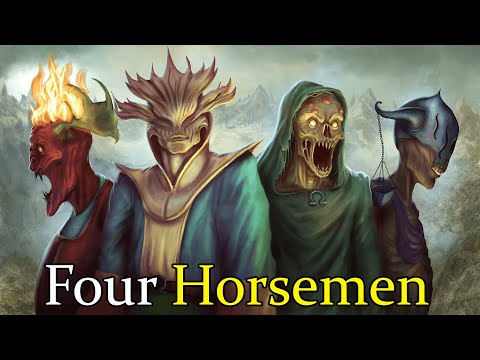
The Four Horsemen of the Apocalypse: Decoding the End-Times Allegory and Its Modern Relevance


1. Introduction: The Looming Shadow of Revelation

The scrolls of prophecy often whisper truths that echo through millennia, shaping not just theological discourse but providing a potent lens through which to examine the cycles of human history and societal anxieties. Among these prophetic visions, the Four Horsemen of the Apocalypse stand as a stark and enduring symbol. Described vividly in the Book of Revelation, Chapter 6, these enigmatic figures are not mere characters in a celestial drama; they are potent allegories representing cataclysmic forces that herald the definitive end-times and the ultimate divine judgment. Their presence has ignited centuries of debate, speculation, and artistic interpretation, prompting us to ask: are they harbingers of an inevitable future, symbolic representations of enduring human struggles, or perhaps a potent combination thereof? Today, we delve into the dusty archives of scripture, cross-referencing historical context with contemporary societal pressures to dissect the enduring power of these four archetypes.

2. The White Horseman: Conquest, Deception, or Antichrist?

The first to emerge, astride a white horse, is the figure often identified as Conquest. However, the interpretation of this horseman is far from monolithic. While some readings posit him as a straightforward representation of triumphant conquest or the spread of dominion, a more prevalent and, frankly, unsettling interpretation suggests a darker purpose. This horseman is frequently understood as embodying the insidious creep of false religion, seducing humanity with charismatic leadership and deceptive doctrines. The very whiteness of the horse can be seen as a symbol of purity and righteousness, a strategic camouflage for profound spiritual corruption. Within this framework, the horseman frequently becomes synonymous with the Antichrist figure, a deceiver who will lead vast multitudes astray, away from the path of genuine faith and divine truth. This interpretation resonates deeply in eras marked by ideological polarization and the rise of cult-like followings, where charismatic orators can wield immense influence through carefully crafted narratives.

"And I saw, and behold a white horse: and he that sat upon it had a bow, and a crown was given unto him: and he went forth conquering, and to conquer." - Revelation 6:2

3. The Red Horseman: Unveiling the Visage of War

Following closely is the rider of the red horse, a potent manifestation of War. This horseman’s presence signifies the eruption of conflict, bloodshed, and the attendant chaos that invariably accompanies large-scale human strife. The vivid crimson imagery is undeniable, directly evoking the rivers of blood that spill during times of intense warfare. Interpretations here diverge: some scholars see this horseman as a representation of the perpetual, cyclical nature of wars that have scarred the human experience across civilizations and epochs. Others, however, focus on a more singular, eschatological interpretation, viewing this as foreshadowing a specific, perhaps unprecedented, global conflict that will define the final era. The specter of perpetual war, whether localized or global, remains a constant undercurrent in geopolitical discourse, making this horseman’s symbolism perpetually relevant. Investing in robust international relations is key, but the potential for conflict necessitates preparedness. Consider the latest insights into geopolitical analysis to understand these dynamics.

"And when he was come out, there appeared a red horse: and power was given to him that sat thereon to take peace from the earth, and that they should kill one another: and there was given unto him a great sword." - Revelation 6:4

4. The Black Horseman: The Specter of Famine and Scarcity

The third horseman rides a black steed, bringing with him the chilling reality of Famine and widespread scarcity. His arrival signifies a period of profound hardship, where the very sustenance of life becomes a desperate struggle. Resources dwindle, economies collapse, and the specter of starvation looms large. This interpretation draws clear parallels to historical periods of famine caused by drought, crop failure, or conflict. More contemporary readings, however, connect this horseman to the growing concerns of environmental degradation, resource depletion, and the vulnerabilities of global supply chains. The blackness of the horse, traditionally associated with darkness, desolation, and death, amplifies the severity of this impending crisis. As nations grapple with climate change and resource management, the Black Horseman serves as a potent reminder of our planet's finite capacity and the fragile foundations of human civilization.

"And I beheld, and lo a black horse; and he that sat on him had a pair of balances in his hand. And I heard as it were a voice in the midst of the four beasts say, A measure of wheat for a penny, and three measures of barley for a penny; and see thou hurt not the oil and the wine." - Revelation 6:5-6

5. The Pale Horseman: Death's Inevitable Embrace

The final rider, astride a pale, or greenish-yellow, horse, is Death itself, accompanied by Hades (the grave or underworld) in some translations. This horseman represents the ultimate cessation of life, the culmination of the preceding calamities, and the final, inexorable divine judgment. His power is absolute, extending over a quarter of the Earth’s population, according to the text. Interpretations often link this figure to specific prophecies of widespread disease, pandemics, and pestilence, events that have historically decimated populations. However, beyond specific instances, this horseman embodies the universal, undeniable end of mortal existence. In an age where new infectious diseases emerge and the threat of pandemics remains a stark reality, the Pale Horseman’s presence is a chillingly familiar symbol of our own mortality. Understanding epidemiology and history can offer insights, delving into areas like pandemic preparedness becomes a critical study.

"And I looked, and behold a pale horse: and his name that sat on him was Death, and Hell followed with him. And power was given unto them over the fourth part of the earth, to kill with sword, and with hunger, and with death, and with the beasts of the earth." - Revelation 6:8

6. Interpretive Matrices: Navigating Scholarly and Theological Divides

It is imperative to acknowledge that the interpretations presented are not universally accepted doctrines. The field of biblical exegesis is rife with diverse viewpoints, and the Four Horsemen are no exception. Throughout history, scholars, theologians, and religious leaders have offered myriad interpretations, often reflecting the specific anxieties and cultural paradigms of their time. Some view the horsemen as literal future events, a pre-ordained sequence of cataclysms. Others interpret them as symbolic representations of enduring human conditions—War, Famine, Conquest (or Deception), and Death—forces that have always plagued humanity and will continue to do so until a final resolution. A third perspective suggests they are psychological archetypes, tapping into collective human fears of societal collapse and mortality. Understanding these differing interpretive matrices is crucial for a nuanced grasp of the text's enduring impact. The very act of interpretation is, in itself, a form of engaging with the unknown, something we explore in our guides on esoteric studies.

7. Investigator's Verdict: Allegory, Prophecy, or Psychological Archetype?

From an investigative standpoint, the Four Horsemen of the Apocalypse resist a singular, definitive classification. The textual evidence, while evocative, allows for multiple layers of interpretation. The consistent recurrence of themes like deception, conflict, scarcity, and mortality across human history suggests that these figures function powerfully as allegories for enduring human struggles. The symbolic language employed is potent enough to transcend specific historical contexts, making them relevant to readers across millennia. While the prophetic aspect cannot be entirely dismissed given their origin in apocalyptic literature, framing them solely as literal predictions risks overlooking their profound psychological and societal resonance. My assessment leans towards them being potent archetypes that manifest in various forms throughout history, amplified during periods of great upheaval or societal anxiety. The cyclical nature of these phenomena—war often breeds famine, deception can fuel conflict—reinforces their interconnectedness as representing fundamental aspects of the human condition and the darker potentials of societal progression. The debate between literal prophecy and symbolic representation is ongoing, and perhaps the truth lies in a synthesis, where symbolic truths find their expression in historical events, and historical patterns echo prophetic warnings.

8. The Researcher's Archive: Recommended Readings and Audiovisuals

To further your investigation into the eschatological layers of the Apocalypse and the symbolism of its Horsemen, a curated selection of resources is indispensable. Delving into primary texts is paramount:

  • Primary Texts: The Book of Revelation (specifically Chapter 6) and the Book of Ezekiel offer foundational accounts. Ensure you consult scholarly editions with extensive annotations.
  • Scholarly Analysis: Works by theologians and biblical historians can provide invaluable context. Consider texts that explore apocalyptic literature and its historical interpretations. While specific titles vary in academic depth, searching for commentators on Revelation provides a starting point.
  • Historical Context: Understanding the socio-political climate of the late 1st century CE, when Revelation was likely written, is key. Books on Roman history and early Christian movements are essential.

For a more immersive experience, consider:

  • Documentaries: Numerous documentaries explore end-times prophecies and biblical interpretations. Look for series that maintain a critical and analytical approach rather than sensationalism. Visualizing these concepts can often unlock new perspectives.
  • Artistic Interpretations: Explore Albrecht Dürer's iconic woodcut of the Four Horsemen, as well as other artistic renditions throughout history. Art often captures the emotional and symbolic weight of these figures.

For those interested in the broader context of prophecy and its interpretation, our curated list of essential research materials can be found in our Apocalyptic Studies archive.

9. FAQ Terminal

Frequently Asked Questions

Q1: Are the Four Horsemen literal beings or symbolic representations?
This is a central debate. While some interpret them literally as specific entities or events preceding the end times, many scholars view them as powerful symbols representing enduring forces like conquest, war, famine, and death.
Q2: Which horseman represents the Antichrist?
The White Horseman is most commonly associated with the Antichrist or figures who spread deception and false doctrine, due to his overt claim of conquest potentially masking a more sinister agenda.
Q3: How do the Four Horsemen relate to modern threats?
Their symbolism remains highly relevant. They can be interpreted as representing contemporary issues such as global conflicts, resource scarcity due to climate change and overpopulation, ideological manipulation, and the ongoing threat of pandemics.
Q4: Is there a specific order or timing to their appearance?
The Book of Revelation describes them appearing sequentially as the seals of the scroll are opened. However, interpretations on whether this signifies a strict chronological order or a simultaneous manifestation of these forces varies widely.

10. Your Field Mission: Chronological Analysis of Societal Trends

The enduring power of the Four Horsemen lies in their ability to resonate with observed human patterns. Your mission, should you choose to accept it, is to conduct a comparative analysis. Select a significant historical period (e.g., the Black Death, World War I, the Dust Bowl era) or a contemporary global trend (e.g., geopolitical tensions, climate change impacts, global misinformation campaigns). Then, map the manifestations of each Horseman onto that period or trend. Identify specific events, societal conditions, or dominant narratives that align with the symbolism of Conquest/Deception, War, Famine/Scarcity, and Death. Document your findings. Are the patterns consistent? Do certain horsemen appear more dominant in specific eras? Share your analysis in the comments below. Understanding these recurring patterns is the first step towards discerning underlying currents in the fabric of reality. For deeper insights into analytical techniques, consult our guide on Critical Thinking for Paranormal Investigators.

alejandro quintero ruiz es un veterano investigador de campo dedicado al análisis de fenómenos anómalos. Su enfoque combina el escepticismo metodológico con una mente abierta a lo inexplicable, buscando siempre la verdad detrás del velo de la realidad. Con años de experiencia documentando y analizando casos, su trabajo se centra en desentrañar los misterios que desafían nuestra comprensión.

The Four Horsemen of the Apocalypse remain potent figures, their symbolic weight undiminished by time. Whether viewed as literal harbingers of an end-times prophecy or as enduring allegories for the great trials of humanity, they serve as powerful reminders of the forces that shape our world and our destinies. The continuous cycle of conquest, war, famine, and death, though ever-present, also carries within it a call to awareness, resilience, and perhaps, ultimately, transcendence. Understanding these archetypes is not just an academic exercise; it is an integral part of confronting the profound questions about our existence and the future we are collectively creating.

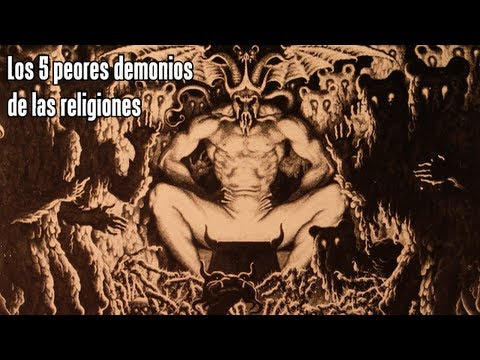
The 5 Most Dangerous Demons Across Religions: An Investigative Dossier


Introduction: The Shadow Play

The narrative of humanity is intrinsically linked to stories of light and shadow. Across cultures and millennia, spiritual and theological frameworks have sought to explain the forces that shape our existence, often bifurcating reality into divine benevolent powers and their infernal adversaries. These adversaries, known colloquially as demons, are not merely figures of religious dogma; they represent archetypal fears, societal anxieties, and perhaps, if we dare to look beyond scripture, manifestations of phenomena that defy conventional scientific understanding. This dossier delves into the profiles of five of the most formidable demonic entities identified across major religious traditions, not as a theological treatise, but as an investigative exploration into the psychology, mythology, and potential anomalous underpinnings of these potent figures. Our objective is to dissect their perceived characteristics, their historical impact, and what, if anything, their consistent presence in human consciousness might signify about the unexplained.

Beneath the Veil: A Comparative Analysis of Demonic Entities

The concept of demonic entities predates organized religion as we know it, manifesting in various forms across ancient mythologies. However, the Abrahamic religions – Judaism, Christianity, and Islam – have codified and popularized many of the figures that dominate our modern understanding of infernal powers. These entities are rarely singular in their attributes; they evolve, borrow, and adapt across texts and traditions, often serving as personifications of abstract evils or potent opposing forces to divine order. The danger attributed to them varies, from tempting mortals towards sin to orchestrating cosmic battles. Our analysis will focus on entities that consistently appear as major players in these grand narratives, highlighting their unique domains of influence and the mechanisms through which they are believed to operate.

1. Lucifer/Satan: The Fallen Star

Often presented as the principal adversary, Lucifer, whose name translates to "light-bearer," is understood in Christian theology as a seraph who rebelled against God. His fall from grace transformed him into Satan, the tempter, the accuser, and the embodiment of pride and rebellion. The Book of Revelation portrays him as a dragon, a serpent, and the devil, leading legions of fallen angels. His primary weapon is deception, whispering doubt and twisting truth. From an analytical perspective, Satan represents the ultimate personification of opposition to divine will, a concept that resonates with the human experience of internal conflict and the struggle against existential despair. The persistent presence of a singular, overarching antagonist in this narrative structure is a powerful persuasive tool, but it also raises questions about the psychological and societal functions of such an archetype. Could figures like Satan be emergent properties of complex cognitive systems grappling with morality and the unknown?

The concept of a fallen celestial being is a recurring motif in many mythologies, not limited to the Abrahamic faiths. This suggests a deep-seated human need to explain the origin of evil and, by extension, the origin of suffering. Studying the evolution of Satan's character across centuries offers insights into changing theological and philosophical landscapes. For those seeking to understand the psychological impact of such figures, delving into historical accounts of exorcisms and demonological texts can be illuminating, though rigorous critical distance is paramount. Many of these accounts, when stripped of their religious overlay, describe phenomena that bear uncanny resemblances to psychological disorders or environmental triggers. Our focus remains on the phenomenon of belief and its manifestation, regardless of its ultimate source.

2. Beelzebub: The Lord of the Flies

Beelzebub, often identified with Satan or considered a distinct high-ranking demon, is frequently referred to as the "Lord of the Flies." This appellation, originating from ancient Semitic deities like Baal-zebul (Lord of the dwelling), was later demonized by the Israelites. In Christian demonology, Beelzebub is depicted as a powerful prince of Hell, often associated with idolatry, gluttony, and the seduction of prophets. The association with flies is particularly striking, evoking imagery of decay, corruption, and pestilence. This connection to decay and sickness grants Beelzebub a primal, visceral threat. Analyzing this demonology, we see a pattern: entities are often linked to fundamental human fears – pride, rebellion, decay, disease. The question arises: are these mere symbolic representations, or do they hint at something more tangible, perhaps related to environmental factors or even biological entities we do not yet fully comprehend? The consistent linkage of certain demons to specific forms of corruption or affliction invites a deeper investigation into folklore and historical outbreaks of disease, seeking correlations that might be overlooked by conventional historical analysis. This is where the true investigative work begins.

For researchers interested in the empirical aspects of such legends, exploring how belief in Beelzebub has historically influenced behavior during plagues or times of social unrest can be a fruitful avenue. Furthermore, the modern interpretation of "flies" could extend beyond literal insects to encompass the insidious spread of misinformation or corrupting influences within society. This demon, in its essence, speaks to the fear of unseen, creeping corruption that undermines the foundations of order. The practical application of this understanding lies in recognizing how such archetypes can be exploited, or how they might reflect genuine, albeit poorly understood, natural processes.

3. Abaddon/Apollyon: The Destroyer

The name Abaddon, and its Greek counterpart Apollyon, directly translate to "destruction" or "destroyer." This entity appears in the Book of Revelation as the angel of the bottomless pit, commanding an endless army. Unlike other demons who might tempt or corrupt, Abaddon's role is pure annihilation. This is a force of existential dread, the ultimate endpoint of decay and chaos. From an investigative standpoint, entities that represent pure destruction are fascinating because they tap into our deepest fears of oblivion. They are less characters in a theological drama and more abstract forces made manifest. When considering the potential for anomalous phenomena, pure destructive forces could be interpreted in various ways: environmental cataclysms attributed to supernatural wrath, or perhaps even manifestations of localized, inexplicable destructive energies. The sheer power attributed to Abaddon suggests a force far beyond mortal comprehension, prompting us to consider what natural or supernatural mechanisms could explain such destructive potential.

The mythic resonance of a "destroyer" figure is universal. It speaks to our primal fears of plague, famine, war, and natural disasters. Studying Abaddon's depiction in Revelation, and comparing it to similar destructive deities or forces in other mythologies, allows us to map the contours of human terror. The challenge for the modern investigator is to discern between symbolic representation and the potential for real, unclassifiable destructive phenomena. Are these mere stories to explain the unexplainable, or are they echoes of experiences with forces we have yet to scientifically catalogue? The answer likely lies in meticulous cross-referencing of historical accounts with geological, meteorological, and even parapsychological data, a multidisciplinary approach that is frequently overlooked in favor of simplistic theological interpretations.

4. Lilith: The First Woman, The Night Terror

Lilith is a figure of immense complexity and enduring fascination, originating from Mesopotamian mythology and later integrated into Jewish folklore as Adam's first wife, created from the same earth, who refused to be subservient. Her subsequent exile and transformation into a nocturnal demon who preys on infants and seduces men make her a potent symbol of female independence twisted into malevolent force, and a deeply ingrained societal fear of uncontrollable feminine power. Her association with the night and vulnerable stages of life highlights primal fears of things unseen and the dangers lurking in darkness. Investigating Lilith requires a multidisciplinary lens, examining not only theological texts but also feminist critiques, psychological interpretations, and folklore studies. From a parapsychological perspective, Lilith can be seen as an embodiment of primal fears related to sexuality, independence, and the vulnerability of new life – fears that can manifest in potent psychological distress or even, some argue, in paranormal activity. The enduring power of her myth suggests a persistent societal anxiety that transcends religious doctrine.

The modern relevance of Lilith lies in her archetype: the untamed, the independent, the one who refuses societal constraints. Her legend is a powerful lens through which to examine historical attitudes towards female autonomy and the fear of what lies beyond patriarchal control. For the investigator, this translates to examining cases of alleged demonic possession or haunting that involve themes of sexual coercion, extreme independence, or rebellion against established norms. The consistent attribution of certain behaviors and afflictions to Lilith across different historical periods begs the question: are we observing a consistent manifestation of a particular type of anomalous energy, or is this the sustained projection of deeply ingrained cultural anxieties? The line is often blurred, but the pursuit of clarity is our mission. The study of ancient texts mentioning Lilith, coupled with modern psychological research on trauma and archetypes, provides fertile ground for investigative hypotheses that go beyond simple demonology.

"She was the first to refuse. And for that refusal, she was branded eternity itself."

5. Asmodeus: The Demon of Lust and Wrath

Asmodeus, often presented as a prominent figure in the demonic hierarchy, is particularly infamous for his association with lust, gambling, and wrath. His origins can be traced to ancient Persian and Babylonian mythology, where he may have been a destructive spirit. In the Book of Tobit, Asmodeus is depicted as a jealous and vengeful demon who murders Sarah's successive husbands on their wedding nights. Later demonological texts portray him as a king of demons, often associated with insatiable desire and the corruption of mortals through sensual temptation and compulsive behavior, such as gambling. The dual nature of lust and wrath is significant; both are powerful, often destructive, human emotions. From an analytical perspective, Asmodeus embodies the destructive potential of unchecked desire and anger. The consistent presence of demons linked to these specific vices across traditions suggests that they may represent archetypal expressions of internal human struggles that manifest externally as perceived malevolent forces. The question for the investigator is whether these "external forces" are purely psychological projections or if they represent a genuine, albeit poorly understood, interaction with entities or energies that exploit these very human vulnerabilities.

The enduring appeal of figures like Asmodeus in popular culture, from ancient texts to modern fiction, points to their power as archetypes reflecting fundamental aspects of the human psyche. Their influence is often seen as subtle, corrupting through temptation rather than overt force. This makes them challenging to study from an empirical standpoint. However, by examining historical accounts of individuals or communities succumbing to vice, and cross-referencing these with anthropological studies of ritual and belief, we can begin to map the territory of such influences. The modern researcher might look for patterns in addiction, destructive relationships, or compulsive behaviors that could be interpreted through the lens of these ancient figures, always seeking verifiable evidence or at least consistent testimonial patterns that suggest more than mere coincidence or simple moral failing. This requires a sophisticated understanding of both psychology and the history of belief, a combination that yields the most profound insights into the persistent shadow cast by such entities.

Investigator's Verdict: Beyond Theology, Towards Anomalous Phenomena

While religious texts offer rich narratives, it is crucial for the investigator to approach these figures with a critical, analytical mindset. The "danger" attributed to these demons can be interpreted on multiple levels: as theological warnings against sin, as psychological manifestations of internal conflict and societal anxieties, or, more speculatively, as evidence of genuine anomalous entities or energies that interact with our reality. The consistent portrayal of certain traits – pride, deception, lust, destruction – across diverse cultures and over vast periods suggests a recurring theme in human experience. It is my professional opinion that these demonic figures represent a confluence of profound psychological archetypes, societal fears, and, potentially, encounters with phenomena that our current scientific paradigms are ill-equipped to explain. Dismissing them outright as mere superstition is to ignore a vast repository of human narrative and potential evidence of the unexplained. Conversely, accepting them solely at face value within their religious context limits our capacity for objective inquiry. Somewhere in the liminal space between theology, psychology, and the unexplained lies the true nature of these entities, a space that demands rigorous investigation, not blind faith or outright dismissal.

The Investigator's Archive

For those prepared to delve deeper into the investigative rabbit hole, the following resources are indispensable:

  • Books:
    • The Encyclopedia of Demons and Demonology by Rosemary Guiley: A comprehensive reference for cataloging and understanding various demonic entities and their lore.
    • The Golden Bough by James George Frazer: While not solely focused on demons, this seminal work on comparative mythology offers crucial context for understanding the roots of belief in supernatural forces and adversarial spirits across cultures.
    • Dictionnaire Infernal by Collin de Plancy: An illustrated classic offering detailed descriptions and often intriguing art of various demons.
  • Documentaries:
    • Look for documentaries focusing on the history of demonology, comparative religion, and case studies of alleged paranormal phenomena or possession. Platforms like Gaia or historical documentary channels often host content relevant to these subjects, though critical viewing is always advised.
  • Online Resources:
    • Reputable academic sites on religious studies and mythology offer scholarly articles. Be wary of sensationalist content and always cross-reference information.

Remember, the goal is not to collect lore but to analyze patterns and seek verifiable data or consistent testimonial evidence. My personal library contains numerous grimoires and ancient texts, but they serve as historical artifacts and comparative tools, not as operational manuals.

Protocol: Identifying and Documenting Demonic Manifestations

Investigating phenomena attributed to demonic entities requires a structured, scientific approach, minimizing subjective bias. The following protocol outlines the fundamental steps:

  1. Initial Assessment & Witness Interview: Conduct thorough, objective interviews with witnesses. Focus on eliciting detailed, chronological accounts of events, sensory details (sights, sounds, smells), and any perceived emotional or physical effects. Note inconsistencies and attempt to find corroborating evidence.
  2. Environmental Scan: Before entering a suspected site, perform a baseline environmental scan. Use EMF meters, temperature gauges, and audio recorders. Note any anomalies that deviate from the norm *before* any purported activity begins.
  3. Documenting Anomalous Activity: If activity is reported or observed, document it meticulously.
    • Audio: Record background noise and attempt to capture Electronic Voice Phenomena (EVP). Use high-sensitivity digital recorders.
    • Visual: Photograph and video record any visual anomalies (orbs, shadows, apparitions). Utilize infrared or full-spectrum cameras if available. Document the surrounding environment to rule out conventional explanations.
    • Physical: Record any physical manifestations (objects moving, unexplained sounds, temperature drops).
  4. Eliminating Mundane Explanations: This is the most critical step. Systematically rule out:
    • Psychological Factors: Pareidolia (seeing patterns in random stimuli), suggestibility, pre-existing mental health conditions, or physiological effects like infrasound.
    • Environmental Factors: Drafts, vibrations, structural settling, electrical interference, magnetic fields, or acoustic anomalies.
    • Hoaxes: Consider the possibility of deliberate deception by witnesses or external parties.
  5. Analysis of Evidence: Compile all gathered data. Analyze audio for EVPs, cross-reference visual anomalies with environmental conditions, and look for consistent patterns in witness testimony. Compare findings with known lore regarding specific entities, but always prioritize empirical data over speculative lore.
  6. Conclusion & Hypothesis Generation: Based on the evidence, formulate a hypothesis. Is the phenomenon best explained by conventional means? Is it a manifestation of psychological distress? Or does it remain an unexplained anomaly that warrants further investigation, potentially aligning with historical accounts of demonic activity?

Remember, the goal is not to "prove" the existence of demons, but to meticulously document and analyze unexplained phenomena, and to determine if any evidence is consistent with the characteristics attributed to such entities.

Frequently Asked Questions

Q1: Are these religious figures literal beings, or metaphors?
A1: The interpretation varies widely. Theologically, many believe them to be literal. Psychologically and mythologically, they are seen as powerful archetypes embodying human fears and vices. As an investigator, my focus is on the observable phenomena and evidence, regardless of the ultimate metaphysical interpretation.

Q2: How can I protect myself from demonic influence?
A2: Religious traditions offer various protective measures, such as prayer, blessings, and amulets. From a psychological perspective, maintaining mental fortitude, clear boundaries, and a grounded perspective are key. In terms of anomalous phenomena, rigorous documentation and understanding mundane causes are the first lines of defense.

Q3: What is the difference between a ghost and a demon?
A3: Generally, ghosts are considered to be the spirits of deceased individuals, often tied to a location or unfinished business. Demons are typically viewed as distinct, non-human entities, often fallen angels or primordial beings, with malevolent intent towards humanity. However, the lines can blur in folklore and in the interpretation of experiences.

Q4: Can demons possess people? How is this investigated?
A4: Religious doctrine posits possession as a significant threat. Investigation involves meticulous interviews, observation of behavior, and ruling out medical or psychological explanations. Parapsychological assessment may involve looking for unexplained phenomena occurring around the individual or in their environment. True scientific investigation of possession is highly challenging due to the lack of verifiable, repeatable evidence.

Conclusion: The Enduring Shadow

The figures of Lucifer, Beelzebub, Abaddon, Lilith, and Asmodeus represent the apex of infernal power in many of the world's most influential religious traditions. They are not mere characters in ancient tales; they are potent symbols that have shaped human morality, culture, and spirituality for millennia. Their enduring presence in our collective consciousness speaks to a fundamental human engagement with the concepts of ultimate evil, temptation, destruction, rebellion, and unrestrained desire. As investigators, we dissect these myths not to confirm or deny their theological existence, but to understand the profound impact they have had, and continue to have, on the human psyche and the narrative of our reality. Whether they are literal entities, psychological constructs, or something else entirely, their shadow looms large, reminding us of the persistent, often unexplained forces that seem to challenge the order we strive to impose upon the world. The pursuit of truth requires us to examine every facet of these ancient legends, seeking the kernel of anomalous reality hidden within the theological framework.

Your Field Mission: Mapping the Local Pantheon

Every community, no matter how small, has its own local legends, its own "demons" or malevolent presences whispered about in hushed tones. Your mission, should you choose to accept it, is to become an ethnographer of the uncanny in your own backyard. Research local folklore, interview elder residents, and investigate any persistent tales of malevolent spirits, cursed places, or cautionary figures in your region. Document not just the stories, but the recurring themes and their potential connections to historical events or environmental features. Are there local equivalents to Lilith's nocturnal terror, or to Asmodeus's corrupting influence? Catalog these "local demons" and analyze their characteristics. Share your findings – and the methods you used to uncover them – in the comments below. Let's build a collaborative map of the fears that haunt our own territories.

About the Author

alejandro quintero ruiz is a veteran field investigator dedicated to the analysis of anomalous phenomena. His approach combines methodological skepticism with an open mind to the inexplicable, always seeking the truth behind the veil of reality. With years spent documenting unexplained events, his work bridges the gap between folklore, psychology, and the frontiers of empirical research.

The Vatican and the Ancient Gods: An Investigation into Esoteric Ties


Introduction: Whispers from the Crypts

The hushed corridors of power, the ancient stones that bear witness to millennia of human striving, and the persistent echoes of beliefs that predate recorded history. The relationship between the Vatican and the concept of "ancient gods" is not one typically found in common discourse. It treads the delicate line between theology, history, and the often-suppressed world of esoteric knowledge. Today, we don't just observe; we dissect. We take what appears to be disparate threads – the sacred heart of Catholicism and the pantheons of forgotten civilizations – and attempt to weave them into a coherent tapestry, or at least expose the void where such a tapestry might be intended.

This isn't about simple historical coincidence. It's about the examination of symbols, the interpretation of texts that lie outside the mainstream, and the persistent theories that suggest a deeper, more complex narrative at play within one of the world's most influential institutions. We will move beyond surface-level pronouncements and delve into the analytical, seeking patterns where others find only faith or folklore.

Investigator's Note: Much of the following exploration ventures into speculative territory, drawing from esoteric traditions and interpretations that are not universally accepted by mainstream historical or theological scholarship. The aim is to analyze these claims rigorously, not to validate them without critical examination.

Esoteric Connections: Unraveling the Symbolism

The idea that the Vatican might harbor connections to "ancient gods" often stems from an interpretation of its rich, and at times, enigmatic symbolism. Critics and researchers in esoteric circles point to specific architectural motifs, ritualistic practices, and theological interpretations that, they argue, echo pre-Christian or even non-Abrahamic cosmologies.

Consider, for instance, the Serpent symbolism present in various ancient cultures, representing wisdom, rebirth, or even chthonic forces. While often demonized in mainstream Christian theology, subtle interpretations and historical continuities are debated. Furthermore, the concept of a powerful, often unseen, guiding entity is common to many ancient pantheons. The question becomes: is the veneration of a singular deity within Catholicism merely a divergence, or could it be a highly refined, singularization of a more ancient archetype that acknowledged multiple divine manifestations?

The architecture of St. Peter's Basilica itself is a subject of much speculation. Certain interpretations suggest hidden meanings in its design, drawing parallels to pagan temples or astrological alignments. This is the terrain of comparative mythology and symbolic analysis, where the language of symbols can transcend specific dogmas. To understand this connection, one must be willing to look beyond the exoteric (publicly accessible) and consider the esoteric (hidden, inner meaning) dimensions that have been documented throughout human history in various sacred traditions.

For anyone serious about investigating these symbolic languages, acquiring a foundational understanding of comparative mythology is key. Texts like Mircea Eliade's "The Myth of the Eternal Return" offer a framework for understanding cyclical time and the sacred, concepts that resonate across ancient cultures and may offer clues to interpreting these symbolic bridges.

Historical Analysis: Texts, Artifacts, and Forbidden Lore

When we speak of "ancient gods" in relation to the Vatican, we're often referring to deities from Mesopotamian, Egyptian, Greek, or Roman pantheons, and the potential for their influence to have been absorbed, reinterpreted, or even suppressed within the nascent Christian Church. Historical analysis, in this context, becomes a forensic examination of alleged textual evidence and archaeological finds.

Scholars have noted the influence of classical philosophy and mystery religions on early Christian theology. The adoption of certain organizational structures or even festivals, later recontextualized within a Christian framework, is well-documented. However, the leap to direct worship or endorsement of pagan deities by the Vatican itself is a more contentious claim, typically found in fringe historical theories and conspiracy literature. These theories often center on:

  • Lost or Suppressed Texts: Allegations that certain Gnostic Gospels or other pre-Christian texts, potentially detailing interactions with these ancient entities, were deliberately purged or hidden by the early Church hierarchy.
  • Archaeological Anomalies: Interpretations of artifacts or inscriptions found in and around Vatican City, or within its vast archives, that proponents claim depict or allude to pagan deities in contexts that are incongruous with orthodox Christianity.
  • Ritualistic Continuities: The argument that certain Vatican rituals or ceremonies retain vestigial elements or symbolic meanings derived from ancient pagan rites, especially those concerning initiation or veneration.

For instance, the existence of the Vatican Secret Archives is a known fact, fueling speculation about what knowledge might be contained within. While most historians agree it houses primarily religious and administrative documents, the very notion of "secrecy" invites theories of hidden lore and suppressed truths. To truly understand these claims, one would need access to, and the ability to decipher, ancient scripts and potentially apocryphal texts. Access to resources like the Vatican Apostolic Library, though curated, is a starting point for any serious academic endeavor.

The debate often hinges on interpretation. Mainstream academia generally views these connections as historical influences and adaptations, while esoteric researchers often posit direct, symbolic, or even systemic continuity. It's a classic case where the evidence is subject to the lens through which it is viewed.

The Vatican Archives: Secrecy and Suppressed Knowledge

The Vatican Secret Archives, now more formally known as the Vatican Apostolic Archive, have been a fertile ground for speculation regarding hidden knowledge. While their contents are primarily historical records, legal documents, and papal correspondence, the very aura of secrecy surrounding them has fueled theories about suppressed texts, forbidden rituals, and information concerning entities beyond conventional understanding.

The common narrative in esoteric circles posits that within these archives lie evidence of the Church's historical engagement with – or even manipulation of – ancient belief systems and their associated deities. This could range from detailed accounts of pagan rituals that were later co-opted or eradicated, to potentially Gnostic texts that offer alternative cosmologies where ancient gods played significant roles independent of, or in opposition to, the Abrahamic tradition.

For the serious investigator, understanding the *nature* of archival research is crucial. The Vatican Archive has undergone significant reforms, including digitization efforts, to make its contents more accessible. However, access is still restricted, and the sheer volume of material means that "discoveries" are often the result of painstaking, long-term research. News outlets have reported on the opening of sections of the archives to public researchers, though the precise scope and impact of this opening for uncovering esoteric links remain to be seen.

The question for the researcher isn't just "what is hidden?", but "what is *perceived* to be hidden and why?". This perception often becomes more influential than the reality, driving narratives and attracting those who seek to find evidence of clandestine traditions.

Investigator's Note: The temptation to see hidden conspiracies in archival secrecy is strong. However, rigorous analysis demands distinguishing between actual suppressed information and the mythos that secrecy itself generates.

Cross-Cultural Parallels: Deities and Dogma

Throughout history, human societies have developed complex pantheons to explain the world around them. The concept of "ancient gods" is not monolithic; it spans from the intricate mythologies of Mesopotamia and Egypt to the classical pantheons of Greece and Rome. The fascinating aspect for an investigator is how these overarching themes and archetypes resurface, or are argued to resurface, even within seemingly distinct religious frameworks like Roman Catholicism.

Take the archetype of the "dying and rising god," a concept popularized by Sir James Frazer in "The Golden Bough." This narrative, featuring a deity who dies and is resurrected, is found in various ancient mythologies (e.g., Osiris, Tammuz, Baal) and is undeniably central to Christian theology with the story of Jesus Christ. While theologians explain this as divine revelation or humanity's universal spiritual yearning, esoteric interpretations suggest a fundamental archetypal pattern that was recognized and adapted by early Christianity, potentially incorporating existing, venerated figures or concepts.

Another point of comparison often arises in cosmological dualism – the struggle between benevolent and malevolent forces. Ancient dualistic traditions, such as Zoroastrianism or elements within later Gnosticism, present a cosmic battle. While Catholicism has its Devil, the complexity and multifaceted nature attributed to ancient deities, sometimes embodying both creative and destructive forces, offer a different paradigm that some researchers believe has left subtle imprints.

Investigating these parallels requires a deep dive into comparative religion and mythology. Understanding the original contexts and interpretations of these ancient deities is paramount. For instance, researching the attributes of figures like Marduk in Babylonian mythology or Amun-Ra in Egyptian cosmology, and then comparing them with descriptions of divine power or angelic hierarchies within Catholic tradition, can reveal fascinating, albeit often speculative, thematic resonances.

The argument is rarely that the Vatican *worships* these ancient gods in their original form. Instead, it's about the persistence of certain symbolic languages, archetypes, and possibly even the subtle veneration of foundational concepts that these ancient deities represented. This is the heart of an esoteric analysis – finding the universal in the particular.

The Investigator's Verdict: Fraud, Phenomenon, or Obfuscation?

"The connection between the Vatican and ancient gods" is a narrative that thrives in the liminal spaces between documented history, theological interpretation, and speculative esoteric theories. From an analytical standpoint, there is no concrete, widely accepted evidence to suggest the modern Vatican actively worships or endorses pre-Christian deities.

However, the claim's persistence stems from several factors:

  • Historical Influence: The undeniable absorption and reinterpretation of cultural and philosophical elements from the classical world and earlier civilizations into the framework of Christianity is a historical reality. This includes symbols, festivals, and even theological concepts.
  • Esoteric Interpretations: Within certain occult and esoteric traditions, historical and theological events are viewed through a lens seeking hidden meanings, symbolic continuities, and pre-Christian roots in seemingly orthodox religious structures.
  • The Secrecy Factor: The existence of the Vatican Archives, coupled with the Church's historical role in sometimes suppressing challenging doctrines or texts, creates a fertile ground for theories about hidden knowledge.
  • Symbolism: The rich symbolic language of the Church, when analyzed outside its orthodox context, can indeed bear resemblances to symbols and motifs found in ancient pagan traditions.

My Verdict: While the overt claim of direct worship is unsubstantiated and likely falls into the realm of conspiracy or misinterpretation, the *underlying premise* that ancient archetypes, symbols, and perhaps even suppressed historical narratives have influenced or are conserved within certain circles connected to the Vatican is a subject worthy of rigorous, albeit cautious, investigation. It's not about literal gods returning, but about the enduring power of ancient ideas and the potential for their complex interplay with established religious institutions. The phenomenon lies not in explicit endorsement, but in the persistent interpretation and the potential for conserved, albeit recontextualized, ancient symbolism and lore.

The Investigator's Archive

To delve deeper into the intricate relationship between theology, ancient myths, and potential esoteric underpinnings, the following resources are essential for any serious investigation:

  • "The Golden Bough" by Sir James Frazer: A seminal work on comparative mythology and religion, essential for understanding recurring archetypes like the dying and rising god.
  • "The Myth of the Eternal Return" by Mircea Eliade: Explores the concept of sacred time and the repetition of archetypal acts, crucial for understanding how ancient myths might resonate across different cultures and eras.
  • "The Vatican's Exorcists: Confronting the Devil" by Fr. Gabriele Amorth: While focused on exorcism, it offers insight into the Vatican's contemporary engagement with the concept of supernatural evil and its perceived origins.
  • "The Gnostic Gospels" by Elaine Pagels: Provides access to early Christian texts that offer alternative cosmologies quite different from orthodox Christianity, sometimes featuring complex divine hierarchies and interpretations of creation.
  • Access to Scholarly Databases: Resources like JSTOR or Academia.edu are invaluable for finding peer-reviewed articles on comparative religion, early Christian history, and Vatican archives.

Understanding the historical and theological context requires engaging with primary source material and academic analyses. Relying solely on secondary, often sensationalized, interpretations will lead to a distorted view. The key is to build a solid foundation of knowledge before exploring the more speculative avenues.

Frequently Asked Questions

Q: Is the Vatican literally worshipping Greek or Roman gods today?

A: There is no credible evidence to support this claim. The Vatican's doctrines are explicitly monotheistic, centered on the Trinity. Theories suggesting worship are typically found in esoteric interpretations or conspiracy circles, focusing on symbolic continuity rather than literal deification.

Q: What are the "Vatican Secret Archives" and what might they contain?

A: Officially known as the Vatican Apostolic Archive, they house centuries of historical records for the Holy See. While they contain immense historical data, theories abound regarding potentially suppressed texts related to early Christianity, paganism, or other esoteric knowledge. Accessibility has increased, but direct access to specific sensitive documents remains limited.

Q: How can ancient symbols be found in a Christian context?

A: Because Christianity emerged within a polytheistic world, it inevitably interacted with and adapted existing cultural and symbolic frameworks. This can manifest in the reinterpretation of festivals, the adoption of symbolic imagery (e.g., the fish symbol, early Christian use of the Chi Rho which has pagan roots), or the theological development that drew upon philosophical traditions common at the time.

Your Field Mission: Connect the Dots

The narrative connecting the Vatican to ancient gods is complex, often relying on interpretation and symbolism rather than direct proof. Your mission, should you choose to accept it, is not to find the smoking gun, but to critically analyze the nature of such enduring theories.

Task: Choose one specific symbol or ritual commonly associated with an ancient deity (e.g., the Caduceus, the Ankh, specific initiation rites) and research its presence or analogous representation within historical Christian iconography or doctrine. Document your findings, noting where the interpretations align with esoteric theories and where they are explained by mainstream historical or theological scholarship. Share your analysis in the comments below. Remember, the most valuable insights often come from dissecting the gray areas.

alejandro quintero ruiz is a seasoned field investigator dedicated to the analytical exploration of anomalous phenomena. His approach blends methodological skepticism with an open mind to the inexplicable, always seeking the truth behind the veil of reality. He has spent years in the field, meticulously documenting and dissecting claims that challenge our understanding of the possible.

The truth may not always be as dramatic as a direct pact with ancient entities, but the persistence of these ideas speaks volumes about humanity's enduring fascination with the divine, the ancient, and the hidden mechanisms that might govern our world. Keep questioning. Keep investigating.