Followers

Space Chief's Unveiling: An Analysis of Alleged Alien Confessions


Initial Contact and The Cosmic Whisper

The universe, some might argue, whispers truths only to those willing to listen beyond the static of the mundane. We are drawn to anomalies, to the narratives that defy conventional explanation. The story of the so-called "Space Chief" and their alleged alien confession falls into this rarefied air. This isn't about sensational headlines; it's about dissecting a phenomenon, scrutinizing claims, and understanding why such narratives resonate in our collective consciousness. Today, we open the file on a confession that spans galaxies, or perhaps, just the intricate landscape of the human mind.

Deconstructing the 'Space Chief' Persona

The term "Space Chief" itself evokes imagery from vintage science fiction – a figure of authority, perhaps a guide, or even a sovereign from another world. When such a persona emerges, claiming intimate knowledge of extraterrestrial life and delivering a "confession," critical analysis becomes paramount. Is this an individual claiming direct contact, relaying messages, or is it a carefully constructed narrative designed for impact? Our initial challenge is to move beyond the label and examine the substance, or lack thereof, behind the claim.

Understanding the psychological scaffolding of such a claim is key. Often, individuals who report extraordinary experiences do so with a conviction that belies simple fabrication. However, the history of paranormal investigation is replete with cases where personal belief, psychological projection, or even deliberate deception can masquerade as genuine phenomena. We must approach this with a healthy dose of skepticism, tempered by an open mind to the possibility of the genuinely unknown.

Analyzing the 'Alien Confession' Narrative

At the heart of this case lies the "confession" itself. What exactly is being confessed? Are we talking about the existence of extraterrestrial civilizations, their advanced technologies, their intentions towards humanity, or perhaps a hidden history of interaction? The specifics of such a confession are vital. Vague pronouncements are inherently more difficult to verify or debunk than detailed accounts.

Consider the potential motivations behind such a confession. Is it a warning? A plea? A historical revelation? Each of these carries different implications and requires a distinct analytical approach. Moreover, the framing of the confession – as delivered by a "Space Chief" – suggests a narrative structure. This could imply a conscious effort to communicate a specific message, potentially within a certain cultural context or subculture that readily accepts such nomenclature.

Indeed, this mirrors patterns seen in other high-profile alleged contactee cases. Take for instance, the public statements made by figures claiming to have insider knowledge of government UFO programs. While these often lack concrete, verifiable proof, their compelling narrative structures and perceived sincerity can sway public opinion. The "Space Chief" narrative, therefore, invites comparison with these established patterns of extraordinary claims.

Examining the Substantiation of Claims

The cornerstone of any credible investigation, paranormal or otherwise, is evidence. What form does the alleged confession take? Is it a written document, an audio recording, a video statement, or testimonial accounts? Each of these formats presents unique challenges for verification.

"The silence of space is often more revealing than its sounds. What is not said, what is not shown, can be as significant as any 'confession'."

For a confession to hold weight, it must withstand scrutiny. This means examining:

  • Origin: Where did the confession originate? Was it a spontaneous utterance, a planned release, or something else?
  • Authenticity: Can the medium of the confession be authenticated? For instance, can audio or video recordings be verified as unedited and not digitally manipulated?
  • Corroboration: Are there independent sources or evidence that support the claims made in the confession? This is often the weakest link in extraordinary claims.
  • Consistency: Does the confession align with itself over time? Are there contradictions in the narrative?

Without tangible, verifiable evidence, a confession remains speculative. In the realm of the paranormal, the burden of proof rests squarely on the claimant. Without it, we are left with fascinating stories, but not necessarily factual accounts. The absence of concrete data forces us to consider alternative explanations, which often lie closer to home.

The Human Element: Psychology and Societal Factors

When objective evidence is scarce, the focus often shifts to the subjective experience and the socio-cultural context. The "Space Chief" narrative, like many UFO and alien encounter stories, taps into deep-seated human curiosities and anxieties about our place in the universe.

Psychologically, we must consider phenomena such as:

  • Pareidolia: The tendency to perceive meaningful patterns (like faces or figures) in random visual or auditory stimuli.
  • Confabulation: The creation of false memories without the intention to deceive, where the brainfills gaps in memory with fabricated information.
  • Suggestibility: The degree to which an individual can be influenced by external suggestions or expectations, particularly within a community focused on paranormal phenomena.

Sociologically, these narratives can serve various functions. They may offer answers to profound existential questions, provide a sense of connection to something larger than oneself, or reflect societal anxieties about technology, government secrecy, or humanity's future. The popularity of such stories is, in itself, a phenomenon worthy of study.

For a deeper dive into the psychological underpinnings of such beliefs, exploring works on anomalous experiences and cognitive biases is essential. Resources like J. Allen Hynek's writings on UFO classification offer a structured way to categorize reported phenomena, moving from the mundane to the potentially extraordinary.

Technological Echoes and Conspiratorial Undercurrents

Alleged alien visitations and confessions often intertwine with theories of advanced technology and governmental cover-ups. The idea that extraterrestrial beings possess superior technology is a staple of the genre, and confessions might detail these advancements or the implications of their interception.

Within the UFO community, there is a significant overlap with conspiracy theories. These often posit that governments are aware of alien presence but actively conceal this information from the public. A "Space Chief's" confession, particularly if it hints at hidden agendas or suppressed knowledge, can easily feed into these existing frameworks.

Investigating these claims requires us to consider the role of media, disinformation, and the potential for technological hoaxes. The very tools that might be used to record such a confession – cameras, microphones, digital communication – can also be used to create convincing fabrications. This technological duality is a constant challenge for investigators.

Exploring the documented history of alleged technological exchanges or cover-ups, such as the widely discussed events at Roswell, provides crucial context for understanding the landscape in which such confessions emerge. The study of these cases requires a firm grasp of both potential realities and elaborate deceptions.

Investigator's Verdict: Unraveling the Anomaly

Based on the information presented, the "Space Chief's" alleged alien confession, as described, remains firmly in the realm of the unverified. While the narrative might be compelling and tap into a rich vein of human fascination with the extraterrestrial, the absence of concrete, independently verifiable evidence is a significant hurdle.

Are we dealing with a genuine communication from an extraterrestrial entity, a sophisticated hoax, or a complex interplay of psychological and sociological factors? Without further substantiation – such as authenticated recordings, corroborating independent testimonies, or any form of physical evidence – it is impossible to definitively conclude that the confession is genuine.

My analysis leans towards the probability that such claims, while captivating, represent either a misunderstanding of natural phenomena, a product of psychological phenomena, or a deliberate fabrication. The allure of the cosmic is powerful, but rigorous investigation demands that we exhaust all mundane explanations before embracing the extraordinary. This particular case, as presented, does not yet meet the threshold for extraordinary acceptance.

The Researcher's Archives

To truly grapple with claims of this magnitude, one must consult the established body of work in the field. The following resources are invaluable for anyone seeking to understand the nuances of alleged extraterrestrial contact and the methodology of paranormal investigation:

  • Books:
    • "Passport to Magonia" by Jacques Vallée: Offers a scholarly look at UFO phenomena, positing they may be manifestations of an unknown perceptual reality.
    • "The Day After Roswell" by Philip J. Corso: While controversial, it details alleged government interactions with alien technology.
    • "The UFO Experience: A Scientific Inquiry" by J. Allen Hynek: A foundational text in UFOlogy, outlining a scientific approach to analyzing sightings.
  • Documentaries:
    • "Close Encounters of the Fifth Kind": Explores human-initiated contact theories.
    • "Unacknowledged": Delves into alleged government conspiracies surrounding UFOs.
  • Platforms:
    • Gaia: A streaming service with a vast library of documentaries and series on consciousness, spirituality, and the unexplained.
    • Discovery+: Offers a range of paranormal investigation shows and documentaries.

Frequently Asked Questions

What are the most common explanations for alleged alien confessions?
The most common explanations include misidentification of natural phenomena, psychological factors like confabulation or hallucination, cultural influences, and deliberate hoaxes.
How can I verify if an alleged alien confession is real?
Verification requires rigorous examination of evidence: authenticity of recordings, consistency of testimony, corroboration from independent sources, and elimination of all mundane explanations. Extraordinary claims demand extraordinary proof.
What is the role of technology in alleged alien communications?
Technology can be both a tool for communication and deception. Advanced recording devices might capture phenomena, but can also be used to create convincing fakes. Theories often involve advanced alien technology or government suppression of discovered alien tech.
Are there any credible scientific investigations into "alien confessions"?
While mainstream science remains skeptical due to lack of verifiable evidence, researchers in fields like psychology, anthropology, and certain fringe scientific communities study the phenomenon of belief in alien contact and communication, focusing on the experiencers and the cultural impact.

Your Field Mission: Decode the Cosmic Chatter

The pursuit of truth is an active endeavor. Your mission, should you choose to accept it, is to apply the critical thinking skills honed within this analysis to your own investigations. The universe is vast, and the lines between reality, perception, and fabrication can be blurry.

Your Task: Find a public account of an alleged alien communication or confession online (a video, an article, a forum post). Apply the principles discussed: identify the source, analyze the narrative, scrutinize the presented evidence (or lack thereof), and consider the psychological and sociological factors at play. Formulate your own preliminary verdict based on your analysis. Share your findings and your verdict in the comments below, detailing the specific pieces of evidence you found most compelling or most suspect.

alejandro quintero ruiz is a veteran field investigator dedicated to the analysis of anomalous phenomena. His approach combines methodological skepticism with an open mind to the inexplicable, always seeking the truth behind the veil of reality. He has spent decades navigating the shadowy intersections of science, folklore, and the truly unknown.

The cosmos is not merely a canvas of stars, but a repository of mysteries waiting for us to decipher. Continue your watch. The truth is out there, but it rarely announces itself with a fanfare. More often, it’s found in the quiet analysis of hushed whispers.

The 9/11 Attacks: An Anatomical Investigation into Unexplained Anomalies


The hum of daily life abruptly ceased on September 11, 2001. What followed was not merely a tragedy, but a profound rupture in the global consciousness, leaving behind a landscape littered with debris, unanswered questions, and phenomena that defy simple explanations. While official reports offer a comprehensive account, the nature of the event—its sheer scale and unprecedented specifics—invites a deeper, more critical investigation. Today, we dissect the anatomical details of the 9/11 attacks, not to rehash established facts, but to scrutinize the anomalies that persistently surface, demanding our analytical attention. This is not about sensationalism; it's about the disciplined pursuit of understanding.

Historical Context: A World Interrupted

The morning of September 11, 2001, dawned like any other in New York City and Washington D.C. The nation was grappling with economic shifts, geopolitical tensions, and the everyday concerns of its citizens. Then, at 8:46 AM Eastern Time, American Airlines Flight 11 crashed into the North Tower of the World Trade Center. Fifteen minutes later, at 9:03 AM, United Airlines Flight 175 struck the South Tower. These were not isolated incidents; they were coordinated assaults, part of a deliberate plan to inflict maximum damage and sow seeds of global insecurity. The United States, a superpower, found itself under a direct, devastating attack on its own soil. The immediate aftermath was chaos: emergency services overwhelmed, communications disrupted, and a nation plunged into shock and grief. The subsequent collapse of both towers, followed by the attack on the Pentagon and the crash of United Airlines Flight 93 in Pennsylvania, cemented this day as a watershed moment in modern history. The world order, and the perception of invulnerability, would never be the same. Understanding the immediate historical context is crucial, as it sets the stage for the intense scrutiny and inevitable emergence of questions that official narratives often struggle to fully address.

Structural Analysis: The Official Narrative

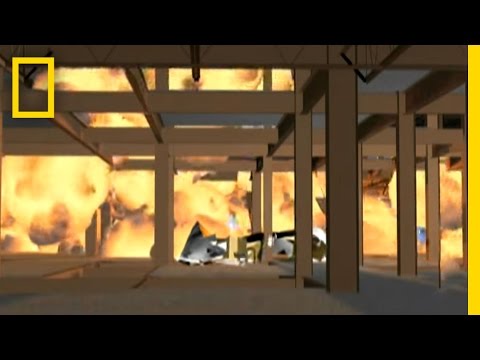
The official explanation, primarily detailed by the National Institute of Standards and Technology (NIST), posits that the collapse of the World Trade Center towers was a direct consequence of the impact from the aircraft and the subsequent fires. According to the NIST report, the impacts severed or damaged critical structural support columns and dislodged fireproofing material, exposing steel structures to intense heat. The fire, fueled by jet fuel and office contents, weakened the steel, leading to progressive floor failures and, eventually, the catastrophic collapse of both towers. The South Tower, hit at a lower floor and with greater structural damage from impact, collapsed first. The North Tower's collapse followed. The Pentagon attack involved a different scenario, with the aircraft impacting the building's facade. The official narrative emphasizes the role of fire-induced structural failure and the resulting gravitational collapse.

This conclusion, though widely accepted, has faced rigorous examination. While the physics of fire weakening steel is undeniable, the rapidity and uniformity of the collapse, particularly of Tower 7 (which was not hit by a plane but collapsed hours later), have become focal points for alternative analyses. The speed of the WTC towers’ collapse, approaching free-fall velocity for significant portions, and the pulverization of concrete into fine dust, have led many independent investigators and engineers to question whether the official explanation fully accounts for all observed phenomena. The core of the debate often centers on material science, structural engineering, and the potential role of explosives or other advanced demolition methods, which are categorically dismissed by the official reports.

Anomalies and Unanswered Questions

Beyond the official reports, a persistent stream of anomalies and unanswered questions continues to fuel debate and investigation. One of the most scrutinized aspects is the collapse of World Trade Center Building 7. This 47-story skyscraper, located several hundred feet north of the Twin Towers, was not directly struck by an aircraft. Yet, it collapsed symmetrically and rapidly in the late afternoon of September 11th. The NIST report attributes this collapse to thermal expansion of steel beams from uncontrolled fires, exacerbated by damage from the collapse of the North Tower. However, critics point to evidence of rapid, free-fall-like collapse, the appearance of controlled demolition, and the fact that steel melts at temperatures far higher than those typically achieved in building fires. The presence of molten metal observed in the WTC debris for extended periods, far beyond the capabilities of typical fires, also presents a significant anomaly.

Furthermore, the nature of the dust produced by the collapses has been a subject of intense study. The fine, uniform particulate matter found miles from Ground Zero, containing traces of highly unusual chemical compounds not typically associated with office fires, has led to speculation about advanced incendiaries or explosives. Eyewitness accounts from first responders describing explosive-like sounds before and during the collapses, and reports of thermitic material found in dust samples, add layers of complexity to the prevailing narrative. While official investigations have deemed these anomalies extraneous or have provided explanations that satisfy the investigative bodies, for many, these points remain critical gaps in understanding. The sheer force and speed of the collapses, the symmetrical nature of WTC 7’s descent, and the chemical composition of the dust are elements that continue to perplex those seeking a complete picture.

"We are trained to look for the simplest explanation first, but when the simplest explanation fails to account for all the facts, we must not shy away from exploring more complex hypotheses. In the case of 9/11, the sheer volume of anomalous evidence necessitates such a rigorous approach." - Alejandro Quintero Ruiz

Witness Testimony and the Human Element

Beyond the structural and chemical analyses, the human element of 9/11 provides a crucial, albeit often overlooked, layer of evidence. Numerous first responders, survivors, and bystanders reported hearing explosions or explosive-like sounds emanating from the buildings before, during, and after the impacts. Firefighters, who were among the first on the scene and entered the towers, provided consistent accounts of what sounded like detonations. These testimonies, documented in interviews and reports, have been largely attributed by official investigations to the sounds of structural failure, jet fuel fires, or the collapse of individual floors. However, for those who experienced them, the sounds were distinct from the groaning of stressed metal or the roar of fire.

The experiences of survivors struggling to evacuate also paint a picture that is difficult to reconcile with a straightforward collapse scenario. Accounts of descent through intact lower floors shortly before the final catastrophic failure, or of encountering unusual conditions not explained by fire alone, add to the mosaic of perplexing details. The human element—the sensory experiences and lived realities of those present—offers a visceral counterpoint to abstract engineering reports. These testimonies represent raw data, unfiltered by theoretical models, and their consistency across different individuals and groups demands careful consideration. Ignoring or dismissing such a volume of personal accounts would be a dereliction of investigative duty. The psychological impact of such events is immense, and while it must be accounted for, the persistent patterns in these testimonies are too significant to be dismissed as mere stress responses.

Alternative Theories and the Search for Truth

The persistent anomalies and unanswered questions have inevitably given rise to a spectrum of alternative theories regarding the 9/11 attacks. These theories often posit that the official narrative is incomplete or deliberately misleading, suggesting that the collapses were not solely due to aircraft impacts and fires, but involved controlled demolition. Proponents of these theories point to the rapid, symmetrical nature of the World Trade Center collapses, especially WTC 7, and the alleged presence of thermitic materials, as evidence supporting the use of explosives. Some theories extend to suggesting complicity or direct involvement by elements within the U.S. government, framing the attacks as a pretext for subsequent military actions or policy changes. The "inside job" hypothesis, while controversial, frequently cites the speed of the collapse, the lack of significant structural resistance, and the alleged suppression of contradictory evidence as its primary pillars.

Other theories delve into the possibility of advanced technologies beyond conventional explanations, or even more esoteric influences, though these tend to be less grounded in the available physical evidence. The core drive behind these alternative explanations is a demand for accountability and a more thorough, transparent investigation that addresses all observed phenomena. While many mainstream sources dismiss these theories outright, the consistent engagement with these ideas highlights a fundamental mistrust or dissatisfaction with the status quo explanation. The pursuit of truth in complex, high-stakes events often involves navigating a labyrinth of conflicting information, and the 9/11 attacks are a prime example of a historical event where the search for definitive answers continues to be a subject of intense public and investigative interest. Exploring these theories, not as gospel, but as part of the broader investigative landscape, is essential for a comprehensive understanding of the debates surrounding 9/11.

Investigator's Verdict: Beyond Doubt, or Doubt Itself?

After meticulously examining the available evidence, official reports, and extensive commentary from independent researchers, my verdict remains firmly rooted in the analytical process. The official narrative, while providing a framework for understanding the tragic events of 9/11, frequently struggles to definitively address the multitude of physical anomalies presenting themselves. The rapid, near-free-fall collapse of the Twin Towers, and particularly the symmetrical structural failure of WTC 7—a building not directly impacted by aircraft—present significant engineering challenges to the fire-induced failure model alone. The consistent testimonies from first responders regarding explosive-like sounds, coupled with some forensic analyses of dust samples indicating unusual chemical compositions, cannot be dismissed as mere anecdotal evidence or attributed solely to secondary effects of fire and structural collapse without greater justification.

While I do not subscribe to unsubstantiated conspiracy theories that lack rigorous, verifiable evidence, I maintain that the engineering questions surrounding the collapse of the WTC buildings, especially WTC 7, warrant further, independent, and transparent investigation. The principle of Occam's Razor suggests the simplest explanation is often the correct one, but in this instance, the "simplest" official explanation requires assumptions that seem to strain the limits of known physics and material science under the described conditions. Therefore, rather than a definitive pronouncement of fraud or conspiracy, my conclusion is that a substantial degree of doubt persists regarding the completeness of the official explanation. The unexplained lingers, demanding continued critical inquiry and a commitment to uncovering all facets of this monumental event. The true complexity of 9/11 may lie not in a single, simple answer, but in the intricate web of known physics, unavoidable anomalies, and the persistent human need for clarity.

The Researcher's Archive

For those eager to delve deeper into the complexities and lingering questions surrounding the 9/11 attacks, a curated selection of resources is indispensable. Accessing foundational reports and critical analyses is paramount for developing a comprehensive understanding. The official NIST reports provide the baseline narrative, offering detailed technical breakdowns of structural integrity and fire dynamics. However, a critical researcher must also engage with independent analyses that challenge these findings.

  • NIST WTC Reports: The official documentation is the starting point. Search for the National Institute of Standards and Technology's final reports on the collapse of the World Trade Center towers and Building 7. These are extensive and technically dense, offering the official perspective on structural mechanics and fire behavior.
  • "The 9/11 Commission Report": While focusing on the events leading up to and the immediate aftermath, this report offers a broad overview of the established narrative and intelligence failures.
  • Independent Engineering Analyses: Look for published papers and books by structural engineers and physicists who have critically examined the WTC collapses. Researchers like Steven Jones, Niels Harrit, and David Ray Griffin have published extensive work questioning the official collapse theories. Their books and articles often delve into the micro-analyses of dust samples and the physics of the collapses.
  • Documentaries and Investigative Films: Several documentaries explore alternative perspectives, presenting evidence and interviews with experts that challenge the official account. Films such as "Loose Change" (though dated and controversial, it highlights early questions), "9/11 Explosive Evidence" (focusing on forensic aspects), and more recent investigative works are valuable for understanding the breadth of the debate.
  • Academic Journals & Conferences: Search for peer-reviewed articles in engineering and physics journals that discuss the WTC collapses. While many conform to the official narrative, dissenting voices or analyses of specific anomalies do appear.

Understanding the events of 9/11 requires diligent research. Arm yourself with information from multiple sources, scrutinize the evidence, and apply critical thinking to construct your own informed perspective. For a deeper dive into the architectural and engineering anomalies, consider resources that specifically address the physics of controlled demolition and the properties of thermitic materials. Investigating the context of the 9/11 conspiracies is as crucial as understanding the technical details of the collapse itself.

Frequently Asked Questions

What is the primary official explanation for the collapse of the WTC towers?
The official explanation, primarily from NIST, attributes the collapses to the combined effects of aircraft impact damage and ensuing fires, which weakened the steel structures, leading to progressive failures and catastrophic collapse.
Why is WTC 7's collapse so controversial?
WTC 7 collapsed several hours after the Twin Towers, without being hit by an aircraft. The official explanation cites uncontrolled fires and thermal expansion of steel. However, critics argue its rapid, symmetrical collapse resembles controlled demolition, a claim NIST disputes.
What evidence do critics cite to question the official narrative?
Critics point to the speed of the collapses (approaching free-fall), the uniform destruction of the buildings into fine dust, eyewitness accounts of explosions, and alleged findings of molten metal and thermitic residues in dust samples.
Has the possibility of controlled demolition been officially investigated?
Official investigations, such as the NIST study and the 9/11 Commission Report, have concluded that controlled demolition was not a factor. These conclusions are based on their analysis of structural damage, fire behavior, and lack of evidence for explosives.
Where can I find more information on independent analyses of 9/11?
Independent analyses can be found in books by engineering critics, academic papers published outside mainstream consensus, and various documentaries. It is advisable to cross-reference information and maintain a critical perspective.

Your Mission in the Field

The events of 9/11 serve as a stark reminder of how critical it is to approach all large-scale events with a discerning mind. Official narratives provide a foundation, but true understanding often arises from questioning, analyzing, and seeking out all available data. Now, it is your mission to apply this investigative rigor to the information presented.

Your objective: Synthesize the findings presented in this analysis. Identify the core points of contention between the official narrative and independent observations regarding the WTC collapses. Formulate at least two distinct questions that you believe remain insufficiently answered by the official reports. These questions should stem directly from the anomalies discussed. Share these questions in the comments below. Your engagement will not only sharpen your own analytical skills but also contribute to the ongoing dialogue about this pivotal historical event.

alejandro quintero ruiz

About The Author

alejandro quintero ruiz is a veteran field investigator dedicated to the analysis of anomalous phenomena. His approach combines methodological skepticism with an open mind to the inexplicable, always seeking the truth behind the veil of reality. With years of experience navigating the shadowy edges of human perception and unexplained events, his work aims to dissect complex cases with a pragmatic, analytical lens, bridging the gap between the unknown and the knowable.

The tapestry of truth is often woven with threads of mystery. In dissecting events like 9/11, we don't aim to unravel faith in established accounts, but to reinforce the vital importance of critical inquiry and the relentless pursuit of clarity. The questions surrounding that day are not just academic exercises; they are calls to vigilance, reminding us that every significant event demands our analytical scrutiny. As we continue to explore the unexplained, remember: the most compelling answers are often found by those who dare to ask the most difficult questions.

Japan's Most Compelling Ghost Videos: An Investigator's Analysis


Introduction: The Veil Thins

The digital age has flooded us with an unprecedented deluge of visual information. Among the torrent of the mundane, pockets of the inexplicably anomalous emerge, particularly within the realm of paranormal phenomena. Japan, a nation steeped in a rich and ancient spiritual heritage, offers a particularly fertile ground for exploring alleged encounters with the spectral. Today, we delve into the curated archives of Japanese ghost videos, not to present mere spectacles, but to apply a rigorous analytical lens. Are these fleeting apparitions genuine echoes from beyond, or are they sophisticated illusions preying on our innate fascination with the unknown? Let's open the file.

Historical Context: Japan's Rich Tapestry of the Supernatural

To understand the prevalence and nature of ghost sightings in Japanese video, one must first appreciate the deep-seated cultural context. Shinto, the indigenous religion of Japan, attributes divinity to natural elements and places, often incorporating spirits of ancestors and nature (kami). Buddhism, introduced later, brought concepts of reincarnation, the afterlife, and various forms of restless spirits (yūrei) tormented by unfinished business or earthly attachments. These traditions have woven a rich tapestry of folklore, superstitions, and tales of the supernatural that permeate Japanese society. From the vengeful spirits of wronged women in Kabuki plays to the mischievous yokai inhabiting the natural world, the spiritual and the material have always coexisted in Japanese consciousness. This cultural backdrop provides a unique interpretative framework for any alleged paranormal activity captured on film, influencing both the perception of phenomena and the narratives that surround them.

Investigator's Framework: Dissecting Anomalous Visuals

My approach to analyzing any purported paranormal visual evidence, including Japanese ghost videos, is rooted in a dual commitment to skepticism and open-mindedness. The scientific method, even when applied to the intangible, demands a systematic deconstruction of phenomena. This involves:

  • Establishing a Baseline: Understanding the typical environment and expected visual characteristics before any anomalous event.
  • Identifying Mundane Explanations: Exhaustively ruling out conventional causes such as pareidolia (seeing patterns in random stimuli), infrasound, electromagnetic field fluctuations, environmental artifacts (dust, insects, light reflections), equipment malfunctions, and deliberate hoaxes.
  • Analyzing Witness Testimony: Corroborating accounts, assessing witness credibility, and noting inconsistencies or biases.
  • Examining Video Forensics: Scrutinizing frame rates, digital artifacts, motion blur, and potential editing signatures.

The goal is not to debunk, but to clarify. If a phenomenon resists all conventional explanations, only then do we allow for the possibility of an genuinely anomalous source, demanding further investigation and corroborating evidence. This is the bedrock of serious paranormal research.

Case Studies: Notable Japanese Ghost Videos

While specific viral videos shift with digital trends, consistent themes and archetypes emerge from Japan's paranormal video landscape:

  • The Shadowy Figure: Often captured in peripheral vision or dimly lit interiors, these videos feature indistinct human-shaped shadows moving in ways that defy natural explanation. The challenge here is differentiating between genuine movement and digital noise or lens flares.
  • The Object Anomaly: Videos documenting objects moving on their own, doors opening or closing, or lights flickering without apparent mechanical or environmental cause. These often rely heavily on witness accounts to confirm the absence of external influence.
  • The Auditory Apparition (Accompanying Visuals): While primarily visual, many compelling videos are enhanced by strange sounds – whispers, disembodied voices (EVP – Electronic Voice Phenomena), or unidentifiable noises. The synergy between the visual and auditory is key to their perceived power.

It is imperative to note that many widely circulated "ghost videos" are either outright fabrications or misinterpretations of natural events. The internet is a powerful tool for dissemination, but it is also a breeding ground for deception. To truly assess these clips, we need more than just intrigue; we need documented provenance and critical analysis. For access to curated examples and discussions, platforms like Sectemple's YouTube channel often feature clips that have undergone preliminary review.

Methodology and Challenges in Visual Paranormal Evidence

Analyzing paranormal video footage presents unique obstacles. Unlike controlled laboratory experiments, most alleged paranormal sightings occur in uncontrolled, often highly charged environments. The equipment used – typically consumer-grade cameras, smartphones, or even home security systems – is not designed for scientific anomaly detection. This leads to inherent limitations:

  • Low Resolution and Poor Lighting: Obscures details and increases the likelihood of pareidolia and misinterpretation.
  • Environmental Interference: Infrasound, electromagnetic fields, and subtle vibrations can cause visual artifacts or influence human perception, leading to false positives. Static electricity, dust particles, and insects are notorious for imitating spectral phenomena.
  • Digital Manipulation: The ease with which videos can be edited means that authenticity must always be questioned. Software allows for the creation of highly convincing effects that can fool even seasoned observers.

My own investigative practice necessitates the use of specialized equipment, such as full-spectrum cameras and sensitive audio recorders, to attempt to capture and verify phenomena. Without such tools and a controlled approach, visual evidence alone often remains inconclusive.

Cultural Resonance and the Power of Folklore

Japanese ghost stories, or Kaidan, have a long and storied history, evolving from oral traditions to literature, theater, and eventually film. This deep cultural familiarity means that visual representations of ghosts often adhere to established archetypes – the long-haired woman with a pale face (Onryō), the ghostly child, or apparitions tied to specific locations. This adherence to folklore can, paradoxically, both enhance and undermine the perceived authenticity of videos. On one hand, it taps into collective subconscious imagery, making the apparitions instantly recognizable and resonant. On the other, it provides a blueprint for potential hoaxes, allowing creators to replicate familiar spectral imagery with accuracy.

The enduring popularity of Japanese horror films, such as those in the J-Horror genre, demonstrates the potent blend of psychological tension and visual representation of the supernatural. Understanding these cultural narratives is crucial when analyzing any footage that purports to capture a genuine spectral manifestation from Japan.

"The camera sees what the eye cannot process in the moment. But it also records what the mind wishes to see or fears to see."

Investigator's Verdict: Genuine Phenomenon or Elaborate Hoax?

After scrutinizing numerous examples of alleged Japanese ghost videos, my verdict remains nuanced, leaning heavily towards cautious skepticism. While the cultural context of Japan certainly provides a rich environment for spectral beliefs and narratives, the overwhelming majority of viral videos lack the stringent authentication required for definitive proof. Many exhibit clear signs of manipulation, misinterpretation of natural phenomena, or are simply staged for entertainment. However, I cannot definitively dismiss the possibility of genuine anomalies being captured. The consistent patterns across different alleged sightings, coupled with persistent witness accounts, suggest that something beyond ordinary explanation might occasionally manifest. The challenge lies in isolating these rare instances from the noise of fabrication and error. Further investigation, ideally involving controlled environments and advanced detection equipment, is necessary to elevate any single clip from mere curiosity to credible evidence.

The Researcher's Archive: Essential Viewing & Reading

For those serious about delving deeper into the investigation of paranormal phenomena, particularly from a visual and cultural perspective, I recommend the following resources:

  • Books:
    • "The Paranormal: A Scientific Investigation" by Dr. David B. Samways: Offers a critical, scientific approach to evaluating paranormal claims.
    • "The Unquiet Dead: True Hauntings from the BBC Archives" by Stephen Johnson: While not exclusively Japanese, it provides excellent case studies in visual and auditory phenomena.
    • "Yūrei: The Japanese Ghost" by Zack Davisson: Essential for understanding the cultural and historical context of Japanese ghosts.
  • Documentaries:
    • "Hellier" (Series): Follows a group investigating paranormal claims with a blend of skepticism and open-mindedness, showcasing real-world investigative techniques.
    • "A Ghost Story" (2017 Film): While fictional, it masterfully explores the lingering presence and emotional residue of loss, relevant to spectral theories.
    • Any well-researched documentary on Japanese folklore and spirit beliefs.
  • Platforms:
    • Gaia.com: Offers a vast library of documentaries and series on paranormal topics, often featuring visual evidence analysis.
    • Our own extensive archives on this blog, detailing various cases and investigative techniques.

Field Protocol: Analyzing Your Own Anomalous Footage

If you capture footage that you believe may contain paranormal activity, follow this protocol:

  1. Preserve Originality: Do not edit or manipulate the original footage. Secure a backup of the original file immediately.
  2. Document Context: Record the date, time, location, environmental conditions (temperature, EMF readings if possible), and any witnesses present. Note any unusual occurrences or sensations experienced.
  3. Review with Skepticism: Watch the footage multiple times, actively looking for conventional explanations. Consider how light sources, shadows, dust, insects, or camera artifacts might be responsible.
  4. Isolate Anomalies: If a potential anomaly persists after ruling out mundane causes, isolate that segment of the footage.
  5. Seek Corroboration: If other witnesses were present, interview them separately to avoid influencing their accounts. Compare their perceptions to the visual evidence.
  6. Consult Experts (If Necessary): If you are still convinced of the anomaly's supernatural nature, consider consulting with experienced paranormal investigators who can provide a more objective analysis and potentially utilize specialized equipment.

Frequently Asked Questions

Q1: Are all ghost videos staged?
A1: While a significant portion of viral ghost videos are intentionally fabricated for views or entertainment, it is scientifically unsound to claim *all* such videos are staged without rigorous examination of each case. My role is to analyze, not to make blanket pronouncements.

Q2: Can cameras capture spirits?
A2: The concept of "capturing" a spirit is complex. If spirits are energetic remnants or entities, specialized equipment might theoretically detect their presence or influence on the environment. However, standard cameras are designed to capture light, and the nature of a spirit's interaction with light is largely unknown, making definitive capture highly speculative.

Q3: What is the most common artifact mistaken for a ghost on video?
A3: Dust particles illuminated by a flash or camera light are often mistaken for orbs. Lens flares, insects, and insects are also frequent culprits. Environmental factors like infrasound can also induce perceptual anomalies that might be misinterpreted.

Conclusion: The Enduring Mystery

The allure of Japanese ghost videos lies not just in their visual content but in their connection to a profound cultural history of the supernatural. While the digital realm amplifies both genuine mystery and elaborate deception, the task of the investigator remains the same: to apply critical thinking, methodical analysis, and a healthy dose of skepticism. The question of whether these videos capture genuine spectral entities is, for the most part, still unanswerable with current evidence. However, the pursuit of that answer, the meticulous dissection of each frame, and the exploration of the cultural narratives that shape our perceptions are invaluable. The unexplained continues to beckon, and we, as researchers, must continue to peer into the shadows with an analytical gaze.

Your Mission: Embrace the Shadows

Your next step is not passive consumption. Seek out a curated collection of Japanese ghost videos (acknowledging their often dubious origins) and apply the analytical framework outlined above. Can you identify potential mundane explanations? Do any cases resist easy dismissal? Compare them to the folklore discussed. Share your findings and observations in the comments below. Let's turn passive viewing into active investigation.

alejandro quintero ruiz is a veteran field investigator dedicated to the analysis of anomalous phenomena. His approach combines methodological skepticism with an open mind to the inexplicable, always seeking the truth behind the veil of reality.

10 Old Movies Too Disturbing For the Mainstream: An Investigator's Analysis


INDEX OF THE FILE

Introduction: Unveiling Cinematic Anomalies

The cinematic landscape is a vast, often unpredictable territory. Beyond the mainstream narratives that entertain and comfort, lies a darker, more challenging stratum of filmmaking. These are not mere horror movies; they are explorations into the abyss of human psychology, societal taboos, and the unsettling fringes of perception. My role as Alejandro Quintero Ruiz, investigator of the unexplained, extends beyond the spectral and the cryptid. I delve into the anomalies of human creation, and few creations are as potent in their disturbing capacity as certain films. Tonight, we open the file on ten old movies that dared to push beyond the pale, challenging audiences and critics alike. We will dissect their impact, not as a mere list of shocking content, but as a study in how art can provoke, disturb, and ultimately, reveal uncomfortable truths about ourselves and the world we inhabit.

The Disturbing Spectrum: A Framework for Analysis

Examining films that are deliberately "disturbing" requires a nuanced approach. It's not simply about gore or shock tactics; it's about the underlying intent and the psychological mechanisms at play. I categorize such films based on their method of transgression:
  • Psychological Torture: Films that weaponize atmosphere, dread, and manipulation to break down the viewer's sense of security and reason. Think of slow-burn tension and existential horror.
  • Societal Deconstruction: Movies that hold a mirror to humanity's darkest impulses, societal hypocrisy, and the breakdown of order. These often serve as cautionary tales or stark, unfiltered reflections.
  • Transgression of Taboo: Works that deliberately violate deeply ingrained moral, ethical, or social boundaries, often forcing viewers to confront subjects they would rather ignore.
  • Allegorical Nightmares: Films where disturbing imagery serves a symbolic purpose, offering a distorted yet profound commentary on complex themes like power, alienation, or the nature of reality.
My analysis will attempt to place each film within this framework, understanding *why* it disturbs, not just *that* it does.

Case Files: 10 Films That Crossed the Line

What constitutes "disturbing" is subjective, yet some films possess a visceral power that transcends individual tolerance. These are the films that artists and critics alike have grappled with, often for their unflinching portrayal of difficult themes and their impact on audiences historically. We approach this not with prurient curiosity, but with a forensic eye, dissecting the components that make them linger in the mind, long after the credits roll.

Case File #1: Freaks (1932) - The Deconstruction of Society

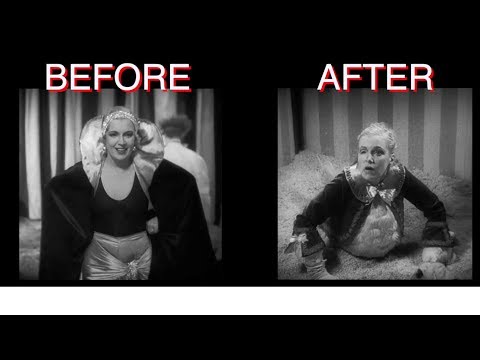
Tod Browning’s 1932 masterpiece, Freaks, remains a potent force even decades later. Its "actors" were real individuals with physical deformities, intentionally cast to evoke a visceral reaction. The film masterfully manipulates audience sympathy, turning the tables from pitying the titular "freaks" to fearing the seemingly normal human beings around them whose cruelty and greed are far more monstrous. The film's initial reception was one of outrage and censorship, a testament to its power to expose the ugliness lurking beneath societal politeness. It's a stark examination of 'us' versus 'them,' and who truly defines the monstrosity.
"We are not gypsies. We are human beings." The repeated insistence throughout "Freaks" serves as a chilling indictment of societal prejudice, forcing the audience to confront their own preconceived notions of normalcy and monstrosity.

Case File #2: The Human Centipede (First Sequence) (2009) - A Modern Nightmare

Tom Six’s The Human Centipede (First Sequence) is a modern entry that made waves for its sheer depravity. Dr. Heiter, a deranged surgeon, literally stitches three people together, mouth to anus, creating a single, shared digestive system. The film's disturbing nature stems from its audacious, grotesque premise and the complete dehumanization of its victims. It challenges the viewer by presenting a scenario so vile and conceptually abhorrent that it becomes difficult to stomach, even as a narrative. The film is a prime example of transgression targeting the fundamental human need for bodily autonomy and dignity.

Case File #3: Salò, or the 120 Days of Sodom (1975) - The Depths of Human Cruelty

Pier Paolo Pasolini’s Salò is less a horror film and more a philosophical treatise on power and sadism. Set in fascist Italy, it depicts a group of wealthy libertines who kidnap teenagers and subject them to a lengthy, systematic campaign of torture, humiliation, and sexual abuse. The film is notorious for its clinical depiction of cruelty, its deliberate pacing, and its intellectual justification of barbarism. It forces viewers to confront the extreme capabilities of human depravity when unchecked by morality or empathy, making it an unbearable, yet undeniably important, cinematic document.

Case File #4: A Clockwork Orange (1971) - Dystopian Violence and Free Will

Stanley Kubrick’s adaptation of Anthony Burgess’s novel, A Clockwork Orange, explores themes of free will, state control, and ultraviolence. Alex, the charismatic but psychopathic protagonist, engages in brutal acts of "indecent" behavior, only to be subjected to an experimental aversion therapy that robs him of his capacity for choice. The disturbing element lies not just in the stylized violence, but in the ethical quandary of whether a compelled good is morally superior to free-willed evil. It’s a film that unsettles by questioning the very foundations of justice and morality.

Case File #5: Cannibal Holocaust (1980) - The Found Footage Frontier

Ruggero Deodato’s Cannibal Holocaust is infamous for its graphic violence and its controversial use of found footage. The film follows a documentary crew into the Amazon rainforest, where they disappear while filming indigenous tribes. When their footage is recovered, it reveals increasingly disturbing acts of sexual violence, cannibalism, and extreme cruelty perpetrated by both the tribes and the filmmakers themselves. The film’s raw, unflinching realism, particularly its real animal killings, blurred the lines between fiction and reality, leading to its confiscation and Deodato's arrest. It blazed a trail for the found-footage genre while remaining a benchmark for disturbing content.
The line between documentarian and perpetrator blurs so completely in "Cannibal Holocaust" that the audience is left questioning the ethics of observation itself. It's a disturbing look at the lengths some will go to for a story.

Case File #6: Eraserhead (1977) - The Uncanny Valley of the Surreal

David Lynch’s debut feature, Eraserhead, is not disturbing through explicit gore, but through an overwhelming sense of dread, psychological decay, and surreal, nightmarish imagery. The film follows Henry Spencer as he navigates a bleak industrial landscape and deals with the birth of a monstrous, mutated baby. Its industrial soundscape, distorted visuals, and pervasive sense of alienation create a deeply unsettling experience that taps into primal fears of the unknown and the grotesque. It’s a masterclass in atmospheric horror that lodges itself in the subconscious.

Case File #7: Begotten (1989) - Visual Allegory and Existential Dread

E. Elias Merhige’s Begotten is an experimental film that functions more as a visual poem than a narrative. Its stark, black-and-white, high-contrast cinematography and disturbing, allegorical imagery combine to create an overwhelming sense of primordial dread. The film depicts a cycle of creation and destruction, God killing himself, Mother Earth giving birth, and the subsequent torment of the child. Its graphic, visceral, and often indecipherable scenes push the boundaries of visual representation and can induce profound existential unease.

Case File #8: The Serbian Film (2010) - Transgression and Taboo

Srdjan Spasojevic’s The Serbian Film is a notorious entry in the realm of extreme cinema. The plot follows a pornographic actor who accepts an offer to participate in a final film that promises to be his most challenging yet, leading him into a world of extreme violence, rape, and incest. The film is widely condemned for its gratuitous and unrelenting depiction of sexual violence, child abuse, and necrophilia. Its disturbing factor is its sheer audacity in pushing every conceivable taboo to its absolute limit, leaving viewers shattered by its graphic and nihilistic worldview.

Case File #9: Irreversible (2002) - Chronological Disruption and Trauma

Gaspar Noé’s Irreversible is structured in reverse chronological order, beginning with its most brutal and traumatic scene – a graphic rape and a subsequent act of extreme violence. As the film progresses backward, we witness the events leading up to this climax. The disturbing nature of the film is amplified by its unflinching depiction of violence and its disorienting narrative structure, which forces the audience to experience the aftermath before the cause. This technique amplifies the sense of dread and the tragic inevitability of suffering.
The temporal inversion in "Irreversible" isn't a mere stylistic flourish; it's a deliberate act of psychological disorientation designed to inflict the trauma of the ending upon the viewer from the outset, making the descent into violence all the more harrowing.

Case File #10: Pink Flamingos (1972) - Shock Value as Art

John Waters' Pink Flamingos is the epitome of "transgressive cinema" masquerading as camp. Starring the unforgettable Divine, the film centers on the battle for "Filthiest Person Alive." It revels in shocking, often disgusting acts, including cannibalism, scatological humor, and general debauchery, all presented with a deliberate, anarchic glee. While its intent is often seen as a humorous subversion of societal norms and cinematic expectations, its sheer commitment to being as offensive and shocking as possible earns it a place on this list. It asks: can something so utterly vile also be considered art?

Psychological Ripples: The Lasting Effect of Disturbing Cinema

The impact of such films extends far beyond a fleeting sense of disgust. They can:
  • Trigger Primal Fears: Tapping into our deepest anxieties about mortality, bodily integrity, sanity, and the unknown.
  • Challenge Moral Frameworks: Forcing viewers to question their own ethical boundaries and societal norms.
  • Induce Existential Dread: Prompting profound, often uncomfortable contemplation on the nature of humanity, suffering, and the darker aspects of existence.
  • Be Misinterpreted or Misused: The raw, disturbing content can sometimes be imitated or sensationalized, leading to real-world consequences. This is why responsible analysis is paramount.
Understanding these films requires more than just watching them; it requires dissecting their intent, their context, and their potential psychological residue. Purchasing certain academic texts or subscribing to platforms that curate critically acclaimed but challenging cinema can provide further insight into these complex works; consider it an investment in understanding the darker corners of human expression.

The Investigator's Verdict: Art, Fear, and the Limits of Perception

These films are not for the faint of heart, nor are they simply entertainment. They represent the outer limits of what cinema can explore – the uncomfortable, the taboo, the terrifying. Some argue they are mere exploitation, designed solely to shock. Others see them as crucial, albeit difficult, artistic statements that hold a mirror to society's ugliest aspects. My verdict, as an investigator, is that the line between exploitation and art here is often blurred, but the *intent* and the *effect* are undeniable. They function as potent psychological stimuli, revealing not just the darkness of their creators or subjects, but the resilience and the limits of the human psyche that engages with them.

Archivist's Recommendations

For those who wish to delve deeper into the analysis of transgressive cinema, consider these resources:
  • "The Anarchist Film: A Critical Look at the Lighter Side of Chaos" by Julian Risack: Explores films that challenge norms, though perhaps less extreme than some on this list, it offers valuable context.
  • "Tanz mit der Teufel - Part 2: Black Metal" (Documentary): While focused on music, it touches upon the appropriation of shocking imagery and themes that echo some cinematic transgressions.
  • Academic Journals: Look for publications focusing on film studies, horror cinema, and cultural theory. Searching for analyses of specific directors like Pasolini or Waters will yield critical essays.
  • Platforms like MUBI: Often feature curated selections of challenging and arthouse films that push boundaries, providing a safer, curated environment for exploration.
Understanding the historical and cultural context of these films, often found in specialized film books or documentaries, is key to a dispassionate analysis.

Your Field Mission: Analyzing the Unseen

Your mission, should you choose to accept it, is not to watch these films, but to understand their *phenomenon*. Choose one film from this list that you find particularly unsettling or intriguing (even if you haven't seen it). Research its reception, its censorship history, and critical analyses from both academic and popular sources.
  • Identify the core disturbing element: Is it visual, narrative, thematic, or a combination?
  • Research its historical context: What societal anxieties or cultural movements might have influenced its creation and reception?
  • Find at least two critical reviews: One that praises its artistic merit and one that condemns it. Analyze their arguments.
Share your findings in the comments below. What makes a film truly disturbing in your eyes? Is it the explicit, the implied, or the psychological?

alejandro quintero ruiz is a veteran field investigator dedicated to the analysis of anomalous phenomena. His approach combines methodological skepticism with an open mind to the inexplicable, always seeking the truth behind the veil of reality. His work in dissecting the unusual extends to the very fabric of human creation, including the challenging narratives found in cinema.

The pursuit of understanding the boundaries of human expression, whether in the paranormal realm or on celluloid, is a continuous investigation. These films, while disturbing, serve as potent artifacts for studying our collective psyche and the narratives we create, both to comfort and to confront.

Further Reading & Resources:

Freaks (1932): Un Análisis Forense de la Anomalía Cinematográfica y su Legado Disturbador


Contexto Histórico y Social: La Época de las 'Freak Shows'

Para comprender la magnitud del impacto de "Freaks" (1932), debemos situarnos en la década de 1930. Estados Unidos atravesaba la Gran Depresión, un período de profunda crisis económica y social que, paradójicamente, avivó el interés público por lo extraordinario, lo grotesco y lo escapista. Los "freak shows" o espectáculos de fenómenos humanos eran una forma de entretenimiento popular, donde personas con deformidades físicas o condiciones médicas inusuales eran exhibidas ante multitudes fascinadas y, a menudo, morbosas. Estos espectáculos, si bien hoy nos parecen éticamente deplorables, eran un reflejo de una sociedad que buscaba en lo anómalo una distracción de sus propias miserias.

Tod Browning, el director, no eligió a sus actores al azar. En un movimiento audaz y controvertido, empleó a verdaderas personas con microcefalia, ausencia de extremidades y otras características físicas inusuales, tratándolos no como meros objetos de exhibición, sino como intérpretes. Esta decisión marcó una línea divisoria; mientras algunos la alabaron por dar voz y visibilidad a marginados, otros la criticaron por explotar sus condiciones. El debate sobre la ética en la representación de la alteridad en el arte cinematográfico comenzó, en gran medida, aquí, en la sombra de los circos y las ferias.

Análisis Cinematográfico: El Arte del Desasosiego

Desde una perspectiva estrictamente cinematográfica, "Freaks" es una obra maestra del cine pre-Code, caracterizada por su atmósfera opresiva y su narrativa chocante. Tod Browning, conocido por su fascinación por los personajes marginales y lo macabro (como demostró con "Drácula" de 1931), lleva su interés por lo "otro" a un nivel extremo. La película narra la historia de Cleopatra, una trapecista sin escrúpulos que planea casarse con Hans, un enano millonario, para robar su fortuna, envenenándolo lentamente.

La genialidad de Browning reside en cómo invierte las expectativas. Inicialmente, las "freaks" son presentadas como dignas de lástima o repulsión. Sin embargo, a medida que la trama avanza, se revela su humanidad, su código de honor y su capacidad para la venganza. La famosa escena del banquete de bodas, donde las "freaks" descubren el complot de Cleopatra y su amante forzudo, es uno de los clímax más perturbadores y efectivos de la historia del cine. La cámara de Browning no rehúye lo grotesco, pero lo eleva a un nivel simbólico, transformando la exhibición en una metáfora social sobre la aceptación, la marginación y la justicia.

"La película no te pide que sientas lástima por ellos; te pide que los respetes. Y cuando se les falta al respeto, te muestra las consecuencias. Es una lección dura, presentada de la manera más cruda posible."

El uso de ángulos bajos y la iluminación contrastada contribuyen a crear una atmósfera de pesadilla. La propia "familia" de las "freaks" se convierte en una unidad cohesionada, un grupo marginalizado que encuentra fuerza en su unidad y en un código moral propio. Este aspecto es crucial para entender el giro de la narrativa, pasando del horror de la exhibición a una historia de venganza colectiva, casi de terror gótico con tintes surrealistas.

El Uso de Actores Reales: Ética vs. Realismo Crudo

La decisión de Tod Browning de utilizar a personas con reales deformidades físicas como la mayoría de su elenco es, sin duda, el aspecto más polémico de "Freaks". Actoras como Daisy y Violet Hilton, las gemelas siamesas, y Johnny Eck, el "hombre pájaro" que vivía sin la mitad inferior de su cuerpo, aportaron una autenticidad escalofriante a la película. Este realismo crudo fue precisamente lo que escandalizó a las audiencias de la época y provocó que la película fuera prohibida en muchos lugares y severamente censurada.

La pregunta fundamental que surge es: ¿fue una explotación o una forma de empoderamiento? Browning insistía en que trataba a sus actores con el máximo respeto, ofreciéndoles roles protagónicos y una plataforma para mostrar sus talentos. En un contexto donde estas personas a menudo eran relegadas a atracciones de feria degradantes, darles papeles en una producción de Hollywood podría interpretarse como un acto de dignidad. Sin embargo, la línea entre el respeto y la explotación es fina y subjetiva. El espectador moderno no puede evitar cuestionar la moralidad de presentar estas condiciones físicas de manera tan explícita, incluso si la intención era promover la empatía.

Este debate ético es lo que confiere a "Freaks" su perdurable relevancia. No es solo una película de terror; es un estudio de caso sobre la representación, la alteridad y los límites de la audiencia. Su audacia sentó un precedente para futuras exploraciones de lo "bizarro" en el cine, pero también nos obliga a confrontar nuestra propia relación con lo que consideramos "normal" y "anormal". La película actúa como un espejo distorsionado de la sociedad, obligándonos a reflexionar sobre cómo tratamos a aquellos que se desvían de la norma.

El Legado Perturbador: De la Prohibición al Culto

"Freaks" fue un fracaso comercial masivo en su lanzamiento inicial. Considerada demasiado perturbadora y grotesca, fue retirada de circulación y prohibida durante décadas en muchos países. El escándalo fue tal que la propia MGM perdió dinero y la carrera de Tod Browning, a pesar de su éxito previo con "Drácula", se vio eclipsada por esta obra. La película se convirtió en un tabú, un ejemplo de lo que el cine no debería atreverse a mostrar al público.

Sin embargo, como muchos fenómenos malditos o incomprendidos, "Freaks" resurgió de sus cenizas. En las décadas posteriores, especialmente a partir de los años 60 y 70 con el auge del cine de culto y la contracultura, la película fue redescubierta. Críticos y cinéfilos comenzaron a apreciar su audacia artística, su mensaje subversivo y su impactante originalidad. Lo que antes era censurado, ahora era celebrado como una obra de arte vanguardista y un hito del "cine bizarro".

Hoy en día, "Freaks" es considerada una película de culto indispensable. Su influencia se puede rastrear en innumerables películas, series de televisión y documentales que exploran temas de marginación, identidad y la naturaleza de la monstruosidad. La película sigue siendo un tema de debate académico y crítico, un testamento a su poder para provocar y fascinar. Su estatus como objeto de estudio en el campo de lo anómalo y lo perturbador es incuestionable, invitándonos a analizar las profundidades del comportamiento humano y la fascinación por lo inusual.

Veredicto del Investigador: ¿Obra Maestra o Abuso?

El análisis forense de "Freaks" (1932) revela una película que opera en la fina línea entre brillantez artística y cuestionable ética. Browning demostró un dominio del terror psicológico y una audacia narrativa sin precedentes para su época, utilizando actores reales con condiciones médicas para dotar a su obra de una autenticidad que hoy sigue siendo impactante. La película logra invertir la narrativa convencional del horror, presentando a los "monstruos" como víctimas y a los protagonistas aparentemente normales como los verdaderos depredadores.

Sin embargo, no podemos ignorar el contexto de explotación que rodeaba a los "freak shows" de la época. La decisión de Browning, aunque quizás bien intencionada en su deseo de dar visibilidad, sigue siendo objeto de un intenso debate ético. ¿Fue una forma de empoderamiento para los actores o una perpetuación de su exhibición pública? La respuesta no es sencilla y probablemente varía de una persona a otra.

Mi veredicto, como investigador de lo anómalo, es que "Freaks" es una obra de arte cinematográfica profundamente perturbadora y significativa. Su valor reside precisamente en su capacidad para generar incomodidad y forzar al espectador a confrontar prejuicios arraigados. Es una película que exige un análisis crítico tanto de su contenido como de su producción. Si bien el uso de actores reales es éticamente complejo, el mensaje subyacente sobre la justicia, la venganza y la comunidad de los marginados es poderoso y atemporal. No es una película fácil de ver, ni de digerir, pero su lugar en la historia del cine, como documento anómalo de una época y como obra de arte provocadora, es indiscutible.

El Archivo del Investigador

Para quienes deseen profundizar en la fascinación por lo bizarro y los límites de la representación cinematográfica, recomiendo la siguiente bibliografía y recursos:

  • Libro: "Freaks: La Película de Tod Browning y el Cine de lo Bizarro" por David F. Friedman. Un análisis detallado de la producción y el impacto de la película.
  • Libro: "The Golden Age of the Freak Show" por Robert Bogdan. Contextualiza históricamente el fenómeno de los espectáculos de anormalidades.
  • Documental: "Tod Browning: The Bitter Taste of Life". Explora la vida y obra del controvertido director.
  • Plataforma de Streaming: Gaia. Gaia ofrece una vasta colección de documentales y series sobre misterios, lo paranormal y lo inexplicable, incluyendo análisis de fenómenos sociales y culturales que rozan lo anómalo.

Preguntas Frecuentes

  • ¿Por qué se prohibió "Freaks"? La película fue considerada ofensiva y demasiado grotesca por las audiencias y los censores de la época, debido al uso de actores con deformidades reales y su temática de venganza.
  • ¿Quiénes eran las "freaks" en la película? La mayoría eran personas con condiciones médicas reales, como las gemelas siamesas Daisy y Violet Hilton, el hombre mitad-pez Johnny Eck, y otros artistas de circos de fenómenos.
  • ¿"Freaks" es una película de terror? Si bien comparte elementos de terror y shock, se la clasifica más a menudo como cine bizarro, dramático o de culto, debido a su enfoque en el comentario social y la psicología de sus personajes marginales.
  • ¿Tod Browning era un director de cine paranormal? Browning era conocido por su interés en lo oscuro y lo macabro, explorando temas de monstruosidad y marginalidad en películas como "Drácula" y, de forma más explícita, "Freaks". Su trabajo a menudo rozaba lo inexplicable, pero su enfoque era más psicológico y social que estrictamente paranormal.

Tu Misión: Analiza el Debate Ético en el Arte

La controversia en torno a los métodos de casting de "Freaks" sigue siendo un punto de inflexión en la historia del cine. Tu misión, como investigador, es reflexionar sobre la siguiente cuestión: En el arte, ¿dónde trazamos la línea entre la representación realista y la explotación de la vulnerabilidad? Busca en la historia del cine o del arte otros ejemplos donde la temática o las técnicas de producción hayan generado un debate ético similar. Comparte tus hallazgos y análisis en los comentarios, aportando tu perspectiva a este enigma.

Sobre el Autor

alejandro quintero ruiz es un veterano investigador de campo dedicado al análisis de fenómenos anómalos. Su enfoque combina el escepticismo metodológico con una mente abierta a lo inexplicable, buscando siempre la verdad detrás del velo de la realidad. Con años de experiencia documentando lo insólito, su trabajo se centra en desentrañar los misterios que la ciencia convencional a menudo pasa por alto.

FREAKS: The Most Controversial Film in History - An Investigative Analysis


alejandro quintero ruiz: For decades, the name Freaks has echoed through the annals of cinematic history not just as a film, but as a cultural lightning rod. Tod Browning’s 1932 masterpiece, a stark departure from the sensationalist horror of its era, dared to hold a mirror to society, reflecting back a distorted, yet perhaps more honest, image than mainstream audiences were prepared to confront. This isn't a film to be passively consumed; it's an artifact that demands rigorous analysis, a case file on the nature of prejudice and the boundaries of cinematic expression.

I. Historical Context: A Society on the Brink

To understand the seismic impact of Freaks, one must first contextualize its era. The early 1930s in America were a crucible of societal change and upheaval. The Roaring Twenties had imploded into the Great Depression, breeding widespread economic hardship and social anxiety. Hollywood, while grappling with the transition to sound, was still largely a purveyor of escapism. Into this landscape, Tod Browning, a director known for his macabre fascination with the unusual (evident in his earlier work with Lon Chaney Sr.), delivered a film that eschewed comforting illusions for a disturbing reality.

The film's premise, centered on a community of circus sideshow performers, was inherently transgressive. Sideshows, while a popular form of entertainment, occupied a liminal space—both a source of fascination and a stark embodiment of human difference. Browning’s decision to cast actual performers with physical deformities, rather than relying on prosthetics, was a deliberate choice that blurred lines between fiction and reality, intention and exploitation. This unprecedented authenticity, while groundbreaking, was also the very catalyst for the controversy that would engulf the film.

The prevailing social norms of the time positioned physical differences as inherently pitiable or monstrous, often relegated to the shadows of society. Freaks refused this simplistic dichotomy, presenting its "freaks" not as objects of pity, but as a cohesive, complex social unit with its own codes of loyalty, justice, and revenge. This narrative subversion challenged the audience's preconceived notions of normalcy and deviance, forcing a confrontation with their own biases.

II. The Performers and the Performance: Authenticity vs. Exploitation

The casting of Freaks remains its most debated aspect. Browning utilized actual sideshow performers, including notable figures like Daisy and Violet Hilton (conjoined twins), Prince Randian (a man with no limbs), and Olga Roderick (a bearded lady). This decision, born from a desire for raw authenticity, was met with a mixture of awe and horror. Critics at the time, and audiences alike, grappled with whether they were witnessing genuine human beings in a narrative context or witnessing an exploitative spectacle masquerading as art.

From an investigative standpoint, the ethical implications are complex. Was Browning a visionary who sought to humanize those often relegated to the margins, or was he a showman exploiting their condition for sensationalism? The argument for exploitation is potent: the individuals were already marginalized, and placing them within a narrative that culminates in a violent, albeit righteous, act of retribution could be seen as compounding their societal estrangement. However, many of the performers themselves found dignity and empowerment in the film. They were not merely exhibiting; they were acting, contributing to a cohesive narrative that ultimately championed their collective identity.

"We are not monsters. We are not animals. We are people."
- A common sentiment echoing the film's underlying thematic plea.

The performances, stripped of Hollywood artifice, possess a raw, unvarnished quality. The human interaction, the unspoken understanding between those who share a similar experience of marginalization, feels palpable. This authenticity is what elevates Freaks beyond a simple horror film; it becomes a quasi-documentary exploration of a subculture, a social experiment captured on celluloid.

III. Narrative Analysis: Beyond the Surface Shock

At its core, Freaks is a cautionary tale about betrayal and the consequences of treating others with contempt and cruelty. The plot follows Cleopatra, a beautiful trapeze artist, who conspires with her dwarf lover, "The Horrible" Hans, to marry the wealthy but physically deformed circus strongman, Hercules, solely to inherit his fortune. Her public humiliation of Hercules during the wedding feast, coupled with her mistreatment of the other performers, ignites a furious, unified response from the "freaks."

The narrative structure is deliberately designed to subvert audience expectations. Initially, the audience is positioned alongside the perceived "normal" characters, focusing on Cleopatra's machinations. However, as her cruelty becomes undeniable and the performers' sense of community and loyalty solidifies, the audience's allegiance shifts. The climax, where the "freaks" exact their revenge in a chilling, operatic sequence, flips the horror genre on its head. The "monsters" are no longer the sideshow performers, but the outwardly beautiful, inwardly corrupted humans who preyed upon them.

The film’s moral landscape is decidedly grey. While the "freaks" are driven by a desire for justice, their methods are undeniably brutal. This ambiguity is crucial; it prevents the film from becoming a simplistic morality play. Instead, it becomes an exploration of how societal ostracization and dehumanization can breed monstrous reactions. The revenge sequence, famously considered too gruesome for its initial release, is not gratuitous gore; it is the cathartic eruption of years of suppressed pain and indignity.

The concept of "normalcy" is interrogated relentlessly. Who defines it? And what happens when those deemed "abnormal" by society possess a stronger moral compass and a more profound sense of collective identity than the so-called "normals"? This is the central question Browning forces us to confront.

IV. Reception and Censorship: The Public's Verdict

The initial release of Freaks in 1932 was met with widespread condemnation and, in many places, outright bans. Audiences, accustomed to Hollywood's more sanitized portrayals, were deeply disturbed by the film's unflinching depiction of physical deformities and its grim themes of betrayal and revenge. Reports surfaced of patrons walking out of screenings in disgust, sometimes fainting or becoming physically ill.

The Hays Code, a set of moral guidelines for the film industry, had not yet been fully codified, but the public outcry was significant enough for MGM to significantly re-edit the film. The most notorious scenes of the climax were drastically shortened or removed entirely, softening the impact of the "freaks'" retribution. The film was initially a commercial failure, and its controversial nature led to it being shelved for decades in many markets.

"It is a moral and physical monstrosity... a blot on the screen... It is an offense against the human race."
- A common critique from contemporary reviewers, reflecting the shock and outrage.

This reaction, while understandable from a prudish societal perspective, paradoxically solidified the film's legacy. The very elements that caused outrage—its authenticity, its unflinching gaze, its moral complexity—became the hallmarks of its enduring power. The censorship it faced only underscored the discomfort it generated, hinting at the deeper societal issues it touched upon.

V. Modern Reappraisal: A Cult Classic Emerges

It took nearly thirty years for Freaks to begin its journey towards critical reevaluation. Rediscovered and championed by film historians and avant-garde filmmakers in the late 1960s and 1970s, the film was gradually recognized for its artistic merit and its pioneering spirit. Its status as a cult classic was cemented through midnight screenings and academic study.

Today, Freaks is lauded not for its shock value, but for its bravery. Critics now praise Browning's daring vision, his masterful use of authentic performers, and his radical subversion of cinematic tropes. The film is seen as a precursor to later works that challenged societal norms and explored the darker aspects of human nature. Its influence can be traced in films that explore themes of prejudice, alienation, and the formation of marginalized communities.

The debate surrounding its ethics continues, but the prevailing view is that Browning, while perhaps employing unconventional methods, aimed to provoke empathy rather than mere disgust. He challenged audiences to look beyond superficial appearances and to question their own definitions of humanity and monstrosity. This reappraisal allows us to engage with the film as a significant work of art, rather than simply a historical curiosity or a piece of exploitation cinema.

VI. Investigator's Verdict: A Mirror to Humanity

After meticulous analysis of the historical context, narrative structure, performance choices, and societal reception, my verdict on Tod Browning's Freaks is as follows: While undeniably controversial and ethically complex, the film stands as a profound, albeit disturbing, work of art. The initial outrage stemmed from a society unwilling to confront its own prejudices, a society that preferred to label and ostracize rather than understand.

Browning’s decision to cast real performers with physical differences was a double-edged sword. It amplified the film’s authenticity exponentially, lending an undeniable weight to the characters’ experiences. However, it also invited accusations of exploitation, a charge that cannot be entirely dismissed without acknowledging the era's pervasive ableism. Yet, the film ultimately serves as a powerful allegory. The sideshow performers, ostracized by mainstream society, form a powerful, unified collective that adheres to its own strict moral code. When violated, their response is swift and brutal, a primal scream against generations of mistreatment.

Is it a horror film? Yes, but not in the conventional sense. The true horror lies not in the physical appearances of the "freaks," but in the moral corruption of Cleopatra and Hans, and the societal judgment that perpetuates such cruelty. Freaks does not merely depict difference; it interrogates the very notion of normalcy and the violence inherent in exclusion. It remains a challenging, vital piece of cinema that continues to provoke discussion about empathy, acceptance, and the manufactured monsters of societal fear.

VII. The Investigator's Archive

For those seeking to delve deeper into the complex world of cinematic anomalies and historical controversy, the following resources are invaluable:

  • Books:
    • "Freaks: The Making of a "Forbidden" Classic" by Michael Carreras - A deep dive into the production and censorship.
    • "The Golden Age of Horror: An Illustrated History" by various authors - Provides context for horror films of the era, including Freaks.
    • "Representing Disability in Media" by Emily L. Jones - Offers critical perspectives on the historical portrayal of disability in film.
  • Documentaries:
    • "Tod Browning: The Reluctant Director" - Explores Browning's career and his fascination with the macabre.
    • "The History of Sideshows" - Offers background on the world the film depicts.
  • Platforms:
  • Consider exploring streaming services that specialize in classic and cult cinema, such as The Criterion Channel or niche platforms that curate historical film archives.

VIII. Field Protocol: Analyzing Cinematic Ethics

This investigation into Freaks offers a unique opportunity to develop your critical analysis skills regarding the ethics of filmmaking, particularly concerning sensitive subject matter. Your mission, should you choose to accept it, involves the following steps:

  1. Identify a Film with Controversial Elements: Select a film from any era that has faced significant criticism or censorship due to its subject matter, casting, or portrayal of sensitive issues (e.g., race, gender, disability, violence).
  2. Research Historical Context: Understand the societal norms, political climate, and prevailing attitudes of the time the film was made. What made it provocative *then*?
  3. Analyze Intent vs. Impact: Examine the filmmakers' apparent intentions. Did they aim to shock, enlighten, exploit, or provoke? Crucially, assess the actual impact the film had on audiences and society, both contemporaneously and in retrospect.
  4. Examine Casting and Performance: If the film features casting choices that draw controversy (e.g., non-actors, actors portraying vastly different identities), analyze the ethical considerations involved. Were these choices integral to the artistic vision, or were they exploitative?
  5. Formulate Your Verdict: Based on your research and analysis, render your own informed verdict. Does the film transcend its controversial elements to become a work of art? Is it salvageable through critical reappraisal, or is it fundamentally flawed and harmful?

Document your findings in a structured report, paying close attention to evidence and logical reasoning. Share your analysis in the comments below, and let's build a comprehensive dossier on cinematic controversy.

alejandro quintero ruiz is a seasoned field investigator with years dedicated to dissecting anomalous phenomena. His approach blends methodological skepticism with an open mind to the inexplicable, always pursuing truth beyond the veil of reality. He treats every case, be it paranormal or cinematic, as a puzzle demanding rigorous, objective scrutiny.

The legacy of Freaks is not in its ability to shock, but in its enduring capacity to challenge. It forces us to confront our own definitions of beauty, monstrosity, and the very essence of humanity. By examining such controversial works, we sharpen our critical faculties and gain a more nuanced understanding of how art reflects, and sometimes distorts, the world around us. The debate it ignited continues, a testament to its power.