

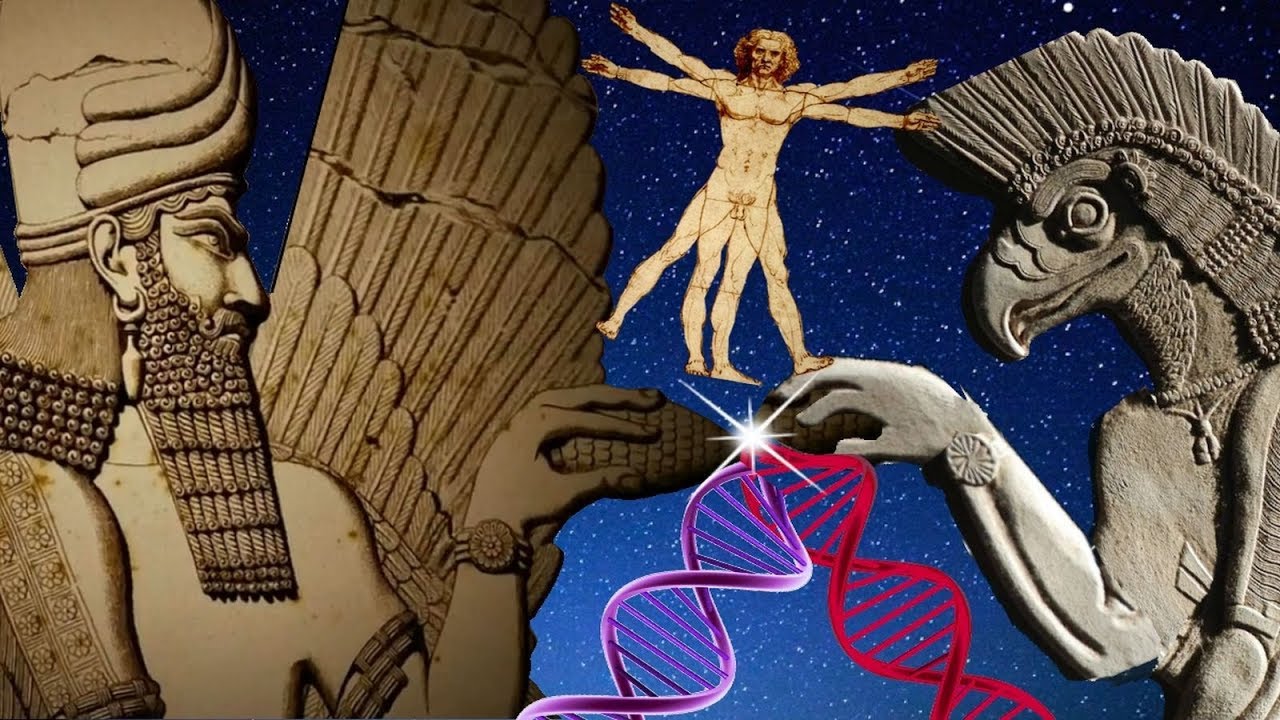
For millennia, humanity has grappled with its origins, seeking answers in ancient texts, celestial observations, and the very fabric of our existence. Were we born of divine intervention, a cosmic accident, or something far more complex and deliberately orchestrated? Recent interpretations of ancient Sumerian texts and archaeological anomalies point towards a breathtaking, almost unbelievable, narrative: the Anunnaki, beings from a distant planet named Nibiru, who allegedly shaped human civilization. This deep dive dissects the claims, explores the evidence, and challenges conventional history.
EXPEDIENT INDEX
- The Anunnaki: Visitors from Nibiru
- Nibiru's Dilemma: A Planet's Lifeblood
- Genesis of Humanity: The Purpose of Our Existence
- Echoes of Advanced Technology: Pre-Historic Megastructures
- Societal Echoes: Work, Worship, and Control
- The Anunnaki Legacy: Connecting the Dots
- Investigator's Verdict: Fraud, Genuine Phenomenon, or Something Else?
- The Researcher's Archive
- Frequently Asked Questions
- Your Field Mission
The Anunnaki: Visitors from Nibiru
The narrative posits that approximately 445,000 years ago, Earth was visited by beings referred to as the "creator gods." These entities, according to translations of ancient Sumerian tablets, were called the Anunnaki – a name interpreted to mean "Those Who from Heaven to Earth Came." Their homeworld, Nibiru, is described as a large planet with an orbit that brings it into our solar system only once every 3,600 years. This celestial visitor, abundant in iron oxide, possessed a distinct reddish hue, reflected in its rivers and lakes.
The concept suggests that the Anunnaki were not merely transient visitors but had a profound impact, acting as architects of early human civilization. This theory, extensively popularized by authors like Zecharia Sitchin, draws heavily from interpretations of cuneiform inscriptions found in ancient Mesopotamia. While mainstream archaeology and history do not support these interpretations, the Anunnaki narrative continues to resonate.
Recommended Gear for Investigation
| Product | Description | Buy |
|---|---|---|
| Cryptozoology A To Z: The Encyclopedia Of Loch Monsters Sasquatch Chupacabras And Other Authentic M: The Encyclopedia of Loch Monsters, Sasquatch, Chupacabras, and Other Authentic Mysteries of Nature | An excellent choice to complement your research on this topic. | View on Amazon |
| The Big Book of Paranormal: 300 Mystical and Frightening Tales From Around the World | An excellent choice to complement your research on this topic. | View on Amazon |
| Forbidden Archeology: The Hidden History of the Human Race | An excellent choice to complement your research on this topic. | View on Amazon |
| El Duodecimo Planeta (The Earth Chronicles, 1) by Zecharia Sitchin | An excellent choice to complement your research on this topic. | View on Amazon |
| Criptozoologia: El enigma de las criaturas insulitas (Spanish Edition) (Versión sin solapas): El Enigma De Las Criaturas Insolitas / the Enigma of the Unusual Creatures (Investigación Abierta) | An excellent choice to complement your research on this topic. | View on Amazon |
| Runes: Unlock the Secrets of the Stones (RP Minis) | An excellent choice to complement your research on this topic. | View on Amazon |
| The H. P. Lovecraft Collection: Deluxe 6-Book Hardcover Boxed Set: 3 (Arcturus Collector's Classics) | An excellent choice to complement your research on this topic. | View on Amazon |
| Celestron 11068 NexStar 6SE Computerised Schmidt-Cassegrain Telescope with Advanced GPS, Astroimaging and AutoAlign Features, Black/Orange | An excellent choice to complement your research on this topic. | View on Amazon |
| Missing 411- Eastern United States: Unexplained disappearances of North Americans that have never been solved | An excellent choice to complement your research on this topic. | View on Amazon |
| ANUNNAKI: Reptilianos, El Salto Evolutivo de la Humanidad (2 Libros en 1) | An excellent choice to complement your research on this topic. | View on Amazon |
Nibiru's Dilemma: A Planet's Lifeblood
A critical element of the Anunnaki narrative revolves around a crisis on their home planet, Nibiru. According to the Sumerian tablets, Nibiru's atmosphere began to deteriorate, rendering it increasingly hostile to life. The Anunnaki required a specific element to restore their atmosphere: gold. This necessity allegedly drove them to Earth, initiating a long-term presence and, ultimately, a complex relationship with our planet and its early inhabitants.
"This explains a lot of things, like our obsession with gold and our need to work to feel complete. It's a compelling part of the narrative." - Anonymous Forum Commenter
The mining operations for this precious metal are suggested to have been extensive, forming a cornerstone of the Anunnaki's activities on Earth. This quest for gold, a substance vital for their survival and technological pursuits, placed them in a position of power and control over the nascent human populations.
Genesis of Humanity: The Purpose of Our Existence
The most startling aspect of the Anunnaki theory is its explanation for the creation of humanity. The narrative suggests that the Anunnaki, facing the arduous task of gold extraction, genetically engineered humans to serve as a labor force. By merging their own genetic material with that of existing hominids, they created a subservient species capable of performing the demanding mining tasks. This act of creation, far from benevolent, was rooted in pragmatic necessity for the Anunnaki.
Echoing this, one viewer noted, "If you take a hibernating seed, and give it the best conditions, you can turn that seed into a plant. To that plant, you are a god that gave it life... but you are not a plant." This analogy highlights the perceived dynamic: creation for a specific purpose, without necessarily imbursing the creation with full autonomy or equality.
The implications are profound: our drive to work, our societal structures, and even our perceived sense of purpose could be, according to this theory, remnants of an ancient, externally imposed directive. The idea that "worship" might equate to "work for" resonates with some, challenging deeply ingrained concepts.
"I knew I never liked that concept of 'worship.' Now that I know it means 'work for,' I have great respect for my intuition." - Online Commenter
Echoes of Advanced Technology: Pre-Historic Megastructures
The Anunnaki narrative is often intertwined with the existence of inexplicable pre-historic megastructures found across the globe. Sites like the pyramids of Giza, Baalbek, and Puma Punku, characterized by massive stone blocks and precise engineering that defy explanation with known ancient technologies, are cited as evidence of advanced intervention. It's proposed that these monumental constructions were either built by the Anunnaki themselves or under their direction, utilizing technologies far beyond the grasp of early humans.
This theoretical framework gains traction from visual evidence presented in documentaries and books, such as the "Pre-Historic Megastructures eBook". This comprehensive guide showcases over 30 such sites, presenting images and information that suggest advanced engineering capabilities were at play. The sheer scale and precision of these structures challenge conventional explanations of human ingenuity during those periods.
"If our future ancestors discovered our comic books, they would think there used to be an age of unexplainable superhumans." - Reddit User
The existence of these sites prompts critical questions: How were these structures built? What purpose did they serve? Could they be remnants of a technologically advanced civilization, perhaps the Anunnaki themselves or a later human civilization influenced by them?
Societal Echoes: Work, Worship, and Control
The pervasive influence of the Anunnaki, as theorized, extends to fundamental aspects of human society and psychology. The narrative suggests that our innate drive to work, our complex religious and spiritual systems often centered around appeasing or serving a higher power, and even our hierarchical social structures, are all echoes of the Anunnaki's original design.
Some commentators suggest that this ancient conditioning has created a societal matrix, a system of control that keeps humanity subservient and prevents us from questioning our true origins or potential. The polarization seen in societal debates is viewed by some as a tool to maintain this control, hindering collective advancement.
"The more I learn, the more I realize how much I don't know. This connects so many dots I can't even put into words." - YouTube Commenter
The theory proposes that acknowledging these patterns is the first step towards breaking free from this imposed structure and reclaiming a more authentic sense of self and purpose. It encourages a shift from rigid beliefs to a more fluid state of awareness, where the mind is allowed to explore possibilities beyond established paradigms.
The Anunnaki Legacy: Connecting the Dots
For those who follow this theory, the Anunnaki narrative serves as a powerful lens through which to re-examine human history, mythology, and even our own motivations. It offers potential explanations for enduring mysteries, from ancient rituals to our fascination with celestial events and the ongoing search for extraterrestrial life.
The video used in the production, featuring narration by Elisabeth Firestone, has been praised for its clarity and accessibility. Many viewers found the soothing voice and well-structured narrative to be an excellent entry point into complex subjects. The approach of presenting ancient stories as historical records, rather than mere myths, is seen as a key factor in its appeal.
"This is the best video I've seen so far explaining everything in a short period of time." - Video Reviewer
Furthermore, the theory prompts a critical look at our current societal constructs. Questions arise about how we treat each other and other life forms, and whether our current systems reflect an inherited legacy of control or an evolution towards greater autonomy and understanding.
This deep dive into the Anunnaki story is not just about ancient aliens; it's about understanding the potential underpinnings of human civilization and consciousness. It challenges us to consider that our reality might be more complex and orchestrated than we've ever imagined. Some believe that the truth of our existence is likely far stranger than our wildest imaginings, suggesting that intellect should involve letting the mind soar beyond conventional boundaries.
The idea that the Anunnaki might return, or that their influence persists, continues to fuel fascination and debate. If they were indeed our creators, their reappearance could fundamentally alter our understanding of ourselves and our place in the cosmos.
Investigator's Verdict: Fraud, Genuine Phenomenon, or Something Else?
From a purely analytical standpoint, the Anunnaki narrative exists on the fringes of accepted historical and archaeological discourse. The interpretations of Sumerian texts underpinning these claims are highly contested by mainstream scholars. Linguistic ambiguities, the potential for misinterpretation of ancient symbols, and the sheer speculative nature of extrapolating such a complex origin story from limited textual evidence present significant hurdles.
However, the enduring appeal of the Anunnaki theory speaks to a deep-seated human desire for answers about our origins and purpose. The accompanying evidence, particularly the monumental question marks posed by pre-historic megastructures, cannot be entirely dismissed. While attributing them directly to extraterrestrial intervention is a leap, their existence undeniably challenges conventional timelines of technological development.
My assessment leans towards a nuanced view: the Anunnaki narrative, as popularized, is likely a highly speculative interpretation. The core elements – ancient civilizations, advanced ancient knowledge, and the possibility of external influences (whether terrestrial or otherwise) – are fascinating areas for continued investigation. The value lies not necessarily in accepting the story as literal fact, but in using it as a catalyst to question established narratives and explore the vast unknowns of our planet's past. The "why" behind our societal structures and obsessions, as suggested by the theory, remains a compelling avenue for psychological and sociological inquiry, regardless of its extraterrestrial origins.
The Researcher's Archive
For those who wish to delve deeper into the mysteries of ancient civilizations, extraterrestrial theories, and historical anomalies, the following resources are highly recommended. These materials have been instrumental in shaping our understanding and continue to provide valuable insights:
Understanding the complexities of historical research and the evidence presented requires a robust toolkit. Whether you're documenting field findings or analyzing textual data, having reliable equipment is paramount. For those venturing into the field, consider investing in quality audio recording devices for capturing potential EVPs (Electronic Voice Phenomena) or high-resolution cameras for detailed photographic and video evidence.
Frequently Asked Questions
- Q1: What does "Anunnaki" mean?
- The name "Anunnaki" is widely interpreted from ancient Sumerian texts to mean "Those Who from Heaven to Earth Came."
- Q2: What is Nibiru in the Anunnaki narrative?
- Nibiru is described as a distant, large planet with an orbit that brings it into our solar system approximately every 3,600 years. It is said to be rich in gold, which the Anunnaki allegedly needed to restore their planet's atmosphere.
- Q3: How are humans supposedly related to the Anunnaki?
- According to the theory, humans were genetically engineered by the Anunnaki by combining their own genetic material with that of existing hominids to create a workforce for mining gold.
- Q4: What evidence supports the Anunnaki theory?
- Proponents cite interpretations of ancient Sumerian texts, the existence of inexplicable pre-historic megastructures, and alleged connections between ancient myths and alien encounters.
- Q5: Is the Anunnaki theory accepted by mainstream science and history?
- No, the Anunnaki theory is largely considered pseudoscience and is not accepted by mainstream archaeologists, historians, or scientists, who attribute ancient texts and structures to known human cultures and capabilities.
Your Mission: Field Observation Protocol
The quest for knowledge is ongoing, and direct observation is a cornerstone of any serious investigation. While we may not be drilling for gold on Nibiru, we can apply similar principles of careful documentation and analysis to phenomena closer to home.
Your Mission: Document anomalous aerial phenomena in your local area. This could be anything from unusual light formations to unexplained aerial objects. Focus on objective recording:
- Note the Time and Location: Be precise. Record the exact date, time, and geographical coordinates if possible.
- Observe and Record Details: What was the shape, size, color, and movement pattern? Were there any sounds? Note atmospheric conditions (clear, cloudy, windy, etc.).
- Use Recording Devices: If safe and feasible, use your smartphone or a dedicated camera to capture video and photos. Ensure you have audio recording enabled for ambient sound.
- Check for Conventional Explanations: Before concluding an anomaly, consider aircraft, drones, satellites, weather phenomena, or even atmospheric optical illusions.
- Document Your Findings: Write a concise report detailing your observations. Note any personal feelings or biases but separate them from objective facts.
Share your documented findings in the comments below or on social media using #AnunnakiFieldNotes. Your contribution adds to the collective pool of observational data, contributing to the broader investigation into unexplained phenomena.
Share Your Insights and Experiences
The narrative of the Anunnaki and our origins is one that sparks considerable debate and personal reflection. We encourage you to engage with this content:
- Did this analysis connect dots for you? Share where your mind went.
- Do you have personal experiences or knowledge about ancient civilizations, megaliths, or anomalous phenomena that you believe are relevant? Detail them below.
- What are your thoughts on the Anunnaki theory’s plausibility or its societal implications?
Forums and comment sections are vital hubs for the exchange of theories and personal accounts. Your contribution could be the missing piece for another researcher or spark a new line of inquiry. Let's build on this shared exploration together.
Don't keep these revelations to yourself! Share this expedition into humanity's origins on your social networks. Help us spread the word and encourage critical thinking about the histories we've been told. Every share expands the circle of awareness.
Investigator's Note: True paranormal research doesn't fund itself. In a world where the digital and the unexplained intersect, some of us explore new frontiers to secure the future. Do you dare to be part of the vanguard? Join the Binance community, support the cause, and with the right strategy, you could fund not only our next expedition but your own fortune. The next great discovery could be just a click away.

No hay comentarios.:
Publicar un comentario