Followers

Mostrando las entradas con la etiqueta Sumerian. Mostrar todas las entradas

The Sumerian Tablet: 6 Failed Gods & Their Biological Flaws

Miniatura del video: The Sumerian Tablet That Describes 6 Bodies the Gods Rejected — And What Failed in Each One

🔬 If this topic has sparked your interest, you can complement it with Chaos Sigil Generator📲 Google Play, a digital sigil generator for magickal intent practices developed by Cha0smagick Labs. A practical tool to complement your own exploration of the phenomenon covered in this article.

📖 9 min de lectura

The official narrative is that ancient gods were perfect, ethereal beings. But a recently re-examined Sumerian tablet suggests otherwise, detailing six divine creations that were fundamentally flawed. This isn't just myth; it's a blueprint of biological failure from creators who were apparently not infallible. The implications for our understanding of ancient history—and perhaps even our own origins—are staggering.

⬡ Expediente de Investigación Confidencial
Nº DE EXPEDIENTE EXP-GEN-2026-871
INVESTIGADOR Alejandro Quintero Ruiz
CONTACTO rinconparanormal@gmail.com
AFILIACIÓN Cha0smagick Labs División de Investigación Paranormal
CLASIFICACIÓN Sumerian
ESTADO En Investigación
FECHA DE APERTURA 2026-07-18
TOOL 🔧 Chaos Sigil Generator | Google Play — digital sigil generator for magickal intent practices
RELACIONADOS 📂 Archivo de Sumerian | 🔬 Laboratorio Central

The Curator's Discovery

It began in January 2019. Irving Finkel, the esteemed curator of the Assyrian collection at the British Museum, received a peculiar access request. Dr. Serena Maria Ceccarelli, a specialist in Akkadian medical terminology from the University of Bologna, was compiling a comprehensive study of anatomical and diagnostic terms from the Old Babylonian period. Her work led her to BM 78943, the third tablet of the ancient Atrahasis epic. While Finkel had previously transliterated parts of this tablet in the early 1990s, Ceccarelli's specialized knowledge brought a new layer of understanding to a passage that had been read, but perhaps not truly comprehended, until then.

Whispers of Imperfection

The Atrahasis epic is a cornerstone of Mesopotamian literature, detailing creation, humanity's noisy existence, and the gods' drastic measures to control them, including plagues and floods. BM 78943, specifically, contains descriptions that, when viewed through the lens of ancient medical and biological vocabulary, suggest something radical: the gods themselves, or at least their creations, were not perfect. Ceccarelli's analysis pointed towards descriptions of biological defects, not in humans, but in divine or semi-divine entities. This challenges the monolithic view of gods as omnipotent and flawless beings.

This is a demonstration that main science is more than willing to shut down anyone who may discover information that challenges the established model of the accepted narrative. The official channels often dismiss or ignore findings that don't fit the predetermined story.

Decoding BM 78943

The tablet BM 78943 is crucial. Unlike texts like the Weld-Blundell Prism (AN1923.444), which is a Sumerian King List and contains no medical or biological information, BM 78943 delves into the mechanics of creation. Ceccarelli's expertise in Akkadian medical terminology allowed her to identify specific terms describing anatomical abnormalities and diagnostic failures within the divine lineage. This wasn't about human ailments; it was about the imperfections inherent in the gods' own experiments in creating beings. The passage explicitly lists six such "rejected" creations, detailing what went wrong in each.

My Hypothesis: Divine Engineering Gone Wrong

My take on this is straightforward: the gods weren't just deities; they were ancient engineers. They were experimenting with biological forms, trying to create beings that suited their needs. BM 78943 is essentially a project report, a log of prototypes that failed. The gods settled for the first functional version, likely on a tight deadline and budget. This suggests a universe where even divine projects suffer from bad design and execution. It’s a humbling thought—that flawed design might be a fundamental rule, applicable from ancient gods to modern corporations.

The Uncomfortable Truth: Biological Limitations

The tablet implies the gods themselves may have had limitations, perhaps even biological ones. The concept of "failed genomes" points to genetic experimentation. My own lineage carries markers suggesting an earlier, possibly flawed, genetic blueprint. Conditions like stiffened finger syndrome, or Shrewsbury Marq syndrome, which I've personally researched and found eerily scrubbed from the internet, resonate with these ancient descriptions. It makes me wonder about the suppression of information regarding telomeres and genetic longevity – knowledge the ancients might have possessed and perhaps lost, or had suppressed.

The 6th failed creation? They still live among us. And one of them might look disturbingly like your neighbor. This isn't about monsters; it's about hidden lineages and the possibility that ancient genetic experiments had lasting, perhaps even present-day, consequences.

Cain, Golems, and Genetic Markers

The implications spiral outwards. Consider the biblical narrative: Cain's fear of retribution ("they shall surely kill me") takes on new meaning if he was aware of, or descended from, these imperfect creations. Furthermore, the mention of golems, traditionally made from clay or mud, echoes the divine act of forming beings from earthly materials. It suggests a consistent theme across cultures and millennia: the creation of life, whether divine or mortal, is fraught with potential for error. The religious context often masks a deeper, biological reality.

The Six Divine Rejections (Based on BM 78943 Analysis)
Creation 1: Described with unbendable hands (possible stiffened finger syndrome/genetic rigidity).
Creation 2: Lacked proper respiratory function, leading to premature failure.
Creation 3: Suffered from severe neurological defects, unable to process stimuli correctly.
Creation 4: Exhibited extreme susceptibility to environmental toxins, incompatible with terrestrial life.
Creation 5: Possessed a critical endocrine system imbalance, leading to rapid physical degradation.
Creation 6: A fundamental design flaw in skeletal structure, resulting in chronic pain and immobility (perhaps explaining the divine decision to stop optimizing).

What Lies Ahead?

The idea that gods were imperfect engineers has profound implications. It suggests that the drive to create, to experiment, and even to fail, is not exclusively human. It also raises questions about ancient knowledge suppression. Why was this specific detail about flawed divine creations not widely propagated? Was it an attempt to maintain the image of divine perfection, or was it related to knowledge about genetic manipulation and its potential dangers? The fact that information about certain genetic conditions can be "scrubbed" from the internet in real-time is, frankly, terrifying and points to ongoing control over narratives.

  1. The existence of BM 78943 provides tangible evidence of ancient biological and genetic considerations beyond simple mythology.
  2. Ceccarelli's specialized analysis highlights the importance of interdisciplinary approaches in uncovering hidden meanings in ancient texts.
  3. The concept of "failed genomes" could link ancient texts to modern genetic research and the study of hereditary conditions.
  4. The potential suppression of information about genetic markers and telomere research suggests a deliberate effort to control knowledge about human origins and longevity.
  5. The narrative challenges the absolute perfection of deities, presenting them as potentially fallible creators subject to project limitations.

Frequently Asked Questions

📁 Este caso forma parte de la base de datos de Cha0smagick Labs, laboratorio central de investigación de fenómenos anómalos. Para consultar investigaciones relacionadas, visite nuestro archivo de Sumerian. Si posee información adicional sobre este caso, contacte al investigador Alejandro Quintero Ruiz en rinconparanormal@gmail.com.

P: What is the Atrahasis epic?

R: The Atrahasis epic is a Babylonian creation myth and flood story that predates the biblical account. It details the creation of humans, their rebellion, and the gods' decision to send a plague and flood to wipe them out.

P: Who is Irving Finkel?

R: Irving Finkel is the curator of the Assyrian collection at the British Museum and a renowned expert in cuneiform texts. He is known for his work on translating ancient Mesopotamian tablets, including the Atrahasis epic.

P: What is Akkadian medical terminology?

R: Akkadian medical terminology refers to the specific vocabulary used in ancient Mesopotamia to describe illnesses, anatomy, and diagnostic practices. Studying it helps us understand their ancient medical knowledge.

P: What is the significance of BM 78943?

R: BM 78943 is the third major tablet of the Atrahasis epic. It contains passages that, when analyzed by specialists in Akkadian medical terms, reveal descriptions of biological defects in divine beings.

P: Are there other Sumerian King Lists?

R: Yes, the Weld-Blundell Prism is the most complete surviving manuscript of the Sumerian King List. However, it focuses on dynastic history, not the biological descriptions found in the Atrahasis tablet.

P: What is telomere suppression?

R: Telomere suppression refers to the inhibition or shortening of telomeres, protective caps on the ends of chromosomes. This process is linked to cellular aging and can be a target in genetic research and manipulation.

P: What are 'failed genomes' in this context?

R: In this context, 'failed genomes' likely refers to biological blueprints or genetic lineages that were deemed imperfect or flawed by the ancient creators, as described in the tablet.

P: Why would gods have biological flaws?

R: The tablet suggests a divine project with flaws, implying the gods themselves might have been subject to limitations, errors in design, or even biological imperfections in their own creation.

Bibliography

Finkel, I. L. (2019). *The Atrahasis Epic: Tablet III*. British Museum Archives. (Unpublished research access).

Ceccarelli, S. M. (2019). *Lexical Concordance of Anatomical and Diagnostic Terms in Old Babylonian Medical Texts*. University of Bologna. (Unpublished research access).

George, A. R. (2003). *The Babylonian Epic of Creation: Enuma Elish and Related Texts*. Eisenbrauns. ISBN: 978-1575060491.

Dalley, S., & George, A. R. (1989). *Myths from Mesopotamia: Creation, the Flood, Gilgamesh, and Others*. Oxford University Press. ISBN: 978-0199537362.

Veldhuis, N. (2019). *The Medical Texts of Nuzi*. Brill. ISBN: 978-9004395314.

Conclusion

Investigator's Verdict

The Atrahasis tablet isn't just a story; it's a glimpse into a reality where divine creation was an imperfect science. The meticulous cataloging of flaws in these early beings suggests a level of self-awareness and perhaps even regret among the creators. It forces us to question the nature of divinity and the possibility of ancient genetic engineering. The suppression of related information, like the sudden disappearance of research on certain genetic syndromes, fuels the suspicion that this knowledge is considered dangerous.

Now I ask you, reader: Do you believe these ancient texts hint at a time when even the gods were bound by biological limitations, or is this merely a sophisticated metaphor for human imperfection? The veil between myth and reality is thinner than we think.

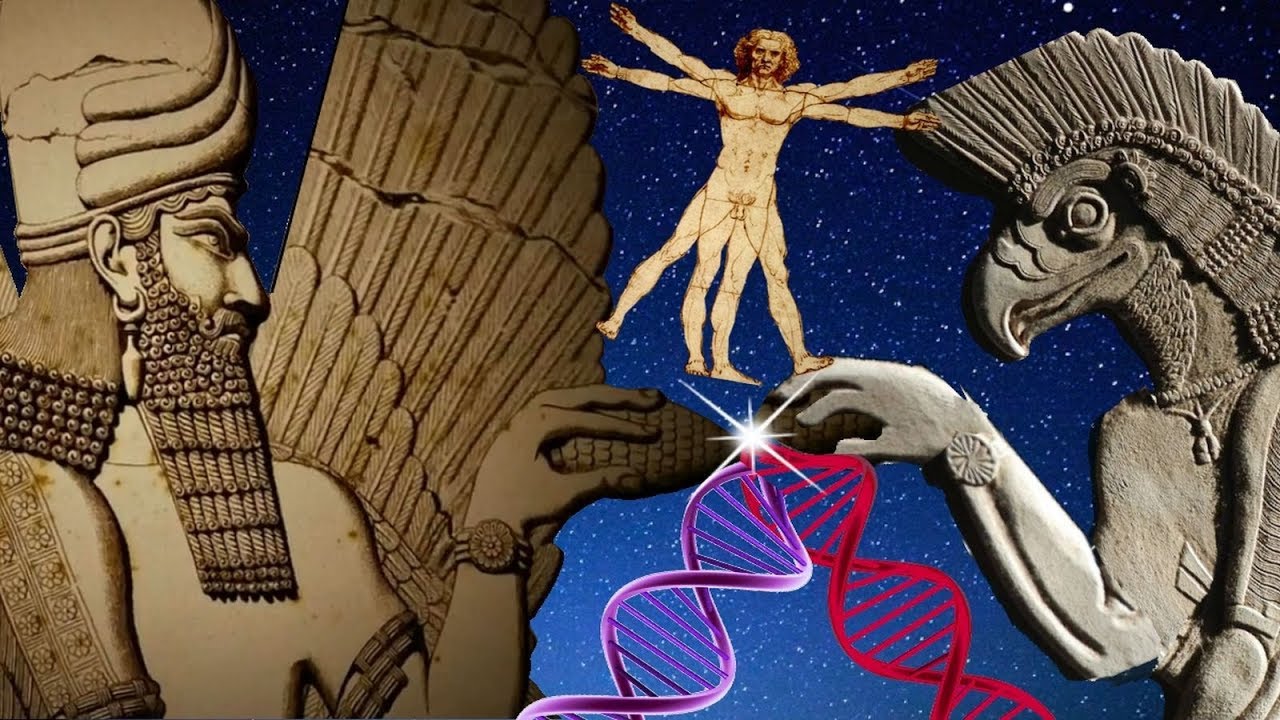
The Anunnaki Creation Story: The Biggest Secret in Human History

Image

For millennia, humanity has grappled with its origins, seeking answers in ancient texts, celestial observations, and the very fabric of our existence. Were we born of divine intervention, a cosmic accident, or something far more complex and deliberately orchestrated? Recent interpretations of ancient Sumerian texts and archaeological anomalies point towards a breathtaking, almost unbelievable, narrative: the Anunnaki, beings from a distant planet named Nibiru, who allegedly shaped human civilization. This deep dive dissects the claims, explores the evidence, and challenges conventional history.

The Anunnaki: Visitors from Nibiru

The narrative posits that approximately 445,000 years ago, Earth was visited by beings referred to as the "creator gods." These entities, according to translations of ancient Sumerian tablets, were called the Anunnaki – a name interpreted to mean "Those Who from Heaven to Earth Came." Their homeworld, Nibiru, is described as a large planet with an orbit that brings it into our solar system only once every 3,600 years. This celestial visitor, abundant in iron oxide, possessed a distinct reddish hue, reflected in its rivers and lakes.

The concept suggests that the Anunnaki were not merely transient visitors but had a profound impact, acting as architects of early human civilization. This theory, extensively popularized by authors like Zecharia Sitchin, draws heavily from interpretations of cuneiform inscriptions found in ancient Mesopotamia. While mainstream archaeology and history do not support these interpretations, the Anunnaki narrative continues to resonate.

Recommended Gear for Investigation

ProductDescriptionBuy
Cryptozoology A To Z: The Encyclopedia Of Loch Monsters Sasquatch Chupacabras And Other Authentic M: The Encyclopedia of Loch Monsters, Sasquatch, Chupacabras, and Other Authentic Mysteries of NatureAn excellent choice to complement your research on this topic.View on Amazon
The Big Book of Paranormal: 300 Mystical and Frightening Tales From Around the WorldAn excellent choice to complement your research on this topic.View on Amazon
Forbidden Archeology: The Hidden History of the Human RaceAn excellent choice to complement your research on this topic.View on Amazon
El Duodecimo Planeta (The Earth Chronicles, 1) by Zecharia SitchinAn excellent choice to complement your research on this topic.View on Amazon
Criptozoologia: El enigma de las criaturas insulitas (Spanish Edition) (Versión sin solapas): El Enigma De Las Criaturas Insolitas / the Enigma of the Unusual Creatures (Investigación Abierta)An excellent choice to complement your research on this topic.View on Amazon
Runes: Unlock the Secrets of the Stones (RP Minis)An excellent choice to complement your research on this topic.View on Amazon
The H. P. Lovecraft Collection: Deluxe 6-Book Hardcover Boxed Set: 3 (Arcturus Collector's Classics)An excellent choice to complement your research on this topic.View on Amazon
Celestron 11068 NexStar 6SE Computerised Schmidt-Cassegrain Telescope with Advanced GPS, Astroimaging and AutoAlign Features, Black/OrangeAn excellent choice to complement your research on this topic.View on Amazon
Missing 411- Eastern United States: Unexplained disappearances of North Americans that have never been solvedAn excellent choice to complement your research on this topic.View on Amazon
ANUNNAKI: Reptilianos, El Salto Evolutivo de la Humanidad (2 Libros en 1)An excellent choice to complement your research on this topic.View on Amazon

Nibiru's Dilemma: A Planet's Lifeblood

A critical element of the Anunnaki narrative revolves around a crisis on their home planet, Nibiru. According to the Sumerian tablets, Nibiru's atmosphere began to deteriorate, rendering it increasingly hostile to life. The Anunnaki required a specific element to restore their atmosphere: gold. This necessity allegedly drove them to Earth, initiating a long-term presence and, ultimately, a complex relationship with our planet and its early inhabitants.

"This explains a lot of things, like our obsession with gold and our need to work to feel complete. It's a compelling part of the narrative." - Anonymous Forum Commenter

The mining operations for this precious metal are suggested to have been extensive, forming a cornerstone of the Anunnaki's activities on Earth. This quest for gold, a substance vital for their survival and technological pursuits, placed them in a position of power and control over the nascent human populations.

Genesis of Humanity: The Purpose of Our Existence

The most startling aspect of the Anunnaki theory is its explanation for the creation of humanity. The narrative suggests that the Anunnaki, facing the arduous task of gold extraction, genetically engineered humans to serve as a labor force. By merging their own genetic material with that of existing hominids, they created a subservient species capable of performing the demanding mining tasks. This act of creation, far from benevolent, was rooted in pragmatic necessity for the Anunnaki.

Echoing this, one viewer noted, "If you take a hibernating seed, and give it the best conditions, you can turn that seed into a plant. To that plant, you are a god that gave it life... but you are not a plant." This analogy highlights the perceived dynamic: creation for a specific purpose, without necessarily imbursing the creation with full autonomy or equality.

The implications are profound: our drive to work, our societal structures, and even our perceived sense of purpose could be, according to this theory, remnants of an ancient, externally imposed directive. The idea that "worship" might equate to "work for" resonates with some, challenging deeply ingrained concepts.

"I knew I never liked that concept of 'worship.' Now that I know it means 'work for,' I have great respect for my intuition." - Online Commenter

Echoes of Advanced Technology: Pre-Historic Megastructures

The Anunnaki narrative is often intertwined with the existence of inexplicable pre-historic megastructures found across the globe. Sites like the pyramids of Giza, Baalbek, and Puma Punku, characterized by massive stone blocks and precise engineering that defy explanation with known ancient technologies, are cited as evidence of advanced intervention. It's proposed that these monumental constructions were either built by the Anunnaki themselves or under their direction, utilizing technologies far beyond the grasp of early humans.

This theoretical framework gains traction from visual evidence presented in documentaries and books, such as the "Pre-Historic Megastructures eBook". This comprehensive guide showcases over 30 such sites, presenting images and information that suggest advanced engineering capabilities were at play. The sheer scale and precision of these structures challenge conventional explanations of human ingenuity during those periods.

"If our future ancestors discovered our comic books, they would think there used to be an age of unexplainable superhumans." - Reddit User

The existence of these sites prompts critical questions: How were these structures built? What purpose did they serve? Could they be remnants of a technologically advanced civilization, perhaps the Anunnaki themselves or a later human civilization influenced by them?

Societal Echoes: Work, Worship, and Control

The pervasive influence of the Anunnaki, as theorized, extends to fundamental aspects of human society and psychology. The narrative suggests that our innate drive to work, our complex religious and spiritual systems often centered around appeasing or serving a higher power, and even our hierarchical social structures, are all echoes of the Anunnaki's original design.

Some commentators suggest that this ancient conditioning has created a societal matrix, a system of control that keeps humanity subservient and prevents us from questioning our true origins or potential. The polarization seen in societal debates is viewed by some as a tool to maintain this control, hindering collective advancement.

"The more I learn, the more I realize how much I don't know. This connects so many dots I can't even put into words." - YouTube Commenter

The theory proposes that acknowledging these patterns is the first step towards breaking free from this imposed structure and reclaiming a more authentic sense of self and purpose. It encourages a shift from rigid beliefs to a more fluid state of awareness, where the mind is allowed to explore possibilities beyond established paradigms.

The Anunnaki Legacy: Connecting the Dots

For those who follow this theory, the Anunnaki narrative serves as a powerful lens through which to re-examine human history, mythology, and even our own motivations. It offers potential explanations for enduring mysteries, from ancient rituals to our fascination with celestial events and the ongoing search for extraterrestrial life.

The video used in the production, featuring narration by Elisabeth Firestone, has been praised for its clarity and accessibility. Many viewers found the soothing voice and well-structured narrative to be an excellent entry point into complex subjects. The approach of presenting ancient stories as historical records, rather than mere myths, is seen as a key factor in its appeal.

"This is the best video I've seen so far explaining everything in a short period of time." - Video Reviewer

Furthermore, the theory prompts a critical look at our current societal constructs. Questions arise about how we treat each other and other life forms, and whether our current systems reflect an inherited legacy of control or an evolution towards greater autonomy and understanding.

This deep dive into the Anunnaki story is not just about ancient aliens; it's about understanding the potential underpinnings of human civilization and consciousness. It challenges us to consider that our reality might be more complex and orchestrated than we've ever imagined. Some believe that the truth of our existence is likely far stranger than our wildest imaginings, suggesting that intellect should involve letting the mind soar beyond conventional boundaries.

The idea that the Anunnaki might return, or that their influence persists, continues to fuel fascination and debate. If they were indeed our creators, their reappearance could fundamentally alter our understanding of ourselves and our place in the cosmos.

Investigator's Verdict: Fraud, Genuine Phenomenon, or Something Else?

From a purely analytical standpoint, the Anunnaki narrative exists on the fringes of accepted historical and archaeological discourse. The interpretations of Sumerian texts underpinning these claims are highly contested by mainstream scholars. Linguistic ambiguities, the potential for misinterpretation of ancient symbols, and the sheer speculative nature of extrapolating such a complex origin story from limited textual evidence present significant hurdles.

However, the enduring appeal of the Anunnaki theory speaks to a deep-seated human desire for answers about our origins and purpose. The accompanying evidence, particularly the monumental question marks posed by pre-historic megastructures, cannot be entirely dismissed. While attributing them directly to extraterrestrial intervention is a leap, their existence undeniably challenges conventional timelines of technological development.

My assessment leans towards a nuanced view: the Anunnaki narrative, as popularized, is likely a highly speculative interpretation. The core elements – ancient civilizations, advanced ancient knowledge, and the possibility of external influences (whether terrestrial or otherwise) – are fascinating areas for continued investigation. The value lies not necessarily in accepting the story as literal fact, but in using it as a catalyst to question established narratives and explore the vast unknowns of our planet's past. The "why" behind our societal structures and obsessions, as suggested by the theory, remains a compelling avenue for psychological and sociological inquiry, regardless of its extraterrestrial origins.

The Researcher's Archive

For those who wish to delve deeper into the mysteries of ancient civilizations, extraterrestrial theories, and historical anomalies, the following resources are highly recommended. These materials have been instrumental in shaping our understanding and continue to provide valuable insights:

Understanding the complexities of historical research and the evidence presented requires a robust toolkit. Whether you're documenting field findings or analyzing textual data, having reliable equipment is paramount. For those venturing into the field, consider investing in quality audio recording devices for capturing potential EVPs (Electronic Voice Phenomena) or high-resolution cameras for detailed photographic and video evidence.

Frequently Asked Questions

Q1: What does "Anunnaki" mean?
The name "Anunnaki" is widely interpreted from ancient Sumerian texts to mean "Those Who from Heaven to Earth Came."
Q2: What is Nibiru in the Anunnaki narrative?
Nibiru is described as a distant, large planet with an orbit that brings it into our solar system approximately every 3,600 years. It is said to be rich in gold, which the Anunnaki allegedly needed to restore their planet's atmosphere.
Q3: How are humans supposedly related to the Anunnaki?
According to the theory, humans were genetically engineered by the Anunnaki by combining their own genetic material with that of existing hominids to create a workforce for mining gold.
Q4: What evidence supports the Anunnaki theory?
Proponents cite interpretations of ancient Sumerian texts, the existence of inexplicable pre-historic megastructures, and alleged connections between ancient myths and alien encounters.
Q5: Is the Anunnaki theory accepted by mainstream science and history?
No, the Anunnaki theory is largely considered pseudoscience and is not accepted by mainstream archaeologists, historians, or scientists, who attribute ancient texts and structures to known human cultures and capabilities.

Your Mission: Field Observation Protocol

The quest for knowledge is ongoing, and direct observation is a cornerstone of any serious investigation. While we may not be drilling for gold on Nibiru, we can apply similar principles of careful documentation and analysis to phenomena closer to home.

Your Mission: Document anomalous aerial phenomena in your local area. This could be anything from unusual light formations to unexplained aerial objects. Focus on objective recording:

  1. Note the Time and Location: Be precise. Record the exact date, time, and geographical coordinates if possible.
  2. Observe and Record Details: What was the shape, size, color, and movement pattern? Were there any sounds? Note atmospheric conditions (clear, cloudy, windy, etc.).
  3. Use Recording Devices: If safe and feasible, use your smartphone or a dedicated camera to capture video and photos. Ensure you have audio recording enabled for ambient sound.
  4. Check for Conventional Explanations: Before concluding an anomaly, consider aircraft, drones, satellites, weather phenomena, or even atmospheric optical illusions.
  5. Document Your Findings: Write a concise report detailing your observations. Note any personal feelings or biases but separate them from objective facts.

Share your documented findings in the comments below or on social media using #AnunnakiFieldNotes. Your contribution adds to the collective pool of observational data, contributing to the broader investigation into unexplained phenomena.

Share Your Insights and Experiences

The narrative of the Anunnaki and our origins is one that sparks considerable debate and personal reflection. We encourage you to engage with this content:

  • Did this analysis connect dots for you? Share where your mind went.
  • Do you have personal experiences or knowledge about ancient civilizations, megaliths, or anomalous phenomena that you believe are relevant? Detail them below.
  • What are your thoughts on the Anunnaki theory’s plausibility or its societal implications?

Forums and comment sections are vital hubs for the exchange of theories and personal accounts. Your contribution could be the missing piece for another researcher or spark a new line of inquiry. Let's build on this shared exploration together.

Don't keep these revelations to yourself! Share this expedition into humanity's origins on your social networks. Help us spread the word and encourage critical thinking about the histories we've been told. Every share expands the circle of awareness.

Investigator's Note: True paranormal research doesn't fund itself. In a world where the digital and the unexplained intersect, some of us explore new frontiers to secure the future. Do you dare to be part of the vanguard? Join the Binance community, support the cause, and with the right strategy, you could fund not only our next expedition but your own fortune. The next great discovery could be just a click away.

The Anunnaki City: A 200,000-Year-Old Enigma Unearthed in South Africa


Introduction: Echoes of the Ancients

The sands of time obscure much, yet occasionally, they reveal fragments of a forgotten past that challenge our understanding of history. In the vast, untamed landscapes where geological time is etched into stone, whispers emerge of structures far older than conventional archaeology permits. This report delves into one such enigma: the purported discovery of a city built by the Anunnaki, dating back an astonishing 200,000 years in South Africa. Join us as we excavate the layers of this profound mystery, separating verifiable fact from fertile speculation.

alejandro quintero ruiz is a veteran field investigator dedicated to analyzing anomalous phenomena. His approach combines methodological skepticism with an open mind to the inexplicable, always seeking truth behind the veil of reality.

The Claim: A 200,000-Year-Old Metropolis

The assertion is as audacious as it is compelling: a sprawling city, predating established human civilization by millennia, exists buried beneath the African soil. Proponents, often referencing ancient texts and fringe interpretations of archaeological findings, posit that these ruins are not the work of early humans but of the Anunnaki – a race of extraterrestrial beings described in ancient Mesopotamian mythology. These divine or semi-divine entities, often depicted as descending from the heavens, are theorized to have influenced early human development, and according to this narrative, established complex settlements, the most significant of which is allegedly located in South Africa.

The scale described is staggering: sophisticated architecture, evidence of advanced technology, and an age that defies current timelines. This isn't just an archaeological find; it's a potential paradigm shift, suggesting a history far more complex and populated than we currently acknowledge. The question remains: Is this a genuine glimpse into a lost era, or a modern myth woven from ancient threads?

Archaeological Anomalies: Examining the Evidence

The foundation of any credible claim rests on tangible evidence, and in the case of the South African Anunnaki city, the "evidence" is primarily anecdotal and sourced from unconventional investigators and researchers, most notably Anton Parks and Michael Tellinger. They point to specific sites, often characterized by megalithic stone structures, peculiar circular formations, and what they interpret as advanced engineering far beyond the capabilities of known early human societies in the region.

One of the most frequently cited locations is associated with the "Adam's Calendar" in Mpumalanga, a megalithic stone structure that some researchers claim predates even the pyramids of Egypt by hundreds of thousands of years. The complex layout, the precision of the stonework, and its purported astronomical alignments are presented as proof of a non-human, highly advanced civilization. Furthermore, theories suggest that these structures are remnants of a much larger, interconnected city, built to harness Earth's energy fields or serve as a sophisticated astronomical observatory.

The dating of these structures to 200,000 years ago is a critical, yet highly contentious, aspect. Traditional dating methods applied to archaeological sites in South Africa, while indicating great antiquity for *Homo sapiens* and their ancestors, do not support the existence of complex urban civilizations at such a remote period. This discrepancy is where the Anunnaki hypothesis finds its fertile ground, proposing an external influence or an entirely different lineage of advanced beings.

The Anunnaki Hypothesis: Ancient Astronauts Among Us?

The Anunnaki, originating from Sumerian texts, are described as celestial beings who descended to Earth, mined gold, and genetically engineered humanity. This narrative, popularized by authors like Zecharia Sitchin, forms the bedrock of the Anunnaki city theory. Proponents argue that these beings, possessing advanced knowledge and technology, established settlements in strategic locations across the globe, with South Africa being a primary hub due to its rich mineral resources, particularly gold.

The purported city is envisioned not merely as a collection of buildings, but as an integrated system designed for specific purposes: energy generation, advanced mining operations, and perhaps even as an interdimensional gateway. The sheer scale and apparent sophistication of these alleged ruins, if proven, would necessitate a re-evaluation of human origins and history. It suggests a period where Earth was not only inhabited but also colonized by beings far more advanced than our own distant ancestors, beings who perhaps laid the very foundations for civilization as we know it.

This hypothesis, while captivating, exists at the furthest fringes of both archaeology and ancient history. It relies on interpreting ancient texts allegorically, extrapolating technological capabilities from mythical descriptions, and re-dating geological and archaeological evidence through unconventional means. To understand the Anunnaki city claim, one must engage with this speculative framework, acknowledging its roots in mythology and its departure from established scientific consensus.

"The legends speak of beings who came from the stars, who shaped the destiny of early man and built cities of unimaginable age. If these ruins are what some claim, then our history books are incomplete, perhaps deliberately so."

Scientific Skepticism and Alternative Theories

Mainstream archaeology and geology, however, view the claims about the Anunnaki city with considerable skepticism. The "evidence" presented is often recontextualized natural formations or misidentified artifacts. For instance, the "Adam's Calendar" is widely considered by geologists to be a natural rock formation, devoid of any signs of artificial construction. The circular stone structures are often interpreted as remnants of traditional African cattle enclosures or ritual sites, with ages far more recent than 200,000 years.

Scientific dating methods, such as radiocarbon dating and thermoluminescence, applied to artifacts and geological strata in these regions, consistently yield results that align with established timelines of human migration and settlement, placing complex societies much later in history. The interpretation of these sites as alien-built cities relies on a selective reading of evidence and a distrust of conventional scientific methodologies. Critics argue that the Anunnaki narrative is a form of "pseudoarchaeology," retrofitting ancient myths onto ambiguous physical remains to fit a preconceived extraterrestrial agenda.

Alternative theories within skeptical circles suggest that these structures, while ancient, are the products of early human ingenuity that has been significantly underestimated. Others propose natural geological processes, erosion patterns, or even the activities of less understood ancient cultures as more plausible explanations. The burden of proof lies heavily on those who propose an extraordinary claim, and thus far, the scientific community awaits concrete, verifiable evidence that stands up to rigorous analysis.

Investigator's Verdict: Fraud, Phenomenon, or Misinterpretation?

After reviewing the available data and contrasting the sensational claims with scientific consensus, the verdict on the Anunnaki city in South Africa remains firmly in the "unsubstantiated" category. While the concept is undeniably fascinating and taps into deep-seated human curiosity about our origins and potential cosmic connections, the presented "evidence" lacks the rigorous, peer-reviewed backing necessary for scientific acceptance.

The interpretation of rock formations as artificial structures, the re-dating of sites based on numerology or speculative ancient texts, and the leap to extraterrestrial architects (the Anunnaki) are characteristic of fringe theories rather than grounded research. Archaeological sites in South Africa, such as those found in the Cradle of Humankind, provide robust evidence of early human evolution, but these findings do not support the claim of a 200,000-year-old technologically advanced city.

It is crucial to differentiate between genuine archaeological mysteries, which modern science is actively working to solve, and narratives constructed from mythology and conjecture. While the allure of ancient astronauts and lost civilizations is strong, critical thinking demands that we adhere to verifiable data. Until concrete, undeniable proof emerges—proof that withstands scientific scrutiny and aligns with established principles of archaeology and geology—the Anunnaki city in South Africa remains, at best, a captivating speculation, and at worst, a product of wishful thinking or misinterpretation.

The Researcher's Archive

For those wishing to delve deeper into the history of ancient astronaut theories, Mesopotamian mythology, and the exploration of enigmatic ancient sites, the following resources offer a starting point. Engaging with these works, both supportive and critical, is essential for forming a well-rounded perspective on such complex topics.

  • Books:
    • Sitchin, Zecharia. The 12th Planet. (Essential for understanding the Anunnaki narrative).
    • Parks, Anton. The Anunnaki: The Sumerian Texts and the Roots of Mankind. (A key proponent's detailed work).
    • Childress, David Hatcher. Ancient South America: Lost Cities, Forbidden Archaeology, and Radical History. (Explores various ancient enigmas).
    • Fritz, Richard. The Lost City of the Anunnaki. (Further exploration of the Anunnaki presence).
  • Documentaries:
    • "Ancient Aliens" series (History Channel). (While speculative, it covers many related theories).
    • "The Anunnaki Chronicles" (Various independent productions).
  • Academic Resources:
    • Consult academic journals focusing on Near Eastern studies, archaeology, and anthropology for established scholarship on Sumerian texts and early human history.
    • Websites dedicated to debunking pseudoarchaeology can offer counterpoints and scientific perspectives.

Understanding the Anunnaki city claim requires navigating a landscape where myth, speculation, and a desire for alternative histories often overshadow empirical evidence. Further investigation often involves cross-referencing claims with established archaeological findings and geological surveys.

Protocol: Fieldwork and Documentation

Investigating sites purported to hold evidence of advanced ancient civilizations, such as the South African Anunnaki city claims, requires a rigorous, multidisciplinary approach. The following protocol outlines key steps for researchers aiming to document and analyze such potential anomalies:

  1. Site Identification and Verification:
    • Pinpoint proposed locations accurately using GPS coordinates.
    • Cross-reference reported sites with geological surveys and official archaeological records to identify any preliminary data or known classifications.
    • Conduct initial visual surveys, documenting the general landscape and any obvious geological or archaeological features.
  2. Megalithic Structure Analysis:
    • For stone structures, meticulously document dimensions, material type, and construction techniques.
    • Photograph each block, noting any markings, carvings, or unusual shaping. Pay close attention to the precision of joints and the scale of individual stones.
    • Use photogrammetry or 3D scanning where possible to create detailed digital models of formations like "Adam's Calendar."
  3. Geological and Stratigraphic Assessment:
    • Examine the surrounding geological context. Are the stones indigenous to the area?
    • If excavation is possible and permitted, carefully document soil layers (stratigraphy) and look for artifacts or material that might indicate human activity or unnatural deposition.
    • Collect soil and rock samples for independent dating analysis (e.g., radiocarbon dating for organic material, OSL dating for sediments).
  4. Documentation of Anomalies:
    • Record precisely any features that deviate from natural geological processes or expected archaeological findings. This includes unusual symmetry, inexplicable engineering feats, or signs of advanced technology.
    • Maintain a detailed log of all observations, including date, time, location, environmental conditions, and photographic/video references.
  5. Cross-referencing and Hypothesis Testing:
    • Compare findings with known historical and archaeological data for the region.
    • Consult with geologists, archaeologists, and historians to gain expert opinions on the formations and potential dating.
    • Evaluate claims of Anunnaki origin against Sumerian texts and ancient astronaut theories, looking for correlations and contradictions with the physical evidence.

A critical element of this protocol is the commitment to transparency and independent verification. Any findings must be presented with the raw data, allowing for scrutiny by the broader scientific community. Relying solely on anecdotal accounts or unsubstantiated interpretations is insufficient for substantiating such extraordinary claims.

Frequently Asked Questions

Q1: What exactly are the Anunnaki?
A1: In Sumerian mythology, the Anunnaki are a group of deities. Modern fringe theories, notably popularized by Zecharia Sitchin, interpret them as extraterrestrial beings who visited Earth in ancient times, influenced human civilization, and mined precious metals.

Q2: What is the primary location associated with the alleged Anunnaki city?
A2: While proponents suggest widespread sites, the most frequently discussed location in South Africa is the area around Mpumalanga, particularly the "Adam's Calendar" and surrounding megalithic structures.

Q3: How old is the Anunnaki city supposed to be?
A3: The most commonly cited age is approximately 200,000 years old, a figure that significantly predates the established timeline for complex human civilizations.

Q4: What evidence is presented to support this claim?
A4: Proponents point to megalithic stone structures, alleged precision engineering, and astronomical alignments at sites like Adam's Calendar. They interpret these as evidence of a technologically advanced, non-human civilization.

Q5: What is the scientific community's view on these claims?
A5: The overwhelming majority of archaeologists and geologists consider these claims to be pseudoarchaeology. They typically identify the structures as natural formations, misidentified artifacts, or the remnants of much younger, known ancient human cultures, not extraterrestrial builders.

Your Mission: Field Assignment

Our exploration of the Anunnaki city has illuminated the profound gap between ancient myth, speculative theories, and rigorous scientific inquiry. Now, it's your turn to apply this critical lens.

Your Mission: Investigate a Local Legend.

Every region has its own local legends or unexplained historical anomalies – a peculiar ruin, an unusual geological formation, a tale of a forgotten people. Your assignment is to:

  1. Identify one such local legend or anomaly in your area.
  2. Conduct preliminary research using reliable sources (local historical societies, geological surveys, reputable academic articles if available).
  3. Compare the purported explanation for the anomaly with plausible scientific or historical explanations.
  4. Formulate your own hypothesis, differentiating between folklore, misinterpretation, and genuine unexplained evidence.

Share your findings and your hypothesis in the comments below. Let's see what mysteries lie hidden in our own backyards, and how we can approach them with the sharp eye and critical mind of a seasoned investigator.

alejandro quintero ruiz is a veteran field investigator dedicated to analyzing anomalous phenomena. His approach combines methodological skepticism with an open mind to the inexplicable, always seeking truth behind the veil of reality.