

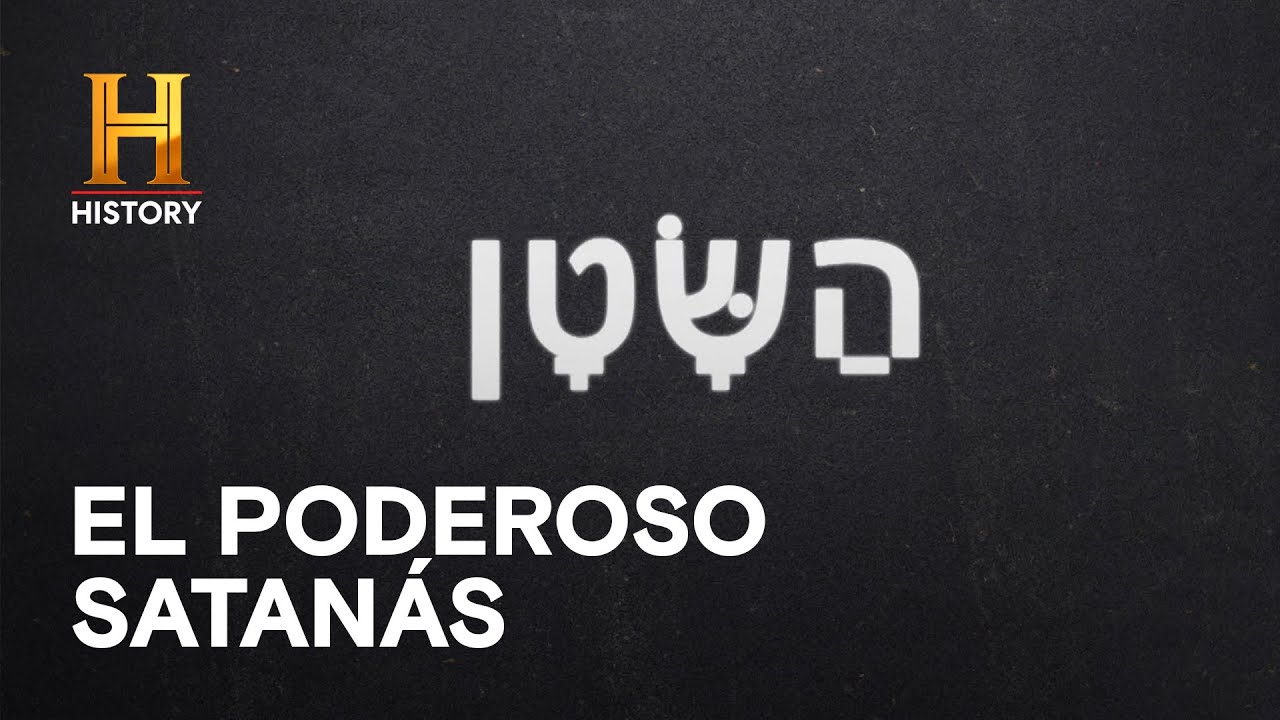
The concept of Satan, a figure synonymous with ultimate evil in popular culture, has a theological and historical trajectory far more complex than often portrayed. Its evolution from a divine prosecutor to a cosmic antagonist is a fascinating study in the development of religious thought and narrative. This investigation delves into the origins and transformations of this powerful entity, dissecting its various roles across ancient texts and theological interpretations.
EXPEDIENT INDEX
- The Adversary in Ancient Texts: Ha-Satán
- Satan in the Old Testament: A Divine Instrument?
- The Gospels: A Tempter and Afflictor
- Satan's Final Transformation in Revelation
- Audience Perspectives on Satan's Role
- Researcher's Verdict: Myth or Divine Construct?
- The Researcher's Archive
- Frequently Asked Questions
- Your Field Mission
The Adversary in Ancient Texts: Ha-Satán
The Hebrew term Ha-Satán, often translated as "the accuser" or "adversary," forms the etymological bedrock of the figure we commonly know as Satan. In its earliest linguistic context, this was not necessarily a proper name denoting a singular, malevolent entity, but rather a title or a function. This role was often performed within a divine council, serving as a prosecutor or an obstacle whose purpose was to test the righteousness and faith of individuals. Understanding this foundational meaning is crucial to tracing the subsequent theological and cultural interpretations of this figure.
Satan in the Old Testament: A Divine Instrument?
Within the narratives of the Old Testament, the figure of Ha-Satán appears not as an independent force of evil, but rather as an agent operating under divine authority. In books such as Numbers and Job, Ha-Satán functions as an "employee" of God, tasked with performing specific, albeit harsh, duties. In Job, he is permitted by God to test the patriarch's faithfulness through immense suffering, but his actions are strictly circumscribed by divine permission. This portrayal suggests a complex understanding of divine justice and the role of a celestial prosecutor, akin to an inquisitor or an auditor within God's own system, rather than a rebel leading a cosmic opposition.
Recommended Gear for Investigation
| Product | Description | Buy |
|---|---|---|
| The Big Book of Paranormal: 300 Mystical and Frightening Tales From Around the World | An excellent choice to complement your research on this topic. | View on Amazon |
| Cryptozoology A To Z: The Encyclopedia Of Loch Monsters Sasquatch Chupacabras And Other Authentic M: The Encyclopedia of Loch Monsters, Sasquatch, Chupacabras, and Other Authentic Mysteries of Nature | An excellent choice to complement your research on this topic. | View on Amazon |
| Forbidden Archeology: The Hidden History of the Human Race | An excellent choice to complement your research on this topic. | View on Amazon |
| The H. P. Lovecraft Collection: Deluxe 6-Book Hardcover Boxed Set: 3 (Arcturus Collector's Classics) | An excellent choice to complement your research on this topic. | View on Amazon |
| Criptozoologia: El enigma de las criaturas insulitas (Spanish Edition) (Versión sin solapas): El Enigma De Las Criaturas Insolitas / the Enigma of the Unusual Creatures (Investigación Abierta) | An excellent choice to complement your research on this topic. | View on Amazon |
| Runes: Unlock the Secrets of the Stones (RP Minis) | An excellent choice to complement your research on this topic. | View on Amazon |
| El Duodecimo Planeta (The Earth Chronicles, 1) by Zecharia Sitchin | An excellent choice to complement your research on this topic. | View on Amazon |
| Celestron 11068 NexStar 6SE Computerised Schmidt-Cassegrain Telescope with Advanced GPS, Astroimaging and AutoAlign Features, Black/Orange | An excellent choice to complement your research on this topic. | View on Amazon |
| Ghost-Hunting For Dummies [Idioma Inglés] | An excellent choice to complement your research on this topic. | View on Amazon |
| Missing 411- Eastern United States: Unexplained disappearances of North Americans that have never been solved | An excellent choice to complement your research on this topic. | View on Amazon |
The Old Testament depicts Ha-Satán less as a rogue agent and more as a celestial functionary, fulfilling a role assigned by a higher power. This challenges the modern conception of Satan as an autonomous entity solely dedicated to evil.
The Gospels: A Tempter and Afflictor
The New Testament, particularly the Gospels, marks a significant shift in the characterization of Satan. Here, the adversary is presented as an active tempter and a source of affliction. He is depicted as actively seeking to lead humanity astray, notably in the temptation of Jesus in the wilderness. Furthermore, Satan is frequently associated with causing physical ailments and diseases, with Jesus casting out demons and confronting his influence. This period sees a more personalized and antagonistic portrayal, positioning Satan as a direct enemy of humanity's spiritual well-being and a force opposing the divine mission of Jesus.
The traditional interpretation of these accounts often emphasizes Satan's independent malevolence. However, a more nuanced analysis, considering the historical and theological context, might view these narratives as symbolic representations of internal human struggles against temptation and the collective opposition to spiritual enlightenment, rather than literal accounts of a supernatural entity's daily machinations.
The influence of popular culture, significantly amplified by media like the History channel, often reinforces the more dramatic and adversarial interpretations. As viewers engage with series that explore historical and religious narratives, such as those featuring Dennis Quaid, they are often presented with vivid portrayals that solidify the image of Satan as a distinct, powerful, and malevolent being. This continuous exposure shapes public perception, often overshadowing the more subtle theological developments found in earlier texts.
Satan's Final Transformation in Revelation
The Book of Revelation provides the most dramatic and apocalyptic depiction of Satan's ultimate transformation. Here, the adversary is no longer merely an accuser or tempter but is mythologized into a formidable cosmic enemy. He is described as a "great red dragon" with seven heads, engaged in an ongoing war against God and his heavenly forces. This final portrayal solidifies Satan's role as the ultimate antagonist, destined for a final defeat and eternal punishment in the lake of fire. This imagery has profoundly influenced Western art, literature, and theology, solidifying the archetypal image of the devil as the ultimate embodiment of evil and opposition to the divine.
The symbolic language of Revelation casts Satan as the ultimate cosmic adversary, a dragon of immense power destined for a final, cataclysmic defeat. This imagery has left an indelible mark on Western consciousness.
Audience Perspectives on Satan's Role
The transformation of Satan's figure has clearly resonated with audiences, sparking diverse interpretations and discussions, particularly within online communities. Several testimonials highlight a critical perspective on religious narratives, questioning the traditional portrayal of evil. One commenter notes, "Jajajaja ese si es mucha fabula de ka iglesia en la biblia judía el demonio o el mal solo es responsble de tres muertes mientras que su dios es responsble de miles de muertos asesinatos y plagas." This viewpoint suggests a re-evaluation of divine responsibility for suffering, contrasting the limited actions attributed to the biblical Devil with the widespread destruction attributed to God within the same scriptures. This critical engagement with religious texts indicates a growing desire for a more complex and less anthropomorphized understanding of evil and divine justice.
Another perspective found in audience commentary points towards a more symbolic or even mythological understanding of these figures. The idea that prayers might "feed the demiurge" or "transfer energy" to a deity, as suggested by "Alimentaban al demiurgo, aun lo hace todo el mundo, cuando rezan, al dios que sea, les transfieren su energia," reflects an esoteric or Gnostic viewpoint. This interpretation transcends the traditional Abrahamic framework, viewing religious devotion as a source of power for a creator entity, irrespective of its moral alignment. Such commentary underscores the diverse ways in which individuals grapple with concepts of divinity, evil, and spiritual energy in the modern era.
The engagement with these complex themes is often fueled by content that explores the fringes of history and belief, such as the series that inspired this analysis. Platforms like History channel, with their focus on "sacred wonders" and historical enigmas, provide a fertile ground for these discussions. Their ability to connect with viewers' curiosity and emotional engagement fosters a space where ancient texts and modern interpretations can coexist and be critically examined.
Researcher's Verdict: Myth or Divine Construct?
From an investigative standpoint, the figure of Satan represents a fascinating case study in the evolution of narrative and theology. It is evident that the concept of "Satan" has been molded and remolded across millennia, reflecting the societal anxieties, moral frameworks, and spiritual inquiries of different cultures and epochs. What began as a functional term for an "adversary" or "accuser" within a monotheistic system transformed into a personified embodiment of absolute evil. This transformation was not a singular event but a gradual process, influenced by inter-testamental literature, early Christian theology, and later cultural interpretations.
The Researcher's Archive
For those wishing to delve deeper into the history and theology surrounding Satan and related figures, I recommend the following resources:
- "The Devil: A Biography" by Peter T. Jones: A comprehensive historical and cultural analysis of the Devil's evolution.
- "Paradise Lost" by John Milton: A seminal epic poem that significantly shaped the literary portrayal of Satan.
- "On Fairy Stories" by J.R.R. Tolkien: While not directly about Satan, Tolkien's essays offer profound insights into the creation and function of myth and the "sub-creation" of evil figures.
- Documentaries on Ancient Religions and Mythology: Many productions by History Channel and similar networks provide accessible overviews of these complex topics.
Equipment Recommended for Investigation
To conduct thorough research into historical and theological topics, access to reliable sources and tools is paramount. While this investigation focuses on textual and historical analysis, other paranormal research often requires specialized equipment.
Frequently Asked Questions
-
What is the original meaning of "Satan" in Hebrew?
In Hebrew, "Ha-Satán" (הַשָּׂטָן) translates to "the accuser" or "adversary." It was initially a title or a role rather than a proper name.
-
How did the portrayal of Satan change from the Old Testament to the New Testament?
In the Old Testament, Satan often functions as an agent of God. In the New Testament, particularly the Gospels, Satan is depicted as a more independent tempter and a direct adversary of humanity and Christ.
-
What is the significance of Satan's portrayal in the Book of Revelation?
Revelation presents Satan as the ultimate cosmic antagonist, the "great red dragon," destined for a final defeat. This solidified his image as the personification of ultimate evil.
-
Do audience comments suggest skepticism towards traditional religious narratives?
Yes, some audience comments express skepticism, questioning the divine responsibility for suffering and contrasting it with the attributed role of evil entities. Others offer more esoteric interpretations of spiritual energy transfer.
Your Mission: Historical Contextualization
The next time you encounter a narrative about a figure of evil or divine judgment, take a moment to consider its historical and cultural context. Ask yourself: what anxieties or beliefs does this figure represent for its original audience? How has its portrayal evolved over time? Understanding the development of such concepts is key to unraveling their true significance.
Share your thoughts below! Have you encountered similar transformations in other mythical figures? What are your experiences or interpretations of these ancient narratives? Don't forget to share this investigation with fellow truth-seekers on your social networks!
Investigator's Note: True paranormal research doesn't fund itself. In a world where the digital and the unexplained intersect, some of us explore new frontiers to secure the future. Do you dare to be part of the vanguard? Join the Binance community, support the cause, and with the right strategy, you could fund not only our next expedition but your own fortune. The next great discovery could be just a click away.

No hay comentarios.:
Publicar un comentario