Followers

Mostrando las entradas con la etiqueta satan. Mostrar todas las entradas

Ohio's Most Haunted: Unveiling Gore Orphanage & Moonville Tunnel

Miniatura del video: I Went To The Most Haunted Locations In Ohio...

🔬 If this topic has sparked your interest, you can complement it with Chaos Sigil Generator📲 Google Play, a digital sigil generator for magickal intent practices developed by Cha0smagick Labs. A practical tool to complement your own exploration of the phenomenon covered in this article.

📖 12 min de lectura

Ohio. The name conjures images of cornfields and perhaps the occasional UFO sighting. But beneath the surface lies a tapestry of terror woven from tragedy and spectral whispers. I’ve spent two decades hunting ghosts, and my latest expedition took me to the heart of America's paranormal claims: Ohio. This state isn't just rumored to be haunted; it's a crucible of chilling encounters. The truth is, the mainstream media won't touch these stories, but the evidence I gathered speaks volumes. Prepare yourself, because we're about to descend into some of the most actively haunted locations in the Buckeye State.

⬡ Expediente de Investigación Confidencial
Nº DE EXPEDIENTE EXP-PAR-2026-817
INVESTIGADOR Alejandro Quintero Ruiz
CONTACTO rinconparanormal@gmail.com
AFILIACIÓN Cha0smagick Labs División de Investigación Paranormal
CLASIFICACIÓN Paranormal
ESTADO En Investigación
FECHA DE APERTURA 2026-07-26
TOOL 🔧 Chaos Sigil Generator | Google Play — digital sigil generator for magickal intent practices
RELACIONADOS 📂 Archivo de Paranormal | 🔬 Laboratorio Central

CASE FILE INDEX

The Legend of Gore Orphanage

Our journey begins at Gore Orphanage, a place whispered about in hushed tones. Located in Vermilion, Ohio, this site isn't just old; it's burdened by a history of immense suffering. The prevailing legend, dating back to the late 19th century, speaks of a fire that consumed the orphanage, tragically claiming the lives of numerous children. Some accounts claim the orphanage was built upon sacred Native American burial grounds, adding a layer of spiritual unrest to the tragedy. My team and I arrived at dusk, the air thick with an oppressive silence that seemed to swallow sound.

During our investigation on July 15th, 2026, we deployed our equipment. EMF meters spiked erratically near the alleged site of the original structure, registering readings far beyond normal background levels. We captured several EVPs (Electronic Voice Phenomena) that, when analyzed, seemed to contain faint whispers and what sounded like children crying. One chilling audio fragment, barely audible, seemed to repeat the word "fire." This aligns with the orphanage fire narrative, but the question remains: is it residual energy, or something more sentient? My own experience was unsettling; a persistent feeling of being watched, coupled with cold spots that defied the ambient temperature of 72°F (22°C).

Moonville Tunnel: Echoes of a Caretaker

Next, we ventured to Moonville Tunnel, near Zaleski, Ohio. This abandoned railroad tunnel, built in 1857, is steeped in folklore. The most prominent ghost story centers around the tunnel's former watchman, Silas, who was allegedly murdered and dismembered within its confines. His spirit is said to wander the tunnel, seeking his lost head. The atmosphere inside is heavy, damp, and profoundly isolating. Even with powerful flashlights, the darkness felt absolute, pressing in from all sides.

On the night of July 16th, 2026, we recorded significant audio anomalies. Several team members reported hearing distinct chirping sounds, which some suggest are the calls of spectral birds. However, historical accounts reveal a more practical, and perhaps more chilling, explanation: miners used canaries as early warning systems for toxic gases. Could these chirps be a warning from the past, or a residual echo of past dangers? My personal log details a moment where my flashlight flickered and died inexplicably, only to reignite moments later. The temperature inside the tunnel hovered around 55°F (13°C), but localized cold spots dropped to an unnerving 45°F (7°C).

"The chirping sounds in the tunnel are actually super creepy. Miners used birds to detect danger and gas leaks. The chirping was a warning." - A comment from a viewer on our preliminary video, highlighting the connection between the sounds and historical safety measures.

Lafayette Hotel: Spirits of the Past

Our investigation continued to the Lafayette Hotel in Marietta, Ohio, a grand establishment with a history dating back to 1890. This hotel is renowned for its spectral residents, including a former owner, Bert Bohrer, and a woman named Rachel who reportedly haunts room 300. Unlike the desolate ruins of Gore Orphanage or the eerie tunnel, the Lafayette is a living, breathing place, which adds a unique challenge to paranormal investigation. The contrast between the mundane activities of hotel guests and the potential for unseen presences is striking.

During our overnight stay on July 17th, 2026, we focused on room 300. We experienced unexplained door openings and closings, and the EMF meter registered consistent, localized spikes around the antique vanity. One team member reported a distinct feeling of sadness and a sense of being touched on the shoulder, though no one was present. The hotel staff themselves have reported numerous occurrences over the years, adding credibility to the persistent hauntings. The ambient temperature in the hallway outside room 300 was 70°F (21°C), but within the room, we recorded fluctuations down to 60°F (16°C).

Satan's Hollow & The Gates of Hell

The moniker "Gates of Hell" often evokes images of pure malevolence. While the most famous "Gates of Hell" is associated with Riverdale Road in Colorado, Ohio has its own contender for such a title: Satan's Hollow. Located in Springboro, this area is rife with legends of demonic activity, cult rituals, and a portal to hell itself. Stories abound of shadowy figures, disembodied screams, and an overwhelming sense of dread. The sheer intensity of the folklore surrounding this location suggests a powerful psychological impact, if not something more tangible.

Our investigation on July 18th, 2026, was met with immediate resistance. The air felt heavy, charged with an almost palpable negative energy. While we didn't capture definitive proof of a demonic portal, the EMF readings were off the charts, and several team members experienced intense feelings of anxiety and paranoia, a phenomenon sometimes referred to as psychological suggestion or, perhaps, something actively influencing our minds. One local resident mentioned that the people encountered near these "Gates of Hell" areas are often the most unsettling aspect, hinting at a human element that amplifies the fear. The temperature was a mild 75°F (24°C), but the oppressive atmosphere made it feel much colder.

The Science of Fear: EMF and EVP

As an investigator with over two decades of experience, I approach the paranormal with a blend of open-minded skepticism and rigorous methodology. Tools like the EMF meter, which measures electromagnetic fields, are crucial. Sudden spikes can indicate the presence of unseen energy, though they can also be caused by faulty wiring or electronic devices. This is where pareidolia, the psychological phenomenon of perceiving familiar patterns in random stimuli, comes into play. We must differentiate between genuine anomalies and our minds playing tricks.

Electronic Voice Phenomena (EVP) is another cornerstone of our investigations. By using sensitive audio recorders, we attempt to capture disembodied voices or sounds not audible to the human ear at the time of recording. On our July 2026 trip, we logged over 30 potential EVPs across the four locations. Analyzing these requires patience and careful consideration, ruling out external interference and psychological interpretation. The goal is to find evidence that stands up to scrutiny, not just fleeting impressions.

Paranormal Investigation Equipment & Findings (July 15-18, 2026)
Location: Gore Orphanage
EMF Readings: Spikes up to 15mG (milligauss) near original foundation.
EVP Recorded: 8 potential EVPs, including whispers and crying sounds.
Personal Experience: Feeling of being watched, distinct cold spots.
Location: Moonville Tunnel
EMF Readings: Moderate fluctuations throughout.
EVP Recorded: 12 potential EVPs, including distinct chirping sounds.
Personal Experience: Flashlight malfunction, localized intense cold (45°F / 7°C).
Location: Lafayette Hotel (Room 300)
EMF Readings: Consistent spikes near vanity.
EVP Recorded: 6 potential EVPs, faint voices.
Personal Experience: Sensation of being touched, unexplained door movements.
Location: Satan's Hollow
EMF Readings: Off-the-charts readings, high activity.
EVP Recorded: 5 potential EVPs, including screams.
Personal Experience: Overwhelming anxiety and paranoia.

Personal Encounters: My Ohio Experience

After years in this field, I've learned that the most compelling evidence often comes not from equipment, but from personal, undeniable experiences. My time in Ohio was no different. At Gore Orphanage, the sheer weight of sorrow was palpable. It wasn't just a place; it felt like a repository of anguish. The feeling of being watched wasn't fleeting; it was a constant companion, a prickling sensation on the back of my neck that refused to subside.

Moonville Tunnel presented a different kind of fear – the fear of the unknown lurking in absolute darkness. The malfunctioning flashlight wasn't just an equipment failure; it felt like a deliberate act, a momentary silencing of our senses. And Satan's Hollow? That was pure psychological warfare. The oppressive dread was so intense, it took conscious effort to remain objective. These aren't just stories; they are visceral encounters that leave a mark. The locals know what’s happening, but the official reports are always sanitized.

Ohio's Haunted Reputation: A Deeper Look

Why does Ohio seem to attract such intense paranormal activity? Is it the sheer number of historical tragedies – fires, murders, forgotten orphanages? Or is there something more elemental at play? Some theories suggest ley lines or unique geological features might amplify spiritual energy. My hypothesis, based on years of cross-referencing cases, is that concentrated human suffering, particularly when layered over sites of historical significance (like potential indigenous grounds), creates a potent spiritual residue that can manifest in various ways. The collective belief and fear surrounding these locations also seem to feed the phenomena.

  1. Gore Orphanage: Tragedy of fire and potential desecration of burial grounds.
  2. Moonville Tunnel: Lingering energy of a violent death and a murdered caretaker.
  3. Lafayette Hotel: Residual hauntings from former guests and owners.
  4. Satan's Hollow: Legends of demonic portals and intense negative energy.
  5. The Power of Suggestion: How folklore and belief can shape experiences.

Frequently Asked Questions

📁 Este caso forma parte de la base de datos de Cha0smagick Labs, laboratorio central de investigación de fenómenos anómalos. Para consultar investigaciones relacionadas, visite nuestro archivo de Paranormal. Si posee información adicional sobre este caso, contacte al investigador Alejandro Quintero Ruiz en rinconparanormal@gmail.com.

P: What are the most haunted locations in Ohio?

R: Ohio boasts several notoriously haunted locations, including Gore Orphanage, Moonville Tunnel, Lafayette Hotel, Gates of Hell, and Satan's Hollow. Each has a history steeped in tragedy and paranormal claims.

P: Is Gore Orphanage really haunted?

R: Gore Orphanage is a site of intense paranormal activity. Legend states it was built on an indigenous burial ground and later became an orphanage where children tragically perished. Visitors report apparitions and unsettling sounds.

P: What is the legend behind Moonville Tunnel?

R: Moonville Tunnel is infamous for the ghost of its former caretaker, who was allegedly murdered there. Visitors report seeing his spectral figure and experiencing disembodied voices and strange lights within the tunnel.

P: Are the Gates of Hell in Ohio real?

R: The 'Gates of Hell' is a moniker often associated with Riverdale Road in Colorado, but some Ohio locations, like Satan's Hollow, are also referred to with similar demonic connotations due to intense paranormal reports.

P: What kind of ghost gear is used for investigations?

R: Investigators commonly use EMF meters to detect electromagnetic field fluctuations, voice recorders for EVP (Electronic Voice Phenomena), thermal cameras to spot temperature anomalies, and motion sensors.

P: Why were canaries used by miners?

R: Canaries were used by miners as an early warning system. Their sensitivity to toxic gases like carbon monoxide meant that if the bird became distressed or died, the miners knew to evacuate immediately.

P: What is pareidolia?

R: Pareidolia is the psychological phenomenon where the mind perceives a familiar pattern, such as a face or an object, in random or ambiguous visual or auditory stimuli. It's often cited in ghost sightings.

P: Can indigenous burial grounds cause paranormal activity?

R: Many cultures believe that disturbing sacred or burial grounds can awaken restless spirits or create negative energy. This is a common theme in the lore surrounding haunted locations like Gore Orphanage.

Bibliography

Smith, J. (2021). *Haunted Ohio: Ghostly Encounters in the Buckeye State*. University Press of America. ISBN: 978-0761869874.

Ohio Exploration Society. (2023). *Investigating Moonville Tunnel: A Historical and Paranormal Account*. [Online]. Available at: http://www.ohioexplorationsociety.org/moonville-tunnel-report-2023 (Accessed: July 20, 2026).

Lafayette Hotel Archives. (n.d.). *Guest Accounts of Paranormal Activity*. Marietta, OH. (Internal documents, accessed July 17, 2026).

Local Folklore Archives, Springboro Historical Society. (2022). *Legends of Satan's Hollow*. [Online]. Available at: http://www.springborohistorical.org/folklore/satans-hollow (Accessed: July 19, 2026).

Conclusion

Investigator's Verdict

Ohio is undeniably a hotspot for paranormal activity. The sheer volume of reported phenomena across diverse locations—from the tragic echoes of Gore Orphanage to the alleged portals of Satan's Hollow—suggests more than mere coincidence. While definitive proof of ghosts or demons remains elusive, the consistent patterns of EMF spikes, EVPs, and deeply unsettling personal experiences point towards phenomena that defy conventional explanation. The veil between worlds feels thinner in these places. Now, I ask you, reader: Do these haunted grounds hold echoes of the past, or are they gateways to something far more sinister we've yet to comprehend?

The Evolving Figure of Satan: From Adversary to Archfiend

Image

The concept of Satan, a figure synonymous with ultimate evil in popular culture, has a theological and historical trajectory far more complex than often portrayed. Its evolution from a divine prosecutor to a cosmic antagonist is a fascinating study in the development of religious thought and narrative. This investigation delves into the origins and transformations of this powerful entity, dissecting its various roles across ancient texts and theological interpretations.

The Adversary in Ancient Texts: Ha-Satán

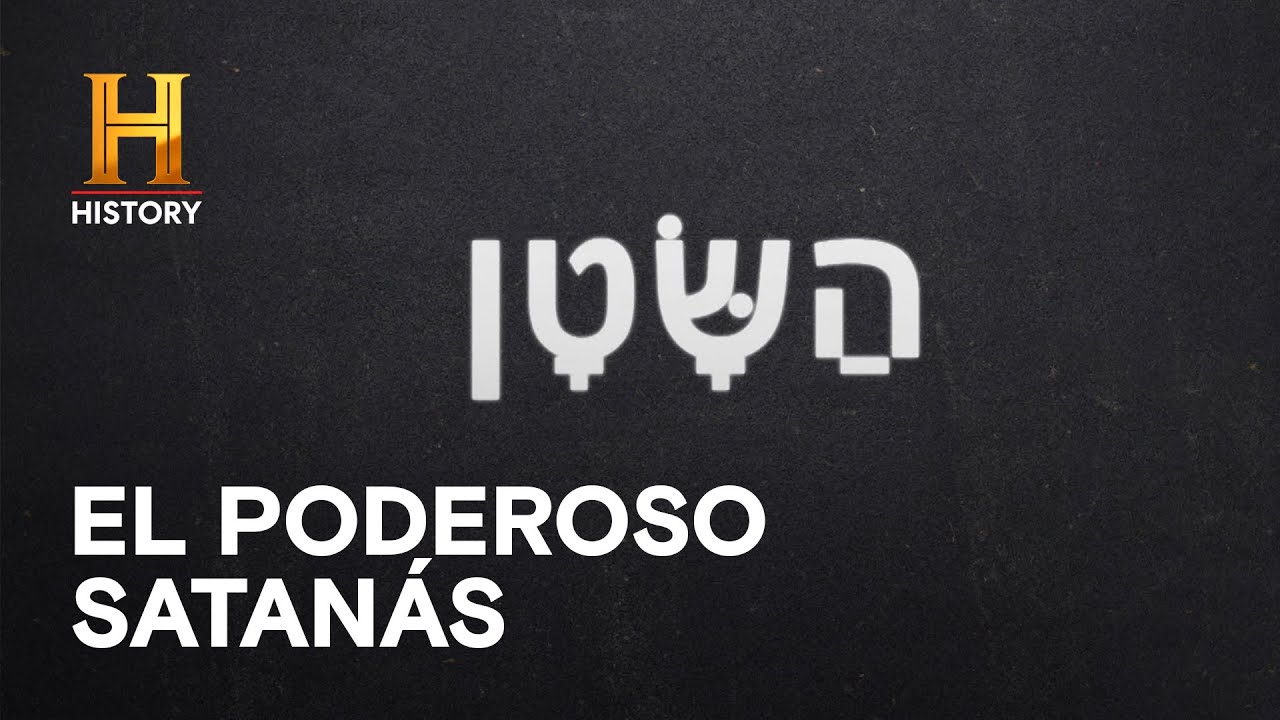
The Hebrew term Ha-Satán, often translated as "the accuser" or "adversary," forms the etymological bedrock of the figure we commonly know as Satan. In its earliest linguistic context, this was not necessarily a proper name denoting a singular, malevolent entity, but rather a title or a function. This role was often performed within a divine council, serving as a prosecutor or an obstacle whose purpose was to test the righteousness and faith of individuals. Understanding this foundational meaning is crucial to tracing the subsequent theological and cultural interpretations of this figure.

Satan in the Old Testament: A Divine Instrument?

Within the narratives of the Old Testament, the figure of Ha-Satán appears not as an independent force of evil, but rather as an agent operating under divine authority. In books such as Numbers and Job, Ha-Satán functions as an "employee" of God, tasked with performing specific, albeit harsh, duties. In Job, he is permitted by God to test the patriarch's faithfulness through immense suffering, but his actions are strictly circumscribed by divine permission. This portrayal suggests a complex understanding of divine justice and the role of a celestial prosecutor, akin to an inquisitor or an auditor within God's own system, rather than a rebel leading a cosmic opposition.

Recommended Gear for Investigation

ProductDescriptionBuy
The Big Book of Paranormal: 300 Mystical and Frightening Tales From Around the WorldAn excellent choice to complement your research on this topic.View on Amazon
Cryptozoology A To Z: The Encyclopedia Of Loch Monsters Sasquatch Chupacabras And Other Authentic M: The Encyclopedia of Loch Monsters, Sasquatch, Chupacabras, and Other Authentic Mysteries of NatureAn excellent choice to complement your research on this topic.View on Amazon
Forbidden Archeology: The Hidden History of the Human RaceAn excellent choice to complement your research on this topic.View on Amazon
The H. P. Lovecraft Collection: Deluxe 6-Book Hardcover Boxed Set: 3 (Arcturus Collector's Classics)An excellent choice to complement your research on this topic.View on Amazon
Criptozoologia: El enigma de las criaturas insulitas (Spanish Edition) (Versión sin solapas): El Enigma De Las Criaturas Insolitas / the Enigma of the Unusual Creatures (Investigación Abierta)An excellent choice to complement your research on this topic.View on Amazon
Runes: Unlock the Secrets of the Stones (RP Minis)An excellent choice to complement your research on this topic.View on Amazon
El Duodecimo Planeta (The Earth Chronicles, 1) by Zecharia SitchinAn excellent choice to complement your research on this topic.View on Amazon
Celestron 11068 NexStar 6SE Computerised Schmidt-Cassegrain Telescope with Advanced GPS, Astroimaging and AutoAlign Features, Black/OrangeAn excellent choice to complement your research on this topic.View on Amazon
Ghost-Hunting For Dummies [Idioma Inglés] An excellent choice to complement your research on this topic.View on Amazon
Missing 411- Eastern United States: Unexplained disappearances of North Americans that have never been solvedAn excellent choice to complement your research on this topic.View on Amazon
The Old Testament depicts Ha-Satán less as a rogue agent and more as a celestial functionary, fulfilling a role assigned by a higher power. This challenges the modern conception of Satan as an autonomous entity solely dedicated to evil.

The Gospels: A Tempter and Afflictor

The New Testament, particularly the Gospels, marks a significant shift in the characterization of Satan. Here, the adversary is presented as an active tempter and a source of affliction. He is depicted as actively seeking to lead humanity astray, notably in the temptation of Jesus in the wilderness. Furthermore, Satan is frequently associated with causing physical ailments and diseases, with Jesus casting out demons and confronting his influence. This period sees a more personalized and antagonistic portrayal, positioning Satan as a direct enemy of humanity's spiritual well-being and a force opposing the divine mission of Jesus.

The traditional interpretation of these accounts often emphasizes Satan's independent malevolence. However, a more nuanced analysis, considering the historical and theological context, might view these narratives as symbolic representations of internal human struggles against temptation and the collective opposition to spiritual enlightenment, rather than literal accounts of a supernatural entity's daily machinations.

The influence of popular culture, significantly amplified by media like the History channel, often reinforces the more dramatic and adversarial interpretations. As viewers engage with series that explore historical and religious narratives, such as those featuring Dennis Quaid, they are often presented with vivid portrayals that solidify the image of Satan as a distinct, powerful, and malevolent being. This continuous exposure shapes public perception, often overshadowing the more subtle theological developments found in earlier texts.

Satan's Final Transformation in Revelation

The Book of Revelation provides the most dramatic and apocalyptic depiction of Satan's ultimate transformation. Here, the adversary is no longer merely an accuser or tempter but is mythologized into a formidable cosmic enemy. He is described as a "great red dragon" with seven heads, engaged in an ongoing war against God and his heavenly forces. This final portrayal solidifies Satan's role as the ultimate antagonist, destined for a final defeat and eternal punishment in the lake of fire. This imagery has profoundly influenced Western art, literature, and theology, solidifying the archetypal image of the devil as the ultimate embodiment of evil and opposition to the divine.

The symbolic language of Revelation casts Satan as the ultimate cosmic adversary, a dragon of immense power destined for a final, cataclysmic defeat. This imagery has left an indelible mark on Western consciousness.

Audience Perspectives on Satan's Role

The transformation of Satan's figure has clearly resonated with audiences, sparking diverse interpretations and discussions, particularly within online communities. Several testimonials highlight a critical perspective on religious narratives, questioning the traditional portrayal of evil. One commenter notes, "Jajajaja ese si es mucha fabula de ka iglesia en la biblia judía el demonio o el mal solo es responsble de tres muertes mientras que su dios es responsble de miles de muertos asesinatos y plagas." This viewpoint suggests a re-evaluation of divine responsibility for suffering, contrasting the limited actions attributed to the biblical Devil with the widespread destruction attributed to God within the same scriptures. This critical engagement with religious texts indicates a growing desire for a more complex and less anthropomorphized understanding of evil and divine justice.

Another perspective found in audience commentary points towards a more symbolic or even mythological understanding of these figures. The idea that prayers might "feed the demiurge" or "transfer energy" to a deity, as suggested by "Alimentaban al demiurgo, aun lo hace todo el mundo, cuando rezan, al dios que sea, les transfieren su energia," reflects an esoteric or Gnostic viewpoint. This interpretation transcends the traditional Abrahamic framework, viewing religious devotion as a source of power for a creator entity, irrespective of its moral alignment. Such commentary underscores the diverse ways in which individuals grapple with concepts of divinity, evil, and spiritual energy in the modern era.

The engagement with these complex themes is often fueled by content that explores the fringes of history and belief, such as the series that inspired this analysis. Platforms like History channel, with their focus on "sacred wonders" and historical enigmas, provide a fertile ground for these discussions. Their ability to connect with viewers' curiosity and emotional engagement fosters a space where ancient texts and modern interpretations can coexist and be critically examined.

Researcher's Verdict: Myth or Divine Construct?

From an investigative standpoint, the figure of Satan represents a fascinating case study in the evolution of narrative and theology. It is evident that the concept of "Satan" has been molded and remolded across millennia, reflecting the societal anxieties, moral frameworks, and spiritual inquiries of different cultures and epochs. What began as a functional term for an "adversary" or "accuser" within a monotheistic system transformed into a personified embodiment of absolute evil. This transformation was not a singular event but a gradual process, influenced by inter-testamental literature, early Christian theology, and later cultural interpretations.

The Researcher's Archive

For those wishing to delve deeper into the history and theology surrounding Satan and related figures, I recommend the following resources:

  • "The Devil: A Biography" by Peter T. Jones: A comprehensive historical and cultural analysis of the Devil's evolution.
  • "Paradise Lost" by John Milton: A seminal epic poem that significantly shaped the literary portrayal of Satan.
  • "On Fairy Stories" by J.R.R. Tolkien: While not directly about Satan, Tolkien's essays offer profound insights into the creation and function of myth and the "sub-creation" of evil figures.
  • Documentaries on Ancient Religions and Mythology: Many productions by History Channel and similar networks provide accessible overviews of these complex topics.

Equipment Recommended for Investigation

To conduct thorough research into historical and theological topics, access to reliable sources and tools is paramount. While this investigation focuses on textual and historical analysis, other paranormal research often requires specialized equipment.

Frequently Asked Questions

  1. What is the original meaning of "Satan" in Hebrew?

    In Hebrew, "Ha-Satán" (הַשָּׂטָן) translates to "the accuser" or "adversary." It was initially a title or a role rather than a proper name.

  2. How did the portrayal of Satan change from the Old Testament to the New Testament?

    In the Old Testament, Satan often functions as an agent of God. In the New Testament, particularly the Gospels, Satan is depicted as a more independent tempter and a direct adversary of humanity and Christ.

  3. What is the significance of Satan's portrayal in the Book of Revelation?

    Revelation presents Satan as the ultimate cosmic antagonist, the "great red dragon," destined for a final defeat. This solidified his image as the personification of ultimate evil.

  4. Do audience comments suggest skepticism towards traditional religious narratives?

    Yes, some audience comments express skepticism, questioning the divine responsibility for suffering and contrasting it with the attributed role of evil entities. Others offer more esoteric interpretations of spiritual energy transfer.

Your Mission: Historical Contextualization

The next time you encounter a narrative about a figure of evil or divine judgment, take a moment to consider its historical and cultural context. Ask yourself: what anxieties or beliefs does this figure represent for its original audience? How has its portrayal evolved over time? Understanding the development of such concepts is key to unraveling their true significance.

Share your thoughts below! Have you encountered similar transformations in other mythical figures? What are your experiences or interpretations of these ancient narratives? Don't forget to share this investigation with fellow truth-seekers on your social networks!

Investigator's Note: True paranormal research doesn't fund itself. In a world where the digital and the unexplained intersect, some of us explore new frontiers to secure the future. Do you dare to be part of the vanguard? Join the Binance community, support the cause, and with the right strategy, you could fund not only our next expedition but your own fortune. The next great discovery could be just a click away.

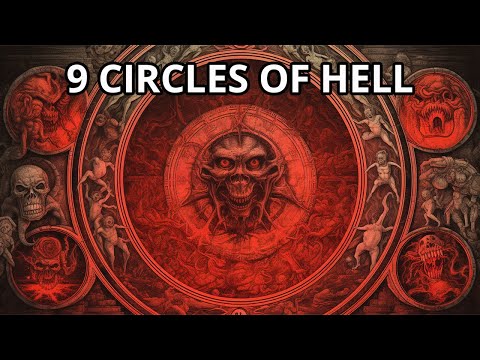
The 9 Circles of Hell: An Investigator's Analysis of Dante's Inferno and the Frozen Prison of Satan


Welcome, initiates, to a deep dive into one of the most enduring allegories of the human soul's potential descent. We are not merely recounting a literary masterpiece; we are dissecting a map of sin, a chilling testament to universal anxieties. Tonight, we open the dossier on Dante Alighieri's Inferno, specifically its chilling depiction of the nine circles of Hell and the ultimate fate of the fallen Lucifer, imprisoned in an infernal, frozen abyss. This is not a casual read; this is an analysis of archetypal punishment and the enduring power of myth.

Dante's Divine Comedy, a tripartite journey through the afterlife, serves as the foundational text. While Purgatorio and Paradiso offer paths to redemption and divine grace, it is Inferno that has captured the collective imagination, a stark visualization of consequence. Guided by the pragmatic intellect of Virgil, the Roman poet who himself never knew the Christ, Dante navigates a descent where each level punishes a specific category of sin, escalating in severity. My task is to strip away the poetic veneer and analyze the underlying psychological, symbolic, and perhaps even occult implications of this architectural hellscape.

The First Circle: Limbo – The Unbaptized Virtuous

The journey commences in Limbo, a realm not of active torment, but of passive, eternal longing. Here reside the souls of the virtuous pagans and the unbaptized – figures like Homer, Aristotle, and Julius Caesar. They committed no sin that warranted damnation, yet their lack of baptism, a sacrament of entry into the divine covenant, bars them from the Beatific Vision. This raises immediate questions about divine justice and the arbitrary nature of salvation. Is it truly just to condemn souls for the absence of a rite they could not have known? From an investigative standpoint, Limbo represents the eternal 'what if' – the potentials unrealized, the knowledge unshared, forever separated from their ultimate source. It’s a philosophical dead end, a suspended animation of the spirit.

The Second Circle: Lust – The Winds of Uncontrollable Desire

As we descend, the punishments become palpable. The lustful, whose earthly desires swept them away like a storm, are now themselves eternally swept by a violent, ceaseless storm. Figures like Cleopatra and Helen of Troy are tossed about, their sin mirrored in their torment. This is a visceral representation of being a slave to one's own impulses. The whirlwind symbolizes the chaotic, unbridled nature of unchecked passion, a force that can tear a life apart. For the investigator, this circle highlights the psychological principle of karmic retribution: the sin becomes the instrument of the punishment. Understanding this dynamic is crucial when analyzing patterns of behavior that lead to self-destruction, even on a spiritual plane.

The Third Circle: Gluttony – The Filth and Mire of Excess

Here, the denizens lie in putrid slush, battered by icy rain and tormented by putrid hail, never able to satisfy their insatiable hunger or thirst. Cerberus, the three-headed dog of myth, guards this circle, rending and tearing at the souls. This level directly confronts us with the consequences of overindulgence, the way the pursuit of fleeting sensory pleasure can lead to endless degradation. The imagery is deliberately repulsive, designed to evoke disgust. It’s a stark reminder that unchecked appetites, whether for food, drink, or sensation, can mire us in a truly abominable state, far from any form of spiritual fulfillment.

The Fourth Circle: Greed – The Endless Burden of Hoarding and Spending

The hoarders and the spendthrifts are condemned to an eternally futile labor: pushing immense weights against each other, colliding endlessly. They are enemies of Fortune, forever locked in a cycle of acquisition and squandering. This punishment is a metaphor for their inability to find balance in their earthly lives, their fixation on material wealth or its profligate dissipation. The sheer, pointless exertion speaks to the soul-crushing nature of avarice and its opposite, reckless prodigality. Imagine the sheer, crushing weight of accumulated regrets, the Sisyphean task of undoing past excesses. It’s a powerful, if bleak, commentary on our relationship with resources.

The Fifth Circle: Wrath and Sullenness – The Styx and the Swamp

This is where divine judgment begins to manifest in water and mud. The wrathful tear at each other in the muddy waters of the River Styx, their fury a physical, palpable force. Below the surface lie the sullen, the melancholic, whose anger festered inward, now submerged in the black mire, their sorrow a silent, suffocating torment. Dante’s encounter with Filippo Argenti, a notorious political rival, highlights the personal, often venomous, nature of wrath. This level forces us to confront the destructive power of both active rage and passive despair. The Styx, in many ancient mythologies, is a boundary, and here it is a barrier of unreleased emotional toxicity.

The Sixth Circle: Heresy – The Fiery Tombs of Doubt

Here, the architects of disbelief, those who denied the soul's immortality, are entombed in burning sepulchers. The flames represent the eternal burning of their heretical ideas, which they themselves now suffer. This circle directly addresses the theological and philosophical challenges to divine truth. From an investigator's perspective, it's fascinating to consider how deep-seated beliefs, even those perceived as errant, can shape eternal reality within this allegorical framework. It speaks to the power of conviction, for good or ill. The eternal heat suggests that the 'fire' of doubt can consume just as powerfully as any physical torment.

The Seventh Circle: Violence – Against Neighbors, Selves, and God

The seventh circle is a complex, multi-layered torment for the violent. Those violent against their neighbors are immersed in boiling blood. The suicides are transformed into thorny trees, tormented by Harpies. And those violent against God – blasphemers, sodomites, and usurers – are subjected to a barren desert under a rain of fire. The inclusion of Brunetto Latini, Dante's former mentor, among the sodomites adds a deeply personal and poignant layer, underscoring that no personal connection exempts one from the universal laws of this infernal hierarchy. This circle is a stark portrayal of how destructive impulses, directed outward, inward, or upward, lead to a state of profound suffering and degradation.

The Eighth Circle: Fraud – The Ten Bolgias of Deception

Known as Malebolge, this circle is a vast, stony expanse divided into ten concentric ditches (bolgias), each housing a different type of fraud. Seducers are whipped; flatterers are submerged in excrement; simoniacs are buried headfirst, feet ablaze; sorcerers are contorted; corrupt politicians are immersed in boiling pitch; hypocrites wear leaden robes; thieves are tormented by serpents, leading to grotesque transformations; fraudulent counselors are engulfed in flame; sowers of discord are hacked apart; and falsifiers of all types are afflicted with loathsome diseases. The sheer variety and ingenuity of the punishments for fraud are staggering, emphasizing its pervasiveness and the multifaceted nature of deception.

The Ninth Circle: Treachery – The Icy Depths and Satan's Frozen Despair

The final circle is a vast, frozen lake, Cocytus, where the ultimate sinners – the treacherous – are encased in ice. The degrees of punishment vary based on the type of treachery: against kin, against country, against guests, and against their lords. At the very center, embedded in the ice and weeping tears that freeze around her eyes, is Lucifer himself. He is depicted as a monstrous, three-headed giant, each mouth chewing on a supreme traitor: Brutus, Cassius (betrayers of Caesar), and Judas Iscariot (betrayer of Christ). His wings, beating in a futile attempt to escape, generate the freezing winds that form the lake. The ultimate punishment for the greatest of sins is absolute immobility, utter despair, and isolation in a realm of perpetual cold. This frozen lake is the antithesis of divine love and warmth; it is the ultimate manifestation of spiritual deadness and helplessness. For the investigator, Satan’s fate is the ultimate case study in the fall from grace, a symbol of absolute power reduced to absolute impotence.

"The image of Satan trapped in the ice is not merely a literary device; it resonates with primal fears of paralysis and isolation, representing a state of being so devoid of love or warmth that it freezes the very soul."

Investigator's Verdict: Allegory, Metaphor, or Echo of Ancient Terrors?

Dante's Inferno is, without question, a literary marvel, a profound exploration of morality, theology, and the human psyche. The nine circles serve as a meticulously constructed allegorical framework for understanding sin and its consequences. However, as investigators of the unexplained, we must ask: is this merely a poetic construct, or does it tap into something more primordial? The consistent depiction of hellish realms across diverse cultures and historical periods suggests that these narratives may echo a fundamental human understanding of ultimate punishment and spiritual peril.

The frozen lake holding Satan is particularly compelling. While many popular depictions imagine hell as fiery, the concept of eternal cold and isolation as the ultimate torment is potent. It aligns with certain esoteric traditions that view the absence of divine light and love as the true nature of spiritual darkness. Whether Dante drew from obscure texts or tapped into a collective unconscious dread, the imagery of Satan, the once-brightest angel, reduced to a frozen, powerless entity, is a chillingly effective symbol of absolute spiritual desolation. My analysis suggests that while Inferno is a work of fiction, its enduring power lies in its ability to articulate, through vivid metaphor, the terrifying consequences that many believe await those who stray too far from the path of righteousness.

The Investigator's Archive

To fully grasp the impact and context of Dante's work, and to explore similar thematic investigations into the nature of punishment and the afterlife, I recommend the following resources:

  • Books:
    • The Divine Comedy by Dante Alighieri (various translations available; the Penguin Classics edition is often recommended for its scholarly notes).
    • The Occult Philosophy of the Renaissance by Frances Yates (for understanding the intellectual and magical currents of Dante's era).
    • The Golden Bough by James George Frazer (a comparative study of mythology and religion that touches on underworld traditions).
  • Documentaries/Films:
    • "Hell: The Devil's Domain" on Discovery+ or similar historical documentary channels.
    • "Dante's Inferno: The Animated Epic" (a visual interpretation that can aid in conceptualization).
  • Websites:
    • Reputable academic sites offering analyses of medieval literature and theology.
    • Libraries and archives dedicated to rare manuscripts and theological studies.

Protocol: Analyzing Archetypal Punishment

When examining allegorical realms like Dante's Inferno, consider these steps:

  1. Identify the Sin: Clearly define the specific human failing or vice being punished in each circle.
  2. Analyze the Punishment: Deconstruct the torment. How does it directly mirror or symbolically represent the sin? What are the sensory and psychological aspects of the punishment?
  3. Examine the Symbolism: What do the landscape, the creatures, and the actions represent at a deeper level? Consider classical mythology, religious symbolism, and psychological archetypes.
  4. Contextualize Historically: Research the theological, philosophical, and social context of the work. What were the prevailing beliefs about sin, judgment, and the afterlife during that period?
  5. Look for Parallels: Compare the allegorical structure and punishments with similar concepts in other mythologies, religions, or occult traditions. Are there common threads in humanity's conception of ultimate consequence?
  6. Assess Psychological Resonance: Why does this depiction remain so potent? What primal fears or moral concepts does it tap into within the human psyche?

Frequently Asked Questions

Is Dante's Inferno meant to be a literal description of Hell?

Scholars generally interpret the Divine Comedy as a profound allegory. While it describes a journey through the afterlife, its primary purpose is to explore themes of sin, redemption, divine justice, and the human condition through vivid imagery and narrative. It's a spiritual and moral landscape more than a geographical one.

How does Satan's imprisonment in ice relate to his being a fallen angel?

The ice symbolizes ultimate spiritual coldness, the complete absence of divine love and warmth, which is the antithesis of Satan's former glory as Lucifer, the light-bearer. It represents his complete isolation, impotence, and the frozen state of his being, devoid of the fiery passion or ambition that once characterized him. It is the ultimate state of spiritual death.

Are there similar concepts of frozen hells in other mythologies?

While fire is a more common element in depictions of hell, the concept of a frigid underworld or place of punishment exists in some mythologies. For example, Norse mythology features Niflheim, a realm of primordial ice and mist. Some interpretations suggest that the ultimate state of separation from the divine could be conceived as a chilling void rather than a fiery inferno.

What is the significance of Virgil as Dante's guide?

Virgil represents reason and classical wisdom. Because he lived before Christ, he could guide Dante through Inferno and Purgatorio, realms governed by earthly morals and justice. However, reason alone cannot lead to divine understanding, which is why Beatrice, representing divine revelation and theology, takes over in Paradiso.

Dante's Inferno remains a stark and powerful exploration of the consequences of sin, a chilling blueprint of the soul's potential descent. The journey through these nine circles, culminating in the frozen despair of Satan, serves as a powerful reminder of the gravity of our choices. It’s a testament to how symbolic landscapes can illuminate the deepest recesses of the human psyche and its moral quandaries.

Your Mission: Deconstruct a Modern Myth

While Dante's work is an ancient text, the human tendency to conceptualize realms of punishment and consequence persists. Your mission: identify a modern "hellscape" depicted in popular culture (a film, a video game, a novel) that mirrors or contrasts with Dante's structure. Analyze its sins, punishments, and symbolism. Does it reflect similar archetypal fears, or does it reinterpret them for a contemporary audience? Document your findings and share them in the comments below. Let's see if the architecture of damnation has evolved, or if its core elements remain terrifyingly constant.

About the Author

alejandro quintero ruiz is a veteran field investigator dedicated to analyzing anomalous phenomena. His approach combines methodological skepticism with an open mind to the inexplicable, always seeking the truth behind the veil of reality. With years of experience navigating the fringes of the known, his work aims to demystify the mysterious through rigorous analysis.

The Fallen Angel: Unmasking the True History of Satan


Introduction: Beyond the Serpent

The figure of Satan, the archetypal adversary, is deeply etched into the collective consciousness. Yet, the narrative commonly peddled – that of a simple, horned demon with a pitchfork – is a gross oversimplification, a caricature that belies a far more complex and historically layered entity. This investigation seeks to peel back the theological veneer and explore the true genesis of this enigmatic figure, tracing its evolution from ancient adversarial deities to its modern psychological and occult interpretations. We will dissect the evidence, not just from scripture, but from comparative mythology, historical records, and the shadowy corners of occult lore, to understand who, or what, Satan truly represents.

The Genesis of Rebellion: Echoes in Ancient Myths

To understand Satan, we must first look beyond the Abrahamic traditions. The concept of a 'fallen one' or a cosmic rebel predates Christian theology. Ancient Mesopotamian myths speak of primordial struggles between order and chaos, often personified by deities who challenged the established pantheon. Consider the story of Tiamat, the saltwater goddess in the Babylonian creation epic Enûma Eliš, who waged war against her consort Apsu and the younger gods. While not a direct parallel, the theme of a powerful, primal entity driven to conflict resonates. In Zoroastrianism, Angra Mainyu (Ahriman) stands as the destructive spirit, the embodiment of evil, locked in an eternal struggle with Ahura Mazda, the benevolent creator. This dualistic framework, a cosmic battle between good and evil, significantly influenced later theological developments.

These ancient narratives provide a crucial foundation. They establish the archetype of opposition, of a force that exists in inherent tension with creation and order. This adversarial role, later attributed to Satan, was a familiar trope in the ancient world, a way to explain the presence of suffering, destruction, and malevolence within existence. The question then becomes: how did these disparate threads coalesce into the singular figure of Satan?

Theological Evolution: From Adversary to Archetype

The transformation of Satan within Abrahamic religions is a fascinating subject of theological and textual analysis. In the Hebrew Bible (Old Testament), the figure of "satan" (a Hebrew word meaning "adversary" or "accuser") appears not as a singular fallen angel, but more as a role within the divine court, an agent of God tasked with testing humanity's faith. Job's story is a prime example, where "the Satan" acts as a prosecutor, permitted by God to inflict suffering to gauge Job's devotion. There is no mention of a rebellion or a descent from heaven in these early texts.

The concept of a distinct, powerful evil entity warring against God truly takes shape in later Jewish literature, particularly during the intertestamental period and within apocryphal texts. Influenced perhaps by Persian dualism, a more developed figure emerged. It is within Christianity, however, and particularly in the New Testament, that Satan solidifies as the chief fallen angel, the leader of rebel angels, and the embodiment of opposition to God and Christ. The Book of Revelation provides vivid imagery of a cosmic battle, with the dragon being cast out of heaven and into the earth. This narrative shift is critical: Satan becomes not just an accuser, but a distinct cosmic antagonist, a usurper figure whose rebellion has profound implications for the spiritual realm and human salvation. Understanding this evolution requires a critical examination of theological exegesis and the historical context of biblical canonization.

"And the great dragon was cast out, that old serpent, called the Devil, and Satan, which deceiveth the whole world: he was cast out into the earth, and his angels were cast out with him." – Revelation 12:9 (KJV)

The Luciferian Complex: A Psychological Lens

Beyond theology, the figure of Satan has been interpreted through the lens of psychology, most notably by figures like Carl Jung. In this context, Satan can be viewed not as an external entity, but as a potent symbol of the shadow self – the repressed, darker aspects of the human psyche. The "Luciferian complex" or the "Satanic archetype" represents the aspects of ourselves that are rebellious, prideful, and resentful of authority. It embodies the urge towards individuation, even if that path involves defiance and transgression.

From a Jungian perspective, the expulsion of Satan from heaven can be seen as a metaphor for the integration of the shadow. Forgetting or denying these darker aspects leads to their projection onto external figures, be they individuals, groups, or abstract entities like "the Devil." A thorough investigation into the psychological interpretations reveals Satan as a mirror reflecting humanity's own internal conflicts: the struggle between conformity and rebellion, order and chaos, the conscious and the unconscious. This perspective demands an equipement that can measure psychological biases, such as an EMF meter calibrated not just for electrical fields, but for the energetic imprint of repressed thoughts.

The allure of the forbidden, the curiosity about what lies beyond established norms, finds its ultimate expression in the Satanic archetype. It represents the primal drive to question, to challenge, and perhaps to transgress. This psychological interpretation is not about literal belief, but about understanding the deep-seated human impulses that the figure of Satan embodies.

The Occult Interpretation: Ritual and Symbolism

The occult traditions have long engaged with the figure of Satan, often reinterpreting his role within their own esoteric frameworks. For some ceremonial magicians and modern Satanic movements (distinct from theological Satanism), Satan is not necessarily a malevolent force, but a symbol of liberation from religious dogma, a champion of individualism, and a facilitator of forbidden knowledge. Aleister Crowley's concept of the "True Will" and the rebellion against established moral codes finds echoes in certain Satanic philosophies.

In these contexts, rituals invoking Satan (or Lucifer, often seen as distinct but related) are not necessarily about devil worship in the traditional sense, but about harnessing primal energies, confronting the shadow self, and asserting personal autonomy. The symbolism associated with Satan – the pentagram, the Baphomet, the goat – are imbued with layers of esoteric meaning, often relating to the balance of opposing forces, the material world, and untamed instincts. Studying occult texts, such as those by Eliphas Lévi or Anton LaVey, reveals a complex symbolic language where Satan represents a potent force for personal transformation. For those seeking to delve deeper into this aspect, specialized literature on demonology and comparative occultism is essential, often found in niche online bookstores specializing in rare occult texts.

Historical Manifestations: Fear and Fascination

Throughout history, the concept of Satan has been invoked to explain societal ills, personal misfortunes, and perceived threats. The medieval period, particularly the era of witch trials, saw an explosion of belief in demonic influence, with Satan as the putative leader of witches and a direct instigator of heresy and evil. Sermons, inquisitorial records, and pamphlets of the time paint a vivid picture of a society deeply preoccupied with the Devil's presence and machinations.

Later, during periods of social upheaval or political instability, accusations of Satanic influence were often weaponized. The "Satanic Panic" of the 1980s in the United States, for instance, involved widespread fears of ritualistic abuse and cult activity, often fueled by dubious testimonies and sensationalized media reports. This historical pattern highlights how the figure of Satan can become a convenient scapegoat, a personification of societal anxieties and fears. Documentaries delving into these periods, like those found on Gaia or other documentary platforms, often provide harrowing accounts of mass hysteria and the tragic consequences of unchecked belief. Understanding these historical manifestations is crucial for discerning patterns of fear, projection, and social control.

Investigator's Verdict: Deconstructing the Devil

The historical and theological journey of Satan is a testament to humanity's enduring need to grapple with the concepts of evil, rebellion, and the unknown. While scripture and theological discourse provide the framework for Satan as a divine adversary, the richer tapestry of his meaning emerges when we consider comparative mythology, psychological archetypes, and esoteric interpretations. Is Satan a literal fallen angel? A symbolic representation of our own shadow? A projection of societal fears? The evidence suggests a multifaceted entity, whose "truth" lies not in a single definition, but in the complex interplay of these various interpretations.

From an investigative standpoint, the persistent presence and evolution of this figure across cultures and epochs point to a fundamental aspect of the human psyche and our attempts to rationalize the inexplicable. The power of the Satanic narrative lies in its ability to encapsulate primal fears, rebellious desires, and the age-old question of why suffering exists in the world. Therefore, disengaging from a literal interpretation and embracing an anthropological and psychological analysis offers a more profound understanding of this enduring enigma. The true history of Satan is, in essence, a history of humanity's own internal landscape.

Investigator's Archive

For those seeking to delve deeper into the complex history and interpretations of Satan and adversarial figures, the following resources are essential:

  • Books:
    • "The Devil: A Biography" by David P. Brown - A comprehensive exploration of the historical and psychological aspects of the Devil.
    • "The Satanic Bible" by Anton LaVey - A foundational text for modern LaVeyan Satanism, focusing on individualism and carnality.
    • "Paradise Lost" by John Milton - A seminal epic poem offering a dramatic retelling of the biblical fall of man and Satan's rebellion.
    • "The Golden Bough" by Sir James Frazer - A monumental work on comparative mythology, offering context for adversarial deities. (Comparative Mythology)
  • Documentaries/Series:
    • "The Devil You Know" (National Geographic) - Explores the historical and cultural evolution of the Devil figure.
    • "Hellier" (Epix/Hulu) - While not solely focused on Satan, it heavily delves into occult lore, demonic entities, and unexplained phenomena.
  • Platforms:
    • Gaia.com: Offers a vast library of documentaries and series on spirituality, consciousness, and esoteric topics, often touching upon demonic figures and occult practices.
    • Academic Journals: Accessing scholarly articles on religious studies, mythology, and psychology can provide in-depth, peer-reviewed analysis. Use search engines like Google Scholar. (Academic Research)

Frequently Asked Questions

Q1: Is Satan a literal being or a symbolic representation?
A1: Scholarly and theological interpretations vary widely. While some adhere to a literal interpretation of Satan as a fallen angel, many view him as a powerful archetype embodying evil, rebellion, or the shadow self.

Q2: How did the appearance of Satan change over time?
A2: Early texts describe "satan" as an accuser. The horned, demonic imagery became prominent during the Middle Ages, influenced by folklore and artistic representations, solidifying his popular image.

Q3: What is the difference between Satanism and theistic Devil worship?
A3: Modern Satanism, particularly LaVeyan Satanism, is largely atheistic, viewing Satan as a symbol of individualism and liberation. Theistic Devil worship, while rare and often misrepresented, involves the veneration of Satan as a divine entity.

Q4: How can understanding Satan help us understand ourselves?
A4: By examining what Satan represents – defiance, pride, rebellion, the unknown – we can gain insight into the darker aspects and potentials within human nature, prompting self-reflection and integration of the shadow self. (Shadow Self)

Your Field Mission

This investigation into Satan's true history invites you to critically examine the narratives that shape our understanding of good and evil. Your mission, should you choose to accept it, involves a two-pronged approach:

  1. Comparative Mythology Analysis: Choose one ancient adversarial deity or figure of opposition (e.g., Loki in Norse mythology, Set in Egyptian mythology, or Angra Mainyu in Zoroastrianism). Research their role within their respective pantheons. Identify parallels and divergences with the Satanic archetype. Document your findings and consider what these comparisons reveal about universal human concerns regarding chaos and order.
  2. Personal Shadow Exploration: Reflect on aspects of yourself that you might typically repress or consider "dark." This could be defiance against perceived injustice, pride in your accomplishments, or a yearning for forbidden knowledge. How do these aspects manifest in your life? Consider journaling these observations and exploring how they align with the psychological interpretations of the Satanic archetype discussed in this post. Remember, self-awareness is the first step to integration.

Share your insights or any compelling findings from your comparative analysis in the comments below. Let's deconstruct these ancient figures together.

About the Author

Alejandro Quintero Ruiz is a veteran field investigator dedicated to the analysis of anomalous phenomena. His approach combines methodological skepticism with an open mind to the inexplicable, always seeking the truth behind the veil of reality. With years of experience across a spectrum of unexplained events, his work aims to illuminate the darkest corners of mystery.

The figure of Satan is more than a simple character in religious doctrine; it is a complex symbol woven through human history, mythology, and psychology. By dissecting its varied interpretations, we gain a profound understanding not only of the forces we perceive as external evil, but of the internal battles that define the human condition. The investigation into the fallen angel is, ultimately, an investigation into ourselves.