

FILE INDEX
- Introduction
- Historical Context and Conventional Claims
- Anomalous Features: Precision and Polish
- Alternative Hypotheses: Pre-Mauryan Civilization
- Archaeological Skepticism and Cover-Up Theories
- Comparative Analysis with Other Megastructures
- Researcher's Verdict: Fraud, Genuine Phenomenon, or Something Else?
- The Researcher's Archive
- Protocol: Analyzing Anomalous Stonework
- Frequently Asked Questions
- About the Author
Introduction: The Whispers of Bihar's Granite Hills
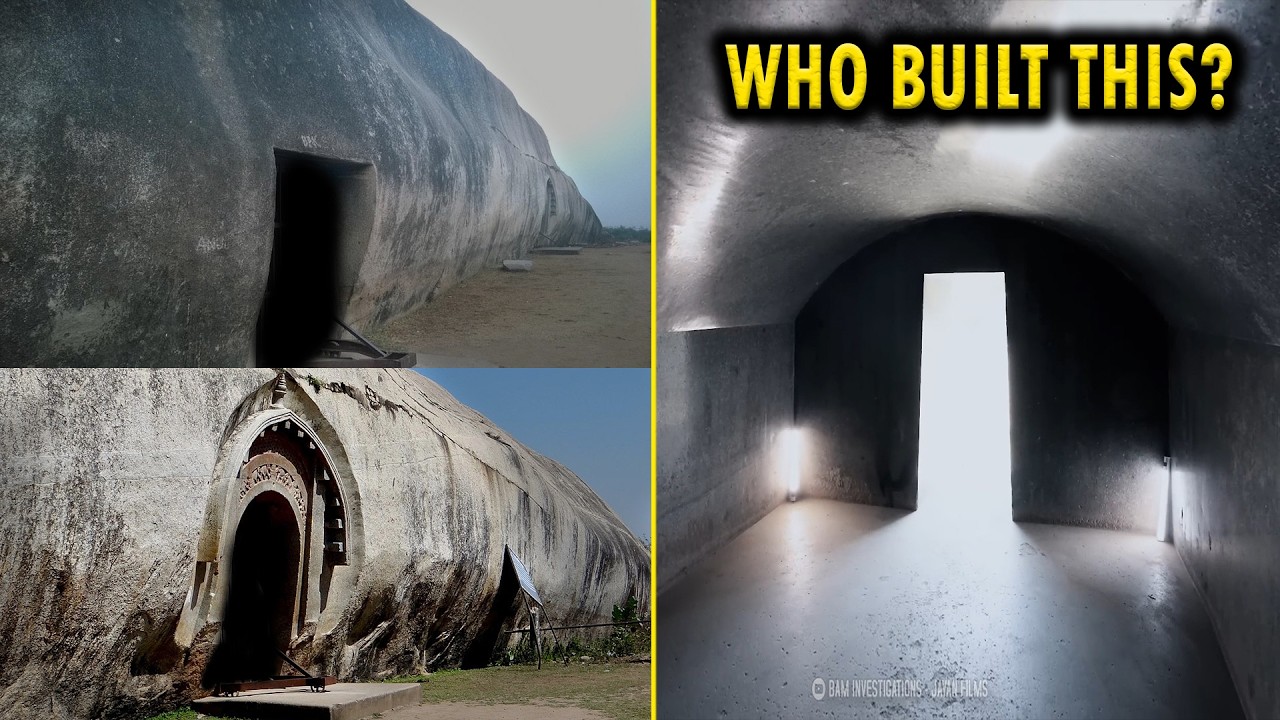
Beyond the accepted timelines of human history lie enigmas etched in stone, structures that challenge our understanding of ancient capabilities. Among these, the Barabar Caves in Bihar, India, stand as a profound testament to a forgotten past. Carved into solid granite, their almost impossible precision and surface polish have long been a focal point of debate, suggesting a technological prowess that eclipses the era to which they are conventionally attributed. This investigation delves into the heart of these subterranean wonders, dissecting the evidence that points towards advanced ancient technology and questioning the narratives that seek to confine them to simple historical footnotes.
Historical Context and Conventional Claims
Mainstream historical accounts and archaeological consensus place the genesis of the Barabar Caves around the 3rd century BCE, attributing their excavation to the Mauryan Empire, specifically under Emperor Ashoka. This period is known for significant architectural and religious developments in India. The caves, including the Lomas Rishi, Sudama, Vishva Zhopdi, and Karan Chaupar caves, were purportedly used by ascetics. While the Mauryan attribution provides a framework, the sheer quality of the workmanship consistently raises red flags for those looking beyond the established narrative.
Anomalous Features: Precision and Polish
The defining characteristic of the Barabar Caves is their extraordinary finish. The interior rock surfaces are polished to a mirror-like sheen, a feat that is baffling when considering the tools traditionally believed to be available during the Mauryan period – primarily rock hammers, chisels, and mallets, possibly made of copper or harder stones. Achieving such a smooth, reflective surface on solid granite, often with near-perfect right angles and geometric regularity, pushes the boundaries of what manual labor alone could accomplish within the proposed timeframe. This level of finishing suggests either an immense, almost unimaginable application of primitive labor, or the use of techniques and tools far beyond our current understanding of ancient metallurgy and engineering.
"Solid granite. Almost geometricaly perfect. This is lost to us. Solid granite. To say this was done with primitive hand tools to be a rain shelter is like saying the ISS was built by toddlers to be a pre school."
Alternative Hypotheses: Pre-Mauryan Civilization
The anomalous characteristics of the Barabar Caves have fueled theories positing their origin from a much older, advanced civilization. Some researchers suggest these structures predate the Mauryan Empire by centuries, or even millennia, aligning them with a hypothetical antediluvian world civilization. The craftsmanship bears striking resemblances to other enigmatic sites globally, such as the King's Chamber in the Great Pyramid of Giza, which also exhibits unparalleled precision in its stonework. This comparative analysis hints at a shared, potentially lost, technological heritage.
"I am from India and I don't believe that the Maurians built it as claimed by the locals and the state and on the contrary I believe it is more than 4500 years old from a civilization which existed during the antediluvian world. The King's Chamber in the Great Pyramid of Giza shares the same craftsmanship on the rocks."
Archaeological Skepticism and Cover-Up Theories
The persistent claims of primitive tool usage for such sophisticated work often elicit strong skepticism from independent researchers and enthusiasts. The idea that these structures were carved with simple rock hammers and copper chisels is often perceived as not just improbable, but deliberately misleading. This has led to theories suggesting an intentional cover-up or suppression of knowledge by mainstream institutions, aimed at preserving established historical timelines. The sentiment among many observers is that current archaeological dogma is insufficient to explain these anomalies fully, implying a deliberate omission of inconvenient truths.
"I bet mainstream archaeology tries to say these were carved with rock hammers and copper chisels, too."
"They sure did a fantastic job with those primitive tools, actually it’s beginning to feel offensive that they expect us to believe that crap."
"Someone really does not want us to know something. Perhaps it's the fact that they reset us. I never wanted a time machine so badly. I want to know what we lost."
"Two words: Case Closed. There is no longer any doubt after seeing this video and learning about Barabar for the first time that there was something going on long ago that we don’t know about and that is clearly being covered up."
Comparative Analysis with Other Megastructures
The Barabar Caves are not isolated anomalies. Their precision stonework and advanced finishing resonate with other pre-historic megalithic sites worldwide. From the precision-cut stones of Puma Punku in Bolivia to the intricate masonry of Baalbek in Lebanon, a pattern emerges: ancient sites exhibiting technological sophistication that defies easy explanation using conventional historical models. Comparing the Barabar Caves to these sites, particularly in terms of granite and basalt manipulation, strengthens the hypothesis of a globally interconnected ancient civilization possessing advanced engineering knowledge.
Researcher's Verdict: Fraud, Genuine Phenomenon, or Something Else?
After examining the evidence, the Barabar Caves present a compelling case that challenges conventional historical narratives. While outright fraud is highly unlikely given the scale and integration of the structures into the landscape, the attribution to the Mauryan Empire solely based on loose historical context, without accounting for the technological leap implied by the finish, appears inadequate. The polished granite interiors strongly suggest the use of methods or tools not typically associated with the 3rd century BCE in India. Whether this points to a forgotten pre-Mauryan advanced civilization, extraterrestrial intervention, or a misunderstood aspect of ancient human capability remains open to investigation. My current assessment leans heavily towards a genuine, inexplicable ancient technological feat, suppressed or misunderstood by modern academia.
The Researcher's Archive
For those seeking to deepen their understanding of ancient mysteries and advanced technologies, I recommend exploring the following resources:
- Pre-Historic Megastructures eBook: An extensive compilation covering over 30 extraordinary megalithic sites globally.
- Ancient Origins: A reputable platform for news and articles on the mysteries of the past.
- Graham Hancock Official YouTube Channel: Exploration of alternative historical theories and ancient civilizations.
- Earthly Mission - Barabar Caves Analysis: Further insights into the specific polishing techniques.
Protocol: Analyzing Anomalous Stonework
Investigating sites like the Barabar Caves requires a methodical approach. Here’s a basic protocol for analyzing anomalous stonework:
- Document Existing Claims: Record the mainstream historical and archaeological attributions, along with the evidence provided.
- Observe and Record Anomalies: Meticulously document any features that contradict conventional explanations – precision, polish, material hardness, tool marks (or lack thereof), geometric perfection, and scale.
- Comparative Analysis: Cross-reference findings with similar sites globally. Look for recurring patterns in materials, techniques, and placement.
- Tool Mark Analysis: If tool marks are present, analyze their characteristics. Do they align with known primitive tools, or do they suggest advanced cutting or polishing implements? Techniques like diamond-tipped drills or sonic resonators are modern examples of what might have been available.
- Material Science Investigation: Examine the properties of the stone itself. Is it unusually hard? Was it treated or altered in some way?
- Formulate Hypotheses: Based on observations, develop plausible (even if speculative) hypotheses that account for the anomalies. Consider advanced ancient technology, lost civilizations, or even non-terrestrial origins.
- Seek Corroborating Evidence: Look for any other supporting data, such as ancient texts, oral traditions, or geological findings, that might lend credence to your hypotheses.
Frequently Asked Questions
Q1: What is the mainstream explanation for the Barabar Caves' construction?
A1: Mainstream archaeology attributes the caves to the Mauryan Empire, dating them to the 3rd century BCE, often citing Emperor Ashoka. They are generally believed to have been carved using traditional rock-cutting tools available at the time.
Q2: Why are the Barabar Caves considered anomalous?
A2: The primary anomaly lies in the extraordinary precision and mirror-like polish of the granite interiors. This level of finish is exceptionally difficult, if not impossible, to achieve with the primitive tools commonly attributed to the Mauryan period.
Q3: Could advanced technology have been used in ancient times?
A3: While controversial, the evidence from sites like Barabar suggests that ancient civilizations may have possessed technologies far beyond what is currently acknowledged by mainstream history. The exact nature of this technology remains a subject of intense speculation.
Q4: Are there similar sites around the world?
A4: Yes, numerous megalithic sites globally, such as Puma Punku, Baalbek, and the Great Pyramid of Giza, exhibit similar characteristics of precision stonework and advanced construction techniques that challenge conventional explanations.
About the Author
alejandro quintero ruiz is a veteran field investigator specializing in paranormal phenomena, ancient mysteries, and unexplained anomalies. With decades of experience deconstructing hoaxes and verifying extraordinary claims, his pragmatic, analytical approach cuts through the noise to seek verifiable truths. He has explored countless alleged hotspots, interviewed hundreds of witnesses, and analyzed reams of evidence, from EVP recordings to anomalous artifacts. His work is driven by a relentless curiosity and a deep-seated belief that the unexplained, while often elusive, is ultimately knowable.
Your Mission: Uncover the Truth
The Barabar Caves are more than just ancient monuments; they are a challenge to our perception of history. What do you believe is the true origin of these incredible structures? Do you have personal experiences or knowledge of similar anomalous sites?
Share your theories, experiences, and insights in the comments below. Your perspective is crucial in piecing together the fragmented puzzle of our ancient past. Don't keep these revelations to yourself – share this investigation with anyone who questions the official narrative of human history.

No hay comentarios.:
Publicar un comentario