Followers

Mostrando las entradas con la etiqueta Ancient Technology. Mostrar todas las entradas

Barabar Caves: Ancient Tech & Granite Mysteries


Introduction: The Whispers of Bihar's Granite Hills

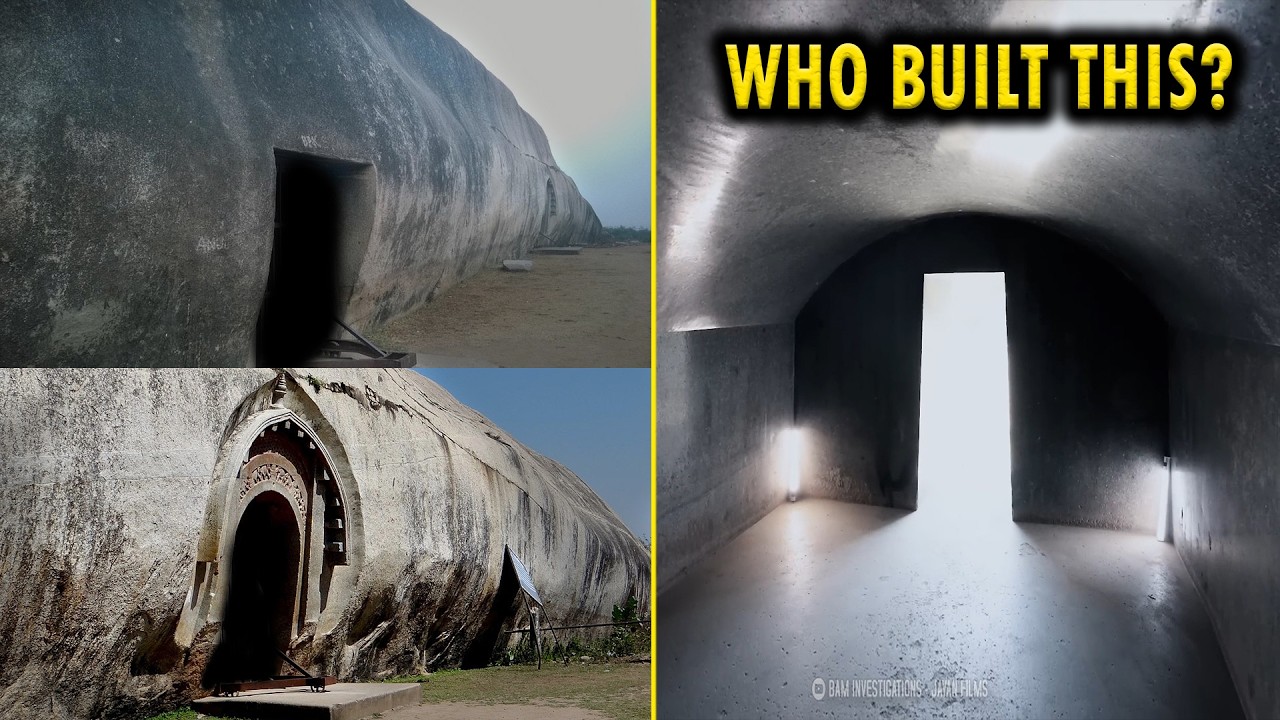
Beyond the accepted timelines of human history lie enigmas etched in stone, structures that challenge our understanding of ancient capabilities. Among these, the Barabar Caves in Bihar, India, stand as a profound testament to a forgotten past. Carved into solid granite, their almost impossible precision and surface polish have long been a focal point of debate, suggesting a technological prowess that eclipses the era to which they are conventionally attributed. This investigation delves into the heart of these subterranean wonders, dissecting the evidence that points towards advanced ancient technology and questioning the narratives that seek to confine them to simple historical footnotes.

Historical Context and Conventional Claims

Mainstream historical accounts and archaeological consensus place the genesis of the Barabar Caves around the 3rd century BCE, attributing their excavation to the Mauryan Empire, specifically under Emperor Ashoka. This period is known for significant architectural and religious developments in India. The caves, including the Lomas Rishi, Sudama, Vishva Zhopdi, and Karan Chaupar caves, were purportedly used by ascetics. While the Mauryan attribution provides a framework, the sheer quality of the workmanship consistently raises red flags for those looking beyond the established narrative.

Anomalous Features: Precision and Polish

The defining characteristic of the Barabar Caves is their extraordinary finish. The interior rock surfaces are polished to a mirror-like sheen, a feat that is baffling when considering the tools traditionally believed to be available during the Mauryan period – primarily rock hammers, chisels, and mallets, possibly made of copper or harder stones. Achieving such a smooth, reflective surface on solid granite, often with near-perfect right angles and geometric regularity, pushes the boundaries of what manual labor alone could accomplish within the proposed timeframe. This level of finishing suggests either an immense, almost unimaginable application of primitive labor, or the use of techniques and tools far beyond our current understanding of ancient metallurgy and engineering.

"Solid granite. Almost geometricaly perfect. This is lost to us. Solid granite. To say this was done with primitive hand tools to be a rain shelter is like saying the ISS was built by toddlers to be a pre school."

Alternative Hypotheses: Pre-Mauryan Civilization

The anomalous characteristics of the Barabar Caves have fueled theories positing their origin from a much older, advanced civilization. Some researchers suggest these structures predate the Mauryan Empire by centuries, or even millennia, aligning them with a hypothetical antediluvian world civilization. The craftsmanship bears striking resemblances to other enigmatic sites globally, such as the King's Chamber in the Great Pyramid of Giza, which also exhibits unparalleled precision in its stonework. This comparative analysis hints at a shared, potentially lost, technological heritage.

"I am from India and I don't believe that the Maurians built it as claimed by the locals and the state and on the contrary I believe it is more than 4500 years old from a civilization which existed during the antediluvian world. The King's Chamber in the Great Pyramid of Giza shares the same craftsmanship on the rocks."

Archaeological Skepticism and Cover-Up Theories

The persistent claims of primitive tool usage for such sophisticated work often elicit strong skepticism from independent researchers and enthusiasts. The idea that these structures were carved with simple rock hammers and copper chisels is often perceived as not just improbable, but deliberately misleading. This has led to theories suggesting an intentional cover-up or suppression of knowledge by mainstream institutions, aimed at preserving established historical timelines. The sentiment among many observers is that current archaeological dogma is insufficient to explain these anomalies fully, implying a deliberate omission of inconvenient truths.

"I bet mainstream archaeology tries to say these were carved with rock hammers and copper chisels, too."
"They sure did a fantastic job with those primitive tools, actually it’s beginning to feel offensive that they expect us to believe that crap."
"Someone really does not want us to know something. Perhaps it's the fact that they reset us. I never wanted a time machine so badly. I want to know what we lost."
"Two words: Case Closed. There is no longer any doubt after seeing this video and learning about Barabar for the first time that there was something going on long ago that we don’t know about and that is clearly being covered up."

Comparative Analysis with Other Megastructures

The Barabar Caves are not isolated anomalies. Their precision stonework and advanced finishing resonate with other pre-historic megalithic sites worldwide. From the precision-cut stones of Puma Punku in Bolivia to the intricate masonry of Baalbek in Lebanon, a pattern emerges: ancient sites exhibiting technological sophistication that defies easy explanation using conventional historical models. Comparing the Barabar Caves to these sites, particularly in terms of granite and basalt manipulation, strengthens the hypothesis of a globally interconnected ancient civilization possessing advanced engineering knowledge.

Researcher's Verdict: Fraud, Genuine Phenomenon, or Something Else?

After examining the evidence, the Barabar Caves present a compelling case that challenges conventional historical narratives. While outright fraud is highly unlikely given the scale and integration of the structures into the landscape, the attribution to the Mauryan Empire solely based on loose historical context, without accounting for the technological leap implied by the finish, appears inadequate. The polished granite interiors strongly suggest the use of methods or tools not typically associated with the 3rd century BCE in India. Whether this points to a forgotten pre-Mauryan advanced civilization, extraterrestrial intervention, or a misunderstood aspect of ancient human capability remains open to investigation. My current assessment leans heavily towards a genuine, inexplicable ancient technological feat, suppressed or misunderstood by modern academia.

The Researcher's Archive

For those seeking to deepen their understanding of ancient mysteries and advanced technologies, I recommend exploring the following resources:

Protocol: Analyzing Anomalous Stonework

Investigating sites like the Barabar Caves requires a methodical approach. Here’s a basic protocol for analyzing anomalous stonework:

  1. Document Existing Claims: Record the mainstream historical and archaeological attributions, along with the evidence provided.
  2. Observe and Record Anomalies: Meticulously document any features that contradict conventional explanations – precision, polish, material hardness, tool marks (or lack thereof), geometric perfection, and scale.
  3. Comparative Analysis: Cross-reference findings with similar sites globally. Look for recurring patterns in materials, techniques, and placement.
  4. Tool Mark Analysis: If tool marks are present, analyze their characteristics. Do they align with known primitive tools, or do they suggest advanced cutting or polishing implements? Techniques like diamond-tipped drills or sonic resonators are modern examples of what might have been available.
  5. Material Science Investigation: Examine the properties of the stone itself. Is it unusually hard? Was it treated or altered in some way?
  6. Formulate Hypotheses: Based on observations, develop plausible (even if speculative) hypotheses that account for the anomalies. Consider advanced ancient technology, lost civilizations, or even non-terrestrial origins.
  7. Seek Corroborating Evidence: Look for any other supporting data, such as ancient texts, oral traditions, or geological findings, that might lend credence to your hypotheses.

Frequently Asked Questions

Q1: What is the mainstream explanation for the Barabar Caves' construction?

A1: Mainstream archaeology attributes the caves to the Mauryan Empire, dating them to the 3rd century BCE, often citing Emperor Ashoka. They are generally believed to have been carved using traditional rock-cutting tools available at the time.

Q2: Why are the Barabar Caves considered anomalous?

A2: The primary anomaly lies in the extraordinary precision and mirror-like polish of the granite interiors. This level of finish is exceptionally difficult, if not impossible, to achieve with the primitive tools commonly attributed to the Mauryan period.

Q3: Could advanced technology have been used in ancient times?

A3: While controversial, the evidence from sites like Barabar suggests that ancient civilizations may have possessed technologies far beyond what is currently acknowledged by mainstream history. The exact nature of this technology remains a subject of intense speculation.

Q4: Are there similar sites around the world?

A4: Yes, numerous megalithic sites globally, such as Puma Punku, Baalbek, and the Great Pyramid of Giza, exhibit similar characteristics of precision stonework and advanced construction techniques that challenge conventional explanations.

About the Author

alejandro quintero ruiz is a veteran field investigator specializing in paranormal phenomena, ancient mysteries, and unexplained anomalies. With decades of experience deconstructing hoaxes and verifying extraordinary claims, his pragmatic, analytical approach cuts through the noise to seek verifiable truths. He has explored countless alleged hotspots, interviewed hundreds of witnesses, and analyzed reams of evidence, from EVP recordings to anomalous artifacts. His work is driven by a relentless curiosity and a deep-seated belief that the unexplained, while often elusive, is ultimately knowable.

Your Mission: Uncover the Truth

The Barabar Caves are more than just ancient monuments; they are a challenge to our perception of history. What do you believe is the true origin of these incredible structures? Do you have personal experiences or knowledge of similar anomalous sites?

Share your theories, experiences, and insights in the comments below. Your perspective is crucial in piecing together the fragmented puzzle of our ancient past. Don't keep these revelations to yourself – share this investigation with anyone who questions the official narrative of human history.

Reptilian Discovery: The Infinite Light Artifact of Tula, Hidalgo

Image

The world of paranormal and archaeological investigation is littered with fragments of the past that defy conventional explanation. Occasionally, an artifact surfaces that doesn't just challenge our understanding of history, but completely shatters it. The purported "Reptilian Discovery with Infinite Self-Induced Light" from Tula, Hidalgo, is precisely one such enigma. This isn't merely a relic; it's a potential key to ancient technologies and perhaps even forgotten civilizations.

A Glimpse into the Unexplained

For years, dedicated researchers have toiled, piecing together whispers of the past that mainstream archaeology often dismisses. These efforts, fueled by a relentless pursuit of truth, bring forth artifacts and phenomena that challenge the established historical narrative. The artifact in question, a supposed "reptilian piece" from Tula, Hidalgo, is presented as a testament to advanced, self-sustaining technology existing millennia before its supposed invention. Such discoveries, if authenticated, could rewrite our understanding of ancient capabilities and the very origins of civilization.

The raw testimonies and public reactions accompanying such finds are crucial data points. Many viewers express sheer awe and disbelief, noting the artifact's "incredible technology" and "valuable uniqueness." Others, with a more pragmatic, almost cynical eye, question its origins, suggesting it could be clever craftsmanship or even a modern fabrication. "Mil años en la tierra y el led chino sigue jalando 😂" one comment sarcastically posits, while another exclaims, "Pero esto es alucinante... no puede ser." This spectrum of reactions highlights the core challenge: discerning genuine anomaly from elaborate deception.

Recommended Gear for Investigation

ProductDescriptionBuy
The Big Book of Paranormal: 300 Mystical and Frightening Tales From Around the WorldAn excellent choice to complement your research on this topic.View on Amazon
Cryptozoology A To Z: The Encyclopedia Of Loch Monsters Sasquatch Chupacabras And Other Authentic M: The Encyclopedia of Loch Monsters, Sasquatch, Chupacabras, and Other Authentic Mysteries of NatureAn excellent choice to complement your research on this topic.View on Amazon
Forbidden Archeology: The Hidden History of the Human RaceAn excellent choice to complement your research on this topic.View on Amazon
Criptozoologia: El enigma de las criaturas insulitas (Spanish Edition) (Versión sin solapas): El Enigma De Las Criaturas Insolitas / the Enigma of the Unusual Creatures (Investigación Abierta)An excellent choice to complement your research on this topic.View on Amazon
The H. P. Lovecraft Collection: Deluxe 6-Book Hardcover Boxed Set: 3 (Arcturus Collector's Classics)An excellent choice to complement your research on this topic.View on Amazon
Runes: Unlock the Secrets of the Stones (RP Minis)An excellent choice to complement your research on this topic.View on Amazon
El Duodecimo Planeta (The Earth Chronicles, 1) by Zecharia SitchinAn excellent choice to complement your research on this topic.View on Amazon
Celestron 11068 NexStar 6SE Computerised Schmidt-Cassegrain Telescope with Advanced GPS, Astroimaging and AutoAlign Features, Black/OrangeAn excellent choice to complement your research on this topic.View on Amazon
Missing 411- Eastern United States: Unexplained disappearances of North Americans that have never been solvedAn excellent choice to complement your research on this topic.View on Amazon
Ghost-Hunting For Dummies [Idioma Inglés] An excellent choice to complement your research on this topic.View on Amazon

This report aims to dissect the evidence, analyze the claims, and offer a reasoned assessment, detached from hyperbole but open to the genuinely inexplicable.

The Artifact: Beyond Ancient Craftsmanship

The core of the mystery lies in the artifact itself. Described as a "reptilian piece" exhibiting "infinite self-induced light," it immediately raises red flags for any seasoned investigator. The description evokes imagery of advanced energy generation or storage far beyond what is commonly attributed to ancient cultures, including the Toltec civilization of Tula. The light emitted is compared by some to modern LED technology, a stark contrast to the prevailing historical understanding of ancient illumination methods.

"Se ve chingón wl Cuarzo alumbra igualito a las gargantillas que traen un grano de arroz adentro de una capsula de vodrio,,que las venden en la feria de my pueblo."

- Audience Testimonial

This comparison to items sold at local fairs, while potentially dismissive, is precisely the kind of observational data we must analyze. Is it a genuine ancient technology that coincidentally resembles something modern, or is it a carefully crafted modern piece designed to mimic the exotic allure of antiquity? Many accounts point to the latter, with comments like "Bien... Buenas artesanías, adornos... Buen marketing 😃👌" suggesting a skepticism towards the artifact's purported origins.

However, the persistent claims of advanced technology and "infinite light" cannot be entirely ignored. The implications are profound: if authentic, this artifact suggests a level of technological sophistication in the ancient world that has been deliberately obscured or lost to history. The idea of "self-induced light" hints at energy sources unknown to modern science or perhaps an advanced understanding of piezoelectricity or similar phenomena applied in ways we haven't yet replicated.

Technological Anomalies: Batteries and Beyond

Several observations in the audience feedback zero in on the technical aspects, particularly the idea of "batteries." One comment bluntly states, "En la base están las baterías" ("The batteries are at the base"). This is a critical detail. If the artifact indeed contains a power source, especially one capable of sustaining light over extended, "infinite" periods, it demands rigorous investigation.

The concept of ancient battery technology is not entirely new in fringe archaeology. The Baghdad Battery, dating back to the Parthian or Sasanian periods, is often cited as evidence of ancient electrical knowledge. However, the sophistication implied by "infinite light" suggests something far more advanced than simple electrochemical cells. Could it be a form of long-term energy storage, a resonant energy device, or even something tapping into an unknown energy field?

"Excelente descubrimiento, demasiada tecnología para su antigüedad," ("Excellent discovery, too much technology for its age,") captures the sentiment of many who are impressed by the artifact's apparent complexity. The question remains: is this "too much technology" a genuine sign of a lost civilization's prowess, or an illusion created by skilled modern craftsmanship?

Further analysis would ideally involve non-destructive testing, such as radiography or advanced material analysis, to understand the internal structure and composition. As one commenter suggested, "Deberias sacar una radiografia para teber indicios de que mecanismo ,electrico o magnetico o ambas energias para teber mejor con bases cientificas" ("You should take an x-ray to get indications of what mechanism, electrical or magnetic or both energies, to better understand it with scientific bases"). This approach, grounded in scientific methodology, is essential for moving beyond speculation.

Tula: A Cradle of Ancient Mysteries

The location of the discovery, Tula, Hidalgo, is significant. Tula was the capital of the Toltec civilization, a culture that predates the Aztecs and holds a prominent place in Mesoamerican mythology and history. The Toltecs were renowned for their architectural achievements, particularly the colossal Atlantean figures at Tula, and their complex cosmology, which influenced later civilizations like the Maya and Aztec. It is a region steeped in legend, often associated with figures like Quetzalcoatl, the feathered serpent god.

The presence of a potentially advanced artifact in such a historically rich and mythologically charged location lends a certain weight to the claims, even as it invites scrutiny. Could the Toltecs have possessed knowledge or technology far exceeding our present understanding? Theories about lost civilizations, advanced ancient sciences, and hidden histories abound, and Tula often features as a nexus for such speculation.

The "reptilian" aspect of the artifact's description also taps into widespread esoteric and conspiratorial lore. Reptilian humanoids are a common theme in ufology and ancient astronaut theories, often posited as a hidden ruling class or an ancient alien race that influenced human development. While such theories often lack concrete evidence, their prevalence in public consciousness means any artifact associated with them—especially one exhibiting unusual technology—will generate significant interest and debate.

"Para mí es una raza reptiloide que se encontraba en la Atlantida y Lemuria . Que desde siempre han tratado de ocultar su hibridaje con la raza autoctona terrestre. y pues estos mismos siguen controlandonos desde millones de años.para que el borregomatrix siga creyendose eso de que él es la cúspide de la piramide.🤔😂😂😂😁😁😁😆"

- Audience Testimonial

This speculative interpretation, while far-fetched by scientific standards, reflects the kind of narratives that surround such discoveries. The challenge for the investigator is to separate the mythological overlay from any potential verifiable evidence.

Technological Anomalies: Batteries and Beyond

Several observations in the audience feedback zero in on the technical aspects, particularly the idea of "batteries." One comment bluntly states, "En la base están las baterías" ("The batteries are at the base"). This is a critical detail. If the artifact indeed contains a power source, especially one capable of sustaining light over extended, "infinite" periods, it demands rigorous investigation.

The concept of ancient battery technology is not entirely new in fringe archaeology. The Baghdad Battery, dating back to the Parthian or Sasanian periods, is often cited as evidence of ancient electrical knowledge. However, the sophistication implied by "infinite light" suggests something far more advanced than simple electrochemical cells. Could it be a form of long-term energy storage, a resonant energy device, or even something tapping into an unknown energy field?

"Excelente descubrimiento, demasiada tecnología para su antigüedad," ("Excellent discovery, too much technology for its age,") captures the sentiment of many who are impressed by the artifact's apparent complexity. The question remains: is this "too much technology" a genuine sign of a lost civilization's prowess, or an illusion created by skilled modern craftsmanship?

Further analysis would ideally involve non-destructive testing, such as radiography or advanced material analysis, to understand the internal structure and composition. As one commenter suggested, "Deberias sacar una radiografia para teber indicios de que mecanismo ,electrico o magnetico o ambas energias para teber mejor con bases cientificas" ("You should take an x-ray to get indications of what mechanism, electrical or magnetic or both energies, to better understand it with scientific bases"). This approach, grounded in scientific methodology, is essential for moving beyond speculation.

Investigator's Verdict: Fraud, Genuine Phenomenon, or Something Else?

After reviewing the available information and the spectrum of audience reactions, my assessment leans towards extreme skepticism, bordering on outright dismissal as a genuine ancient artifact of advanced technology. The comparisons to items sold at local fairs, the sarcastic remarks about "Chinese LEDs," and the pragmatic observation about "batteries at the base" strongly suggest a modern creation. The term "self-induced light" is particularly suspect, often employed in marketing for novelty items.

The "reptilian" narrative and the association with Tula, while intriguing, are likely used to imbue a common object with an air of mystery and antiquity. Many artifacts presented as ancient wonders turn out to be elaborate hoaxes or misidentified historical objects. The "infinite light" could be achieved with modern, albeit small, power sources and LEDs, cleverly concealed.

However, I am bound by my mandate to consider all possibilities. If this artifact *were* genuine, its implications would be seismic. It would necessitate a complete re-evaluation of ancient technological capabilities and potentially a revision of our historical timelines. The claim of "infinite" energy generation, if true, would revolutionize physics. Yet, extraordinary claims require extraordinary evidence, and the current evidence presented is far from convincing.

My professional opinion, based on the available data and the history of similar claims, is that this artifact is most likely a well-marketed modern craft designed to capitalize on popular myths surrounding ancient civilizations, extraterrestrials, and esoteric technology. The rapid advancements in miniaturization and LED technology make it entirely feasible to create such a piece. The "support" and "donations" mentioned by Ing. Irving Carranco further suggest a commercial enterprise rather than a purely scientific or historical endeavor.

The Investigator's Archive

For those intrigued by the intersection of archaeology, unexplained phenomena, and ancient mysteries, further exploration is recommended:

  • Books: "Chariots of the Gods?" by Erich von Däniken offers a foundational, albeit controversial, look at ancient astronaut theories. For a more grounded perspective on archaeology, consult works on the Toltec civilization and Mesoamerican cultures.
  • Documentaries: Series like "Ancient Aliens" explore similar themes, though often with speculative and unverified claims. Look for more critical documentaries that examine archaeological evidence rigorously.
  • Platforms: Academic journals, archaeological society publications, and reputable historical archives provide vetted information. Be wary of sources that sensationalize or lack verifiable citations.

Understanding the context of similar claimed discoveries, such as the Baghdad Battery or various "ancient fused circuits," provides valuable insight into how evidence can be interpreted—or misinterpreted.

Recommended Equipment for Investigation

When investigating claims of anomalous artifacts or phenomena, having the right tools is crucial. While direct testing of such an artifact would require specialized laboratory equipment, basic field investigation tools can help document environments and rule out mundane explanations:

  • High-Resolution Cameras: For detailed documentation of artifacts and their surroundings.
  • Audio Recorders: For capturing ambient sounds or potential Electronic Voice Phenomena (EVP).
  • EMF Meters: To detect electromagnetic field fluctuations, though these must be interpreted cautiously as many sources can cause spikes.
  • Geiger Counters: If radioactivity is a concern, although unlikely in this specific case based on descriptions.

Remember, the goal is objective data collection. Always strive for verifiable evidence over anecdotal claims. Sometimes, the most valuable "artifact" is a clear photograph or an unambiguous audio recording that debunks a mystery.

Frequently Asked Questions

What is the "Reptilian Discovery with Infinite Self-Induced Light"?
It is an artifact purportedly found in Tula, Hidalgo, described as having reptilian features and emitting a continuous, self-sustaining light, suggesting advanced ancient technology.
Is the artifact confirmed to be ancient?
There is no scientific or archaeological confirmation. Skeptics point to similarities with modern crafts and suggest it may be a hoax or a modern creation.
What does "self-induced light" imply?
It suggests the artifact generates its own power source for illumination, a concept far beyond conventional understanding of ancient technologies but potentially achievable with modern miniaturized electronics.
Why is Tula, Hidalgo, significant in this context?
Tula was the capital of the Toltec civilization, a culture rich in history and mythology, often associated with advanced knowledge and figures like Quetzalcoatl, making it a plausible, albeit speculative, location for such a discovery.
What is the investigator's conclusion?
Based on available information and common patterns in anomalous artifact claims, it is highly probable that this is a modern creation rather than a genuine ancient artifact of advanced technology. The evidence strongly favors a well-executed hoax or marketing ploy.

Your Field Mission

The quest for truth is a collaborative effort. Ing. Irving Carranco's project, aimed at recovering artifacts and establishing a museum, relies on community support. While I maintain a skeptical stance regarding this specific artifact's authenticity, the spirit of exploration and the desire to uncover genuine historical or paranormal truths should be encouraged.

Your Mission: Document any similar artifacts you encounter, whether at local fairs, antique shops, or in your own explorations. Pay close attention to details: construction, materials, and any unusual properties. Share your findings (and your skepticism) with us in the comments below. Let's pool our observations and see if we can find more pieces to this historical puzzle, or perhaps, more evidence of elaborate modern artistry.

Engage with the unknown, but always with a critical eye. The line between ancient wonder and modern deception can be razor-thin.

What are your thoughts on this artifact? Have you seen anything similar? Share your experiences and theories in the comments. Your perspective is vital to our ongoing investigations!

If you found this analysis insightful, please share it on your social networks. Help us spread the word and continue our work uncovering the mysteries that lie just beyond the veil of the ordinary.

Investigator's Note: True paranormal research doesn't fund itself. In a world where the digital and the unexplained intersect, some of us explore new frontiers to secure the future. Do you dare to be part of the vanguard? Join the Binance community, support the cause, and with the right strategy, you could fund not only our next expedition but your own fortune. The next great discovery could be just a click away.

Pre-Egyptian Megastructures: Challenging the Narrative of the Great Flood

Image

The sands of time often obscure the grandest achievements of humanity, leaving us with fragmented histories and prevailing narratives that rarely tell the whole story. In the realm of ancient civilizations, particularly those predating the dynastic Egyptians, a compelling body of evidence suggests a technological prowess and sophistication far beyond our current understanding. This investigation delves into the enigmatic world of pre-Egyptian megastructures, colossal edifices that challenge conventional timelines and hint at a lost era of advanced knowledge.

The Osireion and Beyond: Evidence of a Lost Civilization

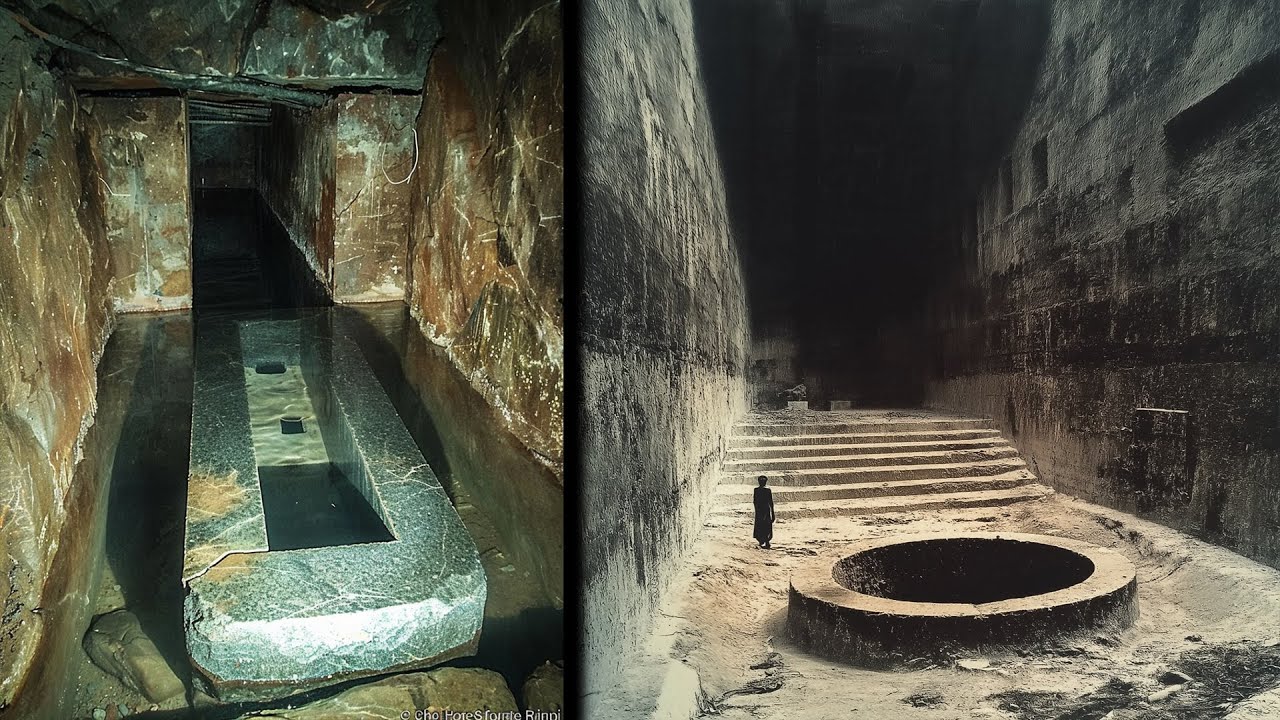
The concept of an advanced civilization flourishing before the established dynastic periods of ancient Egypt is not merely speculative; it is a hypothesis supported by enigmatic sites like the Osireion, Zawyet el Aryan, and the Serapeum of Saqqara. These locations present architectural and engineering feats that defy conventional explanations. The precision with which massive stone blocks were quarried, transported, and fitted together suggests a profound understanding of physics, mathematics, and engineering, far surpassing the tools and techniques typically attributed to the era.

Some theorists propose that these structures weren't merely monuments but served advanced purposes, possibly as power plants or sophisticated astronomical observatories. The granite sarcophagi in the Serapeum, for instance, exhibit a mechanical precision that leads many to question their function as mere burial chambers. As one commenter aptly put it, quote-style, ">I don't believe for a minute that the Serapeum of Saqqara boxes are burial chambers nor sarcophagi. Admittedly, it's just a gut feeling on my part, but it feels like there's something more going on here than burial chambers. It's too plain and undecorated and just looks utilitarian more than anything else." This sentiment is echoed by many who find the conventional narrative of tombs for dead pharaohs, constructed with rudimentary tools, insufficient to explain the monumental scale and precision of these ancient wonders.

Recommended Gear for Investigation

ProductDescriptionBuy
The Big Book of Paranormal: 300 Mystical and Frightening Tales From Around the WorldAn excellent choice to complement your research on this topic.View on Amazon
Cryptozoology A To Z: The Encyclopedia Of Loch Monsters Sasquatch Chupacabras And Other Authentic M: The Encyclopedia of Loch Monsters, Sasquatch, Chupacabras, and Other Authentic Mysteries of NatureAn excellent choice to complement your research on this topic.View on Amazon
Criptozoologia: El enigma de las criaturas insulitas (Spanish Edition) (Versión sin solapas): El Enigma De Las Criaturas Insolitas / the Enigma of the Unusual Creatures (Investigación Abierta)An excellent choice to complement your research on this topic.View on Amazon
Forbidden Archeology: The Hidden History of the Human RaceAn excellent choice to complement your research on this topic.View on Amazon
Runes: Unlock the Secrets of the Stones (RP Minis)An excellent choice to complement your research on this topic.View on Amazon
The H. P. Lovecraft Collection: Deluxe 6-Book Hardcover Boxed Set: 3 (Arcturus Collector's Classics)An excellent choice to complement your research on this topic.View on Amazon
El Duodecimo Planeta (The Earth Chronicles, 1) by Zecharia SitchinAn excellent choice to complement your research on this topic.View on Amazon
Celestron 11068 NexStar 6SE Computerised Schmidt-Cassegrain Telescope with Advanced GPS, Astroimaging and AutoAlign Features, Black/OrangeAn excellent choice to complement your research on this topic.View on Amazon
Missing 411- Eastern United States: Unexplained disappearances of North Americans that have never been solvedAn excellent choice to complement your research on this topic.View on Amazon
Ghost-Hunting For Dummies [Idioma Inglés] An excellent choice to complement your research on this topic.View on Amazon

Architectural Anomalies: Precision and Power

The construction of sites like the Great Pyramid of Giza showcases an almost unbelievable level of accuracy. Its alignment with the cardinal directions is remarkable, and the precision in cutting and fitting colossal stone blocks, some weighing many tons, has long puzzled archaeologists and engineers. The use of copper chisels and primitive tools, as commonly taught, seems increasingly improbable when faced with the evidence. The sheer scale of these projects implies not only advanced engineering but also a highly organized society capable of mobilizing vast resources and labor forces.

A carpenter with decades of experience starkly pointed this out: quote-style, ">I've been a carpenter for 30 plus years, and I've cut many different materials in those years. I assure anyone watching this piece, the people who've tried convincing us these materials were cut with coper chisels only puts on full display their total lack of real world experience cutting anything othere than paper!! This was not done with a chisel period full stop!" This practical perspective underscores the disconnect between the proposed methods and the tangible reality of the structures themselves. The granite, rich in quartz, further fuels speculation. As noted by another observer, quote-style, ">Granite is full of quartz. Quartz produces electricity when subjected to pressure. We might have finally understood how the machine was powered." This points towards potential energy generation, transforming these ancient sites from simple tombs into complex machines of antiquity.

Astronomical Alignments: Celestial Blueprints

The deliberate alignment of ancient structures with celestial bodies is a recurring theme across various cultures. The hypothesized alignment of the Giza pyramids with Orion's Belt is perhaps the most famous example, suggesting a sophisticated understanding of astronomy and cosmology. This knowledge would have been crucial for timekeeping, agricultural cycles, and possibly even spiritual practices. The ability to map the stars with such precision and translate that knowledge into monumental architecture implies a civilization with deep scientific insights.

The concept that these structures were meticulously planned, not as mere religious sites but as functional devices, is gaining traction. The idea of the pyramids as power plants, as suggested by some viewers, aligns with the theory of advanced technological understanding. This perspective challenges the traditional view of ancient Egyptians as solely builders of tombs, pushing us toward a more complex picture of their capabilities and knowledge base. The precision in architectural design isn't just about aesthetics; it's about function, as suggested by the idea that "The title of the video should really be 'Pre-Egyptian Engineering and Electrical Generation - The Great Pyramids' or something that reflected the content better."

Technological Implications: Beyond Hammers and Chisels

The prevailing narrative often asserts that these megastructures were built using simple tools like hammers and chisels. However, the sheer number of colossal blocks, the precision of their cuts, and the immense weight involved make this explanation difficult to accept for many. Theories involving advanced technology, sound manipulation, or unknown energy sources are frequently discussed in communities dedicated to exploring these anomalies. The possibility of a civilization possessing technology comparable to, or even exceeding, our own cannot be dismissed lightly.

The notion that "the narrative we were taught in school is totally incorrect at every level" resonates with many who question established historical accounts. This skepticism is a crucial driver for exploring alternative hypotheses. The structures' internal designs, often described as looking like "a machine," further bolster the idea that their purpose extended far beyond religious or funerary rites. The resonance experienced within these structures, like the echoing snap of fingers described by a visitor, suggests acoustic properties that might have played a functional role, perhaps in energy generation or communication.

The Great Flood Theory: A Precursor to Modern Civilizations?

Many theories posit that these advanced civilizations existed before a cataclysmic event, such as the Great Flood, which reshaped the planet and wiped out much of human knowledge. According to this perspective, the remnants of these ancient societies, including their monumental structures, are the only tangible evidence left of their existence. The incredible longevity attributed to people before the flood, often cited as 600-900 years, would have allowed for the development and transmission of sophisticated knowledge over many generations, supporting the construction of such massive projects.

This theory suggests that our current understanding of history is incomplete, missing a crucial chapter of advanced human civilization. The Sahara Desert, for instance, was not always arid; evidence points to a time when it was a lush jungle, capable of supporting large populations and complex societies. This environmental context is vital for understanding how such civilizations could have thrived and undertaken ambitious building projects. The question, quote-style, ">Why is it that people just can't say 'we simply do not know'?" highlights the frustration with historical certainties that seem to ignore abundant anomalies.

Expert Analysis and Skepticism: Bridging the Divide

While fringe theories abound, the rigorous work of engineers and researchers outside the traditional Egyptological circles has begun to shed new light on these ancient marvels. Their methodologies, focusing on physics, engineering principles, and a willingness to consider unconventional explanations, often provide more compelling insights than explanations rooted in dogma. The observation that quote-style, ">The work of engineers taking an interest in the great pyramid has done more to advance archeology on the topic than so called Egyptologists" points to a potential schism in how these ancient sites are studied.

Skepticism is a vital tool in any investigation, but it should not become a barrier to considering all available evidence. The persistent anomalies presented by these megastructures demand further inquiry. As one viewer noted, quote-style, ">This channel challenges my skepticism and makes me intrigued and full of questions." This intellectual curiosity is precisely what drives paranormal and historical research forward, pushing the boundaries of accepted knowledge and encouraging a re-evaluation of our past.

Investigator's Verdict: Re-evaluating History

The evidence surrounding pre-Egyptian megastructures strongly suggests that our current historical timeline and understanding of ancient capabilities are incomplete. The precision engineering, astronomical knowledge, and sheer scale of these constructions point towards a civilization possessing advanced technology and a profound understanding of the natural world. While definitive answers remain elusive, the persistent anomalies compel us to question established narratives and remain open to the possibility of lost chapters in human history.

For those seeking to delve deeper into the mysteries of ancient civilizations and unexplained phenomena, a curated selection of resources can illuminate the path. Understanding the methodologies and findings of various researchers is crucial for forming a comprehensive perspective.

The eBook "Pre-Historic Megastructures" by Universe Inside You is a prime example, offering a detailed look at over 30 remarkable sites. Such comprehensive works are invaluable for anyone serious about investigating these topics. Furthermore, documentaries and academic papers that challenge conventional thinking often spark critical debate and encourage further research into areas often overlooked by mainstream academia. Exploring the mysteries of ancient civilizations is a journey that benefits from diverse sources and perspectives.

Frequently Asked Questions

Q1: What is the main argument against the pyramids being tombs?

A1: The primary arguments include the incredible precision of construction, the lack of significant burial artifacts in many chambers, the use of vastly superior materials and techniques implied by the stonework, and alternative theories suggesting functions like power generation or astronomical observation.

Q2: How could such advanced technology have existed so long ago?

A2: Theories propose a highly advanced pre-diluvian civilization that either predates known history or existed concurrently with early civilizations, possessing knowledge lost to time. Some also suggest extraterrestrial influence, though evidence for this remains speculative.

Q3: What is the significance of astronomical alignments in these structures?

A3: These alignments suggest a deep understanding of celestial mechanics, used for timekeeping, navigation, agricultural planning, and possibly spiritual or energetic purposes. They indicate a level of scientific sophistication far beyond what is typically attributed to ancient peoples.

Q4: Could water have played a role in constructing these megastructures?

A4: Some theories suggest advanced hydraulic engineering, possibly involving water rams or other devices, to move massive stones or even generate power. The presence of ancient water systems and the historical existence of lush environments in currently arid regions support these ideas.

Q5: Why is it difficult to find definitive proof of these advanced ancient civilizations?

A5: Cataclysmic events like the Great Flood could have destroyed much evidence. Furthermore, prevailing historical narratives may resist or suppress findings that contradict established timelines and theories, making it challenging for alternative interpretations to gain mainstream acceptance.

Your Mission: Field Assignment

The greatest mystery is not always in the monumental structures themselves, but in our willingness to question the accepted truth. Your mission, should you choose to accept it, is to examine your own assumptions about history. Seek out the anomalies, question the narratives, and explore the evidence with an open, analytical mind. The past is not as settled as it appears; it is a landscape ripe for re-investigation.

What are your thoughts on these pre-Egyptian megastructures? Have you encountered similar anomalies in your own research or travels? Share your experiences and theories in the comments below. Your insights are crucial to piecing together this historical puzzle.

If this investigation has sparked your curiosity, help us spread the word. Share this post on your social media channels and join the conversation. Let's challenge the ordinary and uncover the extraordinary together.

For more in-depth analysis and exclusive content, follow us on our social media platforms and subscribe to our channels. Stay vigilant.

Investigator's Note: True paranormal research doesn't fund itself. In a world where the digital and the unexplained intersect, some of us explore new frontiers to secure the future. Do you dare to be part of the vanguard? Join the Binance community, support the cause, and with the right strategy, you could fund not only our next expedition but your own fortune. The next great discovery could be just a click away.

Pre-Egyptian Technology: Unraveling the Mysteries of a Lost Civilization

Image

The sands of time often bury truths, but some anomalies refuse to be forgotten. We're not just talking about ancient ruins; we're delving into the remnants of advanced technology that predate the very civilizations we thought understood engineering and astronomy. This isn't fringe speculation; it's an analysis of structures and artifacts that challenge our historical timelines, suggesting a sophisticated society vanished, leaving behind enigmas that even today's experts struggle to reconcile.

Evidence of Advanced Pre-Egyptian Technology

The prevailing historical narrative places the zenith of ancient Egyptian civilization within dynastic periods, roughly beginning around 3100 BCE. However, an increasing body of evidence points to technological sophistication that seems to emerge from nowhere, suggesting a precursor civilization with capabilities far exceeding conventional understanding. Sites like the Osireion, Zawyet el Aryan, and the Serapeum of Saqqara are not merely ancient structures; they are enigmas carved in stone, whispering tales of advanced tools, precise engineering, and a profound understanding of sciences we are only now beginning to replicate.

Consider the sheer scale and precision involved. The massive blocks of granite in the Serapeum, some weighing upwards of 70 tons, were quarried, transported, and placed with an accuracy that confounds modern machinery. How were these colossal stones moved? What methods allowed for the intricate, almost seamless joinery observed in some megalithic structures? These are questions that conventional archaeology often sidesteps, attributing them to immense human labor over extended periods, a narrative that strains credulity when faced with the undeniable evidence of advanced techniques.

Recommended Gear for Investigation

ProductDescriptionBuy
Cryptozoology A To Z: The Encyclopedia Of Loch Monsters Sasquatch Chupacabras And Other Authentic M: The Encyclopedia of Loch Monsters, Sasquatch, Chupacabras, and Other Authentic Mysteries of NatureAn excellent choice to complement your research on this topic.View on Amazon
The Big Book of Paranormal: 300 Mystical and Frightening Tales From Around the WorldAn excellent choice to complement your research on this topic.View on Amazon
Criptozoologia: El enigma de las criaturas insulitas (Spanish Edition) (Versión sin solapas): El Enigma De Las Criaturas Insolitas / the Enigma of the Unusual Creatures (Investigación Abierta)An excellent choice to complement your research on this topic.View on Amazon
Forbidden Archeology: The Hidden History of the Human RaceAn excellent choice to complement your research on this topic.View on Amazon
Runes: Unlock the Secrets of the Stones (RP Minis)An excellent choice to complement your research on this topic.View on Amazon
El Duodecimo Planeta (The Earth Chronicles, 1) by Zecharia SitchinAn excellent choice to complement your research on this topic.View on Amazon
The H. P. Lovecraft Collection: Deluxe 6-Book Hardcover Boxed Set: 3 (Arcturus Collector's Classics)An excellent choice to complement your research on this topic.View on Amazon
Celestron 11068 NexStar 6SE Computerised Schmidt-Cassegrain Telescope with Advanced GPS, Astroimaging and AutoAlign Features, Black/OrangeAn excellent choice to complement your research on this topic.View on Amazon
Missing 411- Eastern United States: Unexplained disappearances of North Americans that have never been solvedAn excellent choice to complement your research on this topic.View on Amazon
Ghost-Hunting For Dummies [Idioma Inglés] An excellent choice to complement your research on this topic.View on Amazon

Many witnesses who have explored these sites firsthand report a palpable sense of awe and bewilderment. One testimony shared online regarding a visit to Egypt and Sudan states: "I have visited numerous ancient sites in Egypt and Sudan and it's impossible not to be in awe of the various constructions." This sentiment is echoed by others who have physically interacted with these megaliths, such as the experience of walking atop the unfinished obelisk, which one visitor described as "mindblowing how humans could create something like that." These personal encounters serve as powerful, albeit anecdotal, evidence that something extraordinary occurred in this region millennia ago.

Challenging the Conventional Timeline: Megastructures That Defy Explanation

The concept of "Pre-Historic Megastructures" is not new, but the depth of investigation into these anomalies is. An extensive eBook compiles over 30 of the globe's most remarkable prehistoric megastructures, many of which feature characteristics that strongly suggest the use of advanced technology. These are not simple dwellings; they are colossal constructions that appear to have been built with a knowledge base far beyond what is conventionally attributed to early human societies.

"The Anunnakis... Egyptians are keeping the truth from the world because it has nothing to do with Egyptians."

The implications are profound: a lost civilization, potentially existing before the accepted timelines of ancient Egypt, may have possessed a mastery of engineering, astronomy, and mathematics that puts our current understanding to shame. Such a civilization could have laid the groundwork for the later dynastic cultures, or perhaps, as some theories suggest, the later cultures merely inherited and adapted remnants of this prior advanced technology. The idea that later Egyptians "acquired it through attrition of previous civilizations" is a recurring theme among those who question the established narrative, suggesting they "basically acquired it."

The resistance to deeper investigations into these sites is a recurring point of contention. Many online comments express frustration: "Zahi Hawass is responsible for us STILL being in the dark about all of this. He single-handedly stopped further Egyptian discoveries for almost 3 decades." Another user laments, "Having been to Egypt and having seen many of its wonders, I still think it's a crime against humanity to block further excavation and research into known sites..." This perceived obstruction fuels the belief that a significant part of our ancient history is being deliberately suppressed.

Astronomical Alignments and Engineering Marvels

The Giza pyramids, arguably the most iconic structures of ancient Egypt, offer compelling evidence of sophisticated astronomical knowledge. Their alignment with the stars of Orion's Belt is a detail that has fascinated researchers for decades. This precision suggests not only a deep understanding of celestial mechanics but also a motive, possibly religious or cosmological, that drove such elaborate construction. This level of astronomical insight is not typically associated with a society still in its nascent stages of development.

Furthermore, the internal chambers and passages within these structures exhibit a level of precision that is difficult to achieve even with modern tools. Theories abound regarding the methods used, from advanced cutting and transportation techniques to potentially forgotten energy sources. The idea of "ram pumps" and "laser or plasma devices" capable of heating and softening stone before shaping or cutting them, as suggested by one commenter, represents a technological leap that, while speculative, aligns with the sheer scale of the constructions.

The discussion often circles back to the possibility of advanced energy generation or manipulation. One theory posits: "The technology to derive energy from the mantle of the earth. The understanding of frequencies helped in the ability to generate anti gravity. This maybe how such stones could be moved." Such concepts, while bordering on science fiction, are not entirely unfounded when considering the anomalies presented by these ancient sites. It suggests our ancestors might have possessed a knowledge of physics far surpassing our own.

Obstacles to Discovery: Gatekeepers of Ancient Knowledge

The path to understanding these pre-Egyptian technologies is fraught with challenges, chief among them being the resistance from established academic and governmental bodies. Figures like Zahi Hawass have been frequently criticized in online discussions for allegedly hindering deeper investigations. "Thank you. Hawass' exposure as a mirage man, a cover-up artist, is solidifying more every day," one user states. The sentiment is that these individuals act as "gatekeepers," preventing the public from accessing truths that might fundamentally alter our perception of history.

This resistance is often framed as a defense of the "mainstream narrative." Critics argue that the "pigheaded gate keepers" of modern archaeology are actively suppressing evidence that contradicts their established theories. "Modern archeology/historians are either lying or deluded about history and how advanced we were in the past. Question everything!!!!" is a common refrain. The burning of the Great Library of Alexandria is often cited as a symbolic, if not literal, representation of lost knowledge that could have provided crucial answers.

The very idea that Egyptians "refuse to allow deeper investigations as it would prove they have nothing to do with what society beliefs today" highlights the core of the controversy. If these advanced technologies were not Egyptian in origin, it would necessitate a complete rewriting of ancient history, a prospect that many institutions seem reluctant to embrace. This is why content creators focusing on these "mysteries" are often praised for their diligence: "This production is INCREDIBLE. You are doing what i only wish I could! Easily the most coherent and thorough examination of these artifacts and monuments that I've seen to date."

Investigator's Verdict: A Civilization Lost to Time?

After examining the available evidence—the colossal scale of megalithic constructions, the precision of their assembly, the sophisticated astronomical alignments, and the pervasive resistance to deeper inquiry—the conclusion is unavoidable: the conventional timeline of ancient civilizations is incomplete, if not fundamentally flawed. The structures attributed to dynastic Egypt bear the hallmarks of a technological sophistication that likely predates them.

Whether this precursor civilization was a single, unified advanced society, or a series of cultures that contributed to a shared technological inheritance, remains an open question. The evidence strongly suggests that humanity's past is far more complex and astonishing than commonly taught. It’s a past where advanced knowledge was not a modern invention, but a legacy, perhaps partially lost, partially misunderstood, and for too long, deliberately obscured.

The testimonies from those who have visited these sites, coupled with detailed analyses of the structures themselves, build a compelling case for a lost era of advanced technological prowess. The question is no longer *if* such a civilization existed, but rather, how much more evidence remains buried, and when will we be allowed to truly uncover it?

To delve deeper into the enigma of pre-Egyptian technology and other advanced ancient civilizations, consulting comprehensive resources is crucial. The pursuit of truth requires access to well-researched materials that challenge conventional narratives and present evidence with clarity.

For those seeking a structured overview of these incredible sites, exploring detailed compilations is a logical next step. The Pre-Historic Megastructures eBook, for example, offers an extensive look at global anomalies. Beyond such dedicated works, documentaries and academic papers that critically examine archaeological findings provide diverse perspectives. Remember, true understanding comes from synthesizing varied sources and applying a discerning, analytical mind.

Frequently Asked Questions

  1. What is the primary evidence for pre-Egyptian technology?

    The primary evidence lies in the scale, precision, and advanced engineering techniques of megalithic structures like the Osireion, Zawyet el Aryan, and the Serapeum of Saqqara, which appear to surpass the known capabilities of the dynastic Egyptian period.
  2. Why is Zahi Hawass often mentioned in relation to suppressed discoveries?

    He is frequently cited in critical online discussions for allegedly hindering deeper archaeological research and maintaining a conventional historical narrative, which some believe conceals evidence of advanced precursor civilizations.
  3. What are some key examples of advanced engineering in ancient Egypt?

    Notable examples include the precise alignment of the Giza pyramids with celestial bodies (Orion's Belt), the intricate joinery of megalithic blocks, and the sheer feat of transporting and placing massive stone elements, like those found in the Serapeum.
  4. Could advanced technology have been inherited from an earlier civilization?

    This is a prominent theory. Many researchers propose that later civilizations, including the dynastic Egyptians, may have discovered and adapted the remnants of a much older, technologically advanced society that predated them.
  5. How can I learn more about prehistoric megastructures?

    Resources like the "Pre-Historic Megastructures eBook" offer extensive compilations. Additionally, documentaries, archaeological analyses, and forums dedicated to ancient mysteries provide valuable insights.

Your Field Mission

The pursuit of historical truth is an ongoing investigation. As an independent researcher, your mission is to critically evaluate the evidence presented, cross-reference information with reputable sources, and remain open to possibilities that challenge established paradigms.

Your Mission: Analyze the architectural anomalies of a local historical site (if accessible) or a well-documented ancient structure. Document any features that seem disproportionate to the known technological capabilities of the era. Share your findings and comparative analysis in the comments below. Let's piece together the puzzle, one anomaly at a time.

In the realm of the unexplained, knowledge is our greatest asset. Share this investigation with fellow truth-seekers on your social networks. Use the hashtag #AncientTechMysteries to join the broader conversation. If you have personal experiences or insights into these ancient wonders, please share them in the comments – your testimony could be the missing piece of the puzzle.

Investigator's Note: True paranormal research doesn't fund itself. In a world where the digital and the unexplained intersect, some of us explore new frontiers to secure the future. Do you dare to be part of the vanguard? Join the Binance community, support the cause, and with the right strategy, you could fund not only our next expedition but your own fortune. The next great discovery could be just a click away.

Giants Emerging Everywhere: Unveiling Pre-Historic Megastructures and Ancient Records

Image

The legend of giants is as old as civilization itself, whispered in ancient texts and etched into the very fabric of our planet's most enigmatic structures. But what if these tales weren't mere mythology? What if colossal beings once walked the Earth, wielding technologies far beyond our comprehension, leaving behind monuments that continue to baffle modern science? This investigation delves into the compelling evidence suggesting that giants weren't just folklore, but a tangible, world-altering presence.

Whispers from Antiquity: Sumerians, Egyptians, and the Nephilim

Our journey into the realm of giants begins not with speculative theories, but with ancient records that speak of colossal beings. The Sumerian civilization, one of the earliest known on Earth, provides extensive accounts of a race of giants who predated or ruled alongside them. Their epic poems and cuneiform tablets detail figures like Gilgamesh, a king whose reign is corroborated by inscriptions, suggesting a historical basis for these towering monarchs.

Likewise, ancient Egypt abounds with depictions of giants. Hieroglyphs and historical records describe early dynasties as populated by exceptionally tall beings. The discovery of hundreds of colossal sarcophagi, though their mummified occupants were long looted, further fuels the narrative of a giant presence in the land of the pharaohs.

Recommended Gear for Investigation

ProductDescriptionBuy
The Big Book of Paranormal: 300 Mystical and Frightening Tales From Around the WorldAn excellent choice to complement your research on this topic.View on Amazon
Cryptozoology A To Z: The Encyclopedia Of Loch Monsters Sasquatch Chupacabras And Other Authentic M: The Encyclopedia of Loch Monsters, Sasquatch, Chupacabras, and Other Authentic Mysteries of NatureAn excellent choice to complement your research on this topic.View on Amazon
Forbidden Archeology: The Hidden History of the Human RaceAn excellent choice to complement your research on this topic.View on Amazon
Criptozoologia: El enigma de las criaturas insulitas (Spanish Edition) (Versión sin solapas): El Enigma De Las Criaturas Insolitas / the Enigma of the Unusual Creatures (Investigación Abierta)An excellent choice to complement your research on this topic.View on Amazon
The H. P. Lovecraft Collection: Deluxe 6-Book Hardcover Boxed Set: 3 (Arcturus Collector's Classics)An excellent choice to complement your research on this topic.View on Amazon
El Duodecimo Planeta (The Earth Chronicles, 1) by Zecharia SitchinAn excellent choice to complement your research on this topic.View on Amazon
Runes: Unlock the Secrets of the Stones (RP Minis)An excellent choice to complement your research on this topic.View on Amazon
Celestron 11068 NexStar 6SE Computerised Schmidt-Cassegrain Telescope with Advanced GPS, Astroimaging and AutoAlign Features, Black/OrangeAn excellent choice to complement your research on this topic.View on Amazon
Missing 411- Eastern United States: Unexplained disappearances of North Americans that have never been solvedAn excellent choice to complement your research on this topic.View on Amazon
Ghost-Hunting For Dummies [Idioma Inglés] An excellent choice to complement your research on this topic.View on Amazon
"The Book of Genesis... tells us the story of an ancient giant race called the Nephilim. The story of the Nephilim giants is further elaborated in another ancient manuscript – The Book of Enoch. Apparently, the Watchers who were fallen angels, interbred with the women on earth, and as a result, the Nephilim giants were born."

The biblical narrative, particularly in the Book of Genesis and the apocryphal Book of Enoch, introduces the Nephilim, a race born from the union of celestial beings (Watchers) and human women. These texts suggest a widespread proliferation of giants across the ancient world, a theme echoed in global mythologies.

Defying Explanation: Pre-Historic Megastructures

Beyond textual evidence, the physical landscape offers silent, colossal testimony. The eBook "Pre-Historic Megastructures" details over 30 of the globe's most remarkable ancient sites, structures that defy conventional explanations for their construction and purpose. These aren't mere piles of stones; they are meticulously engineered marvels that hint at advanced technology and monumental labor – capabilities that seem beyond the scope of early human societies.

Consider the sheer scale and precision of sites like the pyramids of Giza, the megalithic walls of Sacsayhuamán, or the enigmatic stone circles of Stonehenge. How were these massive stones quarried, transported, and placed with such accuracy? While mainstream archaeology offers theories, they often fall short of fully explaining the engineering prowess involved. Many spectators, as evidenced in online discussions, believe that the involvement of giants would provide a more plausible answer:

"If Giants do exist, it would make pyramids and stonehenge make sense to build."

If giants, with their presumed superior strength and potentially greater understanding of physics, were involved, the construction of these ancient wonders becomes less of an impossibility and more of a testament to their capabilities. The consistent presence of giant lore across cultures that built such structures isn't mere coincidence; it's a pattern demanding investigation.

Lost in the Archives: Newspaper Accounts of Giant Discoveries

The narrative of giants isn't confined to ancient scriptures; it resurfaces periodically in more contemporary, yet often overlooked, historical records. For decades, newspapers worldwide have documented astonishing findings: the unearthing of colossal skeletons and evidence of giant humanoids. These accounts, once published, often vanished from public consciousness, a pattern that has fueled speculation about a deliberate suppression of this information.

One compelling testimony from a viewer highlights this phenomenon:

"Back in the early 1960's, I grew up in New Orleans, Louisiana. My Grandma use to find these stories of giants in news papers. ... She would clip the articles out and kept them in a scrap book. Every time we visited her, she would read the stories to us. I can remember that she had hundreds of these stories of Giants being unearthed in her scrap book. Almost every story stated that the Smithsonian Institute took custody of the giants remains."

This anecdote, echoed by similar sentiments from individuals across the globe, points towards a recurring pattern: discoveries of giant remains were frequently reported, only for these findings to be attributed to the Smithsonian Institution or other major academic bodies, after which the evidence seemed to disappear. This narrative suggests a systematic effort to remove inconvenient truths from the public record. The online archive detailing newspaper articles about giants serves as a crucial reference point for these historical reports, linking disparate accounts into a cohesive, albeit disturbing, picture. Exploring historical newspaper articles about giants offers a glimpse into this suppressed history.

The Great Erasure: Why the Giants Can't Be Hidden

The persistent theme across many testimonies and analyses is that of a deliberate cover-up. Many viewers suspect that historical truths, particularly those challenging established narratives, are actively suppressed. The Smithsonian Institution and the Vatican are frequently cited as potential repositories for this suppressed evidence. The question isn't just *if* giants existed, but *why* their existence would be so vehemently denied or hidden.

The implications are profound. Evidence of giants could fundamentally alter our understanding of human origins, ancient civilizations, and even religious doctrines. As one commenter put it:

"They're hiding this because it proves the biblical story about the giants and falling Angel's as true(Book of Enoch). I'm not into religions but I am a true believer in the Most High."

This perspective suggests that the existence of giants is intrinsically linked to foundational religious texts, making their denial a way to protect established belief systems or, conversely, to conceal truths that would empower individuals outside of controlling institutions. The repeated mention of the Smithsonian's involvement raises concerns about academic integrity and the potential manipulation of scientific discovery. As one viewer cynically noted:

"Look in the basement of the Smithsonian, bet you'll find all of those missing skeletons that have been discovered worldwide."

This sentiment is a common thread, suggesting that official narratives are incomplete, and crucial pieces of our history, particularly concerning giants, are deliberately omitted or concealed within these powerful institutions. The idea of "Great Resets," as mentioned by another viewer, implies cyclical efforts to rewrite history, with the evidence of giants being a key casualty.

Investigator's Verdict: Connecting the Colossal Dots

After meticulous examination of ancient texts, undeniable megalithic evidence, and a consistent pattern of suppressed historical accounts, the conclusion is stark: the existence of giants is not a fanciful myth, but a historical reality obscured by time and, quite possibly, by design. The convergence of Sumerian legends, Egyptian records, biblical narratives, and the sheer impossibility of certain ancient constructions without immense strength points towards a single, unifying factor: giants.

The widespread reports, often dismissed or discredited, of giant skeletons being unearthed and subsequently disappearing into the hands of institutions like the Smithsonian, form a disturbing mosaic. While scientific dogma dictates that such discoveries are hoaxes or misinterpretations, the sheer volume and consistency of these reports, coupled with the inherent plausibility they lend to ancient mysteries, cannot be ignored. The phenomenon of giants, coupled with the advanced capabilities implied by megalithic structures, suggests a chapter of Earth's history that has been systematically erased. Connecting these colossal dots reveals a narrative far stranger and more compelling than fiction—a history where giants were not just figures of legend, but architects of the ancient world.

The Researcher's Archive

To further investigate the monumental history of giants and ancient technologies, consult these resources:

  • Pre-Historic Megastructures eBook: A comprehensive visual and textual guide to astounding ancient constructions. Available via this link.
  • Newspaper Archives on Giants: A curated collection of historical newspaper clippings documenting giant discoveries. Explore at sydhav.no/giants.
  • Support Independent Research: If you find value in this investigation, consider supporting the continuation of such work through platforms like Patreon or other support channels.

Frequently Asked Questions

  1. Q: Are there any contemporary examples of giants existing today?

    A: While often presented humorously, such as in the comment about basketball players, there's no verifiable scientific evidence of individuals matching the scale of ancient giants living today. However, some theories suggest hidden communities or beings with unusual stature.

  2. Q: How could ancient humans or giants have built structures like the pyramids?

    A: The construction methods remain a subject of debate. Theories range from advanced lost technologies, manipulation of acoustics or gravity, to the sheer manpower and ingenuity of giants, as suggested by many ancient texts and modern interpretations.

  3. Q: Why would institutions like the Smithsonian hide evidence of giants?

    A: Speculation centers on maintaining established historical and scientific paradigms, protecting religious doctrines, or concealing a more complex and potentially disruptive human origin story. The motive is often presumed to be control over the accepted narrative of history.

  4. Q: Is the Book of Enoch considered a reliable source for information on giants?

    A: The Book of Enoch is considered apocryphal by many mainstream religious traditions, meaning it's not included in the canonical scriptures. However, for those investigating ancient texts and alternative histories, it provides significant detail on the Nephilim and the fallen angels, making it a crucial, albeit debated, source.

  5. Q: What is the significance of red hair in giant remains?

    A: Several historical accounts, particularly from the American West and regions like Kandahar, mention red-haired giants. This detail appears in some lore and alleged discovery reports, adding another layer of specificity to the descriptions of these beings.

Your Field Mission: The Search for Truth

The evidence points to a history far grander and more mysterious than commonly taught. Your mission, should you choose to accept it, is to remain vigilant. Question the official narratives. Seek out the anomalies. Share these findings responsibly. The truth about our past is not lost; it's merely buried beneath layers of accepted history. Keep digging.

Did you find this investigation enlightening? Share it on your social media platforms to spread awareness! If you have experienced or know someone who has encountered something related to giants or unexplained historical anomalies, please share your story in the comments below. Your testimony could be the missing piece of the puzzle.

Investigator's Note: True paranormal research doesn't fund itself. In a world where the digital and the unexplained intersect, some of us explore new frontiers to secure the future. Do you dare to be part of the vanguard? Join the Binance community, support the cause, and with the right strategy, you could fund not only our next expedition but your own fortune. The next great discovery could be just a click away.