Followers

Mostrando las entradas con la etiqueta 1980s. Mostrar todas las entradas

UFO Cover-up? Live! (1988): An Investigative Dossier on a Historic Broadcast

Image

On October 14, 1988, a groundbreaking television event unfolded, attempting to bridge the gap between the unexplained and the public consciousness. "UFO Cover-up? Live!" hosted by Mike Farrell, was not merely a documentary; it was a live, interactive presentation that dared to confront the pervasive questions surrounding UFO phenomena, the Roswell Incident, and alleged government cover-ups. For a third of a century, this broadcast has remained a touchstone for believers and skeptics alike, offering a unique snapshot of ufological discourse in the late 1980s.

The Broadcast's Genesis and Scope

This 1988 broadcast was ambitious. It wasn't pre-recorded and edited; it was a live event designed to capture the public's imagination and engagement in real-time. Hosted by Mike Farrell, the program delved into some of the most persistent mysteries in the UFO lexicon. The lineup of guests reads like a who's who of early UFO investigation: Stanton Friedman, a nuclear physicist and prominent UFO researcher; William Moore and Jamie Shandera, instrumental in the MJ-12 documents controversy; Col. Bob Friend and Col. William Coleman, figures with military backgrounds lending credence to discussions of official involvement; Budd Hopkins, a pioneer in abduction research; Jesse Marcel Jr., son of the alleged Roswell debris retriever; Dr. Richard Haines, a UFO researcher with a scientific background; Bruce Maccabee, known for his analysis of UFO photographic evidence; and Robert Emenegger, involved in early UFO film projects. The program also alluded to mysterious figures known only as "Condor" and "Falcon," adding an air of intrigue and potential insider information.

Key Topics Under the Investigative Lens

The broadcast tackled a range of subjects that continue to fuel debate and speculation:

Recommended Gear for Investigation

ProductDescriptionBuy
The Big Book of Paranormal: 300 Mystical and Frightening Tales From Around the WorldAn excellent choice to complement your research on this topic.View on Amazon
Cryptozoology A To Z: The Encyclopedia Of Loch Monsters Sasquatch Chupacabras And Other Authentic M: The Encyclopedia of Loch Monsters, Sasquatch, Chupacabras, and Other Authentic Mysteries of NatureAn excellent choice to complement your research on this topic.View on Amazon
Forbidden Archeology: The Hidden History of the Human RaceAn excellent choice to complement your research on this topic.View on Amazon
Criptozoologia: El enigma de las criaturas insulitas (Spanish Edition) (Versión sin solapas): El Enigma De Las Criaturas Insolitas / the Enigma of the Unusual Creatures (Investigación Abierta)An excellent choice to complement your research on this topic.View on Amazon
The H. P. Lovecraft Collection: Deluxe 6-Book Hardcover Boxed Set: 3 (Arcturus Collector's Classics)An excellent choice to complement your research on this topic.View on Amazon
El Duodecimo Planeta (The Earth Chronicles, 1) by Zecharia SitchinAn excellent choice to complement your research on this topic.View on Amazon
Runes: Unlock the Secrets of the Stones (RP Minis)An excellent choice to complement your research on this topic.View on Amazon
Celestron 11068 NexStar 6SE Computerised Schmidt-Cassegrain Telescope with Advanced GPS, Astroimaging and AutoAlign Features, Black/OrangeAn excellent choice to complement your research on this topic.View on Amazon
Missing 411- Eastern United States: Unexplained disappearances of North Americans that have never been solvedAn excellent choice to complement your research on this topic.View on Amazon
Ghost-Hunting For Dummies [Idioma Inglés] An excellent choice to complement your research on this topic.View on Amazon
  • The Roswell Incident: The cornerstone of many UFO cover-up theories, the alleged crash of an extraterrestrial craft in Roswell, New Mexico, in 1947 was a central topic. The program likely presented testimonies and evidence, or lack thereof, surrounding this infamous event.
  • MJ-12 (Majestic 12): This alleged secret committee, formed to investigate UFOs, is a persistent element in UFO lore. The inclusion of figures like Moore and Shandera suggests the broadcast explored the controversial documents purporting to reveal MJ-12's existence.
  • Gulf Breeze UFO Flap: A series of UFO sightings and alleged photographic evidence that occurred in Gulf Breeze, Florida, during the late 1980s. This event was highly publicized and controversial, making it a logical inclusion for a program aiming to cover contemporary UFO activity.
  • Cash-Landrum Case: This incident involved two women in Texas who reported a strange encounter with a UFO and subsequent health problems, allegedly due to radiation exposure. It represents a different facet of UFO encounters, focusing on potential dangers and physical effects.
  • Project Blue Book: The official, albeit controversial, United States Air Force study of UFOs from 1952 to 1969. Discussions would likely have centered on its findings, criticisms, and perceived shortcomings in addressing the phenomenon.
  • Pilot Sightings and Abductions: Broadening the scope, the program addressed reports from trained observers like pilots, whose credibility is often seen as higher, and the deeply personal and often traumatic accounts of alleged alien abductions.

Viewer Perspectives: A Digital Echo Chamber

The online commentary surrounding this broadcast provides a fascinating, albeit subjective, lens through which to view its impact and reception. Many viewers express nostalgia, having watched the program in their youth. "As a kid I loved this," one comment reads. "Even if now I consider it a crock of shit." This sentiment highlights the evolving nature of belief and skepticism over time. The production itself, particularly its live format, has drawn commentary. One viewer noted the "Lol at the timings where all the video guests answer the host almost before he's finished the question," suggesting a rushed or perhaps staged feel to the interactions. This observation is echoed by another who found it a "Hilarious show. All the bad timing and love the phone scam."

The monetization strategy used during the broadcast has also been a point of discussion. The mention of a "phone scam" and the "1-900 phone scam" for which viewers could call in, suggests a commercial aspect designed to capture revenue from both believers and skeptics. This tactic has been compared to the marketing strategies of figures like Elvis Presley's manager, Colonel Tom Parker, who infamously sold merchandise to fans and anti-fans alike. This "Barnum & Bailey 'sucker born every minute' schtick," as one user put it, raises questions about the authenticity of the public engagement and the primary motivations behind the broadcast.

"The creators really wait a good 30 minutes before they try and hook viewers with their 1-900 phone scam. Pretty shrewd too, true believers call in for a $1, but hardline sceptics have a chance to pay up too! It reminds me of how Elvis' manager would sell 'I hate Elvis' buttons and shirts to make money off both fans AND anti-fans. Some real Barnum & Bailey 'sucker born every minute' schtick!"

Critiques extend to the content itself. The "Earth chauvanist response" to the unknown, as highlighted by a comment on a description of an alien figure as "ugly," points to the subjective nature of perception. More significantly, the identification of "Falcon" as Richard Doty, a figure known for controversial involvement in UFO disinformation cases, leads some to "discredit the entire thing." This highlights the critical need for rigorous source verification in any investigation, especially when dealing with figures whose credibility is questionable. The program's handling of specific cases, like Billy Meier's UFO evidence, is also re-evaluated by contemporary viewers, with some arguing that evidence now considered "most credible" was dismissed during the broadcast.

Even basic aspects like the music volume have been criticized: "Foolish. Music for the program is too loud. Just stupid." And then there are the fringe theories that sometimes accompany these discussions, such as the assertion "THE EARTH IS FLAT," demonstrating the wide spectrum of beliefs that can converge around the topic of the unexplained.

Investigator's Analysis: Credibility and Controversy

From an investigative standpoint, "UFO Cover-up? Live!" presents a complex case study. Its strength lies in its ambition to bring together a diverse group of respected (and some controversial) figures in ufology for a live public discussion. The breadth of topics covered – from Roswell to abductions – aimed to provide a comprehensive overview of the UFO phenomenon as understood in the late 1980s. The inclusion of military personnel and scientists lent an air of official inquiry, attempting to move beyond mere speculation.

However, the broadcast is not without its significant red flags. The use of a revenue-generating phone-in system, while common for television programs of that era, inevitably raises questions about the impartiality of the proceedings. Were calls screened? Was the interpretation of results manipulated? The identification of "Falcon" as Richard Doty is particularly damning for those familiar with the history of alleged government disinformation campaigns within the UFO community. This association risks undermining any genuine evidence presented.

Furthermore, the critical observation that advanced beings capable of interstellar travel would need navigation lights, as questioned by a viewer regarding the Roswell incident, is a valid point of logical inquiry. While witnesses may not have described lights on the craft, the fundamental question of technological parity remains. Advanced propulsion systems might not require visible external lights like conventional aircraft.

The "live" aspect, while innovative, also appears to have contributed to perceived flaws in pacing and delivery, as noted by viewers. The blurring lines between documentary, opinion poll, and perhaps even entertainment, made the broadcast a product of its time, reflecting a media landscape eager to capitalize on public fascination with the unknown. It's crucial to approach such historical broadcasts with a critical eye, separating genuine inquiry from sensationalism and commercial interests. The fact that viewers cherish it despite acknowledging its flaws speaks to its cultural impact and the enduring human fascination with the possibility of extraterrestrial contact.

Equipment Recommended for the Investigation

For those inspired by historical investigations into the unknown, having the right tools is paramount. Whether delving into local lore or analyzing archival footage, modern technology can aid the process. Accurate audio recording is key for capturing subtle phenomena, while reliable cameras are essential for documenting any visual anomalies. Researching historical cases often involves sifting through vast amounts of data, making organized digital archiving indispensable.

The Investigator's Archive

To further your understanding of UFO phenomena and historical broadcasts like "UFO Cover-up? Live!", I recommend delving into the works of the participants and exploring related documentaries. My personal recommendations include:

  • Books by Stanton Friedman: His extensive research into Roswell and nuclear physics provides a scientific perspective.
  • Works by Budd Hopkins: Essential reading for understanding the history and psychological aspects of alien abduction claims.
  • "The Day After Roswell" by Philip J. Corso: While controversial, it offers a perspective on alleged reverse-engineered alien technology.
  • Documentaries on Project Blue Book and MJ-12: Numerous productions have explored these topics, offering varied interpretations and evidence.

These resources, alongside critical analysis of primary source materials, form the bedrock of any serious investigation into the unexplained. You can find many of these materials and related equipment on Amazon, providing valuable insights and tools for your own research.

Protocol: Analyzing Archival Footage

  1. Initial Data Review: Watch the footage without commentary or analysis. Note the date, location, and any immediately apparent anomalies.
  2. Contextual Research: Investigate the historical period, the individuals involved, and the specific events or claims being presented. Cross-reference information with reputable sources like academic journals, historical archives, and established news outlets.
  3. Source Verification: Critically assess the credibility of all individuals and organizations featured. Research any known controversies, potential biases, or links to disinformation campaigns.
  4. Technical Analysis: If possible, analyze the footage for signs of manipulation (editing artifacts, inconsistencies in lighting, etc.). Document the technical specifications of the recording if available.
  5. Cross-Referencing: Compare the information presented with other documented cases, scientific findings, and investigative reports on similar phenomena. Look for corroborating or conflicting evidence.
  6. Formulating Hypotheses: Based on the evidence, develop plausible explanations, ranging from mundane to extraordinary. Avoid jumping to conclusions.
  7. Peer Review (Optional but Recommended): Discuss your findings with trusted colleagues or researchers who can offer alternative perspectives and identify potential oversights.

Frequently Asked Questions

Q1: Was "UFO Cover-up? Live!" a credible investigation or pure entertainment?

A: It presented a mix. While featuring credible researchers and addressing significant topics, its live format, commercial elements (phone-in scam), and inclusion of potentially compromised figures like 'Falcon' (Richard Doty) suggest it leaned heavily into sensationalism and entertainment value, characteristic of the era's media landscape.

Q2: What is the significance of the MJ-12 documents discussed?

A: The MJ-12 documents are purported evidence of a secret US government body tasked with managing the UFO issue. Their authenticity has been fiercely debated, with many researchers concluding they are elaborate hoaxes. Their inclusion in the broadcast highlights the intense public interest and controversy surrounding government secrecy regarding UFOs.

Q3: How reliable are pilot sighting reports compared to civilian reports?

A: Pilot reports are often considered more reliable due to their training in observation, technical knowledge, and the potential professional repercussions of fabricating a sighting. However, even trained observers can misinterpret phenomena, and psychological factors can influence perception. The broadcast likely presented these as strong evidence but didn't necessarily delve into potential misidentifications.

Q4: Did the broadcast offer definitive proof of a UFO cover-up?

A: No definitive proof was presented. Like most UFO programs, it showcased testimonies, debated incidents, and raised questions, but it did not provide conclusive, irrefutable evidence that would satisfy rigorous scientific standards or silence skeptics. The broadcast mainly served to amplify existing theories and public intrigue.

Q5: Why do viewers still discuss this 1988 broadcast today?

A: Its historical significance as a major live TV event on UFOs, the participation of key figures in the field, and its reflection of late 80s ufological discourse keep it relevant. Viewers also engage with its perceived flaws and commercial aspects, which offer a critical commentary on media and belief.

Conclusion: The Enduring Enigma

"UFO Cover-up? Live!" stands as a fascinating artifact of a time when the public's hunger for answers about UFOs was met with ambitious, albeit flawed, television events. It brought together influential voices, discussed pivotal cases, and attempted a novel live interaction. Yet, its legacy is complicated by commercial motives, questionable participants, and the inherent challenges of proving the unprovable on a live broadcast.

As investigators, we must sift through such historical records with a fine-tooth comb. The broadcast succeeded in sparking conversation and perhaps inspiring a generation of researchers. But it also serves as a cautionary tale about the potent mix of genuine mystery, speculative theory, and media sensationalism. The questions it raised about Roswell, MJ-12, and government transparency remain, underscoring the persistent enigma of the UFO phenomenon.

Your Mission: Field Report

Have you or someone you know witnessed something unexplained that challenged your perception of reality? Did you see "UFO Cover-up? Live!" when it originally aired, or have you watched it since? We want to hear your experiences and your analysis of the broadcast. Share your stories and insights in the comments below. Your testimony could be the missing piece in a larger puzzle.

Don't let these mysteries fade into obscurity. Share this investigation on your social networks to spark discussion and uncover more perspectives. Your engagement is crucial to our ongoing mission to understand the unexplained.

Investigator's Note: True paranormal research doesn't fund itself. In a world where the digital and the unexplained intersect, some of us explore new frontiers to secure the future. Do you dare to be part of the vanguard? Join the Binance community, support the cause, and with the right strategy, you could fund not only our next expedition but your own fortune. The next great discovery could be just a click away.

Target Earth? (1980): An Investigative Dossier on a Paranormal Enigma

Image

The year is 1980. Amidst a landscape of burgeoning skepticism and burgeoning cinematic spectacle, a peculiar documentary flickered across select screens, leaving audiences bewildered, amused, and, in some cases, deeply questioning. Titled "Target Earth?", this production exists in a liminal space between genuine scientific inquiry, light-hearted comedy, and outright paranormal speculation. It's a rare beast, a blend of genres that defies easy categorization, but one that, for a dedicated few, offers a unique window into a bygone era of televised educational programming and the enduring fascination with cosmic events.

At its core, the film attempts to grapple with the monumental mystery of the 1908 Tunguska Explosion. This cataclysmic event, which flattened an estimated 80 million trees across 2,150 square kilometers of Siberian forest, remains one of history's most inexplicable phenomena. Was it a meteor? A comet? An alien spacecraft? "Target Earth?" invites us to ponder these questions through the eyes of Homer, the Archivist, portrayed with captivating flair by the late Victor Buono in one of his final performances. Homer, assisted by a computer named INO (a clear, somewhat spoofy nod to HAL 9000 from "2001: A Space Odyssey"), delves into the available data, offering a narrative that is as much about the nature of knowledge and archives as it is about the event itself.

The film's cult status is largely fueled by the presence of Victor Buono. As noted by numerous viewers, when given latitude, Buono possessed a comedic timing and a screen presence that could elevate any material. His portrayal of Homer is a masterclass in character acting, imbuing the archivist with a blend of gravitas and quirky charm that resonates even decades later. "Victor Buono is why I'm here," one commentator stated, echoing the sentiment of many who found the film through their appreciation for this remarkable actor. His performance, described as "the funniest thing in a movie" by one viewer, is central to the film's enduring appeal.

Recommended Gear for Investigation

ProductDescriptionBuy
Cryptozoology A To Z: The Encyclopedia Of Loch Monsters Sasquatch Chupacabras And Other Authentic M: The Encyclopedia of Loch Monsters, Sasquatch, Chupacabras, and Other Authentic Mysteries of NatureAn excellent choice to complement your research on this topic.View on Amazon
The Big Book of Paranormal: 300 Mystical and Frightening Tales From Around the WorldAn excellent choice to complement your research on this topic.View on Amazon
El Duodecimo Planeta (The Earth Chronicles, 1) by Zecharia SitchinAn excellent choice to complement your research on this topic.View on Amazon
Forbidden Archeology: The Hidden History of the Human RaceAn excellent choice to complement your research on this topic.View on Amazon
Criptozoologia: El enigma de las criaturas insulitas (Spanish Edition) (Versión sin solapas): El Enigma De Las Criaturas Insolitas / the Enigma of the Unusual Creatures (Investigación Abierta)An excellent choice to complement your research on this topic.View on Amazon
The H. P. Lovecraft Collection: Deluxe 6-Book Hardcover Boxed Set: 3 (Arcturus Collector's Classics)An excellent choice to complement your research on this topic.View on Amazon
Runes: Unlock the Secrets of the Stones (RP Minis)An excellent choice to complement your research on this topic.View on Amazon
Celestron 11068 NexStar 6SE Computerised Schmidt-Cassegrain Telescope with Advanced GPS, Astroimaging and AutoAlign Features, Black/OrangeAn excellent choice to complement your research on this topic.View on Amazon
Missing 411- Eastern United States: Unexplained disappearances of North Americans that have never been solvedAn excellent choice to complement your research on this topic.View on Amazon
Ghost-Hunting For Dummies [Idioma Inglés] An excellent choice to complement your research on this topic.View on Amazon

The Tunguska Enigma: A Cosmic Punchline?

The Tunguska event of 1908 remains an anomaly that has tantalized scientists and paranormal investigators for over a century. The sheer scale of the devastation, without a definitive impact crater, has spawned countless theories, from the mundane (a meteor airburst) to the extraordinary (a mini black hole, alien intervention). "Target Earth?" engages with this mystery, albeit with a distinctly unconventional approach. Homer the Archivist, as presented in the film, guides the audience through the known facts, but the film's narrative structure, interspersed with commentary and Buono's dramatic readings, transforms a potentially dry scientific exposition into something far more engaging and, at times, profoundly bizarre. This approach, while unconventional, taps into a primal curiosity about the unknown, a sentiment echoed by viewers who describe the viewing experience as "super weird" and "really trippy."

Victor Buono's Final Act: The Archivist and the Computer

Victor Buono's performance as Homer is undeniably the film's anchor. His ability to oscillate between earnest academic and subtly humorous commentator is what, for many, defines the movie. The interactions between Homer and INO, the computer, serve as a meta-commentary on artificial intelligence and the nature of information itself. INO, with its HAL-like persona, provides a foil to Homer's archival quest, adding layers of satire and philosophical musing. The inclusion of science fiction authors Jerry Pournelle and Larry Niven, known for their novel "Lucifer's Hammer," further grounds the film, suggesting the producers sought to lend an air of credibility, however thin, to their speculative narrative. As one viewer remarked, "Rip Victor Bruno you were the best," underscoring the profound impact Buono had on the audience.

Scientific Promotion or Campy Cautionary Tale?

"Target Earth?" is often described as a "mellow, fun, science promoting entertainment." It hails from an era when American television, particularly PBS, was known for its educational programming aimed at a broad audience. The film attempts to strike this balance, presenting complex scientific concepts in an accessible, if eccentric, manner. However, the film's inherent strangeness and the over-the-top performance of its lead actor have also led many to categorize it as "bizarre" and "campy." Some viewers even humorously suggested, "Add a couple of child sidekicks and you'd have a PBS science show for kids." This duality—educational intent versus camp execution—is precisely what makes the film so fascinating to analyze. It walks a fine line, and whether it succeeds as a scientific primer or merely as a piece of cult cinema is a matter of ongoing debate among its viewers.

The film’s unique tone and execution led to its use as a benchmark for cinematic quality, albeit in a negative context for some. "We had a VHS copy of this that we recorded of TV in the early 80s. We would show it to people if there was ever a debate about the worst movie ever made," shared one individual. Yet, paradoxically, this perceived "badness" also contributes to its charm. The segment at 25:22, specifically highlighted by a viewer, is cited as an example of the film’s potential to challenge modern cinematic norms, suggesting that "superhero and the movies made about these characters aren't all 'where it's at'!" This indicates a surprising undercurrent of appreciation for its non-traditional approach to storytelling.

Audience Reception and Cultural Impact

The commentary surrounding "Target Earth?" paints a vivid picture of its reception. Many viewers express gratitude for its availability online, recalling fond, albeit strange, childhood memories associated with it. "I saw an old Johnny Carson episode this weekend, and by God it had Victor Buono as a guest star. I thought of this movie and here I am!" exemplifies the serendipitous discoveries that often lead viewers back to this peculiar film. The recurring theme is one of nostalgia and the rediscovery of a unique piece of television history.

The film's "trippy" nature is frequently mentioned, suggesting an experience that transcends conventional viewing. Its eccentricities have also drawn comparisons to cult classics and shows like "Mystery Science Theater 3000," with one user humorously noting, "This would have been great on MST3K." The music, described as having a "definite prog rock feel," further adds to the film's distinctive atmosphere. For some, it represents a nostalgic journey, a "documentary to remember the childhood between the dream and the mystery," evoking a sense of wonder and the unexplained that defined a generation's early exposure to paranormal and scientific concepts.

However, not all reception has been positive. A significant portion of the audience acknowledges its flaws, with comments like "Terrible, terrible, preachy yet also boring garbage. I love it." This love-hate relationship is common among cult films, where flaws are often embraced as part of the overall charm. The recommendation to "drink to get through it" is a testament to its challenging, yet undeniably memorable, nature. The raw confusion expressed by some—"Wait Wait WTF HUH Um Ya this shits weird," and "I really don't get the mean of this documentary..?"—only highlights the film's ability to provoke strong reactions and discourse, cementing its status as a unique artifact of paranormal and documentary filmmaking.

The Director's Legacy and Other Projects

Intriguingly, the director of "Target Earth?", Joost van Rees, went on to contribute to early episodes of the iconic children's show "Sesame Street." This detail adds another layer of complexity to the film's legacy, suggesting a connection between the avant-garde exploration of the unknown and the foundational principles of early childhood education. The contrast between the cerebral, sometimes unsettling, nature of "Target Earth?" and the universally accessible format of "Sesame Street" is remarkable, hinting at a diverse directorial vision.

Furthermore, the original "Target Earth" film from the 1950s, a black-and-white science fiction B-movie featuring invading robots, offers a fascinating point of comparison. While stylistically and thematically distinct from the 1980 documentary, the shared title hints at a recurring fascination with extraterrestrial threats or planetary targets within cinematic history. This historical lineage underscores the enduring human interest in the concept of humanity as a potential target for external forces, whether cosmic or artificial.

Investigator's Verdict: Genuine Mystery or Cult Classic?

From an investigative standpoint, "Target Earth? (1980)" presents a unique challenge. It straddles the line between documentary, science fiction, and comedy, making a definitive classification difficult. The film leverages the genuine mystery of the Tunguska event to explore broader themes of knowledge, technology, and the human condition. Victor Buono's performance is the undeniable star, elevating the material and providing the emotional and comedic core. While its scientific accuracy may be debatable and its pacing unconventional, its enduring appeal lies in its campiness, its nostalgic charm, and its ability to spark conversation and curiosity about the unexplained.

Rather than a straightforward paranormal investigation, "Target Earth?" functions more as a cultural artifact, reflecting the anxieties and curiosities of its time. The commentary suggests that its value lies not in providing definitive answers about Tunguska, but in the experience of viewing it—a shared cultural moment, a bizarre trip down memory lane, or a unique piece of educational television that, intentionally or not, pushed boundaries. The film's legacy is secured not by scientific consensus, but by the devoted, albeit amused, audience that continues to seek it out and debate its merits. It serves as a reminder that sometimes, the most compelling investigations aren't about finding concrete answers, but about understanding the questions themselves and how they are presented.

Recommended Research Materials

For those seeking to delve deeper into the phenomena discussed or the film's context, a curated selection of resources is essential. Understanding the Tunguska event itself requires exploring scientific papers and historical accounts. For insights into Victor Buono's career and the landscape of 1980s television, archival research and filmographies are invaluable. Examining the history of science documentaries and the evolution of speculative fiction can provide broader context for "Target Earth?'s" unique genre blending.

Field Protocol: Analyzing Archival Evidence

Investigating phenomena like the Tunguska event, or dissecting media like "Target Earth?", requires a methodical approach to archival evidence. Remember, information from the past is rarely straightforward. Here’s a protocol to guide your analysis:

  1. Identify the Source: Determine the origin of the archival material. Is it a primary document, a secondary analysis, a film, or a personal account? Understand the creator's potential biases and limitations.
  2. Contextualize: Place the evidence within its historical, social, and cultural context. What was known or believed at the time? What were the prevailing scientific or cultural paradigms? This is crucial for understanding interpretations of events like Tunguska.
  3. Corroborate: Seek multiple, independent sources to verify the information. Cross-reference accounts, data, and interpretations. In the case of "Target Earth?", compare the film's narrative with established scientific understanding of the Tunguska event.
  4. Analyze for Bias: Look for subtle or overt biases. Is the information presented objectively, or does it serve a particular agenda? Consider the "entertaining" aspect of "Target Earth?"—it's not a dry scientific report, and that influences its content.
  5. Evaluate Credibility: Assess the expertise and reliability of the source. For scientific claims, consult peer-reviewed literature. For historical accounts, consider the reputation of the historian or witness.
  6. Identify Anomalies: Note any inconsistencies, unexplained elements, or outlier data. These anomalies often form the crux of paranormal or unexplained investigations. The Tunguska event itself is the primary anomaly here.
  7. Formulate Hypotheses: Based on the evaluated evidence, develop potential explanations. Consider both conventional and unconventional hypotheses, always grounding them in the available data.

Frequently Asked Questions

Q1: What exactly was the Tunguska event?

The Tunguska event was a massive explosion that occurred near the Podkamennaya Tunguska River in Siberia, Russia, on the morning of June 30, 1908. It flattened an estimated 80 million trees over 2,150 square kilometers (830 sq mi) of forest. The cause remains debated, with the leading scientific theory being an aerial explosion of a meteoroid or comet fragment.

Q2: Who was Victor Buono and why is his role significant?

Victor Buono was an American actor known for his distinctive voice and imposing presence. In "Target Earth?" (1980), he played Homer the Archivist. It was one of his final roles, and his performance is widely praised for its comedic timing and ability to elevate the film, making it a memorable cult classic for many viewers.

Q3: Is "Target Earth?" a factual documentary or a work of fiction?

"Target Earth?" occupies a unique space. It uses the factual Tunguska event as a backdrop but presents its narrative through a highly stylized, somewhat comedic, and speculative lens, starring an actor in a defined role. It combines elements of documentary, science fiction, and light-hearted commentary, making it more of a genre-bending piece than a straightforward, factual documentary.

Q4: Why do some people consider this movie "bad" yet "love it"?

This phenomenon, often referred to as "so bad it's good," applies to films that possess significant flaws but are nonetheless enjoyable due to their unintentional humor, bizarre execution, camp appeal, or memorable performances. In the case of "Target Earth?", Victor Buono's acting, the film's peculiar tone, and its earnest yet eccentric approach contribute to its cult status among viewers who appreciate its unique, albeit unconventional, qualities.

Your Mission: Decode the Archives

The investigation into "Target Earth?" is more than just a review of a peculiar film; it's an exercise in understanding how we process the unknown. The Tunguska event remains a puzzle, and films like this, regardless of their intent or execution, contribute to the ongoing cultural dialogue surrounding mysteries.

Your Mission, should you choose to accept it: Seek out another obscure documentary or film that tackles a significant unexplained phenomenon. Analyze its approach: Is it scientific, speculative, or sensationalized? How does it present the evidence, and what is the overall impact on the viewer? Document your findings and share them in the comments below. Let's expand our collective archive of the unexplained.

What are your thoughts on "Target Earth?" Have you encountered similar genre-bending investigations into paranormal events? Share your experiences and theories in the comments. Your insights are crucial to cracking these cases. Don't forget to share this dossier with fellow investigators and on your preferred social media platforms to broaden our reach.

Investigator's Note: True paranormal research doesn't fund itself. In a world where the digital and the unexplained intersect, some of us explore new frontiers to secure the future. Do you dare to be part of the vanguard? Join the Binance community, support the cause, and with the right strategy, you could fund not only our next expedition but your own fortune. The next great discovery could be just a click away.
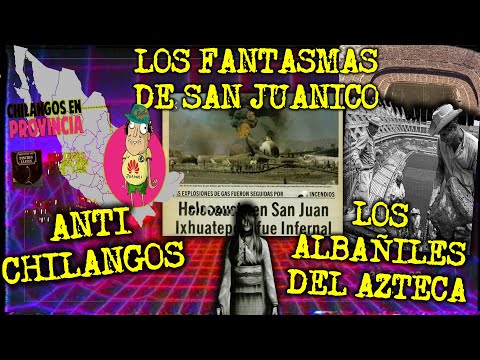
Mexico's Urban Legends of the 80s: An Investigation into the Unseen


Introduction: Echoes from the Decade

There are decades that resonate with a particular frequency, their cultural echoes shaping the narratives that follow. The 1980s in Mexico were such a time, a period where the mundane and the mysterious often intertwined, giving rise to an array of urban legends that burrowed deep into the collective consciousness. These weren't just campfire tales; they were reflections of societal anxieties, whispers of the unknown, and perhaps, glimpses into phenomena that defy easy explanation. Today, we don't just recount stories; we dissect them, seeking the kernels of truth, the psychological underpinnings, and the enduring power of these eerie narratives. Prepare to revisit a decade where the veil between worlds seemed thinner than usual.

Case File: The Fabric of Fear – 1980s Mexico

The 1980s were a period of significant social and political change in Mexico. Economic shifts, seismic events like the 1985 Mexico City earthquake, and a pervasive sense of unease created fertile ground for rumors and legends to flourish. The lack of immediate, verifiable information in many instances, coupled with a burgeoning media landscape, allowed speculative narratives to take root. Our task is to analyze the prevalent urban legends of this era, not merely as folklore, but as potential manifestations of collective subconscious fears, unexplained events, or even deliberate misinformation campaigns designed to distract or control. We will examine the core elements of these legends, their reported manifestations, and the socio-cultural context that gave them life.

Legend 1: The Silent Shadows of Government Cover-Ups

One of the most potent undercurrents of 1980s Mexican folklore involved alleged government cover-ups and clandestine operations. Rumors circulated about secret experiments, unexplained disappearances linked to official entities, and orchestrated disinformation campaigns designed to mask the truly bizarre. These narratives often tapped into a deep-seated distrust of authority, amplified by historical events and the opacity of certain governmental processes. The idea that authorities might be aware of, or even actively involved in, phenomena beyond our understanding fueled countless speculative discussions and, in some cases, provided a convenient explanation for unexplained occurrences. The psychological impact of such legends is significant, fostering a sense of vulnerability and suspicion towards institutions.

The persistence of these cover-up narratives suggests a desire to find order, however sinister, in chaotic or inexplicable events. If the government knows, then perhaps there's a method to the madness, a hidden logic that, if understood, could offer a degree of control or prediction. This, however, remains a theoretical construct. The challenge lies in differentiating genuine historical instances of secrecy from the embellishment and mythologizing that often characterize urban legends. For any investigator, the first step in such cases is rigorous examination of declassified documents and credible testimonial evidence, a process often complicated by the very nature of the alleged secrecy.

Legend 2: Cryptic Whispers and Cryptids

The 1980s also saw the emergence or popularization of various cryptid sightings and strange entities within Mexican folklore. While often dismissed as folklore, the consistency of certain reports warrants a closer look. These legends speak to a primal fascination with the unknown creatures that might inhabit the periphery of our known world. Were these misidentifications of known animals, elaborate hoaxes, or encounters with entities that defy current biological classification? Analyzing these sightings requires careful consideration of the environment, the witness testimony, and any potential physical evidence. The psychological effect of believing in hidden creatures is profound, often reflecting a desire for the world to be more mysterious and less predictable than it appears.

For instance, reports of entities or creatures, often described with uncanny physical attributes, would spread through word-of-mouth, embellished with each retelling. The common thread was usually a sense of unease, a feeling of being watched by something not quite human. The analysis of such accounts often leads down the rabbit hole of pareidolia – the tendency to perceive meaningful patterns (like faces or figures) in random or ambiguous visual data. However, a rigorous investigator must always consider the possibility, however remote, that some descriptions might stem from genuine, albeit poorly understood, phenomena. The advent of more accessible photography and video technology in later years would offer new avenues for investigation, but the foundational legends of the 80s often relied solely on oral tradition and subjective experience.

Legend 3: The Disappearance Enigma

Disappearances, particularly those that were unexplained or involved seemingly random victims, often formed the bedrock of chilling urban legends. These stories typically involved individuals vanishing without a trace, leaving behind only a void and a cascade of unsettling theories. Were these cases related to the alleged government cover-ups? Were there serial predators whose true nature was masked by the mundane? Or did something more inexplicable – a portal, an otherworldly entity – claim these individuals? The power of these legends lies in their ability to evoke primal fears of vulnerability and the unknown fate that can befall anyone.

The narrative often gains traction when established authorities appear baffled, or when the reported circumstances defy logical explanation. A common trope involves a victim seemingly disappearing from a locked room, or leaving behind a cryptic message. These elements transform a tragic real-world event into a compelling mystery, ripe for folkloric interpretation. From an investigative standpoint, the challenge is to parse the factual accounts from the speculative additions that inevitably accrue over time. Understanding the psychology behind why people gravitate towards supernatural or conspiratorial explanations for disappearances is as crucial as examining the scant evidence that may remain. The lingering questions are often more powerful than any definitive answer.

Legend 4: Supernatural Encounters in Urban Landscapes

Beyond specific entities or conspiracies, the 1980s in Mexico were also characterized by a broader sense of supernatural presence within everyday urban environments. Tales of haunted buildings, spectral apparitions on streets, and poltergeist activity that disrupted domestic life were common. These legends often served to imbue familiar spaces with an eerie aura, transforming mundane locations into sites of potential paranormal significance. The ubiquity of such tales speaks to a cultural predisposition to interpret unexplained phenomena through a supernatural lens.

The analysis of these "haunting" legends often involves examining the psychological and environmental factors that contribute to belief. Is the perceived activity a result of infrasound, electromagnetic field fluctuations, or simply the power of suggestion amplified by a spooky ambiance? The methodology here is critical: a seasoned investigator prioritizes debunking mundane explanations before even considering paranormal activity. This involves meticulous environmental surveys, interviews with witnesses, and a thorough review of the location's history for potential psychological triggers. The stories often gain momentum through sensationalized media reports or campfire retellings, each iteration adding a layer of dramatic flair that obscures the original facts. Field investigations are key to understanding the genesis of these beliefs.

Investigator's Verdict: Distinguishing Fact from Folklore

After dissecting these prominent urban legends of 1980s Mexico, a clear pattern emerges: they reflect a society grappling with change, uncertainty, and a deep-seated fascination with the unknown. While many of these tales undoubtedly stem from genuine anxieties, misinterpretations, and the natural human tendency to create narrative coherence from chaos, dismissing them entirely would be amateurish. The consistent threads running through these legends – distrust of authority, fear of the unknown, and the unexplained disappearance – are universal themes that continue to fuel paranormal inquiry. The evidence, where it can be found, often points to a complex interplay of psychological phenomena, environmental factors, and perhaps, on rare occasions, genuinely anomalous events that still elude scientific quantification. What remains undeniable is the cultural significance and enduring power of these stories, serving as a testament to the mysteries that continue to permeate our reality.

The Investigator's Archive

To truly grasp the depth of these phenomena, one must consult the foundational texts and resources. My personal archive, curated over years of relentless investigation, contains essential materials for anyone serious about this field:

  • Books:
    • "The Mexican Cabal: Unveiling the Hidden Hands of Power" by various anonymous authors (Self-published, highly speculative but influential in certain circles).
    • "El Libro de los Muertos Vivientes: Leyendas Urbanas Mexicanas" by Eduardo Ruiz (A comprehensive, though sometimes embellished, collection of Mexican folklore).
    • "Fortean Times" archives (Essential for understanding anomalous phenomena across history and cultures).
  • Documentaries:
    • "Mexico's Darkest Decade: Paranormal Investigations of the 80s" (Fictional title, but represents the type of deep-dive documentary needed).
    • "Searching for the Unknown: Cryptid Hunters" (Focuses on the methodology of tracking unexplained creatures).
  • Platforms:

Equally important for any serious investigator is the right equipment. While the legends of the 80s were often investigated with rudimentary tools, modern research demands precision. A high-sensitivity audio recorder for capturing EVP (Electronic Voice Phenomena), an EMF meter for detecting electromagnetic fluctuations often associated with hauntings, and a full-spectrum camera for capturing anomalies invisible to the naked eye are indispensable. Investing in quality ghost hunting gear is not a luxury; it's a necessity for empirical investigation.

Frequently Asked Questions

Q1: Are these legends real, or just stories?

A: The "reality" of urban legends is complex. While the narratives themselves are often fictionalized, they frequently arise from or are inspired by real events, societal anxieties, or unexplained phenomena. Our role as investigators is to discern what elements are factual, what are embellishments, and what might point to genuine anomalies.

Q2: Why are urban legends so pervasive in Mexico?

A: Mexico has a rich cultural history steeped in folklore and a propensity for interpreting the unexplained through mystical or supernatural lenses. Factors like historical upheaval, economic challenges, and a strong oral tradition create fertile ground for these narratives to thrive and evolve.

Q3: How can I investigate a local legend myself?

A: Begin by researching the legend thoroughly, gathering testimonies, and identifying any historical locations or events associated with it. Then, equip yourself with basic investigation tools and apply a systematic, evidence-based approach, always seeking to debunk mundane explanations first.

Your Field Mission

Now, it's your turn to become an investigator. Consider the legends discussed today. Think about your own local folklore or a legend that has always intrigued you. Your mission:

  1. Research and Document: Identify a local urban legend from your region or one that has historically significant ties to the 1980s. Gather as much information as possible: written accounts, oral histories, relevant locations.
  2. Analyze the Core Fear: What fundamental fear or societal anxiety does this legend tap into? Is it fear of the unknown, distrust of authority, existential dread, or something else?
  3. Hypothesize Explanations: Formulate at least three potential explanations for the legend. Aim for a range, including mundane (misidentification, hoax, psychological effect) and speculative (genuine paranormal activity, unknown biological entity, advanced technology). Weigh the evidence for each.
  4. Share Your Findings: In the comments below, share your chosen legend, the core fear it addresses, and your most compelling hypothesis for its origin. Let's build a collaborative dossier of mystery.

Remember, the line between myth and reality is often blurred. Your critical thinking and investigative approach are your most powerful tools.

About the Author

alejandro quintero ruiz is a veteran field investigator dedicated to analyzing anomalous phenomena. His approach combines methodological skepticism with an open mind to the inexplicable, always seeking truth behind the veil of reality. With years spent uncovering the hidden narratives in forgotten places, his insights offer a unique perspective on the world's most perplexing mysteries.