Followers

Mostrando las entradas con la etiqueta urban legends. Mostrar todas las entradas

Giant Mosquitoes in Canada: Folklore or Cryptid?

Image

The vast, untamed landscapes of Canada have long been fertile ground for tales whispered around campfires and passed down through generations. While modern science offers explanations for many phenomena, some stories persist, hinting at a reality stranger than fiction. This investigation delves into the folklore surrounding what some claim to be giant mosquitoes and spiders lurking in the Great White North, examining historical accounts and modern interpretations.

Introduction: Echoes in the Wilderness

In the concluding segment of our series exploring the possibility of oversized arthropods in Canada, we shift our focus to the chilling folklore of giant spiders and, more specifically, giant mosquitoes. These narratives, often dismissed as mere tall tales, carry a peculiar weight in regions where the wilderness is as much a character as any human. From the remote High Arctic to the dense forests of the frontier, whispers of monstrous insects have echoed for centuries. Are these simply exaggerations born of fear and isolation, or do they point towards elusive creatures that defy conventional biology? This investigation seeks to unravel these mysteries, separating fact from folklore.

The sheer scale of Canada's wilderness provides a plausible backdrop for such legends. As one viewer noted,

"When I was growing up here it felt like the native lore was more or less held to themselves by the native people (may have been just my child's perspective). I really appreciate being able to hear the stories about the land where I live, makes the place feel more rich and magical." Similar sentiments echo across online platforms, with many thanking the researcher for "keeping these old tales alive" and "appreciating the time and effort" invested in such unique content.

Recommended Gear for Investigation

ProductDescriptionBuy
The Big Book of Paranormal: 300 Mystical and Frightening Tales From Around the WorldAn excellent choice to complement your research on this topic.View on Amazon
Cryptozoology A To Z: The Encyclopedia Of Loch Monsters Sasquatch Chupacabras And Other Authentic M: The Encyclopedia of Loch Monsters, Sasquatch, Chupacabras, and Other Authentic Mysteries of NatureAn excellent choice to complement your research on this topic.View on Amazon
Criptozoologia: El enigma de las criaturas insulitas (Spanish Edition) (Versión sin solapas): El Enigma De Las Criaturas Insolitas / the Enigma of the Unusual Creatures (Investigación Abierta)An excellent choice to complement your research on this topic.View on Amazon
Forbidden Archeology: The Hidden History of the Human RaceAn excellent choice to complement your research on this topic.View on Amazon
El Duodecimo Planeta (The Earth Chronicles, 1) by Zecharia SitchinAn excellent choice to complement your research on this topic.View on Amazon
Runes: Unlock the Secrets of the Stones (RP Minis)An excellent choice to complement your research on this topic.View on Amazon
The H. P. Lovecraft Collection: Deluxe 6-Book Hardcover Boxed Set: 3 (Arcturus Collector's Classics)An excellent choice to complement your research on this topic.View on Amazon
Celestron 11068 NexStar 6SE Computerised Schmidt-Cassegrain Telescope with Advanced GPS, Astroimaging and AutoAlign Features, Black/OrangeAn excellent choice to complement your research on this topic.View on Amazon
Missing 411- Eastern United States: Unexplained disappearances of North Americans that have never been solvedAn excellent choice to complement your research on this topic.View on Amazon
Tapiz de mapa del mundo antiguo, diseño vintage de mapa del mundo, tapiz de distribución geográfica para colgar en la pared, póster educativo de mapa del mundo del Atlas histórico marrón, para pared,An excellent choice to complement your research on this topic.View on Amazon

Giant Spiders of the High Arctic: Myth or Misidentification?

Tales of colossal arachnids in the Canadian Arctic are particularly striking. While outright giants might be the stuff of pure fantasy, the line between legend and misidentification can be thin. Viewers suggest that stories of "giant underwater spiders" might be confused with large marine crustaceans like "spider crabs," which can have a leg span of up to five feet. These creatures, described as resembling "a daddy long legs spider with a leg span of 5 feet," have reportedly been found in shallow waters, unnerving local populations. The possibility of them being mistaken for terrestrial spiders, especially in dim light or from a distance, is significant.

Furthermore, the concept of scaled-up arthropods generally evokes a visceral reaction. As one commentator aptly put it:

"98% of bugs would be literal monsters if scaled up, imagine a man sized preying mantis cracking open your car like a can." This hypothetical scenario underlines the primal fear associated with large insects, making it understandable why any encounter with an unusually large specimen could fuel extraordinary tales.

The Origin of Mosquitoes: From Tales to Prehistoric Giants

The origins of mosquitoes themselves are steeped in folklore and scientific inquiry. While the article touches upon the "Origin of Mosquitoes" and "The First Mosquito," delving into prehistoric gigantism offers a more speculative angle. The Pleistocene era saw a proliferation of larger fauna, and it's not beyond the realm of possibility that insect life also experienced periods of unusual growth. Paleontological records, though often incomplete, hint at the existence of enormous insects in Earth's distant past. Could ancient legends be distorted echoes of encounters with species that no longer exist?

The sheer prevalence of mosquitoes in certain Canadian regions is undeniable. Reports from Alaska mention that "the mosquitos in Alaska are crazy bad too," and the experience of encountering unusually large specimens is not isolated. One anecdote recalls spotting an enormous mosquito, "approx 3/4" oval body," in Northern Illinois in January—a stark contrast to the smaller varieties familiar to the narrator. This sighting, described as a "HUGE Mosquito," underscores how even regional variations in size can inspire extraordinary claims, especially when contrasted with the "wimpy" skeeters more commonly encountered.

Frontier Torture: The Gruesome Reality of Insect Menace

Beyond mere size, the sheer numbers and biting capacity of mosquitoes have historically posed a significant threat, particularly in frontier environments. The concept of "Frontier Torture," where prisoners were subjected to death by insect attack, is a grim testament to this. Research into historical accounts reveals that such practices were not confined to a single region. One individual shared family history research from the 1600s detailing a scenario in Connecticut where a captured Native American was left to die from exposure and insect bites, mirroring the descriptions found in the video. This chilling practice highlights the profound impact that even small, numerous pests could have on human survival and suffering in the past.

The psychological and physical torment inflicted by relentless insect swarms is difficult for modern sensibilities to fully grasp. The description of being "Fed upon by mosquitos until you're too weak to save yourself, and then being untied and left with a bowl of water is definitely one of the most cruel things I've heard of..." speaks volumes about the terror associated with such scenarios. It's a stark reminder that for those living in harsh, undeveloped territories, the natural world, including its smallest inhabitants, could present existential threats.

The World's Largest Mosquito: A Modern Cryptid?

While direct evidence of "Giant Prehistoric Mosquitoes" is scarce, the modern fascination with the "World's Largest Mosquito" persists in folklore and anecdotal reports. Some accounts point to specific locations, like Northern Canada after the spring melt, as areas where the largest mosquitoes encountered in North America are found. For instance, a T-shirt found in Moose Factory, referencing the 'Moose Factory Air Force' with a giant mosquito carrying off a moose, playfully captures this regional folklore.

Beyond mosquitoes, other marine cryptid tales emerge. One witness mentioned their "Inuit neighbor said they don't walk near the rocks close to the ocean there is a giant octopus whose great arms reach out the water and grab people." This type of folklore, when intertwined with accounts of unusually large insects, contributes to a broader tapestry of the unknown lurking in Canada's vast territories. Another viewer recalled encounters fitting the description of "Eurypterids, Sea Scorpions. Very large," further illustrating the rich tradition of large, potentially dangerous, aquatic or near-aquatic creatures in local lore.

The sheer terror inspired by such possibilities is palpable. As one commenter expressed,

"Giant spiders and mosquitos weren't exactly on my dance sheet for this morning, but what the hell. I like old legends like this. At least they'd better be only legends. (shudder)" This sentiment reflects a common reaction to tales of oversized creatures – a mixture of fascination and dread.

Researcher's Verdict: Deconstructing the Legends

From an investigative standpoint, the legends of giant mosquitoes and spiders in Canada likely stem from a confluence of factors. Firstly, the exaggeration inherent in oral traditions, particularly when recounting frightening experiences. Secondly, potential misidentifications of known, albeit large, arthropods or marine life. Thirdly, the genuine ecological conditions in certain regions after periods like spring melt, which can indeed lead to larger and more numerous insect populations, amplifying the perceived threat. Finally, the deep-seated human fear of being overwhelmed by nature, especially by creatures that are typically small but can become monstrous when scaled up or encountered in massive swarms.

While concrete proof of giant, undiscovered mosquito or spider species in Canada remains elusive, the persistence of these stories speaks to their cultural significance. They serve as a reminder of the mysteries that the natural world, particularly in vast and remote areas, can still hold. The practice of historical torture by insects, though horrific, also grounds these tales in a reality where such pests were not just nuisures but serious threats to survival. As one viewer commented, "The Micmacs say that during the last deluge, their god Glooskap saved them from the catastrophe by leading them into their current territory... The Micmacs could not establish themselves because the giant beavers destroyed their habitat by building dams, and Glooskap was asked to re-size the beavers to help them, which he did." This narrative shows how ancient cultures often incorporated giant creatures into their foundational myths, providing explanations for their environment.

The fear of the unknown, amplified by the sheer scale of the Canadian wilderness, continues to fuel these captivating legends. Whether they are pure fiction, distorted memories, or something more, tales of giant insects tap into our primal anxieties and our fascination with the unexplored corners of our planet.

Equipo Recomendado para la Investigación

Para quienes deseen explorar fenómenos similares o documentar sus propias investigaciones del mundo inexplicable, contar con el equipo adecuado es fundamental. La calidad de la evidencia recogida puede depender directamente de las herramientas utilizadas. Desde grabadoras de audio de alta sensibilidad para capturar posibles psicofonías hasta cámaras con visión nocturna para documentar avistamientos en condiciones de baja luz, cada pieza de equipo cumple una función crítica en el proceso de investigación paranormal.

Frequently Asked Questions

  1. Are there scientifically recognized giant mosquitoes in Canada?

    While Canada experiences large mosquito populations, particularly after spring melts, there is no scientific evidence to support the existence of species significantly larger than typical known mosquitoes, such as the Gallinipper (Psorophora ciliata), which is one of the largest in North America but still within expected insect size ranges.

  2. Could ancient myths about giant insects be based on real creatures?

    It's plausible that ancient myths are embellished accounts of real experiences. Misidentification of large invertebrates, rare sightings of unusually large specimens, or even fossilized remains could have inspired folklore. However, definitive proof of extinct giant mosquito or spider species in Canada is lacking.

  3. What is the historical significance of mosquitoes in frontier regions?

    Historically, mosquitoes, due to their sheer numbers and ability to transmit diseases, posed a significant threat in frontier regions. In extreme cases, they were used as a means of torture or contributed to the suffering and mortality of settlers and indigenous populations.

  4. What are "spider crabs" mentioned in relation to giant spider myths?

    Spider crabs are a type of marine crustacean with long, spindly legs that can give them a spider-like appearance. Some species, like the Japanese spider crab, are enormous. Folklore about giant spiders in coastal areas might be influenced by sightings of these large marine creatures.

Your Mission: Field Observation Log

Your mission, should you choose to accept it, involves becoming an observer in your own environment. Pay attention to local folklore and anecdotal accounts of unusual insects or creatures in your area. Document any personal sightings of unusually large insects, noting the species if identifiable, size, location, and time. Compare these observations with established scientific knowledge and historical records. Your findings, however small, contribute to the ongoing effort to understand the unexplained phenomena that surround us. Share your experiences and observations in the comments below.

Did you find this investigation illuminating? Share it with your fellow truth-seekers on social media!

Investigator's Note: True paranormal research doesn't fund itself. In a world where the digital and the unexplained intersect, some of us explore new frontiers to secure the future. Do you dare to be part of the vanguard? Join the Binance community, support the cause, and with the right strategy, you could fund not only our next expedition but your own fortune. The next great discovery could be just a click away.

5 Disturbing Appalachian Videos: An Investigator's Analysis

Image

The Appalachian region, a vast and ancient mountain range, has long been a fertile ground for folklore, whispered tales, and phenomena that defy easy explanation. But what happens when these stories manifest on camera? This investigation delves into five videos that have surfaced from the heart of Appalachia, each presenting unsettling anomalies and challenging our perception of reality. Prepare to question what lurks in the shadows of these storied mountains.

Witness Accounts: Echoes from the Woods

The raw, unvarnished reactions captured in these videos are a testament to the powerful effect these events have on individuals. The comments section became a virtual town square, with viewers sharing their interpretations, fears, and even practical advice. Many echoed the sentiment of self-preservation, questioning why individuals venturing into remote, often dangerous environments would do so alone and unprepared. The recurring theme is a blend of fear and bewilderment, often tinged with a pragmatic assessment of the risks involved.

"Seriously? That first woman out alone in the dark yet! What else was she expecting? Even the most experienced woodsman doesn't go out without protection? As for the shoes, there's even more bizarre things recorded out in the deep woods that make these shoes look tame by comparison 🤔😖😳"

This sentiment is echoed repeatedly: vulnerability in the face of the unknown. The woods, particularly the vastness of Appalachia, are perceived as a place where anything is possible, from human threats to something far more primal. The sheer terror displayed by some individuals is palpable, raising questions about whether they genuinely believe they are facing something supernatural or simply a dangerous wild animal.

Recommended Gear for Investigation

ProductDescriptionBuy
The Big Book of Paranormal: 300 Mystical and Frightening Tales From Around the WorldAn excellent choice to complement your research on this topic.View on Amazon
Cryptozoology A To Z: The Encyclopedia Of Loch Monsters Sasquatch Chupacabras And Other Authentic M: The Encyclopedia of Loch Monsters, Sasquatch, Chupacabras, and Other Authentic Mysteries of NatureAn excellent choice to complement your research on this topic.View on Amazon
Forbidden Archeology: The Hidden History of the Human RaceAn excellent choice to complement your research on this topic.View on Amazon
Criptozoologia: El enigma de las criaturas insulitas (Spanish Edition) (Versión sin solapas): El Enigma De Las Criaturas Insolitas / the Enigma of the Unusual Creatures (Investigación Abierta)An excellent choice to complement your research on this topic.View on Amazon
The H. P. Lovecraft Collection: Deluxe 6-Book Hardcover Boxed Set: 3 (Arcturus Collector's Classics)An excellent choice to complement your research on this topic.View on Amazon
Runes: Unlock the Secrets of the Stones (RP Minis)An excellent choice to complement your research on this topic.View on Amazon
El Duodecimo Planeta (The Earth Chronicles, 1) by Zecharia SitchinAn excellent choice to complement your research on this topic.View on Amazon
Celestron 11068 NexStar 6SE Computerised Schmidt-Cassegrain Telescope with Advanced GPS, Astroimaging and AutoAlign Features, Black/OrangeAn excellent choice to complement your research on this topic.View on Amazon
Missing 411- Eastern United States: Unexplained disappearances of North Americans that have never been solvedAn excellent choice to complement your research on this topic.View on Amazon
Ghost-Hunting For Dummies [Idioma Inglés] An excellent choice to complement your research on this topic.View on Amazon

Deconstructing the Anomalies: A Video-by-Video Breakdown

While the original compilation is a mosaic of unsettling moments, a closer examination of each segment, informed by viewer feedback and my own analytical framework, is crucial. The creators themselves, credited for their contributions, often capture fleeting glimpses of the inexplicable. Let's dissect the most compelling elements:

  • Video 1: Target Practice or Tragic Encounter? The initial feedback suggests this might be "just people Target Practicing." This is a plausible explanation, especially in rural areas where firearms are common. However, the context provided by the original creator (as cited by viewers) suggests an encounter with something more specific to Appalachian lore. The screams, though terrifying, could indeed be a human reaction to perceived danger, whether man-made or animal.
  • Video 2: The Stalker in the Woods. The description of a woman being "chased out of the woods" is a classic narrative. Viewers quickly identified the likely culprit: a black bear. The advice to never turn your back and run is sound survival knowledge. The primal fear conveyed by the screaming individual is undeniable, and some empathy is expressed, with one commenter stating, "As a fellow woman hiker I can feel her fear." This highlights the emotional impact, regardless of the explanation.
  • Video 3: Shuffling Shadows and Strange Sounds. The "shoes" mentioned in one comment could refer to an unexplained auditory or visual phenomenon. The reference to a "whistling sound" on an empty street, even if not directly from this video, taps into a common fear of unseen pursuers. The ambiguity here fuels speculation, with theories ranging from mundane noises to something sinister.
  • Video 4: The Upright Anomaly. The figure seen standing on two legs is a persistent point of discussion, with many immediately identifying it as a bear. "Probably just a black bear standing on two legs," one user states. The posturing is described as "either a defensive or investigative tactic by the bear." While the natural world offers explanations, the context of Appalachian mystery lends itself to more speculative interpretations. The lack of visible "creature" when the area is circled further adds to the enigma.
  • Video 5: The Ghostly Echo. This segment, featuring an ASMR channel, presents a potentially chilling auditory anomaly – a ghostly voice. The confluence of ASMR's intimate, sometimes eerie, atmosphere with a paranormal vocalization is particularly unsettling. Viewers note the "suspicious" nature of frequent paranormal experiences on camera, suggesting a skepticism towards staged events, but the genuine creepiness of the audio is acknowledged. The connection to "The Walking Dead" is a pop-culture overlay, showing how we contextualize fear.

Common Threads and Mundane Explanations

It's my professional duty to approach these cases with a degree of skepticism. The human mind is adept at pattern recognition, often imposing familiar shapes or sounds onto ambiguous stimuli, a phenomenon known as pareidolia. Many of the purported anomalies can be attributed to:

  • Wildlife Behavior: Black bears, as frequently noted by viewers, can stand on their hind legs, creating the illusion of a humanoid figure. Their vocalizations can also be varied and alarming.
  • Environmental Acoustics: Wind, animal calls, and even geological features can create strange sounds – echoes, whistles, or groans – that are amplified and distorted in remote areas.
  • Human Activity: Distant sounds of target practice, vehicles, or industrial activity can be misinterpreted, especially when filtered through a lens of fear or anticipation.
  • Psychological Factors: The "paranormal hunter" trope, where individuals actively seek out the unexplained, can lead to heightened anxiety and a predisposition to interpret natural events as supernatural. As one commentator aptly put it, "they freak out and run away 🤣🤣🤣" the moment they *expect* to see something.
  • Digital Artifacts and Hoaxes: The age of social media has democratized content creation, but it has also made it easier to fabricate or manipulate evidence for views or notoriety. The comment about "Fake ghost for tiktok views" is a stark reminder of this.

The presence of ASMR creators, ASMR channels, and even those seeking to document cryptids or Bigfoot, points to a wider cultural fascination with the unknown. However, this fascination sometimes crosses the line into a willingness to accept sensationalism over substance.

Investigator's Protocol: Navigating Appalachian Mysteries

When confronted with phenomena like those presented in these videos, a structured approach is essential. My protocol involves several key stages:

  1. Contextual Analysis: Understand the specific Appalachian folklore or local legends potentially associated with the sighting location. This involves researching historical accounts, local myths, and previous reports from the area.
  2. Evidence Verification: Scrutinize the raw footage and audio. Look for inconsistencies, signs of manipulation, and alternative, mundane explanations. Cross-reference with known animal behaviors, geological phenomena, and common soundscapes.
  3. Witness Testimony Evaluation: Assess the credibility of witnesses. Consider their emotional state, potential biases, and consistency of their accounts. The comments reveal a range of reactions, from genuine terror to calculated skepticism.
  4. Environmental Assessment: If possible, analyze the geographical and environmental factors of the location. Are there caves, unusual rock formations, or specific wildlife known to inhabit the area?

The recurring advice to use the "buddy system" and "stay strapped" (meaning armed) is a pragmatic response to perceived threats, whether human, animal, or allegedly paranormal. It underscores the inherent dangers of exploring wild, remote territories.

Investigator's Verdict: Fear, Folklore, or Forensics?

After meticulous analysis, the "5 Disturbing Appalachian Videos" present a compelling, albeit ambiguous, collection of incidents. While the allure of the supernatural is strong, my pragmatic approach leans towards the most parsimonious explanations supported by evidence. The majority of these clips likely contain mundane phenomena misinterpreted through fear, the lens of local folklore, or a desire for viral content. Specifically:

  • The upright figure is almost certainly a black bear exhibiting typical behavior.
  • Auditory anomalies can often be attributed to wind, wildlife, or distant human activity.
  • The "ghostly voice" could be an artifact of recording, environmental noise, or even a deliberate fabrication for online appeal.

However, the power of these videos lies not solely in definitive proof, but in their ability to tap into our collective anxieties about the unknown and the wild places that still hold mysteries. The Appalachian region, with its deep history and shadowed landscapes, remains a potent symbol of the unexplained. Whether these videos capture genuine paranormal activity or simply the potent effect of suggestion and misinterpretation, they serve as a chilling reminder of the fear that can grip an individual when confronted by the eerie uncertainties of the wilderness.

Recommended Equipment for Field Research

For those inspired to venture into similar territories for legitimate research, acquiring the right equipment is paramount. It ensures not only the collection of clearer evidence but also personal safety.

Frequently Asked Questions

  1. What is the primary concern when hiking alone in the Appalachian region?

    The primary concerns are unpredictable wildlife encounters (bears, mountain lions), getting lost, environmental hazards (terrain, weather), and potential encounters with other individuals who may pose a threat. Preparedness and self-awareness are critical.

  2. Are the Appalachian woods known for specific paranormal legends?

    Yes, the region is rich with folklore, including tales of Appalachian demons, spectral beings, UFO sightings, and cryptid creatures like Bigfoot. These stories often stem from the isolation and unique cultural history of the area.

  3. How can I distinguish between animal sounds and potential paranormal activity?

    Start by identifying common animal sounds in the region. Advanced audio recording equipment and analysis can help filter background noise and identify patterns. Unusual, unidentifiable sounds, especially those that seem to mimic human speech or exhibit intelligent interaction, warrant further investigation, but always exhaust natural explanations first.

  4. What is the best strategy if I encounter a wild animal, like a bear, in the woods?

    Remain calm. Do not run, as this can trigger a predatory chase response. Make yourself appear larger by raising your arms, speak in a calm, firm voice, and slowly back away. Avoid direct eye contact, which can be seen as a challenge. If attacked, fight back aggressively, particularly if it's a black bear.

  5. Is it common for people to stage paranormal videos for social media?

    Unfortunately, yes. With the rise of platforms like TikTok and YouTube, there is significant incentive to create sensational content. Viewers are advised to maintain a healthy skepticism and look for inconsistencies or overly convenient "evidence."

Your Mission: Document Responsibly

Next time you venture into the wild, whether it's the Appalachians or your local woods, remember to apply a critical eye. Observe your surroundings, document unusual occurrences with a clear head, and prioritize safety. If you capture something truly inexplicable, adhere to established protocols for evidence preservation and reporting. The truth is out there, but it often requires patience, diligence, and a healthy dose of skepticism.

What are your thoughts on these Appalachian videos? Have you experienced anything similar in your own explorations? Share your stories and theories in the comments below. Your experiences are vital pieces of the puzzle.

If you found this investigation compelling, please share it with your fellow truth-seekers on social media. Knowledge is power, and spreading awareness helps us all uncover the truth.

Investigator's Note: True paranormal research doesn't fund itself. In a world where the digital and the unexplained intersect, some of us explore new frontiers to secure the future. Do you dare to be part of the vanguard? Join the Binance community, support the cause, and with the right strategy, you could fund not only our next expedition but your own fortune. The next great discovery could be just a click away.
The Scariest Urban Legends That Turned Out to Be True: An Investigation

Image

The line between folklore and reality often blurs, leaving us to question the origins of our most chilling tales. But what if some of the urban legends that have haunted our nightmares were more than just stories? This investigation delves into accounts where the fabricated fears of the masses have, disturbingly, manifested into verifiable events.

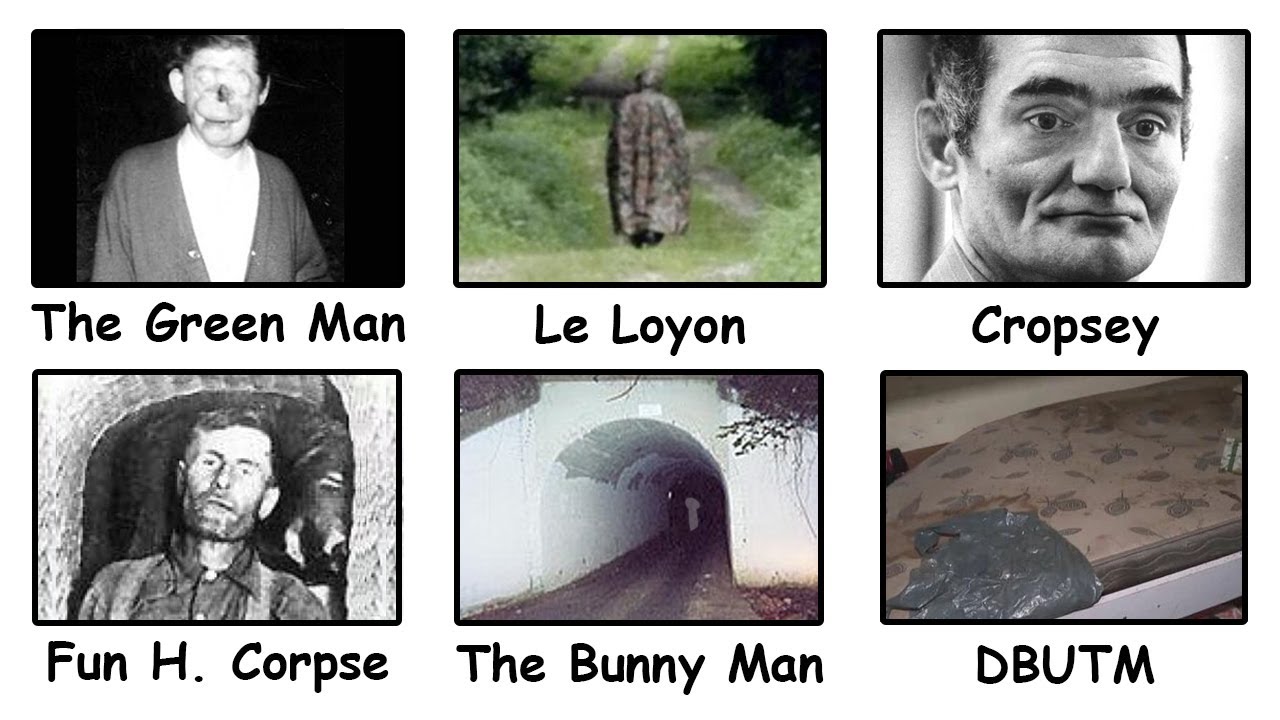
The Fun House Corpse: A Prop's Chilling Second Life

The legend of Elmer McCurdy, a Prohibition-era outlaw, begins with his demise. After being gunned down in a shootout in 1911, his body embarked on an unexpected, and frankly bizarre, second career. Initially, his remains were unclaimed, leading to a taxidermist preserving him. For years, McCurdy's mummified corpse was a macabre attraction in a funeral home, and later, a traveling carnival sideshow. One attendee recalls, "He-Man creator, one of the creators of He-Man made Skeletor based off this traumatic memory he had as a child of seeing the corpse in real life!" The irony is stark: a failed outlaw found greater, albeit posthumous, fame as a prop than he ever did in life. As one commentator aptly put it, "Elmer McCurdy had two careers; one was a train robber, the other was a sideshow attraction. He was more successful as a sideshow attraction than he was as a train robber." The Fun House Corpse story illustrates how even the most outlandish tales can have kernels of truth, transforming death into an enduring, if unsettling, spectacle.

The Bunny Man: A Local Legend's Disturbing Reality

Deep in Fairfax County, Virginia, the legend of the "Bunny Man" persists. Tales speak of a man in a rabbit costume, wielding an axe near the Colchester Overpass (often dubbed "Bunny Man Bridge"). While the story has evolved into a classic horror trope, it originates from a real, albeit less sensational, event in 1970. Arthur Bernard, a man in a rabbit suit, was discovered trespassing on a former presidential estate, threatening a site supervisor and his fiancée. He fired a pistol near their car and left a note. While the axe and costume are confirmed, the narrative of a homicidal maniac has become amplified over time. Participants in online discussions note the persistence of this legend in local lore: "My whole family grew up around the bunny man bridge!! My in-laws live 5 minutes down the road and I drive by it a lot. My mom actually lived in King's Park West during in 1970 and they couldn't go out during Halloween because the whole neighborhood was spooked." The coexistence of the menacing figure and the stark reality highlights how fear and local storytelling can reshape factual events into terrifying urban myths.

Recommended Gear for Investigation

ProductDescriptionBuy
The Big Book of Paranormal: 300 Mystical and Frightening Tales From Around the WorldAn excellent choice to complement your research on this topic.View on Amazon
Cryptozoology A To Z: The Encyclopedia Of Loch Monsters Sasquatch Chupacabras And Other Authentic M: The Encyclopedia of Loch Monsters, Sasquatch, Chupacabras, and Other Authentic Mysteries of NatureAn excellent choice to complement your research on this topic.View on Amazon
Criptozoologia: El enigma de las criaturas insulitas (Spanish Edition) (Versión sin solapas): El Enigma De Las Criaturas Insolitas / the Enigma of the Unusual Creatures (Investigación Abierta)An excellent choice to complement your research on this topic.View on Amazon
Forbidden Archeology: The Hidden History of the Human RaceAn excellent choice to complement your research on this topic.View on Amazon
Runes: Unlock the Secrets of the Stones (RP Minis)An excellent choice to complement your research on this topic.View on Amazon
The H. P. Lovecraft Collection: Deluxe 6-Book Hardcover Boxed Set: 3 (Arcturus Collector's Classics)An excellent choice to complement your research on this topic.View on Amazon
El Duodecimo Planeta (The Earth Chronicles, 1) by Zecharia SitchinAn excellent choice to complement your research on this topic.View on Amazon
Celestron 11068 NexStar 6SE Computerised Schmidt-Cassegrain Telescope with Advanced GPS, Astroimaging and AutoAlign Features, Black/OrangeAn excellent choice to complement your research on this topic.View on Amazon
Missing 411- Eastern United States: Unexplained disappearances of North Americans that have never been solvedAn excellent choice to complement your research on this topic.View on Amazon
Ghost-Hunting For Dummies [Idioma Inglés] An excellent choice to complement your research on this topic.View on Amazon

The Green Man: Misunderstood and Mystified

Perhaps one of the most poignant tales is that of Raymond Robinson, known as "The Green Man." Robinson was disfigured by a childhood electrical accident, resulting in severe facial and bodily damage. To avoid frightening others, he took to walking exclusively at night. His story, however, took a turn towards the heartwarming, as many who encountered him found him to be a kind and gentle soul. Numerous testimonies echo this sentiment: "My dad & his friends met the green man as a young adult. They gave him a beer and talked for 20 min. Raymond was very real & just a sweet, normal guy who got dealt a bad hand. RIP ❤" and "the green man just being a chill guy is so awesome !!" This human element transforms a potentially terrifying figure into a symbol of resilience and the importance of looking beyond appearances. The narrative of the Green Man serves as a powerful reminder that true monstrosity often lies not in disfigurement, but in the fear and judgment of others. "I don't want to be the morality guy but the story of the 'Green Man' really is a good example of how we should never judge someone by their appearance."

The Dead Body Under the Mattress: A Grim Hotel Secret

The idea of a hidden body creating a foul stench is a recurring nightmare fuel. The legend suggests that bodies have been discovered concealed within hotel mattresses. This, disturbingly, has happened. The implication is that in a busy hotel, the decomposition process could go unnoticed for an extended period, especially if the room is unoccupied or the scent is masked. One firsthand account supports this grim reality: "4:35 my fiance was working under the table at a hotel when he was a kid, and he found a dead body under a mattress too. Hotels really aren't a good place to hide bodies." This chilling confirmation adds a layer of dread to any stay at a hotel, proving that some urban legends are rooted in the dark possibilities of human action and negligence.

People in the Walls: Unsettling Discoveries

The concept of individuals being trapped or hidden within the walls of a building is a staple of horror. While often exaggerated, the idea stems from real-life occurrences where people have been discovered concealed within structures, sometimes alive, sometimes deceased. These discoveries can range from individuals seeking shelter to more sinister scenarios. The mere thought of unseen presences within the very fabric of our living spaces taps into deep-seated anxieties about privacy and security. While sensationalized in fiction, the possibility, however remote, of such hidden occupants lends a disquieting truth to this particular fear.

Le Loyon: The Hermit of the Mountains

The Alpine hermit, known as Le Loyon, is a figure shrouded in mystery. Living in a cave near Bourget Lake in the 19th century, he was known for his reclusive nature and rumored to be quite intimidating in appearance. Stories suggest he would avoid contact with people, leading to speculation about his motives. Some theories propose he was simply a hermit seeking solitude. As one viewer noted, "Le loyon was probably just a hermit who wanted to be left alone." While not explicitly a "scary" legend in the typical sense, his isolated existence and the rumors surrounding him contribute to the tapestry of mysterious figures that inhabit folklore, blurring the lines between reclusive individuals and mythical beings.

Cropsey: From Local Bogeyman to Terrifying Truth

Cropsey is a boogeyman figure associated with Staten Island, NY. For generations, children were warned about Cropsey if they misbehaved. The legend depicted him as a dangerous, possibly insane, asylum escapee who roamed the woods. The legend took a terrifying turn in 1972 when a 12-year-old girl, Jennifer Schweiger, was brutally murdered. Her killer, Andre Rand, a former caregiver at an institution for the mentally disabled that once occupied the area, was known to have connections to the Cropsey legend. The belief was that Rand may have used the Cropsey myth to cover his tracks or that the legend itself was a dark manifestation of real-world dangers. A viewer shared, "My mom was a kid during the 80’s when Cropsey was on the prowl. This incident is the reason she hates NYC." This case exemplifies how local folklore can tragically intertwine with real criminal acts, solidifying a legend in the public consciousness.

The Toxic Lady: A Biological Mystery

The case of Gloria Ramirez, often dubbed "The Toxic Lady," remains one of the most baffling medical mysteries. In 1994, Ramirez was admitted to Riverside General Hospital exhibiting severe symptoms. As medical staff attempted to treat her, an unusual odor permeated the room, and personnel began experiencing a range of ailments, including dizziness, nausea, and skin lesions. Despite extensive investigation, the exact cause of the mass illness and Ramirez's death was never definitively determined. One theory suggests a complex interaction involving medical treatments. "So based on what i know about the toxic lady case apparently it was due to an extrodinary series of coincidences. She used DMSO as a cheap treatment for her late stage cancer but when she was submitted to the hospital they gave her oxygen which made the DMSO in her system into DMSO2 then when she went into cardiac arrest and they used a defib the DMSO2 became DMSO4 (which was basically a nerve gas agent)." However, alternative theories about potential methamphetamine production at the hospital have also been proposed, highlighting the enigmatic and unresolved nature of this event. The official explanation remains inconclusive, leaving a chilling void in our understanding. The Dollop podcast's portrayal of this case, "The Toxic Woman of Riverside," further explores the complexities, noting, "Her lawyers allegedly think that Riverside Hospital was being used as a methamphetamine production facility by someone(s) and that the hospital found this out because something accidentally contaminated Gloria... Gloria was just a nice lady who was trying her best to beat cancer...she did nothing wrong except be sick and now her family will probably never know what happened to her."

Researcher's Verdict: Fact or Fiction?

After meticulously examining these urban legends, the verdict is clear: the line between myth and reality is far more permeable than we often care to admit. From the macabre resurrection of Elmer McCurdy to the tragic reality behind the Cropsey legend, and the genuinely perplexing case of Gloria Ramirez, these stories demonstrate that sometimes, the scariest tales are the ones that are true. The "Green Man" offers a counterpoint, showcasing how a legend can evolve to highlight empathy and understanding rather than fear. My analysis suggests that while urban legends often begin with a seed of truth, they are frequently amplified by societal anxieties, a penchant for the sensational, and the natural human desire to find patterns and explanations, even in the most tragic circumstances. This investigation into the verifiable elements of these legends underscores the critical need for rigorous research and a healthy skepticism coupled with an open mind.

The Researcher's Archive

For those eager to delve deeper into the shadowy corners of folklore and unexplained phenomena, I recommend the following resources:

Books:
  • "The Vanishing Hitchhiker: American Urban Legends and Their Meanings" by Jan Harold Brunvand - A foundational text for understanding the academic study of urban legends.
  • "Dangerous Games to Play in the Dark" by Lorelie Rozanne - Explores a variety of chilling folklore and games.
Documentaries/Podcasts:
  • "Lore" (Podcast/Amazon Prime Series) - Explores historical folklore and the dark side of true events.
  • "The Dollop" (Podcast) - Often covers bizarre historical events and figures, including "The Toxic Woman of Riverside."
  • "Unsolved Mysteries" (Netflix) - Features cases that often blur the lines between the explained and unexplained.

Frequently Asked Questions

  1. What makes an urban legend "turn out to be true"?

    It means that a core event or factual basis, however distorted, can be identified behind the popular narrative. This could be a real crime, a historical figure, or an unusual incident that, through retelling, grows into a sensationalized legend.

  2. Why do urban legends persist even when debunked?

    Urban legends often tap into deep-seated societal fears, anxieties, and cultural biases. Even when a specific story is proven false, the underlying fear or theme it represents may continue to find new expressions in other legends.

  3. How can I research the truth behind an urban legend?

    Start with reputable sources like academic studies, historical archives, and investigative journalism. Be wary of anecdotal evidence and sensationalized retellings. Cross-reference information and look for primary sources whenever possible.

  4. Is the "Green Man" story real?

    Yes, Raymond Robinson, the inspiration for "The Green Man," was a real individual who lived in Beaver County, Pennsylvania. His story of being disfigured and often misunderstood is historically documented.

Your Mission: Field Investigation

Next time you hear a chilling tale, train your critical eye. Does it have roots in a verifiable event? What societal anxieties does it reflect? Your mission is to question, research, and discern the truth from the fiction. Share your findings and discuss the nature of these legends in the comments below.

What urban legends have you encountered that you suspect have a basis in reality? Share your experiences and insights in the comments. Your testimony could be crucial for future investigations. Don't keep these chilling discoveries to yourself – share this article on your social media channels and help others understand the thin veil between myth and reality.

Investigator's Note: True paranormal research doesn't fund itself. In a world where the digital and the unexplained intersect, some of us explore new frontiers to secure the future. Do you dare to be part of the vanguard? Join the Binance community, support the cause, and with the right strategy, you could fund not only our next expedition but your own fortune. The next great discovery could be just a click away.

Video: Alleged Witch Terrifies Cali Residents

Image

In a chilling incident that has gripped a neighborhood in Cali, Colombia, residents claim to have captured definitive video evidence of a purported witch lurking on rooftops under the cover of darkness. The footage, disseminated widely, shows a shadowy figure moving erratically, fueling local legends and sparking heated debate about its true nature.

The Cali Incident: A Rooftop Specter

The recorded event centers on a grainy video that appears to show a dark, cloaked figure moving along the roof of a residential property. Local residents, understandably alarmed, quickly identified the figure as a "bruja" – a witch – a figure deeply embedded in regional folklore. The immediate reaction was a mixture of fear and a primal urge to confront the perceived threat, a response echoed in many of the online comments that followed the video's release.

The narrative quickly established a pattern: a mysterious entity, nocturnal activity, and a locale steeped in cultural beliefs about the supernatural. However, as is often the case with such sensational claims, the available evidence demands a rigorous, analytical approach, moving beyond immediate emotional responses to a detached examination of the facts, or lack thereof.

Recommended Gear for Investigation

ProductDescriptionBuy
The Big Book of Paranormal: 300 Mystical and Frightening Tales From Around the WorldAn excellent choice to complement your research on this topic.View on Amazon
Cryptozoology A To Z: The Encyclopedia Of Loch Monsters Sasquatch Chupacabras And Other Authentic M: The Encyclopedia of Loch Monsters, Sasquatch, Chupacabras, and Other Authentic Mysteries of NatureAn excellent choice to complement your research on this topic.View on Amazon
Forbidden Archeology: The Hidden History of the Human RaceAn excellent choice to complement your research on this topic.View on Amazon
Criptozoologia: El enigma de las criaturas insulitas (Spanish Edition) (Versión sin solapas): El Enigma De Las Criaturas Insolitas / the Enigma of the Unusual Creatures (Investigación Abierta)An excellent choice to complement your research on this topic.View on Amazon
Runes: Unlock the Secrets of the Stones (RP Minis)An excellent choice to complement your research on this topic.View on Amazon
The H. P. Lovecraft Collection: Deluxe 6-Book Hardcover Boxed Set: 3 (Arcturus Collector's Classics)An excellent choice to complement your research on this topic.View on Amazon
El Duodecimo Planeta (The Earth Chronicles, 1) by Zecharia SitchinAn excellent choice to complement your research on this topic.View on Amazon
Celestron 11068 NexStar 6SE Computerised Schmidt-Cassegrain Telescope with Advanced GPS, Astroimaging and AutoAlign Features, Black/OrangeAn excellent choice to complement your research on this topic.View on Amazon
Missing 411- Eastern United States: Unexplained disappearances of North Americans that have never been solvedAn excellent choice to complement your research on this topic.View on Amazon
Cámara de video 5K, videocámara de 64 MP con zoom digital de 18X, WiFi, visión nocturna IR, cámara de vlogging para YouTube, pantalla táctil, incluye tarjeta SD, micrófono, 2 baterías, control remotoAn excellent choice to complement your research on this topic.View on Amazon

Witness Testimonies and Public Reactions

The online discourse surrounding this incident is a fascinating microcosm of public reaction to unexplained phenomena. A significant portion of comments leans towards skepticism, often suggesting more mundane explanations. Several users pointed out the common trope of a lover fleeing a marital home, using a blanket to conceal themselves, leading to fearful misidentification by neighbors.

"Some lover escaping, since the husband arrived 😂😂😂"

Others highlighted the tendency towards sensationalism, particularly noting the prevalence of content creators in Cali who might stage such events for views. This perspective suggests a manufactured reality, where the 'witch' is merely an actor in a staged production.

"That was just a thief dressed as a witch. Hehe😂😂🤣"

Conversely, some testimonials veer into genuinely unsettling territory, recounting personal experiences that resonate with the fear evoked by the video. One particularly detailed account from a former soldier described inexplicable occurrences involving a comrade being moved significant distances in his sleep, fully equipped, without any memory of how he got there. This testimony, while perhaps not directly related, taps into the deeper anxieties about forces beyond our understanding that often accompany reports of the paranormal.

"I was in the military, I slept in a bunker. One day, a colleague, his bed, equipment, and weapon were moved out with him. Each morning he was found a kilometer away, naked, unconscious, with all his belongings next to him. He remembered nothing, only that he fell into a deep sleep and that something was going to take him. There was an armed guard at the bunker door, and no one could explain how they moved a soldier with all his gear."

Another user shared a personal encounter with a silhouetted female figure walking on their neighbor's rooftop late at night, a figure that stopped and crouched when noticed. This chilling recollection underscores the persistent human fascination and fear surrounding unexplained aerial or elevated sightings.

The collective reaction also reveals a cultural divide: a frustration that some Colombians are perceived as "brutos" (ignorant or uneducated) due to readily accepting supernatural explanations. This sentiment points to an ongoing tension between traditional beliefs and a desire for modern, scientific understanding.

Skepticism vs. Belief: Deconstructing the Evidence

From an investigative standpoint, the Cali video presents several critical points for analysis. Firstly, image and video quality in such mobile-recorded incidents are notoriously poor, making definitive identification extremely challenging. Shadows, low light, and distance can easily distort perception.

Secondly, the interpretation of the figure's movement is subjective. While some see a supernatural gait, others might interpret it as a clumsy human trying to navigate a difficult terrain, possibly under duress or intoxication. The speed and agility attributed to a "witch" might simply be a human struggling to maintain balance.

A recurring theme in the audience comments is the lack of basic investigative steps: why didn't anyone illuminate the figure with a flashlight or attempt to ascend to the roof for a clearer view? This suggests either a paralyzing fear that prevented action or, more pragmatically, that the "threat" either moved away quickly or was never substantial enough to warrant a direct confrontation by the onlookers.

Furthermore, the cultural context plays a significant role. In regions where folklore is rich with tales of witches, sorcerers, and spirits, it is natural for unexplained phenomena to be readily attributed to these entities. This pre-existing belief system can act as a powerful filter, influencing how evidence is perceived and interpreted.

Cultural Context: Witches in Latin American Folklore

The figure of the witch, or "bruja," is a potent archetype in Latin American cultures, often a blend of indigenous beliefs, European witchcraft traditions, and Catholic demonology. These figures are typically associated with the night, with causing misfortune, with curses, and sometimes with shapeshifting abilities. They are often depicted as nocturnal wanderers, capable of flight or of traversing difficult terrain unseen.

Reports of witches on rooftops are not unique to Cali. Similar legends and sightings are found across Mexico, Central America, and South America. These narratives often serve as cautionary tales, reinforcing social norms and explaining inexplicable events – from illness to accidents. The fear they inspire is often deeply ingrained, leading to immediate, sometimes violent, reactions when a potential "witch" is sighted.

The commentary reflecting on how Latin America is perceived "as if it were the land of tribes" due to such news highlights the complex cultural dynamics at play. It points to a tension between embracing cultural heritage and the desire to be seen as modern and scientifically advanced. This incident, therefore, is not just about a single video but also about how a community perceives itself and is perceived by the outside world.

Investigator's Verdict: Fraud, Folklore, or Genuine Anomaly?

Based on the available visual evidence and the commentary provided, my assessment leans heavily towards a mundane explanation, likely involving human misidentification amplified by local folklore and possibly intentional staging. The figure's movement, while appearing unsettling in a low-resolution video, is consistent with a person attempting to move stealthily or awkwardly across a rooftop, possibly clad in dark clothing or a blanket.

The commentary suggesting a lover fleeing a compromised situation aligns perfectly with such an interpretation. The element of fear and the pre-existing belief in witches would then lead the witnesses to misinterpret the scene. The lack of decisive action from the observers further supports the idea that the perceived threat was not as substantial as initially feared.

While I remain open to the possibility of unexplained phenomena, the evidence presented here lacks the clarity and corroboration typically required for such a conclusion. The probability of a staged video by local content creators, as suggested by several astute observers from Colombia, is also very high. The ease with which such hoaxes can be created and disseminated in the digital age cannot be underestimated.

The true paranormal, if it exists, rarely announces itself so theatrically. It is often subtle, elusive, and leaves behind a trail of ambiguous evidence that requires meticulous investigation, not immediate sensationalism.

Investigator's Archive

For those seeking to delve deeper into the documentation and analysis of alleged paranormal events, I recommend the following resources:

  • "The Skeptic's Guide to the Universe" by Steven Novella, et al.: A foundational text for critical thinking and debunking common pseudoscientific claims.
  • "An Encyclopedia of Claims, Frauds, and Hoaxes of the Occult and Supernatural" by James Randi: A comprehensive look at historical and contemporary deceptions in the paranormal field.
  • Online Archives of Paranormal Investigation Groups: Many reputable organizations maintain databases of documented cases, often including photographic and audio evidence, along with detailed investigative reports. Look for groups that emphasize scientific methodology.

Frequently Asked Questions

What is the most common explanation for figures seen on rooftops at night?
In most cases, these sightings are attributed to misidentification of common animals (like cats or raccoons), humans (such as burglars or individuals in compromising situations), or simply tricks of light and shadow on unusual structures.
Why do people so readily believe in witches?
Belief in witches is often rooted in deep-seated cultural folklore, religious traditions, and a human desire to explain the inexplicable. When faced with frightening or unusual events, attributing them to known archetypes like witches can provide a sense of understanding, however primitive.
How can I verify if a paranormal video is real?
Verification involves critical analysis: examining video quality, looking for signs of digital manipulation (editing, CGI), considering mundane explanations, researching the source and context of the footage, and seeking corroborating evidence. Skepticism is your primary tool.
What should one do if they encounter a potential paranormal entity?
Prioritize safety. Do not engage directly if you feel threatened. Document the event if possible (photos, video, audio) without putting yourself at risk. Record detailed notes about the time, location, conditions, and your experience. Later, consult with experienced investigators who employ scientific methods.

Your Field Mission

Your Mission: Document and Analyze

Next time you encounter a piece of alleged paranormal evidence – be it a video, audio recording, or photograph – resist the urge to immediately accept it at face value. Instead, approach it as an investigator. Ask yourself:

  • What are the most obvious mundane explanations?
  • Are there any inconsistencies in the footage or testimony?
  • Is there any evidence of digital manipulation?
  • What is the cultural context surrounding this claim?
  • Is there any motive for this to be a hoax?

By applying critical thinking and a systematic approach, you not only protect yourself from deception but also contribute to a more honest and rigorous understanding of the unexplained. Share your findings and your analytical process in the comments below. Your insights might be the key to unlocking the truth.

Have you or someone you know experienced similar rooftop sightings or encounters with figures believed to be supernatural? Share your story and your analysis in the comments below. Your testimony could be crucial to understanding these phenomena. Don't keep your experiences hidden – let's bring them to light!

If you found this investigation insightful, please share it on your social networks. Help us spread awareness and encourage critical thinking about the unexplained. Follow us for more in-depth paranormal investigations and analyses.

Investigator's Note: True paranormal research doesn't fund itself. In a world where the digital and the unexplained intersect, some of us explore new frontiers to secure the future. Do you dare to be part of the vanguard? Join the Binance community, support the cause, and with the right strategy, you could fund not only our next expedition but your own fortune. The next great discovery could be just a click away.

50 States, 50 Nightmares: Unmasking America's Most Terrifying Cryptids

Image

The American landscape is as diverse as the terrifying entities rumored to inhabit it. From the shadowy depths of forgotten forests to the desolate plains under an ink-black sky, each state harbors its own unique nightmares. But are these merely campfire tales, or do they represent a deeper, more unsettling reality? Join me, Alejandro Quintero Ruiz, as we embark on an investigative journey to uncover the most horrifying cryptids lurking within the borders of the United States.

Introducción: Un Viaje a lo Desconocido

The premise is simple, yet chilling: 50 states, each potentially a cradle for its own unique terror. The concept of "50 States, 50 Nightmares" taps into a primal fear – the unknown lurking just beyond our perceived safety. It challenges the notion that our familiar landscapes are devoid of mystery, suggesting that beneath the veneer of normalcy lies a hidden world of creatures that defy scientific explanation. This investigation aims to sift through the folklore, the eyewitness accounts, and the lingering questions to determine the substance behind these pervasive legends. Are these merely echoes of ancient fears, or are they glimpses into a reality we are not equipped to comprehend?

El Lienzo de Pesadilla de América

The United States, a continent steeped in diverse geography and rich with history, provides fertile ground for the proliferation of cryptid lore. From the dense, unexplored forests of the Pacific Northwest to the murky, mystical swamps of the South, the American wilderness offers countless hiding places for creatures that elude capture and classification. These legends are not confined to remote areas; they creep into suburban backyards and urban legends, suggesting that the veil between our world and theirs is thinner than we care to admit.

Recommended Gear for Investigation

ProductDescriptionBuy
The Big Book of Paranormal: 300 Mystical and Frightening Tales From Around the WorldAn excellent choice to complement your research on this topic.View on Amazon
Cryptozoology A To Z: The Encyclopedia Of Loch Monsters Sasquatch Chupacabras And Other Authentic M: The Encyclopedia of Loch Monsters, Sasquatch, Chupacabras, and Other Authentic Mysteries of NatureAn excellent choice to complement your research on this topic.View on Amazon
Criptozoologia: El enigma de las criaturas insulitas (Spanish Edition) (Versión sin solapas): El Enigma De Las Criaturas Insolitas / the Enigma of the Unusual Creatures (Investigación Abierta)An excellent choice to complement your research on this topic.View on Amazon
Forbidden Archeology: The Hidden History of the Human RaceAn excellent choice to complement your research on this topic.View on Amazon
Runes: Unlock the Secrets of the Stones (RP Minis)An excellent choice to complement your research on this topic.View on Amazon
The H. P. Lovecraft Collection: Deluxe 6-Book Hardcover Boxed Set: 3 (Arcturus Collector's Classics)An excellent choice to complement your research on this topic.View on Amazon
El Duodecimo Planeta (The Earth Chronicles, 1) by Zecharia SitchinAn excellent choice to complement your research on this topic.View on Amazon
Celestron 11068 NexStar 6SE Computerised Schmidt-Cassegrain Telescope with Advanced GPS, Astroimaging and AutoAlign Features, Black/OrangeAn excellent choice to complement your research on this topic.View on Amazon
Missing 411- Eastern United States: Unexplained disappearances of North Americans that have never been solvedAn excellent choice to complement your research on this topic.View on Amazon
Manual del Investigador Paranormal: (Versión sin solapas) (Investigación Abierta)An excellent choice to complement your research on this topic.View on Amazon

The allure of the unknown is powerful. It speaks to our innate curiosity and our fascination with the unexplained. When presented with tales of creatures like the Mothman, whose red eyes allegedly foretold disaster, or the Wendigo, a spirit of insatiable hunger born from greed, we are forced to confront the possibility that our understanding of the natural world is incomplete. These narratives, passed down through generations, are more than just stories; they are cultural artifacts that reflect our deepest anxieties and our enduring hopes for discovery.

The question posed – the belief in these entities – is the crux of the matter. Are these elaborate hoaxes, psychological projections, or genuine encounters with undiscovered species or phenomena? As an investigator, my duty is not to dismiss, but to analyze. Every legend, every reported sighting, is a data point. The challenge lies in discerning truth from fabrication, and patterns from coincidence. Some creatures are claimed to have been seen by hundreds, others purportedly even captured on film. Government cover-ups and ancient indigenous folklore intertwine, weaving a complex tapestry of America's hidden horror history.

Análisis Estado por Estado: Criaturas y Leyendas

While the original source material mentions a broad overview and highlights a select few iconic cryptids, a comprehensive investigation requires a deeper dive into specific regional variations and the nuances of reported sightings. The comments section offers a fascinating, albeit eclectic, array of local knowledge and skepticism, which is invaluable for this analysis.

For instance, a witness from West Virginia rightly points out that the Flatwoods Monster, while notable, might not be the most terrifying cryptid in their state. They propose the Mothman, Grafton Monster, or Smoke Wolves as stronger contenders. This highlights a crucial aspect of cryptozoological investigation: regional folklore often contains layers of belief, with certain entities eclipsing others in local notoriety and fear.

Florida's contribution, the Skunk Ape, is mentioned alongside less concrete phenomena like heavy musky aromas and a local legend of the "Center Road Ghost" in Venice. This mix of potential cryptids and traditional ghost stories is common. The legend of the beheaded motorcyclist searching for his head after midnight is a classic spectral account, distinct from a physical cryptid but indicative of the region's paranormal reputation.

Tennessee residents inquire about the Spearfinger, indicating that some widely circulated cryptids might not be universally recognized even where they originate. The mention of the Bell Witch, Skinned Tom, and White Bluff Screamer suggests that Tennessee boasts a rich tapestry of paranormal lore beyond the scope of singular cryptid focus.

Texas presents a cluster of well-known entities: Dogmen, Chupacabra, and Goatman, with a specific reference to Goatman's Bridge in Denton County. The "Lady of White Rock Lake" in Dallas adds another layer to Texas's paranormal profile.

A recurring theme noted by observers is the prevalence of lake-dwelling creatures, a phenomenon observed across numerous states and often tied to the immense, unexplored depths of large bodies of water. This could point to environmental factors, isolated ecosystems, or simply the universal human tendency to imbue mysterious natural phenomena with monstrous characteristics.

Ohio's Frogman is disputed by a commenter who insists the Grassman is the more prominent and terrifying cryptid. This underscores the importance of verifying local consensus over broad generalizations.

The "Vergas Hairy Man" from an unspecified location receives confirmation, referencing newspaper coverage from the 1970s, a verifiable historical anchor for the legend.

Regarding Arizona, the Mohave Monster is unfamiliar to a long-term resident, suggesting its prevalence might be overstated or localized. Conversely, the Flathead Lake Monster in Montana is confirmed by a 65-year resident, lending credence to its enduring presence in regional folklore.

The Wendigo, specifically the Algonquin beast, is brought up as a significant entity in Ohio, described with a level of fear that transcends mere sighting – a testament to its deep roots in spiritual and psychological terror. Native American folklore, as exemplified by the fears associated with the Wendigo and the mention of Cherokee monsters, often involves entities that carry profound cultural and spiritual weight, intertwining with beliefs about nature, morality, and the consequences of transgression.

Wisconsin's Hodag is questioned, with the Bray Road Beast suggested as a more likely candidate. This exemplifies how cryptid identities can be fluid and contested within local communities.

Texas again surfaces with La Chupacabra, La Llorona, El Cucuy, La Lechuza, and La Bruja. The detailed folklore surrounding La Lechuza, including trapping methods and rituals, offers a fascinating glimpse into applied superstition. The warning against whistling at night to avoid attracting La Lechuza is a classic example of a preventative custom rooted in folklore.

Arkansas sees a correction regarding the Ozark Howler, noted as also being an Arkansas cryptid, and the elevation of the Boggy Creek Monster over "Whitey" as the scariest cryptid. The detail about the Wampus Cat having six legs instead of four is a critical distinction for accurate cryptozoological records.

New Jersey's singular classification as "devil" is noted for its simplicity, likely referring to the well-known Jersey Devil.

Pennsylvania's "Squonk" is unfamiliar to a nearly 52-year resident, prompting further investigation into its origins and prevalence.

A humorous, yet telling, anecdote attributes a "3-legged ghost story" in Mississippi to a personal bathroom break, illustrating the often mundane origins of seemingly paranormal tales.

The nature of Tommyknockers is clarified: not malevolent spirits, but rather entities that warned miners of underground dangers, suggesting a more complex relationship between folklore and historical occupations.

A cryptic "1:38 Nessie's cousin" comment, while lacking detail, reinforces the widespread nature of lake monster reports, drawing parallels to Scotland's most famous aquatic enigma.

South Dakota is claimed to lack an urban legend, a statement that warrants cross-referencing with other sources, as even seemingly unremarkable locations can harbor localized tales.

From Louisiana, the Rougarou is deemed not the scariest, with the Devil and "ski walkers" (potentially Skinwalkers) cited as more terrifying entities.

The observation that no cadaver or captured specimen of these creatures has ever been found is a salient point, often used by skeptics. Attributing this absence to "bad luck" injects a touch of dark humor into the debate.

A comment mentioning "Adam Delirdi, Vampires, Croatia" seems out of place geographically and thematically, possibly indicating cross-cultural influences or misinterpretations.

Tennessee reappears with mentions of the Bell Witch, Skinned Tom, and White Bluff Screamer, further detailing its rich paranormal history.

A strong counter-argument disputes the origins and prevalence of Skinwalkers, linking them to "webaggos" or "little people," and dismisses Jackalopes as rabbits with tumors. The claim that monsters in Tennessee and Montana are "unheard of" directly contradicts previous resident testimonies, highlighting the subjective nature of widespread belief.

The "Cheel-Kurt" designation feels fitting for some reason, though its specific meaning or origin remains obscure without further context.

New York State and Vermont are noted for the absence of the Lake Champlain monster (Champ) in the initial overview, a clear oversight given its prominence. A subsequent comment corrects this, confirming Champ's existence as a Loch Ness-type entity in Lake Champlain, acknowledged in both states.

The Jackalope, often dismissed, reappears with a report from North Dakota, albeit with a skeptical anecdote about drug use.

Finally, a detailed critique from someone with lifelong ties to Upstate New York challenges the inclusion of the "White Lady," stating that Sasquatch in Whitehall and Champ in Lake Champlain are more established local legends. This skepticism towards the "nonsense" compilation is a valuable reminder to critically evaluate all claims, regardless of their source.

This textual analysis, enriched by audience reaction, reveals a complex, often contradictory, but undeniably vibrant ecosystem of American cryptid lore. The data suggests that what constitutes the "most terrifying" is subjective and deeply rooted in local culture and personal experience. Furthermore, the dismissal of certain creatures or the confirmation of others by native residents provides critical ground-level intelligence.

La Elusiva Evidencia: ¿Mito o Realidad?

The crux of any paranormal investigation lies in the evidence. In the realm of cryptids, evidence often manifests as anecdotal accounts, blurry photographs, ambiguous audio recordings, and alleged physical traces. The challenge, as highlighted by the audience commentary, is the persistent lack of concrete, irrefutable proof. No undisputed cadavers, no clear biological samples, no definitive captures. This absence fuels both skepticism and the fervent belief that these entities are masters of evasion, or that evidence is deliberately suppressed.

The initial description vaguely mentions "hundreds" of sightings and some captured footage. However, the commentary from individuals deeply familiar with their state's legends often casts doubt on the accuracy of broader compilations. For example, the identification of specific cryptids for certain states is challenged, and creatures like Jackalopes are explained away as misidentified rabbits with tumors. This skepticism is not unfounded. Eyewitness testimony, while valuable, is notoriously unreliable, influenced by expectation, fear, and the simple fallibility of human perception.

Photographic and video evidence is particularly problematic. In an age where almost everyone carries a high-resolution camera in their pocket, the continued scarcity of clear cryptid imagery is telling. When images do emerge, they are invariably low-quality, easily faked, or open to multiple interpretations. The "captured on camera" claims often refer to fleeting glimpses or indistinct shapes that could easily be misidentifications of known animals, natural phenomena, or outright hoaxes.

Physical traces, such as footprints, are another common form of evidence. However, these are difficult to authenticate. Natural processes can create misleading impressions, and deliberate fakery is always a possibility. Without clear context and scientific analysis, footprints attributed to unknown creatures remain speculative at best.

The possibility of government cover-ups, while a popular trope in conspiracy circles, adds another layer of complexity. If such entities exist and are a genuine threat or scientific curiosity, it's conceivable that certain agencies might seek to contain information. However, the scale required to suppress evidence across 50 states, involving countless individuals and incidents over decades, stretches credulity without substantial proof of such a coordinated effort.

Ultimately, the "evidence" for most cryptids remains circumstantial and subject to interpretation. The enduring power of these legends lies not in definitive proof, but in the persistent questions they raise and the way they tap into our collective imagination. The lack of hard evidence does not equate to proof of absence, but it firmly places these entities in the realm of the unverified, demanding a rigorous, evidence-based approach rather than blind acceptance.

Veredicto del Investigador: ¿Fraude, Fenómeno Genuino o Algo Más?

After meticulously sifting through the folklore, the eyewitness accounts, and the often contradictory commentary from those claiming local knowledge, my verdict on the "50 States, 50 Nightmares" premise falls into a familiar pattern for cryptozoological investigations. The vast majority of these tales, while captivating, likely reside in the realm of folklore, legend, and misidentification. The absence of verifiable, repeatable evidence across such a broad spectrum of claims is the most significant factor.

Entities like the Jackalope, as noted, are often explained as rabbits afflicted with Shope papilloma virus, which causes horn-like tumors. This is a clear example of a cryptid being explained by a known biological phenomenon. Similarly, many "lake monster" sightings can be attributed to unusual wave patterns, logs, known aquatic animals (like otters or large fish), or mass suggestion.

However, to dismiss every tale outright would be intellectually dishonest. The persistence of certain archetypes – the bipedal, hairy humanoid (Sasquatch, Wendigo, Grassman), the aquatic enigma (Champ, Lake Monsters), the spectral entity (Center Road Ghost, White Lady) – suggests a deep-seated psychological or cultural resonance. Could these represent collective unconscious symbols, or perhaps fleeting encounters with genuinely unknown biological variations or even interdimensional phenomena?

The key lies in distinguishing between genuine mystery and embellished storytelling. The commentary reveals a community often eager to correct inaccuracies, suggesting a vested interest in preserving the integrity of their local legends. This suggests that while the original presentation might be sensationalized, the root stories often hold genuine cultural significance. The fear and wonder these tales evoke are real, regardless of the entities' objective existence.

My conclusion leans towards a pragmatic interpretation: a potent blend of misidentification of known flora and fauna, psychological projection, wishful thinking, and the occasional, albeit unproven, encounter with something truly anomalous. The "nightmares" are often reflections of our own fears projected onto the unknown. The true horror might not be the creatures themselves, but our own susceptibility to suggestion and our deep-seated fear of what lies beyond the edges of our understanding.

El Archivo del Investigador

For those seeking to delve deeper into the shadowed corners of American folklore and the study of the unexplained, the following resources have proven invaluable in my own investigations:

  • "Monsters Among Us" by Linda S. Godfrey: A prolific researcher focusing on Midwest cryptids, Godfrey offers detailed accounts and analysis.
  • "The Field Guide to North American Cryptids" by Loren Coleman and Jerome Clark: A foundational text for any serious enthusiast, cataloging a wide range of creatures reported across the continent.
  • Cryptozoology News Archives: Websites and forums dedicated to cryptozoology often provide real-time updates on sightings and research, though critical evaluation is paramount.
  • IUFOH (International Ufology & Paranormal Research Organization): For a broader perspective on unexplained phenomena, including UFOs and apparitions, which often intersect with cryptid reports.

Exploring these avenues will provide a more nuanced understanding of the subject matter, moving beyond sensationalized lists to a more academic and investigative approach.

Protocolo: Cómo Investigar un Avistamiento de Criaturas

When confronted with a potential cryptid encounter, a structured approach is crucial to gather credible information and avoid emotional bias:

  1. Prioritize Safety: Never approach an unknown entity. Maintain a safe distance and observe. Your safety is paramount.
  2. Document Immediately: If possible, use your phone or camera to record video or take photos. Note the time, date, and precise location.
  3. Record Sensory Details: Beyond visual confirmation, note any sounds, smells, or other sensory input. These can be crucial identifiers.
  4. Note Environmental Conditions: Weather, lighting, terrain, and time of day can all influence perception and the preservation of evidence.
  5. Interview Witnesses Separately: If multiple people witnessed the event, interview them individually to prevent collaborative shaping of the narrative.
  6. Gather Local Lore: Research existing legends and folklore associated with the area. This provides context and potential parallels.
  7. Preserve Physical Evidence: If footprints or other traces are found, do not disturb them. Photograph them from multiple angles with a scale reference (e.g., a ruler, coin). Consider contacting local wildlife or geological experts if the evidence seems significant.
  8. Maintain Skepticism, But Remain Open: Analyze findings critically. Seek rational explanations first (misidentification, natural phenomena, hoaxes). However, remain open to the possibility of genuine anomalies.

Preguntas Frecuentes

¿Son reales las criaturas criptozooológicas?

La evidencia concreta y científicamente verificable de la existencia de la mayoría de los críptidos sigue siendo esquiva. Si bien existen numerosos testimonios y leyendas, la falta de especímenes físicos o pruebas irrefutables los mantiene en el ámbito de lo no probado.

¿Por qué persisten las leyendas de monstruos?

Las leyendas de monstruos a menudo surgen de una combinación de factores: el deseo humano de explicar lo desconocido, el miedo a la naturaleza salvaje, la influencia de la cultura popular y, en algunos casos, la posible existencia de animales no descubiertos o fenómenos anómalos.

¿Qué debo hacer si creo que he visto un críptido?

Documenta tu experiencia lo más detalladamente posible: toma fotografías o videos, anota la hora, la fecha y la ubicación, y registra cualquier sonido o olor. Luego, investiga las leyendas locales y busca explicaciones racionales. Mantén una mente abierta pero escéptica.

¿Es seguro buscar críptidos?

La búsqueda de críptidos, especialmente en áreas salvajes, conlleva riesgos inherentes. Siempre prioriza tu seguridad, investiga a fondo el área, informa a alguien de tus planes y nunca te acerques a una criatura desconocida.

¿Cuál es la diferencia entre un críptido y un monstruo?

Un críptido es una criatura cuya existencia no ha sido probada pero se rumorea o se cree que existe, a menudo basada en supuestos avistamientos (por ejemplo, el Monstruo del Lago Ness). Un monstruo es un término más general para una criatura aterradora, que puede ser real, legendaria o ficticia.

Tu Misión de Campo

La próxima vez que te encuentres en uno de los 50 estados, ya sea en un entorno urbano o en la naturaleza, adopta una mentalidad de investigador. Observa tu entorno. ¿Hay alguna leyenda local de la que no hayas oído hablar? ¿Algún ruido extraño en la noche que no puedas identificar inmediatamente? Registra tus observaciones, por triviales que parezcan. No se trata de encontrar el próximo Mothman, sino de agudizar tus sentidos y tu capacidad de análisis. Comparte tus descubrimientos, o la ausencia de ellos, en los comentarios. La investigación paranormal es un esfuerzo colectivo.

Conclusión

The exploration of "50 States, 50 Nightmares" reveals that while definitive proof of terrifying cryptids remains elusive, the landscapes of America are undeniably rich with mystery and legend. The commentary provides invaluable context, grounding the sensational in the local, and challenging broad assumptions. Whether these tales are rooted in biological reality, psychological phenomena, or pure folklore, they serve as potent reminders of the vast unknowns that coexist with our modern, seemingly understood world. The journey into the dark heart of American cryptid lore continues, fueled by curiosity and the persistent whisper of the unexplained.

What state's cryptid do you believe is the scariest? Share your personal experiences or local legends in the comments below!

If you found this investigation chillingly informative, please LIKE this post and SUBSCRIBE to Data Rivals for more journeys into the unknown. Don't forget to turn on the notification bell 🔔 so you never miss another dive into America's strangest legends!

Share this post with fellow investigators and believers – let's uncover the truth together!

Investigator's Note: True paranormal research doesn't fund itself. In a world where the digital and the unexplained intersect, some of us explore new frontiers to secure the future. Do you dare to be part of the vanguard? Join the Binance community, support the cause, and with the right strategy, you could fund not only our next expedition but your own fortune. The next great discovery could be just a click away.