Followers

Mostrando las entradas con la etiqueta Humanoids. Mostrar todas las entradas

Ancient Cave Discoveries: Subterranean Humanoids and Inner


The depths of our planet continue to yield astonishing secrets, challenging our understanding of Earth's history and the potential for life hidden beneath our feet. Recent explorations into the vast cave systems of Vietnam have unveiled a new subterranean realm, sparking intense debate and speculation about what – or who – might dwell in these unexplored depths.

The Subterranean Realm Unveiled

Deep within the complex labyrinth of caves in Vietnam, a discovery has been made that rivals the most imaginative tales. This newly charted subterranean realm, hinted at in the latest installment of "Ancient Aliens" Season 18, titled "Secrets of Inner Earth," suggests a world entirely separate from our own, existing in the perpetual darkness miles below the surface. The very existence of such a vast, unexplored territory raises immediate questions about its geology, its ecosystem, and its potential inhabitants. Initial reports, though scarce, speak of formations and environmental conditions unlike anything previously documented on the surface.

Enigmatic Humanoid Reports

Accompanying the discovery of this new realm are unsettling accounts of mysterious humanoid figures. Witnesses describe beings adapted to the extreme conditions of subterranean life, with characteristics that defy conventional biological understanding. These reports, often dismissed as folklore or misidentification, take on new significance when linked to the physical exploration of these deep cave systems. The visual evidence, though often grainy and debated, presents a consistent narrative of pale, slender figures, sometimes exhibiting unusual perceptual abilities or advanced technological signatures. The question remains: are these biological entities, terrestrial or otherwise, or are they remnants of a forgotten civilization that retreated underground?

Recommended Gear for Investigation

ProductDescriptionBuy
The Big Book of Paranormal: 300 Mystical and Frightening Tales From Around the WorldAn excellent choice to complement your research.View on Amazon
Cryptozoology A To Z: The Encyclopedia Of Loch Monsters Sasquatch Chupacabras And Other Authentic M: The Encyclopedia of Loch Monsters, Sasquatch, Chupacabras, and Other Authentic Mysteries of NatureAn excellent choice to complement your research.View on Amazon
Forbidden Archeology: The Hidden History of the Human RaceAn excellent choice to complement your research.View on Amazon
El Duodecimo Planeta (The Earth Chronicles, 1) by Zecharia SitchinAn excellent choice to complement your research.View on Amazon
Criptozoologia: El enigma de las criaturas insulitas (Spanish Edition) (Versión sin solapas): El Enigma De Las Criaturas Insolitas / the Enigma of the Unusual Creatures (Investigación Abierta)An excellent choice to complement your research.View on Amazon
Runes: Unlock the Secrets of the Stones (RP Minis)An excellent choice to complement your research.View on Amazon
The H. P. Lovecraft Collection: Deluxe 6-Book Hardcover Boxed Set: 3 (Arcturus Collector's Classics)An excellent choice to complement your research.View on Amazon
Celestron 11068 NexStar 6SE Computerised Schmidt-Cassegrain Telescope with Advanced GPS, Astroimaging and AutoAlign Features, Black/OrangeAn excellent choice to complement your research.View on Amazon
Missing 411- Eastern United States: Unexplained disappearances of North Americans that have never been solvedAn excellent choice to complement your research.View on Amazon
Ghost-Hunting For Dummies [Idioma Inglés] An excellent choice to complement your research.View on Amazon
The darkness here isn't empty. It breathes. It watches. We found traces, patterns... not of nature, but of intent.

This chilling statement from an unnamed explorer encapsulates the palpable sense of unease and wonder associated with these findings. The implications of encountering intelligent, non-human life within our own planet are profound, forcing a reevaluation of everything we thought we knew about life's origins and evolution. Skeptics point to the challenges of exploration, the psychological effects of isolation, and the propensity for pareidolia in such extreme environments. However, recurring patterns in witness testimony, alongside anomalous energy readings and peculiar geological anomalies, continue to fuel the investigation.

Inner Earth Theories: Fact or Fiction?

The concept of an "Inner Earth" has long been a staple of fringe science and speculative fiction. From the Hollow Earth theories of the 17th century to modern interpretations involving advanced subterranean civilizations, the idea persists that a hidden world exists beneath our feet. While mainstream science largely dismisses these notions as myth, the ongoing exploration of deep caves and the discovery of vast underground networks provide fertile ground for such speculation. Could these newly discovered Vietnamese caves be a nexus point, a gateway to a more extensive system, or even evidence that some of these ancient theories hold a kernel of truth?

The geological data emerging from these explorations is critical. If vast, stable ecosystems can exist without sunlight, powered by geothermal energy or chemosynthesis, then the fundamental assumptions about the limits of habitability are fundamentally flawed. This opens the door to considering life forms that have evolved in complete isolation for millennia, potentially developing unique physiologies and even consciousness.

Implications for History and Humanity

If the existence of subterranean humanoids or advanced civilizations is confirmed, the impact on human history, anthropology, and our place in the universe would be monumental. It suggests that humanity might not be alone, not just in the cosmos, but on our own planet. This discovery could rewrite our origins, our development, and our future. It raises ethical questions about contact, coexistence, and the potential risks and rewards of interacting with beings who have evolved in such a different environment. The narrative of human dominance would be shattered, replaced by a more complex understanding of Earth's biosphere.

Researcher's Verdict: The Cave of Whispers

Based on the available evidence and the patterns observed in similar unexplained phenomena, the Vietnamese cave discovery warrants rigorous, unbiased investigation. While sensationalism must be avoided, the convergence of unusual environmental data, witness testimonies, and the sheer scale of the unexplored subterranean realm cannot be easily dismissed. The term "humanoid" itself is broad; these entities could represent a previously unknown species of hominid, a highly evolved troglobite, or something far more extraordinary. Without further data, conclusive statements are premature, but the potential for a paradigm shift in our understanding of life on Earth is undeniable. This could be less about ancient aliens and more about ancient Terrans. The "Secrets of Inner Earth" may hold the key not to an extraterrestrial past, but an entirely terrestrial, yet alien, present.

The Investigator's Archive

For those seeking to deepen their understanding of subterranean mysteries and the broader context of unexplained phenomena, the following resources are invaluable:

RECOMMENDED READING & VIEWING

  • Chariots of the Gods? by Erich von Däniken: A foundational text exploring ancient astronaut theories, although often controversial.
  • Journeys to the Center of the Earth by Jules Verne: A classic fictional exploration that captures the imagination regarding subterranean worlds.
  • Documentaries on Deep Cave Exploration: Look for series that focus on speleology and the extreme environments found within large cave systems.
  • Studies on Extremeophile Life Forms: Scientific papers detailing organisms that thrive in conditions previously thought uninhabitable can provide context for potential subterranean ecosystems.

Protocol: Documenting Anomalous Sightings

  1. Maintain Objective Observation: Record details without immediate interpretation. Note physical characteristics, behavior, environmental conditions, and temporal factors.
  2. Secure the Area (If Possible): Prevent contamination or alteration of potential evidence. This is often not feasible in remote or dangerous locations.
  3. Document Thoroughly: Use high-resolution cameras, audio recorders, and environmental sensors. Multiple perspectives are crucial.
  4. Corroborate Testimony: Seek multiple independent witnesses if possible. Compare accounts for consistency and divergence.
  5. Analyze Environmental Factors: Note atmospheric conditions, geological features, light levels, and any unusual sounds or electromagnetic readings.
  6. Report Without Delay: Consult with relevant experts and submit documented findings through appropriate channels, while being mindful of potential risks and disinformation campaigns.

Frequently Asked Questions

Q: What makes the Vietnamese caves unique?
A: The sheer scale, the unique geological formations, and the disturbing reports of humanoid entities suggest a potentially undiscovered ecosystem or presence.
Q: Are the humanoid sightings credible?
A: While sensational, the recurring nature of descriptions and the context of the discovery lend them a degree of intrigue that warrants further investigation beyond immediate dismissal.
Q: Is the "Inner Earth" theory scientifically plausible?
A: While a literal hollow earth is not supported by current science, the existence of vast, unexplored subterranean environments and complex ecosystems is scientifically sound and continuously being discovered.

Your Mission: Document the Unseen

The greatest mysteries often lie hidden in plain sight, or in this case, miles beneath it. Your mission, should you choose to accept it, is to remain vigilant. Observe your surroundings, question the unexplained, and contribute to the collective knowledge. If you have had personal experiences with unexplained phenomena, particularly those related to subterranean encounters or unusual cave systems, share them in the comments below. Your testimony could be the missing piece of an investigative puzzle.

Share this report with fellow truth-seekers and explorers. Subscribe to our channel for continuous updates on the world's most perplexing mysteries. The truth is out there, waiting to be uncovered.

Investigator's Note: True paranormal research doesn't fund itself. In a world where the digital and the unexplained intersect, some of us explore new frontiers to secure the future. Do you dare to be part of the vanguard? Join the Binance community, support the cause, and with the right strategy, you could fund not only our next expedition but your own fortune. The next great discovery could be just a click away.

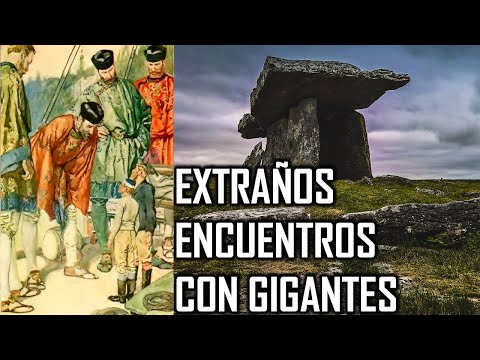
Giants Among Us: A Cryptid Case File on Reported Humanoid Encounters


Introduction: Whispers of the Colossal

The shadows lengthen, not just from the setting sun, but from the sheer scale of the entities that occasionally breach the veil of our known reality. We are drawn to the inexplicable, the anomalies that defy our understanding of the natural world. Today, we open the file on a persistent enigma: the reported encounters with gigantic humanoids. These aren't mere folktales; they echo across cultures and epochs, painting a picture of a world where stature alone can inspire both awe and primal terror. My mission, as always, is to strip away the sensationalism and get to the core of the evidence, or lack thereof.

This isn't about sensationalizing fear, but about rigorous investigation. The annals of history and the whispers of modern-day witnesses alike present a compelling, albeit fragmented, mosaic of these colossal figures. Are they relics of a forgotten past, products of misidentification, or something far more complex? The field of cryptozoolgy offers a framework for exploring such questions, but it demands a critical eye. We must sift through the layers of myth, conjecture, and potential fabrication to find the kernel of truth, if one exists. This report aims to do precisely that, moving beyond mere anecdotal accounts to explore the patterns, the potential explanations, and the enduring mystery.

"The world is full of things you cannot see, but that does not mean they are not there. It simply means our tools of perception are not yet refined enough to detect them." - A lesson learned in the field.

Historical Echoes: Giants in Myth and Legend

The concept of giants is not a modern invention. Ancient texts globally are replete with references to beings of immense stature, often depicted as primordial inhabitants of the Earth or even celestial beings. From the Nephilim of Judeo-Christian tradition, described in the Book of Genesis as inhabiting the land before and after the flood, to the Cyclops of Greek mythology, or the Jotnar of Norse sagas, a pattern emerges: humanity has long acknowledged the *possibility* of creatures far exceeding our own size.

Archaeological findings, though often contentious, have occasionally fueled this narrative. Numerous reports and alleged discoveries of colossal skeletons, sometimes spanning lengths that suggest individuals 10 to 20 feet tall or more, have surfaced throughout history. While mainstream archaeology largely dismisses these as hoaxes, misinterpretations of fossilized remains, or deliberate fabrications, the persistence of these claims invites scrutiny. Could these be misidentified megafauna, or do they hint at a genuine, albeit poorly documented, chapter of human or pre-human history?

The context here is crucial. Many ancient cultures imbued such beings with divine or demonic attributes, making objective analysis difficult. However, the cross-cultural prevalence suggests a shared psychological or perhaps observed phenomenon that transcended geographical boundaries. Understanding these historical narratives is key to contextualizing modern reports. It establishes that the idea of giants is deeply embedded in our collective consciousness, making us potentially predisposed to interpret anomalies through this lens.

Contemporary Sightings: The Modern Cryptid

Fast forward to the 20th and 21st centuries, and the reports continue, often filtered through the lens of modern media and the burgeoning field of cryptozoolgy. We're no longer talking solely about biblical accounts or ancient myths. These are purportedly real-time encounters, often involving individuals who claim to have seen, or even interacted with, beings described as significantly larger than average humans – anywhere from 7 to 15 feet tall, and sometimes more.

Geographical distribution is fascinating. Sightings are reported across continents, from the dense forests of the Pacific Northwest of North America, where the legend of Bigfoot or Sasquatch—often described as incredibly tall and hairy humanoids—persists, to the remote mountain ranges of the Himalayas, where tales of the Yeti or Abominable Snowman abound. Reports also emerge from less expected locales, including rural areas in Europe, Africa, and South America. These accounts frequently describe beings with human-like features but with proportions suggesting immense strength and size.

The nature of these encounters varies: fleeting glimpses in the wilderness, auditory phenomena, unexplained tracks of enormous size, or even more direct, albeit rare, interactions. The Tim Peeler interview provided here (by Tyler Stanley) is an example of a contemporary testimonial, offering a first-hand account that researchers often seek to corroborate or debunk. Analyzing such testimonies requires peeling back layers of potential bias, misperception, and the inherent challenge of eyewitness accounts. We must also consider the role of established cryptid archetypes like Bigfoot, which may influence how witnesses interpret ambiguous sightings.

Cryptid Analysis: Decoding the Giant Phenomenon

When we approach the phenomenon of reported giant humanoids from a cryptid perspective, several analytical avenues open up. Firstly, we must consider the possibility of misidentification. Large primates, exceptionally tall humans (known as pituitary giants), natural geological formations that can appear anthropomorphic from a distance, or even hoaxes could all contribute to the anecdotal evidence. The sheer scale of these alleged beings, however, often makes simple misidentification a less satisfying explanation for many.

Secondly, we delve into the realm of biological plausibility. For a population of giants to exist and remain undiscovered requires a significant ecological niche, a sustainable food source, and a breeding population large enough to prevent genetic bottlenecks. From a purely biological standpoint, this presents substantial challenges, particularly in densely populated or well-explored regions. However, vast unexplored territories and the possibility of semi-aquatic or subterranean habitats cannot be entirely dismissed, though they remain speculative.

Thirdly, the cultural anthropology aspect is vital. Why do these stories persist? They tap into primal fears and a sense of awe, a feeling that there are forces and beings greater than ourselves in the world. They can serve as archetypal figures in folklore, representing untamed nature, ancestral wisdom, or hidden dangers. The persistent belief in giants might be a reflection of our own psychological landscape as much as an external reality.

Finally, we must consider the evidence itself. Large footprints, alleged hair samples, vocalizations, and photographic or video evidence are the cornerstones. Each piece must be subjected to rigorous analysis: Are the footprints consistent with known anatomy or geological processes? Can hair samples be definitively matched to an unknown primate or ruled out as belonging to known animals? Is photographic or video evidence authentic, or is it a product of digital manipulation, selective framing, or misinterpretation?

The key is to avoid confirmation bias. For every piece of alleged evidence, we must actively search for counter-evidence or rational explanations. This is where the true work of a paranormal investigator lies – in challenging assumptions, not just accepting them. The statistical improbability of such a large, undiscovered species coexisting with us, especially in an age of widespread surveillance and exploration, cannot be ignored. Yet, the sheer volume and consistency of reports across disparate cultures demand that we explore all avenues, however improbable they may seem.

The Skeptic's Lens: Fact vs. Folklore

From a purely scientific standpoint, the existence of terrestrial giants matching the descriptions in cryptozoological lore presents significant hurdles. The fossil record, which meticulously documents extinct life forms, has yet to yield definitive proof of a hominid species that consistently reached such extraordinary heights. While discoveries of hominid fossils like Gigantopithecus, an extinct ape that stood an estimated 10 feet tall, provide a precedent for large primates, these are extinct and not typically described as "humanoid" in the current context of giant sightings.

The proposed ecological requirements for a breeding population of giants are immense. Large predators or herbivores require substantial territories and resources. A species of giant humanoids would likely leave behind more tangible evidence: distinct ecological pressures, consistent fossil records, or clear territorial markers that would be difficult to conceal. Reports of giant footprints, while compelling to believers, often face scrutiny from trackers and forensic experts who point to factors like:

  • Muddy substrate deformation: Footprints can appear larger and deeper than the actual object that made them due to the nature of the ground.
  • Breaking and entering: How such a large creature could move through dense forests without leaving significant, undeniable evidence of passage (broken branches, displaced rocks, etc.) is questionable.
  • Hoaxes: The history of cryptozoology is littered with deliberate fabrications, from carved wooden feet to expertly crafted footprints in mud.

Furthermore, the sheer consistency of reports across different cultures and time periods can be explained through psychological phenomena. Folklore often contains archetypes that resonate deeply within human societies. The "giant" figure can represent primal fears of the unknown, the untamed wilderness, or powerful, dominant forces. This shared archetype might lead witnesses encountering ambiguous stimuli (e.g., a large bear, a distant human) to interpret them through the well-established lens of a giant. The ubiquity of storytelling and the human tendency to embellish, combined with the desire to believe in the extraordinary, can amplify and perpetuate such legends.

The scientific method demands reproducible evidence. Until verifiable physical proof—such as DNA-confirmable remains, clear and incontrovertible photographic or video evidence that withstands expert scrutiny, or consistent, quantifiable environmental impact—emerges, the existence of these giants remains firmly in the realm of speculation and folklore. However, this does not preclude them from being subjects of continued investigation.

alejandro quintero ruiz is a seasoned field investigator dedicated to the analysis of anomalous phenomena. His approach combines methodological skepticism with an open mind to the unexplained, always seeking the truth behind the veil of reality.

Investigator's Verdict: A Case of Unknowns

After sifting through historical texts, analyzing contemporary testimonials, and considering the scientific counterarguments, the dossier on giant humanoids remains open. There is no definitive, irrefutable proof that human-sized giants, as depicted in folklore and some modern accounts, currently inhabit our planet or have done so in recent history.

However, to dismiss the phenomenon entirely would be a dereliction of my duty as an investigator. The persistence of these narratives, the sheer terror and conviction in some eyewitness accounts, and the occasional piece of physical evidence (however contestable) suggest that something is at play. Whether it is a complex interplay of misidentification, cultural archetypes, clever hoaxes, or the fleeting glimpse of an undiscovered species (or even an ancient, relict population), remains the central mystery.

My verdict leans towards caution and continued inquiry. The lack of definitive proof means we cannot confirm these beings' existence. Yet, the consistency of the reports prevents outright dismissal. The phenomenon of "giants" likely encompasses a spectrum of experiences, from prosaic explanations to genuinely perplexing anomalies that warrant further investigation and critical thinking. The truth, as it often does in this field, lies somewhere in the shadowy spaces between what we know and what we can prove. The most compelling cases are those that leave us with more questions than answers, forcing us to expand our understanding of what is possible.

The Investigator's Archive

For those who wish to delve deeper into the enigma of giant humanoids and related cryptid research, I recommend the following resources:

  • Books:
    • "The Giant, the Dwarfs, and the Monster: Legends of Small and Large Folk Throughout the World" by John Burrison - Explores the folklore aspect across cultures.
    • "Man-Beasts and Other Weird Critters" by Ken Gerhard - A contemporary look at cryptid research, which often touches upon large hominids.
    • "Mysterious America: The Ultimate Guide to the Nation's Weirdest True Legends" by Loren Coleman - Provides context for many North American cryptid phenomena, including large forest dwellers.
  • Documentaries/Series:
    • "In Search of Monsters" (various episodes focusing on Bigfoot and similar cryptids) - Available on streaming platforms.
    • "Finding Bigfoot" - While often criticized, it showcases the process of investigating large hominid claims.
  • Academic Papers/Databases:

Field Protocol: Documenting Anomalous Encounters

Should you ever find yourself in a situation where you believe you have encountered a large, unidentified humanoid, strict adherence to protocol is essential for preserving any potential evidence and ensuring accurate documentation:

  1. Prioritize Safety: Your immediate safety is paramount. Do not approach, confront, or attempt to provoke the entity. Maintain a safe distance and observe.
  2. Maintain Composure: While difficult, attempt to remain calm. Adrenaline can distort perception and memory.
  3. Document Immediately: If possible and safe, use your mobile device to record audio and video. Focus on capturing scale, movement, and any distinctive features. Even if the quality is poor, it's a starting point.
  4. Note Environmental Conditions: Record exact time, date, weather conditions, lighting, your location (GPS coordinates if possible), and your observational distance.
  5. Search for Physical Evidence: If the encounter occurred in a stable environment (e.g., mud, soft earth), carefully look for footprints, broken branches, or other indicators of passage. Do not disturb potential evidence; photograph it from multiple angles with a scale reference (e.g., a ruler, a common object).
  6. Record Testimonial: As soon as safely possible, write down everything you recall. Include sensory details (sounds, smells), emotions, and the sequence of events. The human memory is fallible; immediate, detailed recording is crucial.
  7. Avoid Premature Conclusions: Resist the urge to immediately label the entity. Describe only what you observed.
  8. Report Responsibly: Share your findings with reputable investigative organizations or researchers who employ critical analysis and verification methods.

Frequently Asked Questions

What is the most compelling evidence for giants?
The most compelling evidence, though highly debated, often comes in the form of exceptionally large, human-like footprints found in remote areas. However, these are frequently challenged by experts as hoaxes or misidentifications of natural phenomena.
Are there scientific theories explaining the persistence of giant myths?
Yes. Scientific theories point to misidentification of large animals (like bears), misinterpretation of ancient megafauna fossils, psychological archetypes, and the use of giants in folklore to represent primordial forces or wilderness. The concept of pituitary gigantism in humans also provides a biological basis for extraordinary height.
Could giants be a different species of hominid?
It's a possibility within the realm of cryptozoology. If such a species exists or existed, it would require a significant ecological niche and a viable population to persist, which is difficult to reconcile with current knowledge. However, the vastness of unexplored regions keeps this question open for some.
What is the difference between a mythological giant and a cryptid giant?
Mythological giants are figures of legend and folklore, often with supernatural or divine attributes. Cryptid giants, in the context of modern investigation, refer to alleged biological entities encountered in the present day that are unusually large and human-like, for which physical evidence is sought but often lacks definitive proof.

Conclusion: Standing on the Precipice

The legend of the giant is as old as humanity itself, woven into the fabric of our collective unconscious. From ancient scriptures to modern-day cryptid reports, these colossal figures continue to fascinate and daunt us. While rigorous scientific investigation has yet to confirm their physical existence, the sheer volume and cross-cultural consistency of these accounts cannot be entirely dismissed.

As an investigator, I am compelled to acknowledge the persistent anomalies. The claims of giant humanoids, whether they stem from misinterpreted evidence, enduring folklore, or the possibility of undiscovered species, represent a frontier of the unknown. They challenge our understanding of the natural world and our place within it. The search for truth requires us to keep these files open, to analyze new evidence with a critical yet open mind, and to continue asking the difficult questions.

Your Field Mission: Unearthing Local Legends

Every region has its local lore. Before we close this file, I urge you to conduct your own preliminary investigation into the legends of giants or colossal beings specific to your area. Search old town records, interview local elders, and explore any reported anomalous sightings or folklore.

  • Do your ancestors' tales speak of immense beings?
  • Are there local landmarks or geological formations that have been associated with giants?
  • Have there been unexplained large tracks or unusual phenomena reported in your vicinity?

Document your findings meticulously. Compare them to the broader patterns we've discussed. Share your discoveries in the comments below. Your local insights could be the missing piece of a much larger puzzle. This is not merely about confirming the existence of giants; it's about understanding how these narratives persist and what they reveal about our world and ourselves.