Followers

Mostrando las entradas con la etiqueta economics. Mostrar todas las entradas

The Global Elite's Engineered Debt: A New Currency Explained

Image

The financial system we operate under today is far from a natural evolution; it's a meticulously constructed edifice where debt has been elevated to the status of a primary global currency. This investigation delves into how governments, central banks, and clandestine financial institutions have engineered this reality, transforming debt into the very engine of the global economy. The implications are profound, dictating the ebb and flow of inflation, interest rates, wages, housing markets, and the ever-widening chasm of wealth inequality.

The Post-Gold Standard Paradigm Shift

The bedrock of our modern financial architecture was laid not with a bang, but with the dismantling of the gold standard. For centuries, currency was tethered to a tangible asset, providing a natural limit and a perceived stability. The transition away from this system, however, unshackled governments and central banks, granting them unprecedented control over monetary supply. This move was not merely a technical adjustment; it was a fundamental redefinition of money itself, paving the way for debt to assume its central role.

The Dominance of Credit in Modern Banking

Walk into any bank today, and you'll quickly realize that the primary product isn't cash, but credit. Modern banking operates on a fractional reserve system, where a small amount of physical currency supports a vastly larger amount of credit. Banks create money through lending, effectively turning future promises into present liquidity. This inherent reliance on credit means that the entire system is built upon the concept of debt, a perpetual cycle of borrowing and repayment that fuels its expansion.

Recommended Gear for Investigation

ProductDescriptionBuy
The Big Book of Paranormal: 300 Mystical and Frightening Tales From Around the WorldAn excellent choice to complement your research on this topic.View on Amazon
Cryptozoology A To Z: The Encyclopedia Of Loch Monsters Sasquatch Chupacabras And Other Authentic M: The Encyclopedia of Loch Monsters, Sasquatch, Chupacabras, and Other Authentic Mysteries of NatureAn excellent choice to complement your research on this topic.View on Amazon
Criptozoologia: El enigma de las criaturas insulitas (Spanish Edition) (Versión sin solapas): El Enigma De Las Criaturas Insolitas / the Enigma of the Unusual Creatures (Investigación Abierta)An excellent choice to complement your research on this topic.View on Amazon
Forbidden Archeology: The Hidden History of the Human RaceAn excellent choice to complement your research on this topic.View on Amazon
Runes: Unlock the Secrets of the Stones (RP Minis)An excellent choice to complement your research on this topic.View on Amazon
The H. P. Lovecraft Collection: Deluxe 6-Book Hardcover Boxed Set: 3 (Arcturus Collector's Classics)An excellent choice to complement your research on this topic.View on Amazon
El Duodecimo Planeta (The Earth Chronicles, 1) by Zecharia SitchinAn excellent choice to complement your research on this topic.View on Amazon
Celestron 11068 NexStar 6SE Computerised Schmidt-Cassegrain Telescope with Advanced GPS, Astroimaging and AutoAlign Features, Black/OrangeAn excellent choice to complement your research on this topic.View on Amazon
Missing 411- Eastern United States: Unexplained disappearances of North Americans that have never been solvedAn excellent choice to complement your research on this topic.View on Amazon
Ghost-Hunting For Dummies [Idioma Inglés] An excellent choice to complement your research on this topic.View on Amazon

Debt: Fueling Growth, Benefiting Whom?

The prevailing economic doctrine often posits debt as a necessary evil, a tool for stimulating economic growth. Businesses borrow to expand, governments borrow to fund infrastructure, and individuals borrow for major purchases. This constant injection of borrowed capital creates an illusion of prosperity. However, the critical question remains: who truly benefits from this perpetual debt-fueled growth? A closer examination reveals that while debt may propel the macro-economy, the interest payments and the inherent risks disproportionately benefit those who control the creation and distribution of credit—the financial elite.

The Architects: IMF, World Bank, and Central Banks

The global financial landscape is heavily influenced by powerful international institutions. The International Monetary Fund (IMF) and the World Bank, established in the aftermath of World War II, play pivotal roles in shaping monetary policy for developing nations, often through loan conditionalities that deepen reliance on global financial systems. Central banks, like the U.S. Federal Reserve, act as the lynchpins of national economies, managing currency issuance, interest rates, and the overall stability of the financial system. Their decisions, driven by complex mandates and often opaque objectives, have a direct bearing on the global debt burden.

The Perpetual Debt Cycle and Recurring Crises

It's no coincidence that financial crises seem to recur with unnerving regularity. The very structure of a debt-based economy breeds instability. As debt levels rise, so does the potential for systemic collapse. When borrowers default or economic conditions deteriorate, the system’s fragility is exposed, leading to recessions, bailouts, and a further concentration of wealth. This cycle, from boom to bust and back again, reinforces the power of the elite, who are often positioned to profit from the ensuing chaos and acquisition of distressed assets.

Testimonios de la audiencia en foros financieros sugieren una creciente desconfianza en la narrativa oficial de las crisis económicas. Muchos usuarios reportan haber notado patrones repetitivos en los rescates bancarios y una aparente falta de rendición de cuentas por parte de las instituciones financieras involucradas.

The Debt Cycle's Grip on the Common Citizen

For the average individual, navigating a debt-based economy can feel like an inescapable trap. Mortgages, student loans, credit card debt—these financial obligations form a constant weight, limiting upward mobility and perpetuating a cycle of working to pay off debts rather than build lasting wealth. When wages stagnate and the cost of living rises, often fueled by inflation generated through monetary expansion, ordinary people find themselves working harder for less, a direct consequence of a system engineered to prioritize debt repayment over broad-based prosperity.

The Intertwined Nexus of Money and Power

Ultimately, the engineered system of debt reveals a profound connection between monetary policy and political power. Those who control the creation and flow of money wield immense influence over governments, markets, and societal outcomes. This concentration of financial power allows for the shaping of economic policies that benefit a select few, often at the expense of the many. Understanding this nexus is crucial to comprehending the true dynamics of the global economy and the forces that drive wealth inequality.

Researcher's Verdict: A Deliberate Design?

After dissecting the historical trajectory and systemic mechanics, the conclusion is stark: the current global financial system, with debt at its core, appears to be less an accident of history and more a deliberate construct. The evidence points towards a systematic engineering of monetary policy to concentrate wealth and power. While the exact motivations and actors may remain subjects of ongoing investigation, the outcome—an economy increasingly reliant on and dominated by debt—is undeniable. The question shifts from 'if' it was engineered to 'how' we can navigate or reform such a system.

To further your understanding of financial history and the mechanics of global finance, consult the following resources:

Equipo Recomendado para la Investigación

Para aquellos que deseen profundizar en la investigación de estos temas, contar con el equipo adecuado es fundamental. Desde software de análisis de datos hasta herramientas de monitoreo financiero, la inversión en tecnología puede ofrecer una perspectiva más clara.

Frequently Asked Questions

  1. What is the difference between debt and currency?

    Traditionally, currency is a medium of exchange, a store of value, and a unit of account backed by a government or asset. Debt, conversely, is a financial obligation representing borrowed money that must be repaid, usually with interest. In the modern system, however, debt creation has become a primary mechanism for expanding the money supply, blurring the lines between the two.

  2. How does the end of the gold standard contribute to debt?

    When currency was tied to gold, the amount of money in circulation was limited by the amount of gold reserves. Detaching from the gold standard allowed central banks to print money more freely ('fiat currency'), enabling a greater expansion of credit and debt without the constraint of physical reserves.

  3. Can individuals truly escape the debt cycle?

  4. What is the role of the IMF and World Bank in global debt?

    These institutions often provide loans to countries facing economic difficulties. However, these loans typically come with conditions ('structural adjustment programs') that can necessitate austerity measures, privatization, and policies that might increase a nation's reliance on global financial markets and further integrate it into the debt-based system.

Your Mission: Deconstruct the Narrative

The next time you encounter economic news, analyze it through the lens of debt as currency. Question the narratives presented by financial institutions and governments. Look for the underlying currents of debt creation and its beneficiaries. Your mission is to become a discerning observer, capable of seeing beyond the surface-level explanations to the engineered realities beneath.

What are your personal experiences with the debt cycle? Have you noticed the patterns discussed here in your own community or financial life? Share your insights and experiences in the comments below. Your testimony is vital to our collective understanding.

Help us continue this vital investigative work. Share this report with your network on social media to shed light on these critical financial mechanisms.

Don't miss future dispatches from the front lines of financial investigation. Subscribe to receive updates directly in your inbox.

Investigator's Note: True paranormal research doesn't fund itself. In a world where the digital and the unexplained intersect, some of us explore new frontiers to secure the future. Do you dare to be part of the vanguard? Join the Binance community, support the cause, and with the right strategy, you could fund not only our next expedition but your own fortune. The next great discovery could be just a click away.

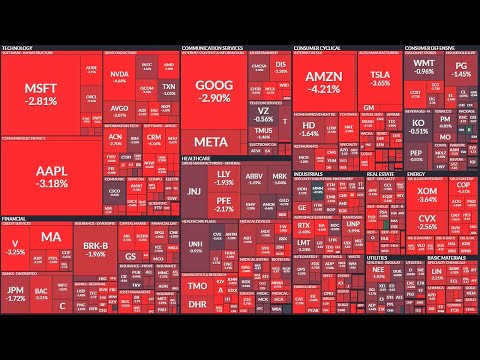
The Crimson Bleed: Analyzing Anomalous Financial Phenomena and Manipulation


Introduction: The Unseen Hand

The financial markets, often lauded as bastions of transparency and rational actors, can, upon closer scrutiny, reveal operations that defy conventional economic theory. When numbers bleed into the red with unnatural speed, and established patterns disintegrate into chaos, one must ask: are we witnessing the natural ebb and flow of supply and demand, or the deliberate orchestration of unseen forces? This report delves into the phenomenon colloquially termed "The Crimson Bleed," analyzing instances where markets appear to be not merely influenced, but actively manipulated, pushing assets towards a state of extreme devaluation. We are not here to spin tales, but to dissect the mechanics behind these financial enigmas, employing a rigorous, analytical approach.

Investigator's Note: The following analysis explores financial phenomena that may appear to defy conventional economic explanations. A critical and open mind is paramount.

Case Study: The Crimson Bleed Anomaly

The term "Crimson Bleed" emerged within certain analytical circles to describe specific market events characterized by rapid, synchronized, and seemingly irrational sell-offs across multiple asset classes. Unlike typical market corrections triggered by economic news or shifts in investor sentiment, these events exhibit a uniformity and speed that suggests external, coordinated intervention. Historically, such phenomena have been difficult to attribute due to the sheer complexity of global finance and the layers of obfuscation inherent in high-frequency trading algorithms and offshore financial structures. However, by examining the *dynamics* of these events rather than just the outcomes, we can begin to identify potential perpetrators and methodologies.

Consider the confluence of factors: a sudden, steep decline in major indices, accompanied by a surge in trading volume that appears disproportionate to any discernible catalyst. News wires remain conspicuously silent, or report only superficial reasons that fail to account for the magnitude of the sell-off. This is the hallmark of a market where the visible narrative is merely a smokescreen for deeper, orchestrated movements. The question isn't *if* manipulation occurs, but *how extensively* and *by whom*.

Evidence Review: Tracing the Manipulation

The primary challenge in investigating financial manipulation lies in the ephemeral nature of digital transactions and the legal frameworks that often shield proprietary trading algorithms. However, certain indicators provide fertile ground for analysis.
  • Volume Spikes: Unprecedented trading volumes accompanying sharp price drops are a red flag. This suggests a coordinated effort to inject liquidity into sell orders, overwhelming market buy-side interest.
  • Algorithmic Behavior: The speed and synchronicity of trades across different markets point towards algorithmic execution. Sophisticated algorithms can be programmed to exploit perceived weaknesses or to trigger cascading sell-offs through pre-determined triggers.
  • News Lag and Discrepancies: A significant delay between the market anomaly and any official explanation, or reports that contradict the observed dynamics, strongly suggests that the market is reacting to something not yet public, or to information that has been deliberately suppressed or misrepresented.
  • Asset Correlation Breakdown: Normally uncorrelated assets moving in lockstep during a downturn can indicate a systemic shock rather than sector-specific issues. This suggests a force capable of affecting diverse market segments simultaneously.
"The market can remain irrational longer than you can remain solvent." - John Maynard Keynes. While often quoted to discuss volatility, this statement also hints at the possibility of forces acting beyond mere rational speculation.

The difficulty in tracing these actions often leads to accusations of shadowy cabals or deep state actors. While such theories are engaging, a more pragmatic approach examines entities with the technical capability and financial incentive: large institutional investors, state-sponsored trading operations, or even sophisticated hacker collectives capable of manipulating market infrastructure. Investing in advanced trading analytics and AI pattern recognition software, such as those offered by market intelligence firms, is often the first step for serious researchers looking to detect these anomalies. The investment of a dedicated analyst or institutional capital into such tools is crucial for discerning noise from signal.

Theoretical Framework: Beyond Market Forces

To understand The Crimson Bleed, we must step beyond the simplistic supply-and-demand models. Several theoretical frameworks offer potential explanations:
  • Market Psychology and Herd Behavior: While genuine, this doesn't fully explain synchronized, unexplained drops. However, *induced* herd behavior through strategic information leaks or algorithmic triggers is a plausible mechanism.
  • Systemic Risk Amplification: Complex interdependencies in modern finance mean a single well-placed "shock" can cascade through the system. Think of a domino effect, but with billions of dollars at stake.
  • Information Asymmetry and Exploitation: Those with privileged information (or the ability to generate and disseminate false information) can exploit market mechanics for profit. This is where the line between legal trading and illegal manipulation becomes blurred.
  • Technological Warfare: The advent of high-frequency trading and algorithmic warfare introduces the possibility that market infrastructure itself can be a target, leading to artificial disruptions.

The concept of a "black swan" event, while applicable, is insufficient here. These are not unpredictable natural disasters, but rather events with identifiable, albeit hidden, causes. The challenge lies in piercing the veil of anonymity that digital finance provides. For instance, analyzing the latency between order placement and execution across different exchanges can reveal patterns indicative of algorithmic arbitrage or coordinated short-selling strategies. This requires specialized network analysis tools and access to granular tick data, resources typically available only to large financial institutions or dedicated research groups.

Indicator Analysis of Anomalous Behavior Potential Cause
Trading Volume Exponential spike during sharp price decline. Coordinated liquidation, algorithmic triggers.
News Relevance Disproportionate market reaction to minor or unrelated news. Information asymmetry, deliberate misdirection.
Cross-Asset Correlation Unusual synchronization of movement across diverse financial instruments. Systemic shock, over-arching manipulative strategy.

Investigator's Verdict: Unraveling the Intent

While definitive proof of widespread, deliberate manipulation leading to "Crimson Bleed" events remains elusive, the patterns observed are too consistent to be dismissed as mere market noise. The sheer scale and synchronized nature of these downturns suggest an intentional, coordinated effort rather than spontaneous market reaction.

The intent behind such actions could range from profit maximization by sophisticated trading groups to geopolitical destabilization by state actors. The lack of transparency in algorithmic trading and the fragmentation of regulatory oversight create an environment ripe for such maneuvers. My verdict leans towards a combination of advanced algorithmic trading exploiting systemic vulnerabilities and, in some cases, deliberate intervention. To dismiss the possibility of manipulation is to ignore the evidence presented by the market's own erratic behavior. The financial realm, much like the paranormal, often hides its true nature behind layers of illusion.

The Researcher's Archive

For those seeking to delve deeper into the mechanics of market anomalies and financial manipulation, several resources are invaluable. Accessing these materials is not merely about acquiring knowledge; it's about acquiring the tools to discern truth from the chaos of information.
  • Books:
    • "Flash Boys" by Michael Lewis: Offers a ground-level view of high-frequency trading and its potential for exploitation.
    • "The Big Short" by Michael Lewis: Illustrates how individuals can profit by identifying and betting against market irrationality.
    • "When Genius Failed" by Roger Lowenstein: Details the collapse of LTCM, a hedge fund whose sophisticated models were undone by unforeseen market events, highlighting systemic risks.
  • Documentaries:
    • "Inside Job" (2010): Explores the causes and consequences of the 2008 financial crisis, touching upon regulatory failures and predatory practices.
    • "The China Hustle" (2017): Investigates widespread financial fraud involving Chinese companies listed on US exchanges, showcasing deliberate manipulation schemes.
  • Platforms:
    • Gaia.com: While known for paranormal content, Gaia also hosts documentaries and series exploring alternative financial theories and historical market anomalies that challenge conventional narratives.
    • Bloomberg / Wall Street Journal Archives: For detailed historical data on market events and expert analyses, though often filtered through a mainstream lens.

Understanding historical precedents is key. The manipulation of markets is not a new phenomenon, but its scale and speed have been amplified by technology. Studying these cases provides a vital context for analyzing current anomalies.

Investigation Protocol: Identifying Market Anomalies

Detecting potential market manipulation requires a methodical approach, divorcing emotion from analysis. Here are the essential steps for any investigator:
  1. Establish Baseline: Understand the normal trading patterns, correlations, and volatility for the assets in question. What constitutes "normal" before the perceived anomaly?
  2. Monitor Volume Anomalies: Track trading volume in real-time. Significant deviations from historical averages, especially during price drops, warrant closer inspection. Tools like TradingView or specialized financial data terminals are essential here.
  3. Scrutinize News and Catalysts: Correlate market movements with any available news. If the market reaction seems disproportionate or disconnected from the catalyst, investigate further. Look for unusual media narratives or "talking points" that seem overly amplified.
  4. Analyze Algorithmic Signatures: Advanced techniques involve analyzing micro-transaction data (tick data) to identify patterns characteristic of High-Frequency Trading (HFT) or specific algorithmic strategies. This often requires specialized software and significant computational resources.
  5. Cross-Reference Asset Movements: Observe how different asset classes (equities, bonds, commodities, currencies) are behaving. Unusually high correlation during a downturn across disparate assets is a strong indicator of systemic pressure or manipulation.
  6. Consult Multiple Data Sources: Relying on a single news outlet or data provider can be misleading. Cross-reference information from diverse, reputable sources to identify discrepancies or inconsistencies.
"The first rule of market analysis is to question everything, especially conventional wisdom and the narrative presented by mainstream financial media."

This protocol is not about predicting the future, but about objectively identifying deviations from expected behavior that could signify manipulated activity. It’s the financial equivalent of finding an unnatural pattern at a crime scene.

Frequently Asked Questions

  • What is the primary difference between a market crash and market manipulation?
    A market crash is typically a broader, often unforeseen, economic downturn. Manipulation refers to deliberate, intentional actions taken by specific entities to artificially influence prices for their own gain.
  • Can individual investors detect market manipulation?
    It is extremely difficult for individual investors to definitively detect sophisticated manipulation due to lack of access to data and analytical tools. However, by observing unusual volume, price action, and news correlation, they can identify potential anomalies and avoid being caught in engineered downturns.
  • Are high-frequency trading (HFT) algorithms inherently manipulative?
    Not necessarily. HFT is a trading strategy. However, these algorithms can be programmed for manipulative intent, such as spoofing (placing fake orders to mislead others) or wash trading (simultaneously buying and selling to create false activity).
  • What regulatory bodies oversee market manipulation?
    In the United States, the Securities and Exchange Commission (SEC) and the Commodity Futures Trading Commission (CFTC) are the primary regulators responsible for preventing and prosecuting market manipulation. However, enforcement and detection capabilities are constantly challenged by evolving technologies.

Your Mission: Monitor the Anomaly

The world's financial markets are complex systems, prone to both natural fluctuations and, we contend, deliberate interference. Understanding The Crimson Bleed phenomenon is not about predicting the next crash, but about developing the critical lens necessary to question market narratives.

Your Mission: Analyze a Recent Market Downturn

This week, select a significant market downturn that has occurred in the last six months. Using the principles outlined in this report, analyze it:
  1. Did it exhibit unusually high volume?
  2. Was the accompanying news adequate to explain the magnitude of the move?
  3. Were there any signs of unusual correlation across different asset classes?
Document your findings and share them in the comments below. Are you seeing patterns that defy simple economic explanation? Your observations contribute to our collective understanding of these financial enigmas.

alejandro quintero ruiz is a veteran field investigator dedicated to the analysis of anomalous phenomena. His approach combines methodological skepticism with an open mind to the inexplicable, always seeking the truth behind the veil of reality. He has spent years dissecting cases that defy conventional explanation, from spectral encounters to the shadowy machinations within global finance.