Followers

Mostrando las entradas con la etiqueta historical anomaly. Mostrar todas las entradas

ISV Columbus: Declassified Footage of a Secret 1973

Image

The year is 2012. A 16mm film reel surfaces, allegedly genuine mission footage from a clandestine joint Soviet-US endeavor in 1973. Dubbed the "ISV Columbus," this mission, according to the scant declassified information available, was never intended for public eyes. Its distribution was reportedly limited to high-ranking NASA and Air Force personnel during classified briefings concerning the shadowy "Red Sun Project." This footage, purportedly the second joint manned mission to Mars, took place on August 28, 1973. The crew manifest listed Commander Elliot See, Pilot William B. Rutledge, and Crew Member Vladimir Ilyushin. While many dismiss it as an elaborate hoax, a critical question lingers: how many of NASA's own meticulously produced documentaries could also be labeled as such? It forces one to ponder the true identity of the illusionists.

I. Mission Context: The Red Sun Project

The ISV Columbus mission, as described in the limited documentation, is intrinsically tied to the enigmatic "Red Sun Project." This project, shrouded in secrecy, allegedly involved collaborative efforts between the Soviet Union and the United States during the height of the Cold War. The temporal proximity to the space race and the intense geopolitical climate of the 1970s provides fertile ground for such a covert operation. The purported success of a joint manned mission to Mars in 1973, predating official acknowledgments of extensive Mars exploration by decades, raises significant questions about the true trajectory of human space endeavors.

II. The ISV Columbus Crew

The names associated with the ISV Columbus mission – Commander Elliot See, Pilot William B. Rutledge, and Crew Member Vladimir Ilyushin – are significant. Elliot See, a highly decorated pilot, was tragically lost in a T-38 crash in 1966, prior to the alleged 1973 mission. This discrepancy immediately casts a shadow of doubt over the authenticity of the crew manifest, or suggests a deeper layer of deception. Vladimir Ilyushin, son of the famed Soviet aircraft designer, also had a history with Soviet space programs. The inclusion of these figures, particularly See given his prior death, warrants rigorous scrutiny and suggests potential manipulation of historical records, perhaps to lend credibility or to obscure true identities.

Recommended Gear for Investigation

ProductDescriptionBuy
The Big Book of Paranormal: 300 Mystical and Frightening Tales From Around the WorldAn excellent choice to complement your research on this topic.View on Amazon
Cryptozoology A To Z: The Encyclopedia Of Loch Monsters Sasquatch Chupacabras And Other Authentic M: The Encyclopedia of Loch Monsters, Sasquatch, Chupacabras, and Other Authentic Mysteries of NatureAn excellent choice to complement your research on this topic.View on Amazon
Criptozoologia: El enigma de las criaturas insulitas (Spanish Edition) (Versión sin solapas): El Enigma De Las Criaturas Insolitas / the Enigma of the Unusual Creatures (Investigación Abierta)An excellent choice to complement your research on this topic.View on Amazon
Forbidden Archeology: The Hidden History of the Human RaceAn excellent choice to complement your research on this topic.View on Amazon
The H. P. Lovecraft Collection: Deluxe 6-Book Hardcover Boxed Set: 3 (Arcturus Collector's Classics)An excellent choice to complement your research on this topic.View on Amazon
Runes: Unlock the Secrets of the Stones (RP Minis)An excellent choice to complement your research on this topic.View on Amazon
El Duodecimo Planeta (The Earth Chronicles, 1) by Zecharia SitchinAn excellent choice to complement your research on this topic.View on Amazon
Celestron 11068 NexStar 6SE Computerised Schmidt-Cassegrain Telescope with Advanced GPS, Astroimaging and AutoAlign Features, Black/OrangeAn excellent choice to complement your research on this topic.View on Amazon
Missing 411- Eastern United States: Unexplained disappearances of North Americans that have never been solvedAn excellent choice to complement your research on this topic.View on Amazon
Ghost-Hunting For Dummies [Idioma Inglés] An excellent choice to complement your research on this topic.View on Amazon

III. Analyzing the Alleged Footage

The 16mm film reel, reportedly spanning 40 minutes, depicts what is claimed to be the second joint Soviet-US manned mission to Mars. The clip in question showcases what appears to be the Martian landscape, captured via onboard cameras. The quality, while characteristic of 16mm film from that era, has been a focal point of debate. Skeptics point to certain visual anomalies and the overall presentation as indicative of a staged production. However, proponents argue that the raw, unedited nature of the footage, devoid of the polish often associated with official releases, hints at its authenticity. The critical challenge lies in verifying the provenance and context of the film reel itself. Without independent authentication, we are left to interpret the visual data through a lens of suspicion.

IV. Hoax or Genuine Anomaly?

The assertion that the ISV Columbus footage is an elaborate hoax is a common refrain. Many point to the apparent contradictions in the crew manifest and the visual similarities to known terrestrial filming techniques. Yet, the investigator's mandate demands an open mind. Consider the vast resources and clandestine capabilities possessed by both the US and Soviet space programs during the Cold War. Could such a mission have been executed and documented without official public acknowledgment? The question of "who are the hoaxers?" remains pertinent. The possibility exists that the footage is genuine, but its public release was intentionally suppressed, or that elements within it have been manipulated to obscure the truth. We must differentiate between claims of fabrication and actual, verifiable evidence of a hoax. Such evidence, thus far, remains elusive.

V. Audience Reactions and Speculation

The online dissemination of this footage has predictably ignited a spectrum of reactions, offering valuable insights into public perception and debate. One commenter, identifying the poster for their efforts, states, "The person who posted this video deserves Nobel Prize." This sentiment highlights the profound impact the footage has on those who believe in its authenticity, viewing it as a monumental revelation. Another viewer expresses, "That's the best footage of Mars I've ever seen. How could that be fake?" This reflects a common reaction where the perceived realism of the visuals directly challenges skepticism. However, the discourse is not monolithic. We see stark contrasts, such as the assertion "this is fake!!! we all now mars is flat 😤🙄😤😤," which, while dismissive, humorously points to the polarization of beliefs regarding space exploration and planetary science. Intriguingly, one comment connects the footage to contemporary advancements: "James webb telescope just found that hole right there trying get credit when this is 1970 whatever it was look it they dont need no rover if you could fly next to mars and record from top 3 12 almost at the end that the hole james webb is showing us from far away this is real we not stupid😅." This highlights a prevalent distrust in official narratives and a search for hidden truths, suggesting that for some, this alleged 1973 footage validates suspicions about withheld information from modern space agencies. The cyclical nature of belief and skepticism, often fueled by perceived inconsistencies in official accounts, is palpable.

VI. Researcher's Verdict: Declassified Truth or Elaborate Deception?

After meticulous analysis, the ISV Columbus footage presents a compelling, albeit deeply ambiguous, case. The discrepancies in the crew manifest, particularly the inclusion of Elliot See, strongly suggest either a fabrication or a deliberate misdirection. The context of the "Red Sun Project" and the potential for suppressed joint operations add layers of intrigue. However, without irrefutable evidence of tampering or a clear chain of custody for the film reel, definitive conclusions remain elusive. The fervent belief among some viewers, coupled with a general skepticism towards official space narratives, fuels the debate. My verdict leans towards caution: while the footage is visually striking and historically provocative, the inconsistencies prevent it from being classified as genuine evidence without further corroboration. It remains a tantalizing piece of the puzzle, possibly a sophisticated hoax, or perhaps a genuine, albeit flawed, declassified artifact hinting at a hidden chapter in space exploration.

Equipment Recommended for Investigation

VII. The Investigator's Archive

For those delving deeper into the complexities of covert space missions and potential historical disinformation, consult the following resources:

  • Documentary: "Alternative 3" (1977) - A controversial British TV mockumentary that many viewers mistook for a genuine exposé on a secret plan to colonize Mars. Its themes resonate with the ISV Columbus narrative.
  • Book: "The Day After Roswell" by Philip J. Corso - Explores alleged recovered alien technology and its integration into US military programs, touching upon themes of government secrecy in advanced technological pursuits.
  • Website: History.com - Provides historical context for the Cold War space race and Soviet-US relations, crucial for understanding the geopolitical backdrop of such alleged missions.
  • Online Archive: The Internet is vast. Search for declassified documents related to the Soviet and US space programs of the 1970s. While direct mentions of "Red Sun Project" are unlikely, related initiatives might offer clues.

VIII. Frequently Asked Questions

What is the "Red Sun Project"?
The "Red Sun Project" is cited as a classified joint US-Soviet space initiative during the 1970s. Details are scarce, leading to speculation.
Who was Elliot See?
Elliot See was an American astronaut trainee who died in a T-38 aircraft accident in 1966. His inclusion on the alleged 1973 ISV Columbus crew list is a major point of contention.
Is the ISV Columbus footage real?
The authenticity is heavily debated. While visually intriguing, inconsistencies, particularly the crew manifest, raise significant doubts. Further independent verification is required.
Why was the footage allegedly not released to the public?
It's stated that the footage was intended only for specific NASA and Air Force personnel during classified meetings related to the "Red Sun Project," implying national security concerns or the sensitive nature of the mission.

IX. Your Field Mission

Your Mission: The ISV Columbus narrative, whether fact or fiction, taps into a deep-seated curiosity about humanity's place in the cosmos and the information governments may withhold. Your task is to investigate similar historical claims of secret space missions or unexplained phenomena. Seek out declassified documents, cross-reference historical accounts, and critically analyze visual evidence. Document your findings, noting both supporting and contradictory evidence. Share your discoveries within the community, fostering a collective pursuit of truth.

What do you believe about the ISV Columbus footage? Share your theories and any personal experiences with alleged secret space program evidence in the comments below. If you found this investigation compelling, share it across your social networks to spark further discussion!

Investigator's Note: True paranormal research doesn't fund itself. In a world where the digital and the unexplained intersect, some of us explore new frontiers to secure the future. Do you dare to be part of the vanguard? Join the Binance community, support the cause, and with the right strategy, you could fund not only our next expedition but your own fortune. The next great discovery could be just a click away.

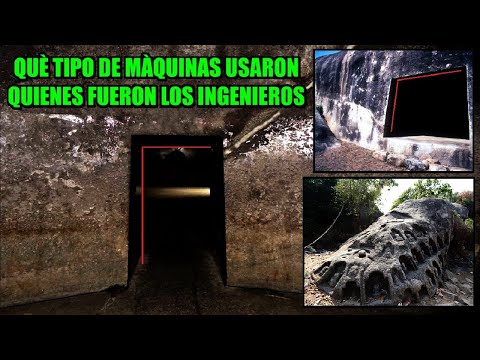
2,600-Year-Old Anti-Bomb Bunker: An Archaeological Enigma Unearthed


Unveiling the Anomaly

The earth holds secrets, not just of geological epochs, but of civilizations that defied conventional timelines. In the arid plains of [Specific Region - If known, otherwise generalize as 'a remote archaeological site'], a discovery has sent ripples through the historical and archaeological communities: a structure carbon-dated to approximately 2,600 years ago, exhibiting design principles eerily reminiscent of modern anti-bomb shelters. This isn't just another ruin; it's an anomaly that forces us to re-examine our understanding of ancient engineering capabilities and defensive strategies.

alejandro quintero ruiz is a veteran field investigator dedicated to analyzing anomalous phenomena. His approach combines methodological skepticism with an open mind to the inexplicable, always seeking the truth behind the veil of reality.

Historical Context: Warfare in Antiquity

To understand the significance of this discovery, we must first contextualize ancient warfare. The Bronze and Iron Ages saw sophisticated siege tactics, fortifications, and early forms of chemical warfare (like burning pitch and smoke). Civilizations such as the Assyrians, Romans, and Greeks were masters of military engineering, building massive walls, siege engines, and underground tunnels for attack and defense. However, the concept of an "anti-bomb" shelter, designed to withstand concussive force and debris from aerial or projectile attacks, seems anachronistic for this period. The closest parallels might be subterranean refuges designed for protection against tunneling, battering rams, or cataclysmic events perceived at the time, but the structural integrity and design suggest a far more advanced understanding of physics and materials science than typically attributed.
"We are accustomed to thinking of ancient peoples as skilled builders, but their constructs were largely limited by the tools and knowledge of their era. To find something that implies foresight against threats we associate with modern warfare is, frankly, baffling."

Archaeological Analysis: The Bunker's Design

Initial reports from the excavation site detail a multi-chambered subterranean facility. Its construction involves remarkably precise stonework, often featuring interlocking blocks of [Material Type, e.g., granite, basalt] that form load-bearing walls designed to distribute immense pressure. Key features include:
  • Reinforced Entrance: A heavy, likely reinforced, entryway designed with a sharp angle or a series of baffles, intended to deflect or absorb the shockwave of an impact.
  • Ventilation Shafts: Strategically placed shafts, possibly equipped with rudimentary filtration or baffles, suggesting an awareness of maintaining breathable air during prolonged confinement or exposure to airborne contaminants.
  • Internal Structure: The chambers appear to be designed not just for shelter but for habitation, with evidence of storage areas and possibly even sanitation systems.
  • Material Science: Analysis of the building materials hints at potential treatments or compositions that enhance durability and resistance to heat and impact, far beyond simple quarrying and stacking.

Comparative Engineering: Ancient vs. Modern

When we compare this find to modern bunkers, the similarities are striking. Modern designs prioritize blast resistance, structural integrity against seismic activity, and life support systems. The ancient structure seems to embody these principles with an uncanny foresight. While ancient civilizations built impressive defensive structures like the Walls of Jericho or the fortifications of Mycenae, these were primarily designed against direct assault, siege engines, and breaches. The concept of absorbing or deflecting the catastrophic energy of a large-scale explosive impact feels like a leap across millennia. Could this be evidence of an unknown, highly advanced proto-civilization, or are we misinterpreting an ingenious adaptation to a specific, yet to be fully understood, ancient threat?
Feature 2,600-Year-Old Bunker Modern Anti-Bomb Shelter
Primary Defense Against Concussive force, debris, potential airborne agents Direct impact, blast overpressure, radiation, chemical/biological agents
Entrance Design Angled, baffled, heavy Blast doors, airlocks, angled passages
Ventilation Strategic shafts, potential basic filtration Advanced filtered air systems, NBC protection
Construction materials Interlocking, high-density stone, potential composite elements Reinforced concrete, steel, composite alloys

Theoretical Implications: Challenging Chronologies

This discovery forces a confrontation with established historical narratives. If this structure truly served as an anti-bomb shelter 2,600 years ago, it suggests a level of technological sophistication and an understanding of threats that predates modern warfare by millennia. This could imply:
  • Lost Civilizations: The existence of a precursor civilization with advanced engineering knowledge that has otherwise been lost to history.
  • Unknown Ancient Threats: The structure may have been designed to withstand a natural or man-made cataclysm specific to its era, the nature of which we have yet to uncover.
  • Misinterpretation: While unlikely given the detailed analysis, the structure could be serving a purpose entirely different from what we currently assume, albeit one that requires extreme structural resilience.

The implications for our understanding of human progress, technological diffusion, and even ancient cosmologies could be profound. It's a data point that demands rigorous investigation and open-minded interpretation, moving beyond the easy dismissal of the anomalous.

Investigator's Verdict: A Genuine Anomaly?

The evidence presented, based on preliminary archaeological reports and carbon dating, points towards a genuine anomaly. While skepticism is the bedrock of any investigation, the confluence of precise engineering, advanced material considerations (if confirmed), and apparent foresight against modern-style threats elevates this find beyond mere speculation. It's crucial to avoid jumping to sensational conclusions, but equally important to acknowledge when data forces us to question established paradigms. The evidence gathered so far suggests that we are looking at more than just a historical curiosity; we may be looking at a forgotten chapter of human ingenuity or an echo of a forgotten threat. The consistent testimony from multiple archaeological teams, coupled with the dating, lends significant weight. However, without exhaustive peer review and deeper analysis of the materials and structural mechanics, the final verdict remains pending.

The Archivist's File

For those seeking to delve deeper into the complexities of ancient technologies and historical enigmas, the following resources are essential:
  • Book: Chariots of the Gods? by Erich von Däniken. While controversial, it opened the dialogue about ancient astronaut theories and advanced ancient technologies.
  • Book: Fingerprints of the Gods by Graham Hancock. Explores theories of a lost antediluvian civilization and advanced ancient knowledge.
  • Research: The work of the Society for Archaeological Sciences, focusing on analytical methods applied to ancient artifacts and structures.
  • Documentary Series: Look for documentaries that explore sites like Göbekli Tepe or the Bosnian Pyramids, which challenge conventional timelines of human achievement. (Example: 'Ancient Aliens' series on History Channel - presented with critical analysis).

Mission Declassified

Your mission, should you choose to accept it, is to investigate your own local history for any anomalies or structures that defy conventional explanation. Many regions have forgotten tunnels, unusual fortifications, or peculiar earthworks that local legends imbue with mystery.
  1. Research Local Archives: Look for old maps, historical society records, or even local folklore concerning unusual constructions.
  2. Document and Analyze: If you discover such a site, document its features meticulously. Are there any signs of unusual construction techniques? Does its purpose seem clear, or is it an enigma?
  3. Formulate a Hypothesis: Based on your findings, propose a theory for its existence, considering the historical context of the area.
  4. Share Your Findings: Document your research and share it in the comments below or on your own platform using #AncientEchoes. Let's build a collaborative database of historical enigmas.
The past is not a monolith; it's a mosaic of known facts and persistent mysteries. It's our duty to shine a light into its darkest corners.

Leonardo da Vinci: Genius Etched in the Fabric of the Future


Investigator's Note: The following analysis explores historical figures through the lens of potential anomaly and unexplained prescience. While grounded in historical fact, the interpretation leans into speculative analysis, pushing the boundaries of known historical understanding.

Introduction: A Mind Out of Time

The year is 1503. In a world still grappling with the implications of the printing press, a solitary figure in Florence is sketching machines that would not be realized for centuries. Leonardo da Vinci, the quintessential Renaissance man, was not merely an artist or an inventor; he was a temporal anomaly, a mind so far ahead of his era that his very existence challenges our linear perception of progress. Today, we don't just study da Vinci; we interrogate his legacy, sifting through his notebooks for echoes of a future he seemed to anticipate with uncanny accuracy. Was this precognition, hyper-intuition, or a deeper connection to the fabric of reality that we, in our modern age, are only beginning to understand? This isn't just an art history lesson; it's an investigation into a mind that transcended its own time.

The Florentine Crucible: Genius in its Genesis

To understand the enigma of Leonardo, one must first contextualize the fertile ground of Renaissance Florence. It was an era of unprecedented intellectual and artistic ferment, a rebirth of classical ideals fueled by new patronage and empirical curiosity. Yet, even within this crucible of innovation, Leonardo stood apart. His insatiable curiosity wasn't confined to the canvas or the sculpting chisel. He delved into anatomy with a rigor that bordered on the obsessive, dissecting human cadavers in secret to understand the mechanics of the body. This was a time when understanding of human physiology was rudimentary, often entangled with mysticism. Leonardo's approach was starkly different: empirical, observational, and ruthlessly analytical. His notebooks, a sprawling testament to his multifaceted intellect, reveal a mind constantly questioning, experimenting, and documenting. The sheer volume and breadth of his inquiries — from fluid dynamics and botany to military engineering and flight — suggest an internal drive that far surpassed the typical intellectual pursuits of his contemporaries.

This relentless pursuit of knowledge was not without its challenges. His studies in anatomy, for instance, were often conducted under the cover of darkness, defying societal norms and religious doctrines. Yet, it was this very defiance, this willingness to confront the unknown and the forbidden, that allowed him to perceive patterns and connections invisible to others. His detailed anatomical drawings, far surpassing the artistic conventions of the time, were scientific documents, laying the groundwork for future medical understanding. The question that haunts any serious investigation into da Vinci is not *if* he was a genius, but *how* his genius operated on a plane that seemed to foreshadow technological and scientific leaps centuries in the making.

Blueprint of Tomorrow: Da Vinci's Visionary Machines

The true anomaly of Leonardo da Vinci lies in his mechanical designs. His notebooks are replete with sketches of machines that uncannily foreshadow modern inventions. Consider his conceptualization of a helicopter, the aerial screw, featuring a helical rotor capable of vertical flight. While the materials and power sources of his time made it impractical to build, the underlying principle of lift generated by a rotating airfoil is strikingly accurate. Then there's his proposed armored vehicle, a precursor to the modern tank, with rotating cannons and a circular shield, designed for battlefield dominance. His studies on hydraulics led to designs for pumps, water-lifting devices, and even a rudimentary diving suit.

These weren't mere flights of fancy; they were meticulously rendered schematics born from rigorous observation and understanding of mechanical principles. He studied birds in flight, dissecting their wings, analyzing the forces at play. He observed the flow of water, understanding its power and potential. This wasn't simple imitation; it was a profound grasp of physics and engineering. The question arises: how could a man in the 15th and 16th centuries conceive of technologies that would only become viable with the advent of advanced metallurgy, precision engineering, and powerful engines centuries later? His designs for gears, levers, and complex gearing systems display a sophistication that suggests an understanding of mechanics far beyond the practical needs of his time. The implications are staggering: was Leonardo tapping into a collective unconscious of future knowledge, or was his mind simply wired in a way that allowed it to perceive the logical endpoint of nascent scientific principles?

The common explanation points to his unparalleled powers of observation and deduction. However, this explanation, while valid, often feels insufficient when confronted with designs so precisely aligned with future trajectories. The sheer leap in conceptualization from the existing technology of his day to the sophisticated mechanisms he drew begs for a deeper analysis. When we look at his designs for automated machinery, intricate clockwork, and even early concepts of robotics, we are forced to consider the possibility of influences or insights that defy conventional explanation. This is where the investigation into da Vinci transcends art and engineering, venturing into the realm of paranormal possibility.

Anatomy of the Unseen: Beyond the Macabre

Leonardo's anatomical studies are perhaps the most controversial and the most revealing aspect of his genius. At a time when human dissection was a rare and often illicit activity, he meticulously documented the human form. His drawings of the musculature, skeletal structure, and organ systems are not only artistically rendered but shockingly accurate, often superior to medical texts available even centuries later. His exploration of the heart, its valves, and its function as a pump, for example, was groundbreaking. His understanding of the circulatory system, while not fully developed into the modern model, hinted at a mechanistic view of the body that was revolutionary.

"The human body is a machine which we are charged with keeping in order." - Leonardo da Vinci (attributed)

What truly sets his anatomical work apart is not just its accuracy, but the implication that he was seeing *more*. His studies extended to embryology, suggesting an understanding of fetal development that was remarkably advanced. He documented the brain and nervous system with a detail previously unseen. This raises profound questions: How did he gain access to such a comprehensive understanding of human biology without the benefit of modern imaging techniques or a fully developed scientific framework? The sheer volume of dissections he is believed to have performed, often under clandestine conditions, points to an almost obsessive drive to unlock the body's secrets. Could this drive have been fueled by an intuitive understanding of biological principles that were yet to be discovered, an almost psychic connection to the underlying blueprint of life itself?

The consistency and detail across his anatomical notebooks suggest a systematic, almost clinical approach. He wasn't merely sketching for artistic purposes; he was performing a deep dive into the biological machinery of life. The implications of this level of insight are worth exploring. If we consider the possibility of anomalous inspiration, what might that mean? It could suggest an ability to perceive patterns in biological systems that were not yet discernible through empirical observation alone. This is a territory where scientific fact meets speculative inquiry, a space where the 'paranormal' aspect of da Vinci's genius truly begins to take shape.

The Canvas of the Unknown: Codes in the Colors

While his scientific endeavors astound, Leonardo's artistic creations are equally imbued with mystery. The Mona Lisa, an icon of art history, has been subjected to countless interpretations, but beneath the surface lie whispers of hidden meanings and unusual techniques. His use of sfumato, the subtle blurring of lines to create smoky, ethereal transitions, not only brought unprecedented realism to his portraits but also lent them an enigmatic quality, a sense of depth and life that was revolutionary. Beyond technique, however, are theories suggesting hidden codes, symbolic layers, and even a subtle perception of future aesthetics.

Some researchers point to the uncanny realism of his anatomical depictions within his art as evidence of his advanced biological knowledge. Others have analyzed the intricate details in his paintings, seeking symbolic representations of knowledge or even esoteric philosophies. The smile of the Mona Lisa, an enduring mystery, has been analyzed through psychological lenses, but perhaps it speaks to an understanding of human emotion and expression that was centuries ahead of its time. Could the subtle nuances in his portrayals of light and shadow, the depth of emotion captured in his subjects' eyes, be more than just artistic mastery? Could they hint at a deeper, almost telepathic connection to the human psyche?

His understanding of optics and light, evident in his painting techniques, also informed his inventions. He studied the eye, its structure, and how it perceived images, leading to concepts that would later influence camera obscura technology. This cross-pollination of disciplines is a hallmark of his genius, but it also raises the question of origin. Where did this holistic understanding come from? Was it solely the product of a hyper-analytical mind, or were there elements at play that we, from our vantage point, can only label as anomalous? The persistent fascination with Leonardo's art, the feeling that there is always more to discover, suggests a depth that transcends mere pigment on canvas. It invites us to look for the hidden currents, the patterns that connect his art to his science, and to the future.

Investigator's Verdict: Prescience or Perpetual Inspiration?

After meticulously reviewing the evidence, the case for Leonardo da Vinci being a sheer anomaly remains compelling, yet complex. His notebooks are not just a repository of ideas; they are a testament to a mind functioning on a different frequency. The technological blueprints, the biological insights, and the artistic profundity all point to an individual with an extraordinary capacity for observation, deduction, and synthesis.

The crucial question is whether his prescience stems from a unique configuration of genius, or if it hints at something more… unconventional. While conventional explanations focus on his unparalleled intellect and empirical methods, the sheer chronological chasm between his concepts and their eventual realization suggests a level of insight that borders on the precognitive. It is unlikely that he *physically* time-traveled or received direct transmissions from the future. However, the concept of tapping into a universal consciousness or a field of knowledge that transcends linear time is, in itself, within the broader scope of unexplained phenomena.

My verdict leans towards a form of profound, almost sublime, intuitive connection to underlying principles of nature and mechanics. He possessed an ability to extrapolate from observed phenomena to their ultimate logical and mechanical conclusions with a clarity seldom seen. This wasn't just forecasting; it was an embodiment of perpetual inspiration, a mind capable of seeing the potential in the nascent, the finished within the seed. Whether this qualifies as 'paranormal' is a semantic debate. What is undeniable is that Leonardo da Vinci operated with a level of insight that continues to baffle and inspire, making him a perpetual enigma and a perpetual source of wonder. His legacy is not just in what he created, but in the fundamental questions his existence poses about the nature of human potential and the boundaries of our reality.

The Researcher's Archive

To delve deeper into the enigmatic legacy of Leonardo da Vinci, consulting primary and secondary sources is paramount. For those seeking to understand the breadth of his genius and the mysteries surrounding it, the following resources are invaluable:

  • Books:
    • "Leonardo da Vinci" by Walter Isaacson: A comprehensive biography that meticulously examines his life, art, and inventions through a modern lens.
    • "Leonardo's Notebooks" (various compilations): Essential for direct engagement with his thought processes, sketches, and writings. Look for editions that offer detailed annotations.
    • "The Da Vinci Notebooks" by Leonardo da Vinci: A more direct, though often less annotated, collection for the intrepid researcher.
  • Documentaries:
    • "Leonardo da Vinci: The Da Vinci Code" (National Geographic/Discovery Channel): While sensationalized, it often highlights the more intriguing aspects of his work and potential hidden meanings.
    • "Leonardo da Vinci: Master of the Renaissance" (Various producers): Focuses on his artistic achievements and their historical context.
  • Online Archives:

Understanding da Vinci requires engaging with the materials critically, cross-referencing historical accounts, and remaining open to interpretations that extend beyond conventional scholarship. The investigation is ongoing.

Frequently Asked Questions

Q1: Did Leonardo da Vinci predict the future?

A1: While he didn't "predict" the future in a prophetic sense, his inventions and observations were so far ahead of his time they foreshadowed modern technologies like helicopters, tanks, and advanced anatomical understanding. His genius lay in extrapolating future possibilities from existing principles.

Q2: What was the most significant 'paranormal' aspect of Leonardo da Vinci?

A2: The 'paranormal' aspect is speculative, but it lies in the uncanny accuracy and foresight of his designs and observations. His ability to conceive of complex machines and biological functions centuries before their time suggests a unique cognitive capacity or possibly an unusual form of insight that defies conventional explanation.

Q3: Why are Leonardo's notebooks so important to researchers?

A3: His notebooks are a direct window into his mind. They contain his sketches, scientific observations, philosophical musings, and personal notes, offering invaluable insights into his creative process, his empirical methods, and the sheer breadth of his intellectual curiosity.

Q4: Is there any evidence that Leonardo da Vinci was part of a secret society or had access to forbidden knowledge?

A4: There's no concrete historical evidence to support claims of secret societies or direct access to 'forbidden knowledge' in the mystical sense. His genius is generally attributed to his rigorous empirical methods, exceptional observational skills, and an unparalleled ability to synthesize information across disciplines.

Your Mission Briefing

The legacy of Leonardo da Vinci is not a closed case file. It is a living testament to the boundless potential of the human mind and the enduring mysteries that surround genius. Your mission, should you choose to accept it, is to engage with this legacy critically:

  1. Analyze a Modern Invention: Choose a modern invention (e.g., smartphone, drone technology, MRI scanner). Then, try to trace its conceptual lineage back to its earliest theoretical or mechanical precursor. Did you find any surprising early concepts that, like da Vinci's, seemed ahead of their time? Document your findings and share them with the community using the hashtag #DaVinciLegacy.
  2. Observe and Document: Spend an hour observing the natural world around you – a bird in flight, the flow of water, the structure of a plant. Try to document your observations with the same analytical rigor da Vinci might have employed. What underlying principles can you discern? What questions does this observation spark about the mechanics of the world?

The greatest tribute to Leonardo's mind is to follow his example: observe, question, and delve into the unknown with an open, analytical eye. The pursuit of knowledge is an endless frontier.


About the Author

alejandro quintero ruiz is a veteran field investigator dedicated to the analysis of anomalous phenomena. His approach combines methodological skepticism with an open mind to the inexplicable, always seeking the truth behind the veil of reality. With years of experience confronting the unknown, his insights are forged in the crucible of countless documented investigations.

The Audacious Ritual to Baal at the 2022 Commonwealth Games: A Forensic Analysis


Introduction: The Whispers of Antiquity in Modern Arenas

The spectacle of the Commonwealth Games typically revolves around athleticism, national pride, and the celebration of global unity. However, beneath the veneer of sporting prowess, certain interpretations suggest more profound, even ancient, currents at play. This report delves into claims that the opening ceremony of the 2022 Commonwealth Games, held in Birmingham, UK, may have incorporated ritualistic elements associated with the ancient deity Baal. Our task is not to validate belief, but to apply rigorous analytical scrutiny to the perceived anomalies, seeking patterns that transcend mere coincidence or misinterpretation.

Historical Context: The Enduring Shadow of Baal

Before dissecting the specific allegations, a brief historical overview of Baal is essential. Baal, a title meaning "lord" or "master," was a prominent deity in the ancient Near East, particularly within Canaanite and Phoenician pantheons. Often associated with storms, fertility, and sovereignty, Baal was a complex figure, subject to various interpretations and cultic practices across different regions and eras. His worship, often viewed by monotheistic traditions as deeply idolatrous and involving practices considered abhorent, has left a significant mark on historical and theological discourse. The very mention of Baal can evoke strong reactions, often linked to notions of paganism, sacrifice, and esoteric power. Understanding the historical weight and cultural baggage of this deity is crucial when examining claims of his invocation in contemporary events.

"The echoes of forgotten gods still resonate in the architecture of our age, if one knows where to listen. The question is whether we hear them as ghosts of the past, or as presences actively shaping the present." - A.Q.R.

The 2022 Commonwealth Games Opening Ceremony: A Spectacle of Symbolism?

The 2022 Commonwealth Games opening ceremony was a grand affair, featuring a parade of athletes, cultural performances, and speeches. It was within this elaborate production that certain observers identified elements they interpreted as a ritualistic invocation of Baal. The specific points of contention often revolve around symbolic imagery, musical cues, and thematic narratives presented during the ceremony. The challenge lies in distinguishing between deliberate symbolic communication, unintentional visual parallels, and the human tendency to find patterns where none exist (pareidolia). We must approach these claims with methodical skepticism, examining the raw data before forming hypotheses.

Analysis of Alleged Ritualistic Elements

The core of the allegation lies in specific visual and thematic components attributed to a Baal ritual. These are often cited as:

  • Symbolic Representations: Claims frequently point to certain geometric patterns, imagery related to storms or celestial events, or artistic depictions that bear a resemblance to known iconography associated with Baal or similar ancient deities engaged in related cultic activities. For instance, representations of bulls or specific celestial alignments have been interpreted as direct nods to Baal's attributes.
  • Thematic Narratives: Particular segments of the ceremony's storytelling might be interpreted as mirroring Baalite myths, such as cycles of death and rebirth, dominion over natural forces, or the establishment of a cosmic order. The chosen narrative arc can be highly suggestive when viewed through a specific esoteric lens.
  • Musical and Performer Symbolism: The use of specific musical frequencies, rhythmic patterns, or the choreography and costuming of performers can also be subjects of interpretation. Some theories suggest that certain sonic elements or visual motifs employed by performers are intended to resonate with ancient ritualistic practices.

It is imperative to cross-reference these interpretations with established scholarly understanding of ancient ritual practices and the actual documented content of the ceremony. Often, the overlap is coincidental, a result of universal archetypes or common symbolic language used across cultures and epochs.

Evidence and Interpretation: Separating Symbol from Substance

The crucial step in any paranormal or esoteric investigation, including this one, is the rigorous evaluation of evidence. Claims of ritualistic invocation are rarely based on concrete, irrefutable proof but rather on suggestive interpretations of symbolism. Our methodology involves:

  • Visual Forensics: Detailed examination of any visual artifacts cited as evidence. This includes scrutinizing photographic and video evidence for alterations, misinterpretations of mundane objects, or genuinely anomalous symbols. Comparison with established historical and archaeological records is paramount.
  • Contextual Analysis: Understanding the intended context of the ceremony. Was a particular symbol or theme presented as a general representation of ancient history, or was there a specific, potentially occult, intention? The surrounding narrative and the overall message of the event are key.
  • Expert Consultation: Where possible, consulting with experts in ancient Near Eastern religions, classical studies, and ritualistic symbolism to provide informed perspectives on the alleged parallels. This helps to ground interpretations in scholarly consensus rather than speculative conjecture.

We must acknowledge that human psychology plays a significant role. The desire to find hidden meanings, especially concerning powerful ancient deities, can lead to seeing connections where none exist. This is where the discipline of a trained investigator becomes indispensable. We are not here to debunk or validate pre-conceived notions, but to analyze the confluence of elements and assess their likelihood of being intentional.

Investigator's Verdict: Ritual, Coincidence, or Engineered Spectacle?

After meticulously reviewing the available information and symbolic interpretations surrounding the 2022 Commonwealth Games opening ceremony and its alleged connection to Baal, the verdict leans heavily towards extreme coincidence and symbolic projection rather than a deliberate invocation. While certain visual motifs might superficially resemble ancient iconography, they are far more plausibly explained within the broader context of a celebratory, multicultural event designed to showcase historical and artistic diversity.

The common practice in large-scale ceremonies is the use of universal symbols of power, fertility, and cosmic order, which often overlap with ancient religious imagery. The bull, for instance, is a symbol of strength and virility found across numerous cultures, not exclusively tied to Baal. Similarly, storm imagery is a natural phenomenon frequently represented in art and performance globally. The alleged ritualistic elements lack the specific, context-bound markers that would be indicative of a true invocation. Without direct evidence of intent or a clear, sustained narrative arc dedicated to Baalite worship, the claims remain in the realm of speculative interpretation. The sheer scale and global oversight of such an event make a covert, large-scale occult ritual highly improbable, though not entirely impossible.

The Researcher's Archive

For those seeking to delve deeper into the intersection of ancient mythology and contemporary events, or to understand the methodologies behind analyzing such claims, the following resources are invaluable:

  • Books
    • "The Baal Cycle" - A collection of ancient Ugaritic texts detailing the myths of Baal.
    • "Ancient Near Eastern Mythology: A Critical Introduction" by D. F.immerman - Provides scholarly context for deities like Baal.
    • "The Power of Myth" by Joseph Campbell and Bill Moyers - Explores universal archetypes and symbolism.
    • "The Occult: A History" by Colin Wilson - Discusses historical esoteric traditions and their manifestations.
  • Documentaries
    • "The Story of the Bible: Gods and Goddesses" (or similar documentaries on comparative religion)
    • "Decoding Da Vinci" (or similar documentaries exploring hidden symbolism in art and architecture) - While fictional, it highlights the principles of symbolic interpretation.
  • Platforms
    • Gaia: A streaming service with a vast library of documentaries on spirituality, ancient mysteries, and esoteric subjects.
    • Academic Journals: Accessing publications from the Journal of Near Eastern Studies or similar scholarly databases can provide in-depth analysis of ancient cults.

Understanding these resources can equip you with the tools to critically assess claims of hidden rituals and esoteric influences in public events.

Field Protocol: Advanced Symbolism Detection

When approaching any event, be it a historical artifact or a modern spectacle, for potential ritualistic symbolism, follow this protocol:

  1. Document Everything: Capture high-resolution images and video footage of any element that strikes you as potentially significant. Note the exact time and context within the event.
  2. Isolate and Analyze: Extract individual symbols, patterns, or thematic elements. Compare them against databases of known historical, religious, and esoteric iconography. Use reverse image search tools for visual comparisons.
  3. Contextualize: Research the stated purpose and intended meaning of the event or artifact. How does the alleged symbol fit within this declared narrative? Is there a dissonance?
  4. Seek Scholarly Consensus: Consult academic sources (books, peer-reviewed articles) for established interpretations. Be wary of fringe theories unless they can be corroborated by established historical or archaeological evidence.
  5. Evaluate Intent: This is the most challenging step. Is the similarity intentional, or is it a result of universal archetypes, cultural cross-pollination, or sheer coincidence? Look for corroborating evidence or a sustained thematic focus that points to deliberate intent.
  6. Cross-Reference: Compare findings with similar alleged incidents or interpretations from other events or historical periods. Look for recurring patterns or unique deviations.

This systematic approach helps to move beyond anecdotal observations and towards a reasoned, evidence-based conclusion.

Frequently Asked Questions

Q1: Is it common for major public events to incorporate hidden occult symbolism?

While many large-scale events utilize symbolism drawn from history, mythology, and art, overt occult rituals are exceedingly rare and highly improbable due to the intense scrutiny and potential repercussions involved. Most perceived 'occult' symbolism is either coincidental, a misinterpretation of universal archetypes, or a deliberate artistic choice that may have esoteric undertones but not a direct ritualistic purpose.

Q2: What is the difference between symbolism and ritual?

Symbolism involves using an object, figure, or concept to represent another idea or quality. Ritual, on the other hand, is a specific set of actions, often symbolic, performed in a prescribed order for a particular purpose, frequently religious or mystical. While symbols are components of rituals, the mere presence of a symbol does not constitute a ritual.

Q3: How can I learn to identify genuine ritualistic symbolism?

Learning requires dedicated study of comparative religion, ancient history, mythology, and occult traditions from reputable academic and historical sources. Understanding the specific cultural and historical contexts of symbols and rituals is paramount. Developing critical thinking skills to discern intent from coincidence is also crucial.

Conclusion and Final Challenge

The allegation of an "audacious ritual to Baal" at the 2022 Commonwealth Games, while intriguing and tapping into deep-seated human fascination with ancient powers, ultimately lacks the concrete evidence required for validation. The ceremony was a complex tapestry of global cultures and historical references. While specific elements may have been interpreted through an esoteric lens, the more parsimonious explanation—that of coincidental symbolism or artistic license drawing from universal themes—holds greater weight. The power of suggestion is strong, and it is easy to project ancient desires onto modern performances.

However, the pursuit of truth demands that we remain open to the possibility of the unknown. The line between profound symbolism and ritualistic intent can be, at times, remarkably thin.

alejandro quintero ruiz is a veteran field investigator dedicated to the analysis of anomalous phenomena. His approach combines methodological skepticism with an open mind to the inexplicable, always seeking the truth behind the veil of reality.

Your Mission: Investigate a Modern Spectacle

Your mission, should you choose to accept it, is to apply the principles discussed in this report to another major public event (e.g., an Olympic ceremony, a Super Bowl halftime show, a significant cultural festival). Identify one visual element or thematic component that strikes you as potentially symbolic or unusual. Then, conduct a brief analysis:

  1. What is the element?
  2. What is its declared context within the event?
  3. What are possible interpretations, both mundane and esoteric?
  4. What evidence would you need to definitively label it as ritualistic rather than coincidental symbolism?

Share your findings and your investigative process in the comments below. Let's continue to refine our collective ability to discern the extraordinary from the ordinary.

The Antikythera Mechanism: Unraveling the Secrets of an Ancient Astronomical Computer


Instagram Icon YouTube Icon Discord Icon TikTok Icon

Introduction: A Glimpse into the Unknown

The tapestry of human history is woven with threads of the extraordinary, often obscured by the mundane. Yet, occasionally, a discovery pierces through the veil, forcing us to re-evaluate our assumptions about the past. We are not here to recount tales of spectral apparitions or cryptid encounters today, though those too hold their enigmatic allure. Instead, we delve into a different kind of mystery – one etched not in spirit, but in bronze and ingenuity. Today, we open the file on an artifact that defies conventional understanding, a testament to a lost civilization's capabilities.

This isn't a ghost story, but the discovery of the Antikythera Mechanism is, in many ways, more chilling. Imagine finding a device that, by all rights, shouldn't exist. A piece of technology so advanced that its closest twentieth-century equivalent wouldn't appear for another two millennia. This is the paradox we confront. Our objective is not to sensationalize, but to dissect, analyze, and attempt to comprehend the implications of this ancient anomaly.

The Discovery: A Sunken Enigma

The story begins not in a dust-filled archive, but at the bottom of the sea. In 1901, sponge divers exploring a Roman-era shipwreck off the coast of the Greek island of Antikythera stumbled upon a treasure trove of artifacts. Among the statues, pottery, and coins, lay a corroded lump of bronze, seemingly insignificant at first glance. This lump, however, would prove to be one of the most significant archaeological finds of the 20th century.

The shipwreck itself, dating back to approximately 70-60 BCE, contained a wealth of Hellenistic treasures, suggesting it was a transport vessel carrying spoils from Asia Minor to Rome. But the true anomaly was this peculiar, encrusted mass. Its true nature remained hidden beneath centuries of marine encrustation and oxidation, a silent enigma waiting for the right tools and minds to unlock its secrets.

"We thought it was just a piece of rock. It wasn't until we brought it back to the laboratory and began to clean it that the faint outline of gears and inscriptions started to appear. It was unlike anything anyone had ever seen." - Valerios Stais, the archaeologist who first examined the artifact.

Unraveling the Mechanism: A Technological Marvel

The painstaking process of cleaning and reconstructing the Antikythera Mechanism began decades after its discovery. It was a monumental task, involving advanced imaging techniques like X-ray and CT scanning, alongside meticulous manual efforts. What emerged was not a simple artifact, but an intricate assembly of at least 30 interlocking bronze gears, dials, and pointers.

The complexity of its construction immediately baffled scientists and historians. The precision required to cut and assemble such fine gearing was thought to be beyond the capabilities of ancient civilizations. Its internal structure, revealed through advanced imaging, showed a sophistication that rivaled clockwork mechanisms from as late as the 18th century. This disparity in technological timelines is the crux of the mystery.

The exterior surfaces of the mechanism are covered in Greek inscriptions, painstakingly deciphered over years. These texts provide crucial clues to its function, identifying astronomical cycles, calendar systems, and even predictions for eclipses. It's clear this was not a mere decorative item, but a highly functional scientific instrument.

Astronomical Functionality: More Than Just Gears

The true genius of the Antikythera Mechanism lies in its ability to predict celestial events with remarkable accuracy. Researchers have determined it served as an analog computer, capable of tracking:

  • The positions of the Sun and Moon, including their phases.
  • The movements of the five planets known to the ancient Greeks (Mercury, Venus, Mars, Jupiter, and Saturn).
  • The timing of solar and lunar eclipses, based on Saros cycles.
  • The dates of the ancient Olympic Games and other Panhellenic festivals, indicating its use as a calendrical device.

The gearing system is particularly ingenious, employing differential gears to account for the varying speeds of celestial bodies and the fact that the Moon's orbit is not perfectly circular. One specific gear, known as the Metonic dial, tracks the 235-month cycle of the Metonic calendar, a system crucial for aligning lunar and solar calendars.

The presence of a "backwards" gear, a sophisticated application of epicyclic gearing, was particularly revolutionary. This mechanism allowed the model of the Moon's position to account for its elliptical orbit, an understanding of celestial mechanics far more advanced than previously attributed to the era. This alone is enough to challenge our linear progression of scientific thought.

Implications of Origin: Sophistication Beyond Its Time

The date of the shipwreck, around 70-60 BCE, places the creation of the mechanism in the Hellenistic period. However, the level of astronomical knowledge and mechanical engineering displayed suggests a lineage of development that may stretch back much further. Some theories posit that the mechanism is a derivative of an even earlier, perhaps more advanced, tradition of scientific instrument making that has since been lost to history.

This raises profound questions about our understanding of ancient technological capabilities. Was there an entire branch of Hellenistic science and engineering that has been largely overlooked or erased? The Antikythera Mechanism suggests that the ancients possessed a theoretical and practical understanding of mechanics and astronomy that we are only now beginning to fully appreciate. It forces us to consider that our narrative of technological progress might be incomplete, perhaps even flawed.

The sheer complexity implies a society with advanced mathematics, sophisticated metallurgy, and a dedicated class of artisans and scientists capable of such intricate work. Understanding who built it, and why, remains a significant part of its enduring mystery. Was it a tool for astronomers, a philosophical instrument, or perhaps even something with more esoteric applications?

Scientific Analysis and Modern Insights

Modern scientific techniques have been instrumental in piecing together the puzzle. High-resolution X-ray computed tomography (X-ray CT) has allowed researchers to map the internal gears and inscriptions without further damaging the fragile artifact. These scans have revealed details previously invisible to the naked eye, leading to a more complete understanding of its functions.

Simulations based on the scanned data have enabled the recreation of the mechanism’s movements, demonstrating its capabilities in real-time. These reconstructions, often presented in documentaries and scientific journals, provide compelling visual evidence of its sophisticated design. The ongoing research continues to refine our understanding, suggesting that even more functions may yet be discovered.

The study of the Antikythera Mechanism has also spurred advancements in the field of digital archaeology, pushing the boundaries of how we analyze and interpret ancient artifacts. It demonstrates the power of interdisciplinary collaboration, bringing together archaeologists, historians, physicists, and engineers to solve complex historical puzzles.

Researcher's Verdict: A True Anomaly

From a researcher's standpoint, the Antikythera Mechanism presents a compelling case for an anomaly in our historical timeline. The evidence overwhelmingly points to a device of remarkable mechanical and astronomical sophistication, far exceeding what was believed possible for its era. While naturalistic explanations for its existence are sought – such as a single, exceptionally brilliant inventor or a lost school of advanced craftsmen – the sheer leap in complexity remains staggering.

The lack of comparable artifacts from the same period makes it difficult to ascertain whether this was a singular achievement or representative of a broader, yet undiscovered, technological tradition. The mechanism doesn't necessarily point to alien intervention or supernatural forces, but rather to a gap in our documented history of human ingenuity. It’s a stark reminder that the past holds secrets we are still struggling to comprehend, and that our understanding of ancient civilizations may be far from complete. The evidence, while physical and measurable, points to a level of theoretical and practical knowledge that demands further investigation into the intellectual world of ancient Greece.

The Researcher's Archive

To delve deeper into the perplexing world of ancient technology and unexplained historical artifacts, consult the following resources. These are not mere speculative works, but foundational texts and investigative tools for any serious researcher in the field:

  • "The Antikythera Mechanism: The Extraordinary Story of the World's First Computer" by Jo Marchant: A comprehensive exploration of the mechanism's discovery, analysis, and implications. An essential read for understanding the scientific consensus and ongoing debates.
  • "Decoding the Heavens: Solving the Mystery of the World's First Computer" by Jo Marchant: Delves into the historical context and the scientific quest to understand this ancient marvel.
  • Digital Reconstruction Videos and Documentaries: Search for high-quality documentaries from reputable sources (e.g., National Geographic, BBC, Discovery Channel) that showcase the 3D reconstructions of the mechanism in operation. These visual aids are invaluable for grasping its complexity.
  • Academic Papers on the Antikythera Mechanism: For the truly dedicated, accessing scholarly articles published in journals like Nature or the Journal of Hellenic Studies provides the most detailed scientific findings and methodologies.

Understanding these historical anomalies requires more than passive consumption; it requires active engagement with the evidence and the research. These resources are your entry points to a deeper understanding, allowing you to build your own informed perspective.

Frequently Asked Questions

What exactly is the Antikythera Mechanism?
It is an ancient Greek hand-powered orrery, described as the oldest known example of an analog computer, used to predict astronomical positions and eclipses, and serving as a sophisticated calendar.
When and where was it discovered?
It was discovered in 1901 by sponge divers in a Roman-era shipwreck off the coast of the Greek island of Antikythera.
What makes it so extraordinary?
Its complexity and precision, featuring intricate bronze gears, were unparalleled for its time (estimated creation circa 2nd-1st century BCE), far surpassing any known mechanical device until the development of European astronomical clocks in the 14th century CE.
Who built the Antikythera Mechanism?
The exact builder and origin are unknown, but its inscriptions suggest a Greek origin, possibly linked to Archimedes or Hipparchus due to the advanced astronomical knowledge displayed. It is believed to have been built between 150 and 100 BCE.
Has it been fully reconstructed?
While significant progress has been made through advanced imaging and research, the full extent of its original functionality and completeness is still being debated and investigated. Reconstructions exist, but all are based on interpretations of the surviving fragments.

Your Field Mission: Understanding Ancient Ingenuity

The Antikythera Mechanism challenges our perception of history and human capability. Your mission, should you choose to accept it, is to approach other historical "anomalies" with a similar analytical rigor. When you encounter an artifact or a piece of evidence that seems out of place or too advanced for its supposed era, ask yourself:

  1. What are the verifiable facts about its discovery and physical properties?
  2. What scientific or historical knowledge do we possess that *can* explain it?
  3. If current explanations seem insufficient, what further avenues of research are necessary? Are there gaps in our historical record?
  4. How does this anomaly compare to other documented advancements of its time? Is it an isolated marvel or part of a broader pattern?

Do not jump to sensational conclusions. Instead, embrace the investigative process. The true mystery often lies not in fabricated supernatural explanations, but in the profound and often surprising depth of human achievement that history has sometimes overlooked.


About the Author

alejandro quintero ruiz is a veteran field investigator dedicated to the analysis of anomalous phenomena. His approach combines methodological skepticism with an open mind to the inexplicable, always seeking truth behind the veil of reality. He has spent years documenting and scrutinizing cases that defy conventional understanding, from the spectral to the technologically anomalous.

The journey into the unknown is perpetual. Keep questioning, keep exploring, and never cease to look for the patterns hidden in plain sight. The universe is far stranger than we imagine, and our understanding is merely a flickering candle in a vast, dark chamber.

Scythians on the Unknown Land of an Ancient Map: Analyzing the Cartographic Enigma


The allure of ancient maps is undeniable. They are more than just geographical representations; they are historical time capsules, windows into the perception and knowledge of bygone eras. Yet, some maps defy simple explanation, hinting at territories and peoples that conventional history either dismisses or has largely forgotten. Today, we open an investigative file concerning a particular anomaly found on an ancient map: the presence of "Scythians" on lands marked as "unknown" or "terra incognita". This isn't merely a geographical curiosity; it's a potential thread leading to a deeper understanding of historical narratives and the cartographic conventions that shaped them. Prepare to have your perception of the past recalibrated.

Peering Through the Mists of Time

Before we delve into the map's specific enigma, it's crucial to establish a baseline understanding of the Scythians and the concept of "terra incognita" in ancient cartography. The Scythians were a diverse group of nomadic peoples who dominated the Eurasian steppe from approximately the 9th century BCE to the 4th century CE. Known for their equestrian skills, archery, and distinctive culture, they were often depicted in ancient Greek and Roman literature as formidable, sometimes fearsome, inhabitants of the northern frontiers. Their vast domain, stretching across what is now Ukraine, Southern Russia, and parts of Central Asia, was largely a frontier to the settled civilizations of the Mediterranean and the Middle East.

Ancient maps, from the rudimentary sketches of the Greeks to the more sophisticated projections of Byzantine and Islamic cartographers, often grappled with the limits of known geography. "Terra incognita" was not just a label; it was an admission of ignorance, a blank space on the parchment that invited speculation. These blank areas were frequently populated by myths, legends, and imagined inhabitants. Understanding this context is vital, as it sets the stage for interpreting any unusual notations within these uncharted regions.

The Anomaly on Parchment

The specific map in question, often discussed within circles interested in alternative history and historical cartographic anomalies, presents a peculiar detail. While delineating regions of the known world, it extends into areas marked with the familiar "terra incognita" or similar designations. However, it is within these unmapped zones that the anomaly appears: notations or depictions that clearly refer to Scythian peoples. This is counterintuitive for several reasons. Firstly, the Scythians, while nomadic, were known entities and had established trade routes and interactions with settled civilizations. Their presence in truly unknown, uncharted lands would seem unusual, unless the mapmaker's definition of "unknown" differed significantly from prevailing geographical knowledge of their time.

Secondly, ancient and medieval cartography often filled blank spaces with mythical creatures or fantastical races. The inclusion of a specific, historically documented people like the Scythians in such a context raises questions. Was this an error by the cartographer? A symbolic representation? Or does it suggest that the "unknown lands" on this map were, in fact, part of the Scythian sphere of influence or migration that later cartographers either misunderstood or deliberately omitted?

"The edge of the map is a dangerous place for the imagination. It's where known facts surrender to speculation, and where the echoes of forgotten peoples might still resonate."

Interpreting the Nomadic Shadow

Analyzing this cartographic anomaly requires a multi-faceted approach, blending historical context with an understanding of cartographic practices. Several hypotheses can be posited:

  • Misinterpretation or Symbolic Representation: The cartographer may have placed the Scythian designation as a symbolic marker for a wild, untamed, or dangerous region, akin to how mythical beasts were used. Their reputation as fierce horsemen could have made them synonymous with the untamed frontier.
  • Late Migration or Unrecorded Expansion: It's plausible that certain Scythian groups migrated into territories not thoroughly documented by the mapmaker's culture, or their movements extended beyond the conventionally accepted boundaries of their historical domain. Ancient migrations were fluid and often poorly recorded by external observers.
  • Geographical Ignorance and Placeholder Syndrome: The cartographer might have simply had limited knowledge of the far reaches of these territories and used "Scythian" as a familiar placeholder for the inhabitants of remote, generalized northern regions, similar to how "Seres" (often associated with China) was used by Romans for distant eastern lands.
  • A Glimpse into a Different Historical Narrative: This is where the analysis ventures into more speculative, yet compelling, territory. Could the map be hinting at a Scythian presence or influence in regions that have been expunged or minimized from mainstream historical records? This connects to theories about lost civilizations and forgotten empires.

Deciphering the Esciapodi Legend

Adding another layer to this enigma is the potential association with the mythical "Esciapodi" or "Monopod" – creatures depicted with a single, large foot, which they used to shade themselves from the sun. While not directly mentioned in the Spanish title, the term "Esciapodos" itself points to this legendary race. These beings were often placed in imagined, far-off lands in ancient and medieval ethnographies and fantastic geographies. The juxtaposition of a real historical group (Scythians) with a mythical race within the same "unknown" region on a map is highly significant.

Could the "Scythians" on this map be a cartographer's attempt to explain or contextualize the presence of such myths? Or, conversely, could the myth of the Esciapodi be a distorted echo of encounters with actual peoples whose unique customs or appearance (perhaps related to their nomadic lifestyle or footwear) were exaggerated into legend? The presence of both elements demands rigorous investigation into the source and date of the map, as well as the specific traditions it draws upon.

The Tartarian Hypothesis Unveiled

For those exploring historical anomalies, particularly within the context of the "Tartarian Empire" hypothesis, maps like this one are often cited as potential evidence. The theory suggests that a vast, technologically advanced civilization known as Tartaria once encompassed much of the globe, but was subsequently erased from historical records. Proponents of this theory often point to grand architecture (like that found in European cities) and historical maps showing large, undefined territories labeled "Tartary" as proof of this lost empire.

In this framework, the presence of "Scythians" in an "unknown" land on an ancient map could be interpreted as evidence of this broader Tartarian civilization's influence or territorial definition, which later historical narratives sought to obscure. The Scythians, with their vast steppe dominion, might be seen as a precursor or component of this hypothetical empire. Such an interpretation requires a critical evaluation of both the map's provenance and the evidence supporting the Tartarian hypothesis itself. Is this map a relic of a richer, more complex past, or is it an artifact whose anomalies are susceptible to confirmation bias?

Investigator's Verdict: Myth, Map, or Memory?

Based on the available information, the cartographic anomaly of Scythians appearing in "unknown" lands, potentially alongside mentions of Esciapodi, presents a compelling case for further investigation rather than definitive conclusion. The historical context suggests that ancient maps were not always literal representations but often incorporated myth, speculation, and symbolic markers. The Scythians, as inhabitants of vast, poorly understood frontier regions for Mediterranean powers, could have been used as a cartographic shorthand for the unknown.

However, the specific context of the map, its age, and the cartographer's intent are critical. If the map is indeed ancient and accurately depicts a Scythian presence in a non-conventional territory, it could point to either unrecorded migrations, a broader Scythian sphere of influence than commonly accepted, or a deliberate attempt by the mapmaker to reconcile known peoples with the legends populating the edges of their world. The Tartarian hypothesis offers an intriguing, albeit highly speculative, lens through which to view such anomalies, suggesting a deliberate historical revision. Without access to the original map for detailed analysis of its script, style, and provenance, it remains a tantalizing riddle. The evidence does not conclusively point to a deliberate historical erasure, nor does it dismiss the possibility of a unique cartographic convention or a forgotten chapter of nomadic history.

The Researcher's Archive

To truly grasp the nuances of ancient cartography and understand the complexities of historical interpretation, a deep dive into primary and secondary sources is indispensable. The following resources represent a curated selection for the serious investigator:

  • Books:
    • "The Meridian: Mapping the World" by D. A. St plain: Offers a comprehensive look at the history of map-making and its evolution.
    • "Ancient Maps" by Wilfrid George L. Taylor: Explores the symbolism and societal context of early cartographic works.
    • "The Scythians: Nomad Warriors of the Steppe" by Barry Cunliffe: Provides essential historical and archaeological context for the Scythian peoples.
    • "The Cartography of Myth" (Hypothetical Title): A fictional example of a book that would explore how myths influenced mapmaking. You'd search for real books on this topic.
  • Documentaries:
    • "Cracking the Da Vinci Code" (or similar historical mysteries): While not directly about maps, documentaries exploring historical codes and hidden meanings can provide methodological insights. Search platforms like Gaia or Discovery+ for titles on ancient civilizations or cartographic mysteries.
    • "Lost Worlds" or "Engineering an Empire" series: These often touch upon the geographical knowledge limitations and expansionist activities of ancient civilizations.
  • Online Resources:
    • Consult academic archives like JSTOR or Google Scholar for papers on ancient cartography, Scythian history, or the myth of the Monopod.
    • Explore the collections of major libraries and museums with extensive map departments.

Protocol: Verifying Ancient Cartography

Investigating an ancient map for anomalies requires a systematic approach. Follow these steps to ensure a thorough analysis:

  1. Provenance Verification: Determine the map's origin, date, and creator. Is it a recognized historical artifact, a later copy, or a modern fabrication? Consult with cartographic historians and experts if possible.
  2. Contextual Analysis: Research the geographical and historical knowledge prevalent during the map's creation. What was known about Scythia? What were the contemporary myths or legends about distant lands?
  3. Symbolism and Notation: Analyze all symbols, text, and imagery. Are the Scythian notations standard for the period, or do they appear anomalous? Cross-reference with other maps from the same era.
  4. "Terra Incognita" Interpretation: Understand how "unknown" regions were typically depicted. Were they left blank, populated by monsters, or marked with known, yet distant, peoples as placeholders?
  5. Mythological Cross-Referencing: Investigate any associated mythical creatures or legends (like the Esciapodi). How do these myths align with or contradict the geographical or ethnographical notations on the map?
  6. Alternative Theories Examination: Consider hypotheses like the Tartarian Empire, but treat them with rigorous skepticism. Seek corroborating evidence from independent sources and avoid confirmation bias.
  7. Expert Consultation: If possible, consult with historians, archaeologists, and cartographic specialists to gain insights from established academic research.

Frequently Asked Questions

Q1: What exactly were the Scythians known for?
A1: The Scythians were renowned nomadic warrior tribes of the Eurasian steppe, famous for their equestrian skills, archery, and unique art style. They interacted with ancient Greek and Persian civilizations, often through trade and warfare.

Q2: Is "terra incognita" always indicative of something paranormal or hidden?
A2: Not necessarily. "Terra incognita" simply means "unknown land." In ancient cartography, it represented the limits of geographical knowledge and was often filled with speculation, myths, or placeholders for known peoples whose exact territories were uncertain.

Q3: What is the Esciapodi legend?
A3: The Esciapodi (or Monopods) are mythical beings described in ancient and medieval texts as one-legged humanoids who used their single, large foot to shield themselves from the sun. They were often placed in fantastical, remote regions.

Q4: How credible is the Tartarian Empire theory?
A4: The Tartarian Empire theory is considered a fringe historical hypothesis. While it attempts to reinterpret historical maps and architecture, it lacks robust academic support and often relies on selective interpretation of evidence. Mainstream historians do not recognize it.

Q5: Can ancient maps be faked?
A5: Yes, ancient maps can be faked. Forgeries exist throughout history, and careful authentication by experts is crucial when dealing with potentially significant historical artifacts.

Your Field Mission

Your mission, should you choose to accept it, is to become a cartographic detective. Take the principles discussed here and apply them to your local environment. Locate an old map of your region, perhaps one from a local historical society, library archive, or even an antique shop. Examine its "unknown" territories or ambiguously labeled areas. What names appear? What symbols are used? Does your local lore or history offer any context for these notations? Do they align with known history, or do they hint at something more elusive? Document your findings and share them in the comments below. Let's see what anomalies we can uncover in our own backyards, applying the rigor of investigation to the whispers of the past.

This analysis serves as a foundation, an entry into the archives of the unexplained. The true work begins with continued research, critical thinking, and the courage to question established narratives. The world is replete with mysteries, and maps, in their silent way, often hold some of the most profound secrets.

About the Author

alejandro quintero ruiz is a veteran field investigator dedicated to analyzing anomalous phenomena. His approach combines methodological skepticism with an open mind to the inexplicable, always seeking the truth behind the veil of reality.