Followers

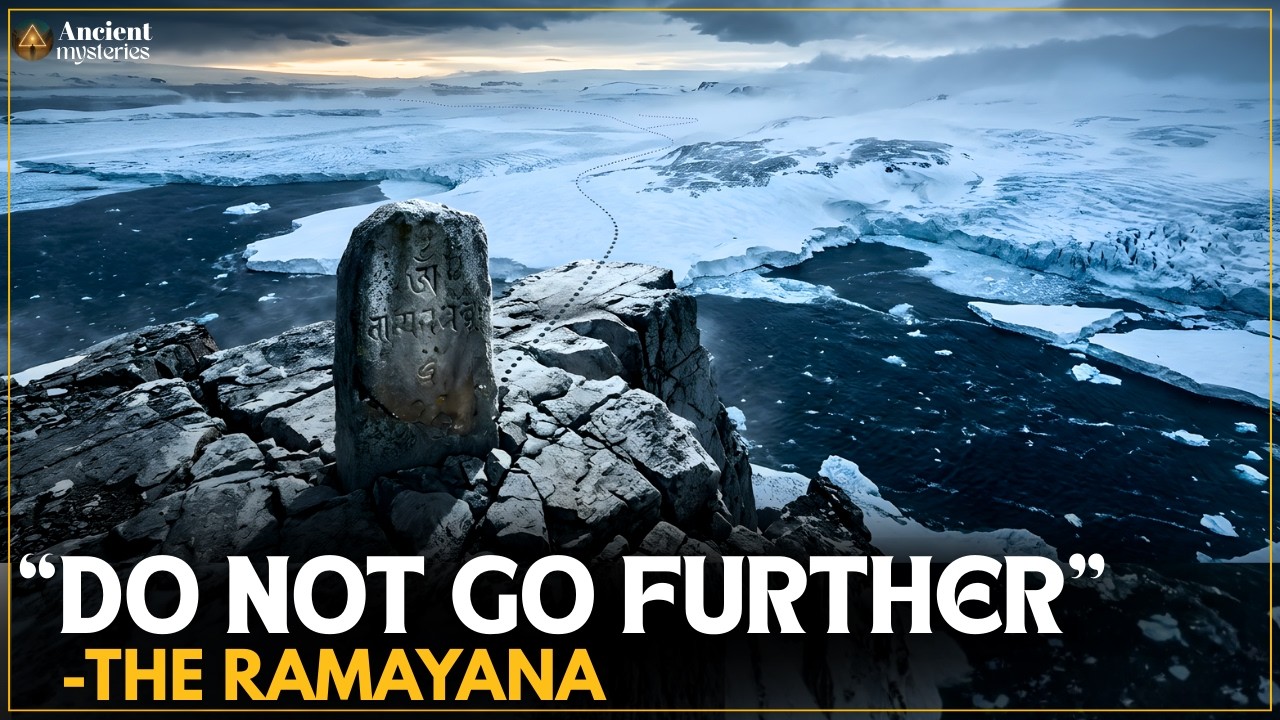
Ramayana Antarctica: Ice Age Map & 14,000 Year Ancient Secret


Introduction: The Southernmost Enigma

The vast narrative of the Ramayana, a cornerstone of ancient Indian literature, is often interpreted through the lens of mythology, dharma, and epic battles. However, what if this ancient text also served as a geographical atlas, detailing a world vastly different from our own? This investigation delves into an unsettling hypothesis: that the Ramayana contains descriptions not of a mythical realm, but of the actual geography of Earth during the last Ice Age, specifically pointing towards the frigid continent of Antarctica as a "realm of no return." We examine research that suggests the southern reaches of the Ramayana's world were not a territory to be conquered, but a stark, insurmountable boundary.

The Ramayana Beyond Mythology: A Geographical Record?

The traditional understanding of the Ramayana places its events within a specific cultural and historical context in ancient India. Yet, a growing body of research challenges this conventional view, proposing that the epic’s intricate details—its rivers, mountains, and descriptions of distant lands—might function as literal geographical markers. This perspective reimagines the narrative not as pure allegory, but as a preserved memory of a prehistoric world, a cartographic record from a time when the Earth’s geography was dramatically altered by glacial cycles. The central question becomes: could the epic’s seemingly fantastical descriptions be a veiled account of Ice Age coastlines and forgotten continents?

Nilesh Oak's Groundbreaking Research

Central to this compelling hypothesis is the meticulous research of Mr. Nilesh Oak. His work, documented in several essential books, applies principles of astronomical and geographical dating to ancient Indian texts, primarily the Ramayana and the Mahabharata. Oak's approach strips away later mythological accretions to reveal a potential core of historical and geographical data. His research suggests that by analyzing astronomical references and geographical descriptions, particularly those concerning the movement and placement of stars and continents, we can anchor these ancient narratives to specific timeframes. This video draws heavily upon his findings, urging viewers to consider the Ramayana not merely as scripture, but as a potential witness to a lost chapter of Earth's history.

“This video draws on the research of Mr. Nilesh Oak. His books are essential reading for anyone interested in the astronomical and geographical dating of the Ramayana.”

For those seeking a deeper understanding, Oak's published works offer invaluable insights:

Decoding the South: A Boundary, Not a Destination

The narrative's trajectory shifts dramatically when it directs attention southward. While previous textual expeditions described lands ripe for exploration, the south possesses a distinct character: it is presented as a boundary, a limit beyond which safe passage is impossible. Following the precise instructions attributed to Sugriva, the narrative guides us methodically towards India's southern edge. This focus on the south is not accidental; it is portrayed as a critical and unsettling direction, a point of demarcation in the world as understood by the Ramayana's ancient authors.

The River Corridor: Narmada to Kaveri

The journey south is meticulously mapped through a sequence of major Indian rivers. The narrative traces a route originating from the Narmada River, proceeding through the Godavari and Krishna, and finally reaching the Kaveri. This established river corridor serves as a geographical spine, grounding the epic's southward exploration in a series of identifiable landmarks. Analyzing this sequence allows researchers to chart a potential path taken by the characters, moving systematically from the heartland towards the peninsula's tip, each river marking a stage in the descent towards the world's edge.

Mountain Markers: Malaya & Mahendra Parvata

As the narrative progresses southward, specific mountain ranges are identified: Malaya Parvata and Mahendra Parvata. These are not merely incidental geographical features but serve as crucial waypoints, reinforcing the epic's geographical grounding. Their presence helps anchor the described journey, acting as markers on a prehistoric map. The identification and location of these mountains are key to understanding the intended scope of the Ramayana's world and the geographical understanding of its creators. Their mention signifies the approach to the extreme southern limits of the known world.

The Canopus Clue: Anchoring the Ramayana to 14,000 Years Ago

A critical piece of evidence emerges with the astronomical reference to Agastya, identified with the star Canopus. The position and visibility of Canopus in the night sky are strongly tied to geographical latitude. By calculating when the star Agastya would have been prominently visible from the southern regions of India, as implied by the text, researchers can establish a potential timeframe for the Ramayana's composition or the events it describes. This astronomical alignment strongly suggests a period approximately 14,000 years ago, placing the narrative firmly within the last Ice Age.

“The astronomical reference to Agastya (Canopus) – a detail that may anchor the text to a time nearly 14,000 years ago.”

Ice Age Coastlines and Natural Land Bridges

The hypothesis posits that the Ramayana's geography aligns with the Earth's configuration during the Pleistocene epoch, the last Ice Age. During this period, significantly lower sea levels exposed continental shelves and created natural land bridges, drastically altering coastlines. The description of landmasses and routes within the Ramayana could correspond to these Ice Age coastlines and the now-submerged topography. Archaeological evidence and paleogeographical reconstructions of this era are crucial for validating the idea that the epic might be describing a world shaped by glacial maximums, including potential land connections and altered shorelines.

Lanka: A Known Location, A Deliberate Withholding

Within this geographical framework, Lanka is presented not as a mythical island far removed from the earthly realm, but as a known, albeit distant, location. However, the narrative surrounding Lanka takes a significant turn. Beyond this established point, Sugriva's instructions become cautionary. The text warns of perilous seas, islands that are unreachable, and a final southern land associated with profound darkness and danger—a place from which no return is possible. This transition from description to explicit warning suggests a fundamental shift in the nature of the territory being discussed.

The Realm Beyond: Hostile Seas and the Land of No Return

The climax of the southward description is a stark warning. Beyond the established boundaries of Lanka, the Ramayana speaks of hostile seas, islands lost to the ocean, and a final, desolate land. This region is imbued with connotations of absolute finality: darkness, danger, and the impossibility of return. This is not the description of a land to be conquered or explored, but a boundary not to be crossed. When interpreted literally, through the lens of Ice Age geography, these descriptions find a chilling parallel with the southern polar continent.

Antarctica: Ancient Maps and the Final Boundary

The hypothesis proposes that this "realm of no return" described in the Ramayana is, in fact, Antarctica. At the time suggested by the astronomical clues (around 14,000 years ago), Antarctica, though likely still covered in ice, represented a distinct and formidable geographical limit. The hostile seas, unreachable islands, and the extreme conditions align with the known environment of the Antarctic continent during the late Pleistocene. This interpretation suggests the Ramayana preserves a memory of a world with known boundaries, where Antarctica was recognized not as a place of habitation or conquest, but as the ultimate demarcation—the edge of the map.

“When read literally, the description aligns with a frozen southern continent—Antarctica.”

“This episode explores the possibility that the Ramayana preserves a memory of a world that was already mapped a finite Earth with known boundaries. The south was not a place to conquer. It was a line not to cross.”

Audience Reactions and Interpretations

The exploration of such provocative theories inevitably sparks diverse audience reactions, as seen in the comments accompanying related content. Some viewers propose alternative timelines, suggesting the Ramayana’s events occurred much earlier, close to a million years ago, referencing archaeological tests on the bridge between Tamil Nadu and Sri Lanka. Others draw parallels to fictional boundaries, likening the southern warning to the "game of Thrones behind the ice wall." There are also interpretations linking ancient texts to different regions, such as a story involving Ravan's Atmalinga potentially buried near Mecca and Medina. One deeply intriguing comment, presented as a translation from ancient monastic texts, posits that Antarctica was once situated near Africa, broke away due to an "explosion," and became the burial place of "original Gods" along with their advanced technology, prompting questions about why every nation claims a stake in the continent today. These comments highlight a broad spectrum of engagement, from historical debate and mythological parallels to speculative theories about ancient technology and divine origins.

“Treta Yuga was Rams Ramayana time, the number in the vedas is close to 1 million years. 14000 years ago was dwarpa Yuga, long after Ramayana. The bridge between tamil nadu and sri lanka has been tested by archeologists, also placing the stone formation to 1 million years.”

“It's kind of like Game of Thrones behind the ice wall”

“I read every comment — drop your thoughts below! 👇”

“The Monk then states that the first translation was done long ago and the texts were from around the time that Antarctic was on the side of Africa. The Monk states that it to be very old as in the time of the original Gods. The Monk states that an explosion in Africa close to the ocean, Antarctica broke away and it was forced to our southern pole. But that's not what intrigued the Monk. The Monk then goes to say the reason why Antarctica was forced away. The Monk says, ‘The text says it's the home of the original Gods and they were cast away’. But it's supposed to be the burial place of the original Gods. All their technology, ships, weapons, and everything else that those who sent them away felt others should not have. It makes you wonder about it. I mean every country in the world has staked a claim to Antarctica. So why does everyone want it. There could be many reasons why, but knowing this makes you wonder.”

Investigator's Verdict: Mythic Geography or Literal Record?

The hypothesis that the Ramayana describes Ice Age geography, culminating in Antarctica as a definitive boundary, is a fascinating proposition. Nilesh Oak's methodology offers a rigorous framework for approaching ancient texts as potentially containing empirical data rather than solely mythological narratives. The convergence of geographical descriptions (river corridors, mountain markers), astronomical clues (Canopus), and the stark warning about the southern extreme lends significant weight to the interpretation. While the idea of a 14,000-year-old record pointing to Antarctica is extraordinary, it aligns with the growing field of forbidden archaeology that seeks to reconcile ancient texts and myths with a re-evaluated geological and historical timeline. The evidence suggests that the Ramayana, when stripped of later allegorical interpretations, may indeed offer a window into a world radically different from our own, a world where the southern pole was recognized as the ultimate, impassable frontier.

The Investigator's Archive

To further your research into the intersection of ancient texts, lost civilizations, and unconventional historical paradigms, consult the following resources:

  • Books by Nilesh Oak: As detailed above, his works provide foundational research for astronomical and geographical dating of Indian epics.
  • Documentaries on Ancient Technologies: Explore series that investigate evidence of advanced ancient capabilities, often found in megalithic structures or textual descriptions. The Awakened Epochs playlist linked in the content offers a starting point.
  • Paleogeography and Glacial Maximum Studies: Academic resources detailing Earth's geography during the Last Glacial Maximum (approx. 20,000 years ago) can provide context for potential Ice Age coastlines and continental configurations.
  • Research on the Ramayana's Historical Basis: Look for scholarly articles and books that critically examine the Ramayana not just as literature, but as a potential repository of historical or geographical information.

Frequently Asked Questions

1. Is the Ramayana considered a historical document by mainstream academia?

Mainstream academia generally regards the Ramayana as an epic poem and a significant religious and cultural text, rather than a literal historical account. However, fringe archaeology and alternative history researchers explore the possibility of historical kernels within the narrative.

2. What is the significance of the star Canopus (Agastya) in dating ancient texts?

Canopus is a bright star whose visibility and position in the sky change depending on geographical latitude. By calculating when the star would have appeared in a specific location mentioned in a text, researchers can estimate the time period the text might refer to.

3. How did Antarctica's geography differ 14,000 years ago?

While Antarctica has been largely ice-covered for millions of years, 14,000 years ago was during the tail end of the last Ice Age. Sea levels were lower, which could have altered coastlines and the appearance of surrounding waters, but the continent itself remained glaciated. The significance lies in its extreme southern location and inhospitable environment, fitting the description of a "boundary."

4. What is "forbidden archaeology"?

"Forbidden archaeology" or "Alternative archaeology" refers to theories and interpretations that challenge the conventional timelines and accepted findings of mainstream archaeology. It often involves re-examining ancient texts, myths, and artifacts to propose different origins or histories for human civilization.

alejandro quintero ruiz is a veteran investigator of the unexplained, with decades spent dissecting anomalies from dusty archives to remote global locales. His approach blends sharp analytical rigor with a deep understanding of parapsychology, forgotten histories, and the fringes of accepted science. He approaches every case with a healthy dose of skepticism, meticulously separating verifiable data from speculation, always seeking the narrative thread that connects the inexplicable to the potentially understandable.

Your Mission: A Cartographic Challenge

The Ramayana may hold keys to a forgotten world map. Your mission, should you choose to accept it, is to cross-reference the geographical markers mentioned—the rivers Narmada, Godavari, Krishna, Kaveri, and the mountains Malaya and Mahendra—with paleogeographical maps of the last Ice Age. Document any surprising alignments or discrepancies. Do these ancient descriptions correspond to known Ice Age coastlines or land bridges? Share your findings in the comments below. The truth is out there, hidden in the details.

Have you encountered similar geographical descriptions in other ancient texts? Share your experiences and insights in the comments below. Your personal accounts are crucial pieces of evidence in our ongoing investigation.

Don't keep this hidden knowledge to yourself! Share this post across all your networks to spark discussion and help uncover more fragments of our lost history.

Subscribe to Awakened Epochs for more explorations of lost history, ancient civilizations, and discoveries that rewrite the human story. Click the notification bell so you don't miss our next deep dive!

Ancient Gods: Alien Visitors or Mythological Tales?


Introduction: Whispers from the Cosmos

The question echoes through millennia, a persistent hum beneath the surface of human history: Were the deities worshipped by ancient civilizations merely powerful beings, or were they something... else? This investigation delves into the tantalizing theories that posit a connection between our ancient gods and extraterrestrial visitors. We will dissect sacred texts, scrutinize accounts of unexplained encounters, and examine artifacts that defy conventional explanation, seeking to discern the fine line between divine intervention and alien visitation.

Interpreting the Evidence: Ancient Texts and Myths

Across the globe, ancient cultures penned narratives and etched glyphs that speak of beings descending from the heavens. The Sumerian Tablets of Creation detail the Anunnaki, a race of gods who, according to some interpretations, arrived from the planet Nibiru and influenced the development of early human civilization. Similarly, the Vimanas described in ancient Indian epics like the Ramayana and Mahabharata are often cited as evidence of advanced aerial vehicles, distinct from any known natural phenomena or contemporary technology.

"And the Lord said, Let us make man in our image, after our likeness: and let them have dominion over the fish of the sea, and over the fowl of the air, and over the cattle, and over all the earth, and over every creeping thing that creepeth upon the earth." - Genesis 1:26 (KJV)

The interpretation of such texts is where the debate intensifies. Skeptics argue these are allegorical tales, products of imaginative minds grappling with the unknown and the divine. Believers, however, point to the recurring themes of sky-borne deities, advanced knowledge imparted to humanity, and even genetic manipulation, as potent indicators of non-human, extraterrestrial intervention. The detail and consistency across disparate cultures, separated by vast distances and time, lend a compelling weight to the hypothesis.

Consider the Egyptian pantheon, with figures like Ra, often depicted with solar associations and wielding immense power. Or the Mesoamerican feathered serpent god, Quetzalcoatl, whose mythos includes arrival from the sea and the imparting of knowledge. Are these mere symbolic representations of natural forces and human aspirations, or do they represent a collective memory of encounters with beings from beyond our world?

Unexplained Encounters: The Echoes of Visitors

Beyond written records, the physical landscape offers its own cryptic testimony. The Nazca Lines in Peru, massive geoglyphs etched into the desert floor, are best viewed from great heights. Their purpose remains a subject of intense speculation, with theories ranging from astronomical calendars to landing strips for ancient spacecraft. Could these colossal designs have been created to communicate with or guide visitors from the stars?

Then there are the megalithic structures found worldwide—Machu Picchu, Stonehenge, the pyramids of Giza—built with astonishing precision and scale, often using stones weighing many tons. The sheer engineering feat involved challenges our understanding of ancient capabilities. How were these structures erected with such exactitude? While conventional archaeology offers explanations, the "impossibility" of these constructions for the era fuels speculation about external assistance or advanced, lost technologies.

The very concept of gods has evolved alongside human understanding. As noted in one observer's commentary, "First they were spirits in the Forrest, then they were gods, now they're Extraterrestrials 👽🖖🏻". This progression suggests a pattern: humanity interprets the unknown through the lens of its current understanding. Could "aliens" be simply the current iteration of an ancient phenomenon, a more scientific label for beings our ancestors perceived as divine?

Technological Anomalies: Echoes of Advanced Knowledge

The notion that ancient gods possessed knowledge far beyond their time is a cornerstone of the ancient astronaut theory. This includes advancements in astronomy, mathematics, metallurgy, and even biology. The recent announcement by scientists Yaniv Erlich and Robert Grass concerning a technological breakthrough involving DNA stored within a synthetic bunny exemplifies how complex information can be encoded and preserved in unexpected ways.

"Water, H2O retains information."

This scientific endeavor, while modern, mirrors the concept of ancient beings imparting vital knowledge, perhaps encoded in ways we are only now beginning to comprehend. The idea that water can retain information, a concept sometimes explored in fringe scientific circles and alluded to in the provided context, further blurs the lines between ancient mysticism and potential undiscovered scientific principles. Could ancient texts, viewed through this lens, be repositories of information passed down by highly advanced entities?

The commentary "George Tsoukalas wasn't crazy blaming everything on Aliens" reflects a sentiment shared by proponents of this theory, who see a consistent pattern of extraterrestrial influence throughout human history. The persistent questioning of large-scale infrastructure, like "data centers... eating up our land and other resources," also hints at a broader societal unease about hidden knowledge and control, mirroring the anxieties surrounding potential extraterrestrial manipulation.

Investigator's Verdict: Bridging the Divine and the Extraterrestrial

The evidence, when viewed through the lens of ancient astronaut theory, is compelling, albeit circumstantial. Ancient texts, unexplained artifacts, and recurring mythological motifs across diverse cultures paint a picture that is difficult to dismiss entirely as coincidence or pure fantasy. While conventional archaeology and religious scholarship provide rational explanations rooted in human ingenuity and cultural development, the sheer scale and specificity of the anomalies demand consideration of alternative hypotheses.

Is it plausible that advanced extraterrestrial beings visited Earth in antiquity, influencing human development and becoming enshrined as gods in our collective consciousness? The evidence doesn't offer definitive proof, but it presents a strong case for further investigation. The scientific exploration of DNA storage, as demonstrated by the synthetic bunny, suggests that the methods of knowledge transfer may be more complex than we perceive. It is not a leap too far to consider that ancient civilizations received knowledge or guidance in ways that we might now interpret as alien visitation.

The narrative progression from "spirits" to "gods" to "extraterrestrials" is, as one commentator aptly noted, a reflection of our evolving understanding. It is our duty as investigators to remain open to the possibility that these phenomena, regardless of what we ultimately label them, represent a genuine, recurring aspect of human history that transcends simple mythology.

The Researcher's Archives

For those seeking to delve deeper into the intersection of ancient history and potential extraterrestrial contact, consult the following resources:

  • Books: Chariots of the Gods? by Erich von Däniken, The 12th Planet by Zecharia Sitchin.
  • Documentaries: The Ancient Aliens series on The HISTORY Channel.
  • Websites: Reputable sources on archaeology, mythology, and ufology. Always cross-reference information. Explore platforms like The HISTORY Channel for curated content.

It's imperative to approach this subject with critical thinking, discerning between credible research and pure speculation. The commentary referencing Silas Orven suggests individuals who have dedicated significant inquiry into these matters, warranting further exploration of their findings.

Frequently Asked Questions

Q1: What is the core argument of the "Ancient Gods as Aliens" theory?
The theory posits that ancient deities and mythological figures described in historical texts and depicted in artifacts were, in fact, extraterrestrial beings who visited Earth and significantly influenced human civilization, technology, and religion.
Q2: What kind of evidence is cited to support this theory?
Evidence includes interpretations of ancient texts (e.g., Sumerian tablets, Indian epics), megalithic structures requiring advanced engineering, unexplained artifacts, and recurring motifs of sky-borne beings in global mythologies.
Q3: How do mainstream archaeologists and historians respond to these theories?
Mainstream academia generally attributes these phenomena to human ingenuity, cultural allegory, and misinterpretations of natural events or advanced (but terrestrial) ancient technologies. They emphasize the lack of direct, irrefutable evidence for extraterrestrial intervention.
Q4: Are there any recent scientific developments that lend credence to the idea of advanced information storage, relevant to ancient myths?
Yes, recent scientific breakthroughs, such as encoding data into synthetic DNA (e.g., the "plastic bunny" experiment), demonstrate sophisticated methods of information preservation that resonate with the idea of ancient beings imparting complex knowledge.

About the Author:

alejandro quintero ruiz is a seasoned investigator specializing in the unexplained. With years spent in the field, poring over obscure texts and documenting anomalous phenomena, Ruiz brings a pragmatic, analytical approach to the mysteries that lie beyond conventional understanding. His work aims to bridge the gap between folklore and potential reality, meticulously examining evidence others overlook.

Your Mission: Document the Anomalous

The world is filled with whispers of the unexplained. Your mission, should you choose to accept it, is to become a keen observer. Next time you encounter an ancient myth, a peculiar artifact, or an enduring legend, ask yourself: Is there a hidden layer of truth? Document your observations, share your hypotheses, and contribute to the ongoing investigation into humanity's true past. Report any unusual findings or persistent questions regarding ancient civilizations and their potential connections to the cosmos.

Share your theories and personal experiences in the comments below. If you found this investigation enlightening, please share it with fellow truth-seekers on social media. Don't forget to subscribe to our channel for more deep dives into the unexplained.

Ruinas Antiguas: Misterios Que Desafían la Historia Humana


# Ruinas Antiguas: Misterios Que Desafían la Historia Humana

Las ruinas ancestrales son ventanas a lo desconocido, ecos de civilizaciones que, por un instante, nos hacen cuestionar la solidez de nuestro propio conocimiento. Los hallazgos arqueológicos esparcidos por el globo a menudo presentan enigmas tan profundos que desestabilizan los cimientos de nuestra comprensión histórica. La pregunta persiste: ¿llegaremos a descifrar sus secretos, o seguirán planteando más interrogantes que respuestas definitivas?

ÍNDICE DEL EXPEDIENTE

Introducción: Ruinas Que Retan Nuestra Comprensión de la Historia

Un monumento ciclópeo emergiendo de las arenas de Egipto, un laberinto olvidado bajo la campiña europea, una pirámide monumental en el mismísimo corazón de Norteamérica. Las ruinas antiguas ejercen una poderosa fascinación en nosotros, precisamente porque a menudo exponen la vastedad de nuestro desconocimiento sobre el pasado. El descubrimiento de una ciudad perdida o la excavación de una estructura colosal pueden, de la noche a la mañana, desafiar la narrativa histórica que dábamos por sentada. La verdadera pregunta no es solo qué secretos guardan estas estructuras, sino cómo su existencia impacta nuestra propia percepción de la civilización humana.

Caral, Perú: El Descubrimiento de Ruth Shady en los Andes

En las áridas llanuras de la costa central de Perú, emergió un descubrimiento monumental que reescribió la historia de la civilización en América: Caral-Supe, la "Civilización más Antigua de América". Desenterrada por la arqueóloga Ruth Shady en la década de 1990, esta ciudad sagrada de aproximadamente 5,000 años de antigüedad (contemporánea a las pirámides de Egipto y Stonehenge) presenta una complejidad social y arquitectónica sin precedentes para su época. La propia Ruth Shady relató experiencias en su juventud en la costa peruana, donde encontraba vestigios de una cultura antigua: "Yo viví entre barranca y puerto supe de pequeña, y encontrábamos entre la arena cráneos. Con cabellos rojos ralos, cerámicas destrozada, parecía que algún desastre hubiera sepultado gente ahí, a no ser que hubiera sido un cementerio muy extenso cruzando la panamericana haciendo el este, en ese tiempo, caminaba por puentes de tipo adobe de barro rojo y a lo lejos se veían huecos qué dejaron los huaqueros, qué explotaron esas zonas, ya después escuche que por ahí descubrieron Caral." Este testimonio personal, marcado por el hallazgo de cráneos y cerámicas fragmentadas, evoca la imagen de un pasado sepultado y violentamente explotado por huaqueros, antes de que la ciencia oficial reclamara el sitio.

La Pirámide Mayor de Caral: Ingeniería sin Herramientas de Metal

El complejo de Caral destaca por su imponente Pirámide Mayor, una estructura de plataformas escalonadas de unos 18 metros de altura y una base de 150 por 130 metros. Construida con piedra y adobe, su edificación representa un logro de ingeniería asombroso, especialmente si consideramos la ausencia de herramientas de metal y la rueda en esta cultura. ¿Cómo lograron tal precisión y magnitud sin la tecnología que consideramos básica hoy en día? Los arqueólogos debaten su propósito, pero la presencia de un anfiteatro y posibles estructuras ceremoniales sugieren un uso tanto cívico como religioso.

¿Más Antigua Que Egipto? La Datación Que Cambió la Arqueología

Las dataciones por radiocarbono colocan a Caral en un período que precede a las pirámides de Egipto y a la civilización maya. Este hecho cuestionó la visión eurocéntrica y oriental de la arqueología, que tendía a considerar a estas regiones como las cunas exclusivas de las grandes civilizaciones antiguas. Como bien señala un comentario: "Interesante que civilizaciones separadas por océanos —Caral, Egipto, Cahokia— construyeron pirámides de forma independiente. ¿Coincidencia, necesidad estructural... o algo que aún no comprendemos?". Esta observación resalta la inquietante similitud en la construcción de pirámides a través de culturas y continentes aparentemente desconectados, sugiriendo posibles influencias transoceánicas o un impulso humano innato hacia formas arquitectónicas similares. La lógica popular también apoya esta idea: "si dicen que la tierra es mas antigua que el ser humano, sin duda han vivido otras civilizaciones antes por lógica, y al paso que vamos nos destruiremos y vendran nuevas civilizaciones."

La Gran Esfinge de Giza: El Centinela de Piedra Caliza

Viajamos ahora a la meseta de Giza, en Egipto, hogar de uno de los monumentos más enigmáticos del mundo: la Gran Esfinge. Esta colosal estatua, tallada en la roca caliza, representa un cuerpo de león y una cabeza humana, y ha sido objeto de especulación y estudio durante siglos. Su imponente presencia, "un gigantesco monumento de piedra que se eleva de las arenas de Egipto", evoca un pasado remoto y, para muchos, un conocimiento perdido.

El Desentierro de la Esfinge: De Napoleón a los Arqueólogos de 1920

Aunque la Esfinge ha estado visible a lo largo de la historia, su excavación y estudio sistemático cobraron impulso en épocas más recientes. Si bien la expedición de Napoleón en 1798 atrajo la atención mundial, fueron los trabajos arqueológicos de principios del siglo XX, como los dirigidos por Émile Baraize y luego por Selim Hassan, los que comenzaron a desvelar su magnitud y a plantear preguntas sobre su historia original. La "Estela del Inventario", encontrada entre las patas de la Esfinge, añade una capa más de misterio, sugiriendo que el faraón Keops pudo haber restaurado una estructura preexistente en lugar de construirla.

La Estela del Inventario: ¿Reparó Keops una Estructura Preexistente?

La Estela del Inventario, un gran granito hallado en Giza, contiene un registro de tesoros y tareas asociadas con la Gran Pirámide. Sin embargo, lo que la hace especialmente intrigante es una mención que parece referirse a la Esfinge como una entidad que ya existía en tiempos de Keops, y que este faraón habría ordenado su restauración. "La Estela del Inventario: ¿Reparó Keops una estructura preexistente?" Esta inscripción, si se interpreta correctamente, podría indicar que la Esfinge es considerablemente más antigua de lo que se pensaba tradicionalmente.

Erosión por Agua en el Desierto: La Evidencia Física de una Edad Milenaria

Una de las teorías más controvertidas sobre la antigüedad de la Esfinge proviene del geólogo Robert Schoch. Él argumenta que los patrones de erosión observados en los costados del cuerpo de la Esfinge y en las paredes del foso circundante son consistentes con la erosión causada por la lluvia prolongada, no por el viento y la arena. Dado que la región de Giza ha sido un desierto árido durante milenios, Schoch postula que la Esfinge debió ser esculpida en un período mucho más húmedo, miles de años antes de la Cuarta Dinastía egipcia. "Erosión por agua en el desierto: la evidencia física de una edad milenaria." Esta hipótesis, aunque disputada por muchos egiptólogos, plantea la posibilidad de una civilización anterior a las conocidas en Egipto. Un usuario plantea algo similar en relación a la Antártida: "Una Hipótesis loca 37:13 y si la y si...!!! La Atlántida esta bajo el hielo. Hay esta solo falta expediciónes las cuales están prohibidas. Por que será. Por hay esta la atlantida con más de 18mil años bajo el hielo. Por ero en Caral y en Egipto con la pirámide, estos lugares tenía un clima más apto para vivir y por el cambio de los polos por eso desaparecieron.🤯". Esta conexión entre la erosión de la Esfinge y la posibilidad de un pasado climático diferente para otras regiones subraya la interconexión de estas teorías sobre civilizaciones perdidas y cambios geológicos.

El Salón de los Registros: El Túnel Secreto Bajo la Garra de la Esfinge

Las leyendas sobre cámaras ocultas bajo la Gran Esfinge circulan desde hace siglos. Una de las más persistentes habla del "Salón de los Registros", una supuesta cámara subterránea que contendría información crucial sobre la historia perdida de la humanidad o incluso conocimientos avanzados de civilizaciones antiguas. Si bien las exploraciones geofísicas han detectado anomalías y cavidades bajo la Esfinge, la existencia confirmada de un "Salón de los Registros" sigue siendo objeto de debate y especulación. "El Salón de los Registros: el túnel secreto bajo la garra de la Esfinge."

Cahokia, Misuri: La Gigantesca Pirámide de Tierra en el Corazón de EE. UU.

Cruzamos el Atlántico para adentrarnos en el corazón de Estados Unidos, donde yace Cahokia, cerca de la actual San Luis, Misuri. Este sitio arqueológico revela los restos de una de las ciudades más grandes y complejas construidas por nativos americanos antes de la llegada de europeos. "Cahokia, Misuri: la gigantesca pirámide de tierra en el corazón de EE. UU." Cahokia fue un centro urbano que floreció entre los siglos XI y XIV d.C.

La Metrópolis Perdida de Norteamérica: 50,000 Habitantes en el Año 1050

En su apogeo, alrededor del año 1050 d.C., Cahokia albergaba una población estimada de 50,000 a 100,000 habitantes, superando a Londres en tamaño en ese mismo período. La ciudad estaba dominada por estructuras de montículos de tierra, siendo el más impresionante el Monks Mound, una pirámide masiva de varias capas que supera en tamaño a la Gran Pirámide de Giza en volumen. Esta impresionante metrópolis demuestra un alto grado de organización social, planificación urbana y capacidad de movilización de mano de obra.

El Misterio del Montículo 72: Evidencia de Sacrificios Rituales Masivos

Dentro del vasto complejo de Cahokia se encuentra el Montículo 72, un sitio de enterramiento que ha revelado evidencia de rituales complejos y sacrificios humanos a gran escala. Se han encontrado los restos de un líder de alto rango, acompañado de numerosos sirvientes y, lo más impactante, los esqueletos de más de 200 individuos jóvenes, aparentemente sacrificados para acompañar al líder en su viaje al más allá. "El misterio del Montículo 72: evidencia de sacrificios rituales masivos." Estos hallazgos plantean preguntas oscuras sobre las prácticas religiosas y la estructura social de la civilización Mississippiana.

Erdställe: Túneles Laberínticos Tallados Bajo Europa Central

Nos dirigimos ahora bajo tierra, a Europa Central, donde se encuentran los enigmáticos "Erdställe" o "Erdstallen". Estos son sistemas de túneles estrechos y laberínticos, a menudo tallados directamente en la roca madre, que se extienden por kilómetros bajo el suelo de países como Alemania, Austria y Eslovenia. "Erdställe: túneles laberínticos tallados bajo Europa Central." Su propósito es desconocido; las teorías van desde refugios hasta rutas de escape, pasando por lugares de almacenamiento.

Teorías Espirituales: ¿Cámaras de Espera Para las Almas de los Muertos?

Algunas interpretaciones más esotéricas sugieren que los Erdställe podrían haber tenido un propósito espiritual o ritualístico. Se ha teorizado que podrían haber servido como "cámaras de espera" para las almas de los muertos antes de su tránsito, o como lugares para rituales de renacimiento. Una posible teoría es: "¿Pirámides en la Antártida? Imágenes satelitales bajo el hielo." A pesar de la aparente desconexión temática, la especulación sobre túneles antiguos bajo tierra y estructuras anómalas bajo el hielo de la Antártida comparten la misma raíz: la intriga por civilizaciones perdidas y construcciones monumentales cuyos propósitos escapan a nuestra comprensión moderna. "Teorías espirituales: ¿cámaras de espera para las almas de los muertos?"

¿Pirámides en la Antártida? Imágenes Satelitales Bajo el Hielo

La Antártida, un continente cubierto de hielo, esconde uno de los misterios más audaces: la posibilidad de pirámides o estructuras artificiales bajo su capa helada. Imágenes satelitales han revelado formaciones geológicas con ángulos y simetrías que algunos interpretan como evidencia de construcciones antiguas. "¿Pirámides en la Antártida? Imágenes satelitales bajo el hielo." Estas teorías sugieren que la Antártida pudo haber tenido un clima diferente en el pasado, permitiendo el desarrollo de civilizaciones avanzadas.

El Hallazgo de Polen Tropical en el Polo Sur: Un Pasado de Selva Pluvial

La evidencia que respalda la idea de un pasado más cálido en la Antártida es contundente. Los núcleos de hielo y los sedimentos marinos han revelado la presencia de polen fosilizado y restos de flora y fauna que indican la existencia de selvas pluviales y un clima templado en lo que hoy es el Polo Sur. "El hallazgo de polen tropical en el Polo Sur: un pasado de selva pluvial." Esto sugiere que, hace millones de años, la Antártida era un continente verde y exuberante, capaz de sustentar vida compleja.

Teoría del Cambio Polar: Cuando la Antártida Tuvo un Clima Templado

La teoría del cambio polar propone que la Tierra ha experimentado inversiones o desplazamientos significativos de sus polos geográficos o magnéticos a lo largo de su historia. Aplicada a la Antártida, esta teoría sugiere que el continente pudo haber estado ubicado en latitudes más bajas, disfrutando de un clima propicio para la vida y, potencialmente, para el desarrollo de civilizaciones. "Teoría del cambio polar: cuando la Antártida tuvo un clima templado." Este escenario abre la puerta a la especulación sobre civilizaciones perdidas que habrían prosperado antes de que las masas de hielo cubrieran el continente.

Skara Brae, Escocia: La Aldea de Piedra Perfectamente Preservada

Nos trasladamos al norte, a las Islas Orcadas en Escocia, donde se encuentra Skara Brae. Esta aldea prehistórica, habitada hace más de 5,000 años (contemporánea a Stonehenge), es uno de los asentamientos neolíticos mejor conservados de Europa. "Skara Brae, Escocia: la aldea de piedra perfectamente preservada." Enterrada bajo dunas de arena durante milenios, su descubrimiento en 1850 reveló casas de piedra sorprendentemente intactas, con mobiliario como camas, estanterías y hogares.

La Conexión con Stonehenge: Los Constructores de los Círculos de Piedra

La antigüedad y la sofisticación de Skara Brae la conectan con otros monumentos megalíticos de Gran Bretaña, como Stonehenge. Los constructores de estas estructuras monumentales, a menudo anónimos, demuestran un conocimiento avanzado de ingeniería, astronomía y organización social. "¿Coincidencia, necesidad estructural... o algo que aún no comprendemos?" La pregunta sobre si estas culturas compartieron conocimientos o desarrollaron soluciones similares de forma independiente sigue siendo un enigma. Un comentario sugiere la amplitud de las redes de estas civilizaciones: "Ay por favor, la red inca era enorme, ahora tampoco podían cruzar los andes????!!! Denle el respeto que merecen, recorrían las americas!!!" Esto nos recuerda que la escala de las redes de comunicación y viaje en el mundo antiguo podría ser subestimada.

Conclusión: Por Qué el Pasado Sigue Siendo Inexplicable

Desde las pirámides de Caral hasta las ruinas de Cahokia, pasando por los misterios de la Esfinge y las anomalías de la Antártida, nuestro pasado está plagado de enigmas. Las ruinas antiguas nos fascinan porque nos recuerdan lo mucho que ignoramos. Cada nuevo hallazgo, cada datación que desafía las cronologías establecidas, nos obliga a reevaluar nuestra historia y nuestro lugar en ella. La falta de herramientas de metal, la erosión por agua en desiertos, las pirámides en continentes supuestamente inhóspitos, los túneles subterráneos de propósito desconocido; todo ello apunta a civilizaciones con conocimientos y capacidades que aún no comprendemos del todo.

Veredicto del Investigador: ¿Fraude, Fenómeno Genuino o Algo Más?

Tras analizar la evidencia presentada, desde los impresionantes logros arquitectónicos de Caral y Cahokia hasta las controvertidas interpretaciones geológicas de la Esfinge y las especulaciones sobre estructuras en la Antártida, el veredicto es claro: existen fenómenos y vestigios históricos que desafían las explicaciones convencionales y que, hasta la fecha, permanecen en el ámbito de lo inexplicable para la arqueología y la historia dominantes. Si bien es crucial mantener un rigor científico y descartar fraudes o interpretaciones erróneas (como la posible confusión de formaciones geológicas con estructuras artificiales), sería un error de miopía ignorar las anomalías que se presentan. La erosión en la Esfinge, la datación de Caral, la extensión de Cahokia, y la mera especulación sobre pirámides antárticas, nos presentan datos que requieren más investigación, no descarte inmediato. La posibilidad de civilizaciones antiguas más avanzadas o de eventos geológicos y climáticos extremos y olvidados, no puede ser descartada de plano. La clave reside en la constante búsqueda de evidencia y en la apertura a nuevas perspectivas, sin caer en dogmatismos.

El Archivo del Investigador

Para aquellos que desean profundizar en estos misterios, recomiendo explorar los siguientes recursos:
  • Libros sobre arqueología precolombina y egiptología comparada.
  • Documentales de series como "Ancient Aliens" (con un ojo crítico) y producciones de canales como History y National Geographic que aborden ruinas antiguas y misterios de la humanidad.
  • Investigaciones académicas sobre datación por radiocarbono y geología de sitios arqueológicos.
  • Foros y comunidades online dedicadas a la arqueología misteriosa y la historia alternativa, siempre verificando la información con fuentes primarias.

Preguntas Frecuentes

¿Por qué se construían pirámides en civilizaciones tan distantes?
Las razones son objeto de debate. Podrían ser necesidades estructurales para edificaciones altas, simbolismo religioso relacionado con la ascensión a los cielos, o incluso influencias culturales transoceánicas compartidas en un pasado remoto.
¿Son confiables las teorías sobre pirámides en la Antártida?
Actualmente, la evidencia es especulativa y se basa en la interpretación de imágenes satelitales de formaciones geológicas. Se requiere investigación científica rigurosa para confirmar o refutar estas hipótesis.
¿Qué civilización es la más antigua del mundo?
Según la arqueología convencional, las civilizaciones de Mesopotamia y el Antiguo Egipto son consideradas entre las más antiguas. Sin embargo, hallazgos como Caral en Perú desafían estas cronologías y sugieren orígenes de la civilización más diversos y posiblemente más antiguos.
¿Cómo es posible que ruinas tan antiguas se conserven tan bien?
La preservación depende de diversos factores, como el clima (ambientes secos o helados son ideales), el tipo de material de construcción (piedra dura dura más que adobe), y si la estructura fue cubierta rápidamente por sedimentos (arena, tierra, hielo) que la protegieron de la erosión.

alejandro quintero ruiz es un veterano investigador de campo con más de dos décadas de experiencia desentrañando los enigmas más profundos de la historia oculta y los fenómenos inexplicables. Su enfoque analítico y su escepticismo pragmático, forjados en innumerables expediciones a lugares remotos y aterradores, le han ganado una reputación como uno de los pocos que se atreven a mirar de frente a lo desconocido. Quintero Ruiz no se conforma con narrar leyendas; deconstruye mitos, analiza evidencias forenses y busca patrones en los eventos que escapan a la explicación científica convencional, siempre con el objetivo de aproximarse a la verdad, por esquiva que sea.

Tu Misión de Campo: Desenterrando el Pasado

La historia no está escrita en piedra, sino enterrada bajo capas de tiempo y olvido. Te desafío a que mires a tu alrededor, en tu propia región o en tus viajes, y busques los vestigios de lo antiguo y lo inexplicable. ¿Hay alguna leyenda local sobre ruinas o estructuras extrañas? ¿Algún hallazgo arqueológico peculiar en tus cercanías? Documenta tus hallazgos, investiga su contexto y comparte tus descubrimientos. El pasado espera ser redescubierto, y tú podrías ser el próximo en desvelar un secreto oculto.

---

  ¡Tu Experiencia es Clave! ¿Has visitado alguna de estas ruinas o tienes conocimiento de otros sitios misteriosos que desafían la historia? Comparte tus experiencias, teorías y preguntas en la sección de comentarios. ¡Tu perspectiva podría ser la pieza que falta en este rompecabezas ancestral!

¡Difunde el Misterio! Si este análisis te ha dejado pensando, no guardes el conocimiento. Comparte este expediente en tus redes sociales para que otros también se sumerjan en los enigmas de nuestro pasado.


Transparencia OVNI: Testimonio y Congreso Exigen Respuestas


# La Verdad Oculta: Transparencia Gubernamental y Testimonios OVNI

## El Congreso Sanciona Investigaciones: ¿Se Revelará la Verdad sobre los OVNIS?

Un reciente revuelo en el Congreso estadounidense ha reavivado la demanda de décadas por parte de transparencia gubernamental sobre el fenómeno OVNI. La aparición de un informante, cuyos testimonios supuestamente detallan encuentros anómalos y naves no identificadas operando con capacidades superiores a la tecnología conocida, ha forzado a las autoridades a reevaluar su postura. Pilotos de cazas militares y personal de inteligencia han corroborado descripciones de objetos voladores no identificados (OVNIS) que desafían las explicaciones convencionales, impulsando al gobierno a considerar un nuevo paradigma en el análisis y la divulgación de estos eventos.

El Testimonio Explosivo: Un Nuevos Giro en la Investigación OVNI

La narrativa oficial sobre los OVNIS siempre ha estado marcada por la negación y el secretismo. Sin embargo, la reciente filtración de un testimonio crucial ha alterado el panorama. Fuentes anónimas, supuestamente ligadas a programas gubernamentales de alto secreto, describen la existencia de material recuperado de origen no humano y la presencia de entidades con capacidades tecnológicas incomprensibles. Este informante, cuya identidad se mantiene bajo estricta reserva para proteger su seguridad, habría proporcionado pruebas documentales y testimoniales que ponen en jaque las explicaciones convencionales de fenómenos aéreos no identificados. La precisión y coherencia de su relato, según quienes han tenido acceso a él, sugieren que no se trata de un mero acto de desinformación.

El Congreso y la Presión por la Transparencia

La sesión en el Congreso no fue un evento aislado. Forma parte de una creciente campaña, tanto ciudadana como dentro de los círculos políticos y militares, para forzar al gobierno a ser más transparente sobre su conocimiento en materia de OVNIS. Grupos de defensa y legisladores clave han impulsado propuestas para la desclasificación de documentos y la creación de organismos oficiales dedicados al estudio riguroso de estos fenómenos. La presión se intensifica ante testimonios como el del informante, que sugieren que décadas de información han sido ocultadas al público, generando desconfianza y especulación. La controversia radica en la posibilidad de que el gobierno posea evidencia concreta sobre la existencia de tecnología o inteligencia no terrenal, y la ciudadanía tiene derecho a conocerla.

"Entran a la atmósfera a velocidades siderales y nadie dice nada, me paso de 60 km.h me encajan terrible multa."

Esta disparidad en el tratamiento de eventos anómalos genera frustración y alimenta la creencia de un encubrimiento a gran escala.

Evidencia Militar y Testimonios de Pilotos

No se trata solo de especulaciones de aficionados. Pilotos de combate condecorados y personal militar de alto rango han salido a la luz pública, describiendo encuentros con objetos que demostraban capacidades de vuelo muy superiores a las de cualquier aeronave conocida. Maniobras instantáneas, aceleraciones imposibles y la ausencia de sistemas de propulsión visibles son algunos de los detalles recurrentes. Estos testimonios, a menudo respaldados por datos de radar y grabaciones de sensores, han comenzado a ser tomados más en serio por los organismos oficiales, obligados por las circunstancias a considerar un nuevo enfoque en la forma en que se analizan y, eventualmente, se publican estos avistamientos. La credibilidad de estos testigos, hombres y mujeres con un historial de servicio impecable, dificulta su desestimación como meras alucinaciones o errores de interpretación.

"Se que existen... cuando realizaba mi servicio militar .. estube acampando en el desierto de antofagasta , chile.... era de noche , me toco guardia en la noche mientras dormian el resto de soldados , yo y un cabo que ibamos logramos ver una luz verde en el cielo qie se movia de izq a derecha de forma erratica ( en elndesierto no hay nada ) , la cosa es qie desaparece y me voy a dormir cuando despierto de un grito de otro soldado que en la oscuridad alguien lo estaba arrastrando... al otro dia llegaron camiones y nos llevaron de forma rapoda de ahi , dejando carpas y comida. Al terminar mi servicio militar intente volver a ese ligar con amigos y estaba cerrado con rejas hasta el dia de hoy."

Este relato, lleno de detalles específicos y un desenlace abrupto y anómalo, es un ejemplo de las experiencias personales que alimentan el debate.

El Factor "National Geographic": ¿Investigación o Divulgación?

La intervención de una entidad como National Geographic, conocida por su rigor en la investigación y divulgación científica, añade una capa de legitimidad al tema. La aparición de este contenido pocos días antes de lo que comúnmente se conoce como "Disclosure Day" (Día de la Revelación), un evento especulativo en la comunidad OVNI, no parece ser una coincidencia. Si bien el canal se enfoca en ofrecer documentales y videos sobre animales, ciencia, espacio y viajes, su incursión en el tema OVNI sugiere una creciente aceptación de la relevancia de este fenómeno. La mención de figuras como David Grusch y la referencia a la lucha por sacar la verdad a la luz, indican una alineación con las fuerzas que abogan por la transparencia.

"Cuando dice: National Geographic, son investigaciones serias."
"Gracias David Grusch por todo esto. We are not alone and the humanity must know it. DISCLOSURE"

Esta sinergia entre medios de comunicación, testigos presenciales y figuras públicas que exigen respuestas, crea un caldo de cultivo para una posible revelación significativa.

Análisis de Comentarios: La Voz del Público

Los comentarios de la audiencia reflejan una mezcla de escepticismo, esperanza y experiencias personales. Mientras algunos celebran la iniciativa de National Geographic y agradecen a quienes luchan por la verdad, otros muestran un profundo desconocimiento y hasta temor ante lo desconocido. La idea de que "nosotros mismos somos la prueba de que hay vida en otros planetas" apunta a una perspectiva filosófica más amplia, sugiriendo que la vida, en sus diversas formas, podría ser una constante en el universo. El comentario sobre el objeto "rectángulo semitransparente" en Valencia ofrece un detalle visual vívido de un avistamiento personal, complementando los testimonios militares con una experiencia ciudadana más cotidiana.

"Yo vi un rectangulo semitransparente en el cielo a unos 30 metros de altura, solo se veian bien los bordes, su contorno, el resto era traslucido, pude ver las nubes detras, era muy parecido en forma a una ficha de domino, es mas recuerdo que tenia una luz roja, paso muy rapido, yo estaba en alfara del patriarca en Valencia, y justo iva a hacer ejercicio en la barra, me recline me agarre y en la segunda repeticion lo vi pasar por encima mia de pleno, fue en plan.. nadie se a dado cuenta? Me lo acabo de imaginar? Esque literalmente era como humo, traslucido, era algo que paso de forma difusa por delante, pero si.. lo vi."

La necesidad de "acumular más piezas y datos" es una postura prudente y científicamente válida, reconociendo la complejidad del enigma OVNI. La mención de Hollywood y sus escenarios de contacto extraterrestre, junto con la afirmación de que la verdad "probablemente sea mucho más ambigua y desconcertante", sugiere una preparación para una realidad más compleja de lo que la ficción popular ha representado.

Veredicto del Investigador: ¿Fraude, Fenómeno Genuino o Algo Más?

La evidencia presentada, desde testimonios militares hasta la cobertura de National Geographic, apunta hacia un fenómeno que requiere una seria consideración. Si bien el fraude y la desinformación son siempre posibilidades, la convergencia de relatos de testigos creíbles, la presión política por la transparencia y el reconocimiento implícito de la importancia del tema por parte de organizaciones de renombre, sugieren que estamos ante algo más que meras leyendas urbanas. La pregunta no es tanto *si* hay algo ahí fuera, sino qué es exactamente. ¿Tecnología avanzada terrestre operando bajo secreto, fenómenos naturales mal interpretados, o la tan ansiada evidencia de inteligencia no humana? Mi análisis se inclina hacia la hipótesis de que estamos presenciando la lenta desclasificación de información que el gobierno ha retenido durante décadas, probablemente debido a la naturaleza de la tecnología involucrada o a implicaciones que aún no comprendemos del todo. La investigación debe continuar, y la transparencia es el único camino viable.

El Archivo del Investigador

La investigación sobre OVNIS es vasta y multifacética. Para aquellos que deseen profundizar, recomiendo los siguientes recursos:

  • Libros:
  • "Unidentified: The UAP Phenomenon" de Tommy Vietor.
  • "The UFO Files: The inside Story of the US Government's Investigation into UFOs and Their Reports" de David Fravor y otros.
  • Cualquier obra de Jacques Vallée que analice la fenomenología OVNI desde una perspectiva científica y antropológica.
  • Documentales y Series:
  • La serie documental de Netflix "El Misterio de los OVNIS: Desclasificado".
  • Documentales de History Channel o Discovery Channel que exploren casos históricos y avistamientos recientes.
  • Los numerosos videos y testimonios disponibles en el canal oficial de National Geographic en YouTube.
  • Organizaciones y Fuentes:
  • El Pentágono y sus informes sobre UAP (Unidentified Aerial Phenomena).
  • Investigaciones de la UAP Task Force (UAPTF) y la oficina AARO (All-domain Anomaly Resolution Office).
  • Artículos y análisis de revistas científicas y foros dedicados a la ufología rigurosa.

Preguntas Frecuentes

1. ¿Qué es un OVNI/UAP?

Un OVNI (Objeto Volador No Identificado) o UAP (Fenómeno Anómalo No Identificado) es cualquier objeto o fenómeno aéreo cuya naturaleza no puede ser determinada de inmediato por el observador. No implica necesariamente un origen extraterrestre; podría ser tecnología avanzada secreta, fenómenos naturales mal comprendidos o, en efecto, naves de origen no terrestre.

2. ¿Por qué el gobierno ha sido tan reservado sobre los OVNIS?

Las razones son especulativas, pero incluyen el mantenimiento del secreto sobre tecnologías avanzadas propias, el temor a causar pánico masivo, implicaciones en la seguridad nacional, o simplemente la falta de una explicación concluyente y la dificultad de obtener pruebas irrefutables.

3. ¿Qué papel juegan los testimonios de militares?

Los testimonios de militares y pilotos son cruciales porque a menudo provienen de individuos entrenados para observar y reportar con precisión, y sus relatos pueden estar respaldados por datos de sensores, radar y otros equipos militares.

4. ¿Existe evidencia científica sólida de vida extraterrestre?

Hasta la fecha, no existe evidencia científica concluyente y universalmente aceptada de vida extraterrestre, aunque la búsqueda continúa a través de la astronomía y la astrobiología. Los fenómenos OVNI son una área de investigación distinta, centrada en observaciones inexplicadas en la Tierra.

5. ¿Qué puedo hacer si creo haber visto un OVNI?

Registra todos los detalles posibles: fecha, hora, ubicación, descripción del objeto, su trayectoria y duración. Si es seguro hacerlo, toma fotografías o videos. Reporta tu avistamiento a organizaciones de investigación OVNI reconocidas y, si hay indicios de peligro o actividad militar, a las autoridades pertinentes.

alejandro quintero ruiz es un veterano investigador de campo con dos décadas de experiencia analizando los fenómenos más esquivos de nuestro planeta. Su enfoque pragmático y su escepticismo informado, forjados en incontables expediciones y el estudio de miles de casos, lo convierten en una voz autorizada en los campos de la parapsicología, criptozoología, ufología y teorías de conspiración. Su misión es desentrañar lo inexplicable, conectando los puntos que otros pasan por alto.

La verdad, como a menudo he descubierto en mis investigaciones, rara vez es simple. El aumento de los avistamientos reportados, la presión sobre los gobiernos para ser más transparentes y el creciente interés de organizaciones como National Geographic, sugieren que estamos al borde de un cambio significativo en nuestra comprensión del universo y nuestro lugar en él.

### Tu Misión de Campo: Sé un Observador Crítico

La próxima vez que mires al cielo, no te limites a observar. Analiza. Cuestiona. Si presencias algo anómalo, documenta tu experiencia con la mayor precisión posible. Comparte tus observaciones de manera responsable, aportando datos concretos que puedan contribuir a la investigación colectiva. El conocimiento se construye con cada pieza de evidencia.

¿Has tenido alguna experiencia OVNI que te haya marcado? ¿Crees que el gobierno debería ser completamente transparente al respecto? Comparte tu testimonio y tus opiniones en los comentarios. ¡Tu perspectiva es vital para esta investigación!

No olvides seguir nuestro canal para más expedientes clasificados y compartir este artículo con aquellos que buscan las respuestas que se esconden en las sombras. El mundo es más extraño de lo que imaginamos.

---

Grusch: Gov Recovered Non-Human Beings? Elizondo, Coulthart React


Introduction: The Whistleblower's Allegations

The persistent hum of extraordinary claims surrounding Unidentified Aerial Phenomena (UAP) has reached a fever pitch, particularly following assertions by a prominent whistleblower. David Grusch, a former intelligence official, has alleged that the U.S. government possesses not only recovered UAP technology but also what he terms "non-human biologics" from these craft. This bombshell statement has ignited fierce debate, pulling figures like former Pentagon insider Luis Elizondo and investigative journalist Ross Coulthart into the spotlight on Chris Cuomo's "CUOMO" program. The implications are staggering: if true, this represents a paradigm shift in our understanding of reality and humanity's place within it. This investigation delves into the core of Grusch's claims, the reactions of key figures, and the broader context of governmental transparency—or lack thereof.

Ross Coulthart & Luis Elizondo: The Insiders' Perspective

The landscape of UAP discourse has long been shaped by individuals who claim direct, insider knowledge. Luis Elizondo, formerly associated with the Pentagon's Advanced Aerospace Threat Identification Program (AATIP), and Ross Coulthart, a seasoned investigative journalist with a keen interest in the subject, bring a unique vantage point to Grusch's revelations. Their presence on "CUOMO" signals a growing mainstream acknowledgment of these profound topics. Coulthart frames the situation as potentially "the disintegration of perhaps the greatest cover-up in American history." This perspective suggests that the current wave of disclosures is not merely about advanced technology, but about a fundamental truth regarding extraterrestrial intelligence that has been deliberately suppressed for generations.

"I think what you are witnessing before our very eyes is the disintegration of perhaps the greatest cover up in American history." - Luis Elizondo (paraphrased from transcript)

Elizondo’s focus on "organic extraterrestrial" evidence, as interpreted from Grusch's statements, elevates the conversation beyond aerial vehicles to the very nature of the beings involved. This distinguishes the current claims from previous discussions centered solely on unexplained technological capabilities. The expectation, amplified by figures like Grusch, is that the government is or has been in possession of physical evidence of non-human entities.

The Allegation of Recovered Non-Human Biologics

The crux of the controversy lies in Grusch's assertion that crash retrieval programs have yielded more than just advanced materials; they have purportedly recovered the physical remains of non-human beings. This is not a new notion within UAP circles. For years, many have adhered to the belief that governments, particularly that of the United States, have collected and studied alien bodies. What lends Grusch's claims particular weight is his background as a decorated intelligence operative and his sworn testimony regarding these alleged programs. He contends that these operations are not speculative but are known entities, albeit highly classified. The insinuation is that official narratives have deliberately excluded this dimension of the UAP phenomenon, focusing instead on technological aspects to avoid confronting the broader biological and existential implications.

Government Cover-Up and Calls for Transparency

The persistent theme dominating the discourse surrounding Grusch's allegations is governmental secrecy. Grusch himself has spoken of retaliation and obstruction when attempting to bring these matters to light through official channels. This narrative of a deep, entrenched cover-up is echoed by many observers, including those commenting on the "CUOMO" program. The bipartisan push for whistleblower immunity, mentioned in the initial context, underscores the perceived vulnerability of individuals coming forward with such sensitive information. The frustration is palpable: promises of transparency, particularly concerning the release of UFO files during the Trump administration, have often been met with what critics deem insufficient or obfuscated information. The demand is clear: "release all the files that were promised!" and, more critically, "show us the bodies already." The inability or unwillingness of authorities to provide definitive proof fuels suspicion and intensifies the "waiting fatigue" experienced by many.

Public Reaction and Waiting Fatigue

The public response to these ongoing revelations is a complex tapestry of anticipation, skepticism, and profound exasperation. Comments from viewers reveal a deep-seated desire for definitive answers, a sentiment captured by the phrase "waiting fatigue." Many feel they have been subjected to a generational campaign of disinformation or, at best, a deliberate sidestepping of the most crucial aspects of the UAP mystery. Phrases like "I want to know right now!!" and the yearning for "an extra terrestrial interview" highlight an eagerness for direct engagement with the unknown.

"I have waiting fatigue." - Viewer comment
"The news isn't that there is alien life. The news is that the government has hidden that fact for generations." - Viewer comment

There's also a critique of how the media, and even interviewers, handle the subject. Concerns are voiced about time constraints and the inability of guests to fully elaborate on their claims, as seen in the comment: "It's so stupid to invite someone to talk about a topic and not letting them talk or have a time constraint on them..." This suggests a desire for more in-depth, unhurried exploration of what could be humanity's most significant discovery.

Investigator's Verdict: Deconstructing the Claims

From an investigative standpoint, Grusch's allegations, as presented by Elizondo and Coulthart, warrant rigorous examination, not outright dismissal. The core assertion—the recovery of non-human biologics—is extraordinary and, therefore, requires extraordinary evidence. While Grusch's background lends credibility to the *claim* of his accessing such information within classified circles, the absence of publicly admissible, verifiable proof remains the critical sticking point. Skeptics rightly point out that "lots of credible people have said for years there were alien bodies recovered," but the lack of tangible evidence—photographs, scientific analyses, or direct testimony from individuals with firsthand, unimpeachable access—permits the phenomenon to remain in the realm of speculation and legend. The "green men" or "organic extraterrestrial" aspect, as discussed, shifts the focus to a biological reality, a significant escalation from mere technological anomalies. However, until concrete, demonstrable evidence surfaces, the claims, while compelling, remain unproven. The challenge for investigators is to bridge the gap between classified intelligence and public, verifiable fact.

The Investigator's Archive

For those seeking to delve deeper into the complex world of UAP investigations and potential governmental cover-ups, further research is essential. Understanding the historical context and the methodologies employed by credible researchers can provide valuable insights.

  • Books: Consider works by investigative journalists who have dedicated years to this subject, focusing on those who cite official sources and whistleblower testimonies.
  • Documentaries: Seek out documentaries that present interviews with former military and intelligence personnel, carefully cross-referencing their claims with available public records.
  • Official Reports: While often bureaucratic, government reports on UAP, such as those recently declassified, can offer clues, though they rarely provide the smoking gun.
  • Investigative Journalism Archives: Follow the work of journalists like Ross Coulthart, who have a track record of pursuing these stories relentlessly. The UAP investigation archives offer further case studies.

Frequently Asked Questions

What exactly did David Grusch allege?
David Grusch alleged that the U.S. government has recovered intact and disassembled non-human craft and has also retrieved "non-human biologics" from these craft, which have been hidden from public knowledge for decades.
Why is this claim considered significant?
The significance lies in the whistleblower's background (former intelligence official) and his claims of evidence of extraterrestrial life beyond mere unidentified technology. It suggests a potential cover-up of biological evidence of non-human intelligence.
What is "waiting fatigue" in this context?
"Waiting fatigue" refers to the public's exhaustion and frustration with the ongoing cycle of claims about UFOs/UAPs and alleged government secrets, without definitive, publicly verifiable proof, leading to a sense of unending anticipation.
What is the role of Luis Elizondo and Ross Coulthart?
Luis Elizondo is a former Pentagon insider involved in UAP investigations, and Ross Coulthart is an investigative journalist. Both have been vocal advocates for UAP disclosure and were discussing Grusch's claims on the "CUOMO" show, lending their insider and journalistic perspectives.

alejandro quintero ruiz is a veteran investigator of the unexplained, with over two decades of experience in parapsychology, cryptozoology, and ufology. Armed with a pragmatic approach forged in the field and a sharp analytical mind, he seeks to deconstruct the anomalous, connecting disparate pieces of evidence into coherent investigative reports. His work aims to bring clarity to the enigmatic, separating credible phenomena from elaborate hoaxes, and always pushing the boundaries of conventional understanding.

Your Mission: Document and Analyze

The claims made by David Grusch, amplified by figures like Elizondo and Coulthart, represent a critical juncture in the UAP conversation. However, the path to truth is paved with evidence. Your mission, should you choose to accept it, is to remain a critical observer. Continue to research, cross-reference information, and demand verifiable proof. The era of mere speculation is waning; the public deserves transparency supported by facts. Document any anomalous sightings or information you encounter, analyze it objectively, and share your findings responsibly. The collective pursuit of knowledge is our most potent tool against the unknown.

What are your thoughts on Grusch's allegations? Have you experienced or documented anything related to UAP sightings or potential cover-ups? Share your insights and experiences in the comments below. Your testimony is invaluable to our ongoing investigation.

Don't keep this revelation to yourself. Share this report across your social networks to help foster a broader awareness and discussion about the most significant questions facing humanity.

Westall UFO Encounter: 1966 Australia UFO Sighting Case


The year is 1966. Australia. A seemingly ordinary school day at Westall High is about to shatter the mundane, offering a glimpse into the inexplicable. Over 200 students and educators reported witnessing an extraordinary aerial phenomenon – a craft defying conventional explanation. This incident, etched into local lore, remains a cornerstone in the study of unexplained aerial phenomena. Join me as we dissect the evidence, explore witness testimonies, and attempt to reconstruct what truly transpired that day.

The Westall UFO Encounter: A Sky Revealed

On April 6, 1966, the skies above Westall, a suburb of Melbourne, Victoria, became a stage for an event that still echoes in the annals of UFOlogy. During a mid-afternoon recess, students at Westall High School, along with some teachers, observed multiple unidentified flying objects. Reports consistently describe a large, saucer-shaped craft hovering silently before descending into a nearby undeveloped paddock. The sheer number of witnesses – estimates range from 200 to over 300 – lends significant weight to the incident.

The initial observation saw a disc-like object moving erratically before a smaller craft separated from it and descended. Eyewitnesses reported seeing figures, described as 'small beings', near the landed object. The event lasted for several minutes, during which time many witnesses reacted by moving towards the object, only to retreat when it ascended rapidly and disappeared from view.

The uniformity in descriptions, despite the varied ages and backgrounds of the witnesses, is striking. This wasn't a fleeting glimpse; it was a prolonged observation of an anomalous aerial vehicle executing maneuvers that defied contemporary aviation technology. The proximity of the objects and the detailed descriptions of their appearance and behavior suggest something beyond mass hysteria or misidentification.

Eyewitness Testimony: A Chorus of the Unexplained

The accounts from Westall High students and staff form the bedrock of this case. Numerous individuals corroborated seeing a metallic, saucer-shaped object in the sky. Many described a humming sound or complete silence, adding to the eerie nature of the event. The descent into the paddock was witnessed by many, who then ventured closer to investigate.

"It was about the size of a small car and it had a sort of dome on top... It was silver and it made no noise." - A Westall High Student (paraphrased testimony from multiple accounts)

Some witnesses reported seeing small, grey figures, often described as wearing dark suits, moving around the object or emerging from it. These figures were not seen by everyone, but their consistent mention by multiple, unconnected witnesses is a notable detail. The panic and confusion that ensued as witnesses rushed towards the object, only for it to swiftly ascend, further cements the extraordinary nature of the encounter.

The subsequent investigation by local news outlets and amateur UFO researchers brought forth a deluge of similar testimonies. While individual recollections may vary in minor details – a natural consequence of memory – the core elements of the event remain remarkably consistent across the hundreds of reports. This collective testimony is difficult to dismiss outright.

Physical Traces: The Scar on the Landscape

Following the reported landing, witnesses claimed to have found an area in the paddock where the vegetation was flattened or damaged. Some described a peculiar smell or an unusual sensation in the air. Amateur investigators, including local UFO enthusiast Gordon Rourke, visited the site and took soil and vegetation samples. These samples were reportedly found to have higher radiation levels or other anomalies compared to surrounding areas, though the specifics and verifiable nature of these findings have been debated over the years.

The damaged ground area, often referred to as a "landing imprint," became a focal point for investigations. While some suggested natural explanations like whirlwinds or military exercises, the witness accounts of a landed object directly correlated with the physical evidence found at the scene. The inability to definitively link the damage to any known natural phenomenon or conventional aircraft adds another layer of intrigue to the Westall case.

The Official Narrative: Explanations and Omissions

The initial response from authorities was swift, yet perhaps unsurprising. Various explanations were proposed, including mass hysteria, a weather phenomenon, or even a secret military aircraft. The Royal Australian Air Force (RAAF) conducted an investigation, but their findings were never publicly released in detail. The official conclusion, often cited, pointed towards a marsh gas phenomenon or a meteor.

However, this official stance failed to satisfy many witnesses and researchers. The sheer number of credible observers, including teachers and students, made the mass hysteria explanation seem improbable. Furthermore, the detailed descriptions of a structured, maneuvering craft did not align well with the characteristics of marsh gas or meteors. The limited transparency surrounding the RAAF's investigation has fueled suspicion and speculation for decades.

The media played a significant role in disseminating the story, initially with sensational headlines, but later with attempts to rationalize the event. However, the enduring testimonies and the subsequent decades of discussion suggest that the official explanations were, at best, incomplete.

Analysis and Theories: Crafting Hypotheses

Several hypotheses attempt to explain the Westall UFO Encounter:

  • Conventional Aircraft/Misidentification: The possibility of a conventional aircraft, drone, or experimental military craft has been raised. However, the descriptions of the craft's silent operation and unusual maneuvers make this explanation difficult to reconcile for many witnesses.
  • Natural Phenomenon: Marsh gas, ball lightning, or meteors have been proposed. While these can explain lights in the sky, they typically do not account for structured craft, landings, or alleged occupants.
  • Mass Hysteria/Hoax: The sheer number of witnesses, including adults in positions of authority, makes widespread fabrication or delusion unlikely. While individual misinterpretations are possible, the consistency across hundreds of reports is compelling.
  • Extraterrestrial Hypothesis (ETH): This is the most compelling explanation for many, suggesting the craft and occupants were of non-human origin. The silent flight, advanced maneuvering, and the appearance of diminutive figures align with classic UFO lore.

From an analytical standpoint, the Westall incident presents a strong case on several fronts. The large number of independent witnesses, the consistency of their testimonies, the reported physical evidence, and the initial official inability or unwillingness to provide a fully satisfactory explanation all point towards an event that transcends simple misinterpretation.

Investigator's Verdict: Beyond the Conventional

The Westall UFO Encounter is not easily dismissed. As an investigator, I must look at the totality of the evidence. We have hundreds of eyewitnesses, including adults, reporting a silent, disc-shaped object performing impossible aerial feats, descending, and then rapidly departing. The consistent reports of small figures add a layer of detail that is difficult to ignore, even if the evidence for them is primarily anecdotal.

While definitive proof remains elusive, the Westall incident stands as a powerful testament to the possibility of unexplained aerial phenomena. The official response, while attempting to provide rational explanations, has often been criticized for its lack of transparency and its failure to fully address the core testimony of the witnesses. My assessment leans towards a genuine, anomalous event that these witnesses experienced, regardless of its ultimate origin. It’s a case that demands further scrutiny and prevents us from closing the book on the unexplained.

Investigator's Archive: Further Research

To delve deeper into the phenomena observed at Westall and similar cases, I recommend exploring resources dedicated to UAP (Unidentified Aerial Phenomena) research. Consider:

  • Books: Works by renowned investigators like Jacques Vallee and J. Allen Hynek offer rigorous analytical frameworks for examining such cases. Look for comprehensive UFO encyclopedias that detail specific incidents.
  • Documentaries: While often sensationalized, documentaries can provide valuable historical context and interviews with witnesses. Seek out those with a critical approach to evidence.
  • Academic Papers: Investigative bodies and some academic institutions have published research into UAP. While rare, these offer the most objective data. For instance, exploring ufology archives can yield detailed case files.
  • Online Databases: Reputable organizations maintain databases of reported sightings, though critical evaluation of each entry is paramount. Understanding the cryptid and paranormal data requires a discerning eye.

Remember, the goal is not to accept every report at face value, but to analyze the patterns, inconsistencies, and the weight of evidence. The history of unidentified aerial phenomena is rich with cases like Westall that challenge our understanding.

Frequently Asked Questions

Q1: Was the Westall UFO Encounter investigated by the military?
Yes, the Royal Australian Air Force (RAAF) investigated the incident, but their detailed findings were never made public. Official statements pointed towards meteorological phenomena or meteors.
Q2: How many people witnessed the Westall UFO?
Estimates vary, but reports suggest between 200 and over 300 students and teachers witnessed the event.
Q3: What explanations have been offered for the Westall UFO?
Explanations range from mass hysteria, misidentification of conventional aircraft or natural phenomena (like marsh gas or meteors), to the extraterrestrial hypothesis, suggesting a non-human craft.
Q4: Is there any physical evidence from the Westall landing site?
Some witnesses and investigators reported finding flattened vegetation and soil anomalies in the area where the object reportedly landed. Soil and vegetation samples were taken, with some reports indicating unusual findings, though these have been subject to debate.

About the Author:

alejandro quintero ruiz is a veteran investigator of the unexplained, dedicating his career to dissecting anomalies in parapsychology, cryptozoology, and ufology. With decades of fieldwork and a reputation for rigorous, pragmatic analysis, he approaches each case with a healthy dose of skepticism and an unwavering pursuit of verifiable truth. His work aims to bridge the gap between the inexplicable and the comprehensible, offering insights that challenge conventional understanding.

Your Mission: Continue the Investigation

The Westall UFO Encounter is more than just a historical anecdote; it's a case study in witness reliability, official transparency, and the enduring mystery of aerial phenomena. Your mission, should you choose to accept it, is to cross-reference these findings. Seek out other documented cases from the era and compare the details. What common threads emerge? What questions remain unanswered?

Share your thoughts and any personal experiences you may have had with unexplained aerial events in the comments below. Let's build a collective understanding of these phenomena. Don't forget to share this investigation to help spread awareness and encourage further research into the unknown.