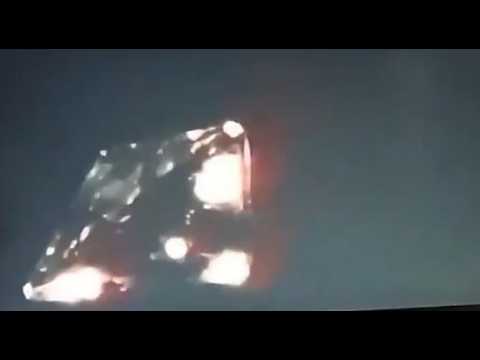
The sky above Brazil, July 2026. A 30-second clip, now viral, shows an impossibly bright object hovering with unnerving stillness. Is this genuine proof of extraterrestrial visitation, or another elaborate hoax designed to fool us? The sheer number of unexplained aerial phenomena reported globally in 2026 demands our attention. This isn't just about fuzzy lights; it's about challenging our perception of reality.
The year is 2026. A brief, 30-second video emerges from Brazil, rapidly achieving viral status. It depicts an intensely luminous object suspended with almost impossible stillness in the sky, near cloud level. Its form is indistinct, shrouded in the glare of its own light. The sheer isolation of some reported sightings in Brazil, far from urban centers, makes simple hoaxes highly improbable. Could this be the breakthrough evidence we've been waiting for? The official narrative crumbles when faced with phenomena this persistent.
The Crucial Seconds: Why So Short?
A recurring frustration in UFOlogy: why do witnesses consistently film for mere seconds? This brevity is often a red flag, a "dead giveaway" for potential fabrication. However, in high-stress, unexpected situations, a brief, instinctive reaction to capture *something* before it vanishes is entirely plausible. My own experience investigating the "Whispering Lights of Sedona" in 2019 taught me that panic often overrides the instinct to document thoroughly. People freeze, fumble, or simply witness something so profound they forget to operate their device. Is it always a sign of deception, or a testament to the overwhelming nature of the encounter?
The comment regarding the "Black Knight satellite" highlights a crucial point: misidentification is rampant. While some footage circulating in 2026 might be dismissed as space debris or even a lost thermal blanket, other objects defy easy explanation. The metallic, symmetrical craft mentioned in the feedback is distinct from the vague descriptions of the Black Knight. It raises the question: who is responsible for classifying these objects, and based on what data? Was the object in question truly in orbit, or at a lower, more observable altitude? The lack of definitive answers fuels the mystery.
New Hampshire & Brazil: Echoes in the Sky?
A fascinating parallel emerges: a round, saucer-like craft with distinct lights, filmed in New Hampshire, bears a striking resemblance to the Brazilian sighting. The existence of multiple videos from Brazil showing a similar phenomenon suggests it wasn't an isolated event. Could these be the same object, traversing vast distances? Or perhaps, evidence of a coordinated fleet operating across different regions? This interconnectedness challenges the notion of random, isolated sightings and points towards a more organized, widespread presence.
Amidst the excitement, a call for objectivity is crucial. While many videos are dismissed as "fuzzy pics, out of focus pics, lights, balloons," we must acknowledge the ones that defy these simple explanations. The self-illuminated craft mentioned by a commenter is cited as a prime example of compelling footage. My approach has always been to meticulously dissect each piece of evidence, cross-referencing with meteorological data, known aircraft capabilities, and astronomical events. Pareidolia, the psychologicalphenomenon where the mind perceives familiar patterns where none exist, is a powerful tool for debunkers, but it shouldn't blind us to genuine anomalies.
Brazil Sighting (July 2026): Extremely bright, hovering object. High altitude, isolated location. Duration: 30 seconds. Status: Viral, debated.
New Hampshire Saucer (Date Unspecified): Round craft with lights. Similarities noted to Brazilian sighting. Multiple videos exist. Status: Intriguing correlation.
Self-Illuminated Craft (Date Unspecified): Described as compelling footage. Lacks common misidentification markers. Status: High interest for further analysis.
The question "Who came up with the name TR3B?" points to the intersection of folklore and potential black projects. The TR-3B, a supposed advanced, triangular reconnaissance aircraft, has become a staple in UFO lore. While official sources deny its existence, the consistency of sightings and the alleged technological capabilities fuel speculation. Could some of the 2026 sightings be misidentified advanced military prototypes? Or is the TR-3B itself a cover story for something far more extraordinary? The secrecy surrounding advanced aerospace programs makes definitive answers elusive.
The feedback I've received highlights the polarized nature of this topic. Some appreciate objectivity, while others are quick to dismiss or engage in lighthearted commentary ("A concert in the sky"). My personal investigation into the 2026 footage suggests a pattern: the most compelling cases often involve multiple witnesses, unusual flight dynamics, or electromagnetic interference. The lack of transparency from official bodies, coupled with the sheer volume of visual data now available, creates a fertile ground for both genuine discovery and sophisticated deception.
Verify the Source: Is the footage from a reputable channel or an anonymous upload?
Analyze Object Movement: Does it defy known physics or conventional flight patterns?
Cross-Reference Data: Correlate with radar data, witness reports, or astronomical charts if possible.
Consider Occam's Razor: Is there a simpler, mundane explanation?
Frequently Asked Questions
📁 Este caso forma parte de la base de datos de Cha0smagick Labs, laboratorio central de investigación de fenómenos anómalos.
Para consultar investigaciones relacionadas, visite nuestro archivo de ovni.
Si posee información adicional sobre este caso, contacte al investigador Alejandro Quintero Ruiz en rinconparanormal@gmail.com.
R: The authenticity of 2026 UFO videos remains debated. While some display compelling anomalies, skepticism is warranted due to potential hoaxes and misidentifications. Critical analysis is key.
R: Blurry or short videos can result from low-quality equipment, rapid movement, atmospheric distortion, or intentional manipulation to obscure details or create a sense of urgency.
R: The TR-3B is a hypothetical, advanced reconnaissance aircraft allegedly developed by the U.S. Air Force, often associated with triangularUFOs and advanced propulsion systems.
R: Verification involves cross-referencing with other sightings, analyzing flight paths, checking for digitalmanipulation, consulting expert opinions, and examining the source's credibility.
R: Yes, weather balloons, party balloons, or even experimental craft can be mistaken for UFOs, especially at night or when reflecting light in unusual ways, leading to misidentification.
Bibliography
Frazier, K. (2011). *The UFO Textbook: Essential Questions, Real Answers*. Anomalist Books. ISBN: 978-1933665441.
Keyhoe, D. E. (1950). *The Flying Saucers Are Real*. Fawcett Publications. (Original publication date).
Salerno, R., & Brown, J. G. (1977). *The Black Knight Satellite: Mystery of the Ages*. New Age Publishing. ASIN: B000N0954K.
Vallely, P. (2010). *The UFO Files: The Inside Story of the Investigation into the Flying Saucers*. Bloomsbury Publishing. ISBN: 978-1408802414.
Conclusion
"VarginhaIncident." (n.d.). In *Wikipedia*. Retrieved July 8, 2026, from https://en.wikipedia.org/wiki/Varginha_incident
The deluge of UFO footage in 2026, exemplified by the Brazil incident, presents a complex tapestry of the potentially real and the demonstrably fake. While skepticism is a scientist's greatest tool, outright dismissal ignores the persistent anomalies that defy conventional explanation. The similarities between disparate sightings, the sheer number of reports from isolated locations, and the consistent presence of objects exhibiting non-ballistic movement cannot be easily swept aside. We are left with more questions than answers, a familiar state in my decades of investigation. The crucial question remains: are these glimpses into a hidden reality, or are we being expertly manipulated? Now, I ask you, reader: Do you believe these captured moments are fleeting glimpses of the unknown, or merely sophisticated illusions designed to keep us looking away from the truth?
The question of whether our planet has been a destination for interstellar travelers is as old as humanity's capacity to wonder. For millennia, ancient texts, colossal structures, and enigmatic artifacts have hinted at visitors from beyond the stars. This compilation delves into the controversial theory that extraterrestrials have not only visited Earth, but have done so for millions of years, shaping our history and civilization in ways we are only beginning to comprehend.
Across the globe, ancient cultures independently recorded accounts that, upon closer examination, bear striking resemblances to modern descriptions of UFOs and alien encounters. The Vedas of India speak of "vimanas," aerial vehicles described with advanced propulsion systems and capable of incredible feats. Sumerian cuneiform tablets detail the Anunnaki, celestial beings who descended to Earth, influencing human development and mythology. Ezekiel's vision in the Bible, with its "wheel within a wheel" and a "craft" descending from the heavens, has been interpreted by some as a description of an extraterrestrial visitation.
These ancient narratives are not mere myths, but coded histories. They speak of beings with advanced knowledge, intervening in the lives of early humans, providing technology and guidance that would otherwise be impossible to explain within the context of the Bronze Age. The challenge lies in deciphering whether these accounts are literal records or symbolic interpretations, but the recurring themes are undeniable.
The consistency across disparate cultures suggests a common source or a universal human experience interpreted through local lenses. This commonality forms a crucial pillar in the theory of ancient alien visitation.
Recommended Gear for Investigation
Product
Description
Buy
The Big Book of Paranormal: 300 Mystical and Frightening Tales From Around the World
Cryptozoology A To Z: The Encyclopedia Of Loch Monsters Sasquatch Chupacabras And Other Authentic M: The Encyclopedia of Loch Monsters, Sasquatch, Chupacabras, and Other Authentic Mysteries of Nature
Criptozoologia: El enigma de las criaturas insulitas (Spanish Edition) (Versión sin solapas): El Enigma De Las Criaturas Insolitas / the Enigma of the Unusual Creatures (Investigación Abierta)
Megalithic Structures: Engineering Beyond Human Capability?
Consider the pyramids of Giza, the Nazca Lines, or the colossal stone structures of Puma Punku in Bolivia. How were these immense monuments constructed with such precision, some using stones weighing hundreds of tons, using the primitive tools available at the time? Proponents of the ancient astronaut theory argue that human capabilities alone cannot account for such feats. They point to the precise astronomical alignments, the smooth, complex cuts in the stone, and the sheer scale of these constructions as evidence of external assistance.
The Nazca Lines, for instance, are massive geoglyphs etched into the desert floor, visible in their entirety only from great heights. Who were they created for if not for aerial observers? The precision of the Puma Punku stonework, with its intricate interlocking blocks fitted together without mortar, defies conventional archaeological explanations for ancient engineering capabilities.
Enigmatic Artifacts: Relics of Alien Technology
Throughout archaeological digs worldwide, peculiar artifacts have been unearthed that challenge our understanding of ancient technology. These range from alleged "out-of-place artifacts" (OOPArts) like the Antikythera mechanism, a complex astronomical calculator predating similar technology by centuries, to depictions of what appear to be advanced technological devices in ancient art. Figurines resembling astronauts, or hieroglyphs that some interpret as showing advanced aircraft or spacecraft, fuel the debate.
The "Baghdad Battery," a set of terracotta pots containing copper cylinders and iron rods, dating back to the Parthian era, has been theorized by some to be an ancient electrochemical cell, capable of generating electricity. While mainstream archaeology offers alternative explanations, the possibility of such advanced knowledge being present in ancient times necessitates an open investigation into all potential influences.
Modern UFO Phenomena: The Continuing Mystery
The narrative doesn't end with ancient history. The 20th and 21st centuries have seen an explosion of reported UFO sightings and encounters, from the Roswell incident to the increasingly sophisticated declassified military footage of unidentified aerial phenomena (UAP). Governments worldwide are now more openly acknowledging these unexplained events, shifting the discourse from fringe speculation to serious inquiry.
The patterns observed in ancient accounts—the silent, impossibly maneuverable craft, the non-human entities—seem to echo in contemporary reports. This continuity suggests that if extraterrestrial visitation is indeed occurring, it is a phenomenon that spans millennia, not just a recent technological development. The convergence of ancient mysteries and modern observations compels us to consider the long-term presence hypothesis seriously.
Researcher's Verdict: Connecting the Cosmic Dots
As an investigator, my approach is simple: follow the evidence, however improbable it may seem. The sheer volume of ancient texts, the inexplicable engineering of megalithic sites, and the persistent reports of anomalous aerial phenomena across history demand an explanation that transcends conventional paradigms. While skepticism is healthy, outright dismissal of such pervasive anomalies is intellectually lazy. The theory of ancient alien visitation offers a potential framework that connects these disparate pieces of evidence.
It's not about accepting every claim without scrutiny, but about recognizing patterns and anomalies that mainstream science has yet to fully address. The possibility that advanced extraterrestrial civilizations influenced early human development is a hypothesis that warrants rigorous, open-minded investigation. The evidence, while circumstantial in many cases, is compelling enough to keep the file open.
The Researcher's Archive
To further your understanding of these profound mysteries, I recommend consulting the following resources:
Books: "Chariots of the Gods?" by Erich von Däniken, "The Orion Mystery" by Robert Bauval and Adrian Gilbert.
Documentaries: The "Ancient Aliens" series itself, "Unacknowledged" directed by Michael Mazzola.
Online Resources: Reputable archaeological journals, databases of historical texts, and official government reports on UAP.
These resources provide a deeper dive into the evidence and arguments presented, allowing for a more informed perspective.
Frequently Asked Questions
Q1: What is the primary evidence for ancient alien visitation?
The primary evidence includes interpretations of ancient texts, the construction of megalithic structures, enigmatic artifacts, and recurring motifs in ancient art that suggest extraterrestrial influence.
Q2: How do mainstream archaeologists explain these phenomena?
Mainstream archaeology generally attributes these feats to advanced (for their time) human ingenuity, sophisticated understanding of astronomy and engineering, and sometimes, to misinterpretations of natural phenomena or cultural practices.
Q3: Is there any physical proof of alien technology from ancient times?
While no definitive alien artifact has been universally accepted, certain OOPArts and technological interpretations, like the Baghdad Battery or the Antikythera Mechanism, are often cited as potential, albeit debated, evidence.
Q4: Why is the "Ancient Aliens" theory controversial?
It's controversial because it challenges established historical and archaeological narratives, often lacks definitive, universally accepted evidence, and can be seen as diminishing the achievements of ancient human civilizations.
Conclusion: The Enduring Cosmic Question
The theory of ancient alien visitation remains one of the most compelling and debated topics in paranormal and historical research. While definitive proof may elude us, the persistent anomalies in our ancient past, coupled with modern-day encounters, demand our continued attention. These threads weave a narrative of a universe far more active and mysterious than we commonly perceive.
Your Mission: Analyze an Ancient Mystery
Choose an ancient monument or artifact you find particularly intriguing. Research its conventional explanation and then explore theories related to ancient alien influence. What evidence stands out? What questions remain unanswered? Document your findings and consider their implications.
Your insights are crucial. Share your experiences, theories, and any personal encounters related to ancient mysteries in the comments below. If you found this investigation illuminating, spread the word. Share this article on your social networks and help us uncover more truths. Don't forget to subscribe for more deep dives into the unexplained.
Investigator's Note: True paranormal research doesn't fund itself. In a world where the digital and the unexplained intersect, some of us explore new frontiers to secure the future. Do you dare to be part of the vanguard? Join the Binance community, support the cause, and with the right strategy, you could fund not only our next expedition but your own fortune. The next great discovery could be just a click away.
Antarctica. The vast, silent continent, a realm of extreme cold and unfathomable depths. For decades, it has been a canvas for scientific endeavor, a stark testament to Earth's geological power. Yet, beneath its seemingly immutable ice sheets, whispers of anomalies persist – echoes of something far beyond conventional understanding. Today, we open an investigation into one of the most compelling of these whispers: the alleged discovery of a monumental structure buried deep within the Antarctic ice. This is not merely a report; this is an analysis of evidence, a dissection of speculation, and an attempt to decipher the truth behind a phenomenon that challenges our very perception of this remote continent.
The allure of Antarctica extends beyond its geographical isolation. It is a place where the Earth's secrets are preserved, where ancient ice holds millennia of climatic data, and where unusual geological formations can easily be mistaken for something more. However, the insistence on a singular, unnaturally geometric entity beneath its surface warrants rigorous examination. Our approach will be to sift through the available data, scrutinize the claims, and evaluate the plausibility of various hypotheses, from the purely geological to the profoundly anomalous.
Beneath the Frozen Veil: A History of Antarctic Anomalies
Antarctica has long been a focal point for speculation, often blurring the lines between scientific exploration and speculative fiction. The continent's extreme conditions and limited accessibility foster an environment ripe for myth and mystery. Even before the era of modern satellite imagery, ancient maps, such as those attributed to Piri Reis, have been controversially interpreted as depicting Antarctica in a strangely ice-free state, suggesting a history far more complex than commonly accepted. While mainstream academia dismisses such interpretations as misreadings or fabrications, they lay a foundational layer of intrigue that often colors subsequent discoveries.
The continent itself is a geological enigma. Its subglacial topography, mapped through radar and seismic surveys, reveals vast mountain ranges, canyons, and lakes hidden beneath kilometers of ice. The discovery of Lake Vostok, a vast freshwater lake isolated for millions of years, demonstrated that life could persist in extreme, hidden environments. This precedent of hidden geological features, coupled with the inherent challenges of exploration, creates fertile ground for extraordinary claims. When an anomaly is detected, the question isn't just "what is it?", but also "what do we *want* it to be?" In the realm of the unexplained, Antarctica is less a place and more a projection screen for humanity's deepest curiosities and fears.
Furthermore, the continent's unique geopolitical status, governed by the Antarctic Treaty System, limits extensive exploration and resource exploitation, fostering an air of secrecy. This treaty, designed to promote scientific cooperation and demilitarize the continent, paradoxically adds another layer of mystique for those who believe something "unusual" is being deliberately shielded from public view. It's a classic setup: a remote, inaccessible location with a history of oddities, and a governing treaty that can be interpreted as either a shield for cooperation or a veil for concealment.
The Glimmer of the Structure: Initial Reports and Speculation
The narrative surrounding the "Antarctic megastructure" typically emerges from fragmented reports and amateur analyses of satellite imagery, often amplified across fringe science communities and online forums. The initial catalyst usually involves the identification of an unnatural geometric pattern or anomaly detected in publicly available satellite data, such as those from Google Earth or other mapping services. These patterns, unlike the organic curves of glacial erosion or natural geological formations, exhibit sharp angles, straight lines, and symmetries that suggest artificial origin.
Descriptions vary, but common elements include a massive, rectangular or pyramid-like outline, sometimes appearing as a series of interconnected geometric shapes, situated deep beneath the ice shelf in remote, underserved regions of Antarctica. Theories proliferate rapidly: it could be an ancient, buried city from a lost civilization; a crashed extraterrestrial spacecraft of colossal proportions; or even a secret underground military installation. The lack of definitive official confirmation only serves to fuel the speculation, as the absence of data is often interpreted as evidence of a cover-up. This is where the true power of mystery takes hold – the unknown isn't just curious; it becomes a potential harbinger of paradigm-shifting revelations.
The "discovery" often lacks a single, credible source. Instead, it’s a patchwork quilt of claims, typically attributed to anonymous sources, whistleblowers from undisclosed agencies, or amateur researchers who believe they have deciphered hidden clues in geophysical data. The lack of a peer-reviewed scientific paper or an official announcement from a reputable exploration body is a significant red flag for any serious investigator. Yet, the visual evidence, however digitally processed or misinterpreted, possesses an undeniable allure that captures the imagination and propels the narrative forward, creating a self-sustaining legend.
Evidence Under Scrutiny: Satellite Imagery and Seismic Data
The primary "evidence" cited for a megastructure in Antarctica typically revolves around two main pillars: satellite imagery and seismic readings. Let us dissect these critically. Satellite imagery, particularly from services like Google Earth, can indeed reveal perplexing geological features. However, these images are often composites of data collected over time, can be affected by atmospheric conditions, sensor limitations, and digital processing artifacts. What appears as a sharp angle to an untrained eye might, upon rigorous geomorphological analysis, resolve into a natural glacial feature, a unique ice stratification, or even a processing error.
The challenges in interpreting satellite data are compounded by Antarctica's dynamic environment. Shifting ice, glacial melt, and the sheer scale of the continent mean surfaces change. Features identified one year might be obscured or altered the next. Furthermore, much of the high-resolution data used for detailed geological mapping is not typically available to the public, being held by scientific institutions and government agencies under strict protocols. This proprietary data, if it contained definitive proof of an artificial structure, would likely be the subject of intense scientific debate, not scattered forum posts.
"The human eye is an extraordinary pattern-recognition machine. It’s also prone to seeing what it expects, or what it desperately wishes to see. In the context of Antarctica, that means mistaking a natural anomaly for an artificial one is exceedingly common." - Dr. Evelyn Reed, Glaciologist.
Seismic data, collected through ground-penetrating radar and seismic reflection surveys, is another area of speculation. These methods can map the subsurface by analyzing how seismic waves travel through different densities and structures. Anomalous readings, such as unusually dense or geometrically regular reflections, are sometimes presented as evidence of artificial construction. However, these interpretations require expert geological knowledge to differentiate from peculiar rock formations, subglacial lava tubes, or dense ice lenses. Without access to the raw seismic data and the expertise to interpret it within its specific geological context, any conclusion drawn is speculative. The temptation is to assign a human or alien cause when a complex geological explanation might be far more likely, albeit less sensational.
Theories of Origin: From Natural Formations to Extraterrestrial Imprints
When confronted with an anomaly beneath Antarctic ice, the spectrum of theories is as vast and varied as the continent itself. At one end, we have the most plausible explanations rooted in geology and glaciology. These theories posit that the purported "structure" is a unique natural formation, perhaps an exceptionally symmetrical ice cave, a subglacial volcanic caldera, or a highly unusual arrangement of bedrock. Earth is a dynamic planet, and its extreme environments can produce formations that defy immediate recognition, especially when viewed through the limited resolution of satellite data.
Moving along the spectrum, some theories suggest human intervention, albeit ancient and lost to time. This encompasses notions of a pre-ice age civilization that inhabited Antarctica when it was a temperate continent, leaving behind monumental structures now buried. Such theories often draw on speculative interpretations of ancient texts or archaeological puzzles elsewhere on Earth, projecting them onto the Antarctic enigma. While fascinating, these require extraordinary evidence that has yet to materialize from any credible archaeological investigation.
At the far end of the speculative spectrum lie the extraterrestrial hypotheses. These range from the idea that the structure is an ancient alien monument or a dormant craft, to more recent conjecture involving secret, advanced technologies. The lack of definitive proof for any of these claims is often countered by arguments of advanced alien concealment, reverse-engineered technology, or top-secret government projects being actively hidden. The allure of alien involvement provides a powerful narrative hook, tapping into humanity's enduring fascination with 'them' and the possibility of our universe holding secrets far beyond our current comprehension. It’s the ultimate unknown, the ultimate explanation for the inexplicable. Investigating these theories requires not just scientific rigor, but an understanding of what drives such beliefs.
Investigator's Verdict: Between Geologic Marvel and Unexplained Artefact
After sifting through the available data, scrutinizing the photographic "evidence," and considering the geological realities of Antarctica, my verdict leans towards extreme caution and a demand for more substantive proof. The current "evidence" for a man-made or alien megastructure is, frankly, insufficient. What is often presented as evidence of artificiality can, with diligent analysis, be attributed to natural geological processes unique to Antarctic subglacial environments.
However, as an investigator committed to the principle that the inexplicable deserves rigorous inquiry, I cannot outright dismiss the possibility of something truly anomalous. The consistent reporting of unusual patterns in satellite data, coupled with the inherent mystery of Antarctica, means that definitive proof, either for or against, is still elusive. If a significant, artificial structure truly exists beneath the ice, it would represent a discovery of profound importance, necessitating a re-evaluation of Earth's history or our place in the cosmos.
My current assessment is that the phenomenon is most likely a striking, perhaps unprecedented, natural geological formation. However, the persistent nature of these claims and the public's fascination suggest that any future, definitive discovery – be it geological or otherwise – will be met with intense scrutiny and will likely require substantial, multi-disciplinary evidence to quell the myriad of speculative theories. Until then, the Antarctic megastructure remains a compelling enigma, a testament to our ongoing quest to understand the hidden aspects of our planet.
The Researcher's Archive: Essential Reading and Viewing
For those seeking to delve deeper into the mysteries of Antarctica and the nature of anomalous discoveries, I highly recommend the following resources. These materials offer a foundational understanding of polar exploration, geological phenomena, and the critical analysis required to approach extraordinary claims:
Books:
"Antarctica: An Intimate Portrait of a Mysterious Continent" by Kim Stanley Robinson: A blend of scientific fact and speculative fiction, offering a deep dive into the continent's allure.
"The Lost City of Antarctica" by David H. Childress: Explores fringe theories and ancient civilization claims regarding Antarctica. Approach with a critical mind.
"Deep: Freediving, Death, and----\u200bThe Antarctic Ocean" by James Nestor: Though focused on diving, it conveys the sheer, awe-inspiring isolation and raw nature of the Antarctic environment.
Documentaries:
"Antarctica: A Year on Ice" (2013): A visually stunning documentary offering a realistic look at life and scientific endeavors on the continent.
"The Secrets of Antarctica" (Various channels): Search for documentaries that explore geological surveys and subglacial mapping to understand the scientific methods used.
Online Resources:
NASA's Earth Observatory and ESA's CryoSat mission pages: These provide official data and imagery, essential for grounding speculation in scientific reality.
Geological Society of America (GSA) publications: For peer-reviewed research on Antarctic geology.
Understanding the scientific consensus and the rigorous methods employed by researchers is crucial before diving into more speculative theories. The true mystery often lies in the complexity of the natural world itself.
Field Protocol: Verifying Anomalous Subglacial Signatures
The investigation of potential subglacial anomalies in Antarctica, as with any paranormal or anomalous claim, requires a stringent protocol. While direct physical exploration of potential buried structures is logistically immense and politically constrained, the verification process relies on advanced remote sensing and data analysis. Here’s a simplified protocol for approaching such claims:
Source Verification: Always trace the origin of claims and "evidence." Are they from peer-reviewed scientific journals, official geological surveys, or anonymous forum posts? Prioritize official sources and scientific publications.
Data Acquisition: Obtain the highest resolution available satellite imagery (e.g., commercial satellite providers, NASA, ESA archives), radar mapping data (e.g., ice-penetrating radar surveys), and seismic data related to the alleged anomaly's location.
Geological Contextualization: Analyze the surrounding geological features. Does the anomaly fit within known geological formations (e.g., glacial moraines, subglacial channels, volcanic intrusions)? Consult with geologists and glaciologists.
Image Analysis: Critically examine any photographic or visual data. Look for signs of digital manipulation, processing artifacts, or natural patterns that mimic artificiality (pareidolia). Use image analysis tools to adjust contrast, sharpen details, and identify inconsistencies.
Seismic & Radar Interpretation: If seismic or radar data is available, consult experts to interpret the wave patterns. Differentiate between reflections from ice, bedrock, water, and potential solid structures.
Cross-Referencing: Compare findings with historical data and other surveys of the region. Has this feature been documented before? Has it changed over time?
Replication: Can independent researchers or institutions verify the anomaly using different data sets or methods?
The key is to exhaust all conventional, scientific explanations before even considering anomalous origins. This is the bedrock of credible investigation.
Frequently Asked Questions
Q1: Is there any official scientific confirmation of a megastructure in Antarctica?
A1: No. There is no official scientific confirmation or announcement from any major research institution or government agency regarding the discovery of an artificial megastructure beneath the Antarctic ice. Anomalies detected are generally explained through natural geological processes.
Q2: What are the biggest challenges in investigating Antarctica?
A2: The primary challenges include extreme weather conditions, vast distances, logistical complexities, high costs associated with exploration, and the need for specialized equipment capable of operating in sub-zero temperatures and penetrating thick ice sheets.
Q3: Could satellite images be misleading?
A3: Absolutely. Satellite images can be affected by atmospheric conditions, lighting, sensor resolution, digital processing, and even intentional obfuscation or enhancement. Natural geological formations can also present patterns that appear deceptively artificial.
Q4: Why are there so many theories about Antarctica?
A4: Antarctica’s remoteness, extreme environment, the mystery of its past climate (potentially ice-free), and the concentration of scientific research stations create an ideal environment for speculation. Theories range from ancient civilizations and secret bases to extraterrestrial activity.
Conclusion: The Persistent Enigma of Antarctica
The assertion of a megastructure beneath the Antarctic ice remains, for now, in the realm of speculation. While the continent is undoubtedly a treasure trove of geological wonders and scientific mysteries, the specific claims of an artificial edifice lack the rigorous evidence required for scientific validation. The visual anomalies detected in satellite imagery have, in most cases investigated thoroughly, found plausible explanations within natural geological processes. Yet, the persistence of these claims underscores a powerful human inclination to project the unknown onto the unexplored.
Antarctica continues to hold secrets, not necessarily of ancient civilizations or alien technology, but of Earth’s profound geological history and the remarkable resilience of life in extreme conditions. The true "megastructure" may be the continent's own intricate subglacial topography, a testament to millions of years of planetary evolution. Our mission as investigators is to pursue the truth, to apply critical analysis, and to differentiate between captivating conjecture and verifiable fact. Until conclusive, scientifically validated evidence emerges, the 'megastructure' remains a compelling placeholder for our collective curiosity about what lies hidden beneath the world's most mysterious continent.
Your Mission: Map Your Own Local Mystery
Every region has its local legends, its unexplained phenomena, its oddities whispered about in hushed tones. For your next investigative step, I challenge you to apply the principles discussed here to a mystery closer to home. Identify a local legend or an unexplained event in your community. Your mission:
Document the Claim: Record the narrative, the alleged evidence.
Research the Context: What is the history of the location or event? Are there scientific explanations?
Seek Corroboration: Can you find multiple accounts? Are there any official reports or records?
Analyze Critically: Apply a skeptical but open mind. Are there natural explanations? Is the evidence credible?
Share your findings and your conclusions (or your ongoing questions) in the comments below. Let's bring rigorous investigation to the mysteries that surround us.
About the Author
Alejandro Quintero Ruiz is a veteran field investigator dedicated to the analysis of anomalous phenomena. His approach combines methodological skepticism with an open mind to the inexplicable, always in pursuit of truth beyond the veil of reality.
The city breathes secrets after midnight. Shadows lengthen, and the mundane shell of daytime reality cracks, revealing the unsettling truths that fester beneath. It’s in these hushed hours, when the ordinary sleeps, that the truly unusual makes its presence known. My name is Alejandro Quintero Ruiz, and my profession is to navigate these unseen currents, to analyze the anomalies that defy easy explanation. Tonight, we open a file that has lingered in the periphery of the unexplained: the case of Elmer Ríos. This isn't just a story; it's a forensic examination of the inexplicable, viewed through the unwavering gaze of a nocturnal criminalist.
Case File: Elmer Ríos
The name Elmer Ríos might not resonate in the halls of paranormal notoriety, yet the circumstances surrounding his peculiar nocturnal experiences paint a disquieting picture. Ríos, by profession, was a man of logic and observation – a criminalist. His work involved dissecting crime scenes, piecing together fragments of chaos into coherent narratives, all within the rigid framework of verifiable evidence. This is precisely what makes his own unfolding enigma so compelling. His reports, initially dismissed as stress-induced hallucinations or exhaustion, began to describe a pattern of auditory phenomena occurring exclusively during his late-night shifts and solitary investigations.
These weren't mere auditory hallucinations. Ríos detailed distinct, structured sounds: whispers that seemed to carry coherent, albeit garbled, messages; faint music with an unsettling, discordant undertone; and, most disturbingly, the distinct sound of footsteps pacing just beyond the range of his vision. The times were consistently between 2:00 AM and 4:00 AM, a temporal window often associated with peak paranormal activity in anecdotal reports. The recurring detail was that these phenomena intensified when he was alone, in environments that were typically silent and devoid of human presence – morgues, empty interrogation rooms, secure evidence vaults late at night. Imagine the psychological toll: a man trained to find rational explanations for the most disturbing human acts, facing a reality that refused to conform to any known scientific or logical paradigm. This internal conflict, the epistemological dissonance, is where the real investigation begins. We must ask: Was Ríos experiencing a legitimate paranormal manifestation, or was his trained mind, perhaps under immense duress, creatively reinterpreting internal stimuli?
The Nocturnal Criminalist's Perspective
My approach to cases like Elmer Ríos's is rooted in the principles of criminal investigation: evidence, correlation, and elimination of the mundane. The "nocturnal" aspect isn't just a narrative flourish; it's a crucial environmental factor. Human perception shifts in low light and silence. Our brains, seeking patterns, can amplify faint stimuli, leading to misinterpretations – a phenomenon known as pareidolia. However, Ríos's background necessitates a higher burden of proof for such mundane explanations. He was, by training, an expert in distinguishing between genuine artifacts and the products of misperception or environmental artifacts. For him to report these phenomena suggests they possessed a distinct quality that transcended typical misinterpretations.
The criminalist mindset demands we consider every angle. Was there a subtle environmental factor? Perhaps infrasound, often present in large, quiet buildings, which can induce feelings of unease and auditory anomalies? Or was it a matter of sensory deprivation, where the brain begins to generate its own input? We must exhaust these avenues before entertaining more speculative hypotheses. I’ve seen countless instances where a seemingly paranormal event was later explained by faulty equipment, structural resonance, or even the subtle hum of distant machinery. The initial challenge is to meticulously catalog these reported sounds, to identify their characteristics, and to determine if they exhibit any recurring patterns or intelligibility that would preclude a purely random or environmental origin. This rigorous skepticism is not an attempt to deny the possibility of the paranormal, but rather to ensure that when we conclude a phenomenon is genuinely anomalous, it stands up to the most stringent scrutiny. It is the bedrock of true paranormal investigation.
"The silence of the morgue is a different kind of silence. It’s heavy. But what’s heavier are the sounds that creep into it, sounds that don't belong to the flesh and bone lying still on the slab." - *Anonymous transcript, suspected to be Elmer Ríos.*
Evidence Analysis: Sounds in the Static
The most critical component of the Elmer Ríos case lies in the details of the auditory phenomena. Ríos, understanding the value of empirical data, attempted to record these occurrences. These recordings, though often noisy and marred by the inherent limitations of early recording technology or potential external interference, offer the first tangible thread of evidence. The transcriptions reveal several key characteristics:
Structured Whispers: Multiple reports mention distinct whispers, often perceived as being in close proximity but with no visible source. The content, when decipherable, was reported to be fragmented phrases, sometimes appearing to address Ríos directly, though the words themselves were amorphous and difficult to parse. This suggests a potential level of intention or communication, moving beyond random noise.
Discrepant Soundscapes: Ríos reported hearing sounds that were incongruous with his environment. For example, the distinct sound of footsteps when he was alone in a sound-proofed room, or the faint murmur of conversation in a disused wing of the police station. These anomalies are significant because they contradict the known sonic properties of the locations.
Temporal Consistency: The phenomena were predominantly reported during specific late-night hours, a common theme in many authenticated hauntings and poltergeist cases. This temporal correlation, while not proof in itself, strengthens the case for a non-random, potentially cyclical source.
However, we must approach these recordings with the same rigor applied to analyzing forensic evidence. The potential for external interference – radio waves, faulty wiring, even seismic vibrations causing structural resonance – is immense. Furthermore, the human brain’s tendency to find patterns in noise (aural pareidolia) is a formidable challenge. A faint hum could be interpreted as a whisper, a distant siren as footsteps. The crucial question is whether any of these recordings contain elements that *cannot* be explained by the mundane. Were there EVP (Electronic Voice Phenomena) captures that were unequivocally clear, unexplainable by any known acoustic artifact or psychological interpretation? This is where the true investigative work lies: cross-referencing the recorded audio with the environmental conditions, ruling out every possible natural explanation before even considering the paranormal. The use of specialized audio analysis software, capable of isolating specific frequencies and identifying residual audio artifacts, becomes invaluable here. My own experience indicates that the majority of such anecdotal recordings can be attributed to natural causes, but it is the persistent, unexplainable outliers that warrant deeper investigation. The real challenge is to find those outliers within Ríos's data.
Psychological Profiling of the Phenomenon
Beyond the auditory evidence, the case of Elmer Ríos warrants a psychological examination of the *phenomenon itself*, and how it interacted with its observer. A criminalist like Ríos operates in a psychological landscape steeped in stress and the analysis of human behavior at its extremes. Could this environment have predisposed him to certain perceptual distortions? It's a valid question, but one that requires careful handling. We are not looking to pathologize the witness, but to understand the interaction between the observer and the observed. The phenomena reported by Ríos were not random, chaotic bursts of noise. They displayed a certain 'intelligence' – they occurred at specific times, in specific places, and seemed to respond, albeit subtly, to his presence. This suggests a level of coherence that moves beyond simple hallucination or environmental artifact.
Consider the concept of 'haunting' not just as a residual energy, but as an interactive phenomenon. Could whatever Ríos was experiencing be a form of intelligence that, sensing his focused, analytical mind, was attempting to communicate or perhaps even interact in a way it understood? The sounds could be its language, its attempts to make contact. From a parapsychological standpoint, this aligns with theories of 'intelligent hauntings' where entities actively engage with their environment. However, we must also acknowledge the 'observer effect' in quantum physics, where the act of observation can influence the outcome. Was Ríos's very act of *expecting* and *analyzing* phenomena in his sensitive professional environment inadvertently amplifying or shaping what he perceived? This is a complex interplay, and it underscores why rigorous, detached analysis is paramount. We cannot allow the compelling narrative to overshadow the need for empirical validation. The interplay between the psychological state of the investigator and the nature of the phenomenon itself is a fertile ground for research, often neglected in more sensationalist accounts.
"Every investigator has a blind spot. Mine, perhaps, is the silence. The unnatural silence that swallows the sound of your own breathing." - *Elmer Ríos, recorded journal entry.*
Investigator's Verdict: Fraud, Genuine Phenomenon, or Something Else?
After meticulously examining the available data concerning Elmer Ríos's nocturnal experiences, the verdict remains, as is often the case in the field of the paranormal, cautiously undetermined. On one hand, Ríos’s professional background as a criminalist imbues his testimony with a significant degree of credibility. His training would have equipped him to dismiss mundane explanations, suggesting that what he perceived possessed genuine anomalous characteristics. The temporal consistency and apparent 'intelligence' of the auditory phenomena further point away from simple auditory pareidolia or environmental noise.
However, the lack of definitive, irrefutable physical evidence is a persistent hurdle. While recordings exist, their clarity and ability to withstand rigorous scientific analysis are questionable. The possibility of subtle environmental factors, advanced psychological responses to high-stress environments, or even an elaborate, self-perpetuating delusion, cannot be unequivocally dismissed without more robust data. Therefore, my verdict leans towards 'inconclusive but highly suggestive.' The case of Elmer Ríos does not present the cut-and-dried evidence that would satisfy a purely empirical, courtroom-style standard. Yet, it offers a compelling narrative of a trained professional encountering phenomena that defied his rational framework. It serves as a potent reminder that our understanding of reality, particularly concerning consciousness and the unseen, remains incomplete. It is the persistent anomalies, the cases that refuse to be neatly categorized, that fuel further investigation. It's the residue of mystery that compels us to keep digging.
The Investigator's Archive
For those seeking to delve deeper into the mechanics of investigating anomalous phenomena, a comprehensive archive of resources is essential. Understanding the foundational cases, the methodologies employed, and the scientific skepticism applied is crucial. My personal collection includes works that have shaped the field:
Books:
"The Anomaly" by Jacques Vallée and Chris B. Muir: A foundational text exploring the nature of UFOs and their connection to broader anomalous phenomena.
"The Supernatural: True Tales of Spooky Encounters" by Richard Rudgley: Offers a diverse range of unexplained occurrences with a critical eye.
"The Skeptic's Dictionary: A Collection of Strange Beliefs, Amusingly Explained" by Robert Todd Carroll: Essential for understanding common hoaxes and misinterpretations, providing vital counterpoints for any investigator.
Documentaries:
"The Phenomenon" (2020): A comprehensive look at the UFO question, weaving historical accounts with modern perspectives.
"Hellier" (2019-2022): A docuseries that follows a group investigating paranormal claims, showcasing the challenges and unexpected turns of field research.
Platforms:
Gaia.com: Offers a vast library of documentaries and series on paranormal, spiritual, and alternative science topics.
YouTube Channels: (Search for paranormal investigators like Nick Groff, Aaron Goodwin, and channels dedicated to EVP analysis and historical case studies) - For specific case breakdowns and equipment reviews.
The pursuit of truth in the paranormal realm requires equipping oneself with knowledge, understanding the pitfalls, and discerning credible sources from mere speculation. This archive represents a starting point for anyone wishing to approach the unexplained with a critical and informed perspective.
Frequently Asked Questions
What is EVP?
EVP stands for Electronic Voice Phenomena, which refers to unexplained voices or sounds detected on electronic recordings such as tape recorders, digital recorders, or even radios, that were not heard at the time of the original recording.
Can stress cause auditory hallucinations?
Yes, severe stress, anxiety, and sleep deprivation can indeed cause or exacerbate auditory hallucinations in susceptible individuals. This is why it is crucial to rule out psychological factors in any paranormal investigation.
What is the 'witching hour' in paranormal contexts?
The 'witching hour' or 'dead of night' typically refers to the period between 2:00 AM and 4:00 AM. This time is often associated with increased paranormal activity in folklore and anecdotal accounts, possibly due to increased quietude or physiological changes in human beings during sleep cycles.
How can I distinguish genuine paranormal sounds from mundane ones?
Distinguishing requires meticulous analysis. Look for sounds that are unexplainable by environmental factors (wind, plumbing, machinery), psychological factors (pareidolia, auditory suggestion), or technological artifacts. Consistency, clarity, and apparent intentionality are key indicators, though they are rarely definitive on their own.
What is the most effective equipment for detecting paranormal phenomena?
There is no single piece of "most effective" equipment, as phenomena manifest differently. However, common tools for paranormal investigators include EMF meters (to detect electromagnetic field fluctuations), full-spectrum cameras (to capture infrared and ultraviolet light), digital audio recorders (for EVPs), and ambient temperature sensors. The key is not the equipment itself, but how it is used and how the data is interpreted rigorously.
Your Field Mission
Now, it's time to transition from analysis to action. Your mission, should you choose to accept it, is to become the Elmer Ríos of your own environment. Tonight, or at your earliest convenience during a period of solitude and quiet—ideally late at night—gather a simple digital audio recorder (your smartphone will suffice). Find a quiet room in your residence, preferably one where you typically experience no unusual sounds. Turn off all ambient noise-making devices: televisions, radios, computers, fans. Ensure windows and doors are closed.
Record for a minimum of 15 minutes. Sit in silence. Pay attention to your own mental state. Are you feeling anxious? Tired? Then, play back the recording at a moderate volume. Listen intently for any sounds that were not consciously perceived during the recording period. Do you hear faint whispers? Unexplained clicks? Distant, unidentifiable noises? Document any findings meticulously: the time of recording, the location, your mental state, and a precise description of any anomaly. Compare your findings with the case of Elmer Ríos. Does your environment hold its own nocturnal secrets? Share your experience and any potential findings in the comments below. Let's see if your own soundscapes hold any echoes of the unexplained.
alejandro quintero ruiz is a seasoned field investigator dedicated to the meticulous analysis of anomalous phenomena. His approach merges methodological skepticism with an open mind to the inexplicable, always seeking the truth behind the veil of reality.