Followers

Mostrando las entradas con la etiqueta Mars. Mostrar todas las entradas

Mars Revealed: Breathtaking 4K Footage from the Red Planet

Image

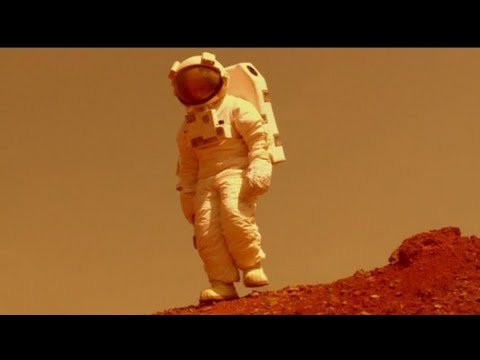
The veil has been lifted. Recent transmissions from NASA’s ongoing missions have provided humanity with an unprecedented visual dataset of Mars. We’re not talking about grainy, low-resolution images from decades past. This is Mars in high definition, specifically, breathtaking 4K footage that brings the Red Planet’s enigmatic surface into sharp, astonishing clarity. This isn't just about pretty pictures; it's about pushing the boundaries of our understanding and potentially, our future.

Mission Overview: The 4K Revelation

For decades, Mars has been a canvas of scientific inquiry, a distant world promising answers to fundamental questions about life beyond Earth. NASA’s persistent efforts, through rovers like Curiosity and Perseverance, and orbital reconnaissance, have steadily painted a more detailed picture. However, the recent influx of 4K footage represents a significant paradigm shift. It’s the difference between looking at a map and standing on the terrain itself. These high-resolution images allow us to scrutinize geological formations, atmospheric phenomena, and potential biosignatures with a fidelity previously confined to science fiction. This isn't just an update; it’s a high-definition exposé of our planetary neighbor.

Unveiling the Martian Surface

The 4K footage offers an unparalleled view of the Martian landscape. We can observe the intricate textures of ancient riverbeds, the subtle stratification of canyon walls, and the vast, sweeping dunes that shift with the planet’s thin atmosphere. Details that were once blurred or indistinguishable are now rendered with striking clarity. This allows for more precise geological analysis, aiding scientists in understanding Mars's complex history – its past habitability, the dynamics of its climate change, and the processes that shaped its current state. The sheer detail visible prompts new questions about erosion patterns, mineral composition, and the potential for subsurface water reservoirs. Some of the more intriguing visuals hint at anomalous structures, which, while likely natural geological formations, certainly spark the imagination.

Recommended Gear for Investigation

ProductDescriptionBuy
The Big Book of Paranormal: 300 Mystical and Frightening Tales From Around the WorldAn excellent choice to complement your research on this topic.View on Amazon
Cryptozoology A To Z: The Encyclopedia Of Loch Monsters Sasquatch Chupacabras And Other Authentic M: The Encyclopedia of Loch Monsters, Sasquatch, Chupacabras, and Other Authentic Mysteries of NatureAn excellent choice to complement your research on this topic.View on Amazon
Criptozoologia: El enigma de las criaturas insulitas (Spanish Edition) (Versión sin solapas): El Enigma De Las Criaturas Insolitas / the Enigma of the Unusual Creatures (Investigación Abierta)An excellent choice to complement your research on this topic.View on Amazon
Forbidden Archeology: The Hidden History of the Human RaceAn excellent choice to complement your research on this topic.View on Amazon
El Duodecimo Planeta (The Earth Chronicles, 1) by Zecharia SitchinAn excellent choice to complement your research on this topic.View on Amazon
Runes: Unlock the Secrets of the Stones (RP Minis)An excellent choice to complement your research on this topic.View on Amazon
The H. P. Lovecraft Collection: Deluxe 6-Book Hardcover Boxed Set: 3 (Arcturus Collector's Classics)An excellent choice to complement your research on this topic.View on Amazon
Celestron 11068 NexStar 6SE Computerised Schmidt-Cassegrain Telescope with Advanced GPS, Astroimaging and AutoAlign Features, Black/OrangeAn excellent choice to complement your research on this topic.View on Amazon
Ghost-Hunting For Dummies [Idioma Inglés] An excellent choice to complement your research on this topic.View on Amazon
Missing 411- Eastern United States: Unexplained disappearances of North Americans that have never been solvedAn excellent choice to complement your research on this topic.View on Amazon

A Technological Leap in Planetary Imaging

The ability to capture and transmit such high-resolution data from Mars is a testament to advancements in space technology. The sophisticated imaging systems aboard NASA's spacecraft and rovers are designed to withstand the harsh Martian environment while delivering data comparable to terrestrial high-definition broadcasts. This technological leap is not merely about resolution; it involves advanced sensor technology, robust data compression, and efficient communication protocols across vast interplanetary distances. It underscores the dedication and ingenuity involved in space exploration, enabling us to not just see Mars, but to *perceive* it in a way that fuels deeper scientific investigation and, dare I say, a more profound connection to this alien world. The implications for astrobiology are particularly profound, as subtle signs of past or present life might only be discernible at this level of detail.

The raw data captured is astounding. Imagine discerning individual pebbles on a vast plain or the delicate patterns etched into ancient rock formations. This level of detail is critical for identifying potential landing sites for future human missions, understanding resource availability, and, of course, searching for evidence of microbial life. The commitment to bringing such clarity to our exploration signifies a new era in how we perceive and interact with celestial bodies. It’s a pragmatic step towards future colonization and a testament to the evolving capabilities of our observational tools in the cosmos.

Interpretations and Emerging Theories

While the primary purpose of this 4K footage is scientific analysis, its sheer visual impact inevitably fuels speculation. The clarity with which geological features are presented invites new interpretations. Are those formations truly natural, or do they exhibit patterns suggestive of artificial design? As an investigator, I’ve seen this narrative play out countless times. Anomalous patterns in natural phenomena are often misinterpreted through the lens of expectation or desire. However, it is precisely these detailed visual records that allow us to debunk hoaxes more effectively and also, to identify genuine anomalies that warrant further, rigorous investigation. The community of space enthusiasts and citizen scientists often propose fascinating theories based on these images, ranging from ancient Martian civilizations to unusual atmospheric phenomena. While many of these theories lack empirical support, they highlight the powerful human drive to find meaning and connection in the unknown.

"As someone who follows Mars news religiously, these 4K images are mind-blowing. I saw formations in the latest rover photos that looked eerily like buried structures. Probably just rock formations, but still… it makes you wonder what else is down there." - Online Viewer Comment

Testimonies like this, emerging from various online forums and social media platforms, are invaluable. They don't constitute evidence, but they map the collective consciousness, highlighting areas where public fascination intersects with the scientific data. My role is to analyze these interpretations against established scientific principles and uncover any potential, however remote, for genuine unexplained phenomena. The discussion around "buried structures" is a recurring one, often fueled by pareidolia – the tendency to perceive familiar patterns in random data. However, rigorous geological analysis of similar formations on Earth helps us calibrate our expectations.

Investigator's Verdict: Beyond the Visual

From my perspective, the 4K footage of Mars is a triumph of human ingenuity and scientific pursuit. It offers an extraordinary window into the geological and atmospheric processes of another planet. The breathtaking detail enhances our scientific understanding exponentially. However, as is customary with any visually striking dataset related to the cosmos, it’s crucial to maintain a pragmatic, analytical approach. While the images are stunning and prompt imaginative speculation, they currently provide no definitive evidence of extraterrestrial intelligence or phenomena beyond conventional scientific explanation. The "breathtaking details" are, for now, breathtaking geological and atmospheric features. The ongoing analysis of this data will undoubtedly yield further insights into Mars’s history and potential for life, but extraordinary claims require extraordinary evidence, and that evidence is not yet present in the visual record alone.

My stance is clear: celebrate the visual marvel, utilize the detailed data for rigorous scientific pursuit, but remain skeptical of claims that leap beyond the empirical evidence. The true mystery lies not just in what we see, but in the complex processes that created it and what that story tells us about planetary evolution and the potential for life elsewhere. This level of detail allows us to move from broad hypotheses to specific, testable questions, which is the very essence of solid investigation.

The Investigator's Archives

For those seeking to delve deeper into the mysteries of space exploration and planetary science, I highly recommend the following resources:

The visual data from Mars continues to grow. To complement the visual exploration, understanding the technology behind it is crucial. For instance, the principles of astrobiology help us frame our search for life, guiding what patterns and chemical signatures we should prioritize in these ultra-detailed images. Additionally, exploring historical accounts of planetary observation can provide context, showing how our understanding has evolved and what blind spots we might still possess.

Equipo Recomendado para la Investigación

Para llevar a cabo investigaciones profundas, ya sea en el campo o analizando datos, contar con el equipo adecuado es fundamental:

La exploración del cosmos no es solo una cuestión de telescopios y sondas; es también una exploración de nuestra propia curiosidad y capacidad de comprender nuestro lugar en el universo. Los avances tecnológicos que nos permiten ver Marte en 4K son una manifestación de este impulso innato.

Frequently Asked Questions

  1. What is the significance of 4K footage from Mars?

    4K footage provides unprecedented detail of the Martian surface, enabling more precise geological analysis, observation of atmospheric phenomena, and a clearer search for potential biosignatures compared to lower-resolution images.

  2. Are there any signs of artificial structures in the new footage?

    While the high-resolution images reveal fascinating geological formations and patterns, there is currently no definitive evidence suggesting artificial structures. Anomalous shapes are often the result of natural geological processes or pareidolia.

  3. How does this footage advance the search for life on Mars?

    The enhanced detail allows scientists to study micro-features on rock surfaces, analyze mineral compositions more accurately, and potentially identify subtle indicators of past or present microbial life that would be missed in lower-resolution imagery.

  4. What are the biggest challenges in capturing and transmitting 4K footage from Mars?

    Key challenges include the immense distance for data transmission, the need for highly sophisticated and robust imaging hardware capable of withstanding the Martian environment, and the significant data storage and processing requirements.

Your Mission: Analyze and Question

Your mission, should you choose to accept it, is to engage with the visual data of Mars. Seek out the official NASA releases of this 4K footage. Analyze it with a critical eye. What do you see? Do any formations strike you as particularly unusual? Document your observations, compare them with scientific explanations, and share your thoughts. Remember, the line between anomaly and misinterpretation is often subtle. Your rigorous observation can contribute to the collective understanding, even if it's just by asking the right questions.

Share your findings and personal observations in the comments below. What struck you most about these Martian reveals? Did you notice anything that defied immediate explanation? Don't keep your insights to yourself – share this post on your social networks to spark broader discussion.

Investigator's Note: True paranormal research doesn't fund itself. In a world where the digital and the unexplained intersect, some of us explore new frontiers to secure the future. Do you dare to be part of the vanguard? Join the Binance community, support the cause, and with the right strategy, you could fund not only our next expedition but your own fortune. The next great discovery could be just a click away.

NASA Cydonia Footage: An Anomalous Analysis of the Red Planet's Face

Image

The year is 1998. NASA's Mars Global Surveyor is transmitting images from the Red Planet, and among them, a specific region known as Cydonia captures the world's attention. Was it merely a trick of light and shadow, or something more? This investigator has scrutinized countless anomalies, and the Cydonia region presents a compelling case for deeper analysis.

Introduction: The Cydonia Enigma

The allure of the Red Planet has captivated humanity for centuries, fueling imaginations with tales of advanced civilizations and inexplicable structures. Among the most enduring mysteries is the Cydonia region, a dataset of images that, for a time, seemed to offer irrefutable proof of artificiality on Mars. The footage recorded off NASA TV on April 5th, 1998, by an unknown entity, adds another layer to this ongoing enigma. This dossier aims to dissect the available evidence, separating speculation from observable fact, and to understand why this particular set of images continues to resonate within certain circles.

Historical Context: The Face on Mars

The Cydonia region first burst into public consciousness in 1976 with the Viking 1 orbiter's images. One particular photograph, taken under specific lighting conditions, revealed a mesa that bore a striking resemblance to a human face. This "Face on Mars" became an icon of extraterrestrial possibility, igniting debates that would span decades. While NASA scientists consistently attributed the resemblance to pareidolia—the psychological phenomenon where individuals perceive familiar patterns, such as faces, in random or ambiguous visual stimuli—the seed of doubt had been sown. Subsequent missions, with higher resolution cameras and different illumination angles, provided clearer views that diminished the facial features, often explaining them as natural geological formations like buttes and mesas. However, the initial impact was profound, and for many, the "Face" remained a symbol of a potentially hidden truth about our solar system.

Recommended Gear for Investigation

ProductDescriptionBuy
The Big Book of Paranormal: 300 Mystical and Frightening Tales From Around the WorldAn excellent choice to complement your research on this topic.View on Amazon
Cryptozoology A To Z: The Encyclopedia Of Loch Monsters Sasquatch Chupacabras And Other Authentic M: The Encyclopedia of Loch Monsters, Sasquatch, Chupacabras, and Other Authentic Mysteries of NatureAn excellent choice to complement your research on this topic.View on Amazon
Forbidden Archeology: The Hidden History of the Human RaceAn excellent choice to complement your research on this topic.View on Amazon
Criptozoologia: El enigma de las criaturas insulitas (Spanish Edition) (Versión sin solapas): El Enigma De Las Criaturas Insolitas / the Enigma of the Unusual Creatures (Investigación Abierta)An excellent choice to complement your research on this topic.View on Amazon
The H. P. Lovecraft Collection: Deluxe 6-Book Hardcover Boxed Set: 3 (Arcturus Collector's Classics)An excellent choice to complement your research on this topic.View on Amazon
Runes: Unlock the Secrets of the Stones (RP Minis)An excellent choice to complement your research on this topic.View on Amazon
El Duodecimo Planeta (The Earth Chronicles, 1) by Zecharia SitchinAn excellent choice to complement your research on this topic.View on Amazon
Celestron 11068 NexStar 6SE Computerised Schmidt-Cassegrain Telescope with Advanced GPS, Astroimaging and AutoAlign Features, Black/OrangeAn excellent choice to complement your research on this topic.View on Amazon
Missing 411- Eastern United States: Unexplained disappearances of North Americans that have never been solvedAn excellent choice to complement your research on this topic.View on Amazon
Ghost-Hunting For Dummies [Idioma Inglés] An excellent choice to complement your research on this topic.View on Amazon

Analysis of the Cydonia Footage (4/5/1998)

The specific footage in question dates from April 5th, 1998, captured during the early stages of the Mars Global Surveyor's mission. This recording, described as being taken directly from NASA TV, presents images of the Cydonia region. Unlike the earlier Viking images, the Surveyor's data offered significantly improved resolution. The original broadcast likely showed both raw, unprocessed images and potentially enhanced or processed versions. The brief description accompanying the content – "Video of Mars Global Surveyor Images of the Cydonia region on Mars (original and processed), recorded off NASA TV. Make of it what you will." – implies a presentation of potentially contrasting data. This is crucial from an investigative standpoint. The value lies in comparing the raw data with any subsequent processing, identifying what might have been altered, emphasized, or suppressed. The implication that the viewer should "make of it what you will" suggests an agenda: to provoke thought and encourage individual interpretation, a tactic often employed when evidence is ambiguous or controversial.

Scientific Explanations vs. Anomalous Interpretations

From a scientific perspective, the primary explanation for the Cydonia formations, including the "Face," lies in geology and atmospheric conditions. The mesa appeared face-like due to a specific angle of sunlight and shadow, highlighting a nose-like projection and eye sockets. As subsequent missions like Mars Global Surveyor (MGS), Mars Reconnaissance Orbiter (MRO), and Mars Odyssey provided higher resolution images, the "Face" resolved into a natural landform, a mesa eroded by wind and time. However, the allure of artificiality proved persistent. Anomalists and independent researchers often argue that the processed images, or even subtle details in the "raw" data, reveal features that natural erosion cannot easily explain. They might point to apparent geometric alignments, symmetrical patterns, or evidence of smooth surfaces inconsistent with purely geological processes. The processing of images by agencies is often a point of contention; while done to enhance clarity, it can also introduce artifacts or be perceived as deliberate manipulation to hide features. For instance, some analyses focused on specific shadow details or textural variations that, when interpreted through a lens of advanced extraterrestrial construction, suggested deliberate design.

Public Reception and Theories

The public reaction to the Cydonia images, particularly the "Face," was immense. It sparked a global fascination with Mars and the possibility of ancient alien civilizations. The recorded footage from 1998 likely tapped into this existing interest, offering viewers a chance to scrutinize the latest data. Theories abounded: Was it a colossal monument built by a long-lost Martian race? A tomb? A territorial marker? Some interpreted the entire Cydonia region as a deliberate map or a complex of structures, with the "Face" being just one prominent landmark. The very act of an individual recording and distributing this footage suggests a desire to bypass official channels and present the information directly, appealing to a public that might be skeptical of institutional explanations. Online forums and communities dedicated to ufology and ancient mysteries buzzed with discussions, sharing interpretations and cross-referencing different photographic evidence. This grassroots dissemination of information is a hallmark of many enduring paranormal and conspiracy narratives, where the shared investigation by the public becomes part of the phenomenon itself.

The Investigator's Verdict: Fraud, Phenomenon, or Something Else?

After reviewing the historical context, the nature of the 1998 footage, and the subsequent scientific clarifications, my assessment leans towards a powerful confluence of factors: geological anomaly, optical illusion, and human psychology. The "Face on Mars" is a masterclass in pareidolia, amplified by the era's limited imaging technology and the public's fervent wish to believe. The 1998 footage, while potentially intriguing due to its "off-air" nature, ultimately offered higher-resolution views that, when analyzed objectively, aligned with natural geological processes. The "processed" versions, while potentially misleading if presented without context, likely represent standard image enhancement techniques. The persistence of the Cydonia mystery isn't necessarily evidence of a cover-up, but rather a testament to the enduring power of a compelling story and the human brain's innate drive to find meaning and patterns, even where none are intended. While I remain open to any verifiable evidence, current data suggests that Cydonia is a fascinating geological site, not definitive proof of alien construction. However, the very questions it raises about perception and interpretation are invaluable for understanding the human fascination with the unknown.

The Researcher's Archive

For those wishing to delve deeper into the Cydonia enigma and the broader field of planetary anomalies, consulting original sources and reputable analyses is paramount. My own research has often been informed by:

  • NASA's Official Planetary Science Resources: For original mission data and scientific explanations.
  • Books on Mars Exploration and Anomalies: Works by authors who critically examine photographic evidence, distinguishing between genuine anomalies and misinterpretations.
  • Documentaries on Cydonia: While often speculative, some provide historical context and a spectrum of viewpoints.

Understanding the history of images, the technical limitations of the time, and the psychological factors involved is crucial. Exploring ufology and cryptology often involves sifting through layers of information, and Cydonia is a prime example of this process.

Frequently Asked Questions

  1. What exactly is Cydonia?

    Cydonia is a region on the planet Mars, notable for several geological features, most famously a mesa that, in certain Viking orbiter images, appeared to resemble a human face.

  2. Was the "Face on Mars" proven to be artificial?

    No. Scientific analysis using higher-resolution imagery from subsequent missions has largely explained the "Face" as a natural geological formation (a mesa) due to erosion, with its resemblance attributed to pareidolia, shadows, and lighting conditions.

  3. Why are there still people who believe Cydonia contains artificial structures?

    The initial images were highly compelling, and for some, subsequent explanations have not been persuasive enough. Belief persists due to skepticism of official narratives, the allure of extraterrestrial life, and the interpretation of later, higher-resolution images as potentially revealing more complex structures or patterns.

  4. What is the significance of the 1998 Mars Global Surveyor footage?

    This footage, recorded off NASA TV, provided higher resolution images of Cydonia than the original Viking images. While offering clearer views that further supported natural geological explanations, its existence also fueled debate as it was scrutinized by those looking for signs of artificiality.

Your Field Mission

Have you encountered any footage or images that made you question reality? Share your experiences and interpretations in the comments below. Your testimony is vital to our collective understanding of the unexplained.

If you found this analysis compelling, please share it across your social networks. Help us expand the reach of critical paranormal investigation.

Don't forget to subscribe to our channel for more in-depth investigations into the world's greatest mysteries.

Investigator's Note: True paranormal research doesn't fund itself. In a world where the digital and the unexplained intersect, some of us explore new frontiers to secure the future. Do you dare to be part of the vanguard? Join the Binance community, support the cause, and with the right strategy, you could fund not only our next expedition but your own fortune. The next great discovery could be just a click away.

Project Redsun: NASA's Alleged Secret Manned Missions to

Image

In the annals of space exploration, few narratives are as captivating as those that blur the line between official history and clandestine operations. The year 1973, a period marked by the twilight of the Apollo program, is purported by some to have witnessed a secret collaboration far exceeding the public's understanding. Whispers from alleged whistleblowers, bolstered by photographic evidence, documents, and speculative footage, suggest a covert initiative code-named "Project Redsun." This initiative allegedly united former Cold War adversaries, the United States and the Soviet Union, under a singular, audacious objective: to establish a human presence on Mars.

Project Redsun Genesis

The narrative posits that in 1973, as NASA's Apollo program concluded its lunar excursions, a top-secret rocket was allegedly launched from a clandestine location within the Amazon jungle. This was no ordinary launch; it was the purported deployment of humanity's most advanced spacecraft, destined for Mars. The crew composition itself is a point of intrigue, reportedly including iconic figures like Neil Armstrong and Buzz Aldrin, alongside Soviet cosmonaut Vladimir Ilyushin. This unlikely alliance between Cold War rivals suggests a motive of paramount importance, one that superseded geopolitical tensions: the monumental achievement of establishing a human outpost on the Red Planet.

The Alleged Mission: Aboard the Mars Interceptor

The core of the Project Redsun legend centers on this alleged 1973 mission. It's painted as a joint venture, a testament to what humanity could achieve when united by a common, extraordinary goal. The spacecraft, referred to as the "Mars Interceptor" in some accounts, is described as a vessel of unprecedented technological capability, designed for a multi-year journey and complex landing operations on Martian soil. The inclusion of Armstrong and Aldrin, names synonymous with lunar exploration, lends a certain gravitas to the claim, implying a continuation of human ambition beyond Earth's immediate celestial neighborhood. The presence of Ilyushin signifies the alleged thawing of Cold War hostilities in the pursuit of this singular cosmic endeavor.

Recommended Gear for Investigation

ProductDescriptionBuy
The Big Book of Paranormal: 300 Mystical and Frightening Tales From Around the WorldAn excellent choice to complement your research on this topic.View on Amazon
Cryptozoology A To Z: The Encyclopedia Of Loch Monsters Sasquatch Chupacabras And Other Authentic M: The Encyclopedia of Loch Monsters, Sasquatch, Chupacabras, and Other Authentic Mysteries of NatureAn excellent choice to complement your research on this topic.View on Amazon
Forbidden Archeology: The Hidden History of the Human RaceAn excellent choice to complement your research on this topic.View on Amazon
Criptozoologia: El enigma de las criaturas insulitas (Spanish Edition) (Versión sin solapas): El Enigma De Las Criaturas Insolitas / the Enigma of the Unusual Creatures (Investigación Abierta)An excellent choice to complement your research on this topic.View on Amazon
The H. P. Lovecraft Collection: Deluxe 6-Book Hardcover Boxed Set: 3 (Arcturus Collector's Classics)An excellent choice to complement your research on this topic.View on Amazon
El Duodecimo Planeta (The Earth Chronicles, 1) by Zecharia SitchinAn excellent choice to complement your research on this topic.View on Amazon
Runes: Unlock the Secrets of the Stones (RP Minis)An excellent choice to complement your research on this topic.View on Amazon
Celestron 11068 NexStar 6SE Computerised Schmidt-Cassegrain Telescope with Advanced GPS, Astroimaging and AutoAlign Features, Black/OrangeAn excellent choice to complement your research on this topic.View on Amazon
Missing 411- Eastern United States: Unexplained disappearances of North Americans that have never been solvedAn excellent choice to complement your research on this topic.View on Amazon
Ghost-Hunting For Dummies [Idioma Inglés] An excellent choice to complement your research on this topic.View on Amazon

Discovery on Mars: A Paradigm Shift

Success is often defined by the objective achieved, but in the context of Project Redsun, the mission's true impact allegedly lay not just in reaching Mars, but in what was discovered there. According to the narrative, the crew found something that fundamentally altered their understanding of the universe and humanity's place within it. While specific details of this alleged discovery remain elusive, it's implied to be of such profound significance that it necessitated absolute secrecy, leading to the mission's complete concealment from public knowledge. This element of profound, world-altering discovery is a common trope in conspiratorial narratives, designed to provoke curiosity and a sense of hidden truth.

Whistleblower Evidence: Photographs, Documents, and Footage

The persistence of the Project Redsun myth is largely attributed to the emergence of alleged whistleblowers in subsequent decades. These individuals, claiming insider access to classified information, purportedly provided a trove of evidence. This includes purported photographs of the alleged mission hardware, Soviet-American joint operations, and perhaps even glimpses of the Martian landscape as seen through the eyes of the alleged crew. Accompanying these visuals are supposed documents detailing mission parameters, crew assignments, and debriefing logs, hinting at the discovery made on Mars. Furthermore, fragmented footage, often of questionable origin and clarity, is presented as supporting evidence. It is this collection of purported "proof" that fuels the ongoing speculation and debate surrounding Project Redsun.

Analysis and Skepticism: Separating Fact from Fiction

From a purely analytical standpoint, the Project Redsun narrative faces significant hurdles. Firstly, the official historical record of NASA and Soviet space programs from that era does not corroborate any such joint mission to Mars in 1973. The technological and logistical challenges of such a mission, particularly with the spacecraft capabilities publicly known at the time, would have been immense, making a clandestine operation of this scale extraordinarily difficult to conceal. The alleged involvement of Armstrong and Aldrin, figures who remained highly visible public servants, raises questions about their ability to participate in such a secret endeavor without any verifiable trace. Furthermore, the nature of the "whistleblower evidence"—often characterized by low-resolution images, ambiguous documents, and anecdotal accounts—is fertile ground for skepticism. Without independent verification or access to credible, declassified sources, these claims remain firmly in the realm of speculation.

Indeed, many of the visual elements presented in support of such theories have been subjected to rigorous analysis by independent researchers. Alleged alien artifacts or anomalous structures seen in Mars imagery often find logical explanations through natural geological formations, lighting conditions, or even image artifacts. The history of space exploration is rife with hoaxes and misinformation, and skepticism is the investigator's most valuable tool when confronted with extraordinary claims.

The Why Files Approach: Deep Dives and Visual Breakdown

Channels dedicated to exploring fringe topics, such as "The Why Files," often approach these narratives with a blend of open-mindedness and critical examination. Their methodology typically involves presenting the alleged evidence, often visually, and then dissecting its potential origins and interpretations. As audience members frequently note, the creators invest a significant amount of time in research, aiming to provide a comprehensive overview rather than a simple rehashing of claims. This dedication to visual analysis and detailed research is a hallmark of their content, as highlighted by one viewer who stated, "The fact that this dude did hundreds of hours of work to prove the film fake is impressive. When we say do your research that is what we mean."

Research Methodology: The 100-Hour Investment

The commitment required to investigate subjects like Project Redsun is substantial. As one commentator observed, "I appreciate the 100 hours of research for 4 minutes of footage. It's one of the strengths of this channel over any other channel." This reflects a deep dive into archives, cross-referencing potential sources, and meticulously analyzing visual data. The process often involves painstakingly identifying the origins of images or footage, particularly when claims of alien artifacts or secret missions are involved. Such detailed work can debunk sensational claims by tracing images back to their original, mundane context, as was the case with some archival footage presented within the context of this narrative. The ability to dedicate such extensive time is crucial for providing viewers with well-supported analyses, moving beyond mere speculation.

This level of meticulous research is not merely academic; it's a pragmatic approach to uncovering potential truths hidden beneath layers of secrecy and disinformation. It requires a systematic process, akin to investigative journalism, to sift through vast quantities of information. Ensuring the integrity of the research process is paramount in building trust with an audience that values depth and accuracy. For those venturing into such complex investigations, having access to reliable tools and a robust data management system can be invaluable. In today's interconnected world, it's also prudent to consider the broader landscape of digital information and its management, which includes exploring the potential of innovative financial ecosystems to support sustained research efforts. Such exploration ensures that the foundation for continued inquiry remains solid, allowing for the pursuit of knowledge without undue burden, enabling researchers to focus on the task at hand, leveraging resources effectively. This pragmatic approach to resource management allows for detailed investigations into topics ranging from conspiracy theories to unexplained phenomena.

"The guy who did that research must be insane... Then you revealed that you were the researcher. Much respect. I appreciate your OCD and I thank you for it."

Audience Testimonial

Audience Reception: Appreciating the Dedication

The audience engaging with content that delves into topics like Project Redsun often expresses profound appreciation for the creators' commitment. Comments frequently highlight the value placed on meticulous research, with viewers acknowledging the extensive hours invested to produce even short segments of video. Phrases like "public service" and "Give this man a medal" reflect a deep respect for the dedication shown. Many viewers find solace and intellectual stimulation in these deep dives, particularly when they challenge conventional narratives. The sentiment is clear: the effort invested in debunking or corroborating complex claims is highly valued, fostering a loyal and engaged viewership.

One viewer, finding comfort in the channel's content, shared, "I'm battling cancer, and your show always puts a smile on my face, every day no matter how hard the treatment is." This highlights the broader impact such dedicated content creation can have, extending beyond mere entertainment to providing genuine emotional support. Another noted, "I saw that film when I was a child. I knew I saw something move then, and you just proved I was not crazy." This demonstrates the power of validation that thorough research can provide to individuals who have long held onto unexplained personal experiences.

"Your two weeks for four minutes is a public service that should be recognized as such. Give this man a medal."

Audience Testimonial

Investigator's Verdict: A Compelling Legend

Project Redsun, as presented, remains largely within the domain of speculative history and potential disinformation. While the narrative is compelling, weaving together elements of Cold War intrigue, alleged extraterrestrial contact, and hidden technological advancements, it lacks verifiable, concrete evidence. The purported photographic and documentary proof requires rigorous authentication, which has not been forthcoming from credible, independent sources. The alleged mission's success and subsequent cover-up, while a captivating premise, treads into territory often populated by secret space program theories. The analysis of visual evidence, particularly concerning Martian imagery, often reveals mundane explanations or outright fabrications. Until irrefutable, declassified evidence emerges from official channels, Project Redsun should be regarded as an intriguing legend—a testament to humanity's enduring fascination with Mars and the possibility of hidden truths lurking in the vastness of space and the secrecy of government programs.

Recommended Research Tools

Investigating claims like Project Redsun requires a robust toolkit. Accessing historical archives, NASA's public databases, and scientific papers provides a factual baseline. For analyzing visual evidence, high-resolution image viewers and comparative analysis software are essential. Understanding photographic manipulation techniques is also crucial. Furthermore, delving into the history of both the American and Soviet space programs through reputable books and documentaries can provide critical context.

For those interested in the technical aspects of space exploration and the potential challenges of deep-space missions, certain equipment becomes invaluable. Understanding the capabilities and limitations of spacecraft design is fundamental. Examining materials science, propulsion systems, and life support technologies from the relevant era can help assess the feasibility of such alleged missions.

Exploring the wider discourse on UFOs and alleged extraterrestrial encounters can also provide context, though it necessitates a highly critical approach to discern credible reports from hoaxes. Resources that focus on debunking such phenomena are equally important for maintaining a balanced perspective. Examining the history of similar alleged secret missions, such as the intriguing claims surrounding Apollo 20 and its purported mission to the Moon, can also offer parallels and insights into the patterns of such narratives.

Equipment Recommended for the Investigation

When delving into the opaque world of alleged clandestine space programs and potential extraterrestrial encounters, having the right observational and analytical tools is paramount. While Project Redsun itself is shrouded in mystery, the methods employed by researchers to explore such claims often rely on tangible technology and data analysis.

For visual analysis, high-resolution monitors and image enhancement software are indispensable. These tools allow investigators to scrutinize purported photographic and video evidence for anomalies, artifacts, or signs of manipulation. Understanding the technical specifications of cameras used during alleged missions, whether terrestrial or extraterrestrial, can also provide crucial insights. Such detailed examination often requires a significant investment in both time and resources, underscoring the importance of a stable foundation for ongoing research.

Beyond visual aids, access to comprehensive databases and historical records is vital. Digital archives, scientific journals, and declassified documents (where available) form the bedrock of any serious investigation. The ability to cross-reference information from multiple sources is key to constructing a coherent picture.

Frequently Asked Questions

  1. What is Project Redsun?

    Project Redsun is a speculative narrative alleging a secret, joint US-Soviet manned mission to Mars in 1973, purportedly involving astronauts Neil Armstrong and Buzz Aldrin, alongside Soviet cosmonaut Vladimir Ilyushin. It claims the mission succeeded but discovered something that led to its complete concealment.

  2. What evidence supports Project Redsun?

    Proponents point to alleged whistleblower accounts, purported photographs, documents, and footage. However, this evidence lacks independent verification and is often subject to skepticism regarding its authenticity and origin.

  3. Is there any official acknowledgment of Project Redsun?

    No. Official records from NASA, former Soviet space agencies, or any government bodies acknowledge such a mission. The narrative exists purely in the realm of conspiracy theories and alternative history.

  4. Why would such a mission be kept secret?

    The alleged reasons for secrecy include the profound nature of a discovery made on Mars, the unprecedented geopolitical collaboration, and potentially the use of advanced, classified technology that governments did not wish to reveal.

  5. What is the likely explanation for the claims?

    Most critical analyses suggest Project Redsun is a compelling legend, possibly stemming from misinterpreted information, creative storytelling, or deliberate disinformation. The evidence presented typically fails rigorous authentication.

Your Mission: Analyze the Anomalies

Your assignment, should you choose to accept it, is to critically examine visual anomalies reported in publicly available Mars imagery. Utilize search engines and archival databases to trace the origins of such images. Can you find the original, unedited versions? Can anecdotal "artifacts" be explained by geological formations, lighting effects, or known visual phenomena? Document your findings and share them responsibly.

Remember, the pursuit of unexplained phenomena requires a disciplined mind and a commitment to evidence. Share your thoughts and any personal experiences related to alleged hidden space programs or unusual sightings in the comments below. Don't hesitate to share this investigation with fellow truth-seekers on your preferred social media platforms.

Stay vigilant, and keep questioning.

Alejandro Quintero Ruiz
Investigador Paranormal

Investigator's Note: True paranormal research doesn't fund itself. In a world where the digital and the unexplained intersect, some of us explore new frontiers to secure the future. Do you dare to be part of the vanguard? Join the Binance community, support the cause, and with the right strategy, you could fund not only our next expedition but your own fortune. The next great discovery could be just a click away.

Mars Mysteries: An Investigation into the Lost Martian Tapes


The static hiss of a decaying VHS tape, a relic from the analog era, often masks truths that digital technology struggles to replicate. In the realm of unexplained phenomena, particularly concerning extraterrestrial contact, 'lost media' represents a treasure trove of potential evidence. The purported "Lost Martian Tapes" from Canal Infinito, a supposed documentary unearthed and circulated within certain circles, falls precisely into this category. This isn't just a story; it's a potential data point, a whisper from the archives that demands rigorous analysis. Today, we open the file on these enigmatic recordings, dissecting their claims and questioning their authenticity.

The narrative surrounding these tapes suggests a clandestine broadcast from the mid-to-late 20th century, an era rife with Cold War paranoia and a burgeoning public fascination with UFOs. Canal Infinito, if it ever existed as a formal entity, remains elusive, adding another layer to the mystery. Was this a genuine attempt to broadcast evidence of Martian life, suppressed by outside forces? Or is it an elaborate hoax, a piece of digital folklore designed to capture the imagination? Our objective is not mere speculation; it is to apply the principles of investigative analysis to the fragments of information available.

The Infinito Canal Hypothesis

The core of the "Lost Martian Tapes" hypothesis revolves around the idea that a television channel, possibly operating outside conventional broadcasting networks, managed to capture and transmit what they claimed was definitive proof of intelligent life on Mars. This proof allegedly included visual anomalies – structures, craft, or even beings – observed on the Red Planet, and potentially, audio phenomena suggestive of communication. The very nature of "lost media" implies a deliberate removal or intentional obscuring of the original broadcast. This immediately flags the need for critical examination. While the romantic notion of suppressed truth is appealing, the pragmatic investigator must first consider more mundane explanations: accidental deletion, degradation of analog media, or simply the natural decay of information over time.

However, the consistent circulation of these claims suggests an underlying narrative that resonates. Early space programs, such as NASA's Mariner and Viking missions, provided initial images of Mars. While these images were revolutionary, they also contained ambiguities that fueled speculation. Features like the 'Face on Mars' in the Cydonia region, later explained by higher-resolution imagery, exemplify how limited data and the human propensity for pareidolia can lead to extraordinary interpretations. The "Lost Martian Tapes" likely leverage similar visual paradoxes, presenting them through the fuzzy, evocative lens of VHS quality. This low fidelity, rather than being a hinderance, becomes a critical component of its allure, making definitive debunking more challenging and enhancing the perceived authenticity for those predisposed to believe. The question remains: did Canal Infinito capture genuine anomalies, or did they interpret natural geological formations through the filter of their hypothesis?

To truly assess the Infinito Canal hypothesis, we must consider the technological limitations and common visual artifacts of mid-20th-century broadcast technology. Interference, tracking errors, and signal degradation could easily create patterns that, under the right subjective interpretation, appear artificial or structured. The very concept of a clandestine broadcast implies a level of technological sophistication and operational secrecy that is difficult to verify without concrete evidence of Canal Infinito's existence. Without corroborating information from historical broadcasts, technical logs, or reliable witness testimonies, the hypothesis remains purely speculative, albeit a compelling one for enthusiasts of the paranormal and ufology.

Analyzing the Visual Anomalies

The alleged visual evidence within the "Lost Martian Tapes" is the primary focus of its proponents. These might include alleged structures that appear too geometric or regular to be natural geological formations, shadows that suggest unnatural objects, or even fleeting glimpses of what are interpreted as non-human entities. The challenge in analyzing such material, especially when sourced from low-resolution VHS recordings, is immense. The first investigative step is always to rule out terrestrial influences and known phenomena.

"The human eye, especially when primed by expectation, is remarkably adept at finding patterns where none exist. Pareidolia, the tendency to perceive a specific, often meaningful, image in a random or ambiguous visual pattern, is a powerful force in interpreting 'anomalous' imagery. What appears as a Martian city could simply be mesas and canyons, presented in a lighting condition that tricks the brain." -alejandro quintero ruiz

When examining purported artificial structures, a comparative analysis with known geological features on Earth and confirmed Martian topography is crucial. Are these formations statistically improbable in their regularity compared to other observed Martian geology? Do they exhibit characteristics seen in known terrestrial structures, suggesting a shared geological process or a terrestrial origin for the recording itself (i.e., a terrestrial hoax)? High-resolution images from modern Mars rovers and orbiters provide invaluable comparative data. Often, features that appear strikingly artificial in low-resolution, grainy footage resolve into natural formations under closer, more detailed scrutiny. For instance, artifacts common in early satellite imagery, such as lens flares, processing glitches, or even the resolution limits of the original cameras, can be misinterpreted as deliberate constructions.

Furthermore, the concept of shadows suggesting unnatural objects requires careful consideration of light sources and terrain. On Mars, the Sun is dimmer than on Earth, and atmospheric conditions can affect shadow perception. What appears as a distinct, object-casting shadow might, in fact, be a trick of perspective, a digital artifact from the compression and degradation of the VHS format, or simply a natural shadow cast by a known landform under specific lighting. The "Viking Lander's Face on Mars" is the quintessential example; what appeared to be a sculpted face in early, low-resolution images was revealed by subsequent, higher-resolution missions to be a natural mesa, its appearance dependent on the Sun's angle and the observer's interpretation.

The analysis of alleged "entities" is even more speculative. Such perceptions are highly susceptible to subjective interpretation and the influence of suggestion. Any fleeting, indistinct shape in a grainy video is a prime candidate for misidentification, especially when the viewer is primed to believe they are seeing proof of alien life. The absence of clear, repeatable, and verifiable visual evidence that withstands rigorous scientific scrutiny leads us to place these visual anomalies in the category of 'unexplained' rather than 'proven alien'. The tapes themselves, if they exist, would require expert forensic analysis to determine their origin, age, and modification history. This includes analyzing the recording medium, the video and audio signal characteristics, and any potential digital manipulation.

Audio Clues and EVP

Beyond the visual, the "Lost Martian Tapes" are rumored to contain audio evidence, often cited as Electronic Voice Phenomena (EVP) or decipherable communications from an extraterrestrial source. The capture and interpretation of EVP is a complex and highly contested field within parapsychology. Proponents suggest that these faint voices or sounds are spirits or entities attempting communication through electronic devices, while skeptics attribute them to random noise, radio interference, or more commonly, auditory pareidolia.

If the Canal Infinito tapes indeed contain such phenomena, the analytical process mirrors that of any other alleged EVP recording. The first step is meticulous noise reduction and signal amplification to isolate any potentially meaningful sounds. This is where specialized audio software, widely used by paranormal investigators, becomes indispensable. Tools for spectral analysis can help identify the nature of the audio signals, differentiating them from background hums, static, or random bursts of sound. The goal is to determine if any purported voices possess characteristics that distinguish them from ambient noise or artifacts of the recording medium.

A critical aspect of EVP analysis is the concept of intelligibility and context. Does the sound, when amplified and filtered, form recognizable words or phrases? Does it seem to respond to questions or react to events within the recording, which would be indicative of a communicative intent? The very format of VHS tapes, prone to magnetic interference and degradation, can generate a wide range of unpredictable audio artifacts that might be misinterpreted as voices. Radio frequency interference from external sources, or internal electronic noise from the recording equipment itself, are common culprits. These need to be identified and accounted for before any claim of genuine EVP can be seriously considered. For instance, a common artifact might sound like a garbled word, but closer spectral analysis might reveal it to be a harmonic resonance or a feedback loop within the tape's magnetic signal.

The interpretation of these sounds is also heavily influenced by expectation. If a listener is told they are hearing an alien voice, the brain is more likely to perceive patterns and words within random noise that align with that belief. This is auditory pareidolia. Skeptical analysis demands that we apply the principle of Occam's Razor: the simplest explanation is usually the correct one. Therefore, before jumping to extraterrestrial communication, we must exhaust all possibilities of technical malfunction, interference, or misinterpretation of natural sounds. Without access to the actual tapes and the ability to perform forensic audio analysis, any claims about their EVP content remain unsubstantiated.

Verdict of the Investigator: Fraud, Genuine Phenomenon, or Engineered Myth?

After dissecting the claims surrounding the "Lost Martian Tapes" of Canal Infinito, the verdict leans heavily towards the latter two possibilities: an engineered myth, or perhaps, a combination of misunderstood phenomena and deliberate misinformation. The lack of verifiable evidence – no surviving original broadcast, no concrete information on Canal Infinito, and reliance on degraded, low-resolution media – places these tapes in a precarious position. From a strict investigative standpoint, the burden of proof lies with those who present the extraordinary claim. To date, that burden has not been met.

The visual and audio anomalies described are, by their very nature when presented in such a format, highly susceptible to misinterpretation and manipulation. Pareidolia, both visual and auditory, plays a significant role in how these materials are perceived. The allure of "lost media" and suppressed evidence is a powerful narrative, but it often serves as a comforting blanket for those seeking answers in the vast, silent expanse of space. It taps into a deep-seated human desire to not be alone in the universe, amplified by the historical context of early space exploration and UFOlogy's golden age.

Could there be a kernel of truth? It's plausible that early, poorly resolved images of Mars, combined with technological artifacts of analog recording, were deliberately framed and presented as evidence of alien life by an unknown entity or individual aiming to create a sensation. This would constitute an engineered myth. Alternatively, if the tapes or significant portions of them did exist and were transmitted, they might represent a genuine misunderstanding of early Martian imagery and audio interference, amplified by the mystery of their supposed loss. However, without direct access to analyze the original materials with modern forensic techniques, establishing their authenticity as evidence of extraterrestrial contact remains firmly in the realm of speculation.

The Researcher Archives

For those looking to delve deeper into the intersection of space exploration, paranormal claims, and the phenomenon of 'lost media', several resources are invaluable. Understanding the history of Mars observation is paramount.

  • Books:
  • "The Martian Surface" by the NASA Mars Exploration Program (various editions) provides authoritative geological data and imagery.
  • "UFOs and the National Security State: Stratagetic Deception" by Richard M. Dolan offers a deep dive into historical UFO cases and potential government involvement, providing context for 'suppressed evidence' narratives.
  • "The Write Stuff" by Michael C. Luckman is a compilation of discussions on various anomalous phenomena, often touching upon visual interpretations of space data.
  • Documentaries:
  • The official NASA documentaries detailing the Mariner, Viking, Pathfinder, Spirit, Opportunity, Curiosity, and Perseverance missions offer grounded scientific perspectives on Martian exploration.
  • Documentaries exploring 'lost media' and urban legends, such as those found on Canal Infinito's YouTube channel or similar platforms dedicated to archival and mysterious content, delve into the meta-narrative of these types of claims.
  • Platforms:
  • Websites like NASA's Mars Exploration Program and the European Space Agency's Mars Express provide the most up-to-date, scientifically verified imagery and data on Mars.

Investigating claims like the "Lost Martian Tapes" requires a critical approach, moving beyond sensationalism to understand the scientific context and the psychological factors that contribute to belief in the unexplained. Understanding the history of UFOlogy and the technical limitations of past media is essential for a balanced perspective.

Field Mission Protocol

While we cannot directly access the "Lost Martian Tapes," we can apply the investigative principles discussed to contemporary Mars exploration data. Your mission, should you choose to accept it, is to engage with publicly available, high-resolution imagery from current Mars missions.

  1. Access High-Resolution Data: Navigate to the official archives of NASA's Mars missions (e.g., Mars 2020 Raw Images, Mars Reconnaissance Orbiter Images).
  2. Select Anomalous Features: Browse through the images and identify any formations or features that, at first glance, appear unusual or anthropomorphic. Look for geometric patterns, strange shadows, or indistinct shapes.
  3. Apply Skeptical Analysis: Engage in critical thinking. Consider the lighting conditions, the angle of the shot, and the known geological processes on Mars. Compare the feature to similar formations in the same image set or in other missions' data.
  4. Document Your Findings: Note down your observations, the image ID, and your reasoning for classifying the feature as either natural, an artifact, or truly anomalous (requiring further investigation).
  5. Share and Debate: Discuss your findings with fellow investigators online. What appears anomalous to one might be a straightforward geological observation to another. This collaborative approach is key to refining our understanding.

This exercise hones your ability to critically assess visual evidence, a skill directly applicable when confronted with claims like those surrounding the "Lost Martian Tapes." Remember, genuine anomaly stands out even after stringent analysis, it does not rely on fuzzy images and suggestive narratives alone.

Frequently Asked Questions

Q1: Is there any official record of Canal Infinito or the "Lost Martian Tapes"?
A1: No verifiable official records of a broadcast entity named "Canal Infinito" or specific documentary tapes titled "Mars Mysteries" have been found in mainstream media archives or scientific databases. Their existence appears to be confined to anecdotal accounts and online discussions.

Q2: Could the "Lost Martian Tapes" be declassified military footage?
A2: While the possibility of declassified footage related to extraterrestrial phenomena exists (given historical projects like Project Blue Book), there is no specific evidence linking the "Lost Martian Tapes" to such declassifications. The claims remain within the speculative realm of UFO lore.

Q3: How can I analyze alleged EVP from my own recordings?
A3: To analyze alleged EVP, use high-quality audio recording equipment, minimize background noise, and employ audio editing software for noise reduction, amplification, and spectral analysis. Cross-reference any perceived voices with known sources of noise and radio interference. Document your methodology rigorously and be highly critical of your own interpretations.

Q4: Are there any credible scientific findings that suggest life on Mars?
A4: While definitive proof of current, complex life on Mars has not been found, scientific missions are actively searching for signs of past or present microbial life. Discoveries such as organic molecules and evidence of past liquid water are significant, but do not equate to proof of advanced civilizations or intelligent beings.

Q5: Where can I find reputable sources for Mars exploration news?
A5: Reputable sources include the official websites of space agencies like NASA (nasa.gov) and ESA (esa.int), as well as established scientific publications and news outlets that cite peer-reviewed research.

alejandro quintero ruiz is a seasoned field investigator dedicated to the analysis of anomalous phenomena. His approach combines methodological skepticism with an open mind toward the inexplicable, always seeking the truth behind reality's veil.

The persistent echo of the "Lost Martian Tapes" serves as a potent reminder of humanity's enduring quest for answers beyond our terrestrial home. While the evidence presented in these purported recordings remains elusive and largely unsubstantiated, the narrative itself fuels our collective imagination. The rigorous application of scientific principles and critical thinking allows us to sift through the static and discern genuine anomalies from the compelling, yet ultimately unproven, myths that capture our attention. The universe is vast and full of mysteries, but our pursuit of truth demands clarity, evidence, and an unwavering commitment to methodology.

Your Mission: Investigate Current Martian Mysteries

The official space agencies are constantly unveiling new data from Mars. Your mission now is to become an active participant in this ongoing exploration. Visit the official NASA Mars exploration website. Identify one recent discovery or image that particularly intrigues you. Does it present any ambiguous features? Apply the analytical techniques discussed in this report: consider the lighting, geology, and potential for pareidolia. Share your findings and your critical assessment in the comments below. Let's continue this investigation together, leveraging verifiable data to unravel the true mysteries of the Red Planet.

Mars Manned Missions: Unraveling Lunar and Martian Bases - The Alejandro Quintero Ruiz Investigation


The allure of Mars and the Moon has captivated humanity for generations. Our fascination with these celestial neighbors isn't merely a product of scientific curiosity; it taps into a deeper, primal urge to explore the unknown, to seek answers beyond our terrestrial cradle. Yet, beneath the veneer of publicly disseminated information regarding manned missions to Mars and the supposed absence of extraterrestrial bases on our Moon and Mars, lies a labyrinth of persistent anomalies and hushed whispers. Today, we don't just recount tales; we dissect the evidence, scrutinize the inconsistencies, and attempt to pierce the veil of secrecy surrounding what truly transpires in the void between worlds. This is not a campfire story; this is an investigation.

The Official Narrative: A Calculated Silence?

The official stance from space agencies worldwide is clear: manned missions to Mars are a future endeavor, and while lunar bases have been conceptualized, none currently exist in an operational capacity. Similarly, Mars remains a planet explored solely by robotic probes, with human visitation relegated to science fiction and long-term planning. This narrative, however, is consistently challenged by a growing body of anecdotal evidence and technological speculation. We're tasked with analyzing these claims not as definitive truths, but as data points that warrant rigorous scrutiny. The lack of definitive proof does not equate to definitive absence, especially in a field where information control is paramount.

"The most effective way to control a population is to control the information they receive. When it comes to space exploration, the implications of what might truly be happening are too profound for casual disclosure." - A senior, anonymous intelligence analyst.

Analyzing the Anomalies: Photographic 'Evidence' and Discrepancies

The digital archives of NASA and other space agencies are vast, offering an unprecedented look at the lunar and Martian surfaces. However, within these official releases, persistent anomalies have been identified by independent researchers for decades. Anomalies range from unusual structures that defy natural geological formation to inexplicable lights and what appear to be artificial shadows. These discrepancies, often dismissed as pareidolia, lens flare, or simple digital artifacts, form the bedrock of theories suggesting covert operations or pre-existing extraterrestrial structures.

Consider the numerous photographic analyses of the Moon's surface that suggest artificial structures, formations that bear the hallmark of deliberate construction rather than random erosion. Likewise, images from Mars, particularly those captured by rovers like Curiosity and Perseverance, have yielded controversial findings: objects resembling discarded equipment, what some interpret as pathways, and even potential atmospheric anomalies that defy simple explanation. These images, when subjected to advanced digital forensic analysis – a technique often employed in high-stakes investigations – reveal details that are either deliberately obscured or, more disturbingly, simply ignored by official reports. For any serious investigator, understanding the principles of photo-forensics, including the analysis of light, shadow, and texture, is a critical first step. Investing in high-resolution imaging software can prove invaluable here.

The debate often hinges on the threshold of evidence required. While a blurry anomaly can be dismissed, a consistent pattern across multiple independent analyses, or recurring themes in different photographic sets, compels a deeper look. This is where the concept of "Evidence of Things Not Seen," a core tenet in paranormal investigation, begins to intersect with the exploration of space. We must ask: are we seeing what they want us to see, or are we capable of discerning the subtle clues that betray a larger truth?

Rumors of Shadow Bases: Beyond Public Knowledge

The persistent rumors of covert "shadow bases" on both the Moon and Mars are not new. These theories posit that governments, or perhaps even extranational entities, have established clandestine presences far from public view. The rationale varies: resource acquisition, secret military installations, or even contact and collaboration with alien civilizations. The alleged evidence for these bases often stems from leaked documents, supposed testimonies of former military or intelligence personnel, and interpretations of satellite imagery that exhibit anomalies.

One recurring theme involves the alleged "face on Mars," a geological formation that, when enhanced, bears a striking resemblance to a sculpted head. While officially declared a mesa, its persistent appearance in enhanced imagery keeps the debate alive. More substantive, perhaps, are the whistleblower accounts. Individuals claiming to have worked on classified space programs or to have obtained sensitive intelligence often speak of advanced technologies and hidden agendas. These testimonies, though difficult to verify, often align with each other, forming a narrative tapestry that is hard to dismiss entirely.

The implications of such shadow bases are staggering. They suggest that humanity's presence beyond Earth is far more advanced and complex than is publicly acknowledged. This raises questions about resource allocation, technological secrecy, and the very nature of our place in the cosmos. For those seeking definitive proof, the path is arduous, often requiring access to classified information or the bravery of whistleblowers. However, the consistent reporting of these phenomena, even in fragmented form, creates a compelling case for further investigation. The study of secret space programs, a niche but growing field of research, delves into these allegations with a blend of skepticism and open-mindedness that is crucial for uncovering buried truths.

Technological Implications: What We Aren't Being Told

The narrative of slow, incremental progress in space exploration often belies the rapid advancements hinted at in declassified documents and speculative theories. Could humanity possess propulsion and life-support technologies far beyond what is publicly known or deployed? The concept of "off-world bases" necessitates such advanced capabilities, raising a critical question: why the secrecy?

The potential exists for technologies that defy our current understanding of physics, such as faster-than-light travel or advanced energy generation systems. If such technologies exist, their implications for global power structures, economics, and humanity's future are immense. Secrecy, in this context, could be driven by a desire to maintain military superiority, control access to extraterrestrial resources, or prevent societal upheaval that could result from the revelation of advanced alien contact.

Investigating these technological implications often involves delving into fringe science, the analysis of patents that seem to anticipate future breakthroughs, and the study of historical accounts of unexplained aerial phenomena that could be misidentified advanced craft. The consistent thread is the gap between public revelation and potential reality. Understanding the economic and geopolitical drivers behind information control is as vital as analyzing the technical data.

For those keen on understanding the cutting edge of speculative space technology, exploring resources on advanced propulsion systems and theoretical physics is a critical step. The research into gravity manipulation and exotic energy sources, for example, offers glimpses into possibilities that could fundamentally alter our access to the cosmos.

Interviews and Whistleblowers: Voices from the Fringe

The most compelling, albeit controversial, evidence often comes from individuals who claim firsthand knowledge of secret space programs or extraterrestrial encounters. These testimonies, whether from former military personnel, intelligence operatives, or aerospace engineers, provide a human element to the grander theories. Whistleblower accounts, when corroborated by independent research and analysis of supporting documentation (even if classified), can paint a picture far removed from the official story.

These accounts frequently describe encounters with non-human intelligence, the existence of hidden bases, and the deployment of advanced, often reverse-engineered, technology. While many such claims are rightly met with skepticism, a pattern emerges when multiple, independent sources describe similar scenarios. The challenge for the investigator is to sift through embellishment, delusion, and outright fabrication to find the kernel of truth that may reside within.

My approach, honed over years of fieldwork, involves cross-referencing testimonies with known historical events, scientific plausibility (however speculative), and observable anomalies in public data. The sheer volume of such accounts, and their surprising consistency over time and across different alleged programs, suggests that something more than mass hysteria or creative storytelling is at play. The study of whistleblowers in clandestine government projects, for instance, offers a framework for understanding the risks and motivations involved in revealing sensitive information.

"They showed us the stars, but they kept the real show hidden behind a carefully constructed curtain of 'what ifs' and 'future possibilities.' The truth is, we've been there. We've done things they don't want us to know we've done." - Alleged former Black Ops astronaut.

The Alejandro Quintero Ruiz Verdict: Fraud, Phenomenon, or Cover-Up?

After meticulous analysis of the available evidence – the official narratives, the photographic anomalies, the persistent rumors of shadow bases, the speculative technological advancements, and the often-vetted whistleblower testimonies – a definitive conclusion remains elusive, yet the pattern is undeniable. To dismiss the totality of these allegations as mere fiction or misinterpretation would be an abdication of investigative duty.

We are presented with a scenario where official disclosures appear deliberately vague, photographic evidence contains persistent anomalies, and credible, albeit unverified, testimonies point towards significant unacknowledged activity in space. The most plausible conclusion, therefore, is not that these claims are entirely fabricated, but that a substantial cover-up is in effect. Whether this cover-up serves to protect national security, hide extraterrestrial interactions, or conceal advanced technologies for economic or military advantage, is a matter of ongoing speculation.

The evidence, while circumstantial in many respects, forms a compelling indictment of the official narrative. The sheer consistency of anomalies and whistleblower statements suggests a deliberate obfuscation of reality. The question is no longer *if* something is being hidden, but *what* that reality truly is, and what the implications are for humanity's future.

The Researcher Archives: Essential Readings

To truly grasp the depth of these mysteries, one must consult the foundational texts and case files that have shaped our understanding of clandestine space activities and the broader unexplained phenomena associated with them. Ignoring this archival knowledge is akin to investigating a crime scene without understanding forensic principles.

  • "The Day After Roswell" by Philip J. Corso: Offers a controversial yet fascinating account of alleged alien technology recovered at Roswell and its subsequent dissemination into public technology. Essential for understanding the potential technological implications.
  • "Majestic 12: The Secret History of the U.S. Government's UFO Program" by Stanton Friedman: Delves into the alleged existence of a secret committee tasked with investigating UFOs and extraterrestrial intelligence, providing a historical context for government secrecy.
  • "The Exopolitics Handbook" by Michael Salla: Explores the potential political and societal ramifications of extraterrestrial contact and the concept of secret space programs.
  • "Alien Agenda: Investigating the Extraterrestrial Presence Among Us" by Jim Marrs: A comprehensive overview of various facets of the UFO phenomenon, including alleged cover-ups and hidden agendas.
  • "The Search for Extraterrestrial Intelligence (SETI)" Archives: While focused on radio signals, the historical data and ongoing research by SETI provide context for the scientific approach to detecting extraterrestrial life.

Furthermore, subscribing to platforms that host documentaries focused on these subjects, such as Gaia or dedicated investigative channels, is highly recommended. The visual and auditory evidence presented in well-produced documentaries can often illuminate complex theories in a digestible format. For serious researchers, a direct investment in high-quality investigative tools is also paramount. Consider acquiring a reliable EMF meter or a high-sensitivity audio recorder for personal investigations into local anomalies.

Frequently Asked Questions

Are there actual bases on the Moon or Mars?
Officially, no operational bases exist. However, numerous anomalies in photographic evidence and whistleblower testimonies suggest the possibility of covert, unacknowledged presences or former structures.
Why would governments hide information about space exploration?
Reasons often cited include maintaining technological or military superiority, preventing societal panic or upheaval, controlling access to valuable extraterrestrial resources, or managing contact with alien civilizations.
Is the "Face on Mars" real?
Officially, it is a natural geological formation (a mesa). However, enhanced imagery and persistent debate suggest that its resemblance to a constructed face warrants continued scrutiny, particularly in the context of other Martian anomalies.
What is a "shadow base"?
A shadow base refers to a clandestine installation, either human-made or extraterrestrial, located on the Moon, Mars, or other celestial bodies, that is not publicly acknowledged by governments or space agencies.
What is the role of whistleblowers in this investigation?
Whistleblowers provide crucial, albeit often controversial, firsthand accounts of alleged secret space programs, advanced technologies, and extraterrestrial encounters. Their testimonies, when corroborated, can be vital in piecing together a hidden reality.

Your Field Mission: Deconstructing the Official Story

Your mission, should you choose to accept it, is to apply a critical eye to the information you encounter daily. Take an official image from a Mars rover or a lunar mission. Search for independent analyses of that same image. Do you find discrepancies? Are there objects or formations that defy natural explanation? Document your findings and compare them with the official descriptions. This process, while seemingly small, is the fundamental first step in any serious paranormal or anomalous investigation: challenging the accepted narrative with your own empirical observations.

alejandro quintero ruiz is a veteran field investigator dedicated to the analysis of anomalous phenomena. His approach combines methodological skepticism with an open mind to the inexplicable, always seeking the truth behind the veil of reality. With years of experience debunking hoaxes and validating genuine mysteries, his insights cut through the noise to the core of the unexplained.

The cosmos holds more secrets than we can currently comprehend, and the gap between what we are told and what might truly be occurring in the vast expanse of space is a prime area for continued investigation. The anomalies are present, the testimonies persist, and the questions demand answers. Until then, we continue to look up, armed with skepticism, a thirst for truth, and an unwavering commitment to uncovering what lies beyond.