Followers

Mostrando las entradas con la etiqueta 1970s Mysteries. Mostrar todas las entradas

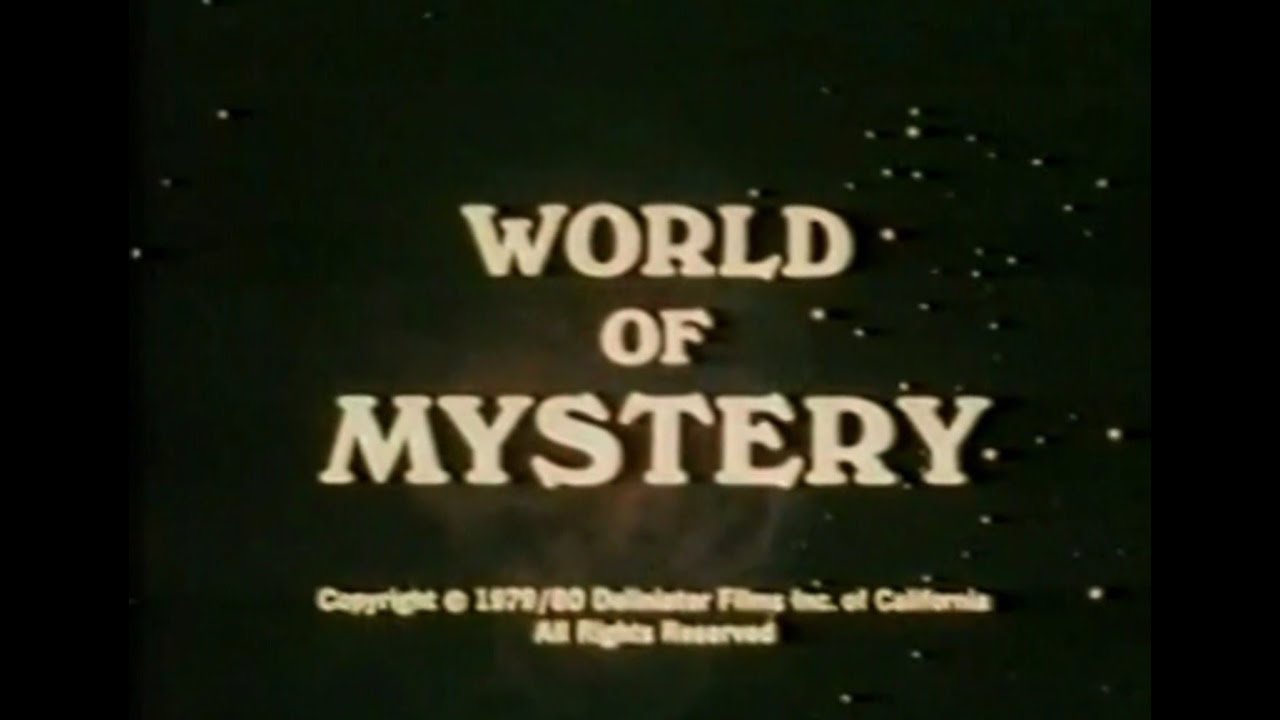
World of Mystery (1979-80): An Investigation into Obscure Paranormal Documentaries

Image

In the annals of unexplained phenomena, certain artifacts emerge from the shadows, demanding closer scrutiny. One such relic is "World of Mystery," a Delineator Films production from the twilight years of the 1970s and the dawn of the 1980s. Narrated by the enigmatic Sidney Paul, this documentary delves into a smorgasbord of topics that straddle the line between genuine inquiry and sensationalism. Our task today is to dissect this piece of cinematic ephemera, not just as a viewer, but as an investigator seeking the kernel of truth, or at least, the methodology behind the madness.

Avistamientos OVNI y Vida Extraterrestre

The documentary’s thematic breadth is, frankly, astounding, and perhaps indicative of a specific cultural moment. The inclusion of UFOs and extraterrestrial life aligns perfectly with the zeitgeist of the late 1970s and early 80s, a period heavily influenced by the public fascination with the unknown, largely fueled by works like Erich von Däniken's "Chariots of the Gods?" and numerous alleged sightings and encounters. The inclusion of stock footage, a common practice in low-budget documentaries of the era, likely lent an air of authenticity, juxtaposing genuine scientific imagery with speculative narratives. As one viewer noted, "I love the documentaries from the 70s the Erik Von Daniken craze was awesome I miss those magical days." This sentiment underscores the era's appetite for such content, where the lines between science fiction and scientific speculation were often blurred.

Criptozoología y Otras Historias No Resueltas

Beyond the celestial, "World of Mystery" ventures into the terrestrial unknown with its exploration of cryptozoology. While Bigfoot is mentioned, the documentary's broader scope suggests an intent to cover a wide array of unexplained creatures and phenomena. This was a fertile ground for documentaries at the time, with companies like Sun International and American National Enterprises producing content focused on Bigfoot, UFOs, and ghosts. The haphazard compilation of topics, as described by viewers, is a key characteristic: "Funny how they go from covering UFOs, alien life forms on other planets, and ghosts to 'Hey, Nazi lake party!' for like 20 minutes. And then literally right back to life in outer space." This eclectic approach, while perhaps bewildering, was a hallmark of many "speculative documentary" films of the period, aiming to appeal to a broad audience by touching upon numerous mysteries.

Recommended Gear for Investigation

ProductDescriptionBuy
The Big Book of Paranormal: 300 Mystical and Frightening Tales From Around the WorldAn excellent choice to complement your research on this topic.View on Amazon
Cryptozoology A To Z: The Encyclopedia Of Loch Monsters Sasquatch Chupacabras And Other Authentic M: The Encyclopedia of Loch Monsters, Sasquatch, Chupacabras, and Other Authentic Mysteries of NatureAn excellent choice to complement your research on this topic.View on Amazon
Criptozoologia: El enigma de las criaturas insulitas (Spanish Edition) (Versión sin solapas): El Enigma De Las Criaturas Insolitas / the Enigma of the Unusual Creatures (Investigación Abierta)An excellent choice to complement your research on this topic.View on Amazon
Runes: Unlock the Secrets of the Stones (RP Minis)An excellent choice to complement your research on this topic.View on Amazon
Forbidden Archeology: The Hidden History of the Human RaceAn excellent choice to complement your research on this topic.View on Amazon
The H. P. Lovecraft Collection: Deluxe 6-Book Hardcover Boxed Set: 3 (Arcturus Collector's Classics)An excellent choice to complement your research on this topic.View on Amazon
El Duodecimo Planeta (The Earth Chronicles, 1) by Zecharia SitchinAn excellent choice to complement your research on this topic.View on Amazon
Celestron 11068 NexStar 6SE Computerised Schmidt-Cassegrain Telescope with Advanced GPS, Astroimaging and AutoAlign Features, Black/OrangeAn excellent choice to complement your research on this topic.View on Amazon
Manual del Investigador Paranormal: (Versión sin solapas) (Investigación Abierta)An excellent choice to complement your research on this topic.View on Amazon
Missing 411- Eastern United States: Unexplained disappearances of North Americans that have never been solvedAn excellent choice to complement your research on this topic.View on Amazon

Fenómenos Psíquicos, Fantasmas y Fotografía Kirlian

The documentary's dive into psychic phenomena, ghosts, and Kirlian photography (the technique used to capture "auras") places it firmly within the paranormal investigation genre. The inclusion of Uri Geller, the Israeli psychic spoon-bender, is particularly noteworthy. Geller was a significant figure in popular culture during the 70s, often demonstrating alleged psychokinetic abilities on live television. However, his career was significantly scrutinized, much like the viewer who pointed out, "Look up James Randi and Johnny Carson destroying Uri Geller's career on The Tonight Show. It's great!😊😊😊" This highlights the critical counterpoint to the uncritical acceptance often presented in such documentaries. The "cut and paste nature of the narration" and "random sampling of pages torn out of MAN, MYTH AND MAGIC books" described by viewers paints a picture of a production that prioritized breadth over depth, throwing in every intriguing topic it could find.

"It was like the narrator had a stroke tossing random words out.🤔😆😆😆👌"

This candid observation reflects a common sentiment among those who’ve encountered "World of Mystery." The fragmented narrative style, coupled with a seemingly random selection of stock footage and music, creates an experience that is both jarring and, for some, uniquely compelling.

Exploración Espacial, Satélites y el Tercer Reich

The inclusion of outer space, astronautics, and satellites points to a scientific, or at least pseudo-scientific, curiosity. Yet, the abrupt shift to topics like the Third Reich suggests a less focused agenda, potentially tapping into historical conspiracies or sensationalized accounts. This juxtaposition of hard science, the paranormal, and historical intrigue is a defining characteristic of Delineator Films' output. A viewer keenly observed, "The musical score goes from Harry Nilsson to Super Nintendo Frampton to Sweet Home Alabama, without warning." This eclectic soundtrack mirrors the chaotic thematic transitions, creating a disorienting yet memorable viewing experience.

Estilo Narrativo y Producción: ¿Genio o Caos?

The production values themselves are a subject of considerable commentary. The use of NASA stock footage, budget-friendly music, and a narration style that viewers describe as "cut-up" or "rambling" contribute to its unique, almost surreal quality. One viewer perfectly captures this: "The NASA stock animation, the nerfy country rock/noodly synth, that touch of reverb on the narration, to say nothing of the cut and paste nature of the narration itself." This aesthetic, while perhaps unintentional, has cultivated a cult following among enthusiasts of obscure and low-budget paranormal documentaries. It’s this very haphazardness that some find endearing, evoking a sense of nostalgia for a bygone era of filmmaking and a less critical era of media consumption.

"Another acid induced documentary with everything thrown into the pot with a mess being the result. Lots of stock footage and rambling narration. Classic!"

This description, while harsh, encapsulates the unpolished charm that attracts viewers to films like "World of Mystery." The perceived lack of structure and coherent argument is, paradoxically, part of its appeal. It’s a time capsule of fringe interests and production techniques popular in its day.

Veredicto del Investigador: ¿Fraude, Fenómeno Genuino o Algo Más?

From an investigative standpoint, "World of Mystery" is less a source of definitive evidence and more a cultural artifact. It reflects the public's appetite for the unexplained in the late 70s and early 80s, a period marked by sensationalism and a less rigorous approach to documentary filmmaking. The fragmented narrative, the eclectic mix of topics, and the reliance on stock footage suggest a production driven by breadth and sensationalism rather than depth and critical analysis. As one viewer astutely noted, "Well, I've learned one thing from this video, I've learned that shamelessly and blatantly lying on so-called documentaries is clearly nothing new. It's a shame, because it's an interesting subject if treated entirely honestly, openly, fairly and objectively."

While it's unlikely to yield concrete evidence of UFOs, ghosts, or psychic powers, "World of Mystery" serves as a valuable case study in how fringe topics were presented to the public during a specific era. The documentary’s enduring, albeit niche, appeal lies in its unpretentious, chaotic charm – a product of its time, offering a glimpse into a world where mystery was king, and rigorous investigation was often secondary to captivating storytelling, however disjointed.

El Archivo del Investigador

To delve deeper into the era and similar phenomena, I recommend exploring the following resources:

  • Erich von Däniken's Works: For insights into the ancient astronaut theories prevalent during this period. Look for "Chariots of the Gods?"
  • Documentaries on Cryptozoology: Search for contemporary films that explored creatures like Bigfoot and the Loch Ness Monster, often found in collections of 70s and 80s B-movies.
  • Books on Psychic Phenomena: Titles from the "Man, Myth and Magic" series, if they can be found, offer a window into the kind of content that likely inspired the documentary’s narration.
  • James Randi's Investigations: To understand the skeptical counterpoint to psychic claims, Randi’s work, particularly his debunking of Uri Geller, is essential.

Preguntas Frecuentes

What is "World of Mystery (1979-80)"?
It is an obscure documentary film produced by Delineator Films, narrated by Sidney Paul, covering a wide range of unexplained phenomena including UFOs, cryptozoology, ghosts, and psychic abilities.
Who narrated "World of Mystery"?
The documentary was narrated by Sidney Paul, whose distinctive narration style has been a point of discussion among viewers.
What topics are covered in "World of Mystery"?
The film touches upon UFOs, extraterrestrial life, cryptozoology, ghosts, psychic phenomena, space exploration, Kirlian photography, Uri Geller, natural disasters, and the Third Reich.
What is the general reception of "World of Mystery"?
Viewers often describe it as "nutty," "worst/funniest," or "acid-induced," appreciating its chaotic compilation of stock footage, music, and narration as a cult classic of the genre.

Tu Misión de Campo: Análisis de Contenido Sensacionalista

Your mission, should you choose to accept it, is to locate another obscure documentary from the 1970s or 1980s that tackles paranormal or fringe topics. Analyze its narrative structure, the sources of its evidence (or lack thereof), and its overall tone. Does it rely on sensationalism, stock footage, and anecdotal evidence like "World of Mystery," or does it attempt a more rigorous approach? Report your findings in the comments below.

Investigator's Note: True paranormal research doesn't fund itself. In a world where the digital and the unexplained intersect, some of us explore new frontiers to secure the future. Do you dare to be part of the vanguard? Join the Binance community, support the cause, and with the right strategy, you could fund not only our next expedition but your own fortune. The next great discovery could be just a click away.

Bigfoot – Man or Beast? (1971): An Investigative Analysis

Image

The year is 1971. In a landscape saturated with sensationalism and burgeoning interest in the unexplained, a short documentary titled "Bigfoot – Man or Beast?" emerged, aiming to capture the public's imagination. Later expanded with footage from "In Search of Bigfoot" to achieve feature length, this particular film holds a unique place for its inclusion of the original, rarely seen ending. As an investigator of the unknown, I approach such historical pieces not just as entertainment, but as raw data, a snapshot of cultural fascination and, potentially, a fragment of a larger truth.

The 1971 Documentary: A Closer Look

This documentary, "Bigfoot – Man or Beast?", originally a mere 20-minute short, was strategically co-billed with a less appealing film, "North Country," to draw audiences. This marketing tactic, while effective in filling seats, often obscured the true brevity of the Bigfoot segment. The original commercials, lost to time but vividly recalled by those who saw them, employed over-the-top narration, hyping the footage as "something beyond all human knowledge." This showmanship, particularly impactful on the young minds of the era, undeniably played a role in piquing curiosity and driving attendance. For many, including the witness who was 11 years old at the time of its release, these commercials were the first introduction to the iconic Patterson film, planting the seed for a lifelong fascination.

The very nature of these early ethnographic documentaries is compelling. They often capture a raw, unpolished energy. Viewers who experienced this film in their youth, like one individual who was 6 or 7, recall being genuinely terrified, a testament to the documentary's ability to evoke primal fear and wonder. The ambient music, evocative of '80s documentary styles, further enhances this nostalgic and somewhat eerie atmosphere.

Recommended Gear for Investigation

ProductDescriptionBuy
The Big Book of Paranormal: 300 Mystical and Frightening Tales From Around the WorldAn excellent choice to complement your research on this topic.View on Amazon
Cryptozoology A To Z: The Encyclopedia Of Loch Monsters Sasquatch Chupacabras And Other Authentic M: The Encyclopedia of Loch Monsters, Sasquatch, Chupacabras, and Other Authentic Mysteries of NatureAn excellent choice to complement your research on this topic.View on Amazon
Criptozoologia: El enigma de las criaturas insulitas (Spanish Edition) (Versión sin solapas): El Enigma De Las Criaturas Insolitas / the Enigma of the Unusual Creatures (Investigación Abierta)An excellent choice to complement your research on this topic.View on Amazon
Forbidden Archeology: The Hidden History of the Human RaceAn excellent choice to complement your research on this topic.View on Amazon
The H. P. Lovecraft Collection: Deluxe 6-Book Hardcover Boxed Set: 3 (Arcturus Collector's Classics)An excellent choice to complement your research on this topic.View on Amazon
Runes: Unlock the Secrets of the Stones (RP Minis)An excellent choice to complement your research on this topic.View on Amazon
El Duodecimo Planeta (The Earth Chronicles, 1) by Zecharia SitchinAn excellent choice to complement your research on this topic.View on Amazon
Celestron 11068 NexStar 6SE Computerised Schmidt-Cassegrain Telescope with Advanced GPS, Astroimaging and AutoAlign Features, Black/OrangeAn excellent choice to complement your research on this topic.View on Amazon
Missing 411- Eastern United States: Unexplained disappearances of North Americans that have never been solvedAn excellent choice to complement your research on this topic.View on Amazon
Ghost-Hunting For Dummies [Idioma Inglés] An excellent choice to complement your research on this topic.View on Amazon

Debating the Patterson Film: Clarity and Controversy

Central to "Bigfoot – Man or Beast?" is the Patterson film itself. Contemporary analysis from viewers highlights a surprising level of clarity within this 1971 documentary. Many report that the footage of the titular creature, often referred to as "Patty," appears remarkably clear, especially considering the era's filmmaking technology and the inherent challenges of capturing such an elusive subject. Some assert that Patty is visible in the initial frames, a detail often missed in later, less clear presentations. The original color saturation, too, is noted as a significant factor contributing to its perceived authenticity.

However, the Patterson film remains a subject of intense debate. While some viewers firmly believe it to be genuine evidence, citing its clarity in this early documentary and questioning the feasibility of creating such a realistic suit for a 7-foot individual, others remain skeptical. The logistics of replicating the filming conditions, such as the creek and terrain, in subsequent years to definitively verify or debunk the footage, remain a point of contention. The lack of further definitive evidence in the intervening decades fuels the skepticism, despite the persistent belief by some that the film is largely genuine.

"The Patterson film now a days has been largely debated but proven mostly to be genuine." Audience Testimony
"Holy shit awesome documentary, How Can people say that shit is fake? (Patterson footage) That shit looks so real, I mean sure it looks a little like a man, but it’s a humanoid, and I’d guess they have evolved at some point in their history, which May have been the reason for their humanlike look." Audience Testimony

The debate often circles back to the creature's physical characteristics and the environmental interactions depicted. For instance, the force required to bend a street sign, estimated at 500 foot-pounds, is presented as evidence of the creature's immense strength. Conversely, the practicality of a slow, noisy ATV being used for any stealthy pursuit is questioned, with one audience member quipping, "Smokey assed machine, goes 1 mph, really gonna sneak up on them samsquanches!"

Audience Reactions: Echoes from 1971 and Today

The original theatrical run of "Bigfoot – Man or Beast?" clearly left a significant impression. Testimonies from individuals who saw the film as children speak to its power to terrify and mesmerize. This emotional resonance is a key indicator of its cultural impact. Today, the documentary continues to spark discussion and elicit strong reactions online. Many express a fondness for these older '70s documentaries, appreciating their unpretentious style and the raw ambiance they offer.

The subjective experience of viewing the Patterson footage within this documentary is notable. While some find it to be compelling proof, others offer more lighthearted interpretations, like mistaking a mother-in-law for Bigfoot. The sounds captured in the documentary, particularly a "creepy Sasquatch sound recording," have also generated curiosity, with viewers seeking its origin and provenance.

"I LOVE Tthese old 70's documentaries. So much fun!!" Audience Testimony
"My dad and I saw this in the theater way back then. I was 6 or 7 years old and it scared me to death!" Audience Testimony
"Also is it just me or the Patterson Film look really really good in this documentary ! I’ve seen the Patterson Film lots in other documentaries but for a 1971 documentary this is pretty darn clear! Original colour too! You can actually see Patty in first few frames of the start of the film.You don’t usually see it that clear in other documentaries.Very cool!" Audience Testimony

Even in lighter commentary, the persistence of the Bigfoot mythos is evident. References to Chewbacca and playful speculation about the creature's preference for tracked vehicles over ATVs highlight the enduring presence of this figure in popular culture. The documentary, therefore, serves not only as a historical record of Bigfoot's presence in media but also as a focal point for ongoing public engagement with the mystery.

Key Figures in Bigfoot Research

Beyond the central figure of Bigfoot itself, historical documentaries like this often serve as an early platform for researchers who would later become prominent in their respective fields. The text suggests that Dr. Grover Krantz may have made an appearance in this documentary, marking a very early stage in his significant career in Sasquatch research. His potential inclusion, even if unconfirmed, underscores the film's role as a historical artifact within the broader cryptozoological community.

The documentary also provides insight into the performance art aspect of cryptozoology. Janos Prohaska, an actor with a background in impersonating ape-like creatures since 1939, is identified as the likely performer within the suit. His notable roles, including the Mugato in Star Trek and the Horta in another Star Trek episode, demonstrate the skill and dedication required to bring such fantastical beings to life, blurring the lines between performance and perceived reality.

Investigator's Verdict: Man, Beast, or Misdirection?

From an analytical standpoint, "Bigfoot – Man or Beast?" (1971) is a fascinating case study. It exemplifies the potent combination of media manipulation, genuine public curiosity, and the enduring allure of the unknown. The documentary's success, particularly its clever marketing, highlights how narrative and presentation can significantly influence public perception. The Patterson film, showcased with remarkable clarity for its time, remains the central piece of evidence, yet its interpretation is deeply divisive.

The arguments for its authenticity often hinge on the perceived realism of the suit and the difficulty for a 7-foot individual to find appropriate clothing, let alone a convincing costume. However, the critical investigator must also acknowledge the counterarguments: the potential for elaborate hoaxes, the evolution of special effects, and the sheer theatricality employed in promoting the film. The persistent questions about why definitive proof remains elusive, despite modern technology, cannot be ignored. My assessment leans towards a pragmatic skepticism: while the documentary is invaluable as a historical piece and a reflection of cultural phenomena, it doesn't constitute irrefutable proof of a biological entity. It exists in the fertile ground between folklore, potential misidentification, and possible elaborate deception. The mention of Bigfoot originating from "other dimensions of space and time" and possessing technology to disappear, as suggested by one viewer, represents a modern theoretical leap, moving beyond the biological to the metaphysical, a common trajectory in unexplained phenomena research.

Field Protocol: Tracking the Elusive

While this documentary focuses on past evidence, the pursuit of cryptids like Bigfoot requires rigorous field protocols. Effective tracking involves:

  1. Environmental Reconnaissance: Identifying likely habitats based on ecological factors and historical sighting data. This includes analyzing terrain, water sources, and potential food availability.
  2. Stealth and Observation: Utilizing camouflage and remaining undetected are paramount. Noisy, slow-moving vehicles, as humorously noted by viewers, are counterproductive for stealthy observation.
  3. Evidence Collection: Documenting findings meticulously. This includes footprint casting, hair and scat analysis, photographic and video evidence, and audio recordings. The clarity of the Patterson film in this documentary serves as an example of what is sought, but requires corroboration.
  4. Witness Interviews: Conducting in-depth interviews with credible witnesses, cross-referencing accounts, and assessing potential biases or misidentifications.
  5. Technological Aids: Employing modern technology such as trail cameras, thermal imaging, acoustic monitoring devices, and satellite imagery to enhance detection and data collection.
  6. Comparative Analysis: When possible, replicating conditions of famous sightings (e.g., the Patterson-Gimlin site) to compare physical evidence, such as footprints, with historical records. The persistent question of why this hasn't been done more rigorously remains a point of interest.

Frequently Asked Questions

Q1: What is the significance of the Patterson film in Bigfoot research?

A: The Patterson film, prominently featured in the 1971 documentary "Bigfoot – Man or Beast?", is one of the most iconic and debated pieces of visual evidence purporting to show a living Bigfoot. Its clarity and the creature's seemingly realistic motion have made it a cornerstone for believers, while skeptics point to potential fabrication.

Q2: Was Janos Prohaska the person in the Bigfoot suit in the Patterson film?

A: While Janos Prohaska was known for portraying ape-like creatures in film and television, including the Mugato in Star Trek, definitive proof that he was specifically the individual in the Patterson film has not been established. However, his expertise in such roles makes him a notable figure in discussions surrounding the film's authenticity.

Q3: Why is it so difficult to obtain definitive proof of Bigfoot?

A: Several factors contribute to the lack of definitive proof: the elusive nature of the creature, its purported habitat in vast and remote wilderness areas, the challenges of distinguishing between real sightings and hoaxes, and the difficulty in collecting verifiable physical evidence like a body or conclusive DNA samples.

Q4: What makes the 1971 documentary "Bigfoot – Man or Beast?" special?

A: This documentary is notable for its inclusion of the original, rare ending and for presenting the Patterson film with unusual clarity for its time. It also offers a glimpse into the marketing strategies and public fascination surrounding Bigfoot in the early 1970s.

Q5: What are some modern theories about Bigfoot's origins?

A: Beyond traditional biological explanations, some modern theories propose that Bigfoot could be an interdimensional being, a time-traveler, or a creature from another plane of existence, potentially explaining its ability to evade capture and detection.

Your Mission: Field Observation

The enduring mystery of Bigfoot, as captured in this 1971 documentary, encourages us to remain vigilant and analytical. Your mission, should you choose to accept it, is to become a more observant individual in your daily life. Pay attention to the details in nature around you, question anomalies, and document anything that seems out of the ordinary, no matter how small. True investigation begins with keen observation.

What are your thoughts on the Patterson film? Have you encountered any unexplained phenomena in your region? Share your experiences and theories in the comments below. If you found this analysis insightful, please share it across your social networks to help spread awareness of these enduring mysteries!

```

Investigator's Note: True paranormal research doesn't fund itself. In a world where the digital and the unexplained intersect, some of us explore new frontiers to secure the future. Do you dare to be part of the vanguard? Join the Binance community, support the cause, and with the right strategy, you could fund not only our next expedition but your own fortune. The next great discovery could be just a click away.