Followers

Mostrando las entradas con la etiqueta UFO Documentaries. Mostrar todas las entradas

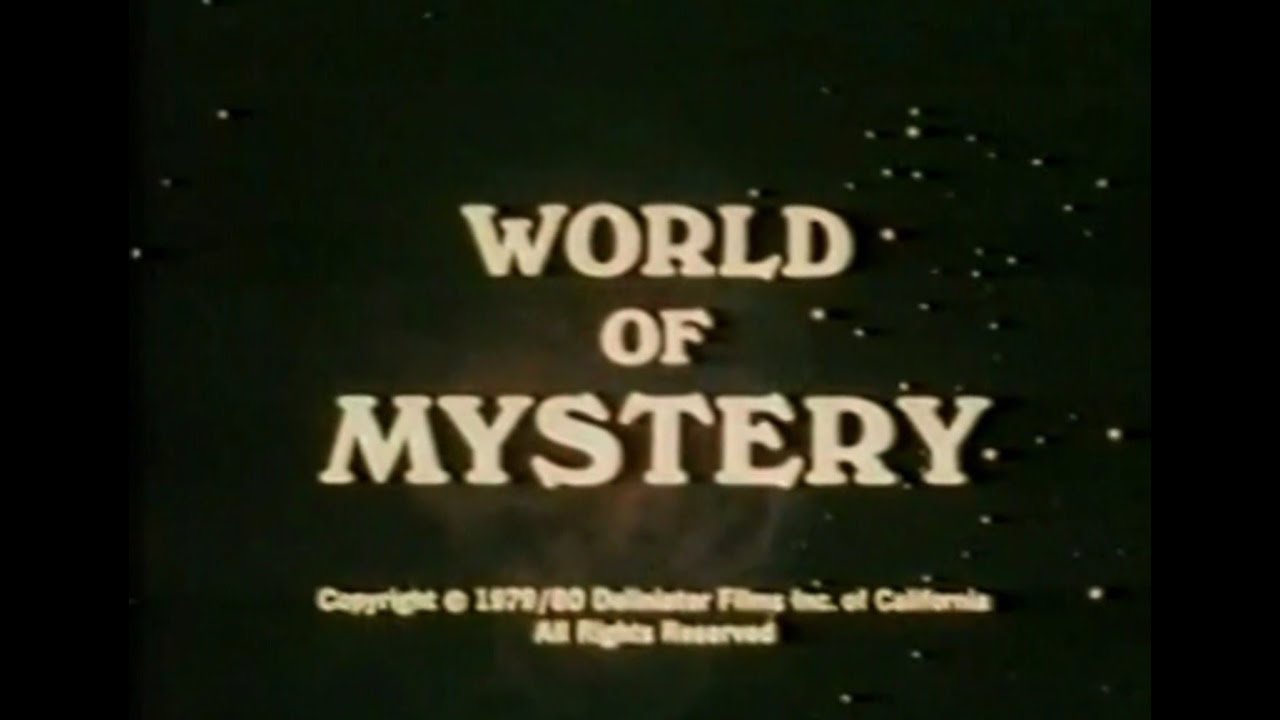
World of Mystery (1979-80): An Investigation into Obscure Paranormal Documentaries

Image

In the annals of unexplained phenomena, certain artifacts emerge from the shadows, demanding closer scrutiny. One such relic is "World of Mystery," a Delineator Films production from the twilight years of the 1970s and the dawn of the 1980s. Narrated by the enigmatic Sidney Paul, this documentary delves into a smorgasbord of topics that straddle the line between genuine inquiry and sensationalism. Our task today is to dissect this piece of cinematic ephemera, not just as a viewer, but as an investigator seeking the kernel of truth, or at least, the methodology behind the madness.

Avistamientos OVNI y Vida Extraterrestre

The documentary’s thematic breadth is, frankly, astounding, and perhaps indicative of a specific cultural moment. The inclusion of UFOs and extraterrestrial life aligns perfectly with the zeitgeist of the late 1970s and early 80s, a period heavily influenced by the public fascination with the unknown, largely fueled by works like Erich von Däniken's "Chariots of the Gods?" and numerous alleged sightings and encounters. The inclusion of stock footage, a common practice in low-budget documentaries of the era, likely lent an air of authenticity, juxtaposing genuine scientific imagery with speculative narratives. As one viewer noted, "I love the documentaries from the 70s the Erik Von Daniken craze was awesome I miss those magical days." This sentiment underscores the era's appetite for such content, where the lines between science fiction and scientific speculation were often blurred.

Criptozoología y Otras Historias No Resueltas

Beyond the celestial, "World of Mystery" ventures into the terrestrial unknown with its exploration of cryptozoology. While Bigfoot is mentioned, the documentary's broader scope suggests an intent to cover a wide array of unexplained creatures and phenomena. This was a fertile ground for documentaries at the time, with companies like Sun International and American National Enterprises producing content focused on Bigfoot, UFOs, and ghosts. The haphazard compilation of topics, as described by viewers, is a key characteristic: "Funny how they go from covering UFOs, alien life forms on other planets, and ghosts to 'Hey, Nazi lake party!' for like 20 minutes. And then literally right back to life in outer space." This eclectic approach, while perhaps bewildering, was a hallmark of many "speculative documentary" films of the period, aiming to appeal to a broad audience by touching upon numerous mysteries.

Recommended Gear for Investigation

ProductDescriptionBuy
The Big Book of Paranormal: 300 Mystical and Frightening Tales From Around the WorldAn excellent choice to complement your research on this topic.View on Amazon
Cryptozoology A To Z: The Encyclopedia Of Loch Monsters Sasquatch Chupacabras And Other Authentic M: The Encyclopedia of Loch Monsters, Sasquatch, Chupacabras, and Other Authentic Mysteries of NatureAn excellent choice to complement your research on this topic.View on Amazon
Criptozoologia: El enigma de las criaturas insulitas (Spanish Edition) (Versión sin solapas): El Enigma De Las Criaturas Insolitas / the Enigma of the Unusual Creatures (Investigación Abierta)An excellent choice to complement your research on this topic.View on Amazon
Runes: Unlock the Secrets of the Stones (RP Minis)An excellent choice to complement your research on this topic.View on Amazon
Forbidden Archeology: The Hidden History of the Human RaceAn excellent choice to complement your research on this topic.View on Amazon
The H. P. Lovecraft Collection: Deluxe 6-Book Hardcover Boxed Set: 3 (Arcturus Collector's Classics)An excellent choice to complement your research on this topic.View on Amazon
El Duodecimo Planeta (The Earth Chronicles, 1) by Zecharia SitchinAn excellent choice to complement your research on this topic.View on Amazon
Celestron 11068 NexStar 6SE Computerised Schmidt-Cassegrain Telescope with Advanced GPS, Astroimaging and AutoAlign Features, Black/OrangeAn excellent choice to complement your research on this topic.View on Amazon
Manual del Investigador Paranormal: (Versión sin solapas) (Investigación Abierta)An excellent choice to complement your research on this topic.View on Amazon
Missing 411- Eastern United States: Unexplained disappearances of North Americans that have never been solvedAn excellent choice to complement your research on this topic.View on Amazon

Fenómenos Psíquicos, Fantasmas y Fotografía Kirlian

The documentary's dive into psychic phenomena, ghosts, and Kirlian photography (the technique used to capture "auras") places it firmly within the paranormal investigation genre. The inclusion of Uri Geller, the Israeli psychic spoon-bender, is particularly noteworthy. Geller was a significant figure in popular culture during the 70s, often demonstrating alleged psychokinetic abilities on live television. However, his career was significantly scrutinized, much like the viewer who pointed out, "Look up James Randi and Johnny Carson destroying Uri Geller's career on The Tonight Show. It's great!😊😊😊" This highlights the critical counterpoint to the uncritical acceptance often presented in such documentaries. The "cut and paste nature of the narration" and "random sampling of pages torn out of MAN, MYTH AND MAGIC books" described by viewers paints a picture of a production that prioritized breadth over depth, throwing in every intriguing topic it could find.

"It was like the narrator had a stroke tossing random words out.🤔😆😆😆👌"

This candid observation reflects a common sentiment among those who’ve encountered "World of Mystery." The fragmented narrative style, coupled with a seemingly random selection of stock footage and music, creates an experience that is both jarring and, for some, uniquely compelling.

Exploración Espacial, Satélites y el Tercer Reich

The inclusion of outer space, astronautics, and satellites points to a scientific, or at least pseudo-scientific, curiosity. Yet, the abrupt shift to topics like the Third Reich suggests a less focused agenda, potentially tapping into historical conspiracies or sensationalized accounts. This juxtaposition of hard science, the paranormal, and historical intrigue is a defining characteristic of Delineator Films' output. A viewer keenly observed, "The musical score goes from Harry Nilsson to Super Nintendo Frampton to Sweet Home Alabama, without warning." This eclectic soundtrack mirrors the chaotic thematic transitions, creating a disorienting yet memorable viewing experience.

Estilo Narrativo y Producción: ¿Genio o Caos?

The production values themselves are a subject of considerable commentary. The use of NASA stock footage, budget-friendly music, and a narration style that viewers describe as "cut-up" or "rambling" contribute to its unique, almost surreal quality. One viewer perfectly captures this: "The NASA stock animation, the nerfy country rock/noodly synth, that touch of reverb on the narration, to say nothing of the cut and paste nature of the narration itself." This aesthetic, while perhaps unintentional, has cultivated a cult following among enthusiasts of obscure and low-budget paranormal documentaries. It’s this very haphazardness that some find endearing, evoking a sense of nostalgia for a bygone era of filmmaking and a less critical era of media consumption.

"Another acid induced documentary with everything thrown into the pot with a mess being the result. Lots of stock footage and rambling narration. Classic!"

This description, while harsh, encapsulates the unpolished charm that attracts viewers to films like "World of Mystery." The perceived lack of structure and coherent argument is, paradoxically, part of its appeal. It’s a time capsule of fringe interests and production techniques popular in its day.

Veredicto del Investigador: ¿Fraude, Fenómeno Genuino o Algo Más?

From an investigative standpoint, "World of Mystery" is less a source of definitive evidence and more a cultural artifact. It reflects the public's appetite for the unexplained in the late 70s and early 80s, a period marked by sensationalism and a less rigorous approach to documentary filmmaking. The fragmented narrative, the eclectic mix of topics, and the reliance on stock footage suggest a production driven by breadth and sensationalism rather than depth and critical analysis. As one viewer astutely noted, "Well, I've learned one thing from this video, I've learned that shamelessly and blatantly lying on so-called documentaries is clearly nothing new. It's a shame, because it's an interesting subject if treated entirely honestly, openly, fairly and objectively."

While it's unlikely to yield concrete evidence of UFOs, ghosts, or psychic powers, "World of Mystery" serves as a valuable case study in how fringe topics were presented to the public during a specific era. The documentary’s enduring, albeit niche, appeal lies in its unpretentious, chaotic charm – a product of its time, offering a glimpse into a world where mystery was king, and rigorous investigation was often secondary to captivating storytelling, however disjointed.

El Archivo del Investigador

To delve deeper into the era and similar phenomena, I recommend exploring the following resources:

  • Erich von Däniken's Works: For insights into the ancient astronaut theories prevalent during this period. Look for "Chariots of the Gods?"
  • Documentaries on Cryptozoology: Search for contemporary films that explored creatures like Bigfoot and the Loch Ness Monster, often found in collections of 70s and 80s B-movies.
  • Books on Psychic Phenomena: Titles from the "Man, Myth and Magic" series, if they can be found, offer a window into the kind of content that likely inspired the documentary’s narration.
  • James Randi's Investigations: To understand the skeptical counterpoint to psychic claims, Randi’s work, particularly his debunking of Uri Geller, is essential.

Preguntas Frecuentes

What is "World of Mystery (1979-80)"?
It is an obscure documentary film produced by Delineator Films, narrated by Sidney Paul, covering a wide range of unexplained phenomena including UFOs, cryptozoology, ghosts, and psychic abilities.
Who narrated "World of Mystery"?
The documentary was narrated by Sidney Paul, whose distinctive narration style has been a point of discussion among viewers.
What topics are covered in "World of Mystery"?
The film touches upon UFOs, extraterrestrial life, cryptozoology, ghosts, psychic phenomena, space exploration, Kirlian photography, Uri Geller, natural disasters, and the Third Reich.
What is the general reception of "World of Mystery"?
Viewers often describe it as "nutty," "worst/funniest," or "acid-induced," appreciating its chaotic compilation of stock footage, music, and narration as a cult classic of the genre.

Tu Misión de Campo: Análisis de Contenido Sensacionalista

Your mission, should you choose to accept it, is to locate another obscure documentary from the 1970s or 1980s that tackles paranormal or fringe topics. Analyze its narrative structure, the sources of its evidence (or lack thereof), and its overall tone. Does it rely on sensationalism, stock footage, and anecdotal evidence like "World of Mystery," or does it attempt a more rigorous approach? Report your findings in the comments below.

Investigator's Note: True paranormal research doesn't fund itself. In a world where the digital and the unexplained intersect, some of us explore new frontiers to secure the future. Do you dare to be part of the vanguard? Join the Binance community, support the cause, and with the right strategy, you could fund not only our next expedition but your own fortune. The next great discovery could be just a click away.

Overlords of the UFO (1976): An Investigated Dossier

Image

The landscape of UFO documentaries is a peculiar one, often blurring the lines between genuine inquiry and sensationalist spectacle. Among these, "Overlords of the UFO" from 1976 stands out not for its scientific rigor, but for its unique place in what can only be described as "cultural ephemera." Hosted by W. Gordon Allen and featuring notable figures like Stanton Friedman, Robert Gribble, Trevor James Constable, and Uri Geller, this film attempts to grapple with the mysteries of unidentified aerial phenomena. While undeniably campy and at times hokey, it presents intriguing segments that warrant a closer look, such as discussions of UFOs within Air Force Academy textbooks and early explorations into interdimensional theories of UFO origins.

Introduction: Deciphering 'Overlords of the UFO'

"Overlords of the UFO" serves as a time capsule, offering a glimpse into the discourse surrounding unidentified aerial phenomena in the mid-1970s. The documentary, while self-aware of its perceived flaws, presents a collection of topics that continue to fascinate researchers and enthusiasts alike. From pilot and astronaut sightings to abduction accounts and speculative voyages from purported alien civilizations like UMMO, the film touches upon a broad spectrum of the UFO phenomenon. Examining this piece critically allows us to understand not only the content presented but also the cultural context and audience reception that have kept it alive in the collective memory of the paranormal community.

Bridging Eras: The 1976 Perspective

When "Overlords of the UFO" was released, the study of UFOs was already a multifaceted field, grappling with Cold War anxieties and nascent scientific curiosity. The inclusion of figures like Stanton Friedman, a nuclear physicist and early proponent of the extraterrestrial hypothesis for UFOs, lent a degree of credibility to the proceedings, despite the film's deliberately dramatic presentation. Trevor James Constable, known for his work on "UFOs and the Deep-Sea Mysteries," brought theories about atmospheric life forms, while Uri Geller, the psychic spoon-bender, represented the more fringe, parapsychological aspects of the phenomenon. This blend of scientific speculation, eyewitness accounts, and apparent psychic phenomena reflects the diverse and often conflicting approaches prevalent in UFOlogy during that era. Many viewers, as noted in online comments, appreciate its preservation, labeling it "cultural ephemera," highlighting its value as a historical artifact rather than a definitive exposé.

Recommended Gear for Investigation

ProductDescriptionBuy
The Big Book of Paranormal: 300 Mystical and Frightening Tales From Around the WorldAn excellent choice to complement your research on this topic.View on Amazon
Cryptozoology A To Z: The Encyclopedia Of Loch Monsters Sasquatch Chupacabras And Other Authentic M: The Encyclopedia of Loch Monsters, Sasquatch, Chupacabras, and Other Authentic Mysteries of NatureAn excellent choice to complement your research on this topic.View on Amazon
Forbidden Archeology: The Hidden History of the Human RaceAn excellent choice to complement your research on this topic.View on Amazon
The H. P. Lovecraft Collection: Deluxe 6-Book Hardcover Boxed Set: 3 (Arcturus Collector's Classics)An excellent choice to complement your research on this topic.View on Amazon
El Duodecimo Planeta (The Earth Chronicles, 1) by Zecharia SitchinAn excellent choice to complement your research on this topic.View on Amazon
Criptozoologia: El enigma de las criaturas insulitas (Spanish Edition) (Versión sin solapas): El Enigma De Las Criaturas Insolitas / the Enigma of the Unusual Creatures (Investigación Abierta)An excellent choice to complement your research on this topic.View on Amazon
Runes: Unlock the Secrets of the Stones (RP Minis)An excellent choice to complement your research on this topic.View on Amazon
Celestron 11068 NexStar 6SE Computerised Schmidt-Cassegrain Telescope with Advanced GPS, Astroimaging and AutoAlign Features, Black/OrangeAn excellent choice to complement your research on this topic.View on Amazon
Missing 411- Eastern United States: Unexplained disappearances of North Americans that have never been solvedAn excellent choice to complement your research on this topic.View on Amazon
Ghost-Hunting For Dummies [Idioma Inglés] An excellent choice to complement your research on this topic.View on Amazon

Analyzing the Core Arguments

The documentary ambitiously tackles several key areas. A significant portion is dedicated to visual evidence, including still and motion pictures of UFOs, alongside testimony from pilots and astronauts. These accounts, often from individuals trained to observe and report accurately, form a crucial part of the UFO database. The film also explores sightings reported around test flights, suggesting a potential connection between advanced aerospace technology and unexplained aerial phenomena. Furthermore, it delves into the disturbing subject of abductions, a theme that would gain greater prominence in later decades. The inclusion of a segment on the "Space Voyage from UMMO" introduces a complex narrative of alleged alien communication and interaction, adding another layer to the film's multifaceted exploration.

Audience Reactions: A Cult Following?

The contemporary reception of "Overlords of the UFO" is a fascinating case study in itself. While acknowledging its low-budget production, cheesy presentation, and bombastic soundtrack, many viewers express a genuine affection for the film. Comments frequently describe it as "corny," "cheesy," "silly," and profoundly entertaining, often comparing it favorably to modern UFO programs. This paradoxical appreciation suggests that its perceived flaws have, for some, contributed to its enduring appeal. Phrases like "one million times more entertaining than Ancient Aliens" and "favorite 'worst documentaries'" highlight a cult following that cherishes its unique, unpolished charm. The preservation and re-uploading of the film are met with gratitude, underscoring its status as a cherished piece of paranormal media history. Some viewers recall encountering it late at night on television, adding to its mystique as a bizarre, unexpected discovery, akin to finding "the Plan 9 of documentaries." This enduring fascination with its "wacky" and "awesome nonsense" demonstrates its impact as more than just a film, but an experience.

"We were literally stunned. What the f'n @(!*)$) is this??? It was so cheap, stupid, strange and utterly honest in its own presentation I felt we'd found the Plan 9 of documentaries! I've loved it ever sense. So wacky."

The persistence of the UFO discourse is also a notable observation from viewers, who remark on how little the fundamental questions and themes have changed over the decades. This continuity suggests that "Overlords of the UFO" tapped into enduring aspects of the human fascination with the unknown.

Beyond the Camp: Interdimensional and Atmospheric Fauna Theories

Beyond the surface-level entertainment, "Overlords of the UFO" touches upon theories that, while speculative, have persisted in paranormal research. The concept of interdimensional origins for UFOs, posited as an alternative to purely extraterrestrial explanations, suggests that these craft might originate from a different plane of reality, intersecting with our own. This theory attempts to account for the anomalous characteristics and seemingly impossible maneuvers attributed to UFOs. Equally intriguing, and certainly more peculiar, is the mention of "invisible flying critters" or "atmospheric fauna." This concept, championed by figures like Trevor James Constable, proposes that some UFOs might not be technological craft at all, but rather unknown biological entities existing within Earth's atmosphere. While these ideas remain largely outside mainstream scientific acceptance, they represent the diverse and often unconventional avenues explored by UFO investigators trying to make sense of ambiguous evidence. The film's tendency to weave these speculative theories into its narrative, even when grabbing onto "a few pieces of legit UFO sightings," is indicative of the era's exploratory, less constrained approach to the subject.

The UMMO Space Voyage: A Linguistic Anomaly?

One of the more enigmatic segments involves the alleged "Space Voyage from UMMO." The UMMO phenomenon, which gained traction in Spain and France in the 1960s and 70s, involves purported communications from an alien civilization claiming to have visited Earth. These communications often took the form of detailed letters and scientific treatises, exhibiting a sophisticated and peculiar internal logic. The inclusion of this topic in "Overlords of the UFO" highlights the growing international scope of UFO investigations and the complex narratives that emerged. The "psychedelic light show" accompanying this sequence, noted by viewers, further adds to the hallucinatory quality of the narrative, blending alleged alien contact with avant-garde visual presentation. Understanding the UMMO case requires delving into intricate linguistic analysis and sociological studies of its propagation, far beyond the scope of a single documentary, yet its inclusion here speaks to the broad church of ideas within the UFO community at the time.

Technological Hypotheses: From Pulse Analyzers to Gravity Manipulation

Critical viewers have pointed to specific moments within the documentary that offer tantalizing, albeit highly speculative, technological insights. One such instance, noted at the 44:41 mark, involves a "pulse analyzer" supposedly detecting a microwave frequency of 3 gigahertz emanating from a UFO. This detail, coupled with references to Einstein's General Relativity and the work of Isadore Rabi on atomic oscillation, forms the basis of a complex, user-generated hypothesis regarding the propulsion of UFOs. The theory posits that by aligning and accelerating atoms within the hull of a craft, potentially using Nuclear Quadrupole Resonance (NQR) on metallic structures, immense accelerations could be generated, creating a form of gravity manipulation. This hypothesis attempts to bridge theoretical physics with observed phenomena, such as the electric effects reported around UFOs. While this remains a speculative interpretation derived from a brief on-screen readout, it exemplifies how viewers actively engage with and seek scientific explanations for the phenomena presented, even in a film known for its unconventional approach.

"At time 44:41 there is a readout from a 'pulse analyzer' - it was designed to receive high frequency radio signals. In this case, at time 44:41, the video shows that the pulse analyzer picked up a microwave frequency of 3 gigahertz coming from a UFO... From General Relativity they knew, in 1938, 'accelerated matter creates gravity.'… This is probably what they (the government) has been refining since the late 1930s/early 1940s. Nuclear Quadupole Resonance applied to the metal hull of gravity vehicles."

Investigator's Verdict: Genuine Inconclusive or Glorious Nonsense?

From an investigator's standpoint, "Overlords of the UFO" is less a definitive exposé and more a fascinating artifact of early UFOlogy. While it incorporates interviews with credible individuals like Stanton Friedman, the film's overall presentation leans heavily into sensationalism. The theories discussed, particularly regarding interdimensional beings and atmospheric fauna, push the boundaries of conventional scientific inquiry. The UMMO segment remains particularly baffling, bordering on pure speculation. However, its persistent popularity and the genuine affection it garners from viewers cannot be dismissed. It succeeds in capturing a sense of wonder and mystery, even if through a lens of low-budget charm and dramatic flair. The film doesn't provide concrete answers but rather poses questions and explores a wide array of possibilities, some more grounded than others. It serves as an entertaining, if not entirely rigorous, examination of the UFO phenomenon as understood and presented in the 1970s. The speculation about advanced physics, while presented without substantiation within the film, is indicative of the intellectual threads that viewers continue to explore and connect, demonstrating the enduring power of anomalous evidence to inspire research.

The Investigator's Archive

For those seeking deeper dives into the subjects touched upon in "Overlords of the UFO," my archive recommends the following resources:

  • Books on Stanton Friedman: Explore his extensive research into the Roswell incident and his advocacy for the extraterrestrial hypothesis. Titles like "Crash at Corona" offer detailed analysis.
  • Trevor James Constable's Works: For theories on atmospheric life forms, Constable's self-published works, though rare, provide the foundational ideas presented in the documentary.
  • The UMMO Phenomenon: Academic and enthusiast sites dedicated to ufology often feature analyses of the UMMO letters and their complex propagation history. Search for detailed case studies from the 1970s.
  • General UFO History Resources: Websites like Wikipedia offer broad overviews of UFO sightings, government reports (such as Project Blue Book), and historical context.
  • Paranormal Investigation Techniques: Our own blog archives contain guides on analyzing photographic evidence and understanding witness testimony, crucial for any critical examination of such documentaries. Explore our paranormal investigation guides.

Frequently Asked Questions

FREQUENTLY ASKED QUESTIONS

  1. Is Overlords of the UFO considered scientifically accurate?
    No, the documentary is widely regarded as more entertainment than scientific accuracy. It presents speculative theories and anecdotal evidence in a dramatic fashion, rather than through rigorous scientific methodology.

  2. Who were the main contributors featured in the film?
    The film featured prominent figures in the UFO community of the time, including Stanton Friedman (nuclear physicist advocating for the extraterrestrial hypothesis), Robert Gribble, Trevor James Constable (theorist on atmospheric life forms), and Uri Geller (psychic performer).

  3. What is the significance of the UMMO segment?
    The UMMO segment refers to a complex hoax or reported phenomenon involving purported communications from an alien civilization. Its inclusion highlights the diverse and sometimes convoluted narratives within UFOlogy.

  4. Why is this low-budget documentary still popular?
    Its popularity stems from its nostalgic appeal, campy charm, and the fact that it covers a wide range of UFO topics in an entertaining, albeit unpolished, manner. Many viewers find it more engaging than modern, slicker productions.

  5. What does the film suggest about UFO propulsion?
    While speculative, the film and subsequent viewer analyses touch upon concepts like interdimensional travel and advanced physics, such as manipulating atomic acceleration to create gravity effects, as potential explanations for UFO flight capabilities.

Your Mission: Field Observation and Analysis

What are your thoughts on "Overlords of the UFO"? Have you encountered similar "campy" yet intriguing documentaries? Share your experiences in the comments below. Your insights are crucial for our collective understanding.

Don't forget to share this investigation with fellow truth-seekers on social media. Let's bring these historical anomalies back into the light!

```

Investigator's Note: True paranormal research doesn't fund itself. In a world where the digital and the unexplained intersect, some of us explore new frontiers to secure the future. Do you dare to be part of the vanguard? Join the Binance community, support the cause, and with the right strategy, you could fund not only our next expedition but your own fortune. The next great discovery could be just a click away.

UFO: Top Secret (1978): An Investigative Analysis of the Obscure Documentary

Image

In the annals of unexplained phenomena, the year 1978 stands out for a particular breed of media: the obscure UFO documentary. Following up on their earlier work, "UFO-Exclusive!", the same producers unveiled "UFO: Top Secret." This film, while perhaps not a cinematic masterpiece, offers a fascinating, if sometimes perplexing, glimpse into the public's fascination with extraterrestrial encounters during that era.

Distinguished by its eclectic soundtrack and a narrative style that some viewers found… unique, "UFO: Top Secret" has become a cult curiosity. This investigation delves into the documentary's contents, its reception, and the enduring questions it raises about how we perceive and document the unknown.

Introduction

The late 1970s were a fertile ground for UFO discourse, a period marked by increased public interest and a proliferation of media attempting to demystify or sensationalize the phenomenon. "UFO: Top Secret," released in 1978, emerged from this environment. While not a mainstream blockbuster, its rarity and distinctive approach have cemented its status among enthusiasts of vintage paranormal documentaries. This analysis aims to dissect the film's components, from its alleged reliance on "B" material to its intriguing soundtrack, and to understand its resonance with audiences decades later.

Recommended Gear for Investigation

ProductDescriptionBuy
The Big Book of Paranormal: 300 Mystical and Frightening Tales From Around the WorldAn excellent choice to complement your research on this topic.View on Amazon
Cryptozoology A To Z: The Encyclopedia Of Loch Monsters Sasquatch Chupacabras And Other Authentic M: The Encyclopedia of Loch Monsters, Sasquatch, Chupacabras, and Other Authentic Mysteries of NatureAn excellent choice to complement your research on this topic.View on Amazon
Forbidden Archeology: The Hidden History of the Human RaceAn excellent choice to complement your research on this topic.View on Amazon
The H. P. Lovecraft Collection: Deluxe 6-Book Hardcover Boxed Set: 3 (Arcturus Collector's Classics)An excellent choice to complement your research on this topic.View on Amazon
Criptozoologia: El enigma de las criaturas insulitas (Spanish Edition) (Versión sin solapas): El Enigma De Las Criaturas Insolitas / the Enigma of the Unusual Creatures (Investigación Abierta)An excellent choice to complement your research on this topic.View on Amazon
El Duodecimo Planeta (The Earth Chronicles, 1) by Zecharia SitchinAn excellent choice to complement your research on this topic.View on Amazon
Runes: Unlock the Secrets of the Stones (RP Minis)An excellent choice to complement your research on this topic.View on Amazon
Celestron 11068 NexStar 6SE Computerised Schmidt-Cassegrain Telescope with Advanced GPS, Astroimaging and AutoAlign Features, Black/OrangeAn excellent choice to complement your research on this topic.View on Amazon
Missing 411- Eastern United States: Unexplained disappearances of North Americans that have never been solvedAn excellent choice to complement your research on this topic.View on Amazon
Ghost-Hunting For Dummies [Idioma Inglés] An excellent choice to complement your research on this topic.View on Amazon

Historical Context: UFOs in 1978

The late 1970s were arguably a 'golden age' for public fascination with UFOs. The aftermath of the 1960s space race, coupled with cultural touchstones like Steven Spielberg's "Close Encounters of the Third Kind" (1977), had primed the public imagination. Official investigations, such as the Condon Report of 1968, had largely concluded that UFOs did not represent extraterrestrial visitors, but these findings did little to quell public curiosity. It was within this atmosphere of lingering skepticism and burgeoning enthusiasm that documentaries like "UFO: Top Secret" found their audience, often playing at late-night screenings or niche cinemas.

Content Analysis: A Blend of Footage and Narration

"UFO: Top Secret" is described as a film that repurposes footage, drawing heavily on what is characterized as "B" material, potentially from the earlier "UFO-Exclusive!" documentary. The inclusion of extensive NASA footage and animations, while intended to supplement the core narrative, often feels like filler to modern viewers. However, the narration attempts to weave these disparate elements into a cohesive, albeit unconventional, story about extraterrestrial visitors and humanity's place in the cosmos.

One notable aspect highlighted by viewers is the illustrative artwork. For instance, the image presented at 25:31, depicting "alien visitors advancing to meet the Earthlings," has been identified not as a photograph but as an artist's rendering. This illustration, reportedly featured on the cover of Ralph and Judy Blum's book "Beyond Earth: Man's Contact with UFOs," connects the film to specific UFO lore, particularly the 1973 Pascagoula alien abduction incident involving Charles Hickson and Calvin Parker. This detail underscores a common practice in early UFO documentaries: blending alleged eyewitness accounts, speculative illustrations, and existing documentary footage to construct a narrative.

Viewer Reception: Nostalgia, Charm, and Confusion

Decades after its release, "UFO: Top Secret" elicits a strong nostalgic response. Viewers recall seeing it in crowded theaters, often as part of midnight movie events, surrounded by audiences who, regardless of comprehension, seemed to embrace the experience. This communal viewing, often fueled by the atmosphere of the late 70s, contributed to the film's unique charm.

Many comments praise the documentary for its "fuzzy" UFO pictures and "old documentary" feel, contrasting it with the clarity and CGI-driven content of contemporary productions. This appreciation for vintage aesthetics is a recurring theme, suggesting a preference for the tangible, albeit less defined, evidence presented in earlier films. The film's structure, characterized by a relentless barrage of questions from the narrator, has also been frequently mentioned. While some find this approach frustrating, seeking concrete answers, others view it as part of the film's distinctive, almost serial-like, narrative pacing, reminiscent of older educational film strips.

"Gosh how i missed the good old days of when ufo pictures were fuzzy...There's so much charm to that.lol. Now a days with digital stuff, they're too clear for me.lol ..Btw, so love these old documentary..Thanks for sharing..."

The very nature of the film, as described by one viewer, is "brilliant, but exhausting," maintaining a cliffhanger-like conclusion for its entire runtime. This stylistic choice, coupled with the often disconnected B-roll footage and narration, leaves many viewers feeling bewildered, yet oddly entertained.

The Aural Landscape: 70s Vibes

A prominent element consistently praised across viewer comments is the documentary's soundtrack. Described as ranging from "spacey" to "sassy," "wa-wa funky," and "glorious, vintage '70s," the music has a significant impact on the viewing experience. Listeners frequently express a desire to find a soundtrack that isolates these musical pieces from the narration, highlighting their quality and evocative power. The eclectic selection, moving from psychedelic pads to funk and even country, adds another layer to the film's peculiar charm, underscoring the era's distinctive musical trends.

"That background music though! I love it.....glorious, vintage '70s!! ... I love how the narration usually has little to do with all the NASA stock footage B-roll and vice versa. A five star Bad 70s UFO Documentary, in my book."

The musical score, with its electric piano synths and flute melodies, is frequently noted as a compelling reason to watch the film, contributing significantly to its unique 70s ambiance and reminding some of educational films from their elementary school days.

Critical Appraisal: More Than Just Filler?

From a critical standpoint, "UFO: Top Secret" exemplifies a particular genre of UFO filmmaking prevalent in its time. The reliance on stock footage, speculative illustrations, and a heavily question-driven narration can be seen as both a limitation and a defining characteristic. While acknowledging the criticism that the documentary may have been hastily produced—one comment suggests the script was penned "the night before it was due"—it's crucial to consider the context. These films often served less as rigorous investigations and more as disseminators of popular belief and speculation, reflecting the cultural zeitgeist surrounding UFOs. The "B" material, rather than being mere filler, likely aimed to provide visual context, even if disconnected, for the narrator's discourse.

The documentary's structure, akin to a prolonged cliffhanger, might have been intentional, designed to keep viewers engaged through sustained intrigue rather than providing definitive answers. This approach, while perhaps less satisfying scientifically, proved effective in capturing the imagination of audiences who were already predisposed to believe or at least be fascinated by the UFO phenomenon. The film's enduring appeal, as evidenced by the comments, lies not in its factual accuracy but in its nostalgic quality and its authentic representation of 1970s speculative media.

Investigator's Verdict: Genuine Artifact or Archaic Entertainment?

As an investigator, I approach "UFO: Top Secret" not as a definitive exposé of alien visitation, but as a cultural artifact. The documentary serves as a valuable window into how the UFO phenomenon was being discussed and visually represented in the late 1970s. The alleged use of "B" material and stock footage, while criticized, is characteristic of low-budget productions of the era, which often cobbled together existing visual resources to construct their narratives. The distinctive soundtrack and the narrator's incessant questioning are not flaws, but rather stylistic hallmarks that contribute to its unique, almost campy, charm.

The identification of the "alien visitors" illustration as a book cover image is a prime example of how these documentaries often blurred the lines between documented evidence, artistic interpretation, and outright speculation. This is not necessarily malicious; it reflects a time when the visual language of the unexplained was still being formed. The film captured the zeitgeist, riding a wave of public curiosity about extraterrestrial life. While modern viewers might find it "cheesy" or "exhausting," its value lies in its raw, unfiltered reflection of popular fascination and the nascent visual lexicon of UFOlogy. It’s a piece of history, offering a nostalgic, albeit hazy, look at a world grappling with the possibility of the unknown.

The Researcher's Archive

For those captivated by the intersection of vintage media and unexplained phenomena, exploring further is essential. The study of early UFO documentaries requires an understanding of their historical context, production methods, and cultural impact. To deepen your research, consider examining:

  • Books on the history of UFOlogy and its cultural representation.
  • Archival footage from the era, including other documentaries and news reports on UFO sightings.
  • Academic papers analyzing the sociology and psychology of belief in the paranormal.

Understanding the production techniques and narrative strategies employed in films like "UFO: Top Secret" is crucial for discerning their historical significance from their factual claims. This rigorous approach mirrors the investigative methods used in paranormal investigations, where context and evidence are paramount.

Equipo Recomendado para la Investigación

While "UFO: Top Secret" is a product of its time, contemporary investigations into unexplained phenomena demand robust equipment. From spectral audio recording devices to advanced photographic apparatus, the right tools are crucial.

Frequently Asked Questions

  1. What is "UFO: Top Secret (1978)"?

    "UFO: Top Secret" is an obscure documentary film released in 1978, known for its eclectic 1970s soundtrack, extensive use of stock footage, and a narration-heavy style that poses numerous questions.

  2. What is the source of the imagery in the documentary?

    The documentary reportedly uses a significant amount of "B" material, possibly from earlier films, along with NASA footage and animations. Specific illustrations, such as the one at 25:31, have been identified as artwork from books related to UFO encounters.

  3. Why is the music in "UFO: Top Secret" so distinctive?

    The soundtrack features a range of styles popular in the 1970s, including spacey, funky, and psychedelic music, which many viewers find nostalgic and enjoyable, often considering it a highlight of the film.

  4. How was this documentary received by audiences?

    Reception has been mixed, with many viewers appreciating its nostalgic value and cult status, while others find its narrative structure confusing or its content lacking in answers. It's often remembered for its unique atmosphere and charm.

  5. Is the footage in the documentary factual?

    Like many documentaries of its era, "UFO: Top Secret" blends alleged eyewitness accounts, speculative illustrations, and archival footage. It's best viewed as a cultural artifact reflecting the UFO fascination of the 1970s rather than a factual report.

Your Mission: Document the Unseen

The allure of "UFO: Top Secret" lies in its imperfect, yet evocative, portrayal of the unknown. Now, it's your turn. Your mission, should you choose to accept it, is to engage with your local history and folklore. Are there any obscure local legends, unexplained events, or even forgotten films about mysteries in your area? Document them. Capture the essence of what makes these stories persist. Share your findings and your own experiences in the comments below. Let's expand the collective knowledge base of the unexplained.

Investigator's Note: True paranormal research doesn't fund itself. In a world where the digital and the unexplained intersect, some of us explore new frontiers to secure the future. Do you dare to be part of the vanguard? Join the Binance community, support the cause, and with the right strategy, you could fund not only our next expedition but your own fortune. The next great discovery could be just a click away.