Followers

Mostrando las entradas con la etiqueta Celestial Phenomena. Mostrar todas las entradas

3I/ATLAS: Acceleration, Color Shift, and the Mystery Deepens

Image

The celestial body designated 3I/ATLAS has recently exhibited a series of surprising behaviors that have captured the attention of astronomers and researchers alike. Following its perihelion, the comet has experienced a significant surge in brightness, a noticeable shift in its coloration towards blue, and, most intriguingly, a measured acceleration that defies simple gravitational explanations. This phenomenon prompts a deep dive into the data, separating plausible scientific hypotheses from more speculative theories, and underscoring the critical importance of transparent institutional communication in an era often clouded by misinformation.

Observed Anomalies: Brightness, Color, and Unexplained Acceleration

The initial observations of 3I/ATLAS post-perihelion painted a picture of routine cometary activity. However, subsequent data revealed a dramatic increase in luminosity, far exceeding pre-perihelion predictions. This outburst was accompanied by a distinct shift in the observable spectrum, with the comet's coma appearing distinctly bluish. While cometary color variations are not unheard of, often linked to the chemical composition of the dust and gases, the intensity and suddenness of this change are noteworthy.

The most perplexing aspect, however, is the measured non-gravitational acceleration. Standard orbital mechanics dictate that a celestial body's trajectory is primarily influenced by gravity. Deviations from this expected path suggest the presence of other forces. In comets, these forces are typically attributed to the outgassing of volatile compounds, creating jets that act like tiny rocket engines, slightly altering the comet's momentum. However, the current acceleration observed in 3I/ATLAS appears to be of a magnitude that has even seasoned observers, such as Javi Santaolalla, expressing surprise and seeking deeper explanations.

Recommended Gear for Investigation

ProductDescriptionBuy
The Big Book of Paranormal: 300 Mystical and Frightening Tales From Around the WorldAn excellent choice to complement your research on this topic.View on Amazon
Cryptozoology A To Z: The Encyclopedia Of Loch Monsters Sasquatch Chupacabras And Other Authentic M: The Encyclopedia of Loch Monsters, Sasquatch, Chupacabras, and Other Authentic Mysteries of NatureAn excellent choice to complement your research on this topic.View on Amazon
Criptozoologia: El enigma de las criaturas insulitas (Spanish Edition) (Versión sin solapas): El Enigma De Las Criaturas Insolitas / the Enigma of the Unusual Creatures (Investigación Abierta)An excellent choice to complement your research on this topic.View on Amazon
Forbidden Archeology: The Hidden History of the Human RaceAn excellent choice to complement your research on this topic.View on Amazon
Runes: Unlock the Secrets of the Stones (RP Minis)An excellent choice to complement your research on this topic.View on Amazon
The H. P. Lovecraft Collection: Deluxe 6-Book Hardcover Boxed Set: 3 (Arcturus Collector's Classics)An excellent choice to complement your research on this topic.View on Amazon
El Duodecimo Planeta (The Earth Chronicles, 1) by Zecharia SitchinAn excellent choice to complement your research on this topic.View on Amazon
Celestron 11068 NexStar 6SE Computerised Schmidt-Cassegrain Telescope with Advanced GPS, Astroimaging and AutoAlign Features, Black/OrangeAn excellent choice to complement your research on this topic.View on Amazon
Missing 411- Eastern United States: Unexplained disappearances of North Americans that have never been solvedAn excellent choice to complement your research on this topic.View on Amazon
Tapiz de mapa del mundo antiguo, diseño vintage de mapa del mundo, tapiz de distribución geográfica para colgar en la pared, póster educativo de mapa del mundo del Atlas histórico marrón, para pared,An excellent choice to complement your research on this topic.View on Amazon

This acceleration requires precise measurement and analysis. The apparent departure from expected orbital paths necessitates a rigorous examination of the data to rule out observational errors or misinterpretations. The core question remains: are the observed phenomena consistent with known cometary physics, or do they point towards something more unusual?

Plausible Hypotheses: Gas Jets and Cometary Chemistry

The scientific community, grounded in established principles, primarily looks towards the comet's intrinsic properties for explanations. The outburst in brightness and color change can often be explained by the sublimation of highly volatile ices (like nitrogen or carbon monoxide) as the comet approaches the Sun. This process releases gases and dust, forming the coma and tail, and can lead to dramatic, albeit usually temporary, increases in apparent brightness.

The blue hue observed in 3I/ATLAS's coma is particularly interesting. This color is often associated with the presence of diatomic carbon (C2) molecules, which fluoresce blue when exposed to solar ultraviolet radiation. Alternatively, it could indicate a higher concentration of fine dust particles that scatter blue light more effectively. The specific chemical makeup of the nucleus dictates these responses.

Regarding the non-gravitational acceleration, the hypothesis of anisotropic gas jets remains the leading contender. If the outgassing is not uniform across the nucleus's surface, the resulting jets can create a net force. The significant surge in activity post-perihelion could indicate that specific areas of the nucleus, perhaps containing more volatile materials, became highly active as solar heating intensified. The data suggests a potential loss of approximately 15% of the comet's mass, which, if accurate, would provide a substantial source for such jet activity.

The challenge lies in quantifying these jets. Sophisticated modeling is required to correlate the observed acceleration with the estimated mass loss and the predicted directionality of gas expulsion. This involves complex calculations based on the comet's rotation state, nucleus composition, and solar irradiation levels.

The analysis of cometary activity is a cornerstone of astronomical research. Understanding these processes not only sheds light on the evolution of our solar system but also provides insights into the conditions present during its formation. The detailed study of phenomena like those seen with 3I/ATLAS contributes invaluable data points to our understanding of celestial mechanics and composition.

Alternative Theories and the Edge of Reason

While the scientific method demands adherence to observable evidence and testable hypotheses, the unexplained aspects of 3I/ATLAS inevitably invite speculation. The measured acceleration, especially if it continues to deviate significantly from predictions, can fuel more unconventional ideas. These often reside in the realm of the unexplained, touching upon topics that push the boundaries of current scientific paradigms.

Some alternative perspectives might explore the possibility of external influences beyond solar radiation and intrinsic outgassing. While such notions lack empirical support within the current framework of astrophysics, they reflect a persistent human curiosity about anomalies. It is crucial, however, to maintain a critical distance, rigorously evaluating any claims against established scientific principles. The burden of proof for extraordinary claims rests heavily on the evidence presented.

The history of science is replete with examples where phenomena initially deemed inexplicable were later understood through scientific advancement. However, it is equally important to distinguish between genuine scientific inquiry into the unknown and unsubstantiated conjecture. The rational approach involves exhaustively exploring conventional explanations before entertaining more exotic hypotheses.

Projected Data: November-December Observations

The coming months, specifically November and December, are critical for resolving the enigma surrounding 3I/ATLAS. Scientists will be closely monitoring the comet's development to see if the observed phenomena persist or evolve in predictable ways. The key indicator will be the growth of the coma and tail, which are direct visual manifestations of ongoing outgassing and sublimation.

If the comet truly lost approximately 15% of its mass, as some preliminary estimates suggest, this material loss should continue to be evident. A substantial coma and tail development in November-December would support the hypothesis that the recent outburst was driven by the sublimation of significant volatile reserves within the nucleus. Conversely, a rapid dissipation of activity might suggest a more transient event or an initial overestimation of the mass loss.

Furthermore, continued precise tracking of 3I/ATLAS's trajectory will be paramount. Any sustained deviation from its predicted gravitational path, particularly if it can be correlated with specific outgassing events, will lend further credence to the non-gravitational acceleration hypothesis. The comparison of this data with observations of previous cometary outbursts will also provide valuable context, establishing whether 3I/ATLAS is exhibiting behavior unprecedented in record, or simply an extreme example of known processes.

The rigor of scientific observation relies on consistency and predictability. The period between November and December offers a vital window to gather the data necessary to either confirm existing models or necessitate a revision of our understanding of cometary dynamics.

The Information Ecosystem: Political Agendas and Institutional Silence

Beyond the purely scientific, the events surrounding 3I/ATLAS highlight broader issues concerning scientific communication and public perception. In an age saturated with information – and misinformation – the way scientific findings are presented, and the transparency of institutions, is more critical than ever.

The mention of "political letters" suggests that the unusual activity of 3I/ATLAS may have attracted attention beyond scientific circles, potentially leading to questions about national security or resource allocation. Such political interest can complicate the straightforward dissemination of scientific data. Institutions may face pressure to control narratives, either to avoid public alarm or to manage perceptions of preparedness or capability.

The silence from official channels, when coupled with anomalous phenomena, creates a vacuum that is invariably filled by speculation, rumor, and conspiracy theories. This is precisely where the credibility of paranormal investigation and critical analysis becomes essential – to guide the public towards evidence-based understanding, even when the evidence is incomplete.

Effective communication requires clarity, honesty, and timeliness. When data is scarce, acknowledging the uncertainty is far more valuable than offering premature or misleading explanations. The public, increasingly skeptical of institutional pronouncements, deserves access to the raw data and the methodologies used to interpret it. This fosters trust and encourages a scientifically literate populace, capable of discerning credible information from noise.

The "data, method, and cool head" approach championed here is not merely a scientific mantra; it is a societal necessity. It ensures that our collective understanding of the universe, and the events within it, is built on a foundation of reason and verifiable facts, rather than fear or unfounded belief.

Investigator's Verdict: A Call for Data and Clarity

From my vantage point as an investigator who has sifted through countless reports of the unexplained, the case of 3I/ATLAS presents a fascinating intersection of established science and lingering questions. The observed phenomena – the brightness surge, the blue shift, and the measurable non-gravitational acceleration – are significant. While plausible explanations rooted in cometary outgassing exist and are the most likely culprits, the magnitude and timing of these events warrant meticulous scrutiny.

The "surprise" expressed by observers like Javi Santaolalla is a signal that the comet's behavior is perhaps pushing the boundaries of our current models, or that our understanding of its specific composition and internal dynamics is incomplete. It is precisely these types of anomalies that drive scientific progress.

Therefore, my verdict is one of cautious observation and a demand for further data. We must exhaust all conventional astrophysical explanations, employing the highest standards of data collection and analysis. However, we must also remain open to the possibility that novel phenomena, even within the known laws of physics, are at play. The institutional silence and potential political interference are detrimental; transparency is key to preventing the erosion of public trust and the proliferation of unsubstantiated theories. The comet itself is a celestial body following physical laws; the true mystery often lies in our incomplete understanding and imperfect communication.

Field Protocol: Analyzing Cometary Activity

Investigating cometary phenomena requires a systematic approach, blending astronomical observation with critical analysis. Here’s a foundational protocol:

  1. Data Acquisition: Gather all available observational data from reputable astronomical sources. This includes photometric measurements (brightness), spectroscopic data (color and composition), and astrometric measurements (position and trajectory). Cross-reference data from multiple observatories to ensure accuracy.
  2. Orbital Analysis: Calculate the comet's expected trajectory based on gravitational forces. Use established ephemeris data and software.
  3. Deviation Analysis: Compare the observed trajectory with the calculated gravitational trajectory. Quantify any discrepancies and identify periods of significant deviation, indicating non-gravitational forces.
  4. Activity Correlation: Analyze photometric and spectroscopic data from the same periods. Look for correlations between brightness outbursts, color changes, and periods of anomalous acceleration.
  5. Hypothesis Testing: Evaluate potential explanations within the framework of known cometary physics. Consider factors such as:
    • Sublimation rates of various ices (water, CO, CO2, N2, etc.).
    • Nucleus rotation and surface features (jets, fissures).
    • Dust-to-gas ratio and particle size distribution.
    • Solar radiation pressure and solar wind interactions.
    If applicable, explore how these factors could produce the observed acceleration and color changes.
  6. Mass Loss Estimation: Estimate the mass loss based on coma size, brightness, and spectral data. Determine if the estimated mass loss is sufficient to account for the observed non-gravitational acceleration via gas jets.
  7. Source Verification: Critically examine the source of all data and reports. Be wary of sensationalized accounts and prioritize peer-reviewed research and official observatory releases.
  8. Documentation and Reporting: Maintain detailed records of all data analyzed, methodologies used, and conclusions drawn. Clearly distinguish between observational facts, established scientific interpretations, and speculative hypotheses.

Remember, rigorous methodology and a detached, analytical mindset are paramount when investigating celestial anomalies. The universe often provides clues, but it rarely hands over answers easily.

Investigator's Archive: Recommended Resources

To delve deeper into the fascinating world of comets, celestial mechanics, and the broader context of astronomical phenomena, consult the following resources:

  • Books:
    • "Comets: Nature, Dynamics, Formation, and Evolution" by Luigiidlertid, R. (often considered a foundational text).
    • "Physics and Chemistry of Comets" edited by Wilfried B. (offers a comprehensive look at the science).
    • For a broader perspective on scientific inquiry and the unexplained, consider works on the philosophy of science and the history of astronomical discovery.
  • Documentaries:
    • Series like "Cosmos: A Spacetime Odyssey" or "The Planets" often touch upon cometary roles in solar system history.
    • Look for documentaries specifically focusing on cometary missions (e.g., Rosetta, Deep Impact) for detailed insights into observational techniques and findings.
  • Online Resources:
    • NASA's Jet Propulsion Laboratory (JPL) website offers extensive data and explanations on comets and asteroids.
    • The European Space Agency (ESA) website provides information on missions like Rosetta.
    • Reputable astronomical journals (e.g., Icarus, Astrophysical Journal Letters) are the source for cutting-edge research, though they often require subscription or institutional access.

Understanding these complex subjects requires a commitment to continuous learning. These resources provide a solid foundation for any investigator seeking to grasp the intricacies of our cosmos.

Frequently Asked Questions

Q1: What is perihelion?

A1: Perihelion is the point in the orbit of a planet, asteroid, or comet at which it is closest to the Sun. As a celestial body approaches the Sun, solar radiation increases, leading to phenomena like sublimation and outgassing in comets.

Q2: Can comets change color?

A2: Yes, comets can change color. The color of a comet's coma and tail is influenced by the composition of the gases and dust it releases, as well as how these materials interact with solar radiation. Different molecules and dust particle sizes scatter and fluoresce light differently, resulting in variations from white and yellow to blue and even red hues.

Q3: What causes non-gravitational acceleration in comets?

A3: Non-gravitational acceleration is primarily caused by the expulsion of gases and dust from the comet's nucleus, forming jets. These jets act like small rockets, exerting a force that alters the comet's trajectory in ways not solely predicted by gravity. The rate and direction of this outgassing depend heavily on the comet's composition and its proximity to the Sun.

Q4: Why is institutional silence a problem in scientific communication?

A4: Institutional silence, especially regarding anomalous or potentially alarming phenomena, can lead to public distrust, speculation, and the spread of misinformation. Transparency and open communication about data, uncertainties, and ongoing research are crucial for maintaining public understanding and confidence in scientific institutions.

Conclusion and Your Mission

The case of 3I/ATLAS serves as a potent reminder that the universe still holds many secrets. While scientific advancements have equipped us with powerful tools to observe and analyze celestial bodies, phenomena like this comet's accelerated journey and color shift underscore the vastness of our incomplete knowledge. The interplay between observable data, the limitations of current models, and the complexities of information dissemination forms the crux of modern investigation.

Your Mission: Become an Observer

The cosmos offers a continuous stream of phenomena worthy of investigation. Your mission, should you choose to accept it, is to apply the principles of critical thinking and careful observation to the world around you. Whether it's tracking news on astronomical discoveries, examining local folklore for patterns, or simply questioning the narratives presented to you, your role as an informed observer is vital. Share your findings, discuss the evidence, and contribute to a more informed understanding of the unexplained. The data is out there; it requires a keen eye and a disciplined mind to find it.

What are your thoughts on the behavior of 3I/ATLAS? Have you encountered similar phenomena in your own observations or research? Share your experiences and theories in the comments below!

Help us shed light on the mysteries. Share this report on your social networks and join the conversation. Don't miss future investigations – subscribe to our updates for more deep dives into the unknown!

Investigator's Note: True paranormal research doesn't fund itself. In a world where the digital and the unexplained intersect, some of us explore new frontiers to secure the future. Do you dare to be part of the vanguard? Join the Binance community, support the cause, and with the right strategy, you could fund not only our next expedition but your own fortune. The next great discovery could be just a click away.

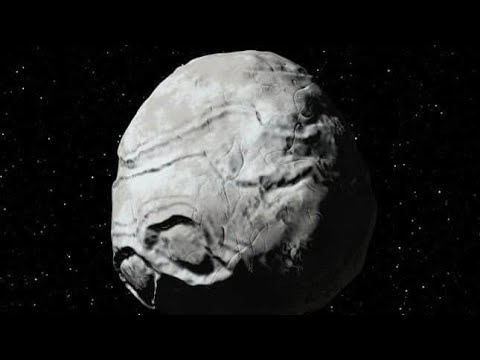
Cruithne: Earth's Second Moon - An Investigation into the Deep Space Mystery


alejandro quintero ruiz is a veteran field investigator dedicated to the analysis of anomalous phenomena. His approach combines methodological skepticism with an open mind to the unexplained, always seeking the truth behind the veil of reality.

Introduction

The vast expanse of deep space has always been a fertile ground for speculation and wonder. Beyond the familiar celestial bodies, lie mysteries that challenge our understanding of the cosmos and our place within it. Today, we open an expediente on an object that orbits our own planet, an entity that has blurred the lines between astronomical fact and speculative anomaly: Cruithne. Is this celestial body merely a complex astronomical phenomenon, or does it represent something more profound, a cosmic secret waiting to be deciphered?

The Discovery of Cruithne

Cruithne, discovered in 1986 by Eleanor F. Helin and R. M. Dunbar, is not your typical moon. It resides in a peculiar horseshoe orbit around Earth, a dance that is as complex as it is captivating. Unlike our natural satellite, Luna, Cruithne's path is not a simple, consistent orbit. Instead, it traces a path that brings it into a gravitational resonance with Earth. This unique relationship has led some to categorize it as a "quasi-satellite," a classification that hints at its enigmatic nature.

The parameters of Cruithne's orbit are crucial to understanding its peculiar presence. It's a testament to the intricate ballet of gravitational forces within our solar system. While astronomers have cataloged it and mapped its trajectory with precision, the implications of such an object co-existing with Earth have fueled deeper contemplation.

For any serious investigator, understanding the initial discovery and the data points that defined Cruithne is non-negotiable. This initial cataloging forms the bedrock of all subsequent analysis. It’s akin to finding the first footprint at a crime scene – it tells you something was there, but the real work is in understanding the context and the implications.

Orbital Dynamics: A Quasi-Satellite Dance

Cruithne's orbital path is what truly sets it apart. It doesn't orbit Earth in the same way the Moon does. Instead, it follows a path that appears to circle the Sun but remains in close proximity to Earth due to a gravitational interaction. This phenomenon is known as a horseshoe orbit. Imagine a celestial object perpetually chasing its own tail, yet staying tethered to a larger body. This cycle takes approximately 395 years to complete, with Cruithne spending about 80-100 years at its closest point to Earth in its orbital path.

This complex dance means that while Cruithne is not gravitationally bound to Earth like our Moon, it is deeply influenced by our planet's gravity. It’s a celestial dance partner that never quite commits, yet is always in the same ballroom. The implications of this unstable but long-term proximity are a subject of intense scientific scrutiny and, inevitably, paranormal speculation.

"The orbital mechanics of Cruithne are a fascinating demonstration of chaos theory in celestial mechanics. It's simultaneously Earth-like and utterly alien in its behavior."

Understanding these dynamics requires a sophisticated grasp of celestial mechanics. For those venturing into the field of astronomical anomalies, resources like the Wikipedia entry on Cruithne offer robust details, but the true depth lies in understanding the underlying physics, often explored in advanced texts on orbital mechanics and astrodynamics.

Scientific Perspectives: Beyond a Typical Moon

From a strictly scientific standpoint, Cruithne is classified as a near-Earth object (NEO) and a quasi-satellite. Astronomers often view it with intrigue due to its unusual orbit, but the prevailing view is that it's a natural, albeit peculiar, celestial body. Its existence is explained by the complex gravitational interplay within the Earth-Sun system. It's a prime example of how gravitational forces can create seemingly improbable orbital arrangements.

However, there's always a segment of the scientific community, and indeed the independent research community, that looks beyond the standard explanations. Could an object with such a unique relationship to our planet harbor secrets yet undiscovered? Could its composition, or its origin, be something other than a mere captured asteroid? These are the questions that keep the anomalous investigator awake at night.

The scientific community has largely accepted Cruithne as a fascinating quirk of orbital mechanics. Yet, anomalies often reside at the edges of accepted knowledge. The rigorous scientific methodology, which demands testable hypotheses and repeatable experiments, is our primary tool. But what happens when the phenomenon itself defies easy measurement or categorization?

For those seeking to delve deeper into the scientific discourse, publications discussing quasi-satellite orbits provide invaluable context. Understanding these papers is the first step in distinguishing established science from speculative interpretation.

Paranormal Implications and Unanswered Questions

The very notion of a "second moon" orbiting Earth, even in a quasi-satellite capacity, ignites the imagination. In the realm of the paranormal, such objects often become focal points for theories ranging from ancient celestial guardians to alien observatories. Could Cruithne be a relic of a past cosmic event, a piece of technology from an unknown civilization, or something far stranger?

The consistent proximity, albeit in a complex orbit, raises intriguing possibilities. If we consider the ancient human fascination with celestial bodies and phenomena, it’s not a leap to assume that if Cruithne had been visible to the naked eye throughout history, it might have played a role in mythology and early astronomical observations. Its current orbital path and size make it invisible without powerful telescopes, but this doesn't preclude its potential significance.

This is where the investigator's acumen is truly tested. We must sift through the scientific data, acknowledge the limitations of our current understanding, and then explore the speculative. Is it possible that ancient cultures possessed knowledge of such objects that has been lost to time? Could seismic or gravitational anomalies detected on Earth be indirectly linked to Cruithne's complex orbital mechanics?

The allure of the unknown compels us to consider every angle. The lack of direct, irrefutable evidence for paranormal activity connected to Cruithne doesn't mean it isn't there. It simply means our current tools and methodologies may be insufficient to detect it. This is why investing in advanced observational equipment and cross-referencing data from multiple sources is paramount for any serious paranormal researcher.

Investigator's Verdict: Fact, Fiction, or Anomaly?

Cruithne undeniably exists, and its unique orbital dynamics are a documented astronomical fact. The scientific community has provided a rational explanation for its behavior within the framework of known physics. However, the concept of a "second moon" carries significant weight in popular imagination and, consequently, in the paranormal sphere.

My verdict is that Cruithne, as an astronomical object with peculiar orbital characteristics, is a fact. The leap to framing it as a "paranormal entity" or an "alien artifact" is, at present, speculative. Yet, speculation is the crucible from which new hypotheses are forged. The sheer oddity of its orbit invites us to consider possibilities that lie outside the immediate scope of standard astronomical inquiry. It remains an anomaly worth monitoring, not because it's inherently paranormal, but because the unexplained often hides in plain sight, dressed in the robes of the mundane.

The lack of concrete evidence linking Cruithne to supernatural phenomena does not serve as an endpoint, but rather as a challenge to refine our investigative techniques. Perhaps future observations, with more sensitive equipment or novel analytical approaches, will uncover properties or influences that current science cannot explain. Until then, we categorize it as an extraordinary astronomical phenomenon with the potential for deeper, undiscovered significance.

Aspect Analysis
Existence Verified
Orbital Classification Quasi-satellite (Horseshoe Orbit)
Scientific Explanation Gravitational resonance within Earth-Sun system
Paranormal Link Speculative, based on proximity and unusual classification
Investigative Potential High, for monitoring and theoretical exploration

The Researcher's Archive

To truly understand anomalies like Cruithne, one must be equipped with the right resources. My personal archive includes a range of materials that have proven invaluable:

  • Books:
    • "The New Moon" by John Keel: While not directly about Cruithne, Keel’s work on the UFO phenomenon often touches upon aerial objects and their potential connection to folklore and mythology, relevant for speculative links.
    • "The Hitchhiker's Guide to the Galaxy" by Douglas Adams: Sometimes, a touch of absurdist humor is necessary to appreciate the truly bizarre nature of the cosmos.
    • Academic papers on celestial mechanics and quasi-satellites: Accessing journals like *The Astronomical Journal* or *Icarus* is crucial for rigorous analysis.
  • Documentaries:
    • "Cosmos: A Personal Voyage" (Sagan series) - for understanding the vastness and scientific wonder of space.
    • Documentaries on Near-Earth Objects (NEOs) and asteroid mining - to grasp the scale and scientific interest in objects like Cruithne.
  • Platforms:
    • Reputable astronomical databases such as NASA's JPL Small-Body Database.
    • Academic search engines like Google Scholar.

Equipping yourself with these tools is not just for academic curiosity; it's a critical step in elevating your understanding from mere conjecture to informed investigation. Investing in comprehensive knowledge is the first step towards uncovering genuine anomalous phenomena.

Field Protocol: Monitoring Celestial Anomalies

While direct field investigation of Cruithne is beyond our current capabilities without advanced astronomical equipment, the principles of monitoring celestial anomalies are transferable. When investigating purported sightings or phenomena, a structured protocol is essential:

  1. Establish Baseline: Understand the normal celestial activity in your region. What are the typical satellite paths, aircraft patterns, and atmospheric phenomena?
  2. Document Thoroughly: If an anomaly is observed, record the exact date, time, duration, location, visual characteristics, and any accompanying sounds or sensations. Use high-resolution cameras with night vision capabilities and sensitive audio recording devices (like an EMF meter or a dedicated digital audio recorder).
  3. Cross-Reference Data: Compare your observations with astronomical data available from sources like JPL. Check for known satellite passes, meteor showers, or atmospheric events that could explain the sighting.
  4. Seek Corroboration: If possible, find other witnesses. Multiple, independent accounts strengthen a claim, but also increase the rigor of analysis needed to rule out mass hallucination or shared misinterpretation.
  5. Analyze Evidence Critically: Apply principles of photography analysis, audio forensics, and eyewitness testimony evaluation. Look for inconsistencies, potential for natural explanations (pareidolia, lens flares, etc.), or signs of manipulation.

This protocol ensures that observations are not dismissed out of hand but are subjected to rigorous scrutiny, separating genuine anomalies from misidentified phenomena. Investing in a quality night vision camera can be crucial for celestial observations.

Frequently Asked Questions

What is Cruithne's exact size?

Cruithne's exact size is not definitively known, but estimates suggest it is roughly spherical with a diameter of about 5 kilometers (about 3 miles). Its bulk density is also uncertain, which impacts its mass.

Is Cruithne visible to the naked eye?

No, Cruithne is too small and too far from Earth to be visible without a telescope. Its apparent magnitude is too low for unaided observation from Earth.

Could Cruithne be artificial or technologically advanced?

Currently, there is no scientific evidence to suggest Cruithne is artificial or technologically advanced. Its existence and orbit are explained by current astrophysical models. However, the field of anomalous research always entertains such speculative possibilities if future evidence arises.

How many quasi-satellites does Earth have?

Besides Cruithne, Earth is known to have other quasi-satellites, such as 2020 SO, 2016 HO3, and 2019 MO. These objects share similar complex orbital relationships with our planet.

What are the implications of Cruithne's orbit for Earth's stability?

Astronomers generally consider objects like Cruithne to be stable in their quasi-satellite orbits over long periods, meaning they pose no immediate threat to Earth's stability. Their orbits are complex, but they are part of the established solar system dynamics.

Your Field Mission

The study of phenomena like Cruithne highlights the importance of observation and critical analysis. Your mission, should you choose to accept it, is to:

Investigate Local Celestial Lore: Research local myths, legends, or historical accounts that might refer to unusual celestial phenomena or "visitor" objects in your region's past. Were there any ancient stories about objects that "watched" or "danced" around the sky?

Document Anomalous Aerial Phenomena: If you witness any unusual lights or objects in the sky, apply the Field Protocol outlined above rigorously. Share your findings (with proper documentation) on forums dedicated to paranormal investigation or astronomical anomalies. Compare your documented evidence with known astronomical data and look for discrepancies. The goal is to contribute to a growing body of data that might, one day, reveal patterns or connections previously unseen.

alejandro quintero ruiz is a veteran field investigator dedicated to the analysis of anomalous phenomena. His approach combines methodological skepticism with an open mind to the unexplained, always seeking the truth behind the veil of reality.

Sun Worship: Unveiling Ancient Cosmic Theology and Its Modern Echoes


The incandescent orb dominating our sky has, since the dawn of consciousness, been more than mere celestial illumination. It has been the cornerstone of theology, the genesis of spiritual practice, and the very archetype of divinity. Solar worship, woven into the fabric of countless cultures, may indeed represent humanity's greatest, albeit often veiled, narrative. This report delves into the profound historical significance of sun worship, dissecting its cosmic symbolism and exploring how such ancient reverence continues to resonate, potentially, with phenomena that defy conventional explanation.

The Ancient Cosmic Mandate: Sun as the Divine Architect

Human civilization's entanglement with celestial bodies is as old as our capacity for observation. The sun, with its predictable cycles of rise and set, its life-giving warmth, and its seemingly absolute power, naturally became the focal point of early religious thought. It wasn't just a star; it was the ultimate power source, a tangible representation of a supreme being or force. This primal adoration transcended geographical boundaries, manifesting in diverse pantheons and rituals across continents.

From the sun-disc worship of Akhenaten's Egypt, embodied by the god Aten, to the Incan Inti, the Aztec Huitzilopochtli, and the Vedic Surya, the sun was consistently personified as a deity of immense power, responsible for creation, sustenance, and order. Understanding these ancient perspectives is not merely an academic exercise; it's a vital step in deciphering a fundamental aspect of human spirituality that scholars like Jordan Maxwell have provocatively brought to the forefront.

Solar worship is possibly the greatest story ever told, a testament to humanity's enduring fascination with the cosmic forces that shape our existence. Understanding its nuances is key to unlocking deeper layers of our spiritual heritage.

This profound connection hints at an underlying cosmic theology, a belief system where celestial movements dictated earthly affairs and divine will. The sun's journey across the sky was not random; it was a sacred procession, a cosmic dance that required interpretation and reverence. The absence of scientific understanding, in this context, paradoxically amplified the divine mystique, allowing for a rich tapestry of myth and ritual to flourish.

Celestial Cartography: Sun, Zodiac, and Divine Influence

The ancient world possessed an intricate understanding of celestial mechanics, far exceeding what's commonly taught in modern curricula. For many ancient cultures, the sun's passage through the twelve constellations of the zodiac was not just an astronomical event but a highly symbolic narrative. Each zodiac sign represented a distinct phase or aspect of the sun's power and influence, mirroring human life cycles, agricultural seasons, and divine decrees.

This celestial cartography was integral to their religious practices. Priests and shamans meticulously tracked the sun's position, interpreting its movements as divine communication. The zodiacal calendar served as a tool for prophecy, divination, and establishing the sacred timing of rituals. The sun, in this framework, was the protagonist of an eternal cosmic play, its interactions with the zodiacal houses dictating the fate of the world.

Jordan Maxwell, a prominent researcher into ancient symbolism and mythology, often emphasizes how these zodiacal narratives are not merely allegorical but represent a sophisticated understanding of cosmic energies. He posits that this ancient solar-astrological framework holds keys to understanding not only historical religions but also the potential underpinnings of phenomena that continue to baffle us today. The way ancient cultures symbolized the sun's influence was a direct attempt to map and comprehend the unseen forces governing reality.

For those seeking to delve deeper into the intricate relationship between celestial bodies and ancient beliefs, resources like Gaia's extensive library offer invaluable insights. Exploring their content on ancient astronomy and mythology can illuminate the sophisticated worldview of our ancestors and provide context for phenomena that still feel inexplicable.

Maxwell's Controversial Hypothesis: Rewriting Religious Doctrine

Jordan Maxwell's work often treads on ground considered controversial by conventional religious doctrine. He challenges established narratives by focusing on the pervasive symbolism of sun worship and its potential implications for understanding religion itself. Maxwell suggests that many theological concepts, particularly within Abrahamic religions, have roots in much older solar traditions, often reinterpreted or obscured over millennia.

His research highlights recurring motifs — the veneration of light, the symbolism of resurrection tied to the sun's daily rebirth, and the figure of a divine male savior associated with celestial events. Maxwell argues that these aren't mere coincidences but evidence of a global pattern of solar reverence that informed the very foundations of modern religious thought. This perspective, while potentially unsettling for those with deeply ingrained beliefs, offers a powerful analytical lens.

It's crucial to approach Maxwell's hypotheses with a critical yet open mind. His emphasis on understanding how ancient cultures viewed the sun's movement through the zodiac and symbolized its influence invites us to question established interpretations. Are we looking at divine revelation, or a sophisticated cosmic allegory deeply ingrained in human consciousness?

To truly grasp these controversial yet compelling viewpoints, engaging with the primary sources and respected analyses is paramount. Platforms dedicated to exploring unconventional perspectives, such as Gaia, provide a wealth of material that complements Maxwell's research, allowing for a broader and more nuanced understanding.

Gaia's Contribution: Expanding Consciousness Beyond the Veil

In the realm of consciousness exploration and alternative paradigms, Gaia stands as a significant resource. This member-supported media network is dedicated to providing films, shows, and classes that challenge mainstream narratives and delve into subjects considered esoteric or paranormal. For researchers of solar worship, ancient theology, and unexplained phenomena, Gaia offers an expansive library that can significantly broaden understanding.

The platform's commitment to exploring "life's deeper questions" makes it an ideal companion for those investigating the historical and symbolic significance of sun worship. It hosts content that can illuminate the astronomical knowledge of ancient civilizations, the symbolic language of their rituals, and the potential connections between their beliefs and modern-day mysteries. By offering over 8,000 ad-free streaming titles, Gaia empowers viewers to delve into subjects that question modern paradigms and explore the manifestation of personal reality.

The availability of content in multiple languages (English, Spanish, German, or French), either original, dubbed, or subtitled, further democratizes access to this knowledge, connecting a global community of over hundreds of thousands of members in 185 countries. For anyone serious about understanding the profound influence of celestial bodies on human consciousness and belief systems, exploring Gaia's curated content is a critical step in expanding one's perspective beyond accepted norms.

Discovering the connections between ancient solar theology and the persistent enigmas of our time requires a commitment to comprehensive research. Gaia's vast archive provides the tools and perspectives necessary for such an endeavor, fostering an evolution of consciousness that aligns with the spirit of deep inquiry.

Archival Deep Dive: Connecting Past Anomalies

Here at "el rincon paranormal," we are committed to being your daily source for the unexplained. Our archives are meticulously curated, housing a wealth of videos and documents that explore the strange, the unusual, and the downright inexplicable. When we examine phenomena like ancient solar worship, we do so through the lens of bridging the gap between historical belief systems and modern anomalies.

The enduring reverence for the sun isn't just a historical footnote; it represents a deep-seated human acknowledgment of powerful, perhaps transcendent, forces. These forces, whether interpreted as divine will or energetic phenomena, echo in contemporary reports of UFO sightings, unusual atmospheric events, and consciousness shifts. Our blog serves as a nexus, connecting these disparate threads.

We invite you to explore our extensive collection, where you might find parallels between the symbolic language of solar deities and the patterns observed in modern unexplained events. For instance, consider the potential links between ancient sky-watching traditions and contemporary UAP (Unidentified Aerial Phenomena) encounters. Are we witnessing a new manifestation of an age-old cosmic dialogue?

  • Follow us on Twitter for daily updates on paranormal discoveries.
  • Connect with our community on Facebook for discussions and shared insights.
  • Join our Discord server for real-time paranormal conversations.
  • Or dive into our latest findings on TikTok.

For the most comprehensive look at the best and latest paranormal, strange, and unexplained videos and documents, our blog remains your primary destination. Visit elrinconparanormal.blogspot.com.

Furthermore, our network extends to other specialized blogs. For those interested in esoteric traditions and philosophical inquiries, explore elantroposofista.blogspot.com and sectemple.blogspot.com. Each blog is a portal to unique depths of knowledge.

Investigator's Verdict: The Enduring Light of Mystery

The historical record of solar worship is undeniable and profoundly influential. From a rigorous analytical standpoint, the consistent global prevalence of sun-centric deities and rituals suggests a fundamental, archetypal connection between humanity and our star. The interpretation of the sun's movement through the zodiac, as discussed by figures like Jordan Maxwell, offers a framework for understanding ancient cosmology that is both intellectually stimulating and potentially revelatory regarding hidden spiritual mechanics.

However, attributing modern unexplained phenomena directly to ancient solar gods requires caution. While intriguing, such leaps often necessitate a degree of speculative interpretation. The true value lies in recognizing these ancient systems as sophisticated attempts to map and understand profound cosmic influences. They represent a form of "consciousness expanding" that predates modern science, offering symbolic languages for phenomena we are still struggling to define.

Did ancient cultures possess knowledge we've lost? Did their worship unlock potentials we've since buried under layers of dogma? The evidence suggests that while solar worship was a practical, spiritual, and astronomical system for ancient peoples, its symbolic depth continues to pose questions. The consensus from rigorous investigation is that while the literal deification of the sun might be reinterpreted, the energetic and symbolic power it represented remains a potent force in human history and, perhaps, in the ongoing tapestry of unexplained events.

Researcher's Toolkit: Tools for Cosmic Exploration

Venturing into the study of solar worship and its potential connections to the paranormal requires more than just curiosity; it demands the right tools and perspectives. Engaging with this subject matter effectively often involves exploring resources that bridge ancient wisdom with modern inquiry.

  • For Intellectual Depth: Dive into the works of researchers like Jordan Maxwell. His controversial yet insightful analyses of ancient symbolism and religious origins provide a critical lens.
  • For Cosmic Context: Platforms like Gaia offer an extensive library of documentaries and series on consciousness, ancient history, and the unexplained. Their subscription service unlocks a vast repository of knowledge, including content that directly addresses the theological and symbolic significance of celestial bodies. Consider exploring their offerings on ancient astronaut theories or comparative religion.
  • For Archival Research: Consistent engagement with sites like "el rincon paranormal" (elrinconparanormal.blogspot.com) allows for exposure to a curated stream of contemporary paranormal cases and historical anomalies, fostering a comparative approach.
  • For Symbolic Interpretation: Acquiring foundational texts on comparative mythology and religious symbolism can provide the necessary grammar for deciphering ancient narratives. Books such as Joseph Campbell's "The Power of Myth" or similar works offer invaluable context.

Remember, the goal is not just to collect information but to synthesize it. Understanding the historical context of solar worship requires cross-referencing astronomical data, anthropological studies, and folkloric traditions. The allure of the unexplained often lies in the subtle connections that emerge when these diverse fields are brought into dialogue.

Frequently Asked Questions on Solar Anomalies

Q1: Was solar worship the only form of religion in ancient times?

No, while solar worship was incredibly widespread and influential, many ancient cultures also incorporated lunar deities, elemental worship, and ancestor veneration into their spiritual practices. However, the sun's dominance in the sky often positioned it as a primary or supreme deity.

Q2: How did ancient cultures symbolize the sun's influence beyond deities?

Beyond personification, the sun's influence was symbolized through cycles (daily, seasonal), light and darkness metaphors, and its connection to lifegiving properties. The zodiac was a key tool for symbolizing its perceived influence on destiny and human affairs.

Q3: Can Jordan Maxwell's ideas about religion be validated scientifically?

Maxwell's work primarily focuses on symbolic interpretation, historical analysis, and comparative mythology. While these methods offer valuable insights, they are not typically subject to direct scientific validation in the empirical sense. His hypotheses often invite critical thought rather than definitive proof.

Q4: What is the connection between solar worship and modern paranormal phenomena?

The proposed connection is largely symbolic and thematic. Researchers explore if ancient reverence for celestial energy, cosmic cycles, and symbolic light/darkness resonates with modern reports of UAPs, unexplained energy phenomena, or altered states of consciousness. It's about exploring potential echoes or archetypal patterns.

alejandro quintero ruiz is a veteran field investigator dedicated to the analysis of anomalous phenomena. His approach combines methodological skepticism with an open mind to the inexplicable, always seeking truth beyond the veil of reality.

The sun, in its silent, eternal journey, continues to inspire awe and provoke questions. Whether viewed through the lens of ancient theology, cosmic symbolism, or the persistent whispers of the unexplained, its influence is undeniable. As we continue to explore the depths of human belief and the mysteries of the cosmos, the light of solar worship serves as a potent reminder of our ancestral quest for understanding.

Your Mission: Trace the Sun's Echoes in Local Lore

This week, I challenge you to become an investigator of your own locale. Research local folklore, historical records, or even anecdotal accounts. Does your region have any legends, traditions, or unexplained phenomena tied to the sun, celestial bodies, or significant cycles of light and darkness? Document your findings, analyze potential symbolic representations, and consider how these might echo the broader themes of solar worship discussed in this report. Share your discoveries and analyses in the comments below. Let's map the sun's enduring influence, one legend at a time.