Followers

Mostrando las entradas con la etiqueta astronomy. Mostrar todas las entradas

The Mystery of Earth's Sacred Places: An Ancient Aliens Investigation

Image

From the towering stones of megalithic structures to the hushed reverence of ancient temples, humanity has long been drawn to certain sites, imbuing them with profound spiritual significance. But what if these hallowed grounds were more than just places of worship? What if they served as powerful energy conduits, astronomical observatories, or even points of contact with beings not of this world? The series Ancient Aliens delves into this very question, exploring the possibility that extraterrestrial intelligence played a role in the creation and purpose of Earth's most sacred places.

Introduction: Sacred Sites and Extraterrestrial Theories

Throughout history, certain locations have been revered as sacred, attracting pilgrims and sparking wonder. These sites, whether natural formations or meticulously constructed monuments, are often associated with miracles, divine encounters, and extraordinary phenomena. The Ancient Aliens program posits that the common threads weaving through these disparate locations – advanced construction techniques, precise astronomical alignments, and palpable energetic signatures – might point to a single, unifying explanation: extraterrestrial visitation. This investigation seeks to analyze the evidence, considering whether these sacred places were merely products of human ingenuity or deliberate constructions by an advanced, ancient intelligence.

Enigmatic Structures: Temples, Monuments, and Beyond

The sheer scale and complexity of many ancient structures defy conventional explanations of primitive technology. Consider, for instance, the pyramids of Giza or the megalithic stones of Baalbek, feats of engineering that continue to puzzle archaeologists. The notion that these were built by early humans using rudimentary tools is, for many, an insufficient explanation. As one viewer notes, "I would bet the India people carved the Ajunta? Cave complex’s with Bamboo Chisels and Rock hammers ??? All These Unknown Complexes of Long ago construction are Mind Blowing and We Still Have No Clue as To How these Wonders of the World Were Created..." This sentiment is echoed in discussions surrounding the carver of the Ajunta caves and the construction of the Great Pyramids, highlighting a persistent gap between our understanding of ancient capabilities and the tangible evidence left behind.

Recommended Gear for Investigation

ProductDescriptionBuy
Cryptozoology A To Z: The Encyclopedia Of Loch Monsters Sasquatch Chupacabras And Other Authentic M: The Encyclopedia of Loch Monsters, Sasquatch, Chupacabras, and Other Authentic Mysteries of NatureAn excellent choice to complement your research on this topic.View on Amazon
The Big Book of Paranormal: 300 Mystical and Frightening Tales From Around the WorldAn excellent choice to complement your research on this topic.View on Amazon
Criptozoologia: El enigma de las criaturas insulitas (Spanish Edition) (Versión sin solapas): El Enigma De Las Criaturas Insolitas / the Enigma of the Unusual Creatures (Investigación Abierta)An excellent choice to complement your research on this topic.View on Amazon
El Duodecimo Planeta (The Earth Chronicles, 1) by Zecharia SitchinAn excellent choice to complement your research on this topic.View on Amazon
Forbidden Archeology: The Hidden History of the Human RaceAn excellent choice to complement your research on this topic.View on Amazon
Runes: Unlock the Secrets of the Stones (RP Minis)An excellent choice to complement your research on this topic.View on Amazon
The H. P. Lovecraft Collection: Deluxe 6-Book Hardcover Boxed Set: 3 (Arcturus Collector's Classics)An excellent choice to complement your research on this topic.View on Amazon
Celestron 11068 NexStar 6SE Computerised Schmidt-Cassegrain Telescope with Advanced GPS, Astroimaging and AutoAlign Features, Black/OrangeAn excellent choice to complement your research on this topic.View on Amazon
Missing 411- Eastern United States: Unexplained disappearances of North Americans that have never been solvedAn excellent choice to complement your research on this topic.View on Amazon
Ghost-Hunting For Dummies [Idioma Inglés] An excellent choice to complement your research on this topic.View on Amazon

The comparison between sites like the pyramids in Caral, Peru, and those in Egypt and Mesopotamia provides further fodder for this hypothesis. A particularly insightful comment from a viewer states: "I am extremely impressed with the comparison of the pyramids in Caral (Peru) with structures in Egypt/Mesopotamia, which were constructed almost simultaneously. This really reinforces the hypothesis of an outside intervention or a shared global knowledge! 🤯". This simultaneous construction across vast distances, without apparent communication, suggests a possibility of shared knowledge or direct intervention from a common, advanced source. The idea that these were "machined" rather than simply carved, perhaps employing methods akin to Electrical Discharge Machining, is also a compelling, albeit speculative, proposition when considering the precision of the stonework.

Powerful Energy Centers: Ley Lines and Sacred Geometry

Beyond their physical construction, many sacred sites are believed to be situated on powerful energetic lines, often referred to as ley lines. These invisible pathways are thought to crisscross the globe, converging at locations of significant spiritual or historical importance. Ancient cultures, it is theorized, possessed the knowledge to identify and harness these energies, constructing their temples and monuments precisely at these nexus points. Sacred geometry, the study of geometric shapes and their symbolic meaning, also plays a crucial role in this interpretation. The precise mathematical ratios and patterns found in ancient architecture are seen by some as evidence of a sophisticated understanding of universal laws, possibly imparted by extraterrestrial teachers.

Astronomical Alignment: Celestial Clues in Stone

Another common characteristic of sacred sites is their precise alignment with celestial events. Solstices, equinoxes, and the movements of stars and planets were meticulously tracked and incorporated into the design of these structures. The Ajanta Caves in India, for example, are noted for their alignment with the solstices, a testament to the astronomical prowess of their builders. "Furthermore, the analysis of the Ajanta caves being precisely aligned with the Solstices is also astonishing, demonstrating that ancient people possessed technology and astronomical knowledge far beyond imagination," remarks a viewer. This level of accuracy suggests a deep understanding of celestial mechanics, potentially facilitated by advanced astronomical tools or knowledge shared by off-world visitors.

The Extraterrestrial Intervention Hypothesis

The "Ancient Aliens" theory, in essence, proposes that extraterrestrial beings visited Earth in antiquity and influenced the development of human civilization, particularly in the realms of religion, construction, and esoteric knowledge. Proponents suggest that these "ancient astronauts" may have guided humanity in building monumental structures, shared advanced scientific and astronomical knowledge, and even played a role in the formation of early belief systems. The recurring motifs of sky gods, winged deities, and otherworldly visitors across diverse ancient cultures are cited as potential evidence for this theory. Some comments even humorously reflect this premise, such as "My Racoon is an ancient alien theorist, like me."

Whispers from the Collective: Audience Reactions

The discourse surrounding ancient sites and potential extraterrestrial influence is rich with diverse opinions and personal experiences. While many viewers express awe and curiosity, others adopt a more skeptical or even dismissive stance. Some comments reflect a strong belief in alien existence, with statements like "i believe aliens exist!👽" and "Aliens walk amongst us!". Others engage in speculative, philosophical musings: "What if every living breathing water sky land, entity every is a different alien races and this all we have left in the multi verse, earth is the Ark.memories,lost erased the simulation salvation and resets, keeps stability of species, it's working,God adjusting,as needed".

There are also practical suggestions, such as "Most of these would be resolved if and when we LIDAR all of these sights😅," indicating a desire for tangible, scientific investigation. Contrasting viewpoints emerge regarding religious sites as well, with discussions about the potential for conflict or shared divinity: "holyland is hateland. they all 3 hate each other" and the assertion that "The 'God Of The Old Testament' , Yahweh, is also God Of The Universe. Allah, Jesus, Shiva, Brahama, Vishnu, Buddha, and all other Alien Beings pray to Yahweh." These varied reactions underscore the deeply personal and often spiritual nature of interpreting humanity's ancient past.

Some comments, however, introduce elements of doubt or critique the presentation itself. For instance, the observation about the "music" background suggests that production quality can impact the reception of the content: "The "music" background SUCKS". Others attempt to provide alternative explanations or corrections based on their own interpretations of religious texts, as seen in the clarification regarding King Solomon’s abilities and his interactions with Djinns.

Investigator's Verdict: Between Faith and Fact

As an investigator of the unexplained, my approach to the mystery of Earth's sacred places is one of cautious pragmatism. The evidence presented – the advanced construction, astronomical precision, and global distribution of similar monumental sites – is undeniably intriguing. It challenges our conventional understanding of ancient capabilities and demands serious consideration. The Ancient Aliens hypothesis, while sensational, taps into a legitimate fascination with the unexplained aspects of our history.

However, extraordinary claims require extraordinary evidence. While the theory of extraterrestrial intervention offers a compelling narrative, it must be rigorously tested against all available scientific and archaeological data. Alternative explanations, such as the sophisticated, yet often underestimated, ingenuity of ancient human societies, rigorous astronomical observation developed over millennia, and unique cultural practices, must be fully explored. The existence of ley lines and sacred geometry, while popular concepts in esoteric circles, often lack empirical validation in mainstream scientific discourse. Therefore, while acknowledging the profound mystery, I maintain that a definitive conclusion requires more than just speculation; it demands concrete, repeatable evidence that transcends cultural interpretation and aligns with established scientific principles. The possibility of advanced ancient knowledge, regardless of its origin, remains a fertile ground for investigation.

The Investigator's Archive

For those seeking to delve deeper into the enigmatic tapestry of human history and the possibility of ancient extraterrestrial influence, a curated selection of resources can provide valuable context and further avenues of inquiry. Examining primary texts, archaeological reports, and scholarly debates is crucial for forming a well-rounded perspective.

  • Books: Explore works by authors who critically analyze ancient civilizations, megalithic construction, and astronomical practices. Look for both proponents and skeptics of the ancient astronaut theory to gain a balanced view.
  • Documentaries: Beyond Ancient Aliens, seek out documentaries focusing on specific archaeological sites, ancient technologies, and historical mysteries. Consider productions from reputable historical networks and independent researchers.
  • Academic Journals & Databases: For a rigorous understanding, consult peer-reviewed archaeological, anthropological, and astronomical journals. Websites like JSTOR or Academia.edu can be valuable repositories of research.
  • Reputable Online Resources: Websites such as the Smithsonian, National Geographic, and university archaeology department pages offer well-researched articles on ancient sites and cultures.

Frequently Asked Questions

What is the main argument of the "Ancient Aliens" theory regarding sacred sites?
The theory suggests that extraterrestrial beings visited Earth in antiquity and influenced the creation and purpose of sacred sites, using them as places of worship, energy centers, or contact points.
What evidence is typically cited to support this theory?
Evidence includes the advanced construction techniques of ancient monuments, precise astronomical alignments, geographically dispersed sites with similar characteristics, and recurring motifs of sky deities in ancient art and mythology.
Are there alternative explanations for these ancient sites?
Yes, alternative explanations focus on the ingenuity and advanced knowledge of ancient human civilizations, including sophisticated engineering, extensive astronomical observation, and complex cultural and religious practices.
What are some examples of sacred sites discussed in relation to this theory?
Examples often include the pyramids of Egypt and Mesoamerica, Stonehenge, the Ajanta Caves, and various megalithic structures worldwide.

Your Mission: Field Investigation Protocol

The mystery of Earth's sacred places beckons. Your mission, should you choose to accept it, is to approach these sites, whether physically or through diligent research, with an investigator's mindset. Observe, document, and question. Consider the following protocol:

  1. Site Selection: Identify a sacred site that intrigues you, perhaps one with documented historical or alleged paranormal activity.
  2. Background Research: Compile all available historical, archaeological, and anecdotal information about the site. Cross-reference sources for accuracy.
  3. Observation & Documentation: If visiting in person, meticulously document your surroundings. Record audio, take photographs, and note any unusual sensory experiences or environmental anomalies. Maintain a detailed log.
  4. Hypothesis Formulation: Based on your research and observations, develop your own working hypothesis regarding the site's purpose and significance, considering both conventional and unconventional explanations.
  5. Analysis & Reporting: Analyze your findings objectively. Compare your observations with existing theories and evidence. Document your conclusions, acknowledging any limitations or unanswered questions.

The past holds secrets waiting to be uncovered. Your critical thinking and dedication are the keys to unlocking them.

Share your own experiences, theories, or questions in the comments below. Have you visited a place that felt inexplicably sacred? Did you encounter anything out of the ordinary? Your insights are valuable to this ongoing investigation. Don't forget to share this post with fellow explorers of the unknown!

Investigator's Note: True paranormal research doesn't fund itself. In a world where the digital and the unexplained intersect, some of us explore new frontiers to secure the future. Do you dare to be part of the vanguard? Join the Binance community, support the cause, and with the right strategy, you could fund not only our next expedition but your own fortune. The next great discovery could be just a click away.

3I/ATLAS: Harvard Claims It's a 'Swarm' with Signs of Life

Image

In the vast, cold expanse of space, conventional explanations often crumble when confronted with sheer, unadulterated evidence. The celestial body designated 3I/ATLAS, initially dismissed as a mere comet, has become the epicenter of a scientific maelstrom. Recent analyses have peeled back its icy facade, revealing anomalies that are forcing astrophysicists to recalibrate their understanding of cosmic phenomena. The official narrative? It's no longer holding water.

The 'Swarm' Hypothesis: A Collective Entity?

Leading scientists at Harvard University have put forth a radical new theory: the "Swarm" hypothesis. This isn't about a singular rogue object hurtling through the void. Instead, evidence points towards 3I/ATLAS being a complex, multi-component structure. Imagine not one entity, but a tightly-knit formation, an organized collective moving with coordinated purpose. This dramatically shifts the paradigm from a simple astronomical body to something far more intricate, almost like a celestial hive.

This collective nature introduces a layer of complexity previously unimagined for cometary objects. It challenges our fundamental assumptions about formation and behavior in the solar system. The coordinated movement suggests an underlying mechanism or a shared origin far more sophisticated than previously theorized.

Recommended Gear for Investigation

ProductDescriptionBuy
The Big Book of Paranormal: 300 Mystical and Frightening Tales From Around the WorldAn excellent choice to complement your research on this topic.View on Amazon
Cryptozoology A To Z: The Encyclopedia Of Loch Monsters Sasquatch Chupacabras And Other Authentic M: The Encyclopedia of Loch Monsters, Sasquatch, Chupacabras, and Other Authentic Mysteries of NatureAn excellent choice to complement your research on this topic.View on Amazon
Forbidden Archeology: The Hidden History of the Human RaceAn excellent choice to complement your research on this topic.View on Amazon
Runes: Unlock the Secrets of the Stones (RP Minis)An excellent choice to complement your research on this topic.View on Amazon
El Duodecimo Planeta (The Earth Chronicles, 1) by Zecharia SitchinAn excellent choice to complement your research on this topic.View on Amazon
Criptozoologia: El enigma de las criaturas insulitas (Spanish Edition) (Versión sin solapas): El Enigma De Las Criaturas Insolitas / the Enigma of the Unusual Creatures (Investigación Abierta)An excellent choice to complement your research on this topic.View on Amazon
The H. P. Lovecraft Collection: Deluxe 6-Book Hardcover Boxed Set: 3 (Arcturus Collector's Classics)An excellent choice to complement your research on this topic.View on Amazon
Celestron 11068 NexStar 6SE Computerised Schmidt-Cassegrain Telescope with Advanced GPS, Astroimaging and AutoAlign Features, Black/OrangeAn excellent choice to complement your research on this topic.View on Amazon
Tapiz de mapa del mundo antiguo, diseño vintage de mapa del mundo, tapiz de distribución geográfica para colgar en la pared, póster educativo de mapa del mundo del Atlas histórico marrón, para pared,An excellent choice to complement your research on this topic.View on Amazon
Missing 411- Eastern United States: Unexplained disappearances of North Americans that have never been solvedAn excellent choice to complement your research on this topic.View on Amazon

Unsettling Discoveries: A Pulsating Heart and Ancient Life

The situation escalates from intriguing to profoundly disturbing when we examine the internal characteristics attributed to 3I/ATLAS. Reports confirm a strange, rhythmic "heartbeat" emanating from the object. This isn't the predictable cycle of a stellar body; it implies an internal, active process. Merging this with the detection of "building blocks of life" – ancient biological components – paints a picture that defies easy categorization. How can a single celestial object possess a pulsing core, biological vestiges, and exhibit organized, swarm-like locomotion?

The presence of what are being described as "prehistoric life bricks" is, frankly, extraordinary. These aren't mere organic molecules; they are suggestive of actual biological structures, albeit ancient ones. Connecting this with the object's energetic signature, its "heartbeat," opens speculative avenues that border on the biological, the artificial, or perhaps something entirely alien to our current understanding.

Implications for History: Rewriting Our Cosmic Story

As the disparate pieces of evidence begin to align, a new, potentially paradigm-shifting image emerges. The confluence of swarm behavior, a biological signature, and a pulsating energy source challenges our established timelines and origins. If objects like 3I/ATLAS are more common than we believed, or if they represent a mechanism for seeding life across the cosmos, then our understanding of our own history, and indeed the history of life itself, may need a drastic revision. This isn't just about astrophysics; it's about potentially unlocking secrets that could redefine humanity's place in the universe.

The implications extend beyond scientific theory. If such complex, potentially life-bearing structures are traversing interstellar or interplanetary space, it raises profound questions about panspermia, the origin of life on Earth, and the possibility of extraterrestrial intelligence. The coming years promise intense scrutiny of 3I/ATLAS and similar phenomena.

Observational Tools: Equipped for the Unknown

Observing such phenomena requires robust instrumentation. For those interested in the tools used to capture images of objects like 3I/ATLAS, or for enthusiasts looking to peer into the cosmos themselves, several options stand out. The Celestron CGEM II 800 EdgeHD 8"telescope was instrumental in the imaging process featured in related video analyses. For aspiring astronomers wanting to track celestial events, including potentially other anomalous objects, suitable telescopes include:

Researcher's Verdict: Beyond Conventional Astronomy

My assessment of the data surrounding 3I/ATLAS is straightforward: it defies simple classification. The "Swarm" hypothesis, while speculative, offers a framework to begin interrogating the interconnected anomalies. The biological components and the rhythmic pulsations push this object far beyond the realm of a typical comet or asteroid. Is it a natural phenomenon we simply haven't encountered before, or are we looking at something engineered? The evidence, while preliminary, leans towards the extraordinary. This demands rigorous, unbiased investigation, free from the constraints of existing paradigms. We must remain open to the possibility that our current models of celestial mechanics and biology are incomplete, perhaps fundamentally so.

This isn't the first time astronomical observations have yielded perplexing results. Throughout history, celestial events have sparked debate, challenged scientific dogma, and fueled our collective imagination. The ongoing analysis of 3I/ATLAS serves as a potent reminder that the universe is far stranger and more complex than we often assume. My own experiences investigating unexplained aerial phenomena have often pointed to similarly elusive objects that defy conventional explanation, hinting at processes and entities unknown to standard science.

Frequently Asked Questions

  1. What is the 'Swarm' hypothesis regarding comet 3I/ATLAS?

    The 'Swarm' hypothesis, proposed by Harvard scientists, suggests that comet 3I/ATLAS is not a single object but rather a complex structure composed of multiple components moving together.

  2. What are the 'building blocks of life' detected within 3I/ATLAS?

    The analysis of 3I/ATLAS has revealed the presence of ancient biological components, described as 'building blocks of life', which challenges conventional explanations for its composition.

  3. What does the 'rhythmic heartbeat' of 3I/ATLAS signify?

    The object exhibits a peculiar rhythmic 'heartbeat', a pulsating characteristic that, combined with its swarm-like movement and biological components, deepens the mystery surrounding its true nature.

  4. How does the 3I/ATLAS discovery challenge current physics?

    The anomalies observed in 3I/ATLAS, including its complex structure, biological constituents, and rhythmic pulsations, exceed the explanatory power of classical physics, prompting new scientific inquiries.

Your Field Mission

The universe continues to present us with enigmas that test the limits of our knowledge. 3I/ATLAS is a prime example, demanding we look beyond the surface. Your mission, should you choose to accept it, is to continue seeking knowledge. Engage with the data, question the assumptions, and share your findings. The pursuit of truth in the unexplained requires a community of dedicated investigators. Consider what tools or methods might be employed to further investigate such phenomena, drawing parallels from other fields like cryptid hunting or EVP analysis.

What are your thoughts on the 'Swarm' hypothesis? Have you encountered similar multi-component objects in your own astronomical observations or research? Share your experiences and theories in the comments below. Don't forget to share this investigation with fellow truth-seekers on your social networks – the more eyes on the mystery, the closer we get to the truth.

Investigator's Note: True paranormal research doesn't fund itself. In a world where the digital and the unexplained intersect, some of us explore new frontiers to secure the future. Do you dare to be part of the vanguard? Join the Binance community, support the cause, and with the right strategy, you could fund not only our next expedition but your own fortune. The next great discovery could be just a click away.
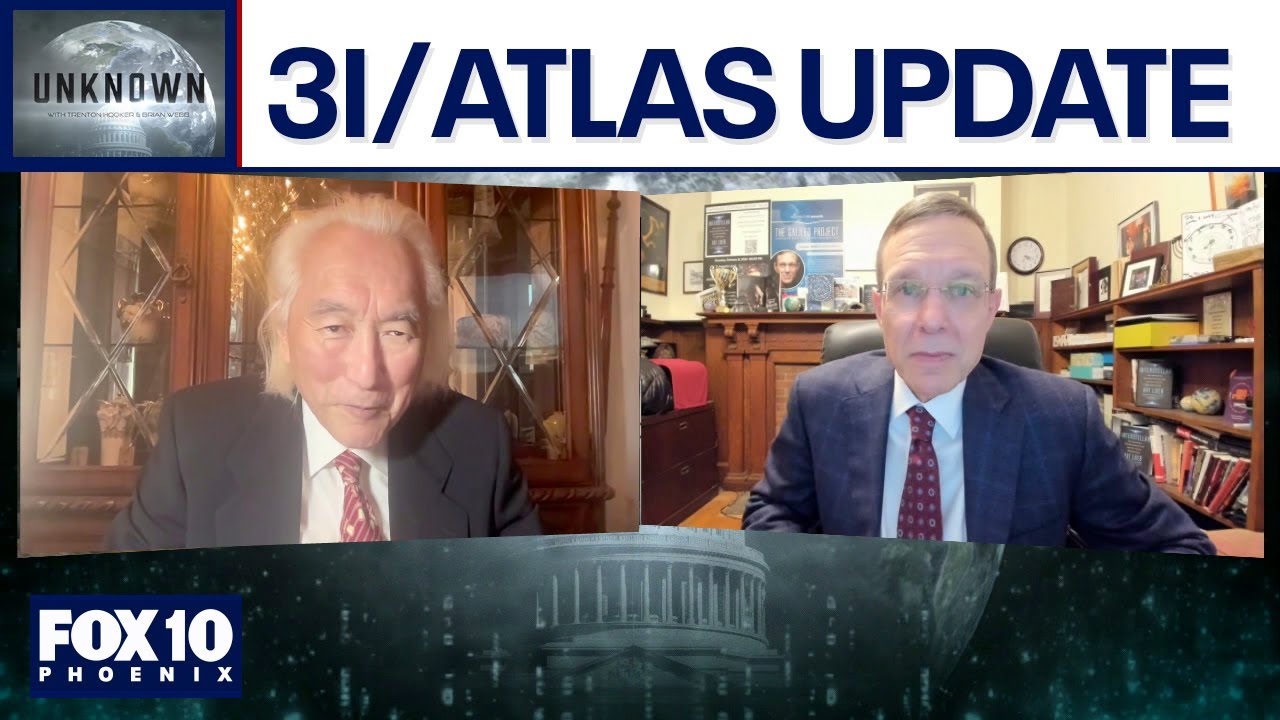
3I/ATLAS: Natural Phenomenon or Technological Artifact? An Investigator's Analysis

Image

The cosmos, as I've learned in my line of work, rarely offers simple answers. Instead, it presents enigmas that stretch the very fabric of our understanding. The case of the interstellar object 3I/ATLAS is a prime example. Was this visitor from beyond our solar system a mere comet, as NASA initially declared, or does it harbor a more complex, perhaps even manufactured, origin? This is not just a question for the scientific community; it's a challenge to our perception of reality.

Introduction: The 3I/ATLAS Enigma

On an episode of "UNKNOWN" with Trenton Hooker & Brian Webb, the discussion gravitated towards one of the most perplexing celestial visitors of recent times: 3I/ATLAS. While official channels, notably NASA, were quick to label it a standard comet, dissenting voices emerged, most notably from Dr. Avi Loeb. His challenge wasn't merely academic; it was a direct interrogation of the accepted narrative, highlighting a series of anomalies that suggested something far beyond conventional astrophysics at play. This, coupled with insights from theoretical physicist Dr. Michio Kaku, paints a picture of an event that demands a closer, more critical examination.

Dr. Avi Loeb's 12 Anomalies: Questioning the Conventional

Dr. Avi Loeb, a figure known for his bold hypotheses in astrophysics, presented a compelling case against the conventional comet classification of 3I/ATLAS. His assertion of 12 distinct anomalies, as detailed in the original broadcast, serves as the bedrock of his argument. These aren't minor discrepancies; they are fundamental deviations from expected natural behavior. The peculiar nickel ratio, a signature not typically associated with cometary composition, and the bizarre, unexplained jets emanating from the object, all point towards a sophisticated, perhaps engineered, origin. Loeb's stance is clear: the interstellar object's characteristics are inconsistent with known natural physics, raising the tantalizing possibility of it being a technological artifact. In my experience, when a scientist of Loeb’s caliber flags such a significant number of anomalies, it’s a signal that the standard model is being pushed to its limits.

Recommended Gear for Investigation

ProductDescriptionBuy
Cryptozoology A To Z: The Encyclopedia Of Loch Monsters Sasquatch Chupacabras And Other Authentic M: The Encyclopedia of Loch Monsters, Sasquatch, Chupacabras, and Other Authentic Mysteries of NatureAn excellent choice to complement your research on this topic.View on Amazon
The Big Book of Paranormal: 300 Mystical and Frightening Tales From Around the WorldAn excellent choice to complement your research on this topic.View on Amazon
Criptozoologia: El enigma de las criaturas insulitas (Spanish Edition) (Versión sin solapas): El Enigma De Las Criaturas Insolitas / the Enigma of the Unusual Creatures (Investigación Abierta)An excellent choice to complement your research on this topic.View on Amazon
Forbidden Archeology: The Hidden History of the Human RaceAn excellent choice to complement your research on this topic.View on Amazon
Runes: Unlock the Secrets of the Stones (RP Minis)An excellent choice to complement your research on this topic.View on Amazon
The H. P. Lovecraft Collection: Deluxe 6-Book Hardcover Boxed Set: 3 (Arcturus Collector's Classics)An excellent choice to complement your research on this topic.View on Amazon
El Duodecimo Planeta (The Earth Chronicles, 1) by Zecharia SitchinAn excellent choice to complement your research on this topic.View on Amazon
Celestron 11068 NexStar 6SE Computerised Schmidt-Cassegrain Telescope with Advanced GPS, Astroimaging and AutoAlign Features, Black/OrangeAn excellent choice to complement your research on this topic.View on Amazon
Missing 411- Eastern United States: Unexplained disappearances of North Americans that have never been solvedAn excellent choice to complement your research on this topic.View on Amazon
Tapiz de mapa del mundo antiguo, diseño vintage de mapa del mundo, tapiz de distribución geográfica para colgar en la pared, póster educativo de mapa del mundo del Atlas histórico marrón, para pared,An excellent choice to complement your research on this topic.View on Amazon

Dr. Michio Kaku's Analysis: A Slim Probability

Adding another layer to the investigation, Dr. Michio Kaku confirmed the object's unique, seven-billion-year history—a timescale that dwarfs most celestial bodies we encounter. Kaku’s analysis underscored the object's strange traits, yet he tempered expectations regarding immediate extraterrestrial confirmation. He placed the probability of a genuine extraterrestrial visitation at a non-zero, albeit slim, 1%. This pragmatic approach, while acknowledging the anomalous, keeps the discussion grounded in empirical validation. Kaku's insistence that the final word on this high-profile interstellar visitor remains unwritten is a crucial reminder that while speculation is vital for scientific progress, concrete evidence is paramount. It's a fine line between open-mindedness and wishful thinking, a line Kaku navigates with his characteristic flair.

The Crucial Decision: Rethinking Our Hunt for Signatures

The core of the debate, and the central question posed by the 3I/ATLAS event, is this: should the scientific community fundamentally adjust its approach? Are we equipped to detect technological signatures within phenomena initially classified as natural? Or must we continue our hunt with current methods, potentially overlooking groundbreaking evidence? Dr. Loeb’s findings suggest the latter might be a critical error. The implications are vast. If interstellar objects can indeed be artificial, our understanding of cosmic neighbors and their potential presence shifts dramatically. This compels a crucial decision, one that analysts like myself grapple with daily: do we redefine our search parameters, or do we risk missing the signal amidst the noise of the natural universe? The potential for advanced civilizations to mask their presence or operate in ways we don't yet comprehend is a constant variable in these investigations.

Whispers from the Digital Crowd: Unpacking Audience Sentiments

The digital echo chamber provided a fascinating, if often chaotic, commentary on the 3I/ATLAS debate. Many viewers echoed Dr. Loeb's skepticism, with one commenter noting, "The nasa event in my opinion was below elementary school level." This sentiment of dissatisfaction with the official explanation was widespread. Several individuals expressed strong support for Dr. Loeb, praising his scientific rigor: "I like Avi. He's a very important man of science and humanity is lucky to have him." The general distrust towards official statements, especially from NASA, was palpable. Comments like, "I am not going to pretend that I have some massive knowledge concerning 3I/ATLAS but if it wasn't a spacecraft NASA would say it was not a spacecraft. If it was a spacecraft they would say it is not a spacecraft. Therefore NASA saying it is not a spacecraft means nothing," highlight a deep-seated cynicism regarding transparency. The sheer number of "anomalies" was a recurring point, with many agreeing, "12 anomalies are too many to ignore." This collective voice, amplified across social platforms, serves as a crucial data point, reflecting public perception and fueling the demand for answers.

The Looming Shadow: AI, Quantum Computing, and Code Breaking

Investigator's Verdict: Fraud, Genuine Anomaly, or Extraterrestrial Technology?

After sifting through the testimonies, the scientific analyses, and the raw data presented, my verdict leans heavily towards genuine anomaly with a significant potential for technological origin. NASA's swift dismissal, coupled with what many perceived as a lackluster press conference, only fuels suspicion. The sheer number of anomalies cited by Dr. Loeb cannot be easily discounted. While a 1% probability, as suggested by Dr. Kaku, might seem slim from a purely statistical standpoint, in the context of interstellar visitors, it represents a compelling data point. The idea that our current methods might be insufficient to detect advanced technology is a valid concern, often voiced by researchers in the field. The government's historical reluctance to admit to unexplained phenomena is a well-documented pattern. Therefore, classifying 3I/ATLAS as simply a "comet" feels like an incomplete, perhaps even deliberately misleading, conclusion. The evidence, while not yet definitive proof of alien craft, strongly suggests we are dealing with something that defies conventional natural explanations.

Investigator's Toolkit: Essential Gear and Resources

Investigating phenomena like 3I/ATLAS requires not only a discerning mind but also the right tools. Whether you're analyzing visual data, attempting to capture potential signals, or simply delving deeper into the subject, the right equipment and knowledge base are crucial. For those looking to expand their understanding and capabilities in paranormal and extraterrestrial research, consider exploring these resources.

Recommended Books for Deeper Understanding

Essential Equipment for Field Investigations

Frequently Asked Questions

Investigator's Q&A

  • Question: What is the primary argument against 3I/ATLAS being a natural comet?
    Answer: The primary argument centers on the numerous anomalies, including its unusual nickel ratio and unexplained jets, which deviate significantly from the expected characteristics of natural comets, as highlighted by Dr. Avi Loeb.
  • Question: Why did some audience members distrust NASA's explanation?
    Answer: Distrust stemmed from perceived inconsistencies, a lengthy delay in releasing information, and a general skepticism towards official explanations for unexplained phenomena. Many felt the press conference was inadequate.
  • Question: What is the significance of the 1% probability mentioned by Dr. Kaku?
    Answer: While statistically low, a 1% chance of extraterrestrial visitation in the context of a unique interstellar object is considered noteworthy by some, indicating that the possibility, however slim, cannot be entirely dismissed without further evidence.
  • Question: How do AI and quantum computing pose a threat in this context?
    Answer: These advanced technologies have the potential to break current encryption methods, compromising digital security and necessitating a fundamental rethinking of cybersecurity and data protection strategies.
  • Question: What did viewers mean by NASA only looking for "rocks"?
    Answer: This comment refers to the idea that scientific training and methodology can create biases, leading researchers to find only what they are programmed to look for, potentially missing non-natural or technological signatures.

Your Mission: Become an Observer

The universe is filled with mysteries waiting to be unraveled. The 3I/ATLAS event is but one chapter in a much larger cosmic narrative. Your mission, should you choose to accept it, is to remain vigilant, critically analyze information, and never cease questioning the official narrative. The unexplained is not always unexplainable; it often just requires a different perspective.

What are your thoughts on 3I/ATLAS? Did you witness any unusual celestial events? Share your experiences and theories in the comments below. Your testimony adds crucial data to our ongoing investigations.

If you found this analysis insightful, please share it across your social networks. Knowledge is power, and sharing it amplifies our collective understanding. Help us bring more of these hidden truths to light.

Investigator's Note: True paranormal research doesn't fund itself. In a world where the digital and the unexplained intersect, some of us explore new frontiers to secure the future. Do you dare to be part of the vanguard? Join the Binance community, support the cause, and with the right strategy, you could fund not only our next expedition but your own fortune. The next great discovery could be just a click away.

Interstellar Object: Avi Loeb's Stance on 3I/Atlas and NASA's Revelations

Image

The vast emptiness of space continues to surprise us. Currently, an object of unknown origin is traversing our solar system, prompting intense scientific debate and public fascination. Theoretical physicist Avi Loeb, a professor at Harvard University, recently shared his insights on this interstellar visitor, 3I/Atlas, with Boston 25 News. His perspective, often challenging conventional explanations, invites us to consider possibilities beyond our current understanding of the cosmos.

The Intriguing Visitor: 3I/Atlas Unveiled

The detection of 3I/Atlas, a celestial body originating from beyond our solar system, marks a significant moment in astronomical observation. Unlike comets or asteroids native to our star system, interstellar objects offer a rare glimpse into the composition and dynamics of other planetary systems. Avi Loeb, a long-time advocate for the study of such objects, has been particularly vocal about the implications of 3I/Atlas. His work, especially following the earlier discovery of 'Oumuamua, suggests that we should maintain an open mind regarding the potential for technological artifacts among these visitors.

One of the key aspects drawing attention is the visual data released. While capable of capturing stunning detail from our own sun, some viewers have pointed out that the images of 3I/Atlas appear less refined, almost reminiscent of early video game graphics. This discrepancy has been a focal point for public speculation, fueling theories that the data might be intentionally obscured or altered.

Recommended Gear for Investigation

ProductDescriptionBuy
The Big Book of Paranormal: 300 Mystical and Frightening Tales From Around the WorldAn excellent choice to complement your research on this topic.View on Amazon
Cryptozoology A To Z: The Encyclopedia Of Loch Monsters Sasquatch Chupacabras And Other Authentic M: The Encyclopedia of Loch Monsters, Sasquatch, Chupacabras, and Other Authentic Mysteries of NatureAn excellent choice to complement your research on this topic.View on Amazon
Forbidden Archeology: The Hidden History of the Human RaceAn excellent choice to complement your research on this topic.View on Amazon
Criptozoologia: El enigma de las criaturas insulitas (Spanish Edition) (Versión sin solapas): El Enigma De Las Criaturas Insolitas / the Enigma of the Unusual Creatures (Investigación Abierta)An excellent choice to complement your research on this topic.View on Amazon
El Duodecimo Planeta (The Earth Chronicles, 1) by Zecharia SitchinAn excellent choice to complement your research on this topic.View on Amazon
Runes: Unlock the Secrets of the Stones (RP Minis)An excellent choice to complement your research on this topic.View on Amazon
The H. P. Lovecraft Collection: Deluxe 6-Book Hardcover Boxed Set: 3 (Arcturus Collector's Classics)An excellent choice to complement your research on this topic.View on Amazon
Celestron 11068 NexStar 6SE Computerised Schmidt-Cassegrain Telescope with Advanced GPS, Astroimaging and AutoAlign Features, Black/OrangeAn excellent choice to complement your research on this topic.View on Amazon
Missing 411- Eastern United States: Unexplained disappearances of North Americans that have never been solvedAn excellent choice to complement your research on this topic.View on Amazon
Tapiz de mapa del mundo antiguo, diseño vintage de mapa del mundo, tapiz de distribución geográfica para colgar en la pared, póster educativo de mapa del mundo del Atlas histórico marrón, para pared,An excellent choice to complement your research on this topic.View on Amazon

The public's engagement with this phenomenon is palpable, with numerous comments reflecting a deep interest and a healthy dose of skepticism. Many are captivated by the possibility that 3I/Atlas could be more than just a natural celestial body. As we delve deeper into the reactions and analyses, it becomes clear that this object has ignited a global conversation about our place in the universe and the nature of intelligence beyond Earth.

Loeb's Perspective: Beyond Conventional Science

Avi Loeb's consistent stance on interstellar objects is rooted in a pragmatic yet forward-thinking approach to science. He argues that the possibility of these objects being remnants of advanced extraterrestrial technology should not be dismissed out of hand. Loeb emphasizes the importance of rigorous scientific investigation, but also calls for an intellectual openness that can accommodate phenomena that don't neatly fit into existing scientific frameworks. His interviews, like the one with Boston 25 News, are characterized by careful articulation, aiming to present the scientific rationale without resorting to sensationalism, yet not shying away from the profound implications.

"Even though he usually says the same thing in these interviews, every time one of them pops up in my YouTube feed, I watch!"

This sentiment, echoed by many online, highlights Loeb's ability to maintain a consistent message about the significance of interstellar objects. He acknowledges the advancements in astronomical observation, such as the high-resolution imagery available, but urges the scientific community and the public alike not to be complacent. The core of his argument often revolves around the potential for these visitors to be probes or technological artifacts, a hypothesis that naturally generates both excitement and resistance within the established scientific paradigm.

Furthermore, Loeb's approach is often seen as an intellectual counterpoint to potential governmental or institutional reluctance to fully explore such possibilities. He navigates these sensitive discussions with a deftness that respects scientific protocol while pushing the boundaries of accepted thought. This careful balancing act resonates strongly with those who feel that the topic of potential extraterrestrial life and technology is too often relegated to the fringes of science fiction rather than being treated as a legitimate area of inquiry.

Public Reactions and Theories Galore

The online commentary surrounding the 3I/Atlas and Avi Loeb's discussion is a fascinating microcosm of public engagement with the unexplained. A recurring theme is the praise for the reporter, Nicole, for her respectful and non-interruptive interviewing style. This, combined with Loeb's thoughtful responses, seems to have created a more substantial dialogue than often seen in similar interviews.

"The smartest and most authentic interviewer I've seen in my life."
"Nicole is so beautiful"

Beyond the media dynamic, the theories about 3I/Atlas are as diverse as they are imaginative. Some viewers are convinced it's a spacecraft, citing detailed analyses from channels like Ray's Astrophotography. These analyses allegedly reveal a metallic, egg-shaped craft accompanied by multiple 'nuclear-powered objects' in a surrounding fleet. This detailed interpretation fuels the belief that governments might be withholding crucial information.

"Lol NASA is pixeling pics on purpose. Its always the same playbook. The most expensive cameras on the planet always seem to take the worst pictures or dont work at inopportune times."

Other theories venture into more speculative territory, suggesting that we are living in a simulation and 3I/Atlas is an object from an "outer simulation." Some even humorously suggest it's "from Detroit," highlighting the blend of serious inquiry and lighthearted speculation. The idea of "Open Contact" with extraterrestrials is also prevalent, with a belief that governments cannot prevent such an eventuality.

The mention of "Age of Disclosure" appearing on the same day as this interview further amplifies the sense among some that significant revelations are imminent. This collective anticipation, fueled by diverse interpretations of limited evidence, underscores the powerful human drive to understand our cosmic environment and our potential neighbors.

NASA and The Evidence: A Matter of Interpretation

The role of NASA and other official scientific bodies in the discussion of phenomena like 3I/Atlas is a critical, and often contentious, point. While Professor Loeb strives to maintain a balanced perspective, acknowledging NASA's capabilities while advocating for deeper investigation, segments of the public express significant distrust.

"NASA said its Santa Clause"
"It's a ship, Rays Astro photography channel has actually been able to decipher the entire shape in an image of it and it looks like an egg shaped ship 😂😂😂😂"

The critique often centers on the perceived quality of the imagery released by NASA, as noted previously. The juxtaposition of extremely high-resolution images of solar phenomena with what some deem lower-quality images of 3I/Atlas raises questions about transparency and capability. Is it a limitation of the technology used for deep-space observation of fast-moving objects, or is it a deliberate obfuscation? The latter is a common accusation leveled against institutions perceived to be managing public perception around potential extraterrestrial contact.

Loeb's strategy often involves trying to bridge this gap. He carefully chooses his words, managing "to avoid throwing mud at NASA while giving the science community a shoutout." His underlying point remains that "it doesn’t really matter what NASA says" if independent analysis and future observations provide compelling evidence of something extraordinary. This perspective empowers independent researchers and citizen scientists, whose analyses, like those from Ray's Astrophotography, are frequently cited as more revealing than official statements.

The debate highlights a persistent tension: the official, often conservative, scientific narrative versus the more speculative, evidence-driven investigations emerging from independent sources and bolstered by public curiosity. It's a dynamic that fuels much of the interest in ufology and the study of anomalous phenomena.

Researcher's Verdict: Unveiling the Truth

From my vantage point, the case of 3I/Atlas, viewed through the lens of Avi Loeb's analysis and the vibrant public discourse, presents a compelling scenario that hovers between established science and the fringes of possibility. Loeb’s cautious yet persistent advocacy for considering technological origins for interstellar objects is not mere speculation; it's a call for scientific rigor applied to the unknown. The persistent doubts about the visual evidence provided by NASA, while perhaps fueled by a general skepticism towards authority, cannot be entirely dismissed without thorough investigation.

The detailed analyses shared by independent channels, claiming to decipher the shape and accompanying objects, are precisely the kind of data that warrants further, objective examination. The scientific method demands that hypotheses, even those as extraordinary as alien visitation, be tested against evidence. If these detailed images genuinely depict artificial structures, it would necessitate a paradigm shift in our understanding of cosmic life and technology.

Ultimately, the current situation is a testament to humanity's enduring curiosity. Whether 3I/Atlas is a natural phenomenon whose characteristics are simply poorly understood, or something far more significant, the conversation it has sparked is invaluable. It pushes the boundaries of our knowledge and encourages a critical evaluation of the information we receive. This ongoing investigation embodies the very spirit of exploration that drives us to look beyond our own world.

The Researcher's Archive

For those who wish to delve deeper into the nature of interstellar objects, potential extraterrestrial technology, and the scientific process of investigating the unknown, the following resources are invaluable:

Protocol: Analyzing Anomalous Imagery

Investigating anomalous aerial or space-borne phenomena often hinges on the critical analysis of photographic and video evidence. While sophisticated equipment and algorithms are employed by professional agencies, a fundamental understanding of image analysis can be applied by any diligent investigator.

  1. Source Verification: Always attempt to trace the origin of an image or video back to its original uploader or source. Unaltered original files are crucial.
  2. Metadata Examination: Check the image metadata (EXIF data) for details like camera model, date, time, and GPS coordinates. Be aware that metadata can be stripped or altered.
  3. Contextual Analysis: Understand the conditions under which the image was captured. Was it daytime or nighttime? What was the atmospheric condition? What equipment was used?
  4. Lighting and Shadows: Analyze the direction and consistency of light sources and shadows. Inconsistencies can indicate digital manipulation or composite images.
  5. Object Scale and Perspective: If possible, use known objects within the frame to estimate scale and perspective. Does the object's size appear consistent with its apparent distance?
  6. Pixel-Level Inspection: Look for digital artifacts, compression inconsistencies, or unnatural sharpness/blurriness that might suggest digital editing. This is where tools like zooming and contrast adjustment become useful.
  7. Comparative Analysis: Compare the anomalous object with known natural phenomena or conventional aircraft. Are there similarities that suggest a conventional explanation?
  8. Cross-Referencing: Search for other images or reports of the same phenomenon from different sources. Consistency across multiple independent reports strengthens a claim, while significant discrepancies raise red flags.
  9. Expert Consultation: When possible, consult with experts in image analysis, astrophotography, or relevant fields.

This methodical approach helps to separate genuine anomalies from misidentifications, hoaxes, or artifacts of the imaging process itself. Remember, extraordinary claims require extraordinary evidence, and meticulous analysis is the bedrock of that evidence.

Frequently Asked Questions

Q1: What is the main takeaway from the 3I/Atlas event?
A1: The 3I/Atlas event has reinforced the scientific and public interest in interstellar objects, highlighting the potential for their study to yield unprecedented insights into planetary systems beyond our own and possibly, technological artifacts.

Q2: Why do some people distrust NASA's imagery of 3I/Atlas?
A2: Distrust often stems from perceived inconsistencies in image quality compared to other astronomical photos, leading to suspicions of data manipulation or a hidden agenda regarding extraterrestrial presence.

Q3: Is Avi Loeb the only scientist studying interstellar objects?
A3: No, but he is one of the most prominent and vocal proponents for considering technological origins for these objects. Many astronomers study their physical properties and trajectories.

Q4: What does Avi Loeb suggest we do next regarding 3I/Atlas?
A4: Loeb generally advocates for continued observation, analysis, and an open mind, pushing for the scientific community to exhaust all possibilities when interpreting data from such unique objects.

Your Mission: Post Your Observations

The universe is vast, and our understanding is constantly evolving. Your experiences and insights are crucial pieces of the puzzle. Did you witness anything unusual around the time of the 3I/Atlas flyby? Have you encountered similar phenomena in your own investigations? Share your personal accounts, observations, or theories in the comments below. Every testimony adds a layer to our collective understanding of the unexplained.

Don't keep your findings to yourself. Hit that share button and spread the word across your social networks. Let's amplify these discussions and encourage more people to look up and question.

Investigator's Note: True paranormal research doesn't fund itself. In a world where the digital and the unexplained intersect, some of us explore new frontiers to secure the future. Do you dare to be part of the vanguard? Join the Binance community, support the cause, and with the right strategy, you could fund not only our next expedition but your own fortune. The next great discovery could be just a click away.

Sunsets from Different Alien Worlds: An Astrophysical Expedition

Image

The cosmos is a canvas of unimaginable beauty, and nowhere is this more apparent than in the diverse celestial phenomena that paint the skies of alien worlds. Beyond the familiar crimson hues of an Earthly sunset lies an infinite spectrum of light and shadow, orchestrated by stellar nurseries, dying giants, and the gravitational maelstrom of black holes. This investigation delves into the breathtaking, hypothetical vistas of sunsets as they might be witnessed from planets orbiting stellar bodies vastly different from our sun.

Introduction: Beyond Earth's Horizon

The concept of a sunset is intrinsically human, tied to our planet's rotation and the characteristics of our G-type main-sequence star, the Sun. However, in the grand theater of the universe, this familiar transition from day to night is merely one performance among countless variations. This report compiles simulated visualizations of sunsets from environments that defy terrestrial experience, ranging from the complex light play in binary star systems to the overwhelming presence of supermassive black holes. The visualizations, crafted using advanced astronomical simulation software, offer a glimpse into phenomena that, while hypothetical, are grounded in our understanding of astrophysics.

The Enigma of the Pink Sunset

Our journey begins with a celestial tableau bathed in pink. This simulated sunset occurs under a "white giant" star, a classification that can encompass several stellar types depending on their evolutionary stage and temperature. Unlike our Sun, which emits light across a broad spectrum that our eyes interpret as white, stars classified as white giants or supergiants often possess surface temperatures that shift the peak of their emitted light towards the blue or ultraviolet end. However, atmospheric conditions on an exoplanet can dramatically alter the perceived color. A thick atmosphere rich in specific aerosols or dust particles could scatter shorter wavelengths of light more effectively, allowing longer, redder wavelengths to dominate, potentially creating the observed pinkish hue. This phenomenon underscores the critical role of atmospheric composition in mediating the light we perceive from a star.

Recommended Gear for Investigation

ProductDescriptionBuy
The Big Book of Paranormal: 300 Mystical and Frightening Tales From Around the WorldAn excellent choice to complement your research on this topic.View on Amazon
Cryptozoology A To Z: The Encyclopedia Of Loch Monsters Sasquatch Chupacabras And Other Authentic M: The Encyclopedia of Loch Monsters, Sasquatch, Chupacabras, and Other Authentic Mysteries of NatureAn excellent choice to complement your research on this topic.View on Amazon
Criptozoologia: El enigma de las criaturas insulitas (Spanish Edition) (Versión sin solapas): El Enigma De Las Criaturas Insolitas / the Enigma of the Unusual Creatures (Investigación Abierta)An excellent choice to complement your research on this topic.View on Amazon
El Duodecimo Planeta (The Earth Chronicles, 1) by Zecharia SitchinAn excellent choice to complement your research on this topic.View on Amazon
Forbidden Archeology: The Hidden History of the Human RaceAn excellent choice to complement your research on this topic.View on Amazon
The H. P. Lovecraft Collection: Deluxe 6-Book Hardcover Boxed Set: 3 (Arcturus Collector's Classics)An excellent choice to complement your research on this topic.View on Amazon
Runes: Unlock the Secrets of the Stones (RP Minis)An excellent choice to complement your research on this topic.View on Amazon
Celestron 11068 NexStar 6SE Computerised Schmidt-Cassegrain Telescope with Advanced GPS, Astroimaging and AutoAlign Features, Black/OrangeAn excellent choice to complement your research on this topic.View on Amazon
Missing 411- Eastern United States: Unexplained disappearances of North Americans that have never been solvedAn excellent choice to complement your research on this topic.View on Amazon
Celestron 22452 StarSense Explore LT114AZ Telescope, Silver/BlackAn excellent choice to complement your research on this topic.View on Amazon

Crimson Spectacle: Sunset Near Betelgeuse

Few celestial bodies capture the imagination like Betelgeuse, a red supergiant star in the constellation Orion. Its immense size and cooler surface temperature (around 3,500 Kelvin) compared to our Sun (around 5,778 Kelvin) mean that its light is heavily shifted towards the red end of the spectrum. Imagining a sunset from a planet orbiting such a star conjures an overwhelming crimson vista. The sheer luminosity of Betelgeuse, even at its cooler temperature, would likely dominate any planetary sky. An observer on a nearby world would witness a sun that appears larger and redder than our own, casting the landscape in perpetual twilight hues. The simulation suggests a breathtaking, yet potentially terrifying, spectacle, where the sky burns crimson as this colossal star begins its descent.

The sheer scale of stars like Betelgeuse is difficult to comprehend from our terrestrial vantage point. To imagine standing on a world bathed in its light is to confront the raw power and immense scale of stellar evolution.

Holm 15A: A Giant's Luminous Farewell

Holm 15A is a fascinating subject, a supergiant star located at the center of the galaxy cluster Abell 85. While the exact nature of its stellar type can vary in astrophysical models, its classification as a supergiant implies an immense size and luminosity. Being near such a star would provide an unparalleled celestial display. The simulation depicts a sunset near Holm 15A where the sky fades behind its "glow," suggesting an overwhelming light source. This scenario likely involves a star significantly larger and brighter than our Sun, possibly an O-type or a hypergiant, whose brilliance would redefine what "daylight" means. The visual suggests a light so intense that even its fading moments are a powerful spectacle, characteristic of the most massive stars in the universe.

Celestial Dance: The Double Sunset

Binary and multiple star systems present some of the most enigmatic astronomical scenarios. Imagine a world orbiting two stars: a white giant and a red supergiant, such as Betelgeuse. A double sunset from such a system would be a dynamic ballet of light and color. The simulation depicts skies where dual celestial bodies set, potentially creating overlapping or contrasting light patterns. Depending on the orbital mechanics and atmospheric conditions, one might witness skies painted with hues from both stellar types simultaneously – perhaps a warm crimson from the red supergiant mingling with the brighter, harsher light of the white giant. Such sights have fueled centuries of speculation and artistic interpretation, representing the complex gravitational and radiative interactions possible in systems with more than one sun.

Many viewers expressed a profound sense of wonder at the concept of double sunsets. Online discussions frequently revolve around the potential for unique atmospheric phenomena and the aesthetic beauty of such dual celestial events. As one user noted, "It's crazy to think that for every star in the universe there are potentially several variations of sunsets and sunrises to be seen from it. Gorgeous displays that go unseen and unexperienced because there is nobody there to experience it." This sentiment is echoed across numerous platforms, highlighting a collective yearning to witness these hypothetical wonders.

Gravitational Majesty: Near M87*

M87* is the supermassive black hole at the center of the Messier 87 galaxy, famously imaged by the Event Horizon Telescope. While black holes themselves do not emit light, their accretion disks—superheated matter spiraling into the event horizon—radiate intensely across the electromagnetic spectrum. A "sunset" near M87* would not be the dimming of a star, but rather the observation of this accretion disk from a vantage point where its overwhelming light begins to dominate the celestial view, or perhaps as the planet moves into a position where the black hole’s gravitational lensing effects become apparent. The simulation suggests a point where the sky fades behind the "glow" of this cosmic behemoth, a humbling perspective on the extreme gravitational forces shaping the universe. The visual implies an environment where light itself is distorted and warped by gravity, a stark contrast to the predictable physics governing our solar system.

The implications of observing a supermassive black hole are profound. The simulated visuals, though artistic interpretations, hint at the mind-bending physics involved. Users have commented on the extreme conditions implied: "Damn, it is so scary with Ton 618 in the sky. Even at its distance of 3 light years away from the planet." This fear is often coupled with awe, underscoring the alien nature of such gravitational phenomena.

The Unimaginable Radiance of TON 618

TON 618 is another ultramassive black hole, significantly more massive than M87*, exerting a phenomenal gravitational pull and surrounded by an intensely luminous accretion disk. The prospect of witnessing a sunset near such an object is almost unfathomable. The simulation points to an "unimaginable" radiance, even from a distance of perhaps three light-years. The light emitted by TON 618's accretion disk would likely dwarf that of entire galaxies. As one commentator put it, "the light from ton 618 from 3 light years away would be unimaginable." The implications for a planet in proximity are staggering; such radiation could render the surface uninhabitable, turning perpetual night into a blinding, destructive glare. This scenario pushes the boundaries of what we can visualize, hinting at cosmic phenomena that defy conventional understanding.

IC 1101: A Supermassive Encounter

IC 1101 is often cited as one of the largest known galaxies, centered around a supermassive black hole. Observing a sunset from a planet within or near such a galactic core would be an experience of unparalleled scope. The simulation suggests a "sunset near IC 1101 CBH" (Central Black Hole), implying a view dominated by the galactic nucleus and its central engine. The sheer density of stars and the presence of the supermassive black hole would create a celestial panorama unlike any other. Instead of a single sun, an observer might see a sky filled with countless stars, nebulae, and the intense, gravitationally influenced light emanating from the galactic center. This perspective offers a humbling reminder of our place within the vast cosmic web.

Within the Stellar Crucible: Star Cluster Sunsets

Star clusters, whether open or globular, are dense congregations of stars bound by gravity. Witnessing a sunset from within such a cluster would be an immersive experience in stellar brilliance. The simulation depicts a "Sunset inside Star Cluster," where the sky is ablaze with the light of hundreds, thousands, or even millions of stars. This would not be a singular sunset, but a kaleidoscope of stellar glows, potentially with variable stars and widely different stellar types contributing to the visual tapestry. The density of stars could create a perpetual twilight, with the "setting" of one star merely giving way to the rising or dominant presence of others. As one viewer poignantly remarked, "Star clusters are so beautiful 🥹," capturing the evocative power of these stellar cities.

A Cosmic Perspective: Milky Way and LMC Views

The final scenarios presented offer perspectives from within our own galactic neighborhood, yet still alien. A "Sunset with Milky Way and LMC" suggests a view from a hypothetical planet that allows for a breathtaking panorama of our galaxy and the Large Magellanic Cloud (LMC). This isn't a sunset in the traditional sense of a single star disappearing over the horizon, but rather a view of a sky dominated by galactic structures. Imagine seeing the sprawling band of the Milky Way arching overhead, accompanied by the distinct glow of the LMC satellite galaxy. Such a view would offer an unparalleled sense of cosmic scale and our place within it. One user perfectly articulated this feeling: "Imagine seeing the milky way from far away, thinking: That's home, we came from there!"

Echoes from the Void: Audience Reflections

The profound nature of these hypothetical celestial displays has clearly resonated with viewers. Many comments reflect a deep sense of awe, melancholic beauty, and the inherent sadness of human limitations. The recurring theme is the vastness of the universe and the likely unlikelihood of humanity ever experiencing these sights firsthand. Phrases like "Wonderful scenes none of us will ever see" and "The indescribable sadness of knowing you will never be able to explore the cosmos within your lifetime" capture this sentiment. There's a palpable yearning expressed for direct experience, a desire to transcend physical limitations.

The philosophical implications are also widely discussed. The potential for alien civilizations to develop mythologies and religions based on such spectacular skies is a frequent topic. "Imagine what sort of mythologies any potential civilization out there could’ve/would’ve come up with, seeing a supermassive black hole or star cluster up in their skies," one commenter mused. This highlights how cosmic phenomena shape perception and culture, even in hypothetical scenarios. The shared experience of wonder and the acknowledgment of our cosmic solitude seem to unite viewers in a profound, albeit digital, communion.

Investigator's Analysis: Hypothetical Realities

From a scientific standpoint, these visualizations serve as powerful educational tools, translating complex astrophysical concepts into compelling visual narratives. Each scenario, while speculative, is rooted in observable phenomena and theoretical models:

  • Stellar Evolution: The depictions of sunsets near red supergiants like Betelgeuse and white giants are informed by our understanding of stellar lifecycles. These stages represent stars significantly different from our Sun, producing vastly altered radiative outputs and spectral characteristics.
  • Binary Systems: Double sunsets accurately reflect the orbital dynamics possible in multi-star systems, where a planet could indeed orbit two or more suns, leading to complex light interactions and atmospheric effects.
  • Black Hole Physics: The visualizations of accretion disks around M87* and TON 618, while simplified, touch upon the extreme gravitational environments near black holes. The intense radiation from accretion disks is a key feature, and gravitational lensing is a theoretical consequence. One detailed comment pointed out the scientific inaccuracies regarding visibility in space: "Rayleigh scattering means that dark objects outside the atmosphere never appear darker than the sky surrounding them... This is why the dark part of the black holes would be invisible, the same colour as the part of the sky they are in; only the parts emitting light, such as the accretion disk, would be visible." This highlights the challenges in accurately depicting such phenomena.
  • Galactic Structures: Views from within star clusters or with prominent galactic features like the Milky Way and LMC are grounded in astronomical observations. These scenarios emphasize the scale and structure of galaxies.

However, it's crucial to maintain a distinction between simulation and reality. The survival conditions on such planets are often overlooked in artistic renderings. The intense radiation from objects like TON 618, as noted in a comment, "would even turn night side of the planet to extremely bright glazing daylight. The planet would gradually cease to exist because of the ridiculously high gamma radiation." Furthermore, the formation of planets near very massive, hot stars (O-type stars) is considered highly improbable due to intense stellar winds and radiation, as another detailed analysis pointed out: "O- type stars are massive and extremely hot supergiants; their intense radiation and solar winds would drive off any protoplanetary dust and gas long before it could condense into planets." These scientific critiques, while accurate, do not diminish the value of the visualizations as thought experiments and pedagogical aids.

Tools of the Astrophysical Investigator

Visualizing these cosmic phenomena requires sophisticated tools. The creators utilized "Space Engine Pro" and other editing techniques, highlighting the importance of advanced simulation software in modern astrophysical exploration. For those inspired to delve deeper into understanding celestial mechanics and exoplanetary science, specific equipment and resources are indispensable:

Frequently Asked Questions

Q1: Are these alien sunsets real?
A1: The visualizations presented are artistic interpretations and scientific simulations based on our current understanding of astrophysics. They depict hypothetical scenarios of what sunsets might look like on planets orbiting different types of stars and celestial objects, not actual observed phenomena.
Q2: Could life exist on planets orbiting such extreme objects?
A2: The possibility of life in such extreme environments is highly speculative. While life has shown remarkable adaptability on Earth, the conditions near supermassive black holes or very massive stars would likely involve lethal levels of radiation, gravitational forces, and extreme temperatures, posing significant challenges to known forms of biology.
Q3: What scientific principles are these visualizations based on?
A3: They are based on principles of stellar physics, orbital mechanics, atmospheric science, and general relativity (particularly concerning black holes). Software like Space Engine Pro uses astronomical data and physical models to generate these visuals.
Q4: Why do some comments mention scientific inaccuracies?
A4: Astrophysical simulations are complex and often involve simplifications for visual impact. Detailed scientific critiques, such as those regarding Rayleigh scattering or planet formation near massive stars, point out areas where the visualizations might not perfectly align with all known physical laws or theoretical probabilities.
Q5: If we can't visit these places, why study them?
A5: Studying these extreme hypothetical scenarios expands our understanding of the universe's fundamental laws, pushes the boundaries of theoretical physics and astrophysics, and helps us refine our search for potentially habitable exoplanets by understanding the diverse range of conditions that might exist.

Investigator's Verdict: A Universe of Possibilities

These simulated alien sunsets are more than just pretty pictures; they are windows into the sheer diversity and scale of the cosmos. They challenge our anthropocentric view of celestial phenomena and remind us of the vastness of the unknown. While the physical realities of visiting such worlds remain firmly in the realm of science fiction, the scientific principles that underpin these visualizations are very real. They fuel our exploration, drive our innovation, and underscore humanity's persistent quest to comprehend our place among the stars.

Your Mission: Contemplate the Infinite

Your mission, should you choose to accept it, is to look up. Whether it's the familiar sunset over your local horizon or the distant glimmer of stars in a light-polluted sky, take a moment to consider the infinite variations of light and shadow playing out across the universe. How does contemplating these distant, hypothetical worlds affect your perspective on our own?

Share your thoughts and any personal experiences with unusual atmospheric or celestial phenomena in the comments below. Did any of these simulated sunsets resonate with you? What cosmic mystery captures your imagination the most?

If you found this exploration illuminating, do us a favor: share it across your social networks. Let's spread the wonder and encourage more minds to ponder the universe's greatest enigmas.

Don't forget to subscribe for more deep dives into the unexplained and the extraordinary!

Investigator's Note: True paranormal research doesn't fund itself. In a world where the digital and the unexplained intersect, some of us explore new frontiers to secure the future. Do you dare to be part of the vanguard? Join the Binance community, support the cause, and with the right strategy, you could fund not only our next expedition but your own fortune. The next great discovery could be just a click away.