Followers

Mostrando las entradas con la etiqueta Cosmic Mysteries. Mostrar todas las entradas

The Extraterrestrial Spectrum: Understanding Different

Image

When the word "extraterrestrial" is uttered, what image materializes in your mind? Are they short or tall, green or grey? What defining characteristics do they possess? If we are to believe those who claim encounters, then a distinct dichotomy of 'good' and 'bad' extraterrestrials certainly exists, but the spectrum of types is far broader than simple archetypes suggest. A critical analysis of these claims is paramount for anyone delving into this field.

Introduction: The Xenological Landscape

The human fascination with life beyond Earth is as old as civilization itself. From ancient myths of sky-gods to modern-day UFO sightings, the question of "Are we alone?" persists. This fascination is amplified by the sheer diversity of alleged extraterrestrial beings reported across cultures and historical periods. Our investigation seeks to categorize these reported entities, analyzing the consistency and divergence of descriptions to discern potential patterns or common sources of these narratives.

Classifying the Unknown: Common Extraterrestrial Archetypes

The lore surrounding extraterrestrials is rich with distinct types, each with their own purported characteristics and agendas. While many are confined to fringe theories or science fiction, analyzing these archetypes provides a framework for understanding the collective imagination regarding alien life. Based on anecdotal evidence and popular culture, we can identify several recurring categories:

Recommended Gear for Investigation

ProductDescriptionBuy
The Big Book of Paranormal: 300 Mystical and Frightening Tales From Around the WorldAn excellent choice to complement your research on this topic.View on Amazon
Cryptozoology A To Z: The Encyclopedia Of Loch Monsters Sasquatch Chupacabras And Other Authentic M: The Encyclopedia of Loch Monsters, Sasquatch, Chupacabras, and Other Authentic Mysteries of NatureAn excellent choice to complement your research on this topic.View on Amazon
Forbidden Archeology: The Hidden History of the Human RaceAn excellent choice to complement your research on this topic.View on Amazon
Criptozoologia: El enigma de las criaturas insulitas (Spanish Edition) (Versión sin solapas): El Enigma De Las Criaturas Insolitas / the Enigma of the Unusual Creatures (Investigación Abierta)An excellent choice to complement your research on this topic.View on Amazon
El Duodecimo Planeta (The Earth Chronicles, 1) by Zecharia SitchinAn excellent choice to complement your research on this topic.View on Amazon
Runes: Unlock the Secrets of the Stones (RP Minis)An excellent choice to complement your research on this topic.View on Amazon
The H. P. Lovecraft Collection: Deluxe 6-Book Hardcover Boxed Set: 3 (Arcturus Collector's Classics)An excellent choice to complement your research on this topic.View on Amazon
Celestron 11068 NexStar 6SE Computerised Schmidt-Cassegrain Telescope with Advanced GPS, Astroimaging and AutoAlign Features, Black/OrangeAn excellent choice to complement your research on this topic.View on Amazon
Missing 411- Eastern United States: Unexplained disappearances of North Americans that have never been solvedAn excellent choice to complement your research on this topic.View on Amazon
Ghost-Hunting For Dummies [Idioma Inglés] An excellent choice to complement your research on this topic.View on Amazon
  • Greys: Perhaps the most iconic alien type, often depicted as small, grey-skinned beings with large, almond-shaped black eyes, small mouths, and no visible ears or noses. They are frequently associated with abduction scenarios and scientific experimentation. The consistency of these descriptions across disparate locations is a significant point of study.
  • Reptilians: These beings are typically described as tall, bipedal humanoids with scales, reptilian eyes, and sometimes tails. They are often portrayed as shape-shifters who infiltrate human society, holding positions of power. Theories suggest they originate from star systems like Draco.
  • Nordics: Characterized by their human-like appearance – often tall, blonde-haired, and blue-eyed – Nordics are generally perceived as benevolent or at least neutral. They are sometimes described as originating from stars like Sirius or the Pleiades and are seen as guides or watchers.
  • Insectoids: With features resembling insects, such as multifaceted eyes, exoskeletons, and multiple limbs, these beings are less common in mainstream reports but appear in certain ufological circles. Their motivations are often portrayed as alien and inscrutable.
  • Anunnaki: Rooted in ancient Sumerian mythology, the Anunnaki are often discussed in conspiracy theories as powerful beings who visited Earth in antiquity, influencing human development and allegedly mining gold.
  • Others: Numerous other classifications exist, including "Pleiadians," "Andromedans," "Arcturians," and various fictional species like the "Tetramand" or "Pyronite" from popular media, which can influence public perception and reporting. The sheer volume of proposed types, bordering on over 120 according to some viewers, suggests either an extremely diverse galactic community or the pervasive influence of narrative construction.

Analyzing Witness Testimonies: Patterns and Anomalies

The core of extraterrestrial studies lies in witness testimony. Anecdotal evidence, while subjective, often reveals striking similarities. For instance, the description of Greys is remarkably consistent, as is the notion of "good" versus "malicious" alien types. Reports of unidentified craft, such as triangular or disc-shaped objects, and unusual phenomena like EMP-like effects (as one witness reported experiencing in Arizona, leading to temporary blindness) add layers to these accounts. Some testimonies integrate ancient history, like the Anunnaki narrative, connecting modern sightings to historical records. The idea that technology like microwaves or night vision might have extraterrestrial origins also circulates within these discussions.

"No creía y acá en Colombia en un paramo Vi uno como grises ,pero medida como 2metros iba en moto y le grite y me volteo a mirar y ojos totalmente negros. Existen porque existen y desde ese momento tengo la atracción de volver y. Lo voy hacer,voy acampar en esa zona."

— Anonymous Witness

This particular testimony from Colombia is compelling due to its specific detail and the witness's subsequent commitment to further investigation. Such firsthand accounts, even if uncorroborated, fuel the ongoing debate. Similarly, the mention of Hopi prophecies by those discussing the Arizona incident highlights a recurring pattern of linking sightings to indigenous beliefs and future predictions. The sheer number of reported "avistamientos" during the 2020 pandemic also suggests a potential correlation worth examining, though natural explanations must be considered.

Skeptical Analysis: The Psychology of Belief and Misidentification

From a pragmatic standpoint, it is crucial to approach these claims with a degree of skepticism. Misidentification of conventional aircraft, atmospheric phenomena, or even psychological factors like pareidolia (seeing patterns in random stimuli) can explain many alleged sightings. The human brain is adept at constructing narratives, and the desire to believe in something extraordinary can be powerful. Furthermore, popular culture, from movies like "NOPE" to classic sci-fi staples, heavily influences how people perceive and describe potential extraterrestrial encounters. The "monstrous" depictions seen by some viewers could be a psychological barrier, a defense mechanism against the overwhelming implications of such encounters.

The question "si no se saben que existen o no como van a haber diferencias?" (If we don't know they exist, how can there be differences?) highlights a fundamental logical challenge. If the existence itself is unproven, then the classification of types relies heavily on subjective interpretation and often, on pre-existing narratives absorbed from media and anecdotal sources.

The Vastness of Space: Probability and the Fermi Paradox

The universe is incomprehensibly vast, spanning an estimated 93 billion light-years in diameter. This sheer scale makes the existence of extraterrestrial life statistically probable. However, the Fermi Paradox – the contradiction between the high probability of extraterrestrial civilizations and the lack of evidence for, or contact with, such civilizations – remains a significant hurdle. The immense distances involved present a formidable challenge, not just in terms of propulsion or speed, but fundamentally, in terms of time. As one commenter noted, "las distancias son muy muy grandes y el tiempo es el problema." Enabling communication across such gulfs, or even detecting signals, could be exponentially more difficult than mere travel.

The potential for life, including potentially intelligent life similar to ourselves ("unos iguales a nosotros"), across this vast expanse is a concept that ignites the imagination and fuels ongoing scientific and speculative inquiry. The prospect of the first true interspecies communication occurring within generations, as suggested by some, underscores the profound implications of this quest.

Researcher's Verdict: Beyond the Folklore

While the allure of distinct alien species – Nordics, Greys, Reptilians, Anunnaki – is captivating, the evidence remains largely anecdotal and frequently entangled with science fiction tropes. The consistency in descriptions of certain types, like the Greys, is notable and warrants further investigation into potential shared psychological archetypes or even a genuine, albeit rare, phenomenon. However, without verifiable, repeatable empirical evidence, these categories remain in the realm of speculation and folklore. The challenge lies in separating genuine anomalous experiences from cultural conditioning and misinterpretation. The claim that Nikola Tesla's work projected "fuera de este mundo" is a testament to how extraordinary perceptions can be attributed to otherworldly origins, a common thread in attributing human ingenuity to external sources.

The Researcher's Archive

For those seeking to deepen their understanding of xenology and the broader field of unexplained phenomena, consulting primary sources and reputable analyses is key. While direct "alien encounter" reports are often subjective, examining the historical and cultural context of these beliefs provides valuable insight. Investigating the scientific approaches to the search for extraterrestrial intelligence (SETI) and the astrophysical challenges of interstellar travel can ground speculation in scientific reality. Documentaries and well-researched books often offer a more nuanced perspective than sensationalized media portrayals.

Equipo Recomendado para la Investigación

Frequently Asked Questions

  1. Do you believe in extraterrestrials?

    As an investigator, my role is to analyze evidence objectively. While the statistical probability of extraterrestrial life existing is high due to the vastness of the universe, definitive proof of their visit or presence remains elusive. Belief is subjective; evidence is empirical.

  2. What is the most common type of alien reported?

    The "Grey" extraterrestrial is arguably the most frequently reported type, characterized by their small stature, grey skin, and large black eyes.

  3. Can alien technology influence human inventions?

    Theories abound, with some suggesting that technologies like microwaves or advanced communication methods might have extraterrestrial origins. However, such claims lack concrete evidence and are largely speculative.

  4. How far away are potential alien civilizations?

    Given the immense scale of the universe, potential alien civilizations could be anywhere from a few light-years to billions of light-years away. The prohibitive distances pose significant challenges for detection and communication.

Researcher's Verdict: Beyond the Folklore

The human drive to categorize and understand the unknown is powerful. While the diversity of alleged alien types fascinates, the lack of concrete, verifiable evidence keeps these classifications within the realm of speculation and potential cultural projection. The most compelling aspect isn't necessarily the specific descriptions, but the shared human experience of encountering the inexplicable, whether through alleged sightings, historical accounts, or the sheer wonder of the cosmos. It's a field that demands critical thinking, a balanced perspective, and an unwavering commitment to seeking truth, however unusual it may be.

Your Mission: Document and Analyze

The next time you encounter a claim about alien types, approach it with the tools of an investigator: question the source, look for corroborating evidence, consider alternative explanations, and analyze any cultural or psychological influences at play. Your own critical analysis is the most valuable tool you possess.

Have you had an experience that challenges conventional explanations? Share your encounters and theories in the comments below. Your testimony, analyzed critically, contributes to the collective understanding of the unexplained. Don't forget to share this investigation with fellow truth-seekers on your social networks.

Investigator's Note: True paranormal research doesn't fund itself. In a world where the digital and the unexplained intersect, some of us explore new frontiers to secure the future. Do you dare to be part of the vanguard? Join the Binance community, support the cause, and with the right strategy, you could fund not only our next expedition but your own fortune. The next great discovery could be just a click away.

Strongest Alien Races: An Investigative Dossier

Image

The vast expanse of the cosmos has long fueled human fascination, not just with the possibility of life beyond Earth, but with the potential hierarchies and capabilities of extraterrestrial civilizations. This dossier delves into the popular cultural narratives surrounding alien races, analyzing their perceived power levels and influence as depicted across various media. From benevolent guides to formidable conquerors, the spectrum of alien life imagined by humanity is as diverse as it is intriguing.

Introduction: The Galactic Power Play

Humanity consistently looks to the stars, seeking answers to fundamental questions about our existence. Among these inquiries, the nature and power of alien civilizations occupy a significant space in our collective imagination. Popular culture, through literature, film, and digital media, has gifted us with a rich tapestry of extraterrestrial beings, each with distinct characteristics, motivations, and, often, varying levels of power. This analysis aims to categorize and examine some of the most frequently cited alien races within this cultural framework, scrutinizing the attributes that define their perceived strength and influence.

The spectrum of alien races presented in popular culture is vast, ranging from the ethereal and benevolent to the technologically superior and potentially hostile. While definitive scientific proof remains elusive, these narratives offer insights into our hopes, fears, and speculations about what might exist beyond our atmosphere. Some of the most consistently referenced groups include:

Recommended Gear for Investigation

ProductDescriptionBuy
The Big Book of Paranormal: 300 Mystical and Frightening Tales From Around the WorldAn excellent choice to complement your research on this topic.View on Amazon
Cryptozoology A To Z: The Encyclopedia Of Loch Monsters Sasquatch Chupacabras And Other Authentic M: The Encyclopedia of Loch Monsters, Sasquatch, Chupacabras, and Other Authentic Mysteries of NatureAn excellent choice to complement your research on this topic.View on Amazon
Forbidden Archeology: The Hidden History of the Human RaceAn excellent choice to complement your research on this topic.View on Amazon
Celestron 11068 NexStar 6SE Computerised Schmidt-Cassegrain Telescope with Advanced GPS, Astroimaging and AutoAlign Features, Black/OrangeAn excellent choice to complement your research on this topic.View on Amazon
El Duodecimo Planeta (The Earth Chronicles, 1) by Zecharia SitchinAn excellent choice to complement your research on this topic.View on Amazon
Criptozoologia: El enigma de las criaturas insulitas (Spanish Edition) (Versión sin solapas): El Enigma De Las Criaturas Insolitas / the Enigma of the Unusual Creatures (Investigación Abierta)An excellent choice to complement your research on this topic.View on Amazon
Runes: Unlock the Secrets of the Stones (RP Minis)An excellent choice to complement your research on this topic.View on Amazon
The H. P. Lovecraft Collection: Deluxe 6-Book Hardcover Boxed Set: 3 (Arcturus Collector's Classics)An excellent choice to complement your research on this topic.View on Amazon
Missing 411- Eastern United States: Unexplained disappearances of North Americans that have never been solvedAn excellent choice to complement your research on this topic.View on Amazon
Ghost-Hunting For Dummies [Idioma Inglés] An excellent choice to complement your research on this topic.View on Amazon
  • Pleiadians: Often depicted as highly evolved, spiritual beings originating from the Pleiades star cluster. They are frequently associated with consciousness expansion, healing, and a guiding role for humanity’s spiritual evolution. Their power is often seen as inherent wisdom and advanced, peaceful technology.
  • Andromedans: Similar to Pleiadians, Andromedans are typically portrayed as benevolent, highly advanced beings from the Andromeda galaxy. There are narratives suggesting their involvement in aspects of Earth's history, even claiming construction or stewardship of celestial bodies like our Moon. Their strength lies in advanced knowledge and cosmic understanding.
  • Greys: Perhaps the most iconic alien image, Greys are characterized by their small stature, large heads, and dark, almond-shaped eyes. They are often associated with abduction scenarios, scientific experimentation, and a perceived lack of emotion. Their power is typically portrayed through advanced technology, particularly in fields like genetics and spacecraft propulsion.
  • Urmah (Lyrans/Sirians): Mentioned specifically in some audience feedback, the Urmah, often linked to the Lyrans or beings from Sirius, are sometimes described as more ancient or foundational races. Their power might be conceptualized as deep-seated cosmic influence or primordial energy.
  • Avian/Bird-like Races: Some theories posit the existence of races with avian characteristics, akin to the feline or insectoid forms, suggesting a comprehensive representation of Earth's biological kingdoms in the extraterrestrial sphere. Their power could be linked to unique biological adaptations or specialized planetary roles.

Analytical Breakdown: Power Dynamics and Influence

When examining the "power levels" of these alien races, it's crucial to distinguish between different forms of influence: technological, spiritual, physical, and informational. The Pleiadians and Andromedans, for example, derive their power primarily from advanced spiritual understanding and benevolent guidance. Their influence is subtle, aimed at elevating consciousness rather than overt domination. Contrasting this are the Greys, whose perceived power stems from their technological prowess and their alleged role in clandestine operations, often interpreted through the lens of abduction narratives and secret knowledge.

The concept of "power" in this context is multifaceted. Is it the ability to dominate? To transcend physical limitations? To influence the development of other species? Many audience members express a recognition of beings that "radiate peace," suggesting a form of power derived from their very nature and presence, rather than overt displays of force. This resonates with the idea that true advancement might lie in wisdom and harmony, a stark contrast to the often fear-inducing depictions of technologically superior, yet emotionally distant, alien species.

"The universe is something impressively enormous, full of many beings from who knows how many stellar systems, who have come and gone and are here on this beautiful planet, on missions of light and darkness." - Audience Testimonial

The notion that some aliens might be mistaken for angels also points to an overlap between spiritual and extraterrestrial concepts, suggesting that advanced beings, regardless of origin, may exhibit qualities that humanity interprets through its existing spiritual frameworks. The sheer scale of the universe implies countless potential forms of life, and it is only logical to consider that diverse biological blueprints, such as avian or feline forms, might find their counterparts among the stars, as one viewer astutely observed: "There must be other races related to birds. With bird heads. Just like felines, or insectoids. The entire animal and plant kingdom here on this piece of earth has its representation outside or in other dimensions."

Audience Reactions: Unveiling Collective Beliefs

The feedback from viewers provides a fascinating cross-section of popular beliefs and curiosities regarding extraterrestrial life. Several themes emerge consistently:

  • Desire for Comprehensive Information: Many users expressed a desire for more specific details on certain races, such as the "Urmah of Lyra and Sirius," and suggested the need for videos covering a broader spectrum of alien life, including avian-themed beings. This indicates a hunger for detailed, organized information within this niche topic.
  • Recognition of Benevolent Entities: The mention of Pleiadians as "GOOOD" and the observation that some beings "radiate peace" highlights a prevalent hope for benevolent extraterrestrial contact, often linked to spiritual growth and positive evolution.
  • Skepticism and Inquiry: Questions like "And who can give testimony of so many races???" and "Where do you get that information from?" reflect a healthy skepticism and a desire to understand the source and validity of such claims. This is a critical aspect of any deep investigation.
  • Personal Belief and Confirmation: Statements such as "I am sure that we are not alone in this infinite universe" and "I learn and confirm more of the information that is dormant in our cellular memory" reveal a strong personal conviction among many viewers, suggesting that these topics resonate deeply with their existing beliefs or intuitive knowledge.
  • Conspiratorial Undercurrents: The comment, "If all this is a lie, why do they insist so much on denying it and saying it's false?" points to a common sentiment within ufology communities—that widespread denial might, paradoxically, be evidence of something significant being hidden.
  • Bridging the Gap: The observation that "some... are confused with angels" and the mention of the Moon belonging to the "Andromedans" suggest an ongoing effort by some to connect esoteric beliefs, historical anomalies, and extraterrestrial narratives into a cohesive worldview.

These diverse reactions underscore the subjective and deeply personal nature of belief in extraterrestrial life, often intertwining with spiritual, philosophical, and even familial contexts (e.g., "My mother-in-law is an extraterrestrial, I think she's from the Greys").

Investigator's Notes: Evaluating the Evidence

As an investigator, my approach is analytical and evidence-based, even when dealing with subjects that defy conventional scientific paradigms. The narratives surrounding alien races are rich in cultural significance but scarce in verifiable, empirical data. The power attributed to these beings often stems from:

  • Alleged Technological Superiority: Claims of advanced spacecraft, energy manipulation, and genetic engineering form the bedrock of many "powerful" alien portrayals. However, these remain largely anecdotal or speculative.
  • Metaphysical and Spiritual Influence: Races like the Pleiadians are described as powerful due to their advanced consciousness and ability to influence spiritual development. This form of power is difficult, if not impossible, to measure by conventional scientific means.
  • Historical and Archaeological Anomalies: Interpretations of ancient texts, megalithic structures, and unexplained artifacts are sometimes attributed to extraterrestrial intervention, positing a historical power dynamic where aliens influenced early human civilization.
  • First-hand Accounts (Testimonies): While compelling, personal testimonies of abduction or encounters, like those shared by viewers, are inherently subjective. They form crucial data points for understanding belief systems but require corroborating evidence for objective validation.

It is paramount to acknowledge the lack of definitive, peer-reviewed scientific evidence for these species. However, the persistence and global reach of these narratives suggest underlying human needs, archetypes, or perhaps even veiled truths seeking expression. The effort to debunk these claims, as one viewer noted, can sometimes amplify curiosity rather than quell it, suggesting that the very act of suppression might be interpreted as a confirmation of hidden realities.

Equipment Recommended for Investigation

For those inspired by these narratives and wishing to conduct their own inquiries into unexplained phenomena, having the right tools can make a significant difference. When documenting subtle energies or potential anomalies, sensitive equipment is key.

Books Recommended

To further delve into the complex world of extraterrestrial lore and power dynamics, consulting foundational texts and contemporary analyses is essential. Understanding the historical context and the evolution of these ideas is crucial for any serious investigator.

Frequently Asked Questions

  1. Q: What is the primary source of information regarding these alien power levels?

    A: The primary sources are predominantly cultural narratives found in science fiction, speculative literature, ufology circles, and anecdotal accounts. Scientific evidence remains elusive.

  2. Q: Are there any scientifically proven alien races with established power levels?

    A: Currently, there is no scientific proof of any extraterrestrial life, let alone races with defined power levels. All discussions remain within the realm of hypothesis, speculation, and cultural interpretation.

  3. Q: How can one differentiate between benevolent and malevolent alien depictions?

    A: Depictions typically vary based on the narrative's intent. Benevolent races are often associated with peace, wisdom, healing, and spiritual guidance, while malevolent ones are linked to hostility, control, exploitation, and fear.

  4. Q: Why are certain alien races, like the Greys or Pleiadians, so frequently mentioned?

    A: Their prominence is due to their deep integration into popular culture, particularly through influential books, films, and alleged encounter testimonies, making them recognizable archetypes in the collective consciousness.

Investigator's Verdict: Fraud, Genuine Phenomenon, or Something Else?

From an analytical standpoint, the concept of "alien power levels" as presented in popular culture is a fascinating construct reflecting humanity's projections, aspirations, and anxieties regarding the unknown. While concrete evidence for these specific hierarchies is lacking, the enduring nature of these narratives suggests they tap into something fundamental about our search for meaning in a vast universe. The true "power" may lie not in the aliens themselves, but in our enduring fascination and the complex tapestry of beliefs they inspire. It is a testament to the human mind's capacity for wonder and its drive to understand our place among the stars.

Your Field Mission

Objective: Observe and Document Anomalies. Instructions: Pay closer attention to seemingly mundane interactions or phenomena in your environment. Could subtle patterns, unusual coincidences, or moments of profound intuition be indirect signals or echoes of broader cosmic interactions? Document any recurring anomalies or synchronicities you experience. Share your observations below.

This investigation requires dedication and open-mindedness. If you've encountered phenomena that defy easy explanation or have personal experiences related to extraterrestrial contact, share them in the comments. Your testimony, along with others', helps build a more comprehensive picture. Don't forget to share this dossier on your preferred social media platforms to broaden the investigation's reach and encourage further discussion.

Stay vigilant. The truth is out there, waiting to be uncovered.

Investigator's Note: True paranormal research doesn't fund itself. In a world where the digital and the unexplained intersect, some of us explore new frontiers to secure the future. Do you dare to be part of the vanguard? Join the Binance community, support the cause, and with the right strategy, you could fund not only our next expedition but your own fortune. The next great discovery could be just a click away.
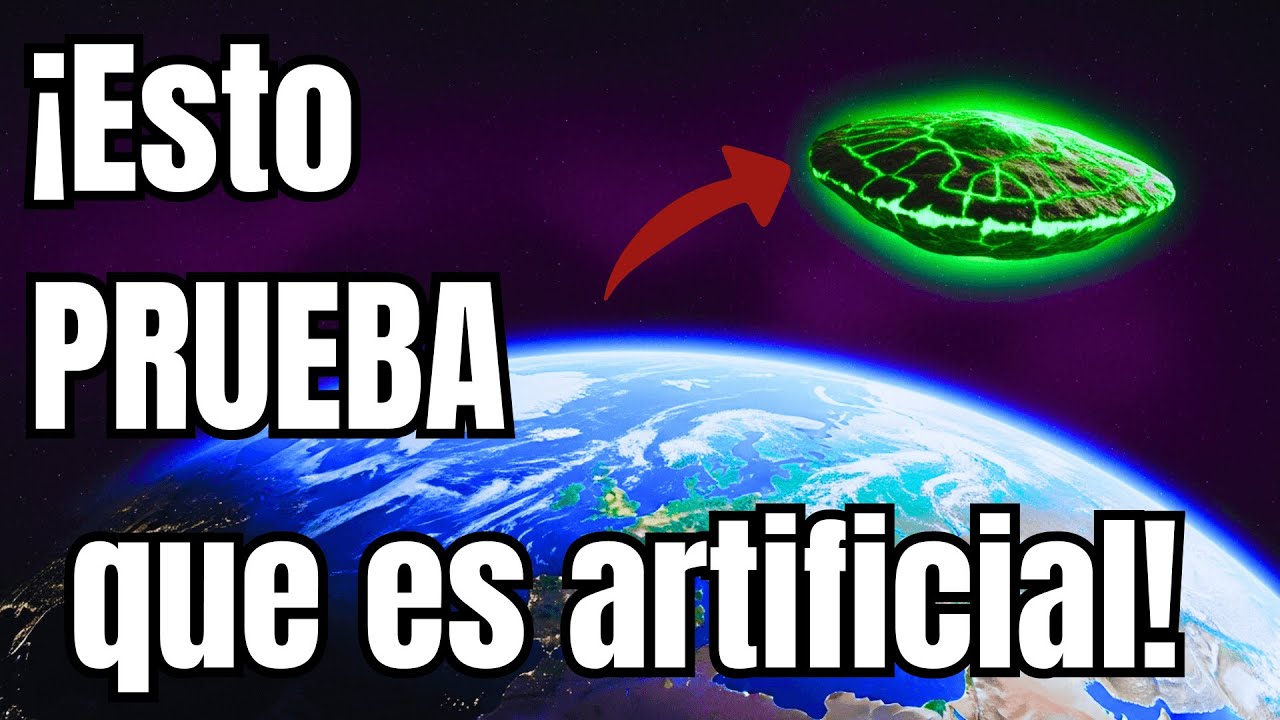
3I/ATLAS: Perfect Hexagonal Geometry Discovered, Challenging Natural Formation Theories


Welcome to Sleepless Void, the nexus where we dissect the enigmatic phenomena of the cosmos and the cutting edge of scientific inquiry, all designed to fuel your insatiable curiosity. Tonight, we turn our spectral gaze to an astronomical anomaly that sent ripples of astonishment through the scientific community on November 2nd: 3I/ATLAS, an object that defies its classification as a mere "random comet." The evidence, meticulously gathered and analyzed, points to a startling conclusion: this celestial body possesses a geometric form of perfect hexagonal precision.

The Anomaly of 3I/ATLAS

The initial designation 3I/ATLAS hinted at a typical comet, a visitor from the outer solar system, predictable in its trajectory and composition. However, the data collected following its discovery on November 2nd painted a far more surreal picture. This was no ordinary celestial wanderer. The object exhibited characteristics that immediately set it apart, sparking intense debate and rigorous investigation among astrophysicists and planetary scientists worldwide. The core of the mystery lies in its shape, a perfect hexagon.

Early Visualizations: The Very Large Telescope's Revelation

The first high-resolution images captured by the Very Large Telescope (VLT) provided the initial, almost unbelievable, evidence. These observations revealed a distinct hexagonal outline, a shape rarely, if ever, observed in natural celestial bodies of this nature. The precision was astounding: six impeccably straight sides, each measuring approximately 4.2 kilometers in length, meeting at vertices with angles deviating by a mere 0.3 degrees from absolute geometric perfection. This level of unnatural symmetry immediately triggered skepticism and excitement. Could this be a sophisticated illusion, an artifact of instrumentation, or something far more profound?

Recommended Gear for Investigation

ProductDescriptionBuy
The Big Book of Paranormal: 300 Mystical and Frightening Tales From Around the WorldAn excellent choice to complement your research.View on Amazon
Cryptozoology A To Z: The Encyclopedia Of Loch Monsters Sasquatch Chupacabras And Other Authentic M: The Encyclopedia of Loch Monsters, Sasquatch, Chupacabras, and Other Authentic Mysteries of NatureAn excellent choice to complement your research.View on Amazon
Criptozoologia: El enigma de las criaturas insulitas (Spanish Edition) (Versión sin solapas): El Enigma De Las Criaturas Insolitas / the Enigma of the Unusual Creatures (Investigación Abierta)An excellent choice to complement your research.View on Amazon
The H. P. Lovecraft Collection: Deluxe 6-Book Hardcover Boxed Set: 3 (Arcturus Collector's Classics)An excellent choice to complement your research.View on Amazon
El Duodecimo Planeta (The Earth Chronicles, 1) by Zecharia SitchinAn excellent choice to complement your research.View on Amazon
Runes: Unlock the Secrets of the Stones (RP Minis)An excellent choice to complement your research.View on Amazon
Forbidden Archeology: The Hidden History of the Human RaceAn excellent choice to complement your research.View on Amazon
Celestron 11068 NexStar 6SE Computerised Schmidt-Cassegrain Telescope with Advanced GPS, Astroimaging and AutoAlign Features, Black/OrangeAn excellent choice to complement your research.View on Amazon
Tapiz de mapa del mundo antiguo, diseño vintage de mapa del mundo, tapiz de distribución geográfica para colgar en la pared, póster educativo de mapa del mundo del Atlas histórico marrón, para pared,An excellent choice to complement your research.View on Amazon
PALOSANTO - Palo Santo Incienso Natural Popular Ayabaca - 8 Palitos de Madera para Quemar - 60 70 Gramos Perú - Palo Santo Limpieza Energetica Yoga Meditación Etico y SostenibleAn excellent choice to complement your research.View on Amazon

In-Situ Analysis: The Juno Probe's Close Encounter

The intrigue surrounding 3I/ATLAS intensified with the proximity of the Juno spacecraft. During a strategic flyby, Juno's advanced sensor suite and imaging systems were able to gather unprecedented close-range data. The findings were both illuminating and deeply perplexing. Juno's observations confirmed the macroscopic hexagonal structure but also revealed intricate details: elevated ridges precisely along the edges and mysterious, complex structures situated at the vertices. These formations suggested not only a deliberate overall shape but also an internal complexity that further baffled conventional models of cosmic object formation. The probe's data corroborated the VLT's initial findings, solidifying the hexagonal anomaly as a tangible, observable reality.

Deconstructing the Hexagon: Precision and Impossibility

From an analytical standpoint, the geometric parameters of 3I/ATLAS are problematic for natural processes. Natural formation, whether through accretion, collisions, or gravitational sculpting, typically results in irregular, more amorphous shapes. While some celestial bodies exhibit symmetry due to rotational forces or tidal locking, the absolute perfection of 3I/ATLAS's hexagonal form—with sides of equal length and near-perfect vertex angles—is exceptionally difficult to reconcile with known astrophysical mechanisms. The deviation of only 0.3 degrees is statistically negligible, implying a level of order that seems antithetical to the chaotic nature of space. We're not talking about a rough approximation; we're talking about a shape that would be challenging to construct artificially on Earth.

Challenging Cosmic Sculptors: Natural Formation Hypotheses

Naturally, the scientific community has scrambled to propose explanations. Could extreme gravitational forces in a unique region of space have sculpted it? Perhaps a rare alignment of stellar winds or a peculiar interaction with an undiscovered form of cosmic energy? Some theories invoke exotic states of matter or previously unknown physical laws governing the early universe. However, each hypothesis faces significant hurdles. Explaining the consistent side lengths and precise angles simultaneously through purely natural means requires invoking highly improbable, almost speculative, conditions. The sheer uniformity across all six sides and the sharp, defined vertices are the crux of the problem. Without an external blueprint or an artificial hand, how does a gas cloud or a collection of cosmic debris coalesce into such a flawless geometric solid?

The Silent Void: Unanswered Questions and Future Research

Despite the wealth of data, 3I/ATLAS remains shrouded in mystery. Key questions persist: Was this object naturally formed under conditions we cannot yet comprehend, or does its geometry hint at an artificial origin? What is the composition of the elevated ridges and vertex structures? Could these features provide clues to its formation or purpose? Further telescopic observations and potentially dedicated missions will be necessary to unravel these layers of the enigma. The scientific endeavor now shifts towards understanding the processes, however alien, that could engineer such a celestial artifact.

Investigator's Verdict: A Cosmic Enigma

As your investigator, I approach anomalies like 3I/ATLAS with a healthy dose of skepticism, grounded in decades of reviewing alleged phenomena. We must rigorously exclude all natural explanations, no matter how improbable they seem. However, the documented precision of 3I/ATLAS's hexagonal structure, corroborated by multiple independent observations and advanced instrumentation, pushes the boundaries of conventional understanding. While definitive proof of artificiality remains elusive, the sheer geometric perfection challenges our current astrophysical models to their core. It is a stark reminder that the universe may hold formations and phenomena far beyond our current comprehension. This isn't merely a strange comet; it's a geometric puzzle box delivered from the void, demanding our attention.

The Investigator's Archive: Recommended Resources

To delve deeper into the mysteries of the cosmos and the methods of paranormal investigation, I recommend the following resources:

FIELD EQUIPMENT & LITERATURE

For those inspired to conduct their own celestial observations or explore related phenomena, certain tools and knowledge bases are invaluable:

Frequently Asked Questions

  • What is 3I/ATLAS?

    3I/ATLAS is an astronomical object whose observed shape is a near-perfect hexagon, challenging conventional theories of natural celestial body formation.

  • How was its geometric shape discovered?

    Its hexagonal form was initially observed through high-resolution images from the Very Large Telescope (VLT) and later confirmed and detailed by the Juno spacecraft during a close flyby.

  • Are there natural explanations for this shape?

    While scientists are exploring various hypotheses, the extreme precision of the hexagonal geometry makes purely natural formation processes difficult to substantiate with current models.

  • Could 3I/ATLAS be artificial?

    The perfect geometric nature of 3I/ATLAS has led to speculation about artificial origins, but there is currently no definitive evidence to support this claim. It remains an open question.

Your Mission: Observation and Inquiry

The universe is a vast repository of wonders, both explained and unexplained. The case of 3I/ATLAS serves as a potent reminder of how much we still have to learn. Your mission, should you choose to accept it, is to remain curious. Seek out information, question established norms, and observe the world around you—both the mundane and the extraordinary. The next great discovery might be waiting for eyes that are willing to look beyond the obvious.

What are your thoughts on 3I/ATLAS? Do you believe this celestial geometry could arise naturally, or does it hint at something more? Share your theories and any similar cosmic anomalies you've encountered in the comments below. Your experiences fuel our collective investigation into the unknown. If this deep dive into cosmic geometry has sparked your curiosity, please share this case file across your networks. Help us extend the reach of Sleepless Void and awaken more minds to the mysteries that await us among the stars.

``` `

Investigator's Note: True paranormal research doesn't fund itself. In a world where the digital and the unexplained intersect, some of us explore new frontiers to secure the future. Do you dare to be part of the vanguard? Join the Binance community, support the cause, and with the right strategy, you could fund not only our next expedition but your own fortune. The next great discovery could be just a click away.

15 Unexplained Phenomena: A Deep Dive into Earth's Most Profound Mysteries


EXPEDIENT INDEX

Introduction: The Allure of the Unknown

Greetings. Alejandro Quintero Ruiz here. The human psyche is, by its very nature, drawn to the unknown. It’s a primal instinct, a finely tuned mechanism that propelled our ancestors from caves to constellations. We crave answers, yet we are equally fascinated by the questions that defy easy resolution. In this dossier, we delve into fifteen of Earth’s most profound enigmas – cases that have stumped scientists, historians, and investigators alike for generations. These aren't mere campfire tales; they are persistent anomalies that challenge our understanding of reality itself. Prepare to engage your critical faculties, because today, we’re not just recounting mysteries; we’re dissecting them.

The Human Craving for Mystery

There's an undeniable thrill in the pursuit of the unknown. It fuels countless narratives across literature, film, and folklore, offering us an escape from the mundane into worlds of suspense and revelation. However, the most compelling mysteries are not those confined to fiction, but the persistent enigmas that manifest in our tangible world. These real-life puzzles, often defying conventional logic and scientific explanation, ignite a deeper, more intense curiosity. They represent the edges of our knowledge, the frontiers where our established frameworks of understanding begin to fray.

Unraveling the Veil of the Inexplicable

My career has been spent peering behind that veil, meticulously examining phenomena that defy easy categorization. The goal isn't to chase shadows, but to apply rigorous analysis to events that resist simple explanations. This compilation of fifteen unresolved mysteries serves as a critical examination of the boundaries of human comprehension. We will explore historical disappearances and strange signals, architectural enigmas and cosmic paradoxes. Each case represents a potent reminder that despite our technological advancements, vast swathes of reality remain stubbornly, fascinatingly unexplained. This is where the science of the known intersects with the art of the possible.

Case File 1: The Mysterious Disappearance of the USS Cyclops

On March 4, 1918, the USS Cyclops, a U.S. Navy collier ship carrying over 300 souls, vanished without a trace en route from Barbados to Baltimore. No distress signal was ever received. Theories range from rogue waves and enemy action to the more speculative, such as mutiny or even entanglement in a powerful, unknown maritime anomaly. The sheer scale of the loss, coupled with the absolute lack of debris or any subsequent evidence, makes this one of maritime history’s most chilling unsolved disappearances. A thorough review of naval logs and weather patterns offers no definitive closure, leaving a gaping hole in historical records and a stark warning about the unforgiving nature of the sea.

Case File 2: The Roanoke Colony Vanishing

In the late 16th century, over 100 English settlers established a colony on Roanoke Island, North Carolina. When supply ships returned, they found the settlement deserted, with no signs of struggle or evacuation. The only clue was the word "CROATOAN" carved into a post. This stark message, and the absence of any further trace of the colonists, has fueled speculation for centuries. Were they assimilated by local tribes? Did they perish from disease or starvation? Or was there a more sinister, unexplained fate that befell the "Lost Colony"? Historical accounts and archaeological findings offer fragments, but no cohesive narrative to explain this foundational American enigma.

Case File 3: The Dyatlov Pass Incident

In February 1959, nine experienced hikers died under bizarre and terrifying circumstances in the Ural Mountains of the Soviet Union. Their tent was found slashed from the inside, and their bodies, discovered scattered, bore peculiar injuries, including severe internal trauma and missing eyes and tongues, yet no external signs of struggle against other humans. The official Soviet investigation concluded that an "overwhelming unknown force" was responsible, a vague ruling that has not quelled the intense speculation. Hypotheses involving infrasound, radiation, military testing, and even paranormal entities continue to be debated. This case exemplifies how evidence can paradoxically deepen a mystery rather than resolve it.

"The strangest thing about the Dyatlov Pass incident is not just the bizarre injuries, but the absence of any rational explanation that fully accounts for all the collected evidence. It forces us to consider possibilities outside the conventional." - An excerpt from an internal investigation review.

Case File 4: The Taos Hum

For decades, residents of Taos, New Mexico, and various other locations worldwide have reported hearing a persistent, low-frequency hum. This sound, often described as resembling that of a distant diesel engine, is typically only audible indoors and to certain individuals. Despite extensive investigation, the source of the "Taos Hum" remains elusive. Geological surveys, acoustic monitoring, and analysis of potential industrial sources have yielded no definitive answers. This sonic anomaly raises profound questions about environmental factors, human perception, and the possibility of localized, undetectable phenomena. Understanding it requires us to consider the limits of our auditory detection and environmental monitoring technologies.

Case File 5: The 'Wow!' Signal

On August 15, 1977, astronomer Jerry Ehman, working with the Big Ear radio telescope, detected a powerful, narrow-band radio signal emanating from the constellation Sagittarius. The signal was so striking that Ehman circled it on the printout and wrote "Wow!" next to it. Lasting 72 seconds, the signal bore the hallmarks of a potential extraterrestrial origin, but it has never been detected again, despite numerous attempts. The "Wow!" signal remains a tantalizing piece of evidence in the search for extraterrestrial intelligence (SETI), highlighting the immense challenge of confirming anomalous signals in the vast cosmic ocean. Its transient nature is a critical factor in its unresolved status.

Case File 6: The Phantom Time Hypothesis

This controversial theory, proposed by German historian Heribert Illig, suggests that approximately 300 years of the Early Middle Ages (from 614 to 911 AD) were a fabrication, a result of a conspiracy by Holy Roman Emperor Otto III and Pope Sylvester II to place themselves in the auspicious year 1000 AD. Illig argues that historical and archaeological evidence from this period is suspiciously scarce and inconsistent, suggesting it was retroactively invented. While widely dismissed by mainstream historians, the hypothesis forces us to critically examine the construction of our accepted historical timelines and the potential for large-scale historical manipulation. Analyzing historical consensus is a vital, albeit complex, investigative process.

Case File 7: The Consensus Reality Breakdown

This refers to phenomena where collective perception or widely accepted 'facts' seem to shift or change in ways that defy logical explanation. It touches upon concepts like the Mandela Effect, where large groups of people share false memories of past events. While psychologists often attribute these to memory fallibility, confabulation, and social reinforcement, the consistency and specific nature of some shared 'misrememberings' have led to more speculative theories. These include ideas of parallel universes bleeding into our own or subtle manipulations of historical records. Examining these 'consensus breakdowns' requires a deep dive into memory, psychology, and the very fabric of perceived reality.

Case File 8: The Lost City of Atlantis

Described by the ancient Greek philosopher Plato, Atlantis is a legendary island civilization famed for its advanced technology and utopian society, which met a catastrophic end. Plato’s detailed accounts have inspired generations of explorers and theorists to search for its physical remains. Despite numerous proposed locations, from the Mediterranean to the Atlantic and beyond, no conclusive archaeological evidence has ever surfaced. The enduring myth of Atlantis speaks to our deep-seated fascination with lost golden ages and advanced ancient civilizations, a powerful archetype in human mythology.

Case File 9: The Stonehenge Conundrum

This prehistoric monument in Wiltshire, England, is one of the world's most iconic and perplexing structures. Composed of massive standing stones, its precise construction methods, the origin of the stones (some transported from hundreds of miles away), and its original purpose remain subjects of intense debate. Theories range from astronomical observatory and religious site to a prehistoric hospital or burial ground. The sheer feat of engineering involved, using the limited technology of the Neolithic and Bronze Age, continues to astound archaeologists and engineers, underscoring the ingenuity and potential lost knowledge of our ancient ancestors.

Case File 10: The Speed of Light Anomaly

According to Einstein's theory of special relativity, the speed of light in a vacuum is a universal constant, approximately 299,792 kilometers per second. However, some astronomical observations and theoretical considerations have raised questions about whether this constant has always held true, or if it might vary under certain extreme conditions. While the vast majority of experimental data supports its constancy, the implications of any deviation would be profound, potentially rewriting foundational physics. Examining such anomalies requires meticulous analysis of cosmological data and theoretical physics research.

Case File 11: The Dark Matter and Dark Energy Enigma

Our current cosmological models suggest that the visible matter we can observe – stars, galaxies, planets – constitutes only about 5% of the universe. The remaining 95% is believed to be composed of dark matter (about 27%) and dark energy (about 68%). These enigmatic components exert gravitational influence and drive the accelerated expansion of the universe, yet they do not interact with light or other electromagnetic radiation, making them invisible and incredibly difficult to detect directly. Understanding dark matter and dark energy is one of the paramount challenges in modern physics and cosmology, representing a significant gap in our cosmic inventory.

Case File 12: The Origin of Life

How did life first arise on Earth from non-living matter? This fundamental question, known as abiogenesis, remains one of science's most profound mysteries. While we have theories involving complex chemical reactions in early Earth environments, such as the primordial soup hypothesis or hydrothermal vent theories, a definitive, step-by-step explanation of life's spontaneous emergence is still lacking. The transition from simple organic molecules to self-replicating, evolving organisms represents a monumental leap that continues to engage biochemists and astrobiologists worldwide.

Case File 13: The Nature of Consciousness

What is consciousness? This profound question delves into the very essence of subjective experience, awareness, and selfhood. Neuroscience has made strides in understanding the brain's physical mechanisms, but the "hard problem" of consciousness – how subjective experience arises from purely physical processes – remains largely unsolved. Is consciousness an emergent property of complex neural networks, or does it point to something more fundamental about the universe? Exploring consciousness requires an interdisciplinary approach, bridging neuroscience, philosophy, and even quantum physics. This is the ultimate mystery, as it pertains to our own existence.

Case File 14: The Simulated Reality Theory

Coined by philosopher Nick Bostrom, the simulation hypothesis posits that our reality might be an artificial simulation, akin to a highly advanced computer program. The argument suggests that if advanced civilizations are capable of creating such simulations, it's statistically more probable that we are living in one of countless simulations rather than in the original, base reality. While speculative, this theory challenges our assumptions about the fundamental nature of existence and has prompted serious philosophical and even scientific consideration. Exploring this requires questioning the very foundations of our perception and the universe we inhabit.

Case File 15: The Great Filter's Paradox

The Fermi Paradox, famously articulated by physicist Enrico Fermi, questions why, given the vastness of the universe and the high probability of extraterrestrial life, we have found no evidence of it. The Great Filter hypothesis offers a potential resolution: that there exists some extremely difficult, perhaps insurmountable, barrier to the development of advanced civilizations or their interstellar expansion. This "filter" could be in our past (e.g., the origin of life itself was incredibly rare) or in our future (e.g., technological civilizations inevitably destroy themselves). Identifying the nature of this filter is critical to understanding humanity's place and prospects in the cosmos.

The Investigator's Verdict: Beyond the Limits of Current Understanding

After meticulously examining these fifteen cases, one conclusion becomes unavoidable: our current scientific paradigms and historical records, while impressive, are incomplete. The USS Cyclops and Roanoke Colony speak to the enduring power of environmental or unknown factors to erase human presence. The Dyatlov Pass incident and the Taos Hum highlight anomalies that defy conventional explanation, suggesting either extreme natural phenomena or forces we do not yet comprehend. The 'Wow!' Signal, Atlantis, and Stonehenge point to potential knowledge or events lost to time or hidden beyond our observational reach.

Furthermore, mysteries like the Phantom Time Hypothesis, Consensus Reality Breakdown, and the Simulated Reality Theory compel us to question the very reliability of our historical records and perceived reality. Finally, the cosmic enigmas of the speed of light, dark matter, dark energy, the origin of life, consciousness, and the Great Filter represent chasms in our understanding of the universe and our place within it. These aren't just unsolved riddles; they are critical junctures that demand further research, interdisciplinary collaboration, and a continued commitment to open-minded inquiry. The evidence, while often fragmented and suggestive, consistently points towards a reality far more complex and mysterious than our current models can fully accommodate.

The Researcher's Archive

For those who wish to delve deeper into the labyrinth of the unexplained, certain resources are indispensable. Understanding these phenomena requires a foundation in critical analysis, historical context, and the methodologies employed in paranormal and scientific investigation. Here are essential references that have informed countless investigations:

  • Books:
    • "Passport to Magonia: On UFOs, Folklore and Parallel Worlds" by Jacques Vallée: Explores the connection between UFO sightings and folklore, suggesting a deeper underlying phenomenon.
    • "The Day After Roswell" by Philip J. Corso: A controversial account detailing alleged government cover-ups and recovered alien technology.
    • "UFOs: The Definitive Guide" by David Jacobs: A comprehensive look at the history of UFO sightings and abduction phenomena.
    • "Extraordinary Claims: A Skeptic's Guide to the Paranormal" by Carl Sagan: While not solely focused on mysteries, Sagan's emphasis on critical thinking is paramount for any investigator.
  • Documentaries:
    • "Unacknowledged" (Directed by Michael Mazzola): Explores alleged government disclosure of UFO and extraterrestrial information.
    • "The Phenomenon" (Directed by James Fox): A collection of testimonies and expert analysis on the UFO subject.
    • "Missing 411" (Series based on the work of David Paulides): Investigates unexplained disappearances in national parks and wilderness areas.
  • Platforms for Deeper Exploration:
    • Gaia.com: Offers a vast library of documentaries and series on consciousness, spirituality, and unexplained phenomena, often featuring fringe research and alternative theories.
    • Academic Journals (e.g., Journal of Parapsychology): For rigorous, peer-reviewed research on anomalous phenomena.

Engaging with these resources is not about accepting their conclusions blindly, but about understanding the evidence presented, the arguments made, and the methodologies used. This forms the bedrock of robust investigative practice.

Your Field Mission: Documenting the Anomalous

The persistent nature of these unsolved mysteries underscores a fundamental truth: the world holds phenomena that actively resist easy explanation. Your mission, should you choose to accept it, is not merely to ponder these cases, but to contribute to the ongoing investigation. Armed with the principles of critical analysis and skeptical inquiry, I challenge you to:

  1. Investigate Local Legends: Identify an unsolved mystery or strange occurrence specific to your local area. Document all available information – historical accounts, eyewitness testimonies, and any physical evidence reported.
  2. Apply the Investigator's Toolkit: Analyze your chosen local legend through the lens of this dossier. What are the most plausible explanations? What evidence remains anomalous? Are there parallels to the cases discussed today?
  3. Document and Share Your Findings: Compile your research into a brief report or a series of notes. Share your analysis in the comments below. Your insights, no matter how preliminary, can add valuable perspectives to these enduring enigmas. Remember, the most effective investigations often begin in our own backyards.

This is your chance to engage directly with the unexplained. The community is built on shared curiosity and collaborative discovery. What anomalies await your investigation?

About the Author

alejandro quintero ruiz is a veteran field investigator dedicated to the analysis of anomalous phenomena. His approach combines methodological skepticism with an open mind to the inexplicable, always seeking the truth behind the veil of reality.

Thank you for joining me on this exploration into the profound mysteries that continue to captivate and confound us. The pursuit of knowledge is a journey without end, and the unexplained remains an active, vital frontier for discovery. Keep questioning, keep investigating.

Exoplanet Breakthrough: Analyzing the Evidence for Extraterrestrial Life in the Cosmos


Introduction: The Cosmic Whispers

The cosmos, in its boundless expanse, has always been a fertile ground for speculation and wonder. Humanity has consistently gazed at the stars, pondering our place within this grand celestial theater. Recent advancements in astronomical observation have moved these ponderings from the realm of pure philosophy into the tangible arena of scientific inquiry. The discovery of exoplanets, worlds orbiting stars beyond our own sun, has amplified the age-old question: Are we alone?

This report delves into a specific scientific breakthrough, one that has ignited renewed excitement about the potential for extraterrestrial life. We will analyze the findings, scrutinize the methodologies, and contextualize them within the broader scope of our ongoing search for cosmic companionship. This is not merely a recounting of facts, but an analytical dissection of evidence, designed to separate validated discovery from speculative fantasy. Let's open the file.

Geneva Discovery: Deciphering the Data

Reports from Geneva, Switzerland, detail an extraordinary discovery concerning exoplanets, hinting at environments potentially conducive to extraterrestrial life. Researchers, employing advanced telescopic arrays and sophisticated data analysis techniques, have identified planetary bodies exhibiting characteristics that warrant closer examination. The initial findings, often presented in preliminary reports and scientific journals, suggest the presence of atmospheric compositions, surface conditions, or orbital mechanics that align with theoretical models of habitable zones.

It's crucial to approach such announcements with a rigorous analytical lens. The term "suggests" is paramount here. Scientific discovery is an iterative process. A correlation does not imply causation, and a habitable zone does not automatically equate to inhabited. The methodology employed by these Geneva-based researchers likely involved spectral analysis of exoplanetary atmospheres, searching for biosignatures – specific chemical compounds like oxygen, methane, or even more complex molecules that, in combination, could indicate biological processes. Understanding the limitations of current observational technology is key; we are often inferring conditions from light years away, a task fraught with potential for misinterpretation. For a deeper dive into the scientific process behind exoplanet detection, consider exploring resources on exoplanetology via Wikipedia.

Hypothesizing Extraterrestrial Life: Beyond Earthly Bounds

The hypothesis of extraterrestrial life is no longer confined to science fiction. The sheer number of stars and, by extension, potential planets in our galaxy alone, makes the statistical probability of life elsewhere a compelling argument for continued investigation. However, defining "life" is our primary challenge. Are we looking for microbial organisms, complex intelligent beings, or something entirely beyond our current comprehension? The popular conception of aliens, often influenced by media portrayals, can cloud objective analysis.

When scientists announce findings that "suggest" extraterrestrial life, they are typically referring to indirect evidence. This could include the detection of gases in an exoplanet's atmosphere that are produced by living organisms on Earth. For instance, the simultaneous presence of oxygen and methane can be a strong indicator, as these gases tend to react and destroy each other unless continuously replenished, potentially by biological activity. Projects like the Search for Extraterrestrial Intelligence (SETI) have been dedicated to this pursuit for decades, listening for radio signals, another form of indirect evidence. The implications of confirming life beyond Earth would be profound, fundamentally altering our understanding of biology, philosophy, and our place in the universe. This pursuit requires patience and robust data, often detailed in comprehensive astronomy journals.

The UnXplained Framework: Bridging Science and Speculation

Shows like "The UnXplained," hosted by William Shatner, attempt to bridge the gap between established scientific fact and the unexplained phenomena that capture our imagination. The series often features contributions from scientists, historians, and alleged eyewitnesses, creating a narrative that explores the fringes of possibility. While the entertainment value is high, it's crucial for the viewer to maintain a critical perspective, discerning between well-researched theories and sensationalized speculation.

The original clip mentions Season 3, "The Search For Extraterrestrial Life," and positions the Geneva discovery within this context. This highlights a common strategy in investigative media: to connect current events with ongoing narratives or established shows that have built an audience interested in these topics. It leverages brand recognition and audience loyalty to draw viewers into new content. For those seeking a deeper understanding of the scientific endeavors, official channels like The HISTORY Channel website and their YouTube playlists offer a wealth of information, often presenting more detailed discussions and expert interviews.

"Each episode will feature compelling contributions from scientists, historians, witnesses and experiencers-each seeking to shed light on how the seemingly impossible actually can happen."

This statement from the show's producers encapsulates their approach: to explore the boundary where the known meets the unknown. The challenge, however, lies in the rigor of these contributions. Are the "scientists" providing peer-reviewed data, or are they proponents of fringe theories? Are the "witnesses" offering corroborated accounts or anecdotal recollections? This is where our own analytical framework must come into play, cross-referencing information and demanding evidence.

Researcher's Verdict: Evaluating the Evidence

The announcement of exoplanets potentially harboring life is a monumental prospect, a testament to human curiosity and technological advancement. The preliminary reports from Geneva, while exciting, must be tempered with scientific caution. The process of confirming biosignatures is complex, prone to false positives, and requires extensive verification through independent studies and further observation. The term "suggests" is a critical qualifier; it denotes a possibility, not a certainty.

From an investigative standpoint, we must consider several factors:

  • Verifiability: Has the data been published in peer-reviewed scientific journals? Are other research institutions able to replicate the findings?
  • Methodology: What specific techniques were used to detect these exoplanets and analyze their atmospheres? Understanding the instruments and the inherent limitations is crucial.
  • Alternative Explanations: Could the detected anomalies be explained by non-biological geological or atmospheric phenomena? Scientists must exhaust all conventional explanations before resorting to extraordinary ones.

While the prospect of extraterrestrial life is one of the most profound questions humanity faces, our pursuit of the answer must be grounded in rigorous scientific inquiry and critical analysis. The allure of the unknown is strong, but our understanding is built on verifiable evidence, not mere possibility. The data from Geneva warrants attention, but it is merely the opening sentence in a much larger cosmic narrative.

The Researcher's Archive

For any serious investigator, understanding the foundational texts and seminal works in a field is paramount. The search for extraterrestrial life and unexplained phenomena has a rich history of documentation, from scientific treatises to eyewitness accounts. To truly grasp the nuances of such discoveries, consulting primary and secondary sources is indispensable. Below are key resources that provide context and depth for studies in exoplanetology and the broader search for anomalous phenomena.

  • Books:
    • "Cosmos" by Carl Sagan: A classic that eloquently articulates humanity's place in the universe and the scientific quest for knowledge.
    • "Pale Blue Dot: A Vision of the Human Future in Space" by Carl Sagan: Explores humanity's potential future among the stars.
    • "The Demon-Haunted World: Science as a Candle in the Dark" by Carl Sagan: Essential reading for understanding critical thinking and debunking pseudoscience, vital for any investigator.
    • "The Extraterrestrial Life Debate: Evidence and Inference" by Robert Billings: A more academic look at the scientific arguments for and against extraterrestrial life.
  • Documentaries:
    • "Cosmos: A Spacetime Odyssey" (and its predecessors): Visually stunning explorations of the universe and scientific discovery.
    • "Contact" (Film): While fictional, it masterfully explores the societal and scientific implications of discovering extraterrestrial intelligence.
    • "The Search for Extraterrestrial Life" (Various documentaries by reputable science channels): Focuses on the methods and ongoing efforts of organizations like SETI.
  • Platforms and Organizations:
    • NASA: The primary source for space exploration data and exoplanet discoveries.
    • European Southern Observatory (ESO): A leading astronomical research organization responsible for many exoplanet discoveries.
    • SETI Institute: Dedicated to the scientific search for extraterrestrial intelligence.
    • Gaia (Streaming Service): While often featuring speculative content, it can offer diverse perspectives on UFOs and extraterrestrial theories, requiring a discerning eye.

Field Protocol: Planetary Prospecting

Investigating potential life beyond Earth requires a systematic approach, mirroring the detailed protocols used in terrestrial scientific research. While direct planetary exploration is beyond the scope of most individuals, we can apply principles of observation and data analysis to understand the scientific endeavor itself.

  1. Understand the Detection Methods: Familiarize yourself with techniques like the transit method and radial velocity method used to discover exoplanets. Recognize their strengths and limitations in determining planetary characteristics.
  2. Analyze Atmospheric Data: Learn about spectral analysis and the search for biosignatures. Understand which gases are considered indicators of life and why.
  3. Evaluate Habitability Criteria: Research the concept of the habitable zone (or "Goldilocks zone") – the region around a star where liquid water could exist on a planet's surface. Consider other factors like planetary mass, atmospheric pressure, and stellar activity.
  4. Cross-Reference Sources: When presented with new findings, always seek information from multiple, reputable scientific institutions and peer-reviewed publications. Be skeptical of sensationalized claims lacking robust evidence.
  5. Study Historical Context: Understand the evolution of our search for extraterrestrial life, from early speculations to modern scientific endeavors. This provides perspective on current discoveries.

The tools of this investigation are primarily observational and analytical. For those interested in advanced observational tools, exploring speculative technologies or the principles behind advanced telescopes can offer insight into the immense effort involved.

Frequently Asked Questions

Q: How can a discovery of exoplanets suggest extraterrestrial life?
A: Scientists look for exoplanets within their star's habitable zone, where liquid water might exist. Analyzing the exoplanet's atmosphere for specific gases (biosignatures) like oxygen and methane, which on Earth are produced by life, provides indirect evidence.

Q: What is the "UnXplained" show and its relevance?
A: "The UnXplained" is a television series hosted by William Shatner that explores mysteries and unexplained phenomena, including topics related to extraterrestrial life. It serves to popularize these subjects, though critical viewing is advised.

Q: Are there specific exoplanets that are known candidates for life?
A: While many exoplanets are discovered, specific candidates often cited include those in the TRAPPIST-1 system, Proxima Centauri b, and Kepler-186f, due to their location within habitable zones. However, definitive proof of life remains elusive for all.

Conclusion: The Unfolding Cosmic Tapestry

The discovery of exoplanets that potentially harbor life represents a pivotal moment in our scientific journey. The findings from Geneva, while preliminary, underscore the accelerating pace of astronomical discovery and the increasing likelihood of finding worlds beyond our own that might support biological processes. Our role as investigators is to approach such revelations with a blend of excitement and critical scrutiny.

The universe is vast, and our understanding is constantly evolving. The scientific method, coupled with a healthy dose of skepticism and an open mind, is our most potent tool in unraveling these cosmic enigmas. The journey to confirm extraterrestrial life is ongoing, marked by rigorous data analysis, technological innovation, and perhaps, one day, undeniable proof.

Your Field Mission: Charting the Uncharted

The search for life beyond Earth is not confined to astronomical observatories. It extends to our own critical thinking and our ability to discern patterns and anomalies in information. Your mission:

Task: Analyze a recent scientific news report about an exoplanet discovery.

  1. Locate a reputable news source (e.g., NASA press release, BBC Science, Nature News) detailing a recent exoplanet discovery.
  2. Identify the key claims made about the planet’s potential habitability.
  3. Determine what methods were used to gather this information (e.g., transit photometry, spectroscopy).
  4. Assess the language used by the researchers. Does it state facts, possibilities, or speculations?
  5. Consider what further research or evidence would be needed to strengthen the claim of potential life.

Share your findings and analysis in the comments below. Let's dissect the latest cosmic clues together.

About the Author

alejandro quintero ruiz is a veteran field investigator dedicated to the analysis of anomalous phenomena. His approach combines methodological skepticism with an open mind to the inexplicable, always seeking the truth behind the veil of reality.