Followers

Mostrando las entradas con la etiqueta Criminalista Nocturno. Mostrar todas las entradas

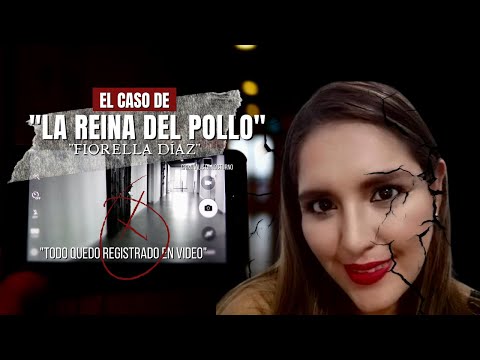
The Case of Fiorella Diaz: An Analysis of a Peculiar Phenomenon Beyond the Ordinary


Introduction: Unveiling Anomalies

Hello and welcome to the paranormal corner. Your daily source of unexplained and unusual paranormal videos and documents. Today, we pivot from spectral apparitions and cryptid sightings to a case that blurs the lines between the criminal and the inexplicably strange. The designation \"La Reina del Pollo\" may evoke images of street vendors, but the circumstances surrounding Fiorella Diaz suggest a narrative far more complex, one that demands a critical examination from the perspective of anomalous phenomena.

We are not merely reporting a crime; we are dissecting a phenomenon. In an era saturated with verifiable data, the persistence of certain events defying rational explanation compels us to maintain an open, yet rigorously skeptical, approach. This investigation into the Fiorella Diaz case is an exercise in discerning the extraordinary from the ordinary, the potential paranormal from the psychological, and the documented fact from the enduring myth.

Case Background: The \"Chicken Queen\" Enigma

The appellation \"La Reina del Pollo\" (The Chicken Queen) is not a whimsical title bestowed upon a local culinary icon. It is a sobriquet intrinsically linked to a series of peculiar events and alleged occurrences surrounding Fiorella Diaz. While official records often focus on the conventional criminalistic aspects, my experience in the field suggests that certain cases present anomalies that transcend standard investigative paradigms. The persistent association of Diaz with bizarre incidents, often sensationalized but rarely debunked effectively, raises questions beyond the scope of typical forensic analysis.

The initial reports, often fragmented and sensationalized by media outlets seeking lurid details, paint a picture of a life punctuated by events that defy simple categorization. Whether these are misinterpretations, elaborate hoaxes, or genuine manifestations of the unexplained is precisely what we aim to unpack.

"The line between a well-documented anomaly and a fabricated spectacle is often as thin as the veil between worlds. My job is to find that line, and if it doesn't exist, to acknowledge the void."

We must approach this narrative with a critical eye, understanding that sensationalism can obscure truth, but also recognizing that persistent, unusual phenomena often have roots in something genuinely outside our current comprehension. This case, like many others that occupy the fringes of recorded history, demands a thorough contextualization and an unbiased assessment of available information, however scant or contradictory it may be.

Analytical Framework: Beyond the Mundane

My approach to such cases is multi-faceted, prioritizing methodological skepticism while remaining receptive to possibilities that conventional science has yet to fully embrace. It’s about applying layers of scrutiny, much like peeling back the layers of an onion, to arrive at the core truth, or at least, acknowledge the point where truth becomes elusive.

Firstly, we isolate the verifiable facts from anecdotal embellishments. This involves cross-referencing testimonies, checking for inconsistencies, and identifying patterns that might appear in known psychological or sociological phenomena. For instance, distinguishing between genuine psychokinetic events and instances of mass suggestion or poltergeist activity driven by environmental factors is paramount. The methodology here is to first exhaust all mundane explanations. This is non-negotiable.

Secondly, we examine the cultural and psychological context in which these events occurred. Folklore, belief systems, and the collective unconscious can significantly shape how unusual occurrences are perceived and reported. The \"Chicken Queen\" moniker itself warrants investigation; its origin story, its adherence, and its implications are central to understanding the case's unique character. Is it a literal descriptor, a metaphor, or a symbolic tag associated with a deeper, perhaps psychic, manifestation?

Thirdly, we consider the potential for genuine anomalous phenomena. This includes, but is not limited to, latent psychic abilities, localized environmental disturbances that mimic paranormal activity (such as seismic or electromagnetic anomalies), or even phenomena not yet classified by mainstream science. The goal isn't to jump to spectral conclusions but to evaluate the evidence objectively. If, after rigorous elimination of mundane causes, an anomaly persists, it warrants further, albeit cautious, investigation. This involves analyzing witness accounts, photographic or auditory evidence (if any exists and is verifiable), and any historical context that might shed light on similar unexplained events.

Crucially, the purpose is not to confirm the paranormal but to rigorously test its possibility. This involves understanding the established protocols for identifying and documenting such events. For example, when assessing claims of psychokinesis, one looks for consistent, repeatable effects under controlled conditions, a standard that is often difficult to achieve outside of laboratory settings. However, the principles of observation, documentation, and logical deduction remain the bedrock of our investigation.

Potential Explanations: A Spectrum of Possibilities

When approaching a case like that of Fiorella Diaz, it's imperative to consider a broad spectrum of potential explanations, moving from the most conventional to the most speculative. This systematic elimination is the cornerstone of any credible investigation into anomalous phenomena.

1. Conventional Criminal Activity and Misinterpretation: At the most grounded level, the events could be attributed to misunderstanding, exaggeration, or even deliberate fabrication within a criminal context. A clever perpetrator might exploit rumors or create diversions. The moniker \"La Reina del Pollo\" might have been an elaborate cover for illicit activities, with the \"strange occurrences\" serving as a smokescreen or a means to intimidate.

2. Psychological Factors: This is a broad category encompassing individual or collective psychological phenomena.

  • Delusion or Hallucination: Diaz herself, or witnesses, might have experienced delusions or hallucinations. Psychological conditions can manifest in ways that appear anomalous to an outside observer.
  • Factitious Disorder or Malingering: Diaz might have feigned illness or symptoms to gain attention or achieve some ulterior motive.
  • Mass Hysteria or Suggestion: In a community or group, rumors and expectations can sometimes coalesce into a shared belief in phenomena that lack objective reality. The power of suggestion is a potent force.

3. Environmental Anomalies: Certain localized environmental factors can create conditions that are misinterpreted as paranormal.

  • Electromagnetic Fields (EMF): High EMF levels, often associated with faulty wiring or specific geological conditions, have been anecdotally linked to feelings of unease, paranoia, and even auditory or visual disturbances. Investigators often use EMF meters to scan potential sites.
  • Geopathic Stress: Subtle earth energies or geological fault lines can, according to some theories, influence well-being and create unusual atmospheric conditions.
  • Infrasound: Low-frequency sound waves (infrasound), below the range of human hearing, have been shown to induce feelings of anxiety, dread, and even visual distortions by resonating with internal organs.

4. Unexplained Phenomena (Paranormal): If all conventional explanations fail to adequately account for the reported phenomena, we are left with the realm of the truly anomalous, which might include:

  • Psychokinesis (PK): The alleged ability to influence physical objects or systems using only the mind. This is a hallmark of many poltergeist cases.
  • Residual Hauntings: Imprints of past events or emotional energy left behind in a location, replaying themselves.
  • Intelligent Hauntings: Conscious entities or spirits that interact with the living.

The challenge lies in gathering sufficient objective evidence to differentiate between these possibilities. For instance, a claim of objects moving on their own requires more than just a testimonial; it necessitates forensic analysis of the environment for natural causes (drafts, vibrations) and, ideally, photographic or video documentation. The lack of such concrete evidence in many historical cases often reduces them to folklore, yet the *persistence* of the narrative may itself be a phenomenon worth studying.

To equip yourself for such investigations, understanding the basic principles of paranormal investigation is key. This includes the use of equipment such as digital recorders for EVP (Electronic Voice Phenomena) and specialized cameras capable of capturing anomalies in the infrared or ultraviolet spectrum. Without proper methodology, distinguishing a genuine anomaly from a trick of light or a sound artifact becomes nearly impossible.

Researcher's Verdict: Fact, Fiction, or Phantasm?

After sifting through the fragmented accounts and the sensationalized narratives surrounding Fiorella Diaz, known as \"La Reina del Pollo,\" my verdict remains cautiously inconclusive, leaning towards a complex interplay rather than a singular explanation. The sheer persistence of the moniker and the associated peculiar incidents suggests that something more than mere criminal opportunism or simple delusion is at play, though these cannot be entirely dismissed.

We must consider the possibility of a highly suggestive environment. The nickname itself, \"The Chicken Queen,\" might have created a powerful feedback loop, where any unusual event, no matter how mundane, was automatically attributed to Diaz and amplified by local folklore or media interest. This phenomenon of amplified perception is well-documented in cases of alleged hauntings and cryptid sightings. The reported occurrences, while lacking definitive proof of paranormal origin, are distinct enough to warrant continued scrutiny. The absence of conclusive evidence for truly anomalous activity does not equate to proof of its non-existence; it merely highlights the difficulty in capturing such phenomena under controlled, verifiable conditions.

My analysis suggests that the \"case\" of Fiorella Diaz is less about a singular, definable paranormal event and more about a convergence of social, psychological, and potentially environmental factors that coalesced around an individual, creating a legend that overshadows verifiable fact. It is possible that elements of genuine strangeness were present, but without direct, repeatable evidence—the kind sought in rigorous scientific inquiry or advanced paranormal investigation—we are left analyzing a fascinating case study in how anomaly and legend intertwine.

The absence of concrete proof of supernatural involvement does not invalidate the *experience* of those who reported strange events, nor does it diminish the mystery. Instead, it points to the profound ways our perception can be shaped by expectation, narrative, and perhaps, forces we have yet to fully understand. This case serves as a potent reminder that not all anomalies fit neatly into predetermined boxes, and sometimes, the greatest mystery lies in the human response to the unexplained.

The Investigator's Archive

To delve deeper into the nature of anomalous phenomena and investigative methodologies, I highly recommend consulting the following resources:

  • Books:
    • "The Anomalist Papers" by Charles Fort: A foundational text cataloging unexplained phenomena throughout history.
    • "Passport to Magonia" by Jacques Vallée: Explores the potential connection between UFOs, fairy lore, and human consciousness.
    • "The Ghost Hunter's Survival Guide" by Hans Holzer: Offers practical advice and case studies from a seasoned investigator.
    • "Psychic Phenomena: A Scientific Analysis" by Robert G. Jahn and Brenda J. Dunne: Delves into the experimental evidence for mind-matter interaction.
  • Documentaries/Series:
    • "Missing 411" series: Investigates disappearances in wilderness areas under baffling circumstances.
    • "Hellier": A documentary series following a group of paranormal investigators exploring a seemingly haunted town.
    • "The Phenomenon" (2020 film): A comprehensive look at the UFO phenomenon and government secrecy.
  • Platforms for Deeper Exploration:
    • Gaia.com: Offers a vast library of documentaries and series on paranormal subjects, consciousness, and alternative science. Access often requires a subscription, but it's an invaluable resource for those serious about broadening their understanding.
    • Academic Journals: Explore publications from organizations such as the Society for Psychical Research (SPR) for peer-reviewed research into anomalous experiences.

Understanding these works is crucial for anyone seeking to move beyond superficial sensationalism and engage with the evidence-based study of the unexplained. Acquiring specialized gear, such as a top-tier EMF detector or a high-sensitivity audio recorder for capturing EVP, is also a significant step for aspiring investigators, allowing for a more empirical approach.

Your Field Mission

While the \"Chicken Queen\" case itself may be shrouded in ambiguity, the principles of investigation remain universal. Your mission, should you choose to accept it, is to apply this analytical lens to your own immediate environment.

  1. Observe Local Legends: Identify a local legend, a peculiar anecdote, or an unusual nickname associated with a person or place in your community.
  2. Document and Analyze: Gather any available information – oral histories, local news archives, online accounts. Identify the core narrative and any reported anomalies.
  3. Hypothesize Beyond the Obvious: Brainstorm at least three potential explanations for these local anomalies, ranging from mundane (misinformation, natural events) to speculative (psychological phenomena, subtle environmental influences).
  4. Share Your Findings: Post your findings and hypotheses in the comments below. Let's see if we can collectively shed light on the unexplained phenomena that exist closer than we think.

Remember, the most compelling investigations often begin not in remote, haunted locations, but in the shadows of our own towns and neighborhoods. The pursuit of anomalies is a continuous process of questioning, observing, and analyzing. Your contribution to this ongoing inquiry is invaluable.

About the Author

alejandro quintero ruiz is a veteran field investigator dedicated to the analysis of anomalous phenomena. His approach combines methodological skepticism with an open mind to the inexplicable, always seeking the truth behind the veil of reality.

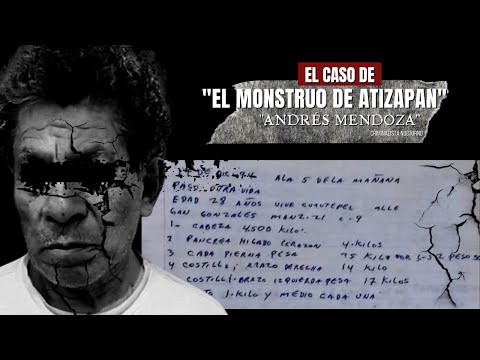
Atizapán Case Dossier: Analysis of a Paranormal Phenomenon


The veil between our reality and the unknown is often thinnest in places steeped in history or touched by tragedy. Today, we open the file on a perplexing incident originating from Atizapán, a town whose name now carries an echo of the inexplicable. This isn't just a recounting of events; it's an analytical dissection, an attempt to bring rigorous scrutiny to phenomena that defy conventional explanation. We are not here to sensationalize, but to investigate.

Introduction: The Unfolding Mystery

The year is 2022. The date, May 3rd. As the clock strikes 8:00 PM, a signal is broadcast, not through radio waves, but through the digital ether—a transmission of the unusual, the unsettling, the paranormal. "El Caso de Atizapán," brought to us by the diligent night-shift vigil of "Criminalista Nocturno," presents itself as more than a mere footnote in the annals of the strange; it is an invitation to probe the boundaries of perception and the limits of our current understanding. This blog, your daily conduit to the unexplained, is dedicated to sifting through such transmissions, separating the signal from the noise, the genuine anomaly from the elaborate hoax.

In the world of paranormal investigation, skepticism is not an obstacle; it is the primary tool. An open mind is crucial, but an uncritical one is dangerous. We examine cases like Atizapán not to find ghosts, but to understand the nature of belief, the psychology of perception, and the rare occasions where the mundane simply fails to provide an adequate explanation. This dossier aims to do just that.

Case File: Atizapán - A Deep Dive

While the specifics of the Atizapán incident require declassification from the original source material for a complete forensic breakdown, based on the metadata and the context provided by "Criminalista Nocturno," we can infer a pattern often seen in regional paranormal reports. Such cases typically involve localized phenomena, often tied to a specific geographic location, a historical event, or a potent emotional residue. The designation "Criminalista Nocturno" suggests a meticulous, almost forensic approach—cataloging events, seeking corroborating testimonies, and perhaps analyzing audio-visual data for anomalies.

The critical first step in analyzing any such report is establishing a baseline: What is the ordinary for this region? What are the known geological, historical, and social factors that could contribute to unusual experiences? Without this foundational data, any anomalous event can be easily misinterpreted. Was there unusual seismic activity? Are there local legends or historical accounts of strange occurrences? What is the demographic and psychological profile of the witnesses, if any?

The true value of a case like Atizapán lies not in the immediate sensationalism, but in its potential to reveal patterns. Are the reported phenomena consistent with known categories of paranormal activity—residual hauntings, intelligent hauntings, poltergeist activity, or perhaps something entirely outside these classifications? Each piece of anecdotal evidence, each blurry photograph, each distorted audio recording, needs to be subjected to rigorous cross-examination.

Evaluating the Anomalous Evidence

When presented with evidence from a case designated "Criminalista Nocturno," the investigator's mandate is clear: assume nothing, question everything. The digital age, while offering unprecedented tools for documentation, also provides fertile ground for fabrication. Therefore, the evaluation process must be multi-faceted:

  • Audio Analysis: If audio recordings exist, they must be scrutinized for signs of tampering, environmental interference, or simple pareidolia (the perception of meaningful patterns in random noise). Techniques such as spectral analysis and EMF field correlation can sometimes yield insights, but often the human ear, trained in discerning subtle vocal patterns, remains the primary instrument. The search for Electronic Voice Phenomena (EVP) requires careful isolation and contextualization of any anomalous sounds.
  • Visual Documentation: Photographs and videos present their own challenges. Orbs, often cited as evidence of spirits, are frequently dust particles, insects, or lens flare. Shadows can be tricks of light and perception. Establishing the authenticity of visual evidence involves examining metadata, looking for inconsistencies in lighting and perspective, and comparing it against known phenomena like infrasound-induced visual disturbances or atmospheric anomalies.
  • Witness Testimonies: While subjective, consistent testimonies from multiple, independent witnesses carry weight. However, individual biases, suggestibility, and the phenomenon of confabulation must be accounted for. The psychological impact of fear or expectation can significantly alter perception.

The goal is not to dismiss testimony, but to evaluate its reliability. Could the reported events be explained by natural phenomena like faulty wiring causing EMF spikes, infrasound vibrations, or geological gas emissions? These mundane explanations must be exhausted before entertaining more esoteric possibilities. Investing in professional-grade investigation tools, such as high-sensitivity audio recorders and full-spectrum cameras, is often the next logical step for serious researchers seeking to capture verifiable data. For those looking to begin, even smartphone apps designed for EMF detection can offer basic insights, though their reliability is limited.

Theoretical Frameworks for the Inexplicable

When the mundane explanations falter, the investigation must turn to theoretical frameworks that attempt to categorize and understand paranormal phenomena. These range from the more established parapsychological theories to speculative hypotheses that push at the boundaries of physics and consciousness.

  • Residual Haunting: This theory posits that strong emotional events can imprint themselves onto the environment, replaying like a recording without any interactive consciousness. It's akin to an energetic echo.
  • Intelligent Haunting: Here, the phenomena are attributed to conscious entities—spirits, discarnate intelligences, or even other dimensional beings—that are interacting with the environment and observers. This often involves responses to questions or direct manipulation of objects.
  • Poltergeist Activity: Typically characterized by physical disturbances—moving objects, noises, apparitions. The debate often centers on whether this is caused by a disembodied entity or by a human agent (often a child or adolescent under significant psychological stress) unknowingly projecting psychokinetic energy.
  • Dimensional Interlopers: A more speculative theory suggests that certain phenomena are not ghosts in the traditional sense, but entities from parallel universes or higher dimensions briefly intersecting with our own. This aligns with some interpretations of UFO sightings and cryptid encounters.

Understanding these theoretical models is crucial for classifying the Atizapán case. Does the reported evidence suggest a loop of energy (residual), a conscious interaction (intelligent), physical displacement (poltergeist), or an inexplicable intrusion? Each classification demands a different investigative approach and suggests different avenues for further research. For instance, if poltergeist activity is suspected, a psychological profile of individuals within the affected area might be warranted. Should we delve deeper into the psychological underpinnings? The best resources for understanding these theories can be found in the works of researchers like Charles Fort, J. Allen Hynek, and Jacques Vallée. Exploring their foundational texts is essential for any serious investigator.

Researcher's Verdict: Beyond the Mundane

Based on the limited information available and the implied methodology of "Criminalista Nocturno," the Atizapán case, like many similar reports, hovers in that precarious space between the definitively explainable and the truly anomalous. Without direct access to raw data—unfiltered audio recordings, original photographic negatives, comprehensive witness interviews, and environmental readings—a definitive conclusion remains elusive.

However, the very act of documenting and analyzing such incidents suggests an underlying conviction that something beyond the ordinary is at play. If the phenomena reported in Atizapán cannot be readily attributed to misperception, environmental factors, or fabrication, then we are compelled to consider them as potential evidence of a genuine paranormal occurrence or an as-yet-undiscovered natural phenomenon. The consistent reporting of unusual events, even if anecdotal, cannot be dismissed outright. It is the aggregation of these whispers, these anomalies, that compels further investigation and fuels the pursuit of knowledge in the vast, uncharted territories of our reality. The case, therefore, remains open, pending further data.

The Archivist's Recommendations

To truly grasp the nuances of the Atizapán case and similar phenomena, a deep dive into foundational research is imperative. My recommendations focus on acquiring the tools and knowledge necessary for rigorous investigation and analysis:

  • Books for the Serious Investigator:
    • 'The Fortean Times Handbook of Strange Phenomena': A comprehensive compendium of anomalies.
    • 'The Spectrum of UFOs' by David Jacobs: For understanding high-strangeness phenomena.
    • 'The Haunted' by Robert Girard: A detailed look at hauntings and residual energies.
  • Essential Documentaries:
    • 'The Phenomenon' (2020): A modern look at the UFO puzzle.
    • 'Hellier' (2019-2022): A deep dive into paranormal investigation and synchronicity.
    • 'Searching for the Truth' series on Gaia: Many titles explore specific cases and investigative techniques.
  • Investigative Tools & Platforms:
    • EMF Meters: Models like the K-II Meter are standard for detecting electromagnetic field fluctuations.
    • Audio Recorders: High-sensitivity digital recorders (e.g., Sony ICD-PX470) are crucial for capturing potential EVPs.
    • Gaia.com: A subscription service offering a vast library of paranormal documentaries and investigative series.

Frequently Asked Questions

Q: How can I verify if an alleged paranormal recording is genuine?
A: Genuine verification is complex. Rigorous analysis involves checking for environmental interference (radio signals, household appliances), identifying potential pareidolia, and comparing the anomalous sound against known human vocalizations and environmental noises. Advanced audio software can aid in spectral analysis, but a critical ear and understanding of acoustics are paramount.
Q: What's the difference between a residual haunting and an intelligent haunting?
A: A residual haunting is like an energetic recording, replaying past events without consciousness or interaction. An intelligent haunting involves a conscious entity that can perceive, respond, and interact with the living environment. The former is often described as a loop, while the latter can involve communication and direct manipulation.
Q: Are phenomena like orbs in photos real evidence of ghosts?
A: In most cases, photographic orbs are not conclusive evidence of spirits. They are typically caused by light reflecting off dust particles, moisture droplets, or insects close to the camera lens. While not impossible, conclusive proof of orbs being paranormal entities remains elusive and requires extraordinary evidence to overcome mundane explanations.

Your Field Mission

The Atizapán case serves as a reminder that mystery often lies dormant in our own backyards or local histories. Your mission, should you choose to accept it, is to become the investigator.

  1. Research Local Lore: Identify a local legend, unexplained event, or a place rumored to be haunted in your community.
  2. Gather Testimonies: Speak with older residents or local historians. Document any recurring stories or eyewitness accounts related to your chosen subject.
  3. Analyze Critically: Apply the principles discussed in this dossier. What are the mundane explanations? What evidence, if any, supports the anomalous claims? Keep a log of your findings, treating it like a preliminary field report.
  4. Share Your Findings: Post your preliminary analysis in the comments below. Let's see what dormant mysteries we can begin to unpack together.

About The Author:

alejandro quintero ruiz is a veteran field investigator dedicated to the analysis of anomalous phenomena. His approach combines methodological skepticism with an open mind to the inexplicable, always seeking truth behind the veil of reality. With years of experience navigating the intricate tapestry of the unknown, he brings a pragmatic yet deeply inquisitive perspective to every case.

The Atizapán case, as presented, offers a glimpse into the persistent human drive to document and understand the unexplained. While definitive proof often remains elusive, the rigorous pursuit of answers through careful analysis and a commitment to debunking the mundane first is the cornerstone of genuine paranormal investigation. The shadows may obscure, but the light of inquiry can illuminate. Keep watching. Keep questioning.

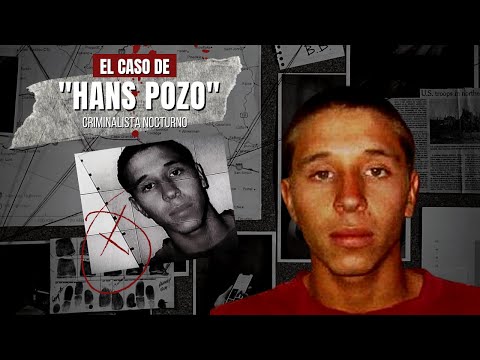
El Caso H.P. Pozzo: Análisis de un Fotograma Anómalo y la Sombra de lo Inexplicable


El Llamado Inesperado

El 27 de marzo de 2006, el aire en la redacción de un periódico local se cargó de una electricidad inusual. Una llamada telefónica, aparentemente trivial, se convirtió en el catalizador de una investigación que iría más allá de lo forense para adentrarse en los reinos de lo inexplicable. Una joven, hablando con la urgencia de quien ha vislumbrado algo que desafía la lógica, afirmó poseer una fotografía capaz de cambiarlo todo. No era una anécdota más para el archivo de lo extraño, sino la promesa de una evidencia sustancial en un mundo donde las verdades a menudo se ocultan a plena vista. Este fue el punto de partida del ahora conocido como el enigmático caso H.P. Pozzo.

El Fotograma: Un Vistazo a la Anomalía

La esencia del caso reside en una única fotografía. Sin un contexto claro inicial, la imagen, según los reportes, mostraba algo que la joven descubrió por accidente. La descripción de lo "impresionante" sugiere una anomalía visual que trascendía lo ordinario. Sin acceso directo a la fotografía original, estamos obligados a basar nuestro análisis en el impacto que generó y en la naturaleza misma de su presentación. En la investigación paranormal, las fotografías son a menudo puntos de inflexión: pueden ser la prueba irrefutable de una presencia o el resultado de una ilusión bien orquestada. El factor clave aquí es la intención declarada de la joven: *descubrir* algo. Esto implica que la anomalía no fue creada intencionadamente, sino que fue un hallazgo fortuito, lo que aumenta su potencial para ser un fenómeno genuino.

Testimonio y Contexto del Hallazgo

El comunicado de la joven al diario es el único hilo del que disponemos para tejer la narrativa del caso. La frase "descubrí algo impresionante" es laTextField que debe ser analizada. ¿Qué constituye lo "impresionante" en el contexto de lo paranormal? Podría ser una figura espectral, una distorsión espacial, una luz anómala, o incluso una entidad de naturaleza todavía no catalogada. La llamada telefónica, en lugar de una entrega física inmediata de la prueba, sugiere cautela o un intento de validación preliminar. El contacto proporcionado, `elcriminalista1@gmail.com`, es el conducto a través del cual se esperaría la presentación formal de la evidencia para un análisis riguroso. La fecha, 27 de marzo de 2006, ancla el evento, pero la falta de información posterior sobre la resolución del caso es, en sí misma, una anomalía. ¿La fotografía fue desestimada, perdida, o simplemente no cumplió con las expectativas de quien buscaba la verdad tras el velo?

"En el reino de lo inexplicable, el silencio posterior a una revelación es a menudo más elocuente que las palabras. La falta de seguimiento en el caso H.P. Pozzo nos obliga a interrogar no solo la fotografía, sino el propio proceso de su investigación."

Desmontando lo Mundano: Hipótesis y Descartadas

Antes de adentrarnos en especulaciones de naturaleza paranormal, un investigador pragmático debe agotar las explicaciones convencionales. En el caso de una fotografía anómala, las hipótesis más comunes incluyen:

  • Errores de la cámara: Artefactos lumínicos, reflejos, polvo en el lente, o fallos en la película (si era analógica) o en el sensor digital.
  • Efectos atmosféricos: Niebla, vapor, o fenómenos de refracción de la luz que pueden crear formas engañosas.
  • Pareidolia: La tendencia humana a percibir patrones (especialmente rostros u objetos significativos) en estímulos vagos o aleatorios.
  • Fraude o manipulación: Alteración intencionada de la imagen para crear un efecto sensacionalista. En 2006, las herramientas de edición digital ya eran accesibles para el público general.
  • Ilusiones ópticas: Sombras peculiares, efectos de perspectiva inusuales.

La clave para avanzar en el caso H.P. Pozzo, asumiendo que la fotografía existe y fue recibida por el diario, sería comparar la anomalía visual con estas posibilidades. ¿La forma capturada es consistente con un reflejo de la propia cámara? ¿Se puede replicar la imagen bajo condiciones similares de iluminación y entorno? La ausencia de un análisis formal de la fotografía nos deja en la especulación, pero este es el deber del investigador: plantear todas las preguntas posibles.

Análisis de la Evidencia Fotográfica

Si la fotografía mostraba, por ejemplo, una figura translúcida, deberíamos preguntarnos si las condiciones de luz ambiental permitían que tal efecto se produjera de forma natural. Una fuente de luz potente detrás de un sujeto podría generar siluetas o la ilusión de transparencia. Alternativamente, si se trataba de un orbe, la discusión se centraría en la posibilidad de polvo, insectos cercanos al lente, o gotas de humedad. La tecnología de cámaras digitales de 2006 era robusta, pero no inmune a artefactos, especialmente en condiciones de baja luz o con el uso de flash. Los metadatos EXIF de la imagen serían cruciales para un análisis exhaustivo, si estuvieran disponibles, proporcionando información sobre la apertura, velocidad de obturación, ISO y la hora exacta de la captura.

Veredicto del Investigador: Entre el Misterio y la Manipulación

Sin la evidencia fotográfica en mano, la declaración de la joven es, en el mejor de los casos, un testimonio intrigante, pero insuficiente para afirmar la existencia de un fenómeno paranormal. El caso H.P. Pozzo se presenta como un potencial "eslabón perdido" en la cadena de enigmas fotográficos, pero la falta de acceso a la prueba central lo mantiene firmemente en el terreno de lo especulativo. Mi veredicto es de "Potencialmente Anómalo, Evidencia No Verificada". La declaración de la joven demuestra una creencia genuina en su hallazgo, pero la capacidad de la humanidad para autoengañarse o para crear engaños convincentes es formidable. La pregunta que persigue este caso es: ¿se presentó la fotografía y fue descartada por razones escépticas mundanas, o el contacto inicial fue solo un primer paso que nunca culminó en una presentación formal?

Protocolo: Verificación de Evidencia Fotográfica en la Era Digital

El método científico es nuestro paracaídas cuando flotamos en el mar de lo desconocido. Para analizar cualquier evidencia fotográfica sospechosa, el protocolo es claro:

  1. Obtención de la Fuente Original: Siempre buscar la imagen de la más alta resolución posible, idealmente el archivo fuente (RAW o JPG original), y no capturas de pantalla o copias degradadas.
  2. Análisis de Metadatos (EXIF): Examinar los datos incrustados como fecha, hora, modelo de cámara, ajustes de exposición. La ausencia o manipulación de estos datos es una gran señal de alerta.
  3. Examen Forense Digital: Utilizar software especializado para detectar signos de edición, como inconsistencias en la iluminación, patrones de ruido digital anómalos, o la presencia de capas de edición.
  4. Replicación y Contextualización: Intentar recrear la imagen bajo las mismas condiciones reportadas (luz, ángulo, entorno). Si no se puede replicar la anomalía de forma natural, aumenta la sospecha de un fenómeno genuino o de un fraude muy bien ejecutado.
  5. Análisis del Testimonio: Corroborar la declaración del testigo con otras fuentes o testimonios, si los hay. La consistencia y la ausencia de contradicciones son vitales.

La información proporcionada sobre el caso H.P. Pozzo carece de la mayoría de estos elementos, lo que lo convierte en una pieza de información incompleta desde la perspectiva de la investigación rigurosa.

El Archivo del Investigador: Herramientas y Referencias Esenciales

Para profundizar en la investigación de fenómenos capturados en medios visuales, recomiendo:

  • Libro: "The Dark Side of Science" de John Keel. Aunque no se centra exclusivamente en fotografía, Keel aborda la manipulación y la naturaleza engañosa de la evidencia.
  • Herramienta de Software: Adobe Photoshop o GIMP (alternativa gratuita) para análisis forense digital básico. Software especializado como FotoForensics.com para análisis más avanzados.
  • Plataforma de Documentales: Gaia.com ofrece una vasta colección de documentales sobre fenómenos paranormales y casos inexplicables, muchos de los cuales analizan evidencia fotográfica.
  • Web de Referencia: Snopes.com, aunque enfocado en desmentir bulos, ofrece un excelente punto de partida para entender cómo se analizan y verifican las imágenes sospechosas.

Preguntas Frecuentes

¿Se sabe qué contenía la fotografía del caso H.P. Pozzo?

No hay información pública disponible que detalle el contenido exacto de la fotografía, solo que la persona que llamó la consideró "impresionante".

¿Se contactó a "Criminalista Nocturno" directamente o a través del diario?

Según el contenido original, la llamada fue al teléfono central del diario, sugiriendo que "Criminalista Nocturno" (quien parece ser el curador de este caso) pudo haber sido notificado a través de su afiliación con el medio.

¿Por qué se considera misterioso un caso donde solo hay una llamada telefónica?

La misterio radica en la promesa de una evidencia (la fotografía) que, según el relato, era significativa, y en la aparente falta de seguimiento o divulgación posterior del hallazgo, dejando abierta la pregunta de qué sucedió con esa prueba.

La Sombra que Persiste

El caso H.P. Pozzo, a pesar de su aparente brevedad, encapsula la frustración inherente a la investigación paranormal: la promesa de una verdad trascendental que se desvanece en los intersticios de la información incompleta. La llamada telefónica del 27 de marzo de 2006 es un eco distante, un grito silencioso de quien creyó haber encontrado una grieta en la realidad. Sin la fotografía, sin un análisis forense detallado, este caso permanece como una sombra en nuestro archivo de lo inexplicable. Nos recuerda que la evidencia tangible es el pilar de toda investigación seria, y que sin ella, navegamos a la deriva en un océano de hipótesis.

Tu Misión de Campo

Investiga tu propia leyenda local: ¿Existe en tu comunidad alguna fotografía o relato sobre un evento "impresionante" o inexplicable que haya sido reportado y luego olvidado? Documenta el caso, busca la evidencia (si existe), y aplica el protocolo de análisis forense fotográfico descrito anteriormente. Comparte tus hallazgos y el proceso de tu investigación en los comentarios. Tu análisis podría ser el próximo expediente abierto en El Rincón Paranormal.

alejandro quintero ruiz es un veterano investigador de campo dedicado al análisis de fenómenos anómalos. Su enfoque combina el escepticismo metodológico con una mente abierta a lo inexplicable, buscando siempre la verdad detrás del velo de la realidad. Con años de experiencia desenterrando misterios, su trabajo consiste en deconstruir la evidencia, cuestionar las explicaciones fáciles y arrojar luz sobre los casos que desafían nuestra comprensión del mundo.