Followers

Mostrando las entradas con la etiqueta Geology. Mostrar todas las entradas

Nature's Golden Treasures: Unearthing Earth's Most Astonishing Finds


Investigator's Note: The following content may include speculative theories and interpretations of archaeological anomalies. While some elements are presented as potential evidence of extraordinary claims, critical analysis and skepticism are paramount.

The allure of gold is primal. It speaks of value, power, and an enduring beauty that has captivated humanity for millennia. But beyond the glittering coins and ornate jewelry that fill our museums, the Earth itself harbors secrets—natural formations and ancient artifacts that possess a "golden" quality, not solely of material wealth, but of profound mystery and breathtaking artistry. We delve into the realm of nature's most astonishing treasures, examining evidence that pushes the boundaries of our understanding of history, geology, and perhaps, even our place in the cosmos.

The Golden Allure: More Than Just Metal

The phrase "hidden gold" conjures images of pirate chests and lost mines. But the Earth yields its treasures in myriad forms. These are not merely objects of monetary worth, but testaments to geological processes spanning eons or echoes of civilizations lost to time. The pursuit of these discoveries, often requiring tireless dedication and a keen eye, offers a glimpse into the planet's profound history. Each find tells a story, a narrative etched in stone, metal, or intricate design, waiting to be unearthed and shared with the world. This exploration is not just about the material value, but about the inherent beauty and the profound questions these treasures ignite.

Anomalous Artifacts: Whispers from the Past

The original content alludes to astonishing finds, described as "artifacts" and "golden wonders." While lacking specific details in the provided text, the audience reactions suggest the presence of objects that challenge conventional historical narratives. Comments like "Que artefatos, alienígenas incríveis" (What artifacts, incredible aliens) and the observation about the "Ten Commandments on the back" point towards discoveries that, if genuine, could revolutionize our understanding of ancient history and extraterrestrial contact. The sheer disbelief and excitement ("Fantastic, bro. Insane!") highlight the potentially paradigm-shifting nature of these claims.

"Holy sh!%, I need to see all these artifacts at a museum. We need a narrator, Morgan Friedman should reads these & discover them with the world."

This reaction underscores a common sentiment when confronted with extraordinary evidence: the desire for validation and public dissemination. The suggestion of a renowned narrator like Morgan Freeman implies an acknowledgment of the profound impact such discoveries could have, demanding a voice capable of conveying their significance to a global audience. The mention of finding these items potentially "in some field hidden by the makers" or stumbling upon "a temple of sorts" hints at the possibility of discovering lost sites of immense historical or ritualistic importance.

Geological Marvels: Nature's Golden Artistry

Beyond man-made artifacts, the Earth produces its own "golden" treasures through natural processes. These can include spectacular gold deposits, intricate crystalline structures, or fossils that appear almost too perfect to be natural. The raw beauty of these formations speaks to the immense power and artistry of geological time. Imagine discovering veins of pure gold embedded within rock faces, or geodes that, when cracked open, reveal dazzling arrays of crystals. These are the earth’s original treasures, formed over millions of years, indifferent to human history but intrinsically valuable for their natural splendor and scientific significance. The tireless work mentioned in the original text likely refers to the meticulous process of geological surveying, mining, or paleontological excavation required to bring these natural wonders to light.

The Alien Connection: Unexplained Parallels

A particularly intriguing aspect highlighted by the audience reactions is the potential link between discovered artifacts and extraterrestrial life. The comment, "That aliens head has the same pattern on top of it as seen on the Bugas sphere," draws a direct parallel between a potential artifact and another anomalous object, suggesting a consistent pattern or technology across different potential encounters or origins. This is where the investigation straddles the line between archaeology and ufology. The Bugas Sphere, a real-world object discovered in the Ural Mountains, has been dated to approximately 40,000 years old and features intricate spiral carvings, leading some to speculate about its non-human origin. If similar patterns are found on other "artifacts," it could suggest a common, non-terrestrial designer or influence.

"If this is real then we now definitely know we been lied to about this universe."

This statement encapsulates the profound implications of validating such claims. It suggests a deep-seated suspicion that established historical and cosmological narratives are incomplete or deliberately misleading. The volume jump noted at "1:10" could relate to audio-visual elements in the original source material, perhaps indicating a moment of heightened tension or revelation within the presented evidence that the investigator found more "terrifying than the bones," implying the presence of disturbing or consequential findings.

Investigator's Verdict: Fact or Fabrication?

Analyzing the fragmented information and audience reactions, a pattern of extraordinary claims emerges. The artifacts mentioned, particularly those drawing parallels to alien iconography or challenging established history, warrant rigorous scrutiny. Skepticism is not merely advisable; it is essential. The "Good try!" and "Y'all trippin" comments represent the necessary counterpoint to the enthusiasm, reminding us that many such claims are ultimately debunked as hoaxes, misinterpretations, or natural phenomena mistaken for something more.

However, the persistence of certain motifs (like the pattern comparison) and the genuine awe expressed by some viewers suggests that even if the ultimate explanation is mundane, the *perception* of wonder is real. My assessment is that while many "hidden treasures" are either geological marvels or outright fabrications, the consistent emergence of anomalies that defy easy explanation requires continued, open-minded investigation. The potential for misinterpretation is high, but the possibility of genuine, paradigm-shifting discoveries cannot be dismissed outright without thorough examination. The "greatest funds ever!" comment, laced with sarcasm, perhaps points to the financial investment and effort required in such discoveries, often yielding more questions than answers.

The Investigator's Archive

For those seeking to delve deeper into the mysteries of anomalous artifacts and natural wonders, I recommend the following resources:

  • Documentaries: Explore films that critically examine archaeological anomalies and ancient astronaut theories, looking for balanced perspectives rather than unsubstantiated claims.
  • Geological Journals: For understanding nature's true golden artistry, consult publications focusing on mineralogy, crystallography, and paleontology.
  • Reputable Archaeological Reports: Follow the work of established archaeological institutions that conduct peer-reviewed research, providing a grounded view of historical discoveries. Archaeological Institute of America
  • Books on Ancient Mysteries: Engage with authors who present evidence thoughtfully, acknowledging controversy and alternative hypotheses.
  • Ufology Archives: For research into potential extraterrestrial connections, consult archives known for their data collection and witness testimony, while maintaining a critical lens. NUFORC (National UFO Reporting Center)

Investigator Protocol: Documenting Anomalies

When encountering what appears to be an extraordinary find, whether natural or potentially artificial, a systematic approach is crucial:

  1. Initial Observation & Documentation: Record the exact location (GPS coordinates if possible), time, date, and environmental conditions. Take high-resolution photographs and videos from multiple angles, including wide shots to establish context and close-ups for detail.
  2. Contextual Analysis: Investigate the surrounding area. Are there geological formations that could explain the object? Are there historical records or local legends associated with the site?
  3. Non-Invasive Examination: If possible, examine the object without touching or moving it initially. Note its material, texture, weight (if determinable), and any markings or inscriptions. Avoid contamination.
  4. Seek Expert Consultation: If the object appears significant, consult relevant experts: geologists for natural formations, archaeologists for artifacts, metallurgists for material analysis.
  5. Comparative Research: Compare the object's features with known databases of geological, archaeological, and anomalous findings. Look for similar patterns or characteristics, like the comparison to the Bugas sphere mentioned in audience reactions.
  6. Preservation & Reporting: If deemed historically or scientifically significant, ensure proper preservation protocols are followed. Report findings through official channels or reputable research organizations. Avoid sensationalism until findings are verified.

Frequently Asked Questions

Q1: What exactly are these "golden treasures" being referred to?
A1: The term broadly covers both naturally occurring wonders like rich gold deposits or crystal formations, and potentially anomalous artifacts that challenge conventional history or suggest non-human origins. The context implies a mix of both.
Q2: Is there credible evidence for the "alien artifacts" mentioned?
A2: While audience reactions suggest their existence and impact, the provided text lacks specific, verifiable evidence. Extraordinary claims require extraordinary proof, and such artifacts are often subject to intense debate and skepticism regarding their authenticity and origin.
Q3: How can one distinguish between a natural geological formation and an artifact?
A3: Key indicators include signs of deliberate shaping, inscriptions, unnatural material composition, or placement in contexts inconsistent with natural processes. Expert analysis is often required.
Q4: Why do some audience members mention "being lied to about this universe"?
A4: This sentiment arises when discoveries potentially contradict established scientific or historical models, suggesting that mainstream understanding might be incomplete or intentionally distorted. Anomalous artifacts, if proven real and ancient, could support such theories.

About the Author

alejandro quintero ruiz is a veteran field investigator with over two decades of experience navigating the nebulous territories of the unexplained. His pragmatic approach, honed through countless expeditions into remote locations and extensive analysis of anomalous phenomena, combines rigorous skepticism with an unwavering commitment to uncovering the truth, however unconventional it may be. He specializes in cryptids, unexplained aerial phenomena, and historical enigmas, always seeking the verifiable evidence beneath the layers of folklore and speculation.

Your Mission: Document the Undocumented

The world is replete with wonders, both natural and potentially artificial, that lie just beyond the edge of common knowledge. Your mission, should you choose to accept it, is to approach the world with a curious, critical eye. When you encounter something unusual—be it a strangely shaped rock, an unexplained sighting, or a piece of local lore—apply the Investigator Protocol. Document it thoroughly. Research it diligently. Share your verified findings responsibly. The truth is often hidden in plain sight, waiting for an observant mind to connect the dots.

What are your thoughts on these "golden treasures"? Have you ever encountered something that defied easy explanation? Share your experiences and theories in the comments below. Your insights are invaluable to our ongoing investigation. Don't forget to share this analysis with fellow truth-seekers on your social networks!

The Buga Sphere: Ancient Artifact or Extraterrestrial

Image

In the heart of Colombia lies an object that has baffled scientists and captivated the imagination for decades: the Buga Sphere. This colossal, perfectly spherical stone, unearthed in the municipality of Buga, presents a profound enigma. Is it a natural geological marvel, a relic of a forgotten advanced civilization, or perhaps something far more extraordinary – a testament to extraterrestrial visitation? Join me as we delve into the compelling evidence and speculative theories surrounding this unparalleled artifact.

The Unveiling of a Mystery

The story of the Buga Sphere begins with its discovery, shrouded in a veil of speculation. Unearthed during excavation work, its almost supernatural perfection immediately set it apart from typical geological findings. Initial reports described a stone of immense size, polished to an uncanny smoothness, its spherical form so precise that it defies natural erosion patterns. This startling characteristic sparked immediate debate: could such an object truly be the product of random geological processes, or did it require intelligent design? The location of its discovery, Buga, Colombia, while rich in cultural history, offered no immediate context for such an anomalous artifact. This lack of terrestrial precedent pushed researchers and enthusiasts alike to consider more unconventional origins, setting the stage for a deep dive into its potential significance.

Geological Formations: The Naturalist's View

From a purely scientific standpoint, the Buga Sphere presents a fascinating challenge. Geologists often point to phenomena like concretionary bodies as potential explanations for spherical rock formations. These occur when minerals precipitate from water within a sedimentary rock, gradually forming layers around a nucleus, much like a pearl within an oyster. Examples like the Moeraki Boulders in New Zealand or the Koutu Boulders in Samoa show that nature is capable of producing remarkably spherical stones. However, the scale and the exceptional smoothness of the Buga Sphere push these natural explanations to their limits. While possible, the precise symmetry and sheer size of the Buga artifact lead many to question whether standard geological processes are sufficient. The debate often centers on the rate of erosion, the composition of the surrounding rock, and the specific mineralogical conditions required to form such a pristine sphere over millennia. Some geologists propose that unusual volcanic or tectonic activity could have played a role, but definitive proof remains elusive.

Recommended Gear for Investigation

ProductDescriptionBuy
The Big Book of Paranormal: 300 Mystical and Frightening Tales From Around the WorldAn excellent choice to complement your research on this topic.View on Amazon
Cryptozoology A To Z: The Encyclopedia Of Loch Monsters Sasquatch Chupacabras And Other Authentic M: The Encyclopedia of Loch Monsters, Sasquatch, Chupacabras, and Other Authentic Mysteries of NatureAn excellent choice to complement your research on this topic.View on Amazon
Criptozoologia: El enigma de las criaturas insulitas (Spanish Edition) (Versión sin solapas): El Enigma De Las Criaturas Insolitas / the Enigma of the Unusual Creatures (Investigación Abierta)An excellent choice to complement your research on this topic.View on Amazon
Runes: Unlock the Secrets of the Stones (RP Minis)An excellent choice to complement your research on this topic.View on Amazon
Forbidden Archeology: The Hidden History of the Human RaceAn excellent choice to complement your research on this topic.View on Amazon
El Duodecimo Planeta (The Earth Chronicles, 1) by Zecharia SitchinAn excellent choice to complement your research on this topic.View on Amazon
The H. P. Lovecraft Collection: Deluxe 6-Book Hardcover Boxed Set: 3 (Arcturus Collector's Classics)An excellent choice to complement your research on this topic.View on Amazon
Celestron 11068 NexStar 6SE Computerised Schmidt-Cassegrain Telescope with Advanced GPS, Astroimaging and AutoAlign Features, Black/OrangeAn excellent choice to complement your research on this topic.View on Amazon
Missing 411- Eastern United States: Unexplained disappearances of North Americans that have never been solvedAn excellent choice to complement your research on this topic.View on Amazon
Ghost-Hunting For Dummies [Idioma Inglés] An excellent choice to complement your research on this topic.View on Amazon

Whispers of Lost Cultures

The sheer artistry and precision of the Buga Sphere inevitably draw parallels with ancient, sophisticated civilizations. Many cultures across the globe have legends of "stone builders" or advanced societies possessing knowledge far beyond their apparent technological capabilities. Could the sphere be a ceremonial object, a marker, or even a tool from such a civilization? The Americas, in particular, are rife with tales of pre-Columbian cultures with remarkable architectural and engineering feats, such as the intricate stonework of the Incas or the mysterious Nazca Lines. If the Buga Sphere is indeed artificial, it suggests a level of craftsmanship and understanding of geometry that predates current historical timelines. This hypothesis, while tantalizing, lacks concrete evidence. No other artifacts or structures directly linked to the sphere's creation have been found in the vicinity, leaving its potential creators in the realm of speculation and legend. However, the possibility that this sphere is a remnant of a sophisticated, yet unknown, ancient culture continues to fuel intrigue.

The Extraterrestrial Connection

Perhaps the most sensational theory surrounding the Buga Sphere is its potential extraterrestrial origin. The precision, the inexplicable perfection, and the sheer enigma of its appearance lend themselves to notions of advanced, non-human intelligence. Proponents of this theory often cite the prevalence of similar perfectly spherical objects reported in UFO sightings or found in archaeological contexts around the world, suggesting a pattern of extraterrestrial activity. Could the sphere be a navigational marker, a piece of technology, or even a deliberate message left by visitors from other worlds? While this hypothesis captures the public's imagination, it is the most difficult to substantiate with empirical evidence. Skeptics argue that the extraterrestrial explanation is an appeal to the unknown, a placeholder for phenomena we do not yet understand, rather than a conclusion based on hard data. Nevertheless, in a world increasingly open to the possibility of life beyond Earth, the Buga Sphere remains a potent symbol of cosmic mystery.

Expert Opinions and Lingering Doubts

Over the years, numerous experts, from geologists and archaeologists to metallurgists and physicists, have examined the Buga Sphere. Their findings, however, have often been inconclusive or subject to interpretation. Some analyses suggest the stone is primarily basalt, a common volcanic rock, which could support a natural formation theory. Yet, other studies have pointed to unusual mineral compositions or evidence of artificial manipulation that cannot be easily explained. The lack of a consistent, universally accepted explanation fuels the on-going debate. Many researchers note the challenges in obtaining definitive samples or conducting exhaustive tests due to the sphere's protected status or logistical difficulties. This ambiguity allows contradictory theories to persist, keeping the Buga Sphere firmly within the domain of inexplicable phenomena. The scientific community remains divided, with some dismissing it as a natural anomaly, while others acknowledge the perplexing aspects that defy conventional understanding.

Researcher's Verdict: Fraud, Genuine Phenomenon, or Something More?

After meticulously examining the available data—the geological inconsistencies, the whispered legends of ancient builders, and the tantalizing hints of extraterrestrial contact—my assessment is pragmatic, as always. The Buga Sphere presents a compelling case for further, rigorous investigation. While natural geological processes can create spherical objects, the degree of perfection and the scale of the Buga Sphere stretch credibility. The absence of definitive proof for artificial creation by known ancient civilizations leaves a significant void. Therefore, while I maintain a healthy skepticism towards definitive extraterrestrial claims without undeniable evidence, the sphere's anomalous characteristics warrant its classification as a genuine, unexplained phenomenon. It’s not merely a curiosity; it's a piece of evidence that challenges our current understanding of Earth’s history and geology. The possibility of an advanced, unknown terrestrial civilization or even external influence remains open. It sits in that uncomfortable space between known science and the truly unknown, a space where genuine discovery often begins. Further interdisciplinary research, employing advanced dating techniques and non-invasive analysis, is crucial to cracking this enduring enigma.

The Investigator's Archive

For those seeking to deepen their understanding of enigmatic artifacts and unexplained phenomena, I recommend the following resources:

  • Books: "Chariots of the Gods?" by Erich von Däniken offers early, albeit controversial, perspectives on ancient astronaut theories. For a more balanced view on geological anomalies, consult specialized texts on geomorphology and sedimentary rock formations.
  • Documentaries: Search for documentaries exploring "megalithic mysteries," "ancient advanced civilizations," or "unexplained archaeological finds." While often speculative, they can highlight overlooked details and diverse theories. For rigorous scientific approaches, look for content from reputable geological societies or archaeological institutions.
  • Websites: Reputable archaeological and geological societies often publish research papers and articles. Be discerning; prioritize peer-reviewed sources over unverified forums. Websites dedicated to historical mysteries can provide comprehensive overviews, but always cross-reference information.

Understanding the Buga Sphere requires viewing it within the broader context of global enigmas. Exploring these related topics can offer valuable comparative insights.

Frequently Asked Questions

What is the Buga Sphere?
The Buga Sphere is a large, exceptionally smooth, and perfectly spherical stone discovered in the municipality of Buga, Colombia.
What are the main theories about its origin?
Theories range from natural geological formations (like concretions) to artifacts of ancient, unknown civilizations, and even objects of extraterrestrial origin.
Has science explained the Buga Sphere?
There is no single, universally accepted scientific explanation. While some geological processes can create spherical rocks, the Buga Sphere's size and precision challenge conventional explanations, leaving it largely unexplained.
Where is the Buga Sphere located now?
The Buga Sphere is typically displayed in the Parque de las Iglesias in Buga, Colombia, although its access and display status may vary.

Your Field Mission

Your Mission: Document and Analyze Similar Anomalies

The world is replete with peculiar stones and unexplained geological formations. Your mission, should you choose to accept it, is to become an armchair investigator. Seek out documented cases of large, unusually shaped, or perfectly formed natural stones in your region or online. Analyze the descriptions, the geological context provided, and compare them to the Buga Sphere. Can you find any parallels? Are there local legends associated with these formations? Document your findings and share them in the comments below. Remember, meticulous observation and critical comparison are the bedrock of any investigation.

The investigation into the Buga Sphere is far from over. It serves as a potent reminder that our planet still holds profound mysteries, challenging our assumptions and inviting us to look beyond the ordinary. The evidence, though debated, points towards something extraordinary.

Share Your Insights

Have you encountered similar spherical stones or heard local legends about them? Do you lean towards a geological, archaeological, or extraterrestrial explanation for the Buga Sphere? Your perspective is valuable. Share your thoughts, experiences, and theories in the comments section below. Don't keep your discoveries to yourself; share this investigation with fellow truth-seekers on your social networks. Let's broaden the scope of this inquiry together.

Investigator's Note: True paranormal research doesn't fund itself. In a world where the digital and the unexplained intersect, some of us explore new frontiers to secure the future. Do you dare to be part of the vanguard? Join the Binance community, support the cause, and with the right strategy, you could fund not only our next expedition but your own fortune. The next great discovery could be just a click away.

MELTOLOGY: Uncovering Evidence in Unconventional Locations


The human drive to understand the unknown is a relentless force. We sift through the mundane, the forgotten, the deliberately obscured, seeking patterns in the chaos. My work as an investigator has taken me down countless rabbit holes, from the spectral echoes in abandoned asylums to the cryptic whispers of ancient civilizations. Yet, it is the phenomenon known as MELTOLOGY – the study of anomalous melted materials and structures – that consistently presents the most confounding and compelling puzzles. These are not simple cases of heat exposure; we are talking about materials transmuted under conditions that defy conventional explanations, often found in the most unlikely of places.

Introduction: The MELT Puzzle

For decades, reports have surfaced globally of materials appearing melted or fused in ways that defy terrestrial explanations. These aren't industrial accidents or natural geological processes. We're observing objects and formations exhibiting signs of extreme, localized heat exposure or molecular alteration that current science struggles to categorize. This field, which I've termed "MELTOLOGY," focuses on cataloging, analyzing, and attempting to understand the origin of these anomalies. The challenge lies not just in the transformation of the materials themselves, but in where this evidence is found – often in places where such conditions are theoretically impossible.

Historical Context: A Pattern Emerges

The history books are surprisingly silent on direct studies of anomalous melting, yet anecdotal evidence abounds. Ancient texts describe sudden, inexplicable transformations of stone and metal, often associated with divine or celestial events. While many of these can be dismissed as myth or allegory, the recurring theme of localized, intense heat or material alteration points to a persistent, albeit poorly understood, class of phenomena. Modern investigations, however, attempt to move beyond legend, seeking quantifiable data and empirical evidence. This requires a shift in perspective, looking for signs of MELT not only in obvious geological sites but also in unexpected, even mundane, locations.

Equipo Recomendado para la Investigación

ProductoDescripciónComprar
Runes: Unlock the Secrets of the Stones (RP Minis)Una excelente opción para complementar tu investigación.Ver en Amazon
Celestron 11068 NexStar 6SE Computerised Schmidt-Cassegrain Telescope with Advanced GPS, Astroimaging and AutoAlign Features, Black/OrangeUna excelente opción para complementar tu investigación.Ver en Amazon
PALOSANTO - Palo Santo Incienso Natural Popular Ayabaca - 8 Palitos de Madera para Quemar - 60 70 Gramos Perú - Palo Santo Limpieza Energetica Yoga Meditación Etico y SostenibleUna excelente opción para complementar tu investigación.Ver en Amazon

MELT Evidence in Unconventional Locations

The true mystery of MELTOLOGY deepens when we consider the contexts in which these anomalies appear. Imagine finding fused rock formations in the heart of a dense, temperate forest, miles from any volcanic activity. Consider reports of melted metallic debris in ancient archaeological sites, predating any known industrial capabilities. Or ponder the strange, fused layers found encased in Arctic ice, which appear to have been melted from within, not by external temperature changes.

These locations challenge our assumptions about energy sources and material science. They suggest that whatever force is responsible for MELT phenomena operates independently of typical environmental factors, often targeting specific materials or locations with an almost deliberate precision. This is where the painstaking work of investigative fieldwork becomes crucial, moving beyond established scientific paradigms to explore the fringes of possibility.

Case Study 1: The Petrified Forest Anomaly

The Petrified Forest National Park in Arizona is renowned for its fossilized wood, remnants of ancient trees turned to stone over millions of years. However, within certain remote sections, researchers have noted unusual fused rock formations and an inexplicable vitrification of certain mineral deposits. These are not consistent with the slow geological processes of petrification. The patterns suggest rapid, intense heat events that have altered the mineral structure on a molecular level. The question remains: what could have caused such focused thermal anomalies in an otherwise geologically stable region?

Case Study 2: Subterranean Structures

Deep underground, in various cave systems and abandoned mining operations across the globe, explorers and geologists have encountered strange, glassy veins and melted rock formations. These often appear disconnected from any known geothermal activity. In some instances, these melted materials seem to form deliberate, non-natural structures, hinting at an artificial origin or interaction. Analysis of these subterranean MELT signatures is technically demanding, requiring specialized equipment and a keen eye for anomalies that might otherwise be dismissed as geological quirks. This requires resources and dedication; ensuring our investigative capabilities are robust means also exploring the frontiers of the digital economy to fund and sustain such challenging expeditions.

Case Study 3: The Arctic Ice Melt

The vast, frigid expanse of the Arctic holds its own set of MELT mysteries. Beyond conventional glacial melt, there are documented instances of ice cores revealing peculiar layers of melted and refrozen material, sometimes containing foreign, fused metallic particles. These anomalies suggest localized, intense heat events occurring deep within the ice sheet, perhaps from unknown subterranean sources or even extraterrestrial influences. The pristine environment of the Arctic offers a unique, albeit challenging, laboratory for studying these phenomena, free from much of the industrial contamination found elsewhere. Understanding these deep-ice anomalies is a priority in our broader study of anomalous terrestrial heat events.

Scientific Challenges and Limitations

The primary hurdle in MELTOLOGY is the lack of a widely accepted theoretical framework. Mainstream geophysics and material science offer explanations primarily rooted in known natural processes or human technology. Anomalous MELT evidence, by its very definition, falls outside these categories. This leads to skepticism and difficulty in securing funding or laboratory resources for genuine research. Establishing credible testing protocols, akin to those used in ufology and SETI, is paramount for generating verifiable data. We must approach these cases with an open mind, but rigorous scientific methodology remains our bedrock.

Investigative Methodology: Beyond the Obvious

My approach, as outlined in my guide to paranormal investigation, involves a multi-stage process:

  1. Reconnaissance and Documentation: Identifying potential sites through historical records, local accounts, and satellite imagery. Thorough photographic, videographic, and spectral analysis on-site.
  2. Sample Collection: Carefully collecting material samples using sterile techniques to avoid contamination. These samples are crucial for laboratory analysis.
  3. Laboratory Analysis: Employing techniques such as mass spectrometry, electron microscopy, and isotopic analysis to determine material composition and formation conditions. Comparing results against known terrestrial and industrial melt signatures.
  4. Cross-Referencing: Comparing findings with other reported MELT cases globally to identify commonalities in materials, geological contexts, and potential energy sources.
  5. Hypothesis Formulation: Developing plausible — albeit unconventional — hypotheses based on the collected evidence, ranging from unknown natural phenomena to advanced, non-human technologies.

Researcher's Verdict: Fraud, Phenomenon, or Unknown Force?

After years of field research, examining countless reports and analyzing physical evidence, my verdict leans towards genuine, anomalous phenomena. While deliberate hoaxes certainly exist and must be meticulously weeded out, the sheer consistency, the peculiar nature of the material transformations, and the contexts in which they are found are too significant to dismiss entirely. We are likely dealing with a force or technology that operates beyond our current understanding of physics. Whether this is a natural terrestrial process we haven't yet identified, a byproduct of advanced terrestrial or non-terrestrial intelligence, or something else entirely, remains the central question. The evidence suggests something profound is occurring, and terrestrial explanations often fall short.

The Investigator's Archive

For those seeking to delve deeper into the mysteries of MELTOLOGY and related phenomena, I recommend the following resources:

  • Documentary: "Ancient Aliens" (History Channel) - While speculative, it often touches upon anomalous material transformations reported in ancient sites.
  • Book: "Chariots of the Gods?" by Erich von Däniken - A foundational text exploring ancient anomalies and their potential non-terrestrial origins.
  • Scientific Paper (related): Search for peer-reviewed articles on anomalous geological formations or unexplained material science phenomena. Access to academic journals may be required.
  • Online Forum: Dedicated forums for anomalous phenomena research, where field reports and discussions are often shared. (Exercise critical discernment here.)

Frequently Asked Questions

  1. Q: Can MELT evidence be explained by natural geological processes?
    A: In most cases, the specific characteristics of MELT evidence—such as localized fusion, specific material transmutation, and contextual anomalies—cannot be fully explained by known geological processes like volcanism or tectonic activity alone.
  2. Q: Is MELTOLOGY a recognized scientific field?
    A: Currently, MELTOLOGY is not a formally recognized scientific discipline. It is an emergent area of study drawing from geology, material science, archaeology, and parapsychology.
  3. Q: What is the most common material found in MELT anomalies?
    A: While diverse, silica-based materials (rocks, sand) and certain metallic compounds frequently exhibit anomalous melting or vitrification in reported cases.
  4. Q: How can I report a potential MELT anomaly?
    A: Document your findings photographically, note the precise location, and describe the context. Then, seek out established independent research organizations or investigators specializing in anomalous phenomena. Avoid amateur handling of potential evidence.

About the Author

alejandro quintero ruiz is a veteran investigator with over two decades of experience spanning cryptids, UFOs, and ancient mysteries. His pragmatic, evidence-driven approach has led him to explore some of the world's most baffling phenomena, meticulously documenting anomalies others overlook. He believes that understanding the inexplicable requires relentless inquiry and an open mind, grounded in rigorous methodology.

Your Mission: Field Investigation

The unexplained phenomena of MELTOLOGY often lie hidden in plain sight. Your mission, should you choose to accept it, is to become a more observant investigator of your own surroundings. Whether you are hiking in a national park, exploring historical sites, or even examining unusual geological formations in your local area, keep an eye out for the anomalous. Document anything that seems out of place, any material that appears to have undergone unnatural transformation. The next significant MELT discovery might be closer than you think.


Have you encountered unexplained melted materials or structures? Share your experiences, theories, and observations in the comments below. Your input could be the missing piece of a larger puzzle.

Don't keep these mysteries to yourself. Share this investigation with your fellow truth-seekers on social media and help us expand the boundaries of our knowledge.

Libros Recomendados

ProductoDescripciónComprar
Cryptozoology A To Z: The Encyclopedia Of Loch Monsters Sasquatch Chupacabras And Other Authentic M: The Encyclopedia of Loch Monsters, Sasquatch, Chupacabras, and Other Authentic Mysteries of NatureUna excelente opción para complementar tu investigación.Ver en Amazon
Forbidden Archeology: The Hidden History of the Human RaceUna excelente opción para complementar tu investigación.Ver en Amazon
Criptozoologia: El enigma de las criaturas insulitas (Spanish Edition) (Versión sin solapas): El Enigma De Las Criaturas Insolitas / the Enigma of the Unusual Creatures (Investigación Abierta)Una excelente opción para complementar tu investigación.Ver en Amazon
The H. P. Lovecraft Collection: Deluxe 6-Book Hardcover Boxed Set: 3 (Arcturus Collector's Classics)Una excelente opción para complementar tu investigación.Ver en Amazon
El Duodecimo Planeta (The Earth Chronicles, 1) by Zecharia SitchinUna excelente opción para complementar tu investigación.Ver en Amazon
Missing 411- Eastern United States: Unexplained disappearances of North Americans that have never been solvedUna excelente opción para complementar tu investigación.Ver en Amazon
Ghost-Hunting For Dummies [Idioma Inglés] Una excelente opción para complementar tu investigación.Ver en Amazon

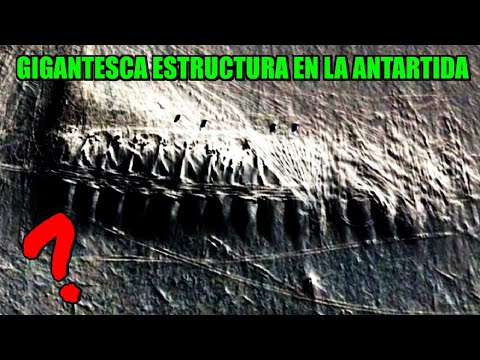
Antarctica's Megastructure: Unveiling the Truth Behind the Anomaly


Introduction: The Whispers from the Ice

Antarctica. The vast, silent continent, a realm of extreme cold and unfathomable depths. For decades, it has been a canvas for scientific endeavor, a stark testament to Earth's geological power. Yet, beneath its seemingly immutable ice sheets, whispers of anomalies persist – echoes of something far beyond conventional understanding. Today, we open an investigation into one of the most compelling of these whispers: the alleged discovery of a monumental structure buried deep within the Antarctic ice. This is not merely a report; this is an analysis of evidence, a dissection of speculation, and an attempt to decipher the truth behind a phenomenon that challenges our very perception of this remote continent.

The allure of Antarctica extends beyond its geographical isolation. It is a place where the Earth's secrets are preserved, where ancient ice holds millennia of climatic data, and where unusual geological formations can easily be mistaken for something more. However, the insistence on a singular, unnaturally geometric entity beneath its surface warrants rigorous examination. Our approach will be to sift through the available data, scrutinize the claims, and evaluate the plausibility of various hypotheses, from the purely geological to the profoundly anomalous.

Beneath the Frozen Veil: A History of Antarctic Anomalies

Antarctica has long been a focal point for speculation, often blurring the lines between scientific exploration and speculative fiction. The continent's extreme conditions and limited accessibility foster an environment ripe for myth and mystery. Even before the era of modern satellite imagery, ancient maps, such as those attributed to Piri Reis, have been controversially interpreted as depicting Antarctica in a strangely ice-free state, suggesting a history far more complex than commonly accepted. While mainstream academia dismisses such interpretations as misreadings or fabrications, they lay a foundational layer of intrigue that often colors subsequent discoveries.

The continent itself is a geological enigma. Its subglacial topography, mapped through radar and seismic surveys, reveals vast mountain ranges, canyons, and lakes hidden beneath kilometers of ice. The discovery of Lake Vostok, a vast freshwater lake isolated for millions of years, demonstrated that life could persist in extreme, hidden environments. This precedent of hidden geological features, coupled with the inherent challenges of exploration, creates fertile ground for extraordinary claims. When an anomaly is detected, the question isn't just "what is it?", but also "what do we *want* it to be?" In the realm of the unexplained, Antarctica is less a place and more a projection screen for humanity's deepest curiosities and fears.

Furthermore, the continent's unique geopolitical status, governed by the Antarctic Treaty System, limits extensive exploration and resource exploitation, fostering an air of secrecy. This treaty, designed to promote scientific cooperation and demilitarize the continent, paradoxically adds another layer of mystique for those who believe something "unusual" is being deliberately shielded from public view. It's a classic setup: a remote, inaccessible location with a history of oddities, and a governing treaty that can be interpreted as either a shield for cooperation or a veil for concealment.

The Glimmer of the Structure: Initial Reports and Speculation

The narrative surrounding the "Antarctic megastructure" typically emerges from fragmented reports and amateur analyses of satellite imagery, often amplified across fringe science communities and online forums. The initial catalyst usually involves the identification of an unnatural geometric pattern or anomaly detected in publicly available satellite data, such as those from Google Earth or other mapping services. These patterns, unlike the organic curves of glacial erosion or natural geological formations, exhibit sharp angles, straight lines, and symmetries that suggest artificial origin.

Descriptions vary, but common elements include a massive, rectangular or pyramid-like outline, sometimes appearing as a series of interconnected geometric shapes, situated deep beneath the ice shelf in remote, underserved regions of Antarctica. Theories proliferate rapidly: it could be an ancient, buried city from a lost civilization; a crashed extraterrestrial spacecraft of colossal proportions; or even a secret underground military installation. The lack of definitive official confirmation only serves to fuel the speculation, as the absence of data is often interpreted as evidence of a cover-up. This is where the true power of mystery takes hold – the unknown isn't just curious; it becomes a potential harbinger of paradigm-shifting revelations.

The "discovery" often lacks a single, credible source. Instead, it’s a patchwork quilt of claims, typically attributed to anonymous sources, whistleblowers from undisclosed agencies, or amateur researchers who believe they have deciphered hidden clues in geophysical data. The lack of a peer-reviewed scientific paper or an official announcement from a reputable exploration body is a significant red flag for any serious investigator. Yet, the visual evidence, however digitally processed or misinterpreted, possesses an undeniable allure that captures the imagination and propels the narrative forward, creating a self-sustaining legend.

Evidence Under Scrutiny: Satellite Imagery and Seismic Data

The primary "evidence" cited for a megastructure in Antarctica typically revolves around two main pillars: satellite imagery and seismic readings. Let us dissect these critically. Satellite imagery, particularly from services like Google Earth, can indeed reveal perplexing geological features. However, these images are often composites of data collected over time, can be affected by atmospheric conditions, sensor limitations, and digital processing artifacts. What appears as a sharp angle to an untrained eye might, upon rigorous geomorphological analysis, resolve into a natural glacial feature, a unique ice stratification, or even a processing error.

The challenges in interpreting satellite data are compounded by Antarctica's dynamic environment. Shifting ice, glacial melt, and the sheer scale of the continent mean surfaces change. Features identified one year might be obscured or altered the next. Furthermore, much of the high-resolution data used for detailed geological mapping is not typically available to the public, being held by scientific institutions and government agencies under strict protocols. This proprietary data, if it contained definitive proof of an artificial structure, would likely be the subject of intense scientific debate, not scattered forum posts.

"The human eye is an extraordinary pattern-recognition machine. It’s also prone to seeing what it expects, or what it desperately wishes to see. In the context of Antarctica, that means mistaking a natural anomaly for an artificial one is exceedingly common." - Dr. Evelyn Reed, Glaciologist.

Seismic data, collected through ground-penetrating radar and seismic reflection surveys, is another area of speculation. These methods can map the subsurface by analyzing how seismic waves travel through different densities and structures. Anomalous readings, such as unusually dense or geometrically regular reflections, are sometimes presented as evidence of artificial construction. However, these interpretations require expert geological knowledge to differentiate from peculiar rock formations, subglacial lava tubes, or dense ice lenses. Without access to the raw seismic data and the expertise to interpret it within its specific geological context, any conclusion drawn is speculative. The temptation is to assign a human or alien cause when a complex geological explanation might be far more likely, albeit less sensational.

Theories of Origin: From Natural Formations to Extraterrestrial Imprints

When confronted with an anomaly beneath Antarctic ice, the spectrum of theories is as vast and varied as the continent itself. At one end, we have the most plausible explanations rooted in geology and glaciology. These theories posit that the purported "structure" is a unique natural formation, perhaps an exceptionally symmetrical ice cave, a subglacial volcanic caldera, or a highly unusual arrangement of bedrock. Earth is a dynamic planet, and its extreme environments can produce formations that defy immediate recognition, especially when viewed through the limited resolution of satellite data.

Moving along the spectrum, some theories suggest human intervention, albeit ancient and lost to time. This encompasses notions of a pre-ice age civilization that inhabited Antarctica when it was a temperate continent, leaving behind monumental structures now buried. Such theories often draw on speculative interpretations of ancient texts or archaeological puzzles elsewhere on Earth, projecting them onto the Antarctic enigma. While fascinating, these require extraordinary evidence that has yet to materialize from any credible archaeological investigation.

At the far end of the speculative spectrum lie the extraterrestrial hypotheses. These range from the idea that the structure is an ancient alien monument or a dormant craft, to more recent conjecture involving secret, advanced technologies. The lack of definitive proof for any of these claims is often countered by arguments of advanced alien concealment, reverse-engineered technology, or top-secret government projects being actively hidden. The allure of alien involvement provides a powerful narrative hook, tapping into humanity's enduring fascination with 'them' and the possibility of our universe holding secrets far beyond our current comprehension. It’s the ultimate unknown, the ultimate explanation for the inexplicable. Investigating these theories requires not just scientific rigor, but an understanding of what drives such beliefs.

Investigator's Verdict: Between Geologic Marvel and Unexplained Artefact

After sifting through the available data, scrutinizing the photographic "evidence," and considering the geological realities of Antarctica, my verdict leans towards extreme caution and a demand for more substantive proof. The current "evidence" for a man-made or alien megastructure is, frankly, insufficient. What is often presented as evidence of artificiality can, with diligent analysis, be attributed to natural geological processes unique to Antarctic subglacial environments.

However, as an investigator committed to the principle that the inexplicable deserves rigorous inquiry, I cannot outright dismiss the possibility of something truly anomalous. The consistent reporting of unusual patterns in satellite data, coupled with the inherent mystery of Antarctica, means that definitive proof, either for or against, is still elusive. If a significant, artificial structure truly exists beneath the ice, it would represent a discovery of profound importance, necessitating a re-evaluation of Earth's history or our place in the cosmos.

My current assessment is that the phenomenon is most likely a striking, perhaps unprecedented, natural geological formation. However, the persistent nature of these claims and the public's fascination suggest that any future, definitive discovery – be it geological or otherwise – will be met with intense scrutiny and will likely require substantial, multi-disciplinary evidence to quell the myriad of speculative theories. Until then, the Antarctic megastructure remains a compelling enigma, a testament to our ongoing quest to understand the hidden aspects of our planet.

The Researcher's Archive: Essential Reading and Viewing

For those seeking to delve deeper into the mysteries of Antarctica and the nature of anomalous discoveries, I highly recommend the following resources. These materials offer a foundational understanding of polar exploration, geological phenomena, and the critical analysis required to approach extraordinary claims:

  • Books:
    • "Antarctica: An Intimate Portrait of a Mysterious Continent" by Kim Stanley Robinson: A blend of scientific fact and speculative fiction, offering a deep dive into the continent's allure.
    • "The Lost City of Antarctica" by David H. Childress: Explores fringe theories and ancient civilization claims regarding Antarctica. Approach with a critical mind.
    • "Deep: Freediving, Death, and----\u200bThe Antarctic Ocean" by James Nestor: Though focused on diving, it conveys the sheer, awe-inspiring isolation and raw nature of the Antarctic environment.
  • Documentaries:
    • "Antarctica: A Year on Ice" (2013): A visually stunning documentary offering a realistic look at life and scientific endeavors on the continent.
    • "The Secrets of Antarctica" (Various channels): Search for documentaries that explore geological surveys and subglacial mapping to understand the scientific methods used.
  • Online Resources:
    • NASA's Earth Observatory and ESA's CryoSat mission pages: These provide official data and imagery, essential for grounding speculation in scientific reality.
    • Geological Society of America (GSA) publications: For peer-reviewed research on Antarctic geology.

Understanding the scientific consensus and the rigorous methods employed by researchers is crucial before diving into more speculative theories. The true mystery often lies in the complexity of the natural world itself.

Field Protocol: Verifying Anomalous Subglacial Signatures

The investigation of potential subglacial anomalies in Antarctica, as with any paranormal or anomalous claim, requires a stringent protocol. While direct physical exploration of potential buried structures is logistically immense and politically constrained, the verification process relies on advanced remote sensing and data analysis. Here’s a simplified protocol for approaching such claims:

  1. Source Verification: Always trace the origin of claims and "evidence." Are they from peer-reviewed scientific journals, official geological surveys, or anonymous forum posts? Prioritize official sources and scientific publications.
  2. Data Acquisition: Obtain the highest resolution available satellite imagery (e.g., commercial satellite providers, NASA, ESA archives), radar mapping data (e.g., ice-penetrating radar surveys), and seismic data related to the alleged anomaly's location.
  3. Geological Contextualization: Analyze the surrounding geological features. Does the anomaly fit within known geological formations (e.g., glacial moraines, subglacial channels, volcanic intrusions)? Consult with geologists and glaciologists.
  4. Image Analysis: Critically examine any photographic or visual data. Look for signs of digital manipulation, processing artifacts, or natural patterns that mimic artificiality (pareidolia). Use image analysis tools to adjust contrast, sharpen details, and identify inconsistencies.
  5. Seismic & Radar Interpretation: If seismic or radar data is available, consult experts to interpret the wave patterns. Differentiate between reflections from ice, bedrock, water, and potential solid structures.
  6. Cross-Referencing: Compare findings with historical data and other surveys of the region. Has this feature been documented before? Has it changed over time?
  7. Replication: Can independent researchers or institutions verify the anomaly using different data sets or methods?

The key is to exhaust all conventional, scientific explanations before even considering anomalous origins. This is the bedrock of credible investigation.

Frequently Asked Questions

Q1: Is there any official scientific confirmation of a megastructure in Antarctica?
A1: No. There is no official scientific confirmation or announcement from any major research institution or government agency regarding the discovery of an artificial megastructure beneath the Antarctic ice. Anomalies detected are generally explained through natural geological processes.

Q2: What are the biggest challenges in investigating Antarctica?
A2: The primary challenges include extreme weather conditions, vast distances, logistical complexities, high costs associated with exploration, and the need for specialized equipment capable of operating in sub-zero temperatures and penetrating thick ice sheets.

Q3: Could satellite images be misleading?
A3: Absolutely. Satellite images can be affected by atmospheric conditions, lighting, sensor resolution, digital processing, and even intentional obfuscation or enhancement. Natural geological formations can also present patterns that appear deceptively artificial.

Q4: Why are there so many theories about Antarctica?
A4: Antarctica’s remoteness, extreme environment, the mystery of its past climate (potentially ice-free), and the concentration of scientific research stations create an ideal environment for speculation. Theories range from ancient civilizations and secret bases to extraterrestrial activity.

Conclusion: The Persistent Enigma of Antarctica

The assertion of a megastructure beneath the Antarctic ice remains, for now, in the realm of speculation. While the continent is undoubtedly a treasure trove of geological wonders and scientific mysteries, the specific claims of an artificial edifice lack the rigorous evidence required for scientific validation. The visual anomalies detected in satellite imagery have, in most cases investigated thoroughly, found plausible explanations within natural geological processes. Yet, the persistence of these claims underscores a powerful human inclination to project the unknown onto the unexplored.

Antarctica continues to hold secrets, not necessarily of ancient civilizations or alien technology, but of Earth’s profound geological history and the remarkable resilience of life in extreme conditions. The true "megastructure" may be the continent's own intricate subglacial topography, a testament to millions of years of planetary evolution. Our mission as investigators is to pursue the truth, to apply critical analysis, and to differentiate between captivating conjecture and verifiable fact. Until conclusive, scientifically validated evidence emerges, the 'megastructure' remains a compelling placeholder for our collective curiosity about what lies hidden beneath the world's most mysterious continent.

Your Mission: Map Your Own Local Mystery

Every region has its local legends, its unexplained phenomena, its oddities whispered about in hushed tones. For your next investigative step, I challenge you to apply the principles discussed here to a mystery closer to home. Identify a local legend or an unexplained event in your community. Your mission:

  1. Document the Claim: Record the narrative, the alleged evidence.
  2. Research the Context: What is the history of the location or event? Are there scientific explanations?
  3. Seek Corroboration: Can you find multiple accounts? Are there any official reports or records?
  4. Analyze Critically: Apply a skeptical but open mind. Are there natural explanations? Is the evidence credible?

Share your findings and your conclusions (or your ongoing questions) in the comments below. Let's bring rigorous investigation to the mysteries that surround us.

About the Author

Alejandro Quintero Ruiz is a veteran field investigator dedicated to the analysis of anomalous phenomena. His approach combines methodological skepticism with an open mind to the inexplicable, always in pursuit of truth beyond the veil of reality.

The Alien Caves of Mount Bucegi: An Investigation into Balkan Enigmas


I. Introduction: The Whispers of Bucegi

The air in the Bucegi Mountains carries more than just the scent of pine and frost. It carries echoes. Echoes of ancient civilizations, of forgotten technologies, and, according to some, of visitors from beyond the stars. For years, this remote Romanian massif has been a focal point for a particular brand of enigma, a place where geological oddities blur into tales of extraterrestrial intervention. Today, we open the file on the alleged alien caves of Mount Bucegi, a case that demands rigorous analysis, a healthy dose of skepticism, and an open mind to the truly inexplicable.

II. Historical & Geological Anomalies

Mount Bucegi, a majestic range in the Southern Carpathians, has long been steeped in myth and legend. Its imposing presence, unique rock formations, and relative isolation have naturally fostered a rich tapestry of folklore. However, the modern narrative surrounding the "alien caves" is a relatively recent phenomenon, often intertwined with sensationalized accounts and speculative theories that have gained traction online and in certain esoteric circles.

Geologically, the Bucegi Mountains are primarily composed of metamorphic rocks. While they present striking formations like the Sphinx of Bucegi and the Babele ("Old Women"), these are natural erosional features. The notion of artificially constructed or modified caves of alien origin requires a critical examination of the evidence presented, which I find often relies more on assertion than demonstrable proof. For any investigator worth their salt, the first step is always to exhaust mundane explanations. Are these formations natural, or is there something more?

III. The Bucegi Mountain and the Legends

The Bucegi Mountains are not merely a geographical location; they are a character in Romania's rich mythological landscape. Legends speak of Dacian deities residing within its peaks, of hidden passages, and of ancient secrets guarded by the earth itself. The specific claims regarding "alien caves" often center around secret underground structures, advanced technology, and even a supposed portal to other dimensions or origins.

These stories are fueled by a combination of factors: the striking natural formations that can be interpreted in fantastical ways (like the aforementioned Sphinx), the enduring human fascination with the unknown, and the fertile ground provided by the region's historical and cultural significance. The idea of a hidden civilization or extraterrestrial presence beneath such a prominent natural landmark is, admittedly, compelling. It taps into archetypal narratives of buried knowledge and cosmic secrets.

"The mountain doesn't just sit there; it watches. And what it watches, it keeps. These myths are not just stories; they are the geological unconscious of a nation." - A senior Romanian folklorist, quoted anonymously.

IV. Stranger Than Fiction: The Supposed Alien Intervention

The most sensational claims surrounding Mount Bucegi posit the existence of vast, artificial underground complexes built by an advanced extraterrestrial civilization. These are not simple caves but supposed technological marvels, containing chambers with advanced energy sources, holographic projection systems, and even genetic laboratories. Some theories suggest these structures were built thousands of years ago and remain hidden, monitored, or even inhabited by non-human entities.

Key figures in the New Age and UFOlogy communities have popularized these ideas, often citing alleged whistleblowers or leaked classified information. These narratives often involve concepts like "free energy," "ancient aliens" who shaped human history, and secret government knowledge suppressed from the public. The sheer audacity of these claims, coupled with the evocative imagery they conjure, makes them highly attractive to those seeking answers beyond conventional scientific understanding.

V. Scientific Skepticism vs. Paranormal Claims

As an investigator, my duty is to approach such claims with a rigorous, evidence-based methodology. The scientific community generally views the "alien caves" narrative as speculative, lacking concrete, verifiable evidence.

  • Geological Explanations: Features like the Sphinx of Bucegi are well-understood as products of natural erosion. There is no geological evidence to support the existence of vast, artificial subterranean complexes.
  • Lack of Empirical Data: Despite claims of advanced technology, no credible scientific instruments have detected anomalous energy signatures, artificial structures, or extraterrestrial artifacts originating from within Mount Bucegi.
  • Origin of Claims: The modern narrative often traces back to specific individuals or groups promoting speculative theories, lacking the independent verification required for scientific acceptance. The "whistleblower" accounts, while intriguing, are often anecdotal and uncorroborated.

This does not mean we dismiss the phenomenon outright. It means we demand a higher standard of proof when extraordinary claims are made. The burden of proof lies with those making the assertions. My own experience in field investigations teaches me that often, what appears mysterious at first glance has a perfectly mundane, albeit sometimes complex, explanation. However, I also know that the universe rarely conforms to our limited understanding.

VI. Investigator's Verdict: Fraud, Phenomenon, or Misinterpretation?

After examining the available information, the claims of advanced, alien-constructed caves beneath Mount Bucegi fall into a category that requires considerable skepticism.

  • Against Alien Origin: The overwhelming lack of verifiable, empirical evidence is the most significant hurdle. Geological formations have natural explanations, and the "technology" described is purely theoretical, often sourced from questionable "whistleblower" accounts or speculative writings. The claims often rely on interpreting natural features through a filter of preconceived notions about extraterrestrial activity. The entire narrative appears to be a modern construct blending folklore with conspiracy theories.
  • Potential Misinterpretation: It's highly probable that the unique geological formations and the rich historical folklore of the region have been conflated and exaggerated to create a sensational narrative. The human tendency to find patterns and assign extraordinary significance to the unknown plays a crucial role here.
  • The Inexplicable Factor: While the specific "alien cave" claims lack substance, the Bucegi Mountains, like many ancient and isolated places, may hold genuine mysteries. Historical anomalies, unexplained phenomena, or even unique geological processes could be at play. However, these remain undocumented and unproven in the context of alien intervention.

My verdict leans heavily towards misinterpretation amplified by speculative theories. The "alien caves" as described by proponents lack the substantiation needed for any serious investigation. It is a captivating narrative, undeniably, but one built on conjecture rather than credible evidence.

VII. The Researcher's Archive

For those who wish to delve deeper into the complexities of Mount Bucegi, or the broader topic of alleged ancient alien sites and geological mysteries, the following resources are recommended:

  • "The Ancient Origins of the Bucegi Mountains": Explore academic papers on the geology and paleontology of the region. Look for terms like "Bucegi Conglomerate" and "natural geological formations."
  • "Folklore and Mythology of the Carpathians": Engage with scholarly works on Romanian mythology and Dacian legends. Understanding the indigenous stories provides crucial context.
  • "Critical Analysis of Alien Contact Narratives": Consult books that offer a balanced perspective on extraterrestrial claims, distinguishing between evidence and speculation. Authors like J. Allen Hynek or Jacques Vallée, while exploring anomalies, often maintain a critical stance.
  • Documentaries (with caution): While many documentaries on this topic lean towards sensationalism, some may offer historical context or visual documentation of the geological formations. Always cross-reference information.

VIII. Researcher's Protocol: Analyzing Unconventional Evidence

When faced with claims like those surrounding Mount Bucegi, a structured protocol is essential:

  1. Identify the Source: Determine who is making the claim and what their background and potential biases are. Are they credible whistleblowers, sensationalist authors, or academic researchers?
  2. Scrutinize the Evidence:
    • Geological Data: Consult geological surveys, maps, and expert analyses of the region. Are there any documented anomalies that cannot be explained by natural processes?
    • Photographic/Video Evidence: Analyze any purported images or footage for signs of manipulation, pareidolia (seeing patterns in random stimuli), or misidentification.
    • Testimonial Accounts: Evaluate witness statements for consistency, corroboration, and potential psychological factors influencing perception.
  3. Seek Mundane Explanations: Exhaust all possible conventional explanations for the phenomena described (e.g., natural erosion, atmospheric conditions, known geological processes, folklore).
  4. Consult Expert Opinions: Engage with geologists, historians, archaeologists, and scientists in relevant fields to get their professional assessments.
  5. Look for Independent Verification: Are there multiple, independent sources confirming the extraordinary claims? Or is the narrative confined to a single group or theory?
  6. Analyze the Narrative Structure: Understand how the story has evolved. Often, sensational claims grow and transform over time, incorporating new speculative elements.

IX. Frequently Asked Questions

  • What are the main geological features of Mount Bucegi? Mount Bucegi is known for its dramatic rock formations, notably the "Sphinx of Bucegi" and the "Babele," which are primarily the result of natural erosion processes acting on sedimentary rock.
  • What is the origin of the "alien cave" theory for Mount Bucegi? The modern theory is largely a product of New Age and conspiracy literature, often attributed to alleged whistleblower accounts that claim the existence of vast, technologically advanced underground structures built by extraterrestrials.
  • Has any scientific expedition confirmed the existence of these alien caves? No. There is no credible scientific evidence or validated exploration data that supports the existence of artificial, alien-constructed caves beneath Mount Bucegi.
  • Are there any genuine anomalies in the Bucegi Mountains? While the "alien cave" narrative lacks evidence, the mountains possess unique geological formations and a rich history of folklore, which naturally sparks curiosity and speculation. The existence of undiscovered caves or geological phenomena is always possible, but distinct from the alien claim.

X. Your Field Mission

The allure of Mount Bucegi lies in its capacity to blend the tangible with the speculative. Your mission, should you choose to accept it, is threefold:

1. Investigate Local Folklore: Research local Romanian myths and legends associated with the Bucegi Mountains. Are there recurring themes of hidden places, powerful beings, or unusual occurrences? Document any oral traditions you can find. 2. Analyze the "Sphinx": Find high-resolution images of the Bucegi Sphinx. Beyond the obvious resemblance to a human face, what other pareidolic shapes or formations can you identify in its immediate surroundings? List them. 3. Compare with Other Sites: Research other alleged "ancient alien" sites or underground complexes (e.g., Derinkuyu in Turkey, Narsovka in Russia). What common elements or narrative structures do you find that are similar to the Bucegi claims?

Share your findings in the comments below. The truth, as always, is in the details we diligently uncover.

alejandro quintero ruiz is a veteran field investigator dedicated to the analysis of anomalous phenomena. His approach combines methodological skepticism with an open mind to the inexplicable, always seeking the truth behind the veil of reality.

China's Submerged Pyramid: Analyzing the Anomalous Structures in Lake Tianchi


Introduction: The Lake's Enigma

The depths of our planet hold secrets that defy conventional understanding. Lakes, often perceived as tranquil bodies of water, can conceal histories far older and more complex than the landscapes that surround them. Lake Tianchi, situated on the border between China and North Korea, is one such locale, steeped in legend and now, it seems, in mystery. Reports of unusual structures beneath its surface demand a rigorous analytical approach, moving beyond sensationalism to probe the verifiable facts. This is not merely a sighting; it is an anomaly requiring systematic investigation.

The Alleged Discovery: A Submerged Anomaly

In late 2022, a series of reports emerged, amplified by online channels such as TOPVIDEO MAKER, detailing the supposed discovery of a peculiar pyramid-like structure and indecipherable stones submerged within Lake Tianchi. These accounts, often accompanied by grainy footage and speculative commentary, suggested an artificial origin for these submerged anomalies. The narrative posits that sonar readings or underwater explorations revealed geometric formations inconsistent with natural geological features, coupled with rock fragments bearing markings that defy easy interpretation. Such claims, while electrifying, necessitate a detached examination of their source and validity.

Analyzing the Structures: Pyramid and Stones

The core of the claim revolves around two distinct elements: a "pyramid" and "indecipherable stones." From an archaeological perspective, a submerged pyramid would represent a monumental discovery, potentially predating known civilizations in the region. The geometric precision often associated with pyramids suggests intelligent design. Simultaneously, the "indecipherable stones" hint at lost languages, forgotten scripts, or a form of communication as yet unknown to modern science. If genuine, these stones could be keys to unlocking historical periods or even earlier cultures. However, the critical question remains: are these truly artificial artifacts, or are they natural formations misinterpreted through the lens of expectation and suggestion?

"The greatest deception men suffer is from their own opinions." - Leonardo da Vinci

Our task is to dissect these claims, stripping away the sensationalism to uncover the underlying evidence. We must consider the physics of underwater visibility, the limitations of sonar technology, and the human tendency towards pareidolia – seeing patterns where none exist. The allure of finding an ancient megalithic structure or a lost script is strong, but the scientific method demands skepticism and rigorous verification before accepting such extraordinary conclusions.

Historical and Geological Context

Lake Tianchi itself is not without its own enigmatic history. Located within the caldera of the Changbai Mountain volcano, it is known for its extreme depth and the legend of the "Lake Monster." Geologically, volcanically formed caldera lakes can exhibit unusual sedimentation patterns and unique underwater topography. The volcanic activity in the region has also historically led to significant geological shifts. Understanding this context is crucial. Could the perceived "pyramid" be a natural geological extrusion, reshaped by millennia of sub-aquatic erosion? Are the markings on the stones simply the result of mineral deposits, fracture patterns, or the abrasive action of water and sediment?

The area's geological history, marked by ancient volcanic eruptions, has created a complex underground structure. It is plausible that geological processes could form features with seemingly artificial angles or shapes over vast timescales. The water itself, rich in certain minerals, could also contribute to the unusual appearance of submerged rock formations.

Potential Explanations: From Natural Formations to Ancient Artifice

When confronted with an anomaly, especially one presented through less-than-ideal media, the investigative process requires exploring all plausible hypotheses. For the submerged "pyramid" in Lake Tianchi, natural explanations must be prioritized. These could include:

  • Volcanic Domes or Extrusions: Geological formations within a caldera can sometimes achieve angular, almost geometric shapes due to the nature of cooling lava and subsequent erosion.
  • Sedimentary Formations: Layers of sediment deposited over millennia can harden into rock and, under specific pressure and erosion conditions, form structures that might appear angular or stepped.
  • Glacial Activity: In regions that have experienced glaciation, large rock formations can be sculpted and displaced, sometimes resulting in oddly shaped monoliths.

On the other hand, the possibility of ancient artifice cannot be entirely dismissed without exhaustive proof. If these structures were indeed built, it would imply a civilization with sophisticated architectural knowledge that existed in the region far earlier than current historical records suggest. The "indecipherable stones" would further support this, potentially being linguistic artifacts from such a culture. However, the absence of corroborating evidence – such as associated tools, settlement remains, or consistent historical accounts – makes this hypothesis speculative.

This requires us to investigate known cases of supposed submerged ancient cities or structures, such as those found off the coast of Japan or India. Do contemporary reports from these locations offer any parallels or cautionary tales in interpretation?

The Role of Evidence and Verification

The veracity of claims originating from sources like TOPVIDEO MAKER hinges entirely on the quality of evidence and the rigor of verification. Low-resolution footage, often shared without clear provenance or expert analysis, is insufficient to support claims of monumental discoveries. True scientific investigation would involve:

  • High-Resolution Sonar Mapping: Detailed sonar scans to create precise 3D models of the underwater topography.
  • Underwater ROV (Remotely Operated Vehicle) or Dive Expeditions: Direct visual inspection and sampling of the structures and stones.
  • Geological and Archaeological Analysis: Expert examination of any recovered samples to determine their composition, age, and origin (natural or artificial).
  • Peer Review: The data and findings must be subjected to scrutiny by independent experts in geology, archaeology, and related fields.

Without these steps, reports remain speculative, fodder for discussion but not established fact. We have seen numerous instances where fascinating underwater phenomena have been debunked as natural geological features or even modern detritus.

Implications of Anomalous Findings

Should definitive proof of artificial structures emerge from Lake Tianchi, the implications would be profound. It would necessitate a rewrite of regional history, potentially pushing back timelines of advanced civilization in East Asia. It could challenge our understanding of ancient technologies and human migration patterns. The indecipherable stones, if confirmed as a form of script, could unlock lost knowledge and cultural insights. The discovery would fuel further research into other submerged anomalies globally, prompting a re-evaluation of what lies hidden beneath the world's waters.

Consider the impact of discoveries like the Bimini Road or the Yonaguni Monument. While controversial, they have sparked intense debate and research into the possibility of ancient maritime civilizations. A confirmed discovery in Lake Tianchi would add significant weight to the thesis that sophisticated cultures existed and interacted with their environment in ways we are only beginning to comprehend.

Researcher's Verdict: Unexplained or Misinterpreted?

Based on the available information, which appears to consist primarily of speculative reports and potentially ambiguous visual media, the claim of a pyramid and indecipherable stones in Lake Tianchi remains firmly in the realm of the unexplained. The evidence presented so far does not meet the threshold for scientific acceptance. It is far more probable, given the geological context of a volcanic caldera lake, that the observed formations are natural geological features. The "indecipherable stones" could be common geological formations or mineral accretions. Without robust, verifiable data from professional underwater surveys and subsequent analysis, these reports are best categorized as intriguing folklore or misinterpretations of natural phenomena. The burden of proof lies with those making the extraordinary claim, and as yet, that proof is conspicuously absent.

Researcher's Archive

For those seeking to delve deeper into the scientific and historical aspects of submerged anomalies and ancient mysteries, consider these resources:

  • Book: "The Submerged City of Thonis-Heracleion" by Franck Goddio. - A look at a real submerged ancient city with meticulous archaeological findings.
  • Book: "The Mysterious World: An Atlas of the Unexplained" by Charles Berlitz. - Explores various unexplained phenomena, including underwater mysteries.
  • Documentary: "Atlantis: The Evidence" (Various Producers). - Series exploring theories and potential evidence for lost civilizations, including submerged sites.
  • Platform: Gaia.com - Offers a wide range of documentaries and series on unexplained phenomena, ancient mysteries, and archaeological enigmas.
  • Research Paper Search: Utilize academic databases like Google Scholar or JSTOR to find peer-reviewed articles on underwater archaeology and geological formations in caldera lakes.

FAQ on Submerged Anomalies

Q1: What are common natural explanations for underwater pyramid-like structures?

A1: Common natural explanations include volcanic extrusions, sedimentary rock formations shaped by erosion, and glacial deposits. These geological processes can create angular and stepped features that, under specific lighting and water conditions, can be mistaken for artificial structures.

Q2: How can "indecipherable stones" be explained naturally?

A2: Markings on stones can be naturally formed by mineral veins, differential erosion, fossil imprints, or chemical reactions with water over long periods. Without clear patterns indicative of a known or unknown script, they are typically considered geological curiosities.

Q3: Why is verifying underwater discoveries so challenging?

A3: Underwater environments present significant challenges: limited visibility, high pressure, extreme depths, and the cost of specialized equipment (ROVs, sonar) and expert personnel. This makes gathering clear, verifiable evidence difficult and expensive.

Q4: What is the significance of Lake Tianchi's geological context?

A4: Lake Tianchi is a caldera lake formed in a volcano. This geological setting means the lakebed is likely composed of volcanic rock and subject to unique sedimentation patterns, increasing the probability of naturally occurring unusual formations compared to a typical lake or ocean floor.

Your Field Mission

Your mission, should you choose to accept it, is to become a critical analyst of visual information. Next time you encounter a viral video or image claiming an extraordinary discovery, whether it's a submerged structure, a strange creature, or an unexplained aerial phenomenon, commit to the following:

  1. Source Scrutiny: Investigate the source of the claim. Is it a reputable scientific institution, a known hoaxer, or an anonymous online account?
  2. Look for Corroboration: Are there multiple independent sources reporting the same phenomenon with similar details?
  3. Seek Expert Analysis: Search for explanations provided by geologists, archaeologists, physicists, or other relevant experts. If none exist, acknowledge the lack of professional input.
  4. Consider Natural Explanations: Always begin by trying to explain the phenomenon through known natural processes before considering paranormal or extraterrestrial hypotheses.

Report your findings on the Lake Tianchi anomaly. What further evidence would convince you of an artificial origin? What natural explanation do you find most compelling?

About the Author

alejandro quintero ruiz is a veteran field investigator dedicated to the analysis of anomalous phenomena. His approach combines methodological skepticism with an open mind to the inexplicable, perpetually seeking the truth behind the veil of reality.

The search for truth in the unexplained is a journey, not a destination. While Lake Tianchi's depths may hold secrets, our current understanding points towards natural phenomena. Yet, the allure of discovery compels us to remain vigilant, to continue questioning, and to demand irrefutable evidence. The unexplained waits for no one, but it rewards the persistent inquirer.