Followers

Mostrando las entradas con la etiqueta speculation. Mostrar todas las entradas

Jaime Maussan: Analyzing the Claims of Extraterrestrial Life on K2-18B

Image

The labyrinth of the unknown often presents itself through figures claiming to possess irrefutable evidence. Jaime Maussan, a journalist long associated with phenomena beyond our terrestrial understanding, recently appeared on Marco Antonio Regil's program, postulating new scientific findings that allegedly confirm intelligent life on exoplanet K2-18B. This dossier delves into Maussan's assertions, juxtaposing them with scientific consensus and exploring the broader implications of such claims.

The Core Claim: K2-18B and Dimethyl Sulfide

Maussan's central argument hinges on the detection of specific chemical compounds in the atmosphere of K2-18B. This exoplanet, situated in the habitable zone of its star and boasting a mass roughly twice that of Earth, is a prime candidate for astrobiological interest. The critical element cited is Dimethyl Sulfide (DMS). Maussan asserts that DMS, on Earth, is predominantly produced by biological processes, particularly phytoplankton. Therefore, its presence on K2-18B, according to his interpretation, is a strong indicator of advanced biological activity, potentially even intelligent life.

This interpretation, while sensational, represents a significant leap from the scientific data. The discovery of DMS in the atmosphere of an exoplanet is indeed noteworthy. However, the scientific community's approach to such findings is one of meticulous verification and cautious inference. Attributing DMS solely to biological processes on K2-18B, without considering potential abiotic (non-biological) sources unique to that environment, is a premature conclusion.

Recommended Gear for Investigation

ProductDescriptionBuy
Cryptozoology A To Z: The Encyclopedia Of Loch Monsters Sasquatch Chupacabras And Other Authentic M: The Encyclopedia of Loch Monsters, Sasquatch, Chupacabras, and Other Authentic Mysteries of NatureAn excellent choice to complement your research on this topic.View on Amazon
The Big Book of Paranormal: 300 Mystical and Frightening Tales From Around the WorldAn excellent choice to complement your research on this topic.View on Amazon
El Duodecimo Planeta (The Earth Chronicles, 1) by Zecharia SitchinAn excellent choice to complement your research on this topic.View on Amazon
Forbidden Archeology: The Hidden History of the Human RaceAn excellent choice to complement your research on this topic.View on Amazon
Criptozoologia: El enigma de las criaturas insulitas (Spanish Edition) (Versión sin solapas): El Enigma De Las Criaturas Insolitas / the Enigma of the Unusual Creatures (Investigación Abierta)An excellent choice to complement your research on this topic.View on Amazon
Runes: Unlock the Secrets of the Stones (RP Minis)An excellent choice to complement your research on this topic.View on Amazon
The H. P. Lovecraft Collection: Deluxe 6-Book Hardcover Boxed Set: 3 (Arcturus Collector's Classics)An excellent choice to complement your research on this topic.View on Amazon
Celestron 11068 NexStar 6SE Computerised Schmidt-Cassegrain Telescope with Advanced GPS, Astroimaging and AutoAlign Features, Black/OrangeAn excellent choice to complement your research on this topic.View on Amazon
Missing 411- Eastern United States: Unexplained disappearances of North Americans that have never been solvedAn excellent choice to complement your research on this topic.View on Amazon
Ghost-Hunting For Dummies [Idioma Inglés] An excellent choice to complement your research on this topic.View on Amazon

The sheer scale of the universe, a point echoed by numerous online commentators, suggests that life beyond Earth is statistically probable. As one user from El Salvador articulates, "I have had the certainty that there are inhabitants on other planets since I was 11 years old. It seems like common sense when we look at the stars in the immense space." This sentiment resonates with a fundamental human curiosity and the logical extrapolation of probability, given the billions of galaxies and stars believed to exist. However, probability does not equate to empirical proof.

Scientific Scrutiny: Beyond Speculation

The scientific community, particularly astrobiologists and astronomers utilizing advanced instruments like the James Webb Space Telescope (JWST), approaches such claims with a rigorous methodology. The detection of DMS on K2-18B, while exciting, is not a definitive confirmation of life. Scientists emphasize the need to rule out all possible non-biological explanations before positing a biological origin.

Furthermore, the nature of this "life" remains undefined by the current evidence. The term "intelligent life" is a significant escalation from the detection of a potential biosignature. As noted by a skeptical commenter, "I have been going in to see and listen to what part of the video they say or explain that there is INTELLIGENT life on that planet as the video title indicates, but they lie... it is sad..." This highlights a crucial distinction: identifying a potential biosignature is a far cry from proving intelligent extraterrestrial civilizations.

The immense distances involved also present a formidable challenge. The concept of interstellar travel, even for communication, is fraught with difficulty. One commenter aptly observes, "The universe has ensured that distances are so great and continue to grow at such speed that civilizations that may exist will never reach communication." This cosmic isolation is a key factor in our current inability to definitively confirm contact.

The very instruments used for detection, like the JWST, are marvels of engineering. When asked, "How does the James Webb telescope send signals to Earth if it's millions of kilometers away?", the answer lies in sophisticated communication protocols and powerful transmitters, a testament to human ingenuity applied to understanding the cosmos, rather than evidence of extraterrestrial visitors.

Public Reception: A Spectrum of Belief

The reaction to Maussan's statements, as reflected in audience comments, is diverse, ranging from unwavering belief to outright skepticism. Many express a fundamental conviction that humanity cannot be alone in the universe. "As humans, who are we to believe that only we exist in the universe? Obviously, there is life," states one commenter, reflecting a common viewpoint.

Others share personal experiences that reinforce their belief. Accounts of witnessing unidentified flying objects (UFOs) defy conventional explanation: "Here where I live, we have been eyewitnesses to the presence of ships defying the laws of physics..." These personal testimonies, while compelling to the individuals, often lack the verifiable data required for scientific acceptance.

Conversely, there is a strong contingent demanding concrete proof. The distinction between theoretical possibility and proven fact is repeatedly emphasized. A commenter critically notes, "They have been saying for many years that there is evidence of 'POSSIBLE EXISTENCE OF INTELLIGENT LIFE ELSEWHERE IN THE UNIVERSE.' And I will tell you something, there isn't." This sharpens the focus on the burden of proof.

The frustration with how information is presented is also palpable. A recurring complaint is the tendency to sensationalize findings: "I have been going in to see and listen to what part of the video they say or explain that there is INTELLIGENT life on that planet as the title of the video indicates, but they lie, it is not seen anywhere..." This suggests that the presentation of evidence, particularly regarding the "intelligent" aspect, is often misleading.

Some comments delve into philosophical or spiritual interpretations. One user posits that focusing on extraterrestrial life distracts from terrestrial problems: "The problems we have here on our planet and among ourselves... what really matters is drawing closer to the Creator of the Universe." This perspective shifts the focus from external validation to internal human development and spiritual connection.

Historical Context: Maussan's Legacy

Jaime Maussan has cultivated a decades-long career investigating and reporting on UFO phenomena. His ability to connect with a broad audience and present seemingly credible accounts has made him a prominent figure in ufology. However, this prominence has also drawn criticism regarding the rigor of his sources and the conclusiveness of his evidence. As one user remarks, "The best 🔥 Great Maussan 🇲🇽👑🌍👽🛸," indicating strong support, while another, more critical, points out the lack of conclusive proof for intelligent life, stating, "...but honestly there is too much universe not to believe and as the years pass, more things will be seen..."

Maussan's recent focus on scientific reports, such as those concerning the Nazca mummies and the "Sphere of Buga," suggests an attempt to align his investigations with more tangible, albeit still debated, evidence. Yet, the consistent pattern of presenting possibilities as certainties remains a point of contention. The comment, "Mr. Jaime, you say that NASA astronomers and other agencies give us information drop by drop. You have the Sphere of Buga. The information they have shared about that sphere is very little, and that allows for much speculation; is it real or just part of the show?" encapsulates this persistent doubt.

Investigator's Verdict: A Matter of Evidence

From an investigative standpoint, the claims made by Jaime Maussan regarding intelligent life on K2-18B, based on the detection of DMS, fall into the category of speculative interpretation rather than proven fact. While the presence of DMS is a scientifically intriguing development warranting further study, attributing it definitively to intelligent extraterrestrial life is a leap unsupported by current evidence.

The scientific method demands that extraordinary claims require extraordinary evidence. The existence of extraterrestrial life, let alone intelligent civilizations, is an extraordinary claim. The current data, while potentially significant from an astrobiological perspective, does not meet this threshold. The comments from individuals who have reviewed scientific papers and found no confirmation of Maussan's assertions are critical here: "I already saw the conference of the scientists that Maussan mentions. At no point did they mention intelligent extraterrestrial life or confirm life on that planet. They spoke of a gas detected in the atmosphere of exoplanet K2-18b called DMS... but they confirmed nothing, it was only theoretical. You have to investigate well before believing what ufologists say."

The universe is vast, and the probability of life elsewhere is a compelling hypothesis. However, until verifiable, repeatable evidence emerges that can withstand rigorous scientific scrutiny, such claims remain within the realm of speculation and popular belief, rather than established fact. The pursuit of truth requires a commitment to evidence, not just conviction.

The Researcher's Archive

For those seeking to delve deeper into the scientific aspects of astrobiology and the search for extraterrestrial intelligence (SETI), consulting reputable scientific sources is paramount. Websites of major space agencies like NASA and ESA, along with peer-reviewed astronomical journals, offer the most accurate and up-to-date information.

Documentaries that present a balanced view, exploring both the scientific methodologies and the philosophical implications of searching for life beyond Earth, can also be invaluable. Avoid sources that present speculation as fact without clear disclaimers.

Consider these resources:

  • NASA's Exoplanet Exploration Program: Provides data and information on known exoplanets.
  • SETI Institute: Dedicated to the scientific search for extraterrestrial intelligence.
  • Reputable scientific journals such as Nature Astronomy and The Astrophysical Journal.

Protocol: Analyzing Anomalous Atmospheric Data

Investigating claims of extraterrestrial life often involves dissecting scientific data. When analyzing reports of anomalous atmospheric compounds, follow these steps:

  1. Identify the Source Data: Determine the scientific instrument and study that detected the compounds (e.g., JWST, specific spectral analysis).
  2. Consult Peer-Reviewed Literature: Search for the original scientific paper published in a reputable journal. Analyze the methodology, findings, and the authors' own interpretations and limitations.
  3. Evaluate Potential Sources: Investigate all known abiotic (non-biological) chemical processes that could produce the detected compounds under the specific environmental conditions of the celestial body.
  4. Assess Biosignature Reliability: Understand which compounds are considered potential biosignatures and the criteria for their identification. Note that many compounds can have both biological and geological origins.
  5. Examine Interpretations: Critically analyze any claims made by intermediaries (like journalists or public figures) regarding the scientific findings. Compare their statements to the actual scientific publication. Look for sensationalism versus factual reporting.
  6. Seek Corroborating Evidence: Are there other independent studies or observations that support or refute the findings? Consistency across multiple sources is key.
  7. Consider Technological Limitations: Be aware of the capabilities and limitations of the detection technology used (e.g., spectral resolution, potential for interference).

Remember, the scientific process is iterative. Initial detections often lead to further research, refinement of theories, and the eventual confirmation or dismissal of hypotheses.

Frequently Asked Questions

Q1: What is the scientific evidence for life on K2-18B according to recent findings?

A1: Recent observations, potentially including data from the James Webb Space Telescope, have suggested the possible detection of Dimethyl Sulfide (DMS) in the atmosphere of exoplanet K2-18B. On Earth, DMS is primarily produced by biological processes, such as phytoplankton.

Q2: Does the detection of DMS confirm intelligent extraterrestrial life?

A2: No. While DMS is considered a potential biosignature, its presence alone does not confirm life, let alone intelligent life. Scientists emphasize that abiotic (non-biological) processes could also produce DMS, and further research is required to rule out such explanations and confirm a biological origin.

Q3: What are the challenges in confirming extraterrestrial life?

A3: The immense distances involved in space, the limitations of current detection technology, and the need for definitive, unambiguous evidence that can be independently verified are major challenges. Distinguishing between biological and non-biological phenomena in extraterrestrial environments is particularly complex.

Q4: What is Jaime Maussan's role in reporting these findings?

A4: Jaime Maussan is a journalist and investigator known for his work on UFO phenomena. He often presents scientific findings related to potential extraterrestrial life, interpreting them as confirmation. However, his interpretations are frequently debated and not always aligned with the cautious approach of the mainstream scientific community.

Your Mission: Analyze the Data

The universe beckons with mysteries, but clarity lies in evidence. Your mission, should you choose to accept it, is to critically examine claims presented as fact. When presented with sensational reports, such as those concerning K2-18B, trace the information back to its source. Consult scientific literature, understand the limitations of the data, and differentiate between hypothesis and proven fact. The truth is rarely as simple as it first appears.

Share your own experiences or thoughts on the possibility of extraterrestrial life in the comments below. Have you witnessed something unexplainable? Your testimony could be the missing piece in a future investigation.

Don't keep these insights to yourself. Share this post on your social media channels and help spread awareness about critical analysis in the face of extraordinary claims.

Investigator's Note: True paranormal research doesn't fund itself. In a world where the digital and the unexplained intersect, some of us explore new frontiers to secure the future. Do you dare to be part of the vanguard? Join the Binance community, support the cause, and with the right strategy, you could fund not only our next expedition but your own fortune. The next great discovery could be just a click away.

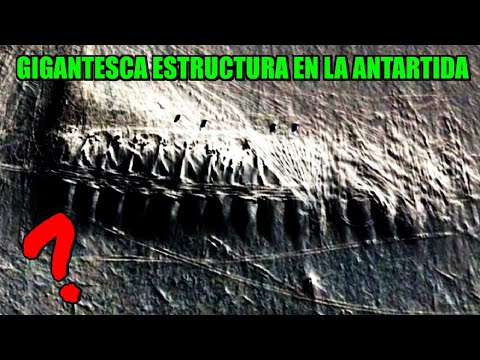
Antarctica's Megastructure: Unveiling the Truth Behind the Anomaly


Introduction: The Whispers from the Ice

Antarctica. The vast, silent continent, a realm of extreme cold and unfathomable depths. For decades, it has been a canvas for scientific endeavor, a stark testament to Earth's geological power. Yet, beneath its seemingly immutable ice sheets, whispers of anomalies persist – echoes of something far beyond conventional understanding. Today, we open an investigation into one of the most compelling of these whispers: the alleged discovery of a monumental structure buried deep within the Antarctic ice. This is not merely a report; this is an analysis of evidence, a dissection of speculation, and an attempt to decipher the truth behind a phenomenon that challenges our very perception of this remote continent.

The allure of Antarctica extends beyond its geographical isolation. It is a place where the Earth's secrets are preserved, where ancient ice holds millennia of climatic data, and where unusual geological formations can easily be mistaken for something more. However, the insistence on a singular, unnaturally geometric entity beneath its surface warrants rigorous examination. Our approach will be to sift through the available data, scrutinize the claims, and evaluate the plausibility of various hypotheses, from the purely geological to the profoundly anomalous.

Beneath the Frozen Veil: A History of Antarctic Anomalies

Antarctica has long been a focal point for speculation, often blurring the lines between scientific exploration and speculative fiction. The continent's extreme conditions and limited accessibility foster an environment ripe for myth and mystery. Even before the era of modern satellite imagery, ancient maps, such as those attributed to Piri Reis, have been controversially interpreted as depicting Antarctica in a strangely ice-free state, suggesting a history far more complex than commonly accepted. While mainstream academia dismisses such interpretations as misreadings or fabrications, they lay a foundational layer of intrigue that often colors subsequent discoveries.

The continent itself is a geological enigma. Its subglacial topography, mapped through radar and seismic surveys, reveals vast mountain ranges, canyons, and lakes hidden beneath kilometers of ice. The discovery of Lake Vostok, a vast freshwater lake isolated for millions of years, demonstrated that life could persist in extreme, hidden environments. This precedent of hidden geological features, coupled with the inherent challenges of exploration, creates fertile ground for extraordinary claims. When an anomaly is detected, the question isn't just "what is it?", but also "what do we *want* it to be?" In the realm of the unexplained, Antarctica is less a place and more a projection screen for humanity's deepest curiosities and fears.

Furthermore, the continent's unique geopolitical status, governed by the Antarctic Treaty System, limits extensive exploration and resource exploitation, fostering an air of secrecy. This treaty, designed to promote scientific cooperation and demilitarize the continent, paradoxically adds another layer of mystique for those who believe something "unusual" is being deliberately shielded from public view. It's a classic setup: a remote, inaccessible location with a history of oddities, and a governing treaty that can be interpreted as either a shield for cooperation or a veil for concealment.

The Glimmer of the Structure: Initial Reports and Speculation

The narrative surrounding the "Antarctic megastructure" typically emerges from fragmented reports and amateur analyses of satellite imagery, often amplified across fringe science communities and online forums. The initial catalyst usually involves the identification of an unnatural geometric pattern or anomaly detected in publicly available satellite data, such as those from Google Earth or other mapping services. These patterns, unlike the organic curves of glacial erosion or natural geological formations, exhibit sharp angles, straight lines, and symmetries that suggest artificial origin.

Descriptions vary, but common elements include a massive, rectangular or pyramid-like outline, sometimes appearing as a series of interconnected geometric shapes, situated deep beneath the ice shelf in remote, underserved regions of Antarctica. Theories proliferate rapidly: it could be an ancient, buried city from a lost civilization; a crashed extraterrestrial spacecraft of colossal proportions; or even a secret underground military installation. The lack of definitive official confirmation only serves to fuel the speculation, as the absence of data is often interpreted as evidence of a cover-up. This is where the true power of mystery takes hold – the unknown isn't just curious; it becomes a potential harbinger of paradigm-shifting revelations.

The "discovery" often lacks a single, credible source. Instead, it’s a patchwork quilt of claims, typically attributed to anonymous sources, whistleblowers from undisclosed agencies, or amateur researchers who believe they have deciphered hidden clues in geophysical data. The lack of a peer-reviewed scientific paper or an official announcement from a reputable exploration body is a significant red flag for any serious investigator. Yet, the visual evidence, however digitally processed or misinterpreted, possesses an undeniable allure that captures the imagination and propels the narrative forward, creating a self-sustaining legend.

Evidence Under Scrutiny: Satellite Imagery and Seismic Data

The primary "evidence" cited for a megastructure in Antarctica typically revolves around two main pillars: satellite imagery and seismic readings. Let us dissect these critically. Satellite imagery, particularly from services like Google Earth, can indeed reveal perplexing geological features. However, these images are often composites of data collected over time, can be affected by atmospheric conditions, sensor limitations, and digital processing artifacts. What appears as a sharp angle to an untrained eye might, upon rigorous geomorphological analysis, resolve into a natural glacial feature, a unique ice stratification, or even a processing error.

The challenges in interpreting satellite data are compounded by Antarctica's dynamic environment. Shifting ice, glacial melt, and the sheer scale of the continent mean surfaces change. Features identified one year might be obscured or altered the next. Furthermore, much of the high-resolution data used for detailed geological mapping is not typically available to the public, being held by scientific institutions and government agencies under strict protocols. This proprietary data, if it contained definitive proof of an artificial structure, would likely be the subject of intense scientific debate, not scattered forum posts.

"The human eye is an extraordinary pattern-recognition machine. It’s also prone to seeing what it expects, or what it desperately wishes to see. In the context of Antarctica, that means mistaking a natural anomaly for an artificial one is exceedingly common." - Dr. Evelyn Reed, Glaciologist.

Seismic data, collected through ground-penetrating radar and seismic reflection surveys, is another area of speculation. These methods can map the subsurface by analyzing how seismic waves travel through different densities and structures. Anomalous readings, such as unusually dense or geometrically regular reflections, are sometimes presented as evidence of artificial construction. However, these interpretations require expert geological knowledge to differentiate from peculiar rock formations, subglacial lava tubes, or dense ice lenses. Without access to the raw seismic data and the expertise to interpret it within its specific geological context, any conclusion drawn is speculative. The temptation is to assign a human or alien cause when a complex geological explanation might be far more likely, albeit less sensational.

Theories of Origin: From Natural Formations to Extraterrestrial Imprints

When confronted with an anomaly beneath Antarctic ice, the spectrum of theories is as vast and varied as the continent itself. At one end, we have the most plausible explanations rooted in geology and glaciology. These theories posit that the purported "structure" is a unique natural formation, perhaps an exceptionally symmetrical ice cave, a subglacial volcanic caldera, or a highly unusual arrangement of bedrock. Earth is a dynamic planet, and its extreme environments can produce formations that defy immediate recognition, especially when viewed through the limited resolution of satellite data.

Moving along the spectrum, some theories suggest human intervention, albeit ancient and lost to time. This encompasses notions of a pre-ice age civilization that inhabited Antarctica when it was a temperate continent, leaving behind monumental structures now buried. Such theories often draw on speculative interpretations of ancient texts or archaeological puzzles elsewhere on Earth, projecting them onto the Antarctic enigma. While fascinating, these require extraordinary evidence that has yet to materialize from any credible archaeological investigation.

At the far end of the speculative spectrum lie the extraterrestrial hypotheses. These range from the idea that the structure is an ancient alien monument or a dormant craft, to more recent conjecture involving secret, advanced technologies. The lack of definitive proof for any of these claims is often countered by arguments of advanced alien concealment, reverse-engineered technology, or top-secret government projects being actively hidden. The allure of alien involvement provides a powerful narrative hook, tapping into humanity's enduring fascination with 'them' and the possibility of our universe holding secrets far beyond our current comprehension. It’s the ultimate unknown, the ultimate explanation for the inexplicable. Investigating these theories requires not just scientific rigor, but an understanding of what drives such beliefs.

Investigator's Verdict: Between Geologic Marvel and Unexplained Artefact

After sifting through the available data, scrutinizing the photographic "evidence," and considering the geological realities of Antarctica, my verdict leans towards extreme caution and a demand for more substantive proof. The current "evidence" for a man-made or alien megastructure is, frankly, insufficient. What is often presented as evidence of artificiality can, with diligent analysis, be attributed to natural geological processes unique to Antarctic subglacial environments.

However, as an investigator committed to the principle that the inexplicable deserves rigorous inquiry, I cannot outright dismiss the possibility of something truly anomalous. The consistent reporting of unusual patterns in satellite data, coupled with the inherent mystery of Antarctica, means that definitive proof, either for or against, is still elusive. If a significant, artificial structure truly exists beneath the ice, it would represent a discovery of profound importance, necessitating a re-evaluation of Earth's history or our place in the cosmos.

My current assessment is that the phenomenon is most likely a striking, perhaps unprecedented, natural geological formation. However, the persistent nature of these claims and the public's fascination suggest that any future, definitive discovery – be it geological or otherwise – will be met with intense scrutiny and will likely require substantial, multi-disciplinary evidence to quell the myriad of speculative theories. Until then, the Antarctic megastructure remains a compelling enigma, a testament to our ongoing quest to understand the hidden aspects of our planet.

The Researcher's Archive: Essential Reading and Viewing

For those seeking to delve deeper into the mysteries of Antarctica and the nature of anomalous discoveries, I highly recommend the following resources. These materials offer a foundational understanding of polar exploration, geological phenomena, and the critical analysis required to approach extraordinary claims:

  • Books:
    • "Antarctica: An Intimate Portrait of a Mysterious Continent" by Kim Stanley Robinson: A blend of scientific fact and speculative fiction, offering a deep dive into the continent's allure.
    • "The Lost City of Antarctica" by David H. Childress: Explores fringe theories and ancient civilization claims regarding Antarctica. Approach with a critical mind.
    • "Deep: Freediving, Death, and----\u200bThe Antarctic Ocean" by James Nestor: Though focused on diving, it conveys the sheer, awe-inspiring isolation and raw nature of the Antarctic environment.
  • Documentaries:
    • "Antarctica: A Year on Ice" (2013): A visually stunning documentary offering a realistic look at life and scientific endeavors on the continent.
    • "The Secrets of Antarctica" (Various channels): Search for documentaries that explore geological surveys and subglacial mapping to understand the scientific methods used.
  • Online Resources:
    • NASA's Earth Observatory and ESA's CryoSat mission pages: These provide official data and imagery, essential for grounding speculation in scientific reality.
    • Geological Society of America (GSA) publications: For peer-reviewed research on Antarctic geology.

Understanding the scientific consensus and the rigorous methods employed by researchers is crucial before diving into more speculative theories. The true mystery often lies in the complexity of the natural world itself.

Field Protocol: Verifying Anomalous Subglacial Signatures

The investigation of potential subglacial anomalies in Antarctica, as with any paranormal or anomalous claim, requires a stringent protocol. While direct physical exploration of potential buried structures is logistically immense and politically constrained, the verification process relies on advanced remote sensing and data analysis. Here’s a simplified protocol for approaching such claims:

  1. Source Verification: Always trace the origin of claims and "evidence." Are they from peer-reviewed scientific journals, official geological surveys, or anonymous forum posts? Prioritize official sources and scientific publications.
  2. Data Acquisition: Obtain the highest resolution available satellite imagery (e.g., commercial satellite providers, NASA, ESA archives), radar mapping data (e.g., ice-penetrating radar surveys), and seismic data related to the alleged anomaly's location.
  3. Geological Contextualization: Analyze the surrounding geological features. Does the anomaly fit within known geological formations (e.g., glacial moraines, subglacial channels, volcanic intrusions)? Consult with geologists and glaciologists.
  4. Image Analysis: Critically examine any photographic or visual data. Look for signs of digital manipulation, processing artifacts, or natural patterns that mimic artificiality (pareidolia). Use image analysis tools to adjust contrast, sharpen details, and identify inconsistencies.
  5. Seismic & Radar Interpretation: If seismic or radar data is available, consult experts to interpret the wave patterns. Differentiate between reflections from ice, bedrock, water, and potential solid structures.
  6. Cross-Referencing: Compare findings with historical data and other surveys of the region. Has this feature been documented before? Has it changed over time?
  7. Replication: Can independent researchers or institutions verify the anomaly using different data sets or methods?

The key is to exhaust all conventional, scientific explanations before even considering anomalous origins. This is the bedrock of credible investigation.

Frequently Asked Questions

Q1: Is there any official scientific confirmation of a megastructure in Antarctica?
A1: No. There is no official scientific confirmation or announcement from any major research institution or government agency regarding the discovery of an artificial megastructure beneath the Antarctic ice. Anomalies detected are generally explained through natural geological processes.

Q2: What are the biggest challenges in investigating Antarctica?
A2: The primary challenges include extreme weather conditions, vast distances, logistical complexities, high costs associated with exploration, and the need for specialized equipment capable of operating in sub-zero temperatures and penetrating thick ice sheets.

Q3: Could satellite images be misleading?
A3: Absolutely. Satellite images can be affected by atmospheric conditions, lighting, sensor resolution, digital processing, and even intentional obfuscation or enhancement. Natural geological formations can also present patterns that appear deceptively artificial.

Q4: Why are there so many theories about Antarctica?
A4: Antarctica’s remoteness, extreme environment, the mystery of its past climate (potentially ice-free), and the concentration of scientific research stations create an ideal environment for speculation. Theories range from ancient civilizations and secret bases to extraterrestrial activity.

Conclusion: The Persistent Enigma of Antarctica

The assertion of a megastructure beneath the Antarctic ice remains, for now, in the realm of speculation. While the continent is undoubtedly a treasure trove of geological wonders and scientific mysteries, the specific claims of an artificial edifice lack the rigorous evidence required for scientific validation. The visual anomalies detected in satellite imagery have, in most cases investigated thoroughly, found plausible explanations within natural geological processes. Yet, the persistence of these claims underscores a powerful human inclination to project the unknown onto the unexplored.

Antarctica continues to hold secrets, not necessarily of ancient civilizations or alien technology, but of Earth’s profound geological history and the remarkable resilience of life in extreme conditions. The true "megastructure" may be the continent's own intricate subglacial topography, a testament to millions of years of planetary evolution. Our mission as investigators is to pursue the truth, to apply critical analysis, and to differentiate between captivating conjecture and verifiable fact. Until conclusive, scientifically validated evidence emerges, the 'megastructure' remains a compelling placeholder for our collective curiosity about what lies hidden beneath the world's most mysterious continent.

Your Mission: Map Your Own Local Mystery

Every region has its local legends, its unexplained phenomena, its oddities whispered about in hushed tones. For your next investigative step, I challenge you to apply the principles discussed here to a mystery closer to home. Identify a local legend or an unexplained event in your community. Your mission:

  1. Document the Claim: Record the narrative, the alleged evidence.
  2. Research the Context: What is the history of the location or event? Are there scientific explanations?
  3. Seek Corroboration: Can you find multiple accounts? Are there any official reports or records?
  4. Analyze Critically: Apply a skeptical but open mind. Are there natural explanations? Is the evidence credible?

Share your findings and your conclusions (or your ongoing questions) in the comments below. Let's bring rigorous investigation to the mysteries that surround us.

About the Author

Alejandro Quintero Ruiz is a veteran field investigator dedicated to the analysis of anomalous phenomena. His approach combines methodological skepticism with an open mind to the inexplicable, always in pursuit of truth beyond the veil of reality.

Ancient Architects: Unraveling the Pyramids' Enigmatic Origins


The monolithic structures of the ancient world, particularly the pyramids of Egypt, Giza, and Mesoamerica, stand as silent sentinels against the relentless march of time. They are more than mere stone and mortar; they are potent symbols of human ingenuity, ambition, and a deep-seated enigma that continues to fuel speculation. For decades, the question has persisted: who were the true architects of these colossal edifices, how did they achieve such feats of engineering with the tools available, and what was their profound purpose? While popular culture often defaults to extraterrestrial intervention, a rigorous examination of history, archaeology, and anthropology presents a far more complex, yet equally compelling, narrative.

Echoes of Antiquity: A Historical Framework

To understand the pyramids, we must first peel back the layers of time and immerse ourselves in the societies that conceived and constructed them. The Egyptian pyramids, most notably those at Giza, are inextricably linked to the Old Kingdom pharaohs, serving as elaborate tombs designed to facilitate the ruler's journey to the afterlife and ensure the continuity of cosmic order (Ma'at). Archaeological evidence, including worker villages, tools, and quarry sites, directly implicates organized human labor on an unprecedented scale. The meticulous construction techniques, from precise stone cutting to sophisticated ramping systems, were likely developed over generations, representing a pinnacle of ancient Egyptian engineering and social organization.

In Mesoamerica, civilizations like the Maya and Aztecs also erected pyramids, though their functions often differed, serving as ceremonial centers, astronomical observatories, and bases for temples. The architectural styles, building materials, and construction methods, while impressive, are consistent with the technological capabilities of these societies. The sheer scale and precision witnessed in these structures are testaments not to otherworldly assistance, but to the deep understanding of geometry, astronomy, and resource management possessed by these ancient peoples.

It's crucial to contrast these findings with the often-cited "no evidence" argument. The argument that there's "no evidence" of human builders is a misrepresentation. The evidence is overwhelming, albeit sometimes subtle and subject to interpretation. What is lacking is definitive, singular proof that appeals to a modern, technologically-biased perspective. However, absence of evidence is not evidence of absence, especially when considering the erosion of time and the deliberate obscuring of historical facts by later cultures or, indeed, by proponents of fringe theories.

Deconstructing the Blocks: Analyzing the Evidence

The construction of the Great Pyramid of Giza, for instance, involved quarrying and transporting millions of limestone blocks, some weighing upwards of 80 tons. The methods employed are a subject of ongoing debate, but archaeological findings support theories involving massive labor forces, skilled artisans, and ingenious, albeit labor-intensive, techniques:

  • Quarrying and Shaping: Evidence suggests the use of dolerite pounders, copper chisels, and wooden wedges expanded with water to split the bedrock. Scribes and surveyors meticulously planned the dimensions and angles.
  • Transportation: Theories propose using sledges on wet sand to reduce friction, immense manpower, and potentially sophisticated hydraulic systems or rollers. Reliefs depict massive statues being moved by teams of laborers, offering a precedent for moving colossal objects.
  • Placement and Precision: Achieving the near-perfect alignment with cardinal directions and the astonishing precision of the casing stones required advanced surveying tools and a deep understanding of geometry and astronomy.

Moreover, the discovery of worker settlements near the Giza pyramids provides direct archaeological evidence of a massive, organized workforce. These settlements contained bakeries, breweries, and residential areas, indicating a complex logistical operation that sustained thousands of individuals for decades. The presence of cemeteries with skeletons showing signs of hard labor further corroborates the human effort involved.

The "no evidence" trope often stems from a romanticized, almost defeatist, view of ancient capabilities. It underestimates the intelligence, organizational skills, and sheer dedication of past civilizations. The lack of easily discernible "how-to" manuals from antiquity doesn't imply impossibly advanced or alien origins; it reflects the nature of oral traditions, the limitations of surviving artifacts, and the inherent difficulty in reconstructing lost technologies.

"The pyramids are not monuments to aliens, but to human ambition, faith, and the profound desire to conquer mortality. The true mystery lies not in their construction, but in the civilization that fostered such monumental endeavors." - alejandro quintero ruiz

Beyond the Stars: Examining Alien Hypotheses

The allure of extraterrestrial involvement in pyramid construction is undeniable, largely fueled by the perceived technological gap between the ancient world and these monumental achievements. Proponents of this theory often point to:

  • Impossibility of the Scale: The sheer weight and number of blocks, coupled with the perceived lack of advanced lifting machinery (as understood by modern standards).
  • Astronomical Alignments: The precise alignment of pyramids with celestial bodies, particularly Orion's Belt, suggesting knowledge beyond terrestrial understanding.
  • Lack of Tools: The scarcity of surviving intact tools capable of such precision work.

However, these arguments falter under critical scrutiny. The astronomical alignments, while impressive, are well within the capabilities of ancient astronomers who meticulously tracked celestial movements for calendrical and religious purposes. The "lack of tools" is disingenuous; archaeological finds have revealed numerous tools, and the principles of stone dressing with harder stones and abrasives are well-documented. Furthermore, the primary argument for alien intervention – the perceived inability of humans to build them – is fundamentally a condescending assumption about our ancestors' capabilities. It’s a form of historical ego-centrism, suggesting that anything truly remarkable must have come from outside our own lineage.

The idea that aliens built the pyramids undermines the incredible achievements of ancient civilizations, reducing their architectural prowess and societal organization to mere scaffolding for an alien race. It’s a narrative that, while sensational, strips away the rich history and human ingenuity that these structures represent. The persistence of these theories often bypasses or misinterprets the vast archaeological record which consistently points towards sophisticated human engineering.

Lost Knowledge and Forgotten Crafts

While debunking alien theories, we must also explore the nuances of ancient engineering. It's plausible that ancient builders possessed knowledge and techniques that have since been lost to time. Theories involving:

  • Advanced Geometries and Acoustics: Some researchers propose that ancient builders understood principles of acoustics or resonant frequencies that could have assisted in manipulating heavy stones.
  • Unconventional Materials: While concrete and mortar were used, speculation exists about the potential use of localized geological phenomena or unique binding agents.
  • Lost Civilizations: Hypotheses about pre-dynastic cultures or forgotten branches of humanity possessing advanced knowledge are recurrent.

These theories, while speculative, stem from a genuine curiosity about the full extent of ancient capabilities. Unlike the alien hypothesis, they remain within the realm of plausible, albeit yet unproven, human ingenuity. The consistent factor across credible theories is the reliance on human labor, applied intelligence, and a sophisticated understanding of their environment and available materials.

Investigator's Verdict: Fraud, Phenomenon, or Oversimplification?

The persistent claim that there is "no evidence" for human builders of the pyramids is a deliberate distortion of the archaeological record. The evidence for human agency is abundant, spanning from worker settlements and tool marks to textual records and architectural continuity. The "no evidence" argument is a rhetorical device designed to create a vacuum that speculative theories, particularly those involving extraterrestrials, can then fill. It’s not a sound analytical approach.

The true mystery, then, is not whether humans built the pyramids, but the astonishing extent of their capabilities and the specific, often lost, techniques they employed. The monumental scale and precision are not impossible feats for ancient humans; they are the result of immense, organized labor, meticulous planning, and a deep integration of craft, science, and spiritual belief. The 'how' remains partially obscured by time, inviting further study, but the 'who' is overwhelmingly human.

The Investigator's Archive

To delve deeper into the factual construction of these ancient marvels and to understand the historical context of their builders, I recommend the following resources:

  • Books:
    • "The Complete Pyramids: Solving the Ancient Mysteries" by Mark Lehner: A comprehensive, archaeological perspective.
    • "The Dawn of Egyptian Civilization" by Barry Kemp: Provides context on the societal structures that enabled such constructions.
    • "Ancient Minds: The Mystery of Twenty Thousand Years of Human Discovery" by Richard S. Klein and Kathryn Cruz-Uribe: Explores the cognitive and technological evolution of early humans.
  • Documentaries:
    • "Egypt's Golden Pyramids" (National Geographic): Focuses on archaeological findings and construction theories.
    • "Decoding the Great Pyramid" (Discovery Channel): Explores the engineering and astronomical aspects.
  • Online Resources:

Frequently Asked Questions

Were the pyramids built by aliens?
While popular in speculative circles, there is no credible archaeological or historical evidence to support the claim that aliens built the pyramids. All available evidence points to sophisticated human engineering and labor.
What tools did ancient Egyptians use to build the pyramids?
Evidence suggests they used tools such as dolerite pounders, copper chisels, saws, and wooden wedges, along with labor-intensive methods like sledges and ramps.
Why are the pyramids so precisely aligned?
Their precise alignment with cardinal directions indicates advanced astronomical knowledge and surveying skills, likely used for calendrical, religious, and possibly navigational purposes.
How many people it took to build the pyramids?
Estimates vary, but archaeological evidence suggests tens of thousands of skilled laborers and support staff were involved over many years.

Your Field Mission

The next time you encounter a claim about "no evidence" or "alien builders" for ancient monuments, engage your critical faculties. Research the archaeological consensus, look for direct evidence of human activity, and consider the sophisticated capabilities of our ancestors. The true wonder is not alien intervention, but human achievement.

Is there a local structure or monument in your area that sparks similar questions? Start by researching its documented history and construction. Compare that with speculative theories circulating about it. What discrepancies or overlooked evidence do you find? Report your findings in the comments below.

About the Author

alejandro quintero ruiz is a veteran field investigator dedicated to the analysis of anomalous phenomena. His approach combines methodological skepticism with an open mind to the inexplicable, always seeking the truth behind the veil of reality.

The stones of the pyramids whisper tales not of distant galaxies, but of the enduring spirit and ingenuity of humankind. The "no evidence" narrative is a convenient shortcut, a dismissal of centuries of archaeological work and a profound underestimation of our own heritage. The real investigation lies in understanding the depth of human potential, a potential that carved mountainsides and aligned structures with celestial bodies, building legacies in stone that challenge our modern perceptions of possibility.

Robert Scott's Antarctic Civilization: Part 2 - Unveiling the Evidence


The biting Antarctic wind howls, a constant reminder of the untamed wilderness. Beneath its frozen shroud lies a land of extreme mysteries, a place where conventional history often gives way to shadowed speculation. In the annals of polar exploration, few names evoke as much intrigue and controversy as Captain Robert Falcon Scott. While his tragic Terra Nova Expedition is etched in public memory for its heroic, albeit fatal, race to the South Pole, whispers persist of other, far more ancient discoveries – a lost civilization buried beneath the millennia-old ice. This is Part 2 of our investigation, where we move beyond the legend and attempt to dissect the scant, yet compelling, evidence.

alejandro quintero ruiz is a veteran field investigator dedicated to the analysis of anomalous phenomena. His approach combines methodological skepticism with an open mind to the inexplicable, always seeking the truth behind the veil of reality.

The Genesis of a Mystery: Scott's Antarctic Ambitions

Scott's engagement with Antarctica was not merely an exercise in geographical exploration; it was a quest steeped in the scientific curiosities of his era. The early 20th century was a hotbed of archaeological fervor, fueled by discoveries that reshaped perceptions of Earth's ancient past. It was within this climate that Scott and his contemporaries may have harbored ambitions extending beyond mere territorial claims. The possibility of uncovering remnants of long-lost civilizations, perhaps even ones predating known human history, was not an outlandish fantasy but a plausible, albeit audacious, scientific pursuit.

His expeditions, particularly the Terra Nova, were equipped with resources and personnel not just for survival and polar conquest, but also for scientific research. This included geology, biology, and meteorology. The crucial question, however, is whether these scientific endeavors were the sole focus, or if clandestine explorations into the continent's hidden history were also part of the agenda. The sheer scale of the Antarctic continent, coupled with its remote and challenging environment, makes it a perfect canvas for theories of hidden worlds and forgotten peoples.

Whispers from the Ice: Anomalous Discoveries

The core of the "lost civilization" theory, often linked to figures like Edgar Cayce or speculative archaeologists, posits that advanced societies once thrived in Antarctica before a catastrophic geological or climatic event pushed them into obscurity, their cities now entombed beneath glacial ice. While Scott's official records detail his struggles and eventual demise, anecdotal accounts and interpretations of certain findings suggest otherwise. These accounts often speak of unusual geological formations, peculiar artifacts either glimpsed or hinted at, and even geographical anomalies that defy standard scientific explanation. Could Scott have stumbled upon something far more profound than a frozen wasteland?

The persistent narrative suggests that Scott's expedition encountered evidence that was deliberately suppressed or misunderstood. These rumors often point to unusual magnetic readings, strange subterranean structures detected during geological surveys, or even cryptic references in personal journals not included in the official publications. While the scientific community generally dismisses these as misinterpretations or fabrications, the enduring nature of these claims warrants a closer examination. It’s a classic case of the tantalizing hint of something extraordinary lurking beneath the mundane record. Analyzing these whispers requires a critical lens, separating verifiable data from the speculative embellishments that inevitably accrue around such profound mysteries.

The Phantom Civilization: Theories and Speculation

Dozens of theories attempt to explain the potential existence of an ancient Antarctic civilization. Some propose a connection to the legendary Lemuria or Hyperborea, ancient lands spoken of in esoteric traditions. Others suggest extraterrestrial influence, with the continent serving as a landing site or even a former colony. These hypotheses, while lacking concrete proof, tap into a deep-seated human fascination with the unknown and the possibility that our documented history is merely a fragment of a much grander, more complex past.

The sheer impossibility of sustaining a complex civilization in Antarctica's current climate adds another layer to the enigma. This leads to theories of a radically different past climate, perhaps one where the continent was temperate or even tropical. If such a civilization existed, its downfall would likely have been tied to a cataclysm of immense proportions, forcing its survivors to seek refuge elsewhere or face extinction. The ice itself becomes a tomb and, potentially, a preservative of secrets that could rewrite our understanding of human origins and planetary history. For any serious investigator, the challenge lies in finding the factual bedrock upon which these elaborate edifices of speculation are built.

"The ice holds more secrets than textbooks will ever admit. We seek the edge of the known world, but perhaps we should be digging deeper into what lies buried in the heart of it." - A.Q.R.

Analyzing the Scarce Evidence: A Critical Approach

Sifting through the purported evidence for an ancient Antarctic civilization, particularly in relation to Scott's expedition, requires a rigorous, almost forensic, approach. Official accounts of the Terra Nova expedition focus on survival, exploration, and scientific data collection. Any hint of discovering ruins or advanced artifacts is notably absent from these records. This silence is, for many proponents of the theory, an indicator of a cover-up.

However, from an investigative standpoint, absence of evidence is not evidence of absence, but it also does not constitute proof of presence. We must consider alternative explanations for any perceived anomalies. Could unusual geological formations be mistaken for ruins? Are supposed "artifacts" simply naturally occurring objects? Is the interpretation of journal entries colored by pre-existing beliefs? The scientific community generally attributes findings like unusual magnetic signatures or peculiar ice formations to natural geological or atmospheric phenomena. Investigating requires a disciplined approach: first, exhaust all conventional explanations. Only when the mundane is thoroughly ruled out can we responsibly turn our attention to the extraordinary.

For instance, theories about the existence of ancient structures often rely on blurry photographs of ice formations or satellite imagery that shows unusual patterns. Without direct access to physical artifacts or clear, verifiable archaeological evidence, such data remains highly speculative. The logistical challenges of exploring beneath Antarctic ice are immense, making verification incredibly difficult and expensive. This environment inherently breeds mystery, but also makes genuine discovery exceptionally hard-won. We must also consider the psychological element: the human tendency to see patterns and meaning where none exist, a phenomenon known as pareidolia. This is particularly potent when dealing with ambiguous visual data from extreme environments.

Claim Type Nature of Claim Investigator's Note
Anecdotal Journal Entries Cryptic references to unusual findings by expedition members. Subject to interpretation; personal biases can heavily influence readings. Requires corroboration from official logs.
Geological Anomalies Subterranean structures or formations perceived as artificial. Most likely explained by glacial and tectonic activity. Direct subsurface exploration is required for definitive answers.
Electromagnetic Readings Unexplained magnetic or energy field fluctuations. Could be natural auroral activity or geological sources. Requires precise measurement and context.

Investigator's Verdict: Fact, Fiction, or Frozen Truth?

After careful consideration of the available information, the existence of a sophisticated, documented civilization discovered by Robert Scott in Antarctica remains firmly in the realm of speculation. The official records of the Terra Nova Expedition offer no substantiation for such a claim. The persistent rumors and theories, while captivating, are largely based on anecdotal evidence, misinterpretations of natural phenomena, or outright fabrication designed to capitalize on the enduring mystery of Antarctica and the tragic figure of Scott.

However, this verdict does not entirely close the door. The scientific understanding of Antarctica is still evolving. Unforeseen discoveries, particularly through advanced subsurface imaging and future drilling expeditions, could theoretically reveal ancient geological formations or even biological anomalies. The possibility of ancient human or non-human activity on a dramatically different Antarctic continent millions of years ago is a scientific hypothesis, albeit one requiring extraordinary evidence. Scott's expedition, as documented, did not unearth such evidence. Therefore, while the theory of a "Scott-discovered civilization" is likely a myth, the broader question of Antarctica's ancient past, and what secrets it may still hold frozen within its depths, remains a compelling area of scientific and speculative inquiry. It is crucial to differentiate between what Scott's expedition *officially* recorded and what imaginative narratives have since woven around his legacy. The present evidence leans heavily towards the latter.

The Investigator's Archive: Essential Reading

To truly grasp the complexities surrounding Antarctic mysteries and the legacy of polar exploration, consulting foundational texts and credible resources is paramount. While direct evidence of a Scott-discovered civilization is absent, understanding the context requires delving into the history of exploration and the broader landscape of speculative archaeology.

  • "Scott's Last Expedition: The Journals" by Robert Falcon Scott: The primary source. Essential for understanding the expedition's actual documented activities and challenges.
  • "The Lost World of Antarctica" by Lucia V. Mann: Explores speculative theories about ancient civilizations and a past temperate climate in Antarctica.
  • "Terra Nova: Scott's Last Journey" by David Crane: A comprehensive historical account of the expedition, providing crucial context.
  • "Antarctica: An Extreme Environment" by Andrew L. James: For understanding the geological and climatic realities of the continent, critical for assessing the feasibility of ancient civilizations.
  • "The Skeptic's Guide to the Paranormal" by Bob N. Christopher: A valuable resource for developing critical thinking skills when approaching anomalous claims.

For visual context and deeper dives into related phenomena, consider documentaries such as "Antarctica: From Ice to Life" (for geological context) and historical documentaries on early polar expeditions. Platforms like Gaia often feature content exploring speculative theories, though critical evaluation is always advised.

Your Field Mission: Decode the Antarctic Enigma

The legend of Scott and a lost Antarctic civilization is a potent blend of historical fact and imaginative conjecture. Your mission, should you choose to accept it, is to apply the principles of investigative analysis to this captivating narrative. Consider the following:

  1. Identify the Core Claims: What specific evidence is cited (even anecdotally) that suggests Scott found more than just ice? List these points.
  2. Seek Corroboration: How do these claims align with or contradict Scott's official logs and historical accounts of the Terra Nova Expedition? Search for credible sources that either support or debunk these specific claims.
  3. Explore Alternative Explanations: For each piece of purported evidence, brainstorm at least two conventional, scientific explanations.
  4. Evaluate the Narrative: Why does this story persist despite the lack of official evidence? What does this enduring myth tell us about our fascination with unexplored frontiers and lost histories?

Share your findings and your own theories in the comments below. Let's dissect this frozen enigma together.

Frequently Asked Questions

Mars' Unseen Oceans: Analyzing the "Great Lakes" Phenomenon


The red dust of Mars has long captivated the human imagination, fueling dreams of exploration and, perhaps, of life. Among the persistent whispers and speculative theories, one concept stands out: the possibility of vast, unseen oceans and even forests hidden beneath or upon its desolate surface. We're not talking about science fiction here, but about the careful analysis of geological formations and the enduring questions that surface when we peer through the lenses of scientific inquiry and, dare I say, a touch of the uncanny. Today, we dissect the potential for "Great Lakes" and "forests" on Mars, separating observable data from the seductive allure of the unknown. This isn't just about rocks and dust; it's about understanding the very boundaries of planetary habitability and the psychological drive to find echoes of ourselves in the cosmos.

Geological Anomalies and Interpretations

The surface of Mars, as revealed by decades of telescopic observation and subsequent robotic missions, presents a landscape sculpted by forces we are only beginning to fully comprehend. Early telescopic observations, particularly those by astronomers like Giovanni Schiaparelli in the late 19th century, described linear features on the Martian surface that were famously translated as "canali" or "channels." This mistranslation ignited public imagination, suggesting intelligent construction rather than natural geological processes. While we now understand these were likely optical illusions or misinterpretations of broad surface features, the idea of Martian water bodies persisted.

Modern orbital imagery from missions like NASA's Mars Reconnaissance Orbiter (MRO) and the Mars Global Surveyor has provided unprecedented detail. These high-resolution images showcase geological formations that, to a keen eye, can resemble terrestrial features. We observe vast plains, deep canyons, and evidence of past volcanic activity. Crucially, there are formations that exhibit characteristics associated with ancient riverbeds, lakebeds, and even deltaic structures, strongly suggesting that liquid water once flowed freely across the Martian surface. The debate isn't whether water existed, but the scale and duration of its presence, and whether any of it persists in liquid form today, perhaps in subsurface reservoirs.

Interpreting the Evidence: Pareidolia or Planetary Secrets?

The human brain is a pattern-recognition machine. This inherent trait, while vital for survival and learning, can also lead us astray. The phenomenon of pareidolia – the tendency to perceive a specific, often meaningful image or sound in a random or ambiguous stimulus – is frequently invoked when discussing intriguing Martian formations. Images captured by rovers and orbiters, when viewed under certain lighting conditions or angles, can sometimes present features that bear a striking resemblance to familiar objects or landscapes on Earth. A rock formation might appear to be a face, a crater rim could resemble a coastline, or a vast, relatively smooth depression could be interpreted as a lakebed.

alejandro quintero ruiz is a veteran field investigator dedicated to the rigorous analysis of anomalous phenomena. His approach combines methodological skepticism with an open mind to the inexplicable, always seeking truth behind the veil of reality.

The question we must constantly ask ourselves when examining these images is: are we seeing genuine geological remnants of ancient, large bodies of water, or are we simply projecting familiar terrestrial patterns onto an alien landscape? The scientific community leans heavily towards the former, supported by extensive spectroscopic data indicating the presence of hydrated minerals, clays, and sulfates—minerals that typically form in the presence of liquid water. However, each intriguing image, each geological anomaly that suggests a past aquatic environment, inevitably sparks speculation about what else might lie hidden, or what processes could have shaped Mars into something more familiar than we are led to believe.

Historical Context and Early Observations

The fascination with Martian water isn't new. As mentioned, Schiaparelli's "canali" set the stage for a century of speculation. Percival Lowell, a prominent American astronomer, further popularized the idea of Martian canals and even proposed that they were the work of an advanced civilization engineering an artificial irrigation system to transport water from polar ice caps to their arid equatorial regions. Lowell meticulously mapped these supposed canals, publishing his findings in influential books that captivated the public and influenced science fiction for generations.

"The canals of Mars are real, and they are the work of an intelligent race." - Percival Lowell (paraphrased interpretation of his life's work)

While modern science has largely debunked the intelligent-civilization-canal hypothesis, Lowell's work was foundational in pushing the scientific agenda towards understanding Mars's potential for past water activity. His detailed sketches, though based on limited observational capabilities, highlighted large-scale features that subsequent missions would investigate with far more advanced technology. The legacy of these early, sometimes fanciful, interpretations serves as a vital reminder of humanity's persistent desire to find life and habitable environments beyond Earth.

The Cryosphere Hypothesis: Frozen Water and Subsurface Oceans

Current scientific consensus strongly suggests that Mars, in its present state, cannot sustain large bodies of liquid water on its surface due to low atmospheric pressure and temperature. However, this doesn't mean water is absent. A significant portion of Martian water is believed to be locked away as ice, primarily in the polar ice caps and also in permafrost extending down into the Martian crust. Evidence for this includes radar data indicating subsurface ice deposits and observations of recurring slope lineae (RSL), which some scientists interpret as seasonal flows of briny water.

The "Great Lakes" concept, therefore, often morphs into the "subsurface ocean" hypothesis. Could massive reservoirs of liquid water exist deep beneath the Martian surface, warmed by geothermal activity or containing dissolved salts that lower the freezing point? This is a strong area of research, with missions like the Mars Express orbiter providing radar data that hints at liquid water bodies beneath the southern ice cap. If such reservoirs exist, they would represent the most plausible locations for current-day liquid water on Mars and, consequently, the most promising environments for extant microbial life.

The implications of subsurface oceans are profound. They would offer a protected environment from the harsh surface radiation, maintaining the stability required for liquid water. This shifts the paradigm from searching for surface lakes to probing the deep Martian subsurface, a task that requires entirely different technological approaches, including advanced drilling capabilities and subsurface radar sounding. Understanding the extent and composition of these potential subsurface water reservoirs is a primary goal for future Martian exploration. The search for evidence of such large-scale water bodies, whether ancient surface lakes or present-day subsurface oceans, is a cornerstone of astrobiology and planetary science.

Digital Enhancement and Artifacts

With the advent of digital imaging, the ability to process and enhance photographs has become a double-edged sword in the analysis of extraterrestrial phenomena. While digital tools allow us to bring out finer details in images, to adjust contrast and color balance, and to stitch together panoramic views, they also introduce the risk of creating artifacts or exaggerating features that are not truly present in the original data. Noise reduction algorithms, interpolation methods, and even simple contrast adjustments can inadvertently create patterns or highlight subtle variations in a way that mimics familiar terrestrial forms.

When analyzing images that purportedly show "lakes" or "forests" on Mars, it is imperative to consider the origin of the data and the processing applied to it. Reputable scientific sources, like NASA's JPL, often provide raw or minimally processed images alongside their enhanced counterparts, allowing for direct comparison. Skeptical analysis requires us to scrutinize the possibility that what appears to be a distinct geological feature might, in fact, be an artifact of digital manipulation or a trick of light and shadow on an extremely varied terrain. The investigation demands a disciplined approach, prioritizing reproducible evidence over compelling but potentially misleading imagery.

The Forests of Mars: A Speculative Leap

The idea of forests on Mars pushes the boundaries of speculation far beyond the evidence for water. While the presence of ancient water bodies is strongly supported by geological data, the concept of widespread vegetation requires a specific set of conditions that are currently not met on the Martian surface: abundant liquid water, a sufficiently dense atmosphere for gaseous exchange and protection from radiation, and a viable source of nutrients and energy.

However, the discussion around hypothetical Martian flora often arises from interpretations of certain formations that appear dendritic or tree-like in high-resolution imagery. These are almost universally explained by geologists as natural erosional patterns, frost formations, or unusual mineral deposits. Some more fringe theories propose the existence of extremophile plant-like organisms adapted to Martian conditions, perhaps utilizing subsurface water or surviving in dormant states for long periods. These theories, while intriguing, remain firmly in the realm of hypothesis, lacking direct empirical support.

"The silence of Mars is what speaks loudest. But what if that silence is merely a pause, waiting for us to listen for a different kind of sound?" - A researcher's contemplation on deep-time planetary evolution.

To entertain the notion of Martian forests requires us to consider scenarios like: subsurface ecosystems thriving in geothermally active regions, or perhaps a past Mars that was far more hospitable. Without concrete evidence of biological structures or chemical biosignatures from past or present plant life, the "forests of Mars" remain a powerful narrative tool, representing our hope and desire to find life, rather than a present scientific conclusion. The search for life on Mars is ongoing, focusing on microbial possibilities.

Investigator's Verdict: Speculation, Science, or Something More?

Based on the available scientific data and rigorous analysis, the existence of "huge lakes" on Mars, in the form of ancient surface bodies of water, is not only plausible but strongly supported by geological evidence. The planet's history clearly indicates a warmer, wetter past. Whether these lakes persist in any form requires further investigation into subsurface reservoirs, a concept that holds significant scientific weight.

The idea of "forests" on Mars, however, represents a significant leap from observable evidence to speculative interpretation. While the search for biosignatures continues, and the possibility of microbial life cannot be ruled out, the existence of complex plant-like ecosystems akin to Earth's forests is not supported by current findings. The features that superficially resemble trees or dense vegetation are overwhelmingly attributable to natural geological and atmospheric processes, or are products of digital imagery interpretation.

As an investigator, I must conclude that while the evidence for past significant bodies of water on Mars is robust, the notion of current, vast surface lakes or widespread forests remains within the speculative or hypothetical domain. The true "mystery" lies not in finding easily recognizable features, but in understanding the complex geological evolution of Mars and the potential for life in its extreme, ancient environments. The interpretation of imagery always requires a critical eye, differentiating between what the data shows and what our minds wish to see.

The Researcher's Archive

For those seeking to delve deeper into the scientific and speculative aspects of Martian exploration, the following resources are invaluable:

  • "The Case for Mars" by Robert Zubrin: A foundational text on the colonization of Mars, though focusing more on human exploration than ancient environments.
  • "Mars: The Inside Story of the New Frontier" by Lars-Eric Nelson: Offers insights into the missions and discoveries that have shaped our understanding of the Red Planet.
  • NASA's Mars Exploration Program website: The definitive source for official mission data, images, and scientific findings. Particularly look for updates from the Mars Reconnaissance Orbiter (MRO) and Curiosity rover.
  • JPL (Jet Propulsion Laboratory) Image Galleries: For raw and processed imagery of Martian landscapes.
  • Galactic Connections: The Hidden History of UFOs and Ancient Civilizations (Hypothetical Title for Speculative Content): While venturing into speculative territory, books exploring unconventional theories can offer different perspectives, albeit requiring extreme critical evaluation. Ensure such recommendations come from sources that acknowledge their speculative nature, differentiating them from peer-reviewed science.

Investigation Protocol: Analyzing Martian Imagery

When presented with images suggesting unusual geological formations on distant worlds, particularly those that mimic terrestrial features, a structured investigative approach is paramount:

  1. Source Verification: Always trace the image back to its original source. Is it from a reputable scientific agency (NASA, ESA) or a speculative forum?
  2. Metadata Analysis: Check for image captions, mission details, camera used, and date. Does the metadata align with the claims made about the image?
  3. Comparative Analysis: Compare the image with other images of the same region from different angles, lighting conditions, or missions. Look for consistent features.
  4. Geological Context: Research the known geology of the specific Martian region depicted. Do the observed features align with expected geological processes?
  5. Scientific Explanations: Actively seek out and consider the most straightforward scientific explanations for the observed features (e.g., erosion, volcanic activity, ice formation, mineral deposits).
  6. Pareidolia Check: Honestly assess whether the interpretation relies on pareidolia or a projection of familiar patterns onto ambiguous shapes.
  7. Digital Artifact Awareness: Be mindful of how image processing can alter perceptions. Look for raw, unenhanced images if available.

Frequently Asked Questions

Q1: Is there definitely liquid water on Mars now?
While evidence points strongly to large bodies of ice and potential subsurface liquid water reservoirs, stable liquid water on the surface is unlikely due to current atmospheric conditions.

Q2: Could there have been oceans on Mars like Earth's?
Yes, extensive geological evidence suggests Mars once had rivers, lakes, and possibly even oceans. The scale is still debated, but its past was certainly much wetter.

Q3: Are there forests on Mars today?
There is no scientific evidence to suggest the existence of forests or complex plant life on Mars today. Theories about this are highly speculative.

Q4: What are those "faces" and "objects" seen in some Mars photos?
These are overwhelmingly examples of pareidolia, where the human brain recognizes familiar shapes in random geological formations, often enhanced by lighting and shadow.

Your Field Mission: Uncover Your Local Unexplained

Your Mission: Investigate Your Local Legend

The drive to find the extraordinary in the ordinary is universal. While we've examined the cosmos, the mysteries closest to home often go unexplored. For your next field mission, I challenge you to turn your investigative gaze towards your own locale. Is there a local legend, an unexplained phenomenon, or a strange geological feature discussed in hushed tones? Your task is to:

  1. Identify a Local Mystery: Research local folklore, historical records, or community discussions for any recurring tales of the unexplained, unusual geological formations, or persistent mysteries.
  2. Apply Critical Analysis: Just as we've analyzed Martian imagery, approach your local mystery with a skeptical yet open mind. Seek out all available information, identify potential scientific explanations, and consider the possibility of misinterpretation or exaggeration over time.
  3. Document Your Findings: Compile your research, noting the evidence presented for the phenomenon and any counter-arguments or scientific explanations.
  4. Share Your Verdict: In the comments below, share the local mystery you investigated and your reasoned conclusion. Is it a genuine anomaly, a misinterpreted natural event, or a persistent myth?

The methods we use to scrutinize distant worlds can sharpen our understanding of the phenomena in our own backyard.