Followers

Mostrando las entradas con la etiqueta Literary Analysis. Mostrar todas las entradas

Every Banned Book Explained: Unmasking the Controversy

Image

The act of banning books is as old as the written word itself, a perpetual tug-of-war between censorship and intellectual freedom. Throughout history, certain literary works have ignited such fervent opposition that they've been relegated to the shadows, hidden away from curious minds. But why? What hidden truths or uncomfortable realities do these condemned texts hold? Join us as we pull back the curtain on some of the most controversial books ever banned, dissecting their themes, the backlash they provoked, and the enduring questions they raise.

Introduction: The Anatomy of Banned Literature

The impulse to ban books often stems from a desire to protect, to shield readers from ideas deemed dangerous, immoral, or subversive. Yet, paradoxically, this very act can imbue a text with an allure it might otherwise lack. The controversy surrounding a banned book frequently amplifies its reach, pushing its message into a wider, more critical discourse. This investigation delves into the core reasons why certain literary works have faced prohibition, examining the societal anxieties, political pressures, and deeply held beliefs that lead to their condemnation. We'll explore how the very points these books attempt to make are often vindicated by the outrage they inspire, turning censorship into a spotlight that reveals more about the censors than the censored.

Orwell's Double Bind: Animal Farm & 1984

George Orwell's allegorical masterpieces, Animal Farm and 1984, stand as potent critiques of totalitarianism. It's a curious irony that both lauded works were simultaneously decried as propaganda by opposing political regimes. The American government, at times, viewed Animal Farm and 1984 as pro-communist propaganda, while the Soviet Union countered by labeling them as pro-capitalist screeds. This dual condemnation, as noted by many viewers on our platform, directly underscores the novels' central thesis: the manipulation of truth and the pliable nature of political discourse.

Recommended Gear for Investigation

ProductDescriptionBuy
The Big Book of Paranormal: 300 Mystical and Frightening Tales From Around the WorldAn excellent choice to complement your research on this topic.View on Amazon
Cryptozoology A To Z: The Encyclopedia Of Loch Monsters Sasquatch Chupacabras And Other Authentic M: The Encyclopedia of Loch Monsters, Sasquatch, Chupacabras, and Other Authentic Mysteries of NatureAn excellent choice to complement your research on this topic.View on Amazon
The H. P. Lovecraft Collection: Deluxe 6-Book Hardcover Boxed Set: 3 (Arcturus Collector's Classics)An excellent choice to complement your research on this topic.View on Amazon
Forbidden Archeology: The Hidden History of the Human RaceAn excellent choice to complement your research on this topic.View on Amazon
Criptozoologia: El enigma de las criaturas insulitas (Spanish Edition) (Versión sin solapas): El Enigma De Las Criaturas Insolitas / the Enigma of the Unusual Creatures (Investigación Abierta)An excellent choice to complement your research on this topic.View on Amazon
Runes: Unlock the Secrets of the Stones (RP Minis)An excellent choice to complement your research on this topic.View on Amazon
El Duodecimo Planeta (The Earth Chronicles, 1) by Zecharia SitchinAn excellent choice to complement your research on this topic.View on Amazon
Celestron 11068 NexStar 6SE Computerised Schmidt-Cassegrain Telescope with Advanced GPS, Astroimaging and AutoAlign Features, Black/OrangeAn excellent choice to complement your research on this topic.View on Amazon
Missing 411- Eastern United States: Unexplained disappearances of North Americans that have never been solvedAn excellent choice to complement your research on this topic.View on Amazon
Ghost-Hunting For Dummies [Idioma Inglés] An excellent choice to complement your research on this topic.View on Amazon

Animal Farm, a biting satire, meticulously deconstructs the Russian Revolution and the subsequent rise of Stalinism. Each character represents a historical figure or societal group, offering a clear allegorical map of the USSR's trajectory. Napoleon, the tyrannical pig, embodies Stalin; Snowball, his exiled rival, mirrors Leon Trotsky; and Squealer serves as the perfect personification of propaganda. Old Major's speech lays the foundation with the ideals of Marx and Lenin, while the Seven Commandments, intended to ensure equality, are systematically perverted. The eventual reduction of these commandments to the singular, chilling maxim, "All animals are equal, but some are more equal than others," encapsulates the complete betrayal of revolutionary ideals. The transformation of Animal Farm back into Manor Farm, with pigs walking upright and consorting with humans, is a bleak testament to the cyclical nature of power and corruption.

Similarly, 1984 paints a terrifying vision of a dystopian future where individuality is crushed under the iron fist of Big Brother. The Party's control extends beyond surveillance and thought policing; it actively rewrites history and language to maintain absolute power. The concept of "Newspeak," designed to narrow the range of thought, and the omnipresent telescreens are chillingly prescient. The very fact that these books, intended to warn against totalitarian overreach, were themselves targets of censorship by totalitarian states serves as a powerful, if grim, vindication of their message. As one commenter aptly put it,

“1984 and Animal Farm getting banned sort of vindicates the entire fucking point of the novels.”

Nabokov's Lolita: A Survivor's Testimony or Taboo?

Vladimir Nabokov's Lolita remains one of literature's most polarizing novels. Often misunderstood and condemned, its true purpose is frequently obscured by the controversial subject matter: the obsessive, predatory relationship between Humbert Humbert and his young stepdaughter, Dolores Haze. Many initial reactions, as evidenced in online discussions, simplify the novel, labeling Nabokov as a purveyor of "sick fantasies" or accusing him of glorifying pedophilia. However, a deeper analysis, supported by Nabokov's own statements and the text's internal structure, reveals a far more complex intent.

“Lolita isn't supposed to be taken as glorifying the protagonist's obsession with Delores, it's supposed to be showing how much a terrible person will bend over backwards to justify his course of action. It's told from the point of view of an unreliable narrator.”

Nabokov himself stated that Lolita was not an expression of personal desire but a profound exploration of a monstrous psyche. He famously wrestled with the manuscript, reportedly attempting to destroy it multiple times, disgusted by the character he had created. His wife, Vera, is credited with convincing him of its necessity, arguing that it shed light on the motivations and justifications of individuals who commit atrocities. The novel's brilliance lies in its narration through Humbert, an unreliable narrator whose sophisticated prose masks a depraved mind. His justifications, rationalizations, and attempts to romanticize his obsession are precisely the mechanism through which Nabokov indicts him.

The author's intention was to push literary boundaries, to craft a compelling narrative from the perspective of a deplorable villain, thereby exposing the darkest corners of human psychology. The common misinterpretation of Lolita, leading to its frequent banning, highlights a societal discomfort with confronting such uncomfortable truths. As one reader shared,

“Lolita isn't supposed to justify or romanticize pedophilia, it's supposed to show how twisted bad people are and how much they'll try to justify their actions. It also shows how hard it is to tell good from bad for the most part.”

The concern that the novel romanticizes its subject is understandable, given the unreliable narration. However, the consistent subtext, the careful crafting of Humbert's justifications, and Nabokov's explicit warnings about the narrator's monstrous nature all point towards a powerful condemnation. Nabokov's own distress over the film adaptations, particularly the addition of young girls to cover art and the perceived sexualization of Dolores, further amplifies his intent: to expose evil, not to celebrate it. The Japanese term "loli," though often used in contexts far removed from Nabokov's original intent, tragically points to the enduring, albeit distorted, cultural footprint of his challenging work.

Slaughterhouse-Five: A War's Scar

Kurt Vonnegut's Slaughterhouse-Five is a profoundly anti-war novel, yet its unconventional narrative structure and science-fiction elements have led to its inclusion on banned book lists. The novel is a fictionalized account of Vonnegut's own experiences as a prisoner of war during the Allied bombing of Dresden in World War II. The "unstuck in time" nature of the protagonist, Billy Pilgrim, and his encounters with aliens are not mere plot devices but crucial narrative tools for processing unimaginable trauma.

“One thing about Slaughterhouse-Five: it was by no means a “sneaky” attempt at an anti-war novel, it was BLATANTLY an anti-war novel. Like Kurt Vonnegut wrote it using his witnessing of the bombing of Dresden as a base.”

The Dresden bombing was an event of horrific devastation, resulting in widespread death and destruction. Vonnegut uses Billy Pilgrim's fractured consciousness and the surreal elements of his narrative to convey the psychological impact of such atrocities. The "green and brown sludge" described in the aftermath, the melting bodies in fallout shelters, paint a stark picture of the war's brutal reality. The sci-fi elements serve as a coping mechanism, a way for Billy's mind to escape the unbearable horror. To dismiss the novel as a mere "hippie anti-war book" is to miss its depth as a tragedy and a testament to the long-lasting scars of war. The attempts to censor it often stem from a discomfort with its unflinching portrayal of war's barbarity and its critique of jingoistic narratives.

The Anarchist's Cookbook: A Controversial Legacy

William Powell's The Anarchist's Cookbook, first published in 1971, is a compendium of information on explosives, sabotage, weapons, and other potentially dangerous subjects. While its stated aim was to distribute information that served as a "self-defense manual against oppression," it has been widely criticized for potentially endangering individuals and facilitating criminal activity. Many law enforcement agencies and educational institutions have moved to ban or restrict access to the book due to its volatile content.

Interestingly, the book's legacy has found its way into popular culture, even being ironically reimagined. In the video game Fallout, a similar manual appears as the Patriot's Cookbook, a pre-war government publication. Finding and reading this in-game item grants a temporary boost to explosives skill, adding a layer of dark humor to the proliferation of such knowledge. The existence of such references suggests a continued, albeit often satirical, engagement with the themes of rebellion and the accessibility of dangerous information that The Anarchist's Cookbook represents.

Other Works and Notable Mentions

Beyond these prominent examples, numerous other literary works have faced bans for a variety of reasons. Fahrenheit 451, Ray Bradbury's dystopian vision of a future where books are outlawed and burned, is itself frequently cited as an ironic candidate for banning due to its themes of censorship and intellectual suppression. The novel's very existence challenges the premise of book burning, making its potential prohibition a particularly poignant critique of censorship.

Another work, 120 Days of Sodom by the Marquis de Sade, has a notorious history. The book, considered by many critics to be the "sickest" ever written, reportedly had a film adaptation whose director was murdered under mysterious circumstances weeks before its release. The subsequent cover-up and the film's controversial nature further cement its status as a work that pushes societal boundaries to their extreme.

The sheer variety of reasons for banning books—from political subversion and challenging social norms to explicit content and controversial subject matter—underscores the ongoing tension between the freedom of expression and the desire for control. As one user noted,

"Suprised that fahrenheit 451 isn't on here. It's probably the most ironic one banned."

Researcher's Verdict: Censorship's True Purpose

From my vantage point, the banning of books is rarely about protecting the innocent; it's about controlling the narrative. When a government or institution seeks to remove a book, it's not because the ideas within are inherently flawed, but because they are perceived as a threat to the existing power structure or established ideology. The works discussed—1984, Animal Farm, Lolita, Slaughterhouse-Five—all challenge the status quo, forcing readers to question authority, confront uncomfortable truths about human nature, or re-examine historical events.

The backlash and the subsequent banning can, paradoxically, serve as a powerful endorsement of the author's intent. The very controversy validates the book's impact. It suggests that the ideas contained within are potent enough to provoke a strong reaction, making them worthy of intellectual engagement rather than outright suppression. The proliferation of discussions around these banned works, fueled by the very controversy they generate, ensures their message endures, often reaching a wider audience than they might have otherwise.

The Researcher's Archive

For those who wish to delve deeper into the nature of censorship and the power of controversial literature, I recommend the following resources:

  • Fahrenheit 451 by Ray Bradbury: The quintessential novel about a future where books are burned. Its themes resonate deeply with any investigation into banned literature.
  • The Banned Bookshop of 1000 Curiosities by Elif Shafak: A contemporary novel that explores the power of stories and the fight against censorship through a fictional bookshop.
  • The Road to Unfreedom: Russia, Europe, America, and the Past and Future of an Ideological War by Timothy Snyder: While not directly about banned books, Snyder's work provides crucial context on the ideological battles that often lead to censorship.
  • Documentary: 1984: The Oral History: Explores the creation and impact of Orwell's novel, touching upon the societal fears it tapped into.

Understanding these works provides a broader context for evaluating the motivations behind banning and the resilience of ideas.

Frequently Asked Questions

Q1: Why do books get banned if freedom of speech is important?
A: While freedom of speech is a cornerstone in many societies, it often faces limitations. Books are banned due to concerns about obscenity, hate speech, perceived threats to national security, or the protection of minors from certain content. However, the line between protection and censorship is frequently debated.

Q2: Is banning a book an effective way to suppress its ideas?
A: Historically, banning books has often proven counterproductive. The controversy generated by a ban can draw more attention to the work, leading to wider dissemination and discussion of the very ideas the censors sought to quash.

Q3: How can I find out if a book has been banned or challenged?
A: Organizations like the American Library Association (ALA) track challenged and banned books in the United States. Similar organizations exist in other countries, and academic databases often compile lists and analyses of censored literature.

Q4: Is it true that Animal Farm was banned in both the USA and the USSR?
A: Yes. Animal Farm was initially seen as anti-Soviet by the USSR, while in some instances in the USA, it was criticized for being too critical of capitalism or allies, leading to various forms of suppression or controversy.

Your Mission: The Uncensored Shelf

Objective: To critically examine a book within your own collection or local library that has faced controversy or challenges.

  1. Identify: Select a book that has a history of being banned or challenged.
  2. Investigate: Research the specific reasons cited for its prohibition. Look for primary sources if possible, or reputable secondary analyses.
  3. Analyze: Read the book (or sections of it) with a critical eye. Do the reasons for its banning hold water based on the content? Does the book offer a valuable perspective, even if uncomfortable?
  4. Report: Document your findings. Consider writing a short analysis on your own blog, social media, or simply keep notes for your personal understanding. What does this book's history tell us about societal attitudes towards ideas and expression?

Share your experiences and findings in the comments below. Let's build an archive of knowledge that resists suppression.

If you've encountered any of these titles or have personal experiences with banned books, share your insights in the comments. Your testimony adds crucial data to our ongoing investigation.

Don't let knowledge be suppressed. Share this analysis across your platforms to ensure these important discussions continue.

Investigator's Note: True paranormal research doesn't fund itself. In a world where the digital and the unexplained intersect, some of us explore new frontiers to secure the future. Do you dare to be part of the vanguard? Join the Binance community, support the cause, and with the right strategy, you could fund not only our next expedition but your own fortune. The next great discovery could be just a click away.

Controversial Banned Books: An 18-Minute Investigative Dossier

Image

In the annals of literary history, certain books have ignited fervent debate, leading to their prohibition in various societies. This dossier delves into the heart of these controversial banned books, dissecting their core themes and the reasons behind their suppression. While this overview provides a condensed perspective, remember that true understanding often lies in direct engagement with the source material.

The Satanic Verses: A Clash of Cultures and Faith

Salman Rushdie's The Satanic Verses (1988) sparked international outrage for its perceived blasphemy against Islam. The novel, exploring themes of migration, identity, and faith, led to a fatwa issued against Rushdie by Ayatollah Ruhollah Khomeini of Iran. While no longer banned in India, as courts could not find the original prohibiting document, its legacy highlights the volatile intersection of literature and religious sensitivities. As one observer noted, "As a Muslim I wish that those individuals who put so much effort and energy into hating and trying to silence an individual would put that energy and effort towards addressing real issues...". The logistical challenges of enforcing bans in pre-computer eras are also evident in this case.

Lolita: The Masterclass in Unreliable Narration

Vladimir Nabokov's Lolita (1955) remains a deeply controversial work due to its subject matter: the obsessive, predatory relationship between middle-aged Humbert Humbert and the 12-year-old Dolores Haze. Despite its disturbing themes, the novel is lauded for its exquisite prose and its profound exploration of the unreliable narrator. Viewers have pointed out that "Lolita is the best example of what an Unreliable Narrator is, and of how some people just cannot understand that complicated concept of 'reading a book where the pov character is NOT a good guy'". The notoriety of this novel is further underscored by the fact that Jeffrey Epstein's plane was infamously nicknamed "Lolita Express," a chilling association that amplified public disgust.

Recommended Gear for Investigation

ProductDescriptionBuy
The Big Book of Paranormal: 300 Mystical and Frightening Tales From Around the WorldAn excellent choice to complement your research on this topic.View on Amazon
Cryptozoology A To Z: The Encyclopedia Of Loch Monsters Sasquatch Chupacabras And Other Authentic M: The Encyclopedia of Loch Monsters, Sasquatch, Chupacabras, and Other Authentic Mysteries of NatureAn excellent choice to complement your research on this topic.View on Amazon
The H. P. Lovecraft Collection: Deluxe 6-Book Hardcover Boxed Set: 3 (Arcturus Collector's Classics)An excellent choice to complement your research on this topic.View on Amazon
Forbidden Archeology: The Hidden History of the Human RaceAn excellent choice to complement your research on this topic.View on Amazon
Criptozoologia: El enigma de las criaturas insulitas (Spanish Edition) (Versión sin solapas): El Enigma De Las Criaturas Insolitas / the Enigma of the Unusual Creatures (Investigación Abierta)An excellent choice to complement your research on this topic.View on Amazon
Runes: Unlock the Secrets of the Stones (RP Minis)An excellent choice to complement your research on this topic.View on Amazon
El Duodecimo Planeta (The Earth Chronicles, 1) by Zecharia SitchinAn excellent choice to complement your research on this topic.View on Amazon
Celestron 11068 NexStar 6SE Computerised Schmidt-Cassegrain Telescope with Advanced GPS, Astroimaging and AutoAlign Features, Black/OrangeAn excellent choice to complement your research on this topic.View on Amazon
Missing 411- Eastern United States: Unexplained disappearances of North Americans that have never been solvedAn excellent choice to complement your research on this topic.View on Amazon
Ghost-Hunting For Dummies [Idioma Inglés] An excellent choice to complement your research on this topic.View on Amazon

The Anarchist Cookbook: From Subversion to Education

William Powell IV's The Anarchist Cookbook (1971) initially gained notoriety for its detailed instructions on creating explosives and weapons. However, Powell himself later disavowed the book, dedicating his life to education. An interesting anecdote shared by viewers reveals that "William Powell, the author of the Anarchist Cookbook, went on to become an international educator. When he became the director of a school in Tanzania, the board realized that he wrote that book and tried to get him fired. Colleagues and parents rallied around him and he kept his job." This trajectory demonstrates a complex evolution from perceived rebellion to a dedicated role in shaping future generations.

The Da Vinci Code: Fiction vs. Fundamentalism

Dan Brown's The Da Vinci Code (2003) stirred controversy within Christian fundamentalist circles for its speculative claims about the history of Christianity and the figure of Jesus. Many readers, however, approached it as pure fiction. One testament illustrates this: "I read the Da Vinci code after it came out because Christian fundamentalists said it was controversial...My conclusion is that some Christians don't understand what fiction is." This highlights a recurring pattern where books are banned not for their overt content, but due to perceived challenges to established beliefs, often stemming from a misunderstanding of literary genres.

Naked Lunch: A Psychedelic Literary Experiment

William S. Burroughs' Naked Lunch (1959) is a landmark of the Beat Generation, characterized by its fragmented, non-linear narrative and exploration of drug use, sexuality, and societal decay. Its avant-garde style was shocking for its time. A keen observation about its structure notes that "Interesting thing about Naked Lunch is that because it's such a crazy abstract fever dream, that it's chapters can be read in any order and the plot still makes sense." This inherent mutability contributes to its unique, challenging literary status.

Brave New World: A Dystopian Blueprint?

Aldous Huxley's Brave New World (1932) presents a chilling vision of a future society controlled through genetic engineering, conditioning, and pleasure. It serves as a profound warning against the perils of unchecked technological advancement and social engineering. Many readers feel its predictions have become reality: "Brave New World is the most accurate blueprint for our world. They told us the plan 100 years ago and we still let it happen." The commentary suggests "a mishmash of 1984 and Brave New World is what's been happening in the Western world for the past few decades." The effectiveness of Huxley's warning is debated, with some believing "They didn't get that Huxley was warning against that Brave New World, no promoting it."

The 120 Days of Sodom: The Origin of Sadism

Marquis de Sade's The 120 Days of Sodom (1785) is an extreme and graphic exploration of sexual depravity, written while the author was imprisoned in the Bastille. Its notoriety is so profound that it gave rise to the term "sadism." A fascinating historical detail emerges from viewer comments: "De Sade wrote 120 Days of Sodom whilst imprisoned in the Bastille, but a few days before it was stormed... he was removed and he wept because he believed the story was destroyed. Luckily some eagle eyed person had spotted it hidden in the wall and took it home." This harrowing origin story adds another layer to the book's infamous legacy.

Animal Farm: A Political Allegory

George Orwell's Animal Farm (1945) serves as a powerful allegorical critique of the Russian Revolution and the rise of Stalinism. Through the story of farm animals overthrowing their human farmer, only to fall under the tyranny of pigs, Orwell exposes the corrupting nature of power. The enduring relevance is noted: "Funny how animal farm over time applies to all political parties and not just communism." The stark message is clear: "Animal farm, 1984 and brave new world are a must read for everyone. It shows if wolves decides through voting what they gonna eat, sheeps are always gonna end on dinner table."

1984: The Ultimate Dystopian Warning

George Orwell's Nineteen Eighty-Four (1949) remains perhaps the most influential dystopian novel ever written, depicting a totalitarian society under constant surveillance and thought control. Its concepts, like "Big Brother" and "Newspeak," have become ingrained in our cultural lexicon. The book's importance is undeniable: "1984 is a necessary book. It shows the effects of propaganda and rewriting history." Many feel its themes are increasingly relevant today, leading to the observation, "Now we're in this terrifying amalgamation of Orwell and Huxley's speculative futures." The act of authoring such a prescient work is seen as remarkably bold: "Writing two extremely controversial books is hella metal on Orwell's part."

Alice's Adventures in Wonderland: Innocence Under Scrutiny

Lewis Carroll's Alice's Adventures in Wonderland (1865), a seemingly innocent children's tale, has faced bans for its perceived promotion of drug use and nonsensical themes. The irony of such a ban is not lost on audiences: "The Soviet Union banning Alice in Wonderland is hilarious!" This highlights how even whimsical works can be subject to rigid interpretations and prohibitions when they deviate from expected norms.

Tropic of Cancer: Challenging Censorship

Henry Miller's Tropic of Cancer (1934) was famously banned in the United States for decades due to its explicit sexual content and language. Its eventual publication in 1961 led to a landmark legal battle that helped redefine obscenity laws in America. The fight for its publication underscored the broader struggle against censorship in literature.

The Jungle: Exposing Industrial Atrocities

Upton Sinclair's The Jungle (1906) was written to expose the brutal working conditions and unsanitary practices in the meatpacking industry. While intended to promote socialism, its vivid descriptions of filth and corruption shocked the public and led to significant reforms in food safety regulations, including the passage of the Meat Inspection Act and the Pure Food and Drug Act. Its power lay in its unflinching portrayal of a hidden reality.

Operation Dark Heart: A Whistleblower's Tale

Anthony Camerino's Operation Dark Heart: Spycraft and Special Ops on the Front Lines of Afghanistan and Iraq (2011) became controversial when the Pentagon attempted to halt its publication, citing national security concerns. The book detailed classified operations and intelligence failures. The government's intervention, ironically, brought more attention to the memoir, highlighting the complex relationship between national security and the public's right to information.

Steal This Book: A Counter-Culture Manifesto

Abbie Hoffman's Steal This Book (1971) is a quintessential counter-culture guide, offering advice on everything from draft dodging and shoplifting to living off the grid. Its title alone was provocative, challenging societal norms and consumerism. The visual association is noted: "Nice touch on the ski mask on "Steal This Book"." It represents a spirit of defiance and self-sufficiency against established systems.

The Little Red Schoolbook: Challenging Authority

Published in Denmark in 1969 and later adapted for other countries, The Little Red Schoolbook aimed to empower children by providing candid information on sex, politics, and rebellion against authority. It advocated for children's rights and questioned traditional educational and social structures, leading to its banning in numerous countries for its perceived corrupting influence on youth.

Rights of Man: A Philosophical Defense

Thomas Paine's Rights of Man (1791) was a response to Edmund Burke's critique of the French Revolution. Paine passionately defended the revolution and articulated a philosophy of natural rights and popular sovereignty. Its radical ideas advocating for the rights of the common person led to it being banned in Britain and Paine himself being declared an outlaw, showcasing the power of political philosophy to challenge the status quo.

Investigator's Verdict: The Enduring Power of Forbidden Knowledge

The common thread weaving through these banned books is their challenge to established power structures, societal norms, or deeply held beliefs. Whether through explicit content, political dissent, or philosophical inquiry, these works have consistently provoked strong reactions. The very act of banning often amplifies a book's influence, turning it into a symbol of forbidden knowledge and intellectual rebellion. As one reader aptly put it, "The number of bans that boil down to 'You portrayed this bad thing as bad, but I can't tell the difference between portraying a thing and endorsing it' is wild." Many of these controversial works have found new life through adaptations into film and television, proving their narrative power transcends their original form.

The Investigator's Archive

For those seeking to delve deeper into the history of banned literature and censorship, consider exploring resources such as the American Library Association's Office for Intellectual Freedom, PEN America, and academic studies on literary censorship. Documentaries exploring the impact of these books and the movements they inspired can also offer invaluable context.

Protocol: Analyzing Banned Literature

  1. Identify the Core Controversy: Determine the specific element (thematic, linguistic, political) that led to the book's prohibition.
  2. Historical Contextualization: Research the social, political, and cultural climate in which the book was written and subsequently banned.
  3. Authorial Intent vs. Public Perception: Analyze the author's stated intentions against how the work was received and interpreted by censors and the public.
  4. Impact and Legacy: Evaluate the book's long-term influence on literature, society, and the discourse around censorship.
  5. Comparative Analysis: Compare the reasons for its ban with other similarly challenged works to identify broader patterns.

Equipment Recommended for the Investigation

To effectively research and understand the nuances of controversial texts, reliable tools are essential. Access to comprehensive digital archives, academic databases, and critical editions of literary works can significantly aid your investigation. Maintaining detailed notes and cross-referencing information are key practices for any serious researcher.

Frequently Asked Questions

  • Why are books banned? Books are typically banned for reasons such as perceived obscenity, religious blasphemy, political subversion, or content deemed inappropriate for certain age groups.
  • What is the difference between a banned book and a challenged book? A challenged book is an attempt to remove or restrict materials, while a banned book has actually been removed.
  • Are banned books always worth reading? While not all banned books resonate with every reader, they often contain significant cultural, historical, or literary value, offering unique perspectives and sparking important conversations.
  • How has technology changed book banning? The internet and digital distribution have made it harder to completely ban books, though censorship efforts continue through online content moderation and the removal of digital materials.

Your Mission: Uncover the Uncensored

The fight against censorship is ongoing. Your mission, should you choose to accept it, is to seek out these challenged narratives. Read them, analyze them, and understand the reasons behind their suppression. Share your findings and engage in thoughtful discussion about the importance of intellectual freedom. How have you encountered banned books in your own life, and what impact did they have on your perspective?

Share your experiences with controversial literature in the comments below. Did you find any of these books to be as scandalous as their reputation suggests, or were the bans disproportionate? Your insights are crucial to understanding the complex history of censorship.

If this deep dive into forbidden texts has ignited your curiosity, help us continue uncovering hidden truths. Share this dossier on your social media channels and consider following our ongoing investigations into the unexplained and the suppressed. Your support fuels our research into the most compelling mysteries of our time.

Investigator's Note: True paranormal research doesn't fund itself. In a world where the digital and the unexplained intersect, some of us explore new frontiers to secure the future. Do you dare to be part of the vanguard? Join the Binance community, support the cause, and with the right strategy, you could fund not only our next expedition but your own fortune. The next great discovery could be just a click away.

The Necronomicon: Unraveling the Enigma of Eldritch Knowledge and Cosmic Horror


Introduction: The Phantom Tome

In the dimly lit corners of the literary world, there exists a tome of eldritch horror and arcane knowledge that has captured the imaginations of countless seekers of the strange and paranormal. The Necronomicon, a purportedly ancient grimoire, has woven itself into the fabric of occult lore and speculative fiction since its inception in the mind of H.P. Lovecraft. While universally regarded as a work of pure fiction, its origins are shrouded in deliberate ambiguity, and the lore surrounding it is rife with intrigue and fascination.

Authored, in myth, by the mad Arab Abdullah al Hasread, this book ostensibly contains dark rituals, esoteric knowledge, and harrowing tales of cosmic horror that have, according to legend, exacted a terrible toll on those who have dared to consult its pages. Despite Lovecraft's masterful reluctance for explicit detail, the Necronomicon's enigmatic aura endures, compelling many to question its perceived authenticity and to plunge hesitantly into the abyss of belief. Today, we dissect this phantom tome, separating the threads of Lovecraftian invention from the persistent whispers of the truly uncanny.

Delving into the Abyss: The Mythos of the Necronomicon's Genesis

The genesis of the Necronomicon is as obscure as the forbidden lore it is said to contain. Its attribution to Abdullah al Hasread, a shadowy figure purportedly devoted to the worship of the enigmatic Ancient Gods, forms the bedrock of its legendary origin. The critical question for any serious investigator remains: Was Abdullah al Hasread a historical figure alluded to by Lovecraft, or an entirely fictional construct designed to lend an air of authentic antiquity to his creations? This ambiguity is not an oversight; it is a deliberate tool employed by Lovecraft to amplify the sense of dread and mystery.

It is within the supposed pages of this fictional grimoire that the profound mysteries of the cosmos and the supernatural are theorized to converge. The very act of naming this book, and its supposed author, imbues it with a psychological weight that transcends mere narrative. We will examine the subtle mechanisms Lovecraft utilized to make his invented artifact feel chillingly plausible.

Unveiling the Shadows: The Forbidden Contents

Within the Necronomicon's spectral pages lie a tapestry of terror and strangeness that has sent shivers down the spines of readers for generations. Dark rituals, arcane incantations, and incisive glimpses into the macabre fabric of reality are said to fill its ancient folios. Lovecraft's intentionally vague descriptions serve as potent catalysts for the reader's imagination, leaving them to envision the horrors that await those who dare to unlock its secrets. Cosmic entities of unfathomable power, eldritch abominations that defy natural law, and forbidden sciences that challenge the very foundations of our understanding are all purportedly concealed within its cryptic passages.

The true power of the Necronomicon as a fictional device lies in its ability to suggest rather than explicitly state. This leaves ample room for interpretation, allowing the reader's own fears and subconscious anxieties to populate the terrifying voids left by Lovecraft's deliberate reticence. This is the hallmark of effective cosmic horror: not the monster itself, but the crushing realization of humanity's insignificance in the face of such vast, indifferent forces.

The Enigma of Authenticity: Hoaxes, Speculation, and Erroneous Beliefs

Throughout history, the question of the Necronomicon's authenticity has ignited fervent debates among scholars, occultists, and enthusiasts alike. Lovecraft's masterful ambiguity has, paradoxically, played a significant role in fueling the belief in the book's tangible existence. This persistent mystique has inevitably led to numerous hoaxes and false claims of possession or discovery, further blurring the already indistinct line between fact and fiction. The inherent allure of the unknown, coupled with a desire for validation concerning the existence of the supernatural, has driven some individuals to seek physical proof, thereby perpetuating a sense of mystery that continues to captivate audiences even today.

The market for anomalous artifacts and forbidden knowledge is, as my own investigations have shown, ripe for exploitation. Numerous individuals have attempted to capitalize on the Necronomicon mythos, presenting fabricated texts as genuine. Analyzing these claims requires a rigorous application of critical thinking and a deep understanding of Lovecraft's literary innovations. We must always consider the simplest explanation first: pareidolia of narrative, where the human mind seeks patterns and meaning in deliberate creative ambiguity.

"It is not in the stars to hold our destiny but in ourselves." - William Shakespeare, though Lovecraft might argue differently when the stars are right. The Necronomicon, as a concept, forces us to confront the possibility that our destiny might indeed be written in realms beyond our comprehension.

The Enduring Mystery: Lovecraft's Masterpiece and its Legacy

The enduring allure of the Necronomicon can undoubtedly be attributed to Lovecraft's unparalleled genius as a master of the weird tale. He intentionally left the book's physical appearance and specific contents open to the boundless imagination of his readers – a sophisticated storytelling device that has added immeasurable layers of psychological depth and terrifying intrigue to its associated lore. Consequently, the Necronomicon transcends its origins as a mere fictional artifact; it has evolved into a potent symbol for the unknown, standing as a testament to Lovecraft's profound and lasting legacy in the annals of the occult and strange phenomena.

Its influence is undeniable, permeating not only literature but also film, music, and gaming. The Necronomicon serves as a cultural touchstone, a shorthand for forbidden knowledge and the terrifying potential that lies just beyond the veil of our perceived reality. Understanding its impact requires an appreciation for Lovecraft's unique brand of horror, which preys on existential dread and cosmic insignificance.

Investigator's Verdict: Fact, Fiction, and the Unsettling Blur

From a purely investigative standpoint, the Necronomicon is unequivocally a work of fiction, a brilliant literary device conceived by H.P. Lovecraft. There is no verifiable historical evidence to support the existence of either Abdullah al Hasread as a historical figure or the physical tome itself. The various purported "copies" or "versions" that have surfaced over the decades are invariably modern fabrications, elaborate hoaxes, or misinterpretations of Lovecraft's text.

However, to dismiss the Necronomicon entirely is to misunderstand its profound impact. As a concept, it functions as a powerful archetype for forbidden knowledge and the dangers inherent in seeking truths that humanity may not be equipped to handle. Its "authenticity" lies not in its physical existence, but in its psychological resonance and its ability to tap into our primal fears of the unknown and the vast, indifferent cosmos. The true mystery isn't whether the book is real, but why we are so compelled to believe in it.

The Investigator's Archive: Essential Reading and Viewing

To truly grasp the scope and significance of the Necronomicon within the context of occult literature and cosmic horror, an investigator must engage with primary and secondary sources. My own research heavily relies on a curated selection of texts and media that illuminate the origins and impact of Lovecraft's most notorious creation.

For those seeking to delve deeper, I recommend the following resources, which form the cornerstone of any serious study into this subject:

  • Primary Literary Source: H.P. Lovecraft's collected works, particularly stories like "The Hound," "The Shadow Over Innsmouth," and "The Dunwich Horror," which reference the Necronomicon and its associated mythos.
  • Scholarly Analysis: Books such as "Lovecraft: Weaver of Horrors" by E.F. Bleiler or "The Necronomicon: A Prolegomenon" by other scholars (if such a definitive text existed, it would be a landmark). Look for analyses that dissect Lovecraft's influences and the literary construction of his mythos.
  • Occult Histories: Works by authors like Aleister Crowley or contemporary occultists often engage with fictional grimoires, providing context for how such concepts are perceived within esoteric circles.
  • Documentary Exploration: Visual media exploring Lovecraft's life and work, or documentaries on the occult and paranormal, often touch upon the Necronomicon's cultural footprint.

Engaging with these materials will provide a robust foundation for understanding why a fictional book has managed to exert such a tangible influence on our collective imagination regarding paranormal enigmas and the lurking presence of cosmic entities.

Frequently Asked Questions

What exactly is the Necronomicon?
The Necronomicon is a fictional grimoire created by the horror author H.P. Lovecraft. It is central to his Cthulhu Mythos, purported to contain forbidden knowledge and dark rituals related to ancient cosmic entities.
Did Abdullah al Hasread really exist?
There is no evidence to suggest that Abdullah al Hasread was a real historical figure. He is believed to be another creation of H.P. Lovecraft's imagination, designed to lend an air of antiquity and mystery to his fictional tome.
Can I buy a real copy of the Necronomicon?
Genuine copies of the Necronomicon do not exist, as it is a fictional book. Many books sold as "real Necronomicons" are modern creations intended to capitalize on its mystique. Always approach such claims with extreme skepticism.
What kind of influence has the Necronomicon had?
The Necronomicon has profoundly influenced horror literature, speculative fiction, and occult subcultures. It serves as an archetype for forbidden knowledge and has inspired countless works of art, literature, and film, fostering a fascination with eldritch knowledge and cosmic horror.

Your Field Mission: Deconstructing the Myth

The Necronomicon, as a construct, is a testament to the power of suggestion and the human mind's predisposition to seek meaning in the unknown. Your mission, should you choose to accept it, is to apply this critical lens to other phenomena that blur the lines between reality and fiction.

Consider the following:

  1. Identify a popular "urban legend" or paranormal artifact. This could be anything from the Jersey Devil to a supposed haunted object.
  2. Research its origins. Who first told the story? What are the earliest recorded accounts? What are the potential real-world explanations or misinterpretations that could have led to the myth?
  3. Analyze its cultural impact. How has the legend evolved? What does its persistence say about our collective fears or desires?
  4. Formulate your own "Investigator's Verdict. Conclude whether the phenomenon is likely explicable by mundane means, a deliberate hoax, or if a genuine anomaly remains after all analysis.

Share your findings and your verdict in the comments below. Let's continue to deconstruct the mysteries that captivate us, armed with skepticism and an insatiable curiosity for the truth, no matter how unsettling.

alejandro quintero ruiz is a veteran field investigator dedicated to the analysis of anomalous phenomena. His approach combines methodological skepticism with an open mind to the inexplicable, always seeking the truth behind the veil of reality. His years of experience in the field lend a unique perspective to the study of occult lore and the boundaries of human perception.

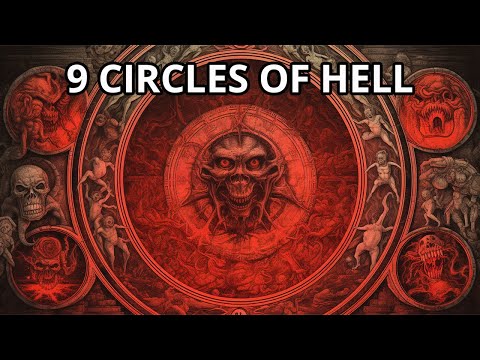
The 9 Circles of Hell: An Investigator's Analysis of Dante's Inferno and the Frozen Prison of Satan


Welcome, initiates, to a deep dive into one of the most enduring allegories of the human soul's potential descent. We are not merely recounting a literary masterpiece; we are dissecting a map of sin, a chilling testament to universal anxieties. Tonight, we open the dossier on Dante Alighieri's Inferno, specifically its chilling depiction of the nine circles of Hell and the ultimate fate of the fallen Lucifer, imprisoned in an infernal, frozen abyss. This is not a casual read; this is an analysis of archetypal punishment and the enduring power of myth.

Dante's Divine Comedy, a tripartite journey through the afterlife, serves as the foundational text. While Purgatorio and Paradiso offer paths to redemption and divine grace, it is Inferno that has captured the collective imagination, a stark visualization of consequence. Guided by the pragmatic intellect of Virgil, the Roman poet who himself never knew the Christ, Dante navigates a descent where each level punishes a specific category of sin, escalating in severity. My task is to strip away the poetic veneer and analyze the underlying psychological, symbolic, and perhaps even occult implications of this architectural hellscape.

The First Circle: Limbo – The Unbaptized Virtuous

The journey commences in Limbo, a realm not of active torment, but of passive, eternal longing. Here reside the souls of the virtuous pagans and the unbaptized – figures like Homer, Aristotle, and Julius Caesar. They committed no sin that warranted damnation, yet their lack of baptism, a sacrament of entry into the divine covenant, bars them from the Beatific Vision. This raises immediate questions about divine justice and the arbitrary nature of salvation. Is it truly just to condemn souls for the absence of a rite they could not have known? From an investigative standpoint, Limbo represents the eternal 'what if' – the potentials unrealized, the knowledge unshared, forever separated from their ultimate source. It’s a philosophical dead end, a suspended animation of the spirit.

The Second Circle: Lust – The Winds of Uncontrollable Desire

As we descend, the punishments become palpable. The lustful, whose earthly desires swept them away like a storm, are now themselves eternally swept by a violent, ceaseless storm. Figures like Cleopatra and Helen of Troy are tossed about, their sin mirrored in their torment. This is a visceral representation of being a slave to one's own impulses. The whirlwind symbolizes the chaotic, unbridled nature of unchecked passion, a force that can tear a life apart. For the investigator, this circle highlights the psychological principle of karmic retribution: the sin becomes the instrument of the punishment. Understanding this dynamic is crucial when analyzing patterns of behavior that lead to self-destruction, even on a spiritual plane.

The Third Circle: Gluttony – The Filth and Mire of Excess

Here, the denizens lie in putrid slush, battered by icy rain and tormented by putrid hail, never able to satisfy their insatiable hunger or thirst. Cerberus, the three-headed dog of myth, guards this circle, rending and tearing at the souls. This level directly confronts us with the consequences of overindulgence, the way the pursuit of fleeting sensory pleasure can lead to endless degradation. The imagery is deliberately repulsive, designed to evoke disgust. It’s a stark reminder that unchecked appetites, whether for food, drink, or sensation, can mire us in a truly abominable state, far from any form of spiritual fulfillment.

The Fourth Circle: Greed – The Endless Burden of Hoarding and Spending

The hoarders and the spendthrifts are condemned to an eternally futile labor: pushing immense weights against each other, colliding endlessly. They are enemies of Fortune, forever locked in a cycle of acquisition and squandering. This punishment is a metaphor for their inability to find balance in their earthly lives, their fixation on material wealth or its profligate dissipation. The sheer, pointless exertion speaks to the soul-crushing nature of avarice and its opposite, reckless prodigality. Imagine the sheer, crushing weight of accumulated regrets, the Sisyphean task of undoing past excesses. It’s a powerful, if bleak, commentary on our relationship with resources.

The Fifth Circle: Wrath and Sullenness – The Styx and the Swamp

This is where divine judgment begins to manifest in water and mud. The wrathful tear at each other in the muddy waters of the River Styx, their fury a physical, palpable force. Below the surface lie the sullen, the melancholic, whose anger festered inward, now submerged in the black mire, their sorrow a silent, suffocating torment. Dante’s encounter with Filippo Argenti, a notorious political rival, highlights the personal, often venomous, nature of wrath. This level forces us to confront the destructive power of both active rage and passive despair. The Styx, in many ancient mythologies, is a boundary, and here it is a barrier of unreleased emotional toxicity.

The Sixth Circle: Heresy – The Fiery Tombs of Doubt

Here, the architects of disbelief, those who denied the soul's immortality, are entombed in burning sepulchers. The flames represent the eternal burning of their heretical ideas, which they themselves now suffer. This circle directly addresses the theological and philosophical challenges to divine truth. From an investigator's perspective, it's fascinating to consider how deep-seated beliefs, even those perceived as errant, can shape eternal reality within this allegorical framework. It speaks to the power of conviction, for good or ill. The eternal heat suggests that the 'fire' of doubt can consume just as powerfully as any physical torment.

The Seventh Circle: Violence – Against Neighbors, Selves, and God

The seventh circle is a complex, multi-layered torment for the violent. Those violent against their neighbors are immersed in boiling blood. The suicides are transformed into thorny trees, tormented by Harpies. And those violent against God – blasphemers, sodomites, and usurers – are subjected to a barren desert under a rain of fire. The inclusion of Brunetto Latini, Dante's former mentor, among the sodomites adds a deeply personal and poignant layer, underscoring that no personal connection exempts one from the universal laws of this infernal hierarchy. This circle is a stark portrayal of how destructive impulses, directed outward, inward, or upward, lead to a state of profound suffering and degradation.

The Eighth Circle: Fraud – The Ten Bolgias of Deception

Known as Malebolge, this circle is a vast, stony expanse divided into ten concentric ditches (bolgias), each housing a different type of fraud. Seducers are whipped; flatterers are submerged in excrement; simoniacs are buried headfirst, feet ablaze; sorcerers are contorted; corrupt politicians are immersed in boiling pitch; hypocrites wear leaden robes; thieves are tormented by serpents, leading to grotesque transformations; fraudulent counselors are engulfed in flame; sowers of discord are hacked apart; and falsifiers of all types are afflicted with loathsome diseases. The sheer variety and ingenuity of the punishments for fraud are staggering, emphasizing its pervasiveness and the multifaceted nature of deception.

The Ninth Circle: Treachery – The Icy Depths and Satan's Frozen Despair

The final circle is a vast, frozen lake, Cocytus, where the ultimate sinners – the treacherous – are encased in ice. The degrees of punishment vary based on the type of treachery: against kin, against country, against guests, and against their lords. At the very center, embedded in the ice and weeping tears that freeze around her eyes, is Lucifer himself. He is depicted as a monstrous, three-headed giant, each mouth chewing on a supreme traitor: Brutus, Cassius (betrayers of Caesar), and Judas Iscariot (betrayer of Christ). His wings, beating in a futile attempt to escape, generate the freezing winds that form the lake. The ultimate punishment for the greatest of sins is absolute immobility, utter despair, and isolation in a realm of perpetual cold. This frozen lake is the antithesis of divine love and warmth; it is the ultimate manifestation of spiritual deadness and helplessness. For the investigator, Satan’s fate is the ultimate case study in the fall from grace, a symbol of absolute power reduced to absolute impotence.

"The image of Satan trapped in the ice is not merely a literary device; it resonates with primal fears of paralysis and isolation, representing a state of being so devoid of love or warmth that it freezes the very soul."

Investigator's Verdict: Allegory, Metaphor, or Echo of Ancient Terrors?

Dante's Inferno is, without question, a literary marvel, a profound exploration of morality, theology, and the human psyche. The nine circles serve as a meticulously constructed allegorical framework for understanding sin and its consequences. However, as investigators of the unexplained, we must ask: is this merely a poetic construct, or does it tap into something more primordial? The consistent depiction of hellish realms across diverse cultures and historical periods suggests that these narratives may echo a fundamental human understanding of ultimate punishment and spiritual peril.

The frozen lake holding Satan is particularly compelling. While many popular depictions imagine hell as fiery, the concept of eternal cold and isolation as the ultimate torment is potent. It aligns with certain esoteric traditions that view the absence of divine light and love as the true nature of spiritual darkness. Whether Dante drew from obscure texts or tapped into a collective unconscious dread, the imagery of Satan, the once-brightest angel, reduced to a frozen, powerless entity, is a chillingly effective symbol of absolute spiritual desolation. My analysis suggests that while Inferno is a work of fiction, its enduring power lies in its ability to articulate, through vivid metaphor, the terrifying consequences that many believe await those who stray too far from the path of righteousness.

The Investigator's Archive

To fully grasp the impact and context of Dante's work, and to explore similar thematic investigations into the nature of punishment and the afterlife, I recommend the following resources:

  • Books:
    • The Divine Comedy by Dante Alighieri (various translations available; the Penguin Classics edition is often recommended for its scholarly notes).
    • The Occult Philosophy of the Renaissance by Frances Yates (for understanding the intellectual and magical currents of Dante's era).
    • The Golden Bough by James George Frazer (a comparative study of mythology and religion that touches on underworld traditions).
  • Documentaries/Films:
    • "Hell: The Devil's Domain" on Discovery+ or similar historical documentary channels.
    • "Dante's Inferno: The Animated Epic" (a visual interpretation that can aid in conceptualization).
  • Websites:
    • Reputable academic sites offering analyses of medieval literature and theology.
    • Libraries and archives dedicated to rare manuscripts and theological studies.

Protocol: Analyzing Archetypal Punishment

When examining allegorical realms like Dante's Inferno, consider these steps:

  1. Identify the Sin: Clearly define the specific human failing or vice being punished in each circle.
  2. Analyze the Punishment: Deconstruct the torment. How does it directly mirror or symbolically represent the sin? What are the sensory and psychological aspects of the punishment?
  3. Examine the Symbolism: What do the landscape, the creatures, and the actions represent at a deeper level? Consider classical mythology, religious symbolism, and psychological archetypes.
  4. Contextualize Historically: Research the theological, philosophical, and social context of the work. What were the prevailing beliefs about sin, judgment, and the afterlife during that period?
  5. Look for Parallels: Compare the allegorical structure and punishments with similar concepts in other mythologies, religions, or occult traditions. Are there common threads in humanity's conception of ultimate consequence?
  6. Assess Psychological Resonance: Why does this depiction remain so potent? What primal fears or moral concepts does it tap into within the human psyche?

Frequently Asked Questions

Is Dante's Inferno meant to be a literal description of Hell?

Scholars generally interpret the Divine Comedy as a profound allegory. While it describes a journey through the afterlife, its primary purpose is to explore themes of sin, redemption, divine justice, and the human condition through vivid imagery and narrative. It's a spiritual and moral landscape more than a geographical one.

How does Satan's imprisonment in ice relate to his being a fallen angel?

The ice symbolizes ultimate spiritual coldness, the complete absence of divine love and warmth, which is the antithesis of Satan's former glory as Lucifer, the light-bearer. It represents his complete isolation, impotence, and the frozen state of his being, devoid of the fiery passion or ambition that once characterized him. It is the ultimate state of spiritual death.

Are there similar concepts of frozen hells in other mythologies?

While fire is a more common element in depictions of hell, the concept of a frigid underworld or place of punishment exists in some mythologies. For example, Norse mythology features Niflheim, a realm of primordial ice and mist. Some interpretations suggest that the ultimate state of separation from the divine could be conceived as a chilling void rather than a fiery inferno.

What is the significance of Virgil as Dante's guide?

Virgil represents reason and classical wisdom. Because he lived before Christ, he could guide Dante through Inferno and Purgatorio, realms governed by earthly morals and justice. However, reason alone cannot lead to divine understanding, which is why Beatrice, representing divine revelation and theology, takes over in Paradiso.

Dante's Inferno remains a stark and powerful exploration of the consequences of sin, a chilling blueprint of the soul's potential descent. The journey through these nine circles, culminating in the frozen despair of Satan, serves as a powerful reminder of the gravity of our choices. It’s a testament to how symbolic landscapes can illuminate the deepest recesses of the human psyche and its moral quandaries.

Your Mission: Deconstruct a Modern Myth

While Dante's work is an ancient text, the human tendency to conceptualize realms of punishment and consequence persists. Your mission: identify a modern "hellscape" depicted in popular culture (a film, a video game, a novel) that mirrors or contrasts with Dante's structure. Analyze its sins, punishments, and symbolism. Does it reflect similar archetypal fears, or does it reinterpret them for a contemporary audience? Document your findings and share them in the comments below. Let's see if the architecture of damnation has evolved, or if its core elements remain terrifyingly constant.

About the Author

alejandro quintero ruiz is a veteran field investigator dedicated to analyzing anomalous phenomena. His approach combines methodological skepticism with an open mind to the inexplicable, always seeking the truth behind the veil of reality. With years of experience navigating the fringes of the known, his work aims to demystify the mysterious through rigorous analysis.

The Necronomicon: A Deep Dive into Lovecraft's Forbidden Tome


The Whispers of Abdul Alhazred

The name echoes in darkened rooms and hushed libraries: Necronomicon. It is a word that conjures images of forbidden knowledge, sanity-shattering truths, and cosmic horrors lurking beyond the veil of our perceived reality. For decades, this legendary grimoire has been the cornerstone of H.P. Lovecraft's Cthulhu Mythos, a testament to the author's unparalleled ability to weave tales of dread. But what is the true nature of this infamous book? Is it a mere literary device, a figment of imagination, or does it hold within its spectral pages a kernel of terrifying reality?

Our mission today is not to recount ghost stories, but to meticulously dissect the origins, contents, and enduring influence of the Necronomicon. We will approach this subject with the same rigor we apply to any anomaly, separating the elaborate fiction from the potential truths that lie buried beneath the layers of myth. Prepare yourself; we are about to open a door that many believe should remain forever sealed.

Myth, Magic, and Madness: The Genesis of the Necronomicon

The Necronomicon, or more accurately, Kitab al-Azif (The Book of the Beast), is attributed to the "mad Arab," Abdul Alhazred. Lovecraft first introduced this tome in his 1924 story "The Hound." Its supposed author, Alhazred, was a figure steeped in lore, a poet and sorcerer from Sanaá, Yemen, who lived during the Umayyad dynasty (7th-8th century AD). His manuscript, written in Arabic, was later translated into other languages, including Greek and Latin, diminishing its potency with each translation and excision of essential passages. The original Arabic text, we are told, is lost to time.

The very act of creating such a text speaks volumes about Lovecraft's genius. He didn't just invent a book; he created an entire literary eco-system around it. The Necronomicon became a recurring motif, a shadow puppeteer in his pantheon of cosmic horrors. This careful construction of an intertextual mythology lends an air of authenticity, making the reader question the boundaries between fiction and a hidden, arcane history. It's a masterclass in psychological manipulation, embedding a fictional artifact so deeply into a narrative that it begins to feel real.

The creation of Alhazred and his book is a prime example of how a compelling myth can take root. Lovecraft understood that the fear of the unknown is often more potent than the known. By hinting at the Necronomicon's existence, its dangerous contents, and its lost nature, he tapped into a primal human curiosity for forbidden knowledge. This psychological resonance is the bedrock upon which the Necronomicon mythos stands, far more than any purported factual basis.

For those seeking to understand modern occultism and its literary manifestations, the Necronomicon is a critical case study. It exemplifies how fictional creations can profoundly influence real-world beliefs and practices. The book's impact is a testament to the power of storytelling and the human predisposition to seek out the arcane, even when it resides solely within the pages of a novel.

The Necronomicon is not just a prop in Lovecraft's stories; it is a character in its own right, a nexus of dread. Its perceived power stems from its supposed ability to reveal the true, terrifying nature of the cosmos. Alhazred's supposed madness is often presented as a consequence of this unveiling, a cautionary tale for any who dare to look too deeply into the abyss. This narrative framing is crucial: the text is dangerous not just because of its contents, but because of the mental toll it exacts.

The influence of the Necronomicon extends far beyond Lovecraft's own writings. It has been referenced, parodied, and even replicated in various forms by authors, filmmakers, and occultists. This widespread adoption speaks to its power as an archetype of forbidden knowledge. Its existence, though fictional, has spawned a sub-genre of literature and a fascination with ancient, dangerous texts. The line between Lovecraft's imagination and the perceived reality of the Necronomicon has become blurred for many, a testament to its success as a narrative construct.

Understanding the genesis of the Necronomicon requires us to delve into the mind of Lovecraft himself. He was a voracious reader, particularly of folklore, ancient history, and occult texts. His creations often drew inspiration from these sources, twisting them into his unique brand of cosmic horror. The Necronomicon is a sophisticated amalgamation of these influences, a literary chimera designed to unsettle and intrigue.

To truly grasp the Necronomicon's impact, one must consider its place within the broader context of occult literature. While many grimoires claim ancient origins and potent spells, the Necronomicon stands apart due to its sheer fictionality, artfully presented as fact within its narrative universe. This meta-fictional approach is what makes it so fascinating to researchers and enthusiasts alike. It challenges our perception of reality and the power of narrative.

The historical context of the early 20th century, a period marked by rapid scientific advancement and burgeoning interest in spiritualism and the occult, provides fertile ground for the Necronomicon's rise. Lovecraft tapped into this zeitgeist, offering a vision of cosmic horror that transcended traditional religious or supernatural explanations, presenting a universe indifferent and terrifyingly vast.

"The oldest and strongest emotion of mankind is fear, and the oldest and strongest kind of fear is fear of the unknown." - H.P. Lovecraft

A Glimpse into the Forbidden Pages

The purported contents of the Necronomicon are as varied as they are terrifying. Lovecraft himself offered scattered descriptions, hinting at texts detailing the history of the Elder Gods, the Old Ones, and their cosmic struggle. It is said to contain rituals for summoning these entities, incantations to ward off their influence, and historical accounts of their impact on Earth. Some passages allegedly describe the geography of forbidden dimensions and the secrets of life and death.

Within its pages are said to lie the incantations that could awaken Cthulhu from his slumber in R'lyeh, the descriptions of alien cities, and the chilling genealogies of cosmic entities. These are not mere spells for personal gain but keys to unlocking the fundamental, horrifying truths of existence. The book is not just a collection of spells; it is a philosophical treatise on the insignificance of humanity in the face of primordial forces.

The Necronomicon is also rumored to include detailed accounts of horrific rituals, often involving human sacrifice and the manipulation of cosmic energies. These descriptions serve to reinforce its status as a forbidden text, one that corrupts the soul and drives the reader to madness. The very act of reading these passages is depicted as a dangerous undertaking, a step closer to the abyss.

Lovecraft's descriptions suggest that the Necronomicon is not a static entity but a living, evolving text. Different editions and translations are mentioned, each with its own unique horrors and corruptions. This concept of a mutable grimoire adds another layer of mystique, suggesting that its influence can adapt and spread, making it an eternal threat.

The book's power is often described as being tied to its blasphemous truths. It doesn't just contain spells; it reveals the underlying, chaotic architecture of the universe, a vision that is profoundly disturbing to the human mind, which craves order and meaning. This existential dread is the true horror of the Necronomicon.

A critical aspect of its supposed content is the "Azif," the original Arabic manuscript by Alhazred. This text is believed to be the foundation upon which all subsequent versions of the Necronomicon were built. Its lost nature only enhances its mystique, allowing for endless speculation about its true contents and power.

The influence of the Necronomicon on subsequent occult literature is significant. Authors attempting to mimic Lovecraft's style often incorporate their own versions of the grimoire, contributing to a complex web of fictional and pseudo-historical texts that continue to fascinate readers. It has become a blank slate onto which new horrors can be projected.

The distinction between Lovecraft's original concept and later interpretations is vital for any serious investigation. While Lovecraft provided the blueprint, subsequent authors and creators have expanded upon it, sometimes deviating significantly from his original vision. This evolution is part of the Necronomicon's enduring legacy.

"It was a blasphemous and soul-destroying book, and the mere fact that I had dared to open it, to read its pages, was enough to make me a creature of the night." - H.P. Lovecraft (paraphrased from various tales)

The Necronomicon's Shadow: Occultism, Literature, and Film

The Necronomicon's impact transcends the pages of Lovecraft's stories, casting a long shadow over occultism, literature, and popular culture. In the realm of occultism, it has been adopted by various groups and individuals as a genuine artifact, a source of forbidden wisdom. While Lovecraft conceived it as fiction, its intricate details and supposed historical context have led some to believe in its tangible existence, prompting attempts to locate or even recreate versions of the book.

Numerous occult authors and practitioners have cited or incorporated the Necronomicon into their work, often presenting their own unique interpretations and versions of the grimoire. This has led to a proliferation of "Necronomicons" on the market, ranging from serious attempts to capture Lovecraft's intent to outright hoaxes. The line between respectful homage and exploitative commercialism is often blurred.

In literature, the Necronomicon has become a potent literary trope, symbolizing ultimate forbidden knowledge. Its presence in a story immediately signals themes of cosmic horror, madness, and the dangers of unchecked curiosity. Authors often use it as a device to drive their plots, introducing elements of the supernatural and the unknowable.

Filmmakers and game developers have also capitalized on the Necronomicon's mystique. From explicit adaptations to subtle references, the book has appeared in countless movies, television shows, and video games. Its visual representation, often depicted as a heavy, ancient tome bound in strange materials and bearing unsettling symbols, has become iconic.

The popularization of the Necronomicon through these various media has cemented its status as a cultural phenomenon. It has transcended its literary origins to become a recognized symbol of the occult and the forbidden, fueling public fascination with Lovecraft's universe and the darker aspects of human imagination.

The influence is so pervasive that it's easy to forget its fictional roots. This is a testament to Lovecraft's narrative skill and the collective human desire to believe in something beyond the mundane. The Necronomicon serves as a powerful reminder that sometimes, the most terrifying truths are those we create ourselves.

The commercial aspect of the Necronomicon cannot be ignored. Numerous books claiming to be the "real" Necronomicon have been published, often attributed to authors like Simon or Rak. These commercial ventures, while often drawing inspiration from Lovecraft, diverge significantly from his original concept, presenting a more traditional occult grimoire rather than Lovecraft's cosmic horror artifact. Investigating these claims requires a firm understanding of Lovecraft's original intent and a healthy dose of skepticism.

The enduring appeal of the Necronomicon lies in its ambiguity. Is it a real book of spells, a purely fictional device, or something in between? This question continues to fuel debate and inspire new interpretations, ensuring that the Necronomicon's shadow will continue to loom large over the landscape of the strange and unexplained.

Investigator's Verdict: Fact, Fiction, or Eldritch Truth?

As an investigator of the anomalous, my approach to artifacts like the Necronomicon is rooted in rigorous analysis and a healthy skepticism. Let's be clear: the Necronomicon, as described by H.P. Lovecraft, is a literary creation. There is no verifiable historical record, archaeological finding, or authenticated manuscript that points to the existence of Abdul Alhazred or his infamous tome as anything other than a brilliant fictional device.

The overwhelming weight of evidence – or rather, the distinct lack thereof – points towards the Necronomicon being a cornerstone of Lovecraft's fictional universe, the Cthulhu Mythos. Its purpose was to lend an air of antiquity and dread to his tales, acting as a narrative engine that powered his explorations of cosmic horror and forbidden knowledge. The intricate details surrounding its creation, its supposed translations, and its terrifying contents are all products of Lovecraft's prodigious imagination.

However, to dismiss the Necronomicon entirely would be to misunderstand its true impact. While it may not exist as a physical book of eldritch spells, its influence is undeniably real. It has shaped modern occult literature, inspired countless creative works, and continues to captivate the imaginations of those drawn to the mysterious and the forbidden. In this sense, the Necronomicon *exists* as a powerful cultural and psychological phenomenon.

The "real" Necronomicons that flood the market are, for the most part, modern occult texts that have adopted the name and the mystique pioneered by Lovecraft. These books often contain genuinely interesting magical or ritualistic material, but they are distinct from the specific artifact Lovecraft envisioned. It is crucial for any researcher to differentiate between Lovecraft's fictional tome and these later interpretations, which, while potentially valuable in their own right, are not Alhazred's original work.

The enduring legend of the Necronomicon is a testament to Lovecraft's genius in creating a myth that feels ancient and terrifyingly plausible. It taps into our deep-seated fear of the unknown and our insatiable curiosity for secrets that lie beyond our understanding. The true "eldritch truth" here is the power of narrative to create potent, lasting myths that resonate with us on a profound level, blurring the lines between fiction and the perceived edges of reality.

Ultimately, the Necronomicon serves as a perfect case study for understanding how fictional artifacts can gain a life of their own, influencing belief systems and cultural narratives. It highlights the critical role of source analysis and critical thinking when encountering texts that claim extraordinary origins or powers.

While many readers and practitioners engage with "Necronomicon" texts for genuine magical or spiritual pursuits, it's vital to remember its literary origins. The "forbidden knowledge" it allegedly contains is, in essence, the power of Lovecraft's storytelling itself – a power to evoke dread, wonder, and a chilling sense of humanity's insignificance in a vast, indifferent cosmos.

The Investigator's Archive

To delve deeper into the lore and influence of the Necronomicon and the Lovecraftian mythos, consult these essential resources:

  • Books:
    • The Necronomicon: The Legend and the Myth by various authors. (Note: Numerous interpretations exist; research specific editions and their origins.)
    • The Annotated H.P. Lovecraft: Tales of the Cthulhu Mythos edited by S.T. Joshi. This collection provides critical essays and context for Lovecraft's works, including the genesis of the Necronomicon.
    • H.P. Lovecraft: Complete and Unabridged Collection. Essential for understanding the breadth of Lovecraft's imaginary world and the recurring role of the Necronomicon.
  • Documentaries/Media:
    • Documentaries exploring the works of H.P. Lovecraft and the Cthulhu Mythos. (Search platforms like YouTube, Amazon Prime, or Gaia for titles like "Lovecraft: Fear of the Unknown" or analyses of specific film adaptations.)
    • Film Adaptations: While not direct depictions of the book, films like "Evil Dead" feature a "Necronomicon Ex-Mortis," showcasing how the concept has been reinterpreted. Analyze these adaptations critically for their narrative choices and thematic resonance.
  • Online Resources:
    • The H.P. Lovecraft Literary Podcast: For in-depth discussions and analyses of Lovecraft's stories and mythos.
    • Wikipedia: The entry on "Necronomicon" and "Cthulhu Mythos" offers extensive background and bibliography.

Accessing these materials is a crucial step in forming an informed opinion, moving beyond mere speculation to grounded analysis. Remember, understanding the source material is paramount.

Protocol: How to Approach Forbidden Texts

The allure of forbidden knowledge, epitomized by the Necronomicon, presents a unique challenge for the investigator. Whether dealing with ancient grimoires, classified documents, or even highly speculative theories, a disciplined approach is paramount. Here is a protocol designed to navigate such terrains:

  1. Source Verification: The absolute first step. Determine the origin of the text or information. Is it a known literary creation (like Lovecraft's Necronomicon)? Is it a historical document with verifiable provenance? Or is it a modern claim with unsubstantiated origins? Rigorous source analysis is non-negotiable.
  2. Contextual Analysis: Understand the historical, cultural, and authorial context in which the text was created. Lovecraft's Necronomicon, for instance, is deeply embedded in his personal mythology and worldview from the early 20th century. Ignoring this context leads to misinterpretation.
  3. Internal Consistency: Examine the text for internal logic and consistency. Do its claims align with its own narrative framework? Are there contradictions within the text itself? This is crucial for identifying potential flaws or deliberate obfuscations.
  4. External Corroboration: Whenever possible, seek corroborating evidence from independent sources. For genuine historical or scientific claims, this means cross-referencing with established research. For mythical artifacts, it means examining how the myth has evolved and who has contributed to it.
  5. Psychological Impact Assessment: Analyze the intended or perceived psychological effect of the text. Does it aim to inspire fear, awe, devotion, or madness? Understanding this helps in deciphering its purpose and potential influence, whether fictional or real.
  6. Distinguish Fiction from Phenomenon: Critically differentiate what is presented as narrative fiction from what might be interpreted as a report of an anomalous phenomenon. Lovecraft used the Necronomicon to *tell stories* about cosmic horrors, not necessarily to document their empirical existence.
  7. Ethical Considerations: When dealing with texts that claim to possess potent or harmful knowledge, always consider the ethical implications. Is the information being presented responsibly? Could it incite harm or dangerous practices?

Applying this protocol to the Necronomicon mythos allows us to appreciate Lovecraft's literary achievement while remaining grounded in critical analysis, rather than succumbing to the allure of unsubstantiated claims.

Frequently Asked Questions

Can I buy a real copy of the Necronomicon?

The Necronomicon as described by H.P. Lovecraft is a fictional artifact and does not exist as a single, verifiable ancient tome. Many books sold as "Necronomicons" are modern interpretations or occult texts that have adopted the name. It's important to research the origins of any such book; most are commercial products inspired by Lovecraft's work.

What is the Necronomicon made of?

In Lovecraft's stories, the Necronomicon is often described as being bound in human skin and written in blood. However, since it is a fictional object, these descriptions are part of the narrative's horror aesthetic rather than factual specifications.

Who was Abdul Alhazred?

Abdul Alhazred is a fictional character created by H.P. Lovecraft. He is presented as the "mad Arab" author of the Necronomicon (originally titled Kitab al-Azif). There is no historical evidence of his existence outside of Lovecraft's stories.

Is the Necronomicon dangerous?

In Lovecraft's fiction, reading or possessing the Necronomicon is portrayed as extremely dangerous, often leading to madness, death, or the awakening of cosmic entities. This narrative function emphasizes the theme of forbidden knowledge and its perilous consequences. In reality, the danger lies not in the book itself (as it's fictional), but in the potential for unsubstantiated beliefs or dangerous rituals inspired by its myth to influence vulnerable individuals.

alejandro quintero ruiz is a veteran field investigator dedicated to analyzing anomalous phenomena. His approach combines methodological skepticism with an open mind to the inexplicable, always seeking the truth behind the veil of reality. With years of experience documenting and dissecting cases across the globe, he brings a hard-won perspective to the unexplained.

The legend of the Necronomicon stands as a potent testament to the power of human imagination and its capacity to craft myths that resonate deeply within our collective consciousness. While the tangible book may remain elusive, its influence on literature, occultism, and our understanding of cosmic dread is undeniable. Lovecraft’s creation serves as a powerful reminder that some doors, once opened, can never truly be closed, their shadows forever stretching across our perceived reality.

Your Mission: Analyze the Mythos

Now, the floor is yours. Consider the enduring fascination with forbidden texts. What is it about the idea of the Necronomicon that appeals to us so profoundly? In light of this analysis, do you believe the mythos of the Necronomicon distracts from or enhances the study of genuine occult traditions? Share your theories and your own "forbidden texts" of interest in the comments below. Let's continue this line of inquiry and see what truths we can unearth together.