Followers

Mostrando las entradas con la etiqueta Michael Cremo. Mostrar todas las entradas

Ancient Astronaut Sightings: June 1995 Debrief

Image

The June 1995 episode of "Sightings: Ancient Astronauts" brought together a remarkable panel of experts – host Tim White, alongside luminaries like Gene Phillips, Zechariah Sitchin, Michael Cremo, and Virginia Steen-McIntyre – to dissect persistent mysteries surrounding extraterrestrial visitation in Earth's ancient past. This wasn't just a casual discussion; it was a deep dive into evidence that, for decades, has fueled debate and speculation across the globe. While mainstream archaeology often dismisses such theories, the persistence of these claims demands rigorous investigation, moving beyond mere folklore to examine the potential underlying truths.

Introduction: The Panel of Experts

The "Sightings" program, particularly its June 1995 broadcast, represented a significant moment in popular discourse on ancient astronauts. Host Tim White cultivated an environment where controversial theories could be presented and debated by individuals at the forefront of their respective fields. The lineup itself was a strategic compilation: Gene Phillips, a seasoned ufologist; Zechariah Sitchin, whose controversial yet influential work on the Annunaki shaped modern ancient astronaut theories; Michael Cremo, known for his meticulous research into "forbidden archaeology"; and Virginia Steen-McIntyre, a geologist whose work often intersected with anomalous findings. Their collective presence signaled an intent to move beyond sensationalism and engage with the actual evidence, however unconventional.

Zechariah Sitchin's Annunaki Hypothesis

At the heart of many ancient astronaut discussions lies the work of Zechariah Sitchin. His central thesis, popularized through his "Earth Chronicles" series, posits that humanity's origins are tied to a race of beings from a hypothetical planet in our solar system, Nibiru, known as the Annunaki. According to Sitchin's interpretation of ancient Sumerian texts, these beings visited Earth millennia ago, genetically engineered humans, and were responsible for the rise of early civilizations, particularly in Mesopotamia. He claimed they established cities and infrastructure, influencing everything from religion to metallurgy. While mainstream academia largely dismisses Sitchin's linguistic and archaeological interpretations as speculative fiction, his ideas have resonated deeply, offering an alternative narrative to established human history. The enduring appeal of the Annunaki hypothesis lies in its attempt to explain the sudden leaps in civilization and the seemingly advanced knowledge of ancient cultures as being of extraterrestrial origin. Online forums and communities dedicated to ancient astronaut theories frequently dissect Sitchin's claims, debating the validity of his translations and the existence of Nibiru. This persistent interest highlights a public hunger for explanations that challenge conventional historical timelines.

Recommended Gear for Investigation

ProductDescriptionBuy
Forbidden Archeology: The Hidden History of the Human RaceAn excellent choice to complement your research on this topic.View on Amazon
The Big Book of Paranormal: 300 Mystical and Frightening Tales From Around the WorldAn excellent choice to complement your research on this topic.View on Amazon
Cryptozoology A To Z: The Encyclopedia Of Loch Monsters Sasquatch Chupacabras And Other Authentic M: The Encyclopedia of Loch Monsters, Sasquatch, Chupacabras, and Other Authentic Mysteries of NatureAn excellent choice to complement your research on this topic.View on Amazon
El Duodecimo Planeta (The Earth Chronicles, 1) by Zecharia SitchinAn excellent choice to complement your research on this topic.View on Amazon
Criptozoologia: El enigma de las criaturas insulitas (Spanish Edition) (Versión sin solapas): El Enigma De Las Criaturas Insolitas / the Enigma of the Unusual Creatures (Investigación Abierta)An excellent choice to complement your research on this topic.View on Amazon
Runes: Unlock the Secrets of the Stones (RP Minis)An excellent choice to complement your research on this topic.View on Amazon
The H. P. Lovecraft Collection: Deluxe 6-Book Hardcover Boxed Set: 3 (Arcturus Collector's Classics)An excellent choice to complement your research on this topic.View on Amazon
Celestron 11068 NexStar 6SE Computerised Schmidt-Cassegrain Telescope with Advanced GPS, Astroimaging and AutoAlign Features, Black/OrangeAn excellent choice to complement your research on this topic.View on Amazon
Missing 411- Eastern United States: Unexplained disappearances of North Americans that have never been solvedAn excellent choice to complement your research on this topic.View on Amazon
Ghost-Hunting For Dummies [Idioma Inglés] An excellent choice to complement your research on this topic.View on Amazon

Michael Cremo & Virginia Steen-McIntyre: Anomalous Artifacts

Michael Cremo, often dubbed the "father of forbidden archaeology," and geologist Virginia Steen-McIntyre brought a different, yet complementary, perspective to the "Sightings" discussion. Cremo's work focuses on meticulously cataloging evidence of advanced human presence in the geological past—artifacts found in deep geological strata that seemingly predate accepted timelines for human evolution. Examples include tools, pottery, and even human fossils found in contexts that suggest millions of years of age, directly contradicting established evolutionary models and archaeological records. Steen-McIntyre's own geological dating work, particularly on alleged prehistoric human footprints, has sometimes produced results that are difficult to reconcile with conventional timelines, sparking debate and further investigation into the possibility of advanced civilizations existing far earlier than commonly believed. Their contribution to the panel underscored the idea that our understanding of history might be incomplete or fundamentally flawed, suggesting that conventional archaeological methods may be overlooking or dismissing evidence that points to a much longer and more complex human past, potentially influenced or even seeded by external forces.

Gene Phillips and the UFO Connection

Gene Phillips, a figure with extensive experience in the field of ufology, provided the crucial link between ancient mysteries and modern unexplained aerial phenomena. His role on the panel was to connect the dots between historical accounts of sky-borne visitors and the numerous UFO sightings reported throughout the 20th century and beyond. Phillips likely discussed how recurring motifs in ancient myths and artworks—such as winged discs, figures in helmets or suits, and descriptions of celestial chariots—could be interpreted as records of ancient encounters with extraterrestrial craft or beings. This perspectiva suggests that the "ancient astronauts" were not merely isolated historical figures but part of a continuous pattern of interaction that persists to this day. His insights often explore the possibility that ancient civilizations were not just influenced by aliens, but were actively interacting with them, perhaps even receiving technological or cultural guidance. The presence of Phillips on the panel reinforced the notion that the ancient astronaut phenomenon is not a closed chapter of history, but an ongoing mystery intertwined with contemporary UFO reports.

Tim White's Investigative Approach

As the host, Tim White played a pivotal role in guiding the conversation and framing the debate. His approach on "Sightings" was characterized by a genuine curiosity and a commitment to exploring unconventional topics without immediate dismissal. White was adept at eliciting detailed information from his guests, pushing them to elaborate on their evidence and theories. He often acted as a proxy for the audience, asking the questions that many viewers would be pondering. His ability to synthesize complex information and present it in an accessible manner was key to the show's enduring popularity. White didn't necessarily endorse every theory presented but ensured that the evidence, arguments, and counter-arguments were laid bare for the viewer to consider. This balanced approach allowed "Sightings" to maintain credibility while still venturing into the most speculative corners of paranormal and historical inquiry. His hosting style exemplifies a pragmatic yet open-minded investigative technique, essential when tackling subjects where definitive proof remains elusive.

Investigator's Verdict: Reinterpreting the Past

The June 1995 episode of "Sightings" served as a compelling, albeit controversial, case for ancient astronaut visitation. The confluence of Sitchin's linguistic interpretations, Cremo and Steen-McIntyre's archaeological anomalies, and Phillips' ufological connections paints a picture that challenges conventional history. While mainstream science demands rigorous, repeatable evidence—a high bar given the nature of these phenomena—the persistent anomalies and the depth of ancient records hinting at non-human intelligence cannot be entirely dismissed. From my perspective as an investigator, the evidence presented, while largely circumstantial and open to interpretation, points to a critical need for re-evaluation. Are we overlooking vital clues in our ancient past? Could archaeological dogma be stifling potentially groundbreaking discoveries? The possibility of ancient intelligences, whether terrestrial or extraterrestrial, influencing human development remains a potent hypothesis that warrants continued, open-minded investigation. This episode embodies the core of such inquiry: asking fundamental questions about where we came from, and who else might have been involved.

The Investigator's Archive

Resources for delving deeper into the ancient astronaut phenomenon are plentiful, though discerning credible analysis from pure speculation is paramount. For those interested in Zechariah Sitchin's theories, his "Earth Chronicles" series, beginning with "The 12th Planet," offers his foundational arguments. For a counterpoint grounded in archaeology, works by figures like Erich von Däniken, while sensational, also present numerous ancient accounts and artifacts that fuel the debate. On the side of "forbidden archaeology," Michael Cremo's "Forbidden Archeology: The Hidden History of Human Race" provides an extensive compilation of anomalous findings. For ufological perspectives that connect with ancient narratives, works by Jacques Vallee, such as "Passport to Magonia," offer a more academic approach to the UFO question and its historical context. Exploring these texts, alongside critical analysis from mainstream archaeological journals, allows for a well-rounded understanding of the ongoing debate.

Frequently Asked Questions

  1. What is the core argument of the ancient astronaut theory?

    The core argument is that intelligent extraterrestrial beings visited Earth in ancient times and were responsible for many of humanity's cultural, technological, and religious developments. Theorists suggest these beings influenced early civilizations, left behind monumental structures, and are depicted in ancient texts and artwork.

  2. Who were the main figures featured on "Sightings" in June 1995 discussing ancient astronauts?

    The key figures were host Tim White, ufologist Gene Phillips, Annunaki theorist Zechariah Sitchin, and "forbidden archaeology" proponent Michael Cremo and geologist Virginia Steen-McIntyre.

  3. What is Zechariah Sitchin's "Annunaki Hypothesis"?

    Sitchin posited that an advanced alien race from a planet called Nibiru, the Annunaki, visited Earth in ancient times, genetically engineered humans, and influenced the development of early Sumerian civilization. His theories are based on his interpretations of ancient Sumerian texts.

  4. How does "forbidden archaeology" relate to the ancient astronaut theory?

    "Forbidden archaeology," as championed by Michael Cremo, focuses on artifacts and evidence found in geological and archaeological contexts that seem to prove human or technologically advanced activity far earlier than current scientific consensus allows. Proponents argue this evidence suggests a much longer, possibly influenced, human history, which could include ancient astronaut intervention.

  5. Is there scientific consensus on ancient astronaut theories?

    No, there is no scientific consensus supporting ancient astronaut theories. Mainstream archaeology, anthropology, and geology generally explain ancient achievements through human ingenuity and natural processes, often attributing claims of alien influence to misinterpretations, embellishments of myths, or hoaxes.

Your Mission: Analyze the Anomalies

The evidence presented in this 1995 discussion, and much like it today, hinges on interpretation. Your mission, should you choose to accept it, is to critically examine a piece of ancient art, architecture, or a textual reference that is often cited as evidence for ancient astronaut visitation. Research its mainstream archaeological explanation and then compare it with the ancient astronaut interpretation. What evidence supports each view? Where does speculation begin to outweigh verifiable data? Document your findings and share them in the comments below. This rigorous approach is how we move closer to understanding, regardless of the ultimate truth.

Share your thoughts and personal experiences regarding ancient astronaut theories in the comments below. Did any part of this analysis resonate with you? What other historical anomalies intrigue you? Your insights are crucial for our ongoing investigation into the unexplained.

If you found this deep dive into ancient astronaut theories compelling, please share this article across your preferred social media platforms. Help us expand the reach of critical investigation into the mysteries of our past.

Investigator's Note: True paranormal research doesn't fund itself. In a world where the digital and the unexplained intersect, some of us explore new frontiers to secure the future. Do you dare to be part of the vanguard? Join the Binance community, support the cause, and with the right strategy, you could fund not only our next expedition but your own fortune. The next great discovery could be just a click away.

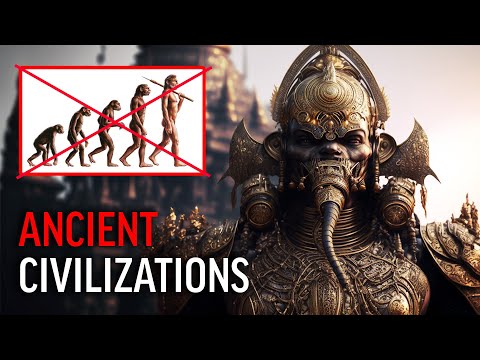
The Vedic Enigma: Unearthing 20 Million Years of Human History in the Indus Valley


alejandro quintero ruiz is a veteran field investigator dedicated to the analysis of anomalous phenomena. His approach combines methodological skepticism with an open mind to the inexplicable, always seeking the truth behind the veil of reality.

I. The Temporal Anomaly: Questioning Origins

The conventional timeline of human civilization, meticulously constructed over centuries, often faces challenges from the fringes of research. We accept a history measured in thousands, perhaps tens of thousands, of years. But what if that framework is fundamentally flawed? What if evidence suggests a human presence stretching back not millennia, but millions of years? This is the unsettling proposition put forth by researchers who delve into the Puranas, the ancient Vedic texts that speak of human history far exceeding our current scientific consensus. Today, we open the dossier on a case that forces us to question everything we thought we knew about our origins, specifically the profound connection between Vedic knowledge and the enigmatic Indus Valley Civilization.

The question of "how long have humans been present on this planet?" is not merely academic. It strikes at the core of our identity and our place in the cosmos. The Vedic civilization, with its intricate philosophical and scientific systems, offers a narrative that dramatically extends this temporal horizon. Could deities, as described in the Vedic Solar Dynasty, have been worshipped as far back as 20 million years ago? This is not a claim to be dismissed lightly. It requires rigorous examination of the evidence, no matter how unconventional it may seem.

This investigation aims to dissect the research of figures like Michael Cremo, whose work on archaeological anomalies, particularly concerning the antiquity of human existence and its potential ties to the Indus Valley Civilization, warrants our critical attention. We will explore the arguments, the evidence, and the implications of a history that refuses to conform to established norms.

II. Michael Cremo: The Archaeologist of the Impossible

Michael Cremo is not your average archaeologist. He is an independent researcher and a leading authority on what he terms "archaeological anomalies"—discoveries that appear to contradict the established timeline of human evolution. His seminal work, "Forbidden Archaeology," co-authored with Richard L. Thompson, presents a staggering compendium of evidence suggesting humans have existed on Earth for tens, and perhaps even hundreds, of millions of years. These are not speculative theories whispered in dark rooms; Cremo's research has been presented at esteemed institutions worldwide, including the Royal Institution of London and the Russian Academy of Science.

His published works, such as "The Forbidden Archaeologist" and "Human Devolution," are not mere collections of anecdotes. They are detailed arguments built upon decades of research into ancient texts, geological strata, and a vast array of archaeological findings. Cremo's rigorous approach, which involves meticulously cataloging and analyzing evidence that mainstream science has often overlooked or dismissed, has earned him both accolades and controversy. He has been a featured guest on prominent platforms like the History Channel's "Ancient Aliens" and Gaia TV's "Ancient Civilizations," bringing his controversial findings to a global audience.

Cremo's investigation into the ancient Sanskrit writings of India, coupled with his archaeological research, points towards a long and deeply mysterious history of human origins, one intertwined with spirituality and potentially, as the title suggests, paleocontact.

Key Works by Michael Cremo:

  • Forbidden Archaeology: Scientific Translations of the Past
  • The Forbidden Archaeologist
  • Human Devolution: Challenging the Establishment on the Origin of Man
  • Forbidden Archaeology's Impact
  • The Hidden History of the Human Race (co-authored with Richard Thompson)

His website, mcremo.com, serves as a central hub for his research, publications, and upcoming presentations. To truly grasp the depth of his findings, engaging with his body of work is essential. These books are invaluable for any serious investigator seeking to challenge conventional narratives.

III. Vedic Design in the Indus Valley: A Paradigm Shift?

The Indus Valley Civilization, flourishing around 2500-1900 BCE, is renowned for its sophisticated urban planning, advanced sanitation systems, and enigmatic script. But what if its origins and influences run far deeper than commonly accepted? Michael Cremo suggests that evidence of Vedic design might be present at Indus Valley sites, hinting at a continuity of culture and knowledge that transcends conventional historical boundaries.

The Puranas, a vast collection of ancient Indian scriptures, recount genealogies and historical accounts that extend human history back millions of years. They describe sophisticated societies, advanced technologies, and spiritual lineages far older than believed possible. If these texts are taken as historical records, they imply a civilization with profound understanding, a civilization that could have laid the groundwork for or significantly influenced later cultures like the Indus Valley.

"The Puranas are not just myths; they are ancient historical records that speak of human civilization existing for millions of years, a concept far removed from the evolutionary timeline currently taught in academia." - Paraphrased from research concerning Vedic texts.

The implication of Vedic design within the Indus Valley is staggering. It suggests that the foundational elements of Vedic knowledge—its philosophy, its understanding of cosmology, and possibly its architectural or societal principles—were not emergent phenomena of the Bronze Age, but rather heirlooms from a vastly older, possibly unbroken, human lineage. This challenges the notion of civilization arising in discrete, linear stages and posits a cyclical or deeply layered history.

To explore this further, consider investing in scholarly translations of the Puranas or engaging with academic discussions on the origins of Vedic culture. Understanding these ancient texts is crucial for deciphering the potential Vedic imprint on the Indus Valley.

IV. Anomalies That Defy Convention

The core of Cremo's argument rests on what he calls "anomalous archaeology"—evidence unearthed that simply does not fit the standard evolutionary model. This includes:

  • Fossilized Artifacts of Human Origin: Reports from various geological strata, dating back millions of years, of objects that appear to be manufactured by intelligent beings, including tools, metallic spheres, and even human fossils.
  • Ancient Structures and Engineering: Megalithic sites and engineering feats that seem to predate the technological capabilities attributed to early human civilizations.
  • Textual Evidence: Ancient scriptures, such as the Vedic Puranas, that provide detailed accounts of human history and societal structures extending back millions of years.

One of the most compelling aspects of this research is the sheer volume of disparate findings that, when viewed collectively, suggest a pattern. These are not isolated incidents but recurring themes across different cultures and geological periods. For instance, the discovery of a metal flower enshrined within a rock found in Dorchester, Massachusetts, or the alleged human footprints alongside dinosaur footprints in the Paluxy River, Texas – while often debated and sometimes debunked – represent the *type* of evidence that fuels the "Forbidden Archaeology" narrative.

The challenge for mainstream science is to reconcile these anomalies. The typical response is to seek conventional explanations: misidentification, natural geological processes, or even elaborate hoaxes. However, Cremo and his supporters argue that the sheer persistence and breadth of these anomalies demand a re-evaluation of our fundamental assumptions about human history.

Investigating these anomalies requires a specific toolkit. A high-sensitivity EMF meter could theoretically detect residual energies in ancient sites, though this is highly speculative. More practically, access to comprehensive databases of archaeological reports, especially those detailing controversial finds, is paramount. Resources like the Society for Scientific Exploration can be a starting point for understanding how anomalies are cataloged and initially investigated.

V. Investigator's Verdict: Re-evaluating the Historical Record

While mainstream archaeology operates on established principles and rigorous peer review, the evidence presented by Michael Cremo and others in the field of anomalous archaeology cannot be entirely dismissed without thorough investigation. The Vedic texts, when interpreted as historical records, provide a compelling, albeit unconventional, narrative of deep human antiquity. The presence of potentially Vedic design elements within the Indus Valley Civilization further fuels the hypothesis of an ancient, advanced human lineage.

The critical issue is the interpretation of evidence. Mainstream science tends to favor explanations that align with current evolutionary models. However, the sheer volume of reported anomalies, cataloged over decades, suggests that a blanket dismissal might be premature. The question is not whether these anomalies exist, but what they truly represent. Are they evidence of an ancient, advanced human civilization, or are they products of misinterpretation, natural phenomena, or deliberate fabrication?

"The scientific method thrives on challenging established paradigms. While the evidence for millions of years of human history is controversial, the pursuit of truth demands we examine all credible claims, however unsettling." - A philosophical stance on scientific inquiry.

My verdict as an investigator is that while definitive proof remains elusive and requires further rigorous, unbiased examination, the hypothesis of an ancient human presence, as suggested by Vedic texts and anomalous findings at sites like the Indus Valley, warrants continued exploration. It challenges us to expand our understanding of history and the potential capabilities of our ancestors. The implications for our understanding of human consciousness, technological development, and spiritual evolution are profound.

VI. The Archivist's Dossier

For those seeking to delve deeper into this fascinating intersection of ancient history, anomalous archaeology, and Vedic knowledge, the following resources are indispensable:

Essential Reading & Viewing:

  • Books:
    • "Forbidden Archaeology" by Michael Cremo and Richard L. Thompson: The foundational text. An exhaustive compilation of evidence for ancient human origins.
    • "The Hidden History of the Human Race" by Michael Cremo and Richard L. Thompson: Further explores the evidence and its implications.
    • "Gateway to Vastu: Ancient Indian Architecture & Beyond" by Shubhendu Bhattacharya: Provides context on Vedic architectural principles.
  • Documentaries & Series:
    • "Ancient Aliens" (History Channel): Features discussions and segments related to Cremo's theories and ancient civilizations.
    • "Ancient Civilizations" (Gaia TV): Explore various episodes that touch upon deep history and anomalous findings.
    • "The Portal" by Neil Gaur (YouTube Channel): Features in-depth interviews and discussions with researchers like Michael Cremo.
  • Organizations & Websites:
    • mcremo.com: Michael Cremo's official website for research, books, and lectures.
    • portaltoascension.org: Hosts conferences and provides resources on consciousness, ancient history, and unexplained phenomena.
    • The Society for Scientific Exploration (SSE): An organization dedicated to the study of anomalous phenomena and controversial research.

Engaging with these resources is crucial for building a comprehensive understanding of the claims and the evidence presented. The $20 million year figure is provocative, but it’s the rigorous documentation of anomalies that lends weight to the argument for a vastly extended human timeline.

VII. Your Field Mission: Charting Local Anomalies

The history of our planet is not fully written in textbooks. Anomalies exist everywhere, often hidden in plain sight, in local folklore, geological formations, or forgotten historical accounts. Your mission, should you choose to accept it, is to become an active investigator in your own sphere.

  1. Research Local Folklore: Investigate legends and stories in your area that speak of ancient inhabitants, unusual geological events, or unexplained structures. Do any of these narratives hint at a deeper timeline than commonly accepted?
  2. Document Unusual Findings: If you encounter an object, a geological formation, or a historical record that seems anomalous or out of place with conventional understanding, document it thoroughly. Record its location, date, and any associated details.
  3. Cross-Reference with Ancient Texts: Compare your findings or local legends with the principles found in ancient texts, such as the Vedic Puranas or other creation myths. Look for thematic similarities or echoes of ancient narratives in contemporary local history.
  4. Share Your Discoveries: Report your findings (respectfully and factually) in the comments below or in dedicated paranormal research forums. Collaboration is key to uncovering these hidden histories.

The journey into the true history of humanity is ongoing. Your observations and research may contribute to a larger understanding of our ancient past. Don't let the accepted narrative blind you to the anomalies that surround us.

About the Author:

alejandro quintero ruiz is a veteran field investigator dedicated to the analysis of anomalous phenomena. His approach combines methodological skepticism with an open mind to the inexplicable, always seeking the truth behind the veil of reality.

The temporal fabric of human history is far more complex and ancient than our current paradigms allow. The research into Vedic knowledge and its potential resonance within the Indus Valley Civilization, championed by figures like Michael Cremo, presents a radical reinterpretation of our past. By examining archaeological anomalies and ancient texts, we are compelled to confront the possibility of human existence stretching back millions of years, challenging the very foundations of evolutionary timelines.

This exploration into "Forbidden Archaeology" is not about blind faith, but about critical inquiry. It is about asking the difficult questions and meticulously examining the evidence, no matter how inconvenient it may be to established narratives. The universe rarely conforms to our expectations, and our own history may be the greatest enigma of all.