Followers

Mostrando las entradas con la etiqueta Indus Valley Civilization. Mostrar todas las entradas

Indus Valley Civilization: A 5000-Year Enigma

Image

Emerging from the Bronze Age, around 2600 BCE, the Indus Valley Civilization stands as one of humanity's most significant early societies. Flourishing for millennia along the banks of the Indus River, these ingenious people developed advanced irrigation techniques, transforming arid landscapes into fertile gardens. Archaeological discoveries at sites like Mohenjo-Daro and Dholariva offer profound insights into a culture deeply connected to water management, a testament to their sophisticated understanding of engineering and environmental harmony.

Introduction: The Riverine Metropolis

The story of the Indus Valley Civilization, also known as the Harappan Civilization, is one of remarkable achievement and enduring mystery. Established around 5,000 years ago, during the Bronze Age, it predates many other foundational ancient cultures, yet its contributions and eventual decline remain subjects of intense scholarly debate. This civilization wasn't merely a collection of settlements; it was a vast, interconnected urban network that mastered its environment, leaving behind a legacy of sophisticated urban planning, intricate craftsmanship, and a unique, undeciphered script. As we delve into the remnants of Mohenjo-Daro and Dholariva, we uncover not just the ruins of cities, but the echoes of a people who lived in profound harmony with the river that sustained them.

The Masters of the Indus River

The civilization's lifeblood was the Indus River, a colossal waterway that provided fertile plains for agriculture and a vital artery for trade and communication. The people of the Indus ingeniously harnessed its power. Their understanding of hydrology allowed them to transform what might have been unpredictable floodplains into productive lands capable of supporting a large, urban population. This mastery over the river was not just about survival; it was the foundation upon which their complex society was built. They charted its course, managed its floods, and used its waters for irrigation and sanitation on a scale that was, for its time, unparalleled.

Recommended Gear for Investigation

ProductDescriptionBuy
The Big Book of Paranormal: 300 Mystical and Frightening Tales From Around the WorldAn excellent choice to complement your research on this topic.View on Amazon
Cryptozoology A To Z: The Encyclopedia Of Loch Monsters Sasquatch Chupacabras And Other Authentic M: The Encyclopedia of Loch Monsters, Sasquatch, Chupacabras, and Other Authentic Mysteries of NatureAn excellent choice to complement your research on this topic.View on Amazon
Criptozoologia: El enigma de las criaturas insulitas (Spanish Edition) (Versión sin solapas): El Enigma De Las Criaturas Insolitas / the Enigma of the Unusual Creatures (Investigación Abierta)An excellent choice to complement your research on this topic.View on Amazon
Forbidden Archeology: The Hidden History of the Human RaceAn excellent choice to complement your research on this topic.View on Amazon
The H. P. Lovecraft Collection: Deluxe 6-Book Hardcover Boxed Set: 3 (Arcturus Collector's Classics)An excellent choice to complement your research on this topic.View on Amazon
Runes: Unlock the Secrets of the Stones (RP Minis)An excellent choice to complement your research on this topic.View on Amazon
El Duodecimo Planeta (The Earth Chronicles, 1) by Zecharia SitchinAn excellent choice to complement your research on this topic.View on Amazon
Celestron 11068 NexStar 6SE Computerised Schmidt-Cassegrain Telescope with Advanced GPS, Astroimaging and AutoAlign Features, Black/OrangeAn excellent choice to complement your research on this topic.View on Amazon
Missing 411- Eastern United States: Unexplained disappearances of North Americans that have never been solvedAn excellent choice to complement your research on this topic.View on Amazon
Ghost-Hunting For Dummies [Idioma Inglés] An excellent choice to complement your research on this topic.View on Amazon

Advanced Urban Planning and Engineering

What sets the Indus Valley Civilization apart is its extraordinary urban planning. Cities like Mohenjo-Daro and Harappa were laid out on a grid system, featuring standardized bricks, advanced drainage systems, and remarkably uniform housing. The public baths, such as the Great Bath at Mohenjo-Daro, and the vast reservoirs at Dholariva, indicate a society that valued public works and collective well-being. These structures weren't just functional; they were marvels of engineering. The sophisticated sanitation networks, with covered drains and private toilets in many homes, showcase a level of civic organization and hygiene far ahead of their contemporaries in Mesopotamia or Egypt. The sheer scale and uniformity across hundreds of miles suggest a centralized authority or a deeply ingrained cultural consensus on urban development.

This systematic approach extended to their weights and measures, which were remarkably standardized, facilitating trade and administration across the vast civilization. The precision in their tools and artifacts, from intricate seals to pottery, speaks to a skilled populace dedicated to quality and craft. It’s this level of detail and order that fuels much of the ongoing fascination, prompting questions about the societal structures that enabled such widespread uniformity.

A Culture Centered on Water

The archaeological evidence consistently highlights the pivotal role of water in Indus society. The colossal water reservoirs at Dholariva, designed to capture and store monsoon rains, are not mere utilitarian structures but perhaps sacred sites, reflecting a deep reverence for water. These reservoirs, capable of holding millions of gallons, demonstrate an advanced understanding of hydro-engineering and resource management, crucial for sustaining a large population through dry periods. The widespread presence of wells and elaborate bathing facilities in urban centers further underscores water's significance in their daily lives, rituals, and social structures. The meticulous design suggests that water management was not an afterthought but a core principle of their civilization.

The Enigmatic Disappearance

Despite their advancements, the Indus Valley Civilization vanished. Around 1900 BCE, the great cities were abandoned, and the civilization declined, leaving behind a legacy of undeciphered script and unanswered questions. Theories abound, ranging from shifts in river courses, climate change, environmental degradation, and even Aryan invasions, though the latter is now largely contested. The lack of clear historical records and the limited decipherment of their script make pinpointing the exact cause of their demise exceedingly difficult. This abrupt end from such a prominent position in history is perhaps the civilization's most profound mystery, leaving archaeologists and historians to piece together fragmented clues.

Echoes from the Audience

The information presented about the Indus Valley Civilization has clearly resonated deeply with viewers across the globe. Comments consistently praise the quality and insightfulness of the content, with many expressing awe at the civilization's technological and organizational prowess. "Wonderful piece of work. Probably the best I've seen yet on the Sindhu topic. Kudos to the team involved. Hail great Sindhu Civilization," remarks one viewer, echoing a sentiment of deep appreciation. The documentary's focus on water management has been particularly lauded: "Fantastic job. This system of water management is wonderful. It's so in tune with what the environment gives."

However, the language barrier has been a recurring point of feedback. Several comments, such as one from Poland, note, "This would have been even more amazing if there were English subtitles. Still a great documentary." Similarly, a viewer from Brazil expresses, "Contudo, há trechos, muito longos, sem tradução, espero que outros sejam traduzidos na íntegra." This highlights a clear demand for broader accessibility. Notwithstanding these challenges, the overriding feeling is one of wonder and respect. "Qué increíble pensar que hace más de 5.000 años ya existía una civilización tan avanzada en organización, agricultura e ingeniería," captures the astonishment many feel contemplating this ancient society's achievements.

Investigator's Verdict: Enduring Mysteries

From my perspective, the Indus Valley Civilization represents a pinnacle of early human ingenuity, particularly in its urban planning and ecological integration. The sheer scale and sophistication of their cities, coupled with their advanced water management systems, suggest a society of immense organizational capacity and foresight. The greatest challenge, and indeed the most compelling aspect, remains their undeciphered script. It's the locked door to understanding their beliefs, social structures, and the precise reasons for their decline. While theories continue to evolve, the lack of definitive answers is a stark reminder of how much remains unknown about our collective past. The evidence points to a complex, highly developed society that mastered its environment, only to fade into obscurity. The Indus Valley Civilization is not just a historical footnote; it is a profound testament to human potential and the capricious nature of history.

The Investigator's Archive

For those seeking to delve deeper into the mysteries of the Indus Valley Civilization and similar ancient enigmas, I recommend the following resources:

  • Books: "The Indus Civilization: A Contemporary Perspective" by Gregory L. Possehl offers a comprehensive overview. For a broader context, "Guns, Germs, and Steel" by Jared Diamond provides theories on societal development.
  • Documentaries: Various documentaries explore the topic, often found on educational platforms. Look for titles focusing on archaeological digs and historical analysis of the region.
  • Academic Journals: Publications like "Antiquity" and "Journal of Archaeological Science" often feature cutting-edge research on Indus Valley sites.

Understanding these ancient societies requires a multidisciplinary approach, blending archaeology, linguistics, and environmental science.

Frequently Asked Questions

  1. Who were the people of the Indus Valley Civilization?

    They were an ancient people who flourished in the Bronze Age, roughly from 2600 to 1900 BCE, in the northwestern regions of South Asia, centered around the Indus River basin.

  2. What are the most significant archaeological sites?

    The most famous sites include Mohenjo-Daro and Harappa in modern-day Pakistan, and Dholariva in modern-day India, known for their impressive urban planning and water management systems.

  3. Why is their script considered undeciphered?

    Despite numerous attempts, scholars have not yet found a large enough corpus of text or a "Rosetta Stone" equivalent to definitively translate the Indus script, leaving many aspects of their language and culture unknown.

  4. What led to the decline of the Indus Valley Civilization?

    The exact reasons are unknown, but leading theories suggest environmental factors like changes in river courses, climate shifts leading to drought, or a combination of these issues, possibly exacerbated by societal instability.

  5. What makes their water management system so remarkable?

    Their cities featured sophisticated drainage, sanitation, and public bathing facilities, alongside large reservoirs like those at Dholariva, demonstrating an advanced understanding of hydrology and resource management essential for supporting dense urban populations.

Your Mission: Unearthing Local Mysteries

Share your discoveries in the comments below. What forgotten histories lie hidden in your own backyard?

Investigator's Note: True paranormal research doesn't fund itself. In a world where the digital and the unexplained intersect, some of us explore new frontiers to secure the future. Do you dare to be part of the vanguard? Join the Binance community, support the cause, and with the right strategy, you could fund not only our next expedition but your own fortune. The next great discovery could be just a click away.

The Vedic Enigma: Unearthing 20 Million Years of Human History in the Indus Valley


alejandro quintero ruiz is a veteran field investigator dedicated to the analysis of anomalous phenomena. His approach combines methodological skepticism with an open mind to the inexplicable, always seeking the truth behind the veil of reality.

I. The Temporal Anomaly: Questioning Origins

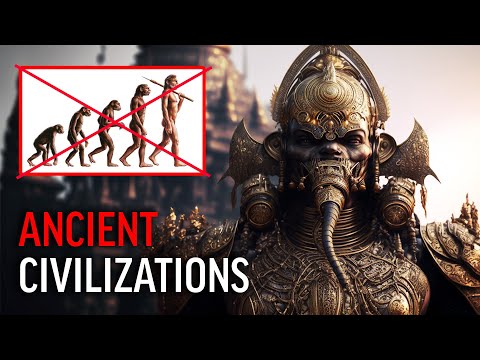
The conventional timeline of human civilization, meticulously constructed over centuries, often faces challenges from the fringes of research. We accept a history measured in thousands, perhaps tens of thousands, of years. But what if that framework is fundamentally flawed? What if evidence suggests a human presence stretching back not millennia, but millions of years? This is the unsettling proposition put forth by researchers who delve into the Puranas, the ancient Vedic texts that speak of human history far exceeding our current scientific consensus. Today, we open the dossier on a case that forces us to question everything we thought we knew about our origins, specifically the profound connection between Vedic knowledge and the enigmatic Indus Valley Civilization.

The question of "how long have humans been present on this planet?" is not merely academic. It strikes at the core of our identity and our place in the cosmos. The Vedic civilization, with its intricate philosophical and scientific systems, offers a narrative that dramatically extends this temporal horizon. Could deities, as described in the Vedic Solar Dynasty, have been worshipped as far back as 20 million years ago? This is not a claim to be dismissed lightly. It requires rigorous examination of the evidence, no matter how unconventional it may seem.

This investigation aims to dissect the research of figures like Michael Cremo, whose work on archaeological anomalies, particularly concerning the antiquity of human existence and its potential ties to the Indus Valley Civilization, warrants our critical attention. We will explore the arguments, the evidence, and the implications of a history that refuses to conform to established norms.

II. Michael Cremo: The Archaeologist of the Impossible

Michael Cremo is not your average archaeologist. He is an independent researcher and a leading authority on what he terms "archaeological anomalies"—discoveries that appear to contradict the established timeline of human evolution. His seminal work, "Forbidden Archaeology," co-authored with Richard L. Thompson, presents a staggering compendium of evidence suggesting humans have existed on Earth for tens, and perhaps even hundreds, of millions of years. These are not speculative theories whispered in dark rooms; Cremo's research has been presented at esteemed institutions worldwide, including the Royal Institution of London and the Russian Academy of Science.

His published works, such as "The Forbidden Archaeologist" and "Human Devolution," are not mere collections of anecdotes. They are detailed arguments built upon decades of research into ancient texts, geological strata, and a vast array of archaeological findings. Cremo's rigorous approach, which involves meticulously cataloging and analyzing evidence that mainstream science has often overlooked or dismissed, has earned him both accolades and controversy. He has been a featured guest on prominent platforms like the History Channel's "Ancient Aliens" and Gaia TV's "Ancient Civilizations," bringing his controversial findings to a global audience.

Cremo's investigation into the ancient Sanskrit writings of India, coupled with his archaeological research, points towards a long and deeply mysterious history of human origins, one intertwined with spirituality and potentially, as the title suggests, paleocontact.

Key Works by Michael Cremo:

  • Forbidden Archaeology: Scientific Translations of the Past
  • The Forbidden Archaeologist
  • Human Devolution: Challenging the Establishment on the Origin of Man
  • Forbidden Archaeology's Impact
  • The Hidden History of the Human Race (co-authored with Richard Thompson)

His website, mcremo.com, serves as a central hub for his research, publications, and upcoming presentations. To truly grasp the depth of his findings, engaging with his body of work is essential. These books are invaluable for any serious investigator seeking to challenge conventional narratives.

III. Vedic Design in the Indus Valley: A Paradigm Shift?

The Indus Valley Civilization, flourishing around 2500-1900 BCE, is renowned for its sophisticated urban planning, advanced sanitation systems, and enigmatic script. But what if its origins and influences run far deeper than commonly accepted? Michael Cremo suggests that evidence of Vedic design might be present at Indus Valley sites, hinting at a continuity of culture and knowledge that transcends conventional historical boundaries.

The Puranas, a vast collection of ancient Indian scriptures, recount genealogies and historical accounts that extend human history back millions of years. They describe sophisticated societies, advanced technologies, and spiritual lineages far older than believed possible. If these texts are taken as historical records, they imply a civilization with profound understanding, a civilization that could have laid the groundwork for or significantly influenced later cultures like the Indus Valley.

"The Puranas are not just myths; they are ancient historical records that speak of human civilization existing for millions of years, a concept far removed from the evolutionary timeline currently taught in academia." - Paraphrased from research concerning Vedic texts.

The implication of Vedic design within the Indus Valley is staggering. It suggests that the foundational elements of Vedic knowledge—its philosophy, its understanding of cosmology, and possibly its architectural or societal principles—were not emergent phenomena of the Bronze Age, but rather heirlooms from a vastly older, possibly unbroken, human lineage. This challenges the notion of civilization arising in discrete, linear stages and posits a cyclical or deeply layered history.

To explore this further, consider investing in scholarly translations of the Puranas or engaging with academic discussions on the origins of Vedic culture. Understanding these ancient texts is crucial for deciphering the potential Vedic imprint on the Indus Valley.

IV. Anomalies That Defy Convention

The core of Cremo's argument rests on what he calls "anomalous archaeology"—evidence unearthed that simply does not fit the standard evolutionary model. This includes:

  • Fossilized Artifacts of Human Origin: Reports from various geological strata, dating back millions of years, of objects that appear to be manufactured by intelligent beings, including tools, metallic spheres, and even human fossils.
  • Ancient Structures and Engineering: Megalithic sites and engineering feats that seem to predate the technological capabilities attributed to early human civilizations.
  • Textual Evidence: Ancient scriptures, such as the Vedic Puranas, that provide detailed accounts of human history and societal structures extending back millions of years.

One of the most compelling aspects of this research is the sheer volume of disparate findings that, when viewed collectively, suggest a pattern. These are not isolated incidents but recurring themes across different cultures and geological periods. For instance, the discovery of a metal flower enshrined within a rock found in Dorchester, Massachusetts, or the alleged human footprints alongside dinosaur footprints in the Paluxy River, Texas – while often debated and sometimes debunked – represent the *type* of evidence that fuels the "Forbidden Archaeology" narrative.

The challenge for mainstream science is to reconcile these anomalies. The typical response is to seek conventional explanations: misidentification, natural geological processes, or even elaborate hoaxes. However, Cremo and his supporters argue that the sheer persistence and breadth of these anomalies demand a re-evaluation of our fundamental assumptions about human history.

Investigating these anomalies requires a specific toolkit. A high-sensitivity EMF meter could theoretically detect residual energies in ancient sites, though this is highly speculative. More practically, access to comprehensive databases of archaeological reports, especially those detailing controversial finds, is paramount. Resources like the Society for Scientific Exploration can be a starting point for understanding how anomalies are cataloged and initially investigated.

V. Investigator's Verdict: Re-evaluating the Historical Record

While mainstream archaeology operates on established principles and rigorous peer review, the evidence presented by Michael Cremo and others in the field of anomalous archaeology cannot be entirely dismissed without thorough investigation. The Vedic texts, when interpreted as historical records, provide a compelling, albeit unconventional, narrative of deep human antiquity. The presence of potentially Vedic design elements within the Indus Valley Civilization further fuels the hypothesis of an ancient, advanced human lineage.

The critical issue is the interpretation of evidence. Mainstream science tends to favor explanations that align with current evolutionary models. However, the sheer volume of reported anomalies, cataloged over decades, suggests that a blanket dismissal might be premature. The question is not whether these anomalies exist, but what they truly represent. Are they evidence of an ancient, advanced human civilization, or are they products of misinterpretation, natural phenomena, or deliberate fabrication?

"The scientific method thrives on challenging established paradigms. While the evidence for millions of years of human history is controversial, the pursuit of truth demands we examine all credible claims, however unsettling." - A philosophical stance on scientific inquiry.

My verdict as an investigator is that while definitive proof remains elusive and requires further rigorous, unbiased examination, the hypothesis of an ancient human presence, as suggested by Vedic texts and anomalous findings at sites like the Indus Valley, warrants continued exploration. It challenges us to expand our understanding of history and the potential capabilities of our ancestors. The implications for our understanding of human consciousness, technological development, and spiritual evolution are profound.

VI. The Archivist's Dossier

For those seeking to delve deeper into this fascinating intersection of ancient history, anomalous archaeology, and Vedic knowledge, the following resources are indispensable:

Essential Reading & Viewing:

  • Books:
    • "Forbidden Archaeology" by Michael Cremo and Richard L. Thompson: The foundational text. An exhaustive compilation of evidence for ancient human origins.
    • "The Hidden History of the Human Race" by Michael Cremo and Richard L. Thompson: Further explores the evidence and its implications.
    • "Gateway to Vastu: Ancient Indian Architecture & Beyond" by Shubhendu Bhattacharya: Provides context on Vedic architectural principles.
  • Documentaries & Series:
    • "Ancient Aliens" (History Channel): Features discussions and segments related to Cremo's theories and ancient civilizations.
    • "Ancient Civilizations" (Gaia TV): Explore various episodes that touch upon deep history and anomalous findings.
    • "The Portal" by Neil Gaur (YouTube Channel): Features in-depth interviews and discussions with researchers like Michael Cremo.
  • Organizations & Websites:
    • mcremo.com: Michael Cremo's official website for research, books, and lectures.
    • portaltoascension.org: Hosts conferences and provides resources on consciousness, ancient history, and unexplained phenomena.
    • The Society for Scientific Exploration (SSE): An organization dedicated to the study of anomalous phenomena and controversial research.

Engaging with these resources is crucial for building a comprehensive understanding of the claims and the evidence presented. The $20 million year figure is provocative, but it’s the rigorous documentation of anomalies that lends weight to the argument for a vastly extended human timeline.

VII. Your Field Mission: Charting Local Anomalies

The history of our planet is not fully written in textbooks. Anomalies exist everywhere, often hidden in plain sight, in local folklore, geological formations, or forgotten historical accounts. Your mission, should you choose to accept it, is to become an active investigator in your own sphere.

  1. Research Local Folklore: Investigate legends and stories in your area that speak of ancient inhabitants, unusual geological events, or unexplained structures. Do any of these narratives hint at a deeper timeline than commonly accepted?
  2. Document Unusual Findings: If you encounter an object, a geological formation, or a historical record that seems anomalous or out of place with conventional understanding, document it thoroughly. Record its location, date, and any associated details.
  3. Cross-Reference with Ancient Texts: Compare your findings or local legends with the principles found in ancient texts, such as the Vedic Puranas or other creation myths. Look for thematic similarities or echoes of ancient narratives in contemporary local history.
  4. Share Your Discoveries: Report your findings (respectfully and factually) in the comments below or in dedicated paranormal research forums. Collaboration is key to uncovering these hidden histories.

The journey into the true history of humanity is ongoing. Your observations and research may contribute to a larger understanding of our ancient past. Don't let the accepted narrative blind you to the anomalies that surround us.

About the Author:

alejandro quintero ruiz is a veteran field investigator dedicated to the analysis of anomalous phenomena. His approach combines methodological skepticism with an open mind to the inexplicable, always seeking the truth behind the veil of reality.

The temporal fabric of human history is far more complex and ancient than our current paradigms allow. The research into Vedic knowledge and its potential resonance within the Indus Valley Civilization, championed by figures like Michael Cremo, presents a radical reinterpretation of our past. By examining archaeological anomalies and ancient texts, we are compelled to confront the possibility of human existence stretching back millions of years, challenging the very foundations of evolutionary timelines.

This exploration into "Forbidden Archaeology" is not about blind faith, but about critical inquiry. It is about asking the difficult questions and meticulously examining the evidence, no matter how inconvenient it may be to established narratives. The universe rarely conforms to our expectations, and our own history may be the greatest enigma of all.