Followers

Mostrando las entradas con la etiqueta Pyramid of the Moon. Mostrar todas las entradas

Pyramid of the Moon: Unveiling Ancient Artificial Structures


The colossal Pyramids of the Moon, nestled within the ancient city of Teotihuacan, Mexico, have long captivated historians, archaeologists, and the curious alike. These monumental structures, along with the adjacent Pyramid of the Sun and the Avenue of the Dead, represent one of the most significant achievements of pre-Columbian Mesoamerican civilization. Their sheer scale and precise alignment suggest a sophisticated understanding of astronomy, mathematics, and engineering far beyond what was previously attributed to these ancient cultures. But beyond their obvious grandeur, what secrets do these artificial mountains hold? What was their purpose, and who were the master builders who erected them?

Introduction

The mystery surrounding Teotihuacan is as vast as the ancient city itself. While much has been uncovered, tantalizing questions remain about the true nature and purpose of its most iconic structures, particularly the Pyramid of the Moon. Its imposing presence at the northern end of the Avenue of the Dead has led to numerous theories, from astronomical observatories to ceremonial centers and even burial sites for revered rulers. This investigation delves into the available evidence, exploring the known facts and the enduring enigmas that continue to shroud these magnificent artificial mountains.

Pyramid of the Moon: An Overview

The Pyramid of the Moon is the second-largest pyramid in Teotihuacan, standing approximately 43 meters (141 feet) high with a base of about 150 x 150 meters (490 x 490 feet). Unlike its larger counterpart, the Pyramid of the Sun, the Pyramid of the Moon is renowned for its more intricate design and its central location within the Ciudadela complex, facing the Plaza of the Moon. Its construction is believed to have occurred in several phases, with the earliest possibly dating back to 100 CE and later expansions continuing for centuries.

Recommended Gear for Investigation

ProductDescriptionBuy
Cryptozoology A To Z: The Encyclopedia Of Loch Monsters Sasquatch Chupacabras And Other Authentic M: The Encyclopedia of Loch Monsters, Sasquatch, Chupacabras, and Other Authentic Mysteries of NatureAn excellent choice to complement your research.View on Amazon
The Big Book of Paranormal: 300 Mystical and Frightening Tales From Around the WorldAn excellent choice to complement your research.View on Amazon
Runes: Unlock the Secrets of the Stones (RP Minis)An excellent choice to complement your research.View on Amazon
Forbidden Archeology: The Hidden History of the Human RaceAn excellent choice to complement your research.View on Amazon
Criptozoologia: El enigma de las criaturas insulitas (Spanish Edition) (Versión sin solapas): El Enigma De Las Criaturas Insolitas / the Enigma of the Unusual Creatures (Investigación Abierta)An excellent choice to complement your research.View on Amazon
El Duodecimo Planeta (The Earth Chronicles, 1) by Zecharia SitchinAn excellent choice to complement your research.View on Amazon
The H. P. Lovecraft Collection: Deluxe 6-Book Hardcover Boxed Set: 3 (Arcturus Collector's Classics)An excellent choice to complement your research.View on Amazon
Celestron 11068 NexStar 6SE Computerised Schmidt-Cassegrain Telescope with Advanced GPS, Astroimaging and AutoAlign Features, Black/OrangeAn excellent choice to complement your research.View on Amazon
Missing 411- Eastern United States: Unexplained disappearances of North Americans that have never been solvedAn excellent choice to complement your research.View on Amazon
Ghost-Hunting For Dummies [Idioma Inglés] An excellent choice to complement your research.View on Amazon

The structure itself is composed of seven superimposed layers, each added over the previous one, a common practice in Mesoamerican pyramid construction. The façade is decorated with sculpted reliefs, notably a formidable representation of the "Great Goddess," Teotihuacan's principal deity, suggesting a strong connection to ritual and religious practices. This elaboration sets it apart from the more austere Pyramid of the Sun and points towards a distinct ceremonial function.

Astronomical Alignments and Purpose

One of the most compelling aspects of the Pyramid of the Moon, like many ancient structures, is its precise astronomical alignment. The pyramid faces the Pyramid of the Sun across the Avenue of the Dead, and its alignment appears to be intentionally oriented towards the Cerro Gordo mountain peak that lies directly behind it. This deliberate placement suggests not only an aesthetic choice but a deep symbolic and perhaps practical connection to the landscape and celestial events.

Scholars have posited that the pyramid's orientation might relate to solar or lunar cycles, or perhaps the movements of specific constellations. Some theories suggest it was designed to frame the setting sun or moon during significant astronomical junctures, acting as a celestial calendar or observatory. The careful engineering involved in aligning the structure with natural landmarks and cosmic cycles underscores the advanced knowledge possessed by the builders of Teotihuacan. The city's very layout is believed to be a map of the cosmos as they understood it, with these pyramids serving as terrestrial anchors for celestial phenomena.

The discovery of burials within and beneath the pyramid further supports its role as a sacred site. These offerings, often containing exotic materials and human remains, suggest that the pyramid was a place of sacrifice and veneration for deities and possibly even deified rulers or ancestors. The "Temple of the Moon" found at its summit was likely a focal point for these rituals, connecting the earthly realm with the divine.

Construction Techniques: A Marvel of Engineering

The construction of the Pyramid of the Moon is a testament to the organizational capacity and engineering prowess of the Teotihuacan civilization. The sheer volume of material required—millions of tons of stone, earth, and rubble—necessitated a highly coordinated labor force. The stones used for the façade were meticulously cut and fitted, often incorporating elaborate carvings.

The method of construction, building layer upon layer, allowed for the expansion and modification of the structure over time, reflecting evolving religious beliefs or political power. The use of precisely cut stone blocks, often quarried from surrounding areas, and the internal fill of rubble and earth, demonstrate a sophisticated understanding of structural integrity and load-bearing capabilities. Without modern machinery, the manual labor involved in quarrying, transporting, and placing these massive stones is almost incomprehensible.

Some researchers point to the possibility of advanced techniques, such as the use of ramps, levers, and a deep understanding of material properties. The precision in alignment and the symmetrical design, especially evident in the finished layers, speak to a highly skilled artisanal class working under centralized direction. This level of coordinated effort is characteristic of complex societies capable of mobilizing significant populations for monumental construction projects.

Other Artificial Structures in Teotihuacan

Teotihuacan is not solely defined by its two great pyramids. The entire city is a vast complex of artificial structures, meticulously planned and executed. The most prominent among these is the Pyramid of the Sun, the largest pyramid in Teotihuacan and one of the largest in the world. Situated on the east side of the Avenue of the Dead, its purpose is widely believed to be connected to solar worship and astronomical observation.

The Avenue of the Dead, a grand boulevard stretching for kilometers, is lined with numerous smaller pyramids, platforms, and residential complexes. These structures served various purposes, from housing the elite and commoners to acting as administrative centers and smaller religious sites. The Citadel (Ciudadela), a large square complex, contained the Temple of Quetzalcoatl, an elaborate pyramid adorned with stunning serpent head sculptures, indicative of a distinct cult or deity.

Beyond the ceremonial core, extensive residential compounds reveal a grid-like urban plan, suggesting a highly organized society. These compounds, often featuring patios, temples, and living quarters, indicate a structured social hierarchy and a communal approach to urban living. The entire city, with its deliberate layout and extensive artificial constructions, represents a monumental feat of urban planning and engineering, with the pyramids serving as its most striking focal points.

Archaeological Discoveries and Ongoing Research

Despite decades of excavation, Teotihuacan continues to yield new secrets. Archaeological teams have uncovered numerous artifacts, burials, and architectural features that shed light on the city's inhabitants and their practices. The Pyramid of the Moon, in particular, has been a focus of intensive study. Excavations have revealed several burials, including those of high-status individuals, possibly rulers or priests, adorned with jade, obsidian, and other precious materials.

Recent research, employing advanced techniques like LIDAR (Light Detection and Ranging) and ground-penetrating radar, is providing non-invasive ways to map and analyze the subterranean structures and hidden chambers within the pyramids and the city. These technologies allow researchers to identify potential areas of interest for future excavation without disturbing the existing monumental architecture.

The ongoing research aims to piece together a more complete understanding of Teotihuacan's history, its relationship with other Mesoamerican cultures, and the eventual decline and abandonment of the city. Questions persist about the identity of its builders and the specific nature of their beliefs and societal structure. The continuous stream of discoveries ensures that Teotihuacan remains a dynamic site of archaeological inquiry.

Theories and Hypotheses: Beyond the Obvious

The monumental nature and enigmatic origins of Teotihuacan have naturally given rise to numerous theories, some more grounded than others. Beyond the established astronomical and religious functions, speculative hypotheses explore alternative explanations for these artificial structures.

One persistent line of thought pertains to the idea of "lost knowledge" or advanced civilizations predating those currently known. Proponents of these theories often point to the architectural precision and scale as evidence of technologies or understanding beyond the grasp of the presumed builders. While mainstream archaeology generally attributes these achievements to the sophisticated organizational and engineering skills of the Teotihuacanos, the sheer magnitude of the undertaking invites such speculation.

Another area of interest is the potential connection to extraterrestrial intelligence, a common theme in ufology when encountering ancient megalithic sites. This theory, lacking any empirical evidence, suggests that such advanced constructions could only have been possible with alien intervention. From an investigator's perspective, while intriguing, such claims require extraordinary proof, which has yet to materialize.

From a more grounded, yet still speculative, viewpoint, some theories focus on the possibility that Teotihuacan served as a nexus for trade, religion, or even a defensive stronghold for a vast empire, with its structures serving a dual purpose of ceremonial grandeur and strategic fortification. The lack of clear textual records from Teotihuacan itself leaves ample room for interpretation and conjecture.

Researcher's Verdict: Genuine Enigma

As an investigator who has sifted through countless anomalies, I must concede that Teotihuacan, and specifically the Pyramid of the Moon, presents a compelling enigma. The sheer scale, precision, and evident purpose of these artificial structures speak to a level of societal organization and knowledge that continues to challenge our understanding of ancient civilizations. While scientific consensus points to ingenious human engineering and deep cosmological understanding, the ultimate 'why' and 'how' remain subjects of intense debate and ongoing discovery.

The lack of written records from the primary builders means much of our interpretation relies on archaeological inference, comparative analysis with other Mesoamerican cultures, and deciphering the silent language of stone and alignment. The Pyramids of the Moon and Sun are not merely ancient ruins; they are complex artifacts that demand rigorous analysis, open-minded inquiry, and a healthy dose of skepticism towards definitive pronouncements. They represent a genuine testament to human ambition and a profound connection to the cosmos, the full implications of which we are still striving to comprehend.

The Researcher's Archive

To further explore the mysteries of Teotihuacan and similar ancient monumental constructions, I recommend the following resources:

  • Books: "The Murders of Malcolm X" by Manning Marable (for understanding historical research methodologies), "Chariots of the Gods?" by Erich von Däniken (for controversial theories on ancient astronaut hypotheses, to be critically evaluated).
  • Documentaries: Search for documentaries covering Teotihuacan on reputable historical channels. Critically assess claims, looking for evidence-based analysis.
  • Academic Journals: Papers published in journals focused on archaeology, anthropology, and archaeoastronomy often contain the latest research findings on sites like Teotihuacan.

Frequently Asked Questions

What is the main purpose of the Pyramid of the Moon?
While not definitively known, evidence strongly suggests it served as a ceremonial center, possibly dedicated to a Great Goddess, and may have had astronomical observation functions.
How were the pyramids built without modern technology?
It is believed they were constructed using massive amounts of manual labor, sophisticated organization, tools made from stone and bone, and a deep understanding of basic engineering principles like levers and ramps.
Are there any hidden chambers in the Pyramid of the Moon?
Yes, archaeological excavations have revealed several tombs and chambers within and beneath the pyramid, often containing significant offerings and burials.
What does Teotihuacan mean?
"The Place Where the Gods Were Created" or "The Birthplace of the Gods" in the Nahuatl language, given by the Aztecs who discovered the abandoned city centuries later.

Investigating Equipment

For those interested in pursuing their own investigations into historical anomalies or unexplained phenomena, having the right tools can make a significant difference. While direct investigation of sites like Teotihuacan requires official permits and expertise, the principles of documentation and evidence gathering can be applied elsewhere.

Consider the importance of reliable recording devices, comprehensive research materials, and tools that aid in observation and analysis. The pursuit of knowledge, whether historical or paranormal, is often resource-intensive, demanding dedication and the means to support that pursuit.

Your Mission: Decipher the Landscape

The Pyramids of the Moon and the broader Teotihuacan complex are more than just ancient stones; they are a dialogue between humanity and the cosmos. Your mission, should you choose to accept it, is to look at the world around you with a more critical and curious eye. Identify structures in your local area – natural or man-made – that seem to hold a particular significance or alignment. How might they relate to astronomical events, local legends, or historical occurrences? Document your observations, even if on a smaller scale, and consider the potential narratives they hold.

Share your findings and theories in the comments below! What local mysteries have you uncovered? Don't keep your insights to yourself – let's piece together the unexplained together.

If you found this investigation enlightening, share it with your network. Every share helps us uncover more truths.

Investigator's Note: True paranormal research doesn't fund itself. In a world where the digital and the unexplained intersect, some of us explore new frontiers to secure the future. Do you dare to be part of the vanguard? Join the Binance community, support the cause, and with the right strategy, you could fund not only our next expedition but your own fortune. The next great discovery could be just a click away.

Teotihuacan's Tunnel: Unearthing Mexico's Passage to the Underworld - An Investigative Report


Introduction: The Whispers from Below

The earth keeps secrets. It buries them under millennia of dust and stone, waiting for the right moment – or the right shovel – to reveal them. In the shadow of ancient pyramids, where history’s echoes are loudest, an archaeological discovery in Mexico has unearthed a passage that speaks not just of human endeavor, but of the deep-seated rituals and beliefs that shaped a lost civilization. Today, we dissect this find, not merely as an archeological footnote, but as a potential gateway to understanding the Mesoamerican concept of the underworld, and what other, perhaps more spectral, entities might dwell in such liminal spaces.

Teotihuacan: A Metropolis Shrouded in Mystery

The city of Teotihuacan, a name that resonates with awe and unanswered questions, stands as a testament to the ingenuity of ancient Mesoamerican peoples. Flourishing long before the Aztecs, its origins remain an enigma, its builders’ identities lost to the passage of time. Yet, its grandeur is undeniable. At its zenith, Teotihuacan was not merely a settlement; it was a sprawling metropolis, a sixth-largest city in the ancient world, pulsing with the lives of over 125,000 inhabitants. Its monumental architecture, particularly the Pyramids of the Sun and Moon, continues to draw scholars and tourists alike, each seeking to decipher the silent narratives etched in stone.

Beneath the Pyramid of the Moon: The Tunnel Unveiled

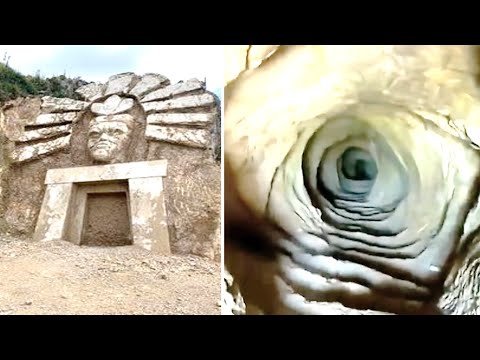
Recent excavations near the iconic Pyramid of the Moon have brought forth a significant discovery: an underground tunnel. This is not just another subterranean passage; its location and context lend it considerable symbolic weight. Archaeologists have identified this newly uncovered tunnel as a potential representation of the Aztec concept of a "passage to the underworld." This revelation invites a deeper dive into the spiritual and cosmological frameworks of the civilizations that inhabited this sacred city, prompting us to consider what rituals, sacrifices, or even spiritual journeys might have been enacted within its confines.

Symbolism of the Aztec 'Passage to the Underworld'

The Aztec cosmology envisioned Mictlan, the underworld, as a multi-layered realm of the dead, a destination reached through arduous trials. Tunnels and subterranean passages in ancient cultures often served as potent symbols for this transition – a physical representation of a spiritual journey. They symbolized a passage from the known world to the unknown, from life to death, and potentially, from the mundane to the divine or the spectral. The discovery beneath the Pyramid of the Moon strongly suggests adherence to these profound cosmological beliefs. It hints at a deliberate construction designed to mimic or facilitate this symbolic descent, blurring the lines between earthly architecture and spiritual architecture.

Analysis: The City's Scale and Influence

The sheer scale of Teotihuacan, established around 300 BCE, predates many of the more famous Mesoamerican civilizations, including the Aztecs who later revered it. Its influence is evident in art, architecture, and urban planning found in later cultures across the region. A city capable of housing over 125,000 people in its prime was a significant hub of commerce, religion, and power. The construction of such monumental structures as the Pyramids of the Sun and Moon, and now this symbolic tunnel, required immense organization, resources, and a sophisticated understanding of engineering and astronomy. This reinforces the idea that Teotihuacan was a sophisticated civilization with complex societal structures and a deeply ingrained spiritual life.

Investigating the Paranormal Potential

While archeologists focus on historical and cultural interpretations, the nature of tunnels, especially those linked to concepts of the underworld, invariably piques the interest of paranormal investigators. These subterranean spaces, often dark, silent, and remote, are frequently associated with anomalous phenomena. Reports of unexplained sounds, feelings of presence, and even apparitions are common in archeological sites with spiritual significance. The link to the "underworld" invites speculation: could such passages be conduits for residual energy, or even active gateways for entities that exist beyond our present dimensional understanding? The sheer age and the profound spiritual weight of Teotihuacan make this site a prime candidate for further investigation into potential hauntings or paranormal activity. For serious researchers, understanding the electromagnetic field [EMF] fluctuations in such locations or analyzing potential Electronic Voice Phenomena [EVP] could offer valuable, albeit preliminary, data. The equipment to start such investigations is more accessible than ever, though professional tools can offer superior sensitivity.

Critique of Archaeological Reporting

The initial reports often present such discoveries with a factual dryness that belies their profound implications. While scientific accuracy is paramount, the narrative surrounding these finds can sometimes dismiss anthropological and even speculative interpretations of their purpose. The description of the tunnel as merely "symbolising the Aztec 'passage to the underworld'" is a starting point, but it leaves much unsaid. What evidence supports this interpretation? Were there associated artifacts found within the tunnel that shed light on its use? Without this granular detail, the reporting remains superficial. A deeper analysis requires connecting the dots between historical context, symbolic meaning, and the potential for phenomena that defy conventional explanation. This is where embracing a methodology that allows for open-minded inquiry, akin to the rigorous yet unbounded approach of investigators like Jacques Vallée, becomes crucial.

El Rincón Paranormal Archives

Welcome to the Paranormal Corner, your daily source for unexplained and unusual paranormal videos and documents. If you resonate with the content presented here, consider following us across our social networks. For those seeking deeper dives into the inexplicable, our archives offer a wealth of information on cases ranging from historical hauntings to modern-day cryptid sightings. Exploring the vast history of paranormal research requires diligence, and we strive to provide meticulously documented cases for your perusal. Don't forget to explore how instruments like the K2 EMF meter can be used in your own investigations.

"The city of Teotihuacan is the subject of much curiosity, especially now that an underground tunnel was uncovered by archaeologists underneath the mystical Pyramid of the Moon. It's believed that the tunnel symbolises the Aztec 'passage to the underworld'."

Investigator's Verdict: Beyond the Excavation

The discovery beneath the Pyramid of the Moon is significant, primarily for its historical and anthropological implications. It offers tangible evidence of the deep spiritual beliefs that guided the construction and purpose of Teotihuacan. However, to dismiss its potential for paranormal resonance would be a disservice to the very nature of such ancient sites. Tunnels linked to concepts of death and the underworld often become focal points for reported anomalous activity, suggesting a potential energetic imprint or lingering presence. While definitive proof of the paranormal requires more than archeological findings, this tunnel serves as fertile ground for further investigation. It reminds us that our understanding of the past is incomplete, and that the veil between worlds may be thinner in places of profound historical and spiritual significance. It is essential to approach these sites with both scholarly rigor and an openness to phenomena that science has yet to fully quantify.

Your Field Mission: Charting the Unknown

The exploration of ancient sites like Teotihuacan is a continuous process. While archaeologists uncover physical structures, the true mystery lies in the beliefs and potential energetic residue they left behind. Your mission, should you choose to accept it, is to delve deeper into the mythology and reported phenomena surrounding Mesoamerican pyramids. Research other potential underworld passages or subterranean sacred sites documented in anthropological texts. Consider what tools, beyond standard archaeological equipment, might be employed to investigate the energetic signatures of such locations. Share your findings and speculative theories in the comments below. Let's piece together the narrative of what lies beneath the surface, both physically and metaphysically.

About the Author

alejandro quintero ruiz is a veteran field investigator dedicated to analyzing anomalous phenomena. His approach combines methodological skepticism with an open mind to the inexplicable, always seeking the truth behind the veil of reality. With years of experience, he navigates the complex intersection of history, science, and the unknown.

Thank you for watching! Thank you to CO.AG for the background music!

Hello and welcome to the Paranormal Corner. If you love paranormal content, please follow us on our social networks:

Pyramid of the Moon and Other Artificial Structures: An Unexplained Archaeological Analysis


Introduction: The Enigma of Teotihuacan

The landscape of human history is dotted with enigmatic structures that defy conventional explanation. Among these, the ancient city of Teotihuacan, particularly its monumental pyramids, stands as a testament to an unknown architectural prowess. The Pyramid of the Moon, second in size to the Pyramid of the Sun, is not just an impressive feat of engineering; it's a focal point of recurring anomalies and questions that have baffled archaeologists and fringe researchers alike. Today, we open the dossier on Teotihuacan, exploring the possibility that these ancient builders possessed knowledge far beyond what mainstream history allows.

Pyramid of the Moon: Architectural Anomaly

The Pyramid of the Moon, situated at the northern end of the Avenue of the Dead, is an awe-inspiring structure. Its symmetrical design, precise alignment with celestial bodies, and the discovery of offerings within its chambers suggest a sophisticated understanding of astronomy and ritual. However, the sheer scale and the advanced construction techniques used for its era (estimated between 100-200 CE) raise immediate questions. How was such precision achieved without modern tools? The layers of construction found within the pyramid indicate a continuous process of expansion and refinement, suggesting a long-term vision and sustained technological capability.

Recent investigations have unearthed more than just chambers and artifacts. Anomalous energy readings and unexplainable acoustic phenomena have been reported by local investigators and intrepid urban explorers who venture into its less-trafficked passages. While official reports often attribute these to natural geological factors or structural settling, a pattern of consistent anecdotal evidence points towards something more persistent, something that resonates with the very stones of the pyramid.

Beyond the Moon: Other Anomalous Structures

Teotihuacan is more than just two large pyramids. The entire city plan is a grid of unusual precision, with structures like the Temple of Quetzalcoatl exhibiting intricate carvings and complex astronomical alignments. The discovery of thousands of ritualistic offerings, including human sacrifices and caches of obsidian and jade, hints at a society with deep, perhaps otherworldly, connections. The sheer volume and diversity of these offerings, meticulously arranged, speak of a purpose that transcends simple burial rites.

Consider the Pyramid of the Sun. Its construction method, particularly its orientation to the cardinal points and its alignment with the solar zenith, is remarkably accurate. The techniques employed to quarry, transport, and place millions of tons of stone continue to be a subject of debate. Some theories suggest the use of advanced acoustic levitation or vibrational frequencies, concepts that are, to say the least, outside the purview of traditional archaeological explanations.

"When you stand before these structures, you feel a presence. It's not just the weight of history; it's the weight of something unknown. Something intentionally placed here, not just built." - Anonymous Field Investigator

Evidence and Competing Theories

The primary evidence for the anomalous nature of Teotihuacan lies in its architectural sophistication, precise astronomical alignments, and the recurring reports of unexplained phenomena. Mainstream archaeology often attributes these feats to a highly organized society with advanced knowledge of geometry, engineering, and astronomy, developed over centuries.

However, alternative theories propose more radical origins. These include:

  • Ancient Astronaut Hypothesis: Proposes that extraterrestrial beings guided or directly assisted the construction of Teotihuacan, providing advanced knowledge or technology. The precise alignments and the scale of construction are often cited as evidence for non-human intervention.
  • Lost Civilization Theory: Suggests a pre-existing, highly advanced civilization whose knowledge was inherited or rediscovered by the Teotihuacanos. This theory posits a forgotten technological golden age.
  • Geomagnetic Anomaly Theory: Some researchers, like those studying Ley lines and Earth energies, propose that Teotihuacan was built on a site of significant natural energetic power, which may have influenced the builders or contributed to the anomalous phenomena reported.

The discovery of artifacts depicting serpent gods and feathered serpents has led to interpretations of advanced knowledge related to air and space, further fueling the ancient astronaut debate. Whether these are symbolic representations or literal accounts of interactions remains the core of the mystery.

Investigator's Verdict: A Higher Design?

The construction of Teotihuacan, particularly the Pyramid of the Moon and its contemporaries, represents a paradigm shift in our understanding of ancient capabilities. While it's tempting to attribute everything to human ingenuity, the precision, scale, and apparent planning suggest a level of knowledge and coordination that strains conventional historical timelines and technological assumptions.

The consistent reports of anomalous energies and phenomena, though difficult to quantify and often dismissed, cannot be entirely ignored. They add a layer of inexplicable mystery to an already baffling archaeological site. My assessment, based on years of examining anomalous evidence, is that Teotihuacan was not merely a city; it was an observatory, a ceremonial center, and potentially, a nexus point deliberately constructed with advanced geometric and astronomical principles that we are only beginning to re-discover. The possibility of non-human or lost-civilization influence is not only plausible but, given the evidence, the most compelling explanation for the architectural and energetic anomalies present.

The Researcher's Archive

For those who wish to delve deeper into the mysteries of ancient civilizations and unexplained archaeology, the following resources are essential:

  • Books:
    • "Fingerprints of the Gods" by Graham Hancock: Explores a global cataclysm and a lost advanced civilization.
    • "The 12th Planet" by Zecharia Sitchin: A foundational text for ancient astronaut theories, focusing on Babylonian mythology and potential extra-terrestrial intervention.
    • "Sacred Geometry: Philosophy and Practice" by Robert Lawlor: Understanding the mathematical and philosophical principles behind ancient monumental architecture.
  • Documentaries:
    • "Ancient Aliens" (Series): While controversial, it offers a broad overview of ancient astronaut theories applied to sites worldwide. Look for episodes specifically on Teotihuacan.
    • "The Mystery of Teotihuacan" (Various productions): Several investigative documentaries explore the archaeological findings and unresolved questions.
  • Platforms:
    • Gaia.com: A streaming service with a vast library of documentaries and series on ancient mysteries, consciousness, and alternative histories. Highly recommended for acquiring advanced analytical tools and perspectives.

FAQ About Ancient Anomalies

Frequently Asked Questions

  1. Q: How old are the pyramids of Teotihuacan?
    A: The primary construction phase for the Pyramid of the Moon and Pyramid of the Sun is estimated to have occurred between 100 and 200 CE, though the city itself has earlier origins.
  2. Q: What is the main theory behind the construction?
    A: The mainstream archaeological theory attributes construction to the ancient Teotihuacano civilization, emphasizing their organized labor, sophisticated engineering, and astronomical knowledge. Alternative theories propose extraterrestrial or lost civilization involvement.
  3. Q: Are there reports of paranormal activity at Teotihuacan?
    A: Yes, there are numerous anecdotal reports from visitors and local investigators regarding unusual energy readings, disembodied voices, and a palpable sense of presence, particularly within and around the pyramids.
  4. Q: What makes the Pyramid of the Moon anomalous?
    A: Its precise astronomical alignments, advanced construction for its era, and the consistent reports of subtle energetic anomalies contribute to its designation as an anomalous structure requiring further investigation beyond conventional explanations.

Your Field Mission

The true mystery often lies not just in ancient sites, but in our own backyard. Local legends and forgotten landmarks hold echoes of unknown histories.

Your Mission: Investigate Your Local Enigma

  1. Research: Identify any local legends, historical anomalies, or unusual structures in your city or region. Look for old maps, local histories, or eyewitness accounts.
  2. Analyze: Consider why these stories or structures persist. Are there any architectural oddities, recurring testimonies, or unanswered questions that mainstream explanations fail to address?
  3. Document: If possible, visit the site (safely and legally, of course). Record your observations, any unusual sensory experiences, or potential evidence. Think like a researcher: observe, question, and hypothesize.
  4. Share: Discuss your findings in the comments below. Compare your local enigma with the case of Teotihuacan. What parallels can you draw?

About the Author

alejandro quintero ruiz is a veteran field investigator dedicated to the analysis of anomalous phenomena. His approach combines methodological skepticism with an open mind to the inexplicable, always seeking the truth behind the veil of reality. With years of experience in confronting the unknown, his work aims to shed light on the darkest corners of human experience and the mysteries that lie just beyond our perception.


We invite you, our dedicated investigator, to continue this journey into the unexplained. If you find the depth of our analysis compelling, consider supporting our work by exploring our exclusive collection of NFTs. Your support fuels our ongoing research into the world's most baffling enigmas.

Visit our NFT store: https://mintable.app/u/cha0smagick

Stay connected for more daily insights into the paranormal and the unexplained. Follow us on our social networks:

For more information and to explore the latest paranormal videos and documents, please visit our main blog:

El Rincón Paranormal - Your Daily Source of the Unexplained

We also encourage you to explore the diverse content across our network of blogs, where you'll find something for every curiosity: