Followers

Mostrando las entradas con la etiqueta mesoamerica. Mostrar todas las entradas

Graham Hancock Explains the Mystery of the Olmecs | Joe Rogan Experience Analysis

Image

The allure of ancient civilizations, particularly those shrouded in mystery and speculation, continues to captivate the human imagination. The Olmecs, often referred to as the "mother culture" of Mesoamerica, are a prime example. Despite their profound influence on subsequent civilizations like the Maya and Aztecs, much about their society, science, and ultimate disappearance remains enigmatic. This analysis delves into the discussions surrounding the Olmecs, inspired by Graham Hancock's appearance on the Joe Rogan Experience podcast, and explores the persistent questions that fuel ongoing fascination.

Joe Rogan's Unique Approach to Unveiling Mysteries

Joe Rogan's podcast, "The Joe Rogan Experience," has become a powerful platform for exploring complex topics through extended, in-depth conversations. His innate curiosity and genuine interest in diverse fields, from mixed martial arts and comedy to history and science, allow him to engage with guests like Graham Hancock in a way that peels back layers of conventional understanding. Rogan's success, as many viewers note, stems from his "curiosity" and his ability to ask pertinent questions, listen intently, and engage deeply with his guests' expertise. This conversational format, stripped of the pretense often found in more formal interviews, creates an environment where intricate subjects, such as the mysteries of the Olmec civilization, can be explored from multiple angles. As one commenter observed, "The beauty of Joe's show is that it's a pure conversation." This authentic exchange fosters a sense of discovery for both the host and the audience, prompting further research and contemplation.

The Olmec Enigma: A Civilization Lost to Time

The Olmecs, flourishing in Mesoamerica between approximately 1500 BCE and 400 BCE, are credited with pioneering many cultural and societal developments that would later define the region. Their legacy is most visibly represented by the colossal carved heads found across the Gulf Coast of Mexico, particularly in Veracruz. These monumental sculptures, weighing many tons and depicting distinct facial features—broad noses and thick lips—have baffled archaeologists for decades. The sheer scale and sophistication of their construction, coupled with the limited understanding of their societal structure and the reasons for their decline, contribute to their enduring mystery. As one individual with Mexican heritage commented, "Olmecs are a very underrated civilization and its society, science and culture is magnificent they were astrologist genius very advanced, its disappearance is a true mistery." This sentiment is echoed by many who are drawn to the Olmecs due to their advanced knowledge and the perplexing circumstances surrounding their eventual fade from prominence.

Recommended Gear for Investigation

ProductDescriptionBuy
Cryptozoology A To Z: The Encyclopedia Of Loch Monsters Sasquatch Chupacabras And Other Authentic M: The Encyclopedia of Loch Monsters, Sasquatch, Chupacabras, and Other Authentic Mysteries of NatureAn excellent choice to complement your research on this topic.View on Amazon
The Big Book of Paranormal: 300 Mystical and Frightening Tales From Around the WorldAn excellent choice to complement your research on this topic.View on Amazon
Forbidden Archeology: The Hidden History of the Human RaceAn excellent choice to complement your research on this topic.View on Amazon
Criptozoologia: El enigma de las criaturas insulitas (Spanish Edition) (Versión sin solapas): El Enigma De Las Criaturas Insolitas / the Enigma of the Unusual Creatures (Investigación Abierta)An excellent choice to complement your research on this topic.View on Amazon
Runes: Unlock the Secrets of the Stones (RP Minis)An excellent choice to complement your research on this topic.View on Amazon
The H. P. Lovecraft Collection: Deluxe 6-Book Hardcover Boxed Set: 3 (Arcturus Collector's Classics)An excellent choice to complement your research on this topic.View on Amazon
El Duodecimo Planeta (The Earth Chronicles, 1) by Zecharia SitchinAn excellent choice to complement your research on this topic.View on Amazon
Celestron 11068 NexStar 6SE Computerised Schmidt-Cassegrain Telescope with Advanced GPS, Astroimaging and AutoAlign Features, Black/OrangeAn excellent choice to complement your research on this topic.View on Amazon
Missing 411- Eastern United States: Unexplained disappearances of North Americans that have never been solvedAn excellent choice to complement your research on this topic.View on Amazon
Ghost-Hunting For Dummies [Idioma Inglés] An excellent choice to complement your research on this topic.View on Amazon

Archaeological Evidence and Interpretations

The Olmec civilization left behind a rich archaeological record, from the iconic colossal heads to intricate jade carvings and ceremonial sites. However, the interpretation of this evidence is often subject to debate, particularly when considering alternative historical perspectives. Graham Hancock, known for his controversial theories about ancient civilizations possessing advanced knowledge that predates accepted timelines, often points to the Olmecs as evidence for his claims. His discussions with Rogan touch upon the idea that Teotihuacan, a city often associated with later cultures, might have been built by a civilization that existed long before the Aztecs, suggesting a hidden history. This notion of a forgotten past, where civilizations achieved remarkable feats and then vanished, fuels the intrigue surrounding the Olmecs. Some viewers find personal connections to this history, like the individual whose mother recounted finding Olmec artifacts in Veracruz as a child, vividly describing green masks and small stone sculptures. Discovering a jade Olmec mask online that matched her childhood descriptions solidified the connection, prompting a desire to revisit the family's ancestral lands in search of further clues.

"This topic is truly amazing and one I feel I have a personal connection to because both my parents are from Veracruz (where the Olmec heads were found) and my mom would tell me stories of how when she was a kid her and her siblings would run around in my grandpa’s prairie and find what she said were green masks, stone spinning tops, and other doll like artifacts, that they would play with and take home."

These personal anecdotes underscore the profound impact this ancient culture has had, resonating through generations and connecting people to their heritage. The Olmec heads, with their stoic expressions and unique features, are often compared to modern imagery, with some viewers noting a resemblance to old-school football players in leather helmets, or even characters like Cyborg from Teen Titans. This relatable visualization helps bridge the gap between the ancient past and the present.

Cultural Influence and Legacy

The Olmecs' influence extended far beyond their immediate geographical reach. Their advancements in mathematics, astronomy, and the development of a complex calendar system laid the groundwork for subsequent Mesoamerican cultures. Their religious beliefs, artistic styles, and even their ballgame are thought to have been adopted and adapted by later civilizations, including the Maya and the Aztecs. Many who grew up in regions like Veracruz attest to this profound historical connection. "I grew up in Veracruz where they excavated these Olmec heads, it was pretty amazing to live around so much history," one commenter shared. "They greatly influenced the coming indigenous groups, even the Aztecs." This deep-seated influence highlights the Olmecs' pivotal role in the development of Mesoamerican civilization. The distinct physical characteristics depicted in the Olmec art, often debated, are also a point of discussion, with those from southern Mexico emphasizing that these features—thick lips and wide noses—are indeed present in the population of that region, challenging assumptions based on limited exposure.

Theories of Disappearance

The ultimate fate of the Olmec civilization remains one of archaeology's most compelling unanswered questions. Theories range from environmental degradation and internal conflict to migration and assimilation by other groups. Some speculate about cataclysmic events, while others propose a more gradual societal collapse due to factors like volcanic activity, prolonged droughts, or shifts in trade routes. The lack of definitive evidence leaves room for considerable speculation, further fueling the mystique surrounding their decline. The comparison to a challenging puzzle, like the "Shrine of the Silver Monkey" from the game show *Legends of the Hidden Temple*, humorously captures the complexity of piecing together their history. The fascination with these theories is palpable, with many expressing a desire to dedicate their lives to studying this period, wishing they could have been present to witness the discussions firsthand.

Public Reception and Perspectives

The discussion on the Joe Rogan Experience, particularly when featuring figures like Graham Hancock, tends to attract a diverse audience with varied perspectives. Viewers often fall into distinct camps, such as long-time MMA fans or those drawn to conspiracy theories and alternative histories. The mention of "Olmecs" often evokes a sense of wonder and a desire for deeper understanding. Some participants in the online discourse note that Rogan's podcasts are often more engaging and informative when they feature historians and scientists, rather than solely focusing on entertainment figures. This preference suggests an audience keen on substantive intellectual exploration. The use of eye-catching thumbnails, like the one referencing *Legends of the Hidden Temple*, undeniably plays a role in drawing viewers in, highlighting the intersection of pop culture and serious historical inquiry. One particularly striking account comes from an individual whose mother's childhood experiences in Veracruz provided a tangible link to Olmec artifacts, reinforcing the idea that the past is not always as distant as it seems.

Researcher's Verdict: Fraud, Genuine Phenomenon, or Something Else?

"Alejandro Quintero Ruiz" Verdict: The Olmec civilization represents a genuine archaeological puzzle. While definitive answers regarding their origins, advanced knowledge, and disappearance remain elusive, the evidence—from the monumental heads to their clear societal and astronomical advancements—points to a civilization of significant complexity and influence. Graham Hancock's contributions, while often pushing the boundaries of mainstream acceptance, serve to highlight the gaps in our current understanding and encourage critical examination of established historical timelines. The Olmecs were not a myth or a fabrication; they were a real, influential culture whose story is still being written. Any claims of fraud within the archaeological community regarding these findings are largely unsubstantiated and generally dismissed by serious researchers. The mystery endures not because of deception, but due to the limitations of historical records and the vastness of time that separates us from their era. The true phenomenon lies in their remarkable achievements and the enduring questions they pose about human history.

The Researcher's Archive

Frequently Asked Questions

  1. Who were the Olmecs?

    The Olmecs were an ancient Mesoamerican civilization that flourished in the tropical lowlands of south-central Mexico from approximately 1500 BCE to 400 BCE. They are considered one of the earliest major civilizations in the Americas and are often referred to as the "mother culture" of Mesoamerica.

  2. What are the most famous Olmec artifacts?

    The most iconic Olmec artifacts are the colossal stone heads, massive carved basalt sculptures depicting human heads with distinctive broad noses and thick lips. Other significant artifacts include jade figurines, altars, and pottery.

  3. Why is the disappearance of the Olmecs considered a mystery?

    The Olmec civilization declined significantly by around 400 BCE, and the exact reasons for this decline are not fully understood. Theories include environmental changes, internal conflict, disease, or assimilation by other emerging cultures, but definitive evidence is lacking, making their disappearance a subject of ongoing research and speculation.

  4. What was the influence of the Olmecs on later civilizations?

    The Olmecs had a profound influence on subsequent Mesoamerican cultures, including the Maya and Aztecs. They are credited with developing early forms of hieroglyphic writing, the Mesoamerican calendar, advanced astronomical knowledge, and foundational religious and artistic traditions.

Your Field Mission

The study of ancient mysteries like the Olmecs is not confined to academic institutions; it is a continuous process of questioning, investigating, and connecting the dots. Your mission, should you choose to accept it, is to become an active participant in this exploration. Reflect on the information presented here and consider how these ancient enigmas might intersect with our modern understanding of history, technology, and human potential. Do you have personal experiences or family stories related to ancient artifacts or unexplained phenomena? Have you encountered similar patterns of cultural influence or mysterious disappearances in other historical contexts?

Share your insights and experiences in the comments below. Your perspective is invaluable to the collective investigation. Furthermore, if you found this analysis compelling, please consider sharing it across your social networks. Let's expand the reach of these profound questions and encourage more minds to engage with the unexplained.

Investigator's Note: True paranormal research doesn't fund itself. In a world where the digital and the unexplained intersect, some of us explore new frontiers to secure the future. Do you dare to be part of the vanguard? Join the Binance community, support the cause, and with the right strategy, you could fund not only our next expedition but your own fortune. The next great discovery could be just a click away.

Sodello Hills: A 70,000-Year Legacy of Serpent Worship in Botswana


The African continent, a crucible of early human civilization, frequently surprises us with echoes of our distant past. Deep within the rugged terrain of Botswana, specifically the enigmatic Sodello Hills, archeologists have unearthed a revelation that rewrites our understanding of ancient spiritual practices. We're not talking about a few centuries old, but a legacy stretching back an astonishing 70,000 years. This isn't just about ancient art; it's about a profound, almost primal connection that early humans forged with the serpent, transforming it from a creature of potential danger into a potent symbol of life itself.

Unlocking the Secrets: Serpent Worship in Botswana

The archaeological findings in the Sodello Hills are more than just intriguing paintings and carvings; they represent a significant window into what appears to be a sophisticated ancient practice of serpent worship. The exact nature and scale of these worship sites remain, naturally, shrouded in the mists of time. However, the persistent serpentine symbolism found here strongly suggests an intricate association between these reptiles and fundamental life rituals. The evidence hints that these snakes were not merely feared predators, but were deeply integrated into practices concerning fertility, the cycle of life and death, and crucially, the vital rituals surrounding rain – a lifeblood in many ancient societies, particularly in regions prone to arid conditions. This phenomenon, while groundbreaking, isn't an isolated incident when viewed on a global scale. It hints at a broader, perhaps universal, narrative woven through human history.

The implications of a 70,000-year-old ritualistic practice centered around snakes are immense. It challenges conventional timelines for the development of complex symbolic thought and organized religion. Consider the cognitive leap required to imbue an animal like a serpent with such deep meaning. Its ability to shed its skin, symbolizing rebirth; its venom, representing both danger and potential healing; its often subterranean dwelling, connecting it to the earth and the underworld – these are potent metaphors that resonate across cultures and millennia. The discovery in Sodello Hills forces us to re-evaluate how early humans perceived their environment and their place within it. It suggests a level of spiritual and symbolic abstraction far earlier than previously assumed, potentially pushing back the origins of organized belief systems.

A Global Tapestry: Serpent Worship Across Cultures

The allure of serpent worship isn't a geographically isolated curiosity. It's a thread woven deeply into the narrative of human civilization, a recurring motif that transcends borders and time. From the ancient cradles of civilization in Mesopotamia, where deities like Ningishzida were depicted with serpentine features, to the mysticism of ancient Egypt with its powerful uraeus symbol adorning pharaohs' crowns, snakes consistently represented power, protection, and divine authority. The significance of the serpent cannot be overstated in these foundational cultures. They were often seen as intermediaries between the gods and humanity, guardians of sacred knowledge, and symbols of cosmic order. To dismiss these widespread occurrences as mere coincidence would be to ignore the profound psychological and spiritual resonance these creatures held for our ancestors. It suggests an archetypal understanding rooted deeply in the human psyche, possibly linked to observed natural phenomena and the inherent duality they represented – life and death, creation and destruction.

This global prevalence demands a comparative analysis. How did the serpent symbolism in the Indus Valley, with figures like the Naga, relate to its Egyptian counterpart? What commonalities and divergences exist between these ancient traditions and the later emergence of serpentine deities in Greco-Roman mythology, or even the apotropaic symbols found in tribal societies worldwide? Understanding these connections is key to discerning whether serpent worship was a singular, ancient revelation that spread, or an independent, convergent development arising from universal human experiences and interpretations of the natural world. The evidence from Sodello Hills, with its extreme antiquity, significantly fuels the former hypothesis, suggesting that the roots of this practice may extend to the very dawn of complex human cognition.

Legacy of Power and Spirituality: Serpents in Mayan Culture

Venturing further into the Americas, the veneration of serpents reached extraordinary heights within the Mayan civilization. Here, the serpent wasn't merely a symbol of power; it was intrinsically linked to a profound spiritual connection and cosmic order. The esteemed rulers, often referred to as the "Kings of the Serpent" or associated with feathered serpents like Kukulkan, acted as vital conduits between the divine pantheon and the mortal realm. This imagery was not just decorative; it was a declaration of their spiritual authority and their role as intermediaries responsible for maintaining universal equilibrium. The elaborate iconography found in Mayan cities, from temple carvings to jade funerary masks, consistently features serpentine motifs, underscoring their central role in Mayan cosmology, political legitimacy, and religious practice. The cyclical nature of Mayan calendrics, their understanding of creation myths, and their astronomical observations were all interwoven with the symbolism of the serpent as a representation of these cosmic cycles and divine energies.

"The serpent, in its shedding of skin, represents transformation and rebirth. For the Maya, this was intrinsically linked to the cycles of creation, destruction, and renewal that governed their understanding of the universe." - Alejandro Quintero Ruiz

Examining the Mayan context provides a critical lens through which to view the Botswana findings. While separated by vast distances and millennia, the underlying themes of authority, spiritual mediation, and cosmic cycles remain remarkably consistent. This suggests that certain aspects of serpent symbolism might tap into fundamental human understandings of the world, perhaps related to observations of its natural behaviors adapted to spiritual frameworks. The Mayan feathered serpent, for instance, combines terrestrial and celestial attributes, bridging the gap between the earthbound and the divine. The question then arises: did the early humans in Sodello Hills perceive similar dualities? The extreme age of the Botswana sites lends credence to the idea that these interpretations are not merely cultural adaptations but might stem from a more ancient, shared cognitive framework.

From Ancient Rituals to Modern Curiosity: The Evolving Face of Serpent Worship

As we traverse the labyrinthine corridors of history, it becomes undeniably clear that serpent worship, once a foundational pillar of numerous ancient belief systems, has undergone a profound metamorphosis. The fervent rituals and deeply ingrained spiritual significance have, for the most part, receded into the annals of anthropology and archaeology. Yet, their legacy persists—not in active worship, but as objects of intense modern fascination. The intrigue surrounding these ancient practices continues to captivate global audiences, fueling documentaries, academic research, and popular discourse. This enduring fascination prompts us to probe deeper, to explore the residual human connection with these enigmatic creatures and their symbolic weight. It's a shift from active devotion to intellectual curiosity, from spiritual necessity to a quest for understanding our own historical and psychological roots. This evolution itself is a testament to the enduring power of the serpent archetype.

The transition from active worship to modern fascination presents a unique research opportunity.ologists and folklorists are now able to study the echoes of these ancient practices through surviving myths, art, and archaeological evidence, free from the potentially biasing influence of contemporary religious dogma. This detachment allows for a more objective analysis of the psychological and sociological factors that may have contributed to the widespread reverence of serpents. Furthermore, the very act of rediscovering and reinterpreting these ancient practices in places like Sodello Hills speaks volumes about our contemporary need to connect with the past and understand the origins of human spirituality. It underscores the idea that ancient mysteries continue to hold power over our collective imagination, driving exploration and inquiry.

Embarking on the Serpentine Journey

In our collective pursuit to decipher the complex world of serpent worship, we are, in essence, invited to embark on an introspective journey of exploration. The ancient rituals, cryptic symbols, and enduring legends beckon us to uncover the profound secrets they intricately hold, fostering a potent sense of curiosity and an almost childlike sense of wonder. The archeological sites, such as the evocative hills of Sodello, and the crumbling ruins of ancient civilizations across the globe, serve as critical waypoints in a much larger, overarching narrative. This narrative doesn't just speak of the past; it invites us as modern individuals to connect with our primordial roots and to trace the mystical threads that undeniably weave together our shared human story. This journey is not merely academic; it's an invitation to explore the very foundations of human consciousness and belief.

Unveiling the Veil: Serpent Worship and the Unknown

As we diligently peel back the layers of history and symbolism surrounding serpent worship, we inevitably find ourselves poised on the precipice of the unknown. The ancient legacy unearthed in places like Sodello Hills, coupled with the undeniable global resonance of serpentine symbolism, compels us to question, to explore, and to connect with those enigmatic forces that have not only shaped our ancient past but continue to subtly influence our collective consciousness today. This is where the true spirit of investigative work lies – not just in finding answers, but in formulating more profound questions. The persistence of such ancient beliefs, even in altered forms, suggests a fundamental aspect of human psychology or a recurring perception of the world that transcends cultural and temporal boundaries. It is in this space of 'the unknown' that the most exciting avenues for research and discovery lie, inviting us to collaborate and share our findings.

The enduring mystery of serpent worship beckons us to consider phenomena that lie beyond the easily explainable. Could there be residual energies or echoes of these ancient rituals in certain locations? Such questions, while speculative, are the very fuel for paranormal investigation. The meticulous documentation of cases related to ancient sites, particularly those with strong symbolic connections like serpents, is crucial. This allows for comparative analysis, identifying patterns that might otherwise remain hidden. The work done by researchers in documenting and analyzing these anomalous occurrences is vital for building a comprehensive understanding of the human engagement with the inexplicable, past and present.

Building a Community: Join the Conversation

As we meticulously unravel the intricate layers of serpent worship, a distinct community begins to emerge—one bound not by common ancestry, but by a shared, profound fascination with the paranormal and the truly mysterious. El Rincon Paranormal serves as a nexus for this burgeoning collective, and we earnestly invite you to join this vital conversation. Share your unique insights, articulate your most compelling thoughts, ask the critical questions, and become an integral part of a growing community dedicated to exploring the uncharted realms of the mystical, the anomalous, and the profoundly unknown. Your perspective is invaluable as we collectively push the boundaries of understanding and delve into the deeper enigmas that resonate through human history and consciousness.

This isn't just about exchanging information; it's about collaborative discovery. By sharing your experiences, your research, or even your well-founded skepticism, you contribute to a richer, more nuanced understanding of these ancient mysteries. Whether you're drawn to archaeological enigmas, historical anomalies, or the subtle whispers of the paranormal, your voice is essential. The collective knowledge and diverse perspectives within our community amplify our ability to explore these profound subjects. We encourage you to engage with the content, participate in discussions, and help us illuminate the shadowed corners of human history and the unexplained.

Investigator's Verdict: Beyond Ritual and Symbolism

The evidence from the Sodello Hills, dating back an exceptional 70,000 years, strongly indicates a deeply ingrained symbolic relationship between early humans and serpents. This worship transcended mere superstition, intertwining with fundamental aspects of survival and societal structure, such as fertility and the critical need for rain. The global prevalence of serpent symbolism across unrelated cultures, from Mesopotamia and Egypt to the Maya, highlights a recurring archetypal significance. While the precise mechanisms of this widespread reverence remain debated—whether originating from a singular ancient revelation or as a convergent cognitive development—the profound impact of this practice on early human societies is undeniable. The Sodello findings shift the paradigm, suggesting that complex symbolic thought and organized spiritual practices may have emerged significantly earlier than previously theorized. While we may never fully grasp the entirety of these ancient beliefs, the evidence compels us to acknowledge the serpent's central role in shaping early human consciousness and spirituality.

The Researcher's Archive

For those compelled to delve deeper into the ancient mysteries of serpent worship and related phenomena, a curated selection of resources can illuminate the path:

  • Books:
    • "The Serpent in the Sky: The High History of Egyptian Alchemy" by John G. Turner - Explores the alchemical and symbolic significance of serpents in ancient Egypt.
    • "The Lost Symbol" by Dan Brown - While fiction, it masterfully weaves in Masonic and ancient near-Eastern serpent symbolism, offering a compelling narrative hook.
    • "Nagas: The Serpent Lords of India" by P.T. Srinivasa Iyengar - A comprehensive look at the serpent deities in Indic traditions.
    • "Serpent in the Sky: The Secretsical Wisdom of Ancient Egypt" by John Anthony West - Discusses how symbolic language, including serpentine imagery, was used to convey profound spiritual and cosmological knowledge.
  • Documentaries:
    • "Egypt: Engineering an Empire" (History Channel) - Features segments on Egyptian religious practices and symbolism, including the uraeus.
    • "The Story of the Earth" (Various National Geographic/BBC productions) - Often touches upon the geological and environmental factors that influenced early human beliefs and rituals, including potential links to animal reverence.
    • "Megaliths and Monuments: Secrets of the Ancients" (Discovery/Science Channel) - Explores ancient sites that may have had ritualistic purposes, sometimes linked to animal worship.
  • Platforms & Resources:
    • Gaia - Offers a vast library of documentaries and series exploring ancient civilizations, mythology, and spiritual traditions, often with a focus on unconventional theories.
    • Journal of Anthropological Archaeology - For academic research papers on early human societies and ritualistic practices.
    • Reputable Archaeological Databases - Accessing journals and publications from institutions like the Smithsonian or the British Museum can yield primary research on sites like Sodello.

Frequently Asked Questions

What is the significance of serpent worship in ancient cultures?

In ancient cultures, serpents were often revered as symbols of fertility, rebirth, power, protection, and divine connection. Their ability to shed skin symbolized regeneration, while their venom represented both danger and potential healing. This complex symbolism made them central figures in many religious and spiritual practices.

How old are the serpent carvings found in Botswana's Sodello Hills?

The archaeological evidence suggests these serpent worship practices and associated carvings in the Sodello Hills date back an astonishing 70,000 years, making them among the oldest known examples of complex spiritual expression.

Were there connections between serpent worship in Africa and the Americas?

While direct contact between ancient Botswana and the Mayan civilization is highly unlikely, the widespread and similar symbolism associated with serpents across disparate cultures suggests potential universal archetypes in human psychology or shared interpretations of natural phenomena. Researchers explore these as potential convergent developments or remnants of an even older, shared human cognitive framework.

Your Field Mission

The discovery in Sodello Hills challenges our understanding of early human cognitive abilities and spiritual development. Your mission, should you choose to accept it, is twofold:

  1. Research Local Legends: Investigate local folklore or legends in your region that involve serpents or serpentine creatures. Are there any ancient sites, caves, or unusual rock formations associated with these stories? Document any recurring themes of fertility, protection, transformation, or connection to natural cycles.
  2. Symbolic Analysis: Consider common symbols you encounter daily, particularly in branding, art, or architecture. How often does the serpent motif appear, and in what contexts? Does its use today echo any of its ancient symbolic meanings? Share your findings and observations in the comments below.

This exercise will help you connect abstract historical concepts to tangible modern-day elements, sharpening your investigative eye.

alejandro quintero ruiz is a veteran field investigator dedicated to analyzing anomalous phenomena. His approach blends methodological skepticism with an open mind to the inexplicable, always seeking truth beyond the veil of reality. His extensive experience spans decades, from documenting ancient ritual sites to investigating contemporary unexplained events.

The legacy of serpent worship, stretching back tens of thousands of years, serves as a powerful reminder of humanity's enduring connection to the natural world and our innate drive to imbue it with spiritual significance. The enigmatic carvings of Sodello Hills are not just relics of the past; they are a testament to the deep-seated archetypes that continue to resonate within us, urging us to explore the unknown and connect with the primal forces that have shaped our collective consciousness.

The Aztec Enigma: Unveiling the Mysteries of a Lost Civilization


Introduction: Echoes from the Obsidian Mirror

The air still hums with unspoken secrets, a residual energy emanating from the heart of Mesoamerica. The Aztec Empire, a civilization that rose with stunning rapidity to dominate its era, remains shrouded in a profound enigma. While historical records offer glimpses into their complex society, their astronomical prowess, and their formidable military might, they also leave vast chasms of the unexplained. Today, we don't just recount history; we open an investigation into the very fabric of Aztec existence, probing for anomalies that science struggles to categorize and legends that whisper of realms beyond our current comprehension. Prepare to peer into the obsidian mirror, for the reflection may reveal more than you anticipate.

Historical Context: Tenochtitlan's Shadow

Founded in 1325 AD on a sacred island in Lake Texcoco, Tenochtitlan, the Aztec capital, was a marvel of urban planning, engineering, and social organization. Its causeways, aqueducts, and magnificent Templo Mayor were testament to an advanced understanding of their environment. Yet, its sudden and violent collapse under the Spanish conquistadors, coupled with the pre-existing complex societal structures, has always presented historians with a profound challenge. The speed of its rise and fall, and the sheer sophistication of its achievements, hint at a trajectory that deviates from the conventional narratives of societal development. This rapid ascent begs the question: what foundational elements, perhaps lost to time or deliberately obscured, propelled the Aztecs to such prominence?

Enigmatic Origins: Beyond the Codex

The common narrative suggests the Aztecs, or Mexica, were a nomadic tribe who settled in the Valley of Mexico. However, indigenous legends and certain interpretations of archaeological findings suggest a more complex, perhaps even extraterrestrial or interdimensional, origin. Tales speak of celestial visitors, of divine guidance that led them to the founding site marked by an eagle on a cactus. Are these purely mythological embellishments, or do they contain kernels of truth concerning an external influence? The sophistication of their calendar system, far exceeding that of their predecessors, and their seemingly abrupt mastery of complex astronomical observations, hint at knowledge not typically developed in isolation. We must ask: was their knowledge indigenous, or was it gifted by entities or forces beyond our current understanding?

"The eagle on the cactus, the serpent in the sky... These are not mere symbols. They are coordinates, messages from a time before time, guiding a people to their destiny. The question is, whose destiny were they truly serving?" - Alejandro Quintero Ruiz

Unexplained Artifacts and Lost Technologies

Throughout Mesoamerica, artifacts have been unearthed that defy conventional explanations within the historical context of the Aztec and their contemporaries. Glyphs depicting what appear to be advanced technological devices, intricate metalwork exhibiting metallurgical techniques not believed to have been developed until centuries later in Europe, and astronomical instruments of remarkable precision all point towards a knowledge base far exceeding our current understanding of their capabilities. Consider the intricate jade carvings or the precise alignment of their temples with celestial events. Could these be the remnants of a forgotten technological heritage, perhaps derived from a lost branch of science or even non-terrestrial sources? Exploring the possibility of advanced, albeit different, technologies is paramount to understanding their success. For any serious researcher, understanding tools like high-sensitivity audio recorders for EVP or advanced EMF meters becomes essential when probing such historical anomalies, as these are the same tools used to detect subtle energies that might have been harnessed by ancient civilizations.

Considering Advanced Tools for Historical Anomaly Detection

While direct technological parallels are speculative, the principles behind modern paranormal investigation tools offer a lens through which to consider ancient knowledge. Imagine a society capable of harnessing subtle energies for purposes we can only guess at. The ability to map celestial bodies with uncanny accuracy suggests sophisticated observational methods. While we can't examine their "equipment," the results speak for themselves. For those interested in the cutting edge of investigative tools, exploring devices like the K2 EMF meter or spectral analysis software used in paranormal research can provide abstract parallels to the precision implied by Aztec achievements. Such exploration often leads to deeper dives into topics like ancient astronomy and megalithic structures, revealing patterns across cultures.

Ritual and Sacrifice: More Than Meets the Eye

The practice of human sacrifice is perhaps the most infamous aspect of Aztec culture, often presented as evidence of their barbarity. However, a deeper analysis suggests these rituals may have served purposes far beyond simple appeasement of deities. Some theories propose that these ceremonies were integral to their cosmological understanding, perhaps even tied to energy manipulation or the maintenance of a cosmic balance that was believed to prevent cataclysmic events. Was the shedding of blood a catalyst for astronomical observation, a means to achieve altered states of consciousness for prophecy, or something even more arcane related to the fabric of reality itself? The consistency and scale of these rituals across their empire imply a profound, perhaps functional, significance that modern interpretations often overlook. Understanding the psychology behind such widespread belief systems is key. Examining texts like the history of religious practices across various cultures reveals common threads in the use of ritual to achieve specific societal or spiritual goals.

The heart ripped out, the blood flowing, the sun rising... For the Aztecs, this was not mere death. It was the engine of existence, a cosmic transaction. But what were they truly paying for, and to whom?

Legacy and Lingering Questions

The Aztec civilization, despite its abrupt end at the hands of Spanish invasion, left an indelible mark on history. Their intricate mythologies, their advanced calendar systems, and their architectural feats continue to fascinate and perplex scholars. Yet, beneath the surface of historical record lies a profound mystery. What silenced their sophisticated society so rapidly? What knowledge was lost or deliberately suppressed? The lingering questions about their origins, their technological capabilities, and the true purpose of their most profound rituals suggest that the Aztec enigma is far from resolved. It is a persistent whisper from the past, a testament to the fact that history, like the paranormal, often contains elements that defy easy categorization. For those seeking to understand these deeper layers, exploring resources like archaeological discoveries in Mesoamerica and the works of researchers like Charles Fort is essential.

Investigator's Verdict: Fraud, Genuine Phenomenon, or Something Else?

Assessing the Aztec enigma is not about labeling it definitively as paranormal in the conventional sense—no ghost hunts here, at least not directly. Instead, it is about acknowledging profound anomalies within their existence that standard historical and anthropological models struggle to fully accommodate. The sophistication of their astronomical predictions, the tantalizing hints of lost technologies in their artifacts, and the complex, potentially functional, underpinnings of their sacrificial rituals suggest a civilization that possessed knowledge and capabilities far beyond what current paradigms allow. While outright fraud in the historical record is unlikely, the possibility of highly advanced, misunderstood practices—perhaps bordering on what we might today call 'unexplained phenomena'—cannot be dismissed. The Aztec legacy is a potent reminder that our understanding of history, and indeed of human potential, is perpetually incomplete.

The Researcher's Archive

To truly delve into the heart of the Aztec mystery, one must consult the foundational texts and immersive analyses that guide genuine investigation. These are not mere stories; they are critical tools for understanding the landscape of the unexplained.

  • Essential Reading: "The Broken Spears: The Indigenous Account of the Conquest of Mexico" by Miguel León-Portilla. This provides invaluable indigenous perspectives, crucial for balancing colonial narratives. For deeper dives into anomalies, consider works on ancient civilizations and historical technology that challenge conventional timelines.
  • Immersive Viewings: Documentaries that explore the intersection of history and unexplained phenomena, such as those focusing on Mesoamerican cultures, often present evidence that sparks further inquiry. Look for series that critically analyze historical anomalies rather than just presenting sensational claims.
  • Platforms for deeper exploration: While not exclusively focused on the Aztecs, platforms like Gaia often host content that explores alternative historical narratives and unexplained phenomena, providing diverse perspectives that can enrich your research.

Investigative Protocol: Deciphering Glyphs

Investigating the Aztec enigma requires a methodological approach, much like deciphering a cryptic message or analyzing anomalous data. Here’s a foundational protocol:

  1. Contextualize All Evidence: Before accepting any artifact or legend as "anomalous," thoroughly research its historical, cultural, and archaeological context. What is the established understanding? Why does this piece deviate?
  2. Cross-Reference and Corroborate: Do not rely on a single source. Compare codices, Spanish accounts, archaeological findings, and oral traditions. Look for patterns and consistencies that emerge across disparate sources. This is akin to correlating multiple EMF readings or EVP captures.
  3. Analyze Iconography for Anomalies: Carefully examine Aztec glyphs and art. Train your eye to spot elements that do not fit the known cultural or technological paradigms. Are there depictions of objects or concepts that seem anachronistic or technologically advanced?
  4. Question Established Narratives: Be inherently skeptical of the dominant historical account. Who wrote it? What were their biases? What might have been omitted or deliberately obscured? This critical lens is vital for uncovering overlooked truths.
  5. Seek Expert Opinions (with Caution): Consult with archaeologists, anthropologists, and historians, but also remain open to fringe or independent researchers who present well-reasoned, evidence-based alternative theories. Not all unconventional ideas are baseless.

Frequently Asked Questions

Q1: Were the Aztecs an alien civilization?

A1: While some theories propose extraterrestrial influence due to their advanced knowledge, there is no definitive scientific proof. It is more likely they possessed an indigenous understanding that has been misunderstood or underestimated by modern scholarship.

Q2: What were the Aztecs' most significant unexplained achievements?

A2: Their highly accurate calendar system, sophisticated urban planning (Tenochtitlan), advanced astronomical knowledge, and precise monumental architecture are often cited as achievements that challenge conventional developmental timelines.

Q3: Is it true that Aztec sacrifices powered their civilization?

A3: While sacrifices were integral to Aztec cosmology and ritual, modern interpretations suggest they served complex societal and religious purposes, including maintaining cosmic balance and achieving spiritual states, rather than a literal "powering" mechanism in a scientific sense.

Q4: Can we still find lost Aztec technology today?

A4: While direct technological artifacts are rare, certain intricate artworks, codices, and architectural alignments may hint at lost knowledge or sophisticated techniques. The search continues through ongoing archaeological exploration and re-interpretation of existing findings.

Your Field Mission

The true investigation lies in connecting the dots. Consider the convergence of astronomy, ritual, and societal structure within the Aztec empire. What common thread could tie these seemingly disparate elements together? Undertake a brief research exercise: compare the Aztec calendar with at least one other ancient civilization's astronomical system (e.g., Egyptian, Mayan). Identify any similarities in their precision, methodology, or perceived purpose. Share your findings and hypotheses in the comments below. Your contribution adds another layer to our collective understanding of this profound historical enigma.

Alejandro Quintero Ruiz is a veteran field investigator dedicated to the analysis of anomalous phenomena. His approach combines methodological skepticism with an open mind to the inexplicable, always seeking the truth behind the veil of reality. His years of experience grant him unique insights into the patterns and anomalies that elude conventional explanations.

The Aztec enigma is not just a historical footnote; it is a living testament to the vastness of what we do not yet understand. It beckons us to look deeper, question more, and accept that the tapestry of human history may be woven with threads far more ancient and mysterious than we have ever dared to imagine. The echoes from the obsidian mirror are calling; are you listening?

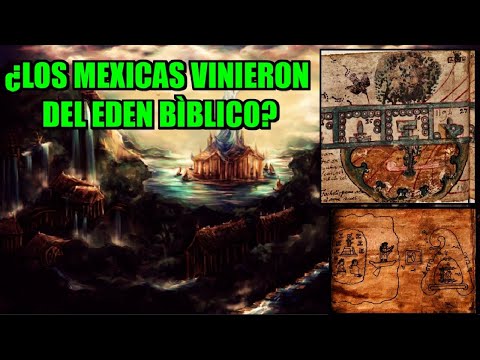
The Mexica Exodus: From Biblical Eden to the Lost Aztlan – An Investigative Report


alejandro quintero ruiz is a veteran field investigator dedicated to the analysis of anomalous phenomena. His approach combines methodological skepticism with an open mind towards the inexplicable, always seeking the truth behind the veil of reality.

Introduction: Whispers of a Primordial Connection

The echoes of ancient civilizations often resonate with tantalizing hints of shared origins, blurring the lines between history, myth, and even scripture. The Mexica, the civilization that would forge the powerful Aztec empire, possess a foundational narrative steeped in mystery: the journey from a fabled homeland called Aztlan. But what if this narrative harbored deeper, more ancient connections than commonly assumed? What if the "lost land" of the Mexica held echoes of terrestrial paradises described in the most foundational texts of Western civilization? This report delves into the controversial hypothesis that the Mexica experienced an exodus that, by certain interpretations, mirrors the biblical narrative of Eden, and probes the enduring, elusive nature of their ancestral home, Aztlan.

The Aztlan Enigma: Cartography of the Mythic Homeland

Aztlan, the "Place of the Herons" or "Place of Whiteness," is more than just a geographical location; it is the spiritual and historical crucible from which the Mexica people claim their descent. Its exact whereabouts remain one of Mesoamerica's most persistent enigmas. Early codices offer cryptic clues: islands in a lake, land surrounded by water, a place where people emerged. Some scholars propose locations in northern Mexico, such as the Chicomóztoc region, while others venture into the southwestern United States, or even further afield. The persistent lack of definitive archaeological evidence fuels speculation, transforming Aztlan into a potent symbol of lost heritage and a quest for identity.

The search for Aztlan is not merely an academic pursuit; it is a deeply ingrained cultural imperative. This elusive homeland represents the genesis of their identity, a sacred starting point that anchors their entire worldview. Understanding Aztlan is akin to understanding the very soul of the Mexica civilization, a civilization that, despite its eventual conquest, left an indelible mark on history.

"The quest for Aztlan is a journey into the collective unconscious of a people, a search for the root from which an entire civilization bloomed."

The symbolism associated with Aztlan often includes themes of purity, origin, and divine endowment, concepts that resonate across disparate cultures and mythologies. This commonality is precisely where the more radical hypotheses begin to take root, suggesting connections that transcend the immediate geographical and historical context of Mesoamerica.

Biblical Parallels: A Controversial Hypothesis

The idea of linking Mesoamerican origins to biblical narratives is not new, though it remains highly contentious among mainstream scholars. Proponents of such theories often point to perceived similarities in creation myths, flood narratives, or concepts of a divine promised land. In the context of the Mexica, the narrative of emerging from a primal water or a fertile, paradisiacal place can be seen, through a specific interpretive lens, as paralleling the biblical creation account in Genesis, where life emerges from primordial waters and humanity is placed in the Garden of Eden.

The expulsion from Eden, a loss of paradise, can be seen as analogous to the Mexica's departure from Aztlan, driven by prophecy and divine mandate. Both narratives describe a genesis point, a subsequent departure or expulsion, and a long journey fraught with hardship, leading towards a destined future. Skeptics argue that these parallels are either coincidental, the result of universal archetypes, or a product of later syncretism and interpretation rather than direct historical connection. However, for those seeking unconventional links, these points of resonance are compelling enough to warrant deeper investigation.

Linguistic and Cultural Crossroads

While direct linguistic links between Hebrew and Nahuatl (the language of the Mexica) are overwhelmingly rejected by linguists, some theorists explore deeper, more abstract connections. They might look at numerological patterns, symbolic interpretations of cosmological diagrams, or resemblances in certain ritualistic structures. For instance, the significance of the number seven in Mexica cosmology, or their cyclical view of time, has been speculatively linked to similar concepts in ancient Near Eastern cultures.

Culturally, the argument often centers on themes of covenant, divine election, and a cyclical understanding of history. The Mexica's belief in Huitzilopochtli as their patron deity, guiding them on their arduous journey, bears a superficial resemblance to the stories of divine guidance in the Old Testament. These arguments, however, often rely on thematic comparisons rather than concrete evidence, making them difficult to substantiate through rigorous academic methods.

To understand these alleged connections, it's imperative to consult diverse perspectives. For those interested in the linguistic aspects, exploring resources on language families and historical linguistics is crucial. However, for the advocates of deeper correlations, the focus shifts to comparative mythology and the study of archetypal symbols that appear across cultures, a field that thrives on interpretation and symbolic resonance.

Ancient myths often contain recurring motifs. The concept of a lost paradise or a divinely guided migration appears in many cultures, suggesting perhaps universal human experiences or primeval memories of collective events that have been interpreted through various cultural lenses.

Archaeological and Anthropological Perspectives: The Search for Evidence

The scientific community largely dismisses theories of direct biblical connections to pre-Columbian civilizations. Archaeological evidence firmly places the Mexica within a long indigenous Mesoamerican developmental trajectory. Their origins are traced to nomadic groups from northern Mexico who, according to their own historical accounts, settled in the Valley of Mexico around the 13th century CE, eventually founding Tenochtitlan.

However, the "lost" nature of Aztlan itself leaves a significant void that allows unconventional theories to flourish. While archaeological digs have explored numerous potential sites associated with Chicomóztoc or other proto-Mexica settlements, none have provided definitive proof of Aztlan as described in migration accounts. This lack of a singular, verifiable location for Aztlan continues to fuel speculation, allowing for interpretations that look beyond conventional historical and geographical boundaries. It’s a stark reminder that some chapters of human history remain stubbornly unwritten, or perhaps, deliberately obscured.

The study of archaeology in Mesoamerica is a continuous process, with new discoveries frequently reshaping our understanding of ancient cultures. While the current consensus on Mexica origins is well-established, the mystery of Aztlan serves as a compelling example of how historical narratives can persist and evolve, inviting new interpretations.

Expert Analysis on Mexica Origins

Mainstream archaeologists, anthropologists, and historians overwhelmingly agree that the Mexica civilization developed independently within Mesoamerica. Their migration narratives, while rich in cultural significance, are generally interpreted as origin myths that convey social and political ideologies rather than literal historical accounts of a transoceanic journey from the Near East. Scholars like Michael Coe and Miguel León-Portilla have extensively documented the Mexica's sophisticated culture, their linguistic roots in the Uto-Aztecan family, and their indigenous predecessors. The consensus is that any perceived parallels with biblical narratives are either superficial, coincidental, or products of later interpretations, possibly influenced by colonial-era interactions and the imposition of European religious frameworks.

However, within certain fringe communities and among independent researchers, the possibility of ancient trans-cultural diffusion or even pre-Columbian contact with Near Eastern civilizations is explored. These theories often rely on comparative analysis of symbols, myths, and artifacts. They suggest that the Mexica migration story, when stripped of its traditional interpretation, could align with the broader human narrative of exodus and the search for a promised, fertile land, a narrative present in various biblical accounts.

The critical factor here is methodology. While conventional academia relies on established archaeological, linguistic, and genetic evidence, alternative researchers often embrace speculative connections and thematic similarities. The challenge lies in distinguishing between meaningful correlation and spurious resemblance.

Researcher's Verdict: Folklore, Memory, or Something More?

The hypothesis linking the Mexica exodus to biblical narratives and pinpointing Aztlan remains firmly in the realm of speculative theory, lacking robust empirical support from mainstream scientific disciplines. The academic consensus firmly anchors the Mexica within the indigenous development of Mesoamerica, interpreting their migration myths as foundational cultural narratives rather than literal historical records of transcontinental journeys. The lack of definitive archaeological findings for Aztlan further complicates any attempt to validate these unconventional claims.

Yet, the persistence of these ideas, and the profound resonance of themes like 'lost paradise' and 'divinely guided migration' across cultures, cannot be entirely dismissed as mere coincidence or deliberate fabrication. It is possible that these narratives, whether originating from shared archetypes, fragmented ancient memories, or symbolic interpretations, speak to deeper, perhaps universal, human experiences or even profound cosmic truths that science has yet to fully comprehend. The search for Aztlan, and the speculative connections to biblical narratives, represent not just a historical inquiry, but a persistent human drive to understand our origins and our place in the cosmos.

"We must acknowledge the limits of our current understanding. While the evidence points towards an indigenous origin, the enduring mystery of Aztlan and the cultural echoes that invite comparison with ancient Near Eastern narratives compel us to remain open to what further investigation might reveal."

The allure of the unknown, especially when it touches upon foundational human stories, is powerful. It offers the tantalizing possibility of a grand, unifying narrative that connects disparate peoples and cultures across vast gulfs of time and geography. Whether these connections are real or imagined, they undeniably enrich our understanding of how humans construct meaning and grapple with the fundamental questions of existence.

The Researcher's Archive

For those who wish to delve deeper into the complexities of Mexica origins, comparative mythology, and the enduring search for lost homelands, the following resources are invaluable:

  • Books:
    • "The Broken Spear: The Indigenous Conquest of the Americas" by David E. Stannard: Offers a critical perspective on the impact of conquest and indigenous resilience.
    • "The Mexica: Aztec History and Invention" by Elizabeth Hill Boone: Explores how Mexica identity was constructed through historical narratives.
    • "The Sacred and the Profane: A Study of the Religious Aspects of Underdeveloped Societies" by Mircea Eliade: A foundational text for understanding mythology, ritual, and the concept of sacred space.
  • Documentaries:
    • Investigate documentaries focusing on Mesoamerican civilizations and archaeological discoveries in Mexico and Central America. Look for productions that critically analyze indigenous origin myths.
    • Films that explore comparative mythology and ancient civilizations, such as those investigating potential diffusionist theories or historical anomalies.
  • Platforms:
    • Explore academic databases for articles on Mexica ethnohistory and archaeology.
    • Platforms like Gaia or Discovery+ occasionally feature content on historical enigmas and alternative theories, which should be approached with a critical, analytical mindset.

Frequently Asked Questions

What is Aztlan?
Aztlan is the legendary ancestral homeland of the Mexica people, described in their migration accounts as an island located somewhere to the north. Its precise location remains unknown and is a subject of ongoing debate and speculation.
What is the main argument for a biblical connection to the Mexica?
The main argument relies on perceived thematic parallels between the Mexica migration narrative (exodus from Aztlan, journey to a promised land) and biblical narratives (e.g., the Exodus from Egypt, creation and expulsion from Eden). These parallels are largely symbolic and interpretive.
Is there scientific evidence supporting a biblical origin for the Mexica?
No, there is no scientific or archaeological evidence to support a direct biblical origin for the Mexica. Mainstream scholarship firmly places their roots within indigenous Mesoamerican development.
Why do these theories about biblical connections persist?
These theories often persist due to the human fascination with grand, unifying historical narratives, the symbolic similarities in origin and exodus myths across cultures, and a desire to find connections between seemingly disparate belief systems. They also appeal to fringe researchers seeking to challenge conventional historical paradigms.

Your Field Mission: Unearthing Local Legends

Every culture possesses origin stories and tales of significant journeys or lost homelands. Your mission is to investigate a prominent local legend or folklore from your region that speaks of ancestral origins, migrations, or a mythical place. Collect testimonials, research historical accounts, and analyze the narrative for any symbolic parallels that might resonate with broader human themes, even if unconventional. Document your findings, paying close attention to how the story is passed down and interpreted by the community. Use your analytical skills to discern the core truths, symbolic meanings, and potential historical kernels within the folklore.

Teotihuacan's Tunnel: Unearthing Mexico's Passage to the Underworld - An Investigative Report


Introduction: The Whispers from Below

The earth keeps secrets. It buries them under millennia of dust and stone, waiting for the right moment – or the right shovel – to reveal them. In the shadow of ancient pyramids, where history’s echoes are loudest, an archaeological discovery in Mexico has unearthed a passage that speaks not just of human endeavor, but of the deep-seated rituals and beliefs that shaped a lost civilization. Today, we dissect this find, not merely as an archeological footnote, but as a potential gateway to understanding the Mesoamerican concept of the underworld, and what other, perhaps more spectral, entities might dwell in such liminal spaces.

Teotihuacan: A Metropolis Shrouded in Mystery

The city of Teotihuacan, a name that resonates with awe and unanswered questions, stands as a testament to the ingenuity of ancient Mesoamerican peoples. Flourishing long before the Aztecs, its origins remain an enigma, its builders’ identities lost to the passage of time. Yet, its grandeur is undeniable. At its zenith, Teotihuacan was not merely a settlement; it was a sprawling metropolis, a sixth-largest city in the ancient world, pulsing with the lives of over 125,000 inhabitants. Its monumental architecture, particularly the Pyramids of the Sun and Moon, continues to draw scholars and tourists alike, each seeking to decipher the silent narratives etched in stone.

Beneath the Pyramid of the Moon: The Tunnel Unveiled

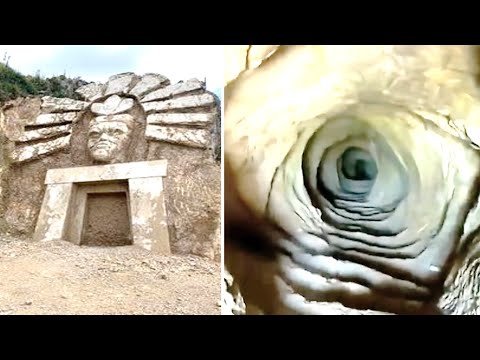
Recent excavations near the iconic Pyramid of the Moon have brought forth a significant discovery: an underground tunnel. This is not just another subterranean passage; its location and context lend it considerable symbolic weight. Archaeologists have identified this newly uncovered tunnel as a potential representation of the Aztec concept of a "passage to the underworld." This revelation invites a deeper dive into the spiritual and cosmological frameworks of the civilizations that inhabited this sacred city, prompting us to consider what rituals, sacrifices, or even spiritual journeys might have been enacted within its confines.

Symbolism of the Aztec 'Passage to the Underworld'

The Aztec cosmology envisioned Mictlan, the underworld, as a multi-layered realm of the dead, a destination reached through arduous trials. Tunnels and subterranean passages in ancient cultures often served as potent symbols for this transition – a physical representation of a spiritual journey. They symbolized a passage from the known world to the unknown, from life to death, and potentially, from the mundane to the divine or the spectral. The discovery beneath the Pyramid of the Moon strongly suggests adherence to these profound cosmological beliefs. It hints at a deliberate construction designed to mimic or facilitate this symbolic descent, blurring the lines between earthly architecture and spiritual architecture.

Analysis: The City's Scale and Influence

The sheer scale of Teotihuacan, established around 300 BCE, predates many of the more famous Mesoamerican civilizations, including the Aztecs who later revered it. Its influence is evident in art, architecture, and urban planning found in later cultures across the region. A city capable of housing over 125,000 people in its prime was a significant hub of commerce, religion, and power. The construction of such monumental structures as the Pyramids of the Sun and Moon, and now this symbolic tunnel, required immense organization, resources, and a sophisticated understanding of engineering and astronomy. This reinforces the idea that Teotihuacan was a sophisticated civilization with complex societal structures and a deeply ingrained spiritual life.

Investigating the Paranormal Potential

While archeologists focus on historical and cultural interpretations, the nature of tunnels, especially those linked to concepts of the underworld, invariably piques the interest of paranormal investigators. These subterranean spaces, often dark, silent, and remote, are frequently associated with anomalous phenomena. Reports of unexplained sounds, feelings of presence, and even apparitions are common in archeological sites with spiritual significance. The link to the "underworld" invites speculation: could such passages be conduits for residual energy, or even active gateways for entities that exist beyond our present dimensional understanding? The sheer age and the profound spiritual weight of Teotihuacan make this site a prime candidate for further investigation into potential hauntings or paranormal activity. For serious researchers, understanding the electromagnetic field [EMF] fluctuations in such locations or analyzing potential Electronic Voice Phenomena [EVP] could offer valuable, albeit preliminary, data. The equipment to start such investigations is more accessible than ever, though professional tools can offer superior sensitivity.

Critique of Archaeological Reporting

The initial reports often present such discoveries with a factual dryness that belies their profound implications. While scientific accuracy is paramount, the narrative surrounding these finds can sometimes dismiss anthropological and even speculative interpretations of their purpose. The description of the tunnel as merely "symbolising the Aztec 'passage to the underworld'" is a starting point, but it leaves much unsaid. What evidence supports this interpretation? Were there associated artifacts found within the tunnel that shed light on its use? Without this granular detail, the reporting remains superficial. A deeper analysis requires connecting the dots between historical context, symbolic meaning, and the potential for phenomena that defy conventional explanation. This is where embracing a methodology that allows for open-minded inquiry, akin to the rigorous yet unbounded approach of investigators like Jacques Vallée, becomes crucial.

El Rincón Paranormal Archives

Welcome to the Paranormal Corner, your daily source for unexplained and unusual paranormal videos and documents. If you resonate with the content presented here, consider following us across our social networks. For those seeking deeper dives into the inexplicable, our archives offer a wealth of information on cases ranging from historical hauntings to modern-day cryptid sightings. Exploring the vast history of paranormal research requires diligence, and we strive to provide meticulously documented cases for your perusal. Don't forget to explore how instruments like the K2 EMF meter can be used in your own investigations.

"The city of Teotihuacan is the subject of much curiosity, especially now that an underground tunnel was uncovered by archaeologists underneath the mystical Pyramid of the Moon. It's believed that the tunnel symbolises the Aztec 'passage to the underworld'."

Investigator's Verdict: Beyond the Excavation

The discovery beneath the Pyramid of the Moon is significant, primarily for its historical and anthropological implications. It offers tangible evidence of the deep spiritual beliefs that guided the construction and purpose of Teotihuacan. However, to dismiss its potential for paranormal resonance would be a disservice to the very nature of such ancient sites. Tunnels linked to concepts of death and the underworld often become focal points for reported anomalous activity, suggesting a potential energetic imprint or lingering presence. While definitive proof of the paranormal requires more than archeological findings, this tunnel serves as fertile ground for further investigation. It reminds us that our understanding of the past is incomplete, and that the veil between worlds may be thinner in places of profound historical and spiritual significance. It is essential to approach these sites with both scholarly rigor and an openness to phenomena that science has yet to fully quantify.

Your Field Mission: Charting the Unknown

The exploration of ancient sites like Teotihuacan is a continuous process. While archaeologists uncover physical structures, the true mystery lies in the beliefs and potential energetic residue they left behind. Your mission, should you choose to accept it, is to delve deeper into the mythology and reported phenomena surrounding Mesoamerican pyramids. Research other potential underworld passages or subterranean sacred sites documented in anthropological texts. Consider what tools, beyond standard archaeological equipment, might be employed to investigate the energetic signatures of such locations. Share your findings and speculative theories in the comments below. Let's piece together the narrative of what lies beneath the surface, both physically and metaphysically.

About the Author

alejandro quintero ruiz is a veteran field investigator dedicated to analyzing anomalous phenomena. His approach combines methodological skepticism with an open mind to the inexplicable, always seeking the truth behind the veil of reality. With years of experience, he navigates the complex intersection of history, science, and the unknown.

Thank you for watching! Thank you to CO.AG for the background music!

Hello and welcome to the Paranormal Corner. If you love paranormal content, please follow us on our social networks:

The Mayan Atlantis: Unearthing a Lost Civilization's Secrets


Introduction: Echoes from the Depths

The ocean depths hold secrets that dwarf human history, vast and silent. For millennia, whispers of sunken cities have captivated the human imagination, none more so than the legend of Atlantis. But what if the echoes of this legendary metropolis don't solely originate from the Mediterranean? What if a parallel, equally enigmatic civilization, bearing striking resemblances to Plato's descriptions, flourished within the heart of Mesoamerica? Today, we peel back the layers of time to investigate the intriguing hypothesis of a "Mayan Atlantis."

This isn't just about finding submerged ruins; it's about questioning the accepted narratives of human history and the possibility of transoceanic cultural exchange far predating accepted timelines. We will examine the parallels, the anomalies, and the sheer speculative audacity of this concept, treating it not as folklore, but as a potential lead in the ongoing investigation of our planet's hidden past.

Historical Context: The Allure of Lost Worlds

The concept of Atlantis, first detailed by the Greek philosopher Plato around 360 BC, describes a powerful naval empire that existed "beyond the Pillars of Hercules" (generally understood as the Strait of Gibraltar). Plato's allegorical tale speaks of advanced technology, a sophisticated society, and a catastrophic end, swallowed by the sea in a single day and night of misfortune. This narrative has resonated through centuries, inspiring countless theories, expeditions, and fictional works.

However, the scholarly consensus largely regards Atlantis as a philosophical construct, a cautionary tale about hubris and divine retribution. Despite this, the human fascination with advanced, vanished civilizations remains potent. This fascination finds fertile ground in regions steeped in mystery, like the ancient Mayan civilization.

The Maya, a civilization that flourished in Mesoamerica for centuries, developed sophisticated astronomical systems, hieroglyphic writing, and monumental architecture, all without the technological trappings often associated with Atlantis. Yet, their eventual decline and the vast, often unexplored territories they inhabited provide a canvas ripe for speculation. Could a civilization as advanced as the Maya have had their own Atlantean mythos, or perhaps, a lost city of their own submerged by geological or cataclysmic events?

Archaeological Anomalies: Submerged Mysteries

Across the globe, underwater archaeology has unearthed tantalizing evidence that challenges our understanding of ancient civilizations. Structures found off the coast of Cuba, Bimini (the alleged Bimini Road), and numerous other locations present geometric formations and apparent stonework that some argue are too regular to be natural geological phenomena. These underwater sites, often dismissed as natural rock formations by mainstream archaeology, spark debate about the possibility of submerged settlements predating known historical timelines.

The Yucatán Peninsula, the heartland of Mayan civilization, is particularly intriguing. Its landscape is dotted with cenotes – natural sinkholes leading to underground rivers and vast cave systems. Some of these cenotes contain submerged ruins, artifacts, and even skeletal remains, testifying to their sacred importance to the Maya and their potential role in survival during times of drought or conflict.

The sheer scale of Mayan achievements in areas like astronomy and mathematics, especially considering their lack of certain technologies (like the wheel for transport, or iron metallurgy), fuels the imagination. If such an advanced culture existed, could other, perhaps even more advanced, Mayan-related societies have existed, only to be lost to the sea? The idea suggests a deeper, more interconnected ancient world than we currently acknowledge, one where coastal settlements now lie beneath the waves, waiting to be discovered.

The Mayan Connection: Parallelism or Influence?

The 'Mayan Atlantis' theory posits that the descriptions of Atlantis bear a striking, perhaps too striking, resemblance to aspects of Mayan culture, geography, or mythology. Proponents often point to:

  • Advanced Knowledge: Both Atlantis and the Maya are associated with advanced astronomical and mathematical knowledge. The Maya had a complex calendar system and understood astronomical cycles with incredible precision.
  • Cataclysmic Endings: While Plato describes a sudden submersion for Atlantis, the decline of many Mayan city-states remains a subject of debate, with theories ranging from drought and warfare to environmental collapse. The idea of a coastal Mayan city being lost to rising sea levels or seismic activity isn't far-fetched geographically.
  • Geographic Parallels: Some interpretations of Plato's text, when combined with the geography of the Yucatán Peninsula, suggest a mapping of the two. The rich network of underground rivers and cenotes in the Mayan region has been likened to Plato's description of Atlantis's water systems.
  • Cultural Parallels: Concepts like the "underworld" in Mayan cosmology (Xibalba) add a layer of mystique, suggesting a civilization deeply connected to subterranean and watery realms, echoing the drowned city narrative.

While mainstream academia largely dismisses direct links, viewing these as coincidences or interpretations colored by the Atlantis myth, the persistent parallels invite further investigation. This line of inquiry requires us to consider if there was a shared ancient knowledge base, perhaps even a lost, global civilization whose influence radiated outwards. The work of researchers like Graham Hancock, though controversial, often explores such grand theories of lost global civilizations and their impact on later cultures, including the Maya.

Speculative Theories: From Plato to the Yucatán

The "Mayan Atlantis" isn't a single, unified theory but a collection of speculative ideas. One prominent line of thought suggests that the original Atlantis story might have been a garbled or misinterpreted account of an actual event or civilization, and that the Maya, or a civilization from which they derived, might have been the true subjects. This could involve:

  • Transoceanic Contact: The possibility of ancient mariners crossing the Atlantic, sharing technology or knowledge, is a recurring theme. Could Atlantean survivors have reached the Americas, influencing or merging with indigenous populations?
  • Geological Events: The Yucatán Peninsula is geologically active, with a history of seismic events and changes in sea level. It's plausible that coastal settlements, perhaps even advanced ones, could have been submerged over time. The Chicxulub impact crater, famously associated with the dinosaur extinction, is also located nearby, hinting at a region with a tumultuous geological past.
  • Hidden Realms: Some theories lean into the more esoteric, suggesting that 'Atlantis' or its precursors might not have been a single city but a network of advanced settlements, some of which are now submerged or hidden within uncharted territories (like extensive cave systems).

These theories often require a re-evaluation of established archaeological timelines and a willingness to explore evidence that falls outside conventional academic paradigms. The value lies not necessarily in proving a direct link, but in opening our minds to complexities in ancient history that we may have overlooked.

"The oceans are the last frontier of exploration on this planet. What lies beneath the waves might rewrite not just history, but our understanding of human potential."

Investigator's Verdict: Fact, Fiction, or Forgotten Truth?

The hypothesis of a "Mayan Atlantis" currently resides firmly in the realm of speculation. There is no definitive archaeological or historical evidence to confirm that the Maya, or any precursor civilization in Mesoamerica, directly corresponds to Plato's Atlantis or possessed a city of similar legend submerged by cataclysm. The striking parallels often cited are, by mainstream standards, coincidental, or products of interpreting myths and archaeological sites through the lens of the Atlantean narrative.

However, within any enduring myth, there is often a kernel of truth, a remembrance of things past. The Maya were undoubtedly a civilization of extraordinary complexity and ingenuity. They possessed a profound understanding of their environment, including its water systems and geological shifts. The existence of submerged ruins in cenotes and off coastlines is a documented fact, hinting at human settlements lost to time and water. Whether these sites directly relate to Atlantis is unproven, but they represent genuine enigmas within the Mayan chronology.

My approach, as always, is to advocate for rigorous investigation. We must approach these ideas with both open minds and critical faculties. The lack of conclusive proof does not equate to the impossibility of the concept. It signifies that the investigation is incomplete. The true "Mayan Atlantis," if it exists, may not be a direct replica of Plato's tale, but rather a lost chapter of Mesoamerican history submerged beneath the waves, awaiting the right tools and methodologies to be uncovered.

The Researcher's Archive

To delve deeper into the mysteries of lost civilizations and ancient enigmas, consult these foundational texts and resources:

  • "Fingerprints of the Gods" by Graham Hancock: Explores theories of a lost global civilization.
  • "Atlantis: The Lost Continent" by Ignatius Donnelly: An early, foundational work that revived modern interest in Atlantis.
  • "The Lost Cities of the Maya" (Documentary Series): Investigate the known archaeological wonders of the Maya. Platforms like Gaia often host content exploring these subjects.
  • Works by J. Allen Hynek or Charles Fort: For understanding how anomalous phenomena are observed and cataloged.
  • Academic Journals on Underwater Archaeology and Mesoamerican Civilizations: For peer-reviewed research, although such specific theories are rarely found in mainstream publications.

Your Field Mission

Consider the concept of "lost cities" in your own region, regardless of how grandiose or mundane they may seem. Are there local legends of settlements swallowed by the earth, floods, or time? Undertake a small research project:

  1. Identify Local Legends: Speak to elders, local historians, or consult local archives about any stories of lost or submerged settlements in your area.
  2. Geological Context: Research the geological history of your region. Were there significant sea-level changes, seismic activity, or other geological factors that could explain such legends?
  3. Document Anomalies: Even if no obvious ruins exist, note down any strange archaeological finds, unusual geographical features, or historical accounts that seem anomalous.

Share your findings and any potential links you discover in the comments below. The collective knowledge of investigators like you is invaluable.

Frequently Asked Questions

Q: Is there scientific proof of Atlantis?

A: No, there is no scientific consensus or conclusive archaeological evidence to prove the existence of Atlantis as described by Plato. It is widely considered a philosophical allegory.

Q: What are the most common theories connecting Atlantis to the Maya?

A: Theories suggest parallels in advanced knowledge (astronomy, mathematics) and cataclysmic destruction, proposing that the Maya or a proto-Mayan civilization might be the historical basis for the Atlantis legend, or that Atlantean survivors influenced Mayan culture.

Q: Are there actual submerged ruins in the Mayan region?

A: Yes, there are documented submerged ruins and archaeological sites in cenotes and off the coastlines of the Mayan region, particularly in the Yucatán Peninsula. These are considered significant finds related to Mayan history and practice, though not directly linked to Atlantis.

Sobre el Autor

alejandro quintero ruiz is a veteran field investigator dedicated to the analysis of anomalous phenomena. His approach combines methodological skepticism with an open mind to the inexplicable, always seeking the truth behind the veil of reality.

The legend of Atlantis, whether a myth or a fragmented memory, continues to inspire. The Mayan civilization, with its enduring mysteries, offers a unique lens through which to explore these grand questions. While a direct "Mayan Atlantis" remains unproven, the investigation into lost civilizations and the profound impact of geological and cultural shifts on human history is far from over. The depths of the ocean and the sands of time may yet yield the evidence we need to connect the dots of our ancient past.

Final Challenge: Uncover Your Local Mystery

Your mission, should you choose to accept it, is to become a local investigator. Take the principles discussed here – examining legends, considering geological context, and documenting anomalies – and apply them to a story or location near you. What forgotten history lies hidden in your own backyard? Report your findings in the comments. The truth is out there, waiting to be unearthed.