Followers

Mostrando las entradas con la etiqueta Scotland. Mostrar todas las entradas

Ghost Caught on Camera in Daylight on a Scottish River: An Investigative Analysis

Image

The allure of the unexplained often resides in the shadows, but occasionally, it thrusts itself into the full glare of daylight. Such was the case when a photographer, diligently documenting wildlife along a tranquil Scottish river, stumbled upon an anomaly that has since sparked intrigue and debate. While reviewing footage intended for otter sightings, an unexpected apparition emerged from the trees, challenging conventional explanations and igniting speculation about its true nature.

Anomalous Visuals: Deconstructing the Footage

The core of this case lies within a three-minute video clip. While the initial intent was to capture footage of otters, the playback revealed an "unusual happening in the trees." The description, though brief, points to a visual anomaly that transcended typical wildlife movement. The ambiguity of the initial report contrasts sharply with the detailed interpretations and debates that have since emerged online. From a technical standpoint, analyzing such footage requires a meticulous examination of image quality, potential environmental factors, and any discernable patterns that deviate from the norm. Was it a fleeting shadow, a trick of the light, or something demonstrably beyond natural explanation? The data suggests a point of interest in the trees, where a disturbance, perceived by some as a figure, occurred.

Eyewitness Accounts and Audience Reactions

The digital age has transformed passive viewers into active participants in the investigation of the paranormal. This case is no exception, with numerous reactions and interpretations surfacing. Many viewers found the footage unexpectedly calming, describing it as "the most calming and peaceful ghost footage I've ever watched," a sentiment that runs counter to typical fearful responses to spectral encounters. Others expressed a sense of serenity, finding the natural sounds of the river more captivating than any perceived apparition.

Recommended Gear for Investigation

ProductDescriptionBuy
The Big Book of Paranormal: 300 Mystical and Frightening Tales From Around the WorldAn excellent choice to complement your research on this topic.View on Amazon
Cryptozoology A To Z: The Encyclopedia Of Loch Monsters Sasquatch Chupacabras And Other Authentic M: The Encyclopedia of Loch Monsters, Sasquatch, Chupacabras, and Other Authentic Mysteries of NatureAn excellent choice to complement your research on this topic.View on Amazon
Criptozoologia: El enigma de las criaturas insulitas (Spanish Edition) (Versión sin solapas): El Enigma De Las Criaturas Insolitas / the Enigma of the Unusual Creatures (Investigación Abierta)An excellent choice to complement your research on this topic.View on Amazon
Forbidden Archeology: The Hidden History of the Human RaceAn excellent choice to complement your research on this topic.View on Amazon
The H. P. Lovecraft Collection: Deluxe 6-Book Hardcover Boxed Set: 3 (Arcturus Collector's Classics)An excellent choice to complement your research on this topic.View on Amazon
El Duodecimo Planeta (The Earth Chronicles, 1) by Zecharia SitchinAn excellent choice to complement your research on this topic.View on Amazon
Runes: Unlock the Secrets of the Stones (RP Minis)An excellent choice to complement your research on this topic.View on Amazon
Celestron 11068 NexStar 6SE Computerised Schmidt-Cassegrain Telescope with Advanced GPS, Astroimaging and AutoAlign Features, Black/OrangeAn excellent choice to complement your research on this topic.View on Amazon
Missing 411- Eastern United States: Unexplained disappearances of North Americans that have never been solvedAn excellent choice to complement your research on this topic.View on Amazon
Ghost Hunting EVP - Grabadora EVP de 8 GB, equipo paranormal, caja de voz digital SpiritAn excellent choice to complement your research on this topic.View on Amazon

"I did not notice anything, but the sound of the river is so relaxing! If I were there, the ghost could come anytime, and I would be happy and relaxed."

- Audience Comment

However, a significant portion of the audience remained unconvinced, actively seeking logical explanations or questioning the very existence of the phenomenon. This divide in perception is a common thread in paranormal investigations, highlighting the subjective nature of interpretation. One compelling anecdote shared describes an "orange orb" appearing in photographs at a location where ashes were scattered, interpreted as a spiritual presence. This personal testimony, while anecdotal, adds an emotional layer to the discussion, suggesting that perceptions of the inexplicable can be deeply tied to personal experiences and beliefs.

"I saw one back in the 1970's while night fishing , it was known as the Burning lady she moved through the trees surrounded by an orange/red glow which really did look like flames, 20 years later i mentioned it in conversation with my brother who admitted he had also seen it around the same time but was so scared by it,he had never mentioned it to anyone, that is one of a few experiences ive had"

- Audience Comment

The diverse range of reactions, from profound skepticism to heartfelt belief, underscores the difficulty in reaching a consensus when dealing with phenomena that elude empirical verification. The online discourse also reveals a fascination with the location itself, with comments like "This confirms one thing for me: I would love to visit the Scottish countryside!" and "If I was a ghost I would definitely choose to live there. What a serene beautiful spot !!" suggesting that the aesthetic appeal of the setting can influence perception.

Skeptical Analysis: Rational Explanations and Critiques

Skepticism is the cornerstone of any rigorous investigation. In analysing the footage, several rational explanations have been proposed by viewers. The most persistent criticism revolves around the possibility of visual artifacts, such as overlays or digital manipulation. Specific claims point to "a circle of superimposed images" and a "subtle, but distinct square zone of different colour where the movement occurs." The observation that "the image quality alters and becomes more grainy as the overlays fade in and out" is a critical detail that warrants further technical examination.

"No question about it. If you look carefully there is a circle of superimposed images. No ghost here. Watch carefully as the image quality alters and becomes more grainy as the overlays fade in and out. The overlay images are subtle but unmistakable superimposition. Nothing other worldly here. Nice peaceful river shot though."

- Audience Comment

Environmental factors have also been suggested. Mist rising from the stream, subtle movements of foliage, or even unusual light refractions can create the illusion of movement or form in video footage. One commentator draws a parallel to a personal experience witnessing a "vast bubble of snow" that was later identified as the rising moon, emphasizing how natural phenomena can be misinterpreted. The lack of clear, undeniable evidence is a recurring theme, with some viewers stating, "I watched this three times and saw exactly nothing. What, exactly are we supposed to be seeing?" This highlights the need for clear pointing or annotation when subtle anomalies are purported to exist within footage.

Furthermore, the presence of distractions, even humorous ones like "what I find shocking is... ' where are the otters '???????", indicates that the primary subject of the video may have been overshadowed by the purported anomaly, leading to disparate focus among viewers.

Paranormal Context: Similar Phenomena and Folklore

While this specific incident focuses on a daylight apparition in Scotland, the concept of spectral sightings in natural environments is not new. Folklore across various cultures speaks of nature spirits, elementals, and apparitions tied to specific locations. The description of a tall spirit with an "unusual aura," or potentially a "Fae or land spirit," aligns with these broader mythological frameworks. The mention of a "Burning Lady" seen in the 1970s, surrounded by an orange/red glow, echoes the "orange orb" mentioned by another viewer, hinting at recurring visual themes in alleged paranormal encounters.

Historical accounts of unexplained phenomena in natural settings, such as the "wedding party" that passed through someone in an old townhouse, or even the more ambiguous "vast bubble of snow" misinterpreted as supernatural, illustrate a common human tendency to seek extraordinary explanations for unusual observations. The Scottish countryside, steeped in myth and legend, provides a particularly fertile ground for such interpretations. The reports of figures, orbs, and unusual lights in natural settings connect this case to a wider tapestry of human experience with the unexplained, suggesting that while specific interpretations vary, the underlying phenomenon of perceived anomalies in nature is a persistent cultural narrative.

Investigator's Verdict: Fraud, Phenomenon, or Misinterpretation?

Based on the available evidence and the spectrum of audience interpretations, the "Ghost caught on camera in daylight on a Scottish river" case remains inconclusive, leaning heavily towards misinterpretation or natural explanation. Skeptical observations regarding digital overlays and image graininess are particularly pertinent. Without access to the raw, unedited footage and the original context of the filming, it is challenging to definitively rule out digital manipulation or artifacts.

The persistent claim of "superimposed images" and alterations in image quality suggests that rigorous technical analysis is required. If these overlays are indeed present, they offer a parsimonious explanation that bypasses the need for supernatural intervention. While the emotional impact of the footage on some viewers is undeniable, and personal anecdotes of orbs and spectral figures add anecdotal weight, they do not constitute empirical proof. The most compelling rational explanation, supported by multiple skeptical viewers, points to a combination of environmental factors (mist, light refractions) and potential digital artifacts or overlays. The lack of a clear, universally discernible figure, coupled with the prevalence of naturalistic explanations, leads this investigator to classify this case as highly likely to be a natural phenomenon or a digitally created illusion, rather than genuine paranormal activity.

The Researcher's Archive

For those seeking to delve deeper into the study of unexplained phenomena, a curated selection of resources can be invaluable. Understanding the methodologies and historical context of paranormal investigation enhances critical thinking.

Recommended Reading:

  • "Investigating the Paranormal: A Scientific Approach" by Melvyn Willin
  • "The Ghost Hunter's Survival Guide: How to Research, Investigate and Document Hauntings" by Dale Kevil
  • "Real Ghosts: Spirit Encounters from Around the World" by Paul Adams

Documentaries:

  • "A Haunting" series - Explores various alleged hauntings with reenactments and expert interviews.
  • "Searching for..." series (e.g., "Searching for Bigfoot") - Chronicles expeditions into the field of cryptozoology.

Frequently Asked Questions

What exactly are viewers supposed to see in the video?
There is significant disagreement. Some viewers report seeing a distinct figure or movement in the trees, while others see nothing unusual, attributing any perceived anomaly to mist, digital artifacts, or pareidolia.
Could the anomaly be a natural phenomenon?
Yes. Explanations like mist rising from the river, unusual light refractions, or the movement of foliage are plausible. Some viewers have also pointed to potential digital overlays or editing artifacts.
Why do some viewers find the footage calming instead of frightening?
This could be due to the serene natural setting, the relaxing sounds of the river, and the lack of overtly terrifying visual elements. It might also reflect personal beliefs about benign spectral presences.
Are there similar documented cases of daytime apparitions?
Yes, reports of apparitions and unexplained phenomena occurring in daylight exist, though they are often more challenging to explain away as simple tricks of the light or shadows associated with darkness. These cases often face increased scrutiny regarding potential manipulation.
What is the significance of the orange orb mentioned in one comment?
The orange orb anecdote, while personal, adds to a broader collection of reported sightings of unexplained lights or formations. In paranormal circles, such orbs are sometimes interpreted as spiritual energy or entities, though scientific explanations often involve dust particles, insects, or lens flare.

Your Mission: Deconstruct Other Anomalies

The investigation of anomalous phenomena requires a continuous effort to gather evidence, analyze data, and critically evaluate claims. Your mission, should you choose to accept it, is to:

  1. Seek out local legends or unexplained occurrences in your area.
  2. Document any personal experiences or sightings you may have had.
  3. Apply the principles of critical thinking and skepticism discussed herein to analyze any supposed evidence.

Share your findings and your own documented experiences in the comments below. Let's pool our collective knowledge and bring clarity to the unexplained.

Did you witness anything unusual in the footage? Have you encountered similar phenomena? Share your thoughts, theories, and personal experiences in the comments section. Your insights could be the missing piece of the puzzle.

If you found this analysis insightful, please share it on your social media channels to keep the conversation going and help us reach a wider audience eager to explore the mysteries of our world.

Investigator's Note: True paranormal research doesn't fund itself. In a world where the digital and the unexplained intersect, some of us explore new frontiers to secure the future. Do you dare to be part of the vanguard? Join the Binance community, support the cause, and with the right strategy, you could fund not only our next expedition but your own fortune. The next great discovery could be just a click away.

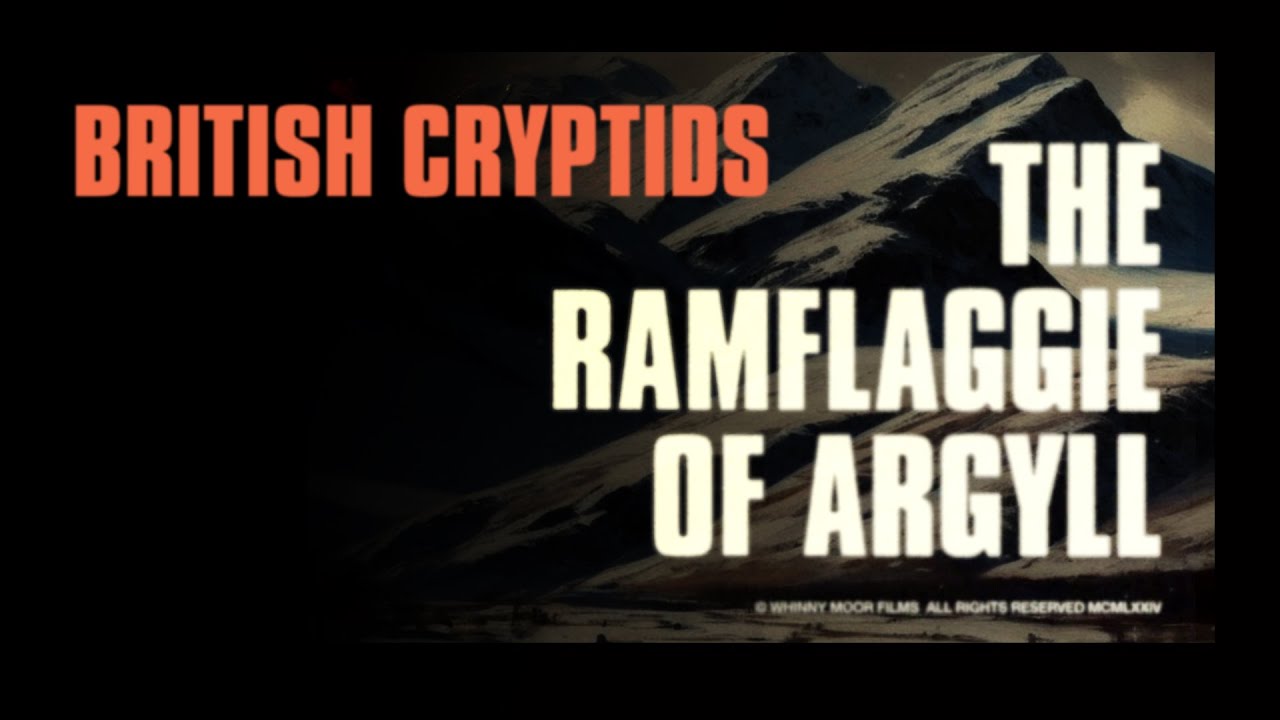
British Cryptids: The Ramflaggie of Argyll - Deep Dive Investigation

Image

Scottish folklore is a tapestry woven with tales of the uncanny, from the elusive water-horses haunting its lochs to the shadowy bogles and stagmen lurking in its glens. Yet, it is in the rugged expanse of the Western Highlands, a region once charted by the Romans as Caledonia, that encounters with a creature of profound mystery and chilling terror have been most frequently reported. This investigation delves into the legend of the Ramflaggie of Argyll, a cryptid that embodies the raw, untamed spirit of the Scottish wilds.

Introduction: Whispers from Caledonia

The mists of Scotland hold secrets as ancient as the standing stones that dot its landscape. For centuries, tales of creatures dwelling in its lochs and glens have persisted, forming a rich tapestry of folklore. But among these legendary beings, the Ramflaggie of Argyll stands out, a cryptid whispered about in the remote Western Highlands, often described as one of the most intimidating entities in Scottish lore. Our investigation seeks to unpack the origins, reported sightings, and potential explanations behind this enigmatic creature.

The British Cryptids Films: A Lost Legacy

The narrative surrounding the Ramflaggie is intrinsically linked to a series of films produced in 1974 under the umbrella title "British Cryptids." Presumably intended for broadcast by major UK networks like the BBC or ITV, these films seemingly found a more limited audience, often relegated to school screenings and public library archives. The content we now have access to, originally recovered from the Internet Archive, presents a fragmented picture. These JPEGs were pieced together with significant gaps and missing visual sequences, compelling us to reconstruct the narrative and fill in the blanks with conjecture and analysis.

Recommended Gear for Investigation

ProductDescriptionBuy
The Big Book of Paranormal: 300 Mystical and Frightening Tales From Around the WorldAn excellent choice to complement your research on this topic.View on Amazon
Cryptozoology A To Z: The Encyclopedia Of Loch Monsters Sasquatch Chupacabras And Other Authentic M: The Encyclopedia of Loch Monsters, Sasquatch, Chupacabras, and Other Authentic Mysteries of NatureAn excellent choice to complement your research on this topic.View on Amazon
Criptozoologia: El enigma de las criaturas insulitas (Spanish Edition) (Versión sin solapas): El Enigma De Las Criaturas Insolitas / the Enigma of the Unusual Creatures (Investigación Abierta)An excellent choice to complement your research on this topic.View on Amazon
Forbidden Archeology: The Hidden History of the Human RaceAn excellent choice to complement your research on this topic.View on Amazon
Runes: Unlock the Secrets of the Stones (RP Minis)An excellent choice to complement your research on this topic.View on Amazon
The H. P. Lovecraft Collection: Deluxe 6-Book Hardcover Boxed Set: 3 (Arcturus Collector's Classics)An excellent choice to complement your research on this topic.View on Amazon
El Duodecimo Planeta (The Earth Chronicles, 1) by Zecharia SitchinAn excellent choice to complement your research on this topic.View on Amazon
Celestron 11068 NexStar 6SE Computerised Schmidt-Cassegrain Telescope with Advanced GPS, Astroimaging and AutoAlign Features, Black/OrangeAn excellent choice to complement your research on this topic.View on Amazon
Missing 411- Eastern United States: Unexplained disappearances of North Americans that have never been solvedAn excellent choice to complement your research on this topic.View on Amazon
Ghost-Hunting For Dummies [Idioma Inglés] An excellent choice to complement your research on this topic.View on Amazon

The fragmented nature of these films is a recurring theme, even in the feedback from viewers. Many have praised the "old world feel" and the "amazing production values," likening the channel's aesthetic to the 1970s era. One commenter noted, "This series is amazing, it should have been broadcasted on TV..." This sentiment speaks to a broader appreciation for the analog, historical approach to presenting these mysteries, a stark contrast to modern AI-generated content, which some viewers find detracts from the authenticity.

Unveiling the Cryptid Catalogue

Beyond the Ramflaggie, the "British Cryptids" series catalog hints at a wealth of unexplored legends. Among the titles pieced together are:

  • The Souter Sea Wolf
  • The Cumbrian Dregpike
  • Yorkshire Yeti
  • Stag Men
  • The Woodwose of Cannock Chase
  • The Hereford Twiggywitch
  • The Ramflaggie of Argyll
  • The Moon Man

Catalogue numbers suggest the existence of further installments, painting a picture of a comprehensive, albeit obscure, exploration of British cryptozoology. This ambitious project, aiming to document these legends, was clearly ahead of its time, predating the widespread public interest in cryptids that would follow.

The Ramflaggie of Argyll: A Closer Look

The Ramflaggie itself is described as an imposing figure. One witness account, recounted in the supplementary material, starkly illustrates its scale: "The creature was as high as two double decker buses..." This detail alone positions the Ramflaggie as a creature of immense size, evoking images of a colossal, perhaps supernatural, entity. The description, though limited, has fueled speculation, with comparisons ranging from a "giant heavy metal blizzard goat" to a creature embodying a primal, elemental force.

The visual presentation of the Ramflaggie, even in its fragmented form, has been highly praised. Viewers have lauded the project's commitment to historical accuracy and artistic integrity, with one fan stating, "Possibly your best one yet, absolutely spot on with tone and appearance." This dedication to authenticity is a key draw for the channel's audience, who value the "genuine great work done by the artists" over potentially artificial enhancements.

The Shepherd and the Ramflaggie: A Tale of Revival

A particularly poignant narrative associated with the Ramflaggie is the tale of "The Shepherd and the Ramflaggie," presented as a missing segment from the original film. This story delves into themes of love, loss, and resurrection, weaving the cryptid into a profound human drama:

The Shepherd, grieving for the loss of the Princess and deeply sorrowful in his shame kept her body on a bier of winter pine in a hut high in the mountains. Being a pious man, he prayed for her soul every night, and every morning he went to check that her body was undisturbed. Some say that it was her purity of spirit that kept her body pristine, others that it was the cold, but in truth she had never really died. The extreme winter chill had kept her so deeply asleep no man could have discerned that she still breathed. And when Springtime came, the faithful shepherd walked to the hut to check on the Princess' funeral repose as he had done every day. As he opened the door on that first day of Spring, the rays of the sun shone through the open door and fell upon the Princess for the first time since her sacrifice. The warmth of the golden light revived her and she stirred back fully into life! The shepherd was amazed, and at first fell to his knees in prayer out of fear that this was some ghost. But the Princess, recognising her protector, bade him rise and explained how it was that she still lived. And not only that; in her slumber she had heard the shepherd praying for her soul every night, and checking on her safety every day. She was so impressed with his pious devotion that she asked him to be her husband, and they returned to the Palace. The King was so overjoyed to see his daughter, and so taken with the shepherd's bravery that not only did he agree to the match, he made him a Knight, who bore on his shield the head of a ram suspended above a snowy mountain. There are many tales of their illustrious lives after this, but they are stories for another time. Happy New Year!

This narrative adds a layer of depth to the Ramflaggie legend, suggesting a connection far beyond mere monstrous encounter. The imagery of the ram's head on the knight's shield directly links the cryptid to a symbol of nobility and protection, hinting at a protective or symbolic role rather than purely malevolent threat. Audiences have responded positively to such layered storytelling, with one viewer noting, "Absolutely wonderful concept and what a cool creature. Love the historical touches..."

The inclusion of this tale, restored for the modern audience, underscores the project's commitment to presenting a comprehensive view of these legends. It’s a prime example of how historical narratives, even those seemingly lost to time, can be revitalized and appreciated. The effort invested in restoring such content is clearly recognized by the audience, who express their gratitude for the detailed work.

Analysis of Witness Accounts: Audience Reactions and Theories

The reception to the "British Cryptids" series and specifically the Ramflaggie episode has been overwhelmingly positive, highlighting a dedicated fanbase that deeply appreciates the project's unique approach. Comments such as "I think I just discovered my new favourite channel" and "My favorite site by far" are commonplace, indicating a strong sense of community and loyalty among viewers.

A significant point of discussion among the audience centers on the use of AI. While some viewers are relatively unbothered, stating, "Enjoyed this episode very much didn’t find the AI too intrusive," a substantial portion expresses strong reservations. Concerns like, "I hope you don’t continue to use AI art, as I and all the friends I show this series to may not continue to watch," and "the AI really takes me out and devalues the genuine great work done by the artists you work with" are frequently voiced. This feedback suggests a clear preference for traditional artistic methods and a concern that AI might dilute the authentic, retro aesthetic that draws many to the channel. The success of the series is attributed to its "unique analog mockumentary" style, which resonates deeply with viewers seeking an alternative to mainstream digital content.

The musical score has also garnered specific praise: "Man the tunes are epic ❤" and "This has got to be a new Boards of Canada release." This suggests the ambient, evocative soundtrack plays a crucial role in establishing the mysterious and slightly unsettling atmosphere that defines the series.

Geographical connections are also noted. One viewer mentions their grandmother being from Campbeltown in the Western Isles and wonders if "Ramflagle" was a word she used, linking the cryptid to personal heritage and local dialect. This connection to specific regions reinforces the idea that these legends are not just abstract myths but are deeply embedded in the cultural fabric of communities.

Researcher's Verdict: Genuine Phenomenon or Mythic Echo?

From a pragmatic standpoint, the Ramflaggie of Argyll presents as a fascinating case study in folklore and regional mythology. The fragmented "British Cryptids" films, while lacking definitive proof, serve as a compelling historical artifact, preserving a narrative tradition that might otherwise have faded. The witness accounts, though often anecdotal, share common threads of immense size and association with the rugged Western Highlands, consistent with regional folklore concerning large, often territorial, creatures.

The narrative of the Shepherd and the Princess offers a potential allegorical interpretation. The Ramflaggie, symbolized by the ram's head, could represent a primal force of nature or a guardian spirit. Its connection to the Princess's revival suggests a symbiotic relationship, perhaps one of protection or even resurrection, rather than simple predation. This elevates the Ramflaggie from a mere "monster" to a figure potentially integrated into a more complex cosmological framework within Scottish lore.

The strong audience reaction, particularly the appreciation for the analog aesthetic and concern over AI, highlights a cultural yearning for authenticity and a connection to the past. The project's success in capturing this sentiment is undeniable. While concrete evidence of the Ramflaggie's physical existence remains elusive, its persistence in folklore and modern retellings underscores its cultural significance. The legend likely serves as a personification of the formidable natural environment of Argyll, a tangible representation of the wild and untamed aspects of the Scottish landscape.

The original films' limited release and subsequent archival status suggest a lost potential to bring these tales to a wider audience at the time. However, their rediscovery and restoration provide a valuable resource for folklorists and enthusiasts alike. The ongoing debate about AI in creative content, particularly in this context, is a modern parallel to the enduring question of how myths evolve and adapt through different mediums.

The Researcher's Archive

For those seeking to delve deeper into the world of British cryptids and the study of folklore, I recommend the following resources:

  • Books: Explore classic compilations of British folklore and cryptozoological accounts. Authors like Janet and Colin Bord offer extensive research into UK-based mysteries.
  • Documentaries: Seek out documentaries focusing on regional folklore and unexplained phenomena in the UK. The British Cryptids series itself, despite its fragmented nature, is a prime example.
  • Online Archives: Websites like the Internet Archive, while requiring careful vetting, can be repositories for obscure historical media. Be prepared for challenges in accessibility and clarity.

Equipment Recommended for Investigation

To properly document and analyze potential paranormal or cryptid evidence, an investigator requires reliable tools. While the current case relies on archival footage, future field research necessitates:

  1. High-Definition Cameras: Essential for capturing clear visual evidence, including infrared capabilities for low-light conditions.
  2. Digital Audio Recorders: For capturing Electronic Voice Phenomena (EVP) and ambient sounds. Look for models with high sensitivity and low noise floors.
  3. EMF Meters: To detect fluctuations in electromagnetic fields, often associated with paranormal activity.
  4. Night Vision Devices: Crucial for observing and recording in darkness, essential for nocturnal cryptid research.
  5. Portable Power Sources: Long-lasting batteries and power banks are vital for extended field investigations.

Frequently Asked Questions

What exactly is the Ramflaggie of Argyll?
The Ramflaggie is a cryptid from Scottish folklore, particularly associated with the Western Highlands. Descriptions often emphasize its immense size, with one account comparing it to two double-decker buses.
What is the significance of the "British Cryptids" film series?
Produced in the 1970s, these films represent an early, albeit obscure, attempt to document and present British cryptid legends. Though fragmented, they offer valuable insights into historical perceptions of these creatures.
Why do some viewers dislike AI art in the videos?
Many viewers prefer the authentic, analog aesthetic of the original footage and traditional artwork. They feel AI art detracts from the series' unique retro atmosphere and devalues the work of human artists.
Is there any scientific evidence for the Ramflaggie's existence?
Currently, there is no scientific evidence confirming the existence of the Ramflaggie or other cryptids. Their presence is rooted in folklore, eyewitness accounts, and speculative analysis.

Your Mission: Field Analysis

Your task, should you choose to accept it, is to investigate local legends in your area. Document any recurring tales of unusual creatures or unexplained phenomena. Record witness testimonies (with permission), noting any commonalities in descriptions, locations, and timings. Compare these findings with established folklore databases and consider potential environmental or psychological factors that might contribute to these stories. Remember, evidence is often fragmented; your role is to piece it together like a careful investigator.

Have you or someone you know encountered something unexplained in the Scottish Highlands or elsewhere? Share your experiences and theories in the comments below. Your testimony could be the missing piece of a larger puzzle.

If you found this investigation compelling, please share it across your social networks to help us uncover more hidden truths. Don't forget to subscribe for regular updates from the frontiers of the unexplained.

Investigator's Note: True paranormal research doesn't fund itself. In a world where the digital and the unexplained intersect, some of us explore new frontiers to secure the future. Do you dare to be part of the vanguard? Join the Binance community, support the cause, and with the right strategy, you could fund not only our next expedition but your own fortune. The next great discovery could be just a click away.

Giants' Causeway: Unveiling the Myth and Analyzing the Geology of a Legendary Structure


Introduction: Echoes of the Ancients

The ground beneath our feet often holds stories far grander and more mysterious than mundane history would have us believe. In the rugged coastal landscapes of Scotland and Ireland, ancient legends speak of colossal beings, beings of immense power and stature, whose very existence shaped the world. Today, we turn our analytical gaze to a geological formation so peculiar, so geometrically precise, that it has fueled speculation for centuries: the Giants' Causeway. Is this monumental structure the result of natural forces, or does it bear the indelible mark of an ancient, colossal intelligence? We will dissect the folklore, examine the scientific evidence, and consider what truly lies beneath the surface of this enigmatic site.

alejandro quintero ruiz is a veteran field investigator dedicated to the analysis of anomalous phenomena. His approach combines methodological skepticism with an open mind to the inexplicable, always seeking the truth behind the veil of reality.

The Legend of the Giants and the Causeway

Across the windswept coasts of Northern Ireland, particularly near the Antrim coast, local folklore and ancient tales speak of a colossal bridge or causeway. The most prominent narrative attributes its construction to Finn MacCool (or Fionn mac Cumhaill), a legendary giant of immense strength and a key figure in Irish mythology. According to the legend, Finn built the causeway to cross the sea and challenge his Scottish rival, Benandonner. The story often details the immense effort and the specific architectural feat required, suggesting an intelligence and purpose behind the arrangement of stones.

These tales, deeply ingrained in the cultural fabric of the region, were passed down through generations, often embellished with details of the giants' lives and their monumental constructions. The very existence of such precise, interlocking columns, stretching into the sea, would naturally pique the imagination, especially in eras where scientific understanding of geological processes was limited. The alternative explanation, often whispered in conjunction with myths of the Nephilim from biblical texts or other colossal ancient races, is that these structures were not built by Finn MacCool, but by an older, perhaps even more enigmatic race of giants, whose presence once dominated the planet.

"The stones fit together like puzzle pieces, a testament to the skill of whoever placed them. Whether man, or something far older, remains the question." - Whispers from the ancient lore.

The concept of ancient giants, or Nephilim, is not confined to the Giants' Causeway alone. Similar legends exist worldwide, from the cyclopean masonry found in ancient ruins across the globe to tales of beings who walked the Earth in a forgotten epoch. This cross-cultural resonance suggests a deeply rooted human fascination with the idea of colossal beings and their potential impact on the physical landscape. The Giants' Causeway, with its striking regularity, becomes a prime candidate for interpretation within this framework of ancient giants constructing megalithic sites.

Exploring the nuances of these myths requires us to understand them not just as fanciful stories, but as potential echoes of ancient human observation and interpretation of phenomena they could not otherwise explain. The very act of storytelling can preserve knowledge, albeit in symbolic form, about geological events or historical periods that are otherwise lost to us. For anyone serious about understanding these anomalies, delving into the mythological context is a critical first step. Consider accessing collections of Irish and Scottish folklore, readily available through specialized bibliographies and academic archives, or through curated platforms that offer digitized ancient texts.

Geological Analysis: Nature's Own Architecture

From a scientific standpoint, the Giants' Causeway is a spectacular example of columnar basalt. This formation is the result of volcanic activity that occurred approximately 50 to 60 million years ago. When a lava flow cools and solidifies, it contracts. If the lava is relatively uniform and the cooling process is even, contraction cracks can form. These cracks typically propagate towards the center of the cooling mass, resulting in polygonal columns, most commonly hexagonal, but also pentagonal and octagonal. The relatively uniform spacing and perpendicularity of the columns are a direct consequence of this physical process.

The specific formation at the Giants' Causeway is known as a lava plateau, where extensive outpourings of basaltic lava covered vast areas. As this lava cooled and contracted, it fractured, forming the distinctive columns we see today. These columns have then been shaped and weathered over millennia by the relentless action of the sea and atmospheric conditions, creating the stepped, causeway-like appearance that has captivated observers.

The sheer scale and regularity of the formation are undeniable. It is this geometric precision that has led some to question whether natural processes alone could account for such a structure. However, geological science offers a robust and well-supported explanation. The process of columnar jointing is not unique to the Giants' Causeway; similar features can be found worldwide, such as the Devil's Postpile National Monument in California or the Giant's Kettle in Iceland. Yet, the density, extent, and context of the Giants' Causeway make it particularly striking.

To truly appreciate the geological explanation, one must consider the forces at play. The immense heat of the volcanic eruptions followed by the slow, consistent cooling process creates a predictable fracturing pattern. It is a testament to the power and artistry of natural geological forces, operating over vast timescales. Understanding the thermodynamics and physics behind cooling magmas is crucial here. For those looking to deepen their grasp, resources on volcanology and geology, such as textbooks by trusted publishers like Cambridge University Press or scientific journals, are indispensable. Examining case studies of other columnar basalt formations can also provide comparative context.

The geological explanation, while scientifically sound, does not necessarily negate the possibility of human or non-human interaction with the site in later eras. It simply provides a origin for the raw material and the fundamental structure. The question then becomes: did ancient peoples, perhaps mistaking natural phenomena for the work of giants, weave these legends? Or did their legends arise from an observation of something more, with the natural geology simply providing a canvas?

Investigator's Verdict: Myth vs. Reality

The Giants' Causeway presents a fascinating dichotomy. The mythological narratives, rich with tales of giants and colossal architects, offer a compelling, albeit supernatural, explanation for its existence. These stories resonate with a primal human desire to find meaning and purpose in the grandiosity of the natural world, attributing awe-inspiring phenomena to beings of similar scale and power.

Conversely, the geological explanation provides a scientifically rigorous framework. The process of columnar basalt formation due to volcanic cooling and contraction is well-documented and observed globally. The precision of the hexagonal columns is a direct outcome of the physics governing the fracturing of cooling lava. In terms of verifiable evidence and scientific consensus, the geological explanation is overwhelmingly supported.

However, as investigators, we must remain open to the possibility of a layered reality. The legends, while possibly born from misinterpretation of geological events, could also represent fragmented memories or symbolic interpretations of true ancient events or beings we no longer comprehend. The consistency of these giant myths across cultures, and the specific detail in the Giants' Causeway folklore, suggest something beyond mere coincidence or misinterpretation. It is possible that ancient peoples, witnessing this peculiar formation, integrated it into their existing cosmologies, attributing it to the only force they could conceive as capable of such creation: giants.

My verdict leans towards the scientific explanation for the *formation* of the basalt columns themselves. The geological evidence is robust and irrefutable. Yet, the enduring power of the myth, and its specific correlation with the site, suggests a deeper cultural significance that cannot be dismissed. The "giant" aspect likely represents an ancient attempt to make sense of a powerful natural phenomenon, or perhaps, a subtle echo of a time when beings of extraordinary capabilities – whether natural or otherwise – walked the Earth. The true mystery may not lie in how the stones were formed, but in why their formation inspired such potent and enduring legends of colossal architects.

Field Research Protocol: Documenting Anomalous Structures

Investigating sites like the Giants' Causeway requires a multi-disciplinary approach, blending scientific observation with an open mind to anomalous interpretations. Here's a protocol:

  1. Site Reconnaissance: Conduct thorough visual inspection of the geological formation. Document its scale, dimensions, and precise arrangement of components (e.g., the interlocking of basalt columns).
  2. Geological Assessment: Collect samples (if permissible and ethical) for laboratory analysis. Document rock types, weathering patterns, and surrounding geological context. Cross-reference findings with established geological surveys and academic papers on basaltic formations.
  3. Folklore and Historical Documentation: Compile all available local legends, myths, and historical accounts pertaining to the site. Identify key figures (like Finn MacCool, Nephilim), narrative elements, and recurring themes. Research the origins and evolution of these stories.
  4. Comparative Analysis: Research similar geological formations worldwide and compare their associated folklore or interpretations. Identify patterns or unique characteristics of the site being studied.
  5. Testimonial Gathering (if applicable): If eyewitness accounts of anomalous phenomena related to the site exist (beyond the core legend), document them with careful attention to detail, corroboration, and potential biases.
  6. Evidence Synthesis: Integrate findings from geological analysis, historical research, and folklore. Assess the strengths and weaknesses of both scientific and mythological explanations.
  7. Conclusion Formulation: Formulate a reasoned conclusion that acknowledges the scientific basis while respecting the cultural significance and enduring mysteries. Avoid definitive pronouncements where evidence is inconclusive; instead, highlight areas for further research.

The Researcher's Archive

When delving into the complex interplay of myth, geology, and potential anomalies, certain resources are invaluable. The following are essential for any serious investigation into formations like the Giants' Causeway:

  • Books:
    • "The Stones of Time: Calendars, Sundials, and Stone Circles" by David Urch - For understanding ancient monumental constructions and their potential purposes.
    • "Folklore of the British Isles" by various authors - To grasp the depth and breadth of regional myths.
    • "Volcanology" by P. Francis and C. Oppenheimer - For a comprehensive scientific understanding of basaltic formations.
    • "Giants, Monsters, and Dragons: An Encyclopedia of Mythology" edited by Joseph Jacobs - To contextualize the "giant" archetype in global mythology.
  • Documentaries:
    • "Wonders of the World" series (BBC) - Often features segments on geological marvels and their associated human stories.
    • Documentaries focusing on Irish folklore and mythology.
    • Films examining geological processes and volcanic activity.
  • Online Resources:
    • Geological Survey of Northern Ireland reports on the Antrim Coast.
    • Academic databases (JSTOR, Google Scholar) for papers on columnar jointing and folklore studies.
    • Reputable folklore archives and museum collections online.

Frequently Asked Questions

Q1: Was the Giants' Causeway built by actual giants?
A1: The overwhelming scientific consensus, based on geological evidence, is that the Giants' Causeway was formed by natural volcanic processes. However, ancient legends attribute its creation to giants, reflecting a different interpretative framework.

Q2: What is the scientific explanation for the hexagonal columns?
A2: The precise hexagonal (and other polygonal) shapes are a result of columnar jointing. When lava cools and contracts, it forms fractures that propagate evenly, leading to these geometric patterns, most commonly seen in six-sided columns.

Q3: Are there other similar formations elsewhere in the world?
A3: Yes, columnar basalt formations are found globally, including notable examples like the Devil's Postpile in California, USA, and Svartifoss waterfall in Iceland.

Q4: How old are the formations at the Giants' Causeway?
A4: The volcanic activity that formed the basalt columns occurred approximately 50 to 60 million years ago.

Conclusion and Final Challenge

The Giants' Causeway stands as a potent reminder of the narratives that human societies weave around the natural world. It is a place where geological time meets mythological imagination, where the stark reality of volcanic forces is mirrored by the enduring echo of giants. While science provides a clear explanation for its formation, the persistent legends remind us that human interpretation and storytelling are powerful forces in their own right, shaping our understanding and adding layers of mystery to even the most mundane of landscapes. Was it a giant's bridge, or the Earth's own intricate artistry? The evidence points strongly to the latter, but the legend itself is a phenomenon worthy of study.

Your Mission: Investigate Your Own Local Legends

Every region has its own folklore – tales of strange lights, unusual formations, or unexplained events. Your mission, should you choose to accept it, is to identify a local legend or peculiar natural formation in your area. Research its origins, the stories associated with it, and any scientific explanations that might exist. Document what you find, paying close attention to how the human narrative interacts with observable reality. Share your findings in the comments below. Let's uncover the hidden stories beneath our own feet.

About the Author

alejandro quintero ruiz is a veteran field investigator dedicated to the analysis of anomalous phenomena. His approach combines methodological skepticism with an open mind to the inexplicable, always seeking the truth behind the veil of reality.

The pursuit of truth is a journey, not a destination. Continue exploring, continue questioning.