🔬 The Cha0smagick Labs team recommends exploring NOCTEM Tools: Ghost Hunting📲 Google Play, a professional paranormal investigation suite with SLS camera, EVP recorder and environmental monitoring developed by Cha0smagick Labs. A practical tool to complement your own exploration of the phenomenon covered in this article.
Some conversations, it seems, refuse to end, even when death claims one participant. The idea that spirits linger, trapped in the echoes of their former lives, is a concept as old as humanity itself. In this deep dive, we're not just watching an episode of Ghost Hunters; we're dissecting the chilling investigation at Rhode Island's 1792 Ruff Stone Tavern, a place where history and the paranormal collide with unsettling force. This isn't just about jump scares; it's about peeling back the layers of a location saturated with dark history and persistent, terrifying claims.
| Nº DE EXPEDIENTE | EXP-GEN-2026-175 |
| INVESTIGADOR | Alejandro Quintero Ruiz |
| CONTACTO | rinconparanormal@gmail.com |
| AFILIACIÓN | Cha0smagick Labs — División de Investigación Paranormal |
| CLASIFICACIÓN | Ghost Hunt |
| ESTADO | En Investigación |
| FECHA DE APERTURA | 2026-07-30 |
| TOOL | 🔧 NOCTEM Tools: Ghost Hunting ⭐ PRIORIDAD | Google Play — professional paranormal investigation suite with SLS camera, EVP recorder and environmental monitoring |
| RELACIONADOS | 📂 Archivo de Ghost Hunt | 🔬 Laboratorio Central |
CASE FILE INDEX
- The Lingering Echo: Ruff Stone Tavern's Spectral Reputation
- Whispers from the Past: A Chronicle of Hauntings
- TAPS on the Threshold: The Investigation Begins
- Unearthing the Unseen: Evidence from the Shadows
- Beyond the Veil: Alejandro's Hypothesis on Residual Hauntings
- The Tunnel of Secrets: Prohibition, the Underground Railroad, and Spectral Ties
- Echoes of Mount Washington: A Dual Investigation
- The Ghost Hunters Phenomenon: A Legacy of Fear
- Frequently Asked Questions
- Bibliography
The Lingering Echo: Ruff Stone Tavern's Spectral Reputation
The Ruff Stone Tavern, established in 1792 in Rhode Island, isn't merely an old building; it's a vessel carrying centuries of human experience, sorrow, and perhaps, lingering consciousness. Its operational history spans over 230 years, a testament to its resilience and the stories embedded within its very foundation. The tavern's past is layered, not just with the daily lives of patrons and staff, but with darker chapters. During the Prohibition era, it allegedly operated as a speakeasy, a clandestine establishment defying the nationwide ban on alcohol. This period is particularly significant, as it's associated with a hidden tunnel system beneath the building. The whispers surrounding this tunnel suggest it might have been more than just a route for illicit liquor; some accounts propose its use as part of the Underground Railroad, a secret network aiding enslaved people seeking freedom. This dual history—one of illicit revelry and another of desperate escape—creates a potent atmosphere, a fertile ground for paranormal phenomena. The sheer weight of history, the potential for intense emotions and desperate acts, makes the Ruff Stone Tavern a prime candidate for hauntings.
The reputation of the Ruff Stone Tavern as a paranormal hotspot is not built on a single ghost story, but on a consistent stream of unsettling encounters reported by staff, visitors, and paranormal investigators alike. These aren't fleeting sensations; they are vivid experiences that have solidified the tavern's place in local folklore and paranormal circles. The consistency of these reports over decades lends a disturbing credibility to the claims. It suggests that whatever energy or entities reside within the tavern's walls are not figments of imagination but persistent presences. This enduring spectral activity is precisely what draws teams like TAPS (The Atlantic Paranormal Society) to investigate, seeking to understand the nature of these phenomena and perhaps bring peace to restless spirits or provide answers to the living.
Whispers from the Past: A Chronicle of Hauntings
The specific paranormal claims emanating from the Ruff Stone Tavern paint a vivid picture of a deeply unsettled location. Witnesses frequently report the unsettling sight of shadow figures, dark, human-shaped apparitions that seem to glide through rooms, often observed out of the corner of the eye or in peripheral vision. These are not mere tricks of light; their movement and perceived form suggest a distinct, albeit incorporeal, presence. Adding to the disquiet are reports of unexplained fog and mist manifesting indoors, even on clear, dry days. This phenomenon is particularly unnerving, as it defies logical explanation and contributes to an atmosphere of eerie otherworldliness. The air itself seems to thicken with an unseen presence.
Perhaps the most disturbing auditory phenomena are the eerie moaning sounds that reportedly echo through the building, particularly late at night. These are not the creaks and groans of an old structure settling, but sounds that suggest distress, pain, or sorrow. They are described as deeply unsettling, capable of sending shivers down the spine and raising the hairs on the back of one's neck. Such sounds are often interpreted as the residual emotional energy of traumatic events that may have occurred within the tavern's walls or its hidden tunnels. The combination of visual apparitions, inexplicable atmospheric disturbances, and deeply unsettling sounds creates a compelling case for paranormal activity, drawing the attention of seasoned investigators. The sheer volume and consistency of these reports, spanning decades, are what make the Ruff Stone Tavern a focal point for paranormal inquiry.
TAPS on the Threshold: The Investigation Begins
The arrival of Jason Hawes, Grant Wilson, and the TAPS team at the Ruff Stone Tavern marks a critical juncture in the exploration of its paranormal claims. Founded in 1990, TAPS has become synonymous with rigorous paranormal investigation, blending scientific methodology with a deep respect for the unknown. Their approach, as showcased in the "Ghost Hunters" series which debuted in 2004, involves a systematic process of documenting reported phenomena, interviewing witnesses, and conducting their own investigations using a range of equipment designed to detect environmental anomalies and potential spectral activity. The team's presence signifies a serious attempt to move beyond anecdotal evidence and gather empirical data, however elusive it may be in the realm of the paranormal.
Their investigation within the tavern aims to uncover whether the historical narratives and spectral accounts hold water. This involves exploring the areas most associated with reported activity, including the main building and, crucially, the rumored hidden tunnels. The team would likely employ techniques such as infrared cameras to capture visual anomalies in low light, audio recorders to capture Electronic Voice Phenomena (EVP), and various environmental sensors to detect fluctuations in temperature, electromagnetic fields (EMF), and motion. The goal is not merely to confirm the presence of ghosts, but to understand the nature of the activity, identify potential sources, and determine if the spirits are indeed remnants of the tavern's long and complex history. The episode meticulously documents their efforts, showcasing the challenges and potential breakthroughs of investigating such a historically charged location.
Unearthing the Unseen: Evidence from the Shadows
During the TAPS investigation at the Ruff Stone Tavern, several pieces of evidence were gathered that lend weight to the paranormal claims. The team documented instances of unexplained indoor fog, a phenomenon that visually aligns with witness testimonies and adds an atmospheric layer to the spectral activity. While skeptics might attribute this to humidity or ventilation issues, its appearance in specific areas and at particular times, as reported, suggests a potentially anomalous origin. Furthermore, the audio recordings captured by the team are crucial. The episode highlights specific instances of Electronic Voice Phenomena (EVP), which are anomalous voices or sounds captured on electronic recordings that are not attributable to known sources. These captured voices, sometimes seeming to respond to investigators' questions or make cryptic statements, are often considered strong indicators of paranormal presence. One particular EVP mentioned seems to contain the phrase "Firewood?", a chillingly specific utterance in a potentially historical context.
Beyond the fog and EVPs, the investigation also touched upon other reported phenomena. While not explicitly detailed in the provided synopsis, investigations of this nature often involve attempts to capture visual evidence of shadow figures or unexplained lights, and readings from EMF meters that spike in areas with no apparent electrical source. One personal account from a viewer mentions their father's camera batteries draining inexplicably upon entering a Prohibition-era speakeasy area, a detail that, while anecdotal, aligns with the disruptive influence sometimes attributed to paranormal entities on electronic equipment. The confluence of these different types of evidence—visual, auditory, and environmental—forms the basis of the TAPS team's conclusion regarding the heightened paranormal activity within the Ruff Stone Tavern. It's this collection of data, often debated and analyzed, that fuels the ongoing mystery.
Beyond the Veil: Alejandro's Hypothesis on Residual Hauntings
As an investigator who has spent two decades sifting through the dust of forgotten places and listening to the whispers of the unseen, I've developed a particular perspective on locations like the Ruff Stone Tavern. While the possibility of intelligent, interactive spirits is always present, my experience leads me to lean towards the theory of residual hauntings in many historical sites. This isn't about ghosts with unfinished business or messages to convey; it's about energy imprinted onto the environment by intense emotional events. Think of it like a psychic scar tissue. The centuries of operation, the potential desperation associated with the Underground Railroad, the clandestine nature of the speakeasy – these are all scenarios charged with powerful emotions: fear, hope, desperation, perhaps even violence.
My hypothesis is that the phenomena observed at the tavern – the shadow figures, the moans, the unexplained mists – are not necessarily conscious entities seeking interaction. Instead, they could be replays of past events, like a psychic recording embedded in the fabric of the building. The moans might be echoes of suffering, the shadow figures the energetic imprint of individuals passing through, and the mists perhaps a manifestation of intense emotional residue. This perspective doesn't diminish the terrifying nature of these experiences for those who encounter them, but it reframes the 'who' or 'what' behind them. It suggests the tavern is less a stage for spectral actors and more a repository of historical trauma, playing out its final scenes endlessly. This is the kind of subtle, yet profound, distinction that often gets lost in the sensationalism of paranormal television.
The Tunnel of Secrets: Prohibition, the Underground Railroad, and Spectral Ties
The rumored existence of a hidden tunnel beneath the Ruff Stone Tavern adds a compelling layer to its historical and paranormal significance. During the Prohibition era (1920-1933), such tunnels were common adjuncts to speakeasies, providing discreet entry and exit points for patrons and facilitating the smuggling of illegal alcohol. The tavern's alleged use as a speakeasy places it directly within this clandestine network of the 1920s and 30s. However, the speculation that this tunnel may have also served as part of the Underground Railroad, a network of secret routes and safe houses used by enslaved African Americans to escape to free states and Canada primarily before the Civil War (circa 1815-1860), elevates its historical importance dramatically. If true, it means the tunnel predates or was repurposed from its Prohibition use, connecting two vastly different, yet equally fraught, periods of American history.
The potential spectral connection is undeniable. The Underground Railroad involved immense risk, fear, and desperation for those seeking freedom, while the speakeasy era was characterized by defiance, illicit activity, and often, organized crime. Both scenarios are steeped in powerful human emotions and potentially tragic events. It's plausible that the intense energies associated with these historical uses could have imprinted themselves onto the location, contributing to the residual hauntings I suspect are at play. The tunnel itself, a space of darkness, secrecy, and potential confinement or escape, would be a focal point for such residual energy. The chilling EVPs captured, like "Firewood?", could potentially relate to either era—perhaps a warning during a clandestine escape or a reference to fuel in a hidden bar. This intersection of histories makes the tunnel a nexus of paranormal potential.
Echoes of Mount Washington: A Dual Investigation
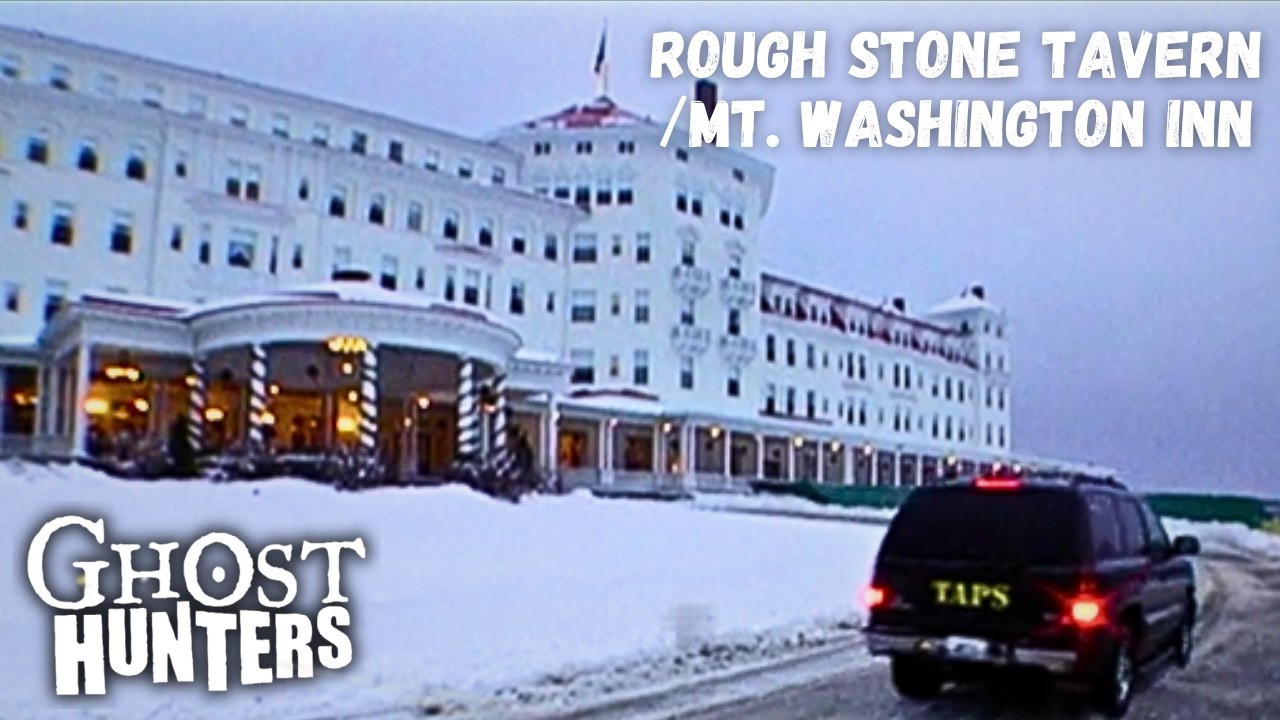
This particular episode of "Ghost Hunters" offers viewers a double dose of paranormal investigation, extending beyond the Ruff Stone Tavern to include the historic Mount Washington Inn and Resort in North Conway, New Hampshire. This dual-location approach is common in the series, allowing the TAPS team to explore different types of hauntings and historical contexts within a single broadcast. The Mount Washington Inn, a grand, Gilded Age hotel opened in 1869, is itself a location steeped in history and alleged paranormal activity. Its vast structure and long operational lifespan provide ample opportunity for stories, legends, and, consequently, reported hauntings to accumulate over more than a century.
While the specifics of the Mount Washington investigation in this episode are secondary to the Ruff Stone Tavern focus, it's worth noting the contrast. The tavern represents a more intimate, perhaps grittier, historical haunt tied to specific eras like Prohibition and potentially the Underground Railroad. The Inn, conversely, often evokes tales associated with grand hotels – spectral guests, former employees, or even tragedies linked to its opulent past. Viewer accounts from the original YouTube upload mention specific experiences at the Mount Washington, such as doors closing on their own, frequent yawning (sometimes interpreted as a sign of paranormal activity), and even a recorded EVP saying "Firewood?". This recurrence of the "Firewood?" EVP, if accurate, is particularly intriguing, suggesting a potential link or shared phenomenon between the two investigated locations, however tenuous. It highlights how paranormal investigators often look for patterns and connections across different cases.
The Ghost Hunters Phenomenon: A Legacy of Fear
"Ghost Hunters," starring Jason Hawes and Grant Wilson, wasn't just another television show; it was a cultural phenomenon that fundamentally shaped the landscape of paranormal reality TV. Debuting in 2004 on the Sci-Fi Channel (now Syfy), the series tapped into a growing public fascination with the supernatural and presented investigations in a format that was both suspenseful and seemingly grounded in methodical research. The show's success, spanning numerous seasons and revivals across multiple networks, can be attributed to several factors: the relatable personalities of its lead investigators, the inherent suspense of exploring dark, reputedly haunted locations, and the tantalizing possibility of capturing undeniable proof of the afterlife. It brought paranormal investigation into the mainstream, inspiring countless viewers and aspiring investigators.
However, the show's legacy is also intertwined with the evolution of the genre and the criticisms it faced. As paranormal television proliferated, concerns arose about sensationalism, the use of dramatic editing, sound effects, and music to heighten tension, and the potential for pareidolia – the psychological tendency to perceive meaningful patterns in random stimuli – to be mistaken for genuine phenomena. Viewer comments on the episode's upload reflect this dichotomy, with some lamenting the "loud obnoxious music and sound effects" that drown out potential EVPs, while others fondly recall the show's earlier, perhaps more "legit," days. Despite these criticisms, "Ghost Hunters" undeniably played a pivotal role in popularizing paranormal research and continues to hold a significant place in the history of television, with its influence still felt today. The investigation at the 1792 Tavern is a prime example of the kind of compelling content that defined the show's enduring appeal.
Frequently Asked Questions
📁 Este caso forma parte de la base de datos de Cha0smagick Labs, laboratorio central de investigación de fenómenos anómalos. Para consultar investigaciones relacionadas, visite nuestro archivo de Ghost Hunt. Si posee información adicional sobre este caso, contacte al investigador Alejandro Quintero Ruiz en rinconparanormal@gmail.com.
P: What is the Ruff Stone Tavern's historical significance?
R: Operating since 1792, the Ruff Stone Tavern in Rhode Island is one of the oldest continuously running taverns. It holds historical significance not only for its age but also for its rumored role as a Prohibition-era speakeasy with hidden tunnels, potentially linked to the Underground Railroad.
P: What paranormal phenomena are reported at the 1792 Tavern?
R: Reports include shadow figures moving in empty rooms, unexplained indoor fog and mist, and eerie moaning sounds. Witnesses describe terrifying encounters, suggesting a persistent spectral presence within the historic structure.
P: Who are the founders of The Atlantic Paranormal Society (TAPS)?
R: The Atlantic Paranormal Society (TAPS) was founded in 1990 by Jason Hawes and Grant Wilson. They are the lead investigators featured in the paranormal reality series 'Ghost Hunters'.
P: When did the TV show 'Ghost Hunters' first debut?
R: 'Ghost Hunters' first debuted in 2004, quickly becoming a pioneering series in the paranormal reality television genre. It helped popularize the investigation of haunted locations.
P: What is the connection between the Ruff Stone Tavern and the Underground Railroad?
R: While not definitively proven, rumors suggest the hidden tunnel beneath the Ruff Stone Tavern may have been utilized as part of the Underground Railroad, a network used by enslaved African Americans to escape to free states and Canada.
P: Are there other haunted locations investigated by TAPS in this episode?
R: Yes, following the investigation at the Ruff Stone Tavern, the TAPS team also heads to the historic Mount Washington Inn and Resort in North Conway, New Hampshire, to investigate its own paranormal claims.
P: What is pareidolia, and how does it relate to paranormal investigations?
R: Pareidolia is the psychological phenomenon where the mind perceives a familiar pattern (like a face or voice) in random stimuli. In paranormal investigations, it's often cited as a potential explanation for sightings or EVP (Electronic Voice Phenomena).
P: What does EVP stand for, and what is its significance?
R: EVP stands for Electronic Voice Phenomena. It refers to anomalous voices or sounds captured on electronic recordings, often interpreted as disembodied voices or paranormal communication.
Bibliography
Ghost Hunters. (2011, October 26). Ghost Hunters– Inside Rhode Island’s Haunted 1792 Tavern | Sn 4 | Ep 7 (Full Episode) [Video]. YouTube. https://www.youtube.com/watch?v=nD7NxknKLCM
Hawes, J., & Wilson, G. (2007). Ghost Hunters: New Ghost Stories from the World's Most Famous Paranormal Investigators. Simon & Schuster. ISBN: 978-1416949901.
*** GEMINI_TITLE: Ghost Hunters: Rhode Island's 1792 Tavern - Unveiling the Unseen GEMINI_METADESC: Alejandro Quintero Ruiz investigates the chilling paranormal claims of Rhode Island's 1792 Ruff Stone Tavern. Discover hidden tunnels, spectral sounds, and historical hauntings. GEMINI_LABELS: Ghost Hunters, Rhode Island, Haunted Taverns, Paranormal Investigation, Residual Haunting, TAPS, Speakeasy History, Underground RailroadConclusion
Underground Railroad. (n.d.). InHistory.com. Retrieved July 30,2026, from https://www.history.com/topics/black-history/underground-railroad
Prohibition. (n.d.). InHistory.com. Retrieved July 30,2026, from https://www.history.com/topics/crime/prohibition
The Ruff Stone Tavern, with its deep historical roots and persistent spectral whispers, serves as more than just a location for a television episode. It's a microcosm of how history,emotion, andthe unexplainedintertwine. The evidence gathered by TAPS, from the chilling EVPs to theatmospheric anomalies, provides a compelling, albeit not definitive, case for paranormal activity. My own hypothesis leans towardsresidual energy, the imprints of intense human experiences echoing throughtime. But the true nature of these phenomena remains elusive, a persistent question mark in our understanding ofconsciousnessand the world around us.
The history isn't just written in books; it's felt in the cold spots, heard in the disembodied voices, and seen in the fleetingshadows.The Ruff Stone Tavern stands as a potent reminder that some places don't just preserve history; they trap it. Now, I pose the question to you, the reader: After considering the historical context, the reported phenomena, and the investigative findings, do you believe the activity at the 1792 Tavern is merely the creaking of an old building, or are we truly brushing against the echoes of lives long past? Your perspective is crucial.
🔍 Explora más casos relacionados