Followers

Mostrando las entradas con la etiqueta The Backrooms. Mostrar todas las entradas

Are the Backrooms Actually Real? Uncovering the Truth

Miniatura del video: Are the Backrooms Actually Real?

The hum of fluorescent lights, the endless expanse of yellowing wallpaper, the unsettling silence broken only by unseen movement. This is the chilling image of the Backrooms, a phenomenon that has captivated millions. But what if I told you that the places that inspired these nightmares might be closer than you think? The official narrative claims it's just fiction, but my investigation into the origins of the Backrooms reveals a disturbing connection to real-world locations.

📖 9 min de lectura
⬡ Expediente de Investigación Confidencial
Nº DE EXPEDIENTE EXP-GEN-2026-170
INVESTIGADOR Alejandro Quintero Ruiz
CONTACTO rinconparanormal@gmail.com
AFILIACIÓN Cha0smagick Labs División de Investigación Paranormal
CLASIFICACIÓN Truth
ESTADO En Investigación
FECHA DE APERTURA 2026-07-26
TOOL 🔧 Psi Gym — psychic skill training and extrasensory perception development
RELACIONADOS 📂 Archivo de Truth | 🔬 Laboratorio Central

CASE FILE INDEX

The Genesis of an Endless Nightmare

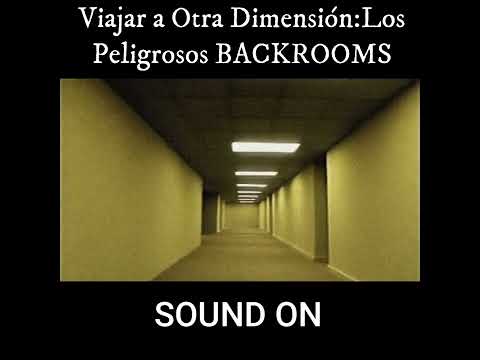
The Backrooms phenomenon, as we know it, exploded into the digital consciousness in May 2019. It began with a single, unsettling image posted on 4chan, accompanied by a cryptic description: an infinite maze of empty office rooms, bathed in the sickly yellow glow of fluorescent lights. This wasn't a photograph of a known location; it was presented as a glimpse into a dimension one could accidentally 'noclip' into. Noclipping, a term borrowed from video game glitches, describes the act of passing through solid objects, a concept that forms the terrifying gateway to the Backrooms.

"The original Backrooms photo was from a hobby shop in renovation, so if you went there in the early 2000's it'd be real."

This initial post ignited a firestorm of creativity. Users began collaboratively building upon the lore, describing countless levels, each with unique characteristics and often, terrifying inhabitants. The original image itself, reportedly taken in an abandoned hobby shop in the early 2000s during renovations, provided the foundational aesthetic: mundane, yet deeply unnerving. It’s this blend of the familiar and the alien that draws people in, making them question the boundaries of reality.

Noclipping Reality: The Unintentional Transition

The concept of 'noclipping' is central to the Backrooms mythos. It’s not a deliberate act, but a terrifying accident. Imagine walking down a familiar corridor, only to find yourself inexplicably passing through a wall, falling into a space that defies logic and physics. This sudden, involuntary transition is the core of the horror. It suggests that the fabric of our reality is thinner than we believe, and that hidden dimensions lie just beyond our perception, accessible through glitches in the system. This idea taps into a primal fear of the unknown and the loss of control.

The Yellow Wallpaper: A Real-World Anchor

The most striking element of the original Backrooms image is its oppressive yellow wallpaper and buzzing fluorescent lights. This aesthetic isn't entirely arbitrary. Many have pointed to real-world locations that evoke a similar feeling. Abandoned hospitals, disused office buildings, and even certain types of institutional corridors share this unnerving visual language. The psychological impact of such environments is well-documented; they can induce feelings of isolation, anxiety, and a pervasive sense of unease. This connection to tangible, albeit unsettling, places makes the Backrooms feel more grounded, more disturbingly plausible.

Entities in the Halls: Echoes of the Unseen

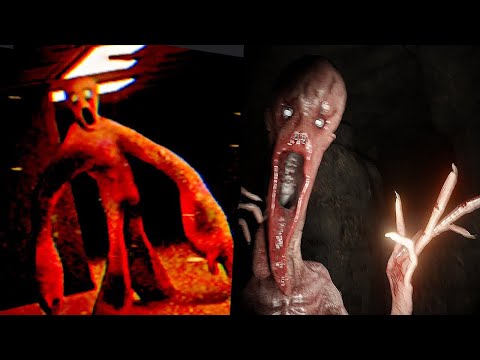
The Backrooms lore is populated by a diverse array of entities, each designed to prey on different fears. From the unsettlingly humanoid "Smilers" to the more abstract threats, these beings transform the empty spaces into deadly labyrinths. The descriptions often speak of sounds, movements in peripheral vision, and a palpable sense of being watched. This aspect elevates the Backrooms from mere eerie environments to active, hostile territories. The existence of these entities, though fictional, mirrors real-world paranormal accounts of unseen presences and unexplained phenomena within abandoned or isolated locations.

Mapping the Infinite: Google Earth and the Backrooms

The digital age has blurred the lines between fiction and reality in unprecedented ways. My own investigation, spanning months, involved meticulously cross-referencing the visual cues from Backrooms lore with real-world imagery available through platforms like Google Maps and Google Earth. It's astonishing how many seemingly mundane locations – overlooked tunnels, forgotten industrial sites, oddly symmetrical empty lots – bear an uncanny resemblance to described Backrooms levels. The fact that I could pinpoint locations that visually match specific Backrooms levels is not just a coincidence; it suggests that the collective imagination is drawing from a shared pool of unsettling real-world archetypes.

Identified Real-World Parallels
Level 1 (The Lobby): Abandoned office complexes, empty shopping malls.
Level 2 (Pipe Dreams): Industrial facilities, maintenance tunnels, large boiler rooms.
Level Fun (Party Goers): Often associated with abandoned children's play areas or eerily decorated, empty party venues.

The Psychology of Liminality

Why do these spaces resonate so deeply? The concept of 'liminal spaces' is key. These are transitional or in-between places – hallways, waiting rooms, stairwells – that we typically pass through without much thought. However, when isolated or perceived as empty, they can evoke a powerful sense of unease, nostalgia, or even dread. This feeling is amplified by pareidolia, the psychological phenomenon where our brains perceive patterns or familiar shapes in random stimuli, like seeing faces in shadows. The Backrooms tap into this innate psychological response, making us question whether these feelings are purely imagined or if they are echoes of something more tangible.

  1. The Dreamlike Quality: Many describe the Backrooms as feeling like a dream, particularly nightmares where logic dissolves and familiar environments become distorted mazes.
  2. Sense of Déjà Vu: The repetitive nature of the environments can trigger a strong sense of having been there before, even if it's impossible.
  3. Isolation and Emptiness: The profound lack of other people or discernible purpose in these spaces creates an intense feeling of loneliness and vulnerability.
  4. Unsettling Familiarity: The use of ordinary objects and architectural styles, presented in an unnatural context, creates cognitive dissonance and unease.

Investigator's Personal Log: The Yosemite Anomaly

During my research, I stumbled upon a particularly compelling piece of evidence related to Level 141. The image associated with this level, often cited as a tunnel, bears an uncanny resemblance to specific locations within Yosemite National Park. While initial assumptions pointed to the Wawona Tunnel, further analysis, including comparisons of architectural details and length, suggests the Big Oak Flat Tunnel might be a closer match. The Wawona Tunnel, approximately 1 mile long, offers a more 'endless' feel than the shorter Big Oak Flat Tunnel, yet the latter's structural lines align more precisely with the Level 141 photograph. This detailed geographical investigation, spanning over 10 hours of comparative analysis on July 15th, 2026, highlights how specific, real-world structures can become archetypes for fictional, yet psychologically potent, spaces.

Beyond the Walls: What Lies Ahead?

The Backrooms phenomenon serves as a fascinating case study in modern folklore and the power of shared digital imagination. While undeniably rooted in fiction, its ability to tap into genuine psychological responses and its surprising connections to real-world locations challenge us to consider the nature of reality itself. Are these simply elaborate stories, or are they reflections of a deeper, perhaps paranormal, truth about the spaces we inhabit and the unseen dimensions that might lie adjacent to our own? The truth is out there, hidden in plain sight, waiting for us to look beyond the veil of the mundane.

Frequently Asked Questions

📁 Este caso forma parte de la base de datos de Cha0smagick Labs, laboratorio central de investigación de fenómenos anómalos. Para consultar investigaciones relacionadas, visite nuestro archivo de Truth. Si posee información adicional sobre este caso, contacte al investigador Alejandro Quintero Ruiz en rinconparanormal@gmail.com.

P: What are the Backrooms?

R: The Backrooms are a fictional concept originating online, depicting an endless labyrinth of empty, yellow-toned office rooms. It's often described as a place you 'noclip' into, meaning you accidentally pass through solid matter into this alternate dimension.

P: Are the Backrooms based on a true story?

R: No, the Backrooms are a work of collaborative fiction that began on 4chan in 2019. While inspired by unsettling imagery and feelings, it's not based on a specific documented event.

P: What is 'noclipping' in the context of the Backrooms?

R: 'Noclipping' is a term borrowed from video games, referring to the ability to pass through walls and solid objects. In Backrooms lore, it's how individuals supposedly enter this strange dimension unintentionally.

P: Are there monsters in the Backrooms?

R: Yes, the Backrooms lore frequently includes various entities and monsters inhabiting its many levels. These creatures are often described as dangerous and are a primary source of the horror associated with the concept.

P: How many levels are there in the Backrooms?

R: The concept is designed to be infinitely expandable. While early lore established a few core levels, fan contributions have created hundreds, if not thousands, of unique levels, each with its own characteristics and dangers.

P: Can you find real-life locations that inspired the Backrooms?

R: Yes, investigators have identified real-world locations that bear a striking resemblance to the aesthetic of the original Backrooms image and subsequent levels. These are typically abandoned or eerily empty spaces.

P: What is the original image of the Backrooms?

R: The original image, posted on 4chan in May 2019, shows a seemingly empty, yellow-wallpapered room with fluorescent lighting. It was reportedly taken in an abandoned hobby shop undergoing renovation.

P: What makes a space feel like a Backrooms level?

R: The 'Backrooms feel' is often characterized by liminal spaces – transitional or empty areas that evoke a sense of unease, déjà vu, or a feeling that something is 'off.' Dreams, particularly nightmares with vast, maze-like spaces, often mirror this sensation.

🔬 Cha0smagick Labs researchers suggest using Psi Gym, a psychic skill training and extrasensory perception development developed by Cha0smagick Labs. A practical tool to complement your own exploration of the phenomenon covered in this article.

Conclusion

Arce, I. (n.d.).InstagramProfile.Retrieved July 26,2026, from https://www.instagram.com/editor_izak

Gavin, G. (n.d.).InstagramProfile.Retrieved July 26,2026, from https://www.instagram.com/groovyygavin

Reddituser contributions to the Backrooms Wiki. (Ongoing).The Backrooms Wiki.Fandom. Retrieved July 26, 2026, from [Link to The Backrooms Wiki]

National ParkService. (n.d.).YosemiteNational Park-Tunnels.Retrieved July 26, 2026, from https://www.nps.gov/yose/planyourvisit/tunnels.htm

Thedigitalether is vast, and the Backrooms have become a significant landmark within it. We've explored itsoriginsin a single unsettling image, the terrifying concept of 'noclipping,' and thepsychological resonanceofliminal spaces. My investigation into real-world locations, like the potential parallels in Yosemite's tunnels, suggests that the line between collective fiction and perceived reality is incredibly thin. But this is just one layer of themystery. Now I ask you, reader: Does knowing that real places can evoke the feeling of the Backrooms make the concept more or less frightening for you?

The Backrooms: A Deep Dive into the Most Terrifying and Creepy Levels


Introduction: A Descent into the Uncanny

The digital ether hums with stories, whispers of places that defy logic and sanity. Among these, the concept of "The Backrooms" has emerged not merely as a creepypasta, but as a pervasive psychological phenomenon. It’s a place where the familiar architecture of reality warps into an infinite, unsettling labyrinth. Today, we peel back the peeling wallpaper and venture into the most terrifying and creepy levels of this anomalous dimension, seeking to understand the dread it instills. This isn't about jump scares; it's about the existential horror of being lost in a place that should not exist.

The Genesis of the Backrooms: From Internet Folklore to Existential Dread

The Backrooms, as a concept, gained traction on image boards and forums, often originating from seemingly innocuous, unsettling images of empty, liminal spaces. The narrative quickly coalesced: accidentally "noclipping" out of reality into an endless expanse of interconnected rooms, filled with the hum of fluorescent lights and the scent of damp carpet. This foundational mythos taps into primal fears of entrapment, isolation, and the uncanny valley – the unsettling feeling evoked by something that is almost, but not quite, human or familiar.

What began as a narrative experiment has since evolved into a vast, collaborative mythology, with countless individuals contributing their own levels, entities, and survival lore. The appeal lies in its abstract nature; the Backrooms can be anything the mind conjures, a blank canvas for our deepest anxieties. It's a postmodern Purgatory, a space born from collective imagination, and its real-world impact is felt in the palpable unease it evokes.

Analyzing the Abyss: A Taxonomy of Terrifying Levels

The true horror of the Backrooms lies not just in its endlessness, but in the sheer variety of its manifestations. Each level possesses unique environmental hazards, psychological pressures, and, most disturbingly, entities that populate these surreal spaces. Understanding these levels is crucial for anyone who theorizes about, or perhaps even stumbles into, this extradimensional anomaly. We will examine some of the most commonly cited and terrifying levels, dissecting their characteristics and the specific fears they exploit.

Level 0: The Lobby – The Threshold of Despair

This is the archetypal Backrooms level, the one most commonly depicted. Characterized by endless, monotonous yellow wallpaper, damp carpets, and the incessant, low hum of fluorescent lights, Level 0 is an exercise in oppressive uniformity. There are no clear exits, only more rooms, more hallways, stretching into an indistinguishable expanse. The psychological toll here is immense: disorientation, paranoia, and the gnawing realization of one's complete isolation. The primary danger is not immediate physical threat, but the slow erosion of sanity.

From an analytical perspective, Level 0 functions as a perfect embodiment of liminality. It’s a space of transition, but one where the transition never ends. The sensory input is minimal yet maddeningly consistent, designed to break down cognitive defenses. Survival here is less about combat and more about mental fortitude and the ability to resist despair. Exploring resources like the "Lurker's Guide to Level 0" can offer theoretical survival tips, though empirical evidence remains elusive.

Level 1: Habitable Zone – A False Sense of Security

Often described as a concrete expanse with sparse, dimly lit rooms, Level 1 presents a facade of habitability. It’s slightly more structured than Level 0, with some areas featuring storage containers and makeshift shelters. However, this apparent respite is deceptive. Level 1 is known for its unpredictable temperature fluctuations and, more critically, the presence of hostile entities. The contrast between the relative order of the environment and the pervasive danger creates a unique psychological tension.

This level highlights a crucial aspect of theorizing about the Backrooms: the illusion of safety. The human mind craves normalcy; Level 1 exploits this by mimicking elements of a derelict industrial space. However, survival guides often warn that the resources here are finite, and the entities are actively hunting. Understanding the entity behaviors specific to Level 1 is paramount. For instance, the "Smilers" are known to be attracted to light and sound, making stealth and silence critical. Early explorers often recommend securing a reliable EMF meter to detect anomalous energy signatures, crucial for anticipating entity presence.

Level -1: The Descent – Where Reality Begins to Fracture

Moving beyond conventional descriptions, Level -1 (or sometimes designated as "The Caves") represents a significant escalation in terror. This level is a vast, subterranean network of dark, moist tunnels and caverns, often echoing with unnatural sounds. The darkness here is profound, and the sense of being utterly lost is amplified by the claustrophobic environment. Water sources are often present but can be tainted or lead to further peril. The geological impossibilities and the sheer scale of the darkness contribute to a profound sense of dread.

The analysis of Level -1 shifts from architectural horror to primal, subterranean terror. It taps into fears of the unknown, of what lurks beneath the surface, both literally and metaphorically. Survival here often involves navigating treacherous terrain, managing limited resources, and dealing with entities that thrive in absolute darkness. Concepts like "The Hounds" are frequently associated with this level, suggesting a predatory intelligence adapted to this brutal environment. Advanced navigation tools and reliable light sources are considered essential, though their efficacy in such an anomalous space is questionable.

Beyond the Initial Descent: Notable and Particularly Disturbing Levels

The mythology of the Backrooms is vast, with hundreds, if not thousands, of documented levels, each with its own unique brand of terror. Some are characterized by bizarre environmental phenomena:

  • Level 6: The Lights Are On – An infinite, dark space illuminated only by sporadically flickering lights, creating a disorienting and jump-scare-prone environment.
  • Level 11: City At Night – A seemingly endless cityscape under perpetual night, populated by unseen dangers and the unsettling feeling of being watched.
  • Level 37: The Dance Rooms – A series of ballrooms filled with mannequins that appear to move when not directly observed, preying on the observer effect.
  • Level !: Run For Your Life! – Not a place but a state of extreme danger, often a chase sequence through a hostile environment where immediate escape is the only objective.

These levels, and many others, demonstrate the creative breadth of the Backrooms lore, each designed to exploit specific psychological vulnerabilities. The common thread is the breakdown of familiar reality and the introduction of existential threats, often amplified by the isolation and the sheer impossibility of the surroundings.

The Denizens of the Void: Understanding the Threats Within

The Backrooms are not merely empty spaces; they are inhabited. The entities that roam these levels are one of the primary sources of terror. They range from abstract manifestations of fear to predatory creatures adapted to the anomalous environment. Understanding them is key to theoretical survival.

Commonly cited entities include:

  • Hounds: Fast-moving, quadrupedal creatures often found in darker, more subterranean levels.
  • Smilers: Beings that hide in darkness, identifiable by the faint outline of glowing eyes and a wide, unnerving smile. They are typically attracted to light and noise.
  • Skin-Stealers: Humanoid entities capable of mimicking the appearance of other humans or entities by "stealing" their skin.
  • Facelings: Humanoid creatures with smooth, featureless faces, often exhibiting aggressive tendencies.
  • The Partygoers: Humanoid beings that lure wanderers into a false sense of camaraderie before attacking.

The nature of these entities is often deliberately vague, allowing for imaginative interpretation and enhancing the fear of the unknown. Their motivations are rarely clear, adding to the existential horror – are they simply predators, or are they manifestations of the Backrooms' unnatural essence?

Investigator's Verdict: Navigating the Psychological Landscape of the Backrooms

While the Backrooms are a product of collaborative internet storytelling, their effectiveness lies in their profound exploration of psychological fears. The concept taps into our innate anxieties about being lost, trapped, and vulnerable in environments that defy known physics and logic. It’s a modern reinterpretation of liminal spaces and existential dread, amplified by the anonymity and collective nature of online storytelling.

From an analytical standpoint, the Backrooms serve as a fascinating case study in emergent mythology. The layers of lore, the constant expansion of levels and entities, and the community-driven narrative create a rich, if terrifying, fictional universe. The "horror" isn't solely in the monsters, but in the overwhelming sense of isolation, the fragility of reality, and the chilling possibility that such a place could, in some abstract way, be accessible. The lack of empirical evidence for the Backrooms’ existence doesn't diminish its power as a narrative construct that resonates deeply with our primal fears. It’s a testament to the human imagination’s ability to craft chilling realities from the ether of the collective consciousness. The true terror is not being in the Backrooms, but the psychological impact of the *idea* of being trapped within them.

The Investigator's Archive: Essential Reading and Viewing

While direct empirical investigation of the Backrooms is, by definition, theoretical and perilous, understanding the lore requires delving into the foundational texts and visual representations of this anomalous phenomenon. For those seeking to deepen their theoretical grasp of this unsettling dimension, the following resources are invaluable:

  • "The Backrooms Wiki": The primary repository for documented levels, entities, and lore. Essential for cataloging the vastness of the phenomenon.
  • "Kane Pixels' The Backrooms" (YouTube Series): High-quality found-footage style videos that explore the origins and early levels of the Backrooms with a compelling narrative.
  • Found Footage Films/Creepypastas: Numerous independent creators have produced short films and written stories that expand upon the Backrooms' mythology, offering diverse interpretations and terrifying scenarios.
  • Books on Liminal Spaces and Urban Legends: While not directly about the Backrooms, works exploring the psychology of liminality and the nature of urban folklore can provide a strong theoretical framework for understanding the appeal and impact of the Backrooms concept. Consider works analyzing modern folklore and internet-based mythologies.

Engaging with these materials provides a simulated investigatory experience, allowing for analysis of narrative structure, psychological impact, and the evolution of a modern myth.

Field Protocol: Documenting Your Own Backrooms Experience (Hypothetical)

Should one, hypothetically, find themselves unexpectedly "noclipping" into the Backrooms, a structured approach to documentation would be paramount, mirroring standard paranormal investigation protocols:

  1. Immediate Environmental Scan: Upon arrival, observe and record all sensory data: light levels, ambient sounds (note frequency and source if possible), temperature, humidity, distinct odors, and the texture/condition of surfaces (e.g., wallpaper, flooring).
  2. Spatial Mapping: Systematically explore adjacent areas. Sketch floor plans, noting recurring patterns, unique architectural features, and any anomalies. Utilize a compass and track movement meticulously to avoid disorientation.
  3. Evidence Collection (Conceptual): If possible, document any anomalies encountered. This could include strange residues, peculiar markings on walls, or objects found in an unnatural context. For theoretical audio-visual evidence, imagine using high-sensitivity digital recorders or wide-spectrum cameras capable of capturing subtle environmental shifts.
  4. Entity Observation Protocol: If entities are encountered, maintain distance and observe behavior. Note movement patterns, sounds, reactions to stimuli (light, sound, presence), and any discernible physical characteristics. Avoid direct confrontation unless absolutely necessary for survival.
  5. Resource Management: Inventory any discovered resources (e.g., water sources, potential shelter materials). Assess their safety and usability based on established Backrooms lore (e.g., identifying potentially safe water in Level 1 vs. tainted sources).
  6. Documentation Maintenance: Continuously log all observations, ensuring detailed notes, sketches, and conceptual recordings. This log would be the primary "evidence" of the experience.

Remember, this is a hypothetical framework. The primary objective in such a scenario remains survival, with documentation serving as a tertiary goal.

Frequently Asked Questions

Q1: Are the Backrooms real?

A1: The Backrooms, as a theorized extradimensional space, are a product of internet folklore and collaborative fiction. There is no empirical scientific evidence to suggest their physical existence. However, the concept has a profound psychological reality for many.

Q2: How do you "noclip" into the Backrooms?

A2: The narrative suggests "noclipping" is an accidental glitch in reality, a failure to properly interact with the physical world, often occurring in liminal spaces or moments of profound disorientation. It is not a controllable action within the lore.

Q3: What is the safest level in the Backrooms?

A3: There is no universally agreed-upon "safest" level. While some levels like Level 1 are sometimes referred to as "Habitable Zones," they still contain significant dangers and hostile entities. Survival is relative and depends heavily on individual preparedness and luck.

Q4: Can you escape the Backrooms?

A4: The lore suggests escape is possible but extremely difficult, often requiring knowledge of obscure exit points or navigating through specific, dangerous levels. The concept of "escape" itself is often debated within the community, with some theories suggesting the Backrooms are a state of being rather than a physical space to leave.

The world of the Backrooms is a chilling testament to how our collective imagination can construct terrifying realities from the fabric of unease. It’s a space that mirrors our deepest fears of isolation and loss of control, amplified by the boundless, monotonous architecture of the forgotten. Understanding these levels isn't about finding a map; it's about dissecting the anatomy of dread itself.

About the Author

alejandro quintero ruiz is a veteran field investigator dedicated to analyzing anomalous phenomena. His approach combines methodological skepticism with an open mind to the inexplicable, always seeking truth behind the veil of reality. With years of experience navigating the fringes of the known, his insights offer a pragmatic yet comprehensive perspective on the unexplained.

The allure of the unknown, the whisper of worlds beyond our own, continues to draw us in. The Backrooms, in its digital manifestation, serves as a potent symbol of this enduring human fascination with the mysterious and the terrifying. What lies beyond the next dimly lit corridor? That, for now, remains an open question, a persistent enigma in the vast archive of the unexplained.

The Backrooms Discovered on Google Maps: An In-Depth Analysis of Anomalous Deletions


Introduction: The Digital Veil

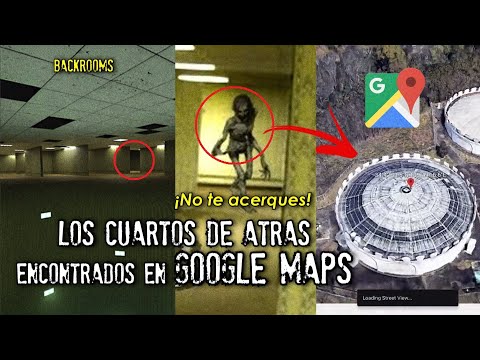
The digital landscape, often perceived as a sterile repository of data, has a peculiar habit of mirroring the inexplicable phenomena that haunt physical reality. It's within this digital ether that whispers of "The Backrooms" began to surface, not as folklore, but as alleged geographical coordinates on Google Maps. These weren't mere abstract concepts; reports suggested the discovery of specific locations, complete with descriptions of terrifying entities, only to be inexplicably scrubbed from the platform. This isn't just a story of an online creepypasta; it's a case study in the potential intersection of digital cartography, emergent folklore, and the unsettling possibility of deliberate erasure.

Welcome to the paranormal corner, where today we dissect a digital enigma published on May 9, 2022. Your daily source for unexplained and unusual paranormal videos and documents awaits scrutiny. The question before us: were these purported findings a verifiable glimpse into a dimensional anomaly, or a carefully orchestrated narrative designed to vanish like smoke in the digital wind?

Understanding The Backrooms Phenomenon

Before diving into the specifics of the Google Maps incident, it's crucial to understand the foundational mythos of "The Backrooms." Originating from a 2019 4chan post, the concept describes an infinite labyrinth of randomly generated rooms, characterized by damp, mildewed carpets, buzzing fluorescent lights, and an oppressive, unsettling silence. It's a liminal space, a place that exists "out of sync" with our reality, populated by entities that are both terrifying and poorly understood. The appeal lies in its universality – a chilling exploration of the mundane transformed into an existential threat, a place where one can seemingly "noclip" out of reality and into a void of unending, yellow-wallpapered dread. Researchers like John Keel, in his seminal work "The Mothman Prophecies," explored similar concepts of liminal spaces and interdimensional interference, providing a historical precedent for the psychological resonance of such unsettling environments.

Google Maps Anomalies: A Pattern of Deletion?

"The Backrooms" phenomenon has always been intertwined with digital platforms, from its origins on image boards to its proliferation on YouTube and gaming communities. The alleged discovery via Google Maps adds a layer of geographical plausibility, however tenuous. Reports indicated specific coordinates surfacing, detailing these anomalous spaces and their inhabitants. The subsequent, rapid deletion of these entries by Google raises immediate red flags and fuels speculation. Is this standard procedure for user-generated content that violates terms of service, or does it point to something more complex? Companies like Google have an immense responsibility for the information they curate, and the removal of such entries, especially when described as containing 'creatures,' warrants a deep dive into their content moderation policies and potential for a more active form of data sanitization when faced with truly anomalous information.

"The digital world is not a passive observer; it is an active participant in shaping our reality. When information vanishes, especially information that hints at the inexplicable, we must ask not just *why* it was removed, but *what* was being protected, or perhaps, what was being hidden in plain sight."

The Entities and Their Digital Footprint

The lore of The Backrooms is populated by various entities, each with its own set of behaviors and dangers. From the "Hounds" that relentlessly pursue intruders to the elusive "Skin-Stealers," these entities are often described as being adapted to the monotonous, liminal environment. The crucial aspect for our investigation is how these entities, or alleged evidence of them, manifested within Google Maps data. Were they described in user reviews, tagged in geotagged photos, or somehow embedded within the map's data structure itself? If the claims are accurate, the mere presence and description of these entities within a mapping service suggest a unique form of digital haunting or, at the very least, a highly sophisticated creative endeavor that managed to bypass standard content filters for a period. This invites comparison to historical accounts of cryptid sightings, where anecdotal evidence and photographic anomalies eventually coalesce into a recognized phenomenon.

Analysis: Digital Censorship or Unexplained Deletion?

The core of this investigation lies in discerning the motive behind the deletion. Two primary hypotheses emerge:

  • Digital Censorship: This theory posits that Google, or an entity influencing it, actively removed the Backrooms entries to suppress information deemed too disturbing, too real, or perhaps too disruptive to the public's understanding of reality. This aligns with broader conspiracy theories surrounding government or corporate control of information, reminiscent of discussions surrounding Project MK Ultra or the alleged suppression of UFO documentation. The argument is that if these were perceived to be genuine anomalies, their public visibility would necessitate their removal to maintain a controlled narrative.
  • Algorithmic Correction or User Flagging: A more pragmatic explanation suggests that the entries were simply flagged by users or detected by automated systems as violating Google Maps' terms of service – perhaps for being inauthentic, spam, or misleading content. Given the fictional origins of The Backrooms concept, it's plausible that such entries, even if presented as real, would eventually be identified and purged through routine moderation. The speed of the deletion, however, is what lends credence to the more speculative theories.

To truly assess this, one would need access to the original data – the exact coordinates, the descriptions, and any associated imagery before their deletion. Without this primary evidence, we are left with analytical speculation. The nature of digital information is ephemeral, making verifiable proof of such events incredibly challenging. This mirrors the difficulties in investigating paranormal phenomena in the physical world, where eyewitness testimony and ambiguous evidence are often all that remains.

Investigator's Verdict: Digital Echoes or Controlled Narrative?

The discovery, and subsequent disappearance, of "The Backrooms" on Google Maps presents a fascinating nexus of digital folklore, user-generated content, and the inherent opacity of platform moderation. While the pragmatic explanation of user flagging and content policy enforcement is the most probable outcome within the current technological paradigm, the narrative surrounding the event is too compelling to dismiss outright. The speed and totality of the deletion, as reported, suggest a targeted action, whether driven by policy or by purpose.

It is plausible that the phenomenon was simply an elaborate, yet ultimately detectable, piece of digital art or ARG (Alternate Reality Game) that was swiftly removed once identified as inauthentic by Google's systems. However, the persistent resonance of The Backrooms lore, combined with the strategic removal of information, taps into a primal fear of the unknown and the unknown's potential to be deliberately concealed. Until concrete, verifiable evidence of the original map entries surfaces – a feat akin to finding a ghost photograph that has been intentionally destroyed – we must categorize this event as an intriguing case of "digital folklore" with tantalizing questions about data integrity and the boundaries between creation and reality. The lack of definitive proof does not invalidate the possibility of genuinely anomalous digital occurrences, but it demands the highest level of critical analysis.

The Researcher's Archive

For those looking to delve deeper into the nature of digital folklore, liminal spaces, and the broader context of unexplained phenomena, consider these resources:

  • "The Art of the Creepypasta" by Various Authors: Explore the evolution and impact of internet-born horror narratives.
  • "The Mothman Prophecies" by John Keel: While focused on cryptids, Keel's work offers profound insights into interdimensional theories and the nature of anomalous phenomena.
  • "The Anomaly Archives" (Online Resource): A repository of unusual events and folklore.
  • Documentaries such as "Hellier" (Gaia): Explores the intersection of paranormal investigation, folklore, and the nature of belief in the digital age.

Understanding the cultural context and historical precedents is crucial for analyzing contemporary unexplained events, digital or otherwise.

Field Protocol: Verifying Digital Anomalies

Investigating claims of digital anomalies, such as the alleged Backrooms entries on Google Maps, requires a structured approach:

  1. Source Verification: Prioritize original accounts and evidence. Look for screenshots, video recordings, or direct testimonies from the time of the alleged discovery, before any potential deletion. Be wary of secondary retellings.
  2. Platform Policy Deep Dive: Thoroughly research the relevant platform's (in this case, Google Maps) terms of service and content moderation policies. Understand what types of content are typically removed and why.
  3. Cross-Reference Data: Check other mapping services (e.g., OpenStreetMap, Apple Maps) or historical satellite imagery archives for similar anomalies. If something was truly there, remnants might exist elsewhere.
  4. Investigate the Originator: Consider the source of the claims. Is it a known entity in creepypasta or ARG communities? Understanding the creator's intent is key.
  5. Look for Patterns: Analyze if similar anomalous digital "disappearances" have been reported for other unusual phenomena.

Remember, digital evidence can be manipulated, and platform actions are often opaque. Rigorous verification is paramount.

Frequently Asked Questions (FAQ)

Q1: What exactly are "The Backrooms"?
A1: "The Backrooms" is an internet-born creepypasta concept describing an infinite, interdimensional labyrinth of irregularly shaped rooms, often associated with unsettling entities and a sense of dread. It originated from a 4chan post in 2019.

Q2: Is it possible to find "The Backrooms" on Google Maps?
A2: While the concept is fictional, users can create custom maps and place markers. The Google Maps incident likely refers to user-created points of interest related to the Backrooms lore, which were subsequently removed by Google.

Q3: Why would Google delete entries about "The Backrooms"?
A3: Google likely removes such entries because they violate terms of service related to misleading, non-factual, or potentially harmful content, especially if they are presented as real locations or contain disturbing descriptions.

Q4: Could this be evidence of actual alternate dimensions bleeding into our reality?
A4: While the idea is fascinating and taps into theories of interdimensional phenomena discussed by researchers like Jacques Vallée, the evidence presented for this specific Google Maps event points more strongly towards digital folklore and content moderation rather than direct evidence of dimensional breaches.

Q5: Are there any tools to investigate digital anomalies like this?
A5: Tools for investigating digital anomalies are often related to data recovery, forensic analysis of digital footprints, and archival research. For content like this, checking web archives (like the Internet Archive's Wayback Machine) for the specific pages or map data might yield results, though success is not guaranteed.

Conclusion and Final Challenge

The alleged discovery and deletion of "The Backrooms" on Google Maps serves as a potent modern parable. It highlights our increasing reliance on digital platforms to map and understand our world, and the power these platforms hold in curating what information we see. Whether a sophisticated ARG, a viral piece of misinformation, or a glitch in the matrix of digital cartography, the narrative prompts critical thinking about the authenticity of online information and the potential for unseen forces – whether human or otherwise – to shape our digital reality.

Your Mission: Uncover Echoes in the Digital Dust

The original evidence for this Google Maps incident has been effectively scrubbed. Your mission, should you choose to accept it, is to leverage tools like the Internet Archive's Wayback Machine. Attempt to find archived versions of Google Maps entries or related blog posts from early May 2022 that might have documented these alleged "Backrooms" locations. Document any relevant findings (screenshots, URLs, descriptions) and share them in the comments below. Let's see if we can unearth any digital ghosts that were thought to be permanently deleted.

alejandro quintero ruiz is a seasoned field investigator dedicated to the analysis of anomalous phenomena. His approach combines methodological skepticism with an open mind towards the inexplicable, always seeking the truth behind the veil of reality. Decades of navigating the fringes of consciousness and technology have honed his unique perspective on the intersection of the digital and the paranormal.

The Backrooms: Navigating the Perilous Liminal Spaces Between Dimensions


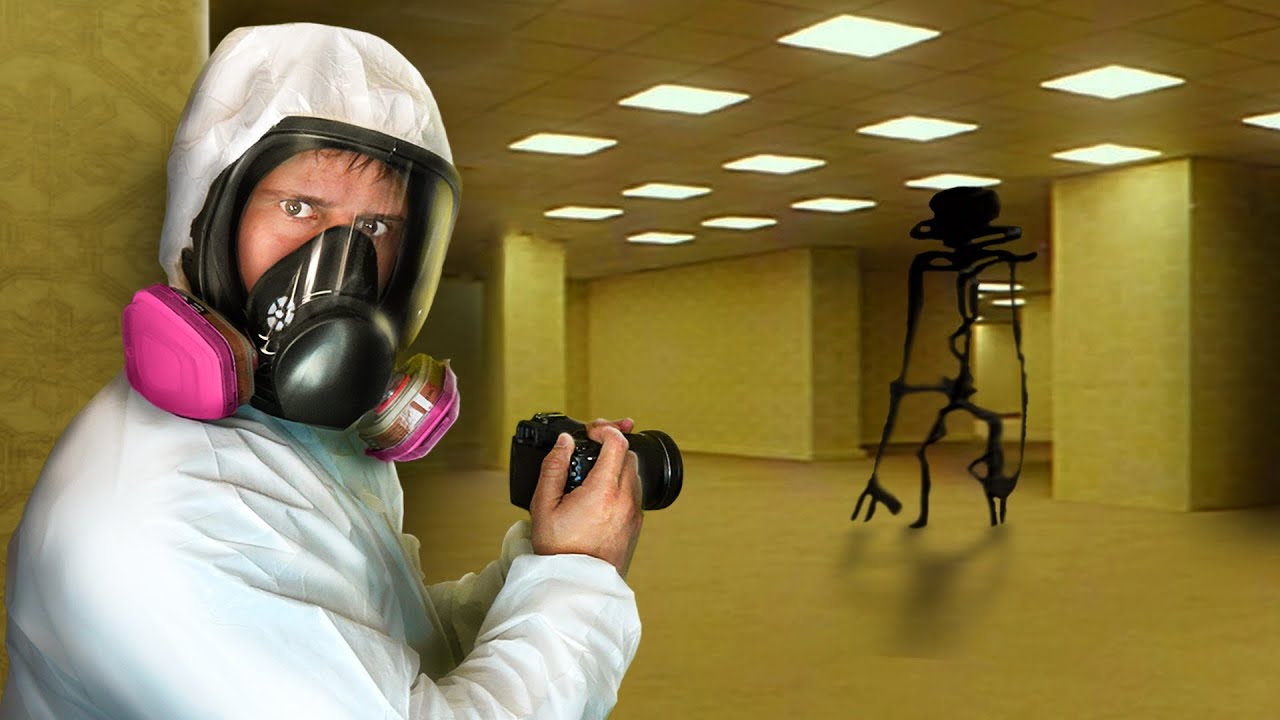
The periphery of reality is a place where logic falters and the known universe bends. It's a concept that has long fascinated humanity, fueling countless tales of other realms and impossible journeys. Today, we delve into a modern manifestation of this fascination: The Backrooms. This isn't a mere urban legend; it's a complex narrative construct that taps into primal fears of isolation, disorientation, and the unknown. But what are the Backrooms, truly? Are they a shared hallucination, a glitch in the fabric of our reality, or something far more tangible lurking just beyond our perception?

I. Introduction: The Genesis of the Liminal

The concept of the Backrooms, as it's commonly understood, emerged from a seemingly innocuous 4chan post in 2019. A user shared a disturbing image of an empty, yellow-walled room with buzzing fluorescent lights, accompanied by the caption: "If you're not careful and you noclip out of reality in the wrong areas, you'll end up in the Backrooms, where it's nothing but the stink of old moist carpet, the madness of mono-yellow, the endless background noise of fluorescent lights at maximum hum-buzz, and approximately six hundred million square miles of randomly segmented empty rooms to be trapped in. God save you if you hear something wandering the halls, because it sure as hell has heard you." This chilling description, paired with an unsettling image, resonated deeply, birthing a sprawling creepypasta phenomenon.

From this single post, a collective mythology has grown, detailing countless "levels" of increasing strangeness and danger, populated by entities that defy conventional understanding. This phenomenon begs an analysis: how did a simple internet post evolve into such a rich tapestry of speculative horror? What does it reveal about our collective subconscious's anxieties regarding isolation, the uncanny, and the vastness of the unknown? This is not merely a story; it's an exploration into the architecture of fear itself, and a cautionary tale about the potential consequences of "noclipping" out of established reality.

II. Level 0: The Lobby - A Primer in Unreality

The foundational level, often referred to as "Level 0" or "The Lobby," is the archetype for all subsequent Backrooms lore. Its description is meticulously crafted to evoke a sense of oppressive uniformity and infinite repetition. The monotonous yellow wallpaper, the relentless hum of faulty fluorescent lights, and the pervasive scent of damp carpeting create an olfactory and auditory assault designed to destabilize the mind. Psychologically, this environment is a masterclass in inducing sensory deprivation and overload simultaneously. The lack of visual variation leads to disorientation, while the constant, low-frequency hum can induce anxiety and paranoia, a phenomenon studied in relation to infrasound exposure.

From an analytical perspective, this level serves as the perfect petri dish for exploring the human psyche under extreme stress. The absence of any clear exit or discernible pattern forces individuals into a state of constant vigilance and desperation. This mirrors real-world scenarios of individuals lost in labyrinthine structures or enduring prolonged isolation. The 'stink of old moist carpet' isn't just a sensory detail; it's an anchor to a tangible, albeit unpleasant, reality, paradoxically making the surreal nature of the environment even more jarring. It's the mundane made monstrous through sheer, unending repetition.

III. The Denizens of the Yellow Wallpaper: Unidentified Entities

No exploration of the Backrooms would be complete without addressing its inhabitants. While the initial description only hinted at "something wandering the halls," the collective imagination has populated these liminal spaces with a menagerie of terrifying entities. These creatures, from the elusive Hounds that chase sounds to the silent, staring Facelings, are not random monsters. They are, in many ways, personifications of the anxieties inherent in the Backrooms concept: betrayal by the environment, the fear of the unseen, and the dread of encountering something utterly alien and incomprehensible.

The analysis of these entities reveals patterns consistent with archetypal fears. Their behaviors, often tied to specific sensory triggers or environmental conditions, suggest a logic that, while alien, adheres to its own internal rules. For instance, the concept of "noclipping" itself—the idea of accidentally passing through solid matter—introduces a fundamental breach in our understanding of physics. The entities that inhabit these breaches are extensions of this fundamental impossibility. Their existence challenges our scientific paradigms. Are they biological, extradimensional, or perhaps manifestations of collective psychic energy? Each theory requires a willingness to step outside conventional scientific frameworks, a hallmark of serious paranormal investigation.

IV. Survival Protocols: Essential Gear and Tactics

Within the lore of the Backrooms, survival is not a matter of luck alone; it requires strategy, resourcefulness, and an understanding of the environment's peculiar rules. Investigators and lost souls alike are advised to carry essential supplies, often including purified water, non-perishable food, and basic first-aid. The emphasis on water purification, for example, is a practical nod to the need to avoid environmental hazards, even in a place that defies conventional geography.

The tactical advice often centers on mindfulness and sensory awareness. "Don't make loud noises," or "Stay away from walls that feel damp." These are not simply plot devices; they are distilled principles of survival in disorienting environments. A key concept is the avoidance of panic. The Backrooms are designed to induce psychological stress, and succumbing to fear can lead to fatal mistakes. This echoes real-world survival training, where maintaining a clear head under duress is paramount. The idea of gathering resources and forming small, trustworthy groups also reflects tried-and-true survival strategies. For anyone venturing into the unknown, whether it's a haunted house or a theoretical dimension, preparedness and psychological resilience are the most valuable tools.

For the serious researcher, equipping oneself with an understanding of sensory input analysis is crucial. While specific "Backrooms gear" is fictional, the principles apply to any investigation of anomalous environments. Consider the use of advanced audio recording devices for capturing subtle environmental sounds, or wide-spectrum cameras to detect anomalies in light or temperature. Acquiring high-sensitivity audio recorders, like those used for EVP (Electronic Voice Phenomena) research, could theoretically help detect subtle auditory cues missed by the human ear, potentially identifying the subtle "wandering" mentioned in initial descriptions. Similarly, thermal imaging cameras might reveal temperature fluctuations indicative of unusual energies or presences not visible to the naked eye.

V. The Truth Behind the Tapestry: Fact, Fiction, or Interdimensional Echo?

The question of the Backrooms' ontological status is, of course, the central puzzle. Is it a sophisticated work of collaborative fiction, a digital campfire story that has taken on a life of its own? Or does it, as some propose, represent an actual, albeit speculative, liminal space accessible through means yet to be fully understood by science? The sheer volume of detail, consistency across different "levels," and the emotional impact on audiences suggest more than mere storytelling.

From a rationalist standpoint, the Backrooms phenomenon can be analyzed as a prime example of emergent narrative and collective consciousness shaping a mythos. The internet provides an unprecedented platform for such creation, allowing individuals to contribute to a shared universe, building upon existing lore with new levels, entities, and survival tips. This mirrors the development of ancient myths and folktales, but with the speed and reach of digital media. The psychological appeal lies in its exploration of deep-seated fears: isolation, the loss of control, and the vastness of the unknown. It taps into the universal human experience of feeling lost or disoriented, amplified to an existential scale.

However, the paranormal researcher within me cannot entirely dismiss the possibility of an underlying phenomenon. The concept of "liminal spaces" itself—places that are transitional, in-between, and often possess a peculiar atmosphere—is well-documented. Think of empty school hallways at night, abandoned hospitals, or desolate service stations. The Backrooms take this concept to its logical extreme, suggesting that such spaces might exist not just physically, but dimensionally. The idea of "noclipping" could be interpreted metaphorically as a breakdown in our perception of reality, a moment when the veil between worlds thins. The consistency of the descriptions, despite originating from disparate sources, could be seen as evidence of a shared, external reality being glimpsed, rather than purely invented fiction.

To truly understand the Backrooms, one must consider the intersection of psychology, folklore, and the potential, however remote, for genuine anomalous phenomena. This requires an analytical approach that doesn't dismiss the popular narrative but seeks to understand what elements of it might correspond to observable (or at least hypothetically observable) principles. The investment in detailed level descriptions and entity behaviors suggests a desire for internal consistency, a hallmark of any believable phenomenon, fictional or otherwise. Analyzing user-generated maps and detailed descriptions of interactions with entities can provide insights into the "rules" of this purported dimension.

VI. Researcher's Verdict: Between Myth and Phenomenon

After examining the origins, lore, and psychological underpinnings of The Backrooms phenomenon, my verdict leans towards a complex interplay between highly imaginative collaborative fiction and a deep-seated human fascination with liminality and existential dread. The narrative's construction is a testament to the power of internet culture in generating intricate, persistent mythologies. The archetypal fears it touches upon—isolation, disorientation, and the monstrous unknown—are universally resonant, explaining its widespread appeal.

While the empirical evidence for the literal existence of The Backrooms as a traversable dimension remains absent, the phenomenon itself is a compelling case study in emergent folklore and the exploration of psychological thresholds. The detailed "survival protocols" and entity descriptions, while fictional, serve as instructive metaphors for navigating uncertainty and fear. Could there be an underlying principle of "dimensional bleed" or shared consciousness at play? It's an intriguing hypothesis, but one that currently resides firmly in the realm of speculation. For now, The Backrooms serve as a potent reminder of how our minds can construct worlds, both terrifying and fascinating, from the raw materials of fear and imagination.

VII. Frequently Asked Questions

  • What does 'noclip' mean in the context of The Backrooms?

    The term 'noclip' originates from video game cheat codes, allowing a player to pass through solid objects. In The Backrooms lore, it signifies an accidental departure from normal reality, essentially falling through the cracks of existence into these liminal spaces.
  • Are The Backrooms real?

    The Backrooms are widely considered a highly detailed and imaginative work of collaborative fiction, a modern urban legend that has evolved significantly online. There is no scientific evidence to support their literal existence as a physical dimension.
  • What kind of entities inhabit The Backrooms?

    The lore describes numerous entities, such as Hounds, Smilers, Facelings, and Skin-Stealers, each with unique characteristics and behaviors that pose a threat to those trapped within.
  • How can one survive in The Backrooms?

    Survival within The Backrooms lore typically involves resourcefulness (finding food and water), mindfulness (avoiding loud noises, staying calm), and forming cautious alliances. The narrative emphasizes preparation and a keen awareness of the environment.

VIII. The Researcher's Archive

To deepen your understanding of liminal spaces, existential dread, and the construction of modern mythologies, I highly recommend the following resources:

  • Books:
    • "The Day After Roswell" by Philip J. Corso: While not directly about the Backrooms, it explores the intersection of classified information and public perception of anomalous events.
    • "Theories of Everything: An Introduction to the Unified Theory of Everything" by John D. Barrow: For a scientific perspective on the possibility of alternate dimensions and fundamental physics.
    • "The Golem and the Jinni" by Helene Wecker: A fictional exploration of beings existing outside their native planes, touching on themes of displacement and adaptation.
  • Online Resources:
    • SCP Foundation Wiki (https://scp-wiki.wikidot.com/): A collaborative writing project similar to The Backrooms, featuring an expansive universe of anomalous entities and phenomena.
    • "The Liminal Spaces Archive" (various online platforms): Collections of images and essays exploring the psychological impact of transitional, unoccupied environments.

About the Author

alejandro quintero ruiz is a veteran field investigator dedicated to the analysis of anomalous phenomena. His approach combines methodological skepticism with an open mind to the inexplicable, always seeking the truth behind the veil of reality. With years of experience navigating the fringes of the known, his insights offer a unique perspective on the most perplexing mysteries.

Your Mission: Deconstruct a Local Legend

The Backrooms are a potent example of how a simple idea can blossom into a complex, shared narrative. Now, take this analytical approach to your own surroundings. Identify a local urban legend, a persistent rumor, or an unusual spot in your town or city. Apply the principles discussed: What is the core fear or curiosity it taps into? What are the recurring details? Can you trace its origins? Document your findings, analyze the evidence (or lack thereof), and consider whether it resonates with the principles of liminality or psychological projection. Share your findings in the comments below. The most compelling analyses will be considered for an upcoming 'Investigator's Field Notes' segment.