
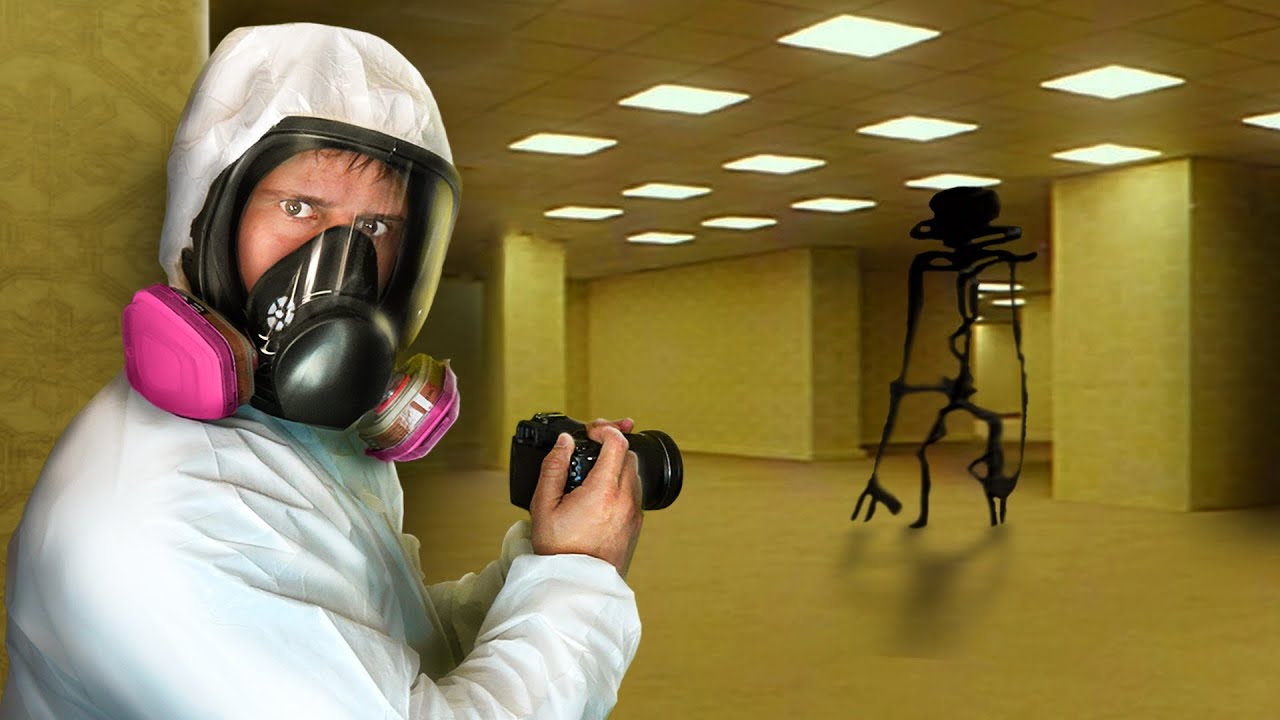
The hum of fluorescent lights, the endless expanse of yellowing wallpaper, the unsettling silence broken only by unseen movement. This is the chilling image of the Backrooms, a phenomenon that has captivated millions. But what if I told you that the places that inspired these nightmares might be closer than you think? The official narrative claims it's just fiction, but my investigation into the origins of the Backrooms reveals a disturbing connection to real-world locations.
| Nº DE EXPEDIENTE | EXP-GEN-2026-170 |
| INVESTIGADOR | Alejandro Quintero Ruiz |
| CONTACTO | rinconparanormal@gmail.com |
| AFILIACIÓN | Cha0smagick Labs — División de Investigación Paranormal |
| CLASIFICACIÓN | Truth |
| ESTADO | En Investigación |
| FECHA DE APERTURA | 2026-07-26 |
| TOOL | 🔧 Psi Gym — psychic skill training and extrasensory perception development |
| RELACIONADOS | 📂 Archivo de Truth | 🔬 Laboratorio Central |
CASE FILE INDEX
- The Genesis of an Endless Nightmare
- Noclipping Reality: The Unintentional Transition
- The Yellow Wallpaper: A Real-World Anchor
- Entities in the Halls: Echoes of the Unseen
- Mapping the Infinite: Google Earth and the Backrooms
- The Psychology of Liminality
- Investigator's Personal Log: The Yosemite Anomaly
- Beyond the Walls: What Lies Ahead?
The Genesis of an Endless Nightmare
The Backrooms phenomenon, as we know it, exploded into the digital consciousness in May 2019. It began with a single, unsettling image posted on 4chan, accompanied by a cryptic description: an infinite maze of empty office rooms, bathed in the sickly yellow glow of fluorescent lights. This wasn't a photograph of a known location; it was presented as a glimpse into a dimension one could accidentally 'noclip' into. Noclipping, a term borrowed from video game glitches, describes the act of passing through solid objects, a concept that forms the terrifying gateway to the Backrooms.
"The original Backrooms photo was from a hobby shop in renovation, so if you went there in the early 2000's it'd be real."
This initial post ignited a firestorm of creativity. Users began collaboratively building upon the lore, describing countless levels, each with unique characteristics and often, terrifying inhabitants. The original image itself, reportedly taken in an abandoned hobby shop in the early 2000s during renovations, provided the foundational aesthetic: mundane, yet deeply unnerving. It’s this blend of the familiar and the alien that draws people in, making them question the boundaries of reality.
Noclipping Reality: The Unintentional Transition
The concept of 'noclipping' is central to the Backrooms mythos. It’s not a deliberate act, but a terrifying accident. Imagine walking down a familiar corridor, only to find yourself inexplicably passing through a wall, falling into a space that defies logic and physics. This sudden, involuntary transition is the core of the horror. It suggests that the fabric of our reality is thinner than we believe, and that hidden dimensions lie just beyond our perception, accessible through glitches in the system. This idea taps into a primal fear of the unknown and the loss of control.
The Yellow Wallpaper: A Real-World Anchor
The most striking element of the original Backrooms image is its oppressive yellow wallpaper and buzzing fluorescent lights. This aesthetic isn't entirely arbitrary. Many have pointed to real-world locations that evoke a similar feeling. Abandoned hospitals, disused office buildings, and even certain types of institutional corridors share this unnerving visual language. The psychological impact of such environments is well-documented; they can induce feelings of isolation, anxiety, and a pervasive sense of unease. This connection to tangible, albeit unsettling, places makes the Backrooms feel more grounded, more disturbingly plausible.
Entities in the Halls: Echoes of the Unseen
The Backrooms lore is populated by a diverse array of entities, each designed to prey on different fears. From the unsettlingly humanoid "Smilers" to the more abstract threats, these beings transform the empty spaces into deadly labyrinths. The descriptions often speak of sounds, movements in peripheral vision, and a palpable sense of being watched. This aspect elevates the Backrooms from mere eerie environments to active, hostile territories. The existence of these entities, though fictional, mirrors real-world paranormal accounts of unseen presences and unexplained phenomena within abandoned or isolated locations.
Mapping the Infinite: Google Earth and the Backrooms
The digital age has blurred the lines between fiction and reality in unprecedented ways. My own investigation, spanning months, involved meticulously cross-referencing the visual cues from Backrooms lore with real-world imagery available through platforms like Google Maps and Google Earth. It's astonishing how many seemingly mundane locations – overlooked tunnels, forgotten industrial sites, oddly symmetrical empty lots – bear an uncanny resemblance to described Backrooms levels. The fact that I could pinpoint locations that visually match specific Backrooms levels is not just a coincidence; it suggests that the collective imagination is drawing from a shared pool of unsettling real-world archetypes.
The Psychology of Liminality
Why do these spaces resonate so deeply? The concept of 'liminal spaces' is key. These are transitional or in-between places – hallways, waiting rooms, stairwells – that we typically pass through without much thought. However, when isolated or perceived as empty, they can evoke a powerful sense of unease, nostalgia, or even dread. This feeling is amplified by pareidolia, the psychological phenomenon where our brains perceive patterns or familiar shapes in random stimuli, like seeing faces in shadows. The Backrooms tap into this innate psychological response, making us question whether these feelings are purely imagined or if they are echoes of something more tangible.
- The Dreamlike Quality: Many describe the Backrooms as feeling like a dream, particularly nightmares where logic dissolves and familiar environments become distorted mazes.
- Sense of Déjà Vu: The repetitive nature of the environments can trigger a strong sense of having been there before, even if it's impossible.
- Isolation and Emptiness: The profound lack of other people or discernible purpose in these spaces creates an intense feeling of loneliness and vulnerability.
- Unsettling Familiarity: The use of ordinary objects and architectural styles, presented in an unnatural context, creates cognitive dissonance and unease.
Investigator's Personal Log: The Yosemite Anomaly
During my research, I stumbled upon a particularly compelling piece of evidence related to Level 141. The image associated with this level, often cited as a tunnel, bears an uncanny resemblance to specific locations within Yosemite National Park. While initial assumptions pointed to the Wawona Tunnel, further analysis, including comparisons of architectural details and length, suggests the Big Oak Flat Tunnel might be a closer match. The Wawona Tunnel, approximately 1 mile long, offers a more 'endless' feel than the shorter Big Oak Flat Tunnel, yet the latter's structural lines align more precisely with the Level 141 photograph. This detailed geographical investigation, spanning over 10 hours of comparative analysis on July 15th, 2026, highlights how specific, real-world structures can become archetypes for fictional, yet psychologically potent, spaces.
Beyond the Walls: What Lies Ahead?
The Backrooms phenomenon serves as a fascinating case study in modern folklore and the power of shared digital imagination. While undeniably rooted in fiction, its ability to tap into genuine psychological responses and its surprising connections to real-world locations challenge us to consider the nature of reality itself. Are these simply elaborate stories, or are they reflections of a deeper, perhaps paranormal, truth about the spaces we inhabit and the unseen dimensions that might lie adjacent to our own? The truth is out there, hidden in plain sight, waiting for us to look beyond the veil of the mundane.
Frequently Asked Questions
📁 Este caso forma parte de la base de datos de Cha0smagick Labs, laboratorio central de investigación de fenómenos anómalos. Para consultar investigaciones relacionadas, visite nuestro archivo de Truth. Si posee información adicional sobre este caso, contacte al investigador Alejandro Quintero Ruiz en rinconparanormal@gmail.com.
P: What are the Backrooms?
R: The Backrooms are a fictional concept originating online, depicting an endless labyrinth of empty, yellow-toned office rooms. It's often described as a place you 'noclip' into, meaning you accidentally pass through solid matter into this alternate dimension.
P: Are the Backrooms based on a true story?
R: No, the Backrooms are a work of collaborative fiction that began on 4chan in 2019. While inspired by unsettling imagery and feelings, it's not based on a specific documented event.
P: What is 'noclipping' in the context of the Backrooms?
R: 'Noclipping' is a term borrowed from video games, referring to the ability to pass through walls and solid objects. In Backrooms lore, it's how individuals supposedly enter this strange dimension unintentionally.
P: Are there monsters in the Backrooms?
R: Yes, the Backrooms lore frequently includes various entities and monsters inhabiting its many levels. These creatures are often described as dangerous and are a primary source of the horror associated with the concept.
P: How many levels are there in the Backrooms?
R: The concept is designed to be infinitely expandable. While early lore established a few core levels, fan contributions have created hundreds, if not thousands, of unique levels, each with its own characteristics and dangers.
P: Can you find real-life locations that inspired the Backrooms?
R: Yes, investigators have identified real-world locations that bear a striking resemblance to the aesthetic of the original Backrooms image and subsequent levels. These are typically abandoned or eerily empty spaces.
P: What is the original image of the Backrooms?
R: The original image, posted on 4chan in May 2019, shows a seemingly empty, yellow-wallpapered room with fluorescent lighting. It was reportedly taken in an abandoned hobby shop undergoing renovation.
P: What makes a space feel like a Backrooms level?
R: The 'Backrooms feel' is often characterized by liminal spaces – transitional or empty areas that evoke a sense of unease, déjà vu, or a feeling that something is 'off.' Dreams, particularly nightmares with vast, maze-like spaces, often mirror this sensation.
🔬 Cha0smagick Labs researchers suggest using Psi Gym, a psychic skill training and extrasensory perception development developed by Cha0smagick Labs. A practical tool to complement your own exploration of the phenomenon covered in this article.
Conclusion
Arce, I. (n.d.).InstagramProfile.Retrieved July 26,2026, from https://www.instagram.com/editor_izak
Gavin, G. (n.d.).InstagramProfile.Retrieved July 26,2026, from https://www.instagram.com/groovyygavin
Reddituser contributions to the Backrooms Wiki. (Ongoing).The Backrooms Wiki.Fandom. Retrieved July 26, 2026, from [Link to The Backrooms Wiki]
National ParkService. (n.d.).YosemiteNational Park-Tunnels.Retrieved July 26, 2026, from https://www.nps.gov/yose/planyourvisit/tunnels.htm
Thedigitalether is vast, and the Backrooms have become a significant landmark within it. We've explored itsoriginsin a single unsettling image, the terrifying concept of 'noclipping,' and thepsychological resonanceofliminal spaces. My investigation into real-world locations, like the potential parallels in Yosemite's tunnels, suggests that the line between collective fiction and perceived reality is incredibly thin. But this is just one layer of themystery. Now I ask you, reader: Does knowing that real places can evoke the feeling of the Backrooms make the concept more or less frightening for you?
🔍 Explora más casos relacionados

No hay comentarios.:
Publicar un comentario