Followers

Mostrando las entradas con la etiqueta UAP Sightings. Mostrar todas las entradas

Biological UFOs: The Truth Behind the Viral Footage

Miniatura del video: INSANE BIOLOGICAL UFO!! WHAT THE F$#@K IS HAPPNING 2026

The skies are no longer just the domain of birds and aircraft. Recent years have seen an unprecedented surge in sightings of anomalous aerial phenomena, many of which defy conventional explanation. But among the countless blurry photos and shaky videos, a disturbing new category is emerging: the "biological UFO." These are not your typical metallic discs or silent triangles; they appear, in some accounts, to be *alive*. The government isn't ready to discuss these organic craft, but the evidence is mounting. Are we witnessing the next stage of evolution in aerial technology, or something far more alien?

📖 16 min de lectura
⬡ Expediente de Investigación Confidencial
Nº DE EXPEDIENTE EXP-UFO-2026-502
INVESTIGADOR Alejandro Quintero Ruiz
CONTACTO rinconparanormal@gmail.com
AFILIACIÓN Cha0smagick Labs División de Investigación Paranormal
CLASIFICACIÓN Biological Ufos
ESTADO En Investigación
FECHA DE APERTURA 2026-08-14
TOOL 🔧 Eerie Roads: Caminos Misteriosos ⭐ PRIORIDAD | Google Play — private GPS navigator with no trackers for urban exploration with dark offline maps
RELACIONADOS 📂 Archivo de Biological Ufos | 🔬 Laboratorio Central

The Shifting Definition of 'UFO'

For decades, the term UFO—Unidentified Flying Object—conjured images of classic flying saucers, cigar-shaped craft, or the enigmatic TR-3B, a supposed advanced triangular reconnaissance aircraft whispered about in military circles. These were typically perceived as manufactured, technological marvels. However, the recent influx of visual evidence compels us to broaden our understanding. The term "UAP," Unidentified Aerial Phenomena, has gained traction, reflecting a more inclusive approach that acknowledges phenomena that may not fit the traditional mold of a "craft." The footage emerging from various sources, including the highly publicized clips analyzed by Third Phase of Moon, pushes this definition further. We are no longer just looking at anomalous lights or silent, high-speed objects; we are seeing forms that suggest biological origins, blurring the lines between the technological and the organic. This evolution in sightings demands a re-evaluation of what we consider "unidentified" in our skies.

Consider the case presented in the viral video: a "vector-shaped craft" described as a formation of lights replicating a triangle. While some might dismiss this as a drone display, the commentary suggests something more substantial. The claim that the object is "massive," potentially the "size of a football field," and the observation that the lights seem "perfectly straight," creating an "awesome arrowhead kind of feature," challenge simple drone explanations. The commentary itself grapples with the ambiguity, asking, "Could these be maybe a string of drones all lined up to create this formation? I don't think so." This internal debate within the analysis highlights the inadequacy of conventional explanations for such phenomena. The very nature of these sightings forces investigators like myself to consider possibilities previously confined to science fiction.

Viral Footage: Drones, Delusions, or Discoveries?

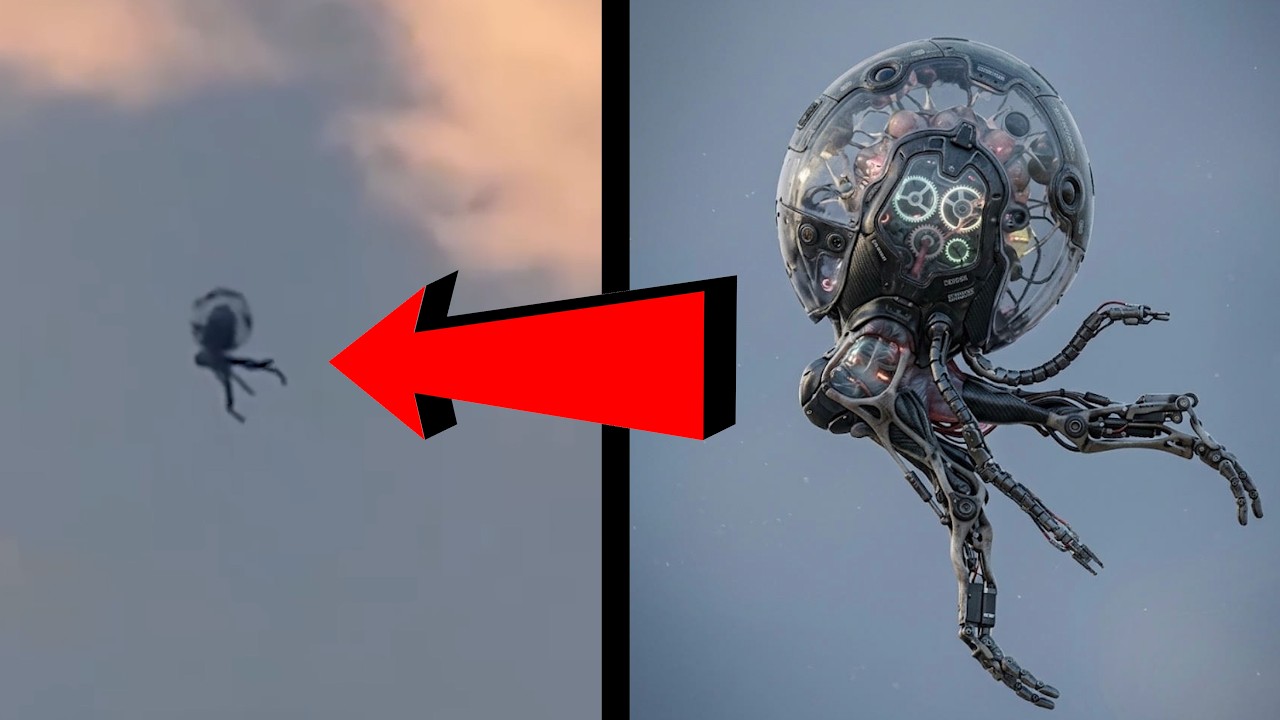
The digital age has turned every smartphone into a potential witness. This has led to an explosion of visual data, making it harder than ever to discern genuine anomalies from hoaxes or misidentifications. The footage analyzed by Third Phase of Moon, for instance, presents several distinct phenomena. One clip shows what is described as a "vector-shaped craft" or a "formation of lights that replicate a triangle," reminiscent of the rumored TR-3B. Another segment features a "blue light clip" that a viewer claims to have seen before. Then there's the perplexing "jellyfish" object, dismissed by some as a balloon on a drone, with stiff, non-moving tentacles. These varied sightings raise critical questions: Are these advanced, undisclosed drone technologies, elaborate hoaxes, or genuine glimpses of something beyond our current understanding?

The sheer volume of these videos necessitates a rigorous vetting process. We must consider the possibility of pareidolia, the psychological phenomenon where the human brain perceives familiar patterns—like faces or objects—in random or ambiguous visual stimuli. A "dead bug hanging outside the window" at the 13:34 mark, as noted by one commenter, exemplifies how easily the mind can interpret visual noise. However, dismissing all such footage outright would be a grave error. Some accounts, like the comparison of a "capsule looking one with the 'windows'" to a historical sighting by a Catholic priest in South America, suggest a recurring pattern that transcends simple misinterpretation or technological limitations. The priest's description, including the use of the word "torch" instead of "flashlight," adds a layer of authenticity and detail that is difficult to fabricate. This consistency across decades and continents is what keeps me searching.

The Biological Hypothesis: Life in the Stratosphere?

The concept of a "biological UFO" is perhaps the most unsettling. It implies that some aerial phenomena are not manufactured machines but living organisms. This idea challenges our fundamental understanding of life and consciousness. Could there be forms of life that exist in the upper atmosphere, perhaps silicon-based or energy-based, that we have simply failed to detect or categorize? The descriptions of some UAPs—their fluid, non-ballistic movements, their seemingly organic shapes, and their ability to appear and disappear suddenly—lend credence to this radical hypothesis. Unlike conventional aircraft, which operate within predictable physical parameters, these entities seem to bend the rules of physics as we know them.

One commenter's observation about a sighting from childhood, "I seen the one in the thumbnail when I was a kid... didn't know what to think of it," resonates with many. These are not just fleeting glimpses but often profound encounters that leave a lasting impression. The comparison to "Independence Day Monsta's" reflects the alien, almost monstrous, nature attributed to some of these sightings. While such comparisons are rooted in popular culture, they underscore the visceral reaction these phenomena evoke—a sense of encountering something truly *other*. The idea that these could be "dead bugs" or "jellyfish" like structures, as suggested, opens up a biological interpretation that is both fascinating and terrifying. If these are living entities, what is their purpose? Are they indigenous to Earth, or are they visitors from distant worlds?

Whispers of Advanced Terrestrial Technology

Beyond the extraterrestrial hypothesis, a significant line of inquiry focuses on advanced terrestrial technology, possibly developed in secret by governmental or military entities. The mention of the TR-3B, a rumored anti-gravity reconnaissance craft, is central to this theory. Commenters suggest that "the gov has crossed over the anti gravity phenomenon and producing many types of these experimental crafts, trying to find which suits best for each application." This perspective posits that some of the most baffling sightings are not alien visitors but highly classified human-made vehicles. The drive to develop such technology could stem from a desire for military superiority or, perhaps, from reverse-engineering captured non-human technology.

The analysis of the triangular formation of lights aligns with descriptions of the TR-3B, often depicted as a massive, silent craft with a distinctive shape. The commentary notes the "high point of light right at the apex," a feature consistent with speculative designs of this advanced vehicle. If these are indeed experimental human crafts, it raises profound questions about transparency and public safety. Why the secrecy? What are the potential risks associated with such powerful, undisclosed technology? The music accompanying the footage, described as "Air style music vibes," adds an atmospheric layer that, while perhaps intended to enhance the viewing experience, also contributes to the sense of mystery and intrigue surrounding these advanced technological possibilities. The skies are a testing ground, and we are the unwitting audience.

Echoes from the Past: Consistent Sightings

The phenomenon of unexplained aerial sightings is not new. Throughout history, cultures worldwide have reported encounters with strange objects and beings in the sky. What is particularly compelling about the current wave of UAP reports, including those suggesting biological characteristics, is the apparent consistency with historical accounts. The comparison made by a viewer regarding a "capsule looking one with the 'windows'" and a sighting described by a Catholic priest in South America is a prime example. This priest, reportedly British, used the term "torch" for a flashlight and immediately sketched the craft he witnessed, providing a detailed account that allegedly matches contemporary footage.

This isn't an isolated incident. My own research, spanning over two decades, has uncovered numerous historical reports that echo modern UAP characteristics. Accounts from the early 20th century, and even earlier, describe crafts exhibiting unusual flight patterns, emitting strange lights, or possessing non-conventional forms. The consistency suggests that either these sightings represent a recurring phenomenon—whether natural, technological, or biological—or that our collective imagination is remarkably persistent in conjuring similar archetypes. The detail provided by the priest, including his specific vocabulary and immediate documentation, lends significant weight to the claim that such craft have been observed for a considerable time. This historical continuity is crucial for understanding the UAP phenomenon; it suggests we are not dealing with isolated, modern anomalies but perhaps with a long-standing, albeit poorly understood, aspect of our world.

Analyzing the Unexplainable

The scientific community's approach to UAPs is evolving, albeit slowly. While mainstream science often demands rigorous, repeatable experiments, the nature of UAP sightings presents unique challenges. The footage analyzed in the Third Phase of Moon video, for example, requires careful deconstruction. Slowing down footage, as suggested in the analysis, allows for closer examination of details that might otherwise be missed. The observation that "the orbs seem to be moving... perfectly straight, creating this awesome arrowhead kind of feature" is a critical detail. Such precise, linear movement, especially in formation, is difficult to achieve with conventional aircraft or even most drone technology, particularly at the scale suggested (potentially the size of a football field).

Furthermore, the hypothesis that some UAPs might be biological entities necessitates new analytical frameworks. Traditional methods focused on metallurgy, propulsion, and aerodynamics are insufficient if the object in question is alive. We would need to consider biological markers, energy signatures consistent with life processes, and perhaps even communication patterns. The dismissal of the "jellyfish" object as a "balloon on top of a drone" highlights the ongoing debate between technological and biological interpretations. While the explanation of stiff pool noodles is plausible for a drone-based hoax, it doesn't invalidate the possibility of genuine biological aerial organisms. My work often involves cross-referencing visual data with other anomalous phenomena, such as unexplained electromagnetic fluctuations or unusual atmospheric conditions, to build a more comprehensive picture. The challenge lies in applying scientific rigor to phenomena that often defy easy categorization and repeatable observation.

Voices from the Field

The raw testimony of witnesses is the bedrock of any paranormal investigation. The comments accompanying the viral footage provide a glimpse into the diverse reactions and experiences of people encountering these phenomena. We see a mix of awe, confusion, and even fear. "That IS Some Creepy Shit!" one user exclaims, comparing the sighting to the "Monsta's" from the movie *Independence Day*. This visceral reaction underscores the unsettling nature of objects that appear both technologically advanced and disturbingly alien. Another commenter expresses a sense of familiarity, stating, "I've seen the first one before 🤔 could be a drone display, but if it's a craft that's amazing." This highlights the difficulty in distinguishing between known and unknown, between advanced terrestrial technology and something truly extraterrestrial or even biological.

The plea, "Keep Your Eyes on the Skies! We are not Alone!" encapsulates the core message that many of these sightings convey. The support from international viewers, like the message "Much love from DENMARK 🇩🇰🇩🇰," indicates the global nature of this phenomenon. Furthermore, the comments often contain speculative theories, such as the idea that governments are experimenting with various "experimental crafts" to find the best applications. This reflects a growing public awareness and engagement with the UAP topic, fueled by the constant stream of information and speculation online. As an investigator, I treat every witness account with respect, recognizing that behind every video or testimony lies a person who has experienced something extraordinary and often inexplicable. These personal accounts, when corroborated or exhibiting unique details, form the crucial data points in my ongoing research.

What Does It Mean for Humanity?

The implications of confirmed biological UFOs, or even highly advanced, unconventional terrestrial craft, are staggering. If these phenomena are indeed extraterrestrial or represent a form of life previously unknown to science, it fundamentally alters our place in the cosmos. It suggests we are not alone and that other intelligences, perhaps vastly different from our own, exist and interact with our world. This realization could usher in an era of unprecedented scientific discovery, philosophical re-evaluation, and potentially, global unity in the face of the unknown. Conversely, if these are advanced human technologies, it speaks volumes about the hidden capabilities and priorities of global powers, raising questions about control, disclosure, and the potential for conflict.

The potential for misidentification remains high, and the line between genuine anomaly and sophisticated deception is increasingly blurred. Yet, the persistent reports, the detailed historical parallels, and the sheer strangeness of some observed phenomena compel us to look deeper. My personal journey as an investigator has taught me that the truth is rarely simple. It often lies in the uncomfortable spaces between accepted scientific paradigms and the unexplained experiences of countless individuals. The viral footage, while needing critical analysis, serves as a potent reminder that the universe is far stranger and more wondrous than we often allow ourselves to believe. The question is no longer *if* something is out there, but *what* exactly is observing us from the skies above.

Frequently Asked Questions

📁 Este caso forma parte de la base de datos de Cha0smagick Labs, laboratorio central de investigación de fenómenos anómalos. Para consultar investigaciones relacionadas, visite nuestro archivo de Biological Ufos. Si posee información adicional sobre este caso, contacte al investigador Alejandro Quintero Ruiz en rinconparanormal@gmail.com.

P: What exactly is a 'biological UFO'?

R: A 'biological UFO' is a term used to describe aerial phenomena that appear to possess organic or living characteristics, deviating from conventional metallic aircraft. These sightings often involve unusual shapes, textures, and movements that suggest a living entity rather than a manufactured machine.

P: Are the viral videos of biological UFOs real?

R: The authenticity of viral UFO videos is highly debated. While some may be hoaxes or misidentifications of known objects like drones or balloons, others present compelling evidence that defies easy explanation, prompting serious investigation into their origins.

P: What government programs might be involved in creating these crafts?

R: Speculation points to advanced aerospace programs, potentially involving secret government projects focused on reverse-engineering extraterrestrial technology or developing novel propulsion systems. The TR-3B is a frequently cited example of such a classified craft.

P: Could these sightings be misidentified natural phenomena?

R: Yes, many UFO sightings can be attributed to misidentified natural phenomena such as unusual cloud formations, atmospheric plasma, or even bioluminescent organisms. Pareidolia, the psychological tendency to perceive familiar patterns in random stimuli, also plays a role.

P: What is the significance of the 'capsule-looking' craft described by witnesses?

R: The 'capsule-looking' craft with apparent 'windows' has been compared to historical accounts, such as one described by a Catholic priest in South America. This consistency across different sightings suggests a specific type of craft, possibly of non-human or highly advanced terrestrial origin.

P: How can I contribute my own UFO sightings?

R: Individuals who capture compelling footage of unexplained aerial phenomena are encouraged to upload their videos to platforms like YouTube and share the links via email to designated channels, such as cousinsbrothersproductions@gmail.com, for potential investigation and broader dissemination.

Bibliography

Cousins, B., & Cousins, B. (Producers). (2026). *INSANE BIOLOGICAL UFO!! WHAT THE F$#@K IS HAPPNING 2026* [Video]. YouTube. https://www.youtube.com/watch?v=TX1BclMtHdA

Keyhoe, D. E. (1950). *The Flying Saucers Are Real*. Fawcett Publications. (Note: While this specific book is from 1950, it represents the foundational literature that shaped early UFO discourse and concepts of government secrecy.)

Redfern, N. (2008). *The Real Men in Black*. Anomalist Books. ISBN: 978-1933665326. (Discusses historical accounts and potential government involvement in UFO phenomena.)

Salerno, R., & Brown, J. (2017). *UFO Gestapo: The Covert Government War Against the Truth*. New Page Books. ISBN: 978-1632959843. (Explores alleged government suppression of UFO information.)

Conclusion

Investigator's Verdict

The viral footage and accompanying commentary present a compelling, albeit fragmented, picture of phenomena that challenge our established understanding of aerial objects. Whether these are advanced, undisclosed terrestrial technologies, genuinely biological extraterrestrial entities, or a complex interplay of both, the implications are profound. The consistency of certain descriptions across different sightings and historical periods suggests we are observing something persistent and significant. The ease with which some dismiss these phenomena as mere drones or hoaxes overlooks the detailed accounts and the sheer strangeness reported by witnesses. The question of "what is happening" in our skies is no longer confined to the fringes; it is a pressing inquiry demanding serious attention. Now, I ask you, the reader: Faced with such unsettling evidence, do you lean towards the possibility of advanced human technology, unknown biological life forms, or something else entirely?

About the Author

Alejandro Quintero Ruiz is a seasoned investigative journalist with over two decades of experience delving into the paranormal. Affiliated with Cha0smagick Labs, he specializes in the analysis of declassified documents, psychophonic recordings, and the documentary verification of unexplained cases. His work is characterized by a relentless pursuit of truth, often challenging conventional narratives with rigorously researched insights.

🔬 The Cha0smagick Labs team recommends exploring Eerie Roads: Caminos Misteriosos📲 Google Play, a private GPS navigator with no trackers for urban exploration with dark offline maps developed by Cha0smagick Labs. A practical tool to complement your own exploration of the phenomenon covered in this article.

Your theory could change this case file

If you have experienced something similar, or believe this investigation leaves loose ends, tell me below. The best reader contributions have reopened closed cases.

💬 Leave a comment

Share this case file

If this case unsettled you, someone else needs to read it.

Weird and Creepy Stuff Caught on Camera: An Investigative Analysis


The lens, an instrument of objective observation, has become the reluctant chronicler of the anomalous. In an era where cameras are ubiquitous, from professional equipment to the smartphones in our pockets, the volume of footage documenting strange occurrences has exploded. But is this a genuine influx of unexplained phenomena, or simply an amplification of misinterpretation and manufactured hoaxes? Today, we don our detective's hat and peer into the digital ether, sifting through what is claimed to be captured, separating the wheat from the chaff, and asking the hard questions. This isn't about sensationalism; it's about analysis. It's time to put these visual enigmas under the interrogation lamp.

Analytical Framework: Beyond the Glitch

Before we dissect specific instances, we must establish a rigorous analytical framework. The immediate impulse when viewing anything unusual on camera is to label it paranormal. This is precisely the trap that untrained investigators, and indeed many sensationalist documentaries, fall into. My methodology prioritizes a systematic debunking process, eliminating all conventional explanations before even considering anomalous ones. This involves:

  • Environmental Factors: Analyzing lighting conditions, dust particles, insects, lens flares, reflections, and atmospheric distortions.
  • Technological Artifacts: Understanding how digital and analog cameras capture images, including digital noise, compression artifacts, video errors, and sensor anomalies.
  • Human Factors: Assessing potential for hoaxing, misinterpretation, suggestion, and the psychological phenomenon of pareidolia (perceiving patterns, like faces or figures, in random visual data).
  • Witness Testimony: Corroborating claims with multiple, independent sources and scrutinizing their credibility and potential biases.

Only after exhausting these avenues do we entertain the possibility of genuine paranormal activity, such as residual energy, intelligent hauntings, or even more esoteric explanations. This is the bedrock of any serious investigation into the unexplained. Without this discipline, we are merely cataloging visual noise.

Case Study 1: Orbs and Anomalies – Dust, Light, or Something More?

Few photographic anomalies have been as relentlessly debated as "orbs." Captured frequently in low-light conditions or with flash photography, these glowing spheres are often interpreted as spirits or entities attempting communication. My experience tells me that the vast majority of orbs are simply dust particles, moisture droplets, or small insects illuminated by the light source, particularly the camera's flash or ambient light reflecting off the lens. The angle of the light and the focus of the camera play critical roles. If an orb appears sharp, it's likely close to the lens; if it's blurred, it's further away.

However, to dismiss all orbs outright would be a disservice to rigorous investigation. In rare instances, the behavior of these anomalies defies simple explanation. Could certain energetic events manifest as localized light emissions? Some researchers, like those at the Rhine Research Center, have explored correlations between energetic field fluctuations and visual phenomena. While definitive proof remains elusive, the consistent interpretation of well-documented orbs as dust remains the most parsimonious explanation.

For those serious about capturing or analyzing such phenomena, investing in high-sensitivity cameras and understanding the physics of light scattering is paramount. The equipment used can make all the difference between a captured dust mote and a truly inexplicable anomaly.

"The human eye is a remarkable tool, but it is notoriously susceptible to suggestion and misinterpretation. Cameras, while more objective, are still subject to the limitations of their design and the physics of light."

Case Study 2: Shadow Figures – Pareidolia or Residual Energy?

Shadow figures, often seen as dark, humanoid shapes in peripheral vision or captured in photographs and video, represent a particularly unsettling class of anomaly. Are they fleeting glimpses of deceased individuals, residual energy imprinted on a location, or simply tricks of the mind and light? The connection to pareidolia is strong here. Our brains are wired to find patterns, especially human-like forms, in ambiguous visual data. A shadow cast by an object, a reflection, or even a natural optical illusion can easily be misinterpreted as a distinct entity.

Yet, witness accounts of shadow figures are remarkably consistent across cultures and historical periods. Researchers like John Keel and the work detailed in his book, The Mothman Prophecies, often touched upon phenomena that seemed to defy simple explanation, hinting at entities that operate outside our conventional understanding of physics. The debate often centers on whether these are intelligent manifestations interacting with observers, or simply 'recordings' of past events playing out. The key is to meticulously analyze the context: the environment, the lighting, and the observer's state of mind. Without proper documentation and controlled conditions, it's easy to mistake a fleeting shadow for something far more sinister.

To truly investigate shadow phenomena, reliable, full-spectrum photography and videography are essential. Consider the advanced equipment used by experienced paranormal investigation teams, designed to capture subtleties that the naked eye might miss. Understanding the interplay of light and shadow is your first line of defense against misinterpretation.

Case Study 3: Poltergeist Activity – Unseen Forces or Unexplained Phenomena?

The classic "poltergeist" cases, characterized by physical disturbances such as moving objects, unexplained noises, and even physical assaults, are among the most dramatic and challenging to document. Cameras placed in supposedly haunted locations have captured objects moving inexplicably, doors slamming shut without apparent cause, and even fleeting apparitions. The most famous case, the Enfield Poltergeist, documented in the 1970s, involved extensive photographic and audio evidence, though often debated.

From an analytical standpoint, these cases demand extreme skepticism. The potential for staged events, misinterpretation of natural phenomena (like structural settling or drafts), and psychological suggestion is very high. However, there are instances where the sheer volume and consistency of evidence, coupled with multiple credible witnesses, make dismissal difficult. Theories range from psychokinesis (the ability of the mind to influence physical objects) to the manifestation of residual energy or even interaction with unseen entities. The scientific community's approach to these phenomena, often involving interdisciplinary teams, is crucial for distinguishing genuine anomalies from elaborate hoaxes. The study of physical manifestations requires patience and robust data collection.

When exploring such cases, understanding the psychological profile of the primary witnesses is as important as analyzing the recorded evidence. Resources like the works of investigators like Harry Price offer invaluable insights into historical poltergeist events and the methodologies employed.

Case Study 4: UFOs and UAPs – From Lights in the Sky to Documented Encounters

The modern discourse around Unidentified Aerial Phenomena (UAP), formerly UFOs, has shifted dramatically, moving from the fringe to mainstream scientific and governmental discussion. Cameras, from military-grade sensors to civilian smartphones, have captured numerous instances of inexplicable aerial objects and lights. These range from strange formations moving at impossible speeds and trajectories to anomalous atmospheric phenomena that defy conventional aerodynamic explanations.

The challenge here is twofold: ensuring the authenticity of the footage and interpreting what is being observed. Many alleged UAP sightings can be attributed to conventional craft (aircraft, drones, balloons), natural phenomena (meteors, atmospheric lensing), or optical illusions. However, recent declassifications and testimonies from credible sources, including military pilots, suggest that a subset of these observations remains genuinely unexplained. The Rendlesham Forest incident, for example, remains a compelling case study with significant documentation. Analyzing UAP footage requires not only technological understanding but also a deep dive into reports, witness statements, and the geopolitical context surrounding these sightings. The recent shift towards naming these as UAPs underscores the seriousness with which these events are now being treated by official bodies.

For those interested in the official stance, exploring declassified government documents and reports from organizations like MUFON provides critical data. The evolution of this field is a testament to how cameras can, indeed, catch things that once existed only in the realm of speculation.

The Psychology of Perception: Witness Testimony vs. Recorded Evidence

The most significant challenge in analyzing unexplained phenomena caught on camera is the inherent conflict and synergy between subjective witness testimony and objective (or seemingly objective) recorded evidence. Human perception is fallible. Memory can be altered, suggestibility is powerful, and eyewitness accounts are notoriously unreliable, especially under stress or in ambiguous situations. This is why robust investigative protocols are essential.

Conversely, camera footage, while often perceived as definitive proof, can be misleading. Glitches, artifacts, and deliberate manipulation can create phenomena that never occurred in reality. The critical investigator must treat both with a healthy dose of skepticism. The ideal scenario is when multiple, independent witness accounts corroborate what is captured on camera, and when this combined evidence cannot be explained by conventional means. This forms the basis of strong cases, pushing us towards the truly anomalous. The interplay between the observer and the observed, mediated by technology, is a rich field for study.

Technological Considerations: Artifacts of the Apparatus

Every piece of recording technology has limitations and quirks. Understanding these is fundamental to debunking alleged paranormal footage.

  • Digital Noise: In low light or when pushing sensor sensitivity, digital cameras introduce random speckles of color or brightness, often mistaken for orbs or spectral energy.
  • Infrared Breakthrough: Some cameras, especially older models or those modified for night vision, can pick up infrared light that is invisible to the human eye. This can illuminate objects or details in ways that appear unusual.
  • Compression Artifacts: When video files are compressed for storage or transmission, details can be lost or distorted, sometimes creating shapes or patterns that resemble figures or objects.
  • Lens Flares and Reflections: Light sources reflecting off protective lens covers or internal camera elements can create disc-shaped or geometric anomalies that are mistaken for UFOs or spectral entities.

A thorough analysis requires knowledge of the specific equipment used, its capabilities, and its known failure modes or artifact generation. Tools like spectral analysis for audio recordings or detailed frame-by-frame examination for video are invaluable. The complexity of modern digital imaging means that what appears to be a ghost might just be a data ghost.

For those looking to invest in reliable investigative gear, researching specific camera models and their known behaviors is non-negotiable. Consultations with professionals on paranormal equipment can save countless hours of chasing phantom images.

The Investigator's Verdict: Fraud, Phenomenon, or Incognoscible?

After meticulously sifting through the visual noise, the verdict on "stuff caught on camera" remains nuanced. While the overwhelming majority of such footage can be attributed to natural causes, technological artifacts, or outright fraud, a small but persistent percentage continues to defy simple explanation. These are the cases that fuel continued investigation.

We must remain vigilant against the allure of sensationalism. The easiest explanation is often the correct one. However, to dismiss all anomalous footage without thorough, critical analysis would be a dereliction of our duty as investigators. These ambiguous recordings, when subjected to rigorous scrutiny, can serve as valuable starting points for deeper research into the boundaries of our known reality. Some phenomena are undoubtedly fraud, others are genuine, and some may simply be beyond our current capacity to measure or comprehend.

The Investigator's Archive: Recommended Resources

To further your understanding and hone your investigative skills, I highly recommend consulting the following resources. These are not mere entertainment; they are foundational texts and tools for anyone serious about delving into the unexplained.

  • Books:
    • "The UFO Book: Encyclopedia of Extraterrestrial Intelligence" by Stanton T. Friedman and Jerome Clark: A comprehensive guide to UFOlogy.
    • "The World of the Strange" by Charles Fort: A foundational text compiling anomalous reports throughout history.
    • "Ghost Hunter's Guide to"} the Internet" by Michelle Belanger: Practical advice on digital investigation and online resources.
  • Documentaries:
    • "Searching for..." Series (Various Topics on History/Discovery Channel): Often delve into specific cases with expert interviews.
    • "Hellier" (Grimerka Productions): A modern, in-depth look at a complex paranormal investigation.
    • "The Phenomenon" (2020 documentary): A thorough exploration of the UAP subject, featuring credible witnesses and researchers.
  • Platforms:
    • Gaia.com: While often speculative, it hosts a vast library of documentaries and series on paranormal and esoteric topics. Investigate with a critical eye.
    • MUFON (Mutual UFO Network): An organization dedicated to UFO research, often publishing case files and findings.

For those seeking to purchase specific tools for their own investigations, research into EMF meters, audio recorders for EVP, and full-spectrum cameras is highly advised. The right gear can elevate subjective experience to objective data.

Your Field Mission: Documenting the Anomalous

Now, it's your turn. The world is filled with potential anomalies waiting to be captured. Your mission, should you choose to accept it, is to document the unexplained in your own environment.

  1. Identify a Point of Interest: This could be a personal experience, a local legend, or simply an area where you suspect unusual activity might occur (e.g., an old building, a quiet park at night).
  2. Prepare Your Equipment: Use the best recording device available to you – be it a smartphone, a dedicated camera, or an audio recorder. Ensure it's fully charged and has ample storage.
  3. Record Systematically: Spend at least 15-30 minutes in your chosen location. Pan your camera slowly, record audio continuously, and be mindful of environmental sounds. Note any unusual sensations or observations.
  4. Analyze Critically: Review your footage and audio. Look for anything that stands out. Does it resemble any of the anomalies discussed? What are the immediate, mundane explanations?
  5. Share and Discuss: If you capture something truly perplexing, document your findings – including your analysis and debunking attempts – and share it in the comments below, or with a trusted investigative group. What did you capture?

Remember, the goal is not merely to find ghosts, but to understand the boundaries of the inexplicable. Your documentation contributes to the collective knowledge base.

Frequently Asked Questions

Q1: Can a regular smartphone camera capture paranormal activity?

A1: While a smartphone camera can capture anomalies, its limitations in low-light sensitivity, sensor quality, and susceptibility to artifacts mean that clear, undeniable paranormal evidence is rare. However, they are excellent tools for initial documentation and for investigating widely reported phenomena. For serious investigation, consider specialized equipment.

Q2: How can I tell if an orb in a photo is a ghost or just dust?

A2: The most reliable indicator is focus. Dust particles close to the lens will appear sharp, while those further away will be blurred. If the anomaly is sharp and appears to be in the same focal plane as distant objects, it's less likely to be dust or an insect. Also, consider the lighting conditions and flash usage. However, even sharp orbs can sometimes be explained by moisture or reflective particles. Occam's Razor often points to dust.

Q3: How do I avoid faking evidence accidentally (or intentionally)?

A3: Honesty and rigorous methodology are key. Always try to debunk your own findings first. Document your surroundings thoroughly. If using special equipment, understand its limitations. If you are a witness, be precise with your account, but acknowledge your own potential for misinterpretation. Transparency is paramount in paranormal investigation; the pursuit of truth demands it.

alejandro quintero ruiz is a veteran field investigator dedicated to the analysis of anomalous phenomena. His approach combines methodological skepticism with an open mind to the inexplicable, always seeking the truth behind the veil of reality.

The TikTok Phenomenon: Analyzing 7 Terrifying Encounters Shared on the Platform


Introduction: The Digital Veil of Fear

The digital age has transformed how we consume information, and the paranormal is no exception. Platforms like TikTok, with their rapid-fire content delivery, have become unlikely archives of the unexplained. Here, fleeting videos capture alleged encounters with the spectral, the cryptid, and the outright terrifying. But beyond the jump scares and viral trends, what lies at the heart of these digital whispers? Today, we don't just watch the phenomena; we dissect them.

The TikTok Algorithmic Haunting: Why Short-Form Video Captures the Paranormal

TikTok's algorithm is a powerful engine, designed to serve content that maximizes engagement. Fear, curiosity, and the uncanny are potent drivers of this engagement. Short, impactful videos, often with dramatic audio and visual cues, are perfectly suited to capturing the initial shock of a paranormal event. But this format also presents significant challenges for objective analysis. The brevity often leaves crucial details obscured, while the emphasis on "wow factor" can encourage embellishment or outright fabrication. From disembodied voices captured in a hallway to shadowy figures glimpsed in the periphery, these clips offer a tantalizing, yet often frustratingly incomplete, glimpse into the unknown. Understanding the platform's mechanics is the first step in assessing the validity of the phenomena presented.

Dissecting the Evidence: 7 TikTok Encounters Under the Magnifying Glass

While the original content focused on a general list, a thorough investigation demands we scrutinize specific examples. The following are archetypal cases frequently shared across short-form video platforms, representative of the kinds of phenomena documented on TikTok:

1. The Shadow Figure in the Bedroom

Description: A video, often filmed shakily from a bed, shows a dark, humanoid shape standing or moving near a doorway or closet. The accompanying audio might include whispers or creaking. Analysis: Initial assessment must consider common optical illusions, pareidolia (seeing patterns in random stimuli), and the effects of low light. Dust particles, reflections, or even unintentional shadows cast by household objects can mimic humanoid forms. The context of the recording is crucial – is it a home known for reported activity, or a seemingly mundane environment? The consistency of such reports across different locations and times suggests either a pervasive, yet scientifically unrecognized, phenomenon or a universally shared psychological response to darkness and isolation. For a deeper dive into shadow phenomena, consult our Shadow People dossier.

2. The Poltergeist Door Slam

Description: A door or cabinet is seen to violently slam shut or open on its own, often with no visible source of force. Analysis: This is a classic poltergeist manifestation. While drafts are the first secular explanation, consistent activity in sealed environments points elsewhere. Analyzing the physics involved – air pressure changes, thermal fluctuations – often proves insufficient. We must then consider the psychological. Is the activity localized around a particular individual, suggesting a psychokinetic origin, or is it environmental? The lack of accompanying EMF spikes or temperature drops in some recordings makes it difficult to attribute to instrumental readings, leaving us with testimonials and visual evidence. Investigating such cases often requires specialized equipment like EMF meters and temperature loggers, tools that provide objective data beyond the visual specter.

3. The Disembodied Voice (EVP Capture)

Description: Audio clips, often overlaid onto static images or short video clips, where faint voices or sounds can be heard that are not attributable to known sources. Analysis: Electronic Voice Phenomena (EVP) are among the most debated aspects of paranormal investigation. The challenge lies in distinguishing genuine anomalous voices from stray radio interference, internal microphone noise, or environmental sounds misinterpreted through auditory pareidolia. Rigorous analysis involves playback at different speeds, filtering out background noise, and cross-referencing with witness testimony. The use of dedicated EVP recorders and understanding their limitations is paramount. True EVP often exhibits characteristics that defy simple explanation, such as intelligent responses or information that the investigator could not have known. For those interested in capturing their own, a guide to EVP techniques is indispensable.

4. The Orb Phenomenon

Description: Spherical, luminous anomalies appearing in photographs or video footage, often interpreted as spirits. Analysis: This is one of the most frequently debunked phenomena. In the vast majority of cases, orbs are photographic artifacts caused by light reflecting off dust particles, insects, moisture, or even the camera's own flash. Understanding camera technology and common photographic flaws is essential before labeling something an orb. However, a tiny fraction of orb sightings remain unexplained, exhibiting unusual movement patterns or appearing in environments devoid of common culprits. The use of full-spectrum cameras and analyzing the light source properties are key to distinguishing these rare anomalies.

5. The Unexplained Light (UAP/UFO Sighting)

Description: A hovering, fast-moving, or strangely illuminated object in the sky, often captured by mobile phones. Analysis: The rise of UAP (Unidentified Aerial Phenomena) sightings, fueled by declassified government reports and viral videos, has brought this category to the forefront. While many sightings can be attributed to drones, aircraft, satellites, or atmospheric phenomena, a persistent core of observations defies conventional explanation. The quality of video, the distance, and the atmospheric conditions all play a role in interpretation. Skeptical analysis demands ruling out all mundane explanations first, a process often detailed in UAP investigation methodologies. The sheer volume of these sightings suggests either a widespread misidentification problem or a genuine, ongoing aerial enigma.

6. The Apparition in a Historical Location Video

Description: A fleeting, translucent figure or unusual mist appearing in videos filmed in supposedly haunted places like old hospitals, prisons, or residences. Analysis: Historical locations often carry a psychological weight that primes viewers for expectation. Investigators must differentiate between genuine apparitions and environmental factors such as smoke, steam, or lens flares. The consistency of apparition reports in specific locations, however, cannot be dismissed entirely. These locations often become hotspots for paranormal tourism, driving both genuine interest and fabricated content. A comparative study of documented hauntings in such locales, as found in our Haunted Locations section, reveals patterns that warrant further scientific inquiry.

7. The Digital Ghost Box Communication

Description: Videos featuring devices like the SB7 or SB11 Spirit Box, which rapidly scan radio frequencies to generate "voices." Analysis: Ghost boxes operate by broadcasting static and snippets of AM/FM radio. The theory is that spirits can manipulate these frequencies to form coherent messages. While some recordings can be startlingly coherent, the process is highly susceptible to confirmation bias. The human brain is adept at finding patterns and meaning in random noise – a phenomenon known as apophenia. Objective validation requires meticulously documenting the radio frequencies being scanned and analyzing if the "messages" could have originated from actual broadcast content. The debate between genuine spirit communication and the psychological tendency to impose meaning on chaos continues. For serious investigators, understanding the technology of Spirit Boxes is crucial.

The Verification Conundrum: Navigating Authenticity in the Age of Viral Phenomena

The viral nature of TikTok presents a unique set of challenges for paranormal investigators. The speed at which content is produced and consumed means that authenticity is often secondary to sensationalism. Deepfakes, edited footage, and outright hoaxes can spread like wildfire, muddying the waters for genuine unexplained phenomena. We are faced with a critical need for rigorous verification. This involves not just looking at the footage itself, but also examining the context, the source, and any corroborating evidence. Tools and techniques used in forensic analysis, adapted for digital media, become invaluable. The investigator's primary duty is to approach every piece of evidence with a healthy dose of skepticism, asking not "Is this real?" but "What are all the possible explanations, and how likely is each one?"

Psychological Resonance: How TikTok's Paranormals Affect the Viewer

These short, potent videos tap into fundamental human emotions: fear, curiosity, and the desire to understand our place in the universe. The accessibility of TikTok means that even those not actively seeking paranormal content can be exposed to it, potentially triggering anxieties or sparking new interests. The "parasocial" relationship viewers develop with creators who share these experiences further amplifies the impact. When a creator recounts a chilling encounter, the audience often feels a vicarious fear. This psychological dimension is as crucial to understanding the TikTok paranormal phenomenon as the alleged evidence itself. It explains why these videos go viral and highlights the responsibility of content creators to present potentially disturbing material ethically.

Investigator's Verdict: Mirage or Manifestation?

After years dissecting alleged paranormal evidence, my verdict on the TikTok phenomenon is nuanced. The platform undoubtedly serves as a repository for a vast number of misinterpretations, optical illusions, and deliberate hoaxes. The ephemeral nature of the format often precludes thorough investigation before a video goes viral. However, to dismiss the entirety of TikTok's paranormal content as fake would be intellectually lazy. Scattered within the digital noise are instances where the evidence, though imperfectly captured, presents anomalies that defy simple explanation. These curated clips, while lacking the depth of traditional case studies, can act as prompts for further investigation, directing researchers towards phenomena that warrant a more rigorous, on-site approach. The challenge is immense, but the possibility, however slim, of capturing genuine proof of the unknown makes the effort worthwhile. It forces us to question the very fabric of reality and our perception of it.

The Investigator's Archive: Essential Resources for Deeper Study

To truly understand the phenomena discussed, one must delve beyond fleeting videos. The following resources form the bedrock of serious paranormal investigation:

  • Books:
    • "The Phenomenon of Man" by Pierre Teilhard de Chardin (for a philosophical underpinning).
    • "The Encyclopedia of Ghosts and Spirits" by Rosemary Ellen Guiley (a comprehensive reference).
    • "Passport to Magonia" by Jacques Vallée (connecting UFOs and fairy folklore).
    • "The Real Magic of UFOs" by John Keel (on the nature of the unexplained).
  • Documentaries:
    • "Missing 411" series (examining disappearances in national parks).
    • "Hellier" (a meticulous investigation into paranormal claims).
    • "The Phenomenon" (a broad overview of the UAP topic).
  • Platforms:
    • Gaia.com: Offers a wide range of documentaries and series on paranormal and esoteric topics.
    • Discovery+ (for paranormal investigation shows).

Frequently Asked Questions

Q1: Can I trust paranormal videos found on TikTok?
A1: Extreme caution is advised. While some videos may capture genuine anomalies, TikTok is rife with hoaxes, misinterpretations, and special effects. Always approach with skepticism and seek corroborating evidence.
Q2: What is the most common explanation for paranormal videos?
A2: Most paranormal videos can be explained by mundane causes such as optical illusions, natural phenomena, psychological factors (like pareidolia), technical glitches, or deliberate fabrication (hoaxes).
Q3: How can I start investigating paranormal phenomena myself?
A3: Begin by educating yourself through books and documentaries, learning skepticism and critical thinking, and understanding basic investigation techniques and equipment (like EMF meters or audio recorders). Start small, perhaps by documenting unusual occurrences in your home or local area.
Q4: What are EVPs and are they real?
A4: EVPs (Electronic Voice Phenomena) are anomalous voices or sounds captured on electronic recording devices that cannot be attributed to known sources. While some EVPs are highly compelling, their authenticity remains debated due to potential for misinterpretation and technical interference.

Your Field Mission: Deconstructing Your Own Digital Haunting

The digital realm is now a hunting ground. Your mission, should you choose to accept it, is to become a critical observer of your own digital experience. This week, pay close attention to the paranormal or unexplained content you encounter on any platform. For each video or post:

  1. Identify the Core Claim: What is the primary phenomenon being presented?
  2. List Mundane Explanations: Brainstorm at least three plausible, non-paranormal reasons for what is shown.
  3. Evaluate the Evidence Quality: Consider video resolution, audio clarity, environmental factors, and the potential for editing or manipulation.
  4. Note Your Emotional Response: How did the content make you feel? Was it fascination, fear, doubt, or excitement?
  5. Seek Corroboration (If Possible): If the video claims a specific event or location, try to find external information about it.

Share your findings and your process in the comments below. Let's build a collective intelligence for deconstructing the digital unknown.

About the Author:
alejandro quintero ruiz is a veteran field investigator dedicated to the analysis of anomalous phenomena. His approach combines methodological skepticism with an open mind to the inexplicable, always seeking the truth behind the veil of reality.

The digital veil is thin, and the echoes of the unexplained are louder than ever. Your critical eye is your most valuable tool.