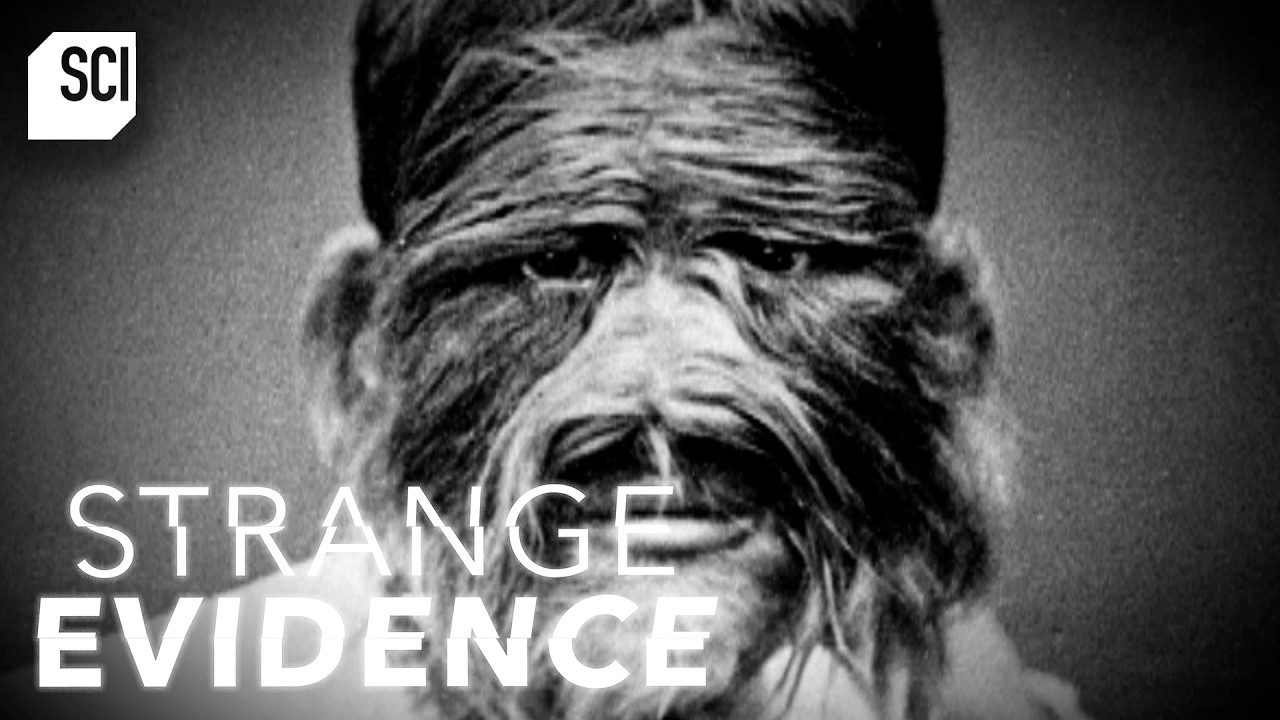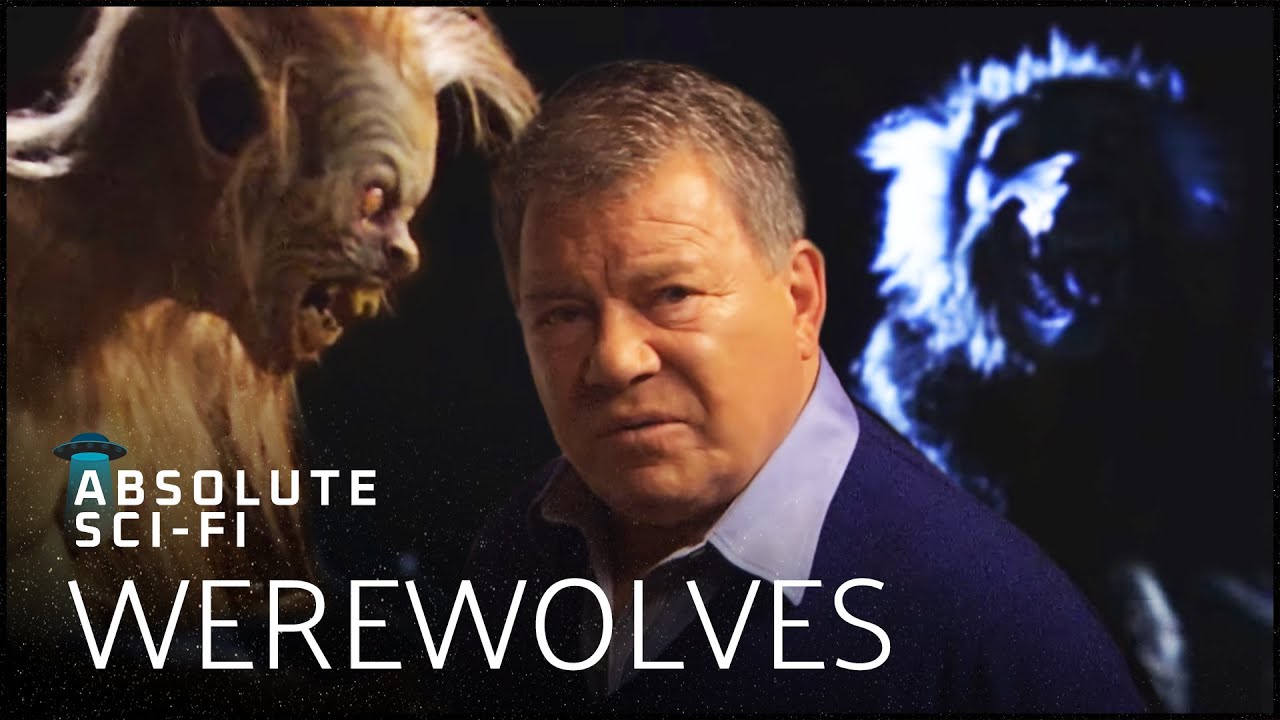
The chilling howl echoing through the Wisconsin woods at midnight, the glint of predatory eyes in the darkness—these are images etched into our collective nightmares. But what if these aren't just campfire tales? What if they are echoes of something ancient, something real, lurking just beyond the veil of our perceived reality? William Shatner, a man whose own journey through the cosmos and into the bizarre has prepared him for such revelations, delves into encounters with creatures that defy easy explanation. We're not just talking about spooky stories; we're talking about eyewitness accounts that have haunted communities for decades. The scientific community may dismiss them, but the sheer volume of consistent testimony demands investigation. This isn't about believing in fairy tales; it's about confronting the possibility that our understanding of the natural world is profoundly incomplete.
| Nº DE EXPEDIENTE | EXP-GEN-2026-007 |
| INVESTIGADOR | Alejandro Quintero Ruiz |
| CONTACTO | rinconparanormal@gmail.com |
| AFILIACIÓN | Cha0smagick Labs — División de Investigación Paranormal |
| CLASIFICACIÓN | Werewolf Legends |
| ESTADO | En Investigación |
| FECHA DE APERTURA | 2026-08-16 |
| TOOL | 🔧 Eerie Roads: Caminos Misteriosos ⭐ PRIORIDAD | Google Play — private GPS navigator with no trackers for urban exploration with dark offline maps |
| RELACIONADOS | 📂 Archivo de Werewolf Legends | 🔬 Laboratorio Central |
CASE FILE INDEX
- The Jersey Devil: A Winged Menace in New Jersey
- Reptilian Rise: The South Carolina Lizard Creature
- Wisconsin's Wolf-Headed Beast: A True Werewolf?
- Shatner's Scientific Lens: Separating Myth from Reality
- The Psychology of Fear: Pareidolia and Folklore
- Cryptozoology's Frontier: The Search for Unknown Animals
- Historical Accounts: Werewolf Legends Through the Ages
- The Biological Impossibility vs. Eyewitness Testimony
- Future Implications: What If They Are Real?
The Jersey Devil: A Winged Menace in New Jersey
Our journey into the uncanny begins in the Pine Barrens of New Jersey, a region steeped in a legend as old as the colonies themselves: the Jersey Devil. For centuries, tales have circulated of a terrifying creature, a \u201cwinged beast\u201d with a horse-like head, the cloven hooves of a goat, and leathery wings that cast a shadow of dread. In the early 20th century, specifically around January 1909, a series of sightings gripped the area, causing widespread panic. Residents reported seeing the creature, hearing its unearthly screams, and finding strange tracks. Children were kept home from school, businesses shuttered, and even law enforcement seemed baffled. William Shatner, in his inimitable style, explores these accounts, not just as folklore, but as potential evidence of an unknown entity. The consistency of descriptions—the wings, the hooves, the terrifying visage—across different witnesses, many of whom were initially skeptical, is what lends a chilling weight to the legend. Could this be a misidentified animal, a mass hallucination, or something far more… anomalous? The sheer terror experienced by those who claimed to see it suggests an encounter that transcended mere imagination.
Reptilian Rise: The South Carolina Lizard Creature
Shifting our gaze southward, we encounter another enigma that defies simple categorization: the giant lizard creature reported in South Carolina. These accounts often describe a bipedal reptilian entity, sometimes with glowing red eyes, moving with unnatural speed and strength. One notable period of sightings occurred in the summer of 1988, particularly around the town of Bishopville. Local residents reported encounters with a creature that seemed to emerge from the swamps, a terrifying figure that left behind impressions of its massive, three-toed feet. The descriptions paint a picture of a creature far larger and more menacing than any known indigenous animal. Shatner's investigation probes whether these sightings could be linked to theories of subterranean worlds, where unknown reptilian species might exist, occasionally surfacing to interact with our reality. The idea of 'reptoids' or lizard people has long been a staple of fringe theories, but when multiple witnesses, independently of each other, describe similar features—scales, claws, a predatory stance—it compels us to ask: Are we truly alone in the biodiversity of this planet? The fear generated by these encounters suggests a primal recognition of a formidable, unknown predator.
Wisconsin's Wolf-Headed Beast: A True Werewolf?
Perhaps the most iconic of the man-beast legends is the werewolf, and the 'Weird or What?' episode brings us to Wisconsin for a chilling account of a creature that fits the description disturbingly well. Picture this: a country road, late at night, and suddenly, a hulking beast blocks the path. Witnesses describe a massive entity, not quite a wolf, not quite a dog, but something horrifyingly in between—a wolf's head atop a large, hairy, canine body. The description, as one commentator noted, sounds uncannily like a werewolf. William Shatner's exploration here moves beyond simple folklore, questioning if these sightings could represent a genuine biological anomaly or a creature that straddles the line between myth and reality. The detailed description provided by witnesses, such as a 'wolf head on a husky, hairy body,' is precisely the kind of specific, yet slightly hesitant, testimony that often accompanies genuine encounters with the unexplained. It avoids the cliché of simply saying 'werewolf,' suggesting the observer was genuinely trying to articulate a bewildering experience. This isn't just a story; it's a potential glimpse into a cryptid that has eluded scientific classification for centuries.
Shatner's Scientific Lens: Separating Myth from Reality
What sets 'Weird or What?' apart is its commitment to examining these phenomena through a lens of scientific inquiry, however unconventional. William Shatner, known for his rational approach even when discussing the irrational, doesn't simply present the tales; he seeks explanations. The series aims to dissect the supernatural and unexplained, applying scientific theories to understand events that defy conventional logic. This involves looking at potential misidentifications, environmental factors, and psychological phenomena. For instance, could the Jersey Devil sightings be attributed to unusual atmospheric conditions or misinterpretations of known wildlife? Could the reptilian creatures be explained by rare genetic mutations in local fauna or even elaborate hoaxes? Shatner's narration guides the viewer through these possibilities, acknowledging the skepticism while still respecting the experiences of those who claim to have witnessed these 'man-beasts.' His approach is crucial: to investigate without immediate dismissal, to explore the 'weird' with a curious, analytical mind. This methodical breakdown is what allows the show to maintain credibility, even when delving into the most outlandish claims.
The Psychology of Fear: Pareidolia and Folklore
A significant part of understanding unexplained sightings lies in the realm of psychology. Phenomena like pareidolia—the tendency to perceive a specific, often meaningful, image in a random or ambiguous visual pattern—can play a substantial role. Seeing a familiar shape in the clouds, a face in a piece of toast, or, perhaps, a monstrous creature in the shadows of a dark forest. William Shatner acknowledges this, exploring how our brains are wired to find patterns, especially when fear or expectation is involved. Folklore itself acts as a powerful psychological framework. Ancient myths of werewolves, demons, and monstrous beings provide ready-made explanations for terrifying or unusual experiences. When someone encounters something strange in a remote area, their mind might instinctively overlay the existing cultural narrative onto the event, leading to descriptions that align with established legends. The commentary from viewers, such as the observation about deniers' explanations being more outrageous than the original story, highlights this tension. It suggests that sometimes, the conventional explanations, while scientifically sound, fail to adequately capture the profound impact of the reported experience.
Cryptozoology's Frontier: The Search for Unknown Animals
The creatures discussed—the Jersey Devil, the South Carolina lizard, the Wisconsin wolf-beast—fall squarely within the domain of cryptozoology. This field, dedicated to the study of hidden or unknown animals (cryptids), operates on the fringes of conventional zoology. While often dismissed, cryptozoology has, on rare occasions, led to the discovery of previously unknown species, such as the okapi and the giant squid. The allure of cryptozoology lies in the possibility that undiscovered life forms exist, perhaps in remote wildernesses, deep oceans, or even, as some theories suggest, in subterranean realms. William Shatner's exploration implicitly touches upon this quest. Are these 'man-beasts' simply undiscovered species, perhaps with unusual characteristics or evolutionary paths? Or do they represent something else entirely—entities that defy biological classification? The 'Weird or What?' series encourages viewers to consider the vastness of the unknown, to ponder the gaps in our scientific understanding. It challenges the notion that we have cataloged all life on Earth, suggesting that mysteries persist, waiting to be uncovered.
Historical Accounts: Werewolf Legends Through the Ages
The concept of the werewolf is far from new; it is deeply embedded in human history and mythology. Ancient Greek and Roman texts, such as those by Petronius in his 'Satyricon' (circa 1st century AD), describe individuals transforming into wolves. Medieval Europe was rife with werewolf trials and accusations, often intertwined with witchcraft and demonic possession. These weren't just isolated incidents; they were part of a cultural tapestry where the fear of transformation and the wild was palpable. The descriptions varied, but the core elements—human losing control, taking on lupine characteristics, and exhibiting predatory behavior—remained consistent. William Shatner's series taps into this historical depth, suggesting that these aren't recent fabrications but echoes of ancient fears and perhaps, ancient truths. The persistence of these legends across centuries and diverse cultures points to a powerful archetype, one that resonates with fundamental human anxieties about our own nature and the predatory forces, both external and internal, that surround us. The sheer longevity of the werewolf myth suggests it's more than just a story; it's a primal fear given form.
The Biological Impossibility vs. Eyewitness Testimony
From a strictly biological standpoint, the transformation of a human into a wolf—or any creature—is considered impossible. The genetic, physiological, and anatomical changes required are staggering and defy all known principles of biology. This is where the conflict arises: the apparent impossibility of the phenomenon clashes with the compelling nature of eyewitness testimony. People, like those Shatner interviews, recount experiences with a sincerity that is hard to dismiss. They describe details—the texture of fur, the sound of claws on pavement, the unnatural gait—that suggest a tangible encounter. How do we reconcile this? One avenue is to explore conditions like clinical lycanthropy, a rare psychological disorder where individuals believe they can transform, or have transformed, into animals. Another is to consider genetic anomalies or rare diseases that might cause physical deformities or unusual behaviors, leading to misidentification. However, the sheer scale and specific descriptions of some cryptids, like the large size and distinct features of the Wisconsin beast, push the boundaries of these conventional explanations. The series forces us to confront the limitations of our current scientific understanding when faced with persistent, credible reports.
Future Implications: What If They Are Real?
The most profound question raised by the exploration of man-beasts and cryptids is simple yet staggering: What if they are real? If creatures like the Jersey Devil, reptilian entities, or actual werewolves exist, it fundamentally alters our perception of the world. It implies that our scientific models are incomplete, that unknown ecosystems or even dimensions might coexist with our own. The implications are vast, ranging from ecological and biological reassessments to potential security concerns. The documentary segment, by presenting these accounts and asking these questions, serves as a catalyst for thought. It encourages us to remain open-minded, to question the boundaries of the known, and to consider that the 'weird' might be more prevalent than we assume. As William Shatner guides us through these unsettling possibilities, he invites us to consider a universe far stranger and more complex than we typically allow ourselves to imagine. The question isn't just 'Are they real?', but 'What does it mean for us if they are?'
- Historical Roots: The werewolf myth is ancient, appearing in texts from classical antiquity and persisting through medieval folklore and witch trials.
- Psychological Factors: Pareidolia and the power of suggestion can lead individuals to perceive familiar patterns or legendary creatures in ambiguous stimuli.
- Cryptozoological Interest: The study of hidden animals (cryptids) provides a framework for investigating creatures like the Jersey Devil and the Wisconsin Wolf Beast.
- Biological Challenges: The concept of human-to-animal transformation presents significant biological impossibilities according to current scientific understanding.
- Eyewitness Credibility: Despite biological hurdles, consistent and detailed eyewitness accounts challenge conventional explanations and warrant serious consideration.
Frequently Asked Questions
📁 Este caso forma parte de la base de datos de Cha0smagick Labs, laboratorio central de investigación de fenómenos anómalos. Para consultar investigaciones relacionadas, visite nuestro archivo de Werewolf Legends. Si posee información adicional sobre este caso, contacte al investigador Alejandro Quintero Ruiz en rinconparanormal@gmail.com.
P: Are werewolves real and how to become one?
R: The existence of werewolves remains firmly in the realm of folklore and myth. There is no scientific evidence to support their reality or any known method for becoming one. Legends often describe rituals or curses, but these are purely fictional.
P: Are werewolves real yes or no?
R: No, there is no credible scientific or historical evidence to confirm that werewolves are real. They are considered mythical creatures originating from ancient folklore and urban legends.
P: Are werewolves real reddit?
R: Discussions about werewolves are prevalent on Reddit, with users sharing folklore, personal anecdotes, and fictional stories. However, these discussions reflect interest in mythology and cryptozoology, not factual evidence of their existence.
P: Are werewolves real animals?
R: Werewolves, as depicted in mythology—humans transforming into wolf-like creatures—are not recognized as real animals by zoology or biology. The closest real-world phenomena might be rare genetic conditions or psychological disorders.
P: Are werewolves real in real life?
R: In real life, werewolves are considered mythical beings. While historical accounts and eyewitness testimonies exist, they are often attributed to misidentification, folklore, or psychological phenomena rather than actual shape-shifting creatures.
P: Are werewolves real or fake?
R: Werewolves are overwhelmingly considered fake in a literal sense. The concept originates from ancient myths, legends, and cautionary tales, lacking any verifiable proof of their existence as actual transforming beings.
P: Are werewolves real in Islam?
R: In Islam, the concept of werewolves as transforming humans is generally not accepted as factual. Islamic teachings focus on Jinn and humans as distinct creations, and while Jinn can take various forms, human-to-wolf transformation is not a standard belief.
P: Are werewolves real in America?
R: While there are numerous local legends and folklore about werewolf-like creatures across America, similar to those found globally, there is no concrete evidence to suggest they are real beings in the United States.
P: Are werewolves real in the Bible?
R: The Bible does not explicitly mention werewolves. However, some interpretations suggest passages might allude to transformations or demonic influences that could be metaphorically linked to such legends, though this is not a direct confirmation.
P: Are werewolves real in 2025?
R: The reality of werewolves is not tied to a specific year. As of 2025, just as in previous eras, there is no scientific evidence to support their existence. They remain figures of myth and legend.
Bibliography
Absolute Sci-Fi. (2026, August 16). *Are Werewolves Real? | William Shatner's Weird Or What | Absolute Sci-Fi* [Video]. YouTube. https://www.youtube.com/watch?v=nApjNwtekvE
Shatner, W. (Host). (2026). *Weird or What?* [Television series]. Absolute Sci-Fi.
Thompson, C. J. S. (1920). *The Mystery and Lore of Monsters*. Senate Press. (Specific editions and page numbers may vary).
Conclusion
Petronius. (n.d.). *Satyricon*. (Various translators and editions available).
Investigator's Verdict
The evidence presented, from the historical accounts of werewolves to the specific, unsettling descriptions of the Jersey Devil and the Wisconsin wolf-beast, paints a compelling picture. While science demands irrefutable proof, the sheer volume and consistency of eyewitness testimony across different eras and locations cannot be entirely dismissed as mere folklore or psychological anomaly. William Shatner's approach in 'Weird or What?' is commendable for its attempt to bridge the gap between the unexplained and rational inquiry. However, the persistent question remains: are these merely elaborate myths born from our deepest fears, or are they distorted glimpses of a reality we are not yet equipped to fully comprehend? The possibility of undiscovered species, or even entities that operate outside our known biological laws, cannot be entirely ruled out. The human mind's capacity for both deception and profound perception makes definitive conclusions elusive.
Now, I ask you, the reader: Faced with these accounts, do you lean towards the comforting certainty of myth, or do you feel the unsettling pull of the unknown, the possibility that something ancient and wild still roams the fringes of our world?
About the Author
Alejandro Quintero Ruiz is a seasoned investigative journalist with over two decades of experience delving into the paranormal. Affiliated with Cha0smagick Labs, his work focuses on declassified archives, psychophonic recordings, and the documentary verification of unexplained phenomena. His relentless pursuit of truth has led him to uncover hidden narratives within the world's most perplexing mysteries.
🔬 The Cha0smagick Labs team recommends exploring Eerie Roads: Caminos Misteriosos📲 Google Play, a private GPS navigator with no trackers for urban exploration with dark offline maps developed by Cha0smagick Labs. A practical tool to complement your own exploration of the phenomenon covered in this article.
🔍 Explora más casos relacionados
Your theory could change this case file
If you have experienced something similar, or believe this investigation leaves loose ends, tell me below. The best reader contributions have reopened closed cases.
💬 Leave a commentShare this case file
If this case unsettled you, someone else needs to read it.