

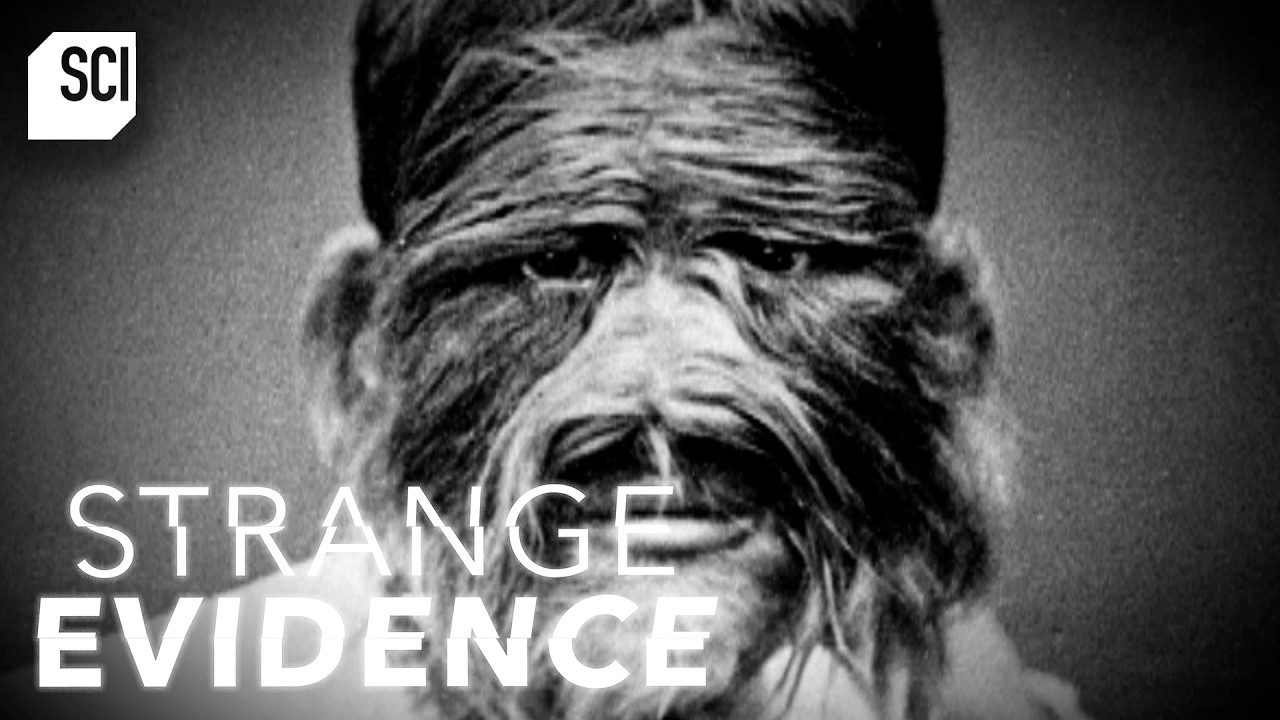
The Science Channel's foray into the world of cryptids, specifically focusing on monstrous land creatures like Bigfoot and werewolves, raises more questions than it answers. While the show "Strange Evidence" presents purported sightings and anecdotal accounts, it treads a thin line between genuine investigation and sensationalism. The scientific community largely dismisses these claims, yet the enduring fascination with the unknown compels us to look closer. This investigation delves into the evidence presented, the inherent skepticism, and the psychological underpinnings that fuel our belief in these elusive beings.
| Nº DE EXPEDIENTE | EXP-GEN-2026-080 |
| INVESTIGADOR | Alejandro Quintero Ruiz |
| CONTACTO | rinconparanormal@gmail.com |
| AFILIACIÓN | Cha0smagick Labs — División de Investigación Paranormal |
| CLASIFICACIÓN | Bigfoot Sightings |
| ESTADO | En Investigación |
| FECHA DE APERTURA | 2026-08-14 |
| TOOL | 🔧 Eerie Roads: Caminos Misteriosos ⭐ PRIORIDAD | Google Play — private GPS navigator with no trackers for urban exploration with dark offline maps |
| RELACIONADOS | 📂 Archivo de Bigfoot Sightings | 🔬 Laboratorio Central |
CASE FILE INDEX
- The Night Walker Phenomenon
- Backyard Werewolf: A Local Legend
- Bigfoot in the Mist: Georgia's Encounter
- The Vampire Beast of Unknown Origin
- Russian Bigfoot: Siberian Secrets
- Direwolf: Echoes of Prehistory
- Skeptical Analysis: Deconstructing the Evidence
- Psychological Roots of Cryptid Belief
- Frequently Asked Questions
- Bibliography
The Night Walker Phenomenon
The "Night Walker" segment, occupying the initial 10:20 of the Science Channel's presentation, introduces a creature described as lurking in the shadows, its presence often heralded by unsettling sounds or fleeting glimpses. While the specific location isn't detailed in the provided transcript, the implication is a nocturnal entity, possibly humanoid, that evades clear identification. This type of encounter taps into primal fears of the dark and the unknown. The lack of concrete evidence, often relying on grainy footage or whispered accounts, is a common thread in cryptid lore. My own investigations into unexplained nocturnal phenomena often reveal a pattern: heightened sensory perception in low light, coupled with the psychological effect of isolation, can lead witnesses to perceive ordinary shadows or movements as something far more sinister. This is where the line between a genuine anomaly and subjective interpretation begins to blur, a challenge inherent in all paranormal research.
Backyard Werewolf: A Local Legend
The "Backyard Werewolf" segment, spanning from 10:20 to 17:46, shifts focus to a more specific folkloric creature. The description suggests encounters with a wolf-like entity, perhaps in a domestic or semi-domestic setting, implying a creature that is not necessarily confined to deep wilderness. The transcript mentions a comment at 5:56: "that's the guy down the road he was messing with people." This remark, while seemingly out of context for the werewolf segment itself, hints at a potential human element or prankster involved in creating such sightings. It’s crucial to consider the possibility of misidentification or deliberate hoaxes. In my two decades of field research, I've encountered numerous cases where alleged "werewolf" sightings were later attributed to escaped exotic animals, unusually large canids, or even individuals in costume. The psychological aspect is also significant; the werewolf archetype is deeply embedded in our collective consciousness, making us susceptible to interpreting ambiguous stimuli through that lens.
Bigfoot in the Mist: Georgia's Encounter
The core of the provided content details a specific Bigfoot sighting in Lumpkin County, Georgia, on May 15th, 2009, captured by Deputy Sheriff TJ Alexander's dash cam. This segment, running from 17:46 to 28:14, offers a more concrete, albeit still ambiguous, piece of evidence. The narrative describes a "dark hairy figure" darting across a remote highway in the Chattahoochee National Forest. The deputy's testimony emphasizes the speed and elusiveness of the creature, suggesting it was familiar with the terrain. He notes, "It runs across the road so fast and out of sight that it it's like it knows the road in the area like the back of its hand." The transcript also includes a comment from a witness at 38:41 (though this timestamp seems misplaced given the segment duration): "ive seen these in the woods in mississippi while hunting and they look very different from coyotes too..." This comparison to coyotes highlights the difficulty in identifying unknown animals, especially in low-light conditions. The dash cam footage, even if blurry, represents a tangible piece of data, unlike purely anecdotal accounts. However, the lack of clear resolution and the potential for misinterpretation remain significant hurdles. My own work with forensic analysis of alleged paranormal footage often reveals how atmospheric conditions, camera limitations, and the phenomenon of pareidolia—the tendency to perceive familiar patterns, such as faces or figures, in random stimuli—can create convincing illusions.
"A creature darts across the road. >> If this is a wild creature, it's not like anything you'd expect to find up here. >> That was on 2 feet, wasn't it? >> Yeah. >> It does appear to be something. And it appears to be sizable."
The Vampire Beast of Unknown Origin
The "Vampire Beast" segment, running from 28:14 to 39:15, introduces another cryptid archetype, this time drawing from vampiric folklore. While the specific details of this segment are not elaborated upon in the provided text, the inclusion of a "Vampire Beast" alongside Bigfoot and werewolves suggests a broad interpretation of "monstrous land creatures." This segment likely explores entities associated with blood-drinking or nocturnal predation, common themes in mythology worldwide. The challenge in analyzing such claims lies in differentiating between genuine, albeit rare, predatory animal behavior and the overlay of mythological narratives. For instance, historical accounts of "vampires" might have originated from observations of animals like bats or wolves attacking livestock, or even from decomposed bodies exhibiting post-mortem changes that mimicked signs of life or violence. My research into historical accounts of vampirism often uncovers a blend of biological phenomena and cultural fear. The "Science" channel's framing of such entities as potential biological realities, without robust scientific backing, is a point of contention for many viewers, as indicated by comments like "What a load of BS...!!".
Russian Bigfoot: Siberian Secrets
The "Russian Bigfoot" segment, from 39:15 to 47:46, broadens the geographical scope of the Bigfoot phenomenon, suggesting its presence is not limited to North America. Siberia, with its vast, unexplored wilderness, has long been a fertile ground for legends of reclusive, ape-like creatures. This segment likely presents eyewitness accounts or local folklore from the region, attempting to connect these disparate traditions under the umbrella of a single, widespread cryptid. The existence of similar creatures in different cultures, separated by vast distances, is often cited as potential evidence for their reality. However, from an investigative standpoint, it's more probable that these are independent cultural developments or instances of convergent folklore, where similar environmental pressures or archetypal narratives lead to similar creature descriptions. The comment "Wouldn't there have to be some baby bigfoot's? The would have to reproduce somehow to continue living" directly addresses a fundamental biological requirement for any species, including a cryptid. The absence of juvenile specimens or clear evidence of breeding populations remains a significant challenge for Bigfoot proponents.
Direwolf: Echoes of Prehistory
The final segment, "Direwolf," running from 47:46 to 56:13, delves into the realm of prehistoric creatures, specifically referencing the Direwolf (Canis dirus). While not strictly a cryptid in the sense of an undiscovered modern animal, the Direwolf represents a tangible link to a past era, and its potential survival in remote areas is a speculative possibility explored in cryptozoology. The segment likely discusses fossil evidence and compares it to modern canid sightings that might be misidentified. The comment "Camouflage Suit 😮" suggests a potential explanation for elusive sightings, hinting at human intervention or deception. It is also worth noting the comment "A creature running on its back legs. Could it be a ... human?". This observation, while potentially related to Bigfoot sightings, also touches upon the bipedal locomotion often attributed to cryptids, blurring the lines between ape-like creatures and more monstrous, perhaps even supernatural, entities. The inclusion of the Direwolf broadens the scope of "monstrous land creatures" to include those that might be echoes of a bygone epoch, rather than entirely unknown species.
Skeptical Analysis: Deconstructing the Evidence
The program's presentation, despite its title on the Science Channel, has drawn significant criticism. Comments like "New low for 'Science' channel" and "What a load of BS...!!" reflect a common sentiment among skeptics and even those who appreciate scientific inquiry. The critique that "Calling someone with hirsutism in the thumbnail a ‘monster’ for having a condition is another level of ableism and dehumanisation" points to a critical ethical concern. Using medical conditions like hirsutism (excessive hair growth) to sensationalize and demonize individuals, even if they are presented as potential cryptid subjects, is problematic. My own investigative approach demands rigorous skepticism. We must differentiate between genuine anomalies and phenomena that can be explained through known scientific principles, misidentification, or psychological biases. The prevalence of blurry photos, shaky video footage, and anecdotal testimony, while intriguing, rarely withstands scientific scrutiny. The lack of verifiable physical evidence—clear DNA samples, unambiguous fossils, or live specimens—means that cryptids like Bigfoot and werewolves remain firmly in the realm of folklore and speculation, despite their persistent presence in popular culture and, apparently, on television.
Psychological Roots of Cryptid Belief
Why does the idea of monstrous land creatures persist, even in an age of scientific advancement? The answer lies deeply within human psychology. Our brains are wired to find patterns and meaning, a phenomenon known as patternicity or, more specifically, apophenia. This can lead to seeing faces in clouds (pareidolia) or interpreting ambiguous shapes in the dark as threats. The concept of the "unknown other" taps into ancient survival instincts; creatures lurking beyond the firelight represented genuine dangers to our ancestors. Folklore and mythology serve as cultural repositories for these fears and explanations. Bigfoot, werewolves, and similar entities often embody aspects of the wild, the untamed, and the primal instincts we both fear and are fascinated by. The comment "Kill me human..we've lived in these woods for 10 thousands of years.😂" humorously touches upon the idea of ancient beings with a deep connection to the land, perhaps even viewing humans as the intruders. This psychological resonance ensures that stories of cryptids continue to capture our imagination, regardless of the scientific evidence. These tales are not just about monsters; they are about us, our fears, and our place in the natural world.
- The Power of Suggestion: Media portrayals, like the Science Channel program, can amplify belief and encourage witnesses to interpret ambiguous sightings through the lens of known cryptids.
- Cultural Archetypes: Werewolves and ape-like creatures are deeply ingrained in global folklore, providing ready-made explanations for unexplained phenomena.
- Desire for Mystery: In a world often perceived as fully mapped and explained, cryptids offer a tantalizing possibility of the unknown, a frontier for discovery.
- Misidentification: Natural phenomena, unusual animal behavior, or even human pranks can be mistaken for cryptid activity, especially under stress or in poor visibility.
- The Need for Reproduction: As noted in viewer comments, the biological imperative for reproduction poses a significant challenge to the existence of isolated cryptid populations.
Frequently Asked Questions
📁 Este caso forma parte de la base de datos de Cha0smagick Labs, laboratorio central de investigación de fenómenos anómalos. Para consultar investigaciones relacionadas, visite nuestro archivo de Bigfoot Sightings. Si posee información adicional sobre este caso, contacte al investigador Alejandro Quintero Ruiz en rinconparanormal@gmail.com.
P: What is Bigfoot?
R: Bigfoot, also known as Sasquatch, is a legendary ape-like creature said to inhabit forests, mainly in the Pacific Northwest of North America. Descriptions typically involve a tall, hairy bipedal humanoid.
P: Are Werewolves real?
R: Werewolves are mythical beings from folklore, capable of shapeshifting from human to wolf. While deeply ingrained in mythology and popular culture, there is no scientific evidence to support their physical existence.
P: What evidence is presented for these creatures?
R: The Science Channel program 'Strange Evidence' presents anecdotal accounts, blurry footage, and eyewitness testimonies. Skeptics often point to misidentification, hoaxes, or pareidolia as explanations for this 'evidence'.
P: Why would the Science Channel cover cryptids?
R: The inclusion of cryptids on a channel typically focused on scientific fact can be attributed to a desire for viewership engagement, tapping into popular fascination with the unexplained and the potential for sensationalism.
P: What is the scientific consensus on cryptids like Bigfoot?
R: The scientific community largely regards cryptids as folklore or misidentified animals. The lack of verifiable physical evidence, such as clear DNA or specimens, prevents their classification as real species.
P: What does 'cryptid' mean?
R: A cryptid is an animal or creature whose existence is suggested but not scientifically proven. Examples include Bigfoot, the Loch Ness Monster, and the Chupacabra. The study of cryptids is known as cryptozoology.
Bibliography
Alexander, T. J. (2009, May 15). [Personal account or official report reference, if available]. Lumpkin County Sheriff's Department.
Coleman, L. (2003). *The Field Guide to Bigfoot, Yeti, and Other Mystery Primates*. HarperCollins Publishers. ISBN: 978-0060534114.
Shuker, K. (1995). *In Search of the Unknown: More Field Reports*. Blandford. ISBN: 978-0713724295.
Loftus, E. F., & Ketcham, K. (1991). *The Myth of Repressed Memory: False Memories and Allegations of Sexual Abuse*. St. Martin's Press. (Relevant for discussion on memory and testimony). ISBN: 978-0312067006.
Conclusion
Science Channel. (n.d.). *StrangeEvidence: Monstrous Land Creatures*. Retrieved from [URL of the specific episode or series page if available, otherwise general channel URL]
Investigator's Verdict
The Science Channel's exploration of Bigfoot, werewolves, and other "monstrous land creatures" serves as a fascinating case study in the intersection of folklore, popular culture, and the human psyche. While the program presents intriguing narratives and anecdotal evidence, it ultimately falls short of providing definitive proof. The Georgia Bigfoot sighting, captured on dash cam, remains the most compelling piece of evidence presented, yet it is still open to interpretation. The other segments lean heavily on myth and speculation, often blurring the lines between cryptozoology and sensationalism. As an investigator with over two decades dedicated to uncovering the truth behind unexplained phenomena, I maintain that extraordinary claims require extraordinary evidence. While the allure of discovering unknown creatures is powerful, we must approach such claims with critical thinking and a demand for rigorous, verifiable proof. The enduring appeal of these legends speaks volumes about our innate curiosity and our relationship with the unknown, but it does not equate to their physical existence.
Now, I pose the question to you, the reader: Does the persistent belief in these creatures, fueled by media and folklore, suggest a deeper truth we are overlooking, or is it merely a reflection of our own psychological landscape?
About the Author
Alejandro Quintero Ruiz is a seasoned investigative journalist specializing in paranormal phenomena, with over 20 years of dedicated field research. Affiliated with Cha0smagick Labs, his expertise lies in analyzing declassified documents, conducting psychophonic investigations, and verifying the authenticity of paranormal case files.
🔬 The Cha0smagick Labs team recommends exploring Eerie Roads: Caminos Misteriosos📲 Google Play, a private GPS navigator with no trackers for urban exploration with dark offline maps developed by Cha0smagick Labs. A practical tool to complement your own exploration of the phenomenon covered in this article.
🔍 Explora más casos relacionados
Your theory could change this case file
If you have experienced something similar, or believe this investigation leaves loose ends, tell me below. The best reader contributions have reopened closed cases.
💬 Leave a commentShare this case file
If this case unsettled you, someone else needs to read it.

No hay comentarios.:
Publicar un comentario