Followers

Mostrando las entradas con la etiqueta extinction. Mostrar todas las entradas

Atlas Lion, Dodo, Steller's Sea Cow: Investigating the Last

Image

The line between documented history and the realm of myth is often blurred by the ghosts of vanished species. While extinction is a natural process, the disappearance of certain animals carries an unsettling weight, marked by final, fleeting glimpses. My investigation delves into these poignant final encounters, piecing together the fragments of evidence left behind by creatures that walked, swam, or flew on this planet, only to vanish from it. We'll examine the compelling, albeit brief, records of the Atlas Lion, the Dodo, Steller's Sea Cow, and the Tasmanian Tiger.

The Lion of the Atlas: A Vanishing King

The Atlas Lion, a majestic subspecies of lion native to the Maghreb region of North Africa, once stalked the landscapes of Morocco, Algeria, and Tunisia. Its powerful presence was legendary, yet human encroachment and relentless hunting pushed it towards oblivion. The last confirmed wild sighting of the Atlas Lion is widely reported to have occurred in 1956, marking the end of an era for this apex predator in its natural domain. While the wild population was decimated, a crucial detail remains from its final years: approximately 80 to 100 individuals were held in captivity. This raises enduring questions about their genetic legacy and the potential, however slim, for reintroduction or the possibility that some distant lineage might persist, unrecognized.

Mauritius's Flightless Ghost: The Dodo

The Dodo (Raphus cucullatus) is perhaps one of the most iconic symbols of extinction. This large, flightless bird, endemic to the island of Mauritius, met its demise with alarming speed following human arrival. Its inability to fly and lack of natural predators on the island left it vulnerable. The primary causes of its extinction were the introduction of invasive species – such as rats, pigs, and monkeys – which preyed on Dodo eggs and young, and the destruction of its forest habitat. The final confirmed sighting of a Dodo is historically placed around 1662. What remains are skeletal remains, illustrations, and historical accounts – tangible proof of an intangible loss.

Recommended Gear for Investigation

ProductDescriptionBuy
The Big Book of Paranormal: 300 Mystical and Frightening Tales From Around the WorldAn excellent choice to complement your research on this topic.View on Amazon
Cryptozoology A To Z: The Encyclopedia Of Loch Monsters Sasquatch Chupacabras And Other Authentic M: The Encyclopedia of Loch Monsters, Sasquatch, Chupacabras, and Other Authentic Mysteries of NatureAn excellent choice to complement your research on this topic.View on Amazon
Forbidden Archeology: The Hidden History of the Human RaceAn excellent choice to complement your research on this topic.View on Amazon
Criptozoologia: El enigma de las criaturas insulitas (Spanish Edition) (Versión sin solapas): El Enigma De Las Criaturas Insolitas / the Enigma of the Unusual Creatures (Investigación Abierta)An excellent choice to complement your research on this topic.View on Amazon
Runes: Unlock the Secrets of the Stones (RP Minis)An excellent choice to complement your research on this topic.View on Amazon
The H. P. Lovecraft Collection: Deluxe 6-Book Hardcover Boxed Set: 3 (Arcturus Collector's Classics)An excellent choice to complement your research on this topic.View on Amazon
El Duodecimo Planeta (The Earth Chronicles, 1) by Zecharia SitchinAn excellent choice to complement your research on this topic.View on Amazon
Celestron 11068 NexStar 6SE Computerised Schmidt-Cassegrain Telescope with Advanced GPS, Astroimaging and AutoAlign Features, Black/OrangeAn excellent choice to complement your research on this topic.View on Amazon
Ghost-Hunting For Dummies [Idioma Inglés] An excellent choice to complement your research on this topic.View on Amazon
Tapiz de mapa del mundo antiguo, diseño vintage de mapa del mundo, tapiz de distribución geográfica para colgar en la pared, póster educativo de mapa del mundo del Atlas histórico marrón, para pared,An excellent choice to complement your research on this topic.View on Amazon

Steller's Sea Cow: A Swift Demise

Discovered by German naturalist Georg Wilhelm Steller in 1741 near the Commander Islands in the Bering Sea, Steller's Sea Cow (Hydrodamalis gigas) was a gentle marine mammal. Its existence was catastrophically short-lived from a human perspective. Within a mere 27 years of its discovery, this placid herbivore was hunted to extinction. Sailors, finding them an easy source of meat and fat, decimated the population rapidly. The last confirmed sighting was in 1768. Today, only bones and fossilized remains serve as testament to this remarkable creature, a stark reminder of how quickly an ecosystem can be irrevocably altered by human activity.

The Last Glimpse of the Thylacine

The Tasmanian Tiger, or Thylacine (Thylacinus cynocephalus), a unique marsupial predator resembling a dog with tiger-like stripes, once roamed mainland Australia and Tasmania. By the time European settlers arrived, its range was significantly restricted, primarily to Tasmania. Despite being hunted extensively – bounties were placed on them, often mistakenly believing they preyed on sheep – and facing habitat loss, discerning the exact moment of extinction is difficult. The last known wild sighting is recorded as 1930. However, the final living Thylacine, often referred to as "Benjamin," died in captivity at the Hobart Zoo in 1936. Its death, alone in an unheated enclosure, is a somber punctuation mark on the species' existence. The enduring mystery persists: could pockets of Thylacines still exist in remote Tasmanian wilderness?

Investigator's Verdict: The Echoes of Extinction

Your Field Mission: Documenting the Vanishing

Understanding the final moments of species like these is vital. It informs our conservation efforts today and provides a stark warning about our impact on the planet. The scientific community continues to explore potential avenues for understanding past species, from analyzing fossil records to investigating genetic material. For those interested in the practicalities of such investigations, the right equipment is crucial. Understanding how to document, record, and preserve evidence is paramount.

Recommended Equipment for Field Investigations

When venturing into the field, whether for documenting wildlife or exploring anomalous phenomena, reliable equipment is non-negotiable. My personal toolkit has evolved over decades, but certain items remain constants:

Frequently Asked Questions

  • Q: Are there any scientific efforts to bring back extinct animals?
    A: Yes, the field of de-extinction is actively being researched, focusing on genetic engineering and cloning techniques for species like the Woolly Mammoth and the Passenger Pigeon. However, significant ethical and practical hurdles remain.
  • Q: What is the primary cause of modern extinction?
    A: The leading causes are habitat destruction, climate change, pollution, overexploitation (hunting and fishing), and the introduction of invasive species, all largely driven by human activity.
  • Q: Could the Thylacine still exist in Tasmania?
    A: While unconfirmed sightings persist, the scientific consensus is that sustaining a viable population without detection is highly unlikely. However, the possibility remains a subject of fascination and ongoing, albeit fringe, investigation.

The stories of the Atlas Lion, the Dodo, Steller's Sea Cow, and the Thylacine are more than just tales of loss; they are vivid case studies in the fragility of life and the profound consequences of human actions. They serve as potent reminders that our planet's biological tapestry is precious and often irreplaceable.

Your Mission:

Document the local environment around you. Whether it's a familiar park or a remote wilderness, observe the flora and fauna. Note any species that seem unusually scarce or absent compared to historical records or local lore. Your observations, however small, contribute to a larger understanding of ecological change. Share your findings and any personal encounters with unusual wildlife in the comments below. Let's build a collective dossier of the natural world's mysteries.

Have you ever encountered something that made you question if a species was truly extinct? Share your experiences in the comments. Your firsthand accounts are invaluable to our ongoing investigations.

Don't keep these insights to yourself. Share this deep dive into extinction with your social networks and fellow enthusiasts. Let's spread awareness and ignite curiosity!

For more exclusive content and ongoing research, make sure to subscribe to our channel and follow us on our social media platforms. Your engagement fuels our expeditions!

Investigator's Note: True paranormal research doesn't fund itself. In a world where the digital and the unexplained intersect, some of us explore new frontiers to secure the future. Do you dare to be part of the vanguard? Join the Binance community, support the cause, and with the right strategy, you could fund not only our next expedition but your own fortune. The next great discovery could be just a click away.

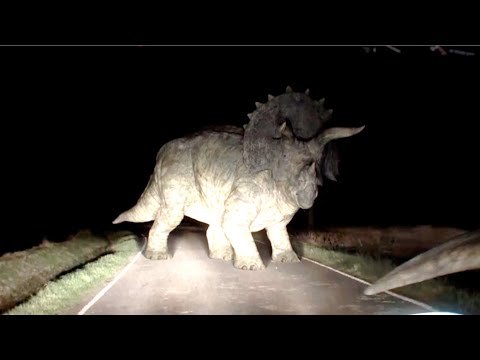
Dinosaur Mysteries: Unraveling the Enigmas of Prehistoric Giants


Introduction: The Lingering Questions

The allure of dinosaurs is undeniable. Movies like Jurassic Park have etched their colossal figures into our collective consciousness, sparking a primal curiosity about these magnificent creatures that once dominated our planet. Yet, beneath the veneer of popular culture lies a profound chasm of ignorance. Despite decades of diligent excavation and analysis by paleontologists, fundamental aspects of dinosaur existence remain shrouded in mystery. We often project our modern understandings onto these ancient beings, but the truth is far more intricate and, dare I say, unsettling. Today, we're not just rehashing old tales; we are diving deep into the abyss of the unexplained, opening the files on three dinosaur enigmas that continue to baffle science and ignite the imagination.

Mystery 1: The Enigma of Dinosaur Appearance

We visualize them as scaly, reptilian beasts, a direct extrapolation from our understanding of modern reptiles. But how accurate is this image? Paleontological evidence, primarily from fossilized remains, offers only fragments of the truth. The discovery of fossilized skin impressions has provided glimpses, revealing textures and patterns that challenge simplistic notions. However, the most striking revelations have come from the identification of melanosomes – microscopic pigment-containing structures found in fossilized feathers and skin. These tiny cellular organelles have allowed scientists to reconstruct the likely coloration of certain dinosaurs, revealing vibrant hues and complex patterns that suggest a world far more colorful and visually dynamic than often depicted. Consider the Sinosauropteryx, a small theropod dinosaur whose fossilized filaments yielded evidence of reddish-brown coloration, with a striped tail. It’s a far cry from the drab greens and browns we often assume. This raises a paramount question: If we can now infer color, what else about their external appearance remains hidden in plain sight? Were some dinosaurs feathered, akin to birds? The evidence is mounting, yet the full spectrum of their integument – whether it was scales, feathers, quills, or a combination thereof – for the vast majority of species remains a speculative reconstruction. We are piecing together a mosaic from scattered shards, and the complete picture is still a distant, hazy silhouette.

"The assumption that all dinosaurs were uniformly scaly is a convenient simplification. The fossil record, when meticulously analyzed, points towards a far more nuanced and diverse external morphology, hinting at evolutionary pathways we are only just beginning to comprehend."

The implications extend beyond mere aesthetics. Feathering, for instance, could indicate thermoregulation strategies, social signaling, or even rudimentary flight capabilities in certain lineages. The debate over whether Tyrannosaurus rex sported a feathered coat in its youth, or if it was a bare-skinned behemoth, highlights the ongoing uncertainty. Each new fossil discovery, each advanced analytical technique, chips away at the unknown, but simultaneously reveals the vastness of what we don't know. The dinosaur "look" is not a settled matter; it's an ongoing investigation, a continuous redrawing of prehistoric portraits based on ever-evolving scientific interpretation. For deeper insights into the paleontology driving these discoveries, exploring resources on paleontology and recent fossil finds is essential.

Mystery 2: The Great Extinction Debate

The end of the dinosaurs, a cataclysmic event approximately 66 million years ago, remains one of the most dramatic and debated chapters in Earth's history. The prevailing theory, widely accepted, points to an asteroid impact at the Chicxulub crater as the primary trigger. This colossal impact would have unleashed unimaginable devastation, plunging the planet into a prolonged period of darkness and cold, thereby causing mass extinction. The evidence, including a worldwide layer of iridium—a rare element on Earth but common in asteroids—and the sheer scale of the Chicxulub crater, is compelling. However, "compelling" is not synonymous with "conclusive," especially in the court of scientific inquiry.

Several nagging questions persist that challenge a singular asteroid-impact explanation. Firstly, the fossil record indicates that the decline in dinosaur diversity might have begun before the impact event. Was the asteroid the death knell, or merely the final blow to an already weakened population? Some scientists propose that massive volcanic activity, particularly the Deccan Traps eruptions in India, played a significant role, releasing vast quantities of greenhouse gases and altering the climate over a long period. Could this have been the primary driver, with the asteroid acting as a secondary shock? Furthermore, why did some species survive while others perished? The resilience of certain avian dinosaurs (birds) and other fauna like turtles and crocodiles suggests that survival was not arbitrary. Factors such as size, diet, habitat, and reproductive strategies likely played crucial roles. This selective extinction points to a complex environmental collapse rather than a simple, instantaneous annihilation. The interplay between bolide impacts, volcanic activity, climate change, and ecological pressures creates a multi-faceted scenario that defies easy answers. Understanding this extinction event requires an interdisciplinary approach, drawing from geology, climatology, and paleontology.

Theory Key Evidence Lingering Questions
Asteroid Impact (Chicxulub) Iridium layer, Chicxulub crater evidence Pre-impact decline, species selectivity
Mass Volcanic Activity (Deccan Traps) Extensive lava flows, atmospheric gas release Timing relative to impact, sole cause vs. contributing factor
Combined Factors Interplay of multiple catastrophic events Precise weighting of each factor

The search for definitive answers continues, pushing the boundaries of our understanding of planetary cataclysms. For those fascinated by planetary dynamics and extinction events, delving into the scientific literature on mass extinctions and geological records is a crucial step.

Mystery 3: The Unseen Dynamics of Dinosaur Life

Beyond their physical form and ultimate fate, the daily lives of dinosaurs present a vast landscape of unanswered questions. How did they interact with each other? What were their social structures, if any? Were they solitary hunters, or did they operate in complex herds and family units?

The evidence available to answer these questions is indirect and often open to interpretation. Fossilized trackways offer invaluable insights into locomotion and group behavior. The discovery of large aggregations of similar dinosaur footprints in formations like the Paluxy River bed in Texas has been interpreted as evidence of herd behavior. However, alternative explanations, such as animals congregating around limited water sources during dry periods, cannot be entirely dismissed. Similarly, fossilized nesting sites, like those found at Dinosaur National Monument, indicate parental care in some species, suggesting complex social bonds. The presence of multiple individuals of varying ages within these sites points towards family groups or communal nesting behaviors. Yet, the sheer diversity of dinosaur species means that generalizations are fraught with peril. A herd of hadrosaurs likely functioned very differently from a pack of raptors. Predatory behaviors, such as cooperative hunting, remain largely inferred from bite marks on fossilized prey and the skeletal structure of predators. While the mechanics of predation are somewhat understood, the intricate social dynamics that might have underpinned such behaviors—communication, territorial disputes, mating rituals—are largely invisible in the fossil record. We are left to infer complex societal structures from skeletal arrangements and geological traces, a task demanding both rigorous analysis and a healthy dose of conjecture.

"We often depict dinosaurs as simple creatures driven by instinct. But the evidence, however sparse, suggests a level of social complexity and behavioral nuance that rivals many modern animal societies, presenting a compelling challenge to our anthropocentric views."

To truly grasp the living dynamics of these creatures, paleontologists must integrate findings from comparative anatomy, ethology (the study of animal behavior), and paleoecology. This intersection of disciplines is vital for moving beyond the skeletal remains to reconstruct a semblance of their lived experience. For enthusiasts eager to explore this aspect, resources on animal behavior and paleoecology provide a foundational understanding.

Investigator's Verdict: Beyond Fossilized Clues

The mysteries surrounding dinosaurs are not merely academic curiosities; they are profound reminders of the limits of our knowledge, even in fields we consider well-established. While paleontology has made monumental strides, the artifacts we unearth are but echoes of a complex, vibrant past. The very nature of fossilization — a process requiring a unique confluence of circumstances — means that much of what constituted dinosaur life—soft tissues, behaviors, coloration, social interactions—is lost to time, or preserved in rare, fleeting moments. The persistent enigmas surrounding their appearance, extinction, and daily lives serve as a potent testament to the power of the unknown. They compel us to refine our investigative techniques, to embrace new technologies, and, crucially, to maintain a critical yet open mind. To dismiss these mysteries is to close the door on discovery. To embrace them is to embark on an endless quest for understanding. The clues are there, etched in stone and filtered through millions of years, but deciphering their full meaning requires not just scientific rigor, but an unyielding sense of wonder.

The Investigator's Archive

To truly delve into the world of dinosaur enigmas, the following resources are indispensable for any serious investigator:

  • Books:
    • The Dinosauria by David B. Weishampel, Peter Dodson, and Catherine A. Forster: A comprehensive academic text covering dinosaur biology, evolution, and paleontology.
    • When Dinosaurs Roamed America by Paul Sereno: Offers a visually rich account of dinosaur discoveries across North America.
    • The Sixth Extinction: An Unnatural History by Elizabeth Kolbert: While not solely about dinosaurs, provides critical context on mass extinction events and their causes.
  • Documentaries:
    • Planet Dinosaur (BBC): A visually stunning series exploring recent paleontological discoveries and their implications for our understanding of dinosaur appearance and behavior.
    • PBS Eons (YouTube Channel): Regularly features in-depth episodes on dinosaur paleontology, evolution, and extinction theories, often discussing current research and unanswered questions.
    • Dinosaur 13: Focuses on the discovery and subsequent legal battles over the "Sue" T. rex skeleton, offering a unique perspective on the fossil trade and scientific pursuit.
  • Scientific Journals:
    • Nature and Science: Publish groundbreaking research on dinosaur discoveries and paleontology.
    • Journal of Vertebrate Paleontology: A primary source for peer-reviewed studies in the field.

Accessing these materials—whether through libraries, subscription services like Gaia (for specific documentaries), or direct journal subscriptions—is paramount for anyone seeking to move beyond surface-level speculation.

Protocol: Deciphering Fossil Evidence

Investigating dinosaur mysteries from a scientific standpoint involves a structured approach. Even for the amateur enthusiast, adopting some basic protocols can enhance understanding:

  1. Contextualization is Key: Always consider the geological and environmental context of a fossil find. Where was it found? What other fossils or geological formations are present? This information is crucial for interpreting behavior and environmental conditions.
  2. Cross-Reference Evidence: Never rely on a single piece of evidence. If a claim about dinosaur appearance is made, look for supporting evidence from multiple fossil specimens, different analytical techniques (e.g., melanosome analysis, skin impressions), and comparative studies with modern animals.
  3. Scrutinize Interpretations: Understand that paleontological interpretations evolve. What might be presented as fact today could be revised with new discoveries. Be aware of the difference between direct evidence (e.g., a fossil bone) and inference (e.g., a complex social structure based on trackways).
  4. Identify Scientific Consensus vs. Fringe Theories: Distinguish between widely accepted theories (like the asteroid impact) and speculative hypotheses. Engage with reputable scientific literature and avoid solely relying on sensationalized accounts.
  5. Seek Expert Opinions: Follow the work of leading paleontologists and research institutions. Their publications and analyses represent the current state of knowledge and often highlight areas of ongoing research and debate.

Adhering to these protocols helps filter noise from signal, allowing for a more informed appreciation of the scientific process and the enduring mysteries of paleontology.

Frequently Asked Questions

Q: Were all dinosaurs cold-blooded like reptiles?

A: This is still debated. Evidence from bone structure, growth rates, and the presence of feathers suggests some dinosaurs, particularly theropods, may have been warm-blooded or had intermediate metabolisms, a concept known as mesothermy. It's unlikely they were all uniformly cold-blooded.

Q: How can scientists tell the age of dinosaur fossils?

A: Geologists primarily use radiometric dating on the rock layers surrounding the fossils. By measuring the decay rate of radioactive isotopes within igneous or metamorphic rocks found near the fossiliferous sediment, they can estimate the age of the geological strata, and thus, the age of the fossils contained within.

Q: Did humans ever coexist with dinosaurs?

A: No. Dinosaurs went extinct approximately 66 million years ago, while the earliest human ancestors appeared millions of years later. The fossil records do not support any coexistence between humans and non-avian dinosaurs.

Your Field Mission

Your Mission: Analyze a Prevalent Dinosaur Depiction

Your task, should you choose to accept it, is to critically examine a popular depiction of a dinosaur you encounter in media—be it a movie poster, a toy, or a museum exhibit. Then, armed with the knowledge from this report, analyze its potential inaccuracies concerning appearance, behavior, or survival. Could it be feathered? Is its posture depicted accurately? Does its environment reflect known paleontological data? Record your observations and share your findings in the comments below. This exercise in critical observation is the first step in becoming a discerning investigator of prehistoric realms.

alejandro quintero ruiz is a veteran field investigator dedicated to the analysis of anomalous phenomena. His approach blends methodological skepticism with an open mind to the inexplicable, always seeking the truth behind the veil of reality.

The quest to understand dinosaurs is a journey into the very foundations of our planet's history. It's a field where science and speculation dance a delicate tango, pushing the boundaries of what we can know. As we continue to unearth fragments of their world, the mysteries only deepen, inviting us to look closer, question further, and perhaps, one day, to comprehend the true scale of their lost dominion.