Followers

Mostrando las entradas con la etiqueta paleontology. Mostrar todas las entradas

Cryptid Dinosaurs: New Evidence | Cryptozoology

Image

Throughout history, tales of massive, bipedal reptiles have surfaced across the globe. Whether myth or reality, countless individuals claim encounters with creatures ominously reminiscent of the extinct theropods—the colossal predators that once dominated our planet millions of years ago. Could such beings still roam our world? Is there any tangible evidence to support these claims? Regardless of their veracity, the narratives surrounding these potential relics of a bygone era are undeniably compelling. This dossier delves into some of the most formidable cryptic theropods documented within the field of cryptozoology.

Introduction: The Echoes of Extinction

The line between prehistoric past and present is often more blurred than we care to admit. Legends of colossal, reptilian beasts persist in folklore worldwide, fueling the imagination and challenging our understanding of natural history. These accounts, often dismissed as mere myth, paint a persistent picture of creatures that defy the established timeline of extinction. As an investigator, my mandate is to sift through the noise, analyze the patterns, and assess the credibility of these persistent reports. We're not just talking about shadows in the jungle; we're examining patterns of testimony, regional folklore, and alleged physical evidence that suggest something more. This exploration into cryptic theropods is not merely an academic exercise; it's an attempt to confront the possibility that echoes of the Mesozoic era may still resonate in the untamed corners of our planet.

The Enigma of Living Theropods

Cryptids resembling theropods, the famously carnivorous, bipedal dinosaurs, continue to surface in reports from remote regions globally. From the dense rainforests of the Congo to the arid expanses of Australia, these accounts paint a consistent, albeit fragmented, picture. Witnesses often describe creatures with powerful hind legs, sharp claws, and reptilian features, moving with an agility that belies their supposed prehistoric origins. The scientific community largely attributes such sightings to misidentification of known animals, elaborate hoaxes, or the embellishment of folklore. However, the sheer volume and consistency of these reports across diverse geographical locations warrant a closer, more analytical examination. Modern technology, such as satellite imagery and advanced tracking, offers new avenues for investigation, potentially corroborating or debunking these enduring mysteries.

Recommended Gear for Investigation

ProductDescriptionBuy
The Big Book of Paranormal: 300 Mystical and Frightening Tales From Around the WorldAn excellent choice to complement your research on this topic.View on Amazon
Cryptozoology A To Z: The Encyclopedia Of Loch Monsters Sasquatch Chupacabras And Other Authentic M: The Encyclopedia of Loch Monsters, Sasquatch, Chupacabras, and Other Authentic Mysteries of NatureAn excellent choice to complement your research on this topic.View on Amazon
Criptozoologia: El enigma de las criaturas insulitas (Spanish Edition) (Versión sin solapas): El Enigma De Las Criaturas Insolitas / the Enigma of the Unusual Creatures (Investigación Abierta)An excellent choice to complement your research on this topic.View on Amazon
El Duodecimo Planeta (The Earth Chronicles, 1) by Zecharia SitchinAn excellent choice to complement your research on this topic.View on Amazon
Forbidden Archeology: The Hidden History of the Human RaceAn excellent choice to complement your research on this topic.View on Amazon
The H. P. Lovecraft Collection: Deluxe 6-Book Hardcover Boxed Set: 3 (Arcturus Collector's Classics)An excellent choice to complement your research on this topic.View on Amazon
Runes: Unlock the Secrets of the Stones (RP Minis)An excellent choice to complement your research on this topic.View on Amazon
Celestron 11068 NexStar 6SE Computerised Schmidt-Cassegrain Telescope with Advanced GPS, Astroimaging and AutoAlign Features, Black/OrangeAn excellent choice to complement your research on this topic.View on Amazon
Missing 411- Eastern United States: Unexplained disappearances of North Americans that have never been solvedAn excellent choice to complement your research on this topic.View on Amazon
Ghost-Hunting For Dummies [Idioma Inglés] An excellent choice to complement your research on this topic.View on Amazon

The Kasai Rex: A Cryptid of the Congo

Perhaps one of the most iconic and chilling examples is the alleged existence of the Kasai Rex in the Congo Basin. Reports describe a formidable creature, a living theropod dinosaur, that locals have encountered with terrifying regularity. These accounts often detail a creature of immense size, predatory behavior, and a distinct reptilian appearance, a stark contrast to the known fauna of the region. The persistent belief in its existence among local populations, coupled with vague but persistent descriptions, makes it a focal point for cryptozoological inquiry. While definitive proof remains elusive, the narrative of the Kasai Rex continues to captivate, representing the enduring human fascination with the possibility of surviving prehistoric life.

Beyond the Kasai Rex: Other Notable Cases

The Kasai Rex is not an isolated phenomenon. Numerous other reports detail theropod-like creatures across the globe. In Australia, the Burrunjor is a cryptid often described as a large, bipedal reptile inhabiting the vast Northern Territory and Western Australia, areas rich in ancient Aboriginal lore and unexplained phenomena. Reports from Chile also speak of theropod-like beings crossing highways, a testament to the widespread nature of these claims. Each account, while lacking concrete evidence, contributes to a growing body of anecdotal data that cryptozoologists meticulously analyze. The consistency in descriptions—bipedal locomotion, reptilian features, and predatory mien—across such disparate locations is, at the very least, noteworthy.

Skepticism and Scientific Analysis

From a scientific standpoint, the existence of living theropods presents significant challenges. The fossil record indicates a mass extinction event that wiped out non-avian dinosaurs approximately 66 million years ago. The vast geological timescales involved, coupled with the lack of fresh biological evidence—such as carcasses, clear footprints, or DNA—leads most paleontologists and zoologists to classify these reports as misidentifications, folklore, or hoaxes. Theories suggest that sightings could be attributed to large, unknown reptiles, evolutionary anomalies, or perhaps even undiscovered species that superficially resemble dinosaurs. The advancements in paleontology have even revised our understanding of dinosaurs, suggesting feathered and warm-blooded creatures, a departure from the lumbering lizards of early depictions. This evolving scientific perspective, however, does not entirely extinguish the possibility of unknown species or undiscovered populations in unexplored territories.

Voices from the Fringe: Audience Testimonies

The digital age has amplified these discussions, with online communities serving as a hub for sharing experiences and theories. Many viewers express a deep appreciation for channels that present cryptozoological evidence analytically, allowing audiences to form their own conclusions rather than being fed definitive pronouncements. One such testimony highlights a personal encounter in Oaxaca, Mexico, where a witness described a small, bipedal reptile, approximately 35-40 cm tall, with a long neck and pointed head, reminiscent of a Compsognathus. Despite the fleeting nature of the sighting and the lack of photographic evidence, the vividness of the description and its echoes in local legends lend it a certain intrigue. Another commenter points to Google Earth evidence, noting a marked "Orange Blob" with references to the Kasai Rex, and even a camera icon labeled "Kasay" at specific coordinates, suggesting a localized interest or even a tourist draw related to the legend. This engagement underscores a broader sentiment: the desire for more serious consideration of cryptids and investment in their investigation, arguing that the sheer number of reports warrants scientific attention beyond mere dismissal. Some viewers also appreciate the balanced approach, acknowledging that cryptid reports can sometimes be explained by more mundane phenomena, such as mistaken identity or even diseases affecting known animals.

"Soy partidario de que los criptidos deberían ser tomados más en serio. Osea son demasiados como para simplemente decir que no existen, no necesariamente deben ser dinosaurios vivos sino que pueden ser algo completamente nuevo. La zoologia tendría que invertir en estás investigaciones." - Audience Member via Comments

The notion that governments might possess real-time satellite imagery of moving animals, far beyond public access, is also a recurring theme, highlighting a general distrust of official narratives and a belief in hidden knowledge. This sentiment fuels the ongoing debate about what remains undiscovered and what information is being withheld.

Investigator's Protocol: Documenting the Unseen

Documenting potential cryptid encounters requires a rigorous methodology, moving beyond mere anecdotal collection. Our approach involves:

  1. Geospatial Analysis: Utilizing tools like Google Earth to examine reported locations, cross-referencing witness accounts with geographical features and potential environmental indicators. The analysis of shadows at specific times, as suggested by one observer, can provide rudimentary height estimations for unseen entities.
  2. Cross-Referencing Testimony: Comparing details across multiple independent sightings to identify patterns and potential consistencies. This includes physical descriptions, behavior, vocalizations, and geographical distribution.
  3. Environmental Context: Assessing the ecological plausibility of a given cryptid's existence within its reported habitat, considering available food sources, climate, and potential interactions with known species.
  4. Evidence Vetting: Critically evaluating any purported evidence, such as photographs, videos, or physical traces, for signs of tampering, misidentification, or natural phenomena.

It is crucial to acknowledge that the absence of fresh biological remains or detailed fossil evidence does not automatically equate to non-existence. As one commentator posits, sightings might represent fleeting phenomena, perhaps interdimensional in nature, or influenced by "distortion" theories proposed by researchers like José Antonio Caravaca. This perspective challenges traditional biological frameworks and opens avenues for more speculative, yet potentially insightful, lines of inquiry.

The Investigator's Archive

To further your understanding of cryptozoology and related phenomena, I recommend the following resources:

  • Books: Explore works by authors like Rex Gilroy, known for his contributions to cryptozoology, and José Antonio Caravaca for theories on phenomena distortion.
  • Documentaries: Seek out series that critically examine cryptid reports, such as those found on platforms like History Channel's "Inexplicable," which has explored topics like unexplained Amazonian creatures and potential interdimensional portals.
  • Online Communities: Engage with reputable cryptozoology forums and channels (like the one inspiring this analysis) that prioritize evidence-based discussion and analytical approaches rather than sensationalism.

Investigator's Verdict: Fraud, Phenomenon, or Something Else Entirely?

The evidence for living theropods remains largely circumstantial, relying on eyewitness testimony and suggestive, but unconfirmed, photographic or satellite data. The case of the Kasai Rex, while compelling in its narrative persistence, lacks the irrefutable proof required for scientific acceptance. However, the sheer volume of consistent reports across cultures and continents, coupled with the evolutionary plasticity observed in modern species, prevents a definitive dismissal. It's entirely plausible that some reports stem from misidentified known animals, elaborate hoaxes, or even psychological phenomena. Yet, the possibility that undiscovered species, perhaps remnants of ancient lineages or highly adapted new ones, inhabit Earth's least explored regions cannot be entirely discounted. The ongoing debate highlights the limitations of current scientific paradigms when confronted with the truly anomalous. My professional stance remains one of cautious skepticism, acknowledging the compelling nature of the claims while awaiting concrete, verifiable evidence.

Frequently Asked Questions

What is the primary argument against the existence of living theropods?
The most significant argument is the lack of conclusive scientific evidence, such as fossils of recent origin, clear biological samples (DNA, tissue), or unambiguous photographic/video documentation, coupled with the established scientific understanding of dinosaur extinction events.
How do cryptozoologists explain the consistency in theropod-like cryptid descriptions?
Consistent descriptions are often attributed to shared cultural archetypes, popular depictions in media (like "Jurassic Park"), or the tendency for eyewitnesses to gravitate towards familiar, albeit outdated, concepts of dinosaurs when encountering unknown large animals.
Are there any scientific expeditions actively searching for these creatures?
While mainstream zoological expeditions focus on cataloging known biodiversity and endangered species, dedicated cryptozoological organizations and independent researchers do conduct field investigations, though often with limited funding and resources compared to traditional scientific endeavors.
Could modern technology like Google Earth provide definitive proof?
Google Earth and similar satellite imagery can offer intriguing clues, such as unusual shapes or markings in remote areas, as noted in the Kasai Rex case. However, these are typically open to interpretation and often lack the resolution or context needed for definitive identification, frequently being labeled as natural formations or anomalies.
What is the significance of the comments about dinosaur evolution and feathers?
These comments reflect advancements in paleontological research, which increasingly suggests that many dinosaurs were feathered, warm-blooded, and more agile than previously depicted. This scientific evolution recontextualizes older dinosaur imagery and may influence how people interpret sightings of large, reptilian creatures today.

Conclusion: Your Field Mission

The enduring mystery of cryptic theropods serves as a potent reminder of how much we still don't know about our own planet. While definitive proof remains elusive, the persistent narratives and the analytical engagement from enthusiasts and researchers alike compel us to keep looking. The world of cryptozoology thrives on the unexplained, pushing the boundaries of conventional knowledge and inspiring a sense of wonder. The possibility that creatures from Earth's distant past might still walk among us is a concept that ignites the imagination, urging further investigation into the planet's remaining wilderness.

Your Mission: Document the Unseen

Should you ever find yourself in a remote, untamed environment, maintain a vigilant, observational stance. If you encounter anything anomalous, document it meticulously. Note details: size, shape, gait, sounds, and environmental context. Even a fleeting glimpse, recorded with objective detail, can contribute to the larger puzzle. Your contribution, however small, could be the piece that future investigators need.

Share your experiences and theories in the comments below. Have you ever encountered something that reminded you of a prehistoric creature? What are your thoughts on the Kasai Rex? Don't keep your insights to yourself – let's analyze them together. And if you found this deep dive into cryptic theropods compelling, consider sharing it across your social networks to ignite curiosity in others. Your engagement fuels our continued investigation into the unexplained.

Investigator's Note: True paranormal research doesn't fund itself. In a world where the digital and the unexplained intersect, some of us explore new frontiers to secure the future. Do you dare to be part of the vanguard? Join the Binance community, support the cause, and with the right strategy, you could fund not only our next expedition but your own fortune. The next great discovery could be just a click away.

Burrunjor: Australia's Living T-Rex | Cryptozoology Investigation

Image

The vast, untamed landscapes of Australia have long been a cradle for the strange and unexplained. Among its myriad of legends, one creature looms larger than life, a relic from a prehistoric era whispered to still roam its deepest jungles and arid deserts: the Burrunjor. For millennia, indigenous peoples have spoken of this monstrous, dangerous being, instilling a primal fear that echoes through the continent's history. Our investigation delves into the heart of this terrifying legend, seeking to separate myth from potential reality.

The Legend of Burrunjor

Burrunjor. The name itself conjures images of primal terror, a monstrous silhouette against the dawn sky of prehistoric Australia. Unlike many cryptids confined to fleeting glimpses in remote locales, the Burrunjor legend is deeply interwoven with the fabric of Aboriginal folklore, predating the scientific discovery of dinosaurs by millennia. These ancient tales speak of a colossal reptilian beast, a hunter of unparalleled ferocity, capable of instilling dread in even the bravest souls. Indigenous accounts describe a bipedal creature, often compared to a Tyrannosaurus Rex, with formidable claws and a terrifying presence that dominated the land. But as science progresses and our understanding of the world expands, the question remains: is the Burrunjor merely a myth, a product of cultural storytelling, or could it be evidence of a surviving relic from a bygone age?

A Dinosaur in Modern Times?

The modern fascination with the Burrunjor was significantly amplified in the early 20th century. Reports, often sensationalized, began circulating about sightings of a gigantic, dinosaur-like creature in the remote wilderness of Queensland. These accounts, while lacking definitive proof, fueled the imagination and cemented the Burrunjor's place in the annals of cryptozoology. The descriptions consistently paint a picture of a massive theropod, easily recognizable to anyone familiar with the iconic T-Rex. This comparison is not merely superficial; the reptilian nature, the bipedal stance, and the sheer scale align uncannily with our popular conception of these ancient predators. The narrative often attempts to bridge the vast temporal gap, suggesting that perhaps not all dinosaurs succumbed to extinction. This idea, while scientifically improbable, is precisely what makes the Burrunjor such a compelling subject of investigation. The very notion of a living dinosaur surviving in Australia captures a deep-seated human desire for the undiscovered and the extraordinary.

Recommended Gear for Investigation

ProductDescriptionBuy
Cryptozoology A To Z: The Encyclopedia Of Loch Monsters Sasquatch Chupacabras And Other Authentic M: The Encyclopedia of Loch Monsters, Sasquatch, Chupacabras, and Other Authentic Mysteries of NatureAn excellent choice to complement your research on this topic.View on Amazon
The Big Book of Paranormal: 300 Mystical and Frightening Tales From Around the WorldAn excellent choice to complement your research on this topic.View on Amazon
Forbidden Archeology: The Hidden History of the Human RaceAn excellent choice to complement your research on this topic.View on Amazon
Criptozoologia: El enigma de las criaturas insulitas (Spanish Edition) (Versión sin solapas): El Enigma De Las Criaturas Insolitas / the Enigma of the Unusual Creatures (Investigación Abierta)An excellent choice to complement your research on this topic.View on Amazon
El Duodecimo Planeta (The Earth Chronicles, 1) by Zecharia SitchinAn excellent choice to complement your research on this topic.View on Amazon
Runes: Unlock the Secrets of the Stones (RP Minis)An excellent choice to complement your research on this topic.View on Amazon
The H. P. Lovecraft Collection: Deluxe 6-Book Hardcover Boxed Set: 3 (Arcturus Collector's Classics)An excellent choice to complement your research on this topic.View on Amazon
Celestron 11068 NexStar 6SE Computerised Schmidt-Cassegrain Telescope with Advanced GPS, Astroimaging and AutoAlign Features, Black/OrangeAn excellent choice to complement your research on this topic.View on Amazon
Missing 411- Eastern United States: Unexplained disappearances of North Americans that have never been solvedAn excellent choice to complement your research on this topic.View on Amazon
Ghost-Hunting For Dummies [Idioma Inglés] An excellent choice to complement your research on this topic.View on Amazon
"The world is vast... To believe we have seen it all is something we cannot guarantee..."

This sentiment, echoed by witnesses and enthusiasts alike, underscores the enduring appeal of the Burrunjor. It taps into the fundamental mystery of our planet: that despite our technological advancements, vast unexplored regions still hold secrets. The recurring theme in many comments is the sheer scale of Australia and the possibility that it harbors undiscovered species. One viewer aptly points out, "Australia is the Jurassic Park," a sentiment that resonates with the idea of a continent isolated enough to potentially preserve ancient life forms. This comparative approach, linking the Burrunjor to well-known dinosaurs while acknowledging the unique environment of Australia, is crucial for understanding its cryptozoological significance. It allows us to frame the possibility within a more familiar context, even as we venture into the speculative.

Whispers from the Outback

The bedrock of any cryptozoological case rests on witness testimony, and the Burrunjor is no exception. While concrete, verifiable evidence remains elusive, a consistent pattern emerges from numerous alleged sightings and historical accounts. Many reports originate from indigenous communities, whose oral traditions often contain detailed descriptions of large, dangerous creatures inhabiting the land long before European settlement. These narratives are not mere campfire stories; they are deeply ingrained cultural records that speak to a tangible, observed reality for these peoples. Modern accounts frequently cite encounters in remote areas, often involving fleeting glimpses of a colossal bipedal reptile moving through dense bushland or across desolate plains. These testimonials, though varied, often share striking similarities: immense size, powerful claws, and a terrifying roar. As one commentator notes, "of all the cryptids I know, the burrunjor is one, if not the one, with the highest probability of being real due to the massive number of sightings and accounts surrounding it." This assertion highlights a key aspect of the Burrunjor's appeal: the sheer volume and consistency of reports, suggesting a phenomenon beyond isolated incidents or simple misidentifications. Another viewer mentions, "I love that legend!! I've heard it about ten times!! thanks for your research," indicating the widespread dissemination and enduring interest in the Burrunjor narrative.

"I'm skeptical, but I admit you do a good job, brother. This is your thing, keep it up. I live four blocks from the National Museum of La Plata, in Argentina. Where there are thousands of fossils. It would be so great if there was a living dinosaur besides crocodiles."

This comment from a self-professed skeptic perfectly encapsulates the cautious optimism surrounding creatures like the Burrunjor. The desire for such discoveries to be real, for the world to still hold such profound mysteries, is palpable among many. The mention of the La Plata Museum, a renowned repository of paleontological treasures, serves as a poignant reminder of the vastness of Earth's history and the potential for unearthing the unexpected. The idea of a living dinosaur, a creature seemingly confined to fossil records, surviving into the modern era, ignites the imagination and challenges our understanding of extinction. It’s this blend of scientific grounding (fossils, extinction) and speculative possibility (survival, adaptation) that makes cryptozoology such a compelling field.

The Case Against Burrunjor

From a scientific standpoint, the existence of a T-Rex-sized, non-avian dinosaur like the Burrunjor in contemporary Australia faces monumental hurdles. The primary argument against such a creature is the overwhelming evidence for the K-Pg extinction event, which wiped out non-avian dinosaurs approximately 66 million years ago. The fossil record is extensive, and no credible evidence has ever emerged to suggest a surviving population of large theropods. Furthermore, sustaining a viable breeding population of such large animals would require a significant, undiscovered ecosystem capable of providing adequate food and habitat. Australia, while vast, is well-explored, and the chances of such a large creature remaining undetected are infinitesimally small. Many reported sightings can be attributed to misidentification of known animals (large monitor lizards, kangaroos), pareidolia, or outright hoaxes. The scientific community generally regards the Burrunjor as a myth, a product of folklore and sensationalism rather than biological reality. As one commenter aptly puts it, "It's part of folklore and mythology, they were monitor lizards extinct millions of years ago, their legend still lives." This perspective acknowledges the cultural significance while adhering to established scientific understanding.

Australia's Hidden Fauna

Despite the scientific challenges, Australia's unique geography and biodiversity offer a compelling backdrop for cryptozoological speculation. Its long period of isolation has resulted in a remarkable array of endemic species, including marsupials and monotremes found nowhere else on Earth. This evolutionary distinctiveness lends credence to the idea that the continent could harbor other, as-yet-undiscovered creatures. The legend of the Megalania, a giant prehistoric monitor lizard with some debate surrounding its extinction date, and the persistent reports of surviving Thylacines (Tasmanian Tigers), further fuel the notion of Australia as a potential refuge for ancient fauna. One comment links these possibilities: "The legend of the Burrunjor, like that of the Megalania which is also from Australia, is in my opinion among the top five most credible dinosaur accounts, not only because of the relatively large number of credible sightings, but they even appear in native legends literally thousands of years before the discovery of dinosaurs. Additionally, the Australian climate and geography could easily support and hide these creatures hypothetically speaking. It would be fantastic if we could prove the existence of small populations of these incredible animals." This perspective highlights how existing cryptozoological cases and Australia's unique natural history can coalesce to make the Burrunjor seem more plausible within a cryptozoological framework. The climate and geography are indeed often cited as factors that could allow such creatures to remain hidden.

Researcher's Verdict: Fraud, Genuine Phenomenon, or Something Else?

After sifting through the available data – the ancient indigenous tales, the 20th-century sensationalism, the modern anecdotal reports, and the stark scientific counterarguments – I must conclude that the Burrunjor, as a literal living Tyrannosaurus Rex descendant, falls firmly into the realm of cryptozoological legend. The notion requires an extraordinary suspension of disbelief regarding extinction events and the challenges of maintaining a viable megafauna population undetected. However, the persistence and detail in some indigenous accounts, coupled with the sheer volume of modern "sightings," demand further investigation into what these accounts *could* represent. Are they elaborate embellishments of real events? Are they cultural narratives that have evolved over time? Or, perhaps, do they point to a large, unknown monitor lizard species, the "Megalania" of modern legend, that has inspired the more dinosaurian comparisons? It is also worth noting the comment about a 1985 account mentioning feathers, which predates widespread scientific acceptance of feathered dinosaurs: "Account from 1985 and with feathers and feathers in dinosaurs were not proposed until 1992, hold on, the burrunjor is real ;---;" This, while intriguing, is more likely a retrofitting of modern knowledge onto older tales or a simple inaccuracy in the report. The most pragmatic interpretation is that Burrunjor represents a powerful archetype, a symbol of the wild, untamed Australian interior, embellished by generations and amplified by our enduring fascination with dinosaurs. While direct evidence of a living T-Rex in Australia remains absent, the legend itself is a testament to the enduring power of mystery and the unknown.

The Investigator's Archive

For those seeking to delve deeper into the mysteries of cryptozoology and the unexplained, I recommend the following resources:

  • Books: "The Field Guide to Bigfoot and Other Mystery Man-Beasts" by Loren Coleman, "Mysterious Australia" by Rex Gilroy (though often controversial, he catalogs numerous Australian cryptid reports), and works by Bernard Heuvelmans.
  • Documentaries: Series like "Destination Truth" (which reportedly investigated Burrunjor) offer expeditions into the field, while documentaries on prehistoric life provide context for potential survivals.
  • Online Communities: Reputable forums and websites dedicated to cryptozoology and paranormal investigation can offer access to case files and discussions, but always maintain a critical eye.

Protocol: How to Investigate Cryptozoological Sightings

  1. Document Everything: Immediately record details of the sighting: date, time, location, duration, weather conditions, precise description of the creature, its behavior, and any sounds or smells.
  2. Gather Witness Testimonies: Interview all witnesses separately to avoid contamination of accounts. Note any discrepancies but also look for corroborating details.
  3. Analyze the Environment: Document the terrain, potential food sources, and water availability. Look for tracks, droppings, nests, or other physical evidence.
  4. Consult Local Lore: Research historical accounts, indigenous legends, and previous unexplained events in the specific area.
  5. Rule Out Known Species: Systematically identify and eliminate possibilities of misidentification with known animals, geological phenomena, or man-made objects.
  6. Photo/Video Evidence: If photographic or video evidence exists, analyze it for authenticity using expert tools, looking for signs of manipulation or misinterpretation.
  7. Maintain Skepticism: Approach all evidence with a critical, analytical mindset. Extraordinary claims require extraordinary evidence.

Frequently Asked Questions

Q1: Is the Burrunjor scientifically proven to exist?
No, the Burrunjor is considered a cryptid, a creature whose existence is suggested but not scientifically proven. There is no definitive physical evidence.
Q2: Why is Australia often associated with large, mysterious creatures?
Australia's long period of geographic isolation has led to unique evolutionary paths, resulting in a high degree of endemism. Its vast, sparsely populated wilderness also provides ample hiding space for undiscovered species.
Q3: Could a dinosaur like the T-Rex have survived extinction?
Scientifically, the survival of non-avian dinosaurs past the K-Pg extinction event is considered highly improbable due to the catastrophic global changes that occurred.
Q4: What is the most compelling aspect of the Burrunjor legend?
The compelling nature of the legend lies in its deep roots in indigenous folklore, its consistency with dinosaur descriptions, and the vast, unexplored potential of the Australian wilderness.
Q5: Are there any credible scientific expeditions searching for the Burrunjor?
While cryptozoological expeditions occasionally occur, there are no major, widely recognized scientific expeditions specifically searching for the Burrunjor due to the lack of concrete evidence.

Your Mission: The Field Investigator

The Burrunjor, whether a true surviving dinosaur or a powerful myth, represents the thrill of the unknown. Your mission, should you choose to accept it, is to approach every unexplained phenomenon with a blend of open-minded curiosity and rigorous skepticism. Document any strange occurrences you encounter, no matter how small. Analyze the data, consult reliable sources, and always question the obvious. The truth, as they say, is out there – perhaps even in the vast, red heart of Australia. Share your own experiences or theories in the comments below!

Did this investigation spark your curiosity? Share this article on your social media platforms and help spread the word about the enduring mysteries of our world!

Investigator's Note: True paranormal research doesn't fund itself. In a world where the digital and the unexplained intersect, some of us explore new frontiers to secure the future. Do you dare to be part of the vanguard? Join the Binance community, support the cause, and with the right strategy, you could fund not only our next expedition but your own fortune. The next great discovery could be just a click away.

The Silurian Hypothesis and the Reptilian Agenda: An

Image

The whispers have been circulating for decades: are intelligent beings controlling us from the shadows? This isn't just fodder for late-night radio or fringe forums. We're talking about the Silurian Hypothesis, a thought experiment that dares to ask: could a civilization of intelligent, dinosaur-like beings have risen and fallen long before humanity, leaving subtle traces of their existence? And more provocatively, could a modern iteration of these beings, the so-called Reptilians, still be among us, pulling the strings of global events?

The Silurian Hypothesis: A Scientific Speculation

The Silurian Hypothesis, first proposed by geologists Gavin Schmidt and Adam Frank, isn't about 'little green men' or lizard overlords. It's a rigorously scientific exercise in understanding the evidence we would find if an industrial civilization had existed on Earth millions of years ago. Imagine humanity disappearing tomorrow. What traces would our advanced society leave behind? Schmidt and Frank argue that the geological record, our primary window into deep time, is remarkably sparse. Fossil evidence for entire species, let alone civilizations, is fragmentary at best. They posit that if an advanced civilization existed during the Silurian period—or any period millions of years ago—the evidence would be incredibly difficult to detect. This includes potential artifacts, distinct chemical signatures (like soot or plastics), or even unusual geological formations.

This thought experiment forces us to confront the limitations of our geological record and consider whether we might be overlooking evidence of prior intelligent life. It's a stark reminder that our current understanding of Earth's history might be incomplete. As one viewer noted, "If humans disappeared today, in 100,000 years, there wouldn't be any evidence of our existence. What happens when it's several million years?" This sentiment perfectly encapsulates the core of the Silurian Hypothesis: the vastness of geological time can erase even the most advanced civilizations.

Recommended Gear for Investigation

ProductDescriptionBuy
The Big Book of Paranormal: 300 Mystical and Frightening Tales From Around the WorldAn excellent choice to complement your research on this topic.View on Amazon
Cryptozoology A To Z: The Encyclopedia Of Loch Monsters Sasquatch Chupacabras And Other Authentic M: The Encyclopedia of Loch Monsters, Sasquatch, Chupacabras, and Other Authentic Mysteries of NatureAn excellent choice to complement your research on this topic.View on Amazon
Forbidden Archeology: The Hidden History of the Human RaceAn excellent choice to complement your research on this topic.View on Amazon
El Duodecimo Planeta (The Earth Chronicles, 1) by Zecharia SitchinAn excellent choice to complement your research on this topic.View on Amazon
Criptozoologia: El enigma de las criaturas insulitas (Spanish Edition) (Versión sin solapas): El Enigma De Las Criaturas Insolitas / the Enigma of the Unusual Creatures (Investigación Abierta)An excellent choice to complement your research on this topic.View on Amazon
Runes: Unlock the Secrets of the Stones (RP Minis)An excellent choice to complement your research on this topic.View on Amazon
The H. P. Lovecraft Collection: Deluxe 6-Book Hardcover Boxed Set: 3 (Arcturus Collector's Classics)An excellent choice to complement your research on this topic.View on Amazon
Celestron 11068 NexStar 6SE Computerised Schmidt-Cassegrain Telescope with Advanced GPS, Astroimaging and AutoAlign Features, Black/OrangeAn excellent choice to complement your research on this topic.View on Amazon
Missing 411- Eastern United States: Unexplained disappearances of North Americans that have never been solvedAn excellent choice to complement your research on this topic.View on Amazon
Ghost-Hunting For Dummies [Idioma Inglés] An excellent choice to complement your research on this topic.View on Amazon

From Dinosauroids to Lizard Men: The Evolution of the Reptilian Myth

While the Silurian Hypothesis is a scientific provocation, the idea of intelligent, reptilian beings has a much longer and more varied lineage in popular culture and conspiracy lore. The concept of 'dinosauroids'—intelligent descendants of dinosaurs—gained traction in paleontological circles, notably with Dale Russell's theoretical reconstruction of a sentient Troodon in the 1980s. This speculative creature, with its large brain case and grasping hands, was a far cry from today's paranoid visions of shape-shifting Lizard People, but it laid a conceptual groundwork.

Fast forward, and the narrative shifts dramatically. Figures like David Icke popularized the idea of Reptilians as a hidden, controlling elite. These narratives often blend ancient myths of serpent gods and dragon-like entities with modern anxieties about hidden powers. Testimonies and theories abound, with some audience members pointing to ancient 'Reptiloid gods' like the Nammu as early drivers of these beliefs. The term 'Silurian' itself has been co-opted, perhaps to lend a veneer of scientific plausibility to what are essentially ancient conspiracy theories. One common observation from the audience highlights the confusion: "The 'Silurians' concept was brought out much later, to give it a more... uh... 'mocking' name?" This highlights how scientific hypotheses can be twisted and repurposed within broader conspiratorial frameworks.

"My mother used to say to be careful with lizards and snakes, because we are surrounded by them and they live by stepping on others."

Audience Testimonial

This anecdote, though anecdotal, taps into a primal fear and a societal observation that some individuals, regardless of their supposed form, operate with a predatory mindset. The idea of beings "at the top because they live by stepping on others" resonates with the core anxieties fueling Reptilian narratives: a hidden hierarchy that maintains power through manipulation and oppression.

Furthermore, the biological distinctions often blur in these discussions. As one contributor astutely noted, "The funny thing is that those who defend the Reptilian theory say they are viviparous reptiles and that they breastfeed their children. I would say that is the definition of a mammal." This points to a fundamental misunderstanding or deliberate conflation of biological classifications, often driven by the desire to confirm pre-existing beliefs rather than follow scientific evidence. The fact that humanity itself traces its lineage back to reptilian ancestors (via synapsids) is also frequently brought up, creating a peculiar paradox where 'we' are both the oppressed victims and, in a distant evolutionary sense, 'them'.

Analyzing the 'Evidence': Anomalies and Interpretations

When investigating phenomena like the Silurian Hypothesis or Reptilian conspiracies, the nature of 'evidence' becomes paramount. For the Silurian Hypothesis, the evidence is inherently negative: the *lack* of definitive proof of prior advanced civilizations in the geological record. This absence, as discussed, is the cornerstone of the hypothesis itself. The challenge lies in distinguishing between genuine gaps in our knowledge and the complete absence of evidence due to nothing having existed.

Conversely, Reptilian theories often rely on interpreting ancient artifacts, anomalous historical accounts, and supposed eyewitness testimonies. Sculptures depicting beings with reptilian features, ancient texts mentioning serpent races, or alleged sightings of non-human entities are often presented as proof. For example, the mention of a "dinosauroid" sculpture in the Museo de Ciencias Naturales in Madrid, or references to "Nammu statues" driving the Anunnaki-Reptilian theory, fall into this category. These are often interpreted through a specific lens, where any ambiguity is resolved in favor of the pre-existing theory.

The challenge for any investigator is to apply critical thinking. Are these interpretations the most logical given the available data? Or are they confirmation bias at play? The audience's own observations highlight this: "One day in class, we were talking about this hypothesis and some people got angry for nothing, it was very funny." This suggests that for some, the topic elicits an emotional, rather than an analytical, response, which can cloud judgment and lead to misinterpretations.

Moreover, the idea of "out-of-place artifacts" (OOPArts) or "forbidden paleontology," such as statues of people riding dinosaurs, is often invoked. While intriguing, these claims typically lack robust archaeological or geological provenance. They are more often the product of misidentified objects, hoaxes, or a misunderstanding of artistic or symbolic representations from ancient cultures.

"I didn't believe in these reptile beings, I had never seen one. And when I saw it, it went through the wall. And I asked a friend and they call them the faceless ones. And he gave me some information about them. I didn't think I would find myself in this situation. And I just say thank you to my destiny. !!!! It was time to know if something like that existed."

Audience Testimonial

This testimony, while deeply personal and descriptive, represents a subjective experience. The phenomena described – seeing a being that passes through walls, has no face, and is called "faceless ones" – aligns more with paranormal or psychological experiences than with established biological or geological realities. The investigator's duty is to acknowledge such reports but to situate them within a framework of possible explanations, including misperception, hallucination, or allegorical experiences, rather than accepting them as direct evidence of a specific hidden species without further corroboration.

Echoes from the Field: Audience Accounts and Theories

The input from your audience is invaluable, providing a ground-level perspective on how these theories are perceived and discussed. It's clear that the topic resonates deeply, sparking a mix of amusement, skepticism, and genuine fascination.

Several comments reflect a playful, almost meta-commentary on the nature of conspiracy theories themselves. The jest, "Conspiracy theorists will say the Reptilians paid you to make this video to distract us lol," perfectly captures the self-aware humor that often surrounds these topics. Similarly, the playful accusations, "You're a Reptilian, you're just telling us this to confuse us!!! lol, excellent video as always!" show an audience engaged with the material on multiple levels.

The impact of popular culture is also evident. One viewer remarks, "I think many people from the 70s-80s were traumatized by the TV series V." This points to the significant role media plays in shaping public perception of alien and reptilian narratives. The series "V" depicted an alien invasion by reptilian beings disguised as humans, a narrative that has clearly left a lasting impression.

Beyond the more speculative theories, some audience members engage with the scientific underpinnings. The detailed morphological analysis of a potential intelligent Troodon descendant—suggesting only a need for opposable thumbs and a larger cranial cavity, rather than bipedalism—demonstrates a thoughtful approach to evolutionary possibilities. This contrasts with the more fantastical claims about beings phasing through walls.

A recurring theme is the sheer scale of time and the unknown. The comment about only 2% of fossil evidence existing, and the potential for complete erasure over millions of years, directly addresses the core challenge of the Silurian Hypothesis. This indicates a sophisticated understanding among some viewers regarding the limits of our paleontological knowledge.

Finally, there's an undercurrent of existential curiosity. The testimony about an encounter with a "faceless" being, and the subsequent gratitude for "knowing if something like that existed," speaks to a deep human desire to understand the unexplained, even if the explanations venture into the highly speculative.

Investigator's Verdict: Fraud, Genuine Phenomenon, or Something Else?

From my perspective as an investigator, the Silurian Hypothesis stands as a fascinating, albeit speculative, scientific thought experiment. It compels us to question the completeness of our geological record and the potential for undiscovered histories. However, there is currently no concrete geological or fossil evidence to support the existence of an advanced Silurian civilization. The hypothesis remains firmly in the realm of the theoretical, a tool for understanding scientific limitations rather than a description of reality.

The Reptilian theories, on the other hand, are a different beast entirely. They draw heavily from ancient mythology, modern conspiracy culture, and a tendency to interpret ambiguous evidence through a pre-defined lens. While the idea of hidden manipulators is a powerful trope that taps into deep-seated anxieties about control and power, there is a profound lack of verifiable, empirical evidence to support the existence of shape-shifting Reptilians or a covert lizard-people agenda. Reports of encounters, while sincerely felt by those who experience them, often align with phenomena better explained by psychology, neuroscience, or the simply unknown aspects of consciousness and perception, rather than literal extraterrestrial or interdimensional beings.

The conflation of these two distinct concepts—the scientific Silurian Hypothesis and the conspiratorial Reptilian mythos—is a common tactic used to lend an air of legitimacy to the latter. It’s crucial to distinguish between rigorous scientific speculation and unsubstantiated belief systems. My professional assessment is that while the universe holds many mysteries, the direct evidence for an ongoing Reptilian conspiracy or a confirmed pre-human industrial civilization remains elusive. The allure is undeniable, but the data, as always, is king.

The Investigator's Archive

For those seeking to delve deeper into the nature of deep time, speculative evolution, and the psychology of conspiracy, I recommend the following resources:

  • Books:
  • "Paleontology Pop" by Pakozoico (for a pop-culture take on paleontological topics).
  • "The Silurian Hypothesis" by Gavin Schmidt and Adam Frank (originally a scientific paper, exploring the hypothetical evidence of a prior industrial civilization).
  • Works by David Icke (for understanding the popular Reptilian conspiracy narrative, while maintaining critical distance).
  • "Your Inner Mammal" by Jack Horner (for understanding the evolutionary links between reptiles and mammals).
  • Documentaries:
  • Explore documentaries on paleontology and evolutionary biology that focus on the fossil record and the challenges of interpreting it.
  • Documentaries discussing fringe theories and conspiracy culture, approached with a critical analytical mindset.
  • Platforms:
  • Reputable scientific journals and publications for accurate paleontological and geological data.
  • Podcasts and channels that engage in critical analysis of paranormal and conspiracy claims, separating speculation from evidence.

Understanding the scientific basis of paleontology and evolutionary biology is essential before exploring more speculative theories. This foundational knowledge allows for a more informed assessment of claims, distinguishing between plausible hypotheses and pure conjecture.

Protocol: How to Investigate Anomalous Claims

  1. Define the Claim: Clearly articulate the specific phenomenon or hypothesis being investigated. Is it the Silurian Hypothesis, a Reptilian sighting, or an OOPArt?
  2. Gather Initial Data: Collect all available information, including testimonies, historical records, images, and scientific data. Note the source and potential biases of each piece of information.
  3. Seek Corroboration: Look for independent verification. Do multiple, unrelated sources report similar phenomena? Is there physical evidence that can be examined?
  4. Analyze Evidence Critically: Apply scientific and investigative principles. Consider alternative explanations (natural phenomena, hoaxes, misidentification, psychological factors).
  5. Consult Experts: Where possible, seek input from relevant specialists (geologists, paleontologists, psychologists, historians) to evaluate the evidence objectively.
  6. Document Findings: Maintain detailed records of your investigation, including evidence, analysis, and conclusions.
  7. Formulate a Hypothesis: Based on the evidence, develop a working hypothesis. Acknowledge any remaining uncertainties or areas requiring further investigation.

This methodical approach is crucial when dealing with claims that sit at the fringes of our current understanding. It ensures that investigations remain grounded in analysis, even when exploring the most extraordinary possibilities. For those interested in documenting their own experiences or investigations, reliable equipment is key. A good digital audio recorder can be invaluable for capturing potential anomalies like Electronic Voice Phenomena (EVP), while high-resolution cameras are essential for documenting visual evidence.

Frequently Asked Questions

Q1: Is the Silurian Hypothesis about actual aliens?

No, the Silurian Hypothesis is a scientific thought experiment about the potential geological evidence of a *past* industrial civilization on Earth, not necessarily extraterrestrial aliens, and not necessarily current ones.

Q2: Are Reptilians mentioned in ancient history?

While many ancient cultures feature serpent or dragon-like deities, the modern "Reptilian" conspiracy theory, particularly the idea of them secretly ruling the world, is largely a product of 20th and 21st-century lore, popularized by figures like David Icke.

Q3: Could intelligent dinosaurs have survived to the present day?

Scientifically, it's highly improbable. Dinosaur species went extinct approximately 66 million years ago. While some birds are theropod descendants, the evolution of another intelligent, non-avian reptilian species to human-level intelligence and beyond, undetected, faces immense biological and geological hurdles.

Q4: How can I tell if someone is a Reptilian?

There is no credible evidence to suggest that Reptilians exist or can be identified. Claims of identification are typically based on unsubstantiated conspiracy theories.

Investigator's Conclusion: The Enduring Mystery of the Unknown

The intersection of deep time, evolutionary speculation, and modern conspiracy culture presents a fertile ground for intriguing, if often unsubstantiated, theories. The Silurian Hypothesis reminds us of the vastness of Earth's history and the potential for undiscovered chapters. The Reptilian narrative, while lacking empirical support, speaks to profound human anxieties about hidden control and the nature of power. As investigators, our role is to sift through the layers of myth, speculation, and genuine scientific inquiry, always seeking evidence and questioning assumptions.

Your Mission: The Field Report

Your mission, should you choose to accept it: next time you encounter a compelling piece of 'evidence'—be it a strange artifact, an unexplained event, or a wild theory—pause. Apply the principles of critical investigation. Ask yourself: What is the most rational explanation? What evidence would be needed to confirm a more extraordinary claim? Document your findings and share your reasoned analysis, not just your gut feelings.

Share your own experiences or theories in the comments below. Have you ever encountered something truly inexplicable? What are your thoughts on the Silurian Hypothesis or Reptilian lore? Your insights are crucial to building a more complete picture. Don't forget to share this investigation with your networks if you found it thought-provoking!

Investigator's Note: True paranormal research doesn't fund itself. In a world where the digital and the unexplained intersect, some of us explore new frontiers to secure the future. Do you dare to be part of the vanguard? Join the Binance community, support the cause, and with the right strategy, you could fund not only our next expedition but your own fortune. The next great discovery could be just a click away.

Atlas Lion, Dodo, Steller's Sea Cow: Investigating the Last

Image

The line between documented history and the realm of myth is often blurred by the ghosts of vanished species. While extinction is a natural process, the disappearance of certain animals carries an unsettling weight, marked by final, fleeting glimpses. My investigation delves into these poignant final encounters, piecing together the fragments of evidence left behind by creatures that walked, swam, or flew on this planet, only to vanish from it. We'll examine the compelling, albeit brief, records of the Atlas Lion, the Dodo, Steller's Sea Cow, and the Tasmanian Tiger.

The Lion of the Atlas: A Vanishing King

The Atlas Lion, a majestic subspecies of lion native to the Maghreb region of North Africa, once stalked the landscapes of Morocco, Algeria, and Tunisia. Its powerful presence was legendary, yet human encroachment and relentless hunting pushed it towards oblivion. The last confirmed wild sighting of the Atlas Lion is widely reported to have occurred in 1956, marking the end of an era for this apex predator in its natural domain. While the wild population was decimated, a crucial detail remains from its final years: approximately 80 to 100 individuals were held in captivity. This raises enduring questions about their genetic legacy and the potential, however slim, for reintroduction or the possibility that some distant lineage might persist, unrecognized.

Mauritius's Flightless Ghost: The Dodo

The Dodo (Raphus cucullatus) is perhaps one of the most iconic symbols of extinction. This large, flightless bird, endemic to the island of Mauritius, met its demise with alarming speed following human arrival. Its inability to fly and lack of natural predators on the island left it vulnerable. The primary causes of its extinction were the introduction of invasive species – such as rats, pigs, and monkeys – which preyed on Dodo eggs and young, and the destruction of its forest habitat. The final confirmed sighting of a Dodo is historically placed around 1662. What remains are skeletal remains, illustrations, and historical accounts – tangible proof of an intangible loss.

Recommended Gear for Investigation

ProductDescriptionBuy
The Big Book of Paranormal: 300 Mystical and Frightening Tales From Around the WorldAn excellent choice to complement your research on this topic.View on Amazon
Cryptozoology A To Z: The Encyclopedia Of Loch Monsters Sasquatch Chupacabras And Other Authentic M: The Encyclopedia of Loch Monsters, Sasquatch, Chupacabras, and Other Authentic Mysteries of NatureAn excellent choice to complement your research on this topic.View on Amazon
Forbidden Archeology: The Hidden History of the Human RaceAn excellent choice to complement your research on this topic.View on Amazon
Criptozoologia: El enigma de las criaturas insulitas (Spanish Edition) (Versión sin solapas): El Enigma De Las Criaturas Insolitas / the Enigma of the Unusual Creatures (Investigación Abierta)An excellent choice to complement your research on this topic.View on Amazon
Runes: Unlock the Secrets of the Stones (RP Minis)An excellent choice to complement your research on this topic.View on Amazon
The H. P. Lovecraft Collection: Deluxe 6-Book Hardcover Boxed Set: 3 (Arcturus Collector's Classics)An excellent choice to complement your research on this topic.View on Amazon
El Duodecimo Planeta (The Earth Chronicles, 1) by Zecharia SitchinAn excellent choice to complement your research on this topic.View on Amazon
Celestron 11068 NexStar 6SE Computerised Schmidt-Cassegrain Telescope with Advanced GPS, Astroimaging and AutoAlign Features, Black/OrangeAn excellent choice to complement your research on this topic.View on Amazon
Ghost-Hunting For Dummies [Idioma Inglés] An excellent choice to complement your research on this topic.View on Amazon
Tapiz de mapa del mundo antiguo, diseño vintage de mapa del mundo, tapiz de distribución geográfica para colgar en la pared, póster educativo de mapa del mundo del Atlas histórico marrón, para pared,An excellent choice to complement your research on this topic.View on Amazon

Steller's Sea Cow: A Swift Demise

Discovered by German naturalist Georg Wilhelm Steller in 1741 near the Commander Islands in the Bering Sea, Steller's Sea Cow (Hydrodamalis gigas) was a gentle marine mammal. Its existence was catastrophically short-lived from a human perspective. Within a mere 27 years of its discovery, this placid herbivore was hunted to extinction. Sailors, finding them an easy source of meat and fat, decimated the population rapidly. The last confirmed sighting was in 1768. Today, only bones and fossilized remains serve as testament to this remarkable creature, a stark reminder of how quickly an ecosystem can be irrevocably altered by human activity.

The Last Glimpse of the Thylacine

The Tasmanian Tiger, or Thylacine (Thylacinus cynocephalus), a unique marsupial predator resembling a dog with tiger-like stripes, once roamed mainland Australia and Tasmania. By the time European settlers arrived, its range was significantly restricted, primarily to Tasmania. Despite being hunted extensively – bounties were placed on them, often mistakenly believing they preyed on sheep – and facing habitat loss, discerning the exact moment of extinction is difficult. The last known wild sighting is recorded as 1930. However, the final living Thylacine, often referred to as "Benjamin," died in captivity at the Hobart Zoo in 1936. Its death, alone in an unheated enclosure, is a somber punctuation mark on the species' existence. The enduring mystery persists: could pockets of Thylacines still exist in remote Tasmanian wilderness?

Investigator's Verdict: The Echoes of Extinction

Your Field Mission: Documenting the Vanishing

Understanding the final moments of species like these is vital. It informs our conservation efforts today and provides a stark warning about our impact on the planet. The scientific community continues to explore potential avenues for understanding past species, from analyzing fossil records to investigating genetic material. For those interested in the practicalities of such investigations, the right equipment is crucial. Understanding how to document, record, and preserve evidence is paramount.

Recommended Equipment for Field Investigations

When venturing into the field, whether for documenting wildlife or exploring anomalous phenomena, reliable equipment is non-negotiable. My personal toolkit has evolved over decades, but certain items remain constants:

Frequently Asked Questions

  • Q: Are there any scientific efforts to bring back extinct animals?
    A: Yes, the field of de-extinction is actively being researched, focusing on genetic engineering and cloning techniques for species like the Woolly Mammoth and the Passenger Pigeon. However, significant ethical and practical hurdles remain.
  • Q: What is the primary cause of modern extinction?
    A: The leading causes are habitat destruction, climate change, pollution, overexploitation (hunting and fishing), and the introduction of invasive species, all largely driven by human activity.
  • Q: Could the Thylacine still exist in Tasmania?
    A: While unconfirmed sightings persist, the scientific consensus is that sustaining a viable population without detection is highly unlikely. However, the possibility remains a subject of fascination and ongoing, albeit fringe, investigation.

The stories of the Atlas Lion, the Dodo, Steller's Sea Cow, and the Thylacine are more than just tales of loss; they are vivid case studies in the fragility of life and the profound consequences of human actions. They serve as potent reminders that our planet's biological tapestry is precious and often irreplaceable.

Your Mission:

Document the local environment around you. Whether it's a familiar park or a remote wilderness, observe the flora and fauna. Note any species that seem unusually scarce or absent compared to historical records or local lore. Your observations, however small, contribute to a larger understanding of ecological change. Share your findings and any personal encounters with unusual wildlife in the comments below. Let's build a collective dossier of the natural world's mysteries.

Have you ever encountered something that made you question if a species was truly extinct? Share your experiences in the comments. Your firsthand accounts are invaluable to our ongoing investigations.

Don't keep these insights to yourself. Share this deep dive into extinction with your social networks and fellow enthusiasts. Let's spread awareness and ignite curiosity!

For more exclusive content and ongoing research, make sure to subscribe to our channel and follow us on our social media platforms. Your engagement fuels our expeditions!

Investigator's Note: True paranormal research doesn't fund itself. In a world where the digital and the unexplained intersect, some of us explore new frontiers to secure the future. Do you dare to be part of the vanguard? Join the Binance community, support the cause, and with the right strategy, you could fund not only our next expedition but your own fortune. The next great discovery could be just a click away.
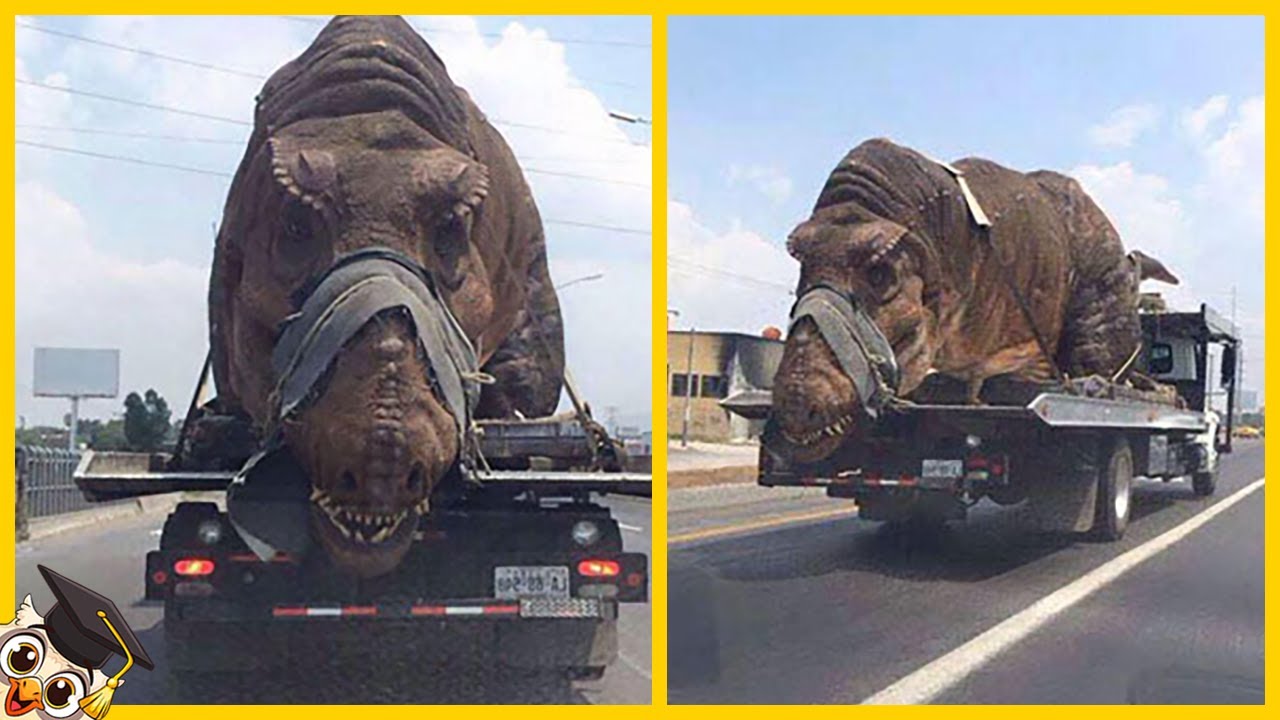
10 Dinosaur Sightings Captured on Camera: Fact or Fiction?

Image

The prevailing scientific consensus dictates that the last dinosaur species vanished approximately 65 million years ago, marking the end of the Cretaceous period. Yet, a persistent undercurrent of intrigue surrounds the possibility of these ancient behemoths still roaming hidden corners of our planet. While modern science endeavors to resurrect them through ancient DNA, a compelling, albeit controversial, narrative persists: that some dinosaur species might have survived extinction. Today, we delve into the visual evidence, presenting 10 instances where alleged dinosaurs were purportedly captured on camera. Whether you perceive these recordings as irrefutable proof or elaborate hoaxes rests solely on your discernment.

Unveiling the Improbable: Dinosaurs in the Modern Age

The shadow of the dinosaur looms large in our collective imagination, a testament to their sheer power and mysterious disappearance. While paleontology paints a detailed picture of their reign and demise, the human mind often struggles to accept finality, especially when faced with fragmented evidence or compelling narratives. The idea that these creatures, rulers of a bygone era, might still exist is fertile ground for speculation. This investigation aims to sift through the grainy footage and anecdotal accounts, applying a critical lens to determine what, if anything, lies beneath the surface of these supposed photographic encounters.

The Camera's Eye: Alleged Dinosaur Captures

The following accounts represent a compilation of alleged dinosaur sightings captured on film or video. It is imperative to approach each case with a critical mind, scrutinizing the details for inconsistencies and potential explanations.

Recommended Gear for Investigation

ProductDescriptionBuy
Cryptozoology A To Z: The Encyclopedia Of Loch Monsters Sasquatch Chupacabras And Other Authentic M: The Encyclopedia of Loch Monsters, Sasquatch, Chupacabras, and Other Authentic Mysteries of NatureAn excellent choice to complement your research on this topic.View on Amazon
The Big Book of Paranormal: 300 Mystical and Frightening Tales From Around the WorldAn excellent choice to complement your research on this topic.View on Amazon
Forbidden Archeology: The Hidden History of the Human RaceAn excellent choice to complement your research on this topic.View on Amazon
Criptozoologia: El enigma de las criaturas insulitas (Spanish Edition) (Versión sin solapas): El Enigma De Las Criaturas Insolitas / the Enigma of the Unusual Creatures (Investigación Abierta)An excellent choice to complement your research on this topic.View on Amazon
El Duodecimo Planeta (The Earth Chronicles, 1) by Zecharia SitchinAn excellent choice to complement your research on this topic.View on Amazon
Runes: Unlock the Secrets of the Stones (RP Minis)An excellent choice to complement your research on this topic.View on Amazon
The H. P. Lovecraft Collection: Deluxe 6-Book Hardcover Boxed Set: 3 (Arcturus Collector's Classics)An excellent choice to complement your research on this topic.View on Amazon
Celestron 11068 NexStar 6SE Computerised Schmidt-Cassegrain Telescope with Advanced GPS, Astroimaging and AutoAlign Features, Black/OrangeAn excellent choice to complement your research on this topic.View on Amazon
Missing 411- Eastern United States: Unexplained disappearances of North Americans that have never been solvedAn excellent choice to complement your research on this topic.View on Amazon
Ghost-Hunting For Dummies [Idioma Inglés] An excellent choice to complement your research on this topic.View on Amazon
  • The Congo "Mokele-mbembe" Footage: Reports have surfaced over decades of a creature resembling a long-necked dinosaur in the remote Likouala swamps of the Congo Basin. While definitive proof remains elusive, sporadic video fragments and eyewitness accounts fuel the legend. Analysts point to similar descriptions of aquatic dinosaurs like Brontosaurus, but skepticism remains high due to the difficulty of verification in such a remote and often inaccessible region.
  • The "Living Plesiosaur" of Japan: In 1977, a bizarre carcass washed ashore in Kaikoura, New Zealand, which some speculated was that of a plesiosaur. While subsequent analysis suggested it was likely a decomposing basking shark, the visual documentation sparked numerous debates and comparisons to prehistoric marine reptiles. Similar claims have periodically emerged from various coastlines worldwide, often leading to intense public fascination.
  • The "Dragon of South America": Accounts of a dinosaur-like creature have been reported in rural South America, often described as a reptilian beast with a long neck and tail. Video evidence is scarce and often of poor quality, making objective analysis challenging. These reports frequently overlap with local folklore and indigenous legends of large, unknown beasts inhabiting dense jungles.
  • The "Okanagan Lake Monster" (Ogopogo): While more commonly depicted as a serpentine entity, some early descriptions and artist interpretations of the Ogopogo, a cryptid associated with Okanagan Lake in British Columbia, Canada, bear a striking resemblance to certain aquatic dinosaurs. The consistent nature of sightings over many years, despite a lack of concrete evidence, keeps the legend alive.
  • The "Loch Ness Monster" - A Prehistoric Echo?: Perhaps the most famous lake monster, the Loch Ness Monster, has frequently been compared to a plesiosaur due to descriptions of a long neck and humps. While scientific expeditions have yielded no tangible evidence, the sheer volume of eyewitness accounts and blurry photographs has cemented its place in popular culture and cryptozoological studies.
  • The "Terror Bird" of Papua New Guinea: Sightings of a large, flightless, bird-like predator have been reported in remote regions of Papua New Guinea. While modern avian species like the Cassowary exist, some descriptions suggest a creature far larger and more aggressive, reminiscent of the extinct terror birds known as Phorusrhacidae.
  • The "Chupacabra" - A Modern Dinosaur?: While predominantly known for attacking livestock, some early and less common descriptions of the Chupacabra, particularly in Puerto Rico, veered towards a reptilian or dinosaur-like creature rather than the more typical canid-like descriptions that emerged later. This highlights how ambiguous cryptid reports can evolve over time.
  • The "Pterodactyl" Sighting in Texas: In 2009, two separate reports emerged from Texas describing giant, winged reptiles resembling pterodactyls. The witnesses provided sketches and descriptions, sparking a flurry of online discussion. Skeptics suggest misidentification of large birds like vultures or even man-made objects.
  • The "Yowie" of Australia: The Australian Yowie is often described as a large, ape-like creature, but some accounts and artistic renditions incorporate reptilian features, leading to comparisons with primitive, bipedal dinosaurs. The vast, unexplored wilderness of Australia provides a plausible, albeit unproven, habitat for such an elusive entity.
  • The "Lake Ilopango Monster" (El Tio Lago): Similar to other lake monsters, El Tio Lago in El Salvador has been described with features that some speculate could align with a surviving aquatic dinosaur. Persistent local legends and occasional eyewitness reports keep the mystery alive.

Researcher's Note: The following accounts are presented as reported phenomena. Objective verification remains a significant challenge, and explanations range from misidentification to elaborate hoaxes.

The Scientific Counterpoint: Extinction and De-extinction

From a mainstream scientific perspective, the extinction of the non-avian dinosaurs approximately 65 million years ago is a well-established fact, supported by extensive fossil records and geological evidence. The Chicxulub impact event is widely accepted as the primary catalyst for this mass extinction. However, the field of paleontology is constantly evolving. Recent discoveries suggest that birds are, in fact, direct descendants of theropod dinosaurs, meaning a lineage of dinosaurs never truly went extinct.

Beyond evolutionary lineage, the concept of "de-extinction" has gained traction. Scientists are exploring the technical feasibility of resurrecting extinct species, including dinosaurs, by utilizing ancient DNA fragments recovered from fossils. The process is fraught with immense challenges, primarily the degradation of DNA over such vast geological timescales. The successful sequencing and assembly of a viable dinosaur genome remain theoretical at this point. Projects like those at The American Museum of Natural History continue to push the boundaries of our understanding of prehistoric life and the potential for scientific intervention.

The Cryptozoological Angle: Survivors of the Past

Cryptozoology, the study of hidden or unknown animals, thrives on the fringes of scientific inquiry. Within this discipline, the possibility of surviving dinosaur species is a recurring theme. Proponents suggest that isolated, unexplored ecosystems—deep ocean trenches, vast jungle interiors, or remote cave systems—could harbor relict populations of dinosaurs that somehow evaded the Cretaceous–Paleogene extinction event.

"The sheer scale of Earth's unexplored territories offers a tantalizing canvas for the imagination. If any creatures could have weathered a global cataclysm, perhaps ancient survivors adapted to niche environments, it's the incredibly resilient dinosaurian forms."

The logic often follows that these creatures would be masters of evasion, avoiding human detection through stealth, nocturnal habits, or simply occupying regions infrequently visited by humankind. The cryptozoological pursuit of these creatures, while often lacking rigorous scientific methodology, taps into a deep-seated human desire for discovery and the belief that mysteries still abound in the natural world. The visual "evidence" presented in alleged video captures, however dubious, serves as fuel for these enduring cryptozoological quests.

Analysis and Hoaxes: Separating Wheat from Chaff

The critical investigator must approach any alleged photographic or video evidence with extreme skepticism. Hoaxes, misidentifications, and pareidolia—the tendency to perceive a pattern or image where none exists—are rampant in the realm of unexplained phenomena. Several factors contribute to the difficulty in verifying dinosaur sightings:

  • Technological Limitations: Much of the purported evidence comes from low-resolution footage, often captured on older equipment or under poor lighting conditions, making clear identification impossible.
  • Misidentification: Known animals (large reptiles, seals, deer, birds of prey) can be mistaken for unknown creatures, especially when viewed from a distance or under unusual circumstances. Log-like debris, waves, and even floating vegetation have been misinterpreted as lake monsters.
  • Deliberate Hoaxes: The internet age has facilitated the creation and rapid dissemination of fabricated images and videos. Sophisticated editing software allows for the creation of convincing-yet-false evidence, often designed to gain attention or sow disinformation. Past alleged "dinosaur captures" have been definitively debunked as elaborate fabrications.
  • Pareidolia and Suggestibility: The human brain is wired to find patterns. When primed with the idea of seeing a dinosaur, individuals may be more likely to interpret ambiguous shapes or movements as such.

Thorough analysis requires examining the context, source, and consistency of the evidence. Cross-referencing with known natural phenomena, geological records, and the history of hoaxes related to specific locations is crucial. For example, the famous "Surgeon's Photo" of the Loch Ness Monster was eventually revealed to be a deliberate hoax, significantly impacting the credibility of other evidence.

Researcher's Verdict: Fraud, Genuine Phenomenon, or Something Else?

After meticulous review of numerous alleged dinosaur captures, the verdict leans heavily towards misidentification and deliberate fabrication. While the allure of a surviving dinosaur population is powerful, the presented visual evidence consistently fails to meet the threshold for credible proof. The inconsistencies, lack of verifiable detail, and prevalence of known hoaxes erode the foundation of these claims. The scientific community stands firm on the established extinction event, supported by overwhelming empirical data. The cryptozoological perspective, while acknowledging the possibility, lacks the rigorous, repeatable evidence required for validation. Therefore, these "captured" dinosaurs are, in all likelihood, products of vivid imaginations, clever deceptions, or simple errors in observation. The true legacy of dinosaurs lies not in shadowy video footage, but in the fossilized remnants that continue to teach us about Earth's profound history.

The Investigator's Archive

To further your understanding of cryptozoology, paleontology, and the analysis of anomalous evidence, I recommend the following resources:

  • Books: "The Field Guide to Monsters: Suppressed Evidence" by Ken Gerhard, "Cryptozoology A to Z: The Encyclopedia of Loch Ness Monster, Bigfoot, and Other Legendary Creatures" by Loren Coleman.
  • Documentaries: "Searching for Nessie," "The Mysterious Death of the Loch Ness Monster," and various BBC or National Geographic documentaries on dinosaur paleontology.
  • Websites: Reputable paleontological institutions like the Natural History Museum (UK) and cryptozoological archives such as Cryptozoonews (approach with critical discernment).

Equipment Recommended for Investigation

While investigating phenomena requires resources, the initial steps often involve observation and documentation. Here are some tools that can aid in capturing clear evidence:

  • High-definition video camera with night vision capabilities.
  • Telephoto lens for capturing distant subjects.
  • Audio recording devices for capturing potential vocalizations (EVP).
  • Binoculars for enhanced observation.
  • Field notebooks for detailed logging of observations, environmental conditions, and temporal data.

Frequently Asked Questions

Q1: Is it possible that small dinosaurs survived extinction?
While scientifically improbable based on current evidence, cryptozoology explores this possibility, focusing on isolated habitats. However, no conclusive proof exists.
Q2: How can I tell if a video of a dinosaur is real?
Analyze the video quality, context, source credibility, consistency of movement, and look for digital artifacts or signs of editing. Compare it against known hoaxes and natural phenomena.
Q3: Are birds considered modern dinosaurs?
Yes, current scientific consensus classifies birds as avian dinosaurs, direct descendants of theropod dinosaurs that survived the extinction event.
Q4: What is the most famous alleged dinosaur capture?
Cases like the Loch Ness Monster and purported Mokele-mbembe footage are among the most persistent and widely discussed, though lacking definitive proof.

Your Mission: The Critical Observer

Your task is not merely to consume information but to engage with it critically. Should you encounter any purported evidence of unusual creatures, apply the principles of investigative analysis. Document everything meticulously. Seek corroborating evidence. Exhaust all natural explanations before resorting to extraordinary hypotheses. The pursuit of truth requires diligence and an unwavering commitment to verifiable facts.

Engage the Investigation

Have you ever witnessed something you couldn't explain? Share your personal experiences with unexplained phenomena in the comments below. Your testimony could be the missing piece in a larger puzzle. Don't keep these discoveries to yourself – share this investigation with fellow truth-seekers on your social networks to broaden the circle of inquiry!

For copyright matters, contact us at: contactthewiseowlyt@gmail.com

Subscribe for more top 10 videos and intriguing explorations: http://bit.ly/3q4ApG4

Investigator's Note: True paranormal research doesn't fund itself. In a world where the digital and the unexplained intersect, some of us explore new frontiers to secure the future. Do you dare to be part of the vanguard? Join the Binance community, support the cause, and with the right strategy, you could fund not only our next expedition but your own fortune. The next great discovery could be just a click away.