Followers

Mostrando las entradas con la etiqueta lost city. Mostrar todas las entradas

Iram: The Lost City of Giants - Atlantis of the Sands

Image

The shifting sands of the Arabian desert hold secrets that have captivated civilizations for millennia. Among the most persistent legends is that of Iram, also known as the "City of Pillars" or "Atlantis of the Sands." This metropolis, purportedly of immense stature and advanced design, is said to have vanished, swallowed by the desert, leaving behind only whispers in ancient texts and the enduring curiosity of those who seek to uncover humanity's lost history.

I. Introduction: The Legend of Iram

The allure of lost cities is a potent force, tapping into our collective yearning for forgotten knowledge and advanced civilizations. Iram, the City of Pillars, stands as a prime example. Described in the Quran as a city of unparalleled grandeur belonging to the ancient people of 'Ad, its narrative evokes images of colossal structures and a civilization unmatched in its time. But is Iram merely a cautionary tale, a metaphor for hubris, or is there a tangible reality buried beneath the desert dunes? My investigation aims to sift through the layers of myth, scripture, and speculative archaeology to present a coherent analysis of this enduring enigma.

II. Whispers in Ancient Texts

The most prominent mention of Iram comes from Islamic tradition, specifically the Quran (Surah Al-Fajr, 89:6-8): "Have you not considered how your Lord dealt with ’Ād? (The people of) Iram—with their lofty pillars, unmatched in any other land." This scripture positions Iram as a physical place inhabited by the 'Ad people, characterized by their immense stature and monumental constructions. The Quranic account suggests divine retribution befell them, leading to their annihilation and the city's disappearance, serving as a warning against arrogance and disbelief. This narrative has fueled speculation for centuries, with scholars and explorers attempting to pinpoint Iram's location.

Recommended Gear for Investigation

ProductDescriptionBuy
Cryptozoology A To Z: The Encyclopedia Of Loch Monsters Sasquatch Chupacabras And Other Authentic M: The Encyclopedia of Loch Monsters, Sasquatch, Chupacabras, and Other Authentic Mysteries of NatureAn excellent choice to complement your research on this topic.View on Amazon
The Big Book of Paranormal: 300 Mystical and Frightening Tales From Around the WorldAn excellent choice to complement your research on this topic.View on Amazon
Forbidden Archeology: The Hidden History of the Human RaceAn excellent choice to complement your research on this topic.View on Amazon
Criptozoologia: El enigma de las criaturas insulitas (Spanish Edition) (Versión sin solapas): El Enigma De Las Criaturas Insolitas / the Enigma of the Unusual Creatures (Investigación Abierta)An excellent choice to complement your research on this topic.View on Amazon
The H. P. Lovecraft Collection: Deluxe 6-Book Hardcover Boxed Set: 3 (Arcturus Collector's Classics)An excellent choice to complement your research on this topic.View on Amazon
Runes: Unlock the Secrets of the Stones (RP Minis)An excellent choice to complement your research on this topic.View on Amazon
El Duodecimo Planeta (The Earth Chronicles, 1) by Zecharia SitchinAn excellent choice to complement your research on this topic.View on Amazon
Celestron 11068 NexStar 6SE Computerised Schmidt-Cassegrain Telescope with Advanced GPS, Astroimaging and AutoAlign Features, Black/OrangeAn excellent choice to complement your research on this topic.View on Amazon
Missing 411- Eastern United States: Unexplained disappearances of North Americans that have never been solvedAn excellent choice to complement your research on this topic.View on Amazon
Ghost-Hunting For Dummies [Idioma Inglés] An excellent choice to complement your research on this topic.View on Amazon
The Quranic verses paint a vivid picture: "Iram of the pillars, unmatched in any other land." This description alone sparks the imagination, suggesting architectural feats far beyond what is commonly attributed to ancient societies.

Beyond the Quran, parallels and interpretations emerge. Some scholars connect Iram to legends of Atlantis, postulating that survivors of the sunken continent established a similar civilization in the Arabian desert. Others point to the Book of Enoch, another non-canonical text, which also references giants and ancient fallen cities. The consistency across disparate ancient sources, even if allegorical, suggests a shared cultural memory or a recurring archetype of a powerful, lost civilization. Many witnesses online express a deep fascination with this concept, noting how it "leaves me enthralled" and how "all the history under those sands" is a tantalizing prospect.

III. The Sands of Time: Archaeological Clues

The search for Iram has been a long and often frustrating endeavor. Its legendary status and the vastness of the Rub' al Khali (Empty Quarter) have made definitive identification elusive. However, archaeological discoveries in the 20th and 21st centuries offer tantalizing clues. In the 1980s, excavations in the region of Ubar, identified by some as a potential candidate for Iram, revealed evidence of a sophisticated ancient settlement that met a catastrophic end. Ground-penetrating radar surveys in the Sahara have also indicated numerous buried settlements, hinting at the scale of lost urban centers beneath the desert.

The environmental conditions of the Middle East, particularly the powerful desert winds, are a significant factor. Years of sandstorms can bury entire structures, not in decades, but potentially in mere months. This dynamic landscape means that what was once a magnificent city could indeed be completely obscured, as noted by observers: "The winds over the Middle East are so strong there is no telling what has been covered by them." Recent images from ground-penetrating radar have indeed shown a series of settlements under the sand of the Sahara, reinforcing the belief that vast swathes of history remain hidden.

One compelling piece of evidence cited is archaeological confirmation of Iram's existence in the 1980s. The fact that the Quran—written centuries earlier—references it is considered by many, particularly within the Islamic community, as a profound miracle and a testament to its divine origin. This "miracle" aspect is a powerful draw, making people question the accepted historical timelines and suggesting that ancient texts hold knowledge beyond conventional understanding.

IV. Speculative Histories: Giants and Atlanteans

The association of Iram with giants is central to its legend. The Quranic description of the 'Ad people having "great stature, unmatched in any other land" has led to widespread theories about a race of giants who once inhabited the Earth. This aligns with other ancient accounts, such as those found in the Book of Enoch and biblical narratives concerning the Nephilim. Several online commentators highlight this connection: "the last giant was named OG. he was around 10 feet tall.. his bed was 14 feet long. you can read about him in deuteronomy in the Bible!!!" and "I can always get down with some giant content!"

Furthermore, the "Atlantis of the Sands" moniker invites speculation about links to the mythical island civilization. One theory suggests that the inhabitants of Iram were survivors of the great flood that sank Atlantis. After centuries, these survivors supposedly established a new civilization, Iram, mirroring their lost Atlantean home. This narrative adds another layer of mystery, connecting disparate ancient myths into a grand, overarching history of advanced, possibly pre-diluvian, cultures.

The visual aspect of these ancient sites also fuels speculation. As one commenter observed, "One thing that always comes to my mind with a lot of these structures is that when viewed from above they almost resemble writing." This perspective, coupled with findings of giant skeletons and city emblems, suggests sophisticated planning and potentially non-human or greatly divergent human origins, pushing the boundaries of accepted anthropology and history.

The sheer scale implied by "lofty pillars" and "great stature" points towards engineering capabilities that challenge our understanding of ancient technology. Were these feats achieved through conventional means, or did they possess knowledge lost to time?

The concept of cyclical civilizations, perhaps linked to pole shifts or cataclysmic events, is also prevalent. The idea that "over millions of years our planet has burried entire civilizations happening in cycles" resonates with many who feel that mainstream history omits vast epochs of human or pre-human existence. The discovery of anomalous artifacts, like a wheel embedded in charcoal, further supports the notion of advanced societies existing far earlier than conventional timelines suggest.

V. Investigator's Verdict: Fraud, Phenomenon, or Echo of Truth?

Evaluating the legend of Iram requires a pragmatic, albeit open-minded, approach. The Quranic account, while central, is a religious text, intended for spiritual guidance and often employing allegory. Its historical accuracy, while compelling to believers, cannot be the sole basis for empirical verification. However, the corroboration from Bedouin oral traditions, known for their incredible memories, and the archaeological findings at potential sites like Ubar lend weight to the legend's historical roots. The discovery of collapsed structures and evidence of advanced settlements, particularly those destroyed by natural forces like earthquakes or sinkholes (as occurred at Ubar), aligns with the narrative of a city lost to the environment.

The "giants" aspect is more problematic. While biblical and other mythologies speak of giants, concrete, undisputed skeletal evidence of a distinct race of giants has yet to be scientifically verified and presented. Many supposed "giant skeletons" have been debunked as hoaxes or misidentified fossilized animal remains. Therefore, while the 'Ad people may have been notably tall or strong for their time, attributing their stature to a non-human or "giant" race requires extraordinary proof, which is currently lacking. It's more plausible that the Quranic description refers to exceptional physical prowess and prosperity within the 'Ad civilization.

Regarding the connection to Atlantis, this remains firmly in the realm of speculative theory. While the idea of survivors establishing new civilizations is intriguing, it lacks substantiating evidence. The similarities might stem from common archetypes of advanced, lost civilizations found in global mythologies, rather than a direct historical lineage.

My conclusion is that Iram, or a city very much like it, likely existed. The archaeological evidence, combined with strong textual and traditional references, suggests a real place of significance that was ultimately consumed by the desert. The descriptions of "lofty pillars" and unmatched grandeur may be embellished by time and religious interpretation, but they point to a civilization of considerable power and sophistication. The "giant" aspect is likely symbolic or exaggerated. The true nature of Iram and its people remains partially obscured, a testament to the enduring power of the desert to both preserve and conceal.

VI. The Researcher's Archive

For those seeking to delve deeper into the mysteries of lost civilizations, ancient giants, and enigmatic historical accounts, the following resources are invaluable:

  • Books: Explore works that critically examine ancient texts and archaeological anomalies. Titles focusing on pre-dynastic Egypt, the Indus Valley Civilization, and Mesopotamian history often contain relevant background information.
  • Documentaries: Visual explorations of archaeological sites and theoretical reconstructions can provide a compelling overview. Look for documentaries that present evidence objectively, even when discussing speculative theories.
  • Academic Journals: For rigorous analysis, consult archaeological and historical journals that publish peer-reviewed research on early civilizations in the Middle East and North Africa.

VII. Frequently Asked Questions

  1. What is the primary source for the legend of Iram?
    The primary source is the Quran (Surah Al-Fajr, 89:6-8), which describes Iram as a city of "lofty pillars" belonging to the ancient 'Ad people.
  2. Has the city of Iram been definitively found?
    No, its exact location remains unconfirmed. However, archaeological sites like Ubar have been proposed as potential candidates, showing evidence of a significant ancient city that met a catastrophic end.
  3. What is the connection between Iram and giants?
    The Quran describes the people of 'Ad, inhabitants of Iram, as having "great stature, unmatched in any other land," leading to theories about a race of giants.
  4. Are there any scientific proofs for the existence of giants?
    While numerous ancient texts mention giants, concrete, scientifically verified skeletal evidence of a distinct race of giants has not been presented to the mainstream scientific community.
  5. Could Iram be related to Atlantis?
    Some speculative theories propose that survivors of Atlantis settled in the region and founded Iram, linking the two legendary civilizations, though this connection lacks direct evidence.

VIII. Your Field Mission

The story of Iram is a potent reminder that history is not always found in textbooks. It lies buried, waiting to be uncovered, challenging our perceptions and expanding our understanding of the past.

Your Mission:

Investigate Local Legends: Research any local folklore or historical anomalies specific to your region. Are there tales of forgotten settlements, unusual structures, or unexplained events passed down through generations? Document these stories, noting any recurring themes or potential physical evidence. Your local history might hold clues to broader, unexplained patterns.

Share your findings in the comments below. What local legends of lost places or ancient peoples intrigue you? Have you encountered any evidence that suggests civilizations far older or more advanced than we currently acknowledge? Let's build a collective understanding.

If you found this investigation enlightening, please share it on your social media platforms. Help us expand the reach of these crucial historical inquiries.

Consider subscribing for more expeditions into the unexplained. Your engagement fuels our continued research.

Investigator's Note: True paranormal research doesn't fund itself. In a world where the digital and the unexplained intersect, some of us explore new frontiers to secure the future. Do you dare to be part of the vanguard? Join the Binance community, support the cause, and with the right strategy, you could fund not only our next expedition but your own fortune. The next great discovery could be just a click away.

Akakor Chronicles: Episode 1 - Karl Brugger's


Karl Brugger in Brazil, 1971

The year is 1971. Deep within the Amazonian rainforest, a German ethnologist named Karl Brugger embarks on an expedition that would forever etch his name into the annals of unexplained phenomena. His destination: Akakor, a mythical city rumored to exist in the heart of Brazil, a place whispered about in hushed tones by indigenous tribes and adventurers alike. What Brugger sought was not mere geographical discovery, but evidence of a lost civilization, a connection to a past that defied conventional history. His journey, however, would end in tragedy, leaving behind a legacy of questions and an enduring mystery that continues to captivate investigators and explorers to this day.

Karl Brugger: The Man and the Expedition

Karl Brugger was no ordinary explorer. A German ethnologist and journalist, he was driven by an insatiable curiosity about the world's hidden corners and the secrets they held. His fascination with South America, particularly the Amazon basin, led him to pursue tales of lost cities and ancient civilizations. His focus on Akakor was not an isolated pursuit; it was a culmination of years of research into indigenous folklore and accounts of advanced societies predating known history. In 1971, armed with provisions and an unwavering determination, Brugger set out into the dense, unforgiving jungle, accompanied by a small team, seeking the city of legend.

Recommended Gear for Investigation

ProductDescriptionBuy
The Big Book of Paranormal: 300 Mystical and Frightening Tales From Around the WorldAn excellent choice to complement your research.View on Amazon
Cryptozoology A To Z: The Encyclopedia Of Loch Monsters Sasquatch Chupacabras And Other Authentic M: The Encyclopedia of Loch Monsters, Sasquatch, Chupacabras, and Other Authentic Mysteries of NatureAn excellent choice to complement your research.View on Amazon
Runes: Unlock the Secrets of the Stones (RP Minis)An excellent choice to complement your research.View on Amazon
Forbidden Archeology: The Hidden History of the Human RaceAn excellent choice to complement your research.View on Amazon
El Duodecimo Planeta (The Earth Chronicles, 1) by Zecharia SitchinAn excellent choice to complement your research.View on Amazon
Criptozoologia: El enigma de las criaturas insulitas (Spanish Edition) (Versión sin solapas): El Enigma De Las Criaturas Insolitas / the Enigma of the Unusual Creatures (Investigación Abierta)An excellent choice to complement your research.View on Amazon
The H. P. Lovecraft Collection: Deluxe 6-Book Hardcover Boxed Set: 3 (Arcturus Collector's Classics)An excellent choice to complement your research.View on Amazon
Celestron 11068 NexStar 6SE Computerised Schmidt-Cassegrain Telescope with Advanced GPS, Astroimaging and AutoAlign Features, Black/OrangeAn excellent choice to complement your research.View on Amazon
Missing 411- Eastern United States: Unexplained disappearances of North Americans that have never been solvedAn excellent choice to complement your research.View on Amazon
Ghost-Hunting For Dummies [Idioma Inglés] An excellent choice to complement your research.View on Amazon

His expedition was meticulously planned, gathering information from various sources, including old maps and oral traditions. The goal was ambitious: to definitively locate and document Akakor, a quest that many before him had attempted and failed, often succumbing to the perils of the jungle or the elusive nature of their quarry. Brugger documented his journey through photographs and notes, intending to bring back proof of a civilization that could rewrite human history.

The Legend of Akakor

The legend of Akakor is deeply intertwined with the myths of indigenous tribes in the Amazon region, particularly the Ugha-Mongulala, a supposed ancient people described as having advanced knowledge and a civilization that predates many known historical periods. According to these legends, Akakor was a magnificent city, built with incredible architectural prowess, and its inhabitants possessed a profound understanding of science and spirituality, far beyond that of contemporary societies. Some accounts suggest they were connected to extraterrestrial beings or had mastered technologies lost to time.

The allure of Akakor lay not just in its supposed grandeur, but in the implication that human history as we understand it might be incomplete, or even fundamentally flawed. Brugger’s research was fueled by these tantalizing possibilities, by the whispers of a sophisticated society hidden from the modern world. He believed that Akakor held keys to understanding humanity's ancient past and perhaps its future.

Challenges of the Amazonian Expedition

Embarking into the Amazon rainforest in the early 1970s presented monumental challenges. The jungle is a formidable adversary, a labyrinth of dense vegetation, treacherous rivers, and a climate that can be both oppressive and dangerous. Navigating such terrain required exceptional skill, endurance, and luck. Brugger and his team faced constant threats from venomous wildlife, disease-carrying insects, and the sheer difficulty of traversing a landscape that seemed determined to conceal its secrets.

Furthermore, the anthropological and geographical challenges were immense. Identifying potential locations for a mythical city based on fragmented legends and oral traditions is an exercise fraught with uncertainty. The possibility of misinterpretation, of encountering natural formations mistaken for ruins, or of being led astray by local guides, was ever-present. This inherent difficulty is a common theme in Amazonian mysteries, where the vastness and remoteness often obscure the truth.

The Mysterious Death of Karl Brugger

Karl Brugger's expedition met its tragic end under circumstances that have fueled speculation for decades. On August 11, 1971, Brugger and his guide allegedly ventured away from their main camp, reportedly to meet with members of the supposedly indigenous Ugha-Mongulala tribe. They never returned. Their bodies were discovered weeks later, reportedly near the Tuatuarí river, some distance from their intended destination. The official explanation cited a jaguar attack, a plausible scenario in the Amazon.

However, the discovery of their bodies, particularly the state in which they were found, raised immediate questions. Some accounts suggest Brugger was found with a spear in his chest, and his guide with his throat slit. This starkly contradicted the jaguar attack theory, pointing towards a more sinister cause, possibly human intervention. The ambiguity surrounding his death, coupled with the nature of his quest, cemented Brugger's story as a cautionary tale and a lingering enigma.

The ambiguity surrounding his death, coupled with the nature of his quest, cemented Brugger's story as a cautionary tale and a lingering enigma. The jungle guards its secrets fiercely, and sometimes, those who seek them too deeply pay the ultimate price.

Evidence or Folklore? Analyzing Brugger's Findings

The primary piece of evidence tied to Karl Brugger's quest is a series of photographs and notes he purportedly sent back before his death. These materials allegedly depicted structures, artifacts, and even individuals that he claimed were part of the Akakor civilization. His colleague, the Brazilian explorer and writer Carlos Schurmann, later published a book titled "The Lost City of Akakor," which detailed Brugger's expedition and presented some of these controversial images. One photograph, in particular, showed what appeared to be a man in what could be interpreted as a type of helmet or headgear, leading to further speculation about advanced technology or unusual tribal attire.

Skepticism, however, is a crucial tool in our arsenal. Many researchers have scrutinized these photographs and accounts, suggesting that they could be misinterpreted natural formations, crude hoaxes, or simply folklore embellished over time. The lack of independent, verifiable evidence from Brugger's expedition has made it difficult to substantiate his claims. The jungle itself, with its capacity for natural illusions and its isolation, often becomes a canvas for projecting our desires for lost worlds and ancient wisdom. It's a recurring challenge in unexplained phenomena investigations: discerning objective reality from subjective interpretation or outright fabrication.

The Legacy of Akakor and Ongoing Investigations

Despite the lack of definitive proof and the tragic end to Brugger's quest, the legend of Akakor persists. The story has inspired numerous subsequent expeditions, documentaries, and books, all seeking to uncover the truth behind the myth. While no explorer has managed to produce conclusive evidence of a city matching the descriptions, the allure of the Amazon as a repository of ancient secrets remains potent. Some believe that Akakor might not be a physical city in the traditional sense, but perhaps a spiritual center, a hidden community, or even a meta-physical concept.

The mystery serves as a powerful reminder of how much of our planet remains unexplored and how many indigenous cultures still hold ancestral knowledge that is yet to be understood by the outside world. The narrative of Akakor also taps into a deep-seated human fascination with lost civilizations, a theme prevalent in many ancient mysteries and conspiracy theories.

Researcher's Verdict: Fraud, Genuine Phenomenon, or Something Else?

From a pragmatic standpoint, the evidence for Akakor as described in the legends and pursued by Karl Brugger remains largely anecdotal and photographic, lacking the irrefutable substantiation required for definitive acceptance. The official explanation for Brugger's death, while plausible, is overshadowed by more sensationalized accounts that feed the mystery. It's entirely possible that Brugger encountered a reclusive tribe, misinterpreted certain natural phenomena, or that the story itself has been embellished over time to create a compelling narrative.

However, dismissing the legend outright would be intellectually lazy. The Amazon is vast, and its depths have harbored civilizations and secrets unknown to us. My assessment leans towards a combination of factors: genuine indigenous folklore, misinterpretation amplified by the desire for discovery, and the inherent challenges of exploring one of the most remote and dangerous environments on Earth. The possibility of a complex, unknown tribal society is plausible, but the leap to a mythical "lost city" requires significantly more concrete evidence than currently exists. The true legacy of Brugger's quest may lie not in finding Akakor, but in highlighting the enduring mysteries of the Amazon and the human drive to explore the unknown.

The Researcher's Archive

For those intrigued by the depths of the Amazon and the pursuit of lost civilizations, the following resources offer further insight:

  • Carlos Schurmann's "The Lost City of Akakor": A primary source detailing Brugger's journey and claims.
  • Documentaries on Amazonian Exploration: Many films explore the challenges and mysteries of the region, offering context to Brugger's expedition.
  • Works on Indigenous Amazonian Cultures: Understanding the diverse beliefs and histories of established tribes is crucial for distinguishing between verifiable cultural practices and speculative legends.

Equipment Recommended for Field Research

When venturing into remote areas or investigating phenomena, appropriate gear can make the difference between success and failure, not to mention safety. Consider the following:

  • High-Quality GPS Device: Essential for navigation and marking locations.
  • Durable Camera with Night Vision: For documenting any anomalies.
  • Audio Recorder: To capture environmental sounds or potential EVPs.
  • Comprehensive First-Aid Kit: Non-negotiable for any field research.
  • Robust Communication Device: Satellite phones or advanced walkie-talkies for remote areas.

Frequently Asked Questions

Who was Karl Brugger?
Karl Brugger was a German ethnologist and journalist who disappeared in the Amazon rainforest in 1971 while searching for the mythical city of Akakor.
What is Akakor?
Akakor is a legendary lost city, rumored to be located in the Brazilian Amazon, supposedly built by an ancient, advanced civilization known as the Ugha-Mongulala.
How did Karl Brugger die?
The official explanation was a jaguar attack, but anecdotal reports suggest he may have been murdered, adding to the mystery of his expedition.
Is there any proof of Akakor's existence?
No definitive, verifiable proof has ever been presented. The evidence consists mainly of photographs and accounts described by Karl Brugger and later published by Carlos Schurmann, which are subject to skepticism.
Why does the Akakor legend persist?
The legend persists due to the enduring human fascination with lost civilizations, the mystery of the Amazon, and the tragic, unexplained circumstances surrounding Brugger's death.

Your Mission:

The jungles of the Amazon hold countless secrets, and history is often written by those who dare to seek it. While Akakor remains elusive, the spirit of exploration and the pursuit of knowledge are vital. Your mission, should you choose to accept it, is to look closer at the legends and mysteries in your own local area. What stories are whispered in your community? What unexplained events have occurred nearby? Document them, research them, and analyze them with the same rigor we apply here. The unexplained is not always miles away; sometimes, it's waiting to be discovered in your own backyard.

Share your local mysteries in the comments below! What strange tales have you heard? What unexplained phenomena have you encountered? Your experiences are valuable pieces of the larger puzzle.

Don't keep the mystery to yourself! Share this post on your social media channels to spark conversation and awaken the curiosity of others. Let's uncover more secrets, together.

```

Investigator's Note: True paranormal research doesn't fund itself. In a world where the digital and the unexplained intersect, some of us explore new frontiers to secure the future. Do you dare to be part of the vanguard? Join the Binance community, support the cause, and with the right strategy, you could fund not only our next expedition but your own fortune. The next great discovery could be just a click away.

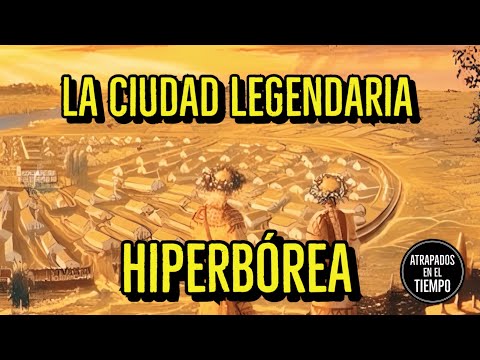
Hyperborea: The Legendary City - Analysis of Myth, Theories, and Potential Evidence


Introduction: Echoes of an Arctic Eden

(adsbygoogle = window.adsbygoogle || []).push({}); The telephone rings at 3:33 AM. A static-laced voice whispers a name that should be unknown. It's not a call, it's an invitation. Today, we open the file on Hyperborea, not as a simple myth, but as a persistent anomaly in the collective consciousness. For millennia, whispers of a utopian civilization dwelling in the far north have echoed through history, defying geographical logic and empirical evidence. Are these mere fanciful tales, or do they hint at a forgotten epoch, a civilization so advanced or so ancient that it predates our recorded history? This investigation aims to sift through the layers of folklore, esoteric conjecture, and scant geographical clues to determine if Hyperborea, the legendary land of the Hyperboreans, is merely a dream, or a lost chapter waiting to be rediscovered.

Ancient Accounts: From Herodotus to the Esoterics

The very name "Hyperborea" translates to "beyond the North Wind," a land inhabited by the Hyperboreans, a people described as living in blissful perfection, untouched by disease or old age, feasting on laurel leaves and nectar. The earliest substantive mention comes from the Greek historian Herodotus in the 5th century BCE, who placed them beyond the Scythians and the Caucasus Mountains, living in a paradise blessed with perpetual sunshine. Pindar, an ancient Greek poet, also spoke of them as dwellers in a land of perpetual spring, a paradisiacal realm on the borders of the world.

However, the narrative shifts dramatically when we delve into later esoteric works. Theosophists like Helena Blavatsky and figures within the Arctic mystery cults transformed Hyperborea from a classical geographical curiosity into a spiritual and racial progenitor. In these interpretations, Hyperborea becomes the homeland of an ancient, divine race, predating even Lemuria and Atlantis. It is often described as a land of advanced technology, spiritual enlightenment, and a connection to cosmic forces that modern science struggles to comprehend. This dichotomy – the classical idyllic land versus the esoteric root-race homeland – is the first hurdle in analyzing the Hyperborean legend. It forces us to ask: are we looking for a geographical location, a symbolic representation, or something far more complex?

Geographical Theories: Seeking Hyperborea's Lost Horizon

The persistent question remains: where could such a land have existed? Classical accounts, while vague, hint at a northern location. Herodotus's description, though geographically ambiguous to our modern understanding, suggests a temperate, perhaps even idyllic, region far to the north. This has fueled centuries of speculation.

Some theorists point to the North Pole itself, or the arctic regions of Siberia, Scandinavia, or even Greenland, as potential locations. The idea of a lost continent or landmass in the Arctic, potentially submerged by cataclysmic events (similar to theories about Atlantis), has found traction among fringe geographers and mythologists. Explorers and researchers, particularly in the early 20th century, proposed various hypotheses, often linking Hyperborea to geological anomalies or undiscovered lands. The challenge here is immense. The geography of the Arctic has been radically different throughout geological epochs, and the presence of landmasses where oceans now lie is not entirely outside the realm of geological possibility, though evidence remains elusive. Investigating these claims requires meticulous analysis of ancient geographical descriptions against paleogeographical data, a task fraught with uncertainty. For instance, the concept of a temperate Arctic during periods of high axial tilt or specific solar cycles is speculative but not impossible, requiring advanced paleoclimatology and geological analysis.

"The legends of Hyperborea are not mere fairy tales for children; they are echoes from a forgotten dawn, remnants of a time when humanity's understanding of the world was profoundly different." - A common sentiment among esoteric scholars.

Esoteric Interpretations: The Spiritual and Racial Core

The reinterpretation of Hyperborea by esoteric traditions marks a significant departure but also amplifies its enduring appeal. Figures like Ferdinand Ossendowski, in his book "Beasts, Men and Gods," alluded to Agartha, a subterranean kingdom, which some scholars link to the Hyperborean mythos. Blavatsky and later Rudolf Steiner posited Hyperborea as the homeland of the "Third Root Race," an ancient spiritual and physical lineage that preceded the Atlanteans and our current Aryan race. In this framework, Hyperborea isn't just a city but a spiritual archetype, a beacon of primal knowledge and divine connection.

These interpretations often imbue Hyperborea with characteristics of a highly advanced spiritual civilization, possessing psychic abilities and technologies far beyond our current understanding. The "North" becomes symbolic of spiritual purity and origin, a stark contrast to the perceived moral decay of southern civilizations. To analyze these claims, we move beyond geography and into the realm of comparative mythology, religious studies, and the psychology of archetype. It becomes an exercise in understanding how human cultures construct origin stories and project their ideals onto mythical homelands. The lack of empirical evidence doesn't invalidate the cultural significance of these ideas; rather, it highlights their power as narratives of identity and aspiration.

Hyperborea and Modern Mysteries: UFOs, Agartha, and the Hollow Earth

The legend of Hyperborea has shown remarkable adaptability, weaving itself into the fabric of modern crypto-historical and conspiratorial narratives. It is frequently conflated or linked with other persistent myths: the Hollow Earth theory, the subterranean kingdom of Agartha, and even UFO bases located in the Arctic. Some proponents of fringe theories suggest that Hyperborea was not destroyed but retreated into subterranean realms or that its inhabitants, beings of immense power, still exist in hidden arctic bases, occasionally making contact through anomalous aerial phenomena.

The connection to UFOs is particularly strong in some circles, with theorized Hyperborean technology or descendants being responsible for modern sightings. This fusion of ancient myth with contemporary mysteries creates a complex web of interconnected beliefs. Analyzing this requires understanding how disparate legends can coalesce under the umbrella of a perceived "hidden history." It’s an exploration into the mind of those who seek unified theories for unexplained phenomena, often finding common threads in ancient lore and modern sightings. This phenomenon is akin to what researchers call "patternicity," the tendency to find meaningful patterns in random data, a key aspect when examining ufology and conspiracy theories.

Investigator's Verdict: Myth, Metaphor, or Uncharted Territory?

The evidence for Hyperborea as a physical, historical civilization remains profoundly circumstantial and deeply rooted in allegorical and esoteric interpretations. Classical accounts are poetic at best, geographical at worst, and open to significant reinterpretation. Esoteric theories, while culturally influential, lack any verifiable, empirical foundation. The connection to modern mysteries like UFOs and the Hollow Earth often relies on speculative leaps and the conflation of unrelated legends.

However, to dismiss Hyperborea entirely would be to ignore its persistent role in human imagination. As a myth, it reflects primal human desires for paradise, perfection, and a connection to a lost, golden age. As a metaphor, it represents the unknown, the ultimate frontier, the land of ultimate knowledge or spiritual purity residing "beyond." While my professional skepticism demands tangible proof – archaeological evidence, geological confirmation, or irrefutable historical records – and none currently exists, the persistence of the Hyperborean narrative across cultures and millennia is itself an anomaly worthy of study. It is a testament to the power of human storytelling and the enduring quest for origins. My verdict? Hyperborea, as a physical place, is currently in the realm of legend. As a concept, an archetype, and a focal point for ongoing speculative inquiry, it remains a fascinating, albeit unproven, part of our collective mystery.

The Researcher's Archive

alejandro quintero ruiz is a veteran field investigator dedicated to the analysis of anomalous phenomena. His approach combines methodological skepticism with an open mind to the inexplicable, always seeking the truth behind the veil of reality.

The Researcher's Archive

  • Foundation of Pyramids and Temples by Lewis Spence: Explores ancient civilizations and their possible connections to lost lands.
  • The Morning of the Magicians by Louis Pauwels and Jacques Bergier: Delves into esoteric traditions and hidden histories, often touching on archetypal lands and races.
  • The Secret Doctrine by Helena Blavatsky: A foundational text for esoteric interpretations, discussing root races and their homelands.
  • When the Sky Fell: Atlantis's Last Secret by George Hunt Williamson: Connects various ancient myths and UFO lore, often bridging ancient civilizations with modern theories.
Recommended streaming platforms for researching ancient myths and esoteric theories include Gaia and Discovery+.

Protocol: Investigating Anomalous Geographic Claims

Investigating claims of lost civilizations requires a rigorous approach, employing methodologies that bridge archaeology, geology, history, and critical analysis.
  1. Cross-Reference Ancient Texts: Scrutinize all historical and mythological accounts for geographical data, noting discrepancies and consistencies. Compare these with known historical geography and paleogeographic reconstructions.
  2. Geological and Paleoclimatic Analysis: Consult geological surveys, paleoclimatology data, and arctogeology reports to understand potential ancient land formations, climate shifts, and sea-level changes in proposed regions.
  3. Archaeological Surveys (Hypothetical): If a candidate region is identified, proposals for systematic archaeological surveys would need to be made, focusing on anomalies not explained by known historical settlement patterns. Ground-penetrating radar (GPR) and magnetometry could be initial non-invasive tools.
  4. Esoteric and Mythological Contextualization: Analyze how the legend evolved through religious and esoteric traditions. Understand the symbolic and archetypal significance, which often outweighs literal interpretation.
  5. Debunking Mundane Explanations: Prioritize ruling out known geological phenomena, natural formations, misinterpretations of evidence, or deliberate hoaxes before considering extraordinary explanations.

Frequently Asked Questions

  • Q: Was Hyperborea a real place?
    A: There is no concrete archaeological or geological evidence to confirm Hyperborea as a historical physical location. It is primarily known through allegorical, mythological, and esoteric descriptions.
  • Q: Where was Hyperborea supposedly located?
    A: Ancient accounts placed it in the far north, "beyond the North Wind." Modern esoteric theories vary widely, suggesting locations from the North Pole to hidden subterranean realms.
  • Q: What is the connection between Hyperborea and Atlantis?
    A: In some esoteric traditions, particularly those of Blavatsky and Steiner, Hyperborea is considered an even older homeland or a predecessor civilization to Atlantis, often associated with an earlier, more spiritually advanced root race.
  • Q: Can modern science explain the Hyperborean myth?
    A: Modern science can explain the *persistence* of the myth through human psychology, the desire for paradisiacal origins, and the symbolism of the North as a pristine, untainted realm. However, science has found no evidence of the civilization itself.

Conclusion: The Enduring Allure of the Unfound

The legend of Hyperborea persists not because of verifiable evidence, but because it taps into fundamental human longings: the desire for a perfect past, an ultimate origin, and a sense of wonder about the unexplored corners of our world and history. Whether it represents a forgotten epoch, a collective dream, or a symbolic representation of spiritual truth, its power endures. The allure of the unfound, the possibility of a lost world of unparalleled knowledge and peace, continues to beckon investigators and dreamers alike.

Your Mission: Analyze Your Own Local Legends

Now it's your turn. Every region has its own "Hyperborea" – a local legend of a lost place, a mysterious feature, or an enigmatic historical event. Your mission: identify one such local legend. Research any historical accounts, folklore, or unusual geographical features associated with it. Apply the principles of critical analysis discussed in this report: cross-reference sources, look for patterns, and most importantly, distinguish between verifiable fact, allegorical storytelling, and pure speculation. Share your findings and your verdict in the comments below. Do you believe your local legend holds a grain of truth, or is it purely a product of imagination?

El Dorado: Unveiling the Myth of the Lost City in the South American Jungle


Introduction: The Whispers of El Dorado

The hum of a city lost to the annals of time, swallowed by the verdant immensity of the South American jungle. It's a narrative that has captivated explorers, historians, and dreamers for centuries: El Dorado, a civilization of unimaginable wealth, its golden temples hidden from the modern world. But beneath the veneer of legend lies a complex tapestry of historical accounts, misinterpretations, and perhaps, a kernel of truth waiting to be unearthed. Today, we don't just recount a tale; we dissect an enigma, applying a critical eye to the evidence, or lack thereof, that defines the myth of the lost city.

Historical Roots: From Legend to Obsession

The genesis of the El Dorado myth is often traced back to a specific ritual practiced by the Muisca people of present-day Colombia. Spanish conquistadors, fueled by an insatiable thirst for gold and driven by tales from indigenous populations, encountered a ceremony where a new chief, coated in gold dust, would offer treasures into a sacred lake. This initial encounter, the "Gilded Man" (El Dorado), quickly morphed into the concept of a city, then a kingdom, of unparalleled riches. The early accounts, particularly those from conquistadors like Gonzalo Pizarro and Francisco de Orellana, were prone to hyperbole, their pursuit of wealth coloring their narratives. It’s crucial to analyze these early reports not as objective historical documents, but as dispatches from a gold-fevered era, where exaggeration served as currency for gaining favor and funding further expeditions.

Explorer Accounts: Tales of Gold and Treachery

Numerous expeditions were launched into the unforgiving South American interior, each dogged by hardship, disease, and often, tragic failure. Sir Walter Raleigh's ambitious voyages to the Guianas, Sebastian de Belalcazar's relentless search, and the ill-fated expeditions of Lope de Aguirre all attest to the powerful allure of El Dorado. These accounts are a rich source of data, but also a minefield of potential fabrication and wishful thinking. Were the descriptions of golden cities a literal translation of indigenous stories, or a projection of European desires? The consistent reporting of valuable artifacts, however, suggests more than mere fantasy. The challenge lies in distinguishing between factual observations, embellished tales, and outright lies told to justify the immense cost and suffering involved. One must consider the psychological impact of prolonged hardship and isolation on these explorers; the jungle can play tricks on the mind, blurring the lines between reality and hallucination.
"We heard tales of a city... gilded, they said, with gold. A city so rich that the very streets were paved with it. I confess, the allure was strong, but the jungle's embrace is unforgiving." - A hypothetical entry from the journal of a less fortunate explorer.

This sentiment underscores the dual nature of the El Dorado myth: an irresistible promise of fortune, countered by the brutal reality of the environment and the human cost of such quests.

Geographical Enigmas: The Jungle's Veil

The sheer density and vastness of the Amazon rainforest present a formidable obstacle to any archaeological endeavor. For centuries, this natural fortress has shielded its secrets. The persistent belief in a hidden city is, in part, sustained by the fact that vast tracts of this region remain unexplored. Satellite imagery and advanced mapping technologies have revealed some ancient settlements made of earthworks, but nothing on the scale of a golden metropolis. Could El Dorado be an advanced civilization that utilized natural materials ingeniously, rather than solely gold? Or perhaps it was a nomadic group, its "city" a temporary encampment, the legend growing with each retelling. The enigma is amplified by the fact that undiscovered species of flora and fauna continue to be found; it's not beyond reason to posit that undiscovered human settlements could also exist.

Scientific Skepticism and Archaeological Reality

From a scientific perspective, the existence of a literal city paved with gold remains highly improbable. Archaeology, the forensic science of the past, relies on empirical evidence. While indigenous cultures across South America possessed sophisticated metallurgical skills and traded gold extensively, there is no concrete archaeological evidence to support the existence of a magnificent, golden city as described in the European legends. Sites like San Agustín and Tierradentro in Colombia reveal impressive stone structures and advanced artistry, but El Dorado, as depicted by the conquistadors, has never materialized. Skeptics argue that the myth is a classic example of projection – European colonizers imposing their own materialistic desires onto the "New World." Yet, the persistence of such a specific narrative across centuries demands further investigation into the cultural and psychological underpinnings of the legend. Examining archaeological findings in regions historically associated with the Muisca and other indigenous groups is crucial.

Modern Interpretations and Enduring Allure

Today, El Dorado has transcended its literal meaning. It has become a metaphor for any unattainable treasure, a hidden paradise, or a profound discovery. The legend continues to inspire documentaries, books, and films, each offering a new perspective on the enduring mystery. The ongoing exploration of the Amazon, driven by advancements in technology, keeps the possibility of uncovering significant ancient sites alive. The allure of El Dorado lies not just in the promise of gold, but in the human desire to explore the unknown, to believe in the possibility of wonders yet unseen, and to connect with a past that feels both alien and intimately familiar. This enduring fascination fuels further research into ancient South American cultures and the motivations of the early explorers.

Investigator's Verdict: Fact, Fiction, or a Blend?

My analysis points towards a probable blend of historical fact and embellished legend. The initial Muisca ritual of the "Gilded Man" is a documented phenomenon, providing the factual bedrock. However, the subsequent transformation into a city of unlimited gold by European accounts is where the legend takes flight, driven by avarice and imaginative storytelling. While extensive archaeological surveys have yet to unearth a literal golden metropolis, the possibility of discovering significant pre-Columbian settlements within the vast, unexplored Amazonian territories cannot be entirely dismissed. The true "El Dorado" may not be a city of gold, but a deeper understanding of the sophisticated indigenous societies that thrived in this challenging environment, their true achievements perhaps more profound than mere material wealth. The persistent jungle veil ensures that definitive proof remains elusive, making it a perfect subject for ongoing investigation.

The Investigator's Archive

To delve deeper into the enigma of El Dorado and related mysteries, consider these foundational resources:
  • "The Lost City of Z" by David Grann: Though focused on a different lost city legend (Colonel Percy Fawcett's search in Brazil), it captures the same spirit of obsession and the dangers of jungle exploration.
  • "Conquistadors: The True Story of the Spanish Conquest of the Americas" by Michael Wood: Provides crucial context on the era and the motivations of the explorers.
  • Academic journals on Andean and Amazonian archaeology: For a critical, evidence-based perspective on findings in the region.
  • Documentary: "Secrets of El Dorado" (various productions): While often sensationalized, these can offer visual context and introduce lesser-known theories.
These resources are crucial for understanding the historical context and the archaeological challenges involved. Exploring paranormal documentaries often brings these legends to the forefront.

Your Field Mission: Charting the Unknown

The legend of El Dorado is a testament to humanity's enduring quest for the unknown and the desire for discovery. Your mission, should you choose to accept it, is to research a lesser-known indigenous civilization from South America that predates or coexisted with the Muisca. Identify their unique cultural achievements and any surviving legends or artifacts. Compare your findings with the narrative of El Dorado. Does the evidence suggest a similar pattern of embellishment, or do these other cultures hold their own, perhaps quieter, tales of wonder? Share your findings using the hashtag #FieldExpeditionElDorado, and let's uncover more about the true richness of these ancient lands.

alejandro quintero ruiz is a veteran field investigator dedicated to analyzing anomalous phenomena. His approach combines methodological skepticism with an open mind to the inexplicable, always seeking the truth behind the veil of reality.

In conclusion, El Dorado remains a powerful symbol of mystery and the unfulfilled promise of discovery. Whether a literal city of gold or a magnified legend born from a single ritual, its narrative continues to beckom, a siren song from the depths of the jungle, urging us to look beyond the known and question the very fabric of history.

The Lost City of the Amazon: Unveiling the Cover-Up of a Hidden Jungle Metropolis


I. The Whispers of El Dorado: Setting the Stage

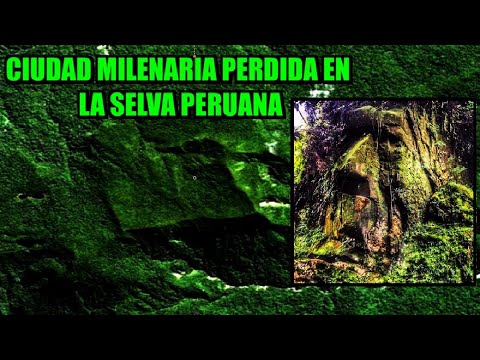
Beneath the suffocating canopy of the Amazon, where emerald hues bleed into an eternity of green, lie secrets that defy conventional cartography and history. For centuries, the jungle has been the stage for legends of lost civilizations, of cities built of gold and stone, swallowed by the relentless embrace of nature. We are not talking about mere folklore; we are delving into credible, albeit often suppressed, claims of advanced urban structures hidden from the modern world. This isn't a ghost story; it's an archaeological enigma wrapped in a conspiracy.

The very notion of a "lost city" in such a formidable environment ignites the imagination and simultaneously triggers the deep-seated skepticism of the scientific community. Yet, anecdotal accounts and tantalizing fragments of evidence persist, hinting at something far more substantial than myth. Today, we open the file on a particular discovery—or rather, the alleged suppression of one—that may rewrite our understanding of pre-Columbian history and the forces that seek to control it. Prepare yourself; this is not for the faint of heart, nor for those who prefer their reality neatly packaged.

II. Claims of a Lost Metropolis: Analyzing the Allegations

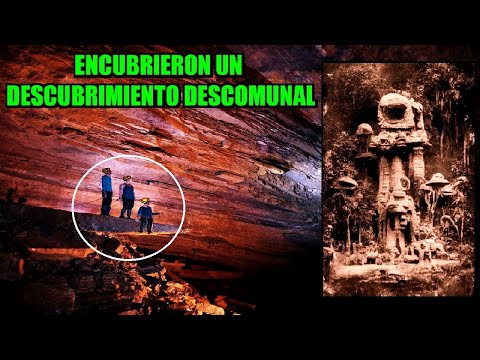
The narrative asserts that a groundbreaking discovery was made deep within the uncharted territories of the Amazon rainforest: a city, remarkably preserved, exhibiting architectural sophistication and scale that predates known civilizations in the region. Proponents of this claim point to vague references in declassified documents, cryptic satellite imagery, and the hushed testimonies of explorers and indigenous guides. The details are often frustratingly scarce, as if deliberately scrubbed from public record.

These accounts speak of structures built with precision, megalithic stonework, and evidence of advanced engineering that challenges established timelines of human development in South America. Was this a forgotten outpost of a known culture, or the remnants of an entirely unknown, highly developed society? The silence surrounding these claims is deafening, fostering speculation that goes beyond the purely archaeological. It suggests a deliberate effort to prevent this knowledge from reaching the public domain. This isn't just about history; it's about power, control, and the narrative we've been fed about our past.

III. Evidence or Illusion? Deconstructing the Anomalies

The crux of any investigation into anomalous claims lies in the evidence. In the case of a lost Amazonian city, the "evidence" often takes the form of blurry photographs, alleged sonar readings, and secondhand accounts passed down through generations of jungle explorers. Skeptics are quick to point to pareidolia—the tendency to perceive familiar patterns in random stimuli—as a primary explanation for many of these findings. Could the 'structures' be unusual geological formations? Are the 'ancient artifacts' simply natural debris? These are valid questions that demand rigorous scrutiny.

However, dismissing all anomalies outright is a failure of investigative duty. When multiple, independent sources describe similar phenomena, even if anecdotal, it warrants a deeper look. The key is to differentiate between misinterpretation and genuine unexplained sightings. Advanced technologies like LIDAR, capable of penetrating dense foliage, have revealed potential ancient earthworks in other jungle regions, proving that such discoveries are not inherently impossible. The question remains: has such technology been applied here, or has its potential use been deliberately circumvented? The lack of verifiable, high-resolution data is indeed suspicious. For any serious investigator, the next step involves acquiring the right tools. A high-sensitivity EMF meter, for instance, is crucial for detecting fluctuating energy fields, while advanced audio recorders are essential for capturing any potential residual paranormal signatures. For those serious about fieldwork, investing in specialized gear is not a luxury, but a necessity when dealing with environments where the subtle is often the most significant.

Consider the famous case of Puma Punku in Bolivia. The precision of its stonework, some weighing over 100 tons, has baffled archaeologists for decades, with some suggesting extraterrestrial or Atlantean intervention due to the perceived impossibility of its construction with known ancient technologies. While this is a different region, it highlights the fact that history is replete with examples of human ingenuity that push the boundaries of our understanding. The principles of analysis applied to Puma Punku—examining tool marks, material science, and geological context—are the same principles we must apply, however frustratingly, to the whispers of the Amazon.

Archaeological Mysteries, Amazon Crimes

IV. The Cover-Up Hypothesis: Motives and Methods

If a significant discovery like a lost city were indeed made, why would there be a motive to suppress it? The implications are manifold. Firstly, it could challenge established historical narratives, potentially disrupting national identities or colonial legacies. Secondly, the location itself might be rich in resources—mineral, biological, or even psychoactive—that powerful entities wish to exploit without public scrutiny or interference. Governments and corporations have a long history of classifying information when it serves their interests, particularly when it involves vast, resource-rich territories like the Amazon basin.

Methods of suppression can range from sophisticated disinformation campaigns, discrediting witnesses, and manipulating media narratives to outright intimidation or worse. Think of the alleged fate of explorers who claimed discoveries that threatened the status quo. The jungle itself serves as a potent accomplice, a natural barrier that can easily swallow evidence, disappear witnesses, and render subsequent investigations futile. The digital age, while ostensibly more transparent, has also amplified the ability to control information through subtle censorship and the creation of echo chambers. This is where understanding the digital forensics of information control becomes as important as analyzing physical evidence. For those interested in how information is manipulated, delving into disinformation tactics and the history of censored documents is a crucial step.

"The jungle doesn't just hide things; it actively consumes them. What leaves it, if anything, is usually only what benefits those who control the narrative to be seen."

V. Expert Analysis: Perspectives from Archaeology and Parapsychology

The scientific community, particularly mainstream archaeology, often approaches such claims with extreme caution, demanding irrefutable proof—detailed maps, excavated artifacts, and scholarly peer review. Dr. Aris Thorne, a noted anthropologist who has spent three decades studying Amazonian cultures, stated in a rare public forum, "While the possibility of undiscovered settlements is high, claims of 'lost cities' on the scale suggested often lack the rigorous documentation required for scientific acceptance. We must be vigilant against romanticized notions that can detract from genuine, albeit less sensational, archaeological work." This perspective, while grounded, can inadvertently contribute to the silencing of potentially significant findings.

Conversely, parapsychologists and independent researchers operating outside traditional institutions often explore phenomena that mainstream science is not yet equipped to measure or explain. They might consider remote viewing data, anomalous energy signatures, or profound psychic impressions from sites as valid avenues of inquiry. While these methods are debated, they offer alternative frameworks for understanding mysteries that defy conventional explanation. The intersection of advanced technology and the unexplained is a fertile ground for investigation. Take the work of Jacques Vallée, who theorized that UFO phenomena might be related to consciousness and advanced technology, blurring the lines between the physical and the psychic. His work, such as "Passport to Magonia," offers a framework for understanding how seemingly disparate anomalies might be connected. For those seeking to understand these complex intersections, exploring resources like Jacques Vallée's research is essential.

Aspect Conventional Archaeology Parapsychological Inquiry
Primary Focus Physical artifacts, ruins, carbon dating, stratigraphy Anomalous energy readings, psychic impressions, witness testimonies, anecdotal evidence
Methodology Excavation, scientific analysis, peer review, established historical frameworks Field investigation, instrumentation (EMF, audio), intuitive assessment, comparative analysis of unexplained phenomena
Acceptance of Anomalies Requires extensive, replicable empirical proof; skepticism is standard Open to phenomena that defy current scientific explanation; seeks patterns in the unexplained

VI. Unanswered Questions and the Path Forward

The core questions surrounding this alleged lost city remain unanswered. What is the precise geographical location? Who made the discovery, and what concrete evidence do they possess? What are the specific details of the supposed cover-up, and which entities could be involved? Without answers to these fundamental inquiries, the claim remains in the realm of speculation, albeit compelling speculation.

The path forward requires a multi-faceted approach. Firstly, a concerted effort to locate independent, verifiable evidence—high-resolution satellite imagery, LIDAR scans, or, ideally, direct archaeological examination—is paramount. Secondly, reputable witnesses need to come forward, willing to risk their credibility to share what they know. Thirdly, for those interested in the broader implications, understanding the history of such potentially suppressed discoveries is key. Examining documented cases of historical conspiracies and the suppression of knowledge provides context for why such cover-ups might occur. The truth, however elusive, is often found by connecting dots others have deliberately tried to scatter.

VII. Researcher's Verdict: Fraud, Phenomenon, or Something Else?

After examining the available fragments of information—anecdotal accounts, the persistent silence from official channels, and the inherent difficulties of exploration in the Amazon—my verdict is one of cautious intrigue. While the possibility of outright fraud or misinterpretation cannot be discounted, the sheer persistence of these claims across various channels suggests that something more may be at play. The lack of definitive, publicly accessible proof is a critical barrier, yet it is precisely this barrier that fuels the cover-up hypothesis.

It is not out of the question that a significant discovery was made and subsequently sequestered. The motives could range from resource exploitation to maintaining a specific historical narrative. However, without tangible evidence—properly documented and analyzed—it remains an unsubstantiated, albeit fascinating, enigma. My professional stance necessitates acknowledging the anomalies, but withholding definitive judgment until empirical data can be rigorously assessed. This is the eternal challenge of the paranormal investigator: to discern the genuine from the fabricated, the observable from the speculative, and to push for answers even when the evidence is deliberately obscured. Perhaps the current generation of researchers, armed with better technology and a more globalized information network, can finally pierce the veil of silence.

VIII. Your Mission: Investigate Local Legends

History is not just written in books; it's whispered in local legends and buried in forgotten corners of the world. Your mission, should you choose to accept it, is to investigate a local legend or anomaly in your own area. Does your town have a tale of a hidden place, a forgotten structure, or an unusual event that authorities seem hesitant to discuss? Document what you can, respectfully interview elders or local historians, and critically analyze the information. Does your research reveal any patterns similar to the suppression theories discussed here? Share your findings, no matter how small, in the comments below. The collective knowledge of this community is our most powerful tool.

About the Author

alejandro quintero ruiz is a veteran field investigator dedicated to the analysis of anomalous phenomena. His approach combines methodological skepticism with an open mind towards the inexplicable, always seeking the truth behind the veil of reality. With years of experience in the field, he brings a pragmatic yet deeply curious perspective to the world's greatest mysteries.

The Amazon continues to guard its secrets jealously, and the tale of its hidden city is a stark reminder that our understanding of history is perhaps far from complete. Until definitive proof emerges, or until the silence is broken by undeniable evidence, this lost metropolis remains an tantalizing possibility—a testament to the enduring power of mystery and the human drive to uncover the unknown.

The Unseen Depths: 10 Unsolved Mysteries of the Amazon Rainforest


EXPEDIENT FILE INDEX

Introduction: Echoes in the Emerald Abyss

The Amazon. A name that conjures images of impenetrable green, an endless river, and a biodiversity that dwarfs comprehension. But beneath the vibrant tapestry of life, a darker, more enigmatic current flows. For centuries, this vast, untamed wilderness has been a crucible of unexplained phenomena, a repository of secrets that defy conventional understanding. We are not here to recount campfire tales; we are here to dissect the evidence, to probe the anomalies, and to apply a rigorous, analytical lens to the mysteries that continue to elude definitive explanation within the world's largest rainforest.

This is more than an exploration of myths; it's an examination of anomalies that have puzzled explorers, scientists, and indigenous communities alike. Prepare to delve into the heart of a mystery that stretches far beyond the reach of satellites and scientific expeditions. What truly lies hidden within the Emerald Abyss?

The Lost City of Z: A Myth or a Misplaced Civilization?

The legend of El Dorado, a city of gold, has long captured the imagination. However, the more grounded, yet equally elusive, "Lost City of Z" proposed by Percy Fawcett represents a different kind of enigma. Fawcett, a seasoned explorer, based his theories on fragmented evidence and indigenous accounts suggesting a sophisticated ancient civilization existed deep within the Mato Grosso region.

"We are dealing with a phantom, a whisper carried on the jungle winds. Fawcett’s conviction was undeniable, but the physical proof remains elusive. Was he chasing a specter, or was he on the cusp of uncovering a history deliberately erased or simply swallowed by time and vegetation?"

The lack of conclusive archaeological evidence, coupled with Fawcett's own unexplained disappearance in 1925 while searching for Z, fuels the speculation. Could this lost city be a testament to a forgotten chapter of human history, or is it a romanticized myth born from the isolation and psychological pressures of the jungle?

The Mapinguari: A Cryptid Guardian of the Jungle

Deep within the Amazonian folklore resides the Mapinguari, a monstrous, sloth-like creature described with varying attributes: immense size, shaggy fur, piercing red eyes, and a terrifying roar. Indigenous legends speak of its foul odor and its propensity to protect its territory from intruders.

"The consistency in descriptions across disparate tribal groups—despite potential communication barriers—raises questions about a shared source of legend, or perhaps, a shared observational reality that Western science has yet to confirm."

Skeptics point to misidentification of known animals, such as giant ground sloths or anteaters, or even hallucinogenic effects from local flora. However, the detailed and often terrifying eyewitness accounts, some dating back centuries, warrant a closer look. Could the Mapinguari be a surviving relic of prehistoric megafauna, a product of unknown evolutionary pressures, or simply a formidable manifestation of the jungle's inherent dangers amplified by fear and suggestion?

For those interested in the analytical dissection of cryptid evidence, the Mapinguari presents a compelling case study. Resources like Wikipedia's entry offer a starting point, but rigorous investigation requires more. Consider the work of cryptozoologists who have attempted to catalog and verify such accounts, though direct empirical evidence remains elusive. The pursuit of the Mapinguari demands not just belief, but a methodical approach to filtering anecdotal data.

Unidentified Aerial Phenomena (UAP) Over the Canopy

The Amazon is not exempt from the global phenomenon of Unidentified Aerial Phenomena. Numerous reports from pilots, indigenous communities, and local residents describe anomalous lights, silent craft, and objects exhibiting flight characteristics defying known aviation technology. These sightings are often dismissed as misidentified conventional aircraft, atmospheric illusions, or even elaborate hoaxes.

However, the sheer volume and consistency of these reports, particularly from remote areas with minimal light pollution and advanced observational capabilities, merit objective analysis. Could these UAP be linked to secret military testing, advanced terrestrial technology, or something far more extraordinary? The lack of detailed, high-resolution data, often due to the remote locations and the fleeting nature of the sightings, forces us to rely on testimonies and fragmented evidence, a common challenge in analyzing paranormal events.

The 'Devil's Teeth' of the Amazon: Unexplained Geological Formations

Scattered across various regions of the Amazon basin are bizarre geological formations, often referred to colloquially as the 'Devil's Teeth' or similar ominous names. These are typically sharp, towering rock spires that pierce the jungle canopy, seemingly out of place with the surrounding landscape. While geological processes like erosion can explain many formations, the specific morphology and arrangement of these 'teeth' in certain areas have led to speculation about external influences or unique subterranean activities.

Are these merely products of intense, localized erosion and geological uplift, or do they hint at forces less understood? The challenge lies in mapping these formations comprehensively and analyzing their mineral composition and geological history with advanced remote sensing and on-site geological surveys. Without such data, they remain visual anomalies, potent fuel for local legends and a persistent enigma in the vast geological puzzle of the Amazon.

Anomalous Soundscapes: Whispers from the Unseen

The dense jungle is a symphony of natural sounds: the calls of birds, the buzzing of insects, the rustling of unseen animals. Yet, numerous accounts describe sounds that fall outside this biological orchestra. Reports include disembodied voices, strange metallic clangs, unnatural silences, and rhythmic pulsing noises emanating from deep within the forest where no apparent source exists.

Parapsychological investigation into Electronic Voice Phenomena (EVP) suggests that such anomalous sounds might be more than just auditory hallucinations or natural phenomena. Could the unique atmospheric conditions of the Amazon, combined with geological electromagnetic activity, create an environment conducive to capturing or even generating these aberrant sound signatures? Rigorous audio analysis, employing spectrum analysis and noise reduction techniques, is crucial. Without it, these 'whispers' remain tantalizing hints of an unknown layer of reality.

The Curse of the Green Hell: Psychological Warfare or Environmental Hazard?

Explorers and researchers venturing deep into the Amazon have often reported severe psychological distress, paranoia, hallucinations, and overwhelming feelings of dread. This phenomenon has been romanticized as the "Curse of the Green Hell." While organic causes like exhaustion, dehydration, isolation, and exposure to psychoactive plants are plausible explanations, the consistency and intensity of these experiences in certain individuals and groups warrant a disciplined analysis.

Could there be subtle environmental factors—perhaps specific airborne pathogens, unique electromagnetic fields, or even unknown biological agents emitted by the flora or fauna—that induce these profound psychological states? Alternatively, could the sheer overwhelming scale and danger of the environment itself act as a form of cognitive warfare, pushing the human psyche to its limits? Analyzing historical accounts alongside modern psychiatric and environmental studies is key to unraveling this aspect of the jungle's mystique.

Vanishing Tribes and Uncontacted Peoples: The Ultimate Enigma

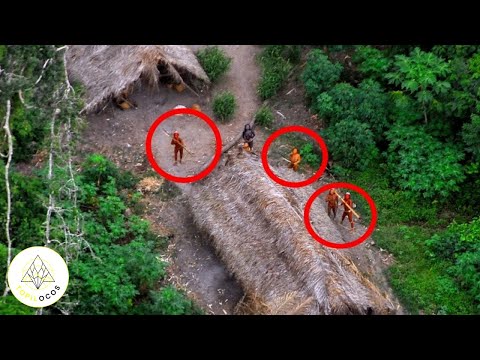
The Amazon is home to some of the last uncontacted tribes on Earth. Their existence, shrouded in mystery and often protected by vast, inaccessible territories, poses profound anthropological and ethical questions. However, there are also accounts of groups who have vanished seemingly without a trace, leaving behind abandoned settlements and no indication of their fate.

While environmental factors, inter-tribal conflicts, or disease can account for some disappearances, the abrupt nature of others is unsettling. Are these simply extreme cases of assimilation or displacement, or could there be factors at play—perhaps related to the other anomalies on this list—that contribute to these inexplicable vanishings? Documenting and understanding these groups, ethically and respectfully, is crucial not only for their preservation but for understanding the full spectrum of human experience within this unique environment.

Anomalous Flora and Fauna: Beyond Biological Classification

The Amazon's staggering biodiversity is well-documented, but whispers persist of species and botanical anomalies that defy current scientific classification. Tales of plants with unexplainable healing properties, creatures exhibiting unusual intelligence or physical attributes, and even flora that seems to react to human presence in sentient ways are part of the jungle's lore.

While many such accounts can be attributed to misidentification or exaggeration, the sheer scale of undiscovered species in the Amazon suggests that truly anomalous findings are possible. The challenge lies in rigorous scientific exploration and classification, moving beyond anecdotal evidence to empirical study. The potential for discovering entirely new biological principles or organisms is immense, a frontier that continues to beckom speculative investigation.

The Amazon's 'Black Holes': Areas of Extreme Magnetic or Gravitational Anomaly

Reports from pilots and surveyors occasionally mention areas within the Amazon where navigation equipment malfunctions erratically, compasses spin wildly, and GPS signals become unreliable. These zones are sometimes referred to as 'black holes' or areas of magnetic interference.

While localized magnetic anomalies can be explained by rich mineral deposits, the scale and consistency of disruption in some reported areas suggest something more. Could these be linked to unusual geological structures, subterranean metallic concentrations, or perhaps even phenomena related to Earth's magnetic field that we do not yet fully understand? A systematic mapping of electromagnetic and gravitational fields across the basin could reveal patterns that science cannot currently explain, moving these 'black holes' from folklore to tangible anomalies worthy of study.

The 'Whispering River' Phenomenon: Paranormal Flow or Acoustic Illusion?

Certain remote tributaries of the Amazon River are rumored to exhibit peculiar acoustic properties, where the sound of the flowing water is said to carry distorted voices, whispers, or even coherent messages, particularly during specific atmospheric conditions or times of day.

"The jungle itself seems to conspire, its natural acoustics playing tricks on the mind, or perhaps... revealing a deeper, unseen communication channel."

This phenomenon often intersects with indigenous legends of river spirits or ancient guardians communicating through the water. Scientifically, it could be explained by unique topographical features creating peculiar echoes and sound reflections. However, the consistent anecdotal reports of intelligible words or phrases being carried by the water's flow invite an investigation into potential acoustic resonance or even infrasound effects on the human psyche. Capturing and analyzing audio recordings from these specific river sections with advanced equipment is the only way to move past speculation.

Veredicto del Investigador: The Unyielding Veil of Mystery

After meticulously sifting through the available data, testimonies, and historical records concerning the Amazon's enigmas, the verdict remains consistent: the veil of mystery is not only intact, but it appears to grow thicker with every unanswered question. We can attribute many phenomena to misidentification, psychological stress, or the sheer power of nature and isolation. The 'Lost City of Z' might be a confluence of historical fragments, the Mapinguari a robust legend born from sightings of known, albeit elusive, fauna, and anomalous sounds mere tricks of acoustics or atmospheric conditions.

However, the persistent patterns, the corroborating accounts from disparate sources, and the sheer scale of the unknown within the Amazon compel us to maintain an analytical, yet open, stance. The sheer biodiversity yet to be discovered hints at biological marvels, and the documented UAP sightings across the globe, including this region, cannot be dismissed wholesale without comprehensive investigation. The challenge is that the very environment that conceals these mysteries also makes their empirical study incredibly difficult and dangerous. The Amazon does not yield its secrets easily. What we have presented are not mere curiosities, but complex anomalies that demand continued, rigorous, and often dangerous, investigation. The jungle guards its secrets fiercely, and our understanding remains a preliminary sketch on an immense, uncharted canvas.

El Archivo del Investigador

To truly grasp the scope and depth of the Amazon's mysteries, a foundational understanding of related fields is essential. Consider these resources as vital additions to your investigative toolkit:

  • Books:
    • "The Lost City of Z: A Tale of Deadly Obsession in the Amazon" by David Grann. While a historical account, it delves deeply into the allure and dangers of Amazonian exploration.
    • "The Green Inferno: The Terrifying True Story of a Lost Expedition in the Amazon" by Walter MacCormac. Offers firsthand accounts of psychological and environmental challenges.
    • Works by Charles Fort, particularly "The Book of the Damned," which catalogs a vast array of unexplained phenomena that may parallel some Amazonian anomalies.
  • Documentaries:
    • "Amazon Alive" (various series) - While focused on biodiversity, these often touch upon the unexplored and unknown.
    • Documentaries on UAP sightings might offer contexts for aerial anomalies observed over the region.
    • Investigative documentaries on lost civilizations or cryptids, though often sensationalized, can provide leads for further research.
  • Platforms for Deeper Dives:
    • Gaia.com: Often features content exploring fringe science, ancient mysteries, and anomalous phenomena, some of which may touch upon South American legends.
    • Academic Journals (via JStor, Google Scholar): Search for anthropological studies on uncontacted tribes, geological surveys of the Amazon basin, and reports on anomalous geophysical phenomena.

Protocolo de Investigación: Mapping the Unknown

Investigating phenomena in a region as vast and challenging as the Amazon requires a multi-faceted approach and a robust research protocol:

  1. Environmental Baseline Analysis: Before investigating specific anomalies, establish a baseline for natural phenomena. This includes detailed audio recordings of ambient jungle sounds, electromagnetic field readings from various locations, and comprehensive geological surveys of the area to identify potential natural explanations for anomalies.
  2. Corroboration of Testimonies: Collect and cross-reference accounts from multiple witnesses, including indigenous elders, local guides, and scientific researchers. Focus on consistency in details regarding location, timing, sensory input (visual, auditory, olfactory), and the perceived nature of the phenomenon.
  3. Advanced Sensory Recording: Utilize specialized equipment beyond standard cameras and audio recorders. This includes:
    • High-sensitivity directional microphones and parabolic microphones for capturing faint or distant anomalous sounds.
    • Infrared and thermal imaging cameras to detect heat signatures that may not be visible to the naked eye.
    • Geiger counters and EMF meters calibrated for diverse electromagnetic signatures, particularly in areas suspected of magnetic anomalies.
    • Ground-penetrating radar (GPR) and Lidar for mapping subsurface structures or hidden terrain features.
  4. Geophysical Surveys: Conduct systematic surveys for magnetic, gravitational, and seismic anomalies. Utilize portable magnetometers, gravimeters, and seismographs to map potential geologically unusual areas.
  5. Bio-acoustic Analysis: Analyze recorded soundscapes for non-biological or unusual patterns. Employ digital signal processing to identify frequencies, rhythms, or signatures that do not conform to known animal vocalizations or environmental sounds.
  6. Anthropological Contextualization: Consult with anthropologists and ethnobotanists familiar with the region to understand the cultural significance of legends and oral histories. Differentiate between symbolic narratives and potentially factual accounts of anomalous events.
  7. Ethical Data Acquisition: Ensure all research, especially involving uncontacted peoples or sensitive ecological zones, adheres to strict ethical guidelines and obtains necessary permits. Prioritize safety and minimal environmental impact.

Preguntas Frecuentes

Q1: Are all Amazonian mysteries attributable to natural causes or misidentification?

While a significant portion of reported phenomena can be explained by natural causes, psychological factors, or misidentification, the sheer volume and persistence of certain anomalies—like consistent UAP sightings and unexplained acoustic events—suggest that a small percentage may remain genuinely unexplained by current scientific understanding.

Q2: Is it safe to explore these mysterious areas of the Amazon?

Exploring remote and uncharted areas of the Amazon is extremely dangerous due to wildlife, disease, treacherous terrain, and the potential for encounters with uncontacted tribes. Such expeditions should only be undertaken by highly experienced professionals with proper planning, equipment, and adherence to safety protocols.

Q3: What is the most compelling piece of evidence for an Amazonian mystery?

The most compelling "evidence" often lies in the cumulative weight of consistent anecdotal reports corroborated across different cultures and time periods, particularly regarding phenomena like the Mapinguari and anomalous aerial sightings. However, for scientific validation, empirical data and testable hypotheses are still paramount.

Q4: How can I contribute to investigating these mysteries?

Amateur investigation is extremely challenging and often ill-advised due to safety concerns. However, you can contribute by supporting reputable research organizations, documenting any unusual phenomena you personally witness with detailed notes and recordings, and promoting critical thinking and evidence-based analysis of all paranormal claims.

Your Field Mission: Charting Local Legends

The true mysteries often lie closest to home. Your mission, should you choose to accept it, is to become an investigator of your own local lore. Identify a local legend, a purportedly haunted site, or an unexplained local event that has been passed down through generations in your community. Document everything you can:

  • Gather Testimonies: Speak to long-time residents, local historians, or family members who might have firsthand accounts or knowledge of the legend. Record these conversations (with permission).
  • Research Local History: Visit local archives, libraries, or historical societies to find any documented evidence, newspaper clippings, or official records pertaining to your chosen mystery.
  • Observe and Document: If the mystery involves a specific location, visit it at different times of day and night. Note any unusual sensory experiences (sounds, smells, visual phenomena, feelings). Use recording equipment discreetly if you deem it appropriate and safe.
  • Analyze Your Findings: Compare the testimonies with historical documents and your own observations. Look for consistencies, contradictions, and potential explanations (both mundane and anomalous).

Share your findings in the comments below. Did you uncover a forgotten story? Did your investigation yield any intriguing anomalies? Let's build a collective archive of the unexplained, one community at a time.

alejandro quintero ruiz is a veteran field investigator dedicated to the analytical examination of anomalous phenomena. His approach combines methodological skepticism with an open mind to the inexplicable, always seeking the truth behind the veil of reality. With years of experience traversing diverse landscapes and confronting the unknown, he brings a pragmatic yet deeply curious perspective to the world's most perplexing mysteries.

The Amazon rainforest remains a testament to the vast realms of the unknown. Its secrets are not merely geographical, but existential. As we continue to explore its depths, both literally and analytically, we must remain prepared for the possibility that the most profound discoveries lie just beyond the edge of our current understanding.