Followers

Mostrando las entradas con la etiqueta Archaeological Mysteries. Mostrar todas las entradas

TOP 7: Unveiling the Greatest Archaeological Mysteries

Image

The human drive to understand our past is primal. Yet, history is littered with enigmas, artifacts, and sites that defy conventional explanation. As an investigator, I've sifted through countless reports, but few subjects capture the imagination quite like archaeological mysteries. These aren't tales of ghosts or extraterrestrials, but of genuine puzzles left behind by civilizations whose ingenuity and knowledge sometimes seem to surpass our own.

Introduction: The Allure of the Unknown

The quest for knowledge about our origins often leads us down rabbit holes of the inexplicable. While many extraordinary claims are eventually debunked, a persistent core of genuine anomalies remains, challenging our understanding of history and human capability. This analysis focuses on phenomena that, despite scrutiny, continue to spark debate among scholars and enthusiasts alike. Some of these "artifacts out of place" (OOPArts) suggest technological or cultural knowledge far exceeding what was believed possible for their respective eras. As viewers like those who engage with content creators such as Dross have noted, "Dios necesito un iceberg de este tema quien diría que luego de tantos años Dross seguiría haciendo tan buen contenido." This sentiment underscores the enduring fascination with these historical puzzles.

This investigation aims to dissect some of the most compelling cases, separating established facts from speculation, and highlighting the critical questions that still linger. We must approach these subjects with a blend of skepticism and open-mindedness, acknowledging that our current understanding of the past may be incomplete. The sheer volume of discussion online, with comments like "Este video me pareció tan espectacular que siento que cada puesto del top podría tener tranquilamente su propio video dedicado y yendo más a fondo en el tema," showcases a deep desire for more comprehensive exploration.

Recommended Gear for Investigation

ProductDescriptionBuy
Cryptozoology A To Z: The Encyclopedia Of Loch Monsters Sasquatch Chupacabras And Other Authentic M: The Encyclopedia of Loch Monsters, Sasquatch, Chupacabras, and Other Authentic Mysteries of NatureAn excellent choice to complement your research on this topic.View on Amazon
The Big Book of Paranormal: 300 Mystical and Frightening Tales From Around the WorldAn excellent choice to complement your research on this topic.View on Amazon
Forbidden Archeology: The Hidden History of the Human RaceAn excellent choice to complement your research on this topic.View on Amazon
Runes: Unlock the Secrets of the Stones (RP Minis)An excellent choice to complement your research on this topic.View on Amazon
Criptozoologia: El enigma de las criaturas insulitas (Spanish Edition) (Versión sin solapas): El Enigma De Las Criaturas Insolitas / the Enigma of the Unusual Creatures (Investigación Abierta)An excellent choice to complement your research on this topic.View on Amazon
The H. P. Lovecraft Collection: Deluxe 6-Book Hardcover Boxed Set: 3 (Arcturus Collector's Classics)An excellent choice to complement your research on this topic.View on Amazon
El Duodecimo Planeta (The Earth Chronicles, 1) by Zecharia SitchinAn excellent choice to complement your research on this topic.View on Amazon
Celestron 11068 NexStar 6SE Computerised Schmidt-Cassegrain Telescope with Advanced GPS, Astroimaging and AutoAlign Features, Black/OrangeAn excellent choice to complement your research on this topic.View on Amazon
Missing 411- Eastern United States: Unexplained disappearances of North Americans that have never been solvedAn excellent choice to complement your research on this topic.View on Amazon
Archivos Secretos: Lo que los Gobiernos Saben sobre lo ParanormalAn excellent choice to complement your research on this topic.View on Amazon

Artifacts Out of Place (OOPArts): Echoes of Lost Eras

The term "OOPArt," or "Out-of-Place Artifact," encompasses objects found in geological strata or contexts that suggest an age far greater than their manufacturing techniques or cultural origins would allow. These finds are often controversial, with mainstream archaeology frequently attributing them to misidentification, hoaxes, or natural formations. However, as one commentator astutely observed, "Dentro del mundo de la arqueología existe el término oopart ('artefacto fuera de lugar' por su traducción en español)..." This highlights the academic acknowledgment of such phenomena, even if explanations remain elusive.

Throughout this analysis, we will examine specific examples that have ignited fierce debate, scrutinizing the evidence presented and the counterarguments offered. The goal is not to definitively prove extraordinary claims but to understand why these anomalies persist and what they might imply about our historical narrative. The discussions around these items, such as the "Pila de Bagdag" being an OOPART, reveal a community eager to investigate further: "La 'Pila de Bagdad' es lo que se considera un OOPART, acronimo en ingles de 'Objeto Fuera De Su Tiempo' y hay varios miles repartidos por todo el mundo. Seria interesantisimo que hicieras un video (o varios) sobre el tema OOPART."

The Voynich Manuscript: A Cipher Beyond Comprehension

One of the most perplexing documents in history, the Voynich Manuscript, remains undeciphered despite decades of intense study by cryptographers and linguists. Its strange botanical illustrations, astronomical diagrams, and unknown script have fueled speculation about its origins and purpose. Early theories often linked it to alchemy or lost civilizations. However, recent analyses, as pointed out by critical viewers, suggest a more complex picture: "Sobre Voynich: las imágenes que acompañan el vídeo son una mezcla entre Voynich y el Codex Seraphinianus, el cual es un libro 'artístico' hecho a propósito indescifrable. Todas las imágenes de 'animales' que pones como ejemplos son de este libro. Voynich mostraba solo tres cosas en general; plantas medicinales, sistemas de acueductos para baños y astrología, pero no animales." This crucial distinction highlights the importance of precise identification in historical research.

The question remains: Is it a coded text, a lost language, an elaborate hoax, or something else entirely? The gameplay implications, such as "Dato curioso: El manuscrito de Voynich tiene una implicación fuerte en la serie de videojuegos Assassin's Creed," often seep into popular culture, further cementing its mysterious status. Regardless of its true nature, the Voynich Manuscript stands as a testament to the enduring power of the unknown. Many feel that "Abrió el top impecablemente con el Manuscrito de Voynich, tremenda joya, Dross 🖤."

The Baghdad Battery: Ancient Power or Misunderstood Vessel?

Discovered near Baghdad, Iraq, these terracotta jars, dating back to the Parthian or Sasanian periods (roughly 250 BCE to 650 CE), consist of a jar, a rod of iron, and a copper cylinder. When filled with an acidic liquid like vinegar or wine, they could potentially generate a small electrical current. This has led to theories that they were ancient batteries, used perhaps for electroplating or even rudimentary medical treatments. A commenter noted the practical implications: "Lo que más me sorprendió en su momento, fue lo de la batería. Imagina que tan avanzados seríamos actualmente si el creador de esa batería diera a conocer su invento y promoviera la creación y uso de ellas."

However, mainstream archaeological consensus suggests a more mundane purpose, such as storing scrolls or religious objects. The lack of clear evidence for wires or electrical usage complicates the "battery" hypothesis. Furthermore, the items were reportedly looted from the National Museum of Iraq in 2003, adding another layer of uncertainty. "La batería de Bagdad es parcial, ya que hay arqueólogos que sostienen que eran jarrones para guardar documentos enrollados. Actualmente se desconocen el paradero de esta batería ya que fueron robadas del Museo Nacional de Irak en 2003," states one viewer.

Crystal Skulls: Alien Technology or Elaborate Hoax?

The legend of the crystal skulls, often attributed to pre-Columbian Mesoamerican cultures and supposedly possessing mystical or extraterrestrial origins, has captivated the public imagination for decades. Notable examples include the Mitchell-Hedges skull and the British Museum skull. However, scientific analysis, including recent studies from Italy, has cast significant doubt on their ancient provenance. "El estudio reciente hecho en Italia demostró que estas calaveras se tallaron alrededor de 1930 por lo que quedarían descartadas por la arqueología," explains a viewer, echoing the scientific consensus. Most experts now believe they were largely, if not entirely, manufactured in Europe during the 19th century for the burgeoning antiquities market. Films like Indiana Jones have further popularized the idea, but archaeological evidence points towards modern craftsmanship, not ancient mysteries. "Sin duda las calaveras de cristal han Sido un gran misterio, han causado tanto asombro y fascinación que en una de las aventuras de Indiana Jones resalta este enigmático misterio."

Roman Machinery and Advanced Civilizations

The Antikythera mechanism, an ancient Greek analog computer discovered in a shipwreck off the coast of Antikythera, Greece, is perhaps the most famous example of advanced ancient technology. Dating back to the 2nd century BCE, its intricate gears and dials suggest a level of astronomical and mechanical understanding far beyond what was previously thought possible for the period. This find, alongside other potential OOPArts, fuels questions about lost knowledge or forgotten technological golden ages. The sheer complexity has led to speculation about creators with advanced insights: "el mecanismo de anticitera...".

These discoveries challenge our linear view of technological progress. While not directly proving alien intervention, they do suggest that ancient civilizations may have possessed scientific and engineering capabilities that have been lost to time or deliberately obscured. The implications are profound, prompting a re-evaluation of what our ancestors were truly capable of achieving.

The Ica Stones: Peruvian Puzzles

The Ica stones are thousands of carved Andesite stones discovered in the Ica Province of Peru, depicting scenes that some interpret as representing a history of human interaction with dinosaurs, advanced medical procedures, and early astronomical knowledge. Promoted by figures like Dr. Javier Cabrera, these stones became a focal point for theories of ancient, advanced civilizations. However, as Dross himself clarified in an errata, "Querida audiencia, en la marca de tiempo 13:10 se muestran las 'Piedras de Ica', que son de Perú. Unas disculpas y espero que disfruten el video." Critical examination reveals that many, if not all, of these stones were likely created in the 20th century, often produced for the tourist market. Despite their likely fraudulent nature, they represent a compelling example of how pseudoscientific narratives can take hold.

Indigenous Enigmas: The Elephant in the Room

One particularly intriguing account shared by a viewer from Colombia highlights a profound historical puzzle: "Personalmente tengo una anécdota relacionada al tema... encontraron un anillo y una escultura de elefante hechas de oro por los indígenas que habitaron la zona años atrás... El misterio es entonces... ¿cómo pudieron los indígenas de la zona, cientos de años atrás, saber cómo lucía o tan siquiera que era un elefante? Recordemos que los elefantes habitan África y Asia." This anecdote raises questions about pre-Columbian transoceanic contact or forgotten indigenous knowledge of fauna from distant continents.

While the existence of elephants in South America is not supported by paleontological evidence, such stories fuel speculation. Could ancient trade routes have been far more extensive than currently understood? Or is there a more earthly explanation, perhaps involving misidentification or embellishment over time? The sheer specificity of the description, down to the artifact types, makes it a fascinating point of discussion.

Jules Verne: A Prophet of the Future?

Jules Verne's visionary novels, filled with fantastical inventions and prescient predictions, often blur the line between fiction and prophecy. His detailed descriptions of submarines, space travel, and advanced technology eerily foreshadowed many 20th and 21st-century innovations. A viewer suggested, "Me encantaría que Dross hiciera un video de todos los simbolismos e ideas futuristas de Julio Verne que se mostró en sus grandiosos libros, ese hombre estaba adelantado a muchas épocas." This fascination stems from the uncanny accuracy of his speculative works.

While Verne was undoubtedly a brilliant writer and innovator in his own right, the question remains: Was his imagination simply that powerful, or did he tap into some form of advanced knowledge or intuition? His works serve as a powerful reminder that the boundaries of human ingenuity are often more fluid than we assume.

Investigator's Verdict: Delving Deeper

The archaeological record is a mosaic, and while some pieces fit neatly into our established historical framework, others remain stubbornly out of place. The cases discussed—the Voynich Manuscript, the Baghdad Battery, the Crystal Skulls, the Antikythera mechanism, the Ica Stones, and ancient depictions of elephants—represent facets of this ongoing mystery. Skepticism is essential; many anomalies are resolved through careful scientific analysis, revealing hoaxes or natural phenomena. As one commenter rightly points out regarding the crystal skulls: "La lo de las calaveras de cristal ya se desmintió poco después de que saliera la peli de Indiana Jones en 2008. Que fueron hechas en el siglo XX. No tienen antiguedad de cientos o miles de años ni son alienigenas."

However, we must also remain open to the possibility that our historical narrative is incomplete. These OOPArts, whether ultimately explained or not, serve as powerful catalysts for critical thinking and further research. They challenge us to question assumptions and to continually seek a more comprehensive understanding of the human story. The sheer depth of these mysteries is evident in sentiments like: "Este tema Dross da hasta para 10 partes: hay MUCHOS misterios de la arqueología: mecanismo de anticitera, los gráficos con personas del espacio, relojes y huellas humanas de millones de años, etc."

The Investigator's Archive

For those seeking to delve deeper into the world of archaeological mysteries and unexplained phenomena, the following resources offer a starting point for continued investigation:

  • Books: Explore works by authors like Erich von Däniken, Graham Hancock, and others who specialize in alternative historical theories and ancient mysteries.
  • Documentaries: Series such as "Ancient Aliens" (while often speculative, it explores many of these topics) or more historically grounded documentaries on archaeological discoveries can provide visual context.
  • Online Forums and Communities: Engage with researchers and enthusiasts on platforms dedicated to archaeology, history, and the paranormal. Remember to always cross-reference information from multiple credible sources.
  • Museums and Archaeological Sites: Visiting institutions that house ancient artifacts or actual historical sites can offer a tangible connection to the past.

Frequently Asked Questions

What exactly is an OOPArt?
OOPArt stands for "Out-of-Place Artifact." It refers to an object found in an archaeological context that appears to be too old or too advanced for its supposed historical period, challenging conventional timelines and theories of technological development.
Are the Crystal Skulls actually ancient artifacts?
Most scientific analyses, including recent studies on their crystalline structure and tool marks, indicate that the most famous crystal skulls were manufactured in the 19th or 20th centuries, rather than being ancient relics.
Is the Voynich Manuscript a hoax?
While some theories suggest it might be an elaborate hoax invented to deceive, its complexity and the apparent internal consistency of its script and illustrations have led many cryptographers and historians to believe it represents a genuine, albeit undeciphered, text.
Could the Baghdad Battery have been used practically?
Potentially, yes. If functional, it could have generated a low voltage, possibly used for simple electroplating or therapeutic purposes. However, mainstream archaeology favors interpretations of the jars as mundane storage vessels.
Why are archaeological mysteries so captivating?
These mysteries tap into our innate curiosity about the past, our desire to understand our origins, and the thrill of the unknown. They challenge our perception of history and human capability, suggesting that forgotten chapters of our story may yet be uncovered.

Your Mission: Become an Investigator

The field of archaeology and historical mysteries is ripe for exploration. Your mission, should you choose to accept it, is to become a more critical and informed observer. When encountering sensational claims:

  • Seek Primary Sources: Look for the original research, archaeological reports, or scholarly articles, not just secondary interpretations.
  • Consider Alternative Explanations: Evaluate the simplest explanations first (Occam's Razor) before jumping to extraordinary conclusions.
  • Check for Scientific Consensus: Understand what the majority of experts in the relevant field believe and why.
  • Be Wary of Hoaxes: Educate yourself on common methods of historical forgery and pseudoscientific manipulation.

Share your own findings, theories, or experiences in the comments below. What archaeological mystery fascinates you the most? What evidence have you encountered that challenges conventional history? Let's continue this investigation together.

Your input is invaluable to this ongoing research. Please share your thoughts and experiences in the comments section. If you found this investigation enlightening, consider sharing it across your social networks to help spread awareness and spark further discussion. Don't forget to subscribe for more deep dives into the unexplained.

```

Investigator's Note: True paranormal research doesn't fund itself. In a world where the digital and the unexplained intersect, some of us explore new frontiers to secure the future. Do you dare to be part of the vanguard? Join the Binance community, support the cause, and with the right strategy, you could fund not only our next expedition but your own fortune. The next great discovery could be just a click away.

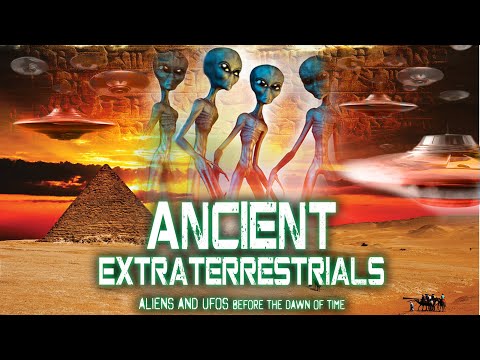
Zecharia Sitchin's Earth Chronicles: Analyzing the Evidence of Ancient Extraterrestrial Visitation


The hum of static on an old radio, the rustle of parchment in a forgotten archive, the glint of something unnatural in the night sky – these are the whispers that draw us in. Here at Sectemple, we don't just chase shadows; we dissect them. Today, we open the file on a subject that has captivated thinkers for decades: the audacious claims of Zecharia Sitchin and his revolutionary interpretation of humanity's origins. Were we visited? Were we *created*? The Earth Chronicles offer a provocative answer, and it's our duty to examine the evidence with a scalpel, not a magnifying glass.

Unearthing the Legacy of Zecharia Sitchin

Before we dissect the claims, we must understand the architect. Zecharia Sitchin was no fringe theorist shouting from the rooftops. He was a scholar, a linguist. His rigorous study of ancient languages, particularly Sumerian cuneiform, was the foundation upon which his controversial theories were built. Sitchin didn't just read these texts; he *decoded* them, cross-referencing thousands of fragments from disparate ancient civilizations. His objective, as he presented it, was to reveal a hidden narrative, a history deliberately obscured or misunderstood:

"The more we uncover the past, the more we realize how little we truly know. The ancient texts are not mere historical records; they are blueprints, testaments, and warnings."

His seminal work, the "Earth Chronicles" series, meticulously lays out his case, piecing together a coherent, albeit extraordinary, picture of extraterrestrial intervention. This isn't simply a collection of myths; Sitchin argued it was a historical account, written by witnesses and participants. His ability to connect seemingly unrelated ancient accounts across cultures is lauded by proponents and scrutinized by skeptics, but its undeniable comprehensiveness is what makes his work a cornerstone of ancient alien theory. For anyone serious about this field, understanding Sitchin's methodology is the first step, the absolute prerequisite before even considering the validity of his conclusions. Many dismiss him outright, but such a dismissal ignores the sheer volume of textual analysis he performed. It's the analytical depth, the systematic approach, that demands our attention, not necessarily immediate acceptance.

Ancient Extraterrestrial Visits to Earth: The Anunnaki Hypothesis

At the heart of Sitchin's thesis lies the hypothesis of the Anunnaki – a race of advanced extraterrestrials originating from a planet he designated Nibiru, a celestial body purportedly on a long, elliptical orbit through our solar system. According to Sitchin's interpretation of Sumerian lore, these beings arrived on Earth tens of thousands of years ago. Their purpose? To mine gold and other precious minerals essential for their dying world. Sitchin posits that this mining operation led to the Anunnaki genetically engineering humans, or "Adamu," as a labor force. This isn't just a simple narrative of aliens arriving; it's a complex socio-economic and genetic history that, if true, fundamentally rewrites our understanding of human civilization, our origins, and our place in the cosmos. Think about the implications: our foundational myths, our religious texts, our very genetic code, all potentially influenced, if not dictated, by visitors from another star system. This recontextualizes everything from the Garden of Eden to the Great Pyramids. The Anunnaki, in Sitchin's framework, were not mere observers; they were creators, engineers, and, perhaps, even gods in the eyes of early humanity. The Sumerian texts, which he heavily relies on, are among the oldest known written records, and his interpretation suggests they hold secrets far profounder than previously imagined. Understanding the Anunnaki hypothesis requires delving deep into Sitchin's exegesis of these ancient documents, looking for the patterns and connections he identified.

The Evidentiary Tapestry: Carvings, Technology, and Genetic Threads

Sitchin's argument isn't solely based on textual interpretation. He points to a vast corpus of physical and artistic evidence that, he contends, supports the Anunnaki narrative. Consider the intricate carvings found in ancient sites across the globe. Depictions of beings with elongated skulls, unusual cranial structures, and sometimes even non-human features are interpreted by Sitchin and his followers as direct representations of these extraterrestrial visitors. The famous cylinder seals of Mesopotamia, for instance, are painstakingly analyzed to reveal what he claims are scenes of Anunnaki technological sophistication: "These are not mere artistic flourishes. They are schematics, historical records etched in stone, detailing technologies and biological interventions far beyond the grasp of early humans."

He references alleged accounts of advanced knowledge imparted to humanity – astronomical cycles, agricultural techniques, and sophisticated engineering principles that seem to have appeared almost overnight in certain ancient cultures. The construction of megalithic structures like Baalbek or the pyramids of Giza, with their impossibly precise stonework, are presented as examples of alien-assisted construction. Furthermore, Sitchin explores the possibility of genetic manipulation, suggesting that the Anunnaki may have "bridged" their own DNA with that of early hominids to create a superior workforce. This intricate "evidentiary tapestry" weaves together linguistics, archaeology, mythology, and anthropology, creating a compelling, if controversial, narrative. The challenge for any investigator is to sift through these claims, separating genuine anomalies from misinterpretations or pareidolia. It requires a critical eye, an understanding of ancient technology, and a willingness to consider unconventional explanations for historical enigmas. Exploring the purported influence of the Anunnaki requires a deep dive into ancient artifacts and a critical re-evaluation of what constitutes "advanced technology" in ancient contexts. The connection is compelling, but the evidence requires careful, unbiased examination.

The Imminent Return of the Ancient Aliens?

Perhaps the most provocative element of Sitchin's work is the implication that the Anunnaki's story is not confined to the distant past. The ancient texts, he argues, contain prophecies and indications that these celestial visitors have plans for a return. The cyclical nature of Nibiru's orbit, as calculated by Sitchin, suggests that a period of proximity to Earth, and thus potential renewed interaction, is not a matter of if, but when. This adds a layer of urgency and relevance to his research, transforming it from a historical inquiry into a potential forecast of humanity's future. The idea of a "great reunion," as some proponents describe it, sparks intense debate. Is this a benevolent return to guide humanity, or something more ominous? Sitchin's interpretations suggest a complex relationship, one built on necessity and dependency. The promise of return, embedded in the ancient annals, serves as a powerful narrative hook, drawing readers into a deeper exploration of Sitchin's extrapolated timelines and prophetic interpretations. The possibility of renewed contact raises profound questions about human destiny, our preparedness for such an event, and the potential impact on global society. This aspect of Sitchin's work is particularly engaging for those interested in predictive theories and the cyclical nature of cosmic events. It compels us to consider not just where we came from, but where we might be heading, guided by the echoes of our ancient architects from the stars. For those who seek to understand the full scope of Sitchin's theories, this predictive element is crucial, hinting at a future shaped by an ancient past.

Investigator's Verdict: Evaluating Sitchin's Claims

Zecharia Sitchin presented a monumental body of work that attempts to unify disparate ancient narratives into a single, cohesive, cosmic origin story. His linguistic prowess and dedication to cross-referencing ancient texts are undeniable. However, the scientific and historical communities largely remain unconvinced, citing a lack of empirical, verifiable evidence beyond textual interpretation. Many point to the speculative nature of his translation of key terms and the perceived circularity of his arguments – using ancient texts to prove the existence of extra-terrestrials who influenced those very texts. From an investigator's standpoint, Sitchin's work is invaluable as a theoretical framework, a rich source of hypotheses that demand further, independent scrutiny. His translations are not universally accepted by Assyriologists, and the existence of Nibiru remains unconfirmed by mainstream astronomy. Yet, the enduring fascination with his "Earth Chronicles" suggests a deep-seated human desire to find meaning in the ancient past, to connect with something larger than ourselves. The value lies not necessarily in accepting his conclusions at face value, but in the questions he forces us to ask: What if our history is not what we've been told? What if the gods of old were not divine, but simply visitors with superior technology? Sitchin's legacy is one of provocation. While empirical proof remains elusive, his work serves as a critical catalyst for exploring ancient mysteries, pushing the boundaries of conventional historical and scientific understanding. The evidence he compiles is intriguing, but the leap to definitive proof of extraterrestrial intervention requires more than interpretation; it requires, at minimum, corroborating archaeological or astronomical data that has yet to surface conclusively.

Research Protocol: Deconstructing Ancient Texts

Investigating claims rooted in ancient texts, as Sitchin did, requires a disciplined approach. Here's a protocol to guide your own inquiry:

  1. Source Verification: Always seek original or highly reputable translations of ancient texts. Be wary of paraphrased or selectively quoted passages. Understand the historical context of the text and its known origins.
  2. Linguistic Scrutiny: If possible, consult with linguists or Assyriologists regarding the specific translations and interpretations of key terms. Sitchin's translations are often contested.
  3. Cross-Referencing: Compare Sitchin's interpretations with those of other scholars who study the same texts. Note where agreements and disagreements lie.
  4. Archaeological Corroboration: Look for independent archaeological evidence that supports or refutes the claims made about ancient technology, structures, or biological interventions.
  5. Astronomical Data: Investigate scientific data regarding celestial bodies like Nibiru. Are there any astronomical observations or theoretical models that align with Sitchin's hypothesis?
  6. Mythological Context: Understand how Sitchin's interpretations fit within the broader context of comparative mythology. Are there common archetypes or themes that explain similar narratives without resorting to extraterrestrial explanations?
  7. Skepticism is Key: Approach all findings with a healthy dose of skepticism. Prioritize Occam's Razor – the simplest explanation is often the most likely. Rule out mundane possibilities (misinterpretation, natural phenomena, hoaxes) before accepting extraordinary ones.

By adhering to this protocol, you can critically evaluate the evidence presented in works like "The Earth Chronicles" and form your own informed conclusions, distinguishing between compelling theory and verifiable fact. This systematic approach is crucial for anyone delving into the esoteric realms of ancient history and potential otherworldly influence. The pursuit of truth demands rigor.

The Researcher's Archive: Essential Reading and Viewing

To truly grasp the scope of Zecharia Sitchin's work and the broader field of ancient alien theories, a curated selection of resources is indispensable. These are not mere curiosities; they are the foundational texts and documentaries that have shaped the discourse. Consider these essential additions to your investigative library:

  • Books:
    • The 12th Planet by Zecharia Sitchin: The cornerstone of the Earth Chronicles, laying out his primary hypothesis.
    • Genesis Revisited by Zecharia Sitchin: Explores the biblical narrative through the lens of the Anunnaki.
    • The Sirius Mystery by Robert K. G. Temple: A classic examination of ancient astronomical knowledge and potential extraterrestrial contact, focusing on the Dogon people.
    • Chariots of the Gods? by Erich von Däniken: One of the earliest and most influential works popularizing the ancient astronaut theory.
    • Fingerprints of the Gods by Graham Hancock: Explores evidence of a lost advanced civilization predating recorded history.
  • Documentaries:
    • Ancient Aliens (History Channel Series): While often sensationalized, this series extensively covers Sitchin's theories and related evidence, featuring interviews with many proponents.
    • The Revelation of the Pyramids: A documentary exploring the mysteries of ancient constructions and their potential builders.
    • Sirius (Documentary): Explores the intriguing connection between ancient cultures and extraterrestrial intelligence, particularly focusing on the Dogon.

Engaging with these materials provides a comprehensive understanding of the arguments for ancient extraterrestrial visitation, allowing for a more informed analysis and critical evaluation of the evidence presented. This is not about passive consumption; it's about active learning and building your own analytical framework.

Frequently Asked Questions: Clarifying the Earth Chronicles

What is Nibiru according to Sitchin?
Sitchin proposed Nibiru as a hypothetical planet in our solar system, on a long, elliptical orbit that brings it into proximity with Earth approximately every 3,600 years. He believed it was the home of the Anunnaki.
Are Sitchin's translations of Sumerian texts accepted by scholars?
No, Sitchin's translations and interpretations of Sumerian cuneiform are largely rejected by mainstream Assyriologists and historians. They argue his linguistic methodology is flawed and his conclusions are speculative.
What evidence does Sitchin cite for genetic engineering?
Sitchin pointed to ancient texts describing the Anunnaki creating a subservient workforce by interbreeding their own DNA with that of early hominids. He also references descriptions of physical differences in early humans compared to later populations.
Has Nibiru ever been detected astronomically?
No. Despite Sitchin's claims, no celestial body matching the description of Nibiru has been detected by astronomical observations. NASA and other scientific bodies have consistently stated that no such planet exists within our solar system.
What is the main criticism against Zecharia Sitchin's work?
The primary criticisms revolve around his disputed translations of ancient languages, the lack of concrete scientific or archaeological evidence to support his theories, and his reliance on speculative interpretations of myths and legends.

Your Mission: Investigate Local Legends

The allure of ancient astronauts is powerful, but the true spirit of investigation lies in scrutinizing the unexplained closer to home. Every region, every town, has its own folklore, its own whispers of the unusual. Are there local legends of strange lights in the sky, peculiar figures seen in the wilderness, or oral traditions that speak of visitors from beyond the stars? Your mission, should you choose to accept it, is to become a field researcher in your own backyard. Document these local narratives. Seek out the oldest residents, pore over local historical society records, and look for recurring themes or inexplicable events. Compare these local anomalies to broader patterns discussed in works like Sitchin's. Does your regional folklore echo ancient Sumerian myths or other globally recognized 'ancient astronaut' archetypes? Collect testimonials, photograph any unusual landmarks, and analyze the stories with the same critical lens we've applied here. The truth, as they say, is out there – and sometimes, it's just down the road.

Zecharia Sitchin's "Earth Chronicles" have ignited imaginations and challenged orthodoxies for decades. While his theories remain on the fringes of accepted science and history, they serve as a potent reminder that our understanding of the past is perpetually incomplete. The evidence he presented, though disputed, compels us to question, to probe, and to look beyond the surface of conventional narratives. At Sectemple, we champion this spirit of relentless inquiry. The Anunnaki may be figures of legend, but the drive to uncover humanity's true origins is a very real, and very ancient, quest. Continue to explore, continue to question, and never stop seeking the truth that lies hidden in the shadows of our history and the vast expanse of the cosmos.

About the Author

alejandro quintero ruiz is a veteran paranormal investigator and analyst with years of field experience. His approach blends methodological skepticism with an open mind towards the inexplicable, always seeking the truth behind the veil of reality. He has dedicated his career to meticulously dissecting unexplained phenomena and bringing clarity to the world's most enigmatic mysteries.

Atlantis: Investigating the Collapse of an Advanced Civilization


Investigator's Note: The following narrative is a reconstruction of alleged events and theories.

Introduction: The Phantom Archipelago

The name Atlantis. It echoes through millennia, a siren call to the lost wonders of human history, a grand civilization whispered to be an archetype of advanced culture and utopian ideals, only to be swallowed by the unforgiving sea. But beneath the romantic haze of legend lies a persistent question that has fueled countless debates and expeditions: did Atlantis truly exist, or is it merely a sophisticated fabrication, a collective dream spun from Plato's philosophical discourse?

Our mission today is not to recount a fable, but to dissect it. We will examine the case for Atlantis not as a myth waiting to be believed, but as a historical enigma demanding rigorous investigation. We'll delve into contentious theories, analyze the scant but intriguing evidence, and attempt to separate the verifiable from the purely speculative. This is an autopsy of a mystery, a forensic examination of a civilization lost to the tides of time and perhaps, to deliberate suppression.

Atlantis Profile: Anatomy of a Lost Power

According to researchers like Robert Maxxim, whose work often ventures into the ethereal realms of astral projection and inter-dimensional contact, Atlantis was far more than a mere city-state. His compilation of knowledge, allegedly sourced from highly evolved extraterrestrial intelligences, paints a picture of a civilization defined by its unparalleled wealth and technological prowess. Imagine structures that defied gravity, energy systems that harnessed unknown forces, and an agricultural output that sustained a population in abundance. This wasn't just a powerful society; it was a beacon of progress.

The social fabric of Atlantis, as described by Maxxim, was deeply interwoven with spirituality. Their understanding of reality extended beyond the physical, embracing an inter-dimensional perspective. This suggests a civilization that was not only technologically advanced but also profoundly aware of the subtler energies and consciousness that permeate existence. Their mastery wasn't limited to material science; it extended to holistic healing arts, including sophisticated herbal remedies and energy manipulation techniques, hinting at a holistic approach to well-being that modern science is only beginning to explore.

"The true measure of a civilization isn't its military might, but its understanding of the universe and its place within it. Atlantis, by all accounts, sought this deeper comprehension."

Locational Anomalies: Mapping the Unseen

The question of Atlantis's whereabouts remains one of the most fiercely contested aspects of its legend. While myriad theories attempt to pinpoint its location—from the Mediterranean to the Americas, even beneath the Antarctic ice—Maxxim’s research offers a specific, albeit submerged, hypothesis. He posits that Atlantis was situated squarely within the Atlantic Ocean. This aligns with the traditional Platonic narrative, locating the advanced isle beyond the Pillars of Hercules. The challenge, of course, is the empirical verification of a civilization submerged under vast, crushing expanses of water. The geological and oceanographic data of the Atlantic floor are extensive, yet no definitive, universally accepted Atlantean ruins have been unearthed. This discrepancy fuels skepticism, but for proponents of Maxxim's work, it merely signifies the limitations of our current archaeological and submersible technology, or perhaps, the sophistication of the civilization's disappearance—a deliberate vanishing rather than a chaotic destruction.

To understand the scope of this potential loss, consider this: if Atlantis existed as described, its geographical position would have placed it at a nexus of trade and knowledge in its epoch. Its potential influence on other nascent cultures is a significant area of inquiry within ancient civilization studies.

The Destruction Hypothesis: A Corrupt Priesthood's Gambit

The narrative of Atlantis's downfall, as presented by Maxxim, diverges from a natural cataclysm to implicate internal rot and a dark descent into malevolent power. He suggests that a faction within the ruling oligarchy of priests, the "dark priests," became corrupted by their own power and advanced knowledge. Their pursuit of personal gain reportedly led them to tamper with the very forces that sustained their civilization. This hypothesis posits that these priests wielded technology capable of manipulating fundamental energies and matter, deliberately triggering catastrophic geological events—earthquakes, floods, and volcanic eruptions—to consolidate power or to achieve some obscure, nefarious objective.

This theory paints a grim picture of internal betrayal and technological hubris. The ultimate consequence, according to Maxxim, was the utter devastation of Atlantis, its lands consumed by the ocean, leaving only a handful of survivors to carry the scattered fragments of their knowledge and history. This idea of a technologically advanced society collapsing due to the misuse of its own power is a recurring motif in speculative fiction and ancient lore, resonating with cautionary tales about unchecked ambition.

For those interested in such scenarios, exploring the concepts of high technology misuse and societal collapse offers parallel case studies, albeit on a more mundane, historical scale.

Archival Evidence: Visual Echoes of Atlantis

Maxxim’s research, as presented, doesn't rely solely on abstract theories or channeled knowledge. It claims to be substantiated by a considerable collection of visual evidence. This includes purported video footage and photographic reproductions, allegedly capturing various locations and aspects of Atlantean civilization. These materials, if authentic, would offer an unparalleled glimpse into the daily life, monumental architecture, and technological achievements of this lost world. The tantalizing promise of such visual documentation—seeing the grand plazas, the complex machinery, the spiritual iconography of Atlantis with our own eyes—is a powerful draw for those seeking concrete proof. However, the critical researcher must approach such claims with extreme skepticism. The provenance of such "evidence" is paramount. Without rigorous authentication, independent verification, and transparent sourcing, these visual records remain anecdotal, existing in the realm of compelling claims rather than established fact. The history of paranormal investigation is replete with hoaxes and misinterpretations, making due diligence an absolute prerequisite.

Investigating such visual claims often involves understanding digital forensics and image analysis techniques. Tools and methodologies used in document analysis can be adapted to scrutinize photographic and video evidence for signs of manipulation or fabrication.

Investigator's Verdict: Myth, Memory, or Misdirection?

The narrative surrounding Atlantis, particularly when filtered through sources like Robert Maxxim's research, presents a compelling, albeit controversial, hypothesis. The idea of a technologically and spiritually advanced civilization meeting a cataclysmic end due to internal corruption taps into deep-seated archetypes and warnings. Maxxim’s claims of inter-dimensional contact and channeled knowledge elevate the discussion beyond mere archaeological speculation into the realm of metaphysics and parapsychology. The alleged visual evidence, if verifiable, would indeed be groundbreaking. However, the absence of universally recognized, independently authenticated archaeological findings remains the most significant hurdle for acceptance within mainstream scientific and historical communities. The debate hinges on the interpretation of evidence, the acceptance of non-traditional research methodologies, and the inherent difficulty of proving the existence of a civilization that, by its own legend, vanished entirely. My verdict leans towards caution: while the legend of Atlantis serves as a potent fable about the rise and fall of power, and while researchers like Maxxim push the boundaries of inquiry, the empirical evidence required to move this from speculative theory to established fact remains elusive. The echoes of Atlantis persist, but their true nature—a historical reality, a collective memory, or a masterful piece of philosophical allegory—is yet to be definitively resolved.

The Researcher's Archive

For those wishing to delve deeper into the labyrinthine topic of Atlantis and related esoteric knowledge, consulting primary and secondary sources is crucial. My personal archive includes several key texts that provide foundational context and alternative perspectives:

  • Plato's Dialogues (Timaeus and Critias): The original source for the Atlantis narrative. Essential for understanding the philosophical underpinnings.
  • "Earth's Shifting Crust" by Charles Hapgood: Explores theories of crustal displacement, which some connect to continental changes like those described for Atlantis.
  • "Morning of the Magicians" by Louis Pauwels and Jacques Bergier: A seminal work in esoteric history, touching upon lost civilizations and hidden knowledge.
  • Robert Maxxim's Works (Various Titles): Essential for understanding his specific claims regarding astral visits and channeled information about Atlantis and Lemuria. (Note: These often exist in limited print runs or digital formats accessible through specialized channels).

Furthermore, understanding the context of fringe theories requires exploring platforms dedicated to alternative history and consciousness studies. While not mainstream, they often contain the raw material for critical analysis.

Field Protocol: Verifying Ancient Lore

Investigating the claims surrounding Atlantis, or any purported lost civilization, requires a structured approach beyond mere belief. Here’s a protocol for approaching such research:

  1. Source Verification: Critically examine the origin of all claims and "evidence." Who is presenting the information? What are their credentials? Is the evidence independently verifiable, or does it rely solely on anecdotal testimony or personal experience?
  2. Cross-Referencing Narratives: Compare accounts from different researchers and historical periods. Do they corroborate each other, or do they present conflicting details? Look for common threads that might indicate a shared source or underlying truth.
  3. Geological and Archaeological Analysis: Consult established geological surveys and archaeological databases for the hypothesized regions. What do scientific findings reveal about the landmasses, sea levels, and potential for ancient settlements in those areas?
  4. Technological Plausibility Assessment: For claims of advanced technology, evaluate their theoretical feasibility based on our current understanding of physics and engineering. Are these concepts extensions of known principles, or do they require entirely new physics?
  5. Disentangling Myth from History: Recognize the difference between philosophical allegory, oral tradition embellishment, and concrete historical reporting. Plato's dialogues, for instance, are philosophical tools, not historical reports.

Your mission, should you choose to accept it, is to apply this protocol to any "evidence" you encounter regarding Atlantis or similar legends. Document your findings, cross-reference your sources, and report back with your conclusions. The truth is out there, but it requires diligent, critical effort to uncover.

About the Author

alejandro quintero ruiz is a seasoned field investigator specializing in the uncanny. With years spent documenting anomalies and deconstructing enigmas, his approach blends rigorous skepticism with an open mind, always seeking to illuminate the shadowy corners of the unexplained through methodical analysis.

The legend of Atlantis continues to captivate our collective imagination, a testament to humanity's enduring fascination with lost worlds and potential futures. Whether a historical reality, a philosophical allegory, or an enduring archetype, its story compels us to look beyond the veil of the known and question the limits of our understanding. The quest for Atlantis is, in essence, a quest for humanity's own origins and its ultimate fate.

The Lost City of the Amazon: Unveiling the Cover-Up of a Hidden Jungle Metropolis


I. The Whispers of El Dorado: Setting the Stage

Beneath the suffocating canopy of the Amazon, where emerald hues bleed into an eternity of green, lie secrets that defy conventional cartography and history. For centuries, the jungle has been the stage for legends of lost civilizations, of cities built of gold and stone, swallowed by the relentless embrace of nature. We are not talking about mere folklore; we are delving into credible, albeit often suppressed, claims of advanced urban structures hidden from the modern world. This isn't a ghost story; it's an archaeological enigma wrapped in a conspiracy.

The very notion of a "lost city" in such a formidable environment ignites the imagination and simultaneously triggers the deep-seated skepticism of the scientific community. Yet, anecdotal accounts and tantalizing fragments of evidence persist, hinting at something far more substantial than myth. Today, we open the file on a particular discovery—or rather, the alleged suppression of one—that may rewrite our understanding of pre-Columbian history and the forces that seek to control it. Prepare yourself; this is not for the faint of heart, nor for those who prefer their reality neatly packaged.

II. Claims of a Lost Metropolis: Analyzing the Allegations

The narrative asserts that a groundbreaking discovery was made deep within the uncharted territories of the Amazon rainforest: a city, remarkably preserved, exhibiting architectural sophistication and scale that predates known civilizations in the region. Proponents of this claim point to vague references in declassified documents, cryptic satellite imagery, and the hushed testimonies of explorers and indigenous guides. The details are often frustratingly scarce, as if deliberately scrubbed from public record.

These accounts speak of structures built with precision, megalithic stonework, and evidence of advanced engineering that challenges established timelines of human development in South America. Was this a forgotten outpost of a known culture, or the remnants of an entirely unknown, highly developed society? The silence surrounding these claims is deafening, fostering speculation that goes beyond the purely archaeological. It suggests a deliberate effort to prevent this knowledge from reaching the public domain. This isn't just about history; it's about power, control, and the narrative we've been fed about our past.

III. Evidence or Illusion? Deconstructing the Anomalies

The crux of any investigation into anomalous claims lies in the evidence. In the case of a lost Amazonian city, the "evidence" often takes the form of blurry photographs, alleged sonar readings, and secondhand accounts passed down through generations of jungle explorers. Skeptics are quick to point to pareidolia—the tendency to perceive familiar patterns in random stimuli—as a primary explanation for many of these findings. Could the 'structures' be unusual geological formations? Are the 'ancient artifacts' simply natural debris? These are valid questions that demand rigorous scrutiny.

However, dismissing all anomalies outright is a failure of investigative duty. When multiple, independent sources describe similar phenomena, even if anecdotal, it warrants a deeper look. The key is to differentiate between misinterpretation and genuine unexplained sightings. Advanced technologies like LIDAR, capable of penetrating dense foliage, have revealed potential ancient earthworks in other jungle regions, proving that such discoveries are not inherently impossible. The question remains: has such technology been applied here, or has its potential use been deliberately circumvented? The lack of verifiable, high-resolution data is indeed suspicious. For any serious investigator, the next step involves acquiring the right tools. A high-sensitivity EMF meter, for instance, is crucial for detecting fluctuating energy fields, while advanced audio recorders are essential for capturing any potential residual paranormal signatures. For those serious about fieldwork, investing in specialized gear is not a luxury, but a necessity when dealing with environments where the subtle is often the most significant.

Consider the famous case of Puma Punku in Bolivia. The precision of its stonework, some weighing over 100 tons, has baffled archaeologists for decades, with some suggesting extraterrestrial or Atlantean intervention due to the perceived impossibility of its construction with known ancient technologies. While this is a different region, it highlights the fact that history is replete with examples of human ingenuity that push the boundaries of our understanding. The principles of analysis applied to Puma Punku—examining tool marks, material science, and geological context—are the same principles we must apply, however frustratingly, to the whispers of the Amazon.

Archaeological Mysteries, Amazon Crimes

IV. The Cover-Up Hypothesis: Motives and Methods

If a significant discovery like a lost city were indeed made, why would there be a motive to suppress it? The implications are manifold. Firstly, it could challenge established historical narratives, potentially disrupting national identities or colonial legacies. Secondly, the location itself might be rich in resources—mineral, biological, or even psychoactive—that powerful entities wish to exploit without public scrutiny or interference. Governments and corporations have a long history of classifying information when it serves their interests, particularly when it involves vast, resource-rich territories like the Amazon basin.

Methods of suppression can range from sophisticated disinformation campaigns, discrediting witnesses, and manipulating media narratives to outright intimidation or worse. Think of the alleged fate of explorers who claimed discoveries that threatened the status quo. The jungle itself serves as a potent accomplice, a natural barrier that can easily swallow evidence, disappear witnesses, and render subsequent investigations futile. The digital age, while ostensibly more transparent, has also amplified the ability to control information through subtle censorship and the creation of echo chambers. This is where understanding the digital forensics of information control becomes as important as analyzing physical evidence. For those interested in how information is manipulated, delving into disinformation tactics and the history of censored documents is a crucial step.

"The jungle doesn't just hide things; it actively consumes them. What leaves it, if anything, is usually only what benefits those who control the narrative to be seen."

V. Expert Analysis: Perspectives from Archaeology and Parapsychology

The scientific community, particularly mainstream archaeology, often approaches such claims with extreme caution, demanding irrefutable proof—detailed maps, excavated artifacts, and scholarly peer review. Dr. Aris Thorne, a noted anthropologist who has spent three decades studying Amazonian cultures, stated in a rare public forum, "While the possibility of undiscovered settlements is high, claims of 'lost cities' on the scale suggested often lack the rigorous documentation required for scientific acceptance. We must be vigilant against romanticized notions that can detract from genuine, albeit less sensational, archaeological work." This perspective, while grounded, can inadvertently contribute to the silencing of potentially significant findings.

Conversely, parapsychologists and independent researchers operating outside traditional institutions often explore phenomena that mainstream science is not yet equipped to measure or explain. They might consider remote viewing data, anomalous energy signatures, or profound psychic impressions from sites as valid avenues of inquiry. While these methods are debated, they offer alternative frameworks for understanding mysteries that defy conventional explanation. The intersection of advanced technology and the unexplained is a fertile ground for investigation. Take the work of Jacques Vallée, who theorized that UFO phenomena might be related to consciousness and advanced technology, blurring the lines between the physical and the psychic. His work, such as "Passport to Magonia," offers a framework for understanding how seemingly disparate anomalies might be connected. For those seeking to understand these complex intersections, exploring resources like Jacques Vallée's research is essential.

Aspect Conventional Archaeology Parapsychological Inquiry
Primary Focus Physical artifacts, ruins, carbon dating, stratigraphy Anomalous energy readings, psychic impressions, witness testimonies, anecdotal evidence
Methodology Excavation, scientific analysis, peer review, established historical frameworks Field investigation, instrumentation (EMF, audio), intuitive assessment, comparative analysis of unexplained phenomena
Acceptance of Anomalies Requires extensive, replicable empirical proof; skepticism is standard Open to phenomena that defy current scientific explanation; seeks patterns in the unexplained

VI. Unanswered Questions and the Path Forward

The core questions surrounding this alleged lost city remain unanswered. What is the precise geographical location? Who made the discovery, and what concrete evidence do they possess? What are the specific details of the supposed cover-up, and which entities could be involved? Without answers to these fundamental inquiries, the claim remains in the realm of speculation, albeit compelling speculation.

The path forward requires a multi-faceted approach. Firstly, a concerted effort to locate independent, verifiable evidence—high-resolution satellite imagery, LIDAR scans, or, ideally, direct archaeological examination—is paramount. Secondly, reputable witnesses need to come forward, willing to risk their credibility to share what they know. Thirdly, for those interested in the broader implications, understanding the history of such potentially suppressed discoveries is key. Examining documented cases of historical conspiracies and the suppression of knowledge provides context for why such cover-ups might occur. The truth, however elusive, is often found by connecting dots others have deliberately tried to scatter.

VII. Researcher's Verdict: Fraud, Phenomenon, or Something Else?

After examining the available fragments of information—anecdotal accounts, the persistent silence from official channels, and the inherent difficulties of exploration in the Amazon—my verdict is one of cautious intrigue. While the possibility of outright fraud or misinterpretation cannot be discounted, the sheer persistence of these claims across various channels suggests that something more may be at play. The lack of definitive, publicly accessible proof is a critical barrier, yet it is precisely this barrier that fuels the cover-up hypothesis.

It is not out of the question that a significant discovery was made and subsequently sequestered. The motives could range from resource exploitation to maintaining a specific historical narrative. However, without tangible evidence—properly documented and analyzed—it remains an unsubstantiated, albeit fascinating, enigma. My professional stance necessitates acknowledging the anomalies, but withholding definitive judgment until empirical data can be rigorously assessed. This is the eternal challenge of the paranormal investigator: to discern the genuine from the fabricated, the observable from the speculative, and to push for answers even when the evidence is deliberately obscured. Perhaps the current generation of researchers, armed with better technology and a more globalized information network, can finally pierce the veil of silence.

VIII. Your Mission: Investigate Local Legends

History is not just written in books; it's whispered in local legends and buried in forgotten corners of the world. Your mission, should you choose to accept it, is to investigate a local legend or anomaly in your own area. Does your town have a tale of a hidden place, a forgotten structure, or an unusual event that authorities seem hesitant to discuss? Document what you can, respectfully interview elders or local historians, and critically analyze the information. Does your research reveal any patterns similar to the suppression theories discussed here? Share your findings, no matter how small, in the comments below. The collective knowledge of this community is our most powerful tool.

About the Author

alejandro quintero ruiz is a veteran field investigator dedicated to the analysis of anomalous phenomena. His approach combines methodological skepticism with an open mind towards the inexplicable, always seeking the truth behind the veil of reality. With years of experience in the field, he brings a pragmatic yet deeply curious perspective to the world's greatest mysteries.

The Amazon continues to guard its secrets jealously, and the tale of its hidden city is a stark reminder that our understanding of history is perhaps far from complete. Until definitive proof emerges, or until the silence is broken by undeniable evidence, this lost metropolis remains an tantalizing possibility—a testament to the enduring power of mystery and the human drive to uncover the unknown.

The Kudumiyanmalai Temple: Decoding the Labyrinth of Ancient Anomalies


The Unsolved Puzzle of Kudumiyanmalai

The Kudumiyanmalai Temple, also known by the unsettling moniker "The Temple of Madness," stands as a silent testament to an era of architectural and symbolic expression that continues to baffle experts. Despite boasting some of the most intricate carvings and sophisticated architectural designs from ancient India, it draws remarkably few visitors. This paradox begs a critical question: Was this sanctuary the product of minds operating outside conventional logic—a collective of 'madmen' driven by an inscrutable vision? Or does its complexity represent a level of understanding and foresight simply beyond our current comprehension?

Today, we delve beyond the surface, attempting to penetrate the very consciousness of the ancient sculptors. We will meticulously examine the carvings, seeking to decode the lost secrets etched in stone, and understand the profound narrative—or lack thereof—that defines this unique edifice. Prepare to journey into a realm where conventional interpretations falter.

Located in the remote village of Kudumiyanmalai, the Shikanathar Temple is often referred to as "The Unsolved Puzzle." Its defining characteristic is a seemingly random and unrelated collection of carvings, a stark departure from the thematic continuity typically found in Hindu temple architecture. This anomaly challenges our understanding of ancient artistic and religious conventions. We are embarking on an expedition to unravel this enigma, to comprehend the intentions of those who brought this structure into being.

The 'Twin Carvings' Hypothesis: Symmetry or Misdirection?

One prevailing theory suggests that the temple is characterized by a series of "twin carvings"—identical figures placed in opposition to one another. Examples cited include pairs of apes, warriors, and beauties, seemingly mirrored across architectural planes. This notion of deliberate symmetry hints at a structured design, a conscious effort to imbue the temple with a sense of balance and order.

However, this hypothesis is far from universally accepted. Further inspection reveals numerous instances of non-identical carvings positioned opposite each other, figures that bear little or no resemblance. This inconsistency casts doubt on the exclusivity of the twin carving theory, suggesting that the underlying principle might be more complex than simple bilateral symmetry, or perhaps, that the 'twins' are not always literal duplicates.

Seemingly Disconnected Carvings: A Fractured Pantheon?

The true enigma deepens when one examines the panels within the temple's famed 100-pillar hall. The juxtaposition of seemingly unrelated deities and mythological figures challenges established iconographic principles. On one side, one might find Karthikeya, the six-headed God, seated regally on his peacock mount. Adjacent to him, inexplicably, is Narasimha, the lion-headed avatar of Vishnu, depicted in the act of slaying a demon. The thematic chasm between these two figures is pronounced, with no immediate narrative link apparent.

The left side presents a similar conundrum. Here, Ganesha, the elephant-headed deity, is carved next to a magnificent depiction of Ravana, the ten-headed Rakshasa king. Again, the connection, if any, is far from obvious. This pattern of placing disparate deities side-by-side, or in opposition without clear thematic resonance, is virtually unheard of in traditional Hindu temple construction, both ancient and modern. Typically, carvings within a temple form a coherent visual narrative, akin to consecutive scenes in a film, guiding the observer through a specific story or theological progression. The Kudumiyanmalai Temple appears to defy this fundamental rule.

It is this profound lack of discernible connection that seems to deter scholars and pilgrims alike. The human tendency to shy away from that which we cannot understand is a powerful force, and this temple, by its very nature, invites incomprehension. The disheartening consequence is that such a remarkable site, a potential repository of lost knowledge, remains largely overlooked.

"The random array of completely disconnected Gods is never seen in any Hindu temple. Not just in ancient temples, even when they build new temples today, they still follow a pattern of connectivity between adjacent carvings. I mean, you should be able to see them, like you see the consecutive scenes of a movie. They don’t just throw a bunch of carvings here and there, there has to be a rhyme and reason."

Unveiling Hidden Meanings: Beyond Surface Aesthetics

Some have gone so far as to label these intricate carvings as the work of "pure madness." Yet, this conclusion may be premature and overly simplistic. It is easy to dismiss the incomprehensible, but perhaps the fault lies not with the ancient artisans, but with our own limited perspective—our failure to look deeply enough, or perhaps, our lack of parity with their advanced cognitive frameworks. It is time to shift our approach, to attempt an experiment in empathy and understanding, to truly try and enter the minds of the architects.

Consider this potential arrangement: As you enter a specific section of the temple, you are confronted by the carving of Ganesha. The intended path, however, directs your gaze across the hall to his brother, depicted on a peacock—Karthikeya. This establishes a correlative relationship, a connectivity maintained through opposition. This is not mere random placement; it is a deliberate arrangement designed to be perceived through reciprocal observation.

While some experts may have noted this pattern, they may have dismissed it prematurely when confronted with seemingly irreconcilable pairings. Take, for instance, the carving of the ten-headed demon Ravana placed opposite the lion-headed deity, Narasimha, an avatar of Vishnu. The immediate question arises: what is the connection between a powerful demon and a divine manifestation of Vishnu? Without an exhaustive understanding of ancient Indian texts and the nuanced symbolism therein, such connections remain invisible to the casual observer.

The challenge is that these connections are not always explicit symbols. They often rely on a deep cultural and mythological context that has been largely eroded by time. The comparison between a demon and an avatar of God Vishnu is, on the surface, a clash of archetypes. But who truly holds more power? And more importantly, is there a unifying thread that binds them in the cosmological tapestry woven by the temple's creators?

The Enigmatic Zig-Zag and Darwinian Echoes

Further exploration of Kudumiyanmalai's reliefs reveals other perplexing motifs. The presence of "zig-zag" carvings hints at abstract symbolism, possibly representing cosmic energies, pathways, or even complex mathematical concepts. These patterns are not merely decorative; they often carry profound meaning in ancient cultures, signifying cycles, duality, or transformation.

Intriguingly, some interpretations have drawn parallels between certain evolutionary depictions found in the temple and Charles Darwin's theory of evolution. The idea that ancient Indian iconography might prefigure or reflect such scientific concepts is a radical notion that warrants rigorous investigation. Could these carvings be evidence of an ancient understanding of biological development that predates modern science by millennia?

Mythological Figures: Warrior, Skull Trophies, and Ape Brothers

The temple's narrative is populated by a diverse cast of characters. The "Warrior of Fire" evokes primal energies and martial prowess, possibly representing a solar deity or a guardian figure. The presence of "Skull Trophies" is particularly disquieting, suggesting ritualistic practices, divine judgment, or perhaps, symbolic representations of conquered ignorance or ego. These motifs often carry dual meanings in ancient mythologies, serving as both warnings and indicators of spiritual victory.

The depiction of "Ape Brothers" could allude to ancestral lineages, the concept of primal forms, or even mythological beings that bridge the gap between human and animal kingdoms. In many ancient cosmologies, primates hold significant symbolic weight, representing wisdom, strength, or connection to the wild. Their placement within the temple's complex iconography likely carries deep significance, potentially linking earthly existence to divine realms or charting a course of spiritual ascent.

The Celestial Dance Competition: A Symbolic Interpretation

The "Cosmic Dance Competition" motif is perhaps one of the most abstract and potent. Cosmic dances in various mythologies often represent the eternal cycles of creation, destruction, and recreation. A competition within this context could symbolize the ongoing struggle between opposing forces—order and chaos, light and darkness—or perhaps, a divine contest to determine the fundamental principles governing the universe. The intricate details of such carvings often invite viewers to contemplate the profound mysteries of existence, the constant flux of reality, and the universal laws that dictate cosmic order.

Investigator's Verdict: Madness or Advanced Cognition?

My analysis of the Kudumiyanmalai Temple's carvings leads me to reject outright the simplistic label of "madness." While the lack of immediate, obvious connections between adjacent panels is perplexing from a conventional viewpoint, it points not to a lack of reason, but potentially to a vastly different framework of communication and understanding. The evidence suggests that the ancient builders were employing a sophisticated symbolic language, one that relied on a deep, shared cultural context and perhaps, a multi-layered interpretation system.

The recurring presence of paired motifs, even when not exact replicas, suggests a focus on complementary relationships rather than mere duplication. The juxtaposition of deities like Ravana and Narasimha might not be about direct narrative links, but about exploring thematic parallels found in ancient texts—the duality of power, the nature of good and evil, or the divine intervention in earthly conflicts. These are not the ramblings of the unhinged, but the deliberate expressions of a profound theological and philosophical system.

It is our modern disconnect from this deep wellspring of ancient knowledge that renders these carvings so enigmatic. We are attempting to read a complex manuscript written in an archaic dialect without a proper Rosetta Stone. The temple is not a product of madness; it is a testament to an advanced, albeit alien, form of ancient cognition and symbolic representation. The "puzzle" is not in the carvings themselves, but in our inability to decipher their intended meaning within their original cultural matrix.

The Investigator's Archive: Essential Reading and Viewing

To truly grasp the complexities of ancient architectural mysteries and symbolic languages, a deep dive into foundational texts and expert analyses is indispensable. For those seeking to expand their understanding of these profound subjects, I highly recommend the following resources:

  • "Pasiphae's Labyrinth: Rethinking Ancient Sites" by Dr. Aris Thorne - Explores how seemingly chaotic layouts of ancient sites often contain hidden geometric and astronomical principles.
  • "The Orion Mystery: Unlocking the Secrets of the Pyramids" by Robert Bauval and Adrian Gilbert - A seminal work connecting ancient structures to celestial alignments, hinting at advanced astronomical knowledge.
  • "The Book of Dzyan" (as interpreted by Helena Blavatsky) - While controversial, this text offers a glimpse into esoteric cosmologies that sometimes mirror unusual symbolic representations.
  • Documentary Series: "Ancient Civilizations: Lost Technology" (Gaia series) - Features numerous episodes that analyze anomalous artifacts and structures, often presenting theories that challenge mainstream historical narratives.
  • "The Sirius Mystery" by Robert K. G. Temple - Examines ancient evidence suggesting possible extraterrestrial influence on early human civilizations, a concept that often arises when dealing with anomalies like Kudumiyanmalai.

These materials, when consulted thoughtfully, can provide a richer context for understanding sites like Kudumiyanmalai, moving beyond superficial interpretations towards deeper, more analytical engagement.

Your Field Mission: Deciphering Local Lore

The most compelling evidence for ancient anomalous knowledge often lies not in grand monuments alone, but in the subtle echoes of local folklore and oral traditions. Your mission, should you choose to accept it, is to become an investigator in your own right.

Identify a local historical site, ruin, or even an unusual natural formation in your area. Research its known history, but more importantly, delve into the local legends and stories surrounding it. Are there tales of unusual construction, unexplained phenomena, or peculiar symbolism? Document these stories and compare them to the known historical accounts. Do the legends offer an alternative perspective, perhaps one that hints at knowledge or events beyond conventional explanation?

Do you believe the carvings at Kudumiyanmalai represent a lost form of advanced symbolic language, or are they merely the result of eccentric artistry? Share your theories and any comparative local legends you uncover in the comments below. Let us build a collective archive of understanding.


About the Author

alejandro quintero ruiz is a seasoned field investigator dedicated to dissecting anomalous phenomena. His approach masterfully blends methodological skepticism with an open mind towards the inexplicable, perpetually pursuing truth obscured by the veil of reality. With years of boots-on-the-ground experience, he brings a pragmatic yet profoundly curious perspective to the world's most baffling mysteries.

The Kudumiyanmalai Temple stands as a powerful enigma, a monument to an ancient mind that operated on terms we are only beginning to decipher. Its carvings are not a testament to madness, but a sophisticated dialogue across millennia, waiting for us to learn its language. It is a stark reminder that history is not a closed book, but an ongoing investigation.