

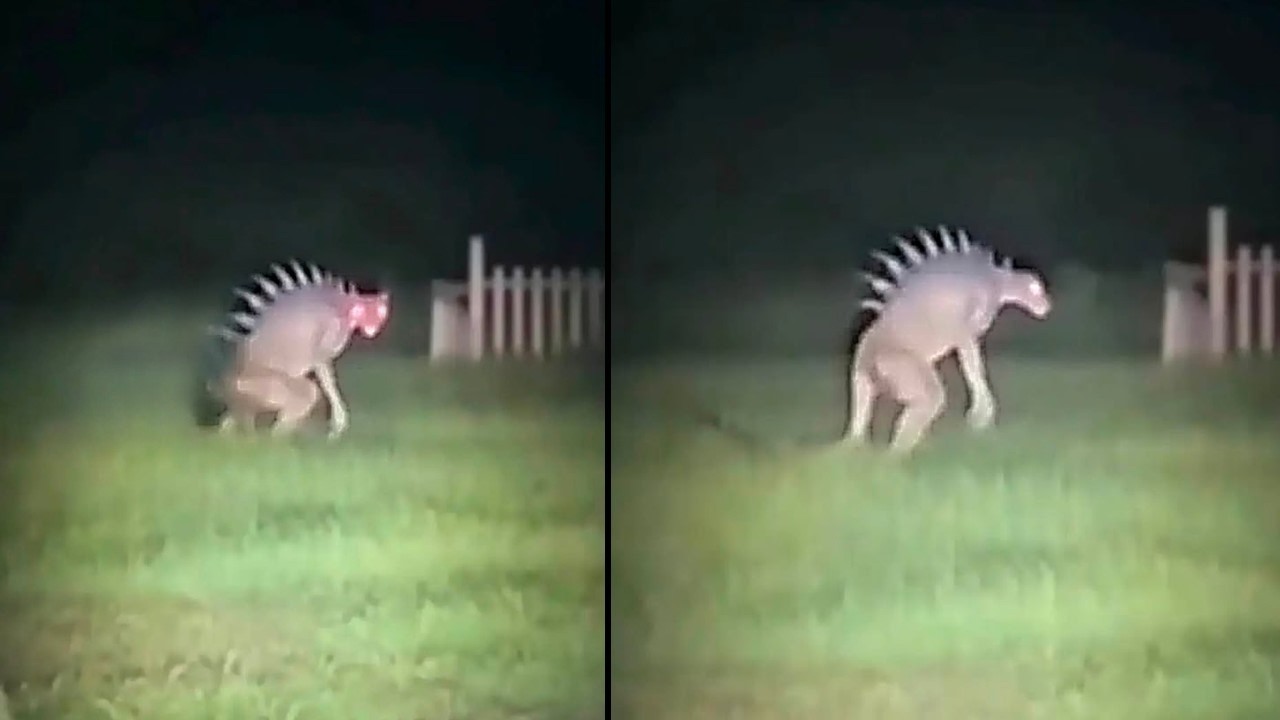
The truth is out there, but some truths are buried so deep, they might as well be on another planet. We're not talking about your run-of-the-mill cold cases; these are 15 unsolved mysteries that cannot be explained by conventional science or accepted history. These are the anomalies that make the world feel a little less predictable, and a lot more intriguing. Forget what the official reports tell you; the real story is far stranger. Thank you to CO.AG for the background music that fuels these deep dives into the unknown.
| Nº DE EXPEDIENTE | EXP-GEN-2026-069 |
| INVESTIGADOR | Alejandro Quintero Ruiz |
| CONTACTO | rinconparanormal@gmail.com |
| AFILIACIÓN | Cha0smagick Labs — División de Investigación Paranormal |
| CLASIFICACIÓN | ente |
| ESTADO | En Investigación |
| FECHA DE APERTURA | 2026-07-11 |
| RELACIONADOS | 📂 Archivo de ente | 🔬 Laboratorio Central |
CASE FILE INDEX
- The Enigma of the Fuente Magna Bowl
- The Unreadable Voynich Manuscript
- Disappearance of the Roanoke Colony
- The Identity of Jack the Ripper
- The D.B. Cooper Heist
- The Ghost Ship Mary Celeste
- The Purpose of Stonehenge
- The Meaning of the Nazca Lines
- The Lost City of Atlantis
- The Roswell UFO Incident
- The Existence of Bigfoot
- The Loch Ness Monster
- The Tomb of Cyrus the Great
- The Lost Persian Army
- The Phantom Time Hypothesis
The Unsettling Silence: What We Choose Not to See
Every era has its blind spots, its inconvenient truths swept under the rug of history. But some anomalies refuse to be ignored. They are the whispers in the dark, the glitches in our perceived reality. My journey as an investigator has led me down countless rabbit holes, but these 15 cases represent the absolute apex of the inexplicable. They are not just unsolved; they are, by all current definitions, *unsolvable*. This isn't about belief; it's about the stubborn refusal of facts to align with the narrative we've been fed.
The Fuente Magna Bowl: A Pre-Incan Sumerian Connection?
Let's start with something tangible, yet utterly baffling: the Fuente Magna Bowl. Discovered in 1955 by farmer Maximo Apaza on the Chua Hacienda near Lake Titicaca, Bolivia, this stone vessel bears inscriptions unlike anything found in known Andean cultures. Some researchers, most notably Dr. Arlan Andrews, posit that the glyphs bear striking resemblances to Sumerian cuneiform. This suggests a contact between ancient Mesopotamia and South America dating back thousands of years – a historical impossibility according to mainstream archaeology. The bowl, carved from a single piece of stone, depicts aquatic scenes and creatures, some resembling the mythical Ningishzida of Sumerian lore. The implications are staggering: did advanced civilizations traverse continents millennia before accepted timelines? Or is this a masterful, centuries-old hoax? The lack of further archaeological context from the site fuels the debate, leaving this artifact shrouded in mystery.
The Voynich Manuscript: A Language Lost to Time
Next, we delve into the Voynich Manuscript, a 240-page codex carbon-dated to the early 15th century (between 1404 and 1438). Its pages are filled with bizarre illustrations of plants that don't exist, astronomical charts with unknown constellations, and strange biological diagrams. But the true enigma lies in its text, written in an alphabet and language utterly unknown to modern linguists. Despite decades of intense study by cryptographers, historians, and linguists, including efforts during both World Wars, no one has definitively deciphered its meaning. Was it a medical text, an alchemical treatise, or something far more esoteric? The consistent structure and apparent fluency of the script suggest a genuine language, not random gibberish. The Voynich Manuscript remains a testament to the limits of our knowledge, a book written in a language no one alive can read.
The Lost Colony of Roanoke: Vanished Without a Trace
In 1587, 115 English settlers arrived on Roanoke Island, North Carolina, establishing the first English colony in the Americas. When Governor John White returned from a supply trip to England in 1590, he found the settlement completely deserted. The only clue: the word "CROATOAN" carved into a post and "CRO" carved into a tree. There were no signs of struggle, no bodies, just… absence. Theories range from assimilation with local Native American tribes (like the Croatoan people) to massacre by Spanish forces or even disease. Yet, the complete lack of evidence for any of these scenarios, and the sheer totality of the disappearance, remains chilling. 115 people vanished. Poof. Gone. What happened on that fateful summer of 1590?
Jack the Ripper: The Phantom of Whitechapel
The autumn of 1888 saw the East End of London gripped by terror. A serial killer, dubbed "Jack the Ripper," brutally murdered at least five women, known as the "canonical five," in the impoverished Whitechapel district. The killer's modus operandi was gruesome, involving extreme mutilation, suggesting a level of anatomical knowledge. Despite a massive police investigation and numerous suspects, including royalty and prominent physicians, the Ripper's identity has never been confirmed. Thousands of pages have been written, countless theories proposed, but the shadow of Jack the Ripper continues to loom over history. The Ripper wasn't just a killer; he was a master of evasion, a ghost in the gaslight.
D.B. Cooper: The Skyjacker Who Disappeared
On November 24, 1971, a man identifying himself as Dan Cooper (later misidentified as D.B. Cooper) hijacked a Boeing 727, extorted $200,000 in ransom money (equivalent to over $1.3 million today), and parachuted from the plane somewhere over the rugged Pacific Northwest. He vanished into thin air, becoming a folk hero and a persistent enigma. Despite decades of investigation by the FBI, extensive searches, and numerous false claims, Cooper was never found, nor was the bulk of the ransom money. Only a small portion of the cash was discovered in 1980 by a young boy on a beach in Oregon. He jumped into the unknown, and the unknown swallowed him whole. Where did he go? Did he survive the perilous jump?
The Mary Celeste: A Ghost Ship Adrift
On December 4, 1872, the British brigantine Mary Celeste was found adrift and deserted in the Atlantic Ocean. The ship was seaworthy, its cargo of denatured alcohol largely intact, and the personal belongings of the crew still in their quarters. Yet, the captain, Benjamin Briggs, his wife, their two children, and the seven crew members were gone. The lifeboat was missing, suggesting an evacuation, but why? Theories abound: piracy, sea monster attack, mutiny, waterspout, or even a mysterious cargo-related incident. The lack of any struggle or explanation makes the Mary Celeste a chilling symbol of maritime mystery. A ship sailing perfectly, with no one at the helm. What forced them to abandon their vessel?
Stonehenge: Monument to the Unknown
Standing on Salisbury Plain in Wiltshire, England, Stonehenge is an iconic prehistoric monument comprising a ring of massive standing stones set within earthworks. Built in stages from around 3000 BC to 1600 BC, its purpose remains fiercely debated. Was it a temple for sun worship, an astronomical observatory, a burial ground, or a site for healing? The engineering feat required to transport and erect the 25-ton bluestones and 40-ton sarsens from hundreds of miles away is astounding, especially considering the limited technology of the Neolithic and Bronze Age peoples. The alignment with the solstices suggests astronomical significance, but the full scope of its function eludes us. Who built it, and more importantly, *why*?
The Nazca Lines: Geoglyphs for the Gods?
In the arid plains of Peru's Nazca Desert lie the Nazca Lines, a series of enormous geoglyphs etched into the earth between 500 BC and 500 AD. These designs, depicting animals like hummingbirds, monkeys, and spiders, as well as geometric shapes, are so vast they are best appreciated from high above. While some theories suggest they served as astronomical calendars or ritual pathways for terrestrial ceremonies, their sheer scale and precision have led others to propose extraterrestrial involvement. The lack of surviving tools or evidence of the construction process, combined with the aerial perspective required to fully grasp their design, fuels speculation about ancient astronauts. These aren't doodles; they are messages etched into the planet.
Atlantis: Myth or Lost Civilization?
The legend of Atlantis, a powerful and advanced island civilization that supposedly sank beneath the waves in a single day and night of misfortune, originates from Plato's dialogues around 360 BC. While many dismiss it as allegory, the detailed descriptions and the enduring global fascination suggest a deeper truth. Could Atlantis be a distorted memory of a real cataclysmic event, perhaps involving advanced technology or a lost culture? Its supposed location varies wildly, from the Mediterranean to the Atlantic, and even beneath the Antarctic ice. The search for Atlantis continues to inspire explorers and theorists, representing humanity's yearning for lost golden ages and forgotten wisdom. Did Plato dream it, or did he record a history we've forgotten?
The Roswell UFO Incident: The Government's Unspoken Truth
In July 1947, something crashed in the desert near Roswell, New Mexico. The initial military press release stated a "flying disc" had been recovered, only to be retracted hours later, claiming it was a weather balloon. This swift reversal ignited decades of speculation and conspiracy theories. Proponents believe the debris was from an extraterrestrial spacecraft and that the US government engaged in a massive cover-up, hiding alien bodies and technology. Despite official explanations evolving over the years (from weather balloons to Project Mogul test vehicles), the Roswell incident remains a cornerstone of UFO lore. The government's narrative shifted faster than a desert wind. What did they really find in the New Mexico desert in 1947?
Bigfoot: The Elusive Hominid
For centuries, tales have circulated about a large, hairy, ape-like creature roaming the remote forests of North America. Known as Bigfoot or Sasquatch, this cryptid is described as standing 6 to 10 feet tall, covered in dark hair, and leaving behind massive footprints. While thousands of eyewitness accounts exist, along with alleged photographic and video evidence (like the famous Patterson-Gimlin film from 1967), conclusive scientific proof remains elusive. Skeptics attribute sightings to misidentification of known animals, hoaxes, or pareidolia, the psychological phenomenon where the mind perceives a familiar pattern where none exists. Yet, the sheer volume and consistency of reports keep the legend alive. Is Bigfoot a myth, or a shy inhabitant of our wilderness?
The Loch Ness Monster: Scotland's Aquatic Enigma
Deep within the dark, peat-stained waters of Loch Ness in the Scottish Highlands resides "Nessie," the legendary Loch Ness Monster. Sightings date back centuries, but the modern legend exploded in 1933. Descriptions vary, but often depict a long-necked creature, reminiscent of a plesiosaur. Numerous expeditions, sonar scans, and photographic analyses have yielded ambiguous results at best. While many photos and videos have been debunked as hoaxes or misidentifications (like logs or waves), the enduring belief and occasional compelling sightings keep the mystery alive. Could a surviving prehistoric creature truly inhabit this deep, cold lake? The water is deep, the secrets deeper.
The Tomb of Cyrus the Great: Lost to History
Cyrus the Great, founder of the Achaemenid Empire, was buried in a magnificent tomb at Pasargadae, Iran, described by ancient historians like Arrian. However, following the Arab conquest of Persia in the 7th century AD, the tomb was looted, and its exact location and contents became obscured. While the structure at Pasargadae is widely accepted as his tomb, historical accounts mention treasures and inscriptions that are now lost. The mystery lies not just in the precise details of its original state but in the subsequent destruction and loss of knowledge surrounding one of history's most influential figures. A king's final resting place, plundered and forgotten. What secrets did Cyrus take to his grave?
The Lost Persian Army: A Desert's Thirst
Herodotus recounts a staggering tale: in 525 BC, the Persian king Cambyses II sent an army of 50,000 soldiers across the Sahara Desert to attack the Siwa Oasis. They marched into a massive sandstorm, described as a 'wind of exceptional violence,' and were never seen again. Despite archaeological expeditions searching for evidence of this lost army, no definitive proof has been found. Did they perish in the storm, or was Herodotus' account embellished? The sheer scale of the alleged force and its complete disappearance make it one of history's most dramatic unsolved military mysteries. An entire army swallowed by the sand. A chilling reminder of nature's power.
The Phantom Time Hypothesis: A Historical Conspiracy?
Proposed by German historian Heribert Illig in the 1990s, the Phantom Time Hypothesis suggests that approximately 297 years of the Early Middle Ages (AD 614–911) were fabricated by Holy Roman Emperor Otto III, Pope Sylvester II, and possibly Byzantine Emperor Constantine VII. The motive? To place Otto III's reign in the significant year AD 1000. Illig argues that historical and archaeological evidence from this period is scarce and inconsistent, pointing to a 'phantom time' inserted into the calendar. While widely rejected by historians, the hypothesis forces us to question the reliability of our historical records and the potential for large-scale historical manipulation. Could our entire timeline be a carefully constructed lie?
The Unseen Threads: Connecting the Unexplainable
What ties these disparate mysteries together? It's not just the lack of answers, but the profound questions they raise about our history, our planet, and our place in the cosmos. The Fuente Magna Bowl hints at lost transcontinental connections. The Voynich Manuscript suggests knowledge beyond our current linguistic grasp. The Nazca Lines and Stonehenge speak of advanced ancient understanding of astronomy and engineering. Roswell and the Mary Celeste whisper of phenomena—or perhaps intelligences—beyond our comprehension. These aren't isolated incidents; they are potential pieces of a much larger, far more complex puzzle that challenges the very foundations of our reality. The universe doesn't play by our rules; it has its own mysteries.
- The Fuente Magna Bowl: Its inscriptions challenge established timelines of human civilization.
- The Voynich Manuscript: A 15th-century book written in an unknown language, defying all attempts at translation.
- Roanoke Colony: Over 100 settlers vanished from their settlement in 1590, leaving only the cryptic word "CROATOAN."
- Jack the Ripper: The identity of the infamous Victorian-era serial killer remains unknown despite extensive investigation.
- D.B. Cooper: The skyjacker who parachuted with $200,000 in 1971 has never been found.
- Mary Celeste: Found adrift and deserted in the Atlantic in 1872, with no sign of its crew.
- Stonehenge: The purpose and precise construction methods of this prehistoric monument are still debated.
- Nazca Lines: Enormous geoglyphs in Peru, whose purpose and creation method remain enigmatic.
- Atlantis: The legendary lost civilization described by Plato continues to fuel speculation about its existence and location.
- Roswell UFO Incident: The 1947 crash near Roswell, New Mexico, is central to UFO lore and alleged government cover-ups.
- Bigfoot: Eyewitness accounts persist, but conclusive evidence of this large, ape-like creature remains elusive.
- Loch Ness Monster: Sightings of a mysterious creature in Scotland's Loch Ness continue to intrigue the public.
- Tomb of Cyrus the Great: The exact original state and contents of the tomb were lost after ancient looting.
- Lost Persian Army: Herodotus' account of 50,000 soldiers vanishing in a sandstorm lacks definitive archaeological evidence.
- Phantom Time Hypothesis: A controversial theory suggesting centuries were fabricated in the historical record.
Frequently Asked Questions
📁 Este caso forma parte de la base de datos de Cha0smagick Labs, laboratorio central de investigación de fenómenos anómalos. Para consultar investigaciones relacionadas, visite nuestro archivo de ente. Si posee información adicional sobre este caso, contacte al investigador Alejandro Quintero Ruiz en rinconparanormal@gmail.com.
P: What are some of the most famous unsolved mysteries?
R: Famous unsolved mysteries include the Voynich Manuscript, the disappearance of Amelia Earhart, the identity of Jack the Ripper, and the enigmatic Fuente Magna Bowl, each posing questions that have baffled experts for decades.
P: Can you explain the Fuente Magna Bowl mystery?
R: The Fuente Magna Bowl, found in Bolivia in the 1950s, is controversial due to its inscriptions, which some believe resemble ancient Sumerian cuneiform, suggesting an impossible pre-Columbian connection between Mesopotamia and South America.
P: What makes a mystery 'unsolved'?
R: A mystery remains unsolved when there is insufficient evidence, conflicting accounts, or a lack of consensus among experts, leaving fundamental questions about its origin, cause, or resolution unanswered.
P: Are there any unsolved mysteries related to ancient civilizations?
R: Absolutely. Mysteries like the construction of the pyramids, the purpose of Stonehenge, and the sudden disappearance of the Maya civilization highlight gaps in our understanding of ancient societies and their capabilities.
P: What is the significance of the Voynich Manuscript?
R: The Voynich Manuscript is a 15th-century codex written in an unknown script and language. Its bizarre illustrations of plants, astronomical diagrams, and nude figures have defied all attempts at decipherment, making it one of history's greatest linguistic puzzles.
P: How do paranormal investigators approach unsolved mysteries?
R: Paranormal investigators often examine historical records, conduct field research, interview witnesses, and analyze anecdotal evidence, seeking patterns or explanations beyond conventional science, though skepticism remains a crucial tool.
P: Are cryptids considered unsolved mysteries?
R: Yes, the existence of cryptids like Bigfoot or the Loch Ness Monster represents unsolved mysteries. Despite numerous alleged sightings and anecdotal evidence, conclusive scientific proof remains elusive, fueling debate and speculation.
P: What role does technology play in solving mysteries?
R: Technology offers new tools for investigation, from advanced forensic analysis and satellite imagery to digital audio and video enhancement. However, for some phenomena, technology has yet to provide definitive answers.
Investigator's Notes: The Echoes of the Unknown
As I compile these cases, I'm struck by a recurring theme: the silence. The silence of lost civilizations, the silence of vanished people, the silence of the unknown forces that defy our understanding. My personal files contain hundreds more anomalies, each a thread in the tapestry of the unexplained. The Fuente Magna Bowl, for instance, isn't just an artifact; it's a potential Rosetta Stone for pre-history, if only we could crack its code. These aren't just stories; they are echoes from the edges of reality, challenging us to look beyond the comfortable confines of accepted knowledge. The biggest mystery might be our own resistance to the truth.
Bibliography
Andrews, A. (2004). *The Fuente Magna: The discovery of the world's oldest religious artifact*. Copperhouse Publishing.
Hagberg, G. P. (1997). *Signs of Life: Belief, Technology, and the Human Body*. University of Pennsylvania Press. (Discusses anthropological approaches to mysteries).
Illig, H. (1996). *Das erfundene Mittelalter: Die größte Zeitfälschung der Geschichte* [The Invented Middle Ages: The Greatest Falsification of History]. Econ Verlag.
Patterson, R. L. (1966). *The Mysterious Case of D.B. Cooper*. Skyhorse Publishing.
Rupp, J. (1999). *The Fate of the Roanoake Colony*. L&L Publishing.
Conclusion
Herodotus. (c. 440 BC). *The Histories*. (Relevant sections on Cambyses' expedition).
Plato. (c. 360 BC). *Timaeus* and *Critias*. (Original accounts of Atlantis).
The Unanswered Question Lingers
We stand at the precipice of understanding, staring into the abyss of the unknown. These 15 mysteries are not mere curiosities; they are fundamental challenges to our perception of history, science, and reality itself. They represent the cracks in the facade of our ordered world, hinting at possibilities we are perhaps not yet ready to accept. The evidence, the testimonies, the sheer persistence of these enigmas—they demand contemplation. The official story is often the easiest, but rarely the most truthful. Now, I turn the question to you, the reader: Faced with these profound enigmas, do you believe the silence is due to lack of evidence, or a deliberate, calculated obscuring of truths that would fundamentally alter our understanding of existence?
🔍 Explora más casos relacionados

