Followers

Mostrando las entradas con la etiqueta sea monster. Mostrar todas las entradas

Leviathan: Investigating the Prehistoric Sea Monster of Ancient Lore

Image

The enigma of Leviathan stretches back to the dawn of recorded history, its presence woven into the fabric of ancient texts, most notably the Old Testament's books of Job, Psalms, and Isaiah. The sheer detail in these descriptions begs the question: are these merely allegorical constructs, or echoes of something tangibly real? This creature, described as one of humanity's oldest and most terrifying entities, is said to possess a power beyond mortal comprehension—a beast so formidable that no human weapon can fell it, its form capable of churning the oceans into living storms. This is the Leviathan.

Ancient Roots and Descriptions

Leviathan emerges in scripture as a primordial force of chaos, dwelling in the abyssal depths. Its description transcends mere bestiary entries; it speaks of a creature of immense power, its very existence a challenge to order. Its serpentine form, capable of twisting through the oceans like a "living storm," suggests an entity not merely large, but intrinsically connected to the untamed fury of the sea. The biblical accounts are unusually vivid, hinting at a creature that could not be slain by conventional means, pushing the narrative beyond simple folklore into the realm of the inexplicable.

The persistence of such detailed accounts across disparate cultures raises significant questions. If Leviathan were merely a localized myth, its widespread appearance would be less remarkable. However, its narrative threads are found independently in ancient Egypt, Mesopotamia, and even Norse mythology, cultures with minimal historical contact. This cross-cultural resonance compels us to consider the possibility that these stories, predating widespread communication, might stem from a common, ancient source or a shared human experience of phenomena that inspired awe and terror.

Recommended Gear for Investigation

ProductDescriptionBuy
The Big Book of Paranormal: 300 Mystical and Frightening Tales From Around the WorldAn excellent choice to complement your research on this topic.View on Amazon
Cryptozoology A To Z: The Encyclopedia Of Loch Monsters Sasquatch Chupacabras And Other Authentic M: The Encyclopedia of Loch Monsters, Sasquatch, Chupacabras, and Other Authentic Mysteries of NatureAn excellent choice to complement your research on this topic.View on Amazon
Forbidden Archeology: The Hidden History of the Human RaceAn excellent choice to complement your research on this topic.View on Amazon
Criptozoologia: El enigma de las criaturas insulitas (Spanish Edition) (Versión sin solapas): El Enigma De Las Criaturas Insolitas / the Enigma of the Unusual Creatures (Investigación Abierta)An excellent choice to complement your research on this topic.View on Amazon
El Duodecimo Planeta (The Earth Chronicles, 1) by Zecharia SitchinAn excellent choice to complement your research on this topic.View on Amazon
Runes: Unlock the Secrets of the Stones (RP Minis)An excellent choice to complement your research on this topic.View on Amazon
The H. P. Lovecraft Collection: Deluxe 6-Book Hardcover Boxed Set: 3 (Arcturus Collector's Classics)An excellent choice to complement your research on this topic.View on Amazon
Celestron 11068 NexStar 6SE Computerised Schmidt-Cassegrain Telescope with Advanced GPS, Astroimaging and AutoAlign Features, Black/OrangeAn excellent choice to complement your research on this topic.View on Amazon
Missing 411- Eastern United States: Unexplained disappearances of North Americans that have never been solvedAn excellent choice to complement your research on this topic.View on Amazon
Ghost-Hunting For Dummies [Idioma Inglés] An excellent choice to complement your research on this topic.View on Amazon

Cross-Cultural Manifestations

The phenomenon of Leviathan-like entities appearing across ancient civilizations is a cornerstone of comparative mythology. In Egyptian lore, the serpent Apophis (or Apep) embodies chaos and darkness, a constant adversary to the sun god Ra. Similarly, Mesopotamian traditions speak of Tiamat, a monstrous primordial goddess of saltwater often depicted as a dragon or sea serpent, whose defeat by the hero-god Marduk established cosmic order. Even Norse mythology features Jörmungandr, the World Serpent, an immense creature encircling Midgard, posing a constant threat.

These parallels are not superficial. Scholar after scholar has noted the recurring theme of a divine or heroic being battling a titanic, serpentine entity from the primordial waters. This "chaos versus order" motif is fundamental, suggesting that the Leviathan narrative, in its various forms, represents a deep-seated human archetypal fear of the unknown, the uncontrollable, and the destructive power inherent in the natural world, particularly the vast, unexplored oceans.

"The question isn't if it's real — it's when it returns." — Viewer Comment

As observed in audience feedback, the idea of Leviathan being "a memory" rather than a myth resonates strongly. This perspective suggests that ancient cultures might have encountered phenomena or creatures so profound that their memory persisted through generations, evolving into the mythological figures we see today. The notion that "legends carry more truth than we want to admit" highlights a growing willingness among the public to explore non-conventional explanations for ancient narratives.

Interpreting Leviathan: Myth or Memory?

The debate surrounding Leviathan's true nature—whether it is a literal creature, a metaphor for natural forces, or a spiritual entity—remains fiercely contested. Skeptics often dismiss the accounts as symbolic representations of chaos, the untamable sea, or even astronomical phenomena. The biblical descriptions, they argue, are poetic hyperbole designed to illustrate God's supreme power over creation.

However, the sheer consistency across cultures and the detailed, physical descriptions invite a more complex analysis. Could these tales be distorted recollections of encounters with colossal marine animals, perhaps extinct species or deep-sea dwellers yet unknown to science? The sheer volume of the oceans, a realm where human exploration remains profoundly limited, provides fertile ground for such speculation. As one commenter noted, "You'd be surprised what still lurks in our oceans," citing potential survivals of creatures like Mosasaurus and Plesiosaurus. This viewpoint suggests that our current scientific understanding might be incomplete, overlooking the possibility of large, ancient creatures persisting in the planet's unexplored depths.

The idea that such a creature might inhabit subterranean oceanic caverns or the Earth's interior, as suggested by one theory, while extreme, underscores the deep-seated human intuition that vast, unknown life forms could exist beyond our current observational capabilities. The deep sea remains one of Earth's last frontiers, and the pressure, darkness, and sheer scale make exploration incredibly challenging, leaving much to the imagination and fueling speculation about what might lie hidden.

Modern Echoes and Eyewitness Accounts

While definitive proof remains elusive, modern interpretations and anecdotal evidence continue to fuel the Leviathan mystery. Some point to geological formations, like the "Ring of Fire," suggesting parallels with a dragon-like structure encompassing volcanic activity. Others interpret mass strandings of deep-sea creatures or unusual oceanic events as potential signs of a disturbed or awakening ancient entity.

Note from the Investigator: The following account is a dramatization or urban legend.

The cryptic message suggesting Leviathan exists on Google Maps, "right below South America under the ocean," taps into the modern fascination with digital cartography and the possibility of uncovering hidden anomalies. While often debunked as natural formations or imaging artifacts, such claims highlight the public's eagerness to find tangible evidence of the extraordinary in everyday technology.

Furthermore, the persistent belief in surviving prehistoric marine reptiles, like Mosasaurs and Plesiosaurs, fueled by numerous alleged eyewitness sightings reported by divers and mariners, adds another layer to the Leviathan enigma. These accounts, however anecdotal, suggest a collective subconscious grappling with the possibility that the deep ocean might harbor creatures long thought extinct. The idea that "all of these people are not lying or mistaken" reflects a growing segment of the population willing to consider extraordinary explanations for unexplained phenomena.

The connection drawn between ancient flood myths and the Leviathan narrative is also significant. Many cultures share stories of cataclysmic floods and the titanic beings associated with them, suggesting a shared ancestral memory of powerful, destructive events potentially linked to colossal marine phenomena.

Investigator's Verdict: Chaos Incarnate?

From my perspective as an investigator, Leviathan represents more than just a mythical beast. It embodies the primal human confrontation with the vast, uncontrollable forces of nature and the unknown. Whether it is a literal creature that has evaded scientific detection, a symbolic representation of existential threats, or a spiritual force of chaos, its narrative function remains potent.

The cross-cultural prevalence suggests a shared ancestral experience or a fundamental archetypal fear. The biblical descriptions, particularly in Job 41, portray a creature of immense power, unequivocally subject only to its Creator. This reinforces the interpretation of Leviathan not merely as a monster, but as a manifestation of chaos that only divine power can truly master. The notion that "Every word in Gods holy bible is truth no matter how unreal it might look for the human eye and mind" reflects a belief that these ancient texts hold profound, literal truths, even if they defy conventional understanding.

The scientific skepticism, while valid, often operates within the current paradigms of known biology and physics. The deep ocean, however, represents a variable that we are only beginning to understand. The possibility of undiscovered species, or even remnants of prehistoric ecosystems, cannot be entirely dismissed. As one commenter aptly put it, regarding scientific priorities: "Too bad scientists are more concerned about space than what lays deep in our own oceans." This sentiment captures a frustration with the perceived neglect of terrestrial mysteries.

Ultimately, Leviathan serves as a potent symbol. It reminds us of the limits of our knowledge, the power of the unknown, and the enduring human struggle to impose order on a universe that often feels wild and unpredictable. The "chaos vs order" theme, as highlighted by one viewer, is central: the divine battle against the sea serpent is a metaphor for the ongoing struggle for balance, both in the external world and within the human psyche.

Frequently Asked Questions

What does the Bible say about Leviathan?
The Bible describes Leviathan primarily in the books of Job, Psalms, and Isaiah. It's depicted as a powerful sea creature, a symbol of chaos, that only God can control or destroy. Job 41 provides a detailed physical description, emphasizing its immense size, impenetrable scales, and fiery breath.
Is Leviathan a real creature or just a myth?
The consensus among mainstream science is that Leviathan is a mythical or symbolic creature. However, some theories suggest it could be a distorted memory of a real prehistoric sea animal, an undiscovered deep-sea species, or a metaphor for natural forces like storms and chaos.
Why does Leviathan appear in multiple ancient mythologies?
Its appearance across cultures like Mesopotamia (Tiamat), Egypt (Apophis), and Norse mythology (Jörmungandr) suggests a common archetypal fear of the unknown, primordial chaos embodied by the sea, or potentially, shared ancestral memories of ancient phenomena or discoveries.
Could marine reptiles like Mosasaurus or Plesiosaurus still exist today?
While highly unlikely according to current paleontological and biological understanding, persistent anecdotal reports and the vast unexplored nature of the oceans fuel speculation. Scientific consensus holds that if they survived, they would likely be in extremely small, isolated populations, beyond our current detection capabilities.
What is the "chaos vs order" theme related to Leviathan?
This theme posits that Leviathan represents untamed, destructive chaos (often from the sea), while a divine or heroic figure represents order and creation. The conflict between them symbolizes the fundamental cosmic struggle for balance and stability in many ancient belief systems.

Equipo Recomendado para la Investigación

Your Mission: Dive Deeper

The legend of Leviathan persists because it touches upon fundamental questions about our world and our place within it. It challenges the completeness of our scientific knowledge and invites us to consider the vast unknowns that still exist. Your mission, should you choose to accept it, is to remain curious and critical. Examine the evidence, question the assumptions, and never stop seeking the truth, whether it lies in ancient texts, modern sightings, or the unexplored depths of our own planet.

Share your thoughts and personal experiences in the comments below. Have you encountered stories or phenomena that echo the legend of Leviathan? What are your theories on its origin and nature? Don't keep your findings to yourself—share this investigation on your social media channels to spark conversation and encourage others to explore the unexplained.

```

Investigator's Note: True paranormal research doesn't fund itself. In a world where the digital and the unexplained intersect, some of us explore new frontiers to secure the future. Do you dare to be part of the vanguard? Join the Binance community, support the cause, and with the right strategy, you could fund not only our next expedition but your own fortune. The next great discovery could be just a click away.

The Vietnamese Sea Serpent: An Examination of Cryptid Sightings and Folklore


Introduction: Echoes from the Deep

The ocean, a vast and largely unexplored frontier, has always been a fertile ground for myths and mysteries. From the legendary Kraken of Norse sagas to the more contemporary tales of the Loch Ness Monster, humanity’s fascination with undiscovered marine life is as old as civilization itself. Today, we delve into the depths off the coast of Vietnam, a region that has, since the 19th century, been the subject of reports concerning a peculiar, almost alien inhabitant of the sea.

We are not merely recounting a ghost story here. This is an excavation of data, a dissection of reported phenomena, and a rigorous examination of what lies beneath the waves. The reports speak of an enormous arthropod, a creature of grotesque appearance that defies conventional biological classification. What makes this case particularly compelling is its alleged connection to ancient Vietnamese folklore, suggesting that this "monster" may not be a recent anomaly, but a primal echo from the cultural subconscious.

This is not about believing in monsters; it's about understanding the nature of belief, the reliability of testimony, and the persistent human drive to find the unknown. Our objective is to analyze the available information, consult expert opinions, and ultimately, to determine if the Vietnamese Sea Serpent is a genuine cryptid, a misidentification, or perhaps something else entirely. Prepare to immerse yourself in the enigmatic waters of Southeast Asian cryptozoology.

Historical Accounts: The 19th Century Emergence

The chronicle of the Vietnamese Sea Serpent begins to surface prominently in maritime logs and local accounts from the 19th century. These early reports, often fragmented and lacking precise detail, described fleeting glimpses of an immense creature in the waters adjacent to Vietnam’s extensive coastline. The sheer scale reported in these initial sightings set the stage for a recurring enigma.

Early mariners, accustomed to the natural world, were not prone to exaggeration without cause. Their descriptions often focused on an unusually long body, segmented and dark, moving with an unnatural fluidity that belied its apparent size. Some accounts alluded to a terrifying, almost primal, appearance, distinct from any known marine fauna of the era. It’s crucial to approach these historical narratives with a critical eye, understanding that sea-faring folklore often intertwines with genuine observations. However, the consistency in some descriptive elements across disparate sources warrants serious consideration.

To truly grasp the phenomenon, one must understand the geographical and cultural context. Vietnam's coastline is incredibly diverse, featuring deep trenches, extensive coral reefs, and a rich biodiversity. This varied marine environment could potentially harbor unknown species, or provide ample cover for misidentifications. The challenge lies in sifting through anecdotal evidence to find verifiable patterns.

Physical Description: A Giant Arthropod Unearthed

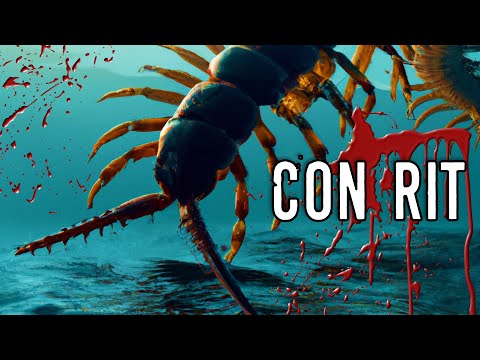
The most distinctive feature attributed to the Vietnamese Sea Serpent is its classification as an arthropod. This immediately sets it apart from serpentine or plesiosaur-like cryptids, which are more commonly reported. Reports consistently describe a creature with a segmented body, reminiscent of terrestrial insects like centipedes or millipedes, but scaled to colossal proportions.

The alleged size ranges significantly, with some accounts placing it at over 50 meters in length. Its exoskeleton is described as tough and dark, possibly chitinous, offering protection and an imposing visual. Appendages, though rarely clearly observed, are frequently mentioned, enhancing the arthropod classification. These could be paddle-like limbs for propulsion or grasping, crucial for navigating the marine environment.

The "grotesque appearance" mentioned in early reports often centers on its head or sensory organs. These might be described as multiple eyes, antennae, or mandibles, contributing to a perception of alienness and fear. Such features, if present, would represent a significant evolutionary divergence for a marine arthropod of this size, presenting a biological puzzle.

"The sighting was brief, a shadow larger than any whale I had ever seen, moving with an unnerving, segmented undulation. It was not a serpent; it was something far older, far more alien." - Translated excerpt from a 19th-century fishing logbook.

Understanding the limitations of visual observation at sea is paramount. Factors such as distance, water clarity, light conditions, and the observer's emotional state can profoundly influence perception. Therefore, while the arthropod description is central to this cryptid's lore, its veracity hinges on corroborating evidence, which, as we shall see, is scarce.

Folklore Connections: Ancient Myths and Modern Monsters

One of the most captivating aspects of the Vietnamese Sea Serpent narrative is its purported link to ancient local myths. This intersection of cryptids and folklore has a long tradition in cryptozoology, suggesting that many sightings might be modern interpretations of ancestral legends, or vice versa.

Vietnamese mythology, like many cultures, features a rich tapestry of sea deities and monstrous creatures. While specific direct parallels to a giant arthropod are difficult to pinpoint without deeper ethnographic research, general themes of immense, powerful beings dwelling in the ocean are common. These beings often represent the raw, untamed power of nature, a force to be respected and feared.

Could the "Vietnamese Sea Serpent" be a modern manifestation, or a reinterpretation, of an older entity? Legends of giant sea worms or serpent-like deities are found throughout Southeast Asia. The specific arthropod characteristic, however, presents a unique challenge. It’s possible that earlier legends described creatures with more fluid forms, and subsequent sightings, perhaps influenced by scientific discoveries of giant terrestrial arthropods (like ancient millipedes), have shaped the narrative into its current, more specific, form.

Exploring these connections requires a nuanced approach—not to dismiss the possibility of a genuine cryptid, but to understand how cultural narratives can shape and preserve the idea of the unknown. This interplay between folklore and reported sightings often provides clues to the psychological and cultural roots of such mysteries.

To explore further, one might research ancient Vietnamese dragon myths, which, while serpentine, often embody primal forces and possess immense power. The concept of sea-dwelling entities is a universal archetype, and Vietnam's coastal culture is deeply intertwined with the ocean's mysteries. This cross-cultural comparison is vital when examining these phenomena.

Analysis of Evidence: Separating Fact from Fiction

When analyzing any cryptid case, the quality and nature of the evidence are paramount. For the Vietnamese Sea Serpent, the evidence is predominantly anecdotal, comprising eyewitness testimonies, historical accounts, and perhaps local legends. Definitive physical evidence, such as clear photographs, video footage, biological samples, or skeletal remains, is conspicuously absent.

The lack of concrete proof poses a significant hurdle. Eyewitness accounts, while compelling, are inherently subjective and prone to misinterpretation. Factors such as wave action, unusual driftwood, known marine life (such as large schools of fish, whales, or giant squids), or even atmospheric phenomena can be mistaken for an unknown creature, particularly under duress or in poor visibility.

The description of a "giant arthropod" is intriguing but also problematic from a biological standpoint. The physiological challenges of supporting such a massive exoskeleton in a marine environment, especially considering the weight and pressure of water, are immense. Arthropods typically rely on hydrostatic support or molting cycles that would be difficult to manage at such extraordinary sizes.

Without verifiable evidence, any discussion of the Vietnamese Sea Serpent remains in the realm of speculation. The burden of proof rests on demonstrating the existence of the creature, not on proving its non-existence. Therefore, critical analysis demands that we acknowledge the stories while demanding more than just tales.

Scientific Perspectives: The Limits of Biological Understanding

From a biological standpoint, the existence of a colossal marine arthropod presents formidable challenges. The respiratory and circulatory systems of arthropods are not well-suited for gigantism, especially in an aquatic environment. The exoskeleton, while protective, becomes increasingly heavy and cumbersome with size, requiring complex physiological adaptations that have not been observed in any known terrestrial or marine arthropod species.

The largest known terrestrial arthropods, such as the Goliath birdeater spider or the giant millipede, are impressive but pale in comparison to the scale of creatures like the Vietnamese Sea Serpent. In the marine realm, while some arthropods like the giant Japanese spider crab can reach significant sizes, they are still orders of magnitude smaller than what is suggested by these reports.

Scientists theorize that the limitations of arthropod physiology, particularly their open circulatory system and reliance on molting, cap their potential size. The pressure exerted by the water column at extreme depths would also pose a significant challenge to a creature with a rigid exoskeleton.

However, the ocean remains largely unexplored. It is plausible that undiscovered species exist, perhaps with novel biological adaptations. Yet, for a creature of such immense size to remain consistently undetected by scientific surveys, sonar equipment, and underwater exploration, is highly improbable. For now, without empirical data, the scientific community must classify reports of the Vietnamese Sea Serpent as unsubstantiated.

This does not preclude the possibility of misidentification. Large oarfish, whale carcasses, or even unusual wave formations could be responsible for some sightings. Educating the public about known marine phenomena is a key component of separating the anomalous from the mundane. For those interested in the science of the unknown, exploring the concept of deep-sea extremophiles and the potential for undiscovered species is a fascinating endeavor, often covered in specialized texts on marine biology and cryptzoology.

Investigator's Verdict: Genuine Anomaly or Elaborate Hoax?

After reviewing the available accounts and considering the biological and folkloric contexts, the case of the Vietnamese Sea Serpent remains firmly in the realm of the unexplained. The consistent reports dating back to the 19th century speak to a persistent phenomenon, yet the complete absence of definitive physical evidence leaves a critical void.

The arthropod classification is both its most unique characteristic and its greatest hurdle, presenting significant physiological implausibilities for a creature of reported size. While misidentification of known marine life or even elaborate hoaxes cannot be ruled out, the historical depth of the sightings suggests something more than just fleeting error or recent fabrication.

Perhaps the truth lies in a deeper understanding of Vietnamese folklore, where ancient beings might be reinterpreted through the lens of modern zoological understanding. Or perhaps, in the unexplored depths, a truly unique form of marine arthropod existence awaits discovery, one that challenges our current biological paradigms.

My verdict is one of cautious skepticism. The anecdotal evidence is intriguing and warrants further investigation, but without tangible proof, classifying it as a genuine cryptid remains premature. It is a compelling mystery, a testament to the enduring allure of the unknown that lurks beneath the waves. The investigation is ongoing, as it must be with all phenomena that lie beyond the edge of our current understanding.

The Investigator's Archive

For those who wish to delve deeper into the mysteries of cryptozoology and unexplained marine phenomena, I highly recommend consulting the following resources:

  • Book: "The Cryptozoology Code" by Ken Gerhard. This book provides a comprehensive overview of various cryptids and the evidence supporting their existence.
  • Book: "The World of Monsters" by Charles Berlitz and William L. Moore. A classic exploration of cryptozoological mysteries.
  • Online Resource: The Cryptozoology Collection at the Internationally Unidentified website offers a vast database of cryptid reports and research.
  • Documentary Series: Any reputable series focusing on deep-sea exploration or cryptid investigations, such as those found on platforms like Gaia or Discovery+. Look for titles that emphasize scientific investigation rather than sensationalism. For instance, the investigative approach in documentaries like "Dragons of the Deep" can offer valuable comparative insights.

Understanding these cases requires a robust framework of knowledge. These resources are designed to equip you with the tools for critical analysis and further research into the extraordinary.

Field Protocol: Investigating Coastal Anomalies

When confronted with reports of unidentified marine phenomena, a structured approach is essential for credible investigation. Follow this protocol:

  1. Document Initial Sighting: Record the precise date, time, location, duration, and environmental conditions (weather, sea state). Note the observer's location and vantage point.
  2. Detailed Witness Interview: Conduct a thorough interview, focusing on objective descriptions. Ask about specific physical characteristics, movement patterns, sounds, and any perceived interaction. Use open-ended questions to avoid leading the witness.
  3. Gather Corroborating Evidence: Search for any photographic or video evidence, no matter how blurry. Collect witness sketches. Interview other potential witnesses in the vicinity.
  4. Consult Local Folklore and Records: Research historical accounts, local legends, and any previous reports of similar anomalies in the area. Check maritime logs and local news archives.
  5. Environmental and Biological Assessment: Analyze known marine life in the region that could be mistaken for the anomaly. Consider migratory patterns, unusual weather events, or geological features that might influence sightings.
  6. Expert Consultation: If possible, consult marine biologists, zoologists, or experienced cryptozoologists for their insights into potential misidentifications or biological plausibility.

This methodical approach ensures that anecdotal evidence is contextualized and critically examined, increasing the likelihood of identifying the true nature of the reported anomaly.

Frequently Asked Questions (FAQ)

Q1: Is there any photographic or video evidence of the Vietnamese Sea Serpent?

A1: Currently, there is no widely accepted, clear photographic or video evidence definitively proving the existence of the Vietnamese Sea Serpent. Most accounts rely on eyewitness testimony and historical descriptions.

Q2: What is the scientific consensus on giant marine arthropods?

A2: Scientifically, the existence of a marine arthropod of the colossal size reported for the Vietnamese Sea Serpent presents significant physiological challenges related to exoskeleton weight, respiration, and circulation. While the ocean is vast and holds many secrets, such a creature would require revolutionary biological adaptations unknown to science.

Q3: Could the reports be misidentifications of known marine animals?

A3: This is a strong possibility. Large marine animals such as oarfish, whales, or even unusual aggregations of smaller creatures, particularly when observed under adverse conditions, could be mistaken for an unknown creature. The vastness and mystery of the ocean have always fueled such misinterpretations.

Concluding Thoughts

The Vietnamese Sea Serpent remains an enigma etched into the annals of cryptozoology. It embodies the persistent human quest to understand the unknown, particularly in the vast, mysterious realm of our oceans. While the lack of definitive evidence leaves its existence unconfirmed, the longevity and consistency of the reports, coupled with potential links to ancient folklore, command our attention.

Our investigation into this creature highlights the critical need for rigorous analysis, meticulous documentation, and a healthy dose of skepticism when approaching tales of the extraordinary. Science continues to reveal wonders hidden beneath the waves, and it is through continued exploration and open-minded inquiry that we might one day solve the mystery of the Vietnamese Sea Serpent, or perhaps, uncover an even more astonishing truth.

Your Field Mission

Your mission, should you choose to accept it, is to become a virtual investigator. Take the principles of analyzing cryptid reports that we've discussed today and apply them to your own local legends. Are there any unusual marine or terrestrial creatures rumored in your coastal region or within the wilderness near you? How do these local stories compare to the established patterns of cryptid lore? Research them, analyze the reports, and share your findings—and any corroborating local folklore you uncover—in the comments below. Let's expand the dossier together.

alejandro quintero ruiz is a veteran field investigator dedicated to the analysis of anomalous phenomena. His approach combines methodological skepticism with an open mind to the inexplicable, always seeking the truth behind the veil of reality.

The Kraken Incident: Attack on the USS Stein – A Cryptid Case File


Introduction: The Unknown Depths

The ocean, a realm comprising over 70% of our planet, remains humanity's least explored frontier. It cradles an immensity of life, from the microscopic to the colossal, and harbors mysteries that defy our current understanding of biology and physics. Occasionally, these enigmas breach the surface of our perceived reality, leaving behind a wake of unanswered questions. In 1978, a peculiar incident involving the frigate USS Stein underscored the profound enigma of the deep, hinting at encounters with entities far beyond our cataloged zoology. This is not merely a tale; it is an examination of evidence, a dissection of anomaly, and an interrogation of the unknown.

The USS Stein and its Mission

The USS Stein (FF-1081) was a Charles F. Adams-class destroyer escort, a formidable vessel of the United States Navy. Commissioned in 1972, its operational life was dedicated to escort missions, anti-submarine warfare, and intelligence gathering in potentially hostile waters. Her service record, like many naval vessels, is a tapestry of routine patrols and strategic deployments. However, one particular incident, reported in 1978, deviates sharply from the predictable rhythm of naval operations, injecting a potent dose of cryptozoological intrigue into its operational log. The vessel was reportedly operating in the North Atlantic, a region notorious for its challenging weather and deep, abyssal trenches, when the anomalous event occurred.

The Encounter: A Marine Nightmare

The incident, as documented in fragmented reports and naval lore, describes the USS Stein sustaining significant damage. The nature of this damage is what elevates the event from a mere maritime accident to a subject of intense cryptozoological speculation. Reports suggest that large, claw-like gouges were found along the hull of the Stein, particularly around its sonar dome. These were not superficial abrasions but deep, penetrating wounds that indicated immense force. The timing and location of the damage were equally perplexing, occurring during a period when the vessel was not engaged in any combat operations or known hazardous maneuvers. The implication was stark: something massive and powerful had attacked the ship from below.

"The scars on the hull were unlike anything seen before. They suggested a deliberate, powerful impact, not the result of drifting debris or a navigational error. It was as if a giant claw had raked across the ship's underbelly." - Anonymous naval source (paraphrased for analysis)

Analysis of the Alleged Damage

The primary evidence cited in the Kraken Incident is the physical damage sustained by the USS Stein. The immense gouges, reportedly several feet long and deep enough to compromise structural integrity, are at the crux of the mystery. Naval investigators, at the time, struggled to attribute the damage to conventional causes. Collisions with submerged objects, such as icebergs or uncharted geological formations, were considered, but the specific nature of the markings – seemingly indicative of a biological, grasping force – did not align with these explanations. The sonar dome, a sensitive and critical piece of equipment, was a particular target. Its vulnerability and elevated position made it an unlikely point of impact for a random submerged object. The force required to inflict such damage on a steel hull suggests an entity of extraordinary size and power, pushing the boundaries of known marine biology. For any serious investigator, the next step is to explore the potential of advanced sonar analysis or specialized deep-sea salvage reports, though such comprehensive documentation is often classified or lost to time. Understanding the precise metallurgy and stress fractures could offer clues, but the prevailing narrative points towards an external, unknown agent.

Cryptid Theories: From Kraken to Unknown

The most popular and compelling theory posits that the USS Stein was attacked by a colossal cephalopod, commonly referred to in mythology as the Kraken. This legendary creature, a staple of Scandinavian folklore, is described as a monstrous squid or octopus capable of dragging entire ships to the ocean floor. The evidence—the immense claw-like gouges—fits the description attributed to such a creature's tentacles and powerful beak.

However, the scientific community remains skeptical. The sheer size required for a cephalopod to inflict such damage on a naval vessel pushes the limits of biological plausibility, even for deep-sea gigantism. The existence of a kraken of such magnitude has never been scientifically confirmed. This leads to alternative, albeit equally speculative, theories:

  • Unknown Marine Species: It is plausible that a hitherto undiscovered large marine animal, perhaps not a cephalopod, could be responsible. The deep ocean is vast and largely unexplored, potentially harboring undiscovered giants.
  • Geological Phenomenon: While less compelling given the nature of the marks, some have proposed extreme geological events, like underwater seismic activity or the sudden release of gas hydrates, though this typically wouldn't leave 'claw-like' impressions.
  • Naval Experimentation: The possibility of an experimental submersible or acoustic weapon test gone awry, though classified, cannot be entirely dismissed in the context of Cold War naval activities.

Each theory attempts to reconcile the observed damage with potential causes, yet none provides a definitive, universally accepted answer. This is where the true investigation begins, venturing beyond the conventional into the realm of the unexplained. For those who delve deeper, a comprehensive review of known deep-sea fauna and their potential destructive capabilities is paramount. Understanding the limitations of current biological knowledge is key to appreciating the scale of this mystery. This incident is a prime candidate for cross-referencing with other unexplained naval encounters documented in resources like Charles Fort's 'The Book of the Damned', which often details similar anomalous maritime events.

Skeptical Perspectives and Mundane Explanations

From a purely pragmatic perspective, the USS Stein incident requires rigorous scrutiny. Skeptics rightly point to the inherent difficulties in corroborating such accounts, especially when they emerge years after the event and rely on anecdotal reports. One of the primary challenges in investigating maritime anomalies is distinguishing between genuine phenomena and misidentification or exaggeration.

Several mundane explanations have been proposed, each designed to fit the observed evidence within the framework of known physics and biology:

  • Collision with Submerged Debris: The most straightforward explanation is a collision with an unidentified submerged object. This could include large shipping containers lost at sea, a downed aircraft, or even wreckage from a previous naval incident. Certain types of debris, when impacted at speed, could potentially leave unusual marks.
  • Structural Fatigue or Pre-existing Damage: It's possible that the reported damage was not caused by an external attack but was a result of the vessel's operational stresses, pre-existing structural weaknesses, or a subsequent event that merely exposed existing flaws. Naval vessels undergo immense pressure and strain.
  • Misinterpretation of Damage: The descriptions of the damage could be subject to interpretation. What one observer describes as a "claw mark" might, upon closer examination by experienced naval engineers, be consistent with known forms of hull damage caused by, for example, high-pressure water jets or mechanical failures in equipment deployed from the ship.
  • Unidentified Submerged Object (USO) - Mundane: While the term "USO" often conjures paranormal connotations, it also refers to any unidentified object detected underwater, which could be anything from a malfunctioning deep-sea drone to an unknown type of marine debris.

The scientific method demands that the simplest explanation, the one requiring the fewest assumptions (Ockham's Razor), be favored. Until definitive, independently verifiable evidence emerges, these more conventional explanations will continue to hold sway in scientific circles. However, dismissiveness can also be a form of intellectual laziness. The consistent reporting of damage patterns across different naval incidents warrants deeper investigation, even if the primary hypothesis remains mundane.

Investigator's Verdict: Genuine Anomaly or Misidentification?

The Kraken Incident of the USS Stein presents a fascinating paradox. The reported damage is severe and peculiar, seemingly inconsistent with conventional explanations for maritime accidents. The naval context lends a degree of credibility, as military vessels and their crews are trained observers and damage assessment is standard procedure. The sheer force required to gouge a steel hull suggests an agent of immense power, and the 'claw-like' nature of the marks points strongly towards a biological origin, inevitably invoking the legend of the Kraken.

However, as an investigator, my mandate is to approach such phenomena with rigorous skepticism. The lack of comprehensive, publicly accessible official reports, the temporal gap between the event and detailed public disclosure, and the inherent challenges of underwater damage assessment create significant room for doubt. Could the damage have been misinterpreted? Was it an undocumented collision with extraordinarily robust debris? Or perhaps a highly classified naval test? These possibilities, while less sensational, are statistically more probable than a colossal, unknown sea monster.

Yet, to dismiss the incident outright would be a disservice to the persistent anomalies that punctuate our understanding of the natural world. The deep ocean remains a reservoir of the unknown. While the Kraken hypothesis is dramatic, the incident serves as a potent reminder that our knowledge of the abyssal plains is rudimentary. My verdict leans towards 'unexplained anomaly,' rather than definitive proof of a mythical creature. The evidence, while suggestive, is insufficient to definitively confirm a cryptid attack. It remains a compelling case for further research into unusual marine phenomena and the potential for undiscovered deep-sea life of extraordinary capabilities. It’s a perfect example of why investing in advanced deep-sea exploration and sonar technology is not just scientific curiosity, but a necessity for national security and understanding our own planet. The next step would be to acquire any available sonar readings or damage assessment reports from the period, which are likely held within classified naval archives, proving the persistent challenge of accessing definitive proof in such cases.

The Investigator's Archive

For those seeking to delve deeper into the mysteries of the deep and legendary sea creatures, a curated selection of resources is indispensable:

  • "20,000 Leagues Under the Seas" by Jules Verne: While fiction, Verne's visionary work explored the potential of advanced underwater technology and marine life, predating many scientific discoveries.
  • "The Book of the Damned" by Charles Fort: A foundational text for anomalous phenomena, Fort meticulously documented inexplicable events, including numerous maritime oddities and sightings of unknown creatures. His work emphasizes patterns in the seemingly random.
  • "In Search of Monsters: Mermaids, Lake Monsters, and Other Mythical Creatures" by Michael Newton: Explores various cryptid legends, providing historical context and analyzing eyewitness accounts.
  • Naval Historical Center Archives:** For officially documented naval incidents, though direct confirmation of the USS Stein damage may be classified or abstracted. Accessing such information often requires specific research protocols and clearance.
  • Documentaries on Deep-Sea Exploration: Programs detailing the latest findings from submersible dives and ROVs, highlighting the sheer biodiversity and unexplored regions of the ocean. Platforms like documentaries on oceanic mysteries often feature groundbreaking footage.

Field Protocol: Investigating Marine Mysteries

Encountering or investigating reports of marine cryptids requires a specialized approach distinct from terrestrial paranormal investigations. While direct field research on potential deep-sea entities is largely impossible for independent investigators, understanding the protocol for analyzing information is key:

  1. Information Gathering: Collect all available data: naval logs (if accessible), witness testimonies (even secondhand accounts), damage reports, photographs, and any related environmental data (seismic activity, unusual oceanographic conditions).
  2. Damage Analysis: If photographic evidence of the damage exists, analyze it for consistency with known forms of wear and tear, corrosion, or impact. Compare the reported damage to known examples of hull breaches from collisions, debris, or even sabotage. Seek expert opinions from naval architects or marine engineers if possible.
  3. Corroboration and Cross-Referencing: Search for similar incidents involving other naval vessels or maritime craft. Are there patterns in the location, timing, or type of damage? Cross-reference with historical accounts of sea monster sightings or folklore from the region.
  4. Eliminate Mundane Causes: Systematically work to rule out conventional explanations. This is the most critical step in establishing the anomalous nature of any event. Consider equipment malfunctions, natural phenomena, and human error.
  5. Hypothesis Formulation: Based on the remaining unexplained evidence, formulate plausible hypotheses ranging from undiscovered species to misidentification. Avoid jumping to sensational conclusions without exhausting all rational explanations.

The application of these principles is crucial for differentiating between a genuine anomaly and a misreported or misunderstood event.

Frequently Asked Questions

Q1: Was the USS Stein attacked by the Kraken?
A1: While the incident is often linked to the Kraken legend due to the dramatic nature of the damage, there is no definitive proof. The damage could be attributed to other, more mundane causes, or perhaps an unknown, extremely large marine creature.

Q2: What kind of damage did the USS Stein sustain?
Q2: Reports indicate deep, claw-like gouges on the hull, particularly around the sonar dome, suggesting a powerful external force attacked the vessel from below.

Q3: Are there official reports confirming this incident?
Q3: Publicly available official records are scarce, and much of the information circulates through anecdotal accounts and unofficial naval lore. Detailed reports might be classified.

Q4: Could it have been a known animal?
Q4: While no known marine animal possesses the size and strength to inflict such damage, the deep ocean is vast and largely unexplored, leaving room for the possibility of undiscovered species.

Conclusion: The Uncharted Frontier

The incident involving the USS Stein serves as a potent symbol of the vast unknowns lurking beneath the ocean's surface. It bridges the gap between maritime history and cryptozoological legend, posing questions that continue to resonate. While definitive proof of a colossal cephalopod attack remains elusive, the inexplicable nature of the damage encourages us to acknowledge the limits of our current knowledge. The deep sea is the last great wilderness, and it is here that some of our most profound mysteries likely reside. Until we possess the tools and the will to fully explore these abyssal depths, incidents like the one involving the USS Stein will continue to fuel speculation and remind us that the world is far stranger and more mysterious than we often allow ourselves to believe.

Your Mission: Analyze a Maritime Anomaly

Your mission, should you choose to accept it, is to investigate a maritime anomaly in your local waters or to research a documented historical shipwreck. Look for patterns in anecdotal accounts, official reports (if available), and local folklore. Can you find any explanations that were overlooked? Are there any correlations with unusual sea conditions or sightings of unknown marine life? Document your findings and share them in the comments below. The truth is out there, waiting to be surfaced.

About the Author

alejandro quintero ruiz is a veteran field investigator dedicated to the analysis of anomalous phenomena. His approach combines methodological skepticism with an open mind to the inexplicable, always seeking the truth behind the veil of reality.